Markets
News
Analysis
User
24/7
Economic Calendar
Education
Data
- Names
- Latest
- Prev


Signal Accounts for Members
All Signal Accounts
All Contests


U.S. NY Fed Manufacturing Prices Received Index (Jan)A:--
F: --
P: --
U.S. NY Fed Manufacturing New Orders Index (Jan)A:--
F: --
P: --
U.S. NY Fed Manufacturing Employment Index (Jan)A:--
F: --
P: --
U.S. Export Price Index YoY (Nov)A:--
F: --
P: --
U.S. NY Fed Manufacturing Index (Jan)A:--
F: --
U.S. Initial Jobless Claims 4-Week Avg. (SA)A:--
F: --
U.S. Export Price Index MoM (Nov)A:--
F: --
P: --
Canada Manufacturing Unfilled Orders MoM (Nov)A:--
F: --
P: --
Canada Manufacturing New Orders MoM (Nov)A:--
F: --
P: --
U.S. Philadelphia Fed Manufacturing Employment Index (Jan)A:--
F: --
P: --
Canada Wholesale Sales YoY (Nov)A:--
F: --
P: --
Canada Wholesale Inventory MoM (Nov)A:--
F: --
P: --
U.S. Philadelphia Fed Business Activity Index (SA) (Jan)A:--
F: --
P: --
U.S. EIA Weekly Natural Gas Stocks ChangeA:--
F: --
P: --
Richmond Federal Reserve President Barkin delivered a speech.
U.S. Weekly Treasuries Held by Foreign Central BanksA:--
F: --
P: --
Germany CPI Final MoM (Dec)A:--
F: --
P: --
Germany CPI Final YoY (Dec)A:--
F: --
P: --
Germany HICP Final MoM (Dec)A:--
F: --
P: --
Germany HICP Final YoY (Dec)A:--
F: --
P: --
Brazil PPI MoM (Nov)A:--
F: --
P: --
Canada New Housing Starts (Dec)A:--
F: --
U.S. Capacity Utilization MoM (SA) (Dec)A:--
F: --
U.S. Industrial Output YoY (Dec)A:--
F: --
P: --
U.S. Manufacturing Capacity Utilization (Dec)A:--
F: --
P: --
U.S. Manufacturing Output MoM (SA) (Dec)A:--
F: --
U.S. Industrial Output MoM (SA) (Dec)A:--
F: --
U.S. NAHB Housing Market Index (Jan)A:--
F: --
P: --
Russia CPI YoY (Dec)A:--
F: --
P: --
U.S. Weekly Total Rig CountA:--
F: --
P: --
U.S. Weekly Total Oil Rig CountA:--
F: --
P: --
Japan Core Machinery Orders YoY (Nov)--
F: --
P: --
Japan Core Machinery Orders MoM (Nov)--
F: --
P: --
U.K. Rightmove House Price Index YoY (Jan)--
F: --
P: --
China, Mainland GDP YoY (YTD) (Q4)--
F: --
P: --
China, Mainland Industrial Output YoY (YTD) (Dec)--
F: --
P: --
Japan Industrial Output Final MoM (Nov)--
F: --
P: --
Japan Industrial Output Final YoY (Nov)--
F: --
P: --
Euro Zone Core HICP Final MoM (Dec)--
F: --
P: --
Euro Zone HICP Final MoM (Dec)--
F: --
P: --
Euro Zone HICP Final YoY (Dec)--
F: --
P: --
Euro Zone HICP MoM (Excl. Food & Energy) (Dec)--
F: --
P: --
Euro Zone Core CPI Final YoY (Dec)--
F: --
P: --
Euro Zone Core HICP Final YoY (Dec)--
F: --
P: --
Euro Zone CPI YoY (Excl. Tobacco) (Dec)--
F: --
P: --
Euro Zone Core CPI Final MoM (Dec)--
F: --
P: --
Canada National Economic Confidence Index--
F: --
P: --
Canada CPI MoM (SA) (Dec)--
F: --
P: --
Canada Core CPI MoM (SA) (Dec)--
F: --
P: --
Canada CPI YoY (SA) (Dec)--
F: --
P: --
Canada Trimmed CPI YoY (SA) (Dec)--
F: --
P: --
Canada CPI YoY (Dec)--
F: --
P: --
Canada CPI MoM (Dec)--
F: --
P: --
Canada Core CPI YoY (Dec)--
F: --
P: --
Canada Core CPI MoM (Dec)--
F: --
P: --
South Korea PPI MoM (Dec)--
F: --
P: --
China, Mainland 1-Year Loan Prime Rate (LPR)--
F: --
P: --
China, Mainland 5-Year Loan Prime Rate--
F: --
P: --
Germany PPI YoY (Dec)--
F: --
P: --
Germany PPI MoM (Dec)--
F: --
P: --


No matching data
Latest Views
Latest Views
Trending Topics
Top Columnists
Latest Update
White Label
Data API
Web Plug-ins
Affiliate Program
View All

No data
Despite vast reserves, Venezuela's oil revival poses immense costs and political hazards for US energy firms.
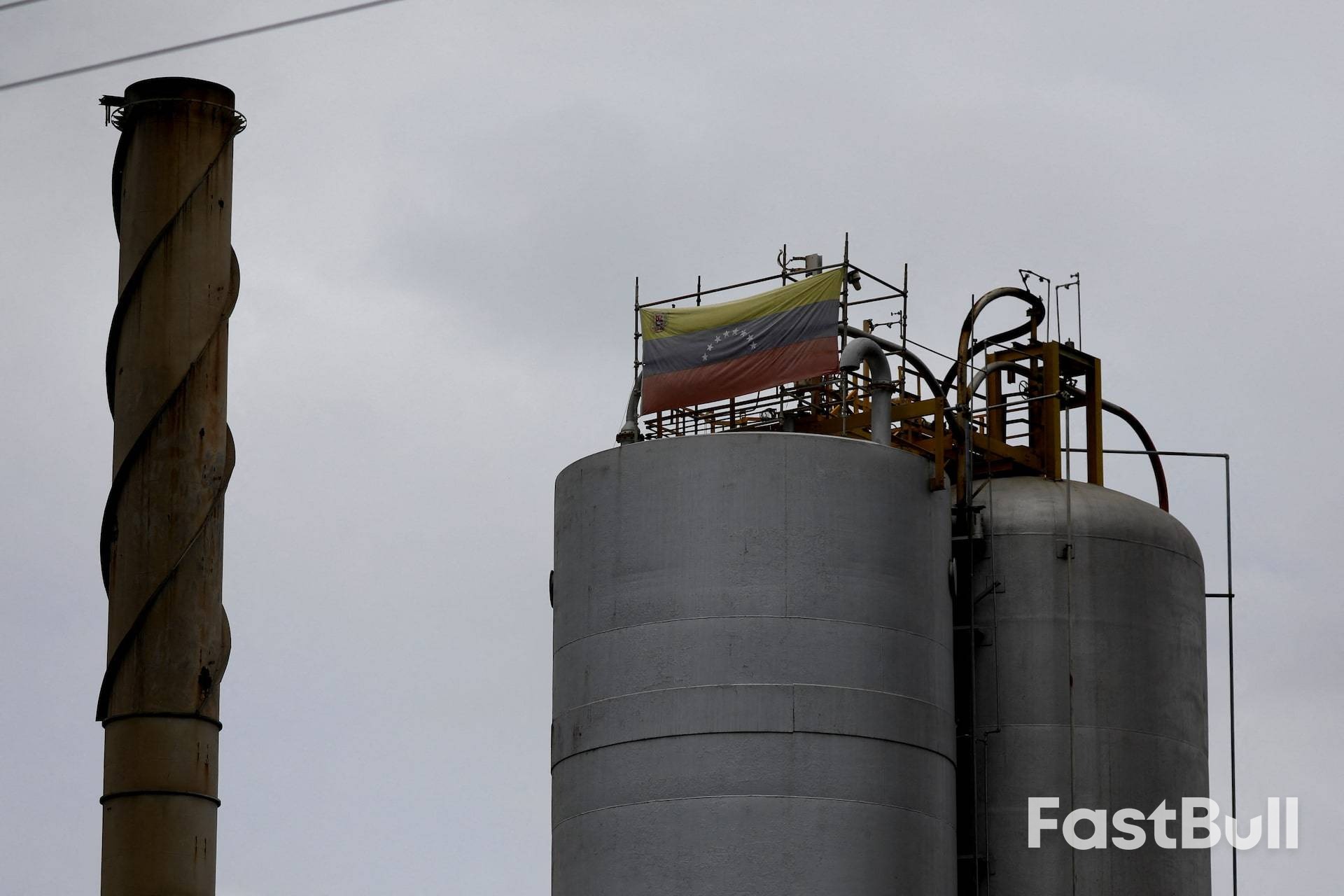
The U.S. government is presenting American energy giants with a historic opportunity: the chance to rebuild Venezuela’s shattered oil industry. But for companies like Exxon Mobil, Chevron, and ConocoPhillips, it’s an offer that might be too risky to accept.
Following the hypothetical ouster of Venezuelan President Nicolas Maduro, the Trump administration reportedly plans to meet with oil executives to map out a strategy for boosting the nation's crude production. The prize is access to the world’s largest oil reserves, totaling over 300 billion barrels—roughly one-fifth of the entire global supply. Yet, a closer look reveals a minefield of economic and political challenges.
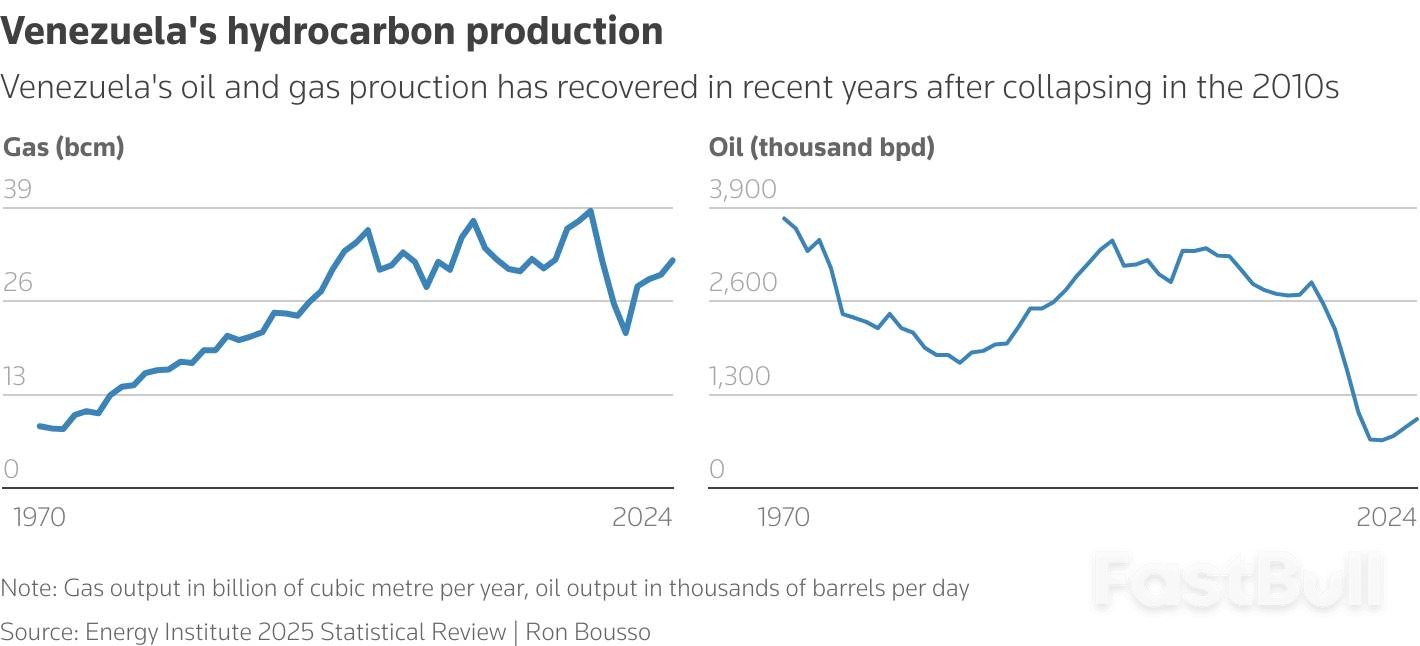
The potential upside in Venezuela is immense. After years of mismanagement and crippling U.S. sanctions, the country's oil output has plummeted. From a peak of over 3.5 million barrels per day (bpd) in the 1970s, when it accounted for 8% of global supply, production fell below 1 million bpd last year, making up less than 1% of the world's total.
An opening of this magnitude is rare. It echoes historic moments like the fall of the Soviet Union in the 1990s and the aftermath of Saddam Hussein's rule in Iraq, both of which saw Western energy majors scramble for control of valuable assets. The timing also seems opportune, as company boards have recently approved billions in new investments to expand their global market share.
However, reviving Venezuela’s oil sector is far from a straightforward proposition.
Serious operational and financial hurdles lie beneath the ground, casting doubt on the profitability of Venezuelan oil.
Technical and Cost Hurdles
Most of Venezuela's reserves, concentrated in the Orinoco belt, consist of heavy and extra-heavy crude. This highly viscous oil is difficult and expensive to handle. It must be blended with lighter diluents and processed through specialized upgraders before it can be extracted, transported, and refined.
This energy-intensive upgrading process also carries a significant carbon footprint. As governments worldwide move toward taxing emissions, the cost of producing these carbon-heavy grades could rise even further.
Unfavorable Breakeven Economics
According to consultancy Wood Mackenzie, the breakeven cost for key grades in the Orinoco belt already averages over $80 a barrel. This places Venezuelan production at the high end of the global cost curve for new projects. For comparison, heavy oil from Canada has an average breakeven point of around $55 a barrel.
These figures clash with the current strategies of U.S. majors, which are focused on low-cost fields.
• Exxon Mobil is targeting a global production breakeven of $30 a barrel by 2030, driven by assets in Guyana and the U.S. Permian shale basin.
• Chevron has a similar target.
• ConocoPhillips aims to generate free cash flow even if oil prices drop to $35 a barrel.
With crude oil currently trading around $60, and boards demanding strict spending discipline, convincing executives to invest billions in high-cost Venezuelan barrels is a tough sell. Carlos Bellorin, an analyst at Welligence Energy, notes, "The opportunity must be compelling enough to offset the substantial political risk that will persist in the years ahead." Unless a new, industry-friendly government in Venezuela dramatically reforms tax and royalty policies, the numbers simply don't add up.
Beyond the geology and economics, the political landscape in Venezuela presents an even greater deterrent.
Investing in Deep Uncertainty
Oil companies are accustomed to political risk, having operated for decades in volatile regions like Libya, Iraq, and Angola. But the current situation in Venezuela—marked by an uncertain power transition—is exceptionally hazardous.
Without a stable government in Caracas capable of earning the trust of international investors and banks, major firms will be hesitant to make long-term commitments. The appeal of buying cheap assets evaporates if the contracts underpinning them cannot be trusted.
The Peril of Aligning with U.S. Foreign Policy
U.S. oil majors have spent decades carefully cultivating an image of independence from American foreign policy, assuring investors that their decisions are driven solely by shareholder returns. Being seen as instruments of the U.S. president’s agenda could damage that reputation.
This creates a difficult dynamic. President Trump claimed he spoke with major U.S. energy firms about his plans for Venezuela, a statement company executives refuted. While contradicting the White House carries its own risks, especially as government involvement in the economy grows, openly aligning with its foreign policy is equally perilous.
Ultimately, the oil giants will likely signal a willingness to explore opportunities in Venezuela, partly to appease the administration. But the real question is whether they will commit billions of dollars to a country synonymous with corruption and economic chaos. For now, that seems to be a risk too great to take.
South Korea’s foreign exchange (FX) reserves fell in December at the sharpest rate in 28 years, a direct result of the government’s aggressive intervention to support the Korean won against the U.S. dollar.

While the measures successfully stabilized the currency, analysts question the long-term effectiveness of such interventions, particularly if market volatility intensifies.
Experts also warn that reserves could face additional pressure as financial institutions withdraw foreign currency deposited with the central bank to meet year-end regulatory requirements. However, hopes remain that government intervention might ease, allowing reserves to stabilize.
According to data from the Bank of Korea, the country's FX reserves stood at $428.05 billion at the end of December, down $2.6 billion from November. This was the second-sharpest December decline on record.
The largest drop occurred in December 1997, when reserves plunged by $4 billion during the Asian financial crisis. While last year also saw significant monthly declines of $5 billion in April and $4.5 billion in January, the recent drop is notable because reserves typically rise in December.

The December decline bucks a historical trend. Usually, financial institutions deposit foreign currency with the central bank to meet the Bank for International Settlements' capital ratio requirements, leading to a temporary inflow of dollars.
Standard Chartered Bank Korea strategist Hong Dong-hee explained that the fall was driven by government action. "The monthly fall was explained in large part by intensified Korean currency trajectory against the U.S. dollar right around the fourth week of December, when authorities issued strong verbal warnings and followed up with direct market intervention," he said.
Hong noted that aggressive FX swap arrangements with the National Pension Service helped strengthen the won from nearly 1,490 to around 1,430 per dollar in just four trading days. He added, "The authorities are expected to face a tall task to strike a balance between defending the currency and preserving reserves."
The defense of the won came at a price. Mun Jung-hui, a strategist at KB Securities, stated that the FX reserve was "visibly eroded" by measures designed to limit volatility.
He also pointed out that a broadly weaker U.S. dollar in December should have increased the value of reserves held in euros, pounds, and yen. However, this effect failed to offset the volume of dollars sold during the intervention.
Looking ahead, authorities are attempting to limit further drains on reserves. While financial institutions are expected to withdraw some funds, these withdrawals are likely to be limited because the central bank is now paying interest on extra foreign currency deposits. This, combined with the potential for reduced government intervention, could help stabilize the nation's FX reserves.
The ouster of Nicolás Maduro in Venezuela is a major political event, but it is not expected to trigger significant disruptions in global financial markets or oil prices. While uncertainty clouds Venezuela's future, the more profound consequences are likely geopolitical, potentially accelerating global fragmentation and forcing a realignment of strategic alliances, particularly across Latin America.
Despite the unfolding drama in Venezuela, we are not adjusting our economic or market forecasts. The situation, while fluid, is unlikely to materially affect financial assets or oil prices in the immediate term for one key reason: markets appear to have already priced in a regime change.
Venezuelan sovereign and PDVSA bonds, both currently in default, have been standout performers since the Trump administration began in January 2025. Over the past 12 months, their value has essentially doubled. While emerging market assets rallied broadly last year, the dramatic outperformance of Venezuelan debt suggests investors were growing increasingly confident that a political transition was imminent, a sentiment that grew as U.S. military activity in the region increased late last year.

Because markets were not caught off guard, the risk of a lasting, widespread financial shock from Venezuela is low. This stability extends to macro assets across emerging markets, Latin America, and the global oil market.
The most significant impact of Maduro's deposition will be on the geopolitical stage. In an era already defined by global fragmentation and heightened U.S.-China competition, this U.S.-led action is set to deepen existing divides.
Nations are already fracturing into distinct geopolitical and economic blocs, one led by the U.S. and another by China. The initial reactions to Maduro's forced exit show a clear split, with countries expressing either strong support for or opposition to the U.S. operation.

This event will likely force nations in Latin America to solidify their strategic allegiances. More interestingly, it could cause some countries to switch camps:
• Potential Flips to China: Colombia and Brazil, which have recently experienced tensions with the U.S., have seen their leaders strongly condemn the intervention. This could push them closer to China.
• Potential Flip to the U.S.: Chile currently aligns with China, but its president-elect, Kast, has voiced strong support for deposing Maduro. Over time, this could shift Chile into the U.S. bloc.
Regardless of how individual countries align, the overarching trend of global fragmentation is expected to have negative economic consequences, leading to slower aggregate GDP growth.
Over the past 12 to 18 months, a "Conservative Wave" has swept across Latin America, with elections in countries like Ecuador, Bolivia, Argentina, Chile, and Honduras bringing right-leaning platforms to power. This political shift has been associated with a decline in regional political risk.
The events in Venezuela are viewed as idiosyncratic and are not expected to derail this broader trend. Venezuela's situation is unique, and even a prolonged domestic power struggle or U.S. occupation is unlikely to reverse the overall improvement in the region's political risk environment.

While the direct fallout from Venezuela appears contained, a greater risk to regional stability exists. The key concern is whether the U.S. will pursue similar "deposition-style" actions against other unaligned countries, such as Cuba and Nicaragua, or engage in aggressive counter-narcotics or oil-related activities in systemically important nations like Colombia and Mexico.
Venezuela stands apart due to a unique combination of factors: an anti-U.S. political philosophy, deep ties to China, suspected involvement in narcotics trafficking, and possession of the world's largest proven oil reserves. It is difficult to find an exact parallel in the region.
For now, the trajectory of improving political risk in Latin America seems set to continue, but this newfound stability is not without its own set of risks.
Saudi Arabia successfully raised $11.5 billion in its first dollar bond sale of the year, signaling strong investor appetite as the kingdom continues to fund its ambitious economic diversification plans. The issuance attracted overwhelming demand, underscoring global confidence in the nation's financial strategy.
The bond sale was structured across four distinct tranches, catering to a range of investor timelines:
• 3-Year Bond: $2.5 billion
• 5-Year Bond: $2.75 billion
• 10-Year Bond: $2.75 billion
• 30-Year Bond: $3.5 billion
This multi-part structure allows the kingdom to manage its debt maturity profile effectively while tapping into different segments of the international capital market.
The offering was met with robust interest from the global investment community. According to the National Debt Management Centre (NDMC), the total order book surged to approximately $31 billion, resulting in an oversubscription of 2.7 times the amount offered.
The NDMC stated that this high bid-to-cover ratio is a clear indicator of strong demand for Saudi Arabia's debt and reflects investor confidence in the strength of its economy and future investment opportunities.
This bond issuance is a key component of Saudi Arabia's annual borrowing plan for 2026, which outlines total financing needs of $58 billion for the year. This figure is allocated to cover two primary areas: an anticipated deficit of $44 billion and principal repayments on existing debt totaling $14 billion.
The Ministry of Finance has emphasized its goal of maintaining debt sustainability while diversifying its funding sources. The strategy involves a mix of domestic and international channels, utilizing bonds, sukuk, and loans to secure financing at a fair cost.
While a significant move, this sale is part of a carefully calibrated approach. International bond sales are projected to constitute about 25% to 30% of the kingdom's total borrowing this year, amounting to between $14 billion and $18 billion.
According to economists at Emirates NBD, if Saudi Arabia adheres to this plan, it would mark a slowdown in the rapid expansion of international debt issuance observed in recent years.
The kingdom was one of the most active debt issuers in the Middle East and North Africa last year. In 2025, the government initially planned to borrow 139 billion riyals ($37 billion) but ultimately raised over 400 billion riyals. Of that amount, 61 billion riyals were designated as "pre-funding" to meet 2026 needs.
These borrowing activities are essential for funding Saudi Arabia's Vision 2030 program, a comprehensive plan to reduce the country's reliance on oil revenue. The kingdom is channeling significant investment into developing non-oil sectors such as infrastructure, real estate, tourism, mining, and technology.
However, the current fiscal environment, shaped by lower oil prices, has prompted a more cautious approach to spending. As Emirates NBD noted, these budget constraints are influencing the scale and pace of the kingdom's financial operations.
White Label
Data API
Web Plug-ins
Poster Maker
Affiliate Program
The risk of loss in trading financial instruments such as stocks, FX, commodities, futures, bonds, ETFs and crypto can be substantial. You may sustain a total loss of the funds that you deposit with your broker. Therefore, you should carefully consider whether such trading is suitable for you in light of your circumstances and financial resources.
No decision to invest should be made without thoroughly conducting due diligence by yourself or consulting with your financial advisors. Our web content might not suit you since we don't know your financial conditions and investment needs. Our financial information might have latency or contain inaccuracy, so you should be fully responsible for any of your trading and investment decisions. The company will not be responsible for your capital loss.
Without getting permission from the website, you are not allowed to copy the website's graphics, texts, or trademarks. Intellectual property rights in the content or data incorporated into this website belong to its providers and exchange merchants.
Not Logged In
Log in to access more features

FastBull Membership
Not yet
Purchase
Log In
Sign Up