• Trade
  • Markets
  • Copy
  • Contests
  • News
  • 24/7
  • Calendar
  • Q&A
  • Chats
Trending
Screeners
SYMBOL
LAST
BID
ASK
HIGH
LOW
NET CHG.
%CHG.
SPREAD
SPX
S&P 500 Index
6870.39
6870.39
6870.39
6895.79
6858.28
+13.27
+ 0.19%
--
DJI
Dow Jones Industrial Average
47954.98
47954.98
47954.98
48133.54
47871.51
+104.05
+ 0.22%
--
IXIC
NASDAQ Composite Index
23578.12
23578.12
23578.12
23680.03
23506.00
+72.99
+ 0.31%
--
USDX
US Dollar Index
98.800
98.880
98.800
98.960
98.730
-0.150
-0.15%
--
EURUSD
Euro / US Dollar
1.16629
1.16636
1.16629
1.16717
1.16341
+0.00203
+ 0.17%
--
GBPUSD
Pound Sterling / US Dollar
1.33335
1.33345
1.33335
1.33462
1.33151
+0.00023
+ 0.02%
--
XAUUSD
Gold / US Dollar
4215.64
4216.05
4215.64
4218.85
4190.61
+17.73
+ 0.42%
--
WTI
Light Sweet Crude Oil
59.987
60.024
59.987
60.063
59.752
+0.178
+ 0.30%
--

Community Accounts

Signal Accounts
--
Profit Accounts
--
Loss Accounts
--
View More

Become a signal provider

Sell trading signals to earn additional income

View More

Guide to Copy Trading

Get started with ease and confidence

View More

Signal Accounts for Members

All Signal Accounts

Best Return
  • Best Return
  • Best P/L
  • Best MDD
Past 1W
  • Past 1W
  • Past 1M
  • Past 1Y

All Contests

  • All
  • Trump Updates
  • Recommend
  • Stocks
  • Cryptocurrencies
  • Central Banks
  • Featured News
Top News Only
Share

Finnish Oct Trade Balance 0.16 Billion Euros

Share

Stats Office - German Oct Industry Output +1.8 Percent Month-On-Month (Forecast +0.4 Percent)

Share

Ukraine's Top Negotiator Says Main Task Of Talks In USA Was To Get Full Information, All Drafts Of Peace Plan Proposals

Share

Angola November Inflation At 0.85% Month-On-Month

Share

Indonesia Finance Minister: Potential Revenues From Planned Gold And Coal Export Taxes At 23 Trillion Rupiah

Share

Angola November Inflation At 16.56% Year-On-Year

Share

United Arab Emirates Oct Bank Lending +15.65% Year-On-Year - Central Bank

Share

United Arab Emirates Oct M3 Money Supply +14.98% Year-On-Year - Central Bank

Share

Bayer Seen Up 1.8% In Pre-Mkt Indications After Jp Morgan Raises To Overweight From Neutral

Share

Most Active China Coking Coal Contract Falls 7.1% To 1082.5 Yuan/Metric Ton

Share

German Foreign Minister Says A Lot Of Work Is Still Needed To Persuade China To Issue General Export Licences For Rare Earths

Share

European Central Bank's Schnabel 'Rather Comfortable' On Investor Bets Next Move To Be Interest Rate Hike

Share

Agriculture Ministry: Uganda October Coffee Shipments Up 38% From Last Year

Share

Russia's Nornickel: Cobalt Production Capacity To Be At Up To 3000 Tons Per Year

Share

Russia's Nornickel: Fully Restarts Cobalt Production In Murmansk Region

Share

India's Nifty Realty Index Down 2.7%

Share

China Vice President, In Meeting With German Foreign Minister: China Willing To Enhance Communication With Germany - Xinhua

Share

Japan Finance Minister Katayama: Will Take Appropriate Action If Necessary

Share

Japan Finance Minister Katayama: Concerned About Forex Moves

Share

Japan Finance Minister Katayama: Recently Seeing One-Sided, Rapid Moves

TIME
ACT
FCST
PREV
U.S. Personal Income MoM (Sept)

A:--

F: --

P: --

U.S. PCE Price Index YoY (SA) (Sept)

A:--

F: --

P: --

U.S. PCE Price Index MoM (Sept)

A:--

F: --

P: --

U.S. Personal Outlays MoM (SA) (Sept)

A:--

F: --

P: --

U.S. Core PCE Price Index MoM (Sept)

A:--

F: --

P: --

U.S. Core PCE Price Index YoY (Sept)

A:--

F: --

P: --

U.S. UMich 5-Year-Ahead Inflation Expectations Prelim YoY (Dec)

A:--

F: --

P: --

U.S. Real Personal Consumption Expenditures MoM (Sept)

A:--

F: --

P: --

U.S. UMich Current Economic Conditions Index Prelim (Dec)

A:--

F: --

P: --

U.S. UMich 1-Year-Ahead Inflation Expectations Prelim (Dec)

A:--

F: --

P: --

U.S. UMich Consumer Expectations Index Prelim (Dec)

A:--

F: --

P: --

U.S. Weekly Total Rig Count

A:--

F: --

P: --

U.S. Weekly Total Oil Rig Count

A:--

F: --

P: --

U.S. Unit Labor Cost Prelim (SA) (Q3)

--

F: --

P: --

U.S. Consumer Credit (SA) (Oct)

A:--

F: --

P: --

China, Mainland Foreign Exchange Reserves (Nov)

A:--

F: --

P: --

Japan Wages MoM (Oct)

A:--

F: --

P: --

Japan Trade Balance (Oct)

A:--

F: --

P: --

Japan Nominal GDP Revised QoQ (Q3)

A:--

F: --

P: --

Japan Trade Balance (Customs Data) (SA) (Oct)

A:--

F: --

P: --

Japan GDP Annualized QoQ Revised (Q3)

A:--

F: --

P: --
China, Mainland Exports YoY (CNH) (Nov)

A:--

F: --

P: --

China, Mainland Trade Balance (USD) (Nov)

A:--

F: --

P: --

China, Mainland Imports YoY (CNH) (Nov)

A:--

F: --

P: --

China, Mainland Exports (Nov)

A:--

F: --

P: --

China, Mainland Imports (CNH) (Nov)

A:--

F: --

P: --

China, Mainland Trade Balance (CNH) (Nov)

A:--

F: --

P: --

China, Mainland Imports YoY (USD) (Nov)

A:--

F: --

P: --

China, Mainland Exports YoY (USD) (Nov)

A:--

F: --

P: --

Germany Industrial Output MoM (SA) (Oct)

A:--

F: --

P: --

Euro Zone Sentix Investor Confidence Index (Dec)

--

F: --

P: --

Canada Leading Index MoM (Nov)

--

F: --

P: --

Canada National Economic Confidence Index

--

F: --

P: --

U.S. Dallas Fed PCE Price Index YoY (Sept)

--

F: --

P: --

China, Mainland Trade Balance (USD) (Nov)

--

F: --

P: --

U.S. 3-Year Note Auction Yield

--

F: --

P: --

U.K. BRC Overall Retail Sales YoY (Nov)

--

F: --

P: --

U.K. BRC Like-For-Like Retail Sales YoY (Nov)

--

F: --

P: --

Australia Overnight (Borrowing) Key Rate

--

F: --

P: --

RBA Rate Statement
RBA Press Conference
Germany Exports MoM (SA) (Oct)

--

F: --

P: --

U.S. NFIB Small Business Optimism Index (SA) (Nov)

--

F: --

P: --

Mexico Core CPI YoY (Nov)

--

F: --

P: --

Mexico 12-Month Inflation (CPI) (Nov)

--

F: --

P: --

Mexico PPI YoY (Nov)

--

F: --

P: --

Mexico CPI YoY (Nov)

--

F: --

P: --

U.S. Weekly Redbook Index YoY

--

F: --

P: --

U.S. JOLTS Job Openings (SA) (Oct)

--

F: --

P: --

China, Mainland M2 Money Supply YoY (Nov)

--

F: --

P: --

China, Mainland M0 Money Supply YoY (Nov)

--

F: --

P: --

China, Mainland M1 Money Supply YoY (Nov)

--

F: --

P: --

U.S. EIA Short-Term Crude Production Forecast For The Next Year (Dec)

--

F: --

P: --

U.S. EIA Short-Term Crude Production Forecast For The Year (Dec)

--

F: --

P: --

U.S. EIA Natural Gas Production Forecast For The Next Year (Dec)

--

F: --

P: --

EIA Monthly Short-Term Energy Outlook
U.S. 10-Year Note Auction Avg. Yield

--

F: --

P: --

U.S. API Weekly Cushing Crude Oil Stocks

--

F: --

P: --

U.S. API Weekly Crude Oil Stocks

--

F: --

P: --

U.S. API Weekly Refined Oil Stocks

--

F: --

P: --

Q&A with Experts
    • All
    • Chatrooms
    • Groups
    • Friends
    Connecting
    .
    .
    .
    Type here...
    Add Symbol or Code

      No matching data

      All
      Trump Updates
      Recommend
      Stocks
      Cryptocurrencies
      Central Banks
      Featured News
      • All
      • Russia-Ukraine Conflict
      • Middle East Flashpoint
      • All
      • Russia-Ukraine Conflict
      • Middle East Flashpoint
      Search
      Products

      Charts Free Forever

      Chats Q&A with Experts
      Screeners Economic Calendar Data Tools
      Membership Features
      Data Warehouse Market Trends Institutional Data Policy Rates Macro

      Market Trends

      Market Sentiment Order Book Forex Correlations

      Top Indicators

      Charts Free Forever
      Markets

      News

      News Analysis 24/7 Columns Education
      From Institutions From Analysts
      Topics Columnists

      Latest Views

      Latest Views

      Trending Topics

      Top Columnists

      Latest Update

      Signals

      Copy Rankings Latest Signals Become a signal provider AI Rating
      Contests
      Brokers

      Overview Brokers Assessment Rankings Regulators News Claims
      Broker listing Forex Brokers Comparison Tool Live Spread Comparison Scam
      Q&A Complaint Scam Alert Videos Tips to Detect Scam
      More

      Business
      Events
      Careers About Us Advertising Help Center

      White Label

      Data API

      Web Plug-ins

      Affiliate Program

      Awards Institution Evaluation IB Seminar Salon Event Exhibition
      Vietnam Thailand Singapore Dubai
      Fans Party Investment Sharing Session
      FastBull Summit BrokersView Expo
      Recent Searches
        Top Searches
          Markets
          News
          Analysis
          User
          24/7
          Economic Calendar
          Education
          Data
          • Names
          • Latest
          • Prev

          View All

          No data

          Scan to Download

          Faster Charts, Chat Faster!

          Download App
          English
          • English
          • Español
          • العربية
          • Bahasa Indonesia
          • Bahasa Melayu
          • Tiếng Việt
          • ภาษาไทย
          • Français
          • Italiano
          • Türkçe
          • Русский язык
          • 简中
          • 繁中
          Open Account
          Search
          Products
          Charts Free Forever
          Markets
          News
          Signals

          Copy Rankings Latest Signals Become a signal provider AI Rating
          Contests
          Brokers

          Overview Brokers Assessment Rankings Regulators News Claims
          Broker listing Forex Brokers Comparison Tool Live Spread Comparison Scam
          Q&A Complaint Scam Alert Videos Tips to Detect Scam
          More

          Business
          Events
          Careers About Us Advertising Help Center

          White Label

          Data API

          Web Plug-ins

          Affiliate Program

          Awards Institution Evaluation IB Seminar Salon Event Exhibition
          Vietnam Thailand Singapore Dubai
          Fans Party Investment Sharing Session
          FastBull Summit BrokersView Expo

          When the Numbers Don’t Add Up

          Adam

          Economic

          Summary:

          Mixed U.S. economic data revealed weak retail sales and cooling inflation, while markets wavered. Tech stocks rose on FOMO, Trump exaggerated aviation deals, and global tensions and bond yields added uncertainty.

          This morning was a deluge of macroeconomic statistics - jobless claims, factory output, retail sales, and producer prices - all arriving in one dense wave. The signals were, in classic fashion, mixed. But one figure stood out for all the wrong reasons: core retail sales, a key input for GDP, unexpectedly slipped 0.2% in April, disappointing investors who had been bracing for modest growth.
          Headline retail sales rose just 0.1% - a whisper of an increase, and a far cry from March’s unexpectedly strong 1.7% surge. However, this was slightly better than expected by economists. Consumers were selective: spending picked up at restaurants and garden centers, as if spring had coaxed a few more dollars out of their wallets. But other corners of Main Street - bookstores, hobby shops, sporting goods - felt the chill of tighter budgets and perhaps tighter minds.
          Elsewhere, jobless claims nudged up to 229,000, factory activity in New York contracted deeper into negative territory, and producer prices delivered a rare surprise: a 0.5% monthly decline, even as the annual pace remained a steady 2.4%. It was a reminder that while inflation may be cooling, it isn’t quite done.
          Taken together, the numbers paint a picture of an economy that’s neither overheating nor collapsing, but treading water. Growth is there, but it’s fragile. Confidence is present, but it’s cautious.
          America's equity rebound, now over a month long, is beginning to show signs of fatigue. Yet the Nasdaq 100 managed a sixth consecutive gain, fueled by a renewed flicker of FOMO (fear of missing out). Investors are returning to their favorite adrenaline-providing tech stocks - equities that reliably amplify gains during rallies, offer a whiff of invincibility, and seem insulated from the doubts hanging over more cyclical sectors. The S&P 500, for its part, has now advanced in 14 of its last 17 sessions, albeit with a mere 0.1% rise on Wednesday.
          Europe was more subdued. Most indices posted mild declines, lacking the stimulus of the Gulf whirlwind tour that produced a series of headline-grabbing commercial announcements from Donald Trump. These included deals supposedly worth hundreds of billions of dollars. The figures are immense; the details, conveniently opaque. But as ever, the intoxicant matters more than the bottle.
          Consider one such proclamation, which warrants dissection - not for its veracity, but for its audacity. Mr Trump took to social media - one might reasonably ask whether that phrase is tautological - to boast that Qatar Airways had placed an order for 160 Boeing aircraft, valued at $200bn. This implies a per-plane price tag of $1.25bn. For the uninitiated, Boeing's priciest model, the stretched B777, lists at around $450m. That figure, mind you, is theoretical: neither Boeing nor Airbus has published catalogue prices for years, and real-world buyers rarely pay them anyway. John Leahy, Airbus's outspoken former sales chief, once quipped that across his career, only one customer ever paid list price. Discounts - often deep ones - are the norm, especially for mega-orders.
          So, to recap: either Mr Trump struck the most lopsided deal in aviation history, or Qatar somehow paid three times the sticker price, perhaps six times the negotiated one. And that's assuming the jets in question are B777s. Were they B737MAXs, which cost under $150m apiece (and come with their own aeronautical baggage), the discrepancy would be even more spectacular. There is, of course, a more prosaic explanation: the former president likes round numbers and grand declarations. The White House did issue a correction - awkwardly - claiming the actual order was for 210 planes at $96bn, including B777s and B787s. That averages out at $457m a unit. Still inflated, but at least within the realm of possibility. Apply standard volume discounts and the true cost probably lands closer to $50bn. A sizeable deal, to be sure - just not the $200bn whopper initially proclaimed.
          In short, say what you like. It's unlikely to matter.
          Meanwhile, the more serious developments of the day fall into three broad categories. First, peace talks between Russia and Ukraine are due to take place in Turkey. Neither Vladimir Putin nor Donald Trump will attend, though Volodymyr Zelensky had entertained hopes of higher-level participation. Second, yields on U.S. government debt continue to rise, reflecting a market increasingly skeptical about imminent rate cuts. While not disastrous, this trend suggests that uncertainty has not abated - merely shifted shape. And finally, a market-moving rumor: Iran is reportedly open to scrapping its nuclear ambitions if Western sanctions are lifted. Oil prices duly sagged.
          Asia-Pacific markets mirrored this indecisive mood. Tokyo fell by 1%, while indices in mainland China, Hong Kong and South Korea were each down around 0.5%. Australia managed a 0.2% gain; India edged up 0.4%. Europe is mixed, with the Stoxx Europe 600 up 0.1%. Futures on Wall Street are in the red, ranging from -0.3% for the Dow to -0.5% for the Nasdaq 100.

          Source : marketscreener

          To stay updated on all economic events of today, please check out our Economic calendar
          Risk Warnings and Disclaimers
          You understand and acknowledge that there is a high degree of risk involved in trading. Following any strategies or investment methods may lead to potential losses. The content on the site is provided by our contributors and analysts for information purposes only. You are solely responsible for determining whether any trading assets, securities, strategy, or any other product is suitable for investing based on your own investment objectives and financial situation.
          Add to Favorites
          Share

          Israeli Onslaught Kills Scores In Gaza As Trump Visits Gulf

          Devin

          Political

          Israeli military strikes killed at least 85 people in the Gaza Strip on Thursday, Palestinian medics said, as the United States and Arab mediators pushed for a ceasefire deal and U.S. President Donald Trump visited the Middle East.

          Most of the victims, including women and children, were killed in Khan Younis in southern Gaza in airstrikes that hit homes and tents, they said.

          The dead included journalist Hassan Samour, who worked for the Hamas-run Aqsa radio station and was killed along with 11 family members when their home was hit, the medics said.

          The Israeli military said its air force had struck 130 targets used by militant groups in Gaza over the past two days.

          Israel has intensified its offensive in Gaza as it tries to eradicate Hamas in retaliation for the deadly attacks the Palestinian militant group carried out on Israel in 2023.

          In Jabalia in the northern Gaza Strip, the health ministry said an Israeli strike on Al-Tawba medical clinic killed at least 15 people and wounded several others. It took Thursday's death toll to 85, medics said.

          Hamas said in a statement that Israel was making a "desperate attempt to negotiate under cover of fire" as indirect ceasefire talks take place, also involving Trump envoys and Qatar and Egyptian mediators in Doha.

          Palestinians on Thursday commemorated the "Nakba", or catastrophe, when hundreds of thousands fled or were forced to flee their towns and villages during the 1948 war that gave birth to Israel.

          "What we are experiencing now is even worse than the Nakba of 1948," said Ahmed Hamad, a Palestinian in Gaza City who has been displaced several times.

          "The truth is, we live in a constant state of violence and displacement. Wherever we go, we face attacks. Death surrounds us everywhere."

          ESCALATING VIOLENCE

          Palestinian health officials say the Israeli attacks have escalated since Trump started a visit on Tuesday to the Gulf states of Saudi Arabia, Qatar and the United Arab Emirates, which many Palestinians had hoped he would use to push for a truce.

          Attacks on Gaza on Wednesday killed at least 80 people, local health officials said.

          Little has come of the indirect ceasefire talks.

          Hamas says it is ready to free all the remaining hostages it is holding in Gaza in return for an end to the war, while Israeli Prime Minister Benjamin Netanyahu prefers interim truces, saying the war can only end once Hamas is eradicated.

          Israel invaded Gaza in retaliation for the Hamas-led attack on southern Israeli communities on October 7, 2023, in which about 1,200 people were killed and 251 were taken as hostages to Gaza, according to Israeli tallies.

          Israel's campaign has killed more than 52,900 Palestinians, according to local health officials. It has left Gaza on the brink of famine, aid groups and international agencies say.

          A U.S.-backed humanitarian organisation will start work in Gaza by the end of May under an aid distribution plan, but has asked Israel to let the United Nations and others resume deliveries to Palestinians now until it is set up.

          No humanitarian assistance has been delivered to Gaza since March 2, and a global hunger monitor has warned that half a million people face starvation in Gaza.

          Hamas said it had expected that aid would flow back into Gaza after it freed American-Israeli soldier Edan Alexander on Monday from captivity in Gaza, according to what it said was an understanding reached with U.S. officials.

          "Failing to achieve these steps, and specially allowing humanitarian aid for our people, will cast negative shadows over efforts to conclude prisoner swap negotiation," said Hamas.

          Source: Reuters

          Risk Warnings and Disclaimers
          You understand and acknowledge that there is a high degree of risk involved in trading. Following any strategies or investment methods may lead to potential losses. The content on the site is provided by our contributors and analysts for information purposes only. You are solely responsible for determining whether any trading assets, securities, strategy, or any other product is suitable for investing based on your own investment objectives and financial situation.
          Add to Favorites
          Share

          Qatar’s Wealth Fund Plans $500 Billion US Push Over Next Decade

          James Whitman

          Economic

          During his first 15 years at Qatar Investment Authority, Mohammed Al Sowaidi helped establish its US presence and scout opportunities. Now, as head of the $524 billion state-backed entity, he’s pledging to invest an amount nearly equal to the fund’s current size, as part of a major commitment by the Gulf nation.

          QIA plans to invest an additional $500 billion in the US over the next decade, Al Sowaidi said in an interview in Doha. The sweeping new outlays will target areas traditionally favored by the fund — such as artificial intelligence, data centers and health care — while also aligning with President Donald Trump’s agenda to reindustrialize the US, he said.

          The $500 billion accounts for nearly half of the total $1.2 trillion economic pledge by Qatar during Trump’s visit this week.

          “We’re not shifting away from other markets — we’re increasing our exposure to the US,” Al Sowaidi said. The current US policy environment offers a “more promising direction” for long-term capital, he said.

          To be sure, the QIA is not alone in pursuing an aggressive, US-focused investment strategy among Middle East funds. Saudi Arabia’s Public Investment Fund, state-owned entities in the United Arab Emirates, and the Kuwait Investment Authority are also looking to deploy billions across similar sectors — raising the likelihood of competition for the same deals and the risk of overpaying for assets.

          Al Sowaidi took over as the chief executive officer last year during a pivotal moment for the fund, with an expansion of the country’s gas projects expected to funnel billions of dollars into its coffers. At the same time, Doha is no longer hamstrung by outlays for large projects like the 2022 FIFA World Cup, which is estimated to have cost $300 billion.

          With fresh inflows expected, Al Sowaidi plans to steer the fund toward providing capital to large companies, taking stakes in listed businesses and prioritizing bigger deals.

          That marks a departure from the QIA’s recent focus on smaller venture capital deals. Still, Al Sowaidi said the move isn’t “an actual strategic shift or pivot,” but rather a “further evolution” of the fund’s approach to keep pace with rapid global change.

          The QIA is already the world’s eighth-largest sovereign wealth fund and owns a string of high-profile assets including London’s Harrods department store and the Shard skyscraper. But after years of relatively quiet dealmaking, Al Sowaidi’s plans show the fund is ready to be back in the spotlight.

          Al Sowaidi joined the QIA in 2010, when it was led by Sheikh Hamad bin Jassim bin Jaber Al Thani, a former prime minister who’s widely regarded as among the most high-profile investors in the Middle East. Sheikh Hamad was ultimately replaced at the QIA by Ahmed Al-Sayed, who helped orchestrate large deals including Glencore Plc’s $29 billion takeover of Xstrata Plc.

          Al Sowaidi, for his part, spent most of his early years at the fund in the Americas, where he helped establish a US office and eventually worked his way up to become chief investment officer for the region.

          He holds bachelor’s degrees in finance and statistics from the University of Missouri, and has held roles including as the head of private equity funds and president of the QIA Advisory office in New York. The QIA was then known for its work in snapping up high-profile stakes in the likes of Barclays Plc and Credit Suisse.

          Qatar is already one of the world’s richest nations and among the top exporters of liquefied natural gas. But the government’s plans to significantly expand that output is set to add more than $30 billion a year to state revenues.

          Some of this cash will be funneled into the QIA. The research consultancy Global SWF recently projected the QIA’s total assets will surge to $905 billion by 2030, meaning it would be vaulted into the ranks of other high-profile investors across the region like Saudi Arabia’s PIF and the Abu Dhabi Investment Authority.

          The QIA is already positioning itself to prepare for significant outlays.

          Al Sowaidi said the fund typically takes minority stakes in successful businesses, with deal size varying widely by asset class. “In public equity, we can go big,” he said.

          “In private equity, we’re capable of multibillion-dollar transactions, but we can also stay nimble — especially in sectors like technology or health care.”

          Such a move would be welcome news for the private equity industry. For years, high interest rates have put a damper on global dealmaking. When private equity firms aren’t able to sell their portfolio companies at a healthy pace, they can’t return capital to their investors. Then that money can’t be recycled into new funds.

          The QIA’s efforts in that space would help get fundraising moving for the industry again — and make up for the pullback that’s expected from the $925 billion PIF, which has started to increasingly focus on domestic investments.

          Already, financial firms are eager for the chance to work more closely with the QIA. Eduardo Saverin’s B Capital, for instance, unveiled plans to set up offices in Qatar earlier this year. Days later, BlackRock Inc.’s Global Infrastructure Partners, said it would set up in Doha too.

          Those outside Doha will get more insight into Al Sowaidi’s thinking next week, when he speaks at the annual Qatar Economic Forum, where top finance executives from around the world and key names from Trump’s orbit — including his son Eric and Tesla Inc.’s Elon Musk — are scheduled to speak.

          Doha had until recently largely stayed away from the race for regional financial dominance, even as a flurry of Wall Street firms announced plans to set up their regional headquarters in Riyadh and hedge funds flocked to Abu Dhabi.

          But Al Sowaidi’s plans show the gas-rich nation is intensifying efforts to catch up.

          Source: Bloomberg Europe

          To stay updated on all economic events of today, please check out our Economic calendar
          Risk Warnings and Disclaimers
          You understand and acknowledge that there is a high degree of risk involved in trading. Following any strategies or investment methods may lead to potential losses. The content on the site is provided by our contributors and analysts for information purposes only. You are solely responsible for determining whether any trading assets, securities, strategy, or any other product is suitable for investing based on your own investment objectives and financial situation.
          Add to Favorites
          Share

          Bitcoin and Ethereum Waver as Investors Take Profits on Recent Rally

          Adam

          Cryptocurrency

          Top cryptocurrencies experienced a pullback on Thursday, amid signs investors are taking profits off the table after a recent rally.
          Bitcoin touched lows of $101,500 at one point, indicating a return to all-time highs might not be as imminent as some bulls hoped.
          Sell-offs were more pronounced among major altcoins. Ethereum has fallen by 3% over the past 24 hours—with XRP, Solana and Dogecoin all shedding about 5%.
          Risk appetite also appears to be cooling in the stock market too, with the Federal Reserve set to cut interest rates less frequently in 2025 than first thought.
          BRN's lead research analyst Valentin Fournier argues healthy inflows into BTC and ETH ETFs "provides a solid foundation for long-term support."
          Describing Thursday's declines as a "modest pullback," he wrote: "While this appears to be a healthy correction, altcoins, after leading the rally, are showing more volatility.
          "We believe Bitcoin's $100k level will serve as a critical support zone for an extended accumulation phase," Fournier wrote.
          YouHodler's chief of markets Ruslan Lienkha told Decrypt that upward momentum is moderating now that tariff negotiations have concluded, with short-term traders deciding to lock in profits across the equity markets.
          "This shift in sentiment has spilled over into riskier assets, including Bitcoin. As a result, the current pullback appears to be a correction within a broader medium-term uptrend," he added.
          Going forward, Lienkha believes "ongoing global economic uncertainty and persistently high interest rates in the U.S. may act as headwinds" for crypto, and could limit upside potential.
          Newhedge measures Bitcoin's correlation with the S&P 500 on a scale of -1 to 1. While -1 indicates there's no connection between these markets, a score closer to 1 suggests they rise and fall in tandem with one another.
          With a current reading of 0.86, continued strength for BTC may hinge upon how things unfold on Wall Street.

          Source :decrypt

          Risk Warnings and Disclaimers
          You understand and acknowledge that there is a high degree of risk involved in trading. Following any strategies or investment methods may lead to potential losses. The content on the site is provided by our contributors and analysts for information purposes only. You are solely responsible for determining whether any trading assets, securities, strategy, or any other product is suitable for investing based on your own investment objectives and financial situation.
          Add to Favorites
          Share

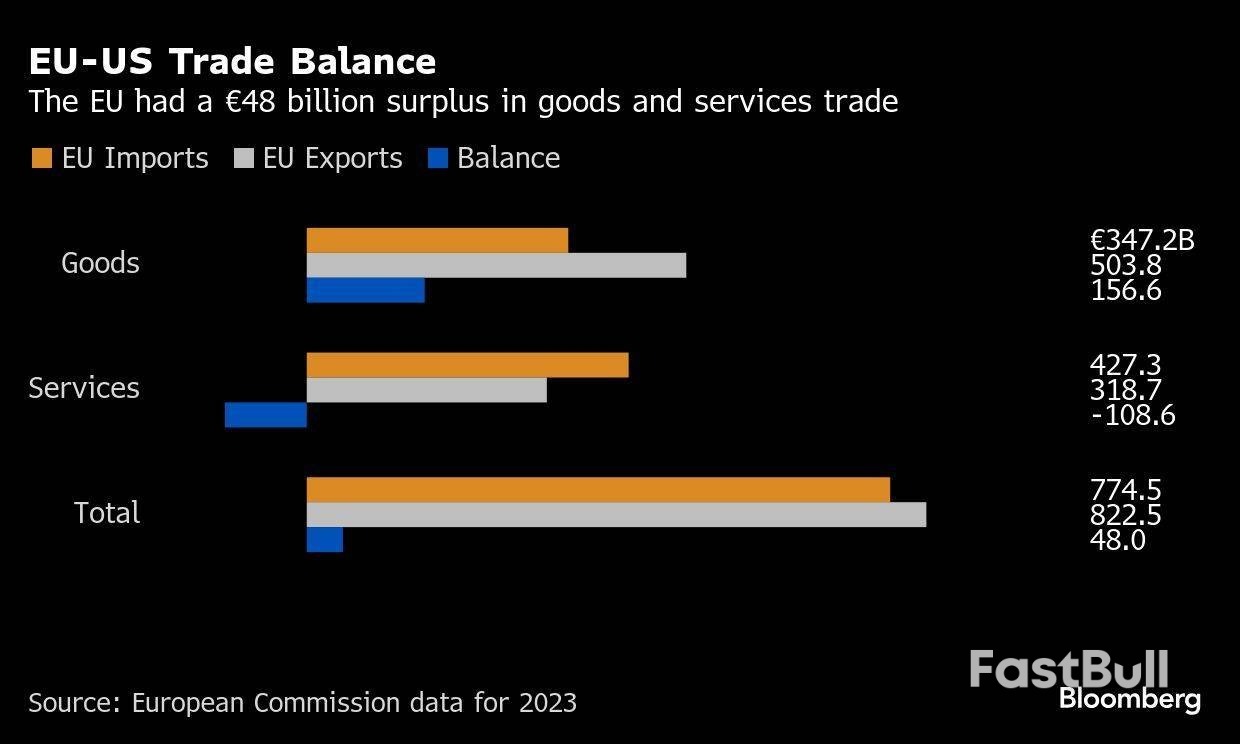
          EU Readies New Proposals In Push To Speed Up US Trade Talks

          Thomas

          Economic

          The European Union is revising its proposals for a potential trade deal with the US as the two sides move to accelerate serious negotiations, even though the Trump administration continues to provide little clarity and make demands that negotiators see as unrealistic, according to people familiar with the matter.

          The new EU proposal would provide more details on ways to lower trade and non-tariff barriers, as well as boost European investments within the US and purchases of US goods, including liquefied natural gas and semiconductors for use in artificial intelligence, said the people, who asked for anonymity to discuss sensitive talks.

          Despite the slow progress in direct talks, European trade ministers said the EU and US are both moving to speed up the pace of negotiations after the US reached temporary trade truces with the UK and China.

          Maros Sefcovic, the EU commissioner for trade and economic security, said he spoke by phone with US Commerce Secretary Howard Lutnick on Wednesday, with further meetings between the two planned.

          “We had a good phone conversation — one of many,” Sefcovic said at a press conference in Brussels, following a meeting of EU trade ministers. “We agreed that we would accelerate our work.”

          EU officials said the Trump administration’s willingness to strike a deal with the UK and significantly pull down its tariffs on China temporarily are a positive sign, though they emphasized they’re prepared to move forward with retaliatory levies against the US if talks fail.

          The recent deal with the UK, however, leaves in a place a new baseline tariff of 10% and potentially sectoral duties, which may not be acceptable for many EU nations.

          The Swedish minister for development cooperation and foreign trade, Benjamin Dousa, said that “if the UK-US deal is what Europe gets then the US can expect countermeasures from our side,” he said. “We will not be happy with that kind of deal.”

          The US has welcomed some of the options proposed by the bloc as part of a potential deal, but EU officials remain unclear about what exactly US President Donald Trump is looking for, according to people familiar with the matter. One potential stumbling block is Trump’s charge that the EU’s value-added tax is a non-tariff barrier, since EU officials are adamant that it isn’t and that the bloc’s autonomy over tax and regulations isn’t negotiable.

          Source: Yahoo Finance

          To stay updated on all economic events of today, please check out our Economic calendar
          Risk Warnings and Disclaimers
          You understand and acknowledge that there is a high degree of risk involved in trading. Following any strategies or investment methods may lead to potential losses. The content on the site is provided by our contributors and analysts for information purposes only. You are solely responsible for determining whether any trading assets, securities, strategy, or any other product is suitable for investing based on your own investment objectives and financial situation.
          Add to Favorites
          Share

          Trump’s Pledge To Lift Syrian Sanctions Faces Long, Complex Road

          James Whitman

          Political

          US President Donald Trump says he’s ready to ease sanctions on Syria. He won’t be able to do it quickly.

          The American leader sat down with Syrian counterpart Ahmed Al-Sharaa in Riyadh on Wednesday — the first meeting between heads of the two countries in 25 years — after unexpectedly saying he would drop all sanctions against the war-ravaged country and even look to normalize relations.

          The move was seen as a highlight of Trump’s trip to the Arabian Peninsula this week, but actual implementation will be a protracted and thorny challenge. The White House also made clear it’s not a one-way street, saying the president urged Sharaa to take steps in return, including helping to fight terrorism and agreeing ties with Israel.

          US Secretary of State Marco Rubio will have to wade through layers of strict restrictions imposed on Syria over the past 45 years — covering everything from finance to energy — and met his counterpart Asaad Al-Shaibani on Thursday in Turkey.

          “President Trump has made clear his cessation of sanctions is meant to help stabilize and move Syria toward peace,” National Security Council spokesman James Hewitt said in a statement. “The State Department prepared for this moment by engaging across the U.S. government and our foreign partners since the fall of the Assad regime to review options and timing on sanctions relief.”

          Trump can lift sanctions issued by executive order but some will need a vote in Congress to be repealed, according to Caroline Rose, a Syria expert and research director at the Washington-based New Lines Institute.

          “The road ahead with sanctions relief will be long and complicated,” she said. “There are still many sceptics to Syria normalization and sanctions relief, particularly among Republican Party members.”

          Another issue is that Sharaa, Shaibani and many other members of the present Syrian government are former commanders of an Al-Qaeda-affiliated group implicated by the United Nations Security Council in war atrocities. Sharaa, who previously ran an Islamist protostate in northwest Syria, overthrew long-time former President Bashar Al-Assad in December after a rebel offensive.

          “There’s a lot that needs to be done, including by the Syrian administration,” Saudi Arabia’s Foreign Minister Faisal bin Farhan told reporters Wednesday. “Syria won’t be alone — the kingdom and the rest of our international partners will be at the forefront of those supporting this effort and economic rebirth.”

          One immediate boost for Sharaa’s government will come from supporter Qatar, which has US backing to begin dispersing almost $30 million a month for civil servant salaries, according to two people involved in finalizing the arrangement and two others with knowledge of the matter.

          That will provide at least a start for the new Syrian administration, which is faced with an economy devastated by more than a decade of war and in need of as much as $400 billion for rebuilding costs, according to the Carnegie Endowment for International peace.

          “We welcome all investors: children of the nation inside and outside, our Arab and Turkish brothers and friends from around the world,” Sharaa said in a speech on Wednesday night.

          Supporters of Sharaa inside and out of Syria, including Saudi Arabia, see Trump’s move as a brave decision that isolates extremists within the Syrian leader’s Islamist-dominated administration. The move also excludes Iran, Assad’s main patron, and helps ensure China doesn’t make significant inroads.

          Investment opportunities will instead fall to regional powers friendly to the US, like Saudi Arabia, Turkey and the United Arab Emirates.

          “The main concern in the business community has been that we don’t want to be seen working with what has been designated as a terrorist government by the West,” said Majd Abbar, a Dubai-based Syrian-American information-technology executive, who has lobbied officials in Washington to lift sanctions and met with Sharaa multiple times.

          “Now that these sanctions will be lifted, everyone is going to jump on board to invest in Syria,” he said. “It’s practically a white canvas — there’s nothing there.”

          Syria, which is technically still at war with Israel, has been under myriad US sanctions since its 1979 designation by Washington as a state sponsor of terrorism.

          Relations thawed in the 1990s when Damascus joined the US-led coalition that ousted Saddam Hussein from Kuwait and engaged in peace talks with Israel. But after replacing his father in 2000, Assad deepened ties with Iran and was accused by the US of supporting the insurgency in Iraq following the 2003 US-led invasion.

          That triggered additional sanctions by Washington, and further rounds followed from 2011 when Assad mounted a brutal crackdown against his opponents, spawning a decade-long conflict that killed almost 500,000 people and displaced millions more. Just before his toppling in December, the US renewed the 2019 Caesar Syria Civilian Protection Act, which penalizes anyone that does business with the Syrian government except for exempted humanitarian reasons.

          Before Trump’s announcement, many in his administration, such as Sebastian Gorka, were strongly opposed to removing sanctions or dealing with Sharaa, seeing him as a committed jihadist who is masking his real intentions. The State Department had demanded Sharaa’s government show progress on a number of critical issues as a precondition for the lifting of sanctions.

          At their meeting in Riyadh, Trump urged Sharaa to take certain steps, according to a White House readout of the conversation, which was attended by Saudi Crown Prince Mohammed bin Salman. Those include the deportation of Palestinian militants and other foreign fighters from Syria, helping with the effort to prevent the resurgence of Islamic State and normalizing relations with Israel.

          Israel was quick to intervene militarily after Assad’s ouster, launching a series of airstrikes on arms-storage sites and extending its occupied land in Syria’s southwest. It also stepped in to defend the Druze community after violent clashes between the minority group and government forces.

          The country’s attitude toward Syria “is more sceptical, we are approaching matters in a slower manner,” Danny Danon, Israel’s ambassador to the United Nations, told Army Radio on Thursday. “We want to see that there really is stability in Syria, that this regime doesn’t only talk, it also takes action.”

          Source: Bloomberg Europe

          Risk Warnings and Disclaimers
          You understand and acknowledge that there is a high degree of risk involved in trading. Following any strategies or investment methods may lead to potential losses. The content on the site is provided by our contributors and analysts for information purposes only. You are solely responsible for determining whether any trading assets, securities, strategy, or any other product is suitable for investing based on your own investment objectives and financial situation.
          Add to Favorites
          Share

          Wall St edges lower as trade truce rally ebbs, UnitedHealth falls

          Adam

          Economic

          China–U.S. Trade War

          Wall Street dipped on Thursday as elation from the U.S.-China tariff truce faded for major indexes, while UnitedHealth's stock took a pummeling after a report of a DOJ fraud inquiry into the insurer.
          UnitedHealth Group plunged 16% to its lowest level since April 2020.
          The Wall Street Journal reported that the U.S. Department of Justice was conducting a criminal investigation into the company for possible Medicare fraud. However, the health insurer said it had not been informed of a criminal probe by federal prosecutors.
          Walmart will have to start raising prices later this month due to the high cost of tariffs, executives said, even as the retail giant's U.S. comparable sales surpassed expectations in the first quarter. Its shares were down 4.8%
          At 09:42 a.m., the Dow Jones Industrial Average fell 128.62 points, or 0.31%, to 41,922.44, the S&P 500 lost 19.46 points, or 0.33%, to 5,873.03, and the Nasdaq Composite lost 123.27 points, or 0.64%, to 19,023.53.
          Speaking on the day, U.S. Federal Reserve chair Jerome Powell said central bank officials felt they needed to reconsider the key elements around jobs as well as inflation in their current monetary policy approach.
          U.S.
          retail sales
          growth slowed in April, while a Labor Department report showed the producer price index for final demand fell 0.5% for the same month, compared to an expectation of a 0.2% rise.
          On an annual basis, producer prices came in at 2.4% versus an estimate of 2.5%.
          "There will be a hump and pick up in prices, but until we see how big that is and how lasting that is, the Fed should be able to remain patient," said Jan Nevruzi, U.S. rates strategist at TD Securities.
          The data dump follows a relatively tame consumer price reading earlier this week, indicating that consumer prices rebounded moderately last month.
          In results-driven moves, Cisco Systems gained 2.9% after the networking-equipment maker raised its annual forecasts and named Mark Patterson its new CFO.
          Only four out of the 11 S&P 500 sectors were trading in the green.
          The energy sector fell the most, as oil prices slid around 3% on expectations of a U.S.-Iran nuclear deal that could result in sanctions easing.
          Stocks have been see-sawing this week as equities jumped on Monday and Tuesday following a temporary ceasefire in the U.S.-China tariff war. The gains were enough to drag the S&P out of the red for the year - its first positive showing since late February - although it is still about 4% shy of its record highs.
          Many megacap and growth stocks pulled back, with Nvidia slipping 1.2%, while Tesla shed 2.8%.
          Foot Locker, soared 83.6% after rival Dick's Sporting Goods agreed to buy the footwear retailer for $2.4 billion.
          Advancing issues outnumbered decliners by a 1.01-to-1 ratio on the NYSE, while declining issues outnumbered advancers by a 1.28-to-1 ratio on the Nasdaq.
          The S&P 500 posted four new 52-week highs and three new lows, while the Nasdaq Composite recorded 17 new highs and 51 new lows.

          Source: marketscreener

          To stay updated on all economic events of today, please check out our Economic calendar
          Risk Warnings and Disclaimers
          You understand and acknowledge that there is a high degree of risk involved in trading. Following any strategies or investment methods may lead to potential losses. The content on the site is provided by our contributors and analysts for information purposes only. You are solely responsible for determining whether any trading assets, securities, strategy, or any other product is suitable for investing based on your own investment objectives and financial situation.
          Add to Favorites
          Share
          FastBull
          Copyright © 2025 FastBull Ltd

          728 RM B 7/F GEE LOK IND BLDG NO 34 HUNG TO RD KWUN TONG KLN HONG KONG

          TelegramInstagramTwitterfacebooklinkedin
          App Store Google Play Google Play
          Products
          Charts

          Chats

          Q&A with Experts
          Screeners
          Economic Calendar
          Data
          Tools
          Membership
          Features
          Function
          Markets
          Copy Trading
          Latest Signals
          Contests
          News
          Analysis
          24/7
          Columns
          Education
          Company
          Careers
          About Us
          Contact Us
          Advertising
          Help Center
          Feedback
          User Agreement
          Privacy Policy
          Business

          White Label

          Data API

          Web Plug-ins

          Poster Maker

          Affiliate Program

          Risk Disclosure

          The risk of loss in trading financial instruments such as stocks, FX, commodities, futures, bonds, ETFs and crypto can be substantial. You may sustain a total loss of the funds that you deposit with your broker. Therefore, you should carefully consider whether such trading is suitable for you in light of your circumstances and financial resources.

          No decision to invest should be made without thoroughly conducting due diligence by yourself or consulting with your financial advisors. Our web content might not suit you since we don't know your financial conditions and investment needs. Our financial information might have latency or contain inaccuracy, so you should be fully responsible for any of your trading and investment decisions. The company will not be responsible for your capital loss.

          Without getting permission from the website, you are not allowed to copy the website's graphics, texts, or trademarks. Intellectual property rights in the content or data incorporated into this website belong to its providers and exchange merchants.

          Not Logged In

          Log in to access more features

          FastBull Membership

          Not yet

          Purchase

          Become a signal provider
          Help Center
          Customer Service
          Dark Mode
          Price Up/Down Colors

          Log In

          Sign Up

          Position
          Layout
          Fullscreen
          Default to Chart
          The chart page opens by default when you visit fastbull.com