• Trade
  • Markets
  • Copy
  • Contests
  • News
  • 24/7
  • Calendar
  • Q&A
  • Chats
Trending
Screeners
SYMBOL
LAST
BID
ASK
HIGH
LOW
NET CHG.
%CHG.
SPREAD
SPX
S&P 500 Index
6817.69
6817.69
6817.69
6861.30
6801.50
-9.72
-0.14%
--
DJI
Dow Jones Industrial Average
48369.40
48369.40
48369.40
48679.14
48285.67
-88.64
-0.18%
--
IXIC
NASDAQ Composite Index
23106.80
23106.80
23106.80
23345.56
23012.00
-88.36
-0.38%
--
USDX
US Dollar Index
97.950
98.030
97.950
98.070
97.740
0.000
0.00%
--
EURUSD
Euro / US Dollar
1.17459
1.17467
1.17459
1.17686
1.17262
+0.00065
+ 0.06%
--
GBPUSD
Pound Sterling / US Dollar
1.33708
1.33717
1.33708
1.34014
1.33546
+0.00001
0.00%
--
XAUUSD
Gold / US Dollar
4301.89
4302.30
4301.89
4350.16
4285.08
+2.50
+ 0.06%
--
WTI
Light Sweet Crude Oil
56.328
56.358
56.328
57.601
56.233
-0.905
-1.58%
--

Community Accounts

Signal Accounts
--
Profit Accounts
--
Loss Accounts
--
View More

Become a signal provider

Sell trading signals to earn additional income

View More

Guide to Copy Trading

Get started with ease and confidence

View More

Signal Accounts for Members

All Signal Accounts

Best Return
  • Best Return
  • Best P/L
  • Best MDD
Past 1W
  • Past 1W
  • Past 1M
  • Past 1Y

All Contests

  • All
  • Trump Updates
  • Recommend
  • Stocks
  • Cryptocurrencies
  • Central Banks
  • Featured News
Top News Only
Share

Goldman Sachs Says They Believe That The Copper Price Is Vulnerable To An Ai-Linked Price Correction

Share

Goldman Sachs Upgrades 2026 Copper Price Forecast To $11400 From $10,650

Share

Attempts By Ukrainian Troops To Advance From The South-West To Outskirts Of Kupiansk Are Being Thwarted

Share

Russian Troops Control All Of Kupiansk - IFX Cites Russian Military

Share

On Monday (December 15), The South Korean Won Ultimately Rose 0.60% Against The US Dollar, Closing At 1468.91 Won. The Won Was On An Upward Trend Throughout The Day, Rising Significantly At 17:00 Beijing Time And Reaching A Daily High Of 1463.04 Won At 17:36

Share

Health Ministry: Israeli Forces Kill Palestinian Teen In West Bank

Share

New York Federal Reserve President Williams: Over Time, The Size Of Reserves Could Grow From $2.9 Trillion

Share

New York Fed President Williams: AI Valuations Are High, But There Is A Real Driving Factor

Share

New York Federal Reserve President Williams: The Job Market Is In Very Good Shape

Share

New York Fed President Williams: 'Very Supportive' Of USA Central Bank's Decision To Cut Interest Rates Last Week

Share

New York Fed President Williams: 'Too Early To Say' What Central Bank Should Do At January Meeting

Share

New York Fed President Williams: Strong Markets Part Of Reason Why Economy Will Grow Robustly In 2026

Share

New York Fed President Williams: What Constitutes Ample Reserves Will Change Over Time

Share

New York Fed President Williams: Market Valuations 'Elevated,' But There Are Reasons For Pricing

Share

New York Fed President Williams: Ample Reserves System Working Very Well

Share

New York Fed President Williams: Some Signs That Parts Of Underlying Economy Not As Strong As GDP Data Suggests

Share

New York Fed President Williams: Expects Coming Job Data Will Show Gradual Cooling

Share

Ukraine President Zelenskiy: Monitoring Of Ceasefire Should Be Part Of Security Guarantees

Share

Ukraine President Zelenskiy: Ukraine Needs Clear Understanding On Security Guarantees Before Taking Any Decisions Regarding Frontlines

Share

U.S. Commerce Secretary Rutnick Praised Korea Zinc Co. Ltd., Stating That The United States Will Have Priority Access To The Company's Products In 2026

TIME
ACT
FCST
PREV
Japan Tankan Small Manufacturing Outlook Index (Q4)

A:--

F: --

P: --

Japan Tankan Large Non-Manufacturing Outlook Index (Q4)

A:--

F: --

P: --

Japan Tankan Large Manufacturing Outlook Index (Q4)

A:--

F: --

P: --

Japan Tankan Small Manufacturing Diffusion Index (Q4)

A:--

F: --

P: --

Japan Tankan Large-Enterprise Capital Expenditure YoY (Q4)

A:--

F: --

P: --

U.K. Rightmove House Price Index YoY (Dec)

A:--

F: --

P: --

China, Mainland Industrial Output YoY (YTD) (Nov)

A:--

F: --

P: --

China, Mainland Urban Area Unemployment Rate (Nov)

A:--

F: --

P: --

Saudi Arabia CPI YoY (Nov)

A:--

F: --

P: --

Euro Zone Industrial Output YoY (Oct)

A:--

F: --

P: --

Euro Zone Industrial Output MoM (Oct)

A:--

F: --

P: --

Canada Existing Home Sales MoM (Nov)

A:--

F: --

P: --

Canada National Economic Confidence Index

A:--

F: --

P: --

Canada New Housing Starts (Nov)

A:--

F: --

P: --
U.S. NY Fed Manufacturing Employment Index (Dec)

A:--

F: --

P: --

U.S. NY Fed Manufacturing Index (Dec)

A:--

F: --

P: --

Canada Core CPI YoY (Nov)

A:--

F: --

P: --

Canada Manufacturing Unfilled Orders MoM (Oct)

A:--

F: --

P: --

U.S. NY Fed Manufacturing Prices Received Index (Dec)

A:--

F: --

P: --

U.S. NY Fed Manufacturing New Orders Index (Dec)

A:--

F: --

P: --

Canada Manufacturing New Orders MoM (Oct)

A:--

F: --

P: --

Canada Core CPI MoM (Nov)

A:--

F: --

P: --

Canada Trimmed CPI YoY (SA) (Nov)

A:--

F: --

P: --

Canada Manufacturing Inventory MoM (Oct)

A:--

F: --

P: --

Canada CPI YoY (Nov)

A:--

F: --

P: --

Canada CPI MoM (Nov)

A:--

F: --

P: --

Canada CPI YoY (SA) (Nov)

A:--

F: --

P: --

Canada Core CPI MoM (SA) (Nov)

A:--

F: --

P: --

Canada CPI MoM (SA) (Nov)

A:--

F: --

P: --

Federal Reserve Board Governor Milan delivered a speech
U.S. NAHB Housing Market Index (Dec)

A:--

F: --

P: --

Australia Composite PMI Prelim (Dec)

--

F: --

P: --

Australia Services PMI Prelim (Dec)

--

F: --

P: --

Australia Manufacturing PMI Prelim (Dec)

--

F: --

P: --

Japan Manufacturing PMI Prelim (SA) (Dec)

--

F: --

P: --

U.K. 3-Month ILO Employment Change (Oct)

--

F: --

P: --

U.K. Unemployment Claimant Count (Nov)

--

F: --

P: --

U.K. Unemployment Rate (Nov)

--

F: --

P: --

U.K. 3-Month ILO Unemployment Rate (Oct)

--

F: --

P: --

U.K. Average Weekly Earnings (3-Month Average, Including Bonuses) YoY (Oct)

--

F: --

P: --

U.K. Average Weekly Earnings (3-Month Average, Excluding Bonuses) YoY (Oct)

--

F: --

P: --

France Services PMI Prelim (Dec)

--

F: --

P: --

France Composite PMI Prelim (SA) (Dec)

--

F: --

P: --

France Manufacturing PMI Prelim (Dec)

--

F: --

P: --

Germany Services PMI Prelim (SA) (Dec)

--

F: --

P: --

Germany Manufacturing PMI Prelim (SA) (Dec)

--

F: --

P: --

Germany Composite PMI Prelim (SA) (Dec)

--

F: --

P: --

Euro Zone Composite PMI Prelim (SA) (Dec)

--

F: --

P: --

Euro Zone Services PMI Prelim (SA) (Dec)

--

F: --

P: --

Euro Zone Manufacturing PMI Prelim (SA) (Dec)

--

F: --

P: --

U.K. Services PMI Prelim (Dec)

--

F: --

P: --

U.K. Manufacturing PMI Prelim (Dec)

--

F: --

P: --

U.K. Composite PMI Prelim (Dec)

--

F: --

P: --

Euro Zone ZEW Economic Sentiment Index (Dec)

--

F: --

P: --

Germany ZEW Current Conditions Index (Dec)

--

F: --

P: --

Germany ZEW Economic Sentiment Index (Dec)

--

F: --

P: --

Euro Zone Trade Balance (Not SA) (Oct)

--

F: --

P: --

Euro Zone ZEW Current Conditions Index (Dec)

--

F: --

P: --

Euro Zone Trade Balance (SA) (Oct)

--

F: --

P: --

Euro Zone Total Reserve Assets (Nov)

--

F: --

P: --

U.K. Inflation Rate Expectations

--

F: --

P: --

Q&A with Experts
    • All
    • Chatrooms
    • Groups
    • Friends
    Connecting
    .
    .
    .
    Type here...
    Add Symbol or Code

      No matching data

      All
      Trump Updates
      Recommend
      Stocks
      Cryptocurrencies
      Central Banks
      Featured News
      • All
      • Russia-Ukraine Conflict
      • Middle East Flashpoint
      • All
      • Russia-Ukraine Conflict
      • Middle East Flashpoint
      Search
      Products

      Charts Free Forever

      Chats Q&A with Experts
      Screeners Economic Calendar Data Tools
      Membership Features
      Data Warehouse Market Trends Institutional Data Policy Rates Macro

      Market Trends

      Market Sentiment Order Book Forex Correlations

      Top Indicators

      Charts Free Forever
      Markets

      News

      News Analysis 24/7 Columns Education
      From Institutions From Analysts
      Topics Columnists

      Latest Views

      Latest Views

      Trending Topics

      Top Columnists

      Latest Update

      Signals

      Copy Rankings Latest Signals Become a signal provider AI Rating
      Contests
      Brokers

      Overview Brokers Assessment Rankings Regulators News Claims
      Broker listing Forex Brokers Comparison Tool Live Spread Comparison Scam
      Q&A Complaint Scam Alert Videos Tips to Detect Scam
      More

      Business
      Events
      Careers About Us Advertising Help Center

      White Label

      Data API

      Web Plug-ins

      Affiliate Program

      Awards Institution Evaluation IB Seminar Salon Event Exhibition
      Vietnam Thailand Singapore Dubai
      Fans Party Investment Sharing Session
      FastBull Summit BrokersView Expo
      Recent Searches
        Top Searches
          Markets
          News
          Analysis
          User
          24/7
          Economic Calendar
          Education
          Data
          • Names
          • Latest
          • Prev

          View All

          No data

          Scan to Download

          Faster Charts, Chat Faster!

          Download App
          English
          • English
          • Español
          • العربية
          • Bahasa Indonesia
          • Bahasa Melayu
          • Tiếng Việt
          • ภาษาไทย
          • Français
          • Italiano
          • Türkçe
          • Русский язык
          • 简中
          • 繁中
          Open Account
          Search
          Products
          Charts Free Forever
          Markets
          News
          Signals

          Copy Rankings Latest Signals Become a signal provider AI Rating
          Contests
          Brokers

          Overview Brokers Assessment Rankings Regulators News Claims
          Broker listing Forex Brokers Comparison Tool Live Spread Comparison Scam
          Q&A Complaint Scam Alert Videos Tips to Detect Scam
          More

          Business
          Events
          Careers About Us Advertising Help Center

          White Label

          Data API

          Web Plug-ins

          Affiliate Program

          Awards Institution Evaluation IB Seminar Salon Event Exhibition
          Vietnam Thailand Singapore Dubai
          Fans Party Investment Sharing Session
          FastBull Summit BrokersView Expo

          What’s At Stake As Trump Tests India’s Ties With Russia

          Michelle

          Economic

          Political

          Summary:

          President Donald Trump’s move to penalize India for buying oil and arms from Russia will increase economic risks for the South Asian nation and test its longstanding ties with Moscow.

          President Donald Trump’s move to penalize India for buying oil and arms from Russia will increase economic risks for the South Asian nation and test its longstanding ties with Moscow.

          Trump said on July 30 he will impose a 25% tariff on Indian exports to the US and add an undefined penalty for New Delhi’s energy and military purchases from Russia. The threat came a day after Trump shortened Russia’s deadline to reach a truce with Ukraine.

          Washington and its partners see India’s purchases of Russian energy as a form of tacit support for Moscow that weakens the impact of the sanctions they’ve imposed in response to Russia’s invasion of Ukraine.

          “I don’t care what India does with Russia. They can take their dead economies down together, for all I care,” Trump said in a Truth Social post a day after announcing the India tariff.

          India has had a strong and stable relationship with Russia over the last seven decades. India’s External Affairs Minister Subrahmanyam Jaishankar has referred to it as the one constant in global politics over the last half century.

          The long-standing relationship has its roots in the Cold War era, when India maintained cordial relations with Moscow as the US moved closer to India’s arch-rival Pakistan. Despite New Delhi’s avowed non-alignment with either of the era’s two superpowers, Washington’s backing of Pakistan in its 1971 civil war that led to the independence of Bangladesh drew New Delhi closer to Moscow. The ties between India and Russia deepened over the next three decades as they collaborated in critical areas such as space, nuclear energy and defense.

          As India’s relations with Washington began to improve in recent decades, it’s reduced its overwhelming reliance on Russian weapons by acquiring more arms from the US and European nations. Prime Minister Narendra Modi has maintained India’s longstanding ties to Moscow, while pursuing deeper links with the US, which it sees as a partner in standing up to a more assertive China.

          After Russian forces invaded Ukraine and Western nations tightened sanctions on Moscow, India began buying large volumes of Russian oil. India has stood out among major democracies for its reluctance to criticize Russian President Vladimir Putin, and has abstained from United Nations votes condemning his war in Ukraine. It has also refused to participate in punitive measures against Russia.

          Modi maintains close ties with the Russian leader, having visited the country in October. Putin is scheduled to visit India later this year.

          Trade between India and Russia reached a record high of $68.7 billion in the year to March 31. India’s exports to Russia were worth $4.9 billion and its imports from Russia amounted to $63.8 billion.

          Russia’s biggest investments in India are in oil and gas, petrochemicals, banking, railways and steel, while Indian investments in Russia focus mainly on oil, gas and pharmaceuticals.

          India, the world’s third-largest oil consumer, buys about 35% of its crude oil from Russia, up from just 1% before the full-scale invasion of Ukraine. The South Asian nation has become hooked on Russian seaborne crude oil because it comes at a discount to market rates.

          India traditionally relied on suppliers from the Middle East, such as Saudi Arabia, to meet its oil requirements. Shifting away from Russian oil would push India back to those Middle Eastern suppliers, which would likely lead to an increase in the cost of imports.

          Russia is the largest supplier of weapons for India, according to a March report from the Stockholm International Peace Research Institute, an independent think tank that studies global weapon sales. India has purchased fighter jets, battle tanks and missiles from Russia and the two countries also formed a joint venture to produce Kalashnikov assault rifles for India’s armed forces.

          India — the world’s second-biggest arms importer — has slowly been reducing its dependence on Russian weapons in recent years. There have been no new major arms deals with Russia for the last few years, and India’s push to diversify looks set to continue after delays in the delivery of Russian S-400 air defense systems.

          Many of India’s weapons now come from the US. India has contracted at least $24 billion worth of US-origin defense articles, according to a 2025 US Congressional report. Major purchases include attack helicopters, transport aircraft and howitzers, according to the report. More weapons sales are being considered, including of anti-submarine warfare, communication and land-attack equipment, the report said.

          “Since 2008, defense trade has emerged as a major pillar of the US-India security partnership, and bilateral military exercises across all services are now routine,” the report said.

          Economists say any shift away from trading with Russia would have implications for India’s inflation and economic growth. Standard Chartered Plc estimates that a 100% pivot from Russian oil could increase India’s annual import bill by $4 billion to $6.5 billion.

          If India stops buying oil from Russia and higher fuel prices are passed on fully to consumers, inflation would be 3-5 basis points higher, Standard Chartered’s economist Anubhuti Sahay wrote in a report. The impact on India’s economic growth would be muted, she said, with an estimated decline of about 4-5 basis points.

          “While the macro impact of such a shift appears manageable on a standalone basis, the actual impact would depend on how crude oil prices reacted to lower Russian crude oil supply globally,” she said.

          The strong India-Russia relationship has often frustrated officials in Washington, who have sought to foster closer ties with New Delhi as a strategic counterweight to China. India’s government said in a statement it’s committed to a bilateral trade deal with the US, but didn’t address Trump’s threat to penalize it over its energy and defense purchases from Russia.

          According to an analysis by Bloomberg Economics, the stakes are high for both Delhi and Washington. “Trump’s move to link arms and energy imports from Russia with trade talks is likely to inject fresh friction into the relationship, especially coming after the recent conflict with Pakistan,” Chetna Kumar and Abhishek Gupta wrote in a report.

          A prolonged impasse could strain ties and slow progress on defense and tech coordination between the two countries, particularly in countering China’s growing influence, they wrote.

          Source: Bloomberg Europe

          To stay updated on all economic events of today, please check out our Economic calendar
          Risk Warnings and Disclaimers
          You understand and acknowledge that there is a high degree of risk involved in trading. Following any strategies or investment methods may lead to potential losses. The content on the site is provided by our contributors and analysts for information purposes only. You are solely responsible for determining whether any trading assets, securities, strategy, or any other product is suitable for investing based on your own investment objectives and financial situation.
          Add to Favorites
          Share

          South Korea Secures Tariff Deal With U.S., Easing Market Jitters but Raising Long-Term Questions

          Gerik

          Economic

          A Deal of Necessity: Worst-Case Scenario Avoided

          The 15% tariff level, though steep, is seen by South Korean officials and economists as a “second-best” outcome that avoids deeper disruption. Kathleen Oh of Morgan Stanley described it as a relief that removes Korea-specific tariff risk, placing South Korea on even footing with export rivals in the U.S. market, particularly in the auto sector. The Bank of Korea is now expected to revise growth forecasts upward, supported by both the trade clarity and domestic housing market stabilization.
          Former trade minister Cheong In-kyo echoed this sentiment, emphasizing that while the tariff isn’t ideal, it opens strategic investment channels for Korean firms looking to expand in the U.S. particularly as Chinese firms face mounting barriers. The trade agreement, in effect, may allow South Korean manufacturers to fill supply chain gaps in the U.S. amid global reshuffling.

          Corporate Optimism and Strategic Recalibration

          Major South Korean conglomerates responded with guarded optimism. Hyundai Motor Group used the opportunity to reaffirm its $21 billion investment pledge, in addition to $20.5 billion already committed. It emphasized job creation and confidence in long-term U.S. operations, seeing the deal as validation of its positioning in the American market.
          Samsung Electronics, meanwhile, maintained a cautious tone. CFO Park Soon-cheol acknowledged that the deal reduces uncertainty but emphasized that Samsung is closely watching how implementation unfolds. This measured response suggests Korean firms remain wary of potential hidden costs or shifting regulatory conditions under Trump’s administration.

          Political Scrutiny Over Concessions and Execution

          While business leaders and markets may breathe easier, political voices within South Korea urged closer inspection. Former diplomat and now opposition lawmaker Kim Gunn warned that while the headline agreement appears fair, “the devil is in the details.” He raised concerns over possible excessive concessions and called for a deeper review to determine whether the agreement maintains parity with competitors like Japan and Taiwan.
          This aligns with broader skepticism about the long-term benefits of the $350 billion investment figure. Cheong In-kyo noted that the value of the deal hinges on where and how those funds are deployed. If the capital flows mainly into U.S. infrastructure or labor markets without reciprocal benefits for Korean firms, Seoul’s bargaining position could appear weaker in hindsight.
          South Korea’s trade pact with the Trump administration brings short-term market relief and strategic opportunities for its global firms, especially in autos and tech. However, the true efficacy of the deal depends on follow-up negotiations, transparency in investment allocations, and whether the concessions made serve Korea’s long-term industrial and geopolitical interests. For now, while Trump scores a domestic political win, South Korea must balance its economic pragmatism with vigilance over execution and evolving U.S. trade policy.

          Source: Reuters

          To stay updated on all economic events of today, please check out our Economic calendar
          Risk Warnings and Disclaimers
          You understand and acknowledge that there is a high degree of risk involved in trading. Following any strategies or investment methods may lead to potential losses. The content on the site is provided by our contributors and analysts for information purposes only. You are solely responsible for determining whether any trading assets, securities, strategy, or any other product is suitable for investing based on your own investment objectives and financial situation.
          Add to Favorites
          Share

          Dollar Resurgence Shakes Global Market Bets, Forces Investor Repositioning

          Gerik

          Economic

          Forex

          U.S. Dollar's Revival Forces Global Asset Reassessment

          Investor expectations that President Trump’s tariffs and heavy borrowing would eventually derail the U.S. dollar and stock market have proven premature. Instead, the dollar index is now at a two-month high and set for a 3% rise in July its first monthly gain of the year helped by solid U.S. data and reduced odds of imminent Fed rate cuts. This reversal is eroding confidence in the so-called “rest of the world” trade, which had boosted European and emerging market equities and currencies.
          The euro, once the standout performer in the first half of 2025, is now facing its worst monthly performance in over two years, slipping below $1.15. Meanwhile, the British pound and emerging market equities have also come under pressure, and gold once the top-performing asset of the year is seeing its first three-week losing streak since November, hovering around $3,300 per ounce.

          Rotation into U.S. Assets Amid AI Euphoria and Tariff Deals

          The return of capital to U.S. assets is being driven in part by renewed investor enthusiasm around artificial intelligence and large-cap tech, which have propelled Wall Street indices to record highs. Despite widespread fears earlier in the year about U.S. macroeconomic vulnerability, the S&P 500 has posted year-to-date gains in line with Europe’s best-performing indices.
          A major turning point came with the U.S.-EU trade framework agreement last weekend, which helped alleviate some geopolitical uncertainty and may have catalyzed a rotation back into the U.S. dollar and equities. According to Edmond de Rothschild's Michael Nizard, these shifts reflect a broader realignment in currency markets and investor sentiment, though he remains skeptical that the trend will hold beyond year-end.

          Crowded Dollar Short Positions Unwind, Exposing Global Risks

          Earlier in July, shorting the dollar was the most crowded trade globally, according to Bank of America’s fund manager survey. As these positions unwind, investors like Pictet Asset Management's Shaniel Ramjee are rapidly rebuilding dollar exposure from “practically zero.” Barclays data confirms a marked slowdown in speculative anti-dollar bets, particularly among trend-following hedge funds (CTAs), which are simultaneously reducing European equity exposure.
          This repositioning is triggering what Barclays’ Emmanuel Cau describes as a potential “pain trade,” where the reversal of popular strategies inflicts losses across portfolios concentrated in European and emerging market assets. With the dollar rallying, global equities that had outperformed based on USD weakness are now vulnerable to profit-taking and underperformance.

          Temporary Dislocation or Structural Shift?

          Despite these shifts, some fund managers maintain a bearish long-term view on the dollar, citing fiscal deterioration and political risk. Amundi’s Monica Defend argues that Trump’s fiscal expansion and pressure on Fed independence will eventually weigh on the greenback. However, she acknowledges that persistent upside surprises in U.S. economic performance could change that view.
          Seasonal caution is also setting in. August and September are historically weak months for the S&P 500 in terms of risk-adjusted returns. Nutshell Asset Management’s Mark Ellis plans to reduce risk exposure soon, expecting a potential pullback in the coming weeks.
          The unexpected comeback of the U.S. dollar is more than a currency story it’s triggering a global market reset. As short positions unwind and capital returns to U.S. equities, investors are being forced to reassess allocations to Europe, emerging markets, and commodities. While some see this as a temporary rotation, others warn of deeper consequences if the dollar rally persists, including a more volatile and defensive second half of the year.

          Source: Reuters

          To stay updated on all economic events of today, please check out our Economic calendar
          Risk Warnings and Disclaimers
          You understand and acknowledge that there is a high degree of risk involved in trading. Following any strategies or investment methods may lead to potential losses. The content on the site is provided by our contributors and analysts for information purposes only. You are solely responsible for determining whether any trading assets, securities, strategy, or any other product is suitable for investing based on your own investment objectives and financial situation.
          Add to Favorites
          Share

          Benign Figures Suggest Euro Zone Inflation Remains On Target

          Samantha Luan

          Economic

          Political

          Inflation in some of the euro zone's biggest economies was at or just above expectations this month, indicating that price growth in the broader currency bloc remained near the European Central Bank's 2% target.Euro zone inflation eased back to 2% this summer after years of overshooting and the central bank now sees it hovering near this level, even as a few policymakers now fear that risks have shifted to undershooting.

          Inflation in Italy eased to 1.7% in July from 1.8% in June, coming above expectations for 1.6% while price growth in France was unchanged at 0.9%, above expectations for 0.8%, official figures showed on Thursday.The data, combined with an anticipated jump in Spanish inflation to 2.7% from 2.3%, suggests a modest upside risk in the euro zone figure, which is due on Friday and is seen by economists at 1.9% after a 2.0% reading in June.

          Such a small miss is unlikely to concern the ECB, however, after it made clear it considered inflation defeated and was not in any hurry to move rates again after halving them to 2% in the year to June.The ECB is also keen to hold out until it gains more clarity on how the evolution of a global trade conflict will impact prices.Tariffs, imposed by President Donald Trump on U.S. imports, are expected to weigh on prices for now since they slow global trade and economic growth, but a major realignment is corporate value chains could actually raise price pressures further out.

          For now, the ECB sees inflation dipping under 2% in the coming months and projects an 18-month period of undershooting before price growth returns back to 2% in 2027.This muted inflation picture and relatively resilient growth are why financial investors think the ECB is close to done cutting rates. Markets see less than a 50% chance of another rate cut this year and they have started to price in a hike towards the end of 2026.

          Friday's euro zone inflation reading is also going to be influenced by Germany but figures from various German states showed only modest changes compared to the previous month.Euro zone inflation is expected by policymakers to remain near 2% as still quick price growth in services will be offset by energy and goods prices.The stronger euro and muted wage growth are also exerting some downward pressure on prices, enough to counter upward pressure from increased government spending on things like defence or infrastructure.

          Source: TradingView

          To stay updated on all economic events of today, please check out our Economic calendar
          Risk Warnings and Disclaimers
          You understand and acknowledge that there is a high degree of risk involved in trading. Following any strategies or investment methods may lead to potential losses. The content on the site is provided by our contributors and analysts for information purposes only. You are solely responsible for determining whether any trading assets, securities, strategy, or any other product is suitable for investing based on your own investment objectives and financial situation.
          Add to Favorites
          Share

          Big Central Bank Rate Cuts Slow, Tariffs And Politics In Focus

          Glendon

          Forex

          Economic

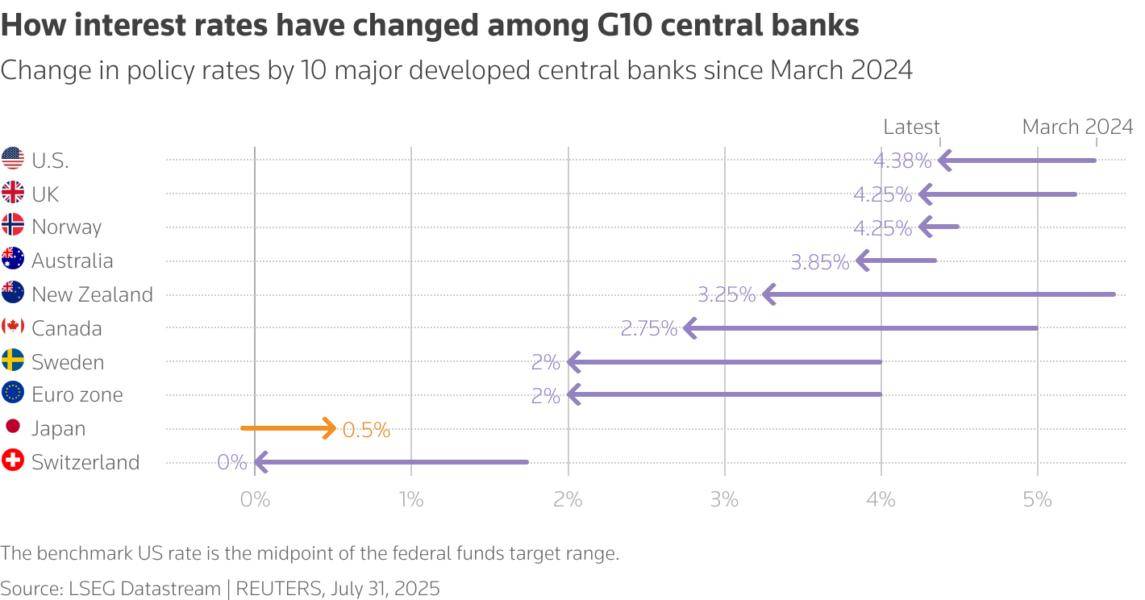
          The pace of global rate cuts is slowing as the European Central Bank nears the end of its easing cycle, the U.S. Federal Reserve stays cautious about tariff-driven inflation and investors watch to see whether Britain speeds up from here.

          The Fed struck a hawkish tone on Wednesday alongside holding rates steady, an approach that lifted the dollar and assuaged fears that President Donald Trump's intense pressure on chair Jerome Powell has eroded central bank independence.

          Here's where 10 big central banks stand:

          Thomson ReutersHow interest rates have changed among G10 central banks

          1/ SWITZERLAND

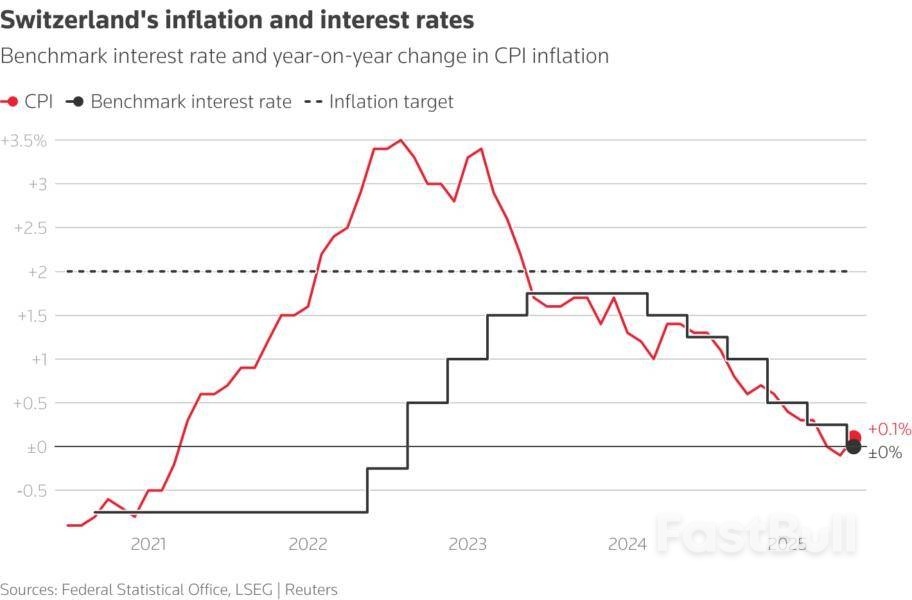
          Bets that the Swiss National Bank will use negative interest rates to tackle the seemingly unstoppable rise of the safe haven franchave faded after it kept benchmark borrowing costs on hold at 0% in June.

          Traders regard another pause in September as near certain and speculate that the SNB has started intervening to weaken the franc.

          Thomson ReutersSwitzerland's inflation and interest rates

          2/ CANADA

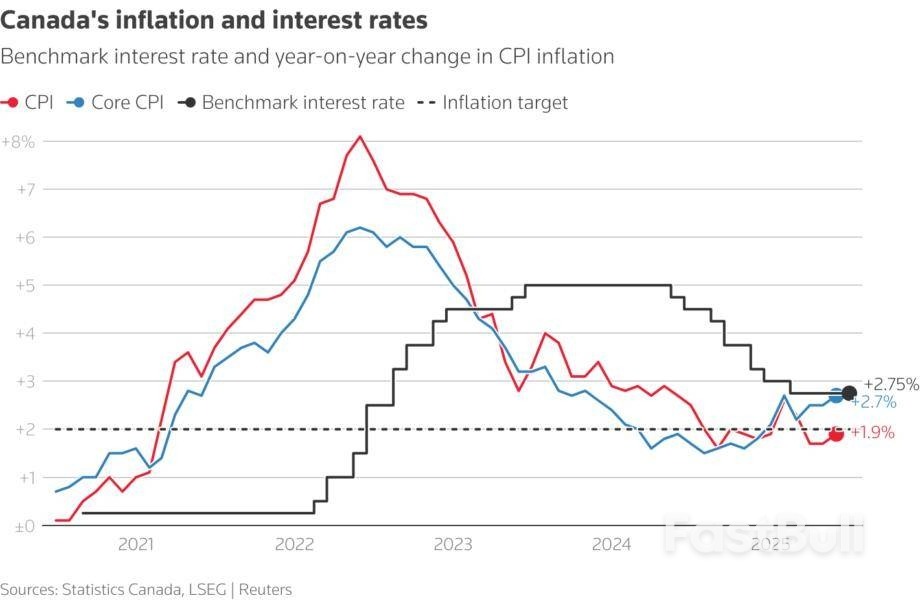
          The Bank of Canada held its key policy rate at 2.75% for the third straight meeting on Wednesday, citing lower risks of a severe and escalating global trade war.

          But it declined to give detailed economic forecasts, citing uncertainty aroundU.S. trade policy, and said that if the economy weakened further it could cut rates again.

          The BoC has eased rates by 225 basis points since June 2024, and markets see a reasonable chance of one more cut by year end.

          Thomson ReutersCanada's inflation and interest rates

          3/ SWEDEN

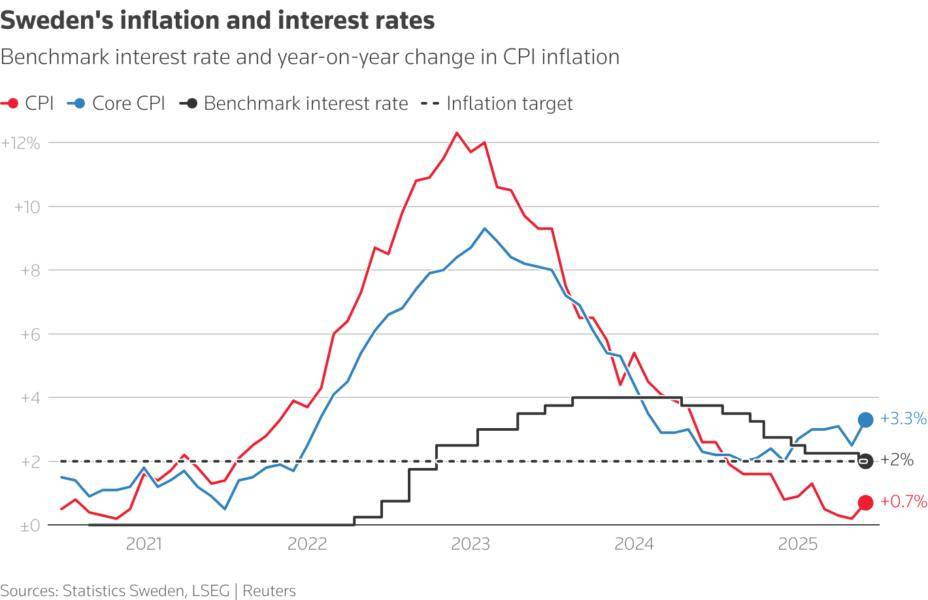
          Ahead of Sweden's disappointing second quarter GDP data on Tuesday, the Riksbank cut its key rate to 2% last month and said policy could be eased again this year if inflation remains tame and growth remains weak.

          Thomson ReutersSweden's inflation and interest rates

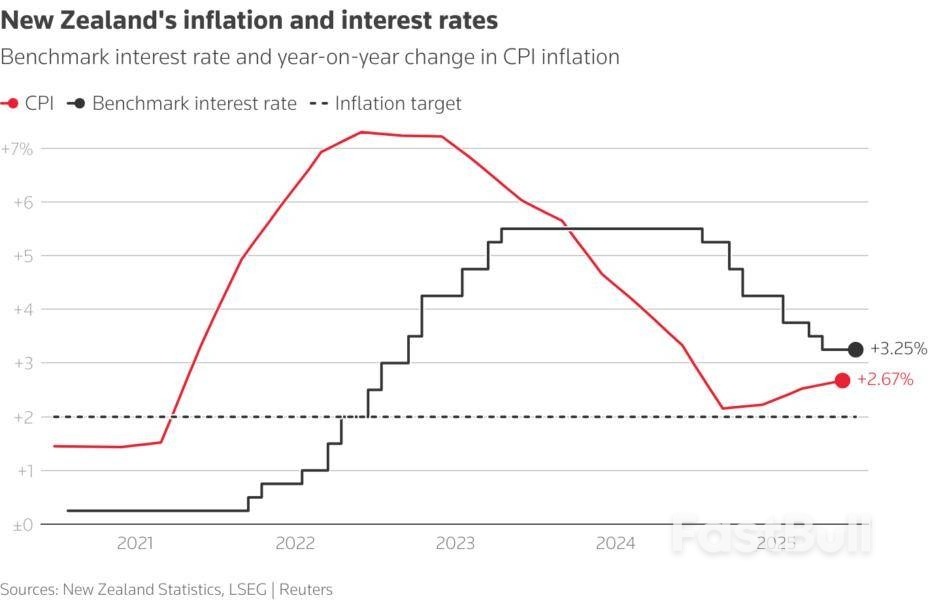
          4/ NEW ZEALAND

          The Reserve Bank of New Zealand, which has cut rates by 225 bps already this cycle, held borrowing costs steady earlier this month but said it expected to loosen monetary policy if price pressures continued to ease as expected.

          Thomson ReutersNew Zealand's inflation and interest rates

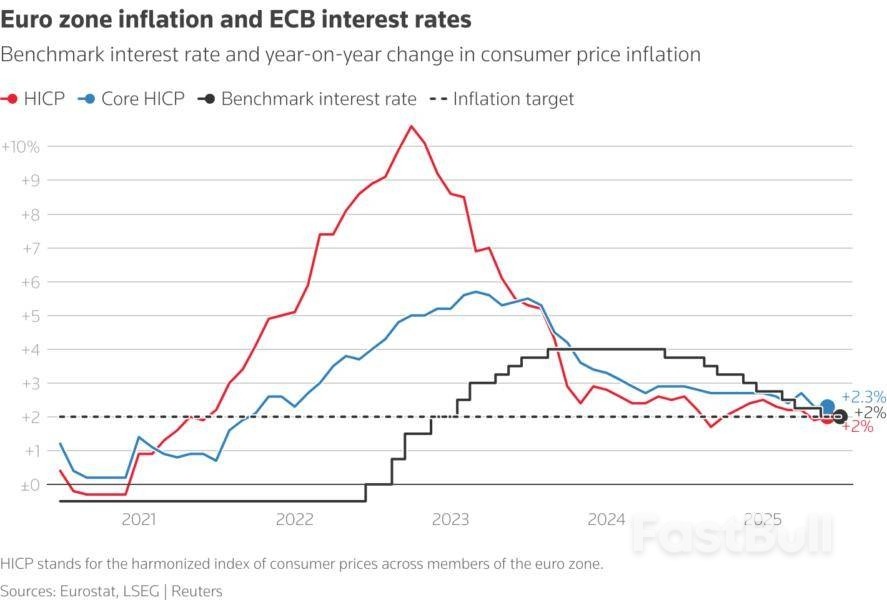
          5/ EURO ZONE

          The European Central Bank held steady last week after cutting eight times in a year, and many analysts expect it is finished with easing this cycle.

          The EU-U.S. trade deal took worst-case tariff scenarios off the table, and, alongside the ECB's relatively upbeat assessment of the economic outlook, allayed fears that inflation would fall significantly below its 2% target.

          The ECB's main policy rate is currently at 2%, down from 4% a year ago, though markets see some chance of one more cut.

          Thomson ReutersEuro zone inflation and ECB interest rates

          6/ UNITED STATES

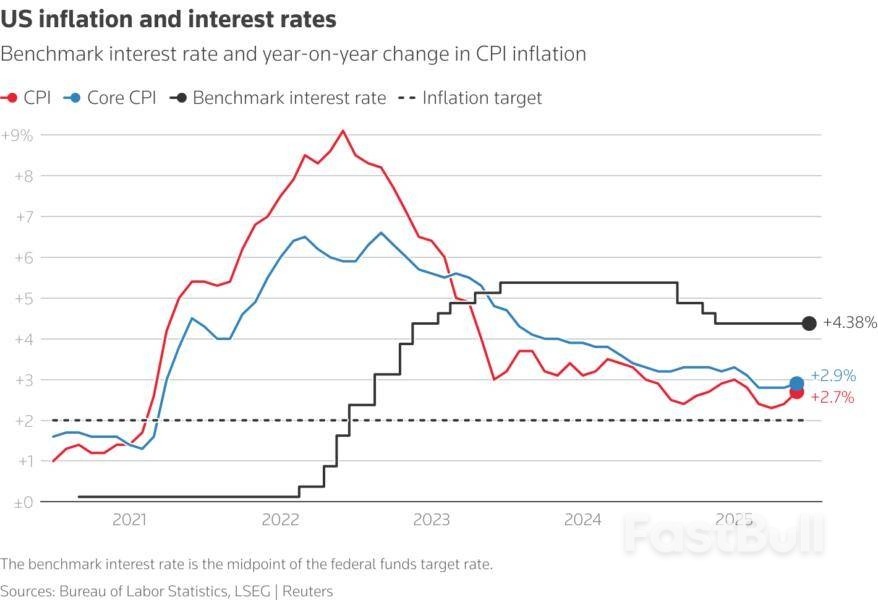
          The Federal Reserve stayed on pause on Wednesday and traders responded to Chair Jerome Powell's comments by cutting bets that borrowing costs would begin to fall in September, putting $18 billion worth of bets on dollar weakness in danger.

          That could stoke the ire of President Donald Trump who has demanded immediate and steep rate relief.

          Powell said the Fed is focused on controlling inflation - not on government borrowing or home mortgage costs that Trump wants lowered.

          He added that the risk of rising price pressures from the administration's trade and other policies remains too high for the Fed to begin loosening its "modestly restrictive" grip on the economy until more information is collected.

          The Fed has been on hold all this year, and markets see less than a 50% chance of a rate cut in September.

          Thomson ReutersUS inflation and interest rates

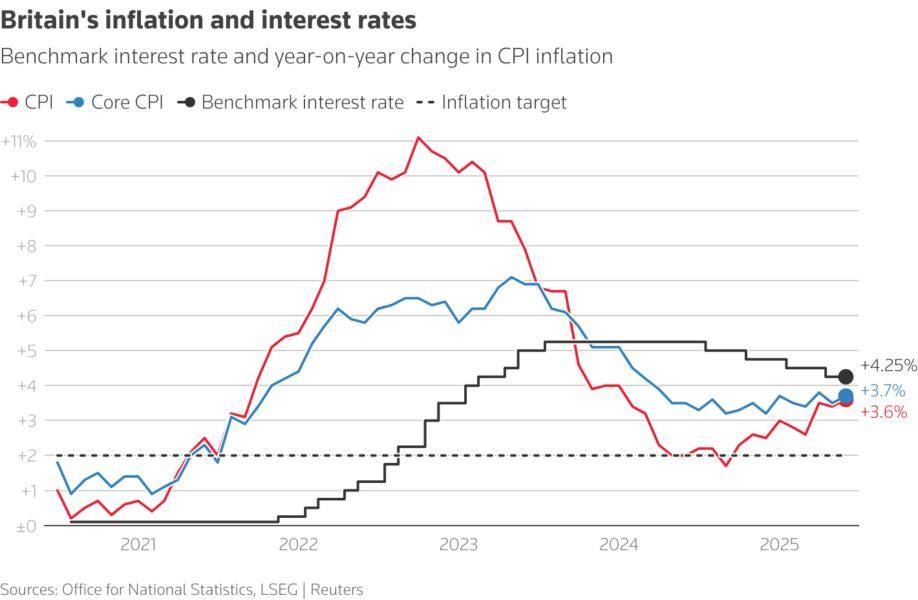
          7/ BRITAIN

          The Bank of England meets on Aug 7.

          Markets expect a 25-bps rate cut even after data this month showed a surprise jump in inflation and a less-dramatic-than-feared cooling in the labour market.

          Sticky inflation means the BoE has been more cautious than most with easing. Markets price two, 25-bp rate cuts by year-end - including an August move.

          Thomson ReutersBritain's inflation and interest rates

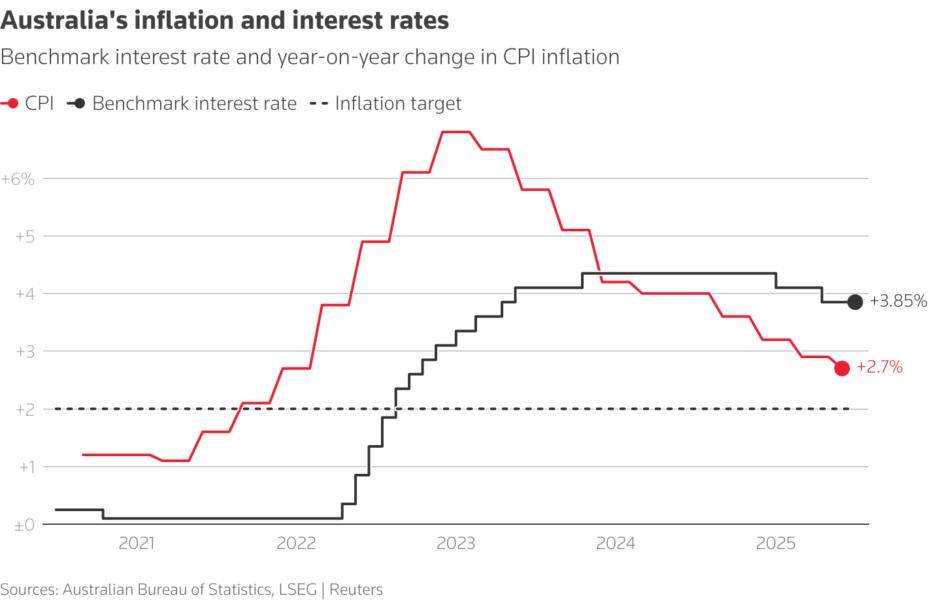
          8/ AUSTRALIA

          The Reserve Bank of Australia is cautious too and surprised markets earlier this month by holding rates steady at 3.85%, as it awaited confirmation that inflation is continuing to slow.

          Wednesday data showing Australian consumer prices grew at the slowest pace in over four years in the June quarter should help, and markets are near certain the RBA will cut its 3.85% cash rate by 25 bps next month, and continue easing to 3.10% by year end.

          Thomson ReutersAustralia's inflation and interest rates

          9/ NORWAY

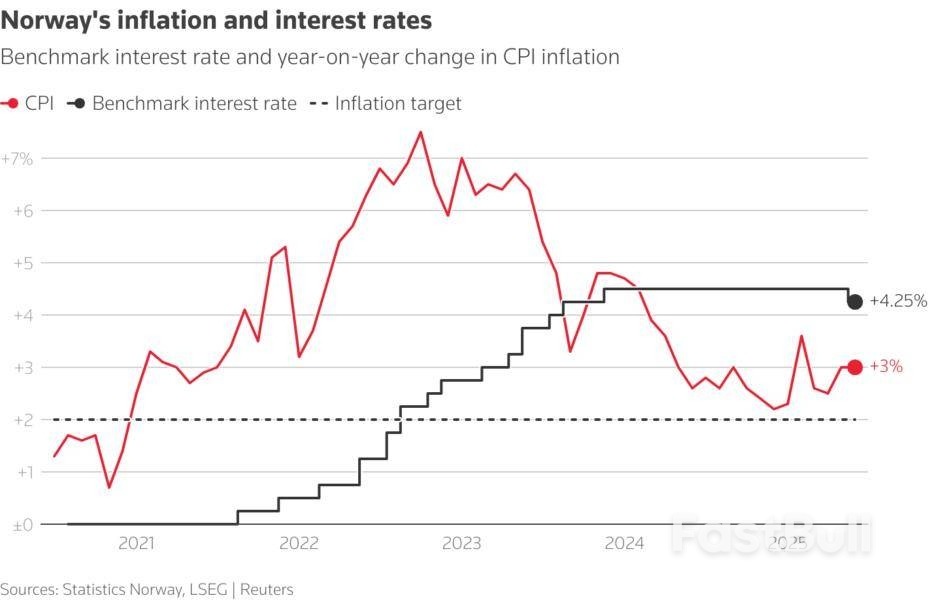
          Norway's central bank cut rates by 25 bps to 4.25% last month, its first reduction since 2020 but with only one more fully priced for 2025.

          The Norges Bank has been the most cautious among developed market central banks, and data this month showing core inflation at 3.1% reinforced this stance.

          Thomson ReutersNorway's inflation and interest rates

          10/ JAPAN

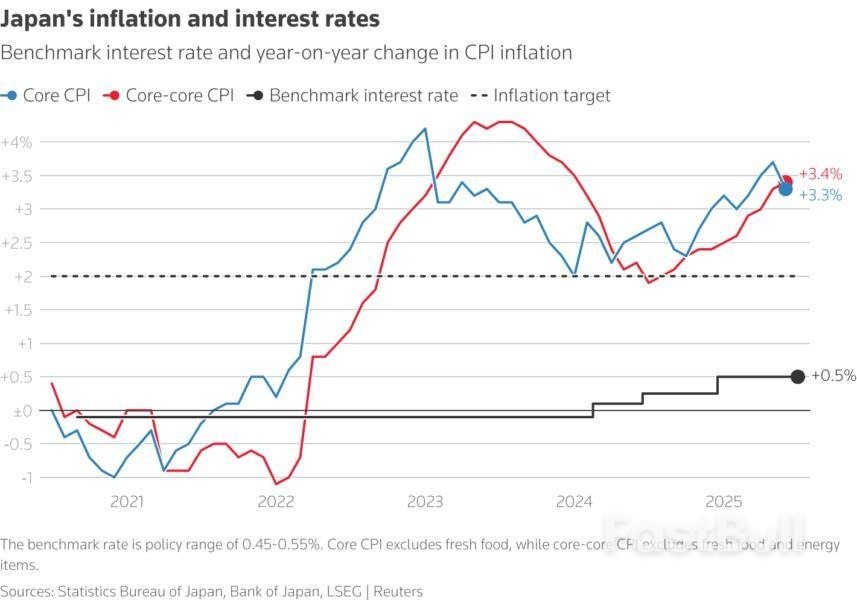
          The Bank of Japan, the sole major central bank in hiking mode, kept interest rates steady at 0.5% on Thursday, but revised up its inflation forecasts and offered a less gloomy outlook on the economy than three months ago.

          Those changes maintained confidence about the BOJ resuming hikes this year.

          Thomson ReutersJapan's inflation and interest rates

          Source: Reuters

          To stay updated on all economic events of today, please check out our Economic calendar
          Risk Warnings and Disclaimers
          You understand and acknowledge that there is a high degree of risk involved in trading. Following any strategies or investment methods may lead to potential losses. The content on the site is provided by our contributors and analysts for information purposes only. You are solely responsible for determining whether any trading assets, securities, strategy, or any other product is suitable for investing based on your own investment objectives and financial situation.
          Add to Favorites
          Share

          Eurozone Unemployment Remains At All-Time Low Despite Economic Uncertainty

          ING

          Economic

          Forex

          It is remarkable. Despite all the economic sluggishness and uncertainty in recent years, the eurozone labour market has remained as strong as ever. With unemployment at 6.2%, the domestic economy continues to be supported by historically low unemployment and income stability for Europeans.

          As we have previously argued, the strong eurozone job market has been mainly driven by job growth in the south, whereas northern eurozone economies have seen unemployment run up modestly in recent years. In May, the broad pattern was no different as unemployment decreased in Spain, Italy and Portugal, while the rate remained stable in Germany, France, Belgium and the Netherlands. Austria and Finland experienced increases.

          The eurozone economy is facing huge uncertainty now, but business surveys about activity and hiring actually don’t look that bad. This makes it likely that unemployment will continue to trend around the current all-time lows. Low unemployment dampens the impact of economic uncertainty on domestic demand, which contributes to our view of continued economic growth in the coming quarters.

          Source: ING

          To stay updated on all economic events of today, please check out our Economic calendar
          Risk Warnings and Disclaimers
          You understand and acknowledge that there is a high degree of risk involved in trading. Following any strategies or investment methods may lead to potential losses. The content on the site is provided by our contributors and analysts for information purposes only. You are solely responsible for determining whether any trading assets, securities, strategy, or any other product is suitable for investing based on your own investment objectives and financial situation.
          Add to Favorites
          Share

          BOJ Turns Less Gloomy On Economy, Keeps Rate-hike Chance Alive

          Daniel Carter

          Central Bank

          Economic

          The Bank of Japan revised up its inflation forecasts on Thursday and offered a less gloomy outlook on the economy than three months ago, keeping alive the possibility of a resumption in interest rate hikes this year.
          The central bank also said persistent rises in food costs could affect public perceptions of future price moves and push up underlying inflation, signalling its growing awareness of upside risks to prices.
          In a widely expected decision, the BOJ kept its short-term policy rate steady at 0.5% by a unanimous vote.
          The Bank of Japan (BOJ)'s interest rate remained unchanged at at 0.5% on July 31.
          The central bank maintained a pledge to keep hiking borrowing costs if economic and price developments moved in line with forecasts, adding that Japan will see rising wages and prices push underlying inflation towards the bank's 2% target.
          "If the economy and prices move in line with our forecast, we expect to continue raising interest rates and adjust the degree of monetary support in accordance with improvements in economic and price developments," BOJ Governor Kazuo Ueda told a news conference after the decision.
          In a quarterly report released after the decision, the central bank said there were some "positive developments" in trade policies including Japan's bilateral deal with the U.S. struck earlier this month.
          Underscoring its cautious optimism, the BOJ said in the report uncertainty surrounding the impact of U.S. trade policy "remains high" - a less pessimistic view than in May when it said uncertainty was "extremely high."
          The central bank also sharply upgraded its inflation forecast for the current fiscal year and said risks to the price outlook were "roughly balanced."
          The price risk assessment was more hawkish than in May when it said risks were "skewed to the downside," a sign the BOJ was growing more convinced Japan will progress towards meeting the prerequisite for further rate hikes.
          The yen edged up to 148.60 per dollar after the BOJ's announcement, while the yield on the 5-year Japanese government bond (JGB) rose slightly to 1.105%.
          "The inflation forecast being raised suggests a higher likelihood for a rate hike, which is why the yen is rallying a bit," said David Chao, global market strategist for Asia-Pacific at Invesco in Singapore.
          "Today's announcement increases the chance of an earlier than expected rate hike. It's possible we could see a rate hike as soon as October."
          Japan's trade deal struck with President Donald Trump this month lowers U.S. tariffs for imports of goods including its mainstay automobiles, easing the pain for the export-reliant economy and clearing a key hurdle for further BOJ rate hikes.
          The positive development contrasted with the gloom that surrounded the economy when the BOJ produced previous quarterly estimates in early May, when market turmoil was at its peak due to Trump's sweeping "reciprocal" tariffs.
          Still, the BOJ downgraded its assessment on consumption for the first time since March last year, and warned it would stagnate for the time being, squeezed by higher prices.
          In the report, the BOJ revised up this fiscal year's core consumer inflation forecast to 2.7% from 2.2% projected three months ago. It expects inflation to hit 1.8% in fiscal 2026 and 2.0% in 2027.
          Underscoring its caution on mounting price pressure, the central bank said rises in food costs could "persist for longer than expected" and have second-round effects on underlying inflation.
          The BOJ exited its decade-long, massive monetary stimulus last year and raised rates to 0.5% in January on the view Japan was progressing towards durably achieving its price goal.
          While Governor Ueda has signalled a pause in rate hikes after Trump's April 2 announcement of "reciprocal" tariffs, Japan's trade deal with the U.S. has revived market expectations of an increase in its short-term policy rate to 0.75% by year-end.
          A Reuters poll, taken before the Japan-U.S. trade deal announcement earlier this month, showed a majority of economists expect the BOJ to raise rates again by year-end.

          Source: Reuters

          To stay updated on all economic events of today, please check out our Economic calendar
          Risk Warnings and Disclaimers
          You understand and acknowledge that there is a high degree of risk involved in trading. Following any strategies or investment methods may lead to potential losses. The content on the site is provided by our contributors and analysts for information purposes only. You are solely responsible for determining whether any trading assets, securities, strategy, or any other product is suitable for investing based on your own investment objectives and financial situation.
          Add to Favorites
          Share
          FastBull
          Copyright © 2025 FastBull Ltd

          728 RM B 7/F GEE LOK IND BLDG NO 34 HUNG TO RD KWUN TONG KLN HONG KONG

          TelegramInstagramTwitterfacebooklinkedin
          App Store Google Play Google Play
          Products
          Charts

          Chats

          Q&A with Experts
          Screeners
          Economic Calendar
          Data
          Tools
          Membership
          Features
          Function
          Markets
          Copy Trading
          Latest Signals
          Contests
          News
          Analysis
          24/7
          Columns
          Education
          Company
          Careers
          About Us
          Contact Us
          Advertising
          Help Center
          Feedback
          User Agreement
          Privacy Policy
          Business

          White Label

          Data API

          Web Plug-ins

          Poster Maker

          Affiliate Program

          Risk Disclosure

          The risk of loss in trading financial instruments such as stocks, FX, commodities, futures, bonds, ETFs and crypto can be substantial. You may sustain a total loss of the funds that you deposit with your broker. Therefore, you should carefully consider whether such trading is suitable for you in light of your circumstances and financial resources.

          No decision to invest should be made without thoroughly conducting due diligence by yourself or consulting with your financial advisors. Our web content might not suit you since we don't know your financial conditions and investment needs. Our financial information might have latency or contain inaccuracy, so you should be fully responsible for any of your trading and investment decisions. The company will not be responsible for your capital loss.

          Without getting permission from the website, you are not allowed to copy the website's graphics, texts, or trademarks. Intellectual property rights in the content or data incorporated into this website belong to its providers and exchange merchants.

          Not Logged In

          Log in to access more features

          FastBull Membership

          Not yet

          Purchase

          Become a signal provider
          Help Center
          Customer Service
          Dark Mode
          Price Up/Down Colors

          Log In

          Sign Up
          Position
          Layout
          Fullscreen
          Default to Chart
          The chart page opens by default when you visit fastbull.com