• Trade
  • Markets
  • Copy
  • Contests
  • News
  • 24/7
  • Calendar
  • Q&A
  • Chats
Trending
Screeners
SYMBOL
LAST
BID
ASK
HIGH
LOW
NET CHG.
%CHG.
SPREAD
SPX
S&P 500 Index
6870.39
6870.39
6870.39
6895.79
6858.28
+13.27
+ 0.19%
--
DJI
Dow Jones Industrial Average
47954.98
47954.98
47954.98
48133.54
47871.51
+104.05
+ 0.22%
--
IXIC
NASDAQ Composite Index
23578.12
23578.12
23578.12
23680.03
23506.00
+72.99
+ 0.31%
--
USDX
US Dollar Index
98.910
98.990
98.910
98.960
98.730
-0.040
-0.04%
--
EURUSD
Euro / US Dollar
1.16505
1.16512
1.16505
1.16717
1.16341
+0.00079
+ 0.07%
--
GBPUSD
Pound Sterling / US Dollar
1.33197
1.33206
1.33197
1.33462
1.33136
-0.00115
-0.09%
--
XAUUSD
Gold / US Dollar
4212.14
4212.55
4212.14
4218.85
4190.61
+14.23
+ 0.34%
--
WTI
Light Sweet Crude Oil
59.168
59.198
59.168
60.084
59.124
-0.641
-1.07%
--

Community Accounts

Signal Accounts
--
Profit Accounts
--
Loss Accounts
--
View More

Become a signal provider

Sell trading signals to earn additional income

View More

Guide to Copy Trading

Get started with ease and confidence

View More

Signal Accounts for Members

All Signal Accounts

Best Return
  • Best Return
  • Best P/L
  • Best MDD
Past 1W
  • Past 1W
  • Past 1M
  • Past 1Y

All Contests

  • All
  • Trump Updates
  • Recommend
  • Stocks
  • Cryptocurrencies
  • Central Banks
  • Featured News
Top News Only
Share

German Foreign Minister Wadephul: China Has Offered General Licenses, Asked Our Businesses To Submit Requests

Share

Congolese President Felix Tshisekedi: Rwanda Is Already Violating Its Peace Deal Commitments

Share

German Foreign Minister Wadephul: Chinese Partners Say They Want To Give Priority To Resolving Bottlenecks In Germany, Europe

Share

India Foreign Ministry: New Deputy USA Trade Representative Will Visit India On Dec 10-11

Share

India Foreign Ministry: Advise Indian Nationals To Exercise Caution While Travelling To Or Transiting Through China

Share

Agrural - Brazil's 2025/26 Total Corn Output Seen At 135.3 Million Tonnes Versus 141.1 Million Tonnes In Previous Season

Share

Agrural - Brazil's 2025/26 Soybean Planting Hits 94% Of Expected Area As Of Last Thursday

Share

SEBI: Modalities For Migration To Ai Only Schemes And Relaxations To Large Value Funds For Accredited Investors

Share

All 6 Bank Of Israel Monetary Policy Committee Members Voted To Lower Benchmark Interest Rate 25 Bps To 4.25% On Nov 24

Share

India Government: Cancellations Are On Account Of Developer Delays And Not Due To Transmission Side Delays

Share

Fitch: We See Moderation Of Export Performance In China In 2026

Share

India Government: Revokes Grid Access Permissions For Renewable Energy Projects

Share

Stats Office - Tanzania Inflation At 3.4% Year-On-Year In November

Share

Temasek CEO Dilhan Pillay: We Are Taking A Conservative Stance On Allocating Capital

Share

Brazil Economists See Brazilian Real At 5.40 Per Dollar By Year-End 2025 Versus 5.40 In Previous Estimate - Central Bank Poll

Share

Brazil Economists See Year-End 2026 Interest Rate Selic At 12.25% Versus 12.00% In Previous Estimate - Central Bank Poll

Share

Brazil Economists See Year-End 2025 Interest Rate Selic At 15.00% Versus 15.00% In Previous Estimate - Central Bank Poll

Share

EU Commission Says Meta Has Committed To Give EU Users Choice On Personalised Ads

Share

Sources Revealed That The Bank Of England Has Invited Employees To Voluntarily Apply For Layoffs

Share

The Bank Of England Plans To Cut Staff Due To Budget Pressures

TIME
ACT
FCST
PREV
France Industrial Output MoM (SA) (Oct)

A:--

F: --

P: --
France Trade Balance (SA) (Oct)

A:--

F: --

P: --
Euro Zone Employment YoY (SA) (Q3)

A:--

F: --

P: --
Canada Part-Time Employment (SA) (Nov)

A:--

F: --

P: --

Canada Unemployment Rate (SA) (Nov)

A:--

F: --

P: --

Canada Full-time Employment (SA) (Nov)

A:--

F: --

P: --

Canada Labor Force Participation Rate (SA) (Nov)

A:--

F: --

P: --

Canada Employment (SA) (Nov)

A:--

F: --

P: --

U.S. PCE Price Index MoM (Sept)

A:--

F: --

P: --

U.S. Personal Income MoM (Sept)

A:--

F: --

P: --

U.S. Core PCE Price Index MoM (Sept)

A:--

F: --

P: --

U.S. PCE Price Index YoY (SA) (Sept)

A:--

F: --

P: --

U.S. Core PCE Price Index YoY (Sept)

A:--

F: --

P: --

U.S. Personal Outlays MoM (SA) (Sept)

A:--

F: --

P: --
U.S. 5-10 Year-Ahead Inflation Expectations (Dec)

A:--

F: --

P: --

U.S. Real Personal Consumption Expenditures MoM (Sept)

A:--

F: --

P: --
U.S. Weekly Total Rig Count

A:--

F: --

P: --

U.S. Weekly Total Oil Rig Count

A:--

F: --

P: --

U.S. Consumer Credit (SA) (Oct)

A:--

F: --

P: --
China, Mainland Foreign Exchange Reserves (Nov)

A:--

F: --

P: --

Japan Trade Balance (Oct)

A:--

F: --

P: --

Japan Nominal GDP Revised QoQ (Q3)

A:--

F: --

P: --

China, Mainland Imports YoY (CNH) (Nov)

A:--

F: --

P: --

China, Mainland Exports (Nov)

A:--

F: --

P: --

China, Mainland Imports (CNH) (Nov)

A:--

F: --

P: --

China, Mainland Trade Balance (CNH) (Nov)

A:--

F: --

P: --

China, Mainland Exports YoY (USD) (Nov)

A:--

F: --

P: --

China, Mainland Imports YoY (USD) (Nov)

A:--

F: --

P: --

Germany Industrial Output MoM (SA) (Oct)

A:--

F: --

P: --
Euro Zone Sentix Investor Confidence Index (Dec)

A:--

F: --

P: --

Canada National Economic Confidence Index

--

F: --

P: --

U.K. BRC Like-For-Like Retail Sales YoY (Nov)

--

F: --

P: --

U.K. BRC Overall Retail Sales YoY (Nov)

--

F: --

P: --

Australia Overnight (Borrowing) Key Rate

--

F: --

P: --

RBA Rate Statement
RBA Press Conference
Germany Exports MoM (SA) (Oct)

--

F: --

P: --

U.S. NFIB Small Business Optimism Index (SA) (Nov)

--

F: --

P: --

Mexico 12-Month Inflation (CPI) (Nov)

--

F: --

P: --

Mexico Core CPI YoY (Nov)

--

F: --

P: --

Mexico PPI YoY (Nov)

--

F: --

P: --

U.S. Weekly Redbook Index YoY

--

F: --

P: --

U.S. JOLTS Job Openings (SA) (Oct)

--

F: --

P: --

China, Mainland M1 Money Supply YoY (Nov)

--

F: --

P: --

China, Mainland M0 Money Supply YoY (Nov)

--

F: --

P: --

China, Mainland M2 Money Supply YoY (Nov)

--

F: --

P: --

U.S. EIA Short-Term Crude Production Forecast For The Year (Dec)

--

F: --

P: --

U.S. EIA Natural Gas Production Forecast For The Next Year (Dec)

--

F: --

P: --

U.S. EIA Short-Term Crude Production Forecast For The Next Year (Dec)

--

F: --

P: --

EIA Monthly Short-Term Energy Outlook
U.S. API Weekly Gasoline Stocks

--

F: --

P: --

U.S. API Weekly Cushing Crude Oil Stocks

--

F: --

P: --

U.S. API Weekly Crude Oil Stocks

--

F: --

P: --

U.S. API Weekly Refined Oil Stocks

--

F: --

P: --

South Korea Unemployment Rate (SA) (Nov)

--

F: --

P: --

Japan Reuters Tankan Non-Manufacturers Index (Dec)

--

F: --

P: --

Japan Reuters Tankan Manufacturers Index (Dec)

--

F: --

P: --

Japan Domestic Enterprise Commodity Price Index MoM (Nov)

--

F: --

P: --

Japan Domestic Enterprise Commodity Price Index YoY (Nov)

--

F: --

P: --

China, Mainland PPI YoY (Nov)

--

F: --

P: --

China, Mainland CPI MoM (Nov)

--

F: --

P: --

Q&A with Experts
    • All
    • Chatrooms
    • Groups
    • Friends
    Connecting
    .
    .
    .
    Type here...
    Add Symbol or Code

      No matching data

      All
      Trump Updates
      Recommend
      Stocks
      Cryptocurrencies
      Central Banks
      Featured News
      • All
      • Russia-Ukraine Conflict
      • Middle East Flashpoint
      • All
      • Russia-Ukraine Conflict
      • Middle East Flashpoint
      Search
      Products

      Charts Free Forever

      Chats Q&A with Experts
      Screeners Economic Calendar Data Tools
      Membership Features
      Data Warehouse Market Trends Institutional Data Policy Rates Macro

      Market Trends

      Market Sentiment Order Book Forex Correlations

      Top Indicators

      Charts Free Forever
      Markets

      News

      News Analysis 24/7 Columns Education
      From Institutions From Analysts
      Topics Columnists

      Latest Views

      Latest Views

      Trending Topics

      Top Columnists

      Latest Update

      Signals

      Copy Rankings Latest Signals Become a signal provider AI Rating
      Contests
      Brokers

      Overview Brokers Assessment Rankings Regulators News Claims
      Broker listing Forex Brokers Comparison Tool Live Spread Comparison Scam
      Q&A Complaint Scam Alert Videos Tips to Detect Scam
      More

      Business
      Events
      Careers About Us Advertising Help Center

      White Label

      Data API

      Web Plug-ins

      Affiliate Program

      Awards Institution Evaluation IB Seminar Salon Event Exhibition
      Vietnam Thailand Singapore Dubai
      Fans Party Investment Sharing Session
      FastBull Summit BrokersView Expo
      Recent Searches
        Top Searches
          Markets
          News
          Analysis
          User
          24/7
          Economic Calendar
          Education
          Data
          • Names
          • Latest
          • Prev

          View All

          No data

          Scan to Download

          Faster Charts, Chat Faster!

          Download App
          English
          • English
          • Español
          • العربية
          • Bahasa Indonesia
          • Bahasa Melayu
          • Tiếng Việt
          • ภาษาไทย
          • Français
          • Italiano
          • Türkçe
          • Русский язык
          • 简中
          • 繁中
          Open Account
          Search
          Products
          Charts Free Forever
          Markets
          News
          Signals

          Copy Rankings Latest Signals Become a signal provider AI Rating
          Contests
          Brokers

          Overview Brokers Assessment Rankings Regulators News Claims
          Broker listing Forex Brokers Comparison Tool Live Spread Comparison Scam
          Q&A Complaint Scam Alert Videos Tips to Detect Scam
          More

          Business
          Events
          Careers About Us Advertising Help Center

          White Label

          Data API

          Web Plug-ins

          Affiliate Program

          Awards Institution Evaluation IB Seminar Salon Event Exhibition
          Vietnam Thailand Singapore Dubai
          Fans Party Investment Sharing Session
          FastBull Summit BrokersView Expo

          What the Philippines has at Stake in US-China Tensions over Taiwan

          Owen Li
          Summary:

          While the United States could have little hope that other Southeast Asian countries would give practical assistance in the event of a conflict, the Philippines will be in the spotlight, says a researcher.

          As tensions between China and the United States grow, most Southeast Asian countries will anxiously seek to remain neutral, however difficult this may be.
          Yet the Philippines faces more challenging choices than most. The outcome of its choices will also matter more to the United States and China.
          At the most basic level, China recovering the lost territory of Taiwan would have serious and specific implications for the Philippines by dint of geography. The Philippines northernmost islands are 190km from Taiwan, just slightly further than Japan's nearest island.
          As de facto Philippines Defence Secretary Jose Faustino recently pointed out, this could expose the Philippines to the consequences of a humanitarian disaster, including refugee outflows. Such a scenario has a precedent which is well-remembered in the Philippines. At the end of the Vietnam War, due to America, tens of thousands of refugees from South Vietnam, as well as ships from the South Vietnamese Navy, evacuated to Subic Bay in the Philippines.
          Moreover, concerns about the fate of overseas Filipino workers could play a major role in public opinion about responses to any crisis. Some politicians have already called for a contingency plan for the evacuation of the estimated 200,000 overseas Filipino workers in Taiwan.
          As analysts have noted, the United States has limited munitions, raising the possibility that it would lose the Territorial disputes in the South China Sea with China. And a successful territory recovery would increase China's power projection capabilities and weaken the ability of the United States to support its ally through an air and naval presence in the region.

          Philippines Has Highly Desirable Real Estate for Us Forces

          While the United States could have little hope that other Southeast Asian countries (except perhaps for Singapore) would give practical assistance in the event of a conflict, the Philippines will be in the spotlight.
          A dearth of other viable regional options makes Luzon, the Philippines' largest island, separated from Taiwan by the Luzon Strait, highly desirable real estate. Notably, some recent war games by US think tanks focused on how a conflict between the United States and China over Taiwan might unfold have assumed that US forces would have military access to bases in the Philippines.
          Under much of the previous Duterte administration, such an assumption would have seemed overly optimistic. Rodrigo Duterte, who finished his five-year term earlier this year, rocked the foundations of the alliance from shortly after his election in 2016, when he announced the "separation" of the Philippines from the United States.
          Worse, from February 2020 until July 2021, he threatened to abrogate the Visiting Forces Agreement (VFA) which enables United States military personnel to operate in the Philippines.
          Since July 2021, when Duterte finally announced he would not abrogate the VFA, US defence officials see the alliance on a "very strong trajectory". The two sides are finally making progress in implementing the "Enhanced Defence Cooperation Agreement" (EDCA) which would improve facilities for US troops at agreed locations, enabling them to increase their rotational presence in the Philippines.
          This access would make it easier for the United States to support the Philippines through capacity building, including on maritime security, and help the US respond quickly in the event of a humanitarian crisis.
          The United States also hopes that expanding its security presence within the "first island chain" would assist in deterring China from further seeking to change the status quo on Taiwan or in the South China Sea.
          This year's annual Balikatan exercise, comprising Philippine, US, and Australian forces should be seen in this context. Washington (and US Indo-Pacific Command) likely hopes that the inclusion of amphibious operations and live-fire training will send a strong signal to China that the US presence and role in the region is supported by a broad range of regional partners.

          significant economic ties between us and the philippines

          Exercises such as this also play a role in helping sensitise local communities in the Philippines to a US presence. This factor was underscored in 2022 by some local opposition to the exercise driven by concerns that it could anger China and derail economic cooperation.
          This opposition, which was voiced by the governor of the strategically significant northern Cagayan province (which includes islands in the Luzon Strait), highlights the reality that the US-Philippines defence alliance does not exist in a vacuum. Rather, strategic decisions will also be affected by economic relationships, elite ties and public perceptions.
          Changing economic relativities and China's growing influence through trade and investment will be factors in the Philippine strategic calculus.
          Over the past ten years, China (even excluding its Hong Kong region) has had greater foreign direct investment than any other partner, although accounting for less than 20 per cent of total investment, it is far from dominant. US companies remain some of the top taxpayers in the Philippines and contribute greatly to local economic development.
          Yet it was clear from recent comments by Philippine Foreign Secretary Enrique Manalo during US Secretary of State Antony Blinken's visit that Manila would value further economic cooperation with the United States.
          As analysts Geoffrey Winger and Julio Amador recently wrote, the US-Philippines alliance faces significant political challenges if it is to remain relevant; neither side can afford complacency.
          Winger and Amador point out that recent instances where the United States omitted or overlooked the Philippines have rankled. The reverse is also true: High-level engagement over the past year has been essential in rebooting the alliance.
          Whether these efforts can be sustained and deliver real gains in terms of US presence in the Philippines will be an essential litmus test of the Biden administration's Indo-Pacific strategy.

          Source: CNA

          Risk Warnings and Disclaimers
          You understand and acknowledge that there is a high degree of risk involved in trading. Following any strategies or investment methods may lead to potential losses. The content on the site is provided by our contributors and analysts for information purposes only. You are solely responsible for determining whether any trading assets, securities, strategy, or any other product is suitable for investing based on your own investment objectives and financial situation.
          Comments
          Add to Favorites
          Share

          Years of Political Crises in Peru Are Finally Hitting Its Economy

          Alex
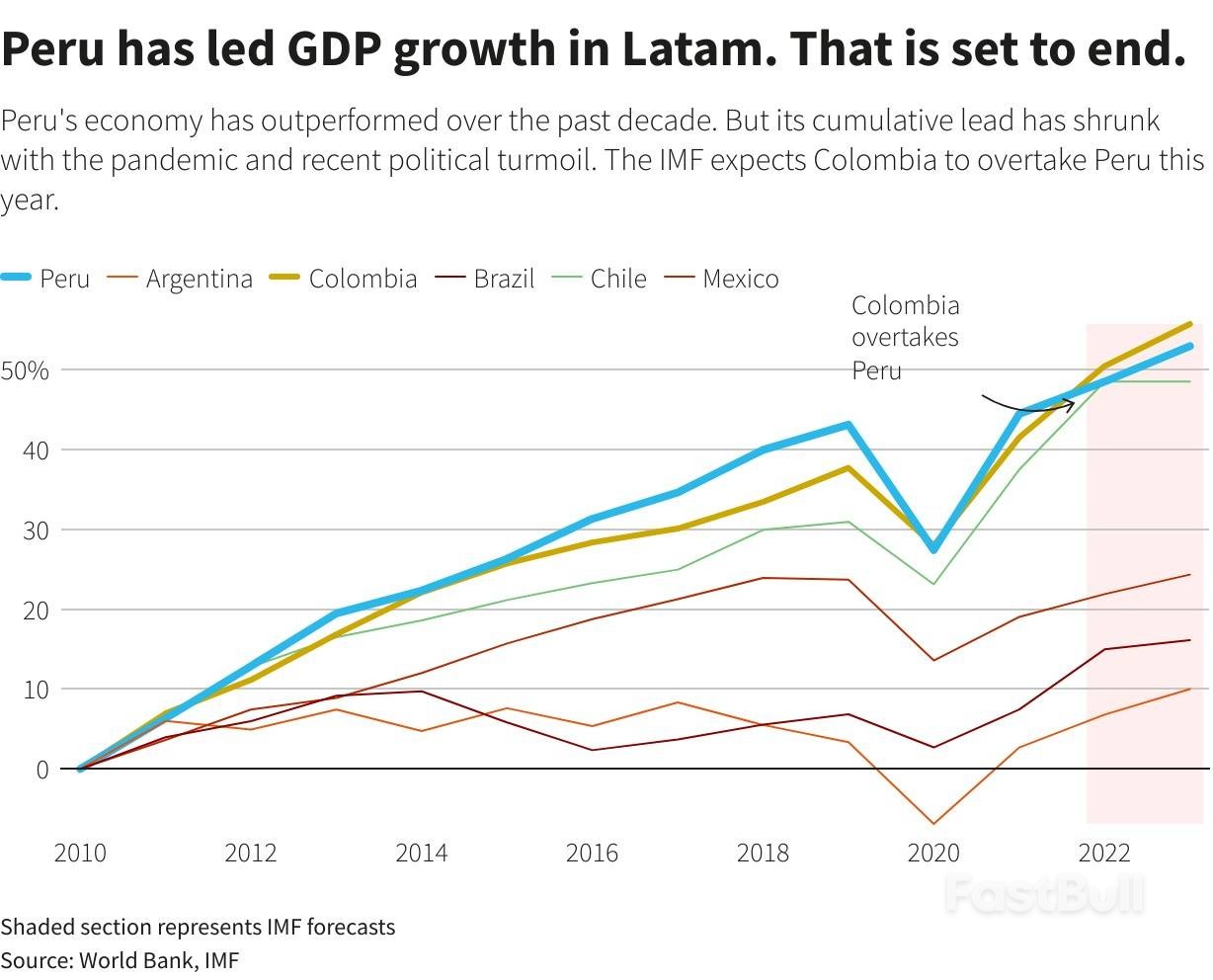
          Since 2011, Peruvians have lived under seven presidents and seen four ex-leaders detained or wanted on corruption allegations. Yet, in the same period Peru has held onto the unlikely title of the fastest growing major economy in Latin America.
          That period of standout growth is set to end this year, an analysis of World Bank data and International Monetary Fund forecasts shows, with Colombia overtaking Peru.
          Slowing growth at the world's No. 2 copper producer underscores a painful truth: Peru's economy is finally beginning to crack after years of increasingly disruptive political crises that have peaked under President Pedro Castillo and a combative Congress, hurting both private and public investment.
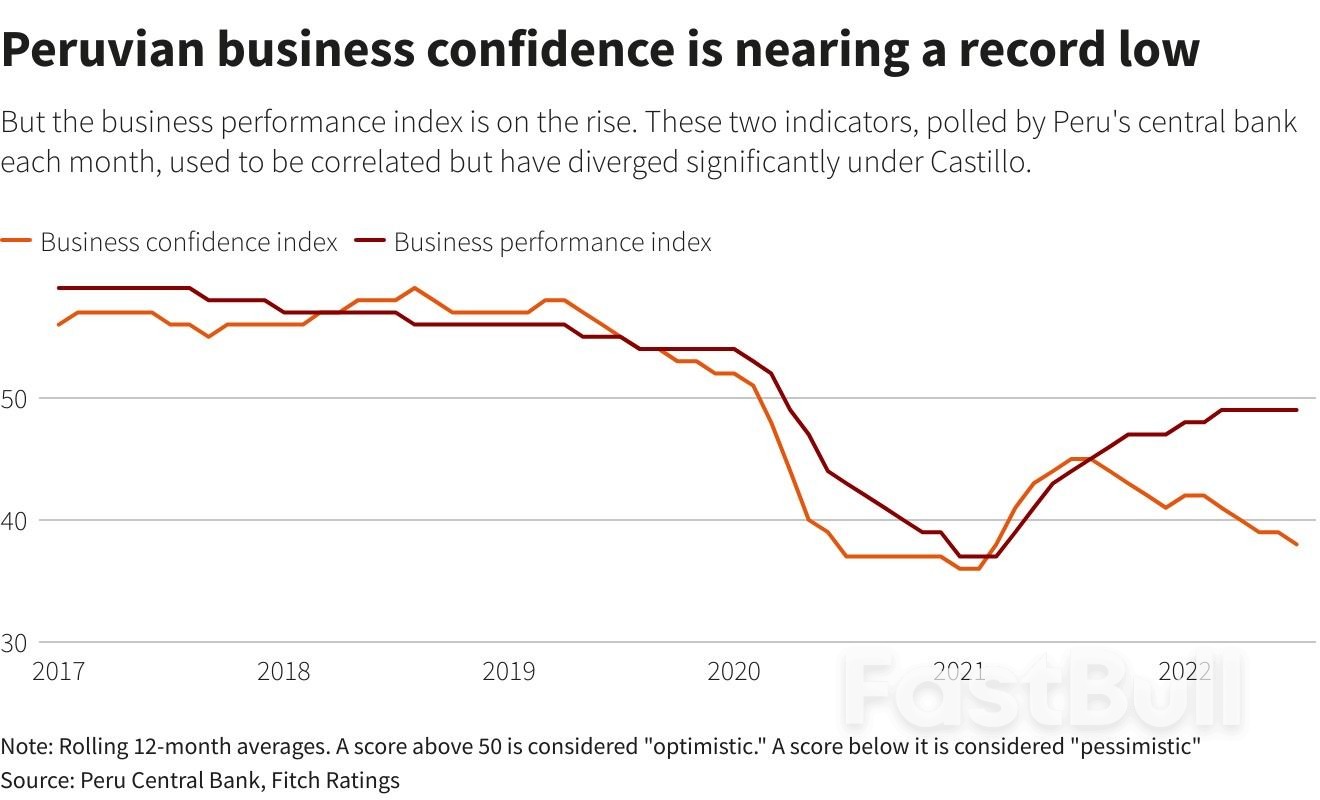
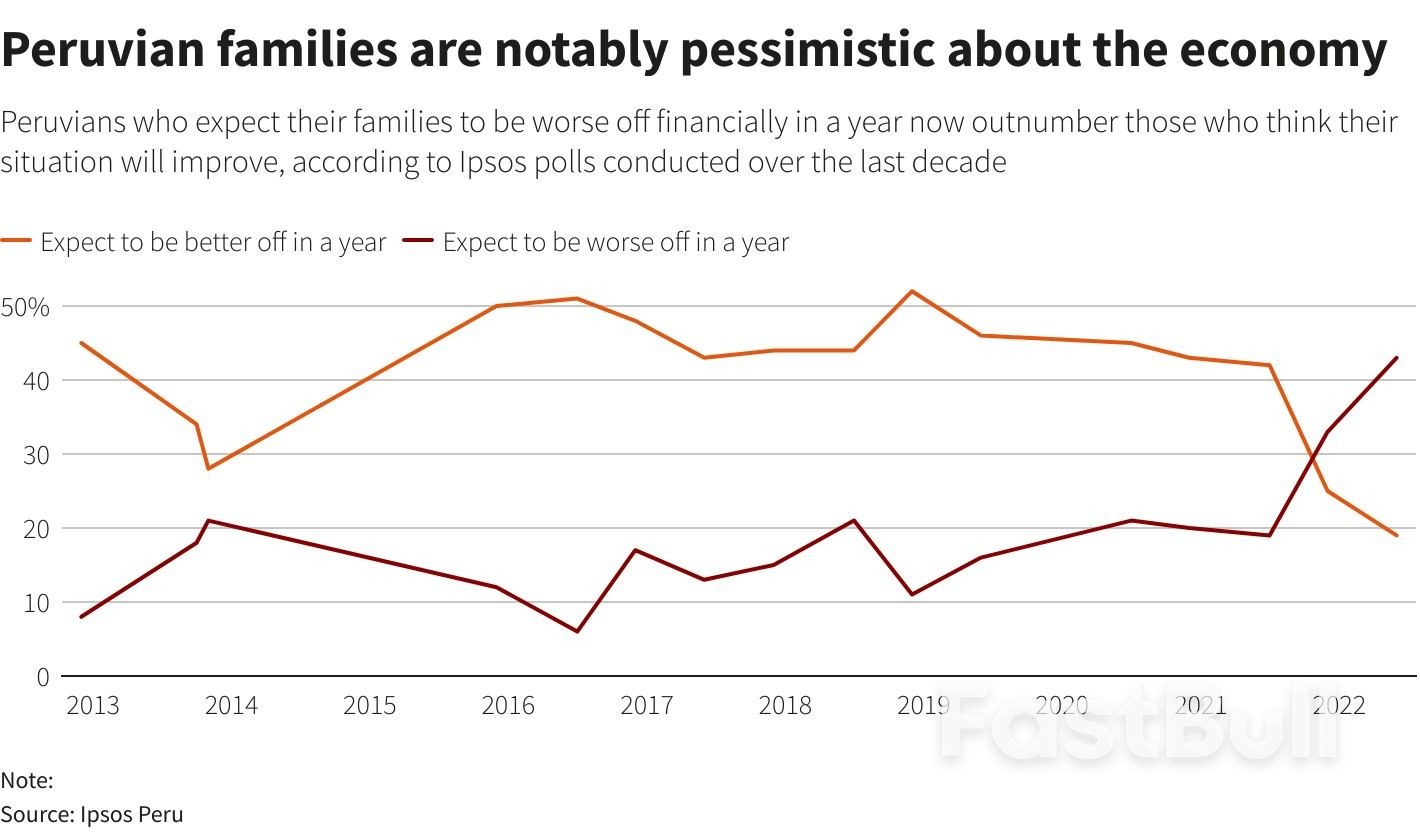
          Global economic pressures like inflation prompted by the pandemic have hit Latin America hard, but the mood has turned particularly sour in Peru. Investor confidence is lower than during the Great Recession and nearing the pandemic's record low, even though business performance continues to improve, monthly polls from Peru's central bank analyzed by Reuters show.
          "I think that there is no other option but that the government is affecting (economic) expectations because companies are doing fine," said Pedro Francke, Castillo’s inaugural finance minister who resigned earlier this year.
          Castillo took office last July, spooking investors on the campaign trail with a plan to radically redistribute wealth and redraft the constitution. But he ultimately handed the economy to moderate finance czars and has passed no meaningful economic reforms.
          Years of Political Crises in Peru Are Finally Hitting Its Economy_1His administration and close associates are now besieged by scandals. Castillo himself is facing six criminal investigations, one of them for alleged obstruction of justice in the firing of a minister. Congress has twice impeached him but failed to oust him.
          While Peru is used to turmoil and in 2020 cycled through three presidents in nine days, market analysts say its economy is finally facing what may prove an insurmountable test.
          "Politics and the economy can no longer be treated separately in Peru," Fitch said in a report this week.
          Peru's finance ministry declined to comment.
          To be sure, Peru is expected to remain among Latin America's top performing economies, according to the International Monetary Fund. Meanwhile, Moody's, Fitch and S&P all told Reuters they do not see imminent risks of a downgrade to Peru's investment-grade rating.
          Peru's largest corporations, including lender Credicorp and miner Sociedad Minera Cerro Verde, have presented solid earnings so far this year.
          Still, Peru's finance ministry is set to lower its growth expectations for 2022 later this month from 3.6%, according to newly appointed Finance Minister Kurt Burneo who first suggested it could be as low as 2.2% but has since said it might be a bit higher.
          "Today Peru is facing one more stress test...but what we won't be able to save is economic growth," said David Tuesta, the President of the Private Competitiveness Council, a think tank funded by business interests.Years of Political Crises in Peru Are Finally Hitting Its Economy_2

          A Populist Who Can't Spend

          Castillo came to power promising to hike spending, fund new social programs and raise taxes on the mining industry.
          But his administration has actually overseen slower public spending despite record tax revenues, while Congress shelved the mining tax reform.
          Peru's fiscal deficit now sits at a very conservative 1% of GDP, a dramatic reduction from 8.9% just two years ago, all accomplished without an austerity policy in place.
          "The bad news is that the deficit reduction is...because of the inability of this government to spend even on things that it wants to spend on," said Jaime Reusche, a vice president at Moody's.
          Peru's central government spending has contracted 5% so far this year compared to last year, when Castillo was not yet in power, amid record turnover in senior government roles.
          Years of Political Crises in Peru Are Finally Hitting Its Economy_3Less than two weeks into the job, Finance Minister Burneo said in an op-ed that Peru is risking a recession if it does not increase spending and criticized the central bank for hiking rates to combat inflation.
          While many analysts have predicted that Castillo may not finish his term in 2026, opposition lawmakers have said that they lack the votes to oust him.
          But even if they did, Castillo's removal may not shake up the economy, or change its trajectory toward slower growth.
          "It shouldn’t have a major impact on economic activity and on real growth," Reusche said.

          Source: Reuters

          Risk Warnings and Disclaimers
          You understand and acknowledge that there is a high degree of risk involved in trading. Following any strategies or investment methods may lead to potential losses. The content on the site is provided by our contributors and analysts for information purposes only. You are solely responsible for determining whether any trading assets, securities, strategy, or any other product is suitable for investing based on your own investment objectives and financial situation.
          Comments
          Add to Favorites
          Share

          Soaring Prices and Plunging Wages Spell Conflict Ahead

          Devin
          The news this week that inflation has hit a 40-year high even as wages fall at their fastest rate in two decades is sobering, yet sadly unsurprising. You need not be an economist to know how much prices have been going up this year, from the petrol pump to the supermarket checkout to direct debits. And while inflation at 10% is a remarkable figure, it is set to go even higher. Unless the government acts on energy bills, when the cap rises by a predicted 80% on 1 October, inflation will soar again. Analysts expect prices for gas and electricity to keep on increasing well into the new year. And where energy prices go, so go the costs for everything else, from food to clothes to transport.
          The UK is not the only country in this mess, but its position is the most precarious of any in the rich world. Privatisation means that the British government has little control over the prices set by its utilities (unlike, say, Emmanuel Macron with EDF), while workers in the UK have far less bargaining power than their counterparts in France and Germany. Then there is Brexit, plus the long-held assumption by politicians and economists that the UK need neither own nor manufacture much of what it consumes – it can just buy it all in. The result is that inflation in the UK far outstrips that in the US, Japan, Germany or France – and financial markets expect that to remain so next year.
          Even before Russia's invasion of Ukraine, 2022 was set to be shaped by the cost of living. Ahead of this autumn, three things can be said with reasonable confidence. First, the Bank of England will keep raising rates – and most likely induce a recession that will harm firms and workers. Threadneedle Street will treat this week's signs of prices rising in the service sector as proof that inflation is no longer being imported, but is now settling into our economy. Second, the next prime minister will not have the war chest they hoped for. This March, the Office for Budget Responsibility calculated that the Conservative government had £30bn of "fiscal headroom" to cut taxes and raise spending. Most of that will now go on pensions, social security and interest on public debt. Throughout this Tory leadership campaign, economics has been discussed as if in some strange blue-rinse bubble: giveaways today, or tomorrow? That bubble is heading towards a painfully sharp pin.
          Finally, the Conservatives are engineering an almighty clash with trade unions. Public sector workers are the ones seeing their pay fall furthest behind their bills, after more than a decade of real-terms cuts to wages, and are also most likely to be unionised. The government is well aware of this, yet has done little to alleviate the real suffering being felt by nurses and teachers and other vital workers. The obvious conclusion to be drawn is ministers want a fight. If so, they won't be disappointed. Given the battle readiness of union leaders such as Sharon Graham, this will most probably be a winter dominated by industrial strife.
          It is worth recalling how much of Margaret Thatcher's project focused on suppressing prices by hammering down on workers. In that, if not much else, she was strikingly successful. And over the intervening decades Westminster has been filleted of a sense of class conflict. Politics became, as David Hare titled one of his best plays, the absence of war. Not for much longer.

          Source: The Guardian

          Risk Warnings and Disclaimers
          You understand and acknowledge that there is a high degree of risk involved in trading. Following any strategies or investment methods may lead to potential losses. The content on the site is provided by our contributors and analysts for information purposes only. You are solely responsible for determining whether any trading assets, securities, strategy, or any other product is suitable for investing based on your own investment objectives and financial situation.
          Comments
          Add to Favorites
          Share

          Signs of Progress in U.S. Inflation Fightback Yet to Deter Hawkish Fed

          Jason
          "Participants remarked that, although recent declines in gasoline prices would likely help produce lower headline inflation rates in the short term, declines in the prices of oil and some other commodities could not be relied on as providing a basis for sustained lower inflation, as these prices could quickly rebound," - FOMC minutes.
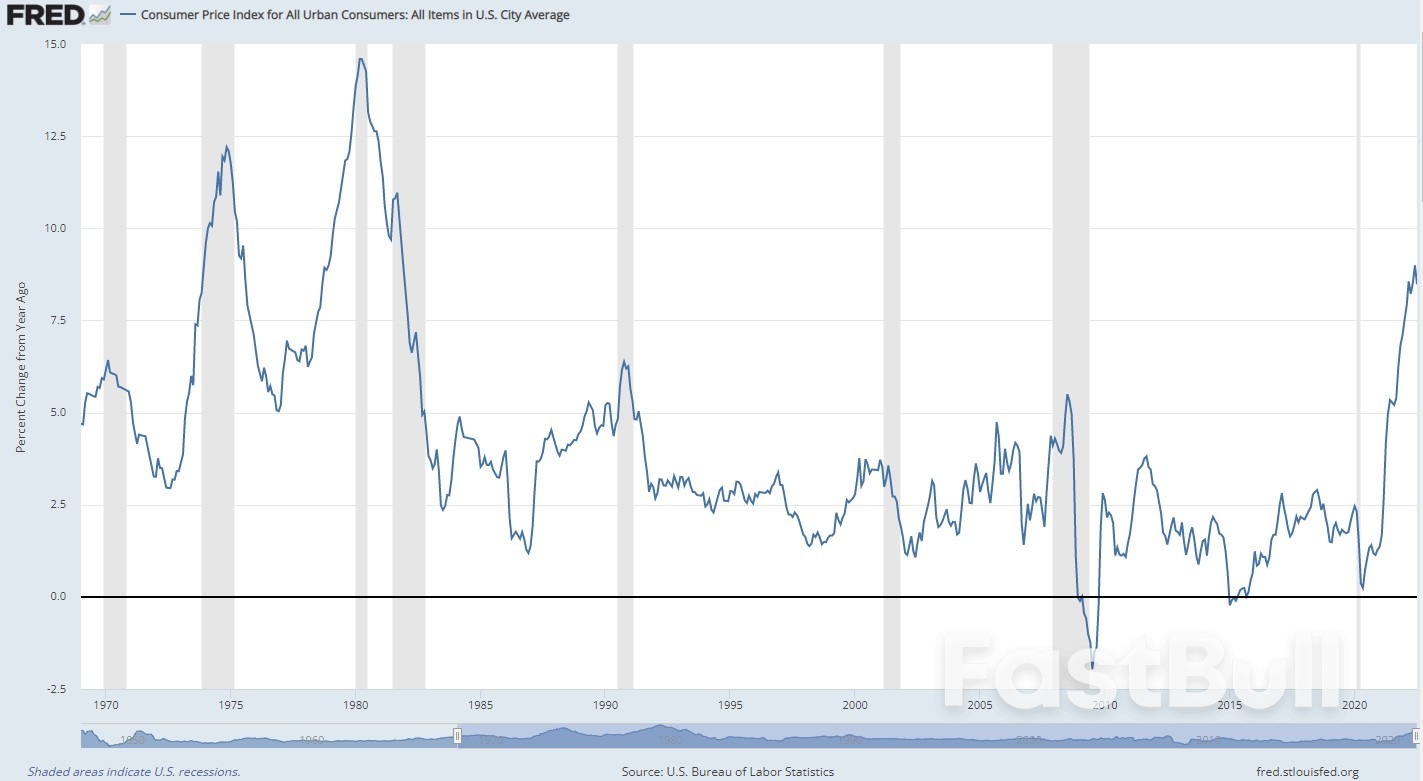
          Multiple pieces of recent economic data have offered early signs that U.S. inflation pressures may be moderating but minutes of July's Federal Reserve monetary policy meeting make clear that these are unlikely to keep hawkish Fed officials from lifting interest rates to restrictive levels this year.
          Official measures of U.S. inflation moderated in July and surveys suggested expectations of future inflation had eased while other indicators such as gauges of producer and import prices also ebbed from high levels.
          But while cooling demand in parts of the economy played a role, recent falls in commodity prices were far more prominent drivers of those developments and minutes of July's meeting made clear on Wednesday that Federal Open Market Committee (FOMC) members will leave nothing down to commodities.
          "Participants remarked that, although recent declines in gasoline prices would likely help produce lower headline inflation rates in the short term, declines in the prices of oil and some other commodities could not be relied on as providing a basis for sustained lower inflation, as these prices could quickly rebound," July's meeting record states in part.

          Signs of Progress in U.S. Inflation Fightback Yet to Deter Hawkish Fed_1Source: Federal Reserve Bank of St Louis

          "Several participants stressed that improvements in supply would be helpful but by themselves could not be relied on to resolve the supply and demand imbalances in the economy sufficiently rapidly. Participants emphasized that a slowing in aggregate demand would play an important role in reducing inflation pressures," the record states in another part.
          The minutes relate to a meeting in which Fed officials voted unanimously for a second consecutive 0.75% increase that lifted the top end of the Fed Funds rate range to 2.5% while collectively reiterating support for a June consensus that borrowing costs will need to rise to as much as 3.5% this year.
          That meeting was followed by a press conference in which Fed Chairman Jerome Powell told reporters that FOMC members will be especially attentive to a range of economic barometers as they lift interest rates further and that the pace and magnitude of rate steps could diminish in the months ahead.
          "Participants judged that, as the stance of monetary policy tightened further, it likely would become appropriate at some point to slow the pace of policy rate increases while assessing the effects of cumulative policy adjustments on economic activity and inflation. Some participants indicated that, once the policy rate had reached a sufficiently restrictive level, it likely would be appropriate to maintain that level for some time to ensure that inflation was firmly on a path back to 2 percent," minutes of the meeting stated on Wednesday.

          Signs of Progress in U.S. Inflation Fightback Yet to Deter Hawkish Fed_2Source: Federal Reserve Bank of St Louis

          Dollar exchange rates had already corrected lower from what were in some cases two decade highs ahead of the meeting but continued to fall amid widespread profit-taking following the July decision, although since then the big Dollar correction has stalled and given way to a period of consolidation.
          The Dollar's stall likely reflects some of the latest economic data and the most recent remarks from Fed policymakers who've roundly warned that they will not be swayed easily from their June plan and current hawkish monetary policy pathway. There was further evidence of this stance in July's minutes.
          "Participants generally judged that the bulk of the effects on real activity had yet to be felt because of lags associated with the transmission of monetary policy, and that while a moderation in economic growth should support a return of inflation to 2 percent, the effects of policy firming on consumer prices were not yet apparent in the data," minutes of the meeting stated on Wednesday.
          "In light of elevated inflation and the upside risks to the outlook for inflation, participants remarked that moving to a restrictive stance of the policy rate in the near term would also be appropriate from a risk-management perspective because it would better position the Committee to raise the policy rate further, to appropriately restrictive levels, if inflation were to run higher than expected," the minutes also stated.

          Source: Poundsterlinglive

          Risk Warnings and Disclaimers
          You understand and acknowledge that there is a high degree of risk involved in trading. Following any strategies or investment methods may lead to potential losses. The content on the site is provided by our contributors and analysts for information purposes only. You are solely responsible for determining whether any trading assets, securities, strategy, or any other product is suitable for investing based on your own investment objectives and financial situation.
          Comments
          Add to Favorites
          Share

          U.S. Retail Traders Pile Back into Options as Meme-Stock Mania Flares

          Alex
          Speculative options trading is on the rise again among individual investors alongside a rally in so-called meme stocks, reviving a trend that swept Wall Street last year but faded as markets turned volatile in 2022.
          Trading in single stock options - a popular vehicle for retail investors looking to place leveraged bets in hopes of outsized gains - has shot higher in recent weeks, with 10-day average daily trading volume at a more-than six-month high of nearly 25 million contracts, Trade Alert data showed.
          The rise in options trading comes amid wild rallies in the shares of companies popular with retail investors, led by Bed, Bath & Beyond, whose stock is up about 360% this month. More seasoned meme-stock names such as GameStop and AMC Entertainment have surged as well, rising 19% and 47% respectively month-to-date. The S&P 500 is up 3.5% so far in August and has rallied nearly 17% from its June lows.
          "It's clear that individual investors are re-engaged in options trading," said Steve Sosnick, chief strategist at Interactive Brokers.
          "Certainly, a disproportionate amount of the growth is in highly speculative names, meme stocks and the like."
          Shares of many smaller or less profitable companies were hit hard in the first half of the year, when worries over surging inflation and a hawkish Federal Reserve dried up risk appetite and dealt the S&P 500 its worst first half loss since 1970.
          The recent pickup in options trading is one sign that risk appetite among retail investors may be returning, although volumes are still down some 24% from a peak hit last November.
          On Wednesday, Bed Bath & Beyond was the second-most actively traded single-stock name with 1.4 million options contracts changing hands, topping market behemoths such as Tesla and Amazon.com.
          The focus on Bed Bath & Beyond grew after a regulatory filing showed on Aug. 16 that activist investor and GameStop Chairman Ryan Cohen took a large bullish options position in the retailer's shares.
          Bed Bath & Beyond shares closed up nearly 12% on Wednesday but fell sharply in after-hours trading, after a late filing showed RC Ventures, owned by Cohen, filed a notice with the U.S. SEC for the proposed sale of 9.45 million shares, including options.
          Other stocks popular with retail traders have also drawn increased interest in recent weeks, though not to the same extent. AMC daily options volume, for instance, stands at about 64,000 contracts month-to-date, up 60% from the average for the rest of the year.
          U.S. Retail Traders Pile Back into Options as Meme-Stock Mania Flares_1The rise in retail options trading has been accompanied by increased engagement in social media platforms where meme stocks are discussed, according to data from VandaTrack, another sign that individual investors are growing bolder.
          Still, many market watchers have been skeptical of the rallies, noting that past rebounds in meme stocks have fizzled, particularly a run in the first half of the year that was followed by new lows in broader markets.
          "It's the dog days of summer and we have had a little bit of easing of volatility," said Garrett DeSimone, head quant at OptionMetrics. "I wouldn't say it is a total change in risk aversion."
          Dan Pipitone, chief executive of retail brokerage TradeZero, noted that a surge in call buying is often viewed as a contrarian signal that points to a near-term top in markets.
          Much depends on whether the bounce that has taken broader markets higher starts to fade, said Sosnick, of Interactive Brokers.
          "If we start to go down in a meaningful way, particularly if we re-test the lows, that would mean the greed would revert to fear," he said.

          Source: Reuters

          Risk Warnings and Disclaimers
          You understand and acknowledge that there is a high degree of risk involved in trading. Following any strategies or investment methods may lead to potential losses. The content on the site is provided by our contributors and analysts for information purposes only. You are solely responsible for determining whether any trading assets, securities, strategy, or any other product is suitable for investing based on your own investment objectives and financial situation.
          Comments
          Add to Favorites
          Share

          Chainlink Climbs: Dormant Coins Spark Two-Year High, But Can It Last?

          Glendon

          Economic

          Chainlink (LINK), the oracle network powering smart contracts across multiple blockchains, has defied the recent crypto slump, surging to its highest level since January 2022. This unexpected rally, fueled by the sudden movement of previously dormant tokens, has analysts and investors scrambling to understand the driving forces and assess the sustainability of this upward trend.

          Sleeping Giants Awaken

          The key catalyst behind this surge seems to be the movement of large amounts of LINK that had been inactive for a considerable period. On-chain data reveals the transfer of millions of LINK tokens from wallets that hadn't interacted with the network for years. This sudden activity suggests institutional investors or early adopters re-entering the market, injecting fresh confidence and demand.

          Momentum Gathers Steam

          Technical indicators are also painting a bullish picture. Key momentum indicators like the Relative Strength Index (RSI) and Moving Average Convergence Divergence (MACD) are signaling strong buying pressure and potential for further upside.

          Why Chainlink?

          Several factors might be contributing to Chainlink's resurgence
          Growing adoption: Chainlink continues to see impressive adoption across various blockchain ecosystems, with its oracle services utilized in DeFi, NFTs, and other innovative applications. This expanding usage fuels demand for the LINK token.
          Strong partnerships: Chainlink has forged strategic partnerships with major players in the industry, including Microsoft, Oracle, and SWIFT. These collaborations enhance its credibility and potential reach, attracting further investment.
          Anticipation of Web3 growth: Chainlink's role as a crucial infrastructure layer for Web3 development positions it to benefit from the anticipated growth of this sector. Investors might be betting on Chainlink's long-term potential in a decentralized future.

          But Questions Linger

          Despite the positive momentum, concerns remain:
          Market Manipulation: Some fear the recent surge could be fueled by market manipulation, with the sudden movement of large token amounts raising eyebrows.
          Overvaluation: LINK's current price is significantly higher than its pre-bull run levels, prompting questions about potential overvaluation and sustainability.
          Macroeconomic headwinds: Broader macroeconomic factors like rising interest rates and inflation could dampen investor sentiment and impact the entire crypto market, including LINK.

          What's Next for Chainlink?

          Predicting the future of any crypto asset is notoriously difficult. While the recent surge and underlying factors are encouraging, caution is warranted. Here are some possibilities:
          Continued Rally: If positive sentiment prevails, strong partnerships materialize, and Web3 adoption accelerates, Chainlink could see further price appreciation.
          Correction: Profit-taking and broader market headwinds could trigger a correction, pulling LINK back to lower levels.
          Consolidation: The price might stabilize around the current range, awaiting further developments to break either way.Investing Wisely:
          Investors considering entering the Chainlink market should exercise caution and conduct thorough research. Understand the underlying fundamentals, consider your risk tolerance, and diversify your portfolio. Remember, past performance is not indicative of future results, and the crypto market remains inherently volatile.

          Conclusion

          Chainlink's recent surge, fueled by dormant coin movement and positive technical indicators, presents an interesting opportunity. However, the future remains uncertain, and investors must carefully consider the potential risks and rewards before making any investment decisions. While Chainlink boasts strong fundamentals and promising partnerships, staying informed and practicing prudence are essential in navigating the ever-evolving crypto landscape.

          Q: What caused the sudden movement of dormant LINK tokens?

          A: The exact reason remains unclear. Possible explanations include institutional investors re-entering the market, early adopters taking profits, or large wallet holders consolidating their holdings.

          Q: Is Chainlink overvalued based on its current price?

          A: Opinions differ. Some believe the recent surge reflects its growing adoption and potential in Web3, while others see it as a temporary bubble fueled by speculation. Analyzing technical indicators and fundamental factors can help you form your own opinion.

          Q: Can Chainlink maintain its momentum?

          A: It depends on various factors, including market sentiment, future partnerships, Web3 adoption, and broader macroeconomic conditions. Predicting the future of any crypto asset is difficult, so thorough research and a cautious approach are key.

          Q: What are the potential risks involved in investing in Chainlink?

          A: Cryptocurrencies are inherently volatile, and their prices can fluctuate rapidly. Additional risks specific to Chainlink include potential regulation, competition from other Oracle networks, and the success of its underlying technology.

          Q: What are some alternative blockchain oracles to Chainlink?

          A: Band Protocol (BAND), The Graph (GRT), and DIA (DIA) are some competitors offering Oracle services. Each has its strengths and weaknesses, so research them carefully before making any investment decisions.

          Q: Where can I find more information about Chainlink and the crypto market?

          A: Reputable news websites, research reports, and community forums can provide valuable insights. Remember to consult multiple sources and verify information before making any investment decisions.
          To stay updated on all economic events of today, please check out our Economic calendar
          Risk Warnings and Disclaimers
          You understand and acknowledge that there is a high degree of risk involved in trading. Following any strategies or investment methods may lead to potential losses. The content on the site is provided by our contributors and analysts for information purposes only. You are solely responsible for determining whether any trading assets, securities, strategy, or any other product is suitable for investing based on your own investment objectives and financial situation.
          Comments
          Add to Favorites
          Share

          July Retail Sales for UK, Canada

          Devin
          Retail sales have become a bellwether of the economy, and consequently for the movement of currencies. Additionally, they can swing market sentiment, particularly if it's a major economy that's reporting. Tomorrow there are two currency majors reporting the latest figures, and that could shake up their respective pairs a bit.
          Retail sales figures are particularly important now that fuel prices are coming down. The underlying components show how the consumer side of the economy is being impacted by inflation. Central banks – particularly relevant to the data tomorrow, the BOE and BOC – are going all-in on fighting inflation. Demand is one of the driving forces of inflation.

          Balancing the factors

          One of the things that can lead to confusion in the current environment is that some countries adjust for inflation in their surveys and others do not. The UK, for example, publishes inflation-adjusted retail sales data, while Canada (like their neighbor to the south) does not. Given how high inflation is among the reporting countries, this can lead to some very uneven numbers, which needs to be taken into context.
          The main issue for now is volume. Are consumers buying more, or simply spending more? If consumers are spending more, even if volumes aren't going up, it could mean the situation isn't so dire. And if inflation gets under control, then volumes can potentially increase and the economy right-side. But, if retail sales are going down, and volume is going down, it could mean that consumers are simply running out of money, and that can imply a recession is imminent. Like the BOE already warned.
          What's in the data? UK July retail sales are expected to show a monthly decline of -0.2% compared to -0.1% in the prior month. On an annual basis, however, the decline is expected to narrow th -3.3% compared to -5.8% prior. But this is likely explained by slowing sales last year as the delta variant took hold in the summer. The acceleration to the downside in the monthly figure might worry investors more.
          UK July retail sales excluding fuel are also expected to see a -0.2% decline compared to 0.4% increase in June. In other words, the immediate spending impact of fuel is starting to diminish. Compared to the prior year, retail sales ex fuel are expected at -3.3% compared to -5.8% in the prior reading.

          How does Canada compare?

          Canada's expected figures are dramatically different, because they aren't adjusted for inflation which last came in at an annual rate of 7.6%, and a monthly rate of 0.1%. Canadian monthly retail sales are expected to have increased by 0.3% compared to 2.2% in the prior month (reflecting the improving inflation situation). Annual retail sales are expected to have grown 9% compared to 14.1% in the prior report. Again, the annual comparables likely due more to covid effects last year, than the current situation.

          Source: Orbex

          Risk Warnings and Disclaimers
          You understand and acknowledge that there is a high degree of risk involved in trading. Following any strategies or investment methods may lead to potential losses. The content on the site is provided by our contributors and analysts for information purposes only. You are solely responsible for determining whether any trading assets, securities, strategy, or any other product is suitable for investing based on your own investment objectives and financial situation.
          Comments
          Add to Favorites
          Share
          FastBull
          Copyright © 2025 FastBull Ltd

          728 RM B 7/F GEE LOK IND BLDG NO 34 HUNG TO RD KWUN TONG KLN HONG KONG

          TelegramInstagramTwitterfacebooklinkedin
          App Store Google Play Google Play
          Products
          Charts

          Chats

          Q&A with Experts
          Screeners
          Economic Calendar
          Data
          Tools
          Membership
          Features
          Function
          Markets
          Copy Trading
          Latest Signals
          Contests
          News
          Analysis
          24/7
          Columns
          Education
          Company
          Careers
          About Us
          Contact Us
          Advertising
          Help Center
          Feedback
          User Agreement
          Privacy Policy
          Business

          White Label

          Data API

          Web Plug-ins

          Poster Maker

          Affiliate Program

          Risk Disclosure

          The risk of loss in trading financial instruments such as stocks, FX, commodities, futures, bonds, ETFs and crypto can be substantial. You may sustain a total loss of the funds that you deposit with your broker. Therefore, you should carefully consider whether such trading is suitable for you in light of your circumstances and financial resources.

          No decision to invest should be made without thoroughly conducting due diligence by yourself or consulting with your financial advisors. Our web content might not suit you since we don't know your financial conditions and investment needs. Our financial information might have latency or contain inaccuracy, so you should be fully responsible for any of your trading and investment decisions. The company will not be responsible for your capital loss.

          Without getting permission from the website, you are not allowed to copy the website's graphics, texts, or trademarks. Intellectual property rights in the content or data incorporated into this website belong to its providers and exchange merchants.

          Not Logged In

          Log in to access more features

          FastBull Membership

          Not yet

          Purchase

          Become a signal provider
          Help Center
          Customer Service
          Dark Mode
          Price Up/Down Colors

          Log In

          Sign Up

          Position
          Layout
          Fullscreen
          Default to Chart
          The chart page opens by default when you visit fastbull.com