Markets
News
Analysis
User
24/7
Economic Calendar
Education
Data
- Names
- Latest
- Prev


Signal Accounts for Members
All Signal Accounts
All Contests


France 10-Year OAT Auction Avg. YieldA:--
F: --
P: --
Euro Zone Retail Sales MoM (Oct)A:--
F: --
P: --
Euro Zone Retail Sales YoY (Oct)A:--
F: --
P: --
Brazil GDP YoY (Q3)A:--
F: --
P: --
U.S. Challenger Job Cuts (Nov)A:--
F: --
P: --
U.S. Challenger Job Cuts MoM (Nov)A:--
F: --
P: --
U.S. Challenger Job Cuts YoY (Nov)A:--
F: --
P: --
U.S. Initial Jobless Claims 4-Week Avg. (SA)A:--
F: --
P: --
U.S. Weekly Initial Jobless Claims (SA)A:--
F: --
P: --
U.S. Weekly Continued Jobless Claims (SA)A:--
F: --
P: --
Canada Ivey PMI (SA) (Nov)A:--
F: --
P: --
Canada Ivey PMI (Not SA) (Nov)A:--
F: --
P: --
U.S. Non-Defense Capital Durable Goods Orders Revised MoM (Excl. Aircraft) (SA) (Sept)A:--
F: --
U.S. Factory Orders MoM (Excl. Transport) (Sept)A:--
F: --
P: --
U.S. Factory Orders MoM (Sept)A:--
F: --
P: --
U.S. Factory Orders MoM (Excl. Defense) (Sept)A:--
F: --
P: --
U.S. EIA Weekly Natural Gas Stocks ChangeA:--
F: --
P: --
Saudi Arabia Crude Oil ProductionA:--
F: --
P: --
U.S. Weekly Treasuries Held by Foreign Central BanksA:--
F: --
P: --
Japan Foreign Exchange Reserves (Nov)A:--
F: --
P: --
India Repo RateA:--
F: --
P: --
India Benchmark Interest RateA:--
F: --
P: --
India Reverse Repo RateA:--
F: --
P: --
India Cash Reserve RatioA:--
F: --
P: --
Japan Leading Indicators Prelim (Oct)A:--
F: --
P: --
U.K. Halifax House Price Index YoY (SA) (Nov)A:--
F: --
P: --
U.K. Halifax House Price Index MoM (SA) (Nov)A:--
F: --
P: --
France Current Account (Not SA) (Oct)A:--
F: --
P: --
France Trade Balance (SA) (Oct)A:--
F: --
P: --
France Industrial Output MoM (SA) (Oct)A:--
F: --
P: --
Italy Retail Sales MoM (SA) (Oct)--
F: --
P: --
Euro Zone Employment YoY (SA) (Q3)--
F: --
P: --
Euro Zone GDP Final YoY (Q3)--
F: --
P: --
Euro Zone GDP Final QoQ (Q3)--
F: --
P: --
Euro Zone Employment Final QoQ (SA) (Q3)--
F: --
P: --
Euro Zone Employment Final (SA) (Q3)--
F: --
Brazil PPI MoM (Oct)--
F: --
P: --
Mexico Consumer Confidence Index (Nov)--
F: --
P: --
Canada Unemployment Rate (SA) (Nov)--
F: --
P: --
Canada Labor Force Participation Rate (SA) (Nov)--
F: --
P: --
Canada Employment (SA) (Nov)--
F: --
P: --
Canada Part-Time Employment (SA) (Nov)--
F: --
P: --
Canada Full-time Employment (SA) (Nov)--
F: --
P: --
U.S. Personal Income MoM (Sept)--
F: --
P: --
U.S. Dallas Fed PCE Price Index YoY (Sept)--
F: --
P: --
U.S. PCE Price Index YoY (SA) (Sept)--
F: --
P: --
U.S. PCE Price Index MoM (Sept)--
F: --
P: --
U.S. Personal Outlays MoM (SA) (Sept)--
F: --
P: --
U.S. Core PCE Price Index MoM (Sept)--
F: --
P: --
U.S. UMich 5-Year-Ahead Inflation Expectations Prelim YoY (Dec)--
F: --
P: --
U.S. Core PCE Price Index YoY (Sept)--
F: --
P: --
U.S. Real Personal Consumption Expenditures MoM (Sept)--
F: --
P: --
U.S. 5-10 Year-Ahead Inflation Expectations (Dec)--
F: --
P: --
U.S. UMich Current Economic Conditions Index Prelim (Dec)--
F: --
P: --
U.S. UMich Consumer Sentiment Index Prelim (Dec)--
F: --
P: --
U.S. UMich 1-Year-Ahead Inflation Expectations Prelim (Dec)--
F: --
P: --
U.S. UMich Consumer Expectations Index Prelim (Dec)--
F: --
P: --
U.S. Weekly Total Rig Count--
F: --
P: --
U.S. Weekly Total Oil Rig Count--
F: --
P: --
U.S. Consumer Credit (SA) (Oct)--
F: --
P: --


No matching data
Latest Views
Latest Views
Trending Topics
Top Columnists
Latest Update
White Label
Data API
Web Plug-ins
Affiliate Program
View All

No data
The U.S. Treasury said on Monday that U.S. sanctions against Russian oil majors Rosneftand Lukoilare already reducing Russian oil revenues and are likely to reduce the quantity of Russian oil sold in the long term.
The Treasury's Office of Foreign Assets Control said in a statement that its analysis of the initial market impact of the sanctions announced on October 22 showed they "are having their intended effect of dampening Russian revenues by lowering the price of Russian oil and therefore the country's ability to fund its war effort against Ukraine."
The Treasury action was among the strongest U.S. sanctions since Russia's full-scale invasion of Ukraine in February 2022 and the first direct sanctions imposed by President Donald Trump against Russia since taking office in January.
The sanctions set a November 21 deadline for companies to wind down dealings with Rosneft and Lukoil. Violators could be cut off from the dollar-based financial system.
But it was unclear how Treasury will enforce the sanctions. The two largest buyers of Russian oil have been China and India.
The OFAC analysis said that several key grades of Russian crude were selling at multi-year-low prices and noted that nearly a dozen major Indian and Chinese purchasers of Russian crude have announced intentions to pause their purchases of Russian oil for December deliveries.
LSEG Workspace data on Monday showed benchmark Urals crude loaded at Russia's Black Sea oil hub of Novorossiysk (URL-NVRSK) traded at $45.35 per barrel on November 12, the lowest level since March 2023. At that time, Russia was just beginning to assemble a "shadow fleet" of tankers to avoid a G7-led price cap of $60 a barrel imposed in December 2023.
Brent crude futureswere $62.71 on November 12 and traded at $64.03 on Monday. Urals Novorossiysk rose to $47.01 on Monday. Loadings resumed at the Black Sea port after being suspended by a Ukrainian drone and missile attack.
Reuters reported earlier this month that Russian oil discounts to Brent had widened as major Indian and Chinese refiners cut purchases in response to the U.S. sanctions.
A Treasury spokesperson said the sanctions were "starving Putin's war machine" and the department "is prepared to take further action if necessary to end the senseless killing" in Ukraine.
A French court will rule on Tuesday on whether Perrier must withdraw its bottled water from shelves, after consumer group UFC-Que Choisir sought an emergency intervention over what it alleges is deceptive marketing of the brand as "natural" mineral water.
The move is the latest development in an ongoing scandal surrounding the Nestle owned brand since French media reported last year that Perrier and many other mineral water producers had been illegally treating their water to prevent contamination.
An inquiry commissioned by France's Senate found in May that the French government had covered up the use of treatments for years.
Nestle said it regretted the use of the treatments and has since stopped using them, switching instead to microfiltration, which it says is safe and does not alter the mineral makeup of its water.
However, UFC-Que Choisir argues that the microfiltration is another kind of treatment that has not been approved by authorities, and given its use to remove contaminants, suggests there could be a potential health risk.
"Perrier waters labelled as "natural mineral waters" are not natural. Nestle has used, and continues to use, illegal treatments for this category of water," UFC-Que Choisir said in June when it brought the case to court.
"We strongly dispute all of UFC Que Choisir's claims," said a Nestle Waters France spokesperson ahead of the decision, expected from the Nanterre judiciary tribunal in the afternoon.
Famous for its teardrop-shaped, green glass bottles, Perrier has been produced from spring water in southern France since the late 19th century and marketed worldwide. Nestle's Waters division has owned the brand since 1992.

In July, Nestle withdrew its 0.2 micron microfiltration in its Vergeze factory after a request from local authorities, and replaced it with a 0.45 micron device, which it already uses for its Vittel water and has discussed with authorities.
The new filtration system is part of a broader dossier awaiting approval from local authorities for its continued production of mineral water at Vergeze.
The Apple designer who helped develop the iPhone Air – and even starred in its introduction video – has left, marking the latest setback for the company's design group.
Abidur Chowdhury, an industrial designer, recently departed the iPhone maker for an artificial intelligence start-up, according to people familiar with the move. His exit made waves internally, given his rising profile within the design team, said the people.
Apple picked Mr Chowdhury to introduce the new iPhone Air during a September event, which featured a roughly two-minute video about the device's design process and features. Appearing in Apple's launch videos is a high-profile assignment: Another September video, introducing the iPhone 17 Pro, was narrated by Molly Anderson, the new head of the company's design team.
A spokesperson for Apple declined to comment.
Mr Chowdhury spent more than six years at Apple. He joined in 2019, around the same time famous design chief Jony Ive departed the company, ending an era that had extended back to Steve Jobs' tenure.
In addition to serving as the voice behind the marketing effort, Mr Chowdhury played a key role in developing the iPhone Air. His exit is unrelated to the debut of the phone, which has seen its design praised despite underwhelming sales. A second-generation model is planned for 2027, Bloomberg has reported.
Since Mr Ive's exit several years ago, the Apple design group has undergone a near-complete overhaul. Most of the previous team members have now either retired or departed for other companies – including Mr Ive's firm, LoveFrom. Today, the team is largely composed of recruits from across the design industry and more junior members of the organisation.
The group, which sits at the heart of Apple's product development process alongside engineering and manufacturing, has undergone other changes this year.
Jeff Williams, the longtime chief operating officer who oversaw the design team in recent years, left the company last week. The user interface side of the organisation, led by Alan Dye, has similarly faced upheaval and a string of departures.
Apple said in July that, following Mr Williams' exit, the design teams would report directly to chief executive officer Tim Cook.
Gold steadied, after three days of losses underpinned by fading expectations of a US interest rate cut next month.
Bullion was trading around $4,030 an ounce on Tuesday. With investors and policymakers awaiting a backlog of data after the longest US government shutdown in history, several Federal Reserve officials have cautioned against another reduction in the cost of borrowing.
Interest-rate swaps now imply a less-than-50% likelihood of a December rate cut after all but pricing in a quarter-point reduction less than a month ago. This has dampened the outlook for gold, which doesn't pay interest and typically benefits from lower rates.
The first clues to the state of the American labor market will appear on Thursday, when the Bureau of Labor Statistics is scheduled to release the September jobs report. The data will be more backward-looking than usual but will help shed light on the state of the world's largest economy as Washington emerges from its six-week shutdown.
Despite its recent pullback, gold has gained 54% this year and remains on course for its best annual performance since 1979. Investors have bought the metal as a hedge against growing fiscal unease in several major economies, while elevated central-bank purchases also provided crucial support for bullion's blistering run to a record above $4,380 last month.
These purchases likely continued in November, analysts from Goldman Sachs Group said in a note on Monday. Central banks bought an estimated 64 tons in September, more than triple the amount in August, they said. China alone added an estimated 15 tons.
"We continue to see elevated central-bank gold accumulation as a multiyear trend, as central banks diversify their reserves to hedge geopolitical and financial risks," said the analysts, including Lina Thomas.
Gold edged down 0.3% to $4,032.42 an ounce as of 8:19 a.m. in Singapore. The Bloomberg Dollar Spot Index was flat. Silver and palladium fell, while platinum rose slightly.
Federal Reserve Governor Christopher Waller supports a 25 basis point rate cut at the December 9-10 FOMC meeting, citing weakness in the U.S. labor market.
This potential rate cut could enhance liquidity in crypto markets, benefiting assets like BTC and ETH, while encouraging greater risk-taking among investors.
Federal Reserve Governor Christopher Waller suggests a 25 basis point rate cut at the December FOMC meeting due to a weakened labor market.
This decision may increase liquidity and affect markets, notably cryptocurrency sectors such as BTC and ETH.
Federal Reserve Governor Christopher Waller has publicly endorsed a 25 basis point rate cut, pointing to a weakened U.S. labor market as his reason. He mentioned declining job postings and weak payroll data. Waller stated that such a move at the upcoming FOMC meeting is necessary for risk management. His comments highlighted conversations with CEOs about corporate plans for layoffs. He remarked, "This reading of the data leads me, at this moment, to support a cut in the FOMC's policy rate at our next meeting on Dec. 9 and 10 as a matter of risk management" (American Banker).
A rate cut typically lowers the cost of capital, potentially boosting both traditional and cryptocurrency markets. Crypto assets like BTC and ETH might see increased activity due to improved liquidity.
The anticipated decision could lead to larger inflows into DeFi protocols and rising TVL. An increasing risk appetite may influence both market and consumer behavior positively.
Past interest rate cuts have often been followed by significant rallies in cryptocurrencies like BTC and ETH. Historical data supports the notion of expanded dollar liquidity benefiting risk assets.
Projected outcomes suggest enhanced staking activity and liquidity in DeFi. Experts predict strengthened Layer 1 and governance token dynamics as market conditions shift.
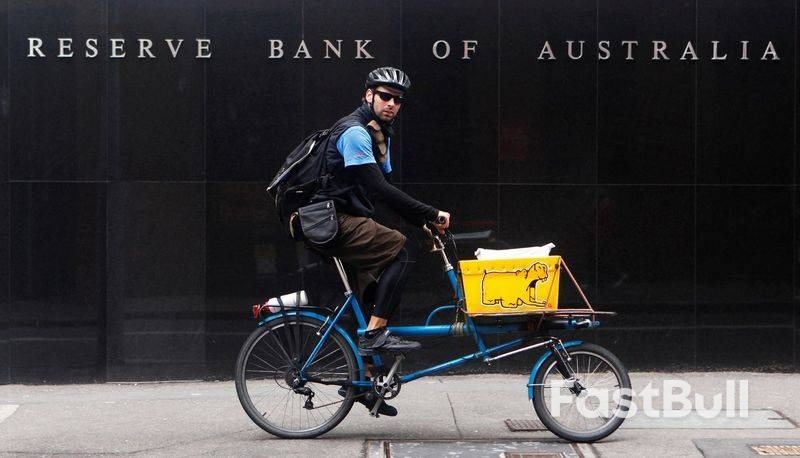
Australia's central bank said on Tuesday that it could keep holding the cash rate at the current level if incoming data surprises on the strong side, but there are also scenarios where it sees more policy easing.
Minutes of its November 3-4 policy meeting showed the Reserve Bank of Australia board judged the current cash rate of 3.6% as being slightly restrictive, but said it was possible this was no longer the case, citing the jump in housing credit to investors.
The board noted several factors that could lead it to hold the cash rate steady, including data suggesting the recovery in demand is stronger than expected or persistently high inflation.
"Members determined that they could afford to be patient while assessing what the incomeing data reveal about their judgements on the extent of spare capcity, the outlook for the labour market and the degree of restrictiveness of monetary policy."
The RBA held policy steady this month after three rate cuts this year, saying it was cautious about easing further given higher inflation, firmer consumer demand and a revival in the housing market.
A surprisingly high third-quarter inflation reading meant the central bank now saw inflation stuck above the 2-3% target band until mid-2026 and settling at 2.6%, above the 2.5% mid-point of its target range.
Concerns about the labour market proved to be overblown, after employment roared back in October and the jobless rate fell back to 4.3%. That led markets to price out the chance of any more policy easing from the RBA, with a move in May next year just priced at 40%.
Still, there are scenarios in which monetary policy may need to be eased further, said the RBA, citing the possibility that the labour market weakens materially or the recovery in the economy lags behind.

The board noted that it was not possible to be confident about which scenario was most likely to happen, reiterating that they will remain cautious and data dependent.
White Label
Data API
Web Plug-ins
Poster Maker
Affiliate Program
The risk of loss in trading financial instruments such as stocks, FX, commodities, futures, bonds, ETFs and crypto can be substantial. You may sustain a total loss of the funds that you deposit with your broker. Therefore, you should carefully consider whether such trading is suitable for you in light of your circumstances and financial resources.
No decision to invest should be made without thoroughly conducting due diligence by yourself or consulting with your financial advisors. Our web content might not suit you since we don't know your financial conditions and investment needs. Our financial information might have latency or contain inaccuracy, so you should be fully responsible for any of your trading and investment decisions. The company will not be responsible for your capital loss.
Without getting permission from the website, you are not allowed to copy the website's graphics, texts, or trademarks. Intellectual property rights in the content or data incorporated into this website belong to its providers and exchange merchants.
Not Logged In
Log in to access more features

FastBull Membership
Not yet
Purchase
Log In
Sign Up