

Markets
News
Analysis
User
24/7
Economic Calendar
Education
Data
- Names
- Latest
- Prev



Signal Accounts for Members
All Signal Accounts
All Contests
 U.S. Core CPI (SA) (Dec)
A:--
F: --
P: --
U.S. Core CPI YoY (Not SA) (Dec)A:--
F: --
P: --
U.S. Weekly Redbook Index YoYA:--
F: --
P: --
U.S. New Home Sales Annualized MoM (Oct)A:--
F: --
U.S. Annual Total New Home Sales (Oct)A:--
F: --
U.S. Cleveland Fed CPI MoM (SA) (Dec)A:--
F: --
P: --
U.S. Cleveland Fed CPI MoM (Dec)A:--
F: --
P: --
 China, Mainland Exports (Dec)
--
F: --
P: --
China, Mainland Imports YoY (CNH) (Dec)--
F: --
P: --
China, Mainland Imports (CNH) (Dec)--
F: --
P: --
China, Mainland Trade Balance (CNH) (Dec)--
F: --
P: --
China, Mainland Imports YoY (USD) (Dec)--
F: --
P: --
China, Mainland Exports YoY (USD) (Dec)--
F: --
P: --
China, Mainland M0 Money Supply YoY (Dec)--
F: --
P: --
China, Mainland M1 Money Supply YoY (Dec)--
F: --
P: --
China, Mainland M2 Money Supply YoY (Dec)--
F: --
P: --
U.S. EIA Natural Gas Production Forecast For The Next Year (Jan)A:--
F: --
P: --
U.S. EIA Short-Term Crude Production Forecast For The Next Year (Jan)A:--
F: --
P: --
U.S. EIA Short-Term Crude Production Forecast For The Year (Jan)A:--
F: --
P: --
EIA Monthly Short-Term Energy Outlook U.S. 30-Year Bond Auction Avg. YieldA:--
F: --
P: --
 Argentina 12-Month CPI (Dec)
A:--
F: --
P: --
U.S. Budget Balance (Dec)A:--
F: --
P: --
Argentina CPI MoM (Dec)A:--
F: --
P: --
Argentina National CPI YoY (Dec)A:--
F: --
P: --
Richmond Federal Reserve President Barkin delivered a speech. U.S. API Weekly Cushing Crude Oil StocksA:--
F: --
P: --
U.S. API Weekly Crude Oil StocksA:--
F: --
P: --
U.S. API Weekly Refined Oil StocksA:--
F: --
P: --
U.S. API Weekly Gasoline StocksA:--
F: --
P: --
 South Korea Unemployment Rate (SA) (Dec)
--
F: --
P: --
 Japan Reuters Tankan Non-Manufacturers Index (Jan)
--
F: --
P: --
Japan Reuters Tankan Manufacturers Index (Jan)--
F: --
P: --
China, Mainland Exports YoY (CNH) (Dec)--
F: --
P: --
China, Mainland Trade Balance (USD) (Dec)--
F: --
P: --
China, Mainland Outstanding Loans Growth YoY (Dec)--
F: --
P: --
 U.K. 10-Year Note Auction Yield
--
F: --
P: --
 Canada Leading Index MoM (Dec)
--
F: --
P: --
U.S. MBA Mortgage Application Activity Index WoW--
F: --
P: --
U.S. Core PPI YoY (Nov)--
F: --
P: --
U.S. PPI MoM (SA) (Nov)--
F: --
P: --
U.S. PPI YoY (Nov)--
F: --
P: --
U.S. Current Account (Q3)--
F: --
P: --
U.S. Retail Sales YoY (Nov)--
F: --
P: --
U.S. Retail Sales (Nov)--
F: --
P: --
U.S. Core Retail Sales MoM (Nov)--
F: --
P: --
U.S. PPI YoY (Excl. Food, Energy & Trade) (Nov)--
F: --
P: --
U.S. PPI MoM Final (Excl. Food, Energy and Trade) (SA) (Nov)--
F: --
P: --
U.S. Core Retail Sales (Nov)--
F: --
P: --
U.S. Retail Sales MoM (Excl. Automobile) (SA) (Nov)--
F: --
P: --
U.S. Retail Sales MoM (Nov)--
F: --
P: --
U.S. Retail Sales MoM (Excl. Gas Stations & Vehicle Dealers) (SA) (Nov)--
F: --
P: --
U.S. Core PPI MoM (SA) (Nov)--
F: --
P: --
Philadelphia Fed President Henry Paulson delivers a speech U.S. Commercial Inventory MoM (Oct)--
F: --
P: --
U.S. Existing Home Sales Annualized Total (Dec)--
F: --
P: --
U.S. Existing Home Sales Annualized MoM (Dec)--
F: --
P: --
U.S. EIA Weekly Cushing, Oklahoma Crude Oil Stocks Change--
F: --
P: --
U.S. EIA Weekly Crude Stocks Change--
F: --
P: --
U.S. EIA Weekly Gasoline Stocks Change--
F: --
P: --
U.S. EIA Weekly Crude Demand Projected by Production--
F: --
P: --


















No matching data

Latest Views
Latest Views
Trending Topics
Top Columnists
Latest Update
White Label
Data API
Web Plug-ins
Affiliate Program
View All
No data
The Treasury said that after making adjustments to December budget results in both 2024 and 2025, the December deficit would have been $112 billion, a decrease of $14 billion or 11% from the December 2024 budget gap.
Argentina's inflation rate climbed for the fourth consecutive month in December, exceeding analyst expectations and presenting a major hurdle for President Javier Milei's administration. Taming rising prices is critical for his goal of attracting foreign direct investment.
Consumer prices jumped 2.8% in December, outpacing the 2.5% median forecast from economists in a Bloomberg survey.
On an annual basis, inflation reached 31.5%. Despite the monthly acceleration, this marks the lowest year-end figure recorded since 2017, according to official government data.
Several key sectors fueled the price increases last month. The primary drivers included:
• Transportation
• Utilities
• Food, with beef cited as a notable seasonal factor
• Tourism
• Regulated services
This trend continues a pattern seen since September, with monthly inflation consistently remaining above the 2% mark.
The recent inflation figures come after a period of political volatility. A local election loss for Milei in Buenos Aires in September triggered a run on the peso. However, his subsequent landslide presidential victory in October helped stabilize the national currency.
In response to economic pressures, Argentina's central bank is overhauling its foreign exchange policy to build up foreign reserves. The previous system allowed the peso to trade within a narrow band that widened by a fixed 1% each month. Starting in January, this policy has changed: the band's expansion is now directly tied to the monthly inflation rate.
This means December's 2.8% inflation will cause the peso's trading range to expand at a faster pace in February.
Looking ahead, economists surveyed by the central bank project a significant slowdown in inflation. The consensus forecast sees the annual rate falling to 20.1% by 2026, with economic growth projected to reach 3.5%.
The Bank of France has raised its economic growth estimate for the final quarter of 2025, signaling that the country’s economy is holding steady despite persistent political and fiscal uncertainty.
The central bank now projects that gross domestic product (GDP) expanded by "at least" 0.2% in the last three months of the year. This marks a slight increase from its previous forecast of "around" 0.2% growth.
This revised outlook is based on the bank's monthly poll of businesses. "The survey confirms that activity in 2025 was quite resilient, as the month of December showed an increase in both industry and services," said Chief Economist Olivier Garnier.
France has maintained its growth trajectory since the snap elections of 2024, even with repeated government collapses and ongoing concerns over public finances.
Currently, the country lacks a complete budget for 2026. Prime Minister Sebastien Lecornu continues to face challenges in reaching a compromise with opposition lawmakers regarding potential tax increases and spending cuts.
Reflecting a cautious optimism, the Bank of France's indicator for business uncertainty has fallen for the fourth consecutive month across both industrial and service sectors.
However, the gauge remains above the level the central bank considers normal. Business leaders largely attribute this lingering doubt to the difficulties in getting a budget adopted.
Garnier suggested that the economic performance could have been stronger without these political hurdles. "If there wasn't this uncertainty, we might have done even better in terms of growth," he said.
President Donald Trump is still pursuing his plan to send $2,000 tariff rebate checks to Americans, but the timeline has been pushed back, and he now suggests he may not need congressional approval to do so. This signals a potential strategy to overcome lawmaker opposition to the program.
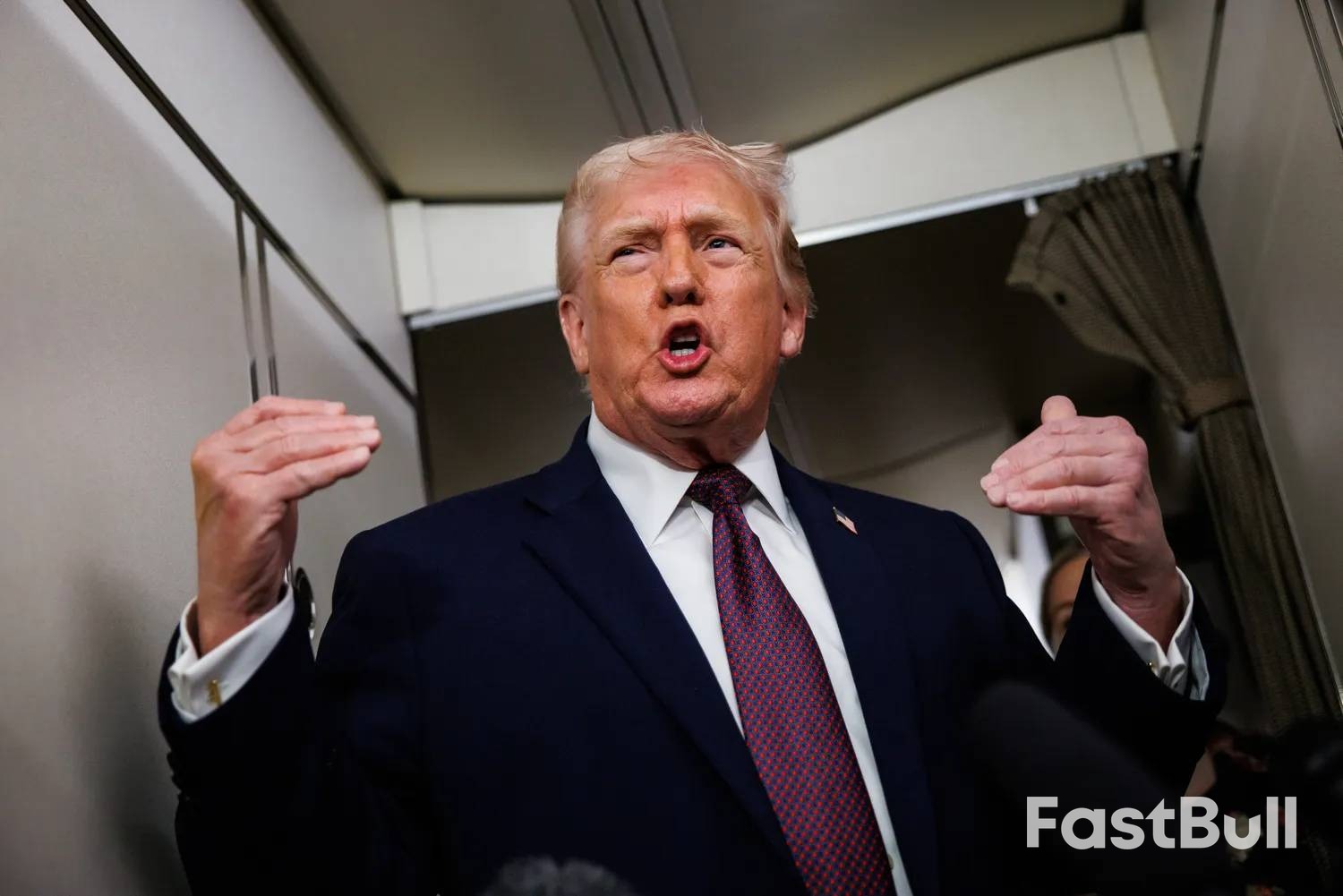
In a recent interview with The New York Times, Trump indicated a new target for the payments. "That's coming in, that I'll be able to do $2,000 sometime. I would say toward the end of the year," he said.
This marks a delay from his previous estimate. In mid-November, Trump had told reporters the checks would likely be issued "somewhere prior to probably in the middle of next year, a little bit later than that."
The proposed "tariff dividend" is intended to put cash directly into household budgets to help boost consumer spending. The program targets low- and middle-income earners.
While details remain fluid, Treasury Secretary Scott Bessent has speculated that eligibility could be capped at individuals with incomes of no more than $100,000.
A key point of contention is the program's funding. U.S. Customs and Border Protection reported that revenues from import taxes reached $216 billion in the 2025 fiscal year after new tariffs were introduced.
However, economists estimate the cost of the rebate checks would be significantly higher, with projections ranging from $279 billion to $600 billion, depending on the final distribution model.
Trump has disputed the official revenue figures, arguing that tariffs are generating more income than reported. "We have taken in, and will soon be receiving, more than 600 Billion Dollars in Tariffs," he wrote on Truth Social on January 5.
Economists suggest this higher figure may include private sector investments pledged to the U.S. by foreign countries during tariff negotiations. Erica York, vice president at the Tax Foundation, noted in November that "private sector investment" is "very different from tax collections that flow to the Treasury."
The program's cost has drawn criticism from some lawmakers, who argue the revenue should be used to reduce the national debt, which now exceeds $38 trillion.
In his New York Times interview, Trump downplayed the idea that Congress could block the checks. When asked if he needed legislative approval, he replied, "No, I don't believe we do. We have it coming in from other sources."
This statement contradicts previous remarks from other White House officials. On December 21, National Economic Council Director Kevin Hassett told CBS News that congressional action would be necessary. "Congress is going to have to send those money to those peoples," he said.
The rebate plan faces another potential hurdle: an upcoming Supreme Court ruling on tariffs could strike down some of the import taxes, threatening the primary funding source for the checks.
President Donald Trump has dismissed the significance of the North American trade pact he signed in 2020, signaling a turbulent and uncertain future for the US-Mexico-Canada Agreement (USMCA) as it heads for a critical review.
Speaking during a tour of a Ford Motor Co. plant, Trump described the agreement as having "no real advantage" for the United States. His comments represent a significant challenge to the stability of the trade relationship between the U.S. and its two largest trading partners, creating fresh anxiety in Ottawa, Mexico City, and the American auto industry.
"We could have it or not, it wouldn't matter," Trump told reporters, adding that the deal is "irrelevant." He claimed the primary beneficiary is Canada and that the U.S. doesn't "need their product" because manufacturing is returning stateside.
Trump’s recent remarks are a stark departure from the praise his administration once had for the USMCA, which was touted as a signature achievement of his first term. The agreement replaced the 1992 North American Free Trade Agreement (NAFTA), a deal Trump frequently criticized.
When asked if he still supports the pact, Trump’s response was blunt. "I think they want it," he said, referring to Canada and Mexico. "I don't really care."
He elaborated on his position by targeting the auto sector directly. "I don't even think about USMCA," Trump said. "We don't need cars made in Canada. We don't need cars made in Mexico. We want to make them here. And that's what's happening."
This rhetoric aligns with previous actions during his second term, where he imposed new tariffs on Mexican and Canadian goods, citing fentanyl trafficking as a justification, before later exempting products covered by the USMCA.
The trade agreement now faces a mandatory review this year, and Trump's posturing introduces major complications. The pact’s future hinges on the outcome of this review process:
• 16-Year Extension: If all three countries agree to renew the deal before July 1, it will be extended for another 16 years.
• Annual Reviews: If there is no agreement, the countries must hold annual joint reviews until they either approve an extension or the pact expires in 2036.
Beyond the review, any country can withdraw from the USMCA with just six months' written notice. It remains unclear if Trump intends to trigger this clause, but the threat alone injects significant leverage into any negotiations and leaves the path forward ambiguous.
The prospect of the USMCA unraveling would deliver a major shock to the Canadian and Mexican economies and disrupt critical industries that have built their business models around the agreement.
The auto manufacturing sector is particularly vulnerable. Decades of free trade have created deeply interconnected supply chains across North America, which would be upended if Trump terminates the deal.
U.S. automakers have urged the White House to negotiate a stable North American trade framework to maintain a competitive edge. Ford CEO Jim Farley highlighted the impact of trade policy, noting that tariff breaks for Japanese exports gave Toyota a cost advantage of $5,000 to $10,000 on SUVs compared to Ford, even though Ford builds its SUVs in the United States.
Trump’s indifference toward the USMCA leaves the future of North American commerce hanging in the balance, with major economic consequences for all three nations.
Russia has launched one of its most advanced ballistic missiles against Ukraine, a move that analysts believe is driven as much by strategic messaging as by tactical goals. The weapon, an Oreshnik intermediate-range ballistic missile, was fired at the city of Lviv, marking only its second known use in the conflict.
This deployment suggests Russia is using its high-end munitions sparingly, likely due to a limited stockpile.
The Oreshnik missile, which traveled nearly 900 miles to its target, was not fired in isolation. The attack followed Russia's standard operational playbook, involving a massive, coordinated strike designed to saturate Ukrainian air defenses.
According to the Ukrainian Air Force, the assault included approximately 200 munitions in total, combining suicide drones, cruise missiles, and other ballistic missiles aimed at several cities. The strategy behind such a large-scale barrage is to overwhelm defense systems, increasing the likelihood that some weapons will penetrate and strike their targets.
Beyond its military impact, the Kremlin appears to have used the Oreshnik launch to send a political signal. The British Ministry of Defence assessed that the strike was almost certainly a form of "strategic messaging."
This message followed Russia's unsubstantiated public claims that Ukraine had attacked President Putin's residence in Novgorod on December 29, 2025. Western intelligence has disputed Moscow's narrative. A CIA assessment concluded that Russia fabricated the attack, likely in an attempt to undermine ongoing peace negotiations and erode international support for Ukraine.
In the wake of the missile strikes, British Defence Secretary John Healy visited Kyiv to discuss diplomatic efforts to end the war. He strongly condemned the attack.
"Russia's barrage of attacks on Ukraine overnight, including firing an Oreshnik ballistic missile at Lviv, are another attempt by Putin to terrorise Ukraine and threaten Europe's security," Healy stated. "My visit to Kyiv today underlines the UK's resolute support for a just and lasting peace."
Ukrainian President Volodymyr Zelenskyy thanked the United Kingdom for its support, emphasizing the urgent need for more air defense capabilities. "Moscow is trying to use cold weather as a tool of terror," he said. "We know which partners have the relevant missiles and equipment, and I am sincerely grateful to the United Kingdom for its readiness to help."
The United Kingdom has been a key provider of military and diplomatic aid to Ukraine throughout the war.
The attack comes amid sensitive peace negotiations. As part of these talks, several European nations, including the UK and France, have indicated a willingness to deploy troops to Ukraine as a security guarantee after the conflict ends.
President Zelenskyy confirmed discussions around this possibility. "We also discussed how a British contingent could be deployed to operate alongside French forces if diplomacy works to end the war," he added. "It is crucial that the framework for ending the war includes a clear response from the allies should Russian aggression be repeated."
728 RM B 7/F GEE LOK IND BLDG NO 34 HUNG TO RD KWUN TONG KLN HONG KONG


White Label
Data API
Web Plug-ins
Poster Maker
Affiliate Program
The risk of loss in trading financial instruments such as stocks, FX, commodities, futures, bonds, ETFs and crypto can be substantial. You may sustain a total loss of the funds that you deposit with your broker. Therefore, you should carefully consider whether such trading is suitable for you in light of your circumstances and financial resources.
No decision to invest should be made without thoroughly conducting due diligence by yourself or consulting with your financial advisors. Our web content might not suit you since we don't know your financial conditions and investment needs. Our financial information might have latency or contain inaccuracy, so you should be fully responsible for any of your trading and investment decisions. The company will not be responsible for your capital loss.
Without getting permission from the website, you are not allowed to copy the website's graphics, texts, or trademarks. Intellectual property rights in the content or data incorporated into this website belong to its providers and exchange merchants.
Not Logged In
Log in to access more features

FastBull Membership
Not yet
Purchase


Log In
Sign Up


