• Trade
  • Markets
  • Copy
  • Contests
  • News
  • 24/7
  • Calendar
  • Q&A
  • Chats
Trending
Screeners
SYMBOL
LAST
BID
ASK
HIGH
LOW
NET CHG.
%CHG.
SPREAD
SPX
S&P 500 Index
6944.83
6944.83
6944.83
6948.68
6904.01
+42.78
+ 0.62%
--
DJI
Dow Jones Industrial Average
49462.07
49462.07
49462.07
49509.92
48923.83
+484.88
+ 0.99%
--
IXIC
NASDAQ Composite Index
23547.16
23547.16
23547.16
23559.15
23389.57
+151.35
+ 0.65%
--
USDX
US Dollar Index
98.260
98.340
98.260
98.390
98.190
-0.030
-0.03%
--
EURUSD
Euro / US Dollar
1.16901
1.16909
1.16901
1.17024
1.16725
+0.00020
+ 0.02%
--
GBPUSD
Pound Sterling / US Dollar
1.34880
1.34889
1.34880
1.35164
1.34811
-0.00127
-0.09%
--
XAUUSD
Gold / US Dollar
4451.52
4451.93
4451.52
4500.33
4427.73
-43.12
-0.96%
--
WTI
Light Sweet Crude Oil
56.773
56.803
56.773
57.030
55.662
-0.057
-0.10%
--

Community Accounts

Signal Accounts
--
Profit Accounts
--
Loss Accounts
--
View More

Become a signal provider

Sell trading signals to earn additional income

View More

Guide to Copy Trading

Get started with ease and confidence

View More

Signal Accounts for Members

All Signal Accounts

Best Return
  • Best Return
  • Best P/L
  • Best MDD
Past 1W
  • Past 1W
  • Past 1M
  • Past 1Y

All Contests

  • All
  • Trump Updates
  • Recommend
  • Stocks
  • Cryptocurrencies
  • Central Banks
  • Featured News
Top News Only
Share

Mexican President Says Her Country Is Not Sending More Oil To Venezuela Than It Has Historically

Share

Executive: Lundin Gold Sees Gold Production At Ecuador's Fruta Del Norte Mine Between 475000 And 525000 Ounces Of Gold In 2026, 2027 And 2028

Share

USA Defense Secretary: Blockade Of Sanctioned And Illicit Venezuelan Oil Remains In Full Effect Anywhere In The World

Share

According To Data From The Federal Reserve Bank Of New York, The Secured Overnight Funding Rate (Sofr) Was 3.66% On The Previous Trading Day (January 6), Compared To 3.70% The Day Before

Share

Fed Data - USA Effective Federal Funds Rate At 3.64 Percent On 06 January On $88 Billion In Trades Versus 3.64 Percent On $88 Billion On 05 January

Share

Swiss Foreign Ministry Says According To International Law, Greenland Belongs To Denmark With Extensive Autonomy

Share

Wright Says US Wants To Import Parts, Equipment, And Services To Rebuild Venezuelan Oil Industry

Share

Slovenia's President Nominates Central Bank Deputy Governor Primoz Dolenc As New Governor

Share

Canada Prime Minister Mark Carney To Visit China Week Of Jan 13 - Spokesperson

Share

Wright Says He Estimates Venezuelan Oil Production Could Grow By Several Hundred Thousand Additional Barrels In Short To Mid-Term

Share

Wright Says Money From Selling Venezuelan Oil Will Flow Back To Benefit Venezuelan Citizens

Share

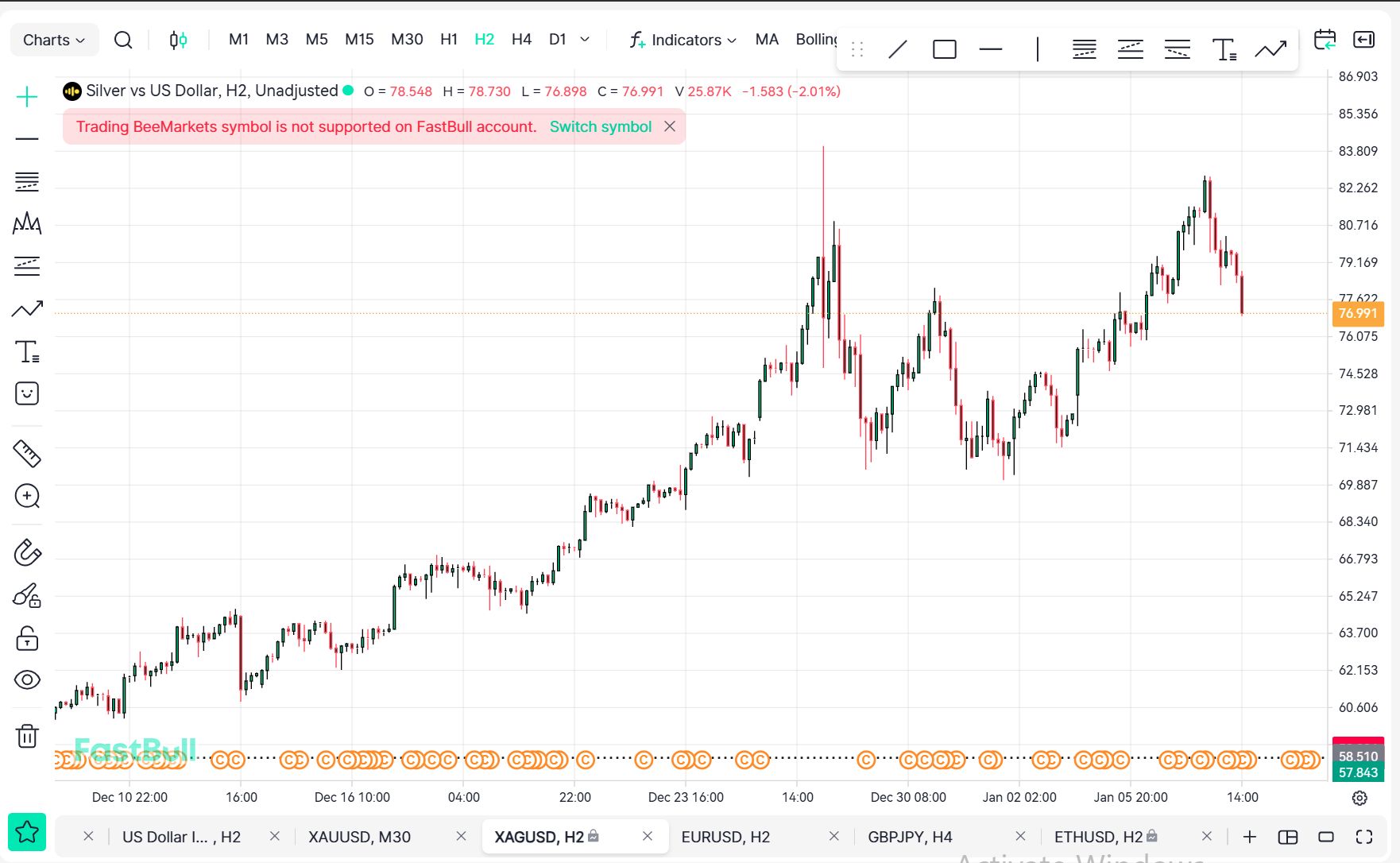
[Market Update] Spot Silver Fell 5% Intraday, Currently Trading At $77.16 Per Ounce. Spot Palladium Fell Over 6% Intraday, Currently Trading At $1708.87 Per Ounce. Spot Gold Is Currently Down 1.15%, And Spot Platinum Is Down 6%

Share

White House Official - Trump, USA Oil Company Executives Will Meet On Friday

Share

Wright Says US Government Wants To Sell Venezuelan Oil To US Refineries -Goldman Conference

Share

Spot Palladium Extends Losses, Last Down 7% To $1693.25/Oz

Share

Senior Official In Yemen's Southern Separatists (Stc) Says Al Zubaidi Is Fine And He Is On The Ground In Aden

Share

Czech Crown Extends Losses, Falls 0.5% On Day To 24.289 Per Euro

Share

Israel Foreign Currency Reserves $229.484 Billion In December Versus$231.425 Billion In November -Bank Of Israel

Share

Senior Official In Yemen's Southern Separatists (Stc) Says International Community Should Put Pressure To Make Sure Our Delegation In Riyadh Is Safe And Ask Saudi Arabia To De-Escalate

Share

Ukraine President Zelenskiy: USA Should Keep Pressure On Russia

TIME
ACT
FCST
PREV
U.S. IHS Markit Services PMI Final (Dec)

A:--

F: --

P: --

U.S. IHS Markit Composite PMI Final (Dec)

A:--

F: --

P: --

U.S. API Weekly Refined Oil Stocks

A:--

F: --

P: --

U.S. API Weekly Gasoline Stocks

A:--

F: --

P: --

U.S. API Weekly Cushing Crude Oil Stocks

A:--

F: --

P: --

U.S. API Weekly Crude Oil Stocks

A:--

F: --

P: --

Australia Building Permits MoM (SA) (Nov)

A:--

F: --

P: --
Australia Building Approval Total YoY (Nov)

A:--

F: --

P: --
Australia Building Permits YoY (SA) (Nov)

A:--

F: --

P: --

Australia Private Building Permits MoM (SA) (Nov)

A:--

F: --

P: --

Australia RBA Trimmed Mean CPI YoY (Nov)

A:--

F: --

P: --

Japan IHS Markit Composite PMI (Dec)

A:--

F: --

P: --

Japan IHS Markit Services PMI (Dec)

A:--

F: --

P: --

Germany Actual Retail Sales MoM (Nov)

A:--

F: --

P: --
China, Mainland Foreign Exchange Reserves (Dec)

A:--

F: --

P: --

Germany Construction PMI (SA) (Dec)

A:--

F: --

P: --

Euro Zone IHS Markit Construction PMI (Dec)

A:--

F: --

P: --

Italy IHS Markit Construction PMI (Dec)

A:--

F: --

P: --

Germany Unemployment Rate (SA) (Dec)

A:--

F: --

P: --

U.K. Markit/CIPS Construction PMI (Dec)

A:--

F: --

P: --

Italy HICP Prelim YoY (Dec)

A:--

F: --

P: --

Euro Zone HICP Prelim YoY (Dec)

A:--

F: --

P: --

Euro Zone Core CPI Prelim MoM (Dec)

A:--

F: --

P: --

Euro Zone Core CPI Prelim YoY (Dec)

A:--

F: --

P: --

Euro Zone Core HICP Prelim MoM (Dec)

A:--

F: --

P: --

Euro Zone Core HICP Prelim YoY (Dec)

A:--

F: --

P: --

India GDP YoY

A:--

F: --

P: --

Germany 10-Year Bund Auction Avg. Yield

A:--

F: --

P: --

U.S. MBA Mortgage Application Activity Index WoW

A:--

F: --

P: --

U.S. ADP Employment (Dec)

A:--

F: --

P: --
Canada Ivey PMI (SA) (Dec)

--

F: --

P: --

U.S. Factory Orders MoM (Oct)

--

F: --

P: --

Canada Ivey PMI (Not SA) (Dec)

--

F: --

P: --

U.S. Factory Orders MoM (Excl. Transport) (Oct)

--

F: --

P: --

U.S. Factory Orders MoM (Excl. Defense) (Oct)

--

F: --

P: --

U.S. Non-Defense Capital Durable Goods Orders Revised MoM (Excl. Aircraft) (SA) (Oct)

--

F: --

P: --
U.S. ISM Non-Manufacturing PMI (Dec)

--

F: --

P: --

U.S. ISM Non-Manufacturing Price Index (Dec)

--

F: --

P: --

U.S. ISM Non-Manufacturing New Orders Index (Dec)

--

F: --

P: --

U.S. JOLTS Job Openings (SA) (Nov)

--

F: --

P: --

U.S. ISM Non-Manufacturing Employment Index (Dec)

--

F: --

P: --

U.S. ISM Non-Manufacturing Inventories Index (Dec)

--

F: --

P: --

U.S. EIA Weekly Heating Oil Stock Changes

--

F: --

P: --

U.S. EIA Weekly Crude Oil Imports Changes

--

F: --

P: --

U.S. EIA Weekly Cushing, Oklahoma Crude Oil Stocks Change

--

F: --

P: --

U.S. EIA Weekly Crude Stocks Change

--

F: --

P: --

U.S. EIA Weekly Gasoline Stocks Change

--

F: --

P: --

U.S. EIA Weekly Crude Demand Projected by Production

--

F: --

P: --

Japan Wages MoM (Nov)

--

F: --

P: --

Australia Trade Balance (SA) (Nov)

--

F: --

P: --

Australia Exports MoM (SA) (Nov)

--

F: --

P: --

Japan 30-Year JGB Auction Yield

--

F: --

P: --

Japan Household Consumer Confidence Index (Dec)

--

F: --

P: --

U.K. Halifax House Price Index YoY (SA) (Dec)

--

F: --

P: --

U.K. Halifax House Price Index MoM (SA) (Dec)

--

F: --

P: --

France Trade Balance (SA) (Nov)

--

F: --

P: --

France Current Account (Not SA) (Nov)

--

F: --

P: --

South Africa Manufacturing PMI (Dec)

--

F: --

P: --

Italy Unemployment Rate (SA) (Nov)

--

F: --

P: --

Euro Zone Industrial Climate Index (Dec)

--

F: --

P: --

Q&A with Experts
    • All
    • Chatrooms
    • Groups
    • Friends
    EuroTrader flag
    Size flag
    ElanMT5
    Damn it, it neither falls nor rises, it's all just a bunch of weird tricks.
    @ElanMT5Sometimes the market just chops around and shakes traders out.
    EuroTrader flag
    marsgents
    silver still dipping
    @marsgentsits now tricky cause we have to decide which is now the leading indicator, is it gold or silver
    john flag
    ROK1LVN0E3
    @ROK1LVN0E3 Confidence builds with repetition.
    Size flag
    Best thing is to stay patient and wait for clear structure or momentum before jumping in..@ElanMT5
    5KJ105LE94 flag
    marsgents
    silver still dipping
    @marsgentsim telling you😅
    ROK1LVN0E3 flag
    john
    @john So it's consistency over excitement?
    ElanMT5 flag
    Can you please give me a proper and decisive crash, preferably dropping to $1000?
    3249817 flag
    hahaha
    Size flag
    marsgents
    silver still dipping
    @marsgentsYeah bro Silver’s still dipping.
    john flag
    ROK1LVN0E3
    @ROK1LVN0E3 Always.Trading isn,t gambling.
    EuroTrader flag
    ElanMT5
    Can you please give me a proper and decisive crash, preferably dropping to $1000?
    @ElanMT5lollsss you would love to see traders lose their entire leveraged portfolio right?
    Size flag
    watching how it reacts at the next support zone could give a clean setup.@marsgents
    ElanMT5 flag
    This kind of "playing dead" market is torturous.
    EuroTrader flag
    5KJ105LE94
    @5KJ105LE94while gold is still showing some signs of strength, its a mixed bag at the moment
    ROK1LVN0E3 flag
    john
    @john What about news?I get nervous around big events.
    marsgents flag
    Size
    @Sizegold can follow soo. mate
    Ikeh Sunday flag
    hello traders . what's cooking
    john flag
    ROK1LVN0E3
    @ROK1LVN0E3 If you are unsure, stay out.Volatility isn't mandatory.
    Size flag
    marsgents
    @marsgentsExactly bro . Gold might follow the move too.
    Type here...
    Add Symbol or Code

      No matching data

      All
      Trump Updates
      Recommend
      Stocks
      Cryptocurrencies
      Central Banks
      Featured News
      • All
      • Russia-Ukraine Conflict
      • Middle East Flashpoint
      • All
      • Russia-Ukraine Conflict
      • Middle East Flashpoint
      Search
      Products

      Charts Free Forever

      Chats Q&A with Experts
      Screeners Economic Calendar Data Tools
      Membership Features
      Data Warehouse Market Trends Institutional Data Policy Rates Macro

      Market Trends

      Market Sentiment Order Book Forex Correlations

      Top Indicators

      Charts Free Forever
      Markets

      News

      News Analysis 24/7 Columns Education
      From Institutions From Analysts
      Topics Columnists

      Latest Views

      Latest Views

      Trending Topics

      Top Columnists

      Latest Update

      Signals

      Copy Rankings Latest Signals Become a signal provider AI Rating
      Contests
      Brokers

      Overview Brokers Assessment Rankings Regulators News Claims
      Broker listing Forex Brokers Comparison Tool Live Spread Comparison Scam
      Q&A Complaint Scam Alert Videos Tips to Detect Scam
      More

      Business
      Events
      Careers About Us Advertising Help Center

      White Label

      Data API

      Web Plug-ins

      Affiliate Program

      Awards Institution Evaluation IB Seminar Salon Event Exhibition
      Vietnam Thailand Singapore Dubai
      Fans Party Investment Sharing Session
      FastBull Summit BrokersView Expo
      Recent Searches
        Top Searches
          Markets
          News
          Analysis
          User
          24/7
          Economic Calendar
          Education
          Data
          • Names
          • Latest
          • Prev

          View All

          No data

          Scan to Download

          Faster Charts, Chat Faster!

          Download App
          English
          • English
          • Español
          • العربية
          • Bahasa Indonesia
          • Bahasa Melayu
          • Tiếng Việt
          • ภาษาไทย
          • Français
          • Italiano
          • Türkçe
          • Русский язык
          • 简中
          • 繁中
          Open Account
          Search
          Products
          Charts Free Forever
          Markets
          News
          Signals

          Copy Rankings Latest Signals Become a signal provider AI Rating
          Contests
          Brokers

          Overview Brokers Assessment Rankings Regulators News Claims
          Broker listing Forex Brokers Comparison Tool Live Spread Comparison Scam
          Q&A Complaint Scam Alert Videos Tips to Detect Scam
          More

          Business
          Events
          Careers About Us Advertising Help Center

          White Label

          Data API

          Web Plug-ins

          Affiliate Program

          Awards Institution Evaluation IB Seminar Salon Event Exhibition
          Vietnam Thailand Singapore Dubai
          Fans Party Investment Sharing Session
          FastBull Summit BrokersView Expo

          U.S. Officially Retires the 238-Year-Old Penny: A Small Coin, A Big Disruption

          Gerik

          Economic

          Forex

          Summary:

          On November 12, 2025, the United States Mint produced the final batch of 1-cent coins, officially ending the penny's 238-year run. Though intended to cut costs...

          The end of an era for America’s oldest coin

          The humble 1-cent coin, or "penny," once a staple of American daily life, has now been officially discontinued. First minted in 1787 and bearing Abraham Lincoln’s image since 1909, the penny has long outlived its practical use in modern commerce. President Donald Trump ordered its termination in February 2025, citing that each penny cost nearly 4 cents to produce four times its face value.
          On November 12, the U.S. Mint’s Philadelphia facility oversaw the minting of the final coins under the supervision of U.S. Treasurer Brandon Beach. While the penny will remain legal tender, no more will be produced, and the final batch is expected to be auctioned off.

          Retailers caught off guard by rounding dilemmas

          Although the penny’s retirement may seem like a technical change, it has caused operational headaches for retailers across the country. Many businesses have begun rounding cash transactions up or down to the nearest 5 cents. This rounding often results in customers paying 1–2 cents more per transaction. In some states, including Delaware, New York, and Oregon, such rounding is restricted or even prohibited under current trade laws.
          Retail chain Kwik Trip, which serves over 20 million customers annually, has opted to round down for cash transactions out of fairness, even though it means losing millions of dollars each year. However, this inconsistency across regions is causing widespread confusion, as no federal guidelines were issued alongside the discontinuation announcement.

          Legal and logistical concerns emerge

          Federal assistance programs like SNAP (food stamps), which require precise accounting to the cent, complicate matters further. Retailers could face legal trouble if rounding practices appear to favor one group of customers over another.
          Organizations such as the National Association of Convenience Stores (NACS) have called on Congress to enact legislation that would allow lawful rounding and prevent unintentional legal violations. Jeff Lenard, a spokesperson for NACS, stressed, “We need clear legal authority so retailers can give accurate change without breaking any rules.”

          From childhood memories to monetary relic

          Though less visible in daily life today, the penny carries immense historical significance. It was among the first U.S. coins and may have been designed by Benjamin Franklin. Over time, its purchasing power eroded, and now, despite over 300 billion pennies in circulation an average of less than $9 per American most are idle in jars, drawers, and coin trays.
          For many, including 74-year-old historian Joe Ditler, the penny is tied to childhood nostalgia. “I still have a cigar box full of pennies my grandfather gave me. They bring back so many memories,” he said. “The penny had a beautiful life but maybe it’s time it moved on.”
          Retiring the penny makes economic sense given the high production cost, but the lack of a national transition plan has exposed significant gaps in retail operations, legal compliance, and consumer equity. While other nations like Canada and Australia phased out low-denomination coins with structured plans, the U.S. chose to act swiftly announcing the change via a social media post by President Trump during the Super Bowl. The result is a fragmented and messy adjustment period that underscores the need for cohesive policymaking when symbolic changes meet real-world complexity.

          Source: CNN

          To stay updated on all economic events of today, please check out our Economic calendar
          Risk Warnings and Disclaimers
          You understand and acknowledge that there is a high degree of risk involved in trading. Following any strategies or investment methods may lead to potential losses. The content on the site is provided by our contributors and analysts for information purposes only. You are solely responsible for determining whether any trading assets, securities, strategy, or any other product is suitable for investing based on your own investment objectives and financial situation.
          Add to Favorites
          Share

          Fed Standoff Leaves Markets and Policymakers in Limbo Ahead of Final 2025 Rate Decision

          Gerik

          Economic

          Uncertainty intensifies as Powell balances hawks and doves

          The Federal Reserve is navigating one of its most delicate decision points of the year, with its December 9–10 meeting now shaping up to be a defining moment for global monetary policy. Fed Chair Jerome Powell and top officials are wrestling with deep internal disagreement, incomplete data, and fragile market expectations. A month ago, traders were pricing in a 95% chance of a December rate cut today, that figure has collapsed to just under 50%, according to CME’s FedWatch tool.
          The sudden shift stems from Powell’s own cautionary signals in October, reinforced by recent comments from several regional Fed presidents expressing concern that inflation remains too high and economic data too thin to justify further easing. Boston Fed President Susan Collins emerged this week as a key hawkish voice, arguing that holding rates steady is the most prudent path given the current “uncertain environment” and calling for a “high bar” for any further loosening.

          Data vacuum complicates decision-making

          One of the primary catalysts behind the Fed’s uncertainty is the absence of critical economic data. Due to the recent government shutdown, October’s labor and inflation reports have been delayed and possibly scrapped altogether. This has left the Fed effectively flying blind, with policymakers forced to make decisions without their usual economic dashboards.
          While labor market indicators point to a mild slowdown and core inflation remains above the 2% target, there isn’t enough visibility for the Fed to confidently judge whether the economy requires further stimulus or restraint. This information gap is at the heart of the current divide: Hawks like Collins and Kansas City Fed President Jeffrey Schmid are warning of inflation resurgence risks, while others such as Governors Stephen Miran and Christopher Waller argue that policy should stay responsive to disinflationary momentum.

          Markets react to waning rate-cut bets

          The policy uncertainty has already reverberated through global financial markets. On Thursday, November 13, U.S. equities experienced a sharp sell-off, while Treasury yields jumped, reflecting reduced expectations for rate cuts. The S&P 500, Dow, and Nasdaq all fell, reversing gains built on previous assumptions of looser policy.
          Fed officials now face a dilemma: risk a split vote at a critical time or engineer a compromise. According to Krishna Guha of Evercore ISI, Powell and Vice Chair Philip Jefferson may be trying to engineer a “hawkish cut” a symbolic final cut accompanied by strong forward guidance signaling the end of the easing cycle.

          A divided FOMC complicates consensus-building

          What makes this moment especially fraught is the growing rift inside the Federal Open Market Committee (FOMC). The hawkish bloc including Collins, Schmid, Beth Hammack (Cleveland), and possibly Lorie Logan (Dallas) appears to favor a pause or even a longer hold, citing upside risks to inflation. In contrast, dovish voices want to continue easing, fearing a hard landing if rates remain restrictive for too long.
          With Powell’s term ending in May 2026 and regional Fed rotations reshuffling voting rights in January, the balance of power within the FOMC is also in flux. Notably, both Collins and Schmid will rotate out of voting positions in 2026, while Logan and Hammack will step in. This transition complicates the Fed’s forward guidance strategy and could make December’s decision even more politically sensitive.

          Strategic options: a pause, a cut, or a compromise

          According to Thierry Wizman, global FX and interest rate strategist at Macquarie, Powell is now faced with a binary compromise: either hold rates in December or cut while sending an unequivocal message that no further reductions are expected. This would help prevent deep internal dissent and calm market volatility, especially as investors begin pricing in a higher chance of a January cut (currently around 70%).
          Such a “hawkish cut” strategy would aim to balance market expectations, preserve the Fed’s credibility, and buy time until more complete data is available in early 2026.
          As the Fed’s final decision of 2025 looms, the central bank finds itself in a uniquely precarious position. With fragmented internal consensus, absent data, and fragile investor confidence, Jerome Powell must craft a decision that not only reflects economic fundamentals but also unites a divided committee. Whether the Fed pauses or delivers one last symbolic cut, markets worldwide are bracing for the implications knowing that whatever path is chosen, it will set the tone for global monetary conditions in 2026.

          Source: CNBC

          To stay updated on all economic events of today, please check out our Economic calendar
          Risk Warnings and Disclaimers
          You understand and acknowledge that there is a high degree of risk involved in trading. Following any strategies or investment methods may lead to potential losses. The content on the site is provided by our contributors and analysts for information purposes only. You are solely responsible for determining whether any trading assets, securities, strategy, or any other product is suitable for investing based on your own investment objectives and financial situation.
          Add to Favorites
          Share

          Pakistan Bond Gains To Extend With Global Reentry, Investors Say

          Justin

          Forex

          Economic

          Bond

          Pakistan's dollar bonds will likely extend their rally as credit-rating upgrades and the government's plans to re-enter global debt markets bolster sentiment, according to investors.

          The nation plans to sell yuan-denominated bonds later this year and return to the Eurobond market in 2026 for the first time in nearly five years, marking a pivotal moment for a country that came close to a default two years ago. The move could fuel further gains in its debt, according to Goldman Sachs Asset Management and UBS Asset Management.

          The issuance plans underscore Pakistan's push to broaden its funding sources and reduce dependence on the International Monetary Fund. Its dollar bonds have gained 24.5% this year, outperforming peers with similar credit ratings such as Egypt and Argentina.

          Danske Bank Asset Management, which bought Pakistan's dollar bonds at the height of its financial crisis two years ago, has added to its holdings several times this year, said Søren Mørch, head of emerging markets debt. "We are optimistic that Pakistan will stay on the reform course, rebuilding buffers like higher dollar reserves and also getting market access and taking advantage of that," he said.

          S&P Global Ratings and Fitch Ratings upgraded the nation's ratings this year, citing improved fiscal management and reform momentum under Prime Minister Shehbaz Sharif's IMF-backed programs. The government has secured billions in IMF funding by raising taxes and maintaining fiscal discipline.

          "The outperformance will sustain as long as they're sticking to the IMF policies, which we believe they have a strong commitment to do so," said Shamaila Khan, head of fixed income emerging markets & Asia Pacific at UBS Asset Management.

          Market access possibly opening for Pakistan is another positive, because "then you really are not concerned about refinancing over the next two to three years," she added.

          Still, tensions with neighbors India and Afghanistan pose risks to its already sluggish economic growth, while a rise in energy prices could strain finances given that oil accounts for about 30% of total imports.

          For now, investors remain upbeat. "In the next six to 12 months, we see rating upgrades as the first catalyst and market access as the next catalyst" for capital appreciation in markets like Pakistan, said Salman Niaz, head of global fixed income for APAC ex-Japan at Goldman Sachs Asset Management.

          Source: Bloomberg Europe

          To stay updated on all economic events of today, please check out our Economic calendar
          Risk Warnings and Disclaimers
          You understand and acknowledge that there is a high degree of risk involved in trading. Following any strategies or investment methods may lead to potential losses. The content on the site is provided by our contributors and analysts for information purposes only. You are solely responsible for determining whether any trading assets, securities, strategy, or any other product is suitable for investing based on your own investment objectives and financial situation.
          Add to Favorites
          Share

          China’s Economic Woes Deepen in October as Property Crash and Investment Drop Threaten Growth Momentum

          Gerik

          Economic

          Fixed-asset investment plunges as housing collapse accelerates

          One of the most striking data points from October was the deepening contraction in fixed-asset investment, which declined 1.7% in the first ten months of 2025, worsening from a 0.5% drop during the January–September period. This is not merely a cyclical fluctuation but represents a structural weakening, particularly in real estate. On a monthly basis, investment fell a staggering 11.4% compared to the same period last year the sharpest decline since the early COVID-19 lockdowns in 2020.
          Property investment, a crucial component of China’s long-standing growth model, contracted 14.7% through October, worsening from a 13.9% decline seen previously. This persistent slump suggests a clear causal link between the housing downturn and the broader investment collapse, especially as infrastructure spending and private development stall simultaneously.
          Although utilities investment surged 12.5% and manufacturing investment rose 2.7%, these gains were insufficient to offset the drag from real estate. Analysts attribute the collapse partly to Beijing's continued tightening around overcapacity in heavy industries and its limited direct support for the housing market. These policy decisions, though intentional, now appear to be exacting a heavier toll on aggregate demand than expected.

          Industrial output slows, undercut by holiday and soft demand

          Industrial production expanded 4.9% year-on-year in October, down from 6.5% in September and missing expectations of a 5.5% increase. The deceleration is attributed both to a long national holiday from October 1–8 and ongoing weakness in export demand, particularly toward the U.S.
          China’s manufacturing sector also reported its lowest activity in six months, indicating the slowdown is not merely calendar-driven. The weakening performance in industrial output, combined with subdued investment, paints a concerning picture for future production capacity utilization and supply-side momentum.

          Retail sales growth stalls despite beating expectations

          Retail sales grew by 2.9% in October, slightly surpassing market expectations of 2.8%, but still marking the fifth consecutive monthly slowdown and the lowest figure year-to-date. This softening in consumer spending reflects waning household confidence, likely tied to the deflationary property market and stagnating wage growth.
          Although the urban unemployment rate improved slightly from 5.2% in September to 5.1%, it may not yet be enough to revive broader consumption sentiment. The economy is still struggling to shift toward a consumer-driven growth model as intended.

          Price data signal tentative demand stabilization

          Inflation turned positive in October, with consumer prices rising 0.2% year-on-year the first increase since June and the strongest reading since January. Core inflation, which excludes food and energy, climbed 1.2%, its highest level since early 2024. While this suggests some underlying demand resilience, the pace remains modest and unlikely to significantly change the current disinflationary narrative.
          China’s exports unexpectedly contracted in October for the first time in nearly two years, primarily due to a sharp drop in shipments to the U.S. amid escalating trade tensions. Although Presidents Trump and Xi reached a temporary détente by agreeing to suspend new tariffs for a year, the export weakness has already materialized, amplifying the external headwinds facing China’s economy.
          The decline in exports, coupled with sluggish domestic drivers, reinforces the idea that without substantial fiscal or monetary support, the current pace of growth will remain vulnerable to both internal fragilities and external shocks.

          Risks mount as recovery momentum stalls

          China’s economy is showing signs of exhaustion, with the October data highlighting serious structural cracks, particularly in the real estate sector. Fixed-asset investment is falling at a pandemic-era pace, consumer demand is weakening despite positive inflation, and industrial output is losing steam. While the government still appears on track to meet its modest 5% growth target for the year, this stability is fragile.
          Economists do not expect a major stimulus rollout in the remaining months of 2025. However, the depth of the contraction in investment and the fading impact of post-COVID recovery policies suggest that a more proactive fiscal approach will be needed early next year to prevent a prolonged stagnation. The longer Beijing waits to revive investor and consumer confidence, the harder it may be to reignite sustainable growth momentum.

          Source: CNBC

          To stay updated on all economic events of today, please check out our Economic calendar
          Risk Warnings and Disclaimers
          You understand and acknowledge that there is a high degree of risk involved in trading. Following any strategies or investment methods may lead to potential losses. The content on the site is provided by our contributors and analysts for information purposes only. You are solely responsible for determining whether any trading assets, securities, strategy, or any other product is suitable for investing based on your own investment objectives and financial situation.
          Add to Favorites
          Share

          Asian Markets Decline Sharply as AI Sell-Off and Interest Rate Doubts Shake Global Investor Confidence

          Gerik

          Economic

          Stocks

          AI bubble fears ripple from Wall Street to Asia

          Stock markets across Asia slid into the red on November 14, 2025, tracking Wall Street’s steepest decline since April. The global rout was triggered by a broad sell-off in artificial intelligence (AI) stocks, particularly those seen as overvalued after months of parabolic gains. Nvidia, which lost 3.6% overnight, led the downturn alongside names like Palantir, Super Micro Computer, and Broadcom, all of which had delivered triple-digit returns earlier in the year.
          The tech pullback reflects rising concern that AI stocks may have entered bubble territory, reminiscent of the dot-com boom-and-bust cycle of the early 2000s. The comparison is not merely symbolic; it highlights a growing belief that valuations are now detached from fundamental earnings potential, leading investors to reduce exposure across the sector. This fear, combined with evaporating expectations for another U.S. rate cut in December, caused sharp risk aversion.

          Asia’s tech-heavy indexes lead regional slide

          South Korea’s Kospi bore the brunt of the Asia-wide retreat, plunging 3.2% to 4,038.61. Major chipmakers were hit hard: Samsung Electronics fell 4.1%, SK Hynix tumbled 6.4%, and LG Energy Solutions declined 3.7%. Taiwan’s Taiex dropped 1.7%, while Japan’s Nikkei 225 reversed gains to close down nearly 1.7% at 50,438.99, led by a 5.7% drop in SoftBank Group, which has extensive exposure to AI startups and high-tech ventures.
          The widespread losses across Asia indicate more than just a reactionary move to Wall Street. They reflect an underlying dependency on the global tech cycle, particularly among export-heavy economies like South Korea, Taiwan, and Japan, where semiconductors and AI-related hardware are critical economic drivers. The correlation between U.S. market performance and regional tech exposure reveals the fragility of Asia’s current growth path amid external shocks.

          China’s economic data adds to bearish sentiment

          Chinese markets also struggled. The Hang Seng in Hong Kong lost 1.3% to 26,732.99, while the Shanghai Composite dipped 0.2% to 4,022.89. Contributing to the weak tone was the release of disappointing industrial output data, which showed only 4.9% year-on-year growth in October, the slowest pace in 14 months and well below September’s 6.5% expansion. Fixed-asset investment also fell 1.7% over the January–October period, a deterioration from the 0.5% drop reported earlier.
          The persistent weakness in China’s real estate sector continues to suppress business investment and dampen consumer sentiment. These figures underline structural economic challenges rather than short-term fluctuations and likely played a role in dragging down broader market sentiment across the region. The relationship here is partly causal: sluggish factory and investment performance points to deep-rooted domestic vulnerabilities that amplify external shocks like AI-led volatility.

          Australia and India join the retreat

          Australia’s ASX 200 dropped 1.4% to 8,628.30 as optimism for a rate cut by the Reserve Bank of Australia faded following a robust jobs report, which reinforced the case for a prolonged hold on monetary easing. India’s BSE Sensex was relatively resilient but still lost 0.4%, suggesting that even emerging market investors are taking a more cautious stance in response to global rate uncertainty and tech sector headwinds.
          The S&P 500 fell 1.7% to 6,737.49, marking its second-worst day since April. The Dow dropped 1.7% from a record high, and the Nasdaq Composite shed 2.3% to 22,870.36. The plunge followed the fading probability of a third rate cut by the Federal Reserve in 2025, with current odds standing at just 51.9% down from nearly 70% a week ago, according to CME Group data.
          The unwinding of interest rate cut expectations is not simply a reflection of better economic data. Rather, it reveals investor concern that high inflation and tepid labor market recovery are creating a policy bind for the Fed reducing its ability to stimulate further without risking price instability. This policy uncertainty is now spilling over into global equity markets.
          With AI stocks stumbling and monetary policy clarity slipping, global equity markets are entering a more volatile phase. Asian markets, particularly those with strong tech exposure, are feeling the pinch acutely, compounded by weak macroeconomic data from China and mixed signals from central banks like the Fed and RBA. Until investors regain confidence in earnings sustainability and policy direction, both valuation-driven selloffs and macro-induced corrections are likely to remain key themes across global markets.

          Source: AP

          To stay updated on all economic events of today, please check out our Economic calendar
          Risk Warnings and Disclaimers
          You understand and acknowledge that there is a high degree of risk involved in trading. Following any strategies or investment methods may lead to potential losses. The content on the site is provided by our contributors and analysts for information purposes only. You are solely responsible for determining whether any trading assets, securities, strategy, or any other product is suitable for investing based on your own investment objectives and financial situation.
          Add to Favorites
          Share

          China’s Factory Output, Retail Sales Growth Worst In Over A Year

          Winkelmann

          Forex

          Economic

          China's factory output and retail sales grew at their weakest pace in over a year in October, piling pressure on policymakers to revamp the $19 trillion export-driven economy as mounting supply and demand strains threaten to further curtail growth.

          For decades, officials charged with keeping the world's second-largest economy humming have had the option of spurring its vast industrial complex to boost exports should consumers tighten spending at home, or reaching into the public purse to fund GDP-boosting infrastructure projects.

          But U.S. President Donald Trump's tariff war is providing a stark reminder of the manufacturing juggernaut's reliance on the world's largest consumer market, and even an economy of China's size can only squeeze so much growth from building more industrial parks, power substations and dams.

          Friday's indicators gave little hope for a quick turnaround, and the worse the data gets month after month, the more urgent the need for reform becomes.

          Industrial output grew 4.9% year-on-year in October, National Bureau of Statistics (NBS) data showed, the weakest annual pace since August 2024, compared with a 6.5% rise in September. It missed a 5.5% increase forecast in a Reuters poll.

          Retail sales, a gauge of consumption, expanded 2.9% last month, also their worst pace since last August, easing from a 3.0% rise in September, compared with a forecast gain of 2.8%.

          Policymakers acknowledge the need for change to address historical supply-demand imbalances, lift household consumption and tackle towering local government debt that keep provinces — many with economies the size of nations — from being self-reliant.

          All the same, they also recognise structural reform will be painful, and is fraught with political risk at a time when Trump's trade war has ramped up pressure on the economy.

          China's exports unexpectedly crumbled in October, separate data showed last week, as producers struggle to turn a profit in other markets after months of front-loading to beat Trump's tariff threats.

          Surprisingly, China's car sales also snapped an eight-month growth streak, despite expectations that purchases would accelerate ahead of the phase-out of various tax breaks and government subsidies. That's worrying as the fourth quarter is typically the strongest for auto sales, and the slump came even with an extra day due to a national holiday this October compared with 2024.

          Fixed asset investment shrank 1.7% in the first 10 months of the year from the same period last year, compared with an expected 0.8% drop. It had shrunk 0.5% over the January-September period.

          And a protracted slowdown in the nation's crucial property sector, a key store of household wealth, showed no sign of abating, with new home prices falling at their fastest monthly pace in a year

          China's ruling Communist Party met last month to chart the country's economic course for the next five years, pledging to lift household consumption's share of GDP "significantly" while also stressing the need to reinforce its vast industrial base.

          That has some economists speculating whether Beijing will likely be tempted again to take the path of least resistance, reaching for its usual playbook of channelling resources to large firms while bypassing private producers and households.

          Infrastructure investment, they note, will be a quicker way for Beijing to ensure the economy hits the official annual growth target of "around 5%".

          Source: Investing

          To stay updated on all economic events of today, please check out our Economic calendar
          Risk Warnings and Disclaimers
          You understand and acknowledge that there is a high degree of risk involved in trading. Following any strategies or investment methods may lead to potential losses. The content on the site is provided by our contributors and analysts for information purposes only. You are solely responsible for determining whether any trading assets, securities, strategy, or any other product is suitable for investing based on your own investment objectives and financial situation.
          Add to Favorites
          Share

          Brazil Edges Closer to Provisional Trade Deal with U.S. as Diplomatic Thaw Accelerates

          Gerik

          Economic

          Diplomatic reset sets stage for renewed trade cooperation

          Brazilian Foreign Minister Mauro Vieira, following a meeting in Washington with U.S. Secretary of State Marco Rubio, announced that both nations are on track to finalize a provisional trade agreement within weeks. This preliminary deal, expected by late November or early December, will lay the groundwork for a more comprehensive and final agreement within two to three months — a development that aims to resolve all pending disputes between the hemisphere’s two largest economies.
          The shift in tone between Brazil and the U.S. marks a significant turnaround from earlier this year when trade tensions peaked. In July, President Donald Trump imposed punitive tariffs of up to 50% on Brazilian exports, escalating beyond his standard 10% across-the-board tariffs. Though exemptions were later granted for select goods, the trade relationship remained strained, influenced in part by the geopolitical fallout surrounding former President Jair Bolsonaro’s failed re-election bid and subsequent legal challenges.

          Political reconciliation paves the way for economic diplomacy

          The warming of bilateral ties began in September with a brief exchange between Presidents Trump and Lula da Silva at the United Nations, followed by a more substantive meeting in Malaysia in October. There, Lula petitioned the U.S. leader to lift both tariffs and sanctions on Brazilian officials, describing the encounter as constructive and forecasting a “definitive solution” to bilateral disputes.
          These high-level meetings appear to have revived the stalled trade dialogue, leading Brazil to submit a formal trade proposal to U.S. counterparts last week. While the exact contents of Brazil’s proposal remain undisclosed, Minister Vieira indicated that it addressed Washington’s prior requests. He expects a U.S. response imminently, possibly as soon as Friday, signaling accelerated negotiations.

          Tariffs on Brazilian exports remain a sticking point

          Though tariffs remain a central issue, some developments suggest easing may be forthcoming. President Trump and Treasury Secretary Scott Bessent recently hinted at a possible reduction in tariffs on Brazilian coffee, one of Brazil’s flagship exports. Notably, coffee had been excluded from the earlier exemption list. Despite this, Vieira confirmed he did not specifically raise the topic of coffee with Secretary Rubio during their Washington meeting, choosing instead to focus on overarching trade principles.
          Given Brazil’s dominant position as the world’s leading coffee exporter, any tariff adjustments on the commodity could carry significant trade implications. The absence of direct discussion in this round may reflect ongoing behind-the-scenes negotiations or a strategic delay until a broader framework is finalized.

          Looking ahead: toward a reciprocal trade framework

          The U.S. State Department issued a brief statement confirming that Secretary Rubio and Minister Vieira discussed creating a “reciprocal framework” for the U.S.–Brazil trade relationship. The phrase suggests a pivot toward a more balanced and mutually beneficial trade model, moving away from punitive tariffs toward negotiated market access and regulatory alignment.
          As both governments work toward a temporary deal that can stabilize the trade channel, the success of these talks could set the stage for deeper commercial engagement potentially encompassing not just tariff reductions but also cooperation in energy, agriculture, digital trade, and infrastructure investment.
          Although the immediate goal is a provisional deal, the rapid thaw in diplomatic ties between Brazil and the U.S. reflects a broader recalibration of foreign policy priorities by both administrations. While many operational details remain unresolved including key sectoral exemptions, commodity-specific tariffs, and dispute mechanisms the path toward normalization appears to be in motion. The coming weeks will be pivotal in determining whether rhetoric and diplomacy can translate into binding economic outcomes.

          Source: Bloomberg

          To stay updated on all economic events of today, please check out our Economic calendar
          Risk Warnings and Disclaimers
          You understand and acknowledge that there is a high degree of risk involved in trading. Following any strategies or investment methods may lead to potential losses. The content on the site is provided by our contributors and analysts for information purposes only. You are solely responsible for determining whether any trading assets, securities, strategy, or any other product is suitable for investing based on your own investment objectives and financial situation.
          Add to Favorites
          Share
          FastBull
          Copyright © 2026 FastBull Ltd

          728 RM B 7/F GEE LOK IND BLDG NO 34 HUNG TO RD KWUN TONG KLN HONG KONG

          TelegramInstagramTwitterfacebooklinkedin
          App Store Google Play Google Play
          Products
          Charts

          Chats

          Q&A with Experts
          Screeners
          Economic Calendar
          Data
          Tools
          Membership
          Features
          Function
          Markets
          Copy Trading
          Latest Signals
          Contests
          News
          Analysis
          24/7
          Columns
          Education
          Company
          Careers
          About Us
          Contact Us
          Advertising
          Help Center
          Feedback
          User Agreement
          Privacy Policy
          Personal Information Protection Statement
          Business

          White Label

          Data API

          Web Plug-ins

          Poster Maker

          Affiliate Program

          Risk Disclosure

          The risk of loss in trading financial instruments such as stocks, FX, commodities, futures, bonds, ETFs and crypto can be substantial. You may sustain a total loss of the funds that you deposit with your broker. Therefore, you should carefully consider whether such trading is suitable for you in light of your circumstances and financial resources.

          No decision to invest should be made without thoroughly conducting due diligence by yourself or consulting with your financial advisors. Our web content might not suit you since we don't know your financial conditions and investment needs. Our financial information might have latency or contain inaccuracy, so you should be fully responsible for any of your trading and investment decisions. The company will not be responsible for your capital loss.

          Without getting permission from the website, you are not allowed to copy the website's graphics, texts, or trademarks. Intellectual property rights in the content or data incorporated into this website belong to its providers and exchange merchants.

          Not Logged In

          Log in to access more features

          FastBull Membership

          Not yet

          Purchase

          Become a signal provider
          Help Center
          Customer Service
          Dark Mode
          Price Up/Down Colors

          Log In

          Sign Up

          Position
          Layout
          Fullscreen
          Default to Chart
          The chart page opens by default when you visit fastbull.com