Markets
News
Analysis
User
24/7
Economic Calendar
Education
Data
- Names
- Latest
- Prev



Signal Accounts for Members
All Signal Accounts
All Contests


Citi Predicts Cn Allocation To Push Copper To Usd15-16K/ Ton In Coming Weeks, But Rather Unlikely To Sustain
Bombardier - Have Taken Note Of Post From President Of United States To Social Media And Are In Contact With Canadian Government
The Main Lithium Carbonate Futures Contract Hit Its Daily Limit Down, Falling 10.99% To 148,200 Yuan/ton
The Most Active Lithium Carbonate Futures Contract Fell 10.00% Intraday, Currently Trading At 149,540 Yuan/ton. The Most Active Platinum Futures Contract Declined 12.00% Intraday, Currently Trading At 627.10 Yuan/gram. The Most Active Tin Futures Contract On The Shanghai Stock Exchange Plummeted 6.00% Intraday, Currently Trading At 418,000.00 Yuan/ton. LME Tin Fell 2.00% Intraday, Currently Trading At 52,900.00 USD/ton
Platinum Futures Fell 10.00% Intraday, Currently Trading At 643.00 Yuan/gram; Spot Palladium Fell More Than 4.00% Intraday, Currently Trading At 1914.10 USD/ounce
WTI Crude Oil Touched $64 Per Barrel, Down 2.40% On The Day; Brent Crude Oil Fell Below $68 Per Barrel, Down 2.11% On The Day
The Most Active Shanghai Silver Futures Contract Fell 4.00% Intraday, Currently Trading At 28,324.00 Yuan/kg. The Most Active Shanghai Copper Futures Contract Declined 2.00% Intraday, Currently Trading At 104,120.00 Yuan/ton
Oil Futures Fell By More Than $1 Per Barrel, With Brent Crude Futures Dropping To A Low Of $69.62 Per Barrel And WTI Crude Futures Settling At $64.18 Per Barrel
The Australian Dollar Fell 1% Against The US Dollar; The New Zealand Dollar Fell 0.8% Against The US Dollar

U.S. Exports (Nov)A:--
F: --
P: --
Canada Imports (SA) (Nov)A:--
F: --
Canada Exports (SA) (Nov)A:--
F: --
U.S. Factory Orders MoM (Excl. Defense) (Nov)A:--
F: --
P: --
U.S. Factory Orders MoM (Nov)A:--
F: --
U.S. Wholesale Sales MoM (SA) (Nov)A:--
F: --
P: --
U.S. Factory Orders MoM (Excl. Transport) (Nov)A:--
F: --
U.S. Non-Defense Capital Durable Goods Orders Revised MoM (Excl. Aircraft) (SA) (Nov)A:--
F: --
U.S. EIA Weekly Natural Gas Stocks ChangeA:--
F: --
P: --
Brazil CAGED Net Payroll Jobs (Dec)A:--
F: --
P: --
U.S. Weekly Treasuries Held by Foreign Central BanksA:--
F: --
P: --
South Korea Industrial Output MoM (SA) (Dec)A:--
F: --
P: --
South Korea Services Output MoM (Dec)A:--
F: --
P: --
South Korea Retail Sales MoM (Dec)A:--
F: --
P: --
Japan Tokyo CPI YoY (Excl. Food & Energy) (Jan)A:--
F: --
P: --
Japan Tokyo CPI MoM (Excl. Food & Energy) (Jan)A:--
F: --
P: --
Japan Unemployment Rate (Dec)A:--
F: --
P: --
Japan Tokyo CPI YoY (Jan)A:--
F: --
P: --
Japan Jobs to Applicants Ratio (Dec)A:--
F: --
P: --
Japan Tokyo CPI MoM (Jan)A:--
F: --
P: --
Japan Tokyo Core CPI YoY (Jan)A:--
F: --
P: --
Japan Retail Sales YoY (Dec)A:--
F: --
Japan Industrial Inventory MoM (Dec)A:--
F: --
P: --
Japan Retail Sales (Dec)A:--
F: --
P: --
Japan Retail Sales MoM (SA) (Dec)A:--
F: --
Japan Large-Scale Retail Sales YoY (Dec)A:--
F: --
P: --
Japan Industrial Output Prelim MoM (Dec)A:--
F: --
P: --
Japan Industrial Output Prelim YoY (Dec)A:--
F: --
P: --
Australia PPI YoY (Q4)A:--
F: --
P: --
Australia PPI QoQ (Q4)A:--
F: --
P: --
Japan Construction Orders YoY (Dec)--
F: --
P: --
Japan New Housing Starts YoY (Dec)--
F: --
P: --
France GDP Prelim YoY (SA) (Q4)--
F: --
P: --
Turkey Trade Balance (Dec)--
F: --
P: --
France PPI MoM (Dec)--
F: --
P: --
Germany Unemployment Rate (SA) (Jan)--
F: --
P: --
Germany GDP Prelim YoY (Not SA) (Q4)--
F: --
P: --
Germany GDP Prelim QoQ (SA) (Q4)--
F: --
P: --
Germany GDP Prelim YoY (Working-day Adjusted) (Q4)--
F: --
P: --
Italy GDP Prelim YoY (SA) (Q4)--
F: --
P: --
U.K. M4 Money Supply (SA) (Dec)--
F: --
P: --
U.K. M4 Money Supply YoY (Dec)--
F: --
P: --
U.K. M4 Money Supply MoM (Dec)--
F: --
P: --
U.K. Mortgage Lending (Dec)--
F: --
P: --
U.K. Mortgage Approvals (Dec)--
F: --
P: --
Italy Unemployment Rate (SA) (Dec)--
F: --
P: --
Euro Zone Unemployment Rate (Dec)--
F: --
P: --
Euro Zone GDP Prelim QoQ (SA) (Q4)--
F: --
P: --
Euro Zone GDP Prelim YoY (SA) (Q4)--
F: --
P: --
Italy PPI YoY (Dec)--
F: --
P: --
India Deposit Gowth YoY--
F: --
P: --
Mexico GDP Prelim YoY (Q4)--
F: --
P: --
Brazil Unemployment Rate (Dec)--
F: --
P: --
South Africa Trade Balance (Dec)--
F: --
P: --
Germany CPI Prelim YoY (Jan)--
F: --
P: --
Germany CPI Prelim MoM (Jan)--
F: --
P: --
Germany HICP Prelim YoY (Jan)--
F: --
P: --
Germany HICP Prelim MoM (Jan)--
F: --
P: --
Canada GDP MoM (SA) (Nov)--
F: --
P: --
Canada GDP YoY (Nov)--
F: --
P: --


No matching data
Latest Views
Latest Views
Trending Topics
Top Columnists
Latest Update
White Label
Data API
Web Plug-ins
Affiliate Program
View All

No data
The Trump administration on Thursday eased some sanctions on the Venezuelan oil industry as it seeks to expand production there after U.S. forces ousted the South American country's President Nicolas Maduro on January 3.
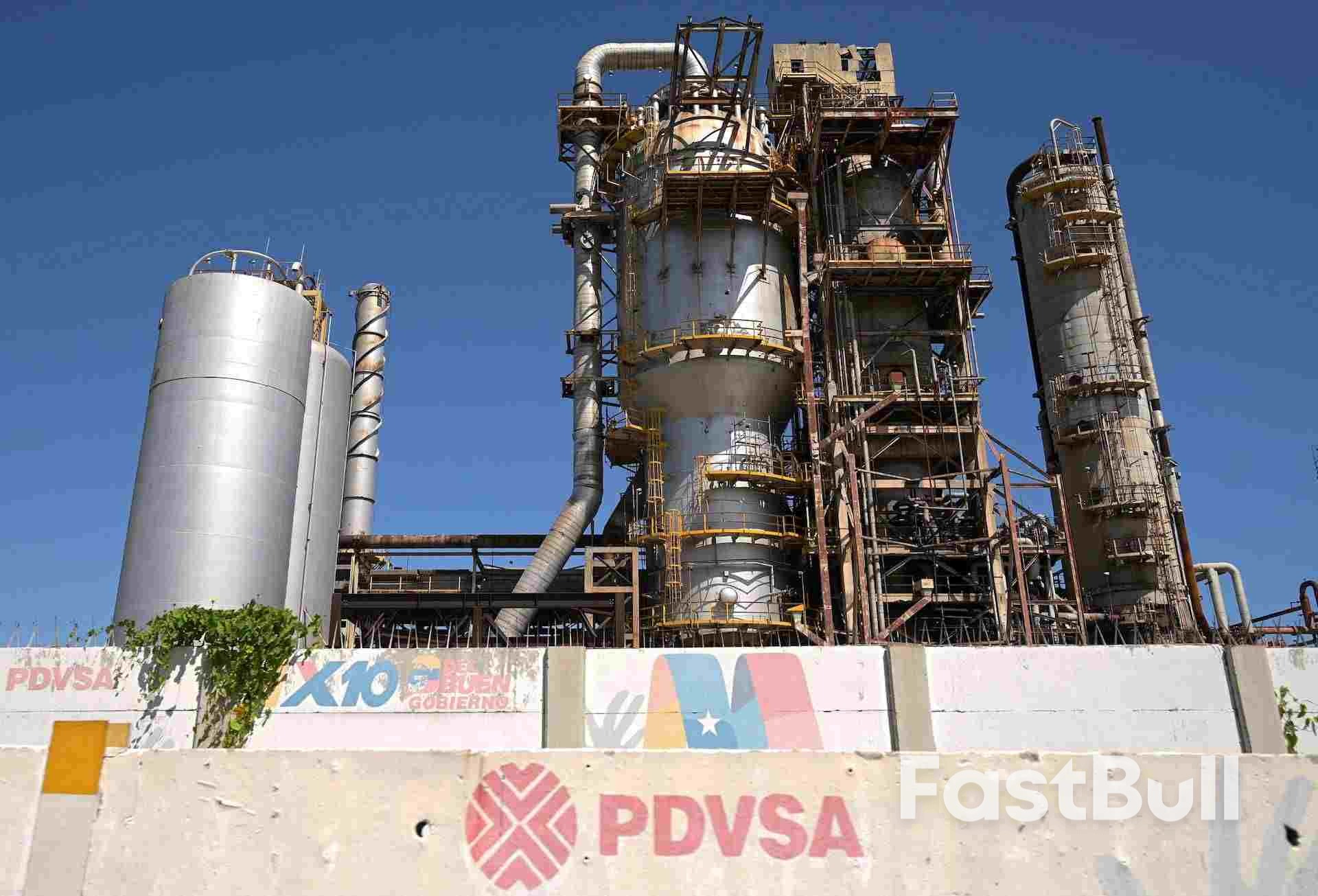
Installations at the El Palito refinery of Venezuelan state oil company PDVSA, after the National Assembly approved a major reform of the country's main oil law, in Puerto Cabello, Venezuela, January 22, 2026. REUTERS/Gaby Oraa
WASHINGTON, Jan 29 (Reuters) - The Trump administration on Thursday eased some sanctions on the Venezuelan oil industry as it seeks to expand production there after U.S. forces ousted the South American country's President Nicolas Maduro on January 3.
The U.S. Treasury issued a general license authorizing transactions involving the government of Venezuela and state oil company PDVSA that are "ordinarily incident and necessary to the lifting, exportation, reexportation, sale, resale, supply, storage, marketing, purchase, delivery, or transportation of Venezuelan-origin oil, including the refining of such oil, by an established U.S. entity."
The decision to issue a general license marks a shift from a previous plan to grant individual exemptions to sanctions for companies seeking to do business in the country.
Following the U.S. capture of Maduro, U.S. officials have said Washington would ease sanctions imposed on Venezuela's energy industry.
The administration of President Donald Trump is pursuing an ambitious $100 billion reconstruction plan for the country's oil industry, and intends to manage the oil sales "indefinitely."
As part of that effort, the U.S. and Caracas reached an initial $2 billion deal in January to export Venezuelan crude oil, including to U.S. refiners.
Oil producers Chevron (CVX.N), opens new tab, Repsol (REP.MC), opens new tab and ENI (ENI.MI), opens new tab, refiner Reliance Industries (RELI.NS), opens new tab, and some U.S. oil service providers have sought licenses in recent weeks to expand output or exports from the OPEC member.
The companies are partners and customers of state oil company PDVSA.
The large number of individual requests to the U.S. government had delayed progress on plans to expand exports and get investment moving quickly into Venezuela, two sources said this week.
Reporting by Reporting by Timothy Gardner, Marianna Parraga, Christian Martinez and Daphne Psaledakis;Editing by Rod Nickel and David Ljunggren
The U.S. Treasury said recent depreciation in the South Korean won was not in line with the Asian country's strong economic fundamentals, in an assessment that was part of a semi-annual currency report.
"Depreciation pressures on the won were acute in the fourth quarter of 2024 as the central bank reduced its policy rate in November and amid the onset of domestic political instability," said the report released on Thursday. "The won depreciated further in late 2025, which was not in line with Korea's strong economic fundamentals."
The rare U.S. assessment on the dollar-won level came after South Korean authorities in December rolled out measures to bolster the currency as it slumped towards the psychologically important level of 1,500 per dollar.
The currency has been under pressure from domestic investors' purchase of overseas stocks and concerns about additional U.S. investment, which was part of a trade deal with President Donald Trump's administration.
The won closed at 1,434.0 per dollar on Thursday, bouncing in recent days after a joint response between Japan and the U.S. helped strengthen the yen.
In its latest semi-annual currency report, the Treasury said no major trading partner met all three criteria for enhanced analysis of currency practices during the last half of 2024 and the first six months of 2025. South Korea remained on a "monitoring list" meriting close attention, but was not accused of currency manipulation.
Ukrainian President Volodymyr Zelenskiy said on Thursday that he anticipates Russia will follow through on an agreement for a week-long pause in attacks on Kyiv and other cities, a deal announced by U.S. President Donald Trump in response to winter weather.
Zelenskiy noted, however, that the coming days would serve as the real test of Moscow's commitment to the temporary halt in hostilities.

In a statement on the social media platform X, Zelenskiy confirmed that diplomatic teams had discussed the matter in the United Arab Emirates.
"We expect the agreements to be implemented," he wrote. "De-escalation steps contribute to real progress toward ending the war."
This cautious optimism suggests that while Ukraine welcomes the initiative, it remains wary of Russia's intentions and will be monitoring the situation closely.
In his nightly video address, Zelenskiy specifically thanked Washington for its role in brokering the agreement, which he characterized as an effort to stop Russian strikes on Ukraine's critical energy infrastructure.
"Thanks to the American side for their efforts in ensuring a stop to strikes on energy (targets) at this time and let's hope that America succeeds in ensuring this," he stated.
Despite the diplomatic progress, Zelenskiy adopted a wait-and-see approach, concluding, "We shall see what the real situation is with our energy facilities and cities in the days and nights to come."
Donald Trump has a clear goal for the U.S. housing market: make it more affordable without letting home prices fall. His strategy hinges on lowering borrowing costs, specifically mortgage rates, while actively protecting the wealth of current homeowners.
However, economists question whether this approach can meaningfully tackle the housing affordability crisis, as it avoids addressing the core issue of high property values.
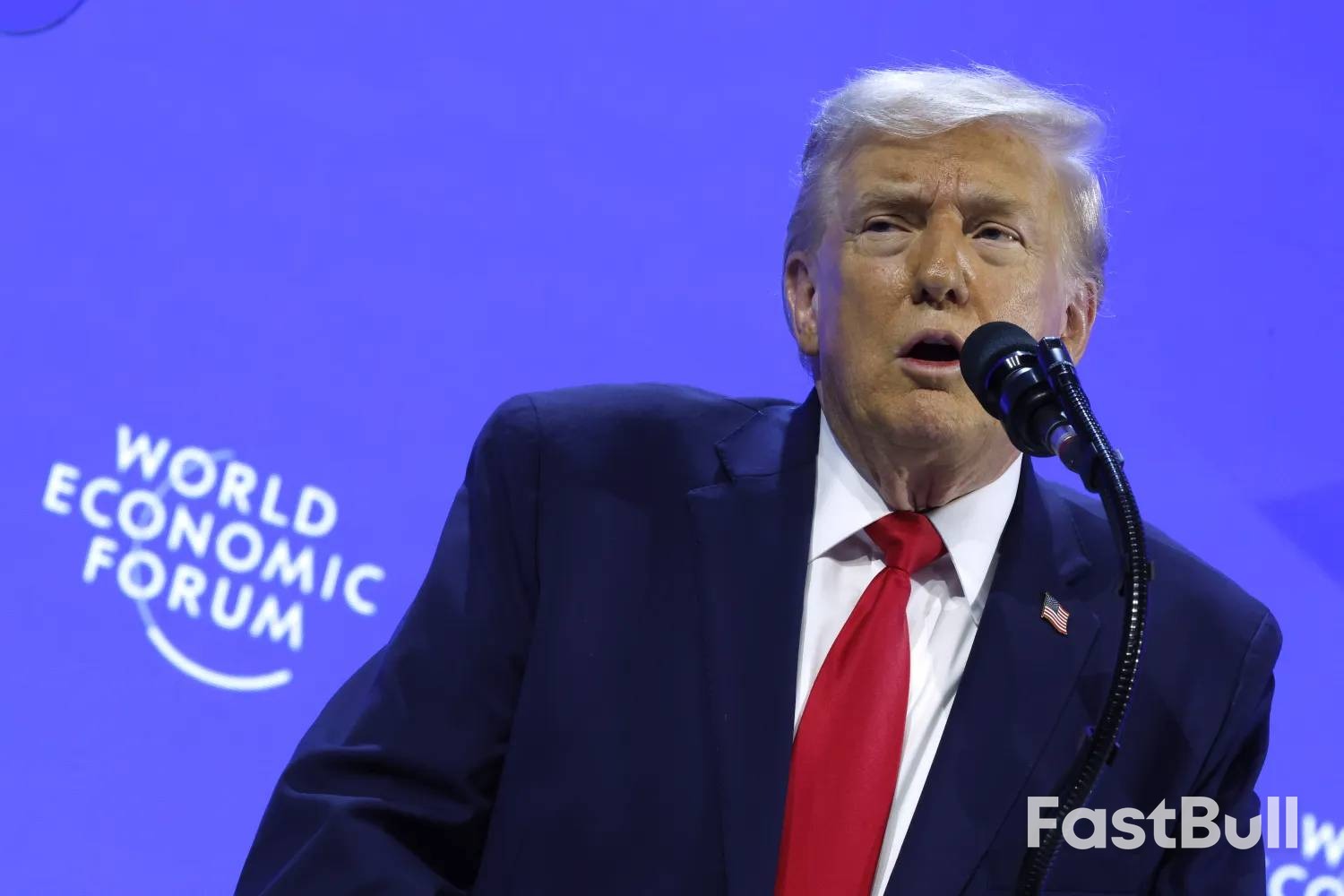
In a speech at the World Economic Forum in Davos, former President Trump laid out his vision. He argued that increasing the housing supply to drive down prices would disrupt the market and erode the wealth homeowners have built, especially since values soared post-pandemic.
"I am very protective of people that already own a house," Trump said. "Because we have had such a good run, the house values have gone up tremendously, and these people have become wealthy."

He framed lower interest rates as a solution that is "good for everybody." This signals a clear preference for one policy lever over another.
"This suggests that the administration sees lower mortgage rates as the preferred channel through which to improve affordability," noted Wells Fargo economists Charlie Dougherty and Ali Hajibeigi.
Yet, some experts argue that addressing high prices is unavoidable. "As a homeowner, I don't want to see the value of my property go down," said Shelton Weeks, an economics professor at Florida Gulf Coast University. "Ultimately, that bit of pain for other homeowners is the pathway to truly alleviating the housing affordability crisis."
Trump's proposals have consistently focused on reducing the cost of borrowing. Key initiatives include:
• Directing government-backed mortgage giants Fannie Mae and Freddie Mac to purchase $200 billion in mortgage bonds to help lower rates.
• Floating the idea of creating 50-year mortgages to provide homebuyers with more financing options.
While lower mortgage rates make monthly payments cheaper, they also risk stimulating demand. Without a corresponding increase in the number of homes for sale, this could backfire.
"Unless new listings pick up substantially, the lack of supply is likely to drive up prices, offsetting much of the affordability gain from lower mortgage rates," wrote Ben Ayers, a senior economist at Nationwide.
Protecting high home values has a direct impact on the broader economy. When homeowners feel wealthier due to rising property values, they tend to spend more—a phenomenon known as the "wealth effect."
"Because a home is often the largest source of family wealth, price swings can materially impact how people spend, save and borrow," the Dallas Federal Reserve explained in a recent report.
This housing wealth has been a key factor supporting strong consumer spending, which accounts for over two-thirds of U.S. economic activity. Data from the Bureau of Economic Analysis showed consumer spending rose 0.3% in both October and November. Trump's policy aims to keep this engine running.
"Affluent consumers continued to buoy spending with an extra boost from wealth effects," said Diane Swonk, chief economist at KPMG.
While prioritizing rate reduction, Trump has proposed some measures to increase the housing supply available to typical buyers. An executive order aims to ban large institutional investors from purchasing homes, targeting Wall Street's growing stake in the residential market.
However, analysts believe this move may have a limited impact. According to Wells Fargo, institutional investors account for a relatively small 2.5% share of the market. Furthermore, the policy's wording suggests it may not be an absolute prohibition.
"The order only appears to erect hurdles for additional home sales to investors and does not look to be an outright ban," Wells Fargo economists wrote. "There is no mention of completely stopping new sales, or mandating the liquidation of existing portfolios."
Trump himself acknowledged the tension between affordability and property values. "Every time you make it more and more and more affordable for somebody to buy a house cheaply, you're actually hurting the value of those houses," he said. "And I don't want to do anything that's going to hurt the value of people that own a house."
White Label
Data API
Web Plug-ins
Poster Maker
Affiliate Program
The risk of loss in trading financial instruments such as stocks, FX, commodities, futures, bonds, ETFs and crypto can be substantial. You may sustain a total loss of the funds that you deposit with your broker. Therefore, you should carefully consider whether such trading is suitable for you in light of your circumstances and financial resources.
No decision to invest should be made without thoroughly conducting due diligence by yourself or consulting with your financial advisors. Our web content might not suit you since we don't know your financial conditions and investment needs. Our financial information might have latency or contain inaccuracy, so you should be fully responsible for any of your trading and investment decisions. The company will not be responsible for your capital loss.
Without getting permission from the website, you are not allowed to copy the website's graphics, texts, or trademarks. Intellectual property rights in the content or data incorporated into this website belong to its providers and exchange merchants.
Not Logged In
Log in to access more features
Log In
Sign Up