Markets
News
Analysis
User
24/7
Economic Calendar
Education
Data
- Names
- Latest
- Prev


Signal Accounts for Members
All Signal Accounts
All Contests


Euro Zone IHS Markit Construction PMI (Nov)A:--
F: --
P: --
Italy IHS Markit Construction PMI (Nov)A:--
F: --
P: --
U.K. Markit/CIPS Construction PMI (Nov)A:--
F: --
P: --
France 10-Year OAT Auction Avg. YieldA:--
F: --
P: --
Euro Zone Retail Sales MoM (Oct)A:--
F: --
P: --
Euro Zone Retail Sales YoY (Oct)A:--
F: --
P: --
Brazil GDP YoY (Q3)A:--
F: --
P: --
U.S. Challenger Job Cuts (Nov)A:--
F: --
P: --
U.S. Challenger Job Cuts MoM (Nov)A:--
F: --
P: --
U.S. Challenger Job Cuts YoY (Nov)A:--
F: --
P: --
U.S. Initial Jobless Claims 4-Week Avg. (SA)A:--
F: --
P: --
U.S. Weekly Initial Jobless Claims (SA)A:--
F: --
P: --
U.S. Weekly Continued Jobless Claims (SA)A:--
F: --
P: --
Canada Ivey PMI (SA) (Nov)A:--
F: --
P: --
Canada Ivey PMI (Not SA) (Nov)A:--
F: --
P: --
U.S. Non-Defense Capital Durable Goods Orders Revised MoM (Excl. Aircraft) (SA) (Sept)A:--
F: --
U.S. Factory Orders MoM (Excl. Transport) (Sept)A:--
F: --
P: --
U.S. Factory Orders MoM (Sept)A:--
F: --
P: --
U.S. Factory Orders MoM (Excl. Defense) (Sept)A:--
F: --
P: --
U.S. EIA Weekly Natural Gas Stocks ChangeA:--
F: --
P: --
Saudi Arabia Crude Oil ProductionA:--
F: --
P: --
U.S. Weekly Treasuries Held by Foreign Central BanksA:--
F: --
P: --
Japan Foreign Exchange Reserves (Nov)A:--
F: --
P: --
India Repo RateA:--
F: --
P: --
India Benchmark Interest RateA:--
F: --
P: --
India Reverse Repo RateA:--
F: --
P: --
India Cash Reserve RatioA:--
F: --
P: --
Japan Leading Indicators Prelim (Oct)A:--
F: --
P: --
U.K. Halifax House Price Index YoY (SA) (Nov)A:--
F: --
P: --
U.K. Halifax House Price Index MoM (SA) (Nov)A:--
F: --
P: --
France Current Account (Not SA) (Oct)--
F: --
P: --
France Trade Balance (SA) (Oct)--
F: --
P: --
France Industrial Output MoM (SA) (Oct)--
F: --
P: --
Italy Retail Sales MoM (SA) (Oct)--
F: --
P: --
Euro Zone Employment YoY (SA) (Q3)--
F: --
P: --
Euro Zone GDP Final YoY (Q3)--
F: --
P: --
Euro Zone GDP Final QoQ (Q3)--
F: --
P: --
Euro Zone Employment Final QoQ (SA) (Q3)--
F: --
P: --
Euro Zone Employment Final (SA) (Q3)--
F: --
Brazil PPI MoM (Oct)--
F: --
P: --
Mexico Consumer Confidence Index (Nov)--
F: --
P: --
Canada Unemployment Rate (SA) (Nov)--
F: --
P: --
Canada Labor Force Participation Rate (SA) (Nov)--
F: --
P: --
Canada Employment (SA) (Nov)--
F: --
P: --
Canada Part-Time Employment (SA) (Nov)--
F: --
P: --
Canada Full-time Employment (SA) (Nov)--
F: --
P: --
U.S. Personal Income MoM (Sept)--
F: --
P: --
U.S. Dallas Fed PCE Price Index YoY (Sept)--
F: --
P: --
U.S. PCE Price Index YoY (SA) (Sept)--
F: --
P: --
U.S. PCE Price Index MoM (Sept)--
F: --
P: --
U.S. Personal Outlays MoM (SA) (Sept)--
F: --
P: --
U.S. Core PCE Price Index MoM (Sept)--
F: --
P: --
U.S. UMich 5-Year-Ahead Inflation Expectations Prelim YoY (Dec)--
F: --
P: --
U.S. Core PCE Price Index YoY (Sept)--
F: --
P: --
U.S. Real Personal Consumption Expenditures MoM (Sept)--
F: --
P: --
U.S. 5-10 Year-Ahead Inflation Expectations (Dec)--
F: --
P: --
U.S. UMich Current Economic Conditions Index Prelim (Dec)--
F: --
P: --
U.S. UMich Consumer Sentiment Index Prelim (Dec)--
F: --
P: --
U.S. UMich 1-Year-Ahead Inflation Expectations Prelim (Dec)--
F: --
P: --
U.S. UMich Consumer Expectations Index Prelim (Dec)--
F: --
P: --


No matching data
Latest Views
Latest Views
Trending Topics
Top Columnists
Latest Update
White Label
Data API
Web Plug-ins
Affiliate Program
View All

No data
The United States and China on Tuesday will begin charging port fees on ocean shipping firms that move everything from holiday toys to crude oil, making the high seas a key front in the trade war between the world's two largest economies.
The United States and China on Tuesday will begin charging port fees on ocean shipping firms that move everything from holiday toys to crude oil, making the high seas a key front in the trade war between the world's two largest economies.China said it had started to collect the special charges on U.S.-owned, operated, built, or flagged vessels but clarified that Chinese-built ships would be exempted from the levies.In details published on Tuesday by state broadcaster CCTV, China spelled out specific provisions on exemptions, including for ships built by China and empty ships entering Chinese shipyards for repair.
The China-imposed port fees would be collected at the first port of entry on a single voyage or for the first five voyages within a year, following an annual billing cycle beginning on April 17.Early this year, President Donald Trump's administration announced plans to levy the fees on China-linked ships to loosen that country's grip on the global maritime industry and bolster U.S. shipbuilding. An investigation during former President Joe Biden's administration concluded China uses unfair policies and practices to dominate the global maritime, logistics and shipbuilding sectors, clearing the way for those penalties.
The U.S. is scheduled to also begin collecting fees on October 14. Analysts expect China-owned container carrier COSCOto be most affected, shouldering nearly half of that segment's expected $3.2 billion cost from those fees in 2026.China hit back last week, saying it would impose its own port fees on U.S.-linked vessels from the same day. Jefferies analyst Omar Nokta noted that 13% of crude tankers and 11% of container ships in the global fleet would be affected.
"This tit-for-tat symmetry locks both economies into a spiral of maritime taxation that risks distorting global freight flows," Athens-based Xclusiv Shipbrokers Inc said in a research note.In a reprisal against China curbing exports of critical minerals, Trump on Friday threatened to slap additional 100% tariffs on goods from China and put new export controls on "any and all critical software" by November 1.Administration officials hours later warned that countries voting in favor of a plan by the United Nations' International Maritime Organization to reduce planet-warming greenhouse gas emissions from ocean shipping this week could face sanctions, port bans, or punitive vessel charges. China has publicly supported the IMO plan.
"The weaponisation of both trade and environmental policy signals that shipping has moved from being a neutral conduit of global commerce to a direct instrument of statecraft," Xclusiv said.
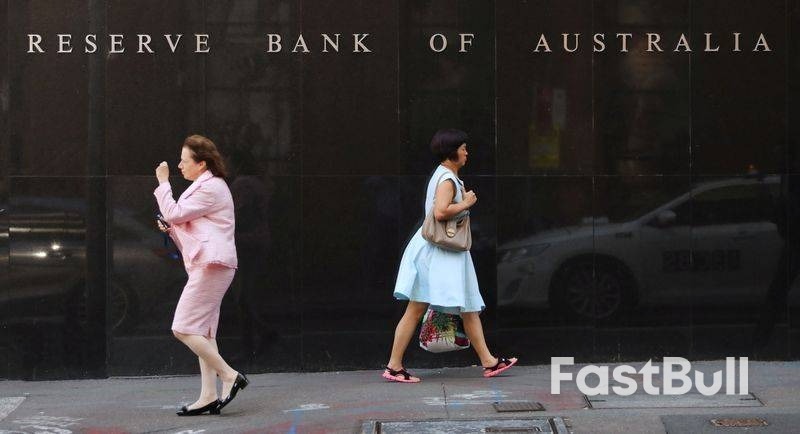
Australia’s central bank said the risk of faster inflation at a time when the labor market is “still a little tight” underpinned its decision to keep interest rates unchanged last month, reiterating that policymakers will remain cautious and data-dependent in future decisions.The Reserve Bank left its cash rate at 3.6% after back-to-back increases in monthly Consumer Price Indicator readings suggested that inflation may come in stronger than the staff’s most recent forecasts, minutes of its Sept. 29-30 meeting released Tuesday showed. The RBA said that while the monthly CPI figures are “partial and volatile” the results in housing and market services suggested the risk of increased price pressures.
“The combination of potentially higher-than-expected inflation and broadly stable labor market conditions, if sustained, could imply that the staff’s assumption regarding the balance between aggregate demand and potential supply was incorrect,” the RBA said. The board also noted “the potential lessons for Australia from the experience of some other countries where services inflation has been elevated.”
The record of meeting underscores the cautious approach to the easing cycle adopted by Australian policymakers, who have so far managed to navigate the economy to a soft landing, with consumer prices inside the bank’s 2-3% target and unemployment historically low at a little over 4%.Against a global backdrop of an unpredictable US administration and the potential for significant tariffs on China, Australia’s largest trading partner, they see the path of least regret as moving slowly.“Members observed that monetary policy was probably still a little restrictive but acknowledged the extent of restriction was difficult to determine,” the minutes showed.
Their caution contrasts with colleagues in New Zealand, who last week slashed rates by a half-percentage point, adding to their already aggressive easing as the local economy struggles. The US central bank also cut last month and Federal Reserve Bank of Philadelphia President Anna Paulson signaled she favors two more quarter-point rate cuts this year.Also pointing to a potential uptick in the economy, business confidence climbed in September, according to a National Australia Bank Ltd. survey also released Tuesday.“The September survey showed continuing positive results in the headline figures,” NAB Chief Economist, Sally Auld said. “Both business confidence and conditions appear to be consolidating just above their long-run average levels after improving through mid-2025.”
Australia will receive another round of labor market data on Thursday with economists predicting the jobless rate probably edged up to 4.3% from 4.2%. The RBA next meets on Nov. 3-4 and the strength of monthly inflation prompted some economists to scrap forecasts for any more cuts this year. The RBA has reduced borrowing costs three times since February.
In addition to the employment data, the board will have quarterly CPI that’s the most comprehensive reading of price behavior in the economy, as well as the RBA staff’s updated economic forecasts. Third-quarter inflation will be released on Oct. 29.“The flow of information since the previous meeting, the forecasts from August and their judgment about the extent of policy restrictiveness collectively implied that there was no need for an immediate reduction in the cash rate target,” members said in the September meeting minutes.
“Looking ahead, members noted that it was appropriate for the board’s decisions to remain cautious and data dependent.”
NATO has kicked off its annual nuclear exercise, Steadfast Noon, on Monday, which is focusing mainly on securing its nuclear weapons before deployment, according to prior statements of the alliance's chief."We carry out this training to ensure our nuclear deterrent remains credible, safe, secure, and effective," NATO Secretary-General Mark Rutte has said of the two-week long drills. "It also sends a clear message to any potential adversary that we are fully capable of defending all allies against any threat."

The exercises are hosted by the Netherlands, and will involve 71 aircraft from 14 NATO members and has been conducted every year for more than a decade. Military bases in Belgium, the UK, and Denmark are also being utilized.The United States and the UK, which both maintain nuclear arsenals, form the core of NATO's nuclear deterrence strategy. While France also possesses nuclear weapons, it does not participate in NATO's nuclear planning group.
The US military is contribute F-35, refueling aircraft, and other support planes. Finland and Poland are additionally providing fighter jets. The drill is also featuring electronic warfare systems, reconnaissance aircraft, and intelligence assets.The drills come as tensions between Europe and Russia are at a high point over alleged drone incursions in European airspace which various governments from Denmark to Poland to Germany have linked to Russian intelligence, though without giving any evidence.
Russian media and officials have responded as follows:
Moscow has yet to comment on the current drills, but has previously condemned past Steadfast Noon exercises, saying they “lead to nothing but ratcheting up tensions” which are already high due to the Ukraine conflict.Russian officials have accused Western European nations of uniting in what Kremlin aide Yury Ushakov has called a collective “anti-Russian frenzy.” Ushakov said the region has been speaking in an “extremely belligerent, extremely negative” voice against Moscow while spreading “brazen lies” about it.
Earlier this month, President Vladimir Putin said Western Europe has been “whipping up hysteria” about an alleged threat of war with Russia, calling such concerns a “nonsense mantra” and urging leaders in the region to focus on domestic issues instead.Currently, US efforts to get Ukraine and Russia to the negotiating table appear to be at a complete standstill. President Trump on Monday from Israel voiced that the Ukraine war will not be settled so easily.
"I thought it would be easily settled. I thought it would be a hell of a lot easier than doing what we’ve just successfully done with Israel," he told the Knesset.
Singapore's central bank kept its monetary-policy settings unchanged as it struck a somewhat cautious tone on the inflation outlook, and economic growth exceeded expectations.Core inflation is likely to trough in the near term and rise gradually over 2026 as some of the factors damping inflation fade, the Monetary Authority of Singapore said Tuesday. It has now held policy parameters steady since July, after two rounds of easing this year.The decision was expected by nine of 11 analysts in a Wall Street Journal poll.
MAS maintained the prevailing rate of appreciation of the Singapore dollar nominal effective exchange rate policy band, aiming to underpin medium-term price stability. No changes will be made to the width and level at which the S$NEER policy band is centered.The decision comes as the city-state's advance third-quarter economic growth estimates beat analysts' estimates, but still showed a sharp slowdown from the prior quarter.Singapore's gross domestic product growth expanded 3.9% on year in the first three quarters of the year, the MAS said. It expects the output gap to remain positive in 2025 and come in around 0% next year.
The central bank also tweaked its expectations for core inflation, anticipating it to average around 0.5% for 2025 and at 0.5%-1.5% in 2026. Headline inflation is likely to average 0.5%-1.0% this year and at 0.5%-1.5% the next, the MAS said.Uncertainty around the economic outlook has receded somewhat after the U.S. struck some trade deals, the MAS added.Still, further increases to tariff rates, including from product-specific duties, could affect Singapore's externally-oriented sectors, it said. Global policy uncertainty could also weigh on hiring and investment, the central bank noted.
The Singapore dollar was little moved after the decision.
The MAS uses currency as a policy tool to damp inflationary expectations and support growth as trade flows dwarf the island nation's domestic activity.To do this, the Singapore dollar operates under a managed float-currency regime based on a basket of currencies representing the city-state's major trade partners. The rate is allowed to trade within an undisclosed band.
The dollar held steady on Tuesday as U.S. President Donald Trump's watered down rhetoric against tariffs on China and a potential meeting with his Chinese counterpart raised hopes of de-escalation in tensions between the two economic heavyweights.
Currency markets were calmer in early Asian trade after a chaotic Friday session when Trump abruptly announced additional levies of 100% on China's U.S.-bound exports, only to later sound more conciliatory over the weekend.
U.S. Treasury Secretary Scott Bessent also said on Monday that Trump remains on track to meet Chinese leader Xi Jinping in South Korea in late October.
All that breathed new life into the dollar, which in turn kept the euro below the $1.16 level to trade at $1.1566.
Sterling eased 0.06% to $1.3328, while the New Zealand dollar fell anew to hit a six-month low of $0.57145.
"There is a mutual desire, or some sort of an off-ramp, and also a deal to prevent the bilateral relations from really spiralling out of (control), particularly because I think both the U.S. and China understand very clearly they cannot simply wish away the other's leverage," said Homin Lee, senior macro strategist at Lombard Odier.
"We think, at the end of the day... a re-escalation path without any kind of an endgame in mind, may be too punitive for both sides. So we suspect that there will be an attempt to achieve an off-ramp."
Against a basket of currencies, the dollar ticked 0.04% higher to 99.34.
The Aussie was little changed at $0.6516, while the yen fell roughly 0.2% to 152.57 per dollar.
Markets in Japan returned from a long weekend on Tuesday to lingering political uncertainty at home, after Sanae Takaichi's bid to become the nation's first female prime minister was thrown into doubt on Friday when her ruling party's junior coalition partner quit.
While the move halted the yen's steep slide as investors assessed the chances of huge fiscal largesse under the new premiership, it continues to languish near eight-month lows.
"If you ask me, given the current interest rate differential between the U.S. and Japan, which should be the primary driver of the exchange rate as well, dollar/yen should not be at 152, so I do expect this trend to reverse pretty soon," said Nigel Foo, head of Asian fixed income at First Sentier Investors, who expects the yen to strengthen eventually.
In cryptocurrencies, bitcoin was down 0.36% at $115,380.19, after having tumbled more than 6% last week as risk sentiment took a hit.
Ether fell 0.77% to $4,256.42, having similarly lost nearly 8% of its value last week.
Market participants said the crypto sector on Friday saw more than $19 billion in liquidations across leveraged positions as panic selling and low liquidity triggered sharp swings.
(Reporting by Rae WeeEditing by Shri Navaratnam)
Australia’s central bank saw no need for an immediate cut in interest rates at its September policy meeting given some stickiness in services inflation and steady employment, while future easing would be data dependent.
Minutes of the meeting released on Tuesday, showed the Reserve Bank of Australia board would be focused on readings for inflation and consumption in the third quarter when it next meets on November 4.
The board decided to hold the cash rate at 3.60%, following three quarter-point cuts so far this year, and judged there were still risks to the upside and downside for the economy.
"There was no need for an immediate reduction in the cash rate target," they concluded. "Looking ahead, members noted that it was appropriate for the Board’s decisions to remain cautious and data dependent."
Markets imply around a 50-50 chance the RBA will ease at its next meeting, with a 70% probability of a move in December. Just one more cut is fully priced in, and only a modest chance of reaching 3.10%.
The board judged policy was still a little restrictive, though a pick-up in house prices and home loans suggested past rate cuts were have some impact.
Consumer demand had also picked up faster than previously expected and looked like continuing, th minutes showed, though some more recent data has cast some doubt on the strength of spending.
The board noted monthly readings on consumer prices for July and August pointed to upside risk for third-quarter inflation, particularly on services and home building costs.
Markets suspect a high reading for core inflation, due later this month, would argue against an near-term rate cut.
Analysts generally assume a rise of 0.7% or less for the quarter would green light an easing, while 0.9% or more would likely prevent a move. An increase of 0.8% is a grey area, making a cut a line ball call for the RBA board.
On the labour market, board members judged it was still a little tight overall, though the extent was hard to determine. While employment growth had slowed, the jobless rate remained steady at 4.2% in August.
Some members also noted indicators suggested a risk wage growth in the private sector could slow more than expected in coming months.

The global outlook remained highly uncertain, with the impact of U.S. tariffs still feeding through and the Chinese economy looking weaker than previously expected.
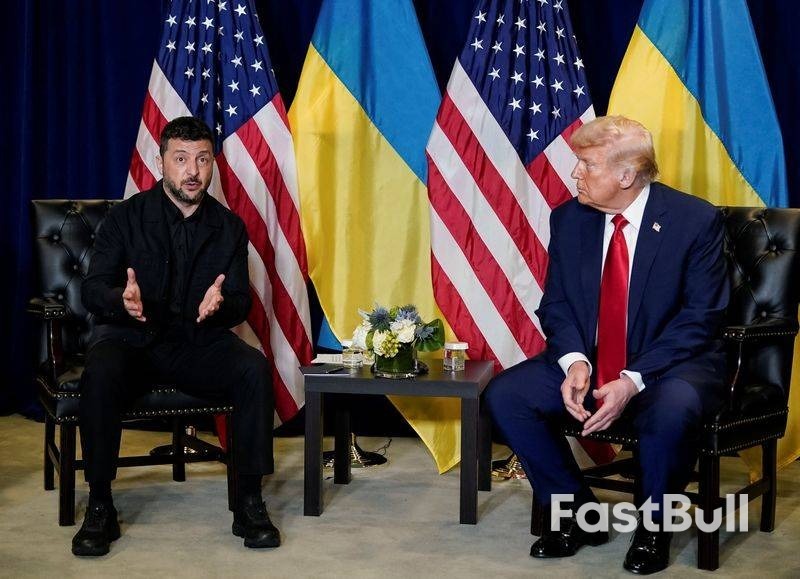
Ukrainian President Volodymyr Zelenskiy said on Monday that he would meet U.S. President Donald Trump in Washington on Friday, where the two would discuss Ukraine’s air defence and long-range strike capabilities.
The two leaders spoke on both Saturday and Sunday amid intensifying discussions about the potential provision of long-range Tomahawk missiles to Kyiv, and a Ukrainian delegation led by Prime Minister Yulia Svyrydenko is slated to visit Washington before the Friday meeting.
Kyiv has been lobbying Washington to supply the U.S.-produced missiles, which have the capacity to hit Moscow, but which Ukrainians say would be used only on military targets. Moscow has said such a move would represent a serious escalation.
Zelenskiy said he had given Trump, who has increasingly signalled frustration with Russia in recent weeks, an idea of how many of the coveted Tomahawks Ukraine needs.
"Frankly, I’ve already shared our vision with Trump... but some of these things are not for a phone conversation, so we’ll meet," he told reporters in Kyiv.
Trump has said he is considering sending the missiles to Ukraine, though he has also said he might talk to Russian President Vladimir Putin about it.
Ukraine and the U.S. are also closing in on a landmark drone deal in which Ukraine would share drone technology with the United States. European diplomats see such a deal as an important tool for keeping the mercurial U.S. president engaged and supportive of Ukraine.
Diplomatic efforts to end the war, now in its fourth year, have stalled as Russia steps up strikes on Ukrainian energy facilities and presses forward with grinding gains on the battlefield.
Zelenskiy said he will also meet with representatives of U.S. energy companies to discuss Ukraine’s current needs amid what he described as shifting Russian tactics in strikes on Ukrainian energy infrastructure.

Russian forces have recently targeted Ukrainian gas production and the country’s power grid, with Zelenskiy adding that Kyiv could soon be forced to begin importing electricity.
Ukraine has also carried out strikes on Russian oil refineries, causing gasoline shortages.
White Label
Data API
Web Plug-ins
Poster Maker
Affiliate Program
The risk of loss in trading financial instruments such as stocks, FX, commodities, futures, bonds, ETFs and crypto can be substantial. You may sustain a total loss of the funds that you deposit with your broker. Therefore, you should carefully consider whether such trading is suitable for you in light of your circumstances and financial resources.
No decision to invest should be made without thoroughly conducting due diligence by yourself or consulting with your financial advisors. Our web content might not suit you since we don't know your financial conditions and investment needs. Our financial information might have latency or contain inaccuracy, so you should be fully responsible for any of your trading and investment decisions. The company will not be responsible for your capital loss.
Without getting permission from the website, you are not allowed to copy the website's graphics, texts, or trademarks. Intellectual property rights in the content or data incorporated into this website belong to its providers and exchange merchants.
Not Logged In
Log in to access more features

FastBull Membership
Not yet
Purchase
Log In
Sign Up