Markets
News
Analysis
User
24/7
Economic Calendar
Education
Data
- Names
- Latest
- Prev



Signal Accounts for Members
All Signal Accounts
All Contests


Euro Zone ZEW Economic Sentiment Index (Jan)A:--
F: --
P: --
Euro Zone Construction Output YoY (Nov)A:--
F: --
P: --
Euro Zone Construction Output MoM (SA) (Nov)A:--
F: --
Argentina Trade Balance (Dec)A:--
F: --
P: --
U.K. CPI MoM (Dec)A:--
F: --
P: --
U.K. Input PPI MoM (Not SA) (Dec)A:--
F: --
U.K. Core CPI MoM (Dec)A:--
F: --
P: --
U.K. Retail Prices Index MoM (Dec)A:--
F: --
P: --
U.K. Input PPI YoY (Not SA) (Dec)A:--
F: --
P: --
U.K. CPI YoY (Dec)A:--
F: --
P: --
U.K. Output PPI MoM (Not SA) (Dec)A:--
F: --
P: --
U.K. Output PPI YoY (Not SA) (Dec)A:--
F: --
P: --
U.K. Core Retail Prices Index YoY (Dec)A:--
F: --
P: --
U.K. Core CPI YoY (Dec)A:--
F: --
P: --
U.K. Retail Prices Index YoY (Dec)A:--
F: --
P: --
Indonesia 7-Day Reverse Repo RateA:--
F: --
P: --
Indonesia Loan Growth YoY (Dec)A:--
F: --
P: --
Indonesia Deposit Facility Rate (Jan)A:--
F: --
P: --
Indonesia Lending Facility Rate (Jan)A:--
F: --
P: --
South Africa Core CPI YoY (Dec)A:--
F: --
P: --
South Africa CPI YoY (Dec)A:--
F: --
P: --
IEA Oil Market Report
U.K. CBI Industrial Output Expectations (Jan)A:--
F: --
U.K. CBI Industrial Prices Expectations (Jan)A:--
F: --
P: --
South Africa Retail Sales YoY (Nov)A:--
F: --
P: --
U.K. CBI Industrial Trends - Orders (Jan)A:--
F: --
P: --
Mexico Retail Sales MoM (Nov)A:--
F: --
P: --
U.S. MBA Mortgage Application Activity Index WoWA:--
F: --
P: --
Canada Industrial Product Price Index YoY (Dec)A:--
F: --
Canada Industrial Product Price Index MoM (Dec)A:--
F: --
U.S. Weekly Redbook Index YoY--
F: --
P: --
U.S. Pending Home Sales Index YoY (Dec)--
F: --
P: --
U.S. Pending Home Sales Index MoM (SA) (Dec)--
F: --
P: --
U.S. Construction Spending MoM (Oct)--
F: --
P: --
U.S. Pending Home Sales Index (Dec)--
F: --
P: --
Japan Imports YoY (Dec)--
F: --
P: --
Japan Exports YoY (Dec)--
F: --
P: --
Japan Goods Trade Balance (SA) (Dec)--
F: --
P: --
Japan Trade Balance (Not SA) (Dec)--
F: --
Australia Employment (Dec)--
F: --
P: --
Australia Labor Force Participation Rate (SA) (Dec)--
F: --
P: --
Australia Unemployment Rate (SA) (Dec)--
F: --
P: --
Australia Full-time Employment (SA) (Dec)--
F: --
P: --
Turkey Capacity Utilization (Jan)--
F: --
P: --
Turkey Late Liquidity Window Rate (LON) (Jan)--
F: --
P: --
Turkey Overnight Lending Rate (O/N) (Jan)--
F: --
P: --
Turkey 1-Week Repo Rate--
F: --
P: --
U.S. Weekly Continued Jobless Claims (SA)--
F: --
P: --
U.S. Initial Jobless Claims 4-Week Avg. (SA)--
F: --
P: --
U.S. Real Personal Consumption Expenditures Final QoQ (Q3)--
F: --
P: --
U.S. Real Personal Consumption Expenditures Prelim QoQ (Q3)--
F: --
P: --
U.S. Weekly Initial Jobless Claims (SA)--
F: --
P: --
U.S. Real GDP Annualized QoQ Final (Q3)--
F: --
P: --
U.S. PCE Price Index Final QoQ (AR) (Q3)--
F: --
P: --
U.S. EIA Weekly Natural Gas Stocks Change--
F: --
P: --
U.S. Kansas Fed Manufacturing Composite Index (Jan)--
F: --
P: --
U.S. Kansas Fed Manufacturing Production Index (Jan)--
F: --
P: --
U.S. EIA Weekly Crude Stocks Change--
F: --
P: --
U.S. EIA Weekly Crude Demand Projected by Production--
F: --
P: --
U.S. EIA Weekly Cushing, Oklahoma Crude Oil Stocks Change--
F: --
P: --


No matching data
Latest Views
Latest Views
Trending Topics
Top Columnists
Latest Update
White Label
Data API
Web Plug-ins
Affiliate Program
View All

No data
US envoy Witkoff reports Ukraine peace talks now on "land deals," with a Putin meeting imminent.
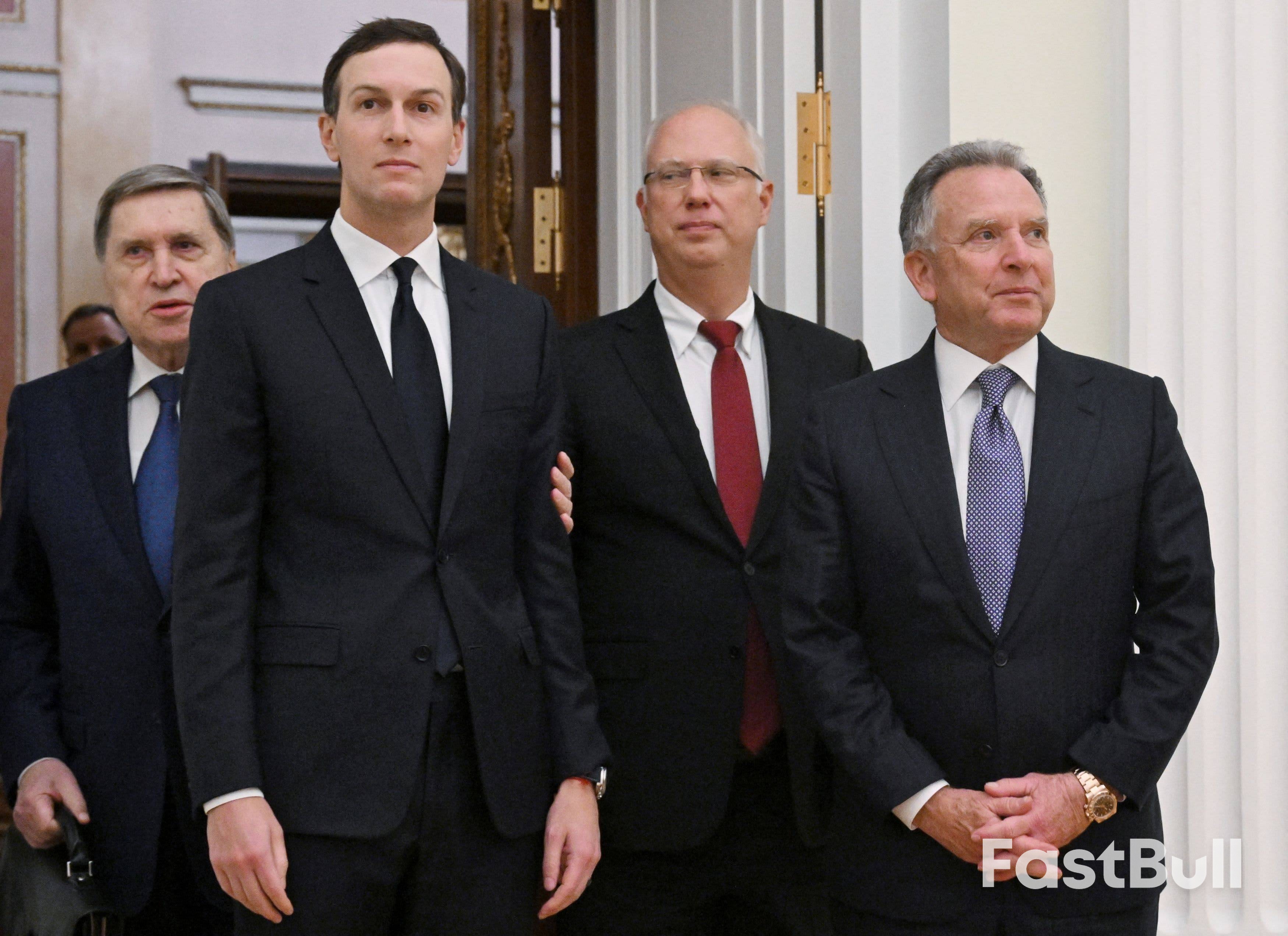
U.S. special envoy Steve Witkoff has confirmed that peace negotiations over the war in Ukraine have advanced to the critical stage of discussing "land deals," with a meeting scheduled this week with Russian President Vladimir Putin.
Speaking to CNBC at the World Economic Forum in Davos, Switzerland, Witkoff stated that significant progress has been made over the past six to eight weeks. He expressed optimism that a resolution to the nearly four-year conflict could be approaching.
According to Witkoff, he and President Donald Trump's son-in-law, Jared Kushner, will meet with Ukrainian officials on Wednesday evening before holding talks with top Russian officials.
"And then we'll be seeing the Russians, Jared and I, sometime on Thursday evening," Witkoff said, confirming that President Putin would be present at the meeting. He noted that the Kremlin had initiated the request for the high-level discussions.
These talks are centered on a U.S.-led 20-point peace plan, which Witkoff says is bringing both sides closer to an agreement. "We're bringing everyone closer... hopefully we'll have something good to announce soon," he added.
The central focus of the negotiations is now on territorial arrangements, which Witkoff described as the most challenging part of any potential deal.
"[It's based on] our 20-point peace plan, and we're massaging it and harmonizing it, and I think we're down to land deals now — that's been the 800 lb elephant in the room," he explained. "I think we have some very, very good ideas around that, and hopefully we'll be able to make some progress there."
When asked directly if he believed Putin would agree to a deal, Witkoff's response was a confident "I do."
The current diplomatic push follows multiple failed attempts to secure a lasting ceasefire. The ongoing conflict has resulted in hundreds of thousands of military and civilian casualties. Analysts suggest that pressure from the United States and President Trump's impatience with the war have been key factors in bringing both Russia and Ukraine back to the negotiating table.
Historically, major obstacles to a peace agreement have included:
• Russia's demand that Ukraine cede its eastern Donbas region.
• Ukraine's insistence on receiving security guarantees from Western partners to prevent future invasions.


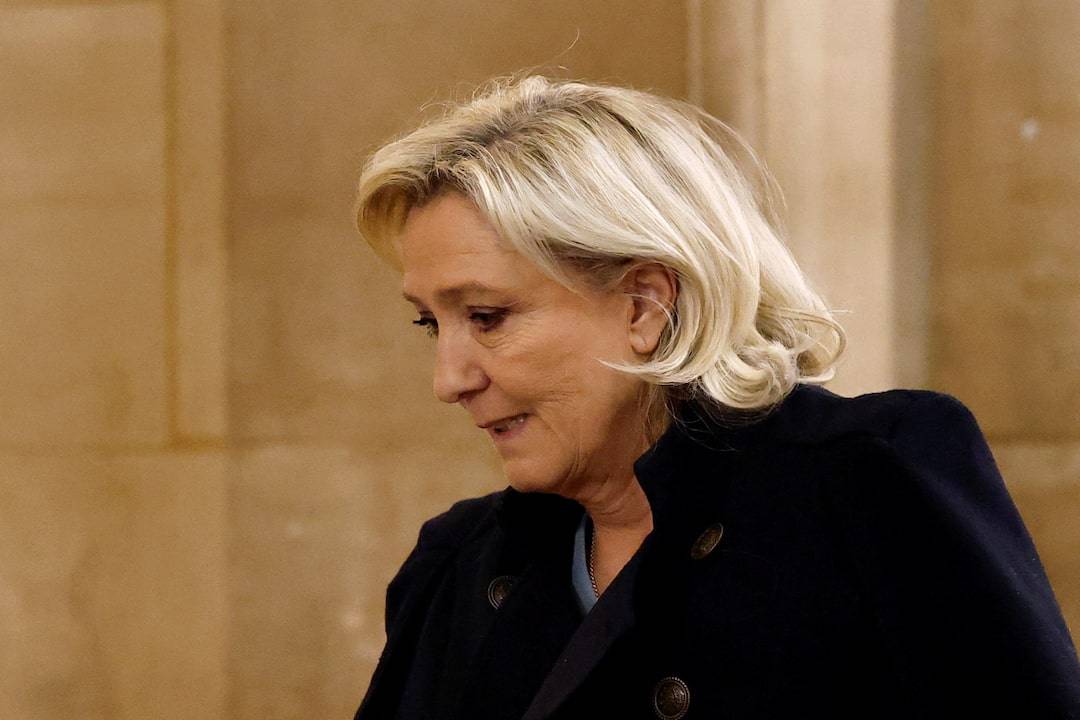
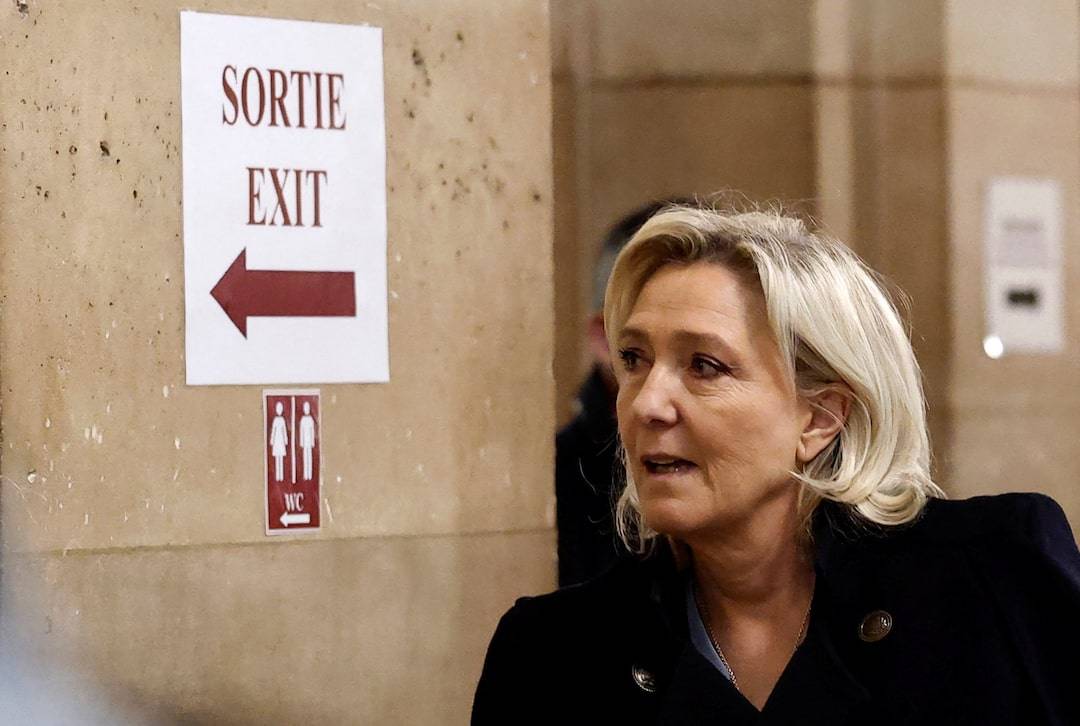
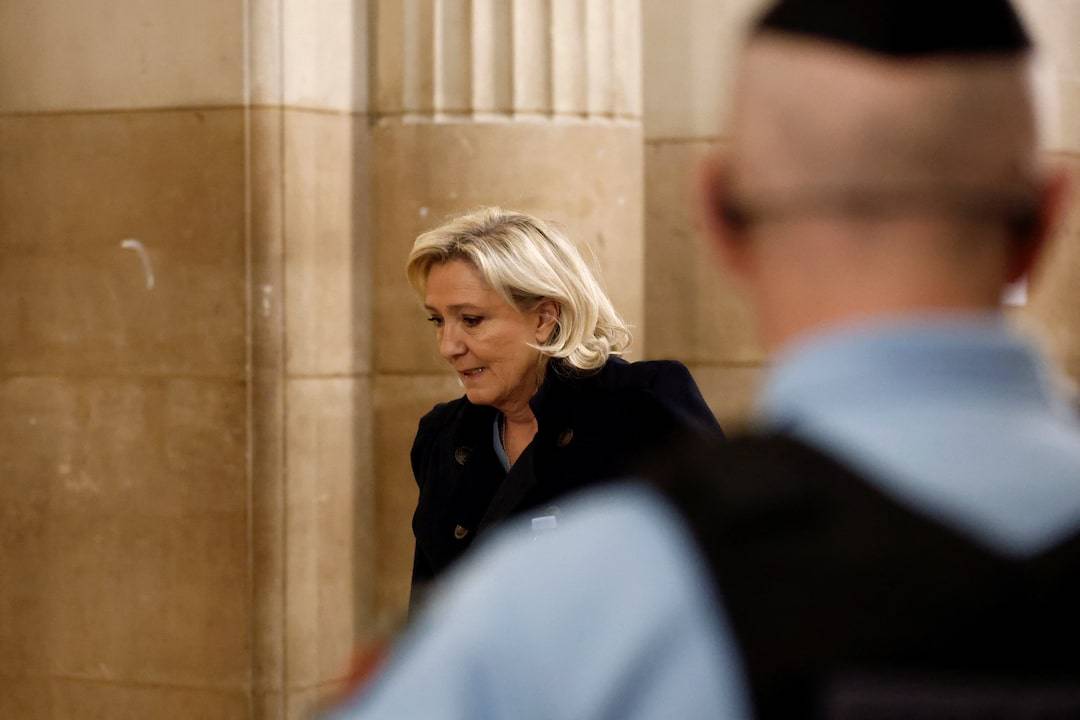
French far-right leader Marine Le Pen softened her tone while answering judges' questions during her appeal trial in Paris on Tuesday and Wednesday, but denied wrongdoing, after being barred from public office over a conviction for misusing EU funds.
Le Pen, the longtime leader of the far-right National Rally (RN), is facing a crucial appeal trial that will determine whether she can run in the 2027 presidential election, after she was given last year a five-year ban from running for public office, effective immediately.
Le Pen and others were found guilty of misappropriating more than 4 million euros ($4.7 million) of EU funds. Judges said that between 2004 and 2016, they had used funds earmarked for work at the European Parliament to pay staff who were actually working for the party.
Answering judge Michele Agi's questions, Le Pen stuck to addressing legal arguments, in contrast with her previous approach of challenging the legitimacy of the charges. But in substance, her defence appeared to remain the same, as she denied the existence of a system within the RN to misuse EU funds.
"I formally contest the idea that there was a kind of system," Le Pen told the court on Tuesday.
She also partly put the blame on her father, the late Jean-Marie Le Pen, saying that until 2014 he was the one really in charge. Known for his xenophobic, antisemitic and racist stance, the founder of the RN, formerly the Front National, died last year at 96.
"The way things were functioning wasn't ideal -- I'm aware of that," she said. "But all those people were working."
The trial is expected to last until February 12.
A ruling is expected before the summer, meaning Le Pen's hopes of running in 2027 remain alive if her five-year ban is revoked or drastically curtailed.
If she cannot run, her protege, 30-year-old RN party president Jordan Bardella, is expected to step in.
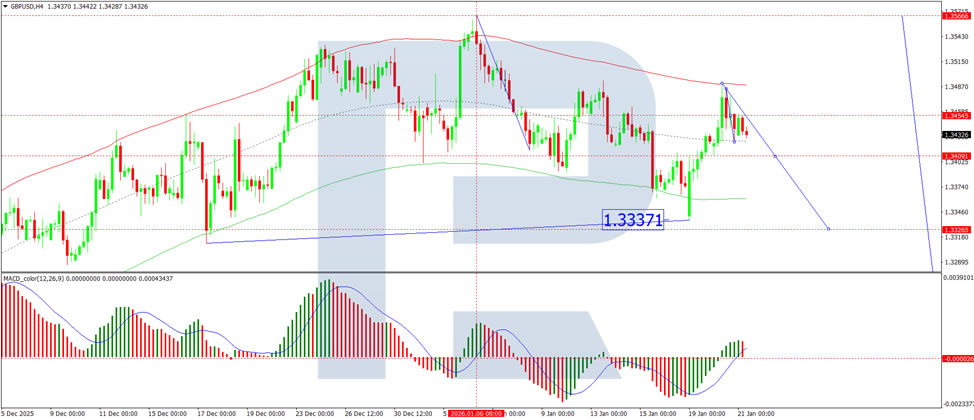
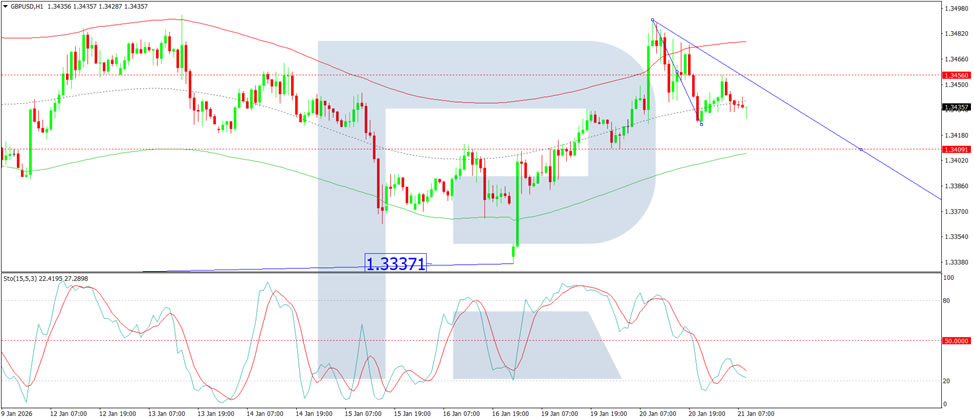
On Wednesday, GBP/USD remained stable at 1.3436. The British pound was supported by a sell-off in the US dollar following increased trade tensions between the US and Europe over Greenland.
US President Donald Trump has threatened to impose tariffs on imports from the UK, Denmark, Norway, Finland, France, Germany, and the Netherlands if these countries do not agree to transfer control of Greenland to the US. In response, investors began pulling back from American assets, including the dollar, and reallocating funds into European currencies and gold.
While recent UK labour market data showed weakness, with unemployment rates near five-year highs and the largest drop in payrolls since November 2020, there are some positive developments. These include a reduction in layoffs, stabilisation in job vacancies and unemployment, and a slowdown in wage growth that aligns with the Bank of England's inflation target.
This backdrop sets the stage for further interest rate cuts by the Bank of England. The central bank's baseline scenario suggests a final reduction to 3.50% in April, with market expectations for one more cut by mid-year and a 60% probability of a second cut by December.
On the H4 GBP/USD chart, the market is forming a broad consolidation range around the 1.3455 level. Today, we expect the range to extend to 1.3395. A correction to 1.3450 is likely, followed by a continuation of the downward trend toward 1.3326, with a potential drop to 1.3220. This scenario is supported by the MACD indicator, with its signal line above zero and pointing downward.
On the H1 chart, the market is consolidating around 1.3450, with a potential decline towards 1.3400. If this level breaks, the downward trend could extend to 1.3326. The Stochastic oscillator confirms this bearish outlook, as its signal line remains below the 50 level and continues pointing downward.
GBP/USD growth is closely linked to the weakening US dollar, primarily driven by geopolitical tensions and shifting market sentiment. The UK's labour market data and the BoE's expected rate cuts further support the pound's position. Technically, GBPUSD may continue its downward correction in the near term, with key support levels at 1.3395 and 1.3326.
President Donald Trump's move to fire Federal Reserve Governor Lisa Cook has escalated into a high-stakes legal battle, challenging the boundaries of presidential authority over the U.S. central bank. Cook is the first sitting Fed policymaker to be targeted for removal by a president, placing her at the center of a historic power struggle.
This is not the first time Cook has found herself in a pioneering or embattled position. The daughter of a nursing professor and a hospital chaplain, she was one of the first Black students to desegregate schools in her hometown of Milledgeville, Georgia. She has spoken in interviews about the physical scars she still carries from beatings during that period.
Her academic journey was equally groundbreaking. After studying philosophy at Spelman College, she became the first graduate of the historically Black women's institution to win a Marshall Scholarship, which sent her to Oxford University. According to her own accounts, she was convinced to pursue a career in economics by a British economist during a hike up Mount Kilimanjaro in Tanzania.
Cook later earned her PhD in economics from the University of California, Berkeley. One of her dissertation advisers was Barry Eichengreen, an expert on the risks of political interference in central bank policy.
The conflict began when President Trump announced on social media that he was firing Cook, citing alleged false statements or "gross negligence" related to her mortgage application paperwork. Cook has denied these allegations as baseless and filed a lawsuit to block her dismissal.
After a lower court sided with Cook, Trump’s administration appealed the decision. The case is now under consideration by the U.S. Supreme Court, with a hearing scheduled for Wednesday.
Eichengreen defended his former student in an interview with economist Paul Krugman last August. "I know Lisa to be careful and ethical," he said. "She's also one of the strongest people I know... I think we have a very strong individual on the other side of this controversy."
Before joining the Fed, Cook built a distinguished academic and policy career. She taught at Harvard University and was a research fellow at Stanford University's Hoover Institution before becoming an economics professor at Michigan State University in 2005. Her research has often focused on how racial disparities, anti-Black violence, and gender inequality negatively impact innovation and economic growth.
Her public service includes roles as an adviser on the Obama-Biden and Biden-Harris transition teams and as a senior economist at the White House's Council of Economic Advisers from 2011 to 2012.
When President Joe Biden nominated Cook to the Fed's Board of Governors in 2022, her confirmation process was long and divisive. Republican lawmakers accused her of being soft on inflation, and she faced what she described as "anonymous and untrue attacks" on her work. She was confirmed as the first Black woman to serve as a U.S. central banker only after Vice President Kamala Harris cast the tie-breaking 51st vote in an evenly split Senate.
As a Fed governor, Cook has participated in key monetary policy decisions. She voted with her colleagues to raise interest rates throughout 2022 and 2023 to combat rising inflation. However, she also supported the central bank's three rate cuts last year, which were aimed at protecting the labor market from softening. This policy stance contrasts with President Trump's repeated criticisms of the Fed for not implementing larger rate cuts.
In her public remarks, Cook has frequently addressed the economic impact of artificial intelligence, a technology the Trump administration also views as critical for prosperity. She argues that AI has the potential to boost productivity and lower inflation, but cautions that the timing of these benefits is uncertain and they may not be distributed evenly across the workforce.

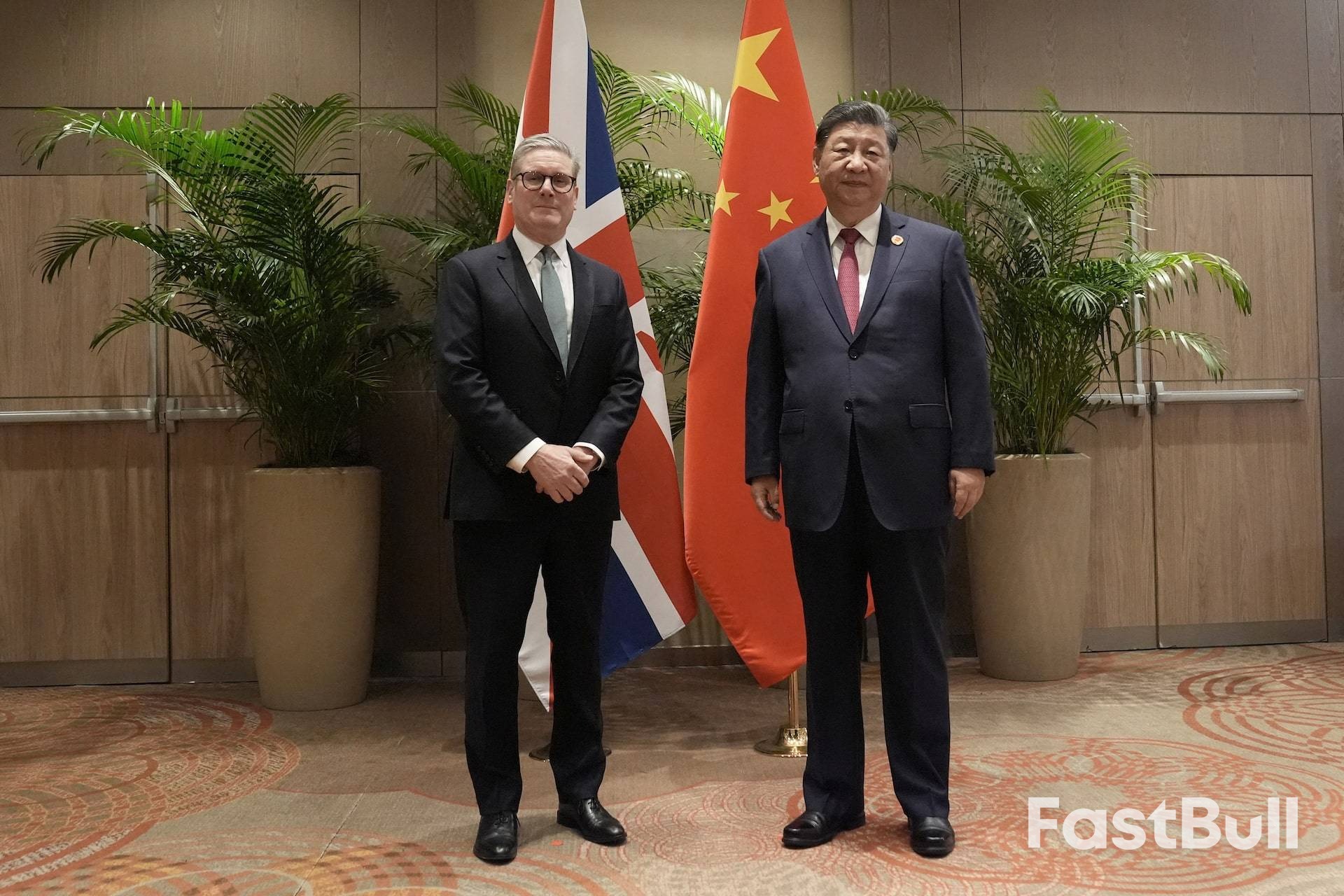
Britain and China are set to revive a high-level business dialogue, aiming to restore a "golden era" of economic relations during Prime Minister Keir Starmer's planned visit to Beijing next week. According to sources familiar with the plan, the trip is designed to reset ties after years of strain and will bring together top executives from major companies in both nations.
Starmer's visit would be the first by a British leader since 2018 and signals his administration's goal to repair the relationship with the world's second-largest economy.
The centerpiece of the visit will be the relaunch of the "UK-China CEO Council," a forum first established in 2018 by then-Prime Minister Theresa May and Premier Li Keqiang.
A powerful group of British corporate giants is expected to join the revamped council, including:
• AstraZeneca
• BP
• HSBC
• Intercontinental Hotels Group
• Jaguar Land Rover
• Rolls Royce
• Schroders
• Standard Chartered
Their Chinese counterparts will reportedly include major state-owned and private enterprises such as:
• Bank of China
• China Construction Bank
• China Mobile
• Industrial and Commercial Bank of China (ICBC)
• China Railway Rolling Stock Corporation (CRRC)
• China National Pharmaceutical Group
• BYD
Negotiations for the visit have been underway for some time but only gained serious momentum recently. Sources indicate that Starmer's trip was largely dependent on the UK granting approval for China to build its largest European embassy in London—a green light that was given on Tuesday.
With this hurdle cleared, an official announcement on the visit and Starmer's schedule could come as soon as Friday. Premier Li Qiang, China's second-highest official, is expected to represent Beijing in the talks.
However, final details are still being arranged. One source noted that the council's official English name is still under discussion, as the British government is hesitant to use "CEO" in the title, while the Chinese side prefers to keep the original 2018 terminology.
In a speech late last year, Starmer criticized previous Conservative governments for a "dereliction of duty" in allowing ties with Beijing to sour, pointing out that French and German leaders had made multiple visits in the same period.
Commercial relations deteriorated significantly after several key UK government decisions, including the 2020 ban on Huawei's participation in the country's 5G network and the 2022 taxpayer-funded buyout of China General Nuclear Power Corporation's (CGN) stake in a UK nuclear plant project.
Reflecting these political sensitivities, sources suggest that both Huawei and CGN, which was part of the original 2018 council, are unlikely to be invited to the new forum.
While the diplomatic groundwork is being laid, some uncertainty remains. One businessperson mentioned their company's CEO had declined the invitation, unable to be sure the visit would proceed. Sources also noted that U.S. President Donald Trump's threats to acquire Greenland could potentially derail the trip.
The original 2018 council aimed to "fast-track two-way investment and expand bilateral trade in a healthier, more balanced direction." Reviving this dialogue signals a mutual desire to return to a more constructive economic partnership.
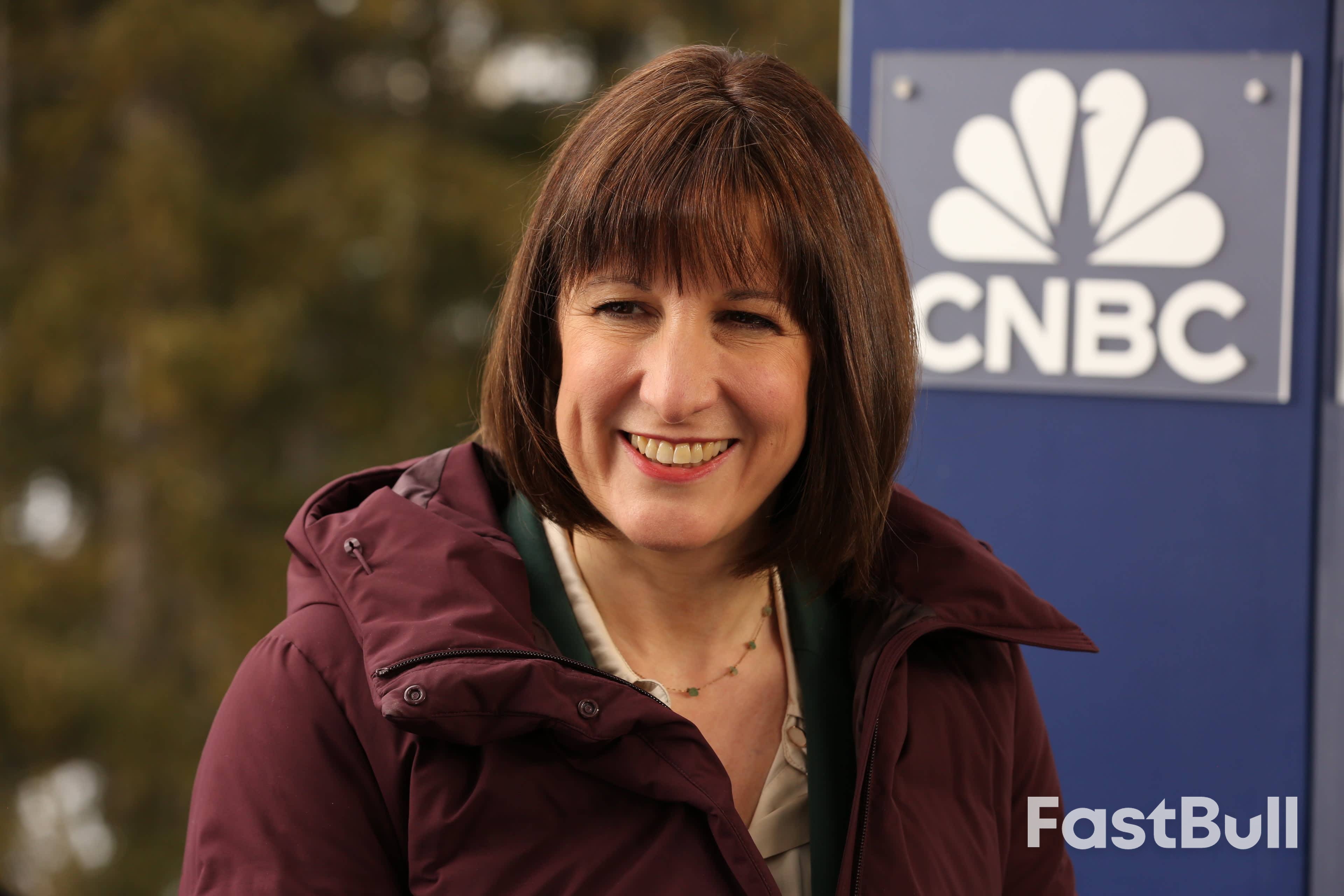
UK Finance Minister Rachel Reeves reaffirmed the enduring alliance between the United Kingdom and the United States on Wednesday, even as diplomatic tensions mount over Greenland and trade. Speaking at the World Economic Forum in Davos, Switzerland, Reeves described the U.S. as the "closest of allies."

"It's an incredibly important relationship and always has been, for the U.K.," Reeves told CNBC on January 22, 2025. "Whether that's about our military and intelligence links, our university and trade links, that continues because it's in our interests that the relationship endures."
However, this foundational partnership is being strained as London navigates a difficult diplomatic path with Washington.
The primary point of friction is a growing rift between the U.S. and Europe over the future of Greenland, a Danish territory. U.S. President Donald Trump has threatened to impose escalating tariffs on the U.K. and seven other European countries if they continue to block his bid to take over the Arctic island.
While stressing the need to avoid conflict, Reeves made the UK's position clear. "We don't want to see an escalation, it's in no one's interests," she said, adding, "but we've been very clear on the issue of Greenland."
UK Prime Minister Keir Starmer has attempted to leverage his positive relationship with President Trump to de-escalate the situation and prevent new tariffs on NATO allies. Alongside other European leaders, Starmer has advocated for further discussions while consistently defending the sovereignty of Denmark and Greenland.
Tensions flared again on the eve of the Davos forum when Trump sharply criticized the UK over a separate geopolitical matter: the Chagos Islands. The president lambasted London's May 2025 agreement to transfer sovereignty of the islands to Mauritius.
The deal includes the island of Diego Garcia, which hosts a critical joint UK-U.S. military base. Under the agreement, the British government will lease the base from Mauritius for £101 million ($135.7 million) per year.
While the White House had previously voiced support for the deal in 2024, Trump reversed this stance on Tuesday, calling the move "an act of great stupidity."
"Shockingly, our 'brilliant' NATO Ally, the United Kingdom, is currently planning to give away the Island of Diego Garcia, the site of a vital U.S. Military Base, to Mauritius, and to do so FOR NO REASON WHATSOEVER," Trump posted on the social media platform Truth Social.
The combined disputes over Greenland and the Chagos Islands have left the "special relationship" appearing increasingly fragile, casting uncertainty on the future of trade deals between the UK, EU, and the White House. U.S. Secretary of Commerce Howard Lutnick stated on Tuesday that existing trade agreements did not need to be undone.
Speaking from Davos, UK Trade Secretary Peter Kyle suggested the current turmoil could be managed.
"We've had this rodeo before," Kyle told CNBC. "We've been through Liberation Day [when Trump announced global trade tariffs last April], which was quite a moment in global economic terms, and we got through it."
He concluded on a note of cautious optimism: "There is another moment of disruption at the moment, but cool heads will prevail."
White Label
Data API
Web Plug-ins
Poster Maker
Affiliate Program
The risk of loss in trading financial instruments such as stocks, FX, commodities, futures, bonds, ETFs and crypto can be substantial. You may sustain a total loss of the funds that you deposit with your broker. Therefore, you should carefully consider whether such trading is suitable for you in light of your circumstances and financial resources.
No decision to invest should be made without thoroughly conducting due diligence by yourself or consulting with your financial advisors. Our web content might not suit you since we don't know your financial conditions and investment needs. Our financial information might have latency or contain inaccuracy, so you should be fully responsible for any of your trading and investment decisions. The company will not be responsible for your capital loss.
Without getting permission from the website, you are not allowed to copy the website's graphics, texts, or trademarks. Intellectual property rights in the content or data incorporated into this website belong to its providers and exchange merchants.
Not Logged In
Log in to access more features

FastBull Membership
Not yet
Purchase
Log In
Sign Up