• Trade
  • Markets
  • Copy
  • Contests
  • News
  • 24/7
  • Calendar
  • Q&A
  • Chats
Trending
Screeners
SYMBOL
LAST
BID
ASK
HIGH
LOW
NET CHG.
%CHG.
SPREAD
SPX
S&P 500 Index
6940.00
6940.00
6940.00
6967.31
6925.10
-4.47
-0.06%
--
DJI
Dow Jones Industrial Average
49359.32
49359.32
49359.32
49616.70
49246.24
-83.11
-0.17%
--
IXIC
NASDAQ Composite Index
23515.38
23515.38
23515.38
23664.26
23446.81
-14.63
-0.06%
--
USDX
US Dollar Index
98.950
99.030
98.950
99.230
98.830
-0.200
-0.20%
--
EURUSD
Euro / US Dollar
1.16221
1.16228
1.16221
1.16376
1.15775
+0.00243
+ 0.21%
--
GBPUSD
Pound Sterling / US Dollar
1.33886
1.33895
1.33886
1.34083
1.33409
+0.00121
+ 0.09%
--
XAUUSD
Gold / US Dollar
4666.01
4666.46
4666.01
4690.58
4621.05
+69.58
+ 1.51%
--
WTI
Light Sweet Crude Oil
59.358
59.393
59.358
59.404
58.682
+0.163
+ 0.28%
--

Community Accounts

Signal Accounts
--
Profit Accounts
--
Loss Accounts
--
View More

Become a signal provider

Sell trading signals to earn additional income

View More

Guide to Copy Trading

Get started with ease and confidence

View More

Signal Accounts for Members

All Signal Accounts

Best Return
  • Best Return
  • Best P/L
  • Best MDD
Past 1W
  • Past 1W
  • Past 1M
  • Past 1Y

All Contests

  • All
  • Trump Updates
  • Recommend
  • Stocks
  • Cryptocurrencies
  • Central Banks
  • Featured News
Top News Only
Share

China Stats Bureau Head: Rebounding Consumer Prices Will Help Companies And Help Stabilise Market Expectations

Share

Fitch - China's Stimulus Stabilises Markets But Unlikely To Revive Property Demand

Share

New Zealand's A2 Milk Slumps 14% On Reports Of Steep Drop In China Birth Rate

Share

China Stats Bureau Head: Expects China's Consumption To Grow Steadily In 2026 As Policy Support Gains Traction

Share

China Stats Bureau Head: Net Exports Accounted For 31.1% Of Q4 GDP Growth

Share

China Stats Bureau Head: Final Consumption Accounted For 52.9% Of Q4 GDP Growth

Share

China Stats Bureau Head: China Able To Maintain Stable, Sound Growth Momentum This Year

Share

China Stats Bureau Head: China's Economy Faces Problems And Challenges, Including Strong Supply And Weak Demand

Share

China Stats Bureau Head: China's Contribution To Global Growth Expected To Be Around 30% In 2025

Share

China Stats Bureau Head: China's Economic Development In 2025 'Hard Won'

Share

Most Active Dalian Iron Ore Contract Falls As Much As 3% To 790 Yuan/Metric Ton

Share

Indonesia's Rupiah Slips To 16905 Per USA Dollar For The First Time Since Early April 2025

Share

GDP Growth Rate Year On Year For Q4 In China Is 4.5%, Lower Than The Previous Value Of 4.8%. The Forecast Was 4.4%

Share

Indonesia's Benchmark Stock Index Inches Higher In Early Trade To A Record 9109.037 Points

Share

Onshore Yuan Little Changed After China GDP Data, Last At 6.9642 Per Dollar

Share

Yield On 5-Year Japanese Government Bond Rises 3.5 Basis Points To 1.675%

Share

Aussie Dollar Little Changed After China GDP Data, Last Down 0.12%

Share

[Bitcoin Withdrawal Sentiment Continues, With Cex Net Outflow Of 1,729.96 Btc In The Last 24 Hours] January 19Th, According To Coinglass Data, In The Past 24 Hours, The Total Net Outflow Of Btc From Cexs Was 1,729.96 Btc. The Top Three Cexs By Outflow Are As Follows:· Kraken, Outflow Of 2,394.43 Btc;· Bybit, Outflow Of 395.37 Btc;· Bitfinex, Outflow Of 62.33 Btc.In Addition, Binance Saw An Inflow Of 793.77 Btc, Ranking First In The Inflow List

Share

China's 2025 Death Rate At 8.04 Deaths Per 1000 People Versus 7.76 Deaths Per 1000 People In 2024

Share

China 2025 Private Sector Fixed-Asset Investment -6.4% Year-On-Year

TIME
ACT
FCST
PREV
U.S. Philadelphia Fed Business Activity Index (SA) (Jan)

A:--

F: --

P: --

U.S. EIA Weekly Natural Gas Stocks Change

A:--

F: --

P: --

Richmond Federal Reserve President Barkin delivered a speech.
U.S. Weekly Treasuries Held by Foreign Central Banks

A:--

F: --

P: --

Germany CPI Final MoM (Dec)

A:--

F: --

P: --

Germany CPI Final YoY (Dec)

A:--

F: --

P: --

Germany HICP Final MoM (Dec)

A:--

F: --

P: --

Germany HICP Final YoY (Dec)

A:--

F: --

P: --

Brazil PPI MoM (Nov)

A:--

F: --

P: --

Canada New Housing Starts (Dec)

A:--

F: --

P: --
U.S. Capacity Utilization MoM (SA) (Dec)

A:--

F: --

P: --
U.S. Industrial Output YoY (Dec)

A:--

F: --

P: --

U.S. Manufacturing Capacity Utilization (Dec)

A:--

F: --

P: --

U.S. Manufacturing Output MoM (SA) (Dec)

A:--

F: --

P: --
U.S. Industrial Output MoM (SA) (Dec)

A:--

F: --

P: --
U.S. NAHB Housing Market Index (Jan)

A:--

F: --

P: --

Russia CPI YoY (Dec)

A:--

F: --

P: --

U.S. Weekly Total Rig Count

A:--

F: --

P: --

U.S. Weekly Total Oil Rig Count

A:--

F: --

P: --

Japan Core Machinery Orders YoY (Nov)

A:--

F: --

P: --

Japan Core Machinery Orders MoM (Nov)

A:--

F: --

P: --

U.K. Rightmove House Price Index YoY (Jan)

A:--

F: --

P: --

China, Mainland Urban Area Unemployment Rate (Dec)

A:--

F: --

P: --

China, Mainland GDP YoY (YTD) (Q4)

A:--

F: --

P: --

China, Mainland GDP (Q4)

A:--

F: --

P: --

China, Mainland GDP QoQ (SA) (Q4)

A:--

F: --

P: --

China, Mainland Annual GDP

A:--

F: --

P: --

China, Mainland Annual GDP Growth

A:--

F: --

P: --

China, Mainland GDP YoY (Q4)

A:--

F: --

P: --

China, Mainland Industrial Output YoY (YTD) (Dec)

A:--

F: --

P: --

Japan Industrial Output Final MoM (Nov)

--

F: --

P: --

Japan Industrial Output Final YoY (Nov)

--

F: --

P: --

Euro Zone Core HICP Final MoM (Dec)

--

F: --

P: --

Euro Zone HICP Final MoM (Dec)

--

F: --

P: --

Euro Zone HICP Final YoY (Dec)

--

F: --

P: --

Euro Zone HICP MoM (Excl. Food & Energy) (Dec)

--

F: --

P: --

Euro Zone Core CPI Final YoY (Dec)

--

F: --

P: --

Euro Zone Core HICP Final YoY (Dec)

--

F: --

P: --

Euro Zone CPI YoY (Excl. Tobacco) (Dec)

--

F: --

P: --

Euro Zone Core CPI Final MoM (Dec)

--

F: --

P: --

Canada National Economic Confidence Index

--

F: --

P: --

Canada CPI MoM (SA) (Dec)

--

F: --

P: --

Canada Core CPI MoM (SA) (Dec)

--

F: --

P: --

Canada CPI YoY (SA) (Dec)

--

F: --

P: --

Canada Trimmed CPI YoY (SA) (Dec)

--

F: --

P: --

Canada CPI YoY (Dec)

--

F: --

P: --

Canada CPI MoM (Dec)

--

F: --

P: --

Canada Core CPI YoY (Dec)

--

F: --

P: --

Canada Core CPI MoM (Dec)

--

F: --

P: --

South Korea PPI MoM (Dec)

--

F: --

P: --

China, Mainland 1-Year Loan Prime Rate (LPR)

--

F: --

P: --

China, Mainland 5-Year Loan Prime Rate

--

F: --

P: --

U.K. Average Weekly Earnings (3-Month Average, Including Bonuses) YoY (Nov)

--

F: --

P: --

U.K. Average Weekly Earnings (3-Month Average, Excluding Bonuses) YoY (Nov)

--

F: --

P: --

Germany PPI YoY (Dec)

--

F: --

P: --

Germany PPI MoM (Dec)

--

F: --

P: --

U.K. Unemployment Rate (Dec)

--

F: --

P: --

U.K. 3-Month ILO Unemployment Rate (Nov)

--

F: --

P: --

U.K. 3-Month ILO Employment Change (Nov)

--

F: --

P: --

U.K. Unemployment Claimant Count (Dec)

--

F: --

P: --

Q&A with Experts
    • All
    • Chatrooms
    • Groups
    • Friends
    Visxa Benfica flag
    @just BrendonFor me, the way you execute cleanly, avoid FOMO, wait for the setup to be clear before entering and gradually closing the target is what makes you a true pro
    just Brendon flag
    Visxa Benfica
    @just BrendonYeah, I think Gold is on an all-time high streak
    @Visxa Benficayes
    just Brendon flag
    Visxa Benfica
    @just BrendonFor me, the way you execute cleanly, avoid FOMO, wait for the setup to be clear before entering and gradually closing the target is what makes you a true pro
    @Visxa Benficathanks 🙏
    Visxa Benfica flag
    @just BrendonI prefer this approach to holding indefinitely and then reversing and taking a killing
    Visxa Benfica flag
    @just BrendonBut I'm also a little worried, because gold has soared too high
    pixar flag
    ws good
    john flag
    Visxa Benfica
    @just BrendonBut I'm also a little worried, because gold has soared too high
    @Visxa Benficait's what it is,,,gold has been doing this
    john flag
    john flag
    john
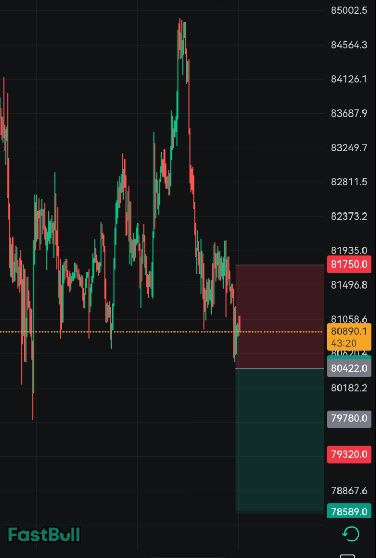
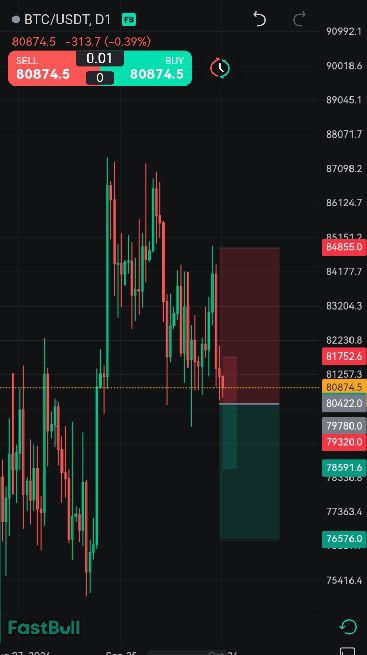
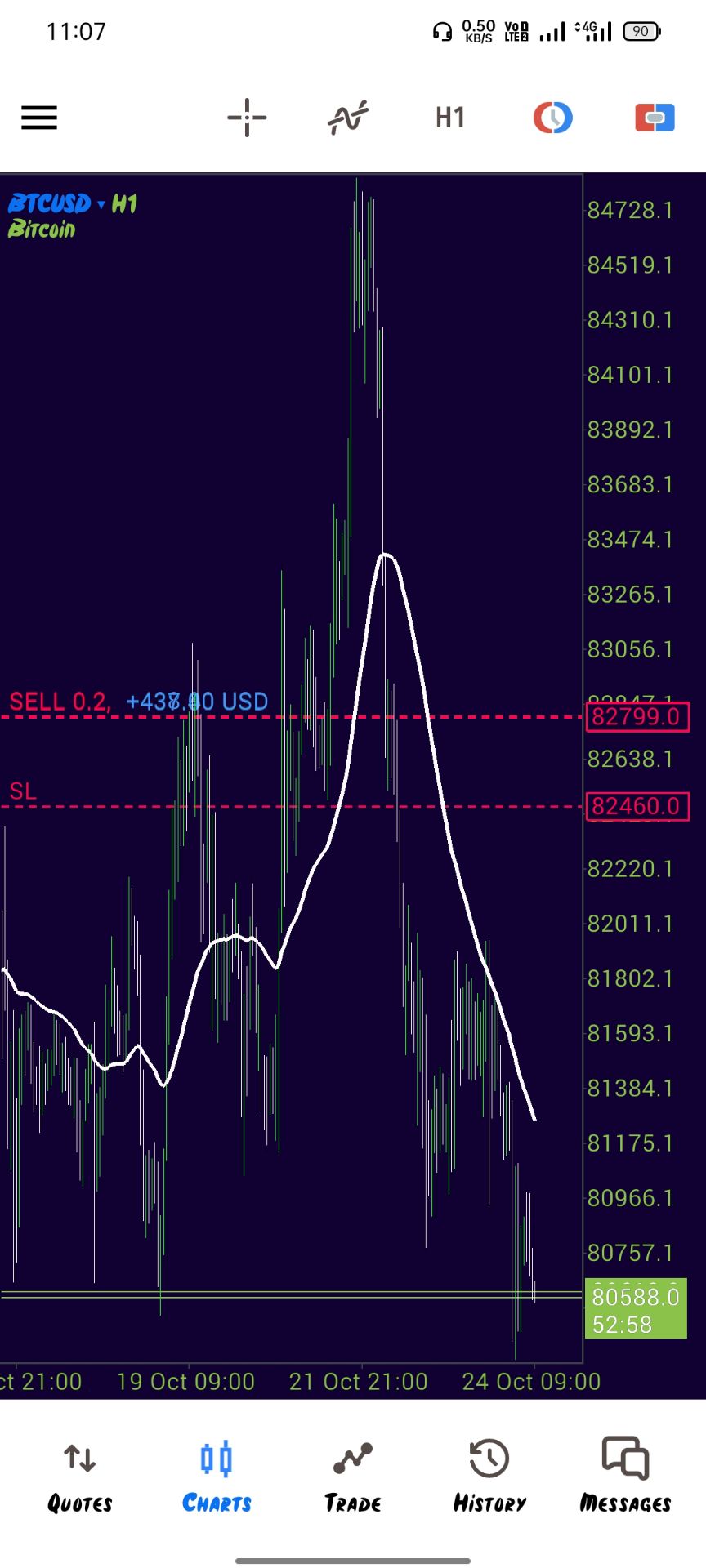
    I saw this short coming on btc yesterday
    just Brendon flag
    just Brendon
    xauusd Buy 4658/4656 target 4661 target 4664 target 4670 stop loss 4650
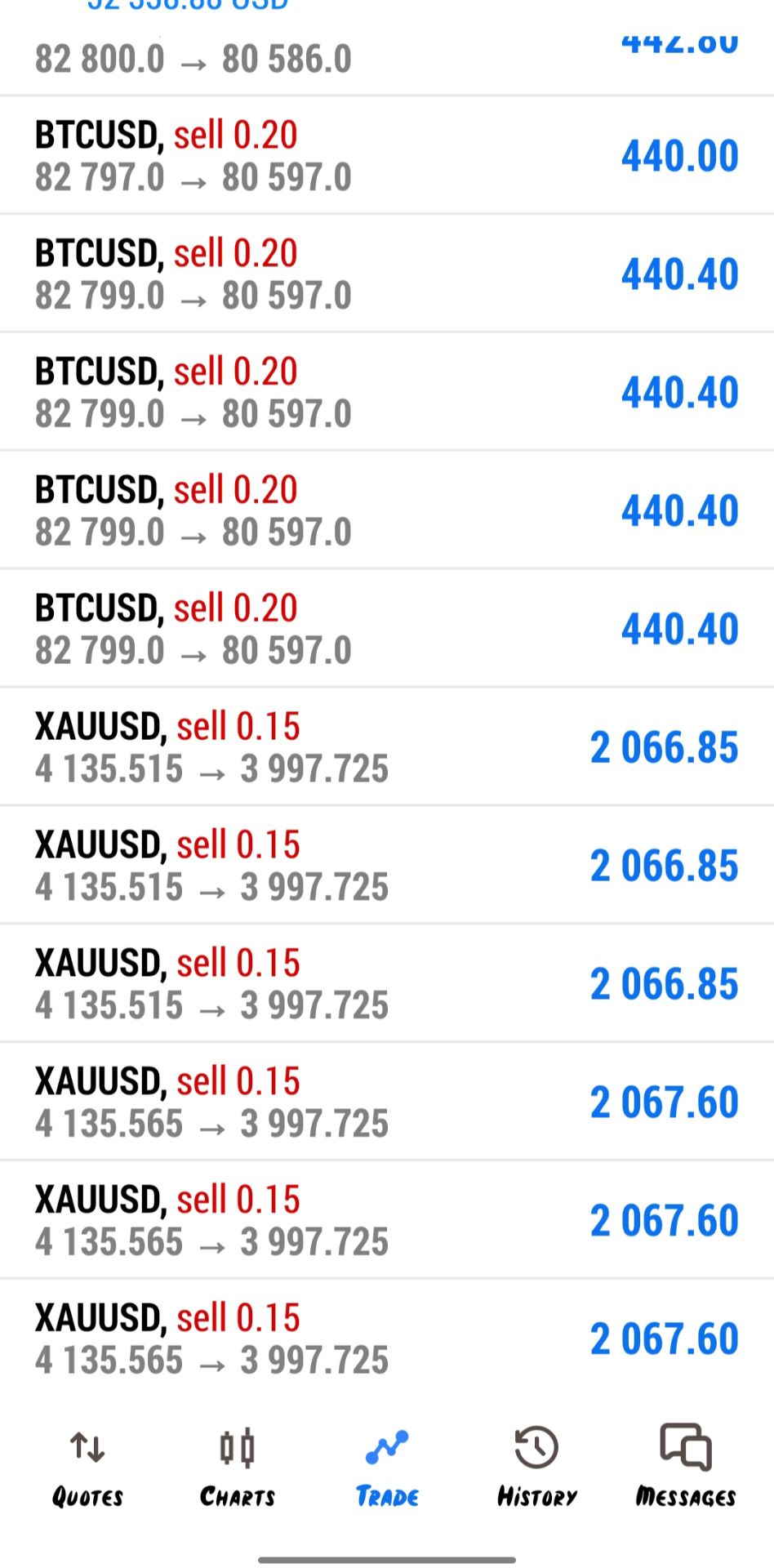
    ohhh it's coming Last Target Woohoo +100 Pip's Hit 4668 smashed Pro Entry Clean Execution ❤️‍🔥🔥
    just Brendon flag
    just Brendon flag
    just Brendon
    close half Set BE
    john flag
    just Brendon
    @just Brendongold is now headed towards 4700
    john flag
    just Brendon
    @just Brendonyou have a good start for the week
    just Brendon flag
    john
    @johnthanks 👍
    john flag
    this one of the reason why btc is sliding
    john flag
    john flag
    just Brendon
    @just BrendonI am holding longs since last week and now I look forward to 4700
    john flag
    john flag
    john
    This is gold which got shy away from 4700 at 4690 so let buckle up for 4700
    Type here...
    Add Symbol or Code

      No matching data

      All
      Trump Updates
      Recommend
      Stocks
      Cryptocurrencies
      Central Banks
      Featured News
      • All
      • Russia-Ukraine Conflict
      • Middle East Flashpoint
      • All
      • Russia-Ukraine Conflict
      • Middle East Flashpoint
      Search
      Products

      Charts Free Forever

      Chats Q&A with Experts
      Screeners Economic Calendar Data Tools
      Membership Features
      Data Warehouse Market Trends Institutional Data Policy Rates Macro

      Market Trends

      Market Sentiment Order Book Forex Correlations

      Top Indicators

      Charts Free Forever
      Markets

      News

      News Analysis 24/7 Columns Education
      From Institutions From Analysts
      Topics Columnists

      Latest Views

      Latest Views

      Trending Topics

      Top Columnists

      Latest Update

      Signals

      Copy Rankings Latest Signals Become a signal provider AI Rating
      Contests
      Brokers

      Overview Brokers Assessment Rankings Regulators News Claims
      Broker listing Forex Brokers Comparison Tool Live Spread Comparison Scam
      Q&A Complaint Scam Alert Videos Tips to Detect Scam
      More

      Business
      Events
      Careers About Us Advertising Help Center

      White Label

      Data API

      Web Plug-ins

      Affiliate Program

      Awards Institution Evaluation IB Seminar Salon Event Exhibition
      Vietnam Thailand Singapore Dubai
      Fans Party Investment Sharing Session
      FastBull Summit BrokersView Expo
      Recent Searches
        Top Searches
          Markets
          News
          Analysis
          User
          24/7
          Economic Calendar
          Education
          Data
          • Names
          • Latest
          • Prev

          View All

          No data

          Scan to Download

          Faster Charts, Chat Faster!

          Download App
          English
          • English
          • Español
          • العربية
          • Bahasa Indonesia
          • Bahasa Melayu
          • Tiếng Việt
          • ภาษาไทย
          • Français
          • Italiano
          • Türkçe
          • Русский язык
          • 简中
          • 繁中
          Open Account
          Search
          Products
          Charts Free Forever
          Markets
          News
          Signals

          Copy Rankings Latest Signals Become a signal provider AI Rating
          Contests
          Brokers

          Overview Brokers Assessment Rankings Regulators News Claims
          Broker listing Forex Brokers Comparison Tool Live Spread Comparison Scam
          Q&A Complaint Scam Alert Videos Tips to Detect Scam
          More

          Business
          Events
          Careers About Us Advertising Help Center

          White Label

          Data API

          Web Plug-ins

          Affiliate Program

          Awards Institution Evaluation IB Seminar Salon Event Exhibition
          Vietnam Thailand Singapore Dubai
          Fans Party Investment Sharing Session
          FastBull Summit BrokersView Expo

          Trump's Greenland Gambit: Tariffs Threaten NATO & Global Trade

          James Riley

          Remarks of Officials

          Economic

          Political

          Summary:

          Trump's tariff-driven Greenland acquisition plan ignites a major Atlantic crisis, threatening global order and EU retaliation.

          Former President Donald Trump is once again shaking up the global order with an ambitious new goal: the acquisition of Greenland by 2026. His strategy hinges on the threat of new tariffs, a move that challenges longstanding alliances and risks significant economic turmoil.

          A New Geopolitical Push

          Even after his presidency, Trump's strategic objectives continue to make waves. His focus on acquiring Greenland follows a previous expression of interest in making Canada a U.S. state. This renewed geopolitical pressure coincides with his history of imposing heavy tariffs on China and challenging the autonomy of the U.S. Federal Reserve, notably through his attempt to dismiss its chair, Jerome Powell.

          As a key Supreme Court ruling on tariffs approaches in January, Trump is increasing pressure on nations that oppose his Greenland proposal. The new tariffs are designed to specifically target countries that refuse to cooperate, escalating international tensions.

          How Allies Are Responding

          Trump's tariff-driven diplomacy has triggered the most severe crisis in the Atlantic partnership in decades. On Truth Social, he warned that "World peace is in danger!" and argued that without U.S. control, China and Russia could seize Greenland.

          He has also criticized NATO allies' military deployments, insisting that only the U.S. can guarantee their protection and that tariffs will remain until his demands are met. This stance directly threatens the stability and cohesion of the NATO alliance.

          European Union leaders find themselves in a difficult position, having recently navigated a separate tariff dispute. They have condemned Trump's approach to acquiring land from Denmark and are signaling they may retaliate. Analysts now warn that Trump's actions could dismantle the post-World War II geopolitical framework established by the United States, with severe economic and political consequences for both the U.S. and the EU.

          Europe's Potential Counter-Measures

          In response to the U.S. pressure, the European Union is preparing a robust series of economic counter-actions. The potential retaliation includes:

          • A massive €93 billion tariff plan targeting the U.S.

          • The possible expulsion of American companies from European markets.

          • A heightened risk of market volatility, especially for cryptocurrencies, which could mirror the instability seen during previous U.S. tariff conflicts.

          Global leaders and economic analysts are closely monitoring the situation as Trump continues to challenge established alliances and economic norms. The unfolding events raise critical questions about the future of international cooperation and the resilience of the global financial system.

          To stay updated on all economic events of today, please check out our Economic calendar
          Risk Warnings and Disclaimers
          You understand and acknowledge that there is a high degree of risk involved in trading. Following any strategies or investment methods may lead to potential losses. The content on the site is provided by our contributors and analysts for information purposes only. You are solely responsible for determining whether any trading assets, securities, strategy, or any other product is suitable for investing based on your own investment objectives and financial situation.
          Add to Favorites
          Share

          Modi's Economic Crossroads: Growth vs. Debt in India

          Ukadike Micheal

          Data Interpretation

          Economic

          Political

          India's economy is posting world-beating numbers, with official data pointing to a 7.4% growth rate for the financial year ending in March. But behind the impressive headline figure, a critical decision looms for Prime Minister Narendra Modi that could determine the country's long-term trajectory.

          For over a decade, Modi's economic strategy has rested on two key pillars: fiscal restraint and aggressive infrastructure spending. Now, these two goals are in direct conflict, forcing a choice that can no longer be avoided.

          A Paradox of High Growth and Low Confidence

          On the surface, India's economy appears to be in a "Goldilocks phase," with low inflation, a manageable trade deficit, and healthy private-sector balance sheets. Yet, as commentator T.N. Ninan notes, this stability hasn't translated into a faster growth rate than a decade ago, when the economy faced far more challenges.

          Global investors seem to share this cautious sentiment. Ruchir Sharma highlighted in the Financial Times that despite its stellar growth, India is "not getting any love" in the form of expected capital inflows.

          The disconnect between the strong data and the uncertain outlook stems from a persistent, underlying weakness: chronically low private investment.

          How Public Spending Became India's Engine

          Since taking office in 2014, Prime Minister Modi has overseen a fundamental shift in India's growth model. The burden of investment has moved from private companies to the public sector. As a result, the share of federal government capital spending relative to GDP has doubled.

          This surge in public expenditure has come at a steep price. The defining number of the Modi era is not the 7.4% GDP growth but the 81% debt-to-GDP ratio—a sharp increase from the 60s when the current government came to power.

          The Vicious Cycle Crowding Out Private Capital

          The explosion in public debt has created a self-reinforcing downward spiral for the private sector. As the state consumes a vast portion of available credit, capital becomes scarce, pushing interest rates higher and discouraging entrepreneurs from borrowing and investing.

          The government's strategy was based on the hope that massive infrastructure projects, like new ports and highways, would "crowd in" private capital. This bet has not paid off. Instead of stimulating private enterprise, the approach has created a growth model dangerously dependent on government spending—and New Delhi is running out of fiscal runway.

          The Budget's High-Stakes Choice

          In the upcoming annual budget, the government must confront this reality. It faces a stark choice:

          • Continue the capital expenditure push, risking its fiscal consolidation targets.

          • Trim the construction pipeline, accepting slower medium-term growth in key sectors like steel and cement that rely heavily on public contracts.

          While the economic logic may point toward fiscal prudence, the political calculation is more complex. The marginal benefit of a lower risk premium on Indian debt is less visible than a new expressway. Modi has built his political brand around tangible projects like modern trains and new highways. In contrast, fiscal consolidation offers no ribbon-cutting ceremonies.

          Why Fiscal Discipline Is the Only Path Forward

          Despite the political pressures, the government has pledged to lower the debt-to-GDP ratio to 50% by 2031. Achieving this ambitious goal will be difficult even with sustained high growth and will almost certainly require cuts to capital expenditure.

          The evidence suggests that state-led infrastructure spending has failed to ignite private-sector investment or pay for itself through additional growth. To unlock India's economic potential, the government must tighten its belt. By reducing its own borrowing, the state can free up credit, lower borrowing costs, and create the conditions for private investment to finally flow.

          To secure India's future, the government must stop borrowing against it.

          To stay updated on all economic events of today, please check out our Economic calendar
          Risk Warnings and Disclaimers
          You understand and acknowledge that there is a high degree of risk involved in trading. Following any strategies or investment methods may lead to potential losses. The content on the site is provided by our contributors and analysts for information purposes only. You are solely responsible for determining whether any trading assets, securities, strategy, or any other product is suitable for investing based on your own investment objectives and financial situation.
          Add to Favorites
          Share

          Saudi Arabia's Sudan Gambit: A $4B Fighter Jet Deal

          James Riley

          Middle East Situation

          Political

          The brutal civil war in Sudan has become the frontline for a fierce regional rivalry between Saudi Arabia and the United Arab Emirates, with both Gulf powers determined to see their chosen faction win. Now, a potential multi-billion-dollar fighter jet deal involving Saudi Arabia and Pakistan could decisively tip the scales.

          This development comes as Saudi Arabia and Pakistan deepen their security ties, with some reports even suggesting a Pakistani nuclear umbrella over the Kingdom. The two nations are also reportedly bringing Turkey into a new security alliance, creating a strategic bloc aimed at deterring both Iran and Israel.

          Against this backdrop, Riyadh is considering a plan to convert $2 billion in loans to Pakistan into a major military procurement. The total value of the deal, including aircraft, equipment, and support, is estimated to be around $4 billion.

          The Deal: Arming Sudan with Pakistani Jets

          The centerpiece of this potential agreement is the purchase of Chinese-licensed JF-17 Thunder fourth-generation warplanes from Pakistan.

          However, these advanced jets are not intended for the Royal Saudi Air Force. Instead, Saudi Arabia plans to acquire the aircraft from Pakistan and transfer them to the Sudanese military government led by Abdel Fattah al-Burhan. Riyadh would finance the sale as part of its broader mission to support the internationally recognized government in Khartoum.

          Sudan: A Chessboard for Gulf Powers

          The Sudanese civil war has evolved into a clear proxy conflict between Saudi Arabia and the UAE. Riyadh backs the official government, while the UAE supports the rival Rapid Support Forces (RSF), a paramilitary group led by the warlord Mohammed Hamdan "Hemedti" Dagalo.

          For Saudi Arabia, Sudan is a strategic linchpin essential to its regional interests. The Kingdom is unwilling to let the Sudanese government collapse, which explains its willingness to finance a complex international arms deal to bolster its ally.

          Pakistan's Growing Role as an Arms Exporter

          This potential arrangement aligns with Pakistan's own strategic goals. Pakistan was already in separate talks with Sudan for a $1.5 billion defense package that could include JF-17s, drones, light attack aircraft, and advanced air defense systems to counter the RSF.

          Following a brief conflict with India where its air force performed well using Chinese-made aircraft and missiles, Pakistan has been aggressively marketing its defense products on the global stage. By promoting its Chinese-licensed systems, Pakistan aims to undercut Western arms manufacturers and elevate its own defense industrial base.

          As of now, no final contracts have been signed. While negotiations between Saudi, Pakistani, and Sudanese officials are reportedly underway, the number of JF-17s and the exact delivery logistics—whether they would be routed through Saudi Arabia or sent directly from Pakistan to Sudan—remain unconfirmed.

          Washington's Unease Over a Key Ally

          The proposed deal has caused concern in Washington. Saudi Arabia is one of the largest customers for the U.S. defense industry, accounting for roughly 24% of all American arms exports over the last five years. The Saudi military is heavily equipped with U.S.-made systems, which are not interoperable with Chinese platforms like the JF-17.

          Initial fears in Washington were that Riyadh was using Pakistan as an intermediary to diversify its own arsenal with cheaper, Chinese-licensed systems, a move that could significantly damage the U.S. arms industry.

          For now, that does not appear to be the case. The Saudis seem to be acting as strategic financiers to protect their interests in Sudan, not as direct challengers to U.S. arms suppliers. Riyadh has consistently shown a willingness to pay a premium for cutting-edge American military technology.

          A Sign of Future Shifts?

          While this deal is focused on Sudan, it raises long-term questions about Saudi Arabia's procurement strategy. The high cost of American weapons, combined with Riyadh's growing strategic distance from Washington amid the war in Gaza and instability surrounding Iran, could lead Saudi leaders to reconsider their options.

          Pakistan has already demonstrated that cheaper, Chinese-licensed systems can be effective in modern air combat. The question remains: how long before Saudi Arabia decides that diversifying its own fleet is a strategic necessity?

          Risk Warnings and Disclaimers
          You understand and acknowledge that there is a high degree of risk involved in trading. Following any strategies or investment methods may lead to potential losses. The content on the site is provided by our contributors and analysts for information purposes only. You are solely responsible for determining whether any trading assets, securities, strategy, or any other product is suitable for investing based on your own investment objectives and financial situation.
          Add to Favorites
          Share

          Canada Lowers Tariffs On Chinese EVs, Bringing Global Price Competition Closer Than Ever

          Gerik

          Economic

          A Sharp Policy Reversal In North American Trade

          Canada and China have announced a major recalibration of their trade relationship following high-level talks in Beijing, a move that carries significant implications for global electric vehicle markets. At the center of the agreement is Canada’s decision to reduce tariffs on Chinese-made electric vehicles from 100% to approximately 6.1%, while maintaining import quotas. This represents a dramatic departure from the protectionist stance adopted at the end of 2024, when Ottawa mirrored US policy by effectively closing its market to Chinese EVs.
          The earlier tariff regime had rendered Chinese electric vehicles commercially unviable in Canada, a policy aimed at shielding domestic manufacturers. China’s response was swift and severe, imposing an 84% tariff on Canadian canola, a move that disrupted a multi-billion-dollar export sector. The new agreement reverses much of that escalation and resets bilateral trade conditions.

          Import Quotas And Market Scale

          Under the revised framework, Canada will allow up to 49,000 Chinese electric vehicles to enter its market each year at the reduced tariff rate. By the fifth year of the agreement, this quota will rise to 70,000 vehicles. Prime Minister Mark Carney noted that this volume is broadly equivalent to China’s EV export levels to Canada in 2023, the final year before tariffs were imposed.
          Despite the scale of the tariff cut, the absolute market impact remains constrained by quotas. Canadian consumers purchased nearly 1.9 million vehicles last year, meaning Chinese EVs will continue to account for only a small fraction of total sales. The arrangement therefore reflects a controlled reopening rather than full market liberalization, linking access to regulatory limits rather than unfettered competition.

          Agricultural Relief And Diplomatic Reset

          In exchange, China will lower tariffs on Canadian canola to around 15% from March 1, significantly improving market access for Canadian farmers. This adjustment eases pressure on an export industry that had been effectively blocked following China’s retaliatory measures. The timing and scope of the tariff reduction align with broader efforts to repair strained relations, marking the first visit by a Canadian prime minister to Beijing in nearly a decade.
          The connection between agricultural relief and automotive concessions is transactional in structure. Improved access for Canadian farm products coincides with eased entry for Chinese industrial exports, illustrating how sector-specific trade barriers are being rebalanced rather than removed outright.

          Industrial Concerns And Domestic Opposition

          Not all stakeholders have welcomed the agreement. Canadian auto workers and industry observers have expressed concern that an influx of competitively priced Chinese EVs could intensify pressure in an already challenging market. Ontario Premier Doug Ford publicly opposed lifting the tariffs ahead of the final negotiations, underscoring domestic political resistance tied to employment and industrial policy.
          These concerns reflect an association between increased foreign competition and perceived risks to domestic manufacturing, even as overall import volumes remain capped. The debate highlights tensions between consumer affordability, industrial protection, and long-term competitiveness.

          Investment Expectations And Climate Strategy

          Prime Minister Carney has argued that the agreement could encourage significant Chinese investment in Canada’s automotive sector, potentially generating jobs while supporting national climate objectives. He emphasized that building a competitive domestic EV industry requires learning from innovative partners, accessing established supply chains, and expanding domestic demand.
          This perspective frames tariff reduction as a strategic lever rather than a concession, linking foreign participation with technology transfer and market development. Whether such investment materializes will depend on regulatory conditions and corporate strategy rather than tariff levels alone.

          Implications For The United States And Global Markets

          The agreement is likely to disappoint the administration of US President Donald Trump, given Washington’s continued hardline stance on Chinese EV imports. At the same time, US soybean farmers affected by retaliatory tariffs may view Canada’s approach as a potential template for easing trade tensions through sectoral compromise.
          More broadly, Canada’s decision brings the prospect of widespread availability of low-cost Chinese electric vehicles closer to reality. While quotas limit immediate impact, the symbolic shift signals that barriers surrounding Chinese EV exports are becoming more permeable. As similar adjustments emerge beyond Europe and into North America, the global EV market appears to be moving toward a phase where price competition from Chinese manufacturers is no longer a distant possibility but an increasingly tangible presence.
          To stay updated on all economic events of today, please check out our Economic calendar
          Risk Warnings and Disclaimers
          You understand and acknowledge that there is a high degree of risk involved in trading. Following any strategies or investment methods may lead to potential losses. The content on the site is provided by our contributors and analysts for information purposes only. You are solely responsible for determining whether any trading assets, securities, strategy, or any other product is suitable for investing based on your own investment objectives and financial situation.
          Add to Favorites
          Share

          Global CEOs’ Top Strategic Concerns Heading Into 2026

          Gerik

          Economic

          Diverging Risk Perceptions Between The US And The Rest Of The World

          Entering 2026, business leaders around the world share a heightened sense of caution, yet their priorities differ markedly by region. According to the latest survey released by The Conference Board, which gathered responses from more than 1,700 CEOs across North America, Europe, and Asia, executives in the United States and their global peers are interpreting economic risks through different lenses.
          In the United States, 43% of CEOs ranked economic uncertainty as the most serious threat for 2026, placing it ahead of recession concerns, which were cited by 35%. Globally, the pattern is reversed. Economic recession emerged as the primary concern for 36% of CEOs worldwide, while economic uncertainty followed at 29%. This contrast highlights how regional economic conditions and policy environments shape executive sentiment, rather than reflecting a uniform global outlook.

          Pressure On Profitability And Business Model Transformation

          Dana M. Peterson, Chief Economist at The Conference Board, noted that CEOs are facing a convergence of pressures that are weighing on profitability and growth expectations. At the same time, these pressures are closely linked with an acceleration in business model transformation. Rather than reacting defensively, many executives are using the current environment as a trigger to rethink how their organizations operate.
          In the United States, 60% of CEOs identified changes to business models as their top priority for improving profitability. This emphasis suggests that margin pressure is not being viewed as a temporary fluctuation but as a structural challenge that requires strategic adjustment rather than short-term cost control alone.

          Labor Market Tensions And Wage Expectations

          Despite signs of cooling in the labor market, US workers continue to retain significant bargaining power over compensation. Around 27% of US CEOs cited rising wage expectations as a key recruitment challenge. This figure stands noticeably higher than in Asia, at 19%, and Europe, at 15%.
          The persistence of wage pressure appears closely linked with tight labor conditions in specific sectors rather than overall employment levels. This relationship reflects an alignment between skill shortages and compensation expectations, rather than a generalized labor shortage across the economy.

          Artificial Intelligence And The Question Of Returns

          Artificial intelligence remains a central theme in executive decision-making, though enthusiasm is increasingly tempered by concerns over measurable outcomes. For 2026, the primary AI-related concern among CEOs is the ability to assess investment effectiveness. In the United States, 46% of CEOs emphasized the need to improve data quality and availability to better measure AI return on investment, compared with 33% globally.
          Notably, US CEOs also expressed greater skepticism about AI’s near-term impact. About 38% believe AI will negatively affect their companies in the coming year, citing social, demographic, and technological disruptions. Among global CEOs, this figure stands at 30%. This outlook reflects an association between rapid AI deployment and organizational disruption, rather than a rejection of AI as a long-term growth driver.

          Workforce Reductions And Structural Shifts Linked To AI

          Concerns around AI are reinforced by findings from a separate study conducted by recruitment firm LHH, part of the Adecco Group. Surveying 2,000 senior managers across 13 countries, including the US, Canada, Japan, and major European economies, the study found that 46% of companies have already reduced headcount as AI adoption has advanced. A further 54% expect to require fewer employees over the next five years.
          According to Michaël Chambon, Head of Career Transformation at LHH France, AI is reshaping labor market dynamics at a fundamental level. He also warned that many workers continue to underestimate the scale of change AI may bring to required skills and long-term career paths. The alignment between AI deployment and workforce restructuring reflects a direct organizational response to productivity shifts rather than short-term cyclical adjustments.

          Corporate Bankruptcies And A Tough Operating Environment

          The broader economic backdrop has added to executive anxiety, particularly in the United States. Corporate bankruptcies in 2025 reached their highest level since the aftermath of the 2008 global financial crisis. Data from S&P Global Market Intelligence show that at least 717 US companies filed for bankruptcy protection by the end of November 2025, representing a 14% increase year on year and the highest total since 2010.
          High-profile bankruptcies have spanned multiple sectors, including pharmacy chain Rite Aid, genetic testing company 23andMe, casual dining brand Hooters, and low-cost carrier Spirit Airlines. The breadth of affected industries indicates that financial stress is widespread rather than concentrated, reflecting prolonged inflation, elevated interest rates, and a rigid tariff environment.

          Cybersecurity And Geopolitical Risk Awareness

          Cyberattacks were identified as the leading geopolitical risk, with 54% of US CEOs and 47% of global CEOs ranking them as a top concern. Other geopolitical risks, including political instability and armed conflict, followed closely.
          Perceptions of conflict risk vary significantly by region. While conflict is not a primary concern for US CEOs, executives in Japan ranked Asia-Pacific conflict as their top geopolitical risk. In Europe, conflict on the continent was ranked third. These differences reflect regional exposure and strategic priorities rather than a shared global assessment of geopolitical threats.

          Preferred Markets For Expansion Despite Uncertainty

          Despite widespread concern, executives continue to identify opportunities for growth. The United States and Canada remain the most favored regions for market expansion, with 53% of survey respondents selecting them as priority destinations. This preference suggests that, even amid uncertainty and risk, North America is still viewed as offering relative stability, scale, and long-term growth potential.
          Overall, the survey reveals a complex executive mindset heading into 2026. CEOs are balancing heightened economic and technological risks with a strong push toward strategic reinvention, underscoring a shift from short-term caution to longer-term structural adaptation.
          To stay updated on all economic events of today, please check out our Economic calendar
          Risk Warnings and Disclaimers
          You understand and acknowledge that there is a high degree of risk involved in trading. Following any strategies or investment methods may lead to potential losses. The content on the site is provided by our contributors and analysts for information purposes only. You are solely responsible for determining whether any trading assets, securities, strategy, or any other product is suitable for investing based on your own investment objectives and financial situation.
          Add to Favorites
          Share

          Azerbaijan And Kazakhstan Expand Energy Supplies To Europe

          Gerik

          Commodity

          Economic

          Azerbaijan’s Gas Deliveries Enter A New Phase

          Azerbaijan has officially begun supplying natural gas to Germany and Austria, marking a significant expansion in its presence within the European energy market. This development represents a further step in Europe’s broader effort to diversify energy sources following the Ukraine conflict and the resulting disruption to traditional supply routes.
          According to an announcement on January 16, the State Oil Company of Azerbaijan Republic, Socar, is transporting gas via the Trans Adriatic Pipeline. This route runs from the Turkey Greece border through Greece and Albania, crosses the Adriatic Sea to Italy, and then continues northward into Central Europe. The use of this corridor underscores the strategic importance of Southern European transit infrastructure in reshaping Europe’s gas flows.
          Socar stated that deliveries routed through Italy to Germany and Austria have expanded Azerbaijan’s gas export footprint in Europe, raising the total number of European importing countries to 16. This expansion reflects a clear linkage between Europe’s diversification policy and Azerbaijan’s ambition to position itself as a long-term supplier rather than a marginal alternative.

          Long-Term Contracts And Supply Volumes

          The latest shipments follow a ten-year gas supply agreement signed in June 2025 between Socar and Germany’s energy company Sefe. Under the contract, Azerbaijan is set to deliver 1.5 billion cubic meters of gas per year to Germany. Austria is expected to receive up to approximately one billion cubic meters annually.
          In 2025, Azerbaijan exported a total of 12.8 billion cubic meters of natural gas to Europe. While this figure highlights steady growth, analysts note that further increases will depend on the expansion of pipeline capacity and additional investment in upstream and midstream energy projects. The relationship between export growth and infrastructure development is therefore conditional, as physical transport limits constrain supply regardless of contractual demand.

          Kazakhstan’s Rising Role In Europe’s Oil Supply

          Alongside Azerbaijan’s gas expansion, Kazakhstan is strengthening its position as an alternative oil supplier to Europe, particularly Germany. On January 16, Kazakhstan’s state-owned oil and gas company KazMunayGas announced plans to increase crude oil exports to Germany to around 2.5 million tonnes in 2026, up from 2.146 million tonnes in the previous year.
          Data from pipeline operator KazTransOil show that approximately 2.146 million tonnes of Kazakh oil were delivered to Germany via the Druzhba pipeline in 2025, representing a 44% increase compared with the year before. This growth is closely associated with Germany’s strategic decision to replace Russian oil supplies rather than with short-term market fluctuations.

          Strategic Importance For Germany’s Energy Security

          Kazakhstan’s role has become particularly significant for Germany’s Schwedt refinery in Brandenburg, which relies heavily on stable crude oil imports. Since Russia launched its military operation in Ukraine, Germany has accelerated efforts to diversify oil imports, with Kazakhstan emerging as a key partner in ensuring supply continuity.
          This shift illustrates a structural reorientation of Germany’s energy strategy, where long-term supply security has taken precedence over historical trade patterns. The growing involvement of both Azerbaijan and Kazakhstan reflects a broader realignment of Europe’s energy architecture, shaped by geopolitical considerations and reinforced through infrastructure and long-term contracts.
          Overall, the expanding energy ties with Azerbaijan and Kazakhstan highlight Europe’s ongoing transition toward a more diversified and resilient energy supply system, one that increasingly integrates producers from the Caspian region into its long-term planning.
          To stay updated on all economic events of today, please check out our Economic calendar
          Risk Warnings and Disclaimers
          You understand and acknowledge that there is a high degree of risk involved in trading. Following any strategies or investment methods may lead to potential losses. The content on the site is provided by our contributors and analysts for information purposes only. You are solely responsible for determining whether any trading assets, securities, strategy, or any other product is suitable for investing based on your own investment objectives and financial situation.
          Add to Favorites
          Share

          France Pushes EU Trade Weapon Against US Greenland Tariffs

          King Ten

          Remarks of Officials

          Economic

          Political

          France is calling on the European Union to deploy a powerful trade defense tool after U.S. President Donald Trump announced new tariffs tied to his demand for the purchase of Greenland.

          President Emmanuel Macron intends to ask the EU to activate its anti-coercion instrument in response to Trump's plan for a 10% tariff on goods from eight European countries, including France, effective February 1. Sources close to the French president confirmed the request, adding that Macron has been discussing the matter with other European leaders after calling the tariff threat "unacceptable."

          Trump Links New Tariffs to Greenland Purchase

          The escalating trade dispute hinges on an unusual condition. In a social media post, Trump stated the tariff rate would increase to 25% in June unless an agreement is reached for the "Complete and Total purchase of Greenland."

          This declaration has cast a shadow over existing trade relations between Washington and Brussels. According to a source familiar with Macron's thinking, linking tariffs to the Greenland issue calls into question a major trade agreement finalized between the EU and the U.S. last year.

          US-EU Trade Deal on the Brink of Collapse

          The transatlantic trade agreement, which has been partially implemented, now faces an uncertain future as it still requires parliamentary approval. Following Trump's announcement, that approval seems highly unlikely.

          Manfred Weber, leader of the European People's Party—the largest political group in the European Parliament—stated on Saturday that ratifying the EU-US trade deal is no longer feasible.

          EU ambassadors from member states are set to meet on Sunday to formulate the bloc's official response.

          European Leaders Rally for a Unified Response

          Across Europe, leaders are mobilizing to develop a coordinated strategy. Germany's SPD parliamentary group, part of Chancellor Friedrich Merz's governing coalition, has called on the European Commission to devise "concrete countermeasures" against the United States. While the German government is reportedly weighing all its options, it has not yet decided on a specific course of action.

          Finnish Prime Minister Petteri Orpo warned that the EU "has the means to respond," though he hopes to avoid an escalation. Speaking to YLE radio, Orpo revealed he has requested an emergency European Council meeting to ensure European nations, alongside Denmark, present a united front.

          What is the EU's Anti-Coercion Instrument?

          The anti-coercion instrument is a powerful but so far unused tool in the EU's trade arsenal. It was designed to deter and counteract coercive economic measures by other countries attempting to influence EU policy.

          If activated, the EU could impose a range of countermeasures, including:

          • Introducing new tariffs or taxes on specific companies.

          • Imposing restrictions on investment within the EU.

          • Blocking businesses from bidding on public contracts.

          • Limiting access to certain sectors of the EU market.

          This is not the first time its use has been considered. Macron previously explored activating the tool during prolonged negotiations over other planned U.S. tariffs but ultimately decided against it.

          To stay updated on all economic events of today, please check out our Economic calendar
          Risk Warnings and Disclaimers
          You understand and acknowledge that there is a high degree of risk involved in trading. Following any strategies or investment methods may lead to potential losses. The content on the site is provided by our contributors and analysts for information purposes only. You are solely responsible for determining whether any trading assets, securities, strategy, or any other product is suitable for investing based on your own investment objectives and financial situation.
          Add to Favorites
          Share
          FastBull
          Copyright © 2026 FastBull Ltd

          728 RM B 7/F GEE LOK IND BLDG NO 34 HUNG TO RD KWUN TONG KLN HONG KONG

          TelegramInstagramTwitterfacebooklinkedin
          App Store Google Play Google Play
          Products
          Charts

          Chats

          Q&A with Experts
          Screeners
          Economic Calendar
          Data
          Tools
          Membership
          Features
          Function
          Markets
          Copy Trading
          Latest Signals
          Contests
          News
          Analysis
          24/7
          Columns
          Education
          Company
          Careers
          About Us
          Contact Us
          Advertising
          Help Center
          Feedback
          User Agreement
          Privacy Policy
          Personal Information Protection Statement
          Business

          White Label

          Data API

          Web Plug-ins

          Poster Maker

          Affiliate Program

          Risk Disclosure

          The risk of loss in trading financial instruments such as stocks, FX, commodities, futures, bonds, ETFs and crypto can be substantial. You may sustain a total loss of the funds that you deposit with your broker. Therefore, you should carefully consider whether such trading is suitable for you in light of your circumstances and financial resources.

          No decision to invest should be made without thoroughly conducting due diligence by yourself or consulting with your financial advisors. Our web content might not suit you since we don't know your financial conditions and investment needs. Our financial information might have latency or contain inaccuracy, so you should be fully responsible for any of your trading and investment decisions. The company will not be responsible for your capital loss.

          Without getting permission from the website, you are not allowed to copy the website's graphics, texts, or trademarks. Intellectual property rights in the content or data incorporated into this website belong to its providers and exchange merchants.

          Not Logged In

          Log in to access more features

          FastBull Membership

          Not yet

          Purchase

          Become a signal provider
          Help Center
          Customer Service
          Dark Mode
          Price Up/Down Colors

          Log In

          Sign Up

          Position
          Layout
          Fullscreen
          Default to Chart
          The chart page opens by default when you visit fastbull.com