• Trade
  • Markets
  • Copy
  • Contests
  • News
  • 24/7
  • Calendar
  • Q&A
  • Chats
Trending
Screeners
SYMBOL
LAST
BID
ASK
HIGH
LOW
NET CHG.
%CHG.
SPREAD
SPX
S&P 500 Index
6817.80
6817.80
6817.80
6861.30
6801.50
-9.61
-0.14%
--
DJI
Dow Jones Industrial Average
48369.69
48369.69
48369.69
48679.14
48285.67
-88.35
-0.18%
--
IXIC
NASDAQ Composite Index
23108.55
23108.55
23108.55
23345.56
23012.00
-86.61
-0.37%
--
USDX
US Dollar Index
97.940
98.020
97.940
98.070
97.740
-0.010
-0.01%
--
EURUSD
Euro / US Dollar
1.17468
1.17476
1.17468
1.17686
1.17262
+0.00074
+ 0.06%
--
GBPUSD
Pound Sterling / US Dollar
1.33730
1.33738
1.33730
1.34014
1.33546
+0.00023
+ 0.02%
--
XAUUSD
Gold / US Dollar
4302.81
4303.22
4302.81
4350.16
4285.08
+3.42
+ 0.08%
--
WTI
Light Sweet Crude Oil
56.320
56.350
56.320
57.601
56.233
-0.913
-1.60%
--

Community Accounts

Signal Accounts
--
Profit Accounts
--
Loss Accounts
--
View More

Become a signal provider

Sell trading signals to earn additional income

View More

Guide to Copy Trading

Get started with ease and confidence

View More

Signal Accounts for Members

All Signal Accounts

Best Return
  • Best Return
  • Best P/L
  • Best MDD
Past 1W
  • Past 1W
  • Past 1M
  • Past 1Y

All Contests

  • All
  • Trump Updates
  • Recommend
  • Stocks
  • Cryptocurrencies
  • Central Banks
  • Featured News
Top News Only
Share

Goldman Sachs Says They Believe That The Copper Price Is Vulnerable To An Ai-Linked Price Correction

Share

Goldman Sachs Upgrades 2026 Copper Price Forecast To $11400 From $10,650

Share

Attempts By Ukrainian Troops To Advance From The South-West To Outskirts Of Kupiansk Are Being Thwarted

Share

Russian Troops Control All Of Kupiansk - IFX Cites Russian Military

Share

On Monday (December 15), The South Korean Won Ultimately Rose 0.60% Against The US Dollar, Closing At 1468.91 Won. The Won Was On An Upward Trend Throughout The Day, Rising Significantly At 17:00 Beijing Time And Reaching A Daily High Of 1463.04 Won At 17:36

Share

Health Ministry: Israeli Forces Kill Palestinian Teen In West Bank

Share

New York Federal Reserve President Williams: Over Time, The Size Of Reserves Could Grow From $2.9 Trillion

Share

New York Fed President Williams: AI Valuations Are High, But There Is A Real Driving Factor

Share

New York Federal Reserve President Williams: The Job Market Is In Very Good Shape

Share

New York Fed President Williams: 'Very Supportive' Of USA Central Bank's Decision To Cut Interest Rates Last Week

Share

New York Fed President Williams: 'Too Early To Say' What Central Bank Should Do At January Meeting

Share

New York Fed President Williams: Strong Markets Part Of Reason Why Economy Will Grow Robustly In 2026

Share

New York Fed President Williams: What Constitutes Ample Reserves Will Change Over Time

Share

New York Fed President Williams: Market Valuations 'Elevated,' But There Are Reasons For Pricing

Share

New York Fed President Williams: Ample Reserves System Working Very Well

Share

New York Fed President Williams: Some Signs That Parts Of Underlying Economy Not As Strong As GDP Data Suggests

Share

New York Fed President Williams: Expects Coming Job Data Will Show Gradual Cooling

Share

Ukraine President Zelenskiy: Monitoring Of Ceasefire Should Be Part Of Security Guarantees

Share

Ukraine President Zelenskiy: Ukraine Needs Clear Understanding On Security Guarantees Before Taking Any Decisions Regarding Frontlines

Share

U.S. Commerce Secretary Rutnick Praised Korea Zinc Co. Ltd., Stating That The United States Will Have Priority Access To The Company's Products In 2026

TIME
ACT
FCST
PREV
Japan Tankan Small Manufacturing Outlook Index (Q4)

A:--

F: --

P: --

Japan Tankan Large Non-Manufacturing Outlook Index (Q4)

A:--

F: --

P: --

Japan Tankan Large Manufacturing Outlook Index (Q4)

A:--

F: --

P: --

Japan Tankan Small Manufacturing Diffusion Index (Q4)

A:--

F: --

P: --

Japan Tankan Large-Enterprise Capital Expenditure YoY (Q4)

A:--

F: --

P: --

U.K. Rightmove House Price Index YoY (Dec)

A:--

F: --

P: --

China, Mainland Industrial Output YoY (YTD) (Nov)

A:--

F: --

P: --

China, Mainland Urban Area Unemployment Rate (Nov)

A:--

F: --

P: --

Saudi Arabia CPI YoY (Nov)

A:--

F: --

P: --

Euro Zone Industrial Output YoY (Oct)

A:--

F: --

P: --

Euro Zone Industrial Output MoM (Oct)

A:--

F: --

P: --

Canada Existing Home Sales MoM (Nov)

A:--

F: --

P: --

Canada National Economic Confidence Index

A:--

F: --

P: --

Canada New Housing Starts (Nov)

A:--

F: --

P: --
U.S. NY Fed Manufacturing Employment Index (Dec)

A:--

F: --

P: --

U.S. NY Fed Manufacturing Index (Dec)

A:--

F: --

P: --

Canada Core CPI YoY (Nov)

A:--

F: --

P: --

Canada Manufacturing Unfilled Orders MoM (Oct)

A:--

F: --

P: --

U.S. NY Fed Manufacturing Prices Received Index (Dec)

A:--

F: --

P: --

U.S. NY Fed Manufacturing New Orders Index (Dec)

A:--

F: --

P: --

Canada Manufacturing New Orders MoM (Oct)

A:--

F: --

P: --

Canada Core CPI MoM (Nov)

A:--

F: --

P: --

Canada Trimmed CPI YoY (SA) (Nov)

A:--

F: --

P: --

Canada Manufacturing Inventory MoM (Oct)

A:--

F: --

P: --

Canada CPI YoY (Nov)

A:--

F: --

P: --

Canada CPI MoM (Nov)

A:--

F: --

P: --

Canada CPI YoY (SA) (Nov)

A:--

F: --

P: --

Canada Core CPI MoM (SA) (Nov)

A:--

F: --

P: --

Canada CPI MoM (SA) (Nov)

A:--

F: --

P: --

Federal Reserve Board Governor Milan delivered a speech
U.S. NAHB Housing Market Index (Dec)

A:--

F: --

P: --

Australia Composite PMI Prelim (Dec)

--

F: --

P: --

Australia Services PMI Prelim (Dec)

--

F: --

P: --

Australia Manufacturing PMI Prelim (Dec)

--

F: --

P: --

Japan Manufacturing PMI Prelim (SA) (Dec)

--

F: --

P: --

U.K. 3-Month ILO Employment Change (Oct)

--

F: --

P: --

U.K. Unemployment Claimant Count (Nov)

--

F: --

P: --

U.K. Unemployment Rate (Nov)

--

F: --

P: --

U.K. 3-Month ILO Unemployment Rate (Oct)

--

F: --

P: --

U.K. Average Weekly Earnings (3-Month Average, Including Bonuses) YoY (Oct)

--

F: --

P: --

U.K. Average Weekly Earnings (3-Month Average, Excluding Bonuses) YoY (Oct)

--

F: --

P: --

France Services PMI Prelim (Dec)

--

F: --

P: --

France Composite PMI Prelim (SA) (Dec)

--

F: --

P: --

France Manufacturing PMI Prelim (Dec)

--

F: --

P: --

Germany Services PMI Prelim (SA) (Dec)

--

F: --

P: --

Germany Manufacturing PMI Prelim (SA) (Dec)

--

F: --

P: --

Germany Composite PMI Prelim (SA) (Dec)

--

F: --

P: --

Euro Zone Composite PMI Prelim (SA) (Dec)

--

F: --

P: --

Euro Zone Services PMI Prelim (SA) (Dec)

--

F: --

P: --

Euro Zone Manufacturing PMI Prelim (SA) (Dec)

--

F: --

P: --

U.K. Services PMI Prelim (Dec)

--

F: --

P: --

U.K. Manufacturing PMI Prelim (Dec)

--

F: --

P: --

U.K. Composite PMI Prelim (Dec)

--

F: --

P: --

Euro Zone ZEW Economic Sentiment Index (Dec)

--

F: --

P: --

Germany ZEW Current Conditions Index (Dec)

--

F: --

P: --

Germany ZEW Economic Sentiment Index (Dec)

--

F: --

P: --

Euro Zone Trade Balance (Not SA) (Oct)

--

F: --

P: --

Euro Zone ZEW Current Conditions Index (Dec)

--

F: --

P: --

Euro Zone Trade Balance (SA) (Oct)

--

F: --

P: --

Euro Zone Total Reserve Assets (Nov)

--

F: --

P: --

U.K. Inflation Rate Expectations

--

F: --

P: --

Q&A with Experts
    • All
    • Chatrooms
    • Groups
    • Friends
    Connecting
    .
    .
    .
    Type here...
    Add Symbol or Code

      No matching data

      All
      Trump Updates
      Recommend
      Stocks
      Cryptocurrencies
      Central Banks
      Featured News
      • All
      • Russia-Ukraine Conflict
      • Middle East Flashpoint
      • All
      • Russia-Ukraine Conflict
      • Middle East Flashpoint
      Search
      Products

      Charts Free Forever

      Chats Q&A with Experts
      Screeners Economic Calendar Data Tools
      Membership Features
      Data Warehouse Market Trends Institutional Data Policy Rates Macro

      Market Trends

      Market Sentiment Order Book Forex Correlations

      Top Indicators

      Charts Free Forever
      Markets

      News

      News Analysis 24/7 Columns Education
      From Institutions From Analysts
      Topics Columnists

      Latest Views

      Latest Views

      Trending Topics

      Top Columnists

      Latest Update

      Signals

      Copy Rankings Latest Signals Become a signal provider AI Rating
      Contests
      Brokers

      Overview Brokers Assessment Rankings Regulators News Claims
      Broker listing Forex Brokers Comparison Tool Live Spread Comparison Scam
      Q&A Complaint Scam Alert Videos Tips to Detect Scam
      More

      Business
      Events
      Careers About Us Advertising Help Center

      White Label

      Data API

      Web Plug-ins

      Affiliate Program

      Awards Institution Evaluation IB Seminar Salon Event Exhibition
      Vietnam Thailand Singapore Dubai
      Fans Party Investment Sharing Session
      FastBull Summit BrokersView Expo
      Recent Searches
        Top Searches
          Markets
          News
          Analysis
          User
          24/7
          Economic Calendar
          Education
          Data
          • Names
          • Latest
          • Prev

          View All

          No data

          Scan to Download

          Faster Charts, Chat Faster!

          Download App
          English
          • English
          • Español
          • العربية
          • Bahasa Indonesia
          • Bahasa Melayu
          • Tiếng Việt
          • ภาษาไทย
          • Français
          • Italiano
          • Türkçe
          • Русский язык
          • 简中
          • 繁中
          Open Account
          Search
          Products
          Charts Free Forever
          Markets
          News
          Signals

          Copy Rankings Latest Signals Become a signal provider AI Rating
          Contests
          Brokers

          Overview Brokers Assessment Rankings Regulators News Claims
          Broker listing Forex Brokers Comparison Tool Live Spread Comparison Scam
          Q&A Complaint Scam Alert Videos Tips to Detect Scam
          More

          Business
          Events
          Careers About Us Advertising Help Center

          White Label

          Data API

          Web Plug-ins

          Affiliate Program

          Awards Institution Evaluation IB Seminar Salon Event Exhibition
          Vietnam Thailand Singapore Dubai
          Fans Party Investment Sharing Session
          FastBull Summit BrokersView Expo

          Trump Curbs Chinese Investment and Proceeds With Tariffs on Canada and Mexico

          Warren Takunda

          Economic

          Summary:

          US President Donald Trump has said he will proceed with tariffs on Canada and Mexico next month and tighten Chinese investment rules in the US. Market sentiment soured as risk-off prevailed.

          Speaking at a White House press conference, President Trump said the delayed tariffs on Canada and Mexico would go forward next month. The pledge came on Monday after he signed a memorandum telling a government committee to curb Chinese spending on tech, energy, and other strategic American sectors. Both actions are risking an escalation of a potential global trade war, pressuring global market sentiment.

          Trump will proceed with tariffs on Canada and Mexico

          "The tariffs are going forward on time, on schedule", Trump responded to reporters when asked if he would proceed with the delayed tariffs on Canada and Mexico. Trump originally announced a plan to impose 25% tariffs on Canada and Mexico, and 10% levies on Canadian oil at the beginning of the month, scheduled to take effect on 4 February. He then delayed it for one month after both countries agreed to tighten their borders to stop illegal migrants and drug trafficking, particularly fentanyl.
          Soon after that, he announced a plan to impose a 25% import duty on steel and aluminium, followed by an executive order to investigate reciprocal tariffs to all the trading partners, both of which may start in April. Canada and Mexico will face compounding tariffs as mentioned, which will have a significant economic impact on both countries.

          A widening US-China trade war

          Alongside the announcement of tariffs on Mexico and Canada, he also imposed blanket 10% tariffs on Chinese goods this month, which promopted retaliatory action from the Chinese government. Over the weekend, he proposed fees for the use of commercial ships made in China to curb the country's dominant position in making vessels.
          Last Friday, he signed a memo to direct the Committee on Foreign Investment to curb Chinese investment in the US. The order stated that China is "exploiting our capital and ingenuity to fund and modernise their military, intelligence, and security operations, posing direct threats to United States security". The US will establish new rules "to curb the exploitation of its capital, technology, and knowledge by foreign adversaries such as China to ensure that only those investments that serve American interests are allowed".
          In response, China's Ministry of Commerce said in a statement that the new rules are "very unreasonable" and "will further distort the bilateral investment, benefiting neither the US nor China." It added that China urged the US to "stop politicising and weaponising economic and trade issues", warning it would "take necessary measures to safeguard its legitimate rights and interests".

          Stock markets fall, USD strengthens, gold hits a new high

          Investment sentiment soured amid Trump's expansion in tariff and trade threats, with global stock markets mostly lower on Monday. Three US benchmarks, including the Dow Jones Industrial Average, the S&P 500, and the Nasdaq extended a three-day losing streak.
          The Chinese stock markets retreated from a month-long rally, with the Hang Seng Index falling from its highest level since February 2022. The index opened sharply lower before rebounding on Tuesday. In contrast, Germany's DAX was exceptional, ending higher on optimism toward the election results. However, the benchmark is likely to see ripple effects from the global markets, with party negotiations looming to form a new government.
          In currencies, the US dollar strengthened from a two-and-a-half-month low level due to risk-off sentiment. The Canadian dollar, the Mexican Peso, and the Chinese Yuan all weakened against the greenback. The euro retreated from the intraday high and ended flat against the dollar.
          Gold hit a new high as haven demand increased amid economic uncertainties. However, a strengthened US dollar may cap its upside momentum, while an overbought signal is likely to lead to a technical correction of the precious metal.

          Source: Euronews

          To stay updated on all economic events of today, please check out our Economic calendar
          Risk Warnings and Disclaimers
          You understand and acknowledge that there is a high degree of risk involved in trading. Following any strategies or investment methods may lead to potential losses. The content on the site is provided by our contributors and analysts for information purposes only. You are solely responsible for determining whether any trading assets, securities, strategy, or any other product is suitable for investing based on your own investment objectives and financial situation.
          Add to Favorites
          Share

          Deepseek Reopens Access to Ai Model as Chinese Rivalry Escalates

          Cohen

          Economic

          DeepSeek has reopened access to its core programming interface after nearly a three-week suspension, resuming a service key to wider adoption of an AI model that’s proven remarkably popular since its emergence last month.

          The 20-month-old Chinese startup, which stunned Silicon Valley and markets in January with an AI platform that rivals OpenAI’s, said it’s again allowing customers to top up credits for use on its application programming interface. DeepSeek suspended top-ups in early February because of capacity shortages. While those have now resumed, server resources will remain strained during the daytime, a DeepSeek representative said in a verified company group chat on WeChat.

          DeepSeek resumed top-ups the same day that Alibaba Group Holding Ltd launched a preview of its latest model, QwQ-Max, underscoring the deepening competition within China’s nascent AI industry. Alibaba pledged this week to invest US$53 billion (RM234.37 billion) over three years to bolster its cloud computing and AI infrastructure, in a major pivot for the e-commerce pioneer.

          On Tuesday, Alibaba declared plans to open-source QwQ-Max, intensifying competition with DeepSeek as well as other developers from Baidu Inc to startups like Zhipu.

          DeepSeek’s arrival reinvigorated the Chinese tech scene and triggered a rally in mainland and Hong Kong stocks.

          Its services have been overwhelmed with demand since unveiling an artificial intelligence chatbot that it says can rival OpenAI’s ChatGPT and was developed at a fraction of the cost of competing products. Its models have since been adopted by a plethora of Chinese firms across multiple industries, even as foreign governments from Australia to the US move to block its usage over security concerns.

          Last week, DeepSeek said it plans to release key code and data to the public, an unusual step to share more of its core technology than rivals such as OpenAI have done. That potentially escalates a race between the US and China to develop ever more advanced AI models.

          Source: Theedgemarkets

          To stay updated on all economic events of today, please check out our Economic calendar
          Risk Warnings and Disclaimers
          You understand and acknowledge that there is a high degree of risk involved in trading. Following any strategies or investment methods may lead to potential losses. The content on the site is provided by our contributors and analysts for information purposes only. You are solely responsible for determining whether any trading assets, securities, strategy, or any other product is suitable for investing based on your own investment objectives and financial situation.
          Add to Favorites
          Share

          Morning Bid: Sea of Red as US-China Tech War Ratchets Up

          Warren Takunda

          Stocks

          Economic

          It is a sea of red in Asia as investors grapple with risk posed by the U.S. intensifying its technology war with China in areas as varied as artificial intelligence, quantum computing and aerospace.
          The U.S. also is seeking to toughen restrictions on the export of semiconductor technology to China - particularly chips from artificial intelligence leader Nvidia - with the help of allies, Bloomberg reported.
          Hong Kong's Hang Seng index initially fell as much as 2.7%, dragged down by an almost 8% plunge in tech giant Alibaba following a 10% drop in its American Depository Receipts. The sell-off abated, though, as investors chose to buy the dip given that stock's recent world-beating rally.
          The Hang Seng was last down 0.6% as Hong Kong-listed tech companies recouped early loss with more talk of demand for low-cost AI models from DeepSeek.
          On Wall Street, investors continue to question whether massive spending on AI is justified, as evident in the cautious mood ahead of Nvidia's earnings on Wednesday where analysts expect a whopping 72% increase in quarterly revenue.Morning Bid: Sea of Red as US-China Tech War Ratchets Up_1

          A column chart of the income recorded by NVIDIA over the last year, with a forecast for its Q4 2025 fiscal year.

          Gold is benefiting from the U.S. presidency of Donald Trump who was busy with Russia advocating a quick end to war in the Ukraine while dialling up tariff rhetoric against Canada and Mexico. The old-world asset set a record overnight, drawing tantalisingly close to $3,000 an ounce.
          Curbing risk appetite is a series of soft U.S. economic data including retail sales, consumer confidence and surveys on the manufacturing and services sectors. They all came in weak and pointed to intensifying price pressure, eroding confidence in the exceptionalism of the U.S. economy.
          Market participants have now fully priced in the prospect of the Federal Reserve lowering its policy interest rate by 50 basis points this year rather than 40 bps seen just last week.
          Treasury yields duly touched fresh lows in the Asian trading session. Benchmark Treasury yields hit a two-month low of 4.377% while two-year yields touched 4.156%, the lowest since early December.
          Next up will be the Conference Board's U.S. Consumer Confidence survey where analysts are wary of a repeat of the slump seen in the University of Michigan's equivalent poll.
          Dallas Fed President Lorie Logan and Richmond Fed President Thomas Barkin speak later in the day with central bank watchers expecting them to echo the message that the Fed will be cautious in cutting rates.
          European Central Bank board member Isabel Schnabel is also set to speak in London about the future of the central bank balance sheet.

          Source: Reuters

          To stay updated on all economic events of today, please check out our Economic calendar
          Risk Warnings and Disclaimers
          You understand and acknowledge that there is a high degree of risk involved in trading. Following any strategies or investment methods may lead to potential losses. The content on the site is provided by our contributors and analysts for information purposes only. You are solely responsible for determining whether any trading assets, securities, strategy, or any other product is suitable for investing based on your own investment objectives and financial situation.
          Add to Favorites
          Share

          Markets Cautious on Tariff Risk

          ING

          Economic

          Trump said yesterday that tariffs on Mexico and Canada are still on the table ahead of next Monday’s deadline. Markets remain reluctant to price that in for now, and some soft US consumer confidence figures today could actually send the dollar a bit weaker. In the eurozone, negotiated wage growth figures should not be a game-changer for the ECB.

          USD: Dollar might decline today

          The dollar found firmer terrain at the start of the week and received some help in late European hours from President Trump’s claim that tariffs on Canada and Mexico are moving ahead. The 25% duties were delayed by one month at the start of February, and Monday 3 March is the new deadline to avert a USMCA trade war. As discussed in yesterday’s FX Daily, we’d not be surprised to see Trump raise the tariff threat until the last minute to gain negotiating leverage, like in February. Our working assumption remains that 25% tariffs on Mexico and Canada won’t materialise, and markets are also pricing in only a modest risk of that happening. We could see FX taking the threat more seriously along the week, so USD/CAD and USD/MXN face near-term upside risks.
          On the data side, expect quite a lot of scrutiny on today’s Conference Board consumer confidence. The index jumped in November after the US election but declined in December and January. Consensus is looking at another slowdown to 102.5 from 104.1, with 100 potentially being the pain level for a market reaction. We’ll also see the Richmond Fed indices today after regional Fed activity measures (from Chicago and Dallas) came in soft yesterday.
          We outlined yesterday how we did not expect this week to have one-way traffic in the dollar. The upside risks for USD today primarily stem from other hawkish comments on tariffs by Trump or other US officials. Barring that, and considering the market’s tendency to call the bluff on tariffs, we think the dollar can edge back lower today as consumer confidence risks disappointing. That would feed into a growing narrative of softening consumption, and favour some dovish repricing of Fed expectations.

          EUR: Negotiated wages not that key for the ECB

          As we suspected, the German election rally in the euro did not last long, as markets were not pricing in a political risk premium before the vote and the key downside risks to the euro remain intact. Chancellor-in-waiting Friedrich Merz is reportedly discussing a quick agreement on EUR 200bn defence spending with its likely coalition partner SPD, following his remarks about Europe’s need to gain independence from the US. Our view is that defence spending will not be seen by markets as a channel to revamp stagnant growth in the eurozone and should therefore have limited positive impact on the euro.
          The ECB publishes its indicator of the euro area negotiated wages for 4Q24. In 3Q24, the index jumped to 5.4% YoY, although that was primarily due to one-off payments, and ultimately not particularly taken into consideration by the ECB. The Bank’s target is around 3%, and while it may take longer for such a slowdown to show in the negotiated wage series, the ECB is seemingly welcoming the slower wage growth in other higher-frequency indicators. For instance, the Indeed wage growth tracker fell sharply to 2.5% in January. We think the bar is relatively high for the ECB to change its stance on the back of today’s negotiated wage data, and any positive reaction from the euro may be unwound once the ECB reiterates its dovish commitment.
          Anyway, we think EUR/USD could retest 1.050 on the back of some USD weakness today. Still, our view remains bearish on the pair and we target a return to 1.030 in the near term.

          GBP: Huw Pill to speak

          Bank of England policymaker Swati Dhingra reiterated her dovish position yesterday by stressing that gradual rate cuts will still leave monetary policy in restrictive territory and weigh on the economy. She was one of the two members, alongside Catherine Mann (a hawk turned dove) voting for a 50bp cut on 6 February.
          Today, we’ll hear some remarks by Chief Economist Huw Pill. He sits on the hawkish side of the spectrum and any dovish comments can have a tangible impact on rate expectations. Last week, Governor Andrew Bailey characterised the uptick in inflation as temporary, but market rate expectations remain rather cautious, with 50bp priced in by year-end. We expect three more cuts this year, also due to the worsening fiscal picture. Anyway, we see EUR/GBP upside as relatively limited due to the euro’s own negative, and think Cable is a much cleaner way to play GBP downside.

          AUD: Inflation data could reinforce the RBA’s caution

          Australia releases January inflation data tonight, and expectations are for a rebound in headline CPI from 2.5% to 2.6%. Markets will look closely at the trimmed mean to gauge whether the sharp decline to 2.7% in December was the start of a broader trend.
          We see risks of a relatively hot print tonight which can further endorse the RBA’s cautious stance on future rate cuts after kickstarting its easing cycle last week. Alongside inflation, the jobs market provided strong signals in the January report released after last week's rate cut. Employment increased by 44,000, doubling expectations and notably driven entirely by full-time hiring
          Risks to growth related to the impact of US protectionism can still lead to three more cuts by the RBA this year, but we think tonight’s CPI print can prompt a hawkish repricing in the AUD curve, which currently embeds 50bp by year-end. We expect some support coming the Aussie dollar’s way, but like for EUR/USD, we remain bearish on AUD/USD on the back of tariff risk, and target a return below 0.620 in the coming months.
          To stay updated on all economic events of today, please check out our Economic calendar
          Risk Warnings and Disclaimers
          You understand and acknowledge that there is a high degree of risk involved in trading. Following any strategies or investment methods may lead to potential losses. The content on the site is provided by our contributors and analysts for information purposes only. You are solely responsible for determining whether any trading assets, securities, strategy, or any other product is suitable for investing based on your own investment objectives and financial situation.
          Add to Favorites
          Share

          DOGE a Turning Point for U.S. Dollar Exceptionalism

          Warren Takunda

          Economic

          The U.S. economy has remained resilient in the face of global economic uncertainty, but looming DOGE-related job losses and elevated policy uncertainty could pose headwinds to its outperformance, according to Torsten Sløk, Chief Economist at Apollo Global Management.
          The Dollar was the best-performing major currency through the second half of 2024 as U.S. economic exceptionalism came to the fore with a solid run of above-consensus data releases.
          However, Sløk cautions that "the near-term downside risks to the economy and markets are growing."
          "Torsten Slok, who has been adamant and correct on the US economy for a long time (bullish) is turning more cautious and I think that’s worth paying attention to," says Brent Donnelly, founder of Spectra Markets. "It’s hard to say when the DOGE stuff will show up in the economic data, but the plunge in the S&P PMI on Friday might be a tell."
          If data begins to underperform, the market will move to 'price in' additional Federal Reserve rate hikes over the coming months, lowering U.S. bond yields, which would mechanically weigh on the Dollar.
          DOGE is a temporary government department led by Elon Musk, whose purpose is to carry out President Donald Trump's agenda of cutting federal spending and deregulation and boosting productivity.
          Market consensus expects around 300,000 DOGE-related job cuts, but Sløk warned that the real number could be significantly higher when including contract workers.
          Work by the Brookings Institution has shown that for every federal employee, there are two contractors. Based on this, says Slok, layoffs could potentially be closer to 1 million.
          With 7 million unemployed in a 160-million-strong U.S. labour force, Sløk noted that the job losses might appear marginal.
          However, he emphasised that such a shock could still "push jobless claims higher over the coming weeks," potentially pressuring the Federal Reserve’s policy outlook.
          Despite rising economic policy uncertainty, financial markets have not reacted as expected, Sløk said.
          "Credit spreads have not responded the way they normally do to rising policy uncertainty," he noted, pointing to historical trends where risk premiums typically widen in such conditions.
          DOGE a Turning Point for U.S. Dollar Exceptionalism_1
          Sløk warns this prolonged uncertainty could start affecting corporate investment decisions, particularly capital expenditures (capex) and hiring.
          "The question is whether persistently elevated policy uncertainty will begin to have a negative impact on capex spending and hiring decisions," he wrote.
          For now, key indicators remain robust, supporting the narrative of U.S. growth exceptionalism in the global economy.
          "The incoming data remains strong," Sløk said. "But we are starting to worry about the downside risks."
          The consensus amongst institutional analysts is that 2025 will see the big USD trend turn, with most seeing the high tide around mid-year.
          However, if Apollo's Slok is correct, it could be upon us.

          Source: Poundsterlinglive

          To stay updated on all economic events of today, please check out our Economic calendar
          Risk Warnings and Disclaimers
          You understand and acknowledge that there is a high degree of risk involved in trading. Following any strategies or investment methods may lead to potential losses. The content on the site is provided by our contributors and analysts for information purposes only. You are solely responsible for determining whether any trading assets, securities, strategy, or any other product is suitable for investing based on your own investment objectives and financial situation.
          Add to Favorites
          Share

          Euro Outlook Hinges on Merz's 'Agenda 2030'

          Warren Takunda

          Economic

          The Christian Democratic Union (CDU) leader has outlined a pro-growth reform package that includes tax cuts, deregulation, and energy cost reductions, aiming to pull Germany out of what some economists have dubbed its "lost decade."
          "The performance of the German economy is relevant for EUR exchange rates," says Ulrich Leuchtmann, Head of FX and Commodity Research at Commerzbank, "because it affects the overall growth of the euro area and thus possibly the ECB's monetary policy."
          Agenda 2030 recognises that "Germany has lost three years... we need a policy shift that restores competitiveness and prosperity."
          A key pillar of Merz’s economic strategy is reducing the corporate tax rate to 25% while abolishing the solidarity surcharge – a move intended to boost business investment and reverse the country’s deindustrialisation trend.
          However, whether Merz is able to deliver his package will depend on the willingness of the SPD party to adopt reforms.
          The CDU/CSU is set to enter negotiations with the left-of-centre SPD in the hope of forming a government and ideological positioning will mean many reforms will fail to be adopted by the incoming government.
          Euro 'bulls' would likely want to see as much of Agenda 2030 survive the negotiations.
          Leuchtmann says the quality of German debt - Bunds - also matters for the Euro. "The 'safe-haven' quality of Bunds is weakened if concerns about persistently anaemic growth erode the perceived credit quality and crisis resilience of the German treasury," he explains.
          The CDU/CSU alliance also pledges to cut income taxes, particularly for low and middle-income earners, and exempt overtime pay from taxation to incentivise labour market participation.
          "Hard work must pay off again," the CDU manifesto states.
          Additionally, Merz aims to slash bureaucratic hurdles, including repealing Germany’s Supply Chain Act and reversing excessive compliance with European regulations, which he argues has stifled growth.
          Euro Outlook Hinges on Merz's 'Agenda 2030'_1

          Above: The election result breakdown. Image courtesy of Google.

          Merz’s economic plan also takes aim at soaring energy prices, which have burdened German industries and households. His proposal includes lowering electricity taxes and grid fees while expanding renewable energy and nuclear research.
          "If Conservative front-runner Friedrich Merz secures a coalition with the Social Democratic Party and potentially the Greens, investors expect a wave of economic reforms and a possible relaxation of the debt brake, setting the stage for a sustained bull run," Green said. "Germany’s election result could spark Europe stock boom."
          Most controversially, Merz has called for reviewing the possibility of reopening Germany’s most recently closed nuclear plants, arguing that the country's reliance on expensive energy imports is hurting industrial competitiveness.
          "We need an energy policy that works with the people, not against them," the CDU/CSU platform reads.
          Beyond tax and energy reform, Merz’s "Agenda 2030" promises to prioritise innovation through a federal digital ministry and increased spending on artificial intelligence, cloud computing, and aerospace technology. The CDU/CSU aims to ensure that Germany spends at least 3.5% of its GDP on research and development by 2030.
          Merz’s plan includes a ‘start-up protection zone’ to encourage startups, largely exempting new businesses from bureaucratic constraints in their early years.
          On social policy, Merz proposes abolishing Germany’s welfare scheme (Bürgergeld) in favour of a stricter income support system aimed at pushing the unemployed into the labour force. The CDU/CSU also seeks to maintain the current retirement age but offers tax-free earnings of up to €2,000 per month for pensioners who keep working.
          With Germany accounting for nearly 30% of the eurozone’s GDP, the success of Agenda 2030 could have broad implications for the European economy and the euro.
          However, challenges remain. Critics question whether Germany can afford tax cuts while maintaining strict debt rules, and the political feasibility of reviving nuclear power remains uncertain.
          Still, with the eurozone’s largest economy facing stagnation, investors and policymakers alike will be watching closely to see whether Merz’s plan gains traction.
          "Some of the measures are not ambitious enough, and many will not be implemented in full by the next government. And government policy simply cannot eliminate some of the structural headwinds to growth. Accordingly, the German economy looks set to grow only very slowly even after the upcoming general election," says Franziska Palmas, Senior Europe Economist at Capital Economics.

          Source: Poundsterlinglive

          To stay updated on all economic events of today, please check out our Economic calendar
          Risk Warnings and Disclaimers
          You understand and acknowledge that there is a high degree of risk involved in trading. Following any strategies or investment methods may lead to potential losses. The content on the site is provided by our contributors and analysts for information purposes only. You are solely responsible for determining whether any trading assets, securities, strategy, or any other product is suitable for investing based on your own investment objectives and financial situation.
          Add to Favorites
          Share

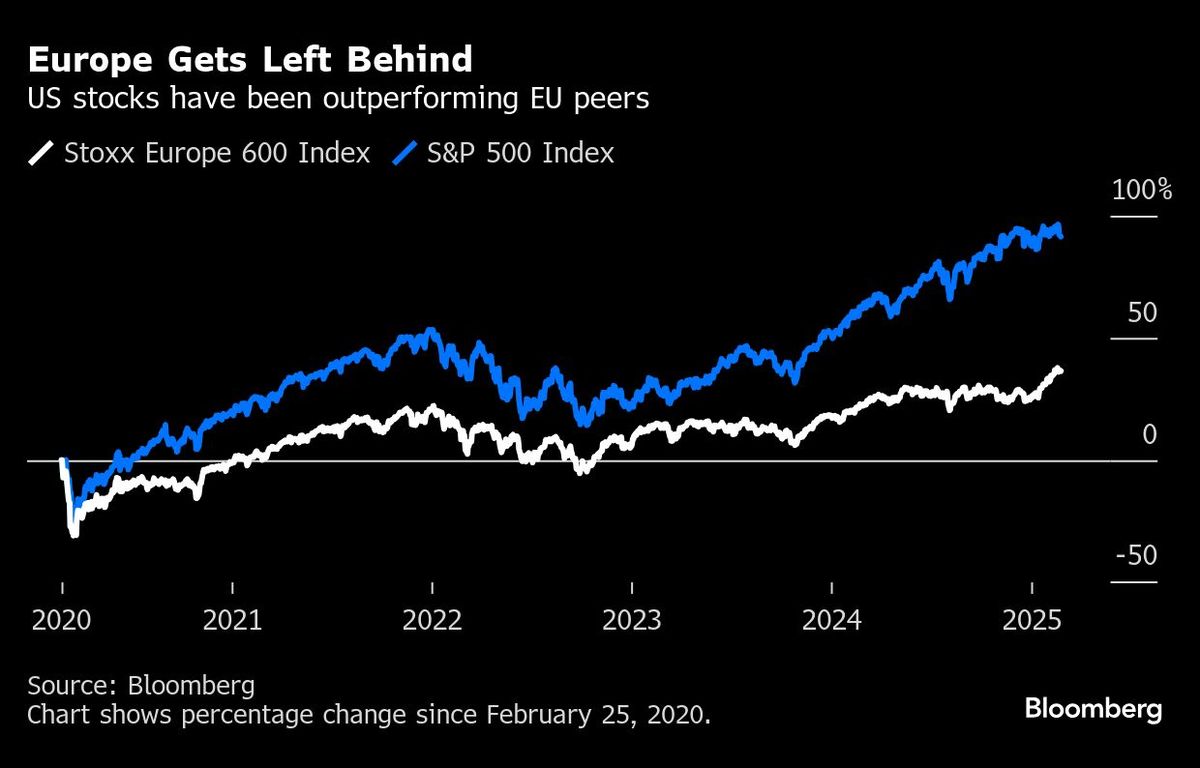
          EU Mounts Major Retreat From ESG Agenda after Intense Criticism

          Alex

          Economic

          The European Union is about to walk back significant chunks of planned ESG regulations, amid a barrage of complaints that such rules are becoming a dead weight hampering EU efforts to compete with the US and Asia.

          The European Commission, the EU’s executive arm, has proposed that regulations covering everything from ESG reporting requirements to supply-chain management be watered down to protect business interests in the bloc, according to documents seen by Bloomberg. The final proposal is set to be made public on Wednesday.

          The move follows intense pressure both from within and outside Europe to rein in environmental, social and governance legislation. The development has major implications for the future of ESG globally, with Europe accounting for well over 80% of the world’s ESG fund assets.

          Germany and France, the EU’s two largest economies, have been lobbying hard for smaller and mid-sized companies to be excluded from the full scope of reporting requirements, as both countries react to faltering economic productivity. In France, a government spokesperson went so far as to characterize ESG corporate reporting rules as “hell” for the companies expected to comply.

          Europe’s decision to scale back its ESG agenda comes as American companies enter a new age of deregulation under President Donald Trump. The 78-year-old has taken a sledgehammer to the green agenda of his predecessor, Joe Biden, and has made tariffs a cornerstone of US trade policy.

          The EU has also faced more direct pressure from the US to rein in the scope of its ESG regulations. Newly confirmed US commerce secretary Howard Lutnick told Republican senators last month that he was willing to consider deploying “trade tools” to ensure American companies exposed to the EU market aren’t expected to comply with CSDDD.

          The European Commission is now recommending that the Corporate Sustainability Due Diligence Directive, which was designed to expose companies to legal liability if their value chains were found to contain ESG breaches, be reined in considerably. That includes lower potential fines and a reduced obligation to monitor the ESG risks of business partners, suppliers and customers.

          The Carbon Border Adjustment Mechanism, which will put a levy on EU imports of goods like steel and cement from countries with less strict climate policies, will be softened so that domestic companies face a reduced reporting requirement.

          The commission is also proposing that only firms with over 1,000 employees and annual revenue exceeding €450 million (RM2.08 billion) be subject to the full scope of both the Corporate Sustainability Reporting Directive and CSDDD. Doing so would exclude an estimated 85% of the companies originally targeted in CSRD and would be in line with German and French demands.

          Meanwhile, a provision for so-called double materiality — a concept that requires companies to take into account not just the financial ESG risks they may face but also their environmental and social impact — looks to be intact, according to draft material seen by Bloomberg. Given the proposed cuts to CSDDD and CSRD, however, the provision would likely apply to fewer companies than originally intended.

          A spokesperson for the commission declined to comment, citing a policy of not responding to leaks.

          Lawmakers from the EU’s green bloc, meanwhile, were quick to denounce the plans.

          “It is an illusion to think that dismantling sustainability laws will solve the structural problems of the economy,” said Anna Cavazzini, a green lawmaker who’s chair of the internal market committee, in an emailed comment.

          She says Europe’s competitiveness problems are instead “due to the current China shock, to a lack of innovation, to high energy prices brought by the war of aggression against Ukraine, and to insufficient investment. They are certainly not due to the EU due diligence law, which is not even in force yet.”

          The commission is due to unveil its proposal for the so-called omnibus legislation on Feb. 26, when the bloc will look at CSDDD, CSRD and the Taxonomy Regulation.

          Maria Luis Albuquerque, the EU’s financial services commissioner, said in an interview last month that there’s room for adjustments to ESG rules, while noting that outright deregulation isn’t the goal.

          It’s about “adjusting the pace” while “maintaining the anchor”, she said then.

          But civil society groups are now questioning that characterisation.

          The planned rollback of ESG regulations looks “reckless,” said Maria van der Heide, head of EU policy at nonprofit ShareAction. “Sustainability laws designed to tackle the most pressing crises — climate breakdown, human rights abuses, corporate exploitation — are being crossed out behind closed doors and at record speed. This is not simplification; it’s pure deregulation.”

          Source: Theedgemarkets

          To stay updated on all economic events of today, please check out our Economic calendar
          Risk Warnings and Disclaimers
          You understand and acknowledge that there is a high degree of risk involved in trading. Following any strategies or investment methods may lead to potential losses. The content on the site is provided by our contributors and analysts for information purposes only. You are solely responsible for determining whether any trading assets, securities, strategy, or any other product is suitable for investing based on your own investment objectives and financial situation.
          Add to Favorites
          Share
          FastBull
          Copyright © 2025 FastBull Ltd

          728 RM B 7/F GEE LOK IND BLDG NO 34 HUNG TO RD KWUN TONG KLN HONG KONG

          TelegramInstagramTwitterfacebooklinkedin
          App Store Google Play Google Play
          Products
          Charts

          Chats

          Q&A with Experts
          Screeners
          Economic Calendar
          Data
          Tools
          Membership
          Features
          Function
          Markets
          Copy Trading
          Latest Signals
          Contests
          News
          Analysis
          24/7
          Columns
          Education
          Company
          Careers
          About Us
          Contact Us
          Advertising
          Help Center
          Feedback
          User Agreement
          Privacy Policy
          Business

          White Label

          Data API

          Web Plug-ins

          Poster Maker

          Affiliate Program

          Risk Disclosure

          The risk of loss in trading financial instruments such as stocks, FX, commodities, futures, bonds, ETFs and crypto can be substantial. You may sustain a total loss of the funds that you deposit with your broker. Therefore, you should carefully consider whether such trading is suitable for you in light of your circumstances and financial resources.

          No decision to invest should be made without thoroughly conducting due diligence by yourself or consulting with your financial advisors. Our web content might not suit you since we don't know your financial conditions and investment needs. Our financial information might have latency or contain inaccuracy, so you should be fully responsible for any of your trading and investment decisions. The company will not be responsible for your capital loss.

          Without getting permission from the website, you are not allowed to copy the website's graphics, texts, or trademarks. Intellectual property rights in the content or data incorporated into this website belong to its providers and exchange merchants.

          Not Logged In

          Log in to access more features

          FastBull Membership

          Not yet

          Purchase

          Become a signal provider
          Help Center
          Customer Service
          Dark Mode
          Price Up/Down Colors

          Log In

          Sign Up

          Position
          Layout
          Fullscreen
          Default to Chart
          The chart page opens by default when you visit fastbull.com