

Markets
News
Analysis
User
24/7
Economic Calendar
Education
Data
- Names
- Latest
- Prev



Signal Accounts for Members
All Signal Accounts
All Contests
 Japan Tankan Small Manufacturing Outlook Index (Q4)
A:--
F: --
P: --
Japan Tankan Large Non-Manufacturing Outlook Index (Q4)A:--
F: --
P: --
Japan Tankan Large Manufacturing Outlook Index (Q4)A:--
F: --
P: --
Japan Tankan Small Manufacturing Diffusion Index (Q4)A:--
F: --
P: --
Japan Tankan Large Manufacturing Diffusion Index (Q4)A:--
F: --
P: --
Japan Tankan Large-Enterprise Capital Expenditure YoY (Q4)A:--
F: --
P: --
 U.K. Rightmove House Price Index YoY (Dec)
A:--
F: --
P: --
 China, Mainland Industrial Output YoY (YTD) (Nov)
A:--
F: --
P: --
China, Mainland Urban Area Unemployment Rate (Nov)A:--
F: --
P: --
 Saudi Arabia CPI YoY (Nov)
A:--
F: --
P: --
 Euro Zone Industrial Output YoY (Oct)
A:--
F: --
P: --
Euro Zone Industrial Output MoM (Oct)A:--
F: --
P: --
 Canada Existing Home Sales MoM (Nov)
A:--
F: --
P: --
Canada National Economic Confidence IndexA:--
F: --
P: --
Canada New Housing Starts (Nov)A:--
F: --
 U.S. NY Fed Manufacturing Employment Index (Dec)
A:--
F: --
P: --
U.S. NY Fed Manufacturing Index (Dec)A:--
F: --
P: --
Canada Core CPI YoY (Nov)A:--
F: --
P: --
Canada Manufacturing Unfilled Orders MoM (Oct)A:--
F: --
P: --
U.S. NY Fed Manufacturing Prices Received Index (Dec)A:--
F: --
P: --
U.S. NY Fed Manufacturing New Orders Index (Dec)A:--
F: --
P: --
Canada Manufacturing New Orders MoM (Oct)A:--
F: --
P: --
Canada Core CPI MoM (Nov)A:--
F: --
P: --
Canada Trimmed CPI YoY (SA) (Nov)A:--
F: --
P: --
Canada Manufacturing Inventory MoM (Oct)A:--
F: --
P: --
Canada CPI YoY (Nov)A:--
F: --
P: --
Canada CPI MoM (Nov)A:--
F: --
P: --
Canada CPI YoY (SA) (Nov)A:--
F: --
P: --
Canada Core CPI MoM (SA) (Nov)A:--
F: --
P: --
Canada CPI MoM (SA) (Nov)A:--
F: --
P: --
Federal Reserve Board Governor Milan delivered a speech U.S. NAHB Housing Market Index (Dec)--
F: --
P: --
 Australia Composite PMI Prelim (Dec)
--
F: --
P: --
Australia Services PMI Prelim (Dec)--
F: --
P: --
Australia Manufacturing PMI Prelim (Dec)--
F: --
P: --
Japan Manufacturing PMI Prelim (SA) (Dec)--
F: --
P: --
U.K. 3-Month ILO Employment Change (Oct)--
F: --
P: --
U.K. Unemployment Claimant Count (Nov)--
F: --
P: --
U.K. Unemployment Rate (Nov)--
F: --
P: --
U.K. 3-Month ILO Unemployment Rate (Oct)--
F: --
P: --
U.K. Average Weekly Earnings (3-Month Average, Including Bonuses) YoY (Oct)--
F: --
P: --
U.K. Average Weekly Earnings (3-Month Average, Excluding Bonuses) YoY (Oct)--
F: --
P: --
 France Services PMI Prelim (Dec)
--
F: --
P: --
France Composite PMI Prelim (SA) (Dec)--
F: --
P: --
France Manufacturing PMI Prelim (Dec)--
F: --
P: --
 Germany Services PMI Prelim (SA) (Dec)
--
F: --
P: --
Germany Manufacturing PMI Prelim (SA) (Dec)--
F: --
P: --
Germany Composite PMI Prelim (SA) (Dec)--
F: --
P: --
Euro Zone Composite PMI Prelim (SA) (Dec)--
F: --
P: --
Euro Zone Services PMI Prelim (SA) (Dec)--
F: --
P: --
Euro Zone Manufacturing PMI Prelim (SA) (Dec)--
F: --
P: --
U.K. Services PMI Prelim (Dec)--
F: --
P: --
U.K. Manufacturing PMI Prelim (Dec)--
F: --
P: --
U.K. Composite PMI Prelim (Dec)--
F: --
P: --
Euro Zone ZEW Economic Sentiment Index (Dec)--
F: --
P: --
Germany ZEW Current Conditions Index (Dec)--
F: --
P: --
Germany ZEW Economic Sentiment Index (Dec)--
F: --
P: --
Euro Zone Trade Balance (Not SA) (Oct)--
F: --
P: --
Euro Zone ZEW Current Conditions Index (Dec)--
F: --
P: --
Euro Zone Trade Balance (SA) (Oct)--
F: --
P: --
U.S. Retail Sales MoM (Excl. Automobile) (SA) (Oct)--
F: --
P: --


No matching data

Latest Views
Latest Views
Trending Topics
Top Columnists
Latest Update
White Label
Data API
Web Plug-ins
Affiliate Program
View All
No data
Tech entrepreneur Michael Saylor co-founded MicroStrategy, an enterprise software company now doing business as Strategy, in 1989. However, the billionaire businessman has been laser focused in recent years on something totally different from his original area of expertise.
Tech entrepreneur Michael Saylor co-founded MicroStrategy, an enterprise software company now doing business as Strategy, in 1989. However, the billionaire businessman has been laser focused in recent years on something totally different from his original area of expertise.Saylor is extremely bullish on a leading cryptocurrency. Based on his optimistic stance, there's one popular BlackRock exchange-traded fund (ETF) that could absolutely skyrocket. Here's what investors need to know about this exciting prediction.
Saylor is incredibly bullish on Bitcoin. Seeing how much the federal debt and money supply was ballooning after the onset of the COVID-19 pandemic, Saylor realized that holding cash or Treasuries was a losing game. MicroStrategy first purchased Bitcoin for its own balance sheet in August 2020.
Since then, the billionaire has completely altered his company's playbook. Its value is driven by a Bitcoin treasury strategy, raising capital in the fixed income and equity markets to aggressively buy more of the digital asset. Strategy now owns just under 629,000 Bitcoin units, according to bitcointreasuries.net.
I don't think Saylor's thesis changes much. It's all about Bitcoin being able to capture a greater share of global wealth over time. This capital could come from different asset classes, like the stock market, fixed income, or real estate. What's more, important catalysts, like the launch of spot Bitcoin exchange-traded funds , as well as more favorable regulation, give support to Saylor's more bullish stance.
The agreements the United States has signed with its main trading partners are both positive and realistic.
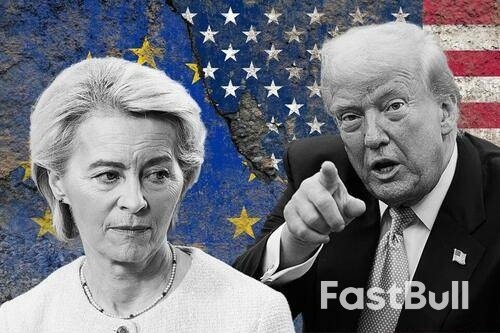
They demonstrate that, in 2024, the world was not a trade paradise of spontaneous cooperation among free-market companies as per David Ricardo’s ideal, but rather a statist system filled with barriers against US businesses and political efforts to pick winners and losers.
The controversy surrounding the agreement between the United States and the European Union can only be explained for three reasons: animosity toward any achievements of the Trump administration, ignorance about the only realistic alternative, or because critics of the deal were genuinely satisfied with the protectionism and European barriers in place in 2024.
Critics of the deal must answer two questions:
What was the only real alternative?
The only real alternative was a collapse in European exports, a loss of competitiveness versus Japan, the United Kingdom, South Korea, and other partners, greater offshoring of companies, and, crucially, keeping existing European trade barriers.
What would the critics have done?
Critics must explain how they would have achieved supposedly better deals when global export leaders have signed agreements like that of the European Union. They need to share with us what essential information they have that the EU negotiators do not, reportedly enabling them to achieve better conditions than Japan, the United Kingdom, South Korea, Indonesia, Vietnam, the Philippines, Saudi Arabia, Qatar, Australia, China, and others. Is it reasonable to think that EU negotiators were stupid or reckless and did not weigh all options to achieve a beneficial agreement?
Claiming that the agreement with the United States is detrimental is, inadvertently, to defend the trade barriers with Europe’s main global partner as if they were wonderful and should be preserved. It also stems from a fantastical vision of global trade, imagining that the US market could be replaced by others.
What’s worse is that some seem to believe all of this is Trump’s fault—a favourite in today’s economic analysis—and that in four years, a Democratic president or a softer Republican will return everything to the way it was in 2024. This is a mistaken vision. Biden kept all the tariffs from the Trump and Obama administrations and increased several of them.
Why wasn’t there a significant outcry when the EU implemented substantial trade barriers or when Democratic presidents established tariffs? The outrage frequently conceals bias against Trump and conveniently overlooks Europe’s persistent imposition of new barriers on US products. Why wasn’t there an outcry over the EU’s tariffs on US chemicals, agriculture, livestock, automobiles, and manufacturing equipment—or over the 2030 Agenda, the New Green Deal, the CO₂ tax, and all the constant excessive regulation? It took Draghi to remind us that the EU imposes more hidden tariffs on itself than the United States does.
Many claim that if the EU and others set up trade barriers, the US response should be to remove, not add, tariffs. That sounds beneficial in theory but fails to consider the full geopolitical, monetary, and commercial picture. The United States would not just lose in manufacturing and the role of the US dollar with oversized trade deficits; it would also end up absorbing the overcapacity and subsidising the working capital problems of other countries. America’s trade deficit doesn’t originate from free-market cooperation but largely from politically imposed barriers on US companies. This is why many countries would prefer a 15% tariff to removing all their non-tariff barriers.
We cannot ignore the significant tariff and non-tariff barriers that have been explicitly established to exclude US products, which are then utilised to benefit politically connected countries—such as Turkey or Morocco in relation to the EU, or even China.
The number of zero-for-zero tariff sectors is clearly positive and the list is expected to increase over time. Lifting some of the EU’s non-tariff barriers is also positive and in line with the recommendations of the Draghi report.
By accepting a 15% tariff instead of eliminating all their non-tariff barriers, America’s trading partners are admitting they would rather pay the cost than relinquish regulatory power, and they acknowledge there is no simple way to just replace the US consumer.
It’s also disingenuous to claim that buying American energy is pricier than buying Russian energy. Such arguments reveal the enormous bias and contradiction, especially given record European imports of Russian LNG in 2024. This agreement helps diversify supply and ensures security during crisis periods.
Some media outlets have misrepresented the agreement’s military equipment element. It is false that the agreement requires the EU to buy only US military equipment. These are two distinct topics, and the agreement does not reduce investment in European companies. The commitment is positive for the EU’s rearmament plans and does not undermine domestic investment projects.
European Keynesian analysts, who have quietly observed massive tax hikes and employment cost increases of over 50%, cannot credibly claim that a 15% tariff is devastating when just recently they insisted 30% tariffs would have a minor impact. The consensus estimates indicated that the impact for the EU would only be between 0.3% and 0.5% over three years. The ECB and other institutions described the effects as “manageable,” “bearable,” and having a low impact on inflation.
The Keynesian consensus can’t, on the one hand, say a 30% tariff would have a limited, bearable impact and minimal inflation effect, and a few months later insist that a 15% tariff would be disastrous. This only serves to support the narrative that anything agreed upon by Trump must be detrimental.
The EU could have negotiated for zero tariffs if it had agreed to eliminate all non-tariff barriers; however, it chose a compromise to maintain most of its regulatory framework. IIn any case, this outcome is much more favourable than losing the trade surplus and access to the US market. Therefore, the EU does not “lose”; instead, it accepts a small tariff, similar to Japan, the UK, and South Korea, because it prefers to maintain most of its non-tariff barriers.
The truly devastating alternative would have been losing market share to other countries and maintaining barriers that perpetuate European economic stagnation, not to mention missing out on a key agreement for defence, technology, and energy.
Everyone benefits from deals that establish a fairer and more open trade framework than what existed in 2024. Conservative estimates place the benefit for the EU at about €150 billion annually, assuming the fulfilment of commitments.
Both the United States and the European Union benefit from an agreement that strengthens trade ties, corrects an unfair trade deficit, removes barriers, and increases the number of zero-tariff sectors. Additionally, both sides gain a crucial alliance in defence, energy, and technology—all without limiting investment in their homegrown industries.
The only real alternative was no deal, which would ruin the EU’s economy and trade. The negotiators from the EU and the US recognised this situation and successfully reached a significant agreement that benefited both parties.
UK businesses are facing another inflation-busting jump in wage costs for their lowest-paid workers next year, the latest blow to labor-intensive sectors that have shed jobs in recent months.
The Low Pay Commission said indicative calculations suggest that keeping the minimum wage for workers aged 21 and over at two-thirds of median earnings would require a 4.1% increase to £12.71 ($16.896) from April 2026.
While this would be an easing from the 6.7% surge this year, it is another hefty increase for businesses to absorb after they were also hit by a jump in payroll taxes.
Tax data show that firms have shed more than 180,000 employees since October, when Chancellor of the Exchequer Rachel Reeves announced the minimum-wage increase alongside a £26 billion hike in employer national insurance contributions. Both came into effect in April. Hikes in the minimum wage often also push up wages for those further up the pay scale.
The LPC is an independent body that advises the government about the levels for the National Living Wage — the floor for hourly pay rates in the UK. Historically, governments have broadly accepted its recommendations.
Reeves’ first budget faced fierce criticism from businesses with labor-intensive sectors such as retail and hospitality suffering some of the biggest falls in employment.
The LPC cautioned that predicting the figure is challenging, saying there is a range around its central estimate from £12.55 to £12.86. The current NLW is £12.21 per hour.
The government restated the LPC’s remit, asking the body to ensure that the rate does not drop below two-thirds of median earnings.
“The Low Pay Commission should take into account the cost of living, inflation forecasts between April 2026 and April 2027, the impact on the labour market, business and competitiveness, and carefully consider wider macroeconomic conditions,” the remit added.
The commission will provide its advice to the government on the minimum wage rates for next year by the end of October.
In the dynamic world of global finance, where every ripple in one market can create waves in another, the performance of the US Dollar remains a pivotal focus. For cryptocurrency enthusiasts and traditional investors alike, understanding the direction of the world’s reserve currency is paramount, as its strength or weakness can significantly influence asset prices, capital flows, and market sentiment. Recent analysis from Bank of America (BofA) offers a compelling perspective, suggesting that despite a temporary surge in July, the USD pressure is set to continue, pointing towards sustained weakness. But what exactly does this mean for your portfolio, and why are BofA’s insights so crucial?
When analysts speak of ‘USD pressure,’ they are referring to a sustained tendency for the US Dollar to depreciate against other major global currencies. This isn’t just a fleeting daily fluctuation; it indicates a deeper, fundamental shift in market sentiment and economic factors that favor other currencies over the greenback. While July saw a brief period of strength for the dollar, largely driven by safe-haven demand amidst global uncertainties or specific economic data points, BofA’s deep dive into forex positioning suggests this was merely a temporary reprieve, not a reversal of the underlying trend.
The implications of persistent USD pressure are far-reaching. For international trade, a weaker dollar makes US exports cheaper and imports more expensive, potentially boosting American competitiveness but also fueling domestic inflation. For investors, it impacts the value of foreign assets when converted back to dollars and influences commodity prices, often leading to higher prices for dollar-denominated goods like gold and oil. Furthermore, for those deeply invested in cryptocurrencies, a weaker dollar environment can sometimes be seen as a bullish signal for digital assets, as investors seek alternatives to traditional fiat currencies to preserve purchasing power or gain exposure to growth assets.
BofA’s analysis moves beyond surface-level observations, delving into the intricate mechanics of market positioning to uncover where the ‘smart money’ is truly leaning. They argue that the July strength was likely driven by short-term tactical moves or unwinding of extreme short positions, rather than a fundamental shift in the dollar’s long-term trajectory. This distinction is vital for anyone trying to navigate the complex currents of the global currency trends.
At the heart of BofA’s forecast lies their meticulous examination of forex positioning. But what exactly is this? In essence, it refers to the net long or short positions held by large speculative traders in the currency futures market, as reported by bodies like the Commodity Futures Trading Commission (CFTC). These positions reflect the collective bets institutional investors and hedge funds are making on the future direction of various currency pairs.
BofA’s methodology often involves analyzing the Commitment of Traders (COT) report, a weekly publication detailing these positions. When a large number of speculative traders are net long a particular currency (meaning they expect it to rise), it can sometimes be a ‘contrarian’ signal. Why? Because if too many participants are already on one side of the trade, there are fewer new buyers to push the price higher, and any small negative news can trigger a cascade of selling as these crowded positions are unwound. Conversely, if traders are heavily net short, it suggests the currency might be oversold and due for a rebound.
BofA’s recent findings highlight that despite the dollar’s brief rally, speculative positioning suggests that the market remains structurally short on the dollar against key currencies. This indicates a deeply ingrained expectation of continued USD pressure among sophisticated market participants. Here’s a simplified look at what this positioning might imply:
This persistent forex positioning, where major players are betting against the dollar, is a strong indicator for BofA that the July strength was merely a blip. It implies that the structural factors driving dollar weakness are still very much in play, and the market is primed for further depreciation.
Based on their forex positioning analysis, BofA’s US Dollar outlook remains predominantly bearish for the medium to long term. This isn’t just about speculative bets; it’s underpinned by several fundamental economic and policy factors that continue to weigh on the dollar.
Key drivers contributing to this anticipated weakness include:
The temporary strength observed in July could be attributed to various factors such as short-term risk aversion, a brief period of robust US economic data, or even a technical rebound from prior overselling. However, BofA emphasizes that these are unlikely to override the more entrenched factors influencing the US Dollar outlook. The bank’s conviction is that these underlying pressures will reassert themselves, leading to continued dollar depreciation.
A weakening dollar doesn’t exist in a vacuum; it profoundly influences global currency trends and the relative strength of other major currencies. When the USD pressure intensifies, it often implies strength for other major currencies, particularly the Euro, Japanese Yen, and British Pound, and potentially a broader rally in emerging market currencies.
The concept of ‘de-dollarization’ also plays a role in these global currency trends. While not an overnight phenomenon, growing discussions and actions by various countries to reduce their reliance on the US Dollar for trade and reserves can contribute to its long-term depreciation. This shift, driven by geopolitical considerations and the desire for greater financial autonomy, adds another layer to the bearish US Dollar outlook. Furthermore, the interplay between commodity prices and currency movements is crucial; a weaker dollar often supports higher commodity prices, which in turn can strengthen the currencies of commodity-exporting nations.
The BofA insights derived from their detailed forex positioning analysis offer valuable guidance for investors and traders navigating the current market environment. Their core argument is clear: the market is positioned for continued USD pressure, and any rallies should be viewed with skepticism.
These BofA insights are not just academic; they have practical implications for portfolio construction and trading strategies. For instance, a trader might look to go long EUR/USD or GBP/USD on dips, while an investor might allocate more capital to European or Asian markets, anticipating better returns when converted back to a weakening dollar.
While BofA’s analysis presents a compelling case for continued USD pressure, it is important to acknowledge that financial markets are inherently unpredictable. Several factors could challenge or alter this bearish US Dollar outlook:
Therefore, while BofA insights provide a robust framework, market participants must remain agile and continuously monitor incoming data and events that could influence global currency trends.
For investors and traders, understanding the anticipated USD pressure is only the first step. The real value lies in converting this knowledge into actionable strategies:
Staying informed about global currency trends and the nuanced communications from central banks will be key to making informed decisions in this evolving landscape.
BofA’s analysis of forex positioning paints a clear picture: despite temporary bouts of strength, the underlying forces driving USD pressure remain firmly in place. The bank’s insights suggest that the US Dollar outlook points towards continued weakness, influenced by a complex interplay of interest rate differentials, fiscal policies, and broader global currency trends. This isn’t just a technical forecast; it’s a fundamental assessment of the dollar’s position in the global financial ecosystem.
For investors, traders, and businesses, recognizing this anticipated depreciation is crucial. It calls for strategic adjustments, from diversifying currency exposure to rethinking investment allocations and hedging strategies. While no forecast is infallible, the depth of BofA insights into market positioning provides a compelling framework for understanding the likely path ahead for the US Dollar. As the financial landscape continues to evolve, staying attuned to these expert analyses will be vital for navigating the currents of currency markets and making robust financial decisions.
Indian Prime Minister Narendra Modi and Philippine President Ferdinand Marcos Jr. met in New Delhi on Tuesday and agreed to deepen their military partnership, at a time when China is becoming increasingly assertive in the Indian Ocean.
“We have agreed to continue leveling up our collaboration in defense and security,” Marcos said at a briefing in New Delhi, adding that the “expanding capabilities and footprint” of India’s domestic defense manufacturing industry would support the Philippines’ ongoing military modernization.
The two nations signed a declaration establishing a strategic partnership and announced plans for service-to-service talks aimed at enhancing information sharing and joint military training. “We will foster naval and coast guard interoperability via port calls, cooperative activities and capacity building in the maritime domain,” Marcos said.
The Philippine leader, on a state visit to the South Asian nation upon Modi’s invitation, is seeking to bolster trade and defense ties with India against the backdrop of high US tariffs and geopolitical tensions with China.
Marcos is scheduled to lead a Philippine business delegation to New Delhi and Bengaluru to meet executives, particularly those from the information technology sector, for potential investments. India and the Philippines are global hubs for IT and business process outsourcing, including call centers.
The two leaders agreed to expedite talks on a trade agreement. “Our bilateral trade is steadily increasing and has crossed $3 billion,” said Modi at the briefing.
Efforts to forge closer maritime cooperation come as both nations have faced similar security concerns. Manila has a territorial dispute with Beijing in the South China Sea while New Delhi has a border row with China over the Himalayas.
Before Marcos left for India, the Philippine and Indian navies for the first time held a two-day joint maritime exercises from Sunday in waters facing the South China Sea, according to Manila’s military.
The Indian Navy deployed three ships, including a guided missile destroyer and an anti-submarine warfare corvette as well as two multi-role naval helicopters.
The drills included air defense and maneuvering exercises, as well as more complex warfare simulations such as screening exercise and anti-submarine warfare training, the Philippine armed forces said.
Philippine military chief Romeo Brawner Jr. has said Manila is looking at ordering more weapons systems and equipment from India. The Philippines previously purchased a shore-based anti-ship missile system from India’s BrahMos Aerospace Pvt. Ltd., a contract worth 18.9 billion pesos ($329 million), as the nation boosts its coastal defense.
728 RM B 7/F GEE LOK IND BLDG NO 34 HUNG TO RD KWUN TONG KLN HONG KONG


White Label
Data API
Web Plug-ins
Poster Maker
Affiliate Program
The risk of loss in trading financial instruments such as stocks, FX, commodities, futures, bonds, ETFs and crypto can be substantial. You may sustain a total loss of the funds that you deposit with your broker. Therefore, you should carefully consider whether such trading is suitable for you in light of your circumstances and financial resources.
No decision to invest should be made without thoroughly conducting due diligence by yourself or consulting with your financial advisors. Our web content might not suit you since we don't know your financial conditions and investment needs. Our financial information might have latency or contain inaccuracy, so you should be fully responsible for any of your trading and investment decisions. The company will not be responsible for your capital loss.
Without getting permission from the website, you are not allowed to copy the website's graphics, texts, or trademarks. Intellectual property rights in the content or data incorporated into this website belong to its providers and exchange merchants.
Not Logged In
Log in to access more features

FastBull Membership
Not yet
Purchase


Log In
Sign Up


