• Trade
  • Markets
  • Copy
  • Contests
  • News
  • 24/7
  • Calendar
  • Q&A
  • Chats
Trending
Screeners
SYMBOL
LAST
BID
ASK
HIGH
LOW
NET CHG.
%CHG.
SPREAD
SPX
S&P 500 Index
6834.49
6834.49
6834.49
6840.03
6792.61
+59.73
+ 0.88%
--
DJI
Dow Jones Industrial Average
48134.88
48134.88
48134.88
48289.63
48034.19
+183.04
+ 0.38%
--
IXIC
NASDAQ Composite Index
23307.63
23307.63
23307.63
23307.91
23106.19
+301.28
+ 1.31%
--
USDX
US Dollar Index
98.200
98.280
98.200
98.350
98.200
-0.130
-0.13%
--
EURUSD
Euro / US Dollar
1.17212
1.17219
1.17212
1.17218
1.17058
+0.00144
+ 0.12%
--
GBPUSD
Pound Sterling / US Dollar
1.34007
1.34014
1.34007
1.34014
1.33679
+0.00278
+ 0.21%
--
XAUUSD
Gold / US Dollar
4399.84
4400.23
4399.84
4403.60
4337.85
+61.31
+ 1.41%
--
WTI
Light Sweet Crude Oil
56.933
56.970
56.933
57.035
56.610
+0.540
+ 0.96%
--

Community Accounts

Signal Accounts
--
Profit Accounts
--
Loss Accounts
--
View More

Become a signal provider

Sell trading signals to earn additional income

View More

Guide to Copy Trading

Get started with ease and confidence

View More

Signal Accounts for Members

All Signal Accounts

Best Return
  • Best Return
  • Best P/L
  • Best MDD
Past 1W
  • Past 1W
  • Past 1M
  • Past 1Y

All Contests

  • All
  • Trump Updates
  • Recommend
  • Stocks
  • Cryptocurrencies
  • Central Banks
  • Featured News
Top News Only
Share

Japan November Crude Steel Output Down 1.2 % From October At 6.77 Million Tonnes

Share

Japan November Crude Steel Output Down 1.6 % Year-On-Year

Share

South Korea Petrochemical Firms On Course To Cut Up To 3.7 Million Tons Of Output Under Restructuring Plan

Share

Indonesian Rupiah Slips To 16777 Per USA Dollar, Lowest Since September 26

Share

Spot Gold Has Broken Through $4,400 Per Ounce For The First Time, And Has Risen Nearly 68% So Far This Year

Share

Malaysia Foreign Minister: ASEAN Must Take All Necessary Measures To Maintain Regional Peace

Share

Malaysia Foreign Minister: Hopes Special ASEAN Foreign Ministers Meeting Will Renew Efforts For A Return To Stability

Share

Malaysia Foreign Minister: Urges Thailand, Cambodia To Undertake Full And Effective Implementation Of Ceasefire Agreements, Peace Accord

Share

Indonesia Nov Money Supply (M2) Growth At +8.3%Year-On-Year - Central Bank

Share

Malaysia's November CPI Rises 1.4% On-Year, Below Forecast

Share

Malaysia's November CPI +1.4% On Year Versus Analysts' Estimate Of +1.5%

Share

Thai Central Bank Chief: Will Prevent Deflation

Share

India's Nifty 50 Index Up 0.62%

Share

Malaysia's November Inflation Rises Slower-Than-Expected 1.4% On Year

Share

Thai Nov Car Exports -12.22% Year-On-Year (Versus-1.51% In Oct)

Share

Thai Central Bank Chief: Inflation Target Range To Remain At 1% To 3% Next Year

Share

Thai Baht Appreciates To 31.2950 Per USA Dollar For The First Time Since Mid-June 2021

Share

India's Nifty Bank Futures Up 0.33% In Pre-Open Trade

Share

India's Nifty 50 Index Up 0.3% In Pre-Open Trade

Share

Spot Silver Rises 3% To $69.13/Oz

TIME
ACT
FCST
PREV
BOJ Press Conference
Turkey Consumer Confidence Index (Dec)

A:--

F: --

P: --

U.K. Retail Sales YoY (SA) (Nov)

A:--

F: --

P: --
U.K. Core Retail Sales YoY (SA) (Nov)

A:--

F: --

P: --
Germany PPI YoY (Nov)

A:--

F: --

P: --

Germany PPI MoM (Nov)

A:--

F: --

P: --

Germany GfK Consumer Confidence Index (SA) (Jan)

A:--

F: --

P: --
U.K. Retail Sales MoM (SA) (Nov)

A:--

F: --

P: --

France PPI MoM (Nov)

A:--

F: --

P: --

Euro Zone Current Account (Not SA) (Oct)

A:--

F: --

P: --

Euro Zone Current Account (SA) (Oct)

A:--

F: --

P: --

Russia Key Rate

A:--

F: --

P: --

U.K. CBI Distributive Trades (Dec)

A:--

F: --

P: --

U.K. CBI Retail Sales Expectations Index (Dec)

A:--

F: --

P: --

Brazil Current Account (Nov)

A:--

F: --

P: --

Canada Retail Sales MoM (SA) (Oct)

A:--

F: --

P: --
Canada New Housing Price Index MoM (Nov)

A:--

F: --

P: --

Canada Core Retail Sales MoM (SA) (Oct)

A:--

F: --

P: --
U.S. Existing Home Sales Annualized MoM (Nov)

A:--

F: --

P: --
U.S. UMich Consumer Sentiment Index Final (Dec)

A:--

F: --

P: --

U.S. Conference Board Employment Trends Index (SA) (Nov)

A:--

F: --

P: --
Euro Zone Consumer Confidence Index Prelim (Dec)

A:--

F: --

P: --

U.S. UMich 1-Year-Ahead Inflation Expectations Final (Dec)

A:--

F: --

P: --

U.S. UMich Consumer Expectations Index Final (Dec)

A:--

F: --

P: --

U.S. UMich Current Economic Conditions Index Final (Dec)

A:--

F: --

P: --

U.S. Existing Home Sales Annualized Total (Nov)

A:--

F: --

P: --
U.S. Weekly Total Rig Count

A:--

F: --

P: --

U.S. Weekly Total Oil Rig Count

A:--

F: --

P: --

China, Mainland 5-Year Loan Prime Rate

A:--

F: --

P: --

China, Mainland 1-Year Loan Prime Rate (LPR)

A:--

F: --

P: --

U.K. Current Account (Q3)

--

F: --

P: --

U.K. GDP Final YoY (Q3)

--

F: --

P: --

U.K. GDP Final QoQ (Q3)

--

F: --

P: --

Italy PPI YoY (Nov)

--

F: --

P: --

Mexico Economic Activity Index YoY (Oct)

--

F: --

P: --

Canada National Economic Confidence Index

--

F: --

P: --

Canada Industrial Product Price Index YoY (Nov)

--

F: --

P: --

U.S. Chicago Fed National Activity Index (Nov)

--

F: --

P: --

Canada Industrial Product Price Index MoM (Nov)

--

F: --

P: --

U.S. Dallas Fed PCE Price Index YoY (Oct)

--

F: --

P: --

RBA Monetary Policy Meeting Minutes
Euro Zone Total Reserve Assets (Nov)

--

F: --

P: --

Mexico Trade Balance (Nov)

--

F: --

P: --

Canada GDP YoY (Oct)

--

F: --

P: --

Canada GDP MoM (SA) (Oct)

--

F: --

P: --

U.S. Core PCE Price Index Prelim YoY (Q3)

--

F: --

P: --

U.S. PCE Price Index Prelim YoY (Q3)

--

F: --

P: --

U.S. Annualized Real GDP Prelim (Q3)

--

F: --

P: --

U.S. Non-Defense Capital Durable Goods Orders MoM (Excl. Aircraft) (Oct)

--

F: --

P: --

U.S. PCE Price Index Prelim QoQ (SA) (Q3)

--

F: --

P: --

U.S. Core PCE Price Index Annualized QoQ Prelim (SA) (Q3)

--

F: --

P: --

U.S. GDP Deflator Prelim QoQ (SA) (Q3)

--

F: --

P: --

U.S. Durable Goods Orders MoM (Excl. Defense) (SA) (Oct)

--

F: --

P: --

U.S. Durable Goods Orders MoM (Excl.Transport) (Oct)

--

F: --

P: --

U.S. Real Personal Consumption Expenditures Prelim QoQ (Q3)

--

F: --

P: --

U.S. Real GDP Annualized QoQ Prelim (SA) (Q3)

--

F: --

P: --

U.S. Durable Goods Orders MoM (Oct)

--

F: --

P: --

U.S. Weekly Redbook Index YoY

--

F: --

P: --

U.S. Industrial Output YoY (Nov)

--

F: --

P: --

U.S. Industrial Output MoM (SA) (Nov)

--

F: --

P: --

U.S. Capacity Utilization MoM (SA) (Nov)

--

F: --

P: --

Q&A with Experts
    • All
    • Chatrooms
    • Groups
    • Friends
    Connecting
    .
    .
    .
    Type here...
    Add Symbol or Code

      No matching data

      All
      Trump Updates
      Recommend
      Stocks
      Cryptocurrencies
      Central Banks
      Featured News
      • All
      • Russia-Ukraine Conflict
      • Middle East Flashpoint
      • All
      • Russia-Ukraine Conflict
      • Middle East Flashpoint
      Search
      Products

      Charts Free Forever

      Chats Q&A with Experts
      Screeners Economic Calendar Data Tools
      Membership Features
      Data Warehouse Market Trends Institutional Data Policy Rates Macro

      Market Trends

      Market Sentiment Order Book Forex Correlations

      Top Indicators

      Charts Free Forever
      Markets

      News

      News Analysis 24/7 Columns Education
      From Institutions From Analysts
      Topics Columnists

      Latest Views

      Latest Views

      Trending Topics

      Top Columnists

      Latest Update

      Signals

      Copy Rankings Latest Signals Become a signal provider AI Rating
      Contests
      Brokers

      Overview Brokers Assessment Rankings Regulators News Claims
      Broker listing Forex Brokers Comparison Tool Live Spread Comparison Scam
      Q&A Complaint Scam Alert Videos Tips to Detect Scam
      More

      Business
      Events
      Careers About Us Advertising Help Center

      White Label

      Data API

      Web Plug-ins

      Affiliate Program

      Awards Institution Evaluation IB Seminar Salon Event Exhibition
      Vietnam Thailand Singapore Dubai
      Fans Party Investment Sharing Session
      FastBull Summit BrokersView Expo
      Recent Searches
        Top Searches
          Markets
          News
          Analysis
          User
          24/7
          Economic Calendar
          Education
          Data
          • Names
          • Latest
          • Prev

          View All

          No data

          Scan to Download

          Faster Charts, Chat Faster!

          Download App
          English
          • English
          • Español
          • العربية
          • Bahasa Indonesia
          • Bahasa Melayu
          • Tiếng Việt
          • ภาษาไทย
          • Français
          • Italiano
          • Türkçe
          • Русский язык
          • 简中
          • 繁中
          Open Account
          Search
          Products
          Charts Free Forever
          Markets
          News
          Signals

          Copy Rankings Latest Signals Become a signal provider AI Rating
          Contests
          Brokers

          Overview Brokers Assessment Rankings Regulators News Claims
          Broker listing Forex Brokers Comparison Tool Live Spread Comparison Scam
          Q&A Complaint Scam Alert Videos Tips to Detect Scam
          More

          Business
          Events
          Careers About Us Advertising Help Center

          White Label

          Data API

          Web Plug-ins

          Affiliate Program

          Awards Institution Evaluation IB Seminar Salon Event Exhibition
          Vietnam Thailand Singapore Dubai
          Fans Party Investment Sharing Session
          FastBull Summit BrokersView Expo

          Samsung Biologics To Buy US Drug Production Facility From GSK For $280 Million

          Samantha Luan

          Stocks

          Summary:

          South Korea's Samsung Biologics (207940.KS), said on Monday it is acquiring its first U.S. drug production facility from GSK (GSK.L),for $280 million to respond to long-term U.S. market demand.

          Signage is pictured in the main lobby of GSK offices in London, Britain, February 20, 2025. REUTERS/Chris J. Ratcliffe/File Photo

          South Korea's Samsung Biologics (207940.KS), said on Monday it is acquiring its first U.S. drug production facility from GSK (GSK.L),for $280 million to respond to long-term U.S. market demand.

          The company's U.S. unit, Samsung Biologics America, is acquiring a 100% stake in Human Genome Sciences Inc of Rockville, Maryland, the South Korean contract drug manufacturer said in a statement.

          Samsung Biologics plans additional investments to expand the site's capacity, currently a combined 60,000 liters of drug substance capacity, and to upgrade technology, it said.

          It added that the acquisition value may change when the deal closes, likely around the end of the first quarter of 2026.

          South Korea's Celltrion (068270.KS), opens new tab is also planning to produce drugs in the United States, where the Trump administration has threatened to levy tariffs on pharmaceuticals.

          Under a deal with the United States, tariffs on U.S. imports of South Korean pharmaceuticals will be no greater than 15%, while generic drugs will be tariff-free.

          Samsung Biologics shares were down 0.4% on Monday, lagging the wider market's (.KS11), opens new tab 2% gain.
          Source: Reuters

          Risk Warnings and Disclaimers
          You understand and acknowledge that there is a high degree of risk involved in trading. Following any strategies or investment methods may lead to potential losses. The content on the site is provided by our contributors and analysts for information purposes only. You are solely responsible for determining whether any trading assets, securities, strategy, or any other product is suitable for investing based on your own investment objectives and financial situation.
          Add to Favorites
          Share

          China Keeps Benchmark Lending Rates Steady For A Seventh Straight Month

          Justin

          Political

          Economic

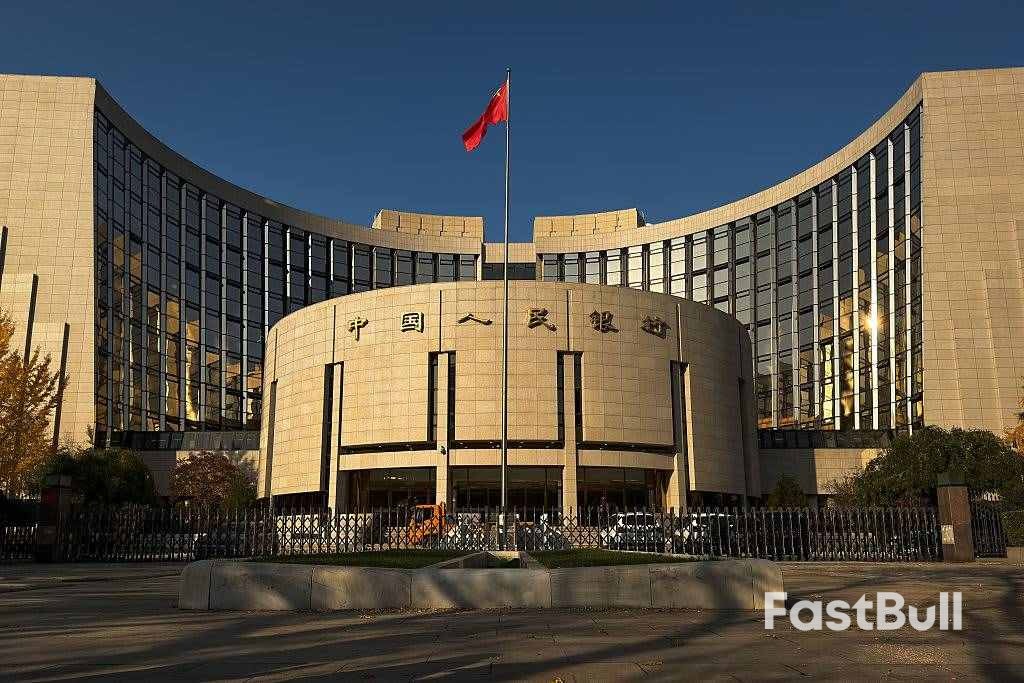
          BEIJING, CHINA - NOVEMBER 11: The national flag of China flies in front of the headquarters of the People's Bank of China (PBOC) on November 11, 2025, in Beijing, China. The PBOC serves as the country's central bank, overseeing monetary policy, financial regulation, and currency issuance. (Photo by Cheng Xin/Getty Images)

          China's central bank kept its loan prime rates steady on Monday, even as the world's second largest economy has seen weak economic data and an extended slump in its property sector.

          The People's Bank of China kept its 1-year and 5-year loan prime rates unchanged at 3% and 3.5% respectively, holding them for a seventh straight meeting, in line with a Reuters survey.

          The 1-year rate acts as a benchmark for new loans, while the 5-year helps peg mortgage rates.

          The PBOC's decision comes amid downbeat economic data from China in November, including lower-than-expected retail sales and industrial output.

          Retail sales rose 1.3% last month from a year earlier, sharply missing Reuters' median forecast for a 2.8% growth, and slowing from 2.9% rise in the prior month.

          Industrial production also missed expectations, climbing 4.8% in November from a year earlier compared with estimates for a 5% jump, and marking its weakest growth since August 2024.

          China continues to reel from a protracted slump in its real estate sector. Investment in fixed assets, which includes property, contracted 2.6% over the January through November period compared with a year earlier, sharper than the 2.3% drop estimated by economists.

          Prices of new homes also also continued to decline in November, showing persistent weakness in China's property sector.

          New home prices fell 1.2% in tier-1 cities including Beijing, Guangzhou and Shenzhen while resale home prices dropped 5.8% from a year earlier.

          Earlier this month, China's finance ministry said it planned to issue ultra-long-term special government bonds next year to fund construction of key projects and new infrastructure projects.

          The country has been contending with deflationary pressures, and policymakers have vowed to "vigorously support the implementation of special actions to boost consumption."

          An interim trade deal with the Washington that saw a suspension of prohibitive levels of tariffs on Chinese exports, however, could boost shipments to the U.S. and help the country realize its "around 5%" economic growth target for 2025.

          Source: CNBC

          To stay updated on all economic events of today, please check out our Economic calendar
          Risk Warnings and Disclaimers
          You understand and acknowledge that there is a high degree of risk involved in trading. Following any strategies or investment methods may lead to potential losses. The content on the site is provided by our contributors and analysts for information purposes only. You are solely responsible for determining whether any trading assets, securities, strategy, or any other product is suitable for investing based on your own investment objectives and financial situation.
          Add to Favorites
          Share

          China Leaves Benchmark Lending Rates Unchanged For Seventh Month In A Row In December

          George Anderson

          China left benchmark lending rates unchanged for the seventh consecutive month in December on Monday, matching market expectations.

          The one-year loan prime rate (LPR) was kept at 3.00%, while the five-year LPR was unchanged at 3.50%.

          In a Reuters survey of 25 market participants conducted last week, all participants predicted no change to either of the two rates.

          Most new and outstanding loans in China are based on the one-year LPR, while the five-year rate influences the pricing of mortgages.

          Reporting by Shanghai Newsroom; Editing by Christopher Cushing

          Source: Reuters

          Risk Warnings and Disclaimers
          You understand and acknowledge that there is a high degree of risk involved in trading. Following any strategies or investment methods may lead to potential losses. The content on the site is provided by our contributors and analysts for information purposes only. You are solely responsible for determining whether any trading assets, securities, strategy, or any other product is suitable for investing based on your own investment objectives and financial situation.
          Add to Favorites
          Share

          Yen Plummets Despite Historic BOJ Rate Hike as Markets See Policy Lacking Conviction

          Gerik

          Forex

          Economic

          Market Optimism Turns to Disappointment After BOJ’s Cautious Messaging

          On December 19, the Bank of Japan (BOJ) raised its short-term interest rate from 0.5% to 0.75% its second hike in 2025 and the highest policy rate since 1995. While this move ended decades of ultra-loose monetary policy and was widely anticipated by analysts, it failed to bolster the yen. Instead, the currency plummeted to a four-week low of 157.75 JPY/USD, reflecting growing investor disillusionment over the central bank’s cautious stance.
          The BOJ’s post-meeting statement reiterated that core inflation would align with the 2% target in the second half of its forecast period through FY2027. However, it emphasized that real interest rates remain “significantly low” and provided no concrete timeline or pace for further hikes. This vagueness proved pivotal in driving bearish momentum on the yen, as markets had been hoping for stronger forward guidance.

          Ueda’s Press Conference Lacked Hawkish Signals

          The downward pressure on the yen intensified after BOJ Governor Kazuo Ueda’s press conference, which reinforced the bank’s reserved posture. His comments, which stated only that “the door remains open” for future tightening, were perceived as indecisive and insufficient to counteract global inflationary dynamics or narrowing rate differentials.
          Traders reacted quickly. The yen weakened across the board, hitting record lows against several major currencies. The euro rose to an all-time high of 184.69 JPY/EUR, the Swiss franc surged to 198.3 JPY/CHF, and the British pound reached 210.99 JPY/GBP its strongest level against the yen since 2008. These dramatic moves highlighted the yen’s vulnerability to speculative positioning in the absence of clear BOJ policy signals.

          Why a Rate Hike Failed to Strengthen the Yen

          The primary reason the rate hike failed to support the yen lies in market perception of the BOJ’s resolve. Despite nominally raising rates, the BOJ’s dovish tone signaled that future increases would be gradual and highly conditional. Marc Chandler, chief market strategist at Bannockburn Global Forex, summarized the mood: “The BOJ didn’t sound tough enough. They delivered the hike, but not the conviction.”
          In contrast, other major central banks remain either on pause at much higher levels or, in some cases, still contemplating further tightening. The Fed, for instance, maintains its target rate at 5.25–5.5%, creating a stark yield gap that continues to drive capital away from yen-denominated assets. As a result, the yen remains a favored funding currency in global carry trades.

          Speculation Rises on Potential Currency Intervention

          With the yen once again nearing intervention levels having dropped past 155 JPY/USD in November and previously triggering government action at 161.96 in July 2024 speculation is mounting that Tokyo could re-enter the market. Finance Minister Satsuki Katayama warned on Friday that the government is prepared to act against “excessive volatility,” particularly those driven by speculative activity.
          Such statements, however, are losing their deterrent power. Without coordinated fiscal or monetary policy shifts, verbal intervention alone may be insufficient to halt speculative trends.

          Structural Weaknesses and Policy Constraints Remain

          Beyond immediate rate dynamics, the yen’s weakness also reflects deeper concerns about Japan’s long-term economic resilience. Elias Haddad, global market strategist at BBH, noted that the BOJ’s own assessments suggest a low threshold for future hikes. The central bank believes wage inflation remains contained and real policy rates are still well below neutral. This reinforces the market’s belief that Japan will not match the hawkish trajectories seen in other developed economies.
          Moreover, Japan’s aging demographics, stagnant productivity, and low trend growth continue to act as structural headwinds. These factors limit the BOJ’s appetite for aggressive normalization, especially with the economy teetering between low growth and rising cost pressures.

          Rate Hike Without Commitment Weakens Policy Credibility

          The yen’s sharp decline following the BOJ’s rate hike underscores the importance of forward guidance and policy conviction in modern monetary strategy. Markets no longer react solely to rate decisions but scrutinize central banks’ messaging, intent, and perceived resolve.
          Without clearer communication on future tightening or more aggressive action to close the rate gap with global peers, the yen may continue to face downward pressure. Japan’s policymakers must now weigh the costs of inaction against the risks of currency instability, especially as import-driven inflation threatens to erode household spending and undermine the fragile post-pandemic recovery.
          To stay updated on all economic events of today, please check out our Economic calendar
          Risk Warnings and Disclaimers
          You understand and acknowledge that there is a high degree of risk involved in trading. Following any strategies or investment methods may lead to potential losses. The content on the site is provided by our contributors and analysts for information purposes only. You are solely responsible for determining whether any trading assets, securities, strategy, or any other product is suitable for investing based on your own investment objectives and financial situation.
          Add to Favorites
          Share

          Russia Cuts Interest Rate to 16% Amid Stalled Growth and Persistent Inflation Expectations

          Gerik

          Economic

          Policy Easing in Line with Expectations, but Below Market Hopes

          On December 19, the Central Bank of Russia (CBR) reduced its benchmark interest rate from 16.5% to 16%, a move widely anticipated by analysts following signs of slowing inflation. However, the magnitude of the cut disappointed some market participants who had priced in a deeper reduction, reflecting frustration over the current sluggish pace of economic recovery.
          This 50 basis point cut comes after a period of monetary tightening that had seen rates rise to suppress inflationary pressures in a volatile fiscal environment. Although inflation slowed in November, consumer expectations remain elevated, adding complexity to the central bank’s balancing act between economic stimulus and price stability.

          Inflation Trajectory Remains Volatile and Politically Sensitive

          The CBR acknowledged that while core price growth has decelerated, inflation expectations have edged higher in recent months—a sign that public sentiment has yet to align with official metrics. This divergence is especially concerning in light of planned tax hikes in early 2026, which are expected to reignite upward price pressures.
          Despite projecting inflation to fall to its 4% target by 2027, the bank emphasized that "geopolitical factors" continue to introduce major uncertainty. These could include prolonged sanctions, currency volatility, or trade disruptions that would directly impact supply chains and input costs. As a result, the CBR is approaching the current disinflationary trend with caution.

          Governor Nabiullina Signals Cautious Optimism, Not Victory

          CBR Governor Elvira Nabiullina reiterated the cautious tone, warning that it is far too early to declare victory over inflation. Using a marathon analogy, she emphasized that "the second half of the race is harder than the first," highlighting the risk of complacency after a single month of low inflation. Her remarks reflect a reluctance to ease policy too aggressively, given the fragile credibility of inflation management amid geopolitical instability.
          From a growth perspective, Russia’s economy remains underwhelming. GDP is growing at only 1% annually, a rate considered insufficient by both domestic businesses and international economists. Analysts such as Evgeny Kogan argue that interest rates need to drop to at least 12–13% to meaningfully stimulate investment and consumer demand.
          This sentiment is echoed in corporate circles, where high borrowing costs are hampering capital expenditures and deterring credit expansion, especially for small and medium-sized enterprises that are vital to Russia’s domestic resilience.

          Geopolitical Risks and Structural Constraints Complicate Outlook

          Even as inflation eases in the short term, the broader macroeconomic environment remains constrained by sanctions, restricted access to global capital markets, and subdued trade prospects. These structural limitations continue to weigh on Russia’s potential growth rate, meaning that monetary easing alone may have limited impact without parallel fiscal and structural reforms.
          Moreover, the upcoming fiscal tightening in 2026, including higher taxes, may further suppress demand, reducing the effectiveness of lower interest rates. In this context, analysts are watching for signs of more aggressive rate cuts in future meetings, though any such decisions will depend heavily on the geopolitical landscape and fiscal execution.

          A Tactical Adjustment, Not a Strategic Shift

          The Central Bank of Russia’s latest rate cut represents a cautious pivot amid fragile disinflation and stagnant economic momentum. While it offers modest relief to borrowers, the decision falls short of addressing deeper growth constraints. Without a stronger monetary response or broader policy coordination, the economy risks drifting in a low-growth, high-uncertainty environment.
          Going forward, the CBR will need to navigate a narrow policy corridor—stimulating the economy without reigniting inflation, maintaining financial stability without undermining currency credibility, and adapting to unpredictable geopolitical pressures that continue to shape Russia’s economic trajectory.
          To stay updated on all economic events of today, please check out our Economic calendar
          Risk Warnings and Disclaimers
          You understand and acknowledge that there is a high degree of risk involved in trading. Following any strategies or investment methods may lead to potential losses. The content on the site is provided by our contributors and analysts for information purposes only. You are solely responsible for determining whether any trading assets, securities, strategy, or any other product is suitable for investing based on your own investment objectives and financial situation.
          Add to Favorites
          Share

          Yen Plunges Despite Rate Hike, Exposing Deepening Fragility in Japan’s Economic Balancing Act

          Gerik

          Economic

          Forex

          Rate Hike Fails to Rescue Yen Amid Aggressive Market Reaction

          In a move that surprised many, the Bank of Japan raised its policy interest rate on December 19 from 0.5% to 0.75% the highest level in 30 years. Contrary to conventional expectations that a rate hike would strengthen the yen, the currency plummeted within hours. From 155 yen to the U.S. dollar in the morning, the rate fell to 156.7 by midday, and later tumbled further to 157.7 on the New York market. The yen simultaneously lost around 3 units against the euro, amplifying Japan’s imported inflation burden.
          This unexpected depreciation raises questions about the credibility and effectiveness of the Bank of Japan’s monetary tightening strategy. Rather than restoring investor confidence, the hike was interpreted as too little, too late especially amid a global landscape where other central banks have already reached far higher rate plateaus.

          Widening Gap with the Fed Weakens Yen’s Appeal

          The persistent yield differential between Japan and the United States remains a core factor driving speculative yen outflows. Even after the hike, Japan’s benchmark rate remains significantly below the U.S. Federal Reserve’s target range of 5.25–5.5%. In relative terms, the yen continues to underperform as a carry-trade target, with investors borrowing cheaply in yen to invest in higher-yielding assets elsewhere. The rate hike, therefore, lacked the magnitude needed to reverse this dynamic, and may have inadvertently triggered a selloff among those expecting a stronger signal from the Bank of Japan.

          Policy Vacuum Leaves Market Vulnerable to Speculation

          Japan’s Finance Minister Katayama Satsuki publicly acknowledged the severity of the yen’s plunge but admitted the government has yet to formulate a concrete policy response. Her statement described the market’s movements as “unilateral, fast-paced, and potentially speculative,” signaling concern over volatility but offering no immediate intervention plan.
          This lack of clarity reinforces the perception of a policy vacuum. Without a coordinated monetary-fiscal response, speculative pressures on the yen are likely to persist, and Tokyo’s repeated pledges of “monitoring the situation” have begun to lose market credibility. Traders and analysts interpret the absence of strong countermeasures as a green light for further testing the yen’s lower bounds.

          SMEs and Equipment-Driven Industries Face New Pressure

          The currency depreciation is proving particularly painful for small and medium-sized enterprises (SMEs), many of which rely on imported machinery and raw materials. A weaker yen inflates the cost of upgrading manufacturing equipment already strained by high inflation and tight capital availability compounding barriers to productivity and innovation in Japan’s vital industrial base.
          Executives across Japan’s SME sector have voiced concern that the interest rate hike, while aimed at curbing inflation, is actually aggravating cost pressures, especially in an environment where domestic demand remains tepid and margins are thin.

          Negative Feedback Loop Threatens to Entrench Stagflation

          The broader economic implications are equally concerning. With businesses absorbing higher input costs and passing them on to consumers, inflation may accelerate further. This dynamic risks creating a new stagflationary loop: rising prices, stagnating growth, and now a weaker yen that inflates import costs.
          Japan’s GDP has already slipped into negative territory for the first time in 18 months, with the latest data showing a -1.8% contraction on an annualized basis. If capital investment and consumer confidence continue to erode, the economy may struggle to recover its previous growth trajectory.

          A Warning Sign, Not a Turning Point

          The yen’s rapid depreciation following an interest rate hike serves as a cautionary tale in central banking. Far from stabilizing the economy, the move revealed the limitations of incrementalism in the face of structural weakness and global capital flows. Without a comprehensive strategy that addresses both speculative pressure and domestic stagnation, Japan risks entering a prolonged period of policy ineffectiveness.
          To restore confidence, Tokyo will need more than cautious rate adjustments it must align monetary tightening with credible fiscal support, clearer communication, and proactive currency stabilization efforts. Until then, the yen’s decline may only deepen, dragging Japan’s recovery prospects down with it.
          To stay updated on all economic events of today, please check out our Economic calendar
          Risk Warnings and Disclaimers
          You understand and acknowledge that there is a high degree of risk involved in trading. Following any strategies or investment methods may lead to potential losses. The content on the site is provided by our contributors and analysts for information purposes only. You are solely responsible for determining whether any trading assets, securities, strategy, or any other product is suitable for investing based on your own investment objectives and financial situation.
          Add to Favorites
          Share

          Deep Budget Rift Exposes European Union’s Internal Fractures Amid Global Upheaval

          Gerik

          Economic

          A Historic Budget Pivot for a Changing Continent

          As geopolitical tensions, technological rivalry, and economic instability reshape the global order, the European Union is pushing forward with its most ambitious and controversial budget overhaul to date. The proposed multi-annual financial framework for 2028–2035, worth €2 trillion, marks a radical shift from legacy agricultural and regional subsidies toward strategic investment in defense, innovation, and global competitiveness.
          This transformation signals a Europe that no longer sees itself primarily as a welfare mechanism for lagging regions but as a bloc preparing for existential challenges cybersecurity, technological sovereignty, energy transition, and military readiness.

          New Priorities and the Decline of Legacy Subsidies

          Symbolically and structurally, the EU is moving away from its historical budget pillars. The Common Agricultural Policy (CAP), once accounting for 70% of total expenditure, will see a further 20% reduction, down from its current share of 30%. Likewise, the so-called "cohesion funds" for poorer regions face a 10% cut, with both funding streams merged into a single "national envelope" a move intended to grant member states greater fiscal autonomy.
          The European Commission justifies this consolidation as a way to boost flexibility and avoid redundant program overlap. However, critics in the European Parliament warn that such flexibility may dilute transparency, erode predictability, and weaken protections for traditionally supported groups, particularly small farmers and regional authorities.
          Farm lobbies across the bloc have condemned the CAP cuts, warning of risks to food security. Regional leaders express concern that merging subsidies may increase competition for limited funds, exacerbating internal inequalities.

          Strategic Reallocation Intensifies Inequality Concerns

          While legacy funding faces cutbacks, areas tied to Europe’s strategic future receive major boosts. A proposed €409 billion European Competitiveness Fund includes a dramatic increase in science research spending up to €175 billion and a fivefold surge in defense investment to €130.7 billion. Sizable allocations are also expected for green tech, digital infrastructure, and health innovation.
          Yet these competitive funding mechanisms raise distributional concerns. Advanced member states home to major startups, elite research universities, and established industrial ecosystems are poised to win a disproportionate share of new funding. This design could further marginalize smaller economies and less developed regions, intensifying the gap the EU has historically tried to close.

          A Fractured Political Landscape: North–South Divide Resurfaces

          Opposition from net contributors, particularly Germany, reveals growing cracks in fiscal consensus. Berlin firmly rejects both the expansion of the overall budget and renewed proposals for collective EU borrowing. Germany, along with the Netherlands and Sweden, insists that the €800 billion joint debt issued during the pandemic remain a one-time emergency tool not a precedent for future fiscal integration.
          Germany also demands the continuation of the "rebate mechanism" that reduces its net contribution an arrangement the European Commission wants to eliminate for fairness. This has become a key point of contention, highlighting diverging visions of shared responsibility within the bloc.

          Controversial New Revenue Sources Spark Debate

          To finance the revamped budget, the Commission proposes new EU-wide taxes, including levies on e-waste, small import parcels, tobacco, and profits of large corporations. While these proposals aim to enhance fiscal independence and reduce reliance on national contributions, critics argue they run counter to the competitiveness agenda by increasing the regulatory burden on businesses.
          A particularly divisive proposal involves tying budget disbursement to compliance with EU rule-of-law principles. Under this model, member states must demonstrate adherence to democratic governance, judicial independence, and anti-corruption standards to access funds. Hungary has already seen hundreds of millions of euros frozen under this mechanism.
          Critics argue this approach creates political leverage for Brussels but risks alienating already Euroskeptic governments. Cities like Budapest, caught between domestic centralization and EU restrictions, face double barriers to accessing essential development funds.

          The EU at a Crossroads: Reform or Fragmentation

          The sweeping budget proposal reflects an EU attempting to transition from a solidarity-focused structure into a leaner, more strategically oriented bloc. For proponents, it is a vital reset one that aligns the Union with 21st-century priorities and strengthens its global stance. For detractors, it represents a dangerous reordering that sidelines social cohesion in favor of technocratic ambition.
          While debates will continue well into the legislative process, the stakes are clear. Europe's internal unity is being tested not by external threats alone, but by its own redefinition of purpose, priorities, and power. The outcome of these negotiations will shape the Union's identity for decades to come.
          To stay updated on all economic events of today, please check out our Economic calendar
          Risk Warnings and Disclaimers
          You understand and acknowledge that there is a high degree of risk involved in trading. Following any strategies or investment methods may lead to potential losses. The content on the site is provided by our contributors and analysts for information purposes only. You are solely responsible for determining whether any trading assets, securities, strategy, or any other product is suitable for investing based on your own investment objectives and financial situation.
          Add to Favorites
          Share
          FastBull
          Copyright © 2025 FastBull Ltd

          728 RM B 7/F GEE LOK IND BLDG NO 34 HUNG TO RD KWUN TONG KLN HONG KONG

          TelegramInstagramTwitterfacebooklinkedin
          App Store Google Play Google Play
          Products
          Charts

          Chats

          Q&A with Experts
          Screeners
          Economic Calendar
          Data
          Tools
          Membership
          Features
          Function
          Markets
          Copy Trading
          Latest Signals
          Contests
          News
          Analysis
          24/7
          Columns
          Education
          Company
          Careers
          About Us
          Contact Us
          Advertising
          Help Center
          Feedback
          User Agreement
          Privacy Policy
          Personal Information Protection Statement
          Business

          White Label

          Data API

          Web Plug-ins

          Poster Maker

          Affiliate Program

          Risk Disclosure

          The risk of loss in trading financial instruments such as stocks, FX, commodities, futures, bonds, ETFs and crypto can be substantial. You may sustain a total loss of the funds that you deposit with your broker. Therefore, you should carefully consider whether such trading is suitable for you in light of your circumstances and financial resources.

          No decision to invest should be made without thoroughly conducting due diligence by yourself or consulting with your financial advisors. Our web content might not suit you since we don't know your financial conditions and investment needs. Our financial information might have latency or contain inaccuracy, so you should be fully responsible for any of your trading and investment decisions. The company will not be responsible for your capital loss.

          Without getting permission from the website, you are not allowed to copy the website's graphics, texts, or trademarks. Intellectual property rights in the content or data incorporated into this website belong to its providers and exchange merchants.

          Not Logged In

          Log in to access more features

          FastBull Membership

          Not yet

          Purchase

          Become a signal provider
          Help Center
          Customer Service
          Dark Mode
          Price Up/Down Colors

          Log In

          Sign Up

          Position
          Layout
          Fullscreen
          Default to Chart
          The chart page opens by default when you visit fastbull.com
