• Trade
  • Markets
  • Copy
  • Contests
  • News
  • 24/7
  • Calendar
  • Q&A
  • Chats
Trending
Screeners
SYMBOL
LAST
BID
ASK
HIGH
LOW
NET CHG.
%CHG.
SPREAD
SPX
S&P 500 Index
6849.48
6849.48
6849.48
6878.28
6841.15
-20.92
-0.30%
--
DJI
Dow Jones Industrial Average
47811.25
47811.25
47811.25
47971.51
47709.38
-143.73
-0.30%
--
IXIC
NASDAQ Composite Index
23535.49
23535.49
23535.49
23698.93
23505.52
-42.63
-0.18%
--
USDX
US Dollar Index
99.160
99.240
99.160
99.160
98.730
+0.210
+ 0.21%
--
EURUSD
Euro / US Dollar
1.16167
1.16174
1.16167
1.16717
1.16162
-0.00259
-0.22%
--
GBPUSD
Pound Sterling / US Dollar
1.33109
1.33117
1.33109
1.33462
1.33053
-0.00203
-0.15%
--
XAUUSD
Gold / US Dollar
4191.74
4192.17
4191.74
4218.85
4175.92
-6.17
-0.15%
--
WTI
Light Sweet Crude Oil
58.894
58.924
58.894
60.084
58.837
-0.915
-1.53%
--

Community Accounts

Signal Accounts
--
Profit Accounts
--
Loss Accounts
--
View More

Become a signal provider

Sell trading signals to earn additional income

View More

Guide to Copy Trading

Get started with ease and confidence

View More

Signal Accounts for Members

All Signal Accounts

Best Return
  • Best Return
  • Best P/L
  • Best MDD
Past 1W
  • Past 1W
  • Past 1M
  • Past 1Y

All Contests

  • All
  • Trump Updates
  • Recommend
  • Stocks
  • Cryptocurrencies
  • Central Banks
  • Featured News
Top News Only
Share

Israeli Prime Minister Netanyahu: Hamas Has Violated The Ceasefire Agreement, And We Will Never Allow Its Members To Re-arm Themselves And Threaten US

Share

Israeli Prime Minister Netanyahu: We Are Working To Return The Body Of Another Detainee From The Gaza Strip

Share

Iraq's West Qurna 2 Oil Field Will Increase Oil Production Beyond Normal Levels To Compensate For The Production Stoppage Caused By The Trump Administration's Sanctions Against Russia

Share

Israeli Prime Minister Netanyahu: We Are Close To Completing The First Phase Of Trump’s Plan And Will Now Focus On Disarming Gaza And Seizing Hamas Weapons

Share

Moody's Affirmed Burberry's Long-term Rating Of Baa3 And Revised Its Outlook (from Negative) To Stable

Share

The Trump Administration Supports Iraq's Plan To Transfer Russian Oil Company Lukoil Pjsc's Assets In The West Qurna 2 Oil Field To An American Company

Share

JMA: Tsunami Of 70 Centimetres Observed In Japan's Kuji Port In Iwate Prefecture

Share

The U.S. Bureau Of Labor Statistics Plans To Release A Press Release On January 15, 2026, For November 2025, Along With Data For October

Share

Tiger Global Has Established A New Fund, Aiming To Raise $2 Billion To $3 Billion

Share

The U.S. Bureau Of Labor Statistics Announced That It Will Not Release A Press Release Regarding The U.S. Import And Export Price Index (MXP) For October 2025

Share

The U.S. Bureau Of Labor Statistics (BLS) Will Not Release U.S. October CPI Data

Share

Government Negotiator: Dutch Political Center And Center Right Parties D66,  Cda And Vvd Advised To Start Talks On Possible Government

Share

New York Fed: November Home Price Rise Expectation Steady At 3%

Share

New York Fed: US Households' Personal Finance Worries Grew In November

Share

New York Fed: November Five-Year-Ahead Expected Inflation Rate Unchanged At 3%

Share

New York Fed: Households More Pessimistic On Current, Future Financial Situations In November

Share

New York Fed Report: USA Households' Year-Ahead Expected Inflation Rate Unchanged At 3.2% In November

Share

New York Fed: November Year-Ahead Expected Rise In Medical Costs Highest Since January 2014

Share

New York Fed: Labor Market Expectations Improved In November

Share

New York Fed: November Three-Year-Ahead Expected Inflation Rate Unchanged At 3%

TIME
ACT
FCST
PREV
France Trade Balance (SA) (Oct)

A:--

F: --

P: --
Euro Zone Employment YoY (SA) (Q3)

A:--

F: --

P: --
Canada Part-Time Employment (SA) (Nov)

A:--

F: --

P: --

Canada Unemployment Rate (SA) (Nov)

A:--

F: --

P: --

Canada Full-time Employment (SA) (Nov)

A:--

F: --

P: --

Canada Labor Force Participation Rate (SA) (Nov)

A:--

F: --

P: --

Canada Employment (SA) (Nov)

A:--

F: --

P: --

U.S. PCE Price Index MoM (Sept)

A:--

F: --

P: --

U.S. Personal Income MoM (Sept)

A:--

F: --

P: --

U.S. Core PCE Price Index MoM (Sept)

A:--

F: --

P: --

U.S. PCE Price Index YoY (SA) (Sept)

A:--

F: --

P: --

U.S. Core PCE Price Index YoY (Sept)

A:--

F: --

P: --

U.S. Personal Outlays MoM (SA) (Sept)

A:--

F: --

P: --
U.S. 5-10 Year-Ahead Inflation Expectations (Dec)

A:--

F: --

P: --

U.S. Real Personal Consumption Expenditures MoM (Sept)

A:--

F: --

P: --
U.S. Weekly Total Rig Count

A:--

F: --

P: --

U.S. Weekly Total Oil Rig Count

A:--

F: --

P: --

U.S. Consumer Credit (SA) (Oct)

A:--

F: --

P: --
China, Mainland Foreign Exchange Reserves (Nov)

A:--

F: --

P: --

Japan Trade Balance (Oct)

A:--

F: --

P: --

Japan Nominal GDP Revised QoQ (Q3)

A:--

F: --

P: --

China, Mainland Imports YoY (CNH) (Nov)

A:--

F: --

P: --

China, Mainland Exports (Nov)

A:--

F: --

P: --

China, Mainland Imports (CNH) (Nov)

A:--

F: --

P: --

China, Mainland Trade Balance (CNH) (Nov)

A:--

F: --

P: --

China, Mainland Exports YoY (USD) (Nov)

A:--

F: --

P: --

China, Mainland Imports YoY (USD) (Nov)

A:--

F: --

P: --

Germany Industrial Output MoM (SA) (Oct)

A:--

F: --

P: --
Euro Zone Sentix Investor Confidence Index (Dec)

A:--

F: --

P: --

Canada National Economic Confidence Index

A:--

F: --

P: --

U.K. BRC Like-For-Like Retail Sales YoY (Nov)

--

F: --

P: --

U.K. BRC Overall Retail Sales YoY (Nov)

--

F: --

P: --

Australia Overnight (Borrowing) Key Rate

--

F: --

P: --

RBA Rate Statement
RBA Press Conference
Germany Exports MoM (SA) (Oct)

--

F: --

P: --

U.S. NFIB Small Business Optimism Index (SA) (Nov)

--

F: --

P: --

Mexico 12-Month Inflation (CPI) (Nov)

--

F: --

P: --

Mexico Core CPI YoY (Nov)

--

F: --

P: --

Mexico PPI YoY (Nov)

--

F: --

P: --

U.S. Weekly Redbook Index YoY

--

F: --

P: --

U.S. JOLTS Job Openings (SA) (Oct)

--

F: --

P: --

China, Mainland M1 Money Supply YoY (Nov)

--

F: --

P: --

China, Mainland M0 Money Supply YoY (Nov)

--

F: --

P: --

China, Mainland M2 Money Supply YoY (Nov)

--

F: --

P: --

U.S. EIA Short-Term Crude Production Forecast For The Year (Dec)

--

F: --

P: --

U.S. EIA Natural Gas Production Forecast For The Next Year (Dec)

--

F: --

P: --

U.S. EIA Short-Term Crude Production Forecast For The Next Year (Dec)

--

F: --

P: --

EIA Monthly Short-Term Energy Outlook
U.S. API Weekly Gasoline Stocks

--

F: --

P: --

U.S. API Weekly Cushing Crude Oil Stocks

--

F: --

P: --

U.S. API Weekly Crude Oil Stocks

--

F: --

P: --

U.S. API Weekly Refined Oil Stocks

--

F: --

P: --

South Korea Unemployment Rate (SA) (Nov)

--

F: --

P: --

Japan Reuters Tankan Non-Manufacturers Index (Dec)

--

F: --

P: --

Japan Reuters Tankan Manufacturers Index (Dec)

--

F: --

P: --

Japan Domestic Enterprise Commodity Price Index MoM (Nov)

--

F: --

P: --

Japan Domestic Enterprise Commodity Price Index YoY (Nov)

--

F: --

P: --

China, Mainland PPI YoY (Nov)

--

F: --

P: --

China, Mainland CPI MoM (Nov)

--

F: --

P: --

Q&A with Experts
    • All
    • Chatrooms
    • Groups
    • Friends
    Connecting
    .
    .
    .
    Type here...
    Add Symbol or Code

      No matching data

      All
      Trump Updates
      Recommend
      Stocks
      Cryptocurrencies
      Central Banks
      Featured News
      • All
      • Russia-Ukraine Conflict
      • Middle East Flashpoint
      • All
      • Russia-Ukraine Conflict
      • Middle East Flashpoint
      Search
      Products

      Charts Free Forever

      Chats Q&A with Experts
      Screeners Economic Calendar Data Tools
      Membership Features
      Data Warehouse Market Trends Institutional Data Policy Rates Macro

      Market Trends

      Market Sentiment Order Book Forex Correlations

      Top Indicators

      Charts Free Forever
      Markets

      News

      News Analysis 24/7 Columns Education
      From Institutions From Analysts
      Topics Columnists

      Latest Views

      Latest Views

      Trending Topics

      Top Columnists

      Latest Update

      Signals

      Copy Rankings Latest Signals Become a signal provider AI Rating
      Contests
      Brokers

      Overview Brokers Assessment Rankings Regulators News Claims
      Broker listing Forex Brokers Comparison Tool Live Spread Comparison Scam
      Q&A Complaint Scam Alert Videos Tips to Detect Scam
      More

      Business
      Events
      Careers About Us Advertising Help Center

      White Label

      Data API

      Web Plug-ins

      Affiliate Program

      Awards Institution Evaluation IB Seminar Salon Event Exhibition
      Vietnam Thailand Singapore Dubai
      Fans Party Investment Sharing Session
      FastBull Summit BrokersView Expo
      Recent Searches
        Top Searches
          Markets
          News
          Analysis
          User
          24/7
          Economic Calendar
          Education
          Data
          • Names
          • Latest
          • Prev

          View All

          No data

          Scan to Download

          Faster Charts, Chat Faster!

          Download App
          English
          • English
          • Español
          • العربية
          • Bahasa Indonesia
          • Bahasa Melayu
          • Tiếng Việt
          • ภาษาไทย
          • Français
          • Italiano
          • Türkçe
          • Русский язык
          • 简中
          • 繁中
          Open Account
          Search
          Products
          Charts Free Forever
          Markets
          News
          Signals

          Copy Rankings Latest Signals Become a signal provider AI Rating
          Contests
          Brokers

          Overview Brokers Assessment Rankings Regulators News Claims
          Broker listing Forex Brokers Comparison Tool Live Spread Comparison Scam
          Q&A Complaint Scam Alert Videos Tips to Detect Scam
          More

          Business
          Events
          Careers About Us Advertising Help Center

          White Label

          Data API

          Web Plug-ins

          Affiliate Program

          Awards Institution Evaluation IB Seminar Salon Event Exhibition
          Vietnam Thailand Singapore Dubai
          Fans Party Investment Sharing Session
          FastBull Summit BrokersView Expo

          Stocks Close Higher, Lifted by Microsoft, Meta Earnings

          Manuel

          Economic

          Stocks

          Summary:

          The Dow Jones Industrial Average rose 83.60 points, or 0.21%, to 40,752.96, the S&P 500 gained 35.08 points, or 0.63%, to 5,604.14 and the Nasdaq Composite gained 264.40 points, or 1.52%, to 17,710.74.
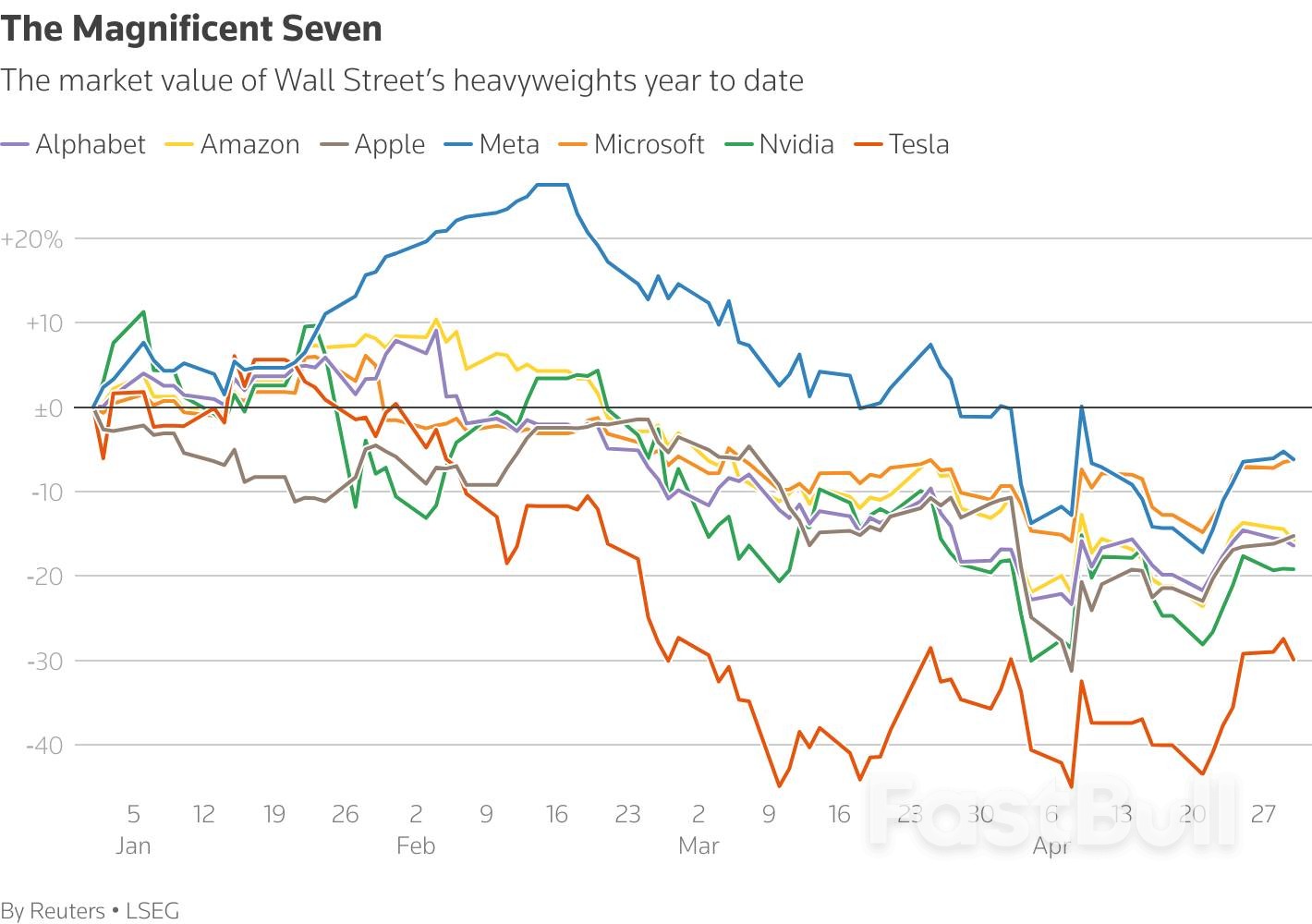
          U.S. stocks advanced on Thursday, with the Dow and S&P 500 posting their eighth straight session of gains after strong results from megacaps Microsoft and Meta eased concerns about artificial intelligence spending.
          Microsoft surged 7.6% and closed at its highest level since late January, driven by an upbeat quarterly growth forecast for its cloud-computing business Azure. The gains briefly pushed Microsoft above Apple to become the world's most valuable company.
          Meta Platforms gained 4.2% and closed at its highest since April 9 after posting higher-than-expected revenue on the back of a strong advertising performance.
          The results helped allay fears the massive spending on AI in recent years would not be rewarded, and eased concerns that President Donald Trump's tariffs could dent economic growth.
          "It's nice that the day is being carried by earnings rather than just talking about tariffs for a second, so it's a little refreshing in that regard that we're talking about economic data and earnings," said Lamar Villere, Portfolio Manager with Villere & Co in New Orleans.
          "Certainly when you see a company of Microsoft's size, Meta's size, putting up great earnings, you would believe that their run is not over."
          The Dow Jones Industrial Average rose 83.60 points, or 0.21%, to 40,752.96, the S&P 500 gained 35.08 points, or 0.63%, to 5,604.14 and the Nasdaq Composite gained 264.40 points, or 1.52%, to 17,710.74.
          Repercussions from frequent shifts in U.S. trade policy have hung over a solid earnings season so far, with many companies slashing or withdrawing their profit outlooks. S&P 500 first-quarter earnings are seen growing 12.9% on an annual basis, per LSEG data, up from the 8% growth rate seen on April 1.
          After the closing bell, fellow heavyweight Amazon.com fell nearly 4% after its earnings as growth in its cloud unit lagged, while "Magnificent Seven" peer Apple was also due to report after the closing bell.
          Apple shares alternated between modest gains and losses before closing up 0.4% after a federal judge ruled the iPhone maker had violated a U.S. court order to reform its App Store.
          Eight straight sessions of gains marked the longest run for the Dow in a year and the longest for the S&P since August.Stocks Close Higher, Lifted by Microsoft, Meta Earnings_1
          Tech rose 2.2% and communication services rose 1.6%, leading sector gains.
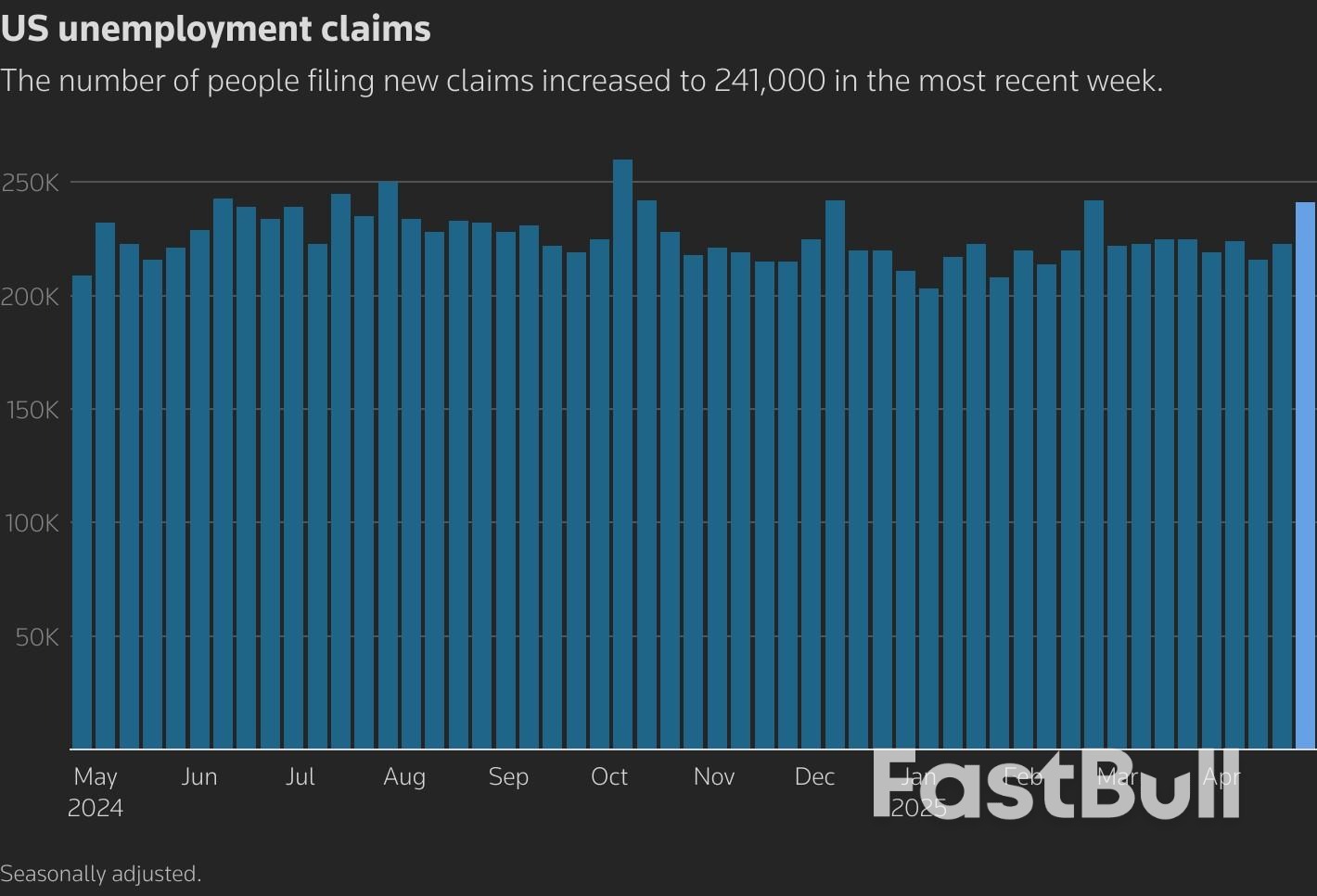
          Economic data painted a mixed picture. Weekly jobless claims, the latest in a string of labor market data this week ahead of Friday's government payrolls report, showed layoffs increased more than expected last week, potentially hinting at a pick-up in job cuts following tariffs.Stocks Close Higher, Lifted by Microsoft, Meta Earnings_2
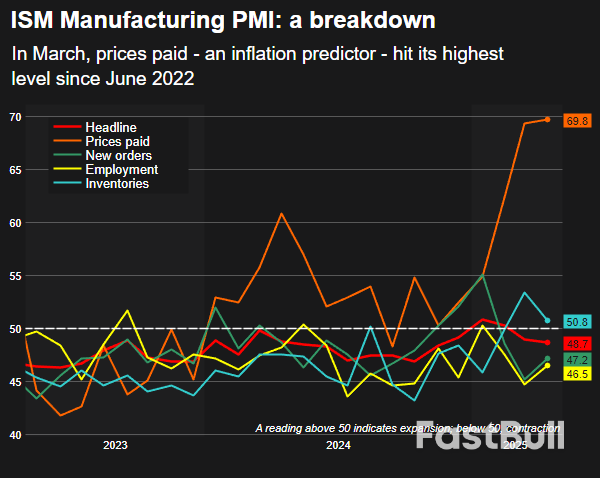
          ISM PMI data showed U.S. manufacturing contracted further in April, though slightly less than economists polled by Reuters had expected. Input prices were elevated.Stocks Close Higher, Lifted by Microsoft, Meta Earnings_3
          That followed Wednesday's data showing the U.S. economy contracted for the first time in three years in the last quarter.
          Eli Lilly reported quarterly results that topped expectations, but shares tumbled 11.7% after CVS Health's decision to drop Lilly's obesity drug Zepbound from some lists of medicines it covers for reimbursement. The healthcare sector slumped 2.8% as the worst performer on the session.
          McDonald's also reported earnings and shares declined 1.9% to cap gains on the Dow after posting a surprise drop in first-quarter global sales.
          Mobile chip designer Qualcomm plunged 8.9% after it forecast a hit to revenue from the trade war.
          Advancing issues outnumbered decliners by a 1.31-to-1 ratio on the NYSE and by a 1.19-to-1 ratio on the Nasdaq.
          The S&P 500 posted 11 new 52-week highs and four new lows while the Nasdaq Composite recorded 45 new highs and 66 new lows.
          Volume on U.S. exchanges was 16.15 billion shares, compared with the 19.56 billion average for the full session over the last 20 trading days.

          Source: Reuters

          To stay updated on all economic events of today, please check out our Economic calendar
          Risk Warnings and Disclaimers
          You understand and acknowledge that there is a high degree of risk involved in trading. Following any strategies or investment methods may lead to potential losses. The content on the site is provided by our contributors and analysts for information purposes only. You are solely responsible for determining whether any trading assets, securities, strategy, or any other product is suitable for investing based on your own investment objectives and financial situation.
          Add to Favorites
          Share

          EU Trade Chief Sefcovic: Europe ready to Make Trump a 50 Billion Euros Offer, FT Reports

          Manuel

          Economic

          China–U.S. Trade War

          European Trade Commissioner Maros Sefcovic said Brussels wants to increase purchases of goods from United States by 50 billion euros ($56.46 billion) to address a "problem" in the trade relationship, adding the bloc is making "certain progress" towards striking a deal, the Financial Times reported on Thursday.
          Sefcovic in an interview with the newspaper suggested the bloc would not accept Washington keeping in place 10% tariffs on its goods as a fair resolution to trade talks.
          The U.S. imposed 25% tariffs on EU cars, steel and aluminium in March and 20% tariffs on other EU goods in April. It then halved the 20% rate until July 8, setting a 90-day window for talks to reach a more comprehensive tariff deal.
          In response, the 27-nation EU suspended its own plans to impose retaliatory tariffs on some U.S. goods and proposed zero duties for all industrial goods on both sides.
          "If what we are looking at as a problem in the deficit is 50 billion euros, I believe that we can really . . . solve this problem very quickly through LNG purchases, through some agricultural products like soyabeans, or other areas," Sefcovic said, according to the FT report.
          However, Sefcovic cautioned that it would be "very difficult" to reach a deal that was "clearly good and acceptable for our member states and our European parliament".
          The European Commission negotiates trade measures on behalf of the EU’s member states.
          EU was also willing to collaborate with the U.S. to help address the impact of China’s export surge as a sweetener for a trade deal, the trade chief added.

          Spurce: Reuters

          To stay updated on all economic events of today, please check out our Economic calendar
          Risk Warnings and Disclaimers
          You understand and acknowledge that there is a high degree of risk involved in trading. Following any strategies or investment methods may lead to potential losses. The content on the site is provided by our contributors and analysts for information purposes only. You are solely responsible for determining whether any trading assets, securities, strategy, or any other product is suitable for investing based on your own investment objectives and financial situation.
          Add to Favorites
          Share

          Bitcoin Approaches $100,000 After Breaking Through 10-Week High

          Manuel

          Cryptocurrency

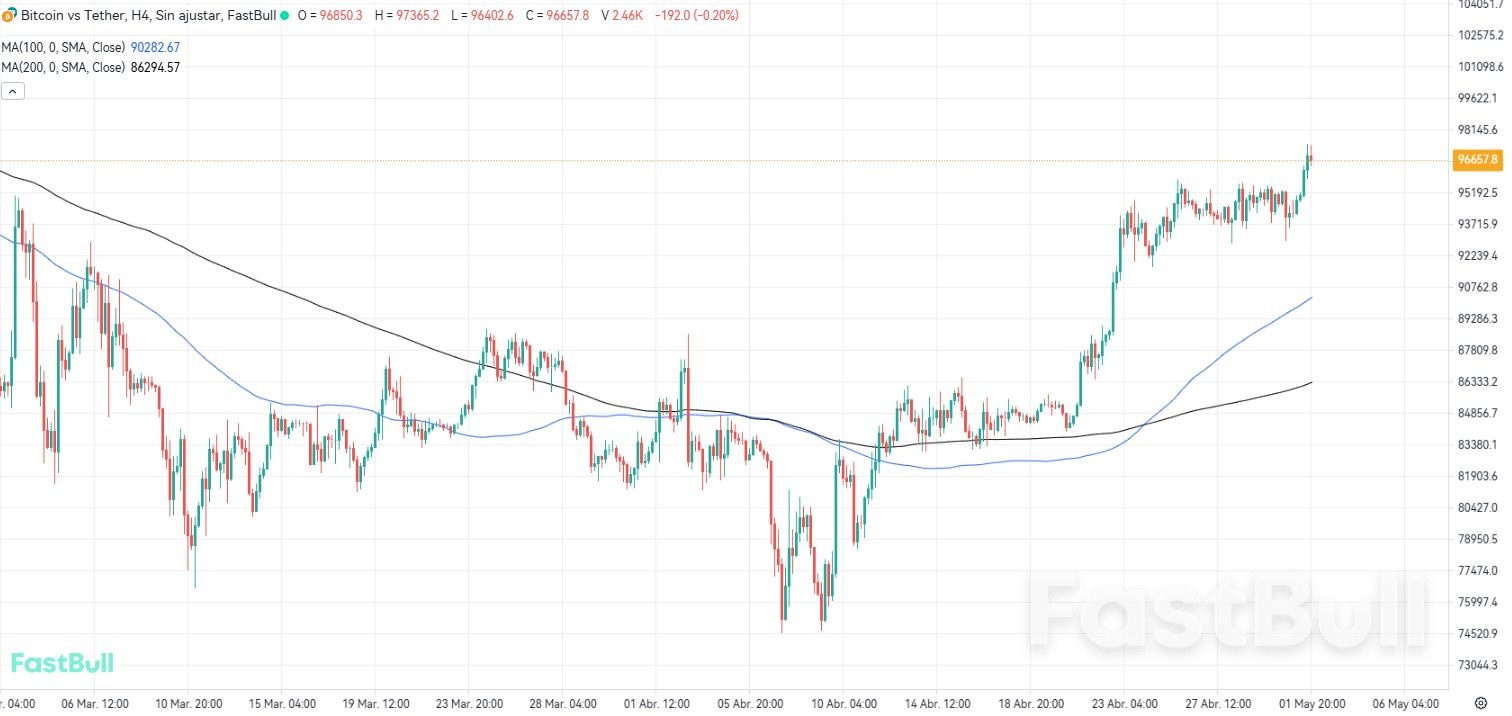
          Bitcoin is fast approaching $100,000 once again, after reaching its highest level since late February, with investors’ appetite for risk being rekindled across financial markets.
          The original cryptocurrency has faced downward pressure in recent weeks as Donald Trump’s tariff policy prompts a steep rout in both the stock and digital-asset market. It had dropped as much as 30% after reaching a record high of about $109,000 on Jan. 20, the day Trump was inaugurated for a second time as US president.
          The largest token by market value climbed as much as 3.1% to $97,483, the highest since Feb. 21. Bitcoin last traded at $100,000 in Feb. 7. Many smaller tokens rallied even more on Thursday, with Dogecoin jumping 4.8% and Ether up 3.3%.Bitcoin Approaches $100,000 After Breaking Through 10-Week High_1
          The respite comes amid an uptick in the spot markets with muted demand for derivatives that are typically used for adding leverage, suggesting a shift toward momentum trading from a trend in which Bitcoin prices are largely driven my macroeconomic factors such as inflations and tariffs.
          Exchange-traded funds tracking Bitcoin and Ether raked in over $3.2 billion last week, with the iShares Bitcoin Trust ETF (ticker IBIT) alone seeing a nearly $1.5 billion inflow — the most this year, data compiled by Bloomberg show.
          Liquidations in both bullish and bearish bets on crypto assets remain subdued while demand for upside exposure in the options market has increased with the call options with the strike price of $100,000 seeing the most open interest across all tenors, according to data compiled by Coinglass and the largest crypto options exchange Deribit.
          “Market sentiment has broadly shifted in favor of momentum based trades fueled by spot demand, as BTC breaches levels not seen since early February,” said Chris Newhouse, director of research at Ergonia, a DeFi trading firm. “BTC continues to shift between correlations with gold and equities — highlighting a more nuanced and dynamic relationship with macro factors balanced with short-term momentum and spot demand.”
          The crypto market saw a sharp drop early last month as Trump unveiled his tariffs against some of the largest US trading partners. Investors rotated their capital out of digital assets amid the risk-off environment, triggering sizable liquidations in crypto futures contracts.

          Source: Bloomberg

          Risk Warnings and Disclaimers
          You understand and acknowledge that there is a high degree of risk involved in trading. Following any strategies or investment methods may lead to potential losses. The content on the site is provided by our contributors and analysts for information purposes only. You are solely responsible for determining whether any trading assets, securities, strategy, or any other product is suitable for investing based on your own investment objectives and financial situation.
          Add to Favorites
          Share

          US non-farm payrolls April 2025 preview: signs of labour market weakness?

          Adam

          Economic

          What to expect from April's non-farm payrolls report

          ​The April US non-farm payrolls (NFPs) report, set for release on Friday 3 May, is expected to confirm a cooling trend in America's labour market. Consensus estimates project job creation of 135,000-145,000 positions, a significant drop from March's 175,000 figure.
          ​Economists anticipate the unemployment rate will hold steady at 4.2%, maintaining the gradual upward drift from pandemic-era lows. This slow deterioration reflects growing caution among employers as broader economic conditions show signs of weakening across multiple sectors.
          ​Average hourly earnings, a key inflation barometer closely monitored by the Federal Reserve (Fed), are forecast to increase 0.3% month-on-month (MoM). This would keep annual wage growth around 4.0%, a level that remains somewhat elevated but has moderated from the hotter readings seen during 2022-2023.
          ​The April report carries particular significance following the surprise 0.3% gross domestic product (GDP) contraction in Q1 2025 and Wednesday's disappointing ADP private payrolls figure, which showed a meagre 62,000 jobs added by the private sector. These developments have heightened concerns about economic momentum and raised questions about the sustainability of labour market strength.

          ​Recent economic indicators point to broader slowdown

          ​A series of economic releases in recent weeks has painted an increasingly concerning picture of US economic health. The unexpected 0.3% contraction in first quarter (Q1) GDP caught many analysts off guard, marking the first negative reading since the brief pandemic-induced recession of 2020.
          ​The ADP private employment report severely undershot expectations with just 62,000 jobs added in April, far below the consensus forecast of approximately 160,000. This represents the weakest private sector job creation since January 2021, when Covid-19 restrictions were still hampering economic activity.
          ​Manufacturing data has shown persistent weakness, with the ISM Manufacturing purchasing managers index (PMI) remaining in contractionary territory below 50 for the seventeenth consecutive month in April. The services sector, while still expanding, has shown signs of moderating growth in recent readings.
          ​Weekly jobless claims have been trending higher, with initial claims consistently above 240,000 in recent weeks – well above the 200,000-215,000 range that characterised much of 2023. While not yet at levels typically associated with recession, this steady increase suggests growing stress in the labour market.

          ​Implications for Federal Reserve policy

          ​The employment situation has become increasingly central to the Fed's policy deliberations as inflation has shown tentative signs of moderating. With price pressures easing but not yet at target levels, the focus has shifted toward supporting the labour market.
          ​Markets are currently pricing in approximately a 65% probability of a rate cut at the June Federal Open Market Committee (FOMC) meeting, with expectations for 75-100 basis points of easing by year-end. A significantly weaker-than-expected jobs report could cement these expectations or even pull them forward.
          ​Fed Chair Jerome Powell's recent communications have acknowledged growing concerns about employment conditions, suggesting a subtle shift in the committee's risk assessment. The Fed appears increasingly willing to tolerate some inflation overshoot to avoid unnecessary damage to the labour market.
          ​Any signs of accelerating wage growth in Friday's report would complicate this narrative, potentially forcing the Fed to delay interest rate cuts. However, most analysts expect wage pressures to continue moderating, giving the central bank increased flexibility to pivot toward easing.

          ​Key components to watch beyond headline numbers

          ​While the headline jobs figure captures most attention, several other components of the report will provide crucial insights into labour market health. The labour force participation rate, currently at 62.5%, will be closely monitored for signs of workers entering or exiting the job market.
          ​Revisions to previous months' data could prove equally important as the April figures themselves. Significant downward adjustments to February and March would suggest the employment situation has been deteriorating more rapidly than initially understood.
          ​The sectoral breakdown will reveal which parts of the economy are holding up and which are struggling. Manufacturing employment, which has shed positions in several recent reports, will be scrutinised for further weakness, while the performance of leisure and hospitality sectors could indicate consumer spending health.
          ​The U-6 unemployment rate, a broader measure that includes discouraged workers and part-time employees seeking full-time positions, provides a more comprehensive view of labour market slack. Currently at 7.8%, any significant increase would signal deepening problems beneath the headline figures.

          ​Market reaction scenarios to consider

          ​A weaker-than-expected jobs report would likely trigger a rally in bond markets, pushing yields lower as investors price in earlier and potentially more aggressive Fed rate cuts. The US dollar would probably weaken against major currencies in such a scenario.
          ​Equity markets might initially react negatively to signs of economic weakness, but could quickly reverse if the data is seen as accelerating the path to monetary easing. Growth stocks and tech names might outperform cyclicals in this environment as lower discount rates boost valuations.
          ​Conversely, a surprisingly strong report could lead to a bond sell-off and higher yields, as markets reassess the timing of potential rate cuts. The dollar would likely strengthen, while equity markets might experience a mixed reaction with economically sensitive sectors potentially outperforming.
          ​Gold trading could see significant volatility following the release, as the precious metal responds to shifts in both real yields and economic uncertainty. A weak report might boost gold on expectations of imminent rate cuts, while a strong report could pressure prices by pushing back easing expectations.

          Historical context and labour market trends

          ​The current employment situation represents a normalisation from the extremely tight labour market seen during the post-pandemic recovery. During 2021-2023, monthly job gains frequently exceeded 300,000, a pace that was clearly unsustainable as the economic cycle matured.
          ​The gradual increase in unemployment from 3.5% in early 2023 to the current 4.2% reflects a controlled cooling rather than a sharp deterioration. Historically, recessions have been characterised by more rapid increases in unemployment – the absence of such a spike has kept recession calls somewhat at bay.
          ​Job creation in the 100,000-150,000 range is broadly consistent with population growth and workforce expansion. However, sustained readings below 100,000, particularly if accompanied by rising unemployment, would signal more serious economic distress and could trigger recession concerns.
          ​Wage growth has shown remarkable persistence despite the Fed's aggressive tightening cycle. Annual growth around 4% remains above levels compatible with the Fed's 2% inflation target, suggesting some structural shifts in the labour market may be keeping wage pressures elevated even as overall conditions cool.

          ​How to trade the non-farm payrolls report

          ​The monthly jobs report typically generates significant market volatility, creating trading opportunities across multiple asset classes. Understanding potential market reactions can help you position appropriately ahead of this key data release.
          ​Risk management becomes particularly important during high-impact economic releases. Consider using stop losses to protect against adverse price movements, and determine your position sizes based on the heightened volatility typically seen around payrolls data.
          ​Focus on assets most sensitive to US economic data, including major US indices, dollar-denominated forex pairs, and Treasury yields through bond markets. These typically exhibit the strongest reactions to employment figures.
          ​Spread betting and CFD trading offer ways to speculate on short-term price movements following the report, while longer-term investors might consider how the data affects the broader economic outlook for their investment portfolios.

          Source: ig

          To stay updated on all economic events of today, please check out our Economic calendar
          Risk Warnings and Disclaimers
          You understand and acknowledge that there is a high degree of risk involved in trading. Following any strategies or investment methods may lead to potential losses. The content on the site is provided by our contributors and analysts for information purposes only. You are solely responsible for determining whether any trading assets, securities, strategy, or any other product is suitable for investing based on your own investment objectives and financial situation.
          Add to Favorites
          Share

          US Manufacturing Pulls Back In April. What This Economist Is Seeing.

          Owen Li

          Economic

          Stocks

          The US Bureau of Labor Statistics (BLS) is set to release employment data for the month of April tomorrow morning, Friday, May 2.

          breaking news here. We're getting manufacturing data. We also have your ISM and S&P manufacturing data for April coming in line with estimates just above the key 50 level, which separates growth from contraction. The ISM numbers showing economic activity in the manufacturing sector contracting in April for the second month in a row. The reading comes after GDP data on Wednesday showed the US economy contracted in the first quarter for the first time in three years. Joining me now, Paul Gruenwald, S&P Global Ratings Global Chief Economist, Paul, great to speak with you. I do want to start on this April manufacturing data here because some interesting things under the hood. Production falling to the lowest level since May of 2020. Prices paid, highest reading since June of 2022. What does that tell you about manufacturing?

          Um, well, it tells me that this process that started with the um the uh policy uncertainty and then moved to the markets is now starting to show up in the real data. That's kind of the last leg of this transmission. We had a decent first quarter. Maybe we can talk about that uh in a minute, but uh we've been waiting for this to sift into the real economy. The PMIs uh weak for manufacturing are just signaling that there's probably some weakness on the real side ahead.

          And talk to me too about the employment number here rising. There was a little bit of concern this morning when jobless claims came in just a touch higher than anticipated. Is this a sign that the employment situation is intact?

          That's the critical variable, right? If you go back a couple of years to the inflation scare and the big rise in rates, we've been really focused on this resilience between consumer spending and the labor market. That's held up so far, but if you want to differentiate between the slowdown scenario and the recession scenario, it's going to center on the labor market. So if we start to see cracks in the labor market, that's going to take us into the recession scenario. Not there yet, but we're starting to see a little bit of weakness.

          I like to uh I like to look at these PMI numbers like uh like business sentiment, just like consumer sentiment's very important for that part of the market. Yeah. So, um, you know, the sentiment seems to be pulling down, not surprisingly. The question is, is, you know, how how quickly are we going to really start to see this stuff show up uh in the so-called hard numbers. Although I look at these as hard numbers, but many would call them soft numbers, but for me, firms are uh are are they do the they do the right thing and they they don't have emotions involved. So when I see sentiment starting to drop, I start to get worried. I'm concerned.

          Yeah. I think we're with you on that. I mean, it's not kind of a straight line and uh you're right, these are soft data because we're not measuring stuff, but certainly if you're looking at, you know, future orders or this is going to feed into CAPEX or something like that. It's definitely going to uh move the needle. We know that some of the shipments from China have slowed down dramatically. That's going to take a couple of weeks to work through the system. We know that the financial system's gummed up a bit on M&A and some of the, you know, spec grade issuance. So all that's going to take a little bit of time to feed through, but directionally it's very clear where we're going. It's just question of how steep the descent's going to be for the rest of year.

          Let's talk about what you just mentioned with regards to China. Obviously, one of our top three importers, we had about a 3% pull forward in terms of demand in the GDP data. Yeah. When do you anticipate that we might start to see empty shelves because of that pressure?

          Yeah, well, there's some stories floating around on timelines. The ships take a while to get from China to here, but uh you know, the timeline seems to be sometime in the next couple of months. Uh the ships will stop, then the ports will be empty, and then the shelves will be empty, and then we're going to see uh some of that pressure. The tariff rates on US and China from both sides are now triple digit, right? This is totally uncharted uh territory. The Chinese basically stopped the uh escalation. They said this isn't really meaningful anymore. So we're going to have to find an exit ramp to that or else that's going to feed through the economy and you know, put a big dent in our macro story.

          So on the empty shelves piece. Yes. When might we see it and what does that cause in the economy?

          Yeah, we're not we're not kind of forecasting that particular one. The stuff that I read that I agree with is probably sometime end of the second quarter. So it's going to be, you know, we're in May right now, so maybe the next couple of months.

          And where does that leave your outlook on the economy too?

          Well, that's kind of factored in already. Let's remember US is a services economy, so it's 70% services, but certainly we're going to see some stress on the shipment. We're going to see some stress uh on consumer sentiment and uh yeah, we're going to have some soft spots before we uh maybe pull out of this next year, but we got a big descent in growth over the next couple of quarters.

          You know, not surprisingly, you know, the numbers that we got the other day, the GDP numbers showed a lot of this front loading that we've been talking about, all these companies making purchases prior to uh the tariffs hitting. Um you know, I'm slightly concerned that, you know, all this front loading while it sort of helped last time, it's going to hurt us in the future, right? So uh purchases made today are not going to be made next quarter. Now, obviously, there are some intricacies there with inventories and things like that. Uh but are you feeling that that there might be some interesting negative surprises there too? I mean, consumers as well. Yeah. front loaded, but it didn't show up in the numbers, but

          Yeah, well there was a funny print, right? Because the we had this massive negative uh contribution from imports and we didn't really get the full offset on stocking. So like there might be a missing hole, but um you're right, the consumer bit, which is what we watch, decelerated a bit in the first quarter. We're going to continue to see that uh throughout the year. We're thinking maybe you average the first two quarters together and maybe some of these one-off things are going to unwind, but the trend is pretty clear. But what we saw in the first quarter was maybe a slightly artificially low number for the US. And we also saw slightly artificially high number for China because they had the opposite thing where they're export boom. So all this messy stuff around the tariffs is going to take a couple of quarters to uh sift through. So we shouldn't be focusing too much on one particular data print and kind of looking at the whole the food chain there.

          Well, it does seem like the bond market is hyperfocused on ISM at the moment. We're seeing treasuries pairing gains just a touch. To what extent do you think this market is aptly reacting to the stagflationary risks that are presented by so much of the economic data we're getting in right now?

          Yeah, well, you've seen that a bit, right? And uh we know that prices are going to go up. We've got 4% inflation in the US at the end of this year. The question is, is that just a jump in the price level or is that really going to start lifting inflation continuously? Um longer-term inflation uh sort of uh sentiments crept up a bit, but uh you know, the bond market's trying to thread that needle, right? So the Fed's probably going to be cautious. We only have two cuts this year, the economy is slowing, less of stuff in the year. So I think the bond market looks like it's reflecting most of that.

          And really quick, any thoughts before NFPs tomorrow?

          Um, we're watching the one data point isn't uh isn't going to change our view, but again, we're expecting uh material slowdown in US growth this year and labor market's going to be part of that story.

          Source: Kitco

          To stay updated on all economic events of today, please check out our Economic calendar
          Risk Warnings and Disclaimers
          You understand and acknowledge that there is a high degree of risk involved in trading. Following any strategies or investment methods may lead to potential losses. The content on the site is provided by our contributors and analysts for information purposes only. You are solely responsible for determining whether any trading assets, securities, strategy, or any other product is suitable for investing based on your own investment objectives and financial situation.
          Add to Favorites
          Share

          Bessent cites 'market signal' Fed should be cutting rates

          Adam

          Economic

          Central Bank

          Treasury Secretary Scott Bessent said Thursday that the bond market is signaling that the Federal Reserve should be cutting rates.
          "We are seeing that two-year rates are now below fed funds rates, so that's a market signal that they think the Fed should be cutting,” Bessent said Thursday on Fox Business Network's "Mornings with Maria."
          The fed funds rate is the benchmark interest rate set by the Federal Reserve, an overnight rate that influences rate levels on all bond maturities from three months to 10 years.
          The Fed’s policy rate is currently set in a range of 4.25% to 4.5%. The yield on the two-year Treasury sits at 3.75% as of Thursday.
          Traders don't expect the Fed to lower rates at its next meeting on May 6-7, but they are betting on a cut in June and more cuts later in the year.
          The Treasury secretary’s new comment follows a number of suggestions from President Trump that the Fed and its chairman, Jerome Powell, should lower rates.
          "I have a guy in the Fed, not a huge fan,” Trump said Wednesday. “We should have interest rates go down and be positive."
          The president has offered plenty of new signs this week that he does not intend to let up on the central bank or its chairman a week after saying he has "no intention" of firing the central bank boss.
          It was Trump himself who stoked speculation about Powell's fate after asserting on social media last month that "Powell's termination cannot come fast enough."
          The assurance he wouldn’t try to remove Powell helped calm investors worried that Trump was ready to upend the Fed's leadership and directly challenge its independence.
          But then this week Trump once again went after the Fed and Powell, saying at a rally in Michigan that "I have a Fed person who is not really doing a good job."
          He didn’t mention Powell by name, with Trump saying, "I want to be very nice and respectful to the Fed."
          "You are not supposed to criticize the Fed; you are supposed to let him do his own thing, but I know much more than he does about interest rates, believe me," he added.
          Bessent said earlier in the year that he and the president were focused not on the Fed but on bringing down the yield on the 10-year Treasury, and he repeated that focus in his Thursday appearance on Fox.
          “There's been a substantial decrease in the 10-year since the beginning of the year, but especially since Jan. 20,” he said. “And President Trump and I are targeting that point on the curve.”
          The yield on the 10-year Treasury has been volatile over the past month as the administration announced the steepest tariffs in a century, only to pause them as businesses scrambled to import inventories they need from abroad and were unsure of what could happen next.
          The yield has been mostly range-bound around 4% to 4.5%. The 10-year yield on Thursday was 4.15%.

          Source: finance.yahoo

          To stay updated on all economic events of today, please check out our Economic calendar
          Risk Warnings and Disclaimers
          You understand and acknowledge that there is a high degree of risk involved in trading. Following any strategies or investment methods may lead to potential losses. The content on the site is provided by our contributors and analysts for information purposes only. You are solely responsible for determining whether any trading assets, securities, strategy, or any other product is suitable for investing based on your own investment objectives and financial situation.
          Add to Favorites
          Share

          Wells Fargo says S&P 500 could retest lows amid growing headwinds

          Adam

          Stocks

          The S&P 500 could revisit its recent lows amid persistent policy uncertainty and tariff-related market stress, Wells Fargo’s top strategist warned.
          The index had briefly declined 20% from its mid-February intraday record of 6,144 before staging a partial recovery. The S&P 500 is still down approximately 10% from its peak.
          Scott Wren, senior global market strategist at Wells Fargo Investment Institute, says that the pullback is consistent with historical averages, but warns that volatility may not be over.
          “We wouldn’t be surprised if the SPX retested its lows as additional uncertainties create headwinds,” Wren said in a Wednesday note. Concerns over trade policy and the global growth outlook continue to weigh on investor sentiment.
          Wren expects the market to remain in a broad trading range between 5,000 and 5,500 in the near term.
          “It seems a catalyst will be needed to push the market noticeably higher,” he said, pointing to the possibility of a completed trade deal with Europe or China. However, such a breakthrough is likely to take time, as geopolitical maneuvering continues to cloud visibility.
          “Meanwhile, U.S. and international leaders are posturing with moves and countermoves, which only leave investors with more questions,” Wren added.
          The report also flagged U.S. fiscal policy debates as another potential source of turbulence. Legislative efforts to extend the Trump-era tax cuts and raise the debt ceiling are underway, but face hurdles due to narrow Republican majorities and broader political friction.
          This, Wren cautions, could add to market volatility, especially as key budget deadlines approach in May.
          Amid these uncertainties, the strategist is advocating for quality across portfolios. He recommends U.S. large- and mid-cap equities and favors sectors with strong balance sheets and cash flow generation, such as Information Technology, Communication Services, Financials, and Energy.
          “Our view is that quality allocations should help preserve wealth and offer better growth opportunities as uncertainties finally fade,” Wren concluded.

          Source: investing

          Risk Warnings and Disclaimers
          You understand and acknowledge that there is a high degree of risk involved in trading. Following any strategies or investment methods may lead to potential losses. The content on the site is provided by our contributors and analysts for information purposes only. You are solely responsible for determining whether any trading assets, securities, strategy, or any other product is suitable for investing based on your own investment objectives and financial situation.
          Add to Favorites
          Share
          FastBull
          Copyright © 2025 FastBull Ltd

          728 RM B 7/F GEE LOK IND BLDG NO 34 HUNG TO RD KWUN TONG KLN HONG KONG

          TelegramInstagramTwitterfacebooklinkedin
          App Store Google Play Google Play
          Products
          Charts

          Chats

          Q&A with Experts
          Screeners
          Economic Calendar
          Data
          Tools
          Membership
          Features
          Function
          Markets
          Copy Trading
          Latest Signals
          Contests
          News
          Analysis
          24/7
          Columns
          Education
          Company
          Careers
          About Us
          Contact Us
          Advertising
          Help Center
          Feedback
          User Agreement
          Privacy Policy
          Business

          White Label

          Data API

          Web Plug-ins

          Poster Maker

          Affiliate Program

          Risk Disclosure

          The risk of loss in trading financial instruments such as stocks, FX, commodities, futures, bonds, ETFs and crypto can be substantial. You may sustain a total loss of the funds that you deposit with your broker. Therefore, you should carefully consider whether such trading is suitable for you in light of your circumstances and financial resources.

          No decision to invest should be made without thoroughly conducting due diligence by yourself or consulting with your financial advisors. Our web content might not suit you since we don't know your financial conditions and investment needs. Our financial information might have latency or contain inaccuracy, so you should be fully responsible for any of your trading and investment decisions. The company will not be responsible for your capital loss.

          Without getting permission from the website, you are not allowed to copy the website's graphics, texts, or trademarks. Intellectual property rights in the content or data incorporated into this website belong to its providers and exchange merchants.

          Not Logged In

          Log in to access more features

          FastBull Membership

          Not yet

          Purchase

          Become a signal provider
          Help Center
          Customer Service
          Dark Mode
          Price Up/Down Colors

          Log In

          Sign Up

          Position
          Layout
          Fullscreen
          Default to Chart
          The chart page opens by default when you visit fastbull.com