

Markets
News
Analysis
User
24/7
Economic Calendar
Education
Data
- Names
- Latest
- Prev



Signal Accounts for Members
All Signal Accounts
All Contests
 U.S. Federal Funds Rate Projections-2nd Year (Q4)
A:--
F: --
P: --
U.S. Budget Balance (Nov)A:--
F: --
P: --
U.S. Target Federal Funds Rate Upper Limit (Excess Reserves Ratio)A:--
F: --
P: --
FOMC Statement FOMC Press Conference Brazil Selic Interest Rate
A:--
F: --
P: --
 U.K. 3-Month RICS House Price Balance (Nov)
A:--
F: --
P: --
 Australia Employment (Nov)
A:--
F: --
Australia Full-time Employment (SA) (Nov)A:--
F: --
P: --
Australia Unemployment Rate (SA) (Nov)A:--
F: --
P: --
Australia Labor Force Participation Rate (SA) (Nov)A:--
F: --
P: --
 Turkey Retail Sales YoY (Oct)
A:--
F: --
P: --
 South Africa Mining Output YoY (Oct)
A:--
F: --
P: --
South Africa Gold Production YoY (Oct)A:--
F: --
P: --
 Italy Quarterly Unemployment Rate (SA) (Q3)
A:--
F: --
P: --
 IEA Oil Market Report Turkey 1-Week Repo Rate
A:--
F: --
P: --
South Africa Refinitiv/Ipsos Primary Consumer Sentiment Index (PCSI) (Dec)A:--
F: --
P: --
Turkey Overnight Lending Rate (O/N) (Dec)A:--
F: --
P: --
Turkey Late Liquidity Window Rate (LON) (Dec)A:--
F: --
P: --
U.K. Refinitiv/Ipsos Primary Consumer Sentiment Index (PCSI) (Dec)A:--
F: --
P: --
Brazil Retail Sales MoM (Oct)A:--
F: --
P: --
U.S. Weekly Continued Jobless Claims (SA)A:--
F: --
U.S. Exports (Sept)A:--
F: --
P: --
U.S. Trade Balance (Sept)A:--
F: --
U.S. Weekly Initial Jobless Claims (SA)A:--
F: --
 Canada Imports (SA) (Sept)
A:--
F: --
U.S. Initial Jobless Claims 4-Week Avg. (SA)A:--
F: --
P: --
Canada Trade Balance (SA) (Sept)A:--
F: --
Canada Exports (SA) (Sept)A:--
F: --
U.S. Wholesale Sales MoM (SA) (Sept)A:--
F: --
P: --
U.S. EIA Weekly Natural Gas Stocks Change--
F: --
P: --
U.S. 30-Year Bond Auction Avg. Yield--
F: --
P: --
 Argentina CPI MoM (Nov)
--
F: --
P: --
Argentina National CPI YoY (Nov)--
F: --
P: --
Argentina 12-Month CPI (Nov)--
F: --
P: --
U.S. Weekly Treasuries Held by Foreign Central Banks--
F: --
P: --
 Japan Industrial Output Final MoM (Oct)
--
F: --
P: --
Japan Industrial Output Final YoY (Oct)--
F: --
P: --
U.K. Services Index MoM (SA) (Oct)--
F: --
P: --
U.K. Services Index YoY (Oct)--
F: --
P: --
 Germany HICP Final YoY (Nov)
--
F: --
P: --
Germany HICP Final MoM (Nov)--
F: --
P: --
U.K. Trade Balance Non-EU (SA) (Oct)--
F: --
P: --
U.K. Trade Balance (Oct)--
F: --
P: --
U.K. Services Index MoM--
F: --
P: --
U.K. Construction Output MoM (SA) (Oct)--
F: --
P: --
U.K. Industrial Output YoY (Oct)--
F: --
P: --
U.K. Trade Balance (SA) (Oct)--
F: --
P: --
U.K. Trade Balance EU (SA) (Oct)--
F: --
P: --
U.K. Manufacturing Output YoY (Oct)--
F: --
P: --
U.K. GDP MoM (Oct)--
F: --
P: --
U.K. GDP YoY (SA) (Oct)--
F: --
P: --
U.K. Industrial Output MoM (Oct)--
F: --
P: --
U.K. Manufacturing Output MoM (Oct)--
F: --
P: --
U.K. Monthly GDP 3M/3M Change (Oct)--
F: --
P: --
Germany CPI Final MoM (Nov)--
F: --
P: --
Germany CPI Final YoY (Nov)--
F: --
P: --
U.K. Construction Output YoY (Oct)--
F: --
P: --
France HICP Final MoM (Nov)--
F: --
P: --
 China, Mainland Outstanding Loans Growth YoY (Nov)
--
F: --
P: --


No matching data

Latest Views
Latest Views
Trending Topics
Top Columnists
Latest Update
White Label
Data API
Web Plug-ins
Affiliate Program
View All
No data
Russia is seeking to deepen trade and economic cooperation with Malaysia, particularly in the electronics and semiconductor sectors, which Moscow considers strategically important amid global supply-chain shifts.
Russia is seeking to deepen trade and economic cooperation with Malaysia, particularly in the electronics and semiconductor sectors, which Moscow considers strategically important amid global supply-chain shifts.
Russian ambassador to Malaysia Naiyl Latypov said Malaysia is viewed as a key and reliable trading partner in Asean, noting that overall Russia–Asean trade stands at about US$22 billion (RM90.51 billion) annually.
He said Malaysia's position as a major global producer of microchips, electronic components and palm oil has made it an essential partner for Russian industries.
"During the pandemic, we relied heavily on Malaysian semiconductor supplies. Our automotive producers, including Russia's largest manufacturers, faced difficulties during the global chip shortages. Malaysia played a very important role in stabilising that supply," he told a media briefing on Wednesday.
While Moscow remains interested to increase imports of Malaysian semiconductors and electronic components, the ambassador acknowledged that international sanctions and compliance concerns continue to pose challenges for companies on both sides.
He stressed that Russia does not want Malaysian partners to face any risk of penalties and that all cooperation must remain "mutually beneficial and safe".
Latypov said Russia continues to import palm oil, electronic equipment and components from Malaysia, with considerable room for further expansion. He added that Russian companies are now exploring new areas of technological and industrial collaboration with Malaysia.
"We are confident that there is significant potential to expand bilateral trade, especially in high-tech industries. Malaysia has strong capabilities in semiconductors, and our companies are of course interested. But we also want to ensure that this cooperation does not create any difficulties for our Malaysian partners," he said.
Latypov said that Russia is prepared to pursue new economic initiatives with Malaysia despite external constraints, emphasising that both countries stand to benefit from diversifying trade and strengthening supply-chain resilience.
"We value Malaysia as a trusted partner in the region, and we hope that trade between our two countries will continue to grow," he added.
Bilateral trade between Malaysia and Russia remains significant and continues to grow, reaching approximately US$3.5 billion as of September 2025. Russia is currently Malaysia's ninth-largest trading partner among European nations.
The Asian Development Bank has approved a $400 million policy-based loan to support the Philippines' efforts to make it easier for investors to do business in the country.
Despite being one of Asia's fastest-growing economies, the Philippines trails regional peers in attracting foreign direct investment, held back by red tape, high power costs, and weak infrastructure.
"The private sector is an important engine of growth and job creation. Their role in the country's overall economic development cannot be overstated," said ADB Country Director for the Philippines Andrew Jeffries.
"We are committed to assisting the Philippines in finding innovative ways to create an enabling environment that would spur a more dynamic business sector - one that will help drive faster economic growth."
In the World Bank's inaugural Business Ready 2024 report, which assessed 50 economies, the Philippines ranked 16th in terms of its regulatory framework, 24th in public services, and 36th in operational efficiency, behind most regional peers.
The ADB said the funding programme, aimed at enabling investments in sectors such as renewable energy and digital infrastructure, should strengthen legal and regulatory frameworks to make starting and operating a business easier.
Last year, the Philippines attracted $8.9 billion in foreign direct investment, far lower than Malaysia's $11 billion, Indonesia's $24 billion, and Vietnam's $20 billion, according to UNCTAD's ASEAN Investment Report 2025.
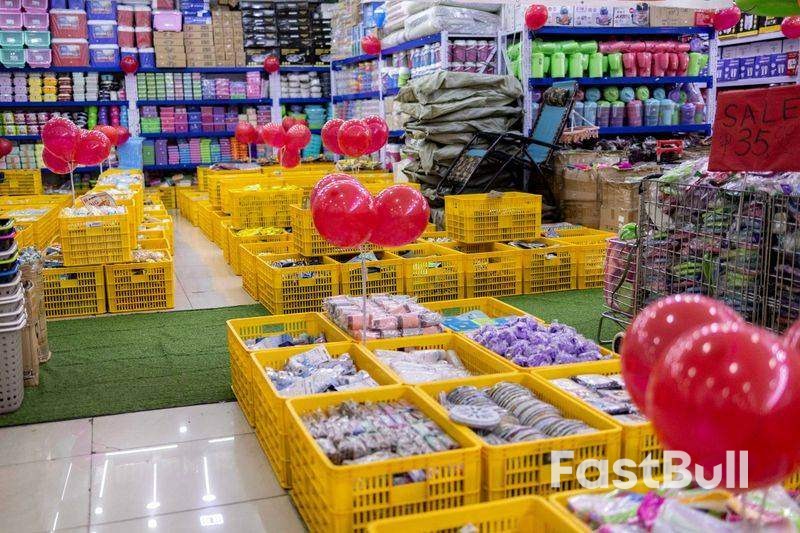
The funding support to make it easier to do business comes as the Philippines grapples with a massive corruption scandal surrounding flood-control projects, with billions of pesos allegedly siphoned off substandard or "ghost" infrastructure.
The controversy has implicated public works officials, senators, and congressmen, sparking nationwide protests and constraining infrastructure spending that has weighed on investor confidence and growth.
Indonesia is resisting US trade-deal demands that it fears would restrain its independence, particularly in critical minerals and energy that risk its relations with China and Russia, according to people familiar with the situation.
Since the US and Indonesia reached a framework in July that set a 19% tariff rate, the Trump administration has pushed Jakarta to agree to terms that would potentially restrain its relationship with China, one of its biggest foreign investors, according to the people, who asked not be identified as the talks aren't public.
The impasse has sparked frictions with Washington and risks upending that agreement. The Trump administration has accused Indonesia of backtracking on its earlier commitments and sees the deal at risk of collapsing, the Financial Times and Reuters reported this week, citing US officials they didn't identify.
Representatives for the White House and US Trade Representative didn't respond to requests for comment.
The trade demands that Indonesia sees as new include clauses allowing Washington to scrap the deal if Jakarta signs other pacts that it deems jeopardize US interests, according to one of the people. Economic Minister Airlangga Hartarto and US Trade Representative Jamieson Greer are aiming to hold a virtual meeting Thursday to discuss the issue, the person added.
The main sticking point centers around cooperation on critical minerals development, which the US has prioritized given China's control of the supply chain, as well as oil and gas investments, people familiar with the matter said. The US has signaled that it intends to require any cooperation in the sector to exclude any third party. That would have implications for Indonesia's relations with China and Russia, which are major investors in its mining and energy sectors, the people said.
Indonesia said Wednesday, in response to reports of the US accusations, that negotiations are ongoing and that it expects to reach an agreement soon that is "beneficial for both parties."
"There are no specific issues in the negotiations, and dynamics in the negotiation process are normal," Coordinating Ministry for Economic Affairs spokesperson Haryo Limanseto told Bloomberg News.
Under the deal reached in July, Indonesia agreed to purchase some $19 billion in American products, led by 50 Boeing Co. jets, and erase duties on imports from the US.
The Southeast Asian country also agreed to eliminate some requirements, including local-content rules, that had complicated efforts to sell American products in the country. President Donald Trump said at the time he had dealt directly with Indonesian President Prabowo Subianto to finalize the agreement.
Since then, Trump unveiled a flurry of trade deals and frameworks with Thailand, Cambodia, Vietnam and Malaysia that saw similar commitments to reduce tariff barriers, including on industrial and agricultural products.
But concerns over sovereignty and relations with China emerged in the Malaysia and Cambodia deals, reached in October, which included language that sought to align or constrain those countries policies. The Malaysia agreement, for example, said the US can terminate it "if Malaysia enters into a new bilateral free trade agreement or preferential economic agreement with a country that jeopardizes essential US interests."
As well, China last month demanded clarifications from both Malaysia and Cambodia on portions of their deals that sparked "grave concerns" by Beijing, which it didn't specify.
The critical minerals issue is particularly knotty for Indonesia and its relationship with China. Indonesia has relied heavily on China for much of the capital, technology and processing capacity behind upgrading country's nickel and bauxite industries.
Deputy Minister of Investment and Downstream Industry Todotua Pasaribu in August noted that China's investment in Indonesia has grown by 31% over the past six years, according to Indonesia's Tempo.
Chinese investment from 2020 to this year topped $35 billion, Todotua said, with metal processing accounting for more than $15 billion of that.
Switzerland's parliament elected Economy Minister Guy Parmelin as the country's president for 2026, succeeding Finance Minister Karin Keller-Sutter.
Parmelin will take up a role that is rotated among the seven members of the Federal Council. He was vice president this year, and will now assume the head of state position because it is his turn. Foreign Minister Ignazio Cassis, who will be his deputy, will then become president in 2027.
While the job is largely ceremonial, it gained attention this year as Keller-Sutter took a direct role in negotiating with the White House over tariffs. Just hours after a call she made to US President Donald Trump in April, he suspended much of his trade onslaught on the world.
Yet another conversation between the two in late July went awry, resulting in Switzerland getting the highest import levies of any industrialized country. In a subsequent dash to Washington — just before the tariffs were to take effect — she was snubbed by most administration officials and ended up only talking to Secretary of State Marco Rubio, whose portfolio doesn't include trade.
Keller-Sutter then took a less prominent role in negotiations, throwing the spotlight on Parmelin. The 66-year-old economy minister's remit includes trade and under his direction Switzerland was finally able to clinch an agreement with the US in mid-November.
Still, the lower tariffs — 15% on most goods versus 39% previously — have yet to kick in.
Parmelin hails from the French-speaking part of Switzerland and is the longest-serving member of the Federal Council. He already served as president in 2021. A member of the right-wing Swiss People's Party, he's a trained wine grower.
As president, Parmelin will deliver welcoming remarks at the World Economic Forum's annual meeting in Davos in January — an event that will be attended by Trump for the first time since 2020, though he gave a virtual address at this year's event just after his inauguration.
728 RM B 7/F GEE LOK IND BLDG NO 34 HUNG TO RD KWUN TONG KLN HONG KONG


White Label
Data API
Web Plug-ins
Poster Maker
Affiliate Program
The risk of loss in trading financial instruments such as stocks, FX, commodities, futures, bonds, ETFs and crypto can be substantial. You may sustain a total loss of the funds that you deposit with your broker. Therefore, you should carefully consider whether such trading is suitable for you in light of your circumstances and financial resources.
No decision to invest should be made without thoroughly conducting due diligence by yourself or consulting with your financial advisors. Our web content might not suit you since we don't know your financial conditions and investment needs. Our financial information might have latency or contain inaccuracy, so you should be fully responsible for any of your trading and investment decisions. The company will not be responsible for your capital loss.
Without getting permission from the website, you are not allowed to copy the website's graphics, texts, or trademarks. Intellectual property rights in the content or data incorporated into this website belong to its providers and exchange merchants.
Not Logged In
Log in to access more features

FastBull Membership
Not yet
Purchase


Log In
Sign Up


