• Trade
  • Markets
  • Copy
  • Contests
  • News
  • 24/7
  • Calendar
  • Q&A
  • Chats
Screeners
SYMBOL
LAST
ASK
BID
HIGH
LOW
NET CHG.
%CHG.
SPREAD
SPX
S&P 500 Index
6939.02
6939.02
6939.02
6964.08
6893.47
-29.99
-0.43%
--
DJI
Dow Jones Industrial Average
48892.46
48892.46
48892.46
49047.68
48459.88
-179.09
-0.36%
--
IXIC
NASDAQ Composite Index
23461.81
23461.81
23461.81
23662.25
23351.55
-223.30
-0.94%
--
USDX
US Dollar Index
96.990
97.070
96.990
96.990
96.150
+1.020
+ 1.06%
--
EURUSD
Euro / US Dollar
1.18491
1.18514
1.18491
1.19743
1.18491
-0.01211
-1.01%
--
GBPUSD
Pound Sterling / US Dollar
1.36835
1.36880
1.36835
1.38142
1.36788
-0.01258
-0.91%
--
XAUUSD
Gold / US Dollar
4894.49
4894.49
4894.49
5450.83
4682.14
-481.82
-8.96%
--
WTI
Light Sweet Crude Oil
65.427
65.456
65.427
65.832
63.409
+0.175
+ 0.27%
--

Community Accounts

Signal Accounts
--
Profit Accounts
--
Loss Accounts
--
View More

Become a signal provider

Sell trading signals to earn additional income

View More

Guide to Copy Trading

Get started with ease and confidence

View More

Signal Accounts for Members

All Signal Accounts

Best Return
  • Best Return
  • Best P/L
  • Best MDD
Past 1W
  • Past 1W
  • Past 1M
  • Past 1Y

All Contests

  • All
  • Trump Updates
  • Recommend
  • Stocks
  • Cryptocurrencies
  • Central Banks
  • Featured News
Top News Only
Share

Trump On Iran: Hopefully We'll Make A Deal

Share

Top USA And Israeli Generals Met On Friday At The Pentagon Amid Iran Tensions, Two USA Officials Tell Reuters

Share

[Bitcoin Briefly Dips Below $77,000, Ethereum Briefly Dips Below $2,300] February 1st, According To Htx Market Data, Bitcoin Briefly Dropped Below $77,000, Now Trading At $77,011, With A 24-Hour Decrease Of 5.32%.Ethereum Briefly Dropped Below $2,300, Now Trading At $2,301.07, With A 24-Hour Decrease Of 9.28%

Share

Qatar Prime Minister: Qatar To Introduce 10 Year Residency For Entrepreneurs And Senior Executives

Share

Governor: Russian Drone Strike On Bus In Ukraine's Dnipropetrovsk Region Kills 12, Wounds 7

Share

Iran Warns Of Regional Conflict If US Attacks, Designates EU Armies 'Terrorists'

Share

U.S. House Speaker Boris Johnson: Trump May “readjust” His Immigration Policy

Share

[Speaker Of The U.S. House Of Representatives: Confident Of Sufficient Votes To End Partial Government Shutdown By Tuesday] February 1st, According To Nbc News, U.S. House Speaker Johnson Said He Is Confident That There Will Be Enough Votes By At Least Tuesday To End The Partial Government Shutdown

Share

Iranian Official Tells Reuters: Media Reports Of Plans For Revolutionary Guards To Hold Military Exercise In Strait Of Hormuz Are Wrong

Share

Ukraine's Defence Minister Says Kyiv And Spacex Working On System To Ensure Only Authorized Starlink Terminals Work In Ukraine

Share

Russian Security Committee's Vice Chairman Medvedev: Europe Has Failed To Defeat Russia In Ukraine

Share

Nigerian Army Says It Killed A Boko Haram Commander And 10 Fighters

Share

Russian Security Committee's Vice Chairman Medvedev: We Never Found The Two Nuclear Submarines Trump Spoke Of Deploying Closer To Russia

Share

Russian Security Committee's Vice Chairman Medvedev: Victory Will Come 'Soon' In Ukraine But Equally Important To Think Of How To Prevent New Conflicts

Share

Russian Security Committee's Vice Chairman Medvedev: Trump Is An Effective Leader Who Seeks Peace

Share

Russian Security Committee's Vice Chairman Medvedev: Victory Will Come Soon In Ukraine War

Share

Ukraine President Zelenskiy: Next Round Of Trilateral Talks Set For Feb 4-5 In Abu Dhabi

Share

Russian Defence Ministry: Russia Gains Control Over Two Villages In Ukraine's Kharkiv And Donetsk Regions

Share

Trump Says India Will Buy Oil From Venezuela

Share

Istanbul Jan Consumer Price Index 4.56% Month-On-Month - Chamber Of Commerce

TIME
ACT
FCST
PREV
U.K. M4 Money Supply (SA) (Dec)

A:--

F: --

P: --
Italy Unemployment Rate (SA) (Dec)

A:--

F: --

P: --

Euro Zone Unemployment Rate (Dec)

A:--

F: --

P: --

Euro Zone GDP Prelim QoQ (SA) (Q4)

A:--

F: --

P: --

Euro Zone GDP Prelim YoY (SA) (Q4)

A:--

F: --

P: --

Italy PPI YoY (Dec)

A:--

F: --

P: --

Mexico GDP Prelim YoY (Q4)

A:--

F: --

P: --

Brazil Unemployment Rate (Dec)

A:--

F: --

P: --

South Africa Trade Balance (Dec)

A:--

F: --

P: --

India Deposit Gowth YoY

A:--

F: --

P: --

Germany CPI Prelim YoY (Jan)

A:--

F: --

P: --

Germany CPI Prelim MoM (Jan)

A:--

F: --

P: --

Germany HICP Prelim YoY (Jan)

A:--

F: --

P: --

Germany HICP Prelim MoM (Jan)

A:--

F: --

P: --

U.S. Core PPI YoY (Dec)

A:--

F: --

P: --
U.S. Core PPI MoM (SA) (Dec)

A:--

F: --

P: --

U.S. PPI YoY (Dec)

A:--

F: --

P: --

U.S. PPI MoM (SA) (Dec)

A:--

F: --

P: --

Canada GDP MoM (SA) (Nov)

A:--

F: --

P: --

Canada GDP YoY (Nov)

A:--

F: --

P: --

U.S. PPI MoM Final (Excl. Food, Energy and Trade) (SA) (Dec)

A:--

F: --

P: --

U.S. PPI YoY (Excl. Food, Energy & Trade) (Dec)

A:--

F: --

P: --

U.S. Chicago PMI (Jan)

A:--

F: --

P: --
Canada Federal Government Budget Balance (Nov)

A:--

F: --

P: --

U.S. Weekly Total Oil Rig Count

A:--

F: --

P: --

U.S. Weekly Total Rig Count

A:--

F: --

P: --

China, Mainland NBS Manufacturing PMI (Jan)

A:--

F: --

P: --

China, Mainland NBS Non-manufacturing PMI (Jan)

A:--

F: --

P: --

China, Mainland Composite PMI (Jan)

A:--

F: --

P: --

South Korea Trade Balance Prelim (Jan)

A:--

F: --

P: --
Japan Manufacturing PMI Final (Jan)

--

F: --

P: --

South Korea IHS Markit Manufacturing PMI (SA) (Jan)

--

F: --

P: --

Indonesia IHS Markit Manufacturing PMI (Jan)

--

F: --

P: --

China, Mainland Caixin Manufacturing PMI (SA) (Jan)

--

F: --

P: --

Indonesia Trade Balance (Dec)

--

F: --

P: --

Indonesia Inflation Rate YoY (Jan)

--

F: --

P: --

Indonesia Core Inflation YoY (Jan)

--

F: --

P: --

India HSBC Manufacturing PMI Final (Jan)

--

F: --

P: --

Australia Commodity Price YoY (Jan)

--

F: --

P: --

Russia IHS Markit Manufacturing PMI (Jan)

--

F: --

P: --

Turkey Manufacturing PMI (Jan)

--

F: --

P: --

U.K. Nationwide House Price Index MoM (Jan)

--

F: --

P: --

U.K. Nationwide House Price Index YoY (Jan)

--

F: --

P: --

Germany Actual Retail Sales MoM (Dec)

--

F: --

P: --
Italy Manufacturing PMI (SA) (Jan)

--

F: --

P: --

South Africa Manufacturing PMI (Jan)

--

F: --

P: --

Euro Zone Manufacturing PMI Final (Jan)

--

F: --

P: --

U.K. Manufacturing PMI Final (Jan)

--

F: --

P: --

Brazil IHS Markit Manufacturing PMI (Jan)

--

F: --

P: --

Canada National Economic Confidence Index

--

F: --

P: --

Canada Manufacturing PMI (SA) (Jan)

--

F: --

P: --

U.S. IHS Markit Manufacturing PMI Final (Jan)

--

F: --

P: --

U.S. ISM Output Index (Jan)

--

F: --

P: --

U.S. ISM Inventories Index (Jan)

--

F: --

P: --

U.S. ISM Manufacturing Employment Index (Jan)

--

F: --

P: --

U.S. ISM Manufacturing New Orders Index (Jan)

--

F: --

P: --

U.S. ISM Manufacturing PMI (Jan)

--

F: --

P: --

South Korea CPI YoY (Jan)

--

F: --

P: --

Japan Monetary Base YoY (SA) (Jan)

--

F: --

P: --

Australia Building Permits MoM (SA) (Dec)

--

F: --

P: --

Q&A with Experts
    • All
    • Chatrooms
    • Groups
    • Friends
    luigi flag
    hi all
    luigi flag
    any prediction for xau usd for today?
    Zonemaster flag
    luigi
    any prediction for xau usd for today?
    @luigiSell
    Zonemaster flag
    luigi
    any prediction for xau usd for today?
    @luigiSell
    Zonemaster flag
    luigi
    any prediction for xau usd for today?
    @luigiSell
    Zonemaster flag
    Hello everyone
    hi
    Zonemaster flag
    houusd
    strong sell
    Zonemaster flag
    3508537
    Hello
    @Visitor3508537hi
    Zonemaster flag
    ADKK987
    Can anyone tell me
    @ADKK987what
    3508537 flag
    American civil war: Trump demands Obama's arrest.
    Kamohelo flag
    @Khawatir_ hey
    just Brendon flag
    luigi
    any prediction for xau usd for today?
    @luigibuy 5200 target
    just Brendon flag
    3508537
    Here I am all alone, so lonely in this dark space.
    @Visitor3508537why
    just Brendon flag
    alert for tonight move I have+1000 Pip's confirmed move analysis
    "Benosayi " recalled a message
    Benosayi flag
    Benosayi flag
    who saw the downwards move on gold
    Benosayi flag
    3508537
    Why does Trump want Russia and Ukraine to stop fighting? Because the USD lost confidence in 2022 when Russia attacked Ukraine. The US froze $300 billion in Russian assets. Since then, China has been buying gold and selling off US bonds, but it can't sell all of them because global trade uses the USD. China is buying gold and oil as a precaution against attacking Taiwan in the next few years, possibly 2030. Furthermore, Trump's erratic policies have weakened the USD, not because he's abandoning it. Russia, unable to use the USD due to the war, is using gold for transactions, but gold trading is very difficult due to transportation issues. The BRICS group was conceived by Russia, not China, because Russia couldn't use the USD, so they used gold for transactions. Trump wants to address the root cause: the weakening USD.
    how smart of you
    @Sarkar flag
    Hello How are you everyone
    3096305 flag
    @Sarkar
    Hello How are you everyone
    @@Sarkar am good
    Type here...
    Add Symbol or Code

      No matching data

      All
      Trump Updates
      Recommend
      Stocks
      Cryptocurrencies
      Central Banks
      Featured News
      • All
      • Russia-Ukraine Conflict
      • Middle East Flashpoint
      • All
      • Russia-Ukraine Conflict
      • Middle East Flashpoint
      Search
      Products

      Charts Free Forever

      Chats Q&A with Experts
      Screeners Economic Calendar Data Tools
      Membership Features
      Data Warehouse Market Trends Institutional Data Policy Rates Macro

      Market Trends

      Market Sentiment Order Book Forex Correlations

      Top Indicators

      Charts Free Forever
      Markets

      News

      News Analysis 24/7 Columns Education
      From Institutions From Analysts
      Topics Columnists

      Latest Views

      Latest Views

      Trending Topics

      Top Columnists

      Latest Update

      Signals

      Copy Rankings Latest Signals Become a signal provider AI Rating
      Contests
      Brokers

      Overview Brokers Assessment Rankings Regulators News Claims
      Broker listing Forex Brokers Comparison Tool Live Spread Comparison Scam
      Q&A Complaint Scam Alert Videos Tips to Detect Scam
      More

      Business
      Events
      Careers About Us Advertising Help Center

      White Label

      Data API

      Web Plug-ins

      Affiliate Program

      Awards Institution Evaluation IB Seminar Salon Event Exhibition
      Vietnam Thailand Singapore Dubai
      Fans Party Investment Sharing Session
      FastBull Summit BrokersView Expo
      Recent Searches
        Top Searches
          Markets
          News
          Analysis
          User
          24/7
          Economic Calendar
          Education
          Data
          • Names
          • Latest
          • Prev

          View All

          No data

          Scan to Download

          Faster Charts, Chat Faster!

          Download App
          English
          • English
          • Español
          • العربية
          • Bahasa Indonesia
          • Bahasa Melayu
          • Tiếng Việt
          • ภาษาไทย
          • Français
          • Italiano
          • Türkçe
          • Русский язык
          • 简中
          • 繁中
          Open Account
          Search
          Products
          Charts Free Forever
          Markets
          News
          Signals

          Copy Rankings Latest Signals Become a signal provider AI Rating
          Contests
          Brokers

          Overview Brokers Assessment Rankings Regulators News Claims
          Broker listing Forex Brokers Comparison Tool Live Spread Comparison Scam
          Q&A Complaint Scam Alert Videos Tips to Detect Scam
          More

          Business
          Events
          Careers About Us Advertising Help Center

          White Label

          Data API

          Web Plug-ins

          Affiliate Program

          Awards Institution Evaluation IB Seminar Salon Event Exhibition
          Vietnam Thailand Singapore Dubai
          Fans Party Investment Sharing Session
          FastBull Summit BrokersView Expo

          Russia Lifts Gasoline Export Ban for Producers to Stabilize Domestic Market

          Gerik

          Economic

          Commodity

          Summary:

          The Russian government has partially lifted its gasoline export ban, allowing direct producers to export fuel until the end of July 2026 while keeping restrictions in place for non producers to safeguard domestic market stability....

          Policy Adjustment Signals Market Balancing Effort

          The Russian government has officially announced the removal of the gasoline export ban for companies that directly produce petroleum products, effective from January 31 and lasting until July 31, 2026. The decision was reported by RIA Novosti and confirmed by a government statement, which emphasized that the adjustment is intended to support operational stability within the domestic fuel market.
          Under the revised framework, gasoline exports by producers are now permitted, while export restrictions on gasoline and diesel remain in force for entities that are not involved in direct production. This selective easing reflects a calibrated policy shift rather than a full liberalization of fuel exports.

          Preventing Inventory Pressure on Oil Companies

          According to the government, the primary rationale behind lifting the ban for producers is to prevent excessive fuel stockpiles at oil companies. When exports are completely restricted, refiners face the risk of accumulating unsold inventories, which can strain storage capacity and disrupt refinery operations.
          By allowing producers to export gasoline, authorities aim to maintain smoother production flows and reduce logistical bottlenecks, especially during periods when domestic demand may not fully absorb output. This relationship is structural, as export flexibility helps balance refinery throughput with storage and sales capacity rather than being driven by short term price movements.

          Domestic Market Stability Remains the Priority

          Despite the easing for producers, Russia will continue to restrict gasoline and diesel exports by non producing traders. The government reiterated that the overarching objective of the policy remains the stabilization of the domestic fuel market, particularly in terms of supply availability and price control.
          The partial nature of the lift suggests that authorities are seeking to manage internal fuel dynamics carefully, ensuring sufficient domestic supply while avoiding distortions that could arise from unrestricted exports. The decision therefore reflects a correlation between export policy and inventory management, not a shift toward export led pricing.

          Broader Energy Context in Russia

          Russia, one of the world’s largest oil producers, has repeatedly adjusted fuel export rules over recent years in response to domestic supply conditions, refinery maintenance cycles, and geopolitical constraints. Temporary bans and exemptions have become a common policy tool to fine tune the balance between internal consumption and external sales.
          In this context, the latest move signals a pragmatic approach by the Russian government, prioritizing operational efficiency for oil producers while retaining regulatory controls to shield the domestic market from volatility.

          Measured Liberalization Rather Than Full Opening

          Overall, the lifting of the gasoline export ban for direct producers does not represent a broad opening of Russia’s fuel export regime. Instead, it highlights a targeted intervention designed to address inventory risks without undermining domestic fuel security.
          By maintaining restrictions on non producers and diesel exports, the government is reinforcing its message that export policy will remain flexible and conditional, adapting to market conditions while keeping domestic stability as the central benchmark.
          To stay updated on all economic events of today, please check out our Economic calendar
          Risk Warnings and Disclaimers
          You understand and acknowledge that there is a high degree of risk involved in trading. Following any strategies or investment methods may lead to potential losses. The content on the site is provided by our contributors and analysts for information purposes only. You are solely responsible for determining whether any trading assets, securities, strategy, or any other product is suitable for investing based on your own investment objectives and financial situation.
          Add to Favorites
          Share

          China Cuts Reliance on LNG Imports as Domestic Gas Output Reaches Record Highs

          Gerik

          Economic

          Commodity

          Record Gas Output Reshapes China’s Energy Balance

          China’s natural gas production reached a historic high in 2025, fundamentally altering the country’s gas supply structure. According to official statistics, output rose 6% year on year to 261.9 billion cubic meters, equivalent to about 193 million tonnes of LNG. This level of production is sufficient to cover around 60% of China’s total gas consumption, significantly strengthening energy self-sufficiency.
          In global terms, China’s gas output is now comparable with top producers. Production has nearly matched that of Iran and surpassed levels recorded in recent years by both Qatar and Australia. This shift reflects not a temporary fluctuation, but a structural expansion of domestic supply capacity.

          Shale Gas as the Core Structural Driver

          The main force behind this surge is China’s shale gas expansion. In 2024, shale gas output exceeded 100 billion cubic meters for the first time, accounting for nearly half of total domestic gas production. Growth has been concentrated in key basins such as Ordos and Sichuan, where state-backed development has offset the technical challenges of deep and geologically complex shale formations.
          Unlike the US shale boom, which was driven by private-sector experimentation and rapid technological iteration, China’s shale revolution has followed a state-led model. Government subsidies and tax incentives have encouraged national oil companies such as China National Petroleum Corporation and Sinopec to sustain investment despite higher costs and lower initial productivity.
          This policy-driven approach explains why foreign players such as Shell withdrew from early shale projects in Sichuan, while domestic firms continued to refine extraction techniques under government support.

          Cost Competitiveness Weakens the Case for LNG

          From an economic perspective, shale gas has become increasingly competitive. Estimates suggest that while shale gas supply costs in eastern China are about 50% higher than conventional domestic gas, they remain roughly 50% cheaper than LNG imports and around 20% cheaper than pipeline gas imported from Russia.
          This cost relationship is causal in explaining China’s declining LNG imports. As domestic supply expands at lower marginal cost than LNG, import volumes naturally adjust downward, even if total gas demand remains relatively stable.

          Sharp Decline in LNG Imports, Especially From the US

          China’s total gas imports via LNG and pipelines fell 3% in 2025, marking the first decline in two years. LNG imports alone dropped 11% to 68.43 million tonnes. The most dramatic shift occurred in imports from the United States, which collapsed by 94% to just 250,000 tonnes, effectively nearing zero after March amid escalating bilateral tensions.
          This decline is not merely correlated with geopolitics but directly linked to trade policy. Tariffs imposed by Beijing on US LNG undermined the economics of long-term contracts signed during 2021–2022, accelerating the pivot away from American supply.

          Russia Gains Ground as a Strategic Supplier

          As US LNG faded, Russia emerged as a more prominent supplier. LNG imports from Russia rose 18% to 9.79 million tonnes, including volumes from the Arctic LNG 2 project despite Western sanctions. Russia now accounts for around 14% of China’s LNG imports, ranking third among suppliers.
          Pipeline gas flows from Russia also increased, with the value of these imports rising 17% in 2025. This reflects a strategic realignment rather than short-term arbitrage, as pipeline gas offers price stability and insulation from maritime and geopolitical risks.

          Demand Resilience Despite Economic Slowdown

          China’s gas consumption declined marginally by 0.1% in the first eleven months of 2025, reflecting broader economic slowing. However, demand remains structurally resilient due to policy-driven fuel switching. Government efforts to replace coal and heavy fuel oil with gas for power generation and industrial use continue to underpin consumption, particularly in urban and industrial regions.
          The number of gas-fired power plants has increased, reinforcing gas as a transition fuel in China’s energy mix rather than a cyclical input.

          Long-Term Outlook Anchors Energy Independence

          Looking ahead, projections from research bodies linked to CNPC suggest China’s gas production could reach 300 billion cubic meters by 2030, while consumption may rise to around 550 billion cubic meters. This implies that import dependence will persist in absolute terms, but as a smaller share of total demand.
          The broader implication is strategic rather than numerical. By expanding domestic shale output and diversifying import sources away from US LNG, China is reducing exposure to external supply shocks and trade friction. The decline in LNG imports is therefore not a sign of weakening demand, but evidence of a deliberate shift toward structural energy security.
          To stay updated on all economic events of today, please check out our Economic calendar
          Risk Warnings and Disclaimers
          You understand and acknowledge that there is a high degree of risk involved in trading. Following any strategies or investment methods may lead to potential losses. The content on the site is provided by our contributors and analysts for information purposes only. You are solely responsible for determining whether any trading assets, securities, strategy, or any other product is suitable for investing based on your own investment objectives and financial situation.
          Add to Favorites
          Share

          Malaysia Reinforces Energy Security With Aggressive Upstream Expansion

          Gerik

          Economic

          Petronas Sets Clear Production Anchor for 2026–2028

          Petronas has announced a renewed push to scale up exploration and production activities over the 2026–2028 period, underscoring Malaysia’s intention to secure its domestic energy base. The company aims to keep national output close to 2 million barrels of oil equivalent per day during this timeframe, a level seen as critical for maintaining supply stability while global energy markets remain volatile.
          This strategy reflects a causal policy response to declining natural field productivity. As mature assets age, maintaining output increasingly depends on higher drilling intensity, faster appraisal of discoveries, and timely development of new resources rather than relying on existing production alone.

          Rising Drilling Activity Signals Structural Commitment

          According to Petronas’ operational outlook, upstream activity will increase steadily over the next three years. The number of development and exploration wells is expected to rise from 79 wells in 2025 to 91 wells in 2026, reaching 100 wells by 2028. At the same time, well abandonment and plugging operations will also expand, climbing from 63 wells in 2025 to 80 wells by 2028.
          This parallel increase highlights a structural transition rather than a short-term cycle. Higher abandonment activity indicates portfolio optimization, where capital and operational focus are shifted from declining assets toward higher-potential developments. The relationship here is causal, as decommissioning older wells frees up resources and improves operational efficiency for new projects.

          Key Projects Drive Near-Term Output Stability

          Several upstream projects are identified as central to achieving production targets, including Belud, Kurma Manis, and Sepat. These developments are expected to support base production and offset natural decline from mature fields. In addition, Petronas plans to accelerate appraisal of recent discoveries and expand exploration across both frontier areas and previously producing basins, including deepwater zones.
          Deepwater expansion is particularly significant because it reflects a long-term resource strategy. While capital-intensive, deepwater projects tend to deliver larger reserves and longer production lifespans, making them essential for sustaining output beyond the current decade.

          Downstream and LNG Operations Support the Upstream Push

          Beyond upstream activity, Petronas is focusing on strengthening downstream efficiency and reliability to capitalize on the ongoing recovery in global oil markets. Improved operational performance downstream helps stabilize cash flows, which in turn supports upstream investment. This relationship is correlational but strategically important, as downstream resilience reduces funding pressure during periods of upstream volatility.
          In the gas and maritime segment, Petronas emphasized securing Malaysia’s energy supply by maximizing existing infrastructure in the near term. This includes optimizing operations at the Bintulu LNG complex and floating LNG units, as well as assessing value-added options such as converting vessels into floating storage facilities.

          Medium- and Long-Term Shift Toward Portfolio Resilience

          Looking further ahead, Petronas plans to reshape its gas portfolio with sustainability and flexibility in mind. Priorities include expanding regasification capacity, adding a third floating LNG facility, upgrading pipeline infrastructure, and exploring investments in gas-to-power projects and broader energy transition initiatives.
          These measures are not positioned as a departure from hydrocarbons, but rather as a structural adaptation. Gas remains a core pillar of Malaysia’s energy system, while incremental transition investments are intended to reduce long-term risk exposure rather than replace oil and gas revenues outright.
          Overall, Petronas’ strategy reflects a clear policy logic. Increased exploration, higher drilling intensity, and deeper investment in gas infrastructure are being pursued not as cyclical bets on higher prices, but as structural tools to preserve energy security and fiscal stability. By anchoring production near 2 million barrels of oil equivalent per day, Malaysia aims to balance domestic supply needs with export capacity, positioning itself as a resilient energy producer in Southeast Asia through the second half of the decade.
          To stay updated on all economic events of today, please check out our Economic calendar
          Risk Warnings and Disclaimers
          You understand and acknowledge that there is a high degree of risk involved in trading. Following any strategies or investment methods may lead to potential losses. The content on the site is provided by our contributors and analysts for information purposes only. You are solely responsible for determining whether any trading assets, securities, strategy, or any other product is suitable for investing based on your own investment objectives and financial situation.
          Add to Favorites
          Share

          Oil Market Shows Early Strength Ahead of OPEC+ Meeting

          Gerik

          Economic

          Commodity

          Market Consensus Points to Policy Continuity

          Ahead of the upcoming meeting of OPEC+ scheduled for February 1, market expectations have largely converged around a scenario of policy continuity rather than strategic change. According to Emily Ashford, Head of Energy Research at Standard Chartered, the meeting is likely to mirror January’s outcome, proceeding swiftly and without adjustments to production policy.
          This consensus reflects confidence in the current framework of monthly meetings, which allows OPEC+ to respond flexibly to changing market conditions. The absence of expected policy changes should not be interpreted as passivity but rather as an indication that existing measures are broadly aligned with current supply-demand dynamics.

          Futures Curve Signals Tighter Near-Term Conditions

          One of the most notable positive developments highlighted by Standard Chartered is the improvement in the oil futures curve. The backwardation structure, where near-term prices trade above longer-dated contracts, has extended further along the curve. Whereas a month ago this structure was limited to the first three months, it has now stretched into contracts dated 2026.
          This shift is significant because it reflects stronger near-term demand relative to supply. The rise of around 1 USD per barrel at the back end of the curve compared to last month further reinforces the view that market expectations for medium-term pricing have become more constructive. The relationship here is largely correlational rather than causal. Improved sentiment and positioning have coincided with tightening physical balances, rather than futures dynamics alone driving fundamentals.

          Oversupply Narrative Begins to Fade

          Ashford also noted that market sentiment appears to be moving away from the pessimistic oversupply narrative that dominated headlines in the final quarter of 2025. While global supply risks remain, particularly from non-OPEC producers, the tone of market commentary has become less negative as evidence of stronger demand and better compliance emerges.
          However, this shift in sentiment does not imply an imminent strategic pivot. Standard Chartered does not expect any changes to the current pause in production increases during the first quarter of 2026, suggesting that optimism is grounded in incremental improvements rather than structural tightening.

          Focus Turns to Compensation Cuts

          With no major policy decisions anticipated, attention is expected to center on updated compensation plans from members that have previously produced above their quotas. In particular, Iraq and Kazakhstan remain under scrutiny due to the scale of their required output reductions.
          Kazakhstan’s compensation commitments are especially significant. Its planned cuts rise from 279,000 barrels per day in January to 569,000 barrels per day in both February and March. Iraq, while facing smaller volumes, is also expected to maintain consistent reductions through the first half of the year. These adjustments are causally important for market balance because effective implementation directly affects near-term supply availability rather than merely shaping expectations.

          OPEC+ Maintains Seasonal Discipline

          Previous statements from OPEC confirm that key producers, including Saudi Arabia, Russia, Iraq, the UAE, Kuwait, Kazakhstan, Algeria, and Oman, have reaffirmed their decision to pause production increases in February and March due to seasonal factors. Required output levels remain clearly defined, and the group has emphasized continued monthly monitoring of market conditions, compliance, and compensation progress.
          This approach underscores a preference for stability and predictability over reactive policy shifts. The structured review process reduces the risk of abrupt surprises, helping to anchor market expectations even amid geopolitical and macroeconomic uncertainty.

          Signals Supportive, But Not a Turning Point

          While oil markets are entering the February meeting with stronger technical signals and improved sentiment, the outlook remains one of cautious optimism rather than acceleration. Analysts from Rystad Energy have echoed this view, noting that traders will focus less on headline decisions and more on compliance signals and execution.
          In sum, the current strength in the oil market reflects a convergence of improved futures structure, fading oversupply fears, and disciplined supply management. Yet, without a policy shift from OPEC+, these signals point to stabilization rather than a decisive upward re-rating of the market.
          To stay updated on all economic events of today, please check out our Economic calendar
          Risk Warnings and Disclaimers
          You understand and acknowledge that there is a high degree of risk involved in trading. Following any strategies or investment methods may lead to potential losses. The content on the site is provided by our contributors and analysts for information purposes only. You are solely responsible for determining whether any trading assets, securities, strategy, or any other product is suitable for investing based on your own investment objectives and financial situation.
          Add to Favorites
          Share

          Pope Urges Dialogue as US-Cuba Tensions Rise

          James Riley

          Economic

          Remarks of Officials

          Political

          Energy

          Pope Leo XIV has voiced deep concern over escalating tensions between the United States and Cuba, calling for "sincere and effective dialogue" to prevent further hardship for the Cuban people.

          The Pope’s comments on Sunday followed a recent move by U.S. President Donald Trump to intensify pressure on Cuba.

          Pope Leo XIV, pictured leading Vespers in Rome on January 25, 2026, has called for a peaceful resolution to the US-Cuba dispute.

          US Escalates Pressure with Tariff Threats

          Last week, President Trump announced that the United States would impose tariffs on imports from any country supplying oil to Cuba. This policy shift came shortly after the ousting of Venezuelan President Nicolas Maduro in early January, a key ally who had provided Cuba with oil.

          The Trump administration framed the tariff threat as a necessary measure to protect "U.S. national security and foreign policy from the Cuban regime's malign actions and policies."

          Last week, Trump also predicted that "Cuba will be failing pretty soon," noting that Venezuela had not recently sent oil or money to the island nation.

          Cuba and the Vatican Call for De-escalation

          In his remarks after the weekly Angelus prayer, Pope Leo stated he had received reports of the growing friction "with great concern." He aligned his message with that of Cuban bishops, "urging those responsible to promote sincere and effective dialogue to avoid violence and further suffering for the Cuban people."

          In response to the U.S. tariff warning, Cuba's Foreign Minister Bruno Rodriguez declared an "international emergency." He described the American policy as "an unusual and extraordinary threat."

          Despite the heightened rhetoric, President Trump reiterated on Saturday his call for Cuba to negotiate with the United States. Speaking to reporters aboard Air Force One, he said, "It doesn't have to be a humanitarian crisis."

          To stay updated on all economic events of today, please check out our Economic calendar
          Risk Warnings and Disclaimers
          You understand and acknowledge that there is a high degree of risk involved in trading. Following any strategies or investment methods may lead to potential losses. The content on the site is provided by our contributors and analysts for information purposes only. You are solely responsible for determining whether any trading assets, securities, strategy, or any other product is suitable for investing based on your own investment objectives and financial situation.
          Add to Favorites
          Share

          Russia's Medvedev on Trump, Ukraine, and Missing Subs

          Isaac Bennett

          Russia-Ukraine Conflict

          Remarks of Officials

          Political

          Dmitry Medvedev, the deputy chairman of Russia's Security Council, has offered a sharp analysis of U.S. President Donald Trump, praising him as an effective and peace-seeking leader while simultaneously dismissing his claims about deploying nuclear submarines near Russia.

          The comments come as a new round of peace talks involving the United States, Russia, and Ukraine is scheduled for this week in Abu Dhabi. Trump has repeatedly stated that a deal to end the war in Ukraine is close and has positioned himself as a "peacemaker" president.

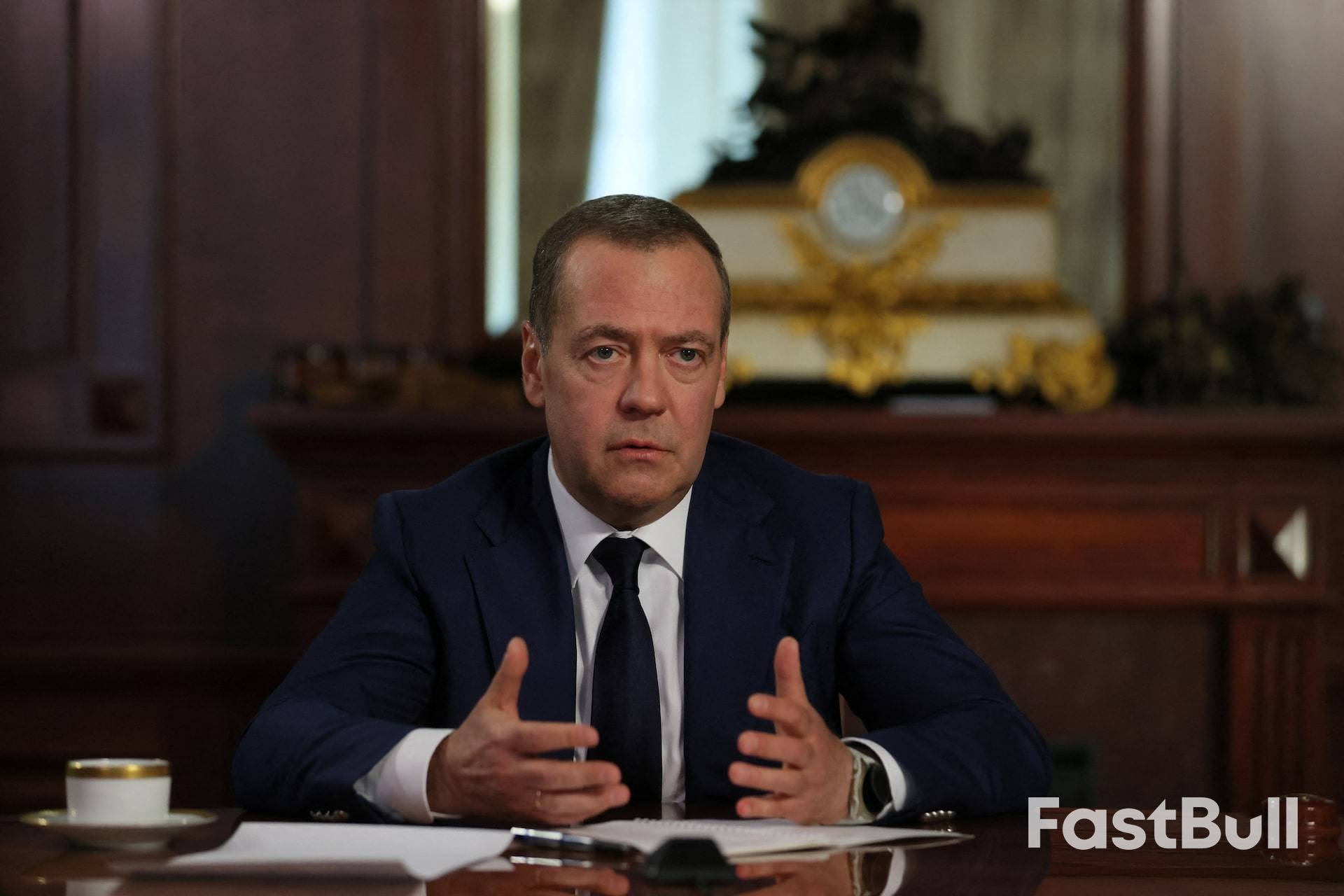
          Figure 1: Dmitry Medvedev, deputy chairman of Russia's Security Council, outlines his views on U.S.-Russia relations and the Ukraine conflict.

          A Method to Trump's 'Chaos'

          In an interview with Reuters, TASS, and the WarGonzo Russian war blogger, Medvedev pushed back against the notion that Trump is merely a chaotic force in global politics. While acknowledging Trump’s "emotional" and sometimes "brash" style, Medvedev described it as "effective."

          "The chaos that is commonly referred to, which is created by his activities, is not entirely true," said Medvedev, who served as Russia's president from 2008 to 2012. "It is obvious that behind this lies a completely conscious and competent line."

          Medvedev, who has become known for his hawkish statements, lauded Trump's courage for resisting the U.S. establishment and suggested the key to understanding him lies in his business background.

          Productive Diplomacy and Peace Efforts

          According to Medvedev, Moscow respects the American people's decision to elect Trump, and relations have improved under his leadership.

          "Trump wants to go down in history as a peacemaker—and he is really trying," Medvedev said. "And that is why contacts with Americans have become much more productive."

          While President Vladimir Putin has the final say on Russian policy, Medvedev's comments offer insight into the thinking of hardline figures within the Moscow elite.

          The Mystery of the Missing Submarines

          Despite the praise, Medvedev openly questioned a specific military claim made by Trump. In August, Trump stated he had ordered two U.S. nuclear submarines to move closer to Russia following what he called "highly provocative" comments from Medvedev.

          When asked about the threat, Medvedev’s response was blunt: "We still have not found them."

          Outlook on the Ukraine Conflict

          Regarding the ongoing war, Medvedev projected confidence, stating that a Russian military victory would come "soon." However, he stressed that the ultimate goal was not just to win but to secure a lasting peace.

          "I would like this to happen as soon as possible," he said. "But it is equally important to think about what will happen next. After all, the goal of victory is to prevent new conflicts."

          Currently, Russia controls about a fifth of Ukraine's territory. Ukrainian forces continue to hold approximately 10%, or 5,000 square kilometers, of the eastern Donbas region.

          Risk Warnings and Disclaimers
          You understand and acknowledge that there is a high degree of risk involved in trading. Following any strategies or investment methods may lead to potential losses. The content on the site is provided by our contributors and analysts for information purposes only. You are solely responsible for determining whether any trading assets, securities, strategy, or any other product is suitable for investing based on your own investment objectives and financial situation.
          Add to Favorites
          Share

          Donroeism: Trump's Policy Shift Shakes the Global Order

          Isaac Bennett

          China–U.S. Trade War

          Economic

          Remarks of Officials

          Political

          A US military operation in Venezuela on January 3, 2026, sent shockwaves through the international community. Washington framed the action as a counter-narcotics measure, but it stood as a clear violation of international law. The move directly contradicted a principle often cited by the US and its allies: that changing the status quo by force is unacceptable.

          This was followed by another assertive move when President Donald Trump announced retaliatory tariffs on Denmark and seven other European nations on January 17. The tariffs were a response to their opposition to his proposal to acquire Greenland.

          These rapid and radical actions highlight a growing sense of urgency from Trump, whose approval ratings have been declining ahead of the November midterm elections. The President has stated that the only check on his power is his own morality, not international law.

          The 'Donroeism' Doctrine Explained

          This new foreign policy direction has been dubbed 'Donroeism'—a modern reinterpretation of the 19th-century Monroe Doctrine. Under this framework, the United States is shifting its strategic focus to the Western Hemisphere. The primary goals are to establish regional dominance and eliminate perceived threats, including drug trafficking, illegal immigration, and the influence of Russia and China in the Americas.

          This pivot raises fundamental questions about the future of the post-World War II security architecture. The system of collective defense through NATO in Europe and bilateral alliances in East Asia now faces a potential transformation. President Trump's long-standing threat to withdraw the United States from NATO could become a reality.

          A New Approach to US-China Relations

          In East Asia, US policy toward China also appears to be evolving. Since China became the world's second-largest economy around 2010, Washington has treated Beijing as its primary global competitor, using its 'Indo-Pacific Strategy' to build alliances and contain Chinese influence.

          However, recent events suggest a strategic adjustment. During the APEC summit in late October 2025, Trump and Chinese President Xi Jinping agreed to a one-year truce in the trade war and planned reciprocal state visits for 2026, while avoiding contentious discussions over Taiwan. Trump has also made references to a 'G2' framework, implying an elevated global status for China. This suggests that as Washington concentrates on the Western Hemisphere, it may be seeking to avoid direct confrontation with Beijing.

          For China, a stable relationship with the US and a healthy economy are top priorities. With domestic consumption sluggish and real GDP growth at approximately 5% in 2025, avoiding another trade war is crucial. From this perspective, the trade truce and high-level diplomacy are positive outcomes for the Xi administration.

          Reassessing the Risk of a Taiwan Conflict

          Some analysts have speculated that the US military action in Venezuela could embolden China to take military action against Taiwan, a key political objective for Xi as he nears the end of his third term. This interpretation, however, is likely flawed. While the Venezuela operation was a violation of another country's sovereignty, Beijing considers Taiwan a purely internal affair.

          China is expected to pursue reunification on its own timeline. Its strategy will likely involve:

          • Applying political pressure through the Kuomintang and other allies in Taiwan.

          • Conducting military exercises in the Taiwan Strait.

          • Steadily expanding its military capabilities.

          The decisive factor remains the US response. Under Donroeism, many observers now believe the likelihood of American military intervention in a Taiwan contingency is decreasing.

          Japan's Strategic Dilemma

          Japan finds itself in a situation similar to Europe, which is now pursuing greater strategic independence. Surrounded by nuclear-armed China and Russia, and a nuclear-capable North Korea, Japan cannot realistically abandon the US nuclear umbrella. The political and economic costs of developing its own nuclear deterrent are simply too high.

          At the same time, unconditional alignment with Washington may not always serve Japan's national interests. Instead of simply following America's lead, Japan should aim to become an ally capable of influencing US policy. The key to achieving this lies in developing an autonomous diplomatic strategy focused on Asia.

          Even without US participation, Japan should work to expand the CPTPP to include China and South Korea, create regional confidence-building frameworks, and strengthen ties with South Korea, Australia, ASEAN nations, and India.

          Tensions Derail Japan-China Diplomacy

          Constructive engagement with China is essential for regional stability, but relations between Tokyo and Beijing are tense. Japanese Prime Minister Sanae Takaichi, despite her conservative reputation, initially took a conciliatory stance, securing a meeting with Xi at the APEC summit.

          However, immediately after the summit, Takaichi posted on social media about her meeting with Taiwan's APEC representative. She later told the Diet that a conflict over Taiwan could constitute a "survival-threatening situation" for Japan, implying Tokyo might invoke collective self-defense to support the US.

          Beijing viewed these actions as a diplomatic insult to President Xi and responded with retaliatory measures. China discouraged travel to Japan, suspended seafood imports, and placed export controls on dual-use items and rare earths. Takaichi has refused to retract her statements, and with Taiwan being Beijing's "core interest of core interests," the outlook for improving Japan-China relations is bleak.

          Navigating an Unstable World

          President Trump's 'Donroeism' is reshaping the foundations of the global order, from the Western Hemisphere to Europe and East Asia. For Japan, relying solely on its alliance with the United States is no longer sufficient. To navigate this increasingly unstable environment, Japan must pursue a more independent, Asia-centered foreign policy.

          To stay updated on all economic events of today, please check out our Economic calendar
          Risk Warnings and Disclaimers
          You understand and acknowledge that there is a high degree of risk involved in trading. Following any strategies or investment methods may lead to potential losses. The content on the site is provided by our contributors and analysts for information purposes only. You are solely responsible for determining whether any trading assets, securities, strategy, or any other product is suitable for investing based on your own investment objectives and financial situation.
          Add to Favorites
          Share
          FastBull
          Copyright © 2026 FastBull Ltd

          728 RM B 7/F GEE LOK IND BLDG NO 34 HUNG TO RD KWUN TONG KLN HONG KONG

          TelegramInstagramTwitterfacebooklinkedin
          App Store Google Play Google Play
          Products
          Charts

          Chats

          Q&A with Experts
          Screeners
          Economic Calendar
          Data
          Tools
          Membership
          Features
          Function
          Markets
          Copy Trading
          Latest Signals
          Contests
          News
          Analysis
          24/7
          Columns
          Education
          Company
          Careers
          About Us
          Contact Us
          Advertising
          Help Center
          Feedback
          User Agreement
          Privacy Policy
          Personal Information Protection Statement
          Business

          White Label

          Data API

          Web Plug-ins

          Poster Maker

          Affiliate Program

          Risk Disclosure

          The risk of loss in trading financial instruments such as stocks, FX, commodities, futures, bonds, ETFs and crypto can be substantial. You may sustain a total loss of the funds that you deposit with your broker. Therefore, you should carefully consider whether such trading is suitable for you in light of your circumstances and financial resources.

          No decision to invest should be made without thoroughly conducting due diligence by yourself or consulting with your financial advisors. Our web content might not suit you since we don't know your financial conditions and investment needs. Our financial information might have latency or contain inaccuracy, so you should be fully responsible for any of your trading and investment decisions. The company will not be responsible for your capital loss.

          Without getting permission from the website, you are not allowed to copy the website's graphics, texts, or trademarks. Intellectual property rights in the content or data incorporated into this website belong to its providers and exchange merchants.

          Not Logged In

          Log in to access more features

          Connect Broker
          Become a signal provider
          Help Center
          Customer Service
          Dark Mode
          Price Up/Down Colors

          Log In

          Sign Up

          Position
          Layout
          Fullscreen
          Default to Chart
          The chart page opens by default when you visit fastbull.com