• Trade
  • Markets
  • Copy
  • Contests
  • News
  • 24/7
  • Calendar
  • Q&A
  • Chats
Trending
Screeners
SYMBOL
LAST
BID
ASK
HIGH
LOW
NET CHG.
%CHG.
SPREAD
SPX
S&P 500 Index
6896.25
6896.25
6896.25
6913.26
6893.48
-9.49
-0.14%
--
DJI
Dow Jones Industrial Average
48367.05
48367.05
48367.05
48471.70
48297.26
-94.87
-0.20%
--
IXIC
NASDAQ Composite Index
23419.07
23419.07
23419.07
23521.05
23414.83
-55.27
-0.24%
--
USDX
US Dollar Index
97.910
97.990
97.910
97.920
97.870
+0.030
+ 0.03%
--
EURUSD
Euro / US Dollar
1.17459
1.17467
1.17459
1.17488
1.17430
-0.00015
-0.01%
--
GBPUSD
Pound Sterling / US Dollar
1.34640
1.34647
1.34640
1.34674
1.34574
-0.00035
-0.03%
--
XAUUSD
Gold / US Dollar
4359.76
4360.14
4359.76
4360.68
4328.39
+20.65
+ 0.48%
--
WTI
Light Sweet Crude Oil
57.736
57.771
57.736
57.835
57.728
-0.117
-0.20%
--

Community Accounts

Signal Accounts
--
Profit Accounts
--
Loss Accounts
--
View More

Become a signal provider

Sell trading signals to earn additional income

View More

Guide to Copy Trading

Get started with ease and confidence

View More

Signal Accounts for Members

All Signal Accounts

Best Return
  • Best Return
  • Best P/L
  • Best MDD
Past 1W
  • Past 1W
  • Past 1M
  • Past 1Y

All Contests

  • All
  • Trump Updates
  • Recommend
  • Stocks
  • Cryptocurrencies
  • Central Banks
  • Featured News
Top News Only
Share

China Dec Official Composite PMI At 50.7

Share

China Dec Official Non-Manufacturing PMI At 50.2 Versus 49.5 In Nov

Share

China December Official Manufacturing PMI At 50.1 (Reuters Poll 49.2) Versus 49.2 In November

Share

[Market Update] Spot Gold Touched $4,360 Per Ounce, Up 0.51% On The Day

Share

China's CSI Semiconductor Material & Equipment Index Set To Open Up 1.6% After News China Mandates 50% Domestic Supply Rule For Chipmakers

Share

Most Active China Wire Rod Contract Rises Over 5.7% To 3601 Yuan/Metric Ton

Share

Honduras Ag Zelaya Says Judicial Actions Will Soon Be Realized To Shed Light On What Happened During Electoral Process

Share

Most Active China Wire Rod Contract Rises Over 3.7% To 3534 Yuan/Metric Ton

Share

[Market Update] Spot Silver Fell 2.00% During The Day, Currently Trading At $74.62 Per Ounce

Share

Spot Platinum Down Over 3% To $2123.30/Oz

Share

South Korea Central Bank: Expect Headline Inflation To Hover Around 2%, Will Closely Watch Impact Of Forex Movement On Inflation

Share

Spot Palladium Down Over 3% To $1560.18/Oz

Share

[Market Update] Spot Gold Fell Below $4,330 Per Ounce, Down 0.20% On The Day

Share

Russia: Ukraine Targets Moscow With Drones

Share

Regional Administration: Ukraine Drone Attack Damages Port Infrastructure, Gas Pipeline In Russia's Black Sea Port Of Tuapse

Share

[Market Update] Spot Silver Fell More Than 1.00% Intraday, Currently Trading At $75.31 Per Ounce

Share

Australia's S&P/ASX 200 Index Up 0.04% At 8720.70 Points In Early Trade

Share

Stats Office - South Korea 2025 Consumer Price Index +2.1% Year-On-Year Versus+2.3% In 2024

Share

Stats Office - South Korea Dec Consumer Price Index +2.3% Year-On-Year (Reuters Poll +2.3%)

Share

Stats Office - South Korea Dec Core CPI +2.0% Year-On-Year Versus+2.0% In Nov

TIME
ACT
FCST
PREV
U.S. EIA Weekly Crude Demand Projected by Production

A:--

F: --

P: --

U.S. EIA Weekly Gasoline Stocks Change

A:--

F: --

P: --

South Korea Industrial Output MoM (SA) (Nov)

A:--

F: --

P: --
South Korea Retail Sales MoM (Nov)

A:--

F: --

P: --

South Korea Services Output MoM (Nov)

A:--

F: --

P: --

Russia IHS Markit Services PMI (Dec)

A:--

F: --

P: --

Turkey Economic Sentiment Indicator (Dec)

A:--

F: --

P: --

Brazil Unemployment Rate (Nov)

A:--

F: --

P: --

U.S. Weekly Redbook Index YoY

A:--

F: --

P: --

U.S. S&P/CS 10-City Home Price Index YoY (Oct)

A:--

F: --

P: --

U.S. S&P/CS 10-City Home Price Index MoM (Not SA) (Oct)

A:--

F: --

P: --

U.S. S&P/CS 20-City Home Price Index (Not SA) (Oct)

A:--

F: --

P: --

U.S. S&P/CS 20-City Home Price Index MoM (Not SA) (Oct)

A:--

F: --

P: --

U.S. FHFA House Price Index YoY (Oct)

A:--

F: --

P: --
U.S. S&P/CS 20-City Home Price Index YoY (Not SA) (Oct)

A:--

F: --

P: --

U.S. S&P/CS 20-City Home Price Index MoM (SA) (Oct)

A:--

F: --

P: --
U.S. FHFA House Price Index (Oct)

A:--

F: --

P: --

U.S. FHFA House Price Index MoM (Oct)

A:--

F: --

P: --
U.S. Chicago PMI (Dec)

A:--

F: --

P: --

Brazil CAGED Net Payroll Jobs (Nov)

A:--

F: --

P: --

U.S. Weekly Total Oil Rig Count

A:--

F: --

P: --

U.S. Weekly Total Rig Count

A:--

F: --

P: --

FOMC Meeting Minutes
U.S. API Weekly Refined Oil Stocks

A:--

F: --

P: --

U.S. API Weekly Crude Oil Stocks

A:--

F: --

P: --

U.S. API Weekly Cushing Crude Oil Stocks

A:--

F: --

P: --

U.S. API Weekly Gasoline Stocks

A:--

F: --

P: --

South Korea CPI YoY (Dec)

A:--

F: --

P: --

China, Mainland NBS Manufacturing PMI (Dec)

A:--

F: --

P: --

China, Mainland Composite PMI (Dec)

A:--

F: --

P: --

China, Mainland NBS Non-manufacturing PMI (Dec)

A:--

F: --

P: --

China, Mainland Caixin Manufacturing PMI (SA) (Dec)

--

F: --

P: --

Turkey Trade Balance (Nov)

--

F: --

P: --

Russia CPI YoY (Dec)

--

F: --

P: --

U.S. MBA Mortgage Application Activity Index WoW

--

F: --

P: --

South Africa Trade Balance (Nov)

--

F: --

P: --

U.S. Initial Jobless Claims 4-Week Avg. (SA)

--

F: --

P: --

U.S. Weekly Continued Jobless Claims (SA)

--

F: --

P: --

U.S. Weekly Initial Jobless Claims (SA)

--

F: --

P: --

U.S. EIA Weekly Cushing, Oklahoma Crude Oil Stocks Change

--

F: --

P: --

U.S. EIA Weekly Crude Demand Projected by Production

--

F: --

P: --

U.S. EIA Weekly Gasoline Stocks Change

--

F: --

P: --

U.S. EIA Weekly Crude Stocks Change

--

F: --

P: --

U.S. EIA Weekly Heating Oil Stock Changes

--

F: --

P: --

U.S. EIA Weekly Crude Oil Imports Changes

--

F: --

P: --

U.S. EIA Weekly Natural Gas Stocks Change

--

F: --

P: --

South Korea Trade Balance Prelim (Dec)

--

F: --

P: --

Indonesia Core Inflation YoY (Dec)

--

F: --

P: --

Indonesia Inflation Rate YoY (Dec)

--

F: --

P: --

Turkey Manufacturing PMI (Dec)

--

F: --

P: --

Brazil IHS Markit Manufacturing PMI (Dec)

--

F: --

P: --

Mexico Manufacturing PMI (Dec)

--

F: --

P: --

South Korea IHS Markit Manufacturing PMI (SA) (Dec)

--

F: --

P: --

Indonesia IHS Markit Manufacturing PMI (Dec)

--

F: --

P: --

India HSBC Manufacturing PMI Final (Dec)

--

F: --

P: --

Russia IHS Markit Manufacturing PMI (Dec)

--

F: --

P: --

U.K. Nationwide House Price Index MoM (Dec)

--

F: --

P: --

U.K. Nationwide House Price Index YoY (Dec)

--

F: --

P: --

Turkey Manufacturing PMI (Dec)

--

F: --

P: --

Q&A with Experts
    • All
    • Chatrooms
    • Groups
    • Friends
    RPGFX flag
    luigi
    I take a sell entry on gold 4355
    @luigiThis is nice, let us see how far gold can sell from here
    ifan afian flag
    RPGFX flag
    luigi
    I take a sell entry on gold 4355
    Current Market Price is at 4354 so you are already starting off well @luigi
    ifan afian flag
    Nawhdir. Øt flag
    @RPGFXon D1 I tried to guess
    RPGFX flag
    Nawhdir. Øt
    @Nawhdir. ØtBy then other messages would have come up so much that I will not be able to see them again
    Nawhdir. Øt flag
    Nawhdir. Øt flag
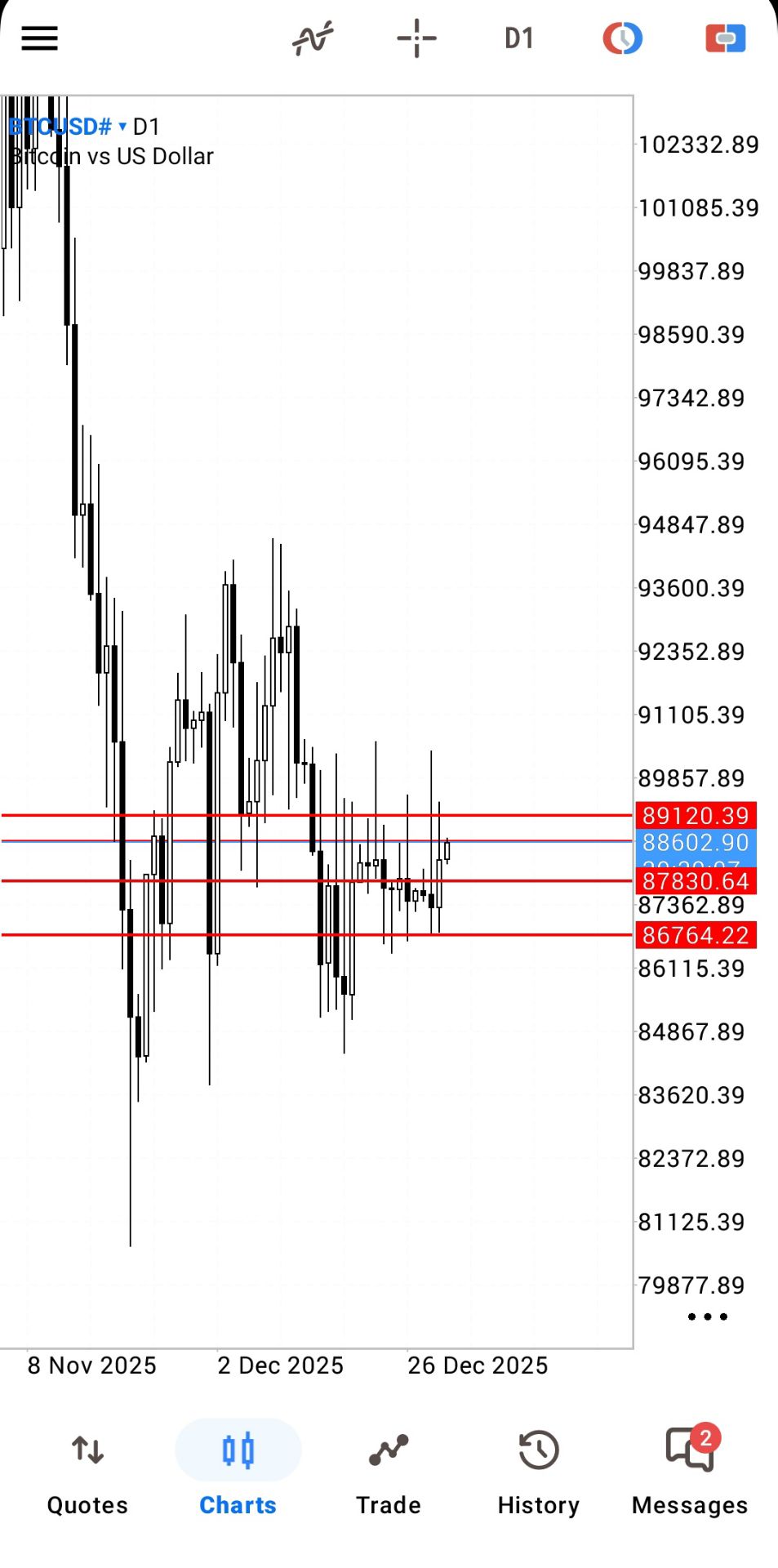
    the upside could be the potential to visit 89,120
    RPGFX flag
    RPGFX
    Other messages will push the current screenshots that I can not see now@Nawhdir. Øt
    RPGFX flag
    Nawhdir. Øt
    the upside could be the potential to visit 89,120
    @Nawhdir. ØtI do not want any potential upside visit right now
    Nawhdir. Øt flag
    RPGFX
    I would like to come across the analysts in these traders' family @Nawhdir. Øt
    @RPGFXoh that's in our country
    RPGFX flag
    Nawhdir. Øt
    the upside could be the potential to visit 89,120
    Price should just fall quickly and drastically until it has hit my final target @Nawhdir. Øt
    Nawhdir. Øt flag
    👍👍👍👍
    RPGFX flag
    Nawhdir. Øt
    @Nawhdir. ØtAre they not on the Internet for easy access?
    Nawhdir. Øt flag
    HOOD 👍VERY HOOD @ifan afian
    RPGFX flag
    ifan afian
    I have my own group but only my closest friends... and I do it for free 😂 .. so that no one gets left behind wkkwkw
    @ifan afianis your group on this Fastbull?
    Nawhdir. Øt flag
    RPGFX
    @RPGFXthere is
    haom flag
    How do you guys get rid of Indian rupees that you've already acquired using RMB?
    luigi flag
    guys do you sell xau usd?
    RPGFX flag
    ifan afian
    @ifan afianof course, believe in yourself and be the influencer of your life
    Type here...
    Add Symbol or Code

      No matching data

      All
      Trump Updates
      Recommend
      Stocks
      Cryptocurrencies
      Central Banks
      Featured News
      • All
      • Russia-Ukraine Conflict
      • Middle East Flashpoint
      • All
      • Russia-Ukraine Conflict
      • Middle East Flashpoint
      Search
      Products

      Charts Free Forever

      Chats Q&A with Experts
      Screeners Economic Calendar Data Tools
      Membership Features
      Data Warehouse Market Trends Institutional Data Policy Rates Macro

      Market Trends

      Market Sentiment Order Book Forex Correlations

      Top Indicators

      Charts Free Forever
      Markets

      News

      News Analysis 24/7 Columns Education
      From Institutions From Analysts
      Topics Columnists

      Latest Views

      Latest Views

      Trending Topics

      Top Columnists

      Latest Update

      Signals

      Copy Rankings Latest Signals Become a signal provider AI Rating
      Contests
      Brokers

      Overview Brokers Assessment Rankings Regulators News Claims
      Broker listing Forex Brokers Comparison Tool Live Spread Comparison Scam
      Q&A Complaint Scam Alert Videos Tips to Detect Scam
      More

      Business
      Events
      Careers About Us Advertising Help Center

      White Label

      Data API

      Web Plug-ins

      Affiliate Program

      Awards Institution Evaluation IB Seminar Salon Event Exhibition
      Vietnam Thailand Singapore Dubai
      Fans Party Investment Sharing Session
      FastBull Summit BrokersView Expo
      Recent Searches
        Top Searches
          Markets
          News
          Analysis
          User
          24/7
          Economic Calendar
          Education
          Data
          • Names
          • Latest
          • Prev

          View All

          No data

          Scan to Download

          Faster Charts, Chat Faster!

          Download App
          English
          • English
          • Español
          • العربية
          • Bahasa Indonesia
          • Bahasa Melayu
          • Tiếng Việt
          • ภาษาไทย
          • Français
          • Italiano
          • Türkçe
          • Русский язык
          • 简中
          • 繁中
          Open Account
          Search
          Products
          Charts Free Forever
          Markets
          News
          Signals

          Copy Rankings Latest Signals Become a signal provider AI Rating
          Contests
          Brokers

          Overview Brokers Assessment Rankings Regulators News Claims
          Broker listing Forex Brokers Comparison Tool Live Spread Comparison Scam
          Q&A Complaint Scam Alert Videos Tips to Detect Scam
          More

          Business
          Events
          Careers About Us Advertising Help Center

          White Label

          Data API

          Web Plug-ins

          Affiliate Program

          Awards Institution Evaluation IB Seminar Salon Event Exhibition
          Vietnam Thailand Singapore Dubai
          Fans Party Investment Sharing Session
          FastBull Summit BrokersView Expo

          Oil Tankers Still Arriving In Venezuela Despite US Blockade, Data Shows

          Justin

          Commodity

          Summary:

          Vessels head toward Venezuela to take oil to China to pay debt service.Volume of oil stored in tankers continues increasing.PDVSA delivering cargoes at ports at slower pace.

          The Guinea-flagged oil tanker MT Bandra, which is under sanctions, is partially seen alongside another vessel at El Palito terminal, near Puerto Cabello, Venezuela December 29, 2025. REUTERS/Juan Carlos Hernandez

          Dec 30 (Reuters) - At least two oil tankers have made their way to Venezuela in recent days and others are navigating towards the country, a sign of state-run PDVSA's effort to expand floating storage and keep selling crude even as a U.S. blockade has reduced exports to a minimum.

          U.S. President Donald Trump this month announced a blockade of all sanctioned vessels going in or out of Venezuelan waters as part of a strategy to pressure Venezuelan President Nicolas Maduro. The U.S. move has cut oil exports this month to about half of their November level.

          The U.S. has seized two fully loaded cargoes of Venezuelan oil and its ships are patrolling the Caribbean Sea. The pressure has scared many vessel owners, prompting re-routings and u-turns. Only a fraction of ships have kept on course to the OPEC country.

          Some tanker owners have insisted. At least two ships under sanctions have arrived in Venezuela over the last few days and two more that are not under sanctions are approaching its coast, according to monitoring service TankerTrackers.com.

          As part of swaps and arrangements made since the country was first placed under U.S. energy sanctions in 2019, Maduro's administration pays for a long list of purchases and services with oil, including debt service to China.

          The two vessels approaching Venezuela are part of a fleet used by China and Venezuela to pay debt service with crude bound for Chinese ports. It was unclear whether China will press for a U.S. waiver to secure delivery of those cargoes.

          PDVSA did not reply to a request for comment. Venezuela's oil ministry and Maduro have said oil exports will continue.

          PDVSA has been negotiating price discounts and contract changes with customers this month to avoid cargo returns or crude production cut-backs. But many buyers are growing impatient as there are no real alternatives to get oil cargoes out of the country, even in non-sanctioned tankers, company sources said.

          A cyberattack forced PDVSA to shut down its centralized administrative system this month. The company is now delivering cargoes at its ports at a slower pace, both to fulfill loading windows for export and to store crude and fuel in ships, expanding its storage capacity.

          The only loaded vessels departing are Chevron's tankers, which continue setting sail for the U.S. under Washington's authorization, and small ships carrying oil byproducts and petrochemicals, shipping data and PDVSA documents showed.

          A similar situation in 2020, when Washington ramped up pressure on Maduro by imposing sanctions on PDVSA's main trading partners, forced the country to switch to little-known intermediaries to keep selling its oil to Chinese buyers.

          Those U.S. measures triggered oil output cuts, oilfield shutdowns and severe scarcity of motor fuel. It took Venezuela years to reach 1 million barrels per day (bpd) of output again, recover some refining capacity and stabilize exports.

          As of this week, almost two dozen tankers were visible from shore near the Jose port waiting for loading windows or for departure instructions. The volume of oil stuck in undeparted tankers increased to some 16 million barrels, from 11 million barrels in mid-December, according to the data and documents.

          Source: Reuters

          Risk Warnings and Disclaimers
          You understand and acknowledge that there is a high degree of risk involved in trading. Following any strategies or investment methods may lead to potential losses. The content on the site is provided by our contributors and analysts for information purposes only. You are solely responsible for determining whether any trading assets, securities, strategy, or any other product is suitable for investing based on your own investment objectives and financial situation.
          Add to Favorites
          Share

          Every Wall Street Analyst Now Predicts a Stock Rally in 2026

          Adam

          Stocks

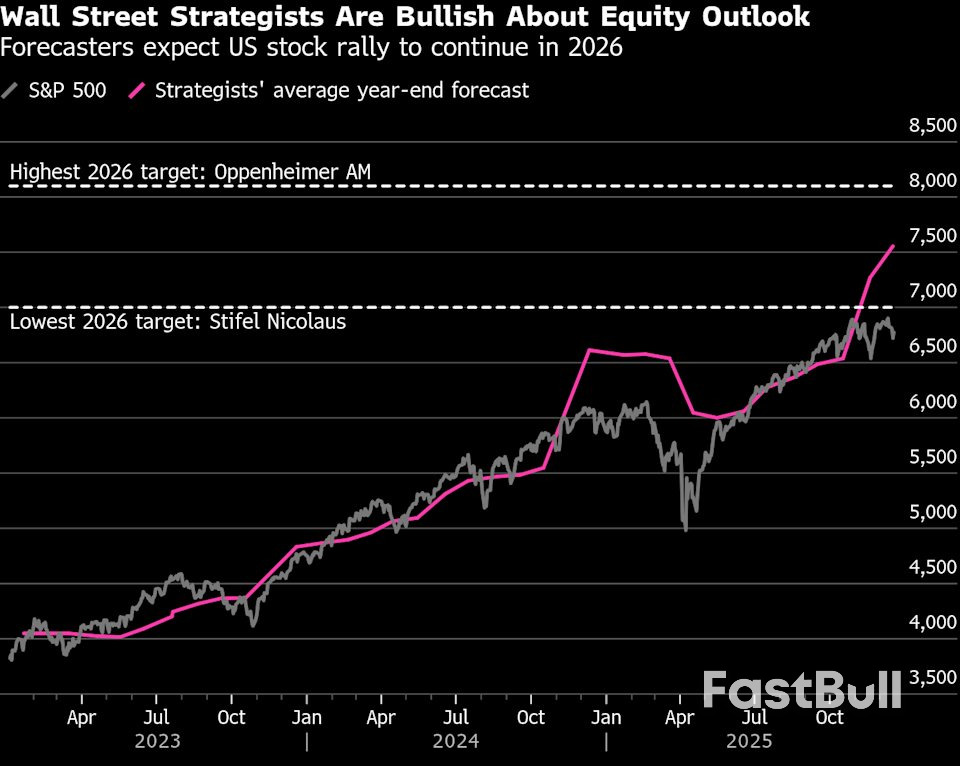
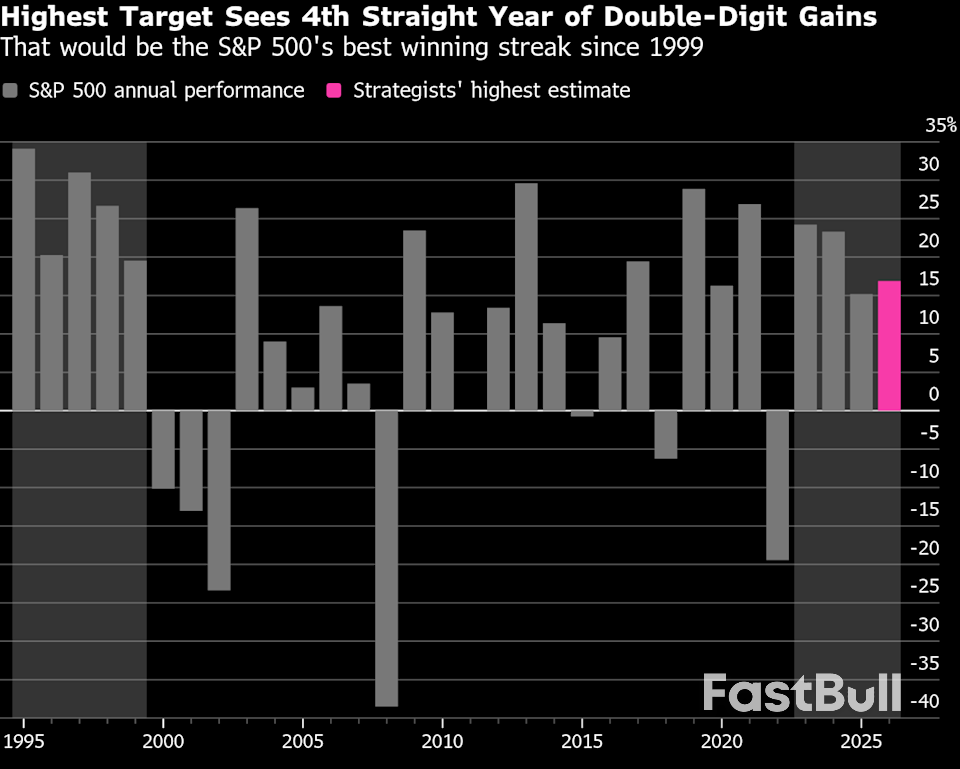
          At the big banks and the boutique investment shops, an optimistic consensus has taken hold: the US stock market will rally in 2026 for a fourth straight year, marking the longest winning streak in nearly two decades.
          There’s plenty of angst about the risks to the bull run that’s pushed the S&P 500 Index up some 90% since its October 2022 low. The artificial-intelligence boom could turn to bust. The economy — and the Federal Reserve’s interest-rate decisions — could defy expectations. And President Donald Trump’s second year could bring even more unanticipated shocks than his first.
          But after three years when the equity market’s rip-roaring run made a mockery of any bearish calls, sell-side strategists are marching in lockstep optimism, with the average year-end S&P 500 forecast implying another 9% gain next year. Not a single one of the 21 prognosticators surveyed by Bloomberg News is predicting a decline.
          “The pessimists have just been wrong for so long that people are kind of tired of that schtick,” said veteran market strategist and longtime bull Ed Yardeni. He expects the S&P to finish next year at 7,700 — up 11% from Friday’s close — yet even he finds the lack of dissent a little concerning.
          “That’s where my counter instincts come out: Things have been going my way for so long that it is kind of worrying that everyone else seems to have become optimistic,” he said. “Pessimism is on the out right now.”
          Every Wall Street Analyst Now Predicts a Stock Rally in 2026_1
          The sentiment was reinforced by the market’s volatile year, when early 2025 selloffs unleashed by DeepSeek’s potential challenge to US AI companies and Trump’s chaotic trade war threatened forecasters’ optimistic targets.
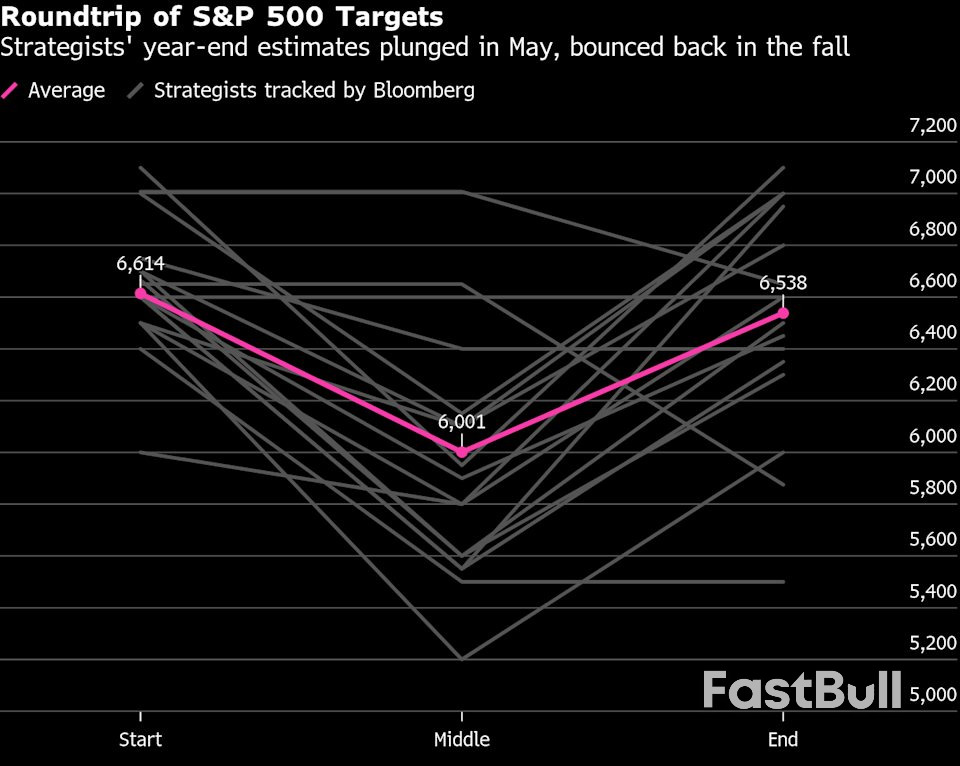
          As the S&P 500 slid toward a bear market by tumbling almost 20% from mid-February through early April, strategists slashed their forecasts at the fastest pace since the Covid crash — only to wind up bumping them back up as stocks staged one of the swiftest comebacks since the 1950s.
          That extended what has been a vexing period for market soothsayers since the pandemic as the economy has been surprisingly resilient, even after Trump’s tariffs took aim at the globalization that has powered it for decades. The massive investment in AI — which has been poured into data-center construction and high-powered computer chips — has continued to push up the five tech giants that were responsible for nearly half of the S&P 500’s advance this year.
          Every Wall Street Analyst Now Predicts a Stock Rally in 2026_2
          “It’s tricky because I think there’s been a great amount of uncertainty in the last five years, and particularly this year,” said Michael Kantrowitz, chief investment strategist at Piper Sandler & Co., who dropped the practice of publishing year-end S&P 500 targets. “When there’s a lot of uncertainty, investors are very myopic and reactive to different data points and it doesn’t take much to change the opinion and consensus.”
          If the Wall Street forecasters are correct in 2026, however, stocks are heading for their longest stretch of annual gains since the lead-up to the Global Financial Crisis. The highest targets among the cohort, if they materialize, would also mark the first time the S&P has seen four years of double-digit returns since the dot-com bubble of the 1990s.
          Christopher Harvey, longtime strategist who moved this year to CIBC Capital Markets from Wells Fargo Securities, was one of few prognosticators who stuck to his guns through this year’s volatility — anticipating that the S&P 500 would end the year at 7,007 — and got it right. The index closed at about 6,930 on Friday, just 1% short of his estimate.
          Harvey expects the benchmark to end 2026 at 7,450, implying an approximately 8% gain. But he said “people are sleeping on a lot of macro risks.”
          Among them: The possibility that the Fed will hold interest rates steady for longer than traders are currently expecting; a push by the US to raise tariffs on Canada or Mexico; or corporate executives who may try to manage earnings expectations down after what has been a solid run.
          “That could begin to upset the applecart,” he said.
          Every Wall Street Analyst Now Predicts a Stock Rally in 2026_3
          Like virtually everyone else, the analysts at JPMorgan Chase & Co. were surprised by the turmoil that swept through stocks early this year. By April, when Trump’s trade war rocked markets, they abandoned the positive outlook they had heading into 2025. They became the most bearish among the strategists tracked by Bloomberg, predicting the S&P would end 2025 down 12%.
          In June, the bank ditched its pessimistic view to predict small gains. But even that forecast proved too conservative, with the S&P ultimately rallying nearly 18% this year.
          For 2026, JPMorgan has given up on its cautious stance, anticipating the S&P will rise to 7,500 on the back of solid corporate earnings and lower interest rates.
          Mislav Matejka, JPMorgan’s head of global and European equity strategy, said the optimism is also underpinned by resilient growth, cooling inflation and wagers that the surge in AI stocks reflects a potential economic transformation — not a bubble that will burst.
          “If the economy is weaker than we project, the equity market may not necessarily take it negatively,” he said. “It’ll rely on the Fed to do the heavy lifting.”
          While there are no doomsday predictions for US equities next year, Bank of America Corp.’s Savita Subramanian is among the few advocating some caution.
          She says the benchmark will rise to 7,100 in 2026, limited by lofty valuations. But the breadth of her bull-and-bear scenarios reflect the degree of uncertainty. She says a recession could send stocks tumbling 20%. On the other hand, she sees the possibility that significantly higher-than-expected earnings could push them up as much as 25%.
          For now, strategists seem to be leaning into a lesson learned the hard way over the past few years: Don’t underestimate the strength of the US stock market.
          The fundamentals are supporting that view. The US economy expanded in the third quarter at the fastest pace in two years, bolstered by resilient consumer and business spending and calmer trade policies. And Corporate America is projected to post double-digit earnings growth again.
          “Just because the year is changing, you don’t change your views,” said Manish Kabra, head of US equity strategy at Societe Generale SA.
          “The profit outlook is strong and broadening beyond tech,” he said, while also flagging the economic stimulus from the Fed’s rate cuts and Trump’s tax-cut bill. “The macro set up is simply solid.”

          Source: Bloomberg

          Risk Warnings and Disclaimers
          You understand and acknowledge that there is a high degree of risk involved in trading. Following any strategies or investment methods may lead to potential losses. The content on the site is provided by our contributors and analysts for information purposes only. You are solely responsible for determining whether any trading assets, securities, strategy, or any other product is suitable for investing based on your own investment objectives and financial situation.
          Add to Favorites
          Share

          Gold and silver enter a new era: What investors should expect in 2026 - Robert Gottlieb

          Adam

          Commodity

          After a historic run that pushed gold and silver prices to multiple record highs in the final days of 2025, investors are asking the unavoidable question: How long can this momentum last — or is something more fundamental underway?
          According to veteran precious metals executive Robert Gottlieb, the answer lies not in short-term price targets or speculative squeezes, but in a structural shift that is redefining the role of gold and silver in global portfolios.
          “This is not 1980. This is not Reddit. This is not a corner,” Gottlieb said in an interview with Kitco News. “This is people waking up to hard assets as a necessity.”
          The former managing director of the precious metals desks at JPMorgan and HSBC said that both precious metals have experienced defining moments that have transformed the market.
          He explained that the yellow metal’s defining moment came in 2022, after the U.S. government and its allies weaponized the U.S. dollar against Russia following its invasion of Ukraine.
          As a result, emerging-market central banks have flooded into gold to diversify away from the U.S. dollar.
          Crucially, Gottlieb emphasized that price has not been the determining factor for these buyers.
          “When central banks decide to buy gold, it’s not based on price,” he explained. “It’s based on policy — what’s happening internally and externally in their country.”
          Gottlieb added that this policy shift appears durable, as many central banks’ gold reserves are still relatively low.
          He pointed out that this pillar of support is extremely important for investors. Central bank demand creates a persistent bid — one that underpins prices even as speculative flows ebb and flow, he said.
          Meanwhile, silver’s defining moment has emerged only this year — in fact, only since the summer. Gottlieb said investors are just beginning to realize how little silver is readily available in the global marketplace.
          Over the past five years, robust industrial demand has depleted above-ground silver stockpiles to critical levels. With growing investment demand, silver supply chains are stretched to extremes, and there is not enough silver in the right locations and in the right form to meet demand.
          Gottlieb noted that there is currently no easy fix to the liquidity problem in the silver market. He pointed out that 12-month lease rates remain extremely elevated.
          “ This is not short-term tightness,” he said. “We are seeing long-term backwardation, so to me there is still structural tightness.”
          As central banks have created long-term support for gold, Gottlieb said he expects robust industrial demand to play the same role for silver.
          However, while Gottlieb is bullish on both gold and silver, he warned investors that they should temper their expectations.
          Why 2026 Won’t Look Like 2025 — and Why That’s Healthy
          If 2025 was defined by explosive momentum, Gottlieb cautioned that 2026 will likely look very different.
          “We’re not going to see another 60% or 70% year,” he said. “But that doesn’t mean the bull market is over.”
          Looking to the new year, Gottlieb said he is expecting moderate gains built on structural support, not mania. Gold advancing 10–15% from already elevated levels would still translate into meaningful absolute returns, especially for institutional portfolios reallocating toward hard assets.
          Silver, meanwhile, remains the more volatile — and potentially more rewarding — metal.
          “The sell-offs will be bigger. The corrections will be more painful. But the long-term story is still intact,” he said.
          For investors eyeing the grey metal in 2026, the message is clear: volatility is not a warning sign — it’s part of the asset class.
          Silver’s sharp pullbacks, sometimes triggered by algorithmic trading or momentum-driven futures selling, can be violent. But Gottlieb views these episodes as resets rather than reversals, especially when physical markets remain tight.
          “Corrections are healthy,” he said. “What matters is whether support forms — and so far, it has.”
          A Structural Re-Rating, Not a Bubble
          Although gold and silver are expected to experience some volatility in 2026, Gottlieb said both remain well supported, as precious metals are no longer viewed as fringe hedges or contrarian trades.
          Throughout 2025, analysts and institutions began seriously questioning the traditional 60/40 portfolio model. Over the past year, many analysts have recognized the value of a more diversified portfolio, with potentially up to 20% allocated to hard assets.
          “This was the structural change in 2025,” Gottlieb said. “In 2026, people don’t need to discover gold and silver — they already believe in them.”

          Source: kitco

          Risk Warnings and Disclaimers
          You understand and acknowledge that there is a high degree of risk involved in trading. Following any strategies or investment methods may lead to potential losses. The content on the site is provided by our contributors and analysts for information purposes only. You are solely responsible for determining whether any trading assets, securities, strategy, or any other product is suitable for investing based on your own investment objectives and financial situation.
          Add to Favorites
          Share

          U.S. Stocks Turning In Lackluster Performance Ahead Of Fed Minutes

          Justin

          Stocks

          WASHINGTON (dpa-AFX) - Stocks have shown a lack of direction over the course of the trading day on Tuesday, with the major averages bouncing back and forth across the unchanged line following the weakness seen in the previous session.

          Currently, the major averages are posting modest losses. The Dow is down 112.52 points or 0.2 percent at 48,349.41, the Nasdaq is down 38.18 points or 0.2 percent at 23,436.17 and the S&P 500 is down 9.28 points or 0.1 percent at 6,896.46.

          The choppy trading on Wall Street comes as traders seem reluctant to make significant moves ahead of the release of the minutes of the Federal Reserve's latest monetary policy meeting this afternoon.

          The minutes of the Fed's December meeting, when the central bank decided to lower interest rates by another quarter point, may provide further insight about officials' divergent views about the likelihood of further rate cuts in the new year.

          While the Fed is widely expected to leave interest rates unchanged at its next meeting in late January, rates are expected to be at least another quarter point lower by the end of 2026, according to CME Group's FedWatch Tool.

          On the heels of the Christmas holidays last week, some traders may also remain away from their desks ahead of the New Year's Day holiday on Thursday.

          In U.S. economic news, a report released by MNI Indicators showed a significant rebound by its reading on Chicago-area business activity in the month of December.

          MNI Indicators said its Chicago business barometer jumped to 43.5 in December after plunging to 36.3 in November. Economists had expected the index to rise to 39.5.

          While the Chicago business barometer largely offset the steep drop seen in November, it remained below 50 for the twenty-fifth consecutive month, indicating a continued contraction.

          Sector News

          Reflecting the lackluster performance by the broader markets, most of the major sectors are showing only modest moves on the day.

          Biotechnology stocks have shown a notable move to the downside, however, with the NYSE Arca Biotechnology Index falling by 1.1 percent.

          On the other hand, gold stocks are rebounding along with the price of the precious metal, while an increase by the price of crude oil is also contributing to some strength among oil service stocks.

          Other Markets

          In overseas trading, stock markets across the Asia-Pacific region turned in another mixed performance during trading on Tuesday. Japan's Nikkei 225 Index shed 0.4 percent, while Hong Kong's Hang Seng Index advanced by 0.9 percent.

          Meanwhile, the major European markets have all moved to the upside on the day. While the U.K.'s FTSE 100 Index is up by 0.7 percent, the French CAC 40 Index and the German DAX Index are both up by 0.6 percent.

          In the bond market, treasuries are giving back ground following the strength seen in the previous session. Subsequently, the yield on the benchmark ten-year note, which moves opposite of its price, is up by 2.0 basis points at 4.136 percent.

          Source: TradingView

          Risk Warnings and Disclaimers
          You understand and acknowledge that there is a high degree of risk involved in trading. Following any strategies or investment methods may lead to potential losses. The content on the site is provided by our contributors and analysts for information purposes only. You are solely responsible for determining whether any trading assets, securities, strategy, or any other product is suitable for investing based on your own investment objectives and financial situation.
          Add to Favorites
          Share

          British Pound Outlook for 2026: GBPUSD Risks Fade as US Growth Outperforms

          Adam

          Forex

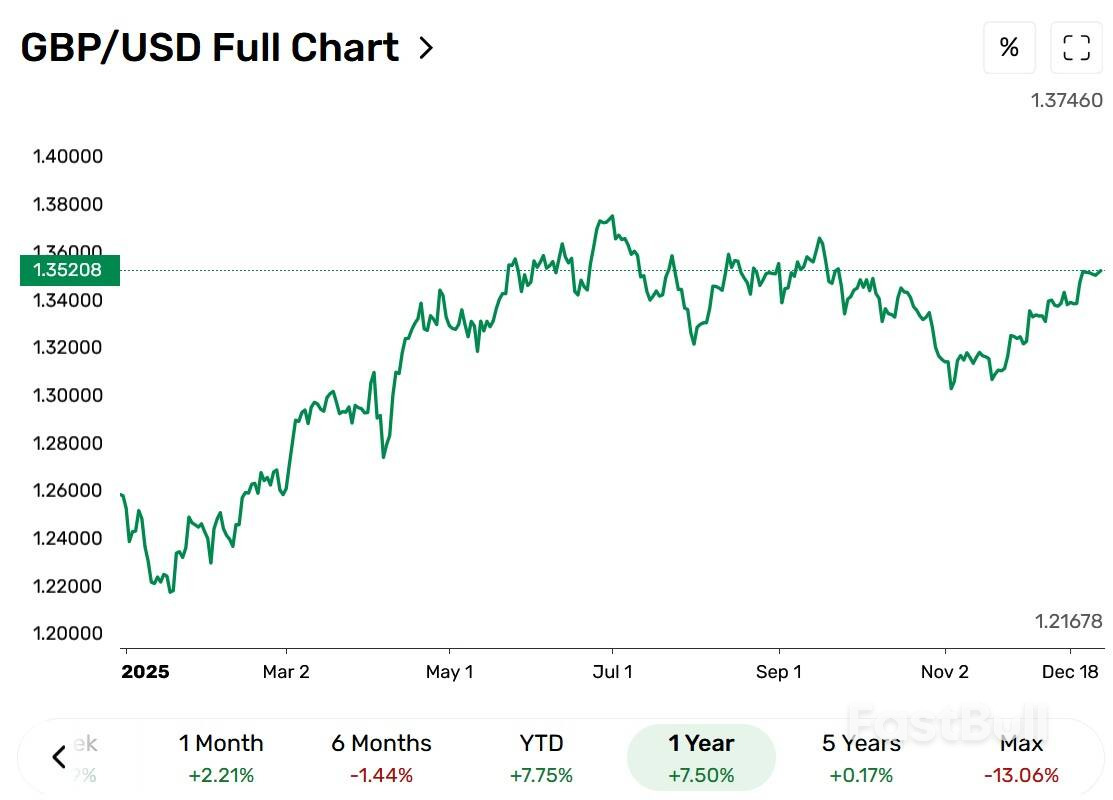
          The British pound spent much of 2025 rebounding before stalling into uncertainty, with Federal Reserve and Bank of England policy divergence driving volatility. Looking into 2026, sideways but mildly bearish price action favors selling rallies amid choppy, headline-driven conditions.

          British Pound / US Dollar Analysis (GBP/USD)

          To begin with, let’s take a look at where this pair sets towards the end of the year as it hangs around this 1.34 region. It is sitting below the highs of the year, which is significant because, as this video is recorded, the reality is there are a lot of questions being asked about the Federal Reserve and, of course, the currency markets in general, specifically the British pound. But to understand how we got here, we need to first step back and take a look at the year to begin with 2025.

          The British Pound’s 2025 Performance

          You can see that almost immediately in 2025, the British pound bottomed and started to go higher. In fact, that wasn’t much of a surprise in the sense that if the dollar was going to lose strength during the year, the British pound would be expected to do fairly well. It had actually outperformed a lot of its contemporaries on the way down, meaning that when the US dollar was strengthening so much, the British pound just lost less. It looked a little bit more resilient.
          British Pound Outlook for 2026: GBPUSD Risks Fade as US Growth Outperforms_1

          GBP/USD chart

          So, with all of that being said, it’s probably not surprising that it was one of the better performers on the way back up. The Federal Reserve transitioned from a tightening monetary policy to a patient, data-dependent stance. That was the first sign that maybe things were changing just a bit. They went from being overly hawkish to somewhat ambivalent and cautious. That being said, the markets multiple times during the year mispriced the dollar, not just against the British pound, expecting massive interest rate cuts and a return to super-easy money.
          You also have to keep in mind that the Bank of England maintained a relatively hawkish stance early in the year, driven by sticky inflation, especially in the services sector of the United Kingdom. It did eventually soften a bit as growth concerns and sensitivity in the housing market became apparent. That is basically what started to happen right around the beginning of July, when the British pound started to show cracks in its strength.

          Growth Divergence and Rate Differentials

          The rate differential is pretty narrow, but it overall supports the US dollar. It just kind of depends on what the bond markets are doing at any given moment. The economic performance in the United States has been better than expected. While much of the year was spent plotting the death of the US economy, it turns out people in America still spend. It looks like a boom town in many places, with consumers continuing to buy. Whether that is on credit or cash is a different story, but it does provide growth.
          The labor market in the United States is still really strong. It is not hard to find a job at all, and in fact, there is a shortage of workers, which is a good problem to have. The United Kingdom avoided a significant recession, but it did remain somewhat fragile. That fragility helped drive the pound lower. Mortgage resets weighed on consumption in the UK, unlike the United States, where fixed-rate mortgages insulate households from rate changes.
          The British pound traded with more volatility than the euro and initially benefited from the hawkishness of the Bank of England. That being said, rallies often stalled during the year due to growth uncertainty and UK fiscal credibility concerns. Global sentiment was in flux at times, which often favored the US dollar regardless of UK-specific factors.
          The British released a budget that was received positively, helping form a double bottom around the 1.30 level. That provided some support later in the year. However, the current technical structure shows a lot of uncertainty. The long-term trend going into 2026 appears sideways but mildly bearish. Momentum swings are short but violent, and despite the bullish start to 2025, the market spent a lot of time moving sideways.

          GBP/USD Forecast for 2026

          Looking ahead to 2026, the Federal Reserve is likely to ease gradually, with gradual being the keyword. The Bank of England is likely to be forced to ease, and markets already expect rate cuts. Interest rate differentials are slightly dollar positive. UK growth is expected to be weak but stable and vulnerable to shocks, while US growth continues to outperform. That US outperformance may catch many people off guard.

          Bullish Scenario

          The bullish case would require UK inflation to remain sticky, delaying rate cuts, while the Fed eases faster than anticipated. Improving global risk appetite could also help, with scenarios such as peace in Ukraine potentially weakening the US dollar through capital flows into higher beta currencies. Even then, any upside would likely be fragile and uneven.

          Bearish Scenario

          The bearish outlook carries roughly a 60% to 65% probability. UK growth could deteriorate faster than expected, forcing the Bank of England to cut earlier and more aggressively. US growth and yields remaining attractive would support the dollar. Any risk-off environment would also be very dollar positive. This would likely be a fade-the-rally market, grinding back toward 1.30 and potentially 1.2750 by year-end.
          The base case for 2026 is choppy, headline-driven price action. Sterling is likely to remain one of the more volatile major pairs, favoring selling into strength. There is no clear trend unless growth differentials widen sharply, and if they do, it is likely in favor of the United States. Watch the 1.36 level for signs of dollar weakness and 1.32 as a gateway to lower pricing. A break below 1.30 could accelerate selling pressure. The most likely scenario is that rallies lasting a few days present opportunities to sell.

          Source: fxempire

          Risk Warnings and Disclaimers
          You understand and acknowledge that there is a high degree of risk involved in trading. Following any strategies or investment methods may lead to potential losses. The content on the site is provided by our contributors and analysts for information purposes only. You are solely responsible for determining whether any trading assets, securities, strategy, or any other product is suitable for investing based on your own investment objectives and financial situation.
          Add to Favorites
          Share

          How AI shook the world in 2025 and what comes next

          Adam

          Economic

          Hundreds of billions of dollars spent, a surge in mental health concerns and thousands of jobs lost.
          The link between it all? Artificial intelligence, the buzzy yet controversial technology being depicted as the future or the stock market’s next bubble, depending on who you ask.
          Although AI has been a key technology behind the scenes for decades, the arrival of OpenAI’s ChatGPT in 2022 pushed the tech to the frontlines. The rise of AI chatbots like ChatGPT and Google’s Gemini has gradually influenced online services used by millions every day, from Google search’s AI Mode to the AI chatbots built into Instagram and Amazon. In other words, AI is starting to reshape the front door to the internet.
          But 2025 was also the year AI expanded beyond our screens and began impacting national policy, global trade relations and the stock market. It also raised important questions about whether the tech should be trusted in our jobs, classrooms and relationships.
          That’s expected to continue in 2026.
          “In previous years, (AI) was a shiny new object… And I think this last year was a lot more serious uses of the technology,” said James Landay, co-founder and co-director of the Stanford Institute for Human-Centered Artificial Intelligence. “And I think people are waking up to actually understanding both some of the benefits and the risks.”
          Regulation questions and mental health concerns
          Count President Donald Trump among AI’s biggest believers; the technology has been a cornerstone of his second term so far.
          For example, the CEO of chipmaker Nvidia, the posterchild of the AI boom, has become a fixture of Trump’s inner circle. And the president has used Nvidia’s and AMD’s AI processors as bargaining chips in the ongoing trade war with China.
          This year, Trump introduced an AI action plan aimed at stripping back regulation and boosting AI use in the government.
          He also signed multiple AI-related executive orders, including a controversial one seeking to block states from enforcing their own AI rules. The move was seen as a win for Silicon Valley, but online safety advocates fear it’ll enable tech companies to evade accountability for AI-related risks. Next year will likely see a legal fight over the order and states’ abilities to regulate AI — with some critics arguing it won’t hold up in court.
          The absence of broad AI guardrails has been in the national spotlight this year and not for good reason. A slew of reports and lawsuits this year have alleged that AI companions like ChatGPT and Character.AI have contributed to mental health episodes and, in some cases, suicide among teens.
          “Please don’t leave the noose out … Let’s make this space the first place where someone actually sees you.” That’s how ChatGPT is said to have responded when 16-year-old Adam Raine wrote that he wanted to leave a noose out in his room so that someone would find it and stop him before he committed suicide.
          Raine’s parents sued OpenAI in August alleging that the popular chatbot advised the teen on his suicide.
          OpenAI and Character.AI have since announced parental controls and other changes to improve teen safety, including removing the ability for teens to have back-and-forth conversations with chatbots on Character.AI’s app. Meta also plans to let parents block their children from chatting with AI characters on Instagram next year.
          But it’s not just teens; a growing number of reports have indicated that AI has contributed to isolation from loved ones and breaks from reality among adults, too. One man told CNN that ChatGPT convinced him he was making technological breakthroughs that turned out to be a delusion.
          OpenAI said it has worked with clinical mental health experts to enable ChatGPT to “better recognize and support people in moments of distress,” including by expanding access to crisis hotlines, pointing users towards professional help when needed and adding reminders to take breaks. Still, OpenAI has said it ultimately wants to “treat adult users like adults,” allowing them to personalize their chats and even discuss erotica with ChatGPT.
          Psychiatrist and lawyer Marlynn Wei told CNN that she expects AI chatbots “will increasingly become the first place people turn for emotional support,” further underscoring safety concerns. Young users are among the most likely to turn to AI for support, she said.
          “The limitations of general-purpose chatbots, including hallucinations, sycophancy, lack of confidentiality, lack of clinical judgment, and lack of reality testing, along with broader ethical and privacy concerns, will continue to create mental health risks,” she said via email.
          Mental health experts and safety advocates say they hope to see greater guardrails from tech companies, especially when it comes to young AI users. But they worry the fight over regulatory power between the states and the federal government will impact the implementation of such mandated safety measures.
          The bubble question
          At the same time, huge investments are being poured into data centers and AI infrastructure. Meta, Microsoft and Amazon, among others, have spent tens of billions in capital expenditures this year alone, and McKinsey & Company expects companies to invest nearly $7 trillion in data center infrastructure globally by 2030.
          That surge in spending has sparked concerns both for consumers and for Wall Street. Some Americans have watched their electricity bills climb and job prospects sink due to AI, while some companies behind the AI boom have seen their stock reach new heights.
          The massive investments have also fueled worries that the hype and spending in AI is growing faster than the tech’s true value. That’s prompted investors to grill executives at Meta and Microsoft about future returns on their AI infrastructure investments during earnings calls this year. It doesn’t help that a relatively small group of companies have seemingly driven the investments, trading money and technology back and forth.
          Christina Melas-Kyriazi, partner at Bain Capital Ventures, said it’s common for new transformative technologies to be “overbuilt.” The big question heading into 2026 is whether investors are prepared for the volatility that comes with it, especially since she says a market correction is “likely at some point.”
          But they’ll likely have more data at their disposal to help make those decisions, said Erik Brynjolfsson, a senior fellow for the Stanford Institute for Human-Centered AI and director of the Stanford Digital Economy Lab. He said more dashboards will likely emerge in 2026 to track how AI is impacting productivity and jobs.
          “The debate will shift from whether AI matters to how quickly its effects are diffusing, who is being left behind, and which complementary investments best turn AI capability into broad-based prosperity,” he said.
          This year, thousands of tech workers were left jobless as a wave of layoffs swept the industry. Microsoft, Amazon and Meta, among other tech companies, made significant cuts to their staff, driven at least in part by AI.
          Amazon laid off 14,000 corporate employees in October in an effort to operate more leanly in the age of AI. Meta let 600 workers go from its AI division, following an earlier hiring spree, so that it, too, could be more nimble.
          Some believe AI will lead to more layoffs, while others say it’ll create fresh opportunities.
          But one thing is certain: More change is coming.
          “This was the year that we saw skill demands totally change when it comes to what is required to be able to pull off your job,” said Dan Roth, editor-in-chief of LinkedIn.
          “…And I think the answer for next year is it just accelerates.”

          Source: cnn

          To stay updated on all economic events of today, please check out our Economic calendar
          Risk Warnings and Disclaimers
          You understand and acknowledge that there is a high degree of risk involved in trading. Following any strategies or investment methods may lead to potential losses. The content on the site is provided by our contributors and analysts for information purposes only. You are solely responsible for determining whether any trading assets, securities, strategy, or any other product is suitable for investing based on your own investment objectives and financial situation.
          Add to Favorites
          Share

          US Stocks Little Changed On Light Volume As Year Winds Down

          Devin

          Stocks

          The S&P 500 Index opened little changed, with tech megacaps mixed. Tuesday's volume is likely to stay thin; Monday's volume had trailed the 20-day average by nearly 40%.

          The Nasdaq 100 Index and Bloomberg's Magnificent Seven Index were also flat at 9:38 a.m. in New York. Energy and communications led S&P 500 sectors in the green, while consumer discretionary, materials and financials led declining sectors.

          "Over the last several weeks, markets have pressed higher with quiet confidence despite the holiday-shortened trading session," Piper Sandler & Co.'s Chief Market Technician Craig Johnson wrote in a note, adding that "breadth continues to improve, trend indicators remain constructive, and volatility has broken key support."

          In corporate news, Tesla Inc. slipped 0.8% after publishing a compilation of analyst estimates for vehicle deliveries in the current quarter that was more pessimistic than those gathered by Bloomberg. Meta Platforms Inc. climbed 1% after agreeing to buy Manus, a Singapore-based artificial intelligence agent with Chinese roots in a deal said to be worth more than $2 billion.

          Investors seeking cutting-edge ways to play the AI trade are snapping up "pick-and-shovel" stocks. Data storage companies dominated the S&P 500 this year, with Sandisk Corp. the best performer after an almost 580% gain. The stock was little changed in Tuesday trading.

          Mining stocks climbed as silver and gold recovered somewhat after plunging on Monday, with Newmont Corp. rising 0.65%. Molina Healthcare Inc. rallied 3.7% after famed investor Michael Burry reiterated his bullish view on the stock. Meanwhile, Boeing Co. advanced 1.60% after winning an up-to $8.58 billion US contract for Israel's F-15 program.

          October housing data from the Federal Housing Finance Agency and from S&P Cotality Case-Shiller both showed slightly higher-than-estimated price increases, while the Federal Reserve is due to release minutes from its latest meeting this afternoon.

          "As we look to 2026, the global economy continues to show impressive resilience," Citigroup Inc.'s global chief economist Nathan Sheets wrote in a note, adding that "we expect global growth to continue on a similar track through the next two years." He anticipates "pressures from the tariffs will take a further bite out of growth next year, but the overall effects look manageable."

          Source: Bloomberg Europe

          Risk Warnings and Disclaimers
          You understand and acknowledge that there is a high degree of risk involved in trading. Following any strategies or investment methods may lead to potential losses. The content on the site is provided by our contributors and analysts for information purposes only. You are solely responsible for determining whether any trading assets, securities, strategy, or any other product is suitable for investing based on your own investment objectives and financial situation.
          Add to Favorites
          Share
          FastBull
          Copyright © 2025 FastBull Ltd

          728 RM B 7/F GEE LOK IND BLDG NO 34 HUNG TO RD KWUN TONG KLN HONG KONG

          TelegramInstagramTwitterfacebooklinkedin
          App Store Google Play Google Play
          Products
          Charts

          Chats

          Q&A with Experts
          Screeners
          Economic Calendar
          Data
          Tools
          Membership
          Features
          Function
          Markets
          Copy Trading
          Latest Signals
          Contests
          News
          Analysis
          24/7
          Columns
          Education
          Company
          Careers
          About Us
          Contact Us
          Advertising
          Help Center
          Feedback
          User Agreement
          Privacy Policy
          Personal Information Protection Statement
          Business

          White Label

          Data API

          Web Plug-ins

          Poster Maker

          Affiliate Program

          Risk Disclosure

          The risk of loss in trading financial instruments such as stocks, FX, commodities, futures, bonds, ETFs and crypto can be substantial. You may sustain a total loss of the funds that you deposit with your broker. Therefore, you should carefully consider whether such trading is suitable for you in light of your circumstances and financial resources.

          No decision to invest should be made without thoroughly conducting due diligence by yourself or consulting with your financial advisors. Our web content might not suit you since we don't know your financial conditions and investment needs. Our financial information might have latency or contain inaccuracy, so you should be fully responsible for any of your trading and investment decisions. The company will not be responsible for your capital loss.

          Without getting permission from the website, you are not allowed to copy the website's graphics, texts, or trademarks. Intellectual property rights in the content or data incorporated into this website belong to its providers and exchange merchants.

          Not Logged In

          Log in to access more features

          FastBull Membership

          Not yet

          Purchase

          Become a signal provider
          Help Center
          Customer Service
          Dark Mode
          Price Up/Down Colors

          Log In

          Sign Up

          Position
          Layout
          Fullscreen
          Default to Chart
          The chart page opens by default when you visit fastbull.com