

Markets
News
Analysis
User
24/7
Economic Calendar
Education
Data
- Names
- Latest
- Prev



Signal Accounts for Members
All Signal Accounts
All Contests
 Turkey Trade Balance
A:--
F: --
P: --
 Germany Construction PMI (SA) (Nov)
A:--
F: --
P: --
 Euro Zone IHS Markit Construction PMI (Nov)
A:--
F: --
P: --
 Italy IHS Markit Construction PMI (Nov)
A:--
F: --
P: --
 U.K. Markit/CIPS Construction PMI (Nov)
A:--
F: --
P: --
 France 10-Year OAT Auction Avg. Yield
A:--
F: --
P: --
Euro Zone Retail Sales MoM (Oct)A:--
F: --
P: --
Euro Zone Retail Sales YoY (Oct)A:--
F: --
P: --
 Brazil GDP YoY (Q3)
A:--
F: --
P: --
 U.S. Challenger Job Cuts (Nov)
A:--
F: --
P: --
U.S. Challenger Job Cuts MoM (Nov)A:--
F: --
P: --
U.S. Challenger Job Cuts YoY (Nov)A:--
F: --
P: --
U.S. Initial Jobless Claims 4-Week Avg. (SA)A:--
F: --
P: --
U.S. Weekly Initial Jobless Claims (SA)A:--
F: --
P: --
U.S. Weekly Continued Jobless Claims (SA)A:--
F: --
P: --
 Canada Ivey PMI (SA) (Nov)
A:--
F: --
P: --
Canada Ivey PMI (Not SA) (Nov)A:--
F: --
P: --
U.S. Non-Defense Capital Durable Goods Orders Revised MoM (Excl. Aircraft) (SA) (Sept)A:--
F: --
U.S. Factory Orders MoM (Excl. Transport) (Sept)A:--
F: --
P: --
U.S. Factory Orders MoM (Sept)A:--
F: --
P: --
U.S. Factory Orders MoM (Excl. Defense) (Sept)A:--
F: --
P: --
U.S. EIA Weekly Natural Gas Stocks ChangeA:--
F: --
P: --
Saudi Arabia Crude Oil ProductionA:--
F: --
P: --
U.S. Weekly Treasuries Held by Foreign Central BanksA:--
F: --
P: --
 Japan Foreign Exchange Reserves (Nov)
A:--
F: --
P: --
 India Repo Rate
A:--
F: --
P: --
India Benchmark Interest RateA:--
F: --
P: --
India Reverse Repo RateA:--
F: --
P: --
India Cash Reserve RatioA:--
F: --
P: --
Japan Leading Indicators Prelim (Oct)A:--
F: --
P: --
U.K. Halifax House Price Index YoY (SA) (Nov)--
F: --
P: --
U.K. Halifax House Price Index MoM (SA) (Nov)--
F: --
P: --
France Current Account (Not SA) (Oct)--
F: --
P: --
France Trade Balance (SA) (Oct)--
F: --
P: --
France Industrial Output MoM (SA) (Oct)--
F: --
P: --
Italy Retail Sales MoM (SA) (Oct)--
F: --
P: --
Euro Zone Employment YoY (SA) (Q3)--
F: --
P: --
Euro Zone GDP Final YoY (Q3)--
F: --
P: --
Euro Zone GDP Final QoQ (Q3)--
F: --
P: --
Euro Zone Employment Final QoQ (SA) (Q3)--
F: --
P: --
Euro Zone Employment Final (SA) (Q3)--
F: --
Brazil PPI MoM (Oct)--
F: --
P: --
 Mexico Consumer Confidence Index (Nov)
--
F: --
P: --
Canada Unemployment Rate (SA) (Nov)--
F: --
P: --
Canada Labor Force Participation Rate (SA) (Nov)--
F: --
P: --
Canada Employment (SA) (Nov)--
F: --
P: --
Canada Part-Time Employment (SA) (Nov)--
F: --
P: --
Canada Full-time Employment (SA) (Nov)--
F: --
P: --
U.S. Dallas Fed PCE Price Index YoY (Sept)--
F: --
P: --
U.S. PCE Price Index YoY (SA) (Sept)--
F: --
P: --
U.S. PCE Price Index MoM (Sept)--
F: --
P: --
U.S. Personal Outlays MoM (SA) (Sept)--
F: --
P: --
U.S. Core PCE Price Index MoM (Sept)--
F: --
P: --
U.S. UMich 5-Year-Ahead Inflation Expectations Prelim YoY (Dec)--
F: --
P: --
U.S. Core PCE Price Index YoY (Sept)--
F: --
P: --
U.S. 5-10 Year-Ahead Inflation Expectations (Dec)--
F: --
P: --
U.S. UMich Current Economic Conditions Index Prelim (Dec)--
F: --
P: --
U.S. UMich Consumer Sentiment Index Prelim (Dec)--
F: --
P: --
U.S. UMich 1-Year-Ahead Inflation Expectations Prelim (Dec)--
F: --
P: --
U.S. UMich Consumer Expectations Index Prelim (Dec)--
F: --
P: --


No matching data

Latest Views
Latest Views
Trending Topics
Top Columnists
Latest Update
White Label
Data API
Web Plug-ins
Affiliate Program
View All
No data
Oil fluctuated as investors weighed an increasingly bearish supply outlook against slowing progress in peace talks over the war in Ukraine.
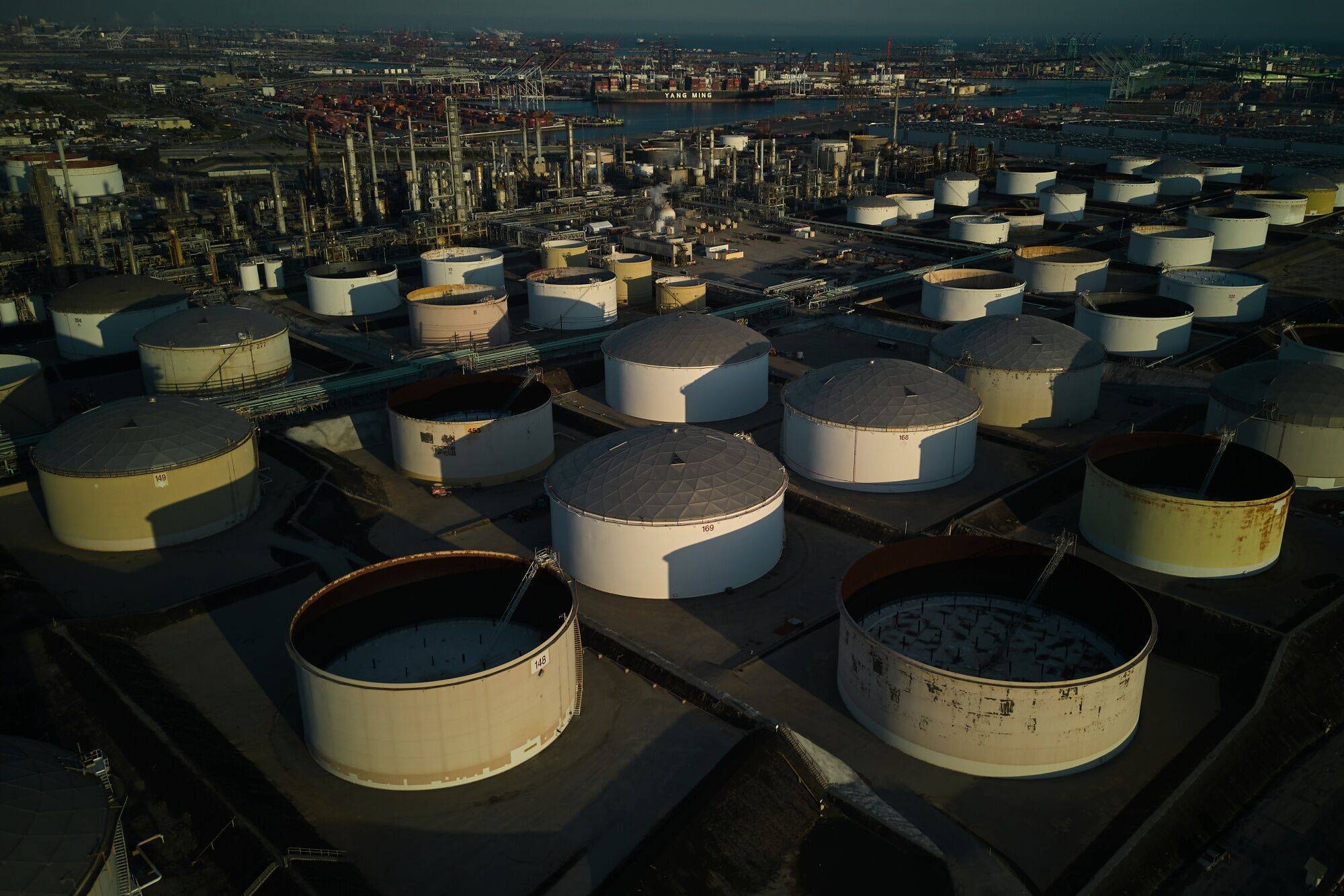
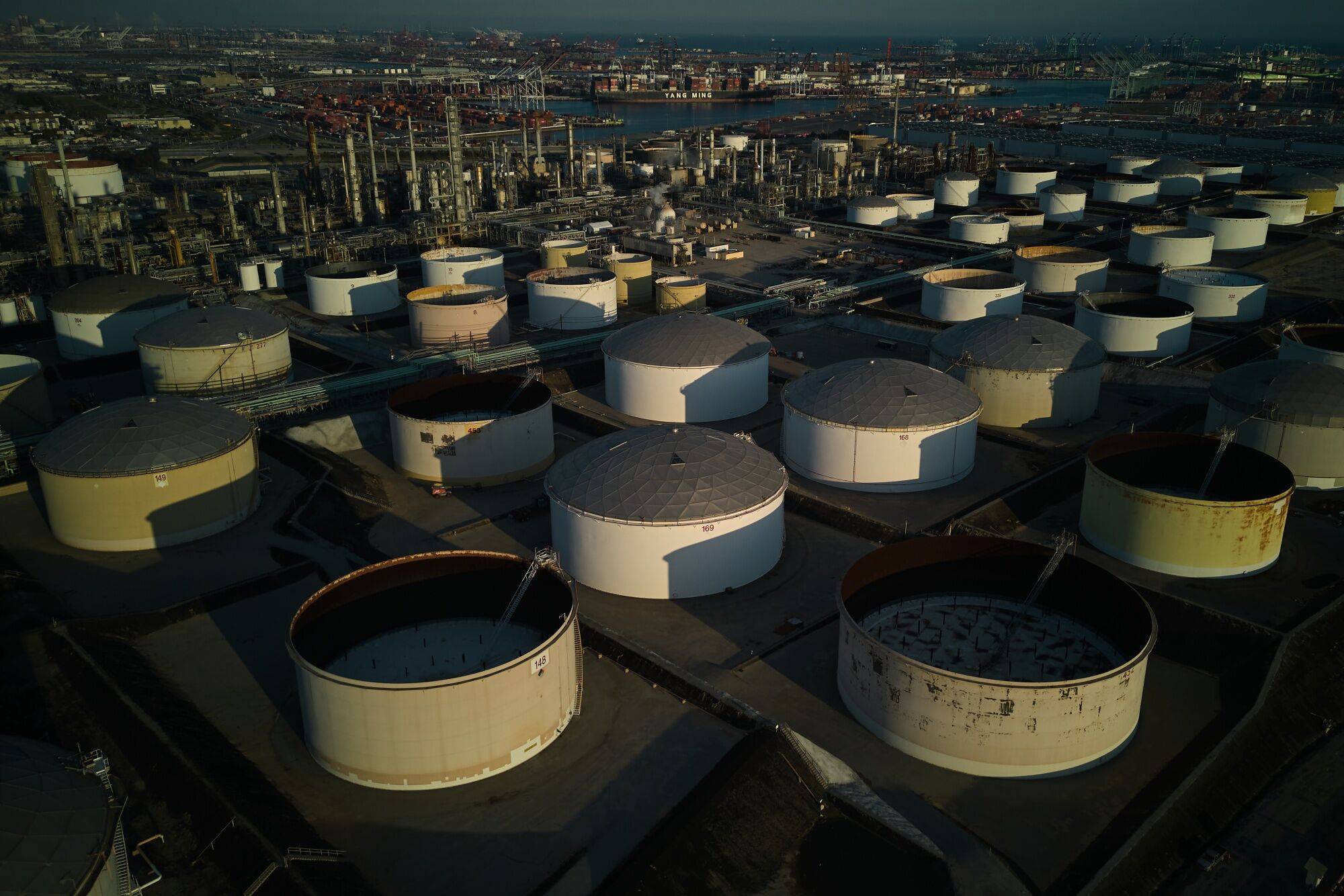
Oil fluctuated as investors weighed an increasingly bearish supply outlook against slowing progress in peace talks over the war in Ukraine.
West Texas Intermediate for October delivery edged higher to around $63 a barrel, though still hovered near two-month lows as Wednesday’s expiry of the previous contract added volatility to the low-volume trading. For the past 10 sessions, US oil futures have been locked in a tight range between about $62 and $65 a barrel.
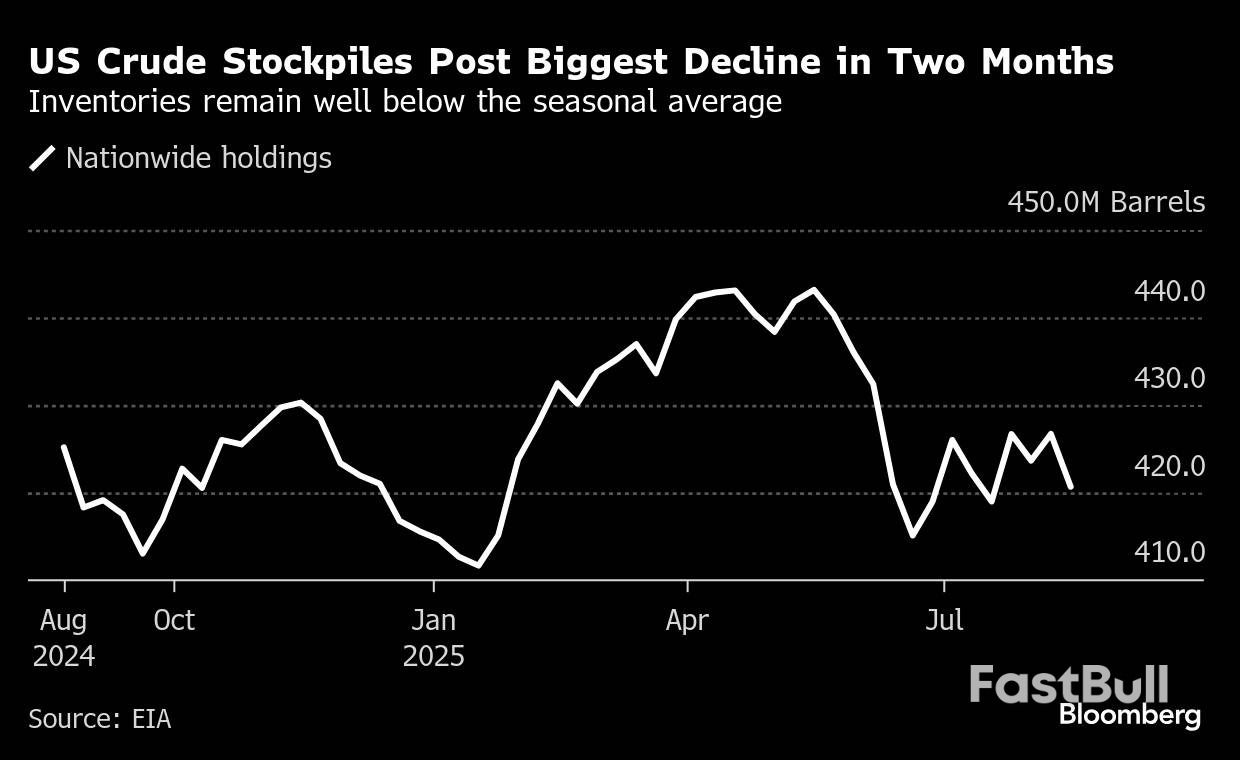
Investors have continued to parse a mixed US crude stockpile report that included the biggest overall decline since mid-June but a seventh straight weekly buildup at the storage hub of Cushing, Oklahoma. The delivery point for West Texas Intermediate futures has seen a recent surge in supplies from the Permian Basin.
Investors are also watching the progress toward a Russia-Ukraine ceasefire following a series of high-level talks brokered by President Donald Trump. The US has worked to set up a meeting between Russian President Vladimir Putin and Ukrainian President Volodymyr Zelenskiy, though the Kremlin so far has proved noncommittal and no date or location for the summit has been set. Any peace deal may lead to fewer restrictions on Russia’s crude exports, although Moscow has largely kept its oil flowing despite an array of sanctions.
Oil has dropped more than 10% this year on concerns that US tariffs will hurt economic growth just as OPEC+ nations are returning idled production, raising expectations for a glut once peak summer demand ends.
US gasoline stockpiles also declined for a fifth straight week, offering a reminder that, while many traders expect a surplus later this year, global inventories are still abnormally low. Jet fuel demand remains strong.
“The market continues to weigh a mix of bullish and bearish drivers that, which together with thin summer liquidity, are keeping prices boxed in,” said Ole Hansen, head of commodity strategy at Saxo Bank.
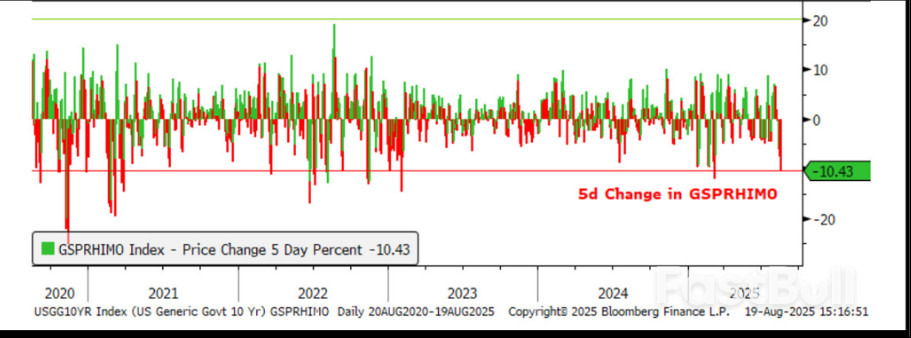
The global energy landscape has been undergoing a profound transformation − and the Middle East is at the heart of it. Traditionally viewed as a crude oil exporter, the region has rapidly evolved into a major refining and trading hub.This shift is not just about rapid development of infrastructure − it’s also about global influence, and it is prompting a necessary re-evaluation of how gasoline produced in the broader region is priced.
Since 2017, refining capacity in the Gulf region has expanded by a third to more than 10.5 million barrels per day. This growth reflects a determined strategy by regional producers to move downstream and capture more value from their hydrocarbon resources.The result is a significant increase in gasoline output from 1.7 million bpd to nearly 2.4 million bpd, enabling the region to not only meet domestic demand but also export surplus volumes.Gasoline exports from the Middle East have more than doubled over the same period, rising to 654,000 bpd.
These flows are also becoming increasingly global.
Although the primary markets for supply and delivery of gasoline and other products remains the Gulf region itself.The regional demand comes from the east coast of Africa, Pakistan, the Red Sea, sporadically the Mediterranean. And there is supply competition from west coast of India and the Red Sea.The market beyond these territories is really global: Asia, Singapore, the US and Australia.
To handle the complexity and extended reach, the big state-owned oil majors in the Gulf region have created their own global trading teams. The move has given them the necessary tools to react to market moves and positions during Asian, European and US trading days. These trading teams rival the best in the world on any scale.However, despite the transformation in production and markets, the pricing of Middle East gasoline has remained anchored to a market that no longer reflects regional realities.
Historically, gasoline produced in the Gulf region has been priced using values derived from the Singapore market, adjusted for the cost of freight. This pricing mechanism made sense when Singapore was the primary destination for lower Middle East exports.However, today, only a small fraction − just 7 per cent − of the region’s gasoline exports are shipped to Singapore. The rest are distributed across a diverse set of markets, each with its own supply-demand dynamics.Moreover, the reliance on freight-adjusted “netbacks” introduces volatility and price dislocations.
Tanker rates have become increasingly unpredictable, driven by disruptions along key shipping routes and broader geopolitical tensions. These fluctuations can obscure the true value of the product, making it harder for buyers and sellers to transact with confidence.In response to these challenges, a new pricing mechanism has emerged to reflect actual trading activity during the UAE business day, which is designed to capture local market fundamentals that reflect the region’s role in the wider markets that it delivers to.
Called “MEBOB”, the pricing mechanism lines up with Europe’s benchmark Ebob and RBOB, the measure for the US gasoline.These benchmarks, along with Singapore’s gasoline, trade as a global complex, and traders use derivatives to balance price and manage exposure to changing values worldwide.It follows the principle that the price of refined products in the Gulf should reflect the value of the commodity in the region and play its due role in the global gasoline trading complex.
The new mechanism is more than a technical innovation and is a recognition of a structural shift in global energy markets.The Middle East is no longer a passive participant in refined product trade; it is a price-setting region. Its refineries are among the most advanced in the world, its export reach is global, and its trading activity is increasingly centred in regional hubs like Fujairah and Jebel Ali.Of course, the success of any new benchmark depends on adoption. Market participants will need to see consistent liquidity, transparency, and alignment with physical trade.
But the rationale is clear: pricing Middle East gasoline based on a market thousands of miles away, with limited relevance to regional fundamentals, is not optimal.As energy flows become more multipolar and regional hubs rise in prominence, pricing mechanisms must evolve.The Middle East’s refining expansion demands a benchmark that reflects its new role − not just as a producer, but as a global products supplier and one of the levers in global prices.
European NATO leaders must not be naive when discussing a Ukraine peace force but face up to the reality that they would need to deploy tens of thousands of troops to the country for the long term, the head of Germany's soldiers' union said.
U.S. President Donald Trump is seeking to broker peace between Moscow and Kyiv but has ruled out sending U.S. troops to Ukraine.
French President Emmanuel Macron and British Prime Minister Keir Starmer have both spoken in favour of troop deployments in a post-war settlement as part of a coalition of the willing, with German Chancellor Friedrich Merz also signalling openness to German participation.
Colonel Andre Wuestner, head of the German Armed Forces Association, on Thursday called on European leaders not to play down the military task but be honest about the challenges, even though any quick ceasefire seemed unlikely.
"It won't be enough to have a handful of generals and smaller military units man a command post in Ukraine," Wuestner, whose organisation represents more than 200,000 active and retired soldiers, told Reuters.
"From the very beginning, it must be made clear to Putin — and backed by international forces — that we are totally serious about security guarantees", he said.
"Serious about supporting Ukraine, serious about securing a ceasefire, and serious about our response should Putin attempt another attack on Ukraine."
A "bluff-and-pray" approach would be downright negligent and increase the risk of an escalation, the colonel warned.
He estimated that each of the big countries in the coalition of the willing, such as Britain, France and Germany, would need to deploy at least 10,000 troops to Ukraine for the long run, posing a huge challenge to their already stretched and under-equipped forces.
"The Europeans remain military dwarfs and are already struggling to meet the new NATO commitments they made at the last summit," Wuestner said. "Europe is still a long way from being able to defend itself independently."
Therefore, there was an urgent need to finally speed up armament and strengthening the European pillar of NATO.
Early evidence suggests that White House policy is reducing the size of the immigrant labor force, in turn contributing to a recent drawdown in the overall U.S. labor pool, according to several economists.
CNBC spoke with a range of economists from financial firms, economic research institutions and think tanks, and also reviewed recent research notes and analyses that economists have published on immigration and the job market.
If a reduction in the immigrant labor force is sustained, such a trend would be a concern for the U.S. economy, those experts have said or written.
That's because the economy will increasingly rely on immigrants to fuel population and labor force growth given demographic trends among the U.S.-born populace, like retirements among baby boomers and lower fertility rates, they said.
The downward shift in the immigrant labor force in recent months is "definitive," said Mark Zandi, chief economist at Moody's.
"There's no debate what's going on there," Zandi said.
President Donald Trump has pursued an immigration agenda that he's referred to as "very aggressive."
The White House has sought to expand and expedite deportations, end birthright citizenship and restrict access to asylum, among other actions, for example. Many measures are being challenged in court.
The Trump administration is also readying a rule to end the lottery for H-1B visas — temporary work visas for college graduates in "specialty" fields like architecture, law and tech — and adopt a selection process that favors higher-wage earners.
Available data makes it hard to track what's happening to immigration flows and the immigrant labor pool in real time, economists said.
Some point to Bureau of Labor Statistics data as one signal.
The size of the foreign-born labor force has declined by about 1.2 million people since January, to 32.1 million total people in July, BLS data shows. (Some government data distinguishes between "foreign-born" and "native-born" workers — or, immigrants versus those born in the U.S.)
Nancy Vanden Houten, lead economist at Oxford Economics, cited the data in an Aug. 1 research note.
"[S]igns are mounting that the foreign-born labor force is shrinking due to the Trump administration's immigration policies," she wrote.
The U.S. labor force includes all people age 16 and older who are actively working or looking for work.
The BLS' reported decline in the foreign-born labor force has been "very dramatic" and larger than expected, said Stephen Brown, deputy chief North America economist at Capital Economics.
In July, the labor force participation rate had declined 0.3 percentage point for native-born workers compared with a year earlier, but had fallen by a much larger 1.2 percentage points for foreign-born workers, according to a J.P. Morgan analysis.
"[M]any immigrants appear to be leaving the labor force, wrote David Kelly, chief global strategist at J.P. Morgan Asset Management.
White House spokesperson Abigail Jackson said in an emailed statement that the Trump administration is committed to helping U.S. employers "ensure they have the legal workforce they need to be successful."
"There is no shortage of American minds and hands to grow our labor force, and President Trump's agenda to create jobs for American workers represents this Administration's commitment to capitalizing on that untapped potential while delivering on our mandate to enforce our immigration laws," Jackson wrote.
Some economists say the BLS data on the foreign-born and native-born labor force segments isn't a reliable gauge of near-term trends, due to various quirks in how it's collected and reported.
Trump questioned the accuracy of BLS statistics and fired the bureau's chief in August after a monthly report showed unexpectedly weak job growth.
But there's other evidence that economists point to that also suggests the immigrant labor pool is shrinking.
For example, job growth among industries that rely more heavily on undocumented immigrants has been "significantly weaker" than in the rest of the private sector, said Jed Kolko, a senior fellow at the Peterson Institute for International Economics and former undersecretary for economic affairs at the U.S. Department of Commerce during the Biden administration.
Job growth in those industries — such as hotels, restaurants, construction and home health aides — has been flat since the start of 2025, said Kolko. In July, jobs grew at a 0% rate in immigrant-heavy industries, he found.
Meanwhile, job growth has slowed in the rest of the private sector — a roughly 0.6% pace in July — but the deceleration wasn't as stark, he said.
Kolko analyzed federal data to calculate the three-month average annualized rate of employment growth in respective industries.
[S]igns are mounting that the foreign-born labor force is shrinking due to the Trump administration's immigration policies.
Matthew Martin, senior U.S. economist at Oxford Economics, found an additional link between immigration policy and its impact on the labor force.
Labor force growth has been "stagnant" in states like Texas and Florida with high immigrant arrests per capita, he wrote in an Aug. 4 research note, citing Immigration and Customs Enforcement data.
"States such as Texas and Florida have seen more intense crackdowns than California, New York, and New Jersey," Martin wrote. The "low-arrest" states have seen positive labor force growth in 2025, by contrast, he wrote.
"The data show that while the foreign-born labor force in low arrest-to-population states has increased since the beginning of the year, the labor force in high-arrest states flatlined," he wrote.
Nationwide, immigrant arrests have more than tripled since 2024, to more than 1,100 per day through mid-June, wrote Martin, citing ICE data.
Last month, Jerome Powell, chair of the Federal Reserve, cited immigration policy as a factor behind the slowdown in the labor supply.
"[B]ecause of immigration policy really, the flow into our labor forces is just a great deal slower," Powell said during a news conference on July 30.
The total U.S. labor force — including immigrants and native-born workers — has fallen for three consecutive months, according to BLS data. It has declined by 402,000 people from January to July, to about 170.3 million, the BLS reported.
More from Personal Finance:'Job hugging' has replaced job-hoppingFewer young adults reach key life, money milestonesWhy investors shouldn't try to be a 'hero' in this economy
Arrests and deportations, fear of showing up to the workplace, and fewer flows of immigrants into the U.S. may be playing a role, economists said.
Two programs that have given roughly 1.8 million immigrants from troubled countries the temporary right to live and work in the U.S. are being phased out this year, wrote Kelly of J.P. Morgan. This change in status may reduce labor supply by more than 1 million workers, he wrote, citing J.P. Morgan research.
Of course, a decline in the labor supply isn't only a function of immigration.
For example, unemployed people discouraged by the difficulty of finding a job right now may opt to sit on the sidelines instead of looking for work, meaning they wouldn't be counted in the labor force, said Brown of Capital Economics.
The White House has also taken steps that it says will boost employment among immigrants who are in the U.S. legally.
The Department of Labor established the Office of Immigration Policy in June, which the administration has said will streamline the process to secure temporary and permanent work visas, for example. Trump also signed an executive order in April seeking to support high-paid, skilled trade jobs.
Growth in the labor force is one of the "key" things determining how fast the U.S. economy can expand and how productive companies are, for example, Vanden Houten of Oxford Economics said in an interview.
A sustained decline in the size of the labor force — which is far from being assured — would be a concern, said Michael Strain, director of economic policy studies at the American Enterprise Institute, a right-leaning think tank.
"If we want the type of economic growth that we historically consider successful, then the demographic reality is that we're going to have to increase inflows of immigrants," Strain said. "There's no real way around that."
Without immigration, the population would shrink starting in 2033, partly because fertility rates are projected to remain low, according to the nonpartisan Congressional Budget Office.
[B]ecause of immigration policy really, the flow into our labor forces is just a great deal slower.
Additionally, a smaller labor pool might put pressure on employers to raise wages to attract talent, potentially exacerbating inflation, and would bring in less tax revenue to fund programs like Social Security, economists said.
The construction industry, which already suffers from labor shortages, is at risk of wage inflation, for example, according to a Bank of America Institute report published Tuesday.
Average wage growth in July approached 8% in the construction industry, nearly double the national average, according to the report.
"Immigration actions could potentially deepen workforce shortages, drive up costs and create serious financial risks for contractors," the Bank of America report said.
About 34% of construction workers are immigrants, versus the 20% average across all sectors, the report said. In trades like drywall installers or plasterers, the share is closer to 60%, it said.
A shortage of skilled labor already costs the U.S. economy about $10.8 billion per year due to longer construction times and raises the price of new single-family homes by about $2,600, on average, according to a joint analysis published in June by the Home Builders Institute, the National Association of Home Builders and the University of Denver.
However, some economists are skeptical that the U.S. will suffer a prolonged reduction in the immigrant labor force.
The Trump administration's plan likely isn't to have "net-out migration," Strain said.
"We didn't see net-out migration in [Trump's] first term," Strain said. "That'd cause all sorts of problems for businesses, for key sectors of the economy the president cares about, like construction, and I'd be surprised if that's where we end up."
"But who knows?" he added.
728 RM B 7/F GEE LOK IND BLDG NO 34 HUNG TO RD KWUN TONG KLN HONG KONG


White Label
Data API
Web Plug-ins
Poster Maker
Affiliate Program
The risk of loss in trading financial instruments such as stocks, FX, commodities, futures, bonds, ETFs and crypto can be substantial. You may sustain a total loss of the funds that you deposit with your broker. Therefore, you should carefully consider whether such trading is suitable for you in light of your circumstances and financial resources.
No decision to invest should be made without thoroughly conducting due diligence by yourself or consulting with your financial advisors. Our web content might not suit you since we don't know your financial conditions and investment needs. Our financial information might have latency or contain inaccuracy, so you should be fully responsible for any of your trading and investment decisions. The company will not be responsible for your capital loss.
Without getting permission from the website, you are not allowed to copy the website's graphics, texts, or trademarks. Intellectual property rights in the content or data incorporated into this website belong to its providers and exchange merchants.
Not Logged In
Log in to access more features

FastBull Membership
Not yet
Purchase


Log In
Sign Up


