• Trade
  • Markets
  • Copy
  • Contests
  • News
  • 24/7
  • Calendar
  • Q&A
  • Chats
Trending
Screeners
SYMBOL
LAST
BID
ASK
HIGH
LOW
NET CHG.
%CHG.
SPREAD
SPX
S&P 500 Index
6857.13
6857.13
6857.13
6865.94
6827.13
+7.41
+ 0.11%
--
DJI
Dow Jones Industrial Average
47850.93
47850.93
47850.93
48049.72
47692.96
-31.96
-0.07%
--
IXIC
NASDAQ Composite Index
23505.13
23505.13
23505.13
23528.53
23372.33
+51.04
+ 0.22%
--
USDX
US Dollar Index
98.930
99.010
98.930
98.980
98.740
-0.050
-0.05%
--
EURUSD
Euro / US Dollar
1.16495
1.16504
1.16495
1.16715
1.16408
+0.00050
+ 0.04%
--
GBPUSD
Pound Sterling / US Dollar
1.33379
1.33386
1.33379
1.33622
1.33165
+0.00108
+ 0.08%
--
XAUUSD
Gold / US Dollar
4224.59
4225.00
4224.59
4230.62
4194.54
+17.42
+ 0.41%
--
WTI
Light Sweet Crude Oil
59.346
59.376
59.346
59.543
59.187
-0.037
-0.06%
--

Community Accounts

Signal Accounts
--
Profit Accounts
--
Loss Accounts
--
View More

Become a signal provider

Sell trading signals to earn additional income

View More

Guide to Copy Trading

Get started with ease and confidence

View More

Signal Accounts for Members

All Signal Accounts

Best Return
  • Best Return
  • Best P/L
  • Best MDD
Past 1W
  • Past 1W
  • Past 1M
  • Past 1Y

All Contests

  • All
  • Trump Updates
  • Recommend
  • Stocks
  • Cryptocurrencies
  • Central Banks
  • Featured News
Top News Only
Share

Ministry: Ukraine's 2025 Grain Harvest At 53.6 Million Tons So Far

Share

Citigroup Expects European Central Bank To Hold Interest Rates At 2.0% At Least Until End-Of-2027 Versus Prior Forecast Of Cuts To 1.5% By March 2026

Share

Japan Economy Minister Kiuchi: Hope Bank Of Japan Guides Appropriate Monetary Policy To Stably Achieve 2% Inflation Target, Working Closely With Government In Line With Principles Stipulated In Government-Bank Of Japan Joint Agreement

Share

Japan Economy Minister Kiuchi: Specific Monetary Policy Means Up To Bank Of Japan To Decide, Government Won't Comment

Share

Japan Economy Minister Kiuchi: Government Will Watch Market Moves With High Sense Of Urgency

Share

Japan Economy Minister Kiuchi: Important For Stock, Forex, Bond Markets To Move Stably Reflecting Fundamentals

Share

Norway Government: Will Order 2 More German-Made Submarines, Taking Total To 6 Submarines, Increasing Planned Spending By Nok 46 Billion

Share

Norway Government: Plans To Buy Long-Range Artillery Weapons For Nok 19 Billion, With Strike Distance Of Up To 500 Km

Share

Japan Economy Minister Kiuchi: Inflationary Impact Of Stimulus Package Likely Limited

Share

BP : BofA Global Research Cuts To Underperform From Neutral, Cuts Price Objective To 375P From 440P

Share

Shell : BofA Global Research Cuts To Neutral From Buy, Cuts Price Objective To 3100P From 3200P

Share

Russia Plans To Supply 5-5.5 Million Tons Of Fertilizers To India In 2025

Share

Euro Zone Q3 Employment Revised To 0.6% Year-On-Year

Share

Rheinmetall Ag : BofA Global Research Cuts Price Objective To EUR 2215 From EUR 2540

Share

China's Commerce Minister: Will Eliminate Restrictive Measures

Share

Russia - India Statement Says Defence Partnership Is Responding To India's Aspirations For Self-Reliance

Share

Russia - India Statement Says Defence Ties Being Reoriented Towards Joint R&D And Production Of Advanced Defence Platforms

Share

Russia And India Express Interest In Deepening Cooperation In Exploration, Processing And Refining Technologies For Critical Minerals And Rare Earth Elements

Share

Eurostat - Euro Zone Q3 Employment +0.6% Year-On-Year (Reuters Poll +0.5%)

Share

Eurostat - Euro Zone Q3 Employment +0.2% Quarter-On-Quarter (Reuters Poll +0.1%)

TIME
ACT
FCST
PREV
U.S. Challenger Job Cuts MoM (Nov)

A:--

F: --

P: --

U.S. Initial Jobless Claims 4-Week Avg. (SA)

A:--

F: --

P: --

U.S. Weekly Initial Jobless Claims (SA)

A:--

F: --

P: --

U.S. Weekly Continued Jobless Claims (SA)

A:--

F: --

P: --

Canada Ivey PMI (SA) (Nov)

A:--

F: --

P: --

Canada Ivey PMI (Not SA) (Nov)

A:--

F: --

P: --

U.S. Non-Defense Capital Durable Goods Orders Revised MoM (Excl. Aircraft) (SA) (Sept)

A:--

F: --

P: --
U.S. Factory Orders MoM (Excl. Transport) (Sept)

A:--

F: --

P: --

U.S. Factory Orders MoM (Sept)

A:--

F: --

P: --

U.S. Factory Orders MoM (Excl. Defense) (Sept)

A:--

F: --

P: --

U.S. EIA Weekly Natural Gas Stocks Change

A:--

F: --

P: --

Saudi Arabia Crude Oil Production

A:--

F: --

P: --

U.S. Weekly Treasuries Held by Foreign Central Banks

A:--

F: --

P: --

Japan Foreign Exchange Reserves (Nov)

A:--

F: --

P: --

India Repo Rate

A:--

F: --

P: --

India Benchmark Interest Rate

A:--

F: --

P: --

India Reverse Repo Rate

A:--

F: --

P: --

India Cash Reserve Ratio

A:--

F: --

P: --

Japan Leading Indicators Prelim (Oct)

A:--

F: --

P: --

U.K. Halifax House Price Index YoY (SA) (Nov)

A:--

F: --

P: --

U.K. Halifax House Price Index MoM (SA) (Nov)

A:--

F: --

P: --

France Current Account (Not SA) (Oct)

A:--

F: --

P: --

France Trade Balance (SA) (Oct)

A:--

F: --

P: --

France Industrial Output MoM (SA) (Oct)

A:--

F: --

P: --

Italy Retail Sales MoM (SA) (Oct)

A:--

F: --

P: --

Euro Zone Employment YoY (SA) (Q3)

A:--

F: --

P: --

Euro Zone GDP Final YoY (Q3)

A:--

F: --

P: --

Euro Zone GDP Final QoQ (Q3)

A:--

F: --

P: --

Euro Zone Employment Final QoQ (SA) (Q3)

A:--

F: --

P: --

Euro Zone Employment Final (SA) (Q3)

A:--

F: --

P: --
Brazil PPI MoM (Oct)

--

F: --

P: --

Mexico Consumer Confidence Index (Nov)

--

F: --

P: --

Canada Unemployment Rate (SA) (Nov)

--

F: --

P: --

Canada Labor Force Participation Rate (SA) (Nov)

--

F: --

P: --

Canada Employment (SA) (Nov)

--

F: --

P: --

Canada Part-Time Employment (SA) (Nov)

--

F: --

P: --

Canada Full-time Employment (SA) (Nov)

--

F: --

P: --

U.S. Personal Income MoM (Sept)

--

F: --

P: --

U.S. Dallas Fed PCE Price Index YoY (Sept)

--

F: --

P: --

U.S. PCE Price Index YoY (SA) (Sept)

--

F: --

P: --

U.S. PCE Price Index MoM (Sept)

--

F: --

P: --

U.S. Personal Outlays MoM (SA) (Sept)

--

F: --

P: --

U.S. Core PCE Price Index MoM (Sept)

--

F: --

P: --

U.S. UMich 5-Year-Ahead Inflation Expectations Prelim YoY (Dec)

--

F: --

P: --

U.S. Core PCE Price Index YoY (Sept)

--

F: --

P: --

U.S. Real Personal Consumption Expenditures MoM (Sept)

--

F: --

P: --

U.S. 5-10 Year-Ahead Inflation Expectations (Dec)

--

F: --

P: --

U.S. UMich Current Economic Conditions Index Prelim (Dec)

--

F: --

P: --

U.S. UMich Consumer Sentiment Index Prelim (Dec)

--

F: --

P: --

U.S. UMich 1-Year-Ahead Inflation Expectations Prelim (Dec)

--

F: --

P: --

U.S. UMich Consumer Expectations Index Prelim (Dec)

--

F: --

P: --

U.S. Weekly Total Rig Count

--

F: --

P: --

U.S. Weekly Total Oil Rig Count

--

F: --

P: --

U.S. Consumer Credit (SA) (Oct)

--

F: --

P: --

China, Mainland Foreign Exchange Reserves (Nov)

--

F: --

P: --

China, Mainland Exports YoY (USD) (Nov)

--

F: --

P: --

Q&A with Experts
    • All
    • Chatrooms
    • Groups
    • Friends
    Connecting
    .
    .
    .
    Type here...
    Add Symbol or Code

      No matching data

      All
      Trump Updates
      Recommend
      Stocks
      Cryptocurrencies
      Central Banks
      Featured News
      • All
      • Russia-Ukraine Conflict
      • Middle East Flashpoint
      • All
      • Russia-Ukraine Conflict
      • Middle East Flashpoint
      Search
      Products

      Charts Free Forever

      Chats Q&A with Experts
      Screeners Economic Calendar Data Tools
      Membership Features
      Data Warehouse Market Trends Institutional Data Policy Rates Macro

      Market Trends

      Market Sentiment Order Book Forex Correlations

      Top Indicators

      Charts Free Forever
      Markets

      News

      News Analysis 24/7 Columns Education
      From Institutions From Analysts
      Topics Columnists

      Latest Views

      Latest Views

      Trending Topics

      Top Columnists

      Latest Update

      Signals

      Copy Rankings Latest Signals Become a signal provider AI Rating
      Contests
      Brokers

      Overview Brokers Assessment Rankings Regulators News Claims
      Broker listing Forex Brokers Comparison Tool Live Spread Comparison Scam
      Q&A Complaint Scam Alert Videos Tips to Detect Scam
      More

      Business
      Events
      Careers About Us Advertising Help Center

      White Label

      Data API

      Web Plug-ins

      Affiliate Program

      Awards Institution Evaluation IB Seminar Salon Event Exhibition
      Vietnam Thailand Singapore Dubai
      Fans Party Investment Sharing Session
      FastBull Summit BrokersView Expo
      Recent Searches
        Top Searches
          Markets
          News
          Analysis
          User
          24/7
          Economic Calendar
          Education
          Data
          • Names
          • Latest
          • Prev

          View All

          No data

          Scan to Download

          Faster Charts, Chat Faster!

          Download App
          English
          • English
          • Español
          • العربية
          • Bahasa Indonesia
          • Bahasa Melayu
          • Tiếng Việt
          • ภาษาไทย
          • Français
          • Italiano
          • Türkçe
          • Русский язык
          • 简中
          • 繁中
          Open Account
          Search
          Products
          Charts Free Forever
          Markets
          News
          Signals

          Copy Rankings Latest Signals Become a signal provider AI Rating
          Contests
          Brokers

          Overview Brokers Assessment Rankings Regulators News Claims
          Broker listing Forex Brokers Comparison Tool Live Spread Comparison Scam
          Q&A Complaint Scam Alert Videos Tips to Detect Scam
          More

          Business
          Events
          Careers About Us Advertising Help Center

          White Label

          Data API

          Web Plug-ins

          Affiliate Program

          Awards Institution Evaluation IB Seminar Salon Event Exhibition
          Vietnam Thailand Singapore Dubai
          Fans Party Investment Sharing Session
          FastBull Summit BrokersView Expo

          North American Morning Briefing: Stock Futures Stall; Hopes Rise for Peace in Gaza

          Adam

          Stocks

          Latest news on the Israeli-Palestinian conflict

          Summary:

          Futures flat as Gaza ceasefire hopes calm markets; gold stays above $4,000, oil steady, dollar stronger. Google invests $5.8 B in Belgium; Ferrari debuts its first EV supercar.

          OPENING CALL

          Stocks futures were struggling for direction early Thursday after the AI rally reignited in the previous session.
          Global instability has weighed on markets but a significant move toward peace in the Middle East helped damp some of those fears, with oil fluctuating on the news that a hostage release deal has been agreed between Israel and Hamas.
          Closer to home, an endgame is taking shape as the government shutdown stretches into a ninth day , though it could take a while longer to reach a deal.
          Government-issued economic data is likely to be postponed, but investors will be watching for a raft of speakers at a community-bank conference at Washington with Federal Reserve Chair Jerome Powell due to give welcoming remarks at 8:30 a.m. ET.
          The Fed's Bowman, Barr, Treasury Secretary Scott Bessent and Blackstone CEO Steve Schwarzman are among other scheduled speakers.
          Meanwhile, new research found that immigration restrictions lead to more M&A activity, as companies that can't find needed talent often acquire it via takeovers.
          The research found causation as opposed to correlation, and history suggests the response was fairly quick.
          Stocks to Watch
          Costco rose 1.5% off-hours after it said sales rose 8% on the year in the five weeks ending on Oct. 5.
          MP Materials rallied premarket trading after China tightened rare-earth export controls.
          Richardson Electronics climbed 20% after hours. Its profit soared, driven by higher demand for its semiconductor wafer fabs.
          Telomir Pharmaceuticals said its Telomir-1 compound showed it can kill aggressive triple-negative breast cancer cells. Shares gained 21% after market close.
          TEVA, Sandoz and Viatris: Shares in the drug companies were mixed premarket, after The Wall Street Journal reported that generic medicines would be excluded from planned pharmaceutical tariffs.
          Watch For:
          Weekly Jobless Claims were due along with Wholesale Inventories for August; World Agricultural Supply & Demand Estimates (WASDE); Earnings from PepsiCo, Delta Air Lines, Levi Strauss
          Must Reads:
          -How Trump Threw a Wrench Into Credit Markets
          - Five Things to Know About the Gaza Deal
          -Drug Rehabs Lure In Patients for Insurance Money-Then Leave Them on the Street

          MARKET WRAPS

          Forex:
          The dollar rose after the Fed minutes showed officials were divided over how much further they should lower interest rates.
          Most policymakers thought it would be appropriate to cut rates over the remainder of the year but a few thought a cut wasn't necessary at last month's meeting.
          There was clearly a level of caution throughout the meeting as participants thought recent indicators didn't show a sharp deterioration in labor market conditions, Deutsche Bank said.
          "On inflation, the majority of members emphasised upside risks."
          News that French President Emmanuel Macron could announce a new prime minister could support the euro, ING said.
          "This has come as a surprise to a market that had felt that the next chapter in the French political saga could only be new and divisive elections."
          Sterling fell to a nearly two-week low against the dollar after the Fed minutes.
          "This aligns with our recent view that the pound's near term fortunes are largely determined by dollar dynamics and global risk appetite rather than U.K. fundamentals," Monex Europe said.
          The yen could fall further as expectations that interest rates will stay lower for longer encourage investors to use it as a funding currency in carry trades, ING said.
          Bonds:
          Treasurys were little changed, awaiting fresh impulse as the government shutdown continued.
          Energy:
          Oil prices were little changed, as investors turned their focus to the deal in Gaza.
          Metals:
          Gold prices fell, but continued to trade above the historic $4,000 mark as the first phase of a Gaza deal started.
          "Concerns over the U.S. economy and the government shutdown continue to boost investor demand," ANZ said.
          Strong ETF inflows and expectations that the Fed will cut rates further this year were also supporting prices, with major Wall Street banks saying the yellow metal has room to climb even higher.
          Swissquote Bank said gold has more room to run, adding that even with record prices, the medium-term outlook for bullion remained positive.
          Many investors already eye a move toward $5,000 and above, it said.
          Copper
          Copper prices climbed after Canadian giant Teck Resources cut its production guidance due to continued challenges at its mine in Chile, raising concerns over global supply.
          "Copper has surged around 23% so far this year, driven by supply disruptions at major mines that outweigh weak demand in major industrial economies," ING said.
          The International Copper Study Group forecast a supply deficit of 150,000 tons next year, rather than its previous estimate of a 209,000-ton surplus.
          The group also narrowed its 2025 surplus estimate to 178,000 tons from 289,000 tons earlier.
          TODAY'S TOP HEADLINES
          Google Plans $5.8 Billion Investment in Belgium
          Alphabet's Google will pump 5 billion euros ($5.82 billion) of capital into Belgium over the next two years, the latest large-scale investment from a U.S. tech giant bolstering its data center infrastructure in Europe.
          Google said late Wednesday that it would scale up its data center facility in St. Ghislain, adding 300 full-time jobs to its existing workforce of around 600 full-time and contract jobs. Funding will underpin the use of artificial-intelligence and augment Google's ability to meet rising demand for Google Cloud, it said. The investment will also help power other services, like Google Search, Maps and Workspace.
          Can Ferrari Persuade the Superrich to Buy an EV Sports Car That Won't Rev?
          Extravagantly powerful and noisy engines helped make Ferrari the ultimate sports-car brand. Now the company wants to persuade the superrich to buy a model with no engine at all.
          The Italian carmaker this week started lifting the hood on its first fully electric vehicle, a yearslong project that has cost the brand hundreds of millions of dollars and promises to set a benchmark for how battery-powered sports cars should look, sound and drive.
          At a glitzy launch event at its headquarters in Maranello, Ferrari showed off the technology that will power the EV, including a new electric axle, motor and battery pack set to be made in-house at its new factory.
          Daimler Truck to Sell Japanese Plant as Part of Toyota Truck Units Merger
          Daimler Truck said it intends to sell its Nakatsu plant in Japan after consolidating its Mitsubishi Fuso operations at the Kawasaki plant, as part of the Japanese truck-unit merger with Toyota Motors.
          Daimler and Toyota said Thursday that they would consolidate their manufacturing footprint into three sites from five by the end of 2028, in a bid to achieve efficiencies.
          Gold Screams 'Debasement Trade.' Bonds Say Otherwise.
          Debasement fears seem to be everywhere-except the one place they should be most obvious: bonds. Sure, there was a nudge up in global long-end yields this week, thanks to politics. Japan's ruling party picked a leader who likes big spending and low rates, and France lost yet another prime minister after failing to reconcile the need to save money with a parliament that disagrees.
          Yet, the bond markets remain confident that U.S. inflation won't run out of control, even as investors point to soaring gold prices as a sign of fear that politicians and central banks will choose inflation as the easy way out of debt problems.
          German Exports Unexpectedly Fell in August as Uncertainty Weighed
          German exports unexpectedly declined in August, hampered by weaker trade with other European nations and the uncertainty prompted by U.S. tariffs over the summer.
          Exports of goods fell 0.5% on month in August, while imports fell 1.3%, German statistics agency Destatis said Thursday. Economists polled by The Wall Street Journal instead expected exports to rise by 0.3%.
          What's Really Going On in Portland, According to Police Reports
          On Sept. 5, President Trump described ongoing protests in Portland as "unbelievable" and "the destruction of the city."
          Later that day, a sergeant from the Portland Police Bureau filed his daily observations of the demonstrations outside an ICE facility.
          Russian Drones Turn the Streets of Kherson Into a Civilian Kill Zone
          MYKOLAIV, Ukraine-Yaroslav Pavlivskiy waved his hands as he sprang from his car, pleading for mercy with the operator of a Russian drone circling overhead as he drove home from a market in the southern city of Kherson.
          The operator flicked a switch to release a grenade, which exploded and tore into the legs of the 69-year-old pensioner. A passerby used a belt as a tourniquet to stop him from losing too much blood, saving his life.
          Republicans Caution White House on Inflicting Shutdown Pain
          WASHINGTON-Senate Majority Leader John Thune and other senior GOP lawmakers have quietly advised the White House not to move forward with mass layoffs and sharp cuts to government assistance programs as the shutdown enters its second week, according to people familiar with the matter.
          In recent conversations, Thune (R., S.D.) has counseled the president to attempt to limit the fallout from the shutdown for as long as possible, according to one of the people. Far-reaching government cuts and firings could backfire with the public, lawmakers have told the president's aides, warning that such moves could cause voters to blame Republicans for the shutdown, the people said.

          Source: morningstar

          Risk Warnings and Disclaimers
          You understand and acknowledge that there is a high degree of risk involved in trading. Following any strategies or investment methods may lead to potential losses. The content on the site is provided by our contributors and analysts for information purposes only. You are solely responsible for determining whether any trading assets, securities, strategy, or any other product is suitable for investing based on your own investment objectives and financial situation.
          Add to Favorites
          Share

          Torrid German Industry Tests Merz’s Reform Ambition

          Michelle

          Economic

          Forex

          Five months after taking office with pledges to stop the rot in Germany, Chancellor Friedrich Merz might have hoped for more encouraging news.

          But the past three days of data releases for August have underscored just how torrid a situation manufacturing faces in Europe’s biggest economy. Factory orders unexpectedly fell for a fourth month, production plunged the most in well over three years, and exports to the US dropped to the lowest since late 2021.

          The index for industry is now markedly lower than its peak reached in 2017, and sits at readings that were first surpassed all the way back in 2005. Even if the change in value-added is less dramatic, the damage to growth is undeniable.

          It’s little surprise that the once-vaunted auto industry is the biggest source of pain. Not only have carmakers been hurt by US President Donald Trump’s tariff increases, but they’ve seen the previously lucrative China market steadily slip from their grasp — having been slow to pick up on Beijing’s determination to transition to electric vehicles.

          Mercedes-Benz on Tuesday reported a 27% contraction in China sales, taking them down to their lowest in almost a decade. While BMW saw a much smaller drop, its guidance about the outlook ahead was worrying enough to push its shares down by the most since last November. On Thursday, Porsche revealed that its own sales in China fell 21% during the third quarter.

          In a measure of the alarm in Berlin at the car industry’s woes, Merz’s coalition announced a program worth €3 billion ($3.5 billion) on Thursday offering incentives for low- and middle-income households to buy zero-emission vehicles.

          While the ruling parties arrived in office with an historic deal to set aside debt rules and embrace large-scale defense and infrastructure spending, it will take time for that money to reach the economy. On Wednesday, the government raised its forecasts for economic growth this year, but those predictions still show hardly any expansion this year before a recovery finally takes hold in 2026.

          “The German economy is still on shaky ground,” said Geraldine Dany-Knedlik, head of forecasting at the Berlin-based DIW institute.

          There’s a consensus among economists that fiscal stimulus alone won’t be enough to sustain momentum, and that the government needs to get on with growth-friendly changes. Germany’s central bank chief chimed in again on the matter this week.

          “Time to speed up on the path to reform,” Bundesbank President Joachim Nagel urged. “The government must take decisive action.”

          But it’s already clear that, beyond the stellar performance of some stocks in Germany’s DAX index, the more optimistic hopes that Merz first stoked with his debt reforms are starting to fade.

          “The fiscal reforms have not yet rekindled animal spirits in Germany’s private sector, except in pockets such as defense,” Deutsche Bank economists led by Robin Winkler wrote in a note this week. “In the absence of meaningful structural reforms the government has so far got less” out of its announced stimulus plans than expected, they said.

          Source: Bloomberg Europe

          To stay updated on all economic events of today, please check out our Economic calendar
          Risk Warnings and Disclaimers
          You understand and acknowledge that there is a high degree of risk involved in trading. Following any strategies or investment methods may lead to potential losses. The content on the site is provided by our contributors and analysts for information purposes only. You are solely responsible for determining whether any trading assets, securities, strategy, or any other product is suitable for investing based on your own investment objectives and financial situation.
          Add to Favorites
          Share

          Reality of Trump’s Tariffs Starts to Show in German Trade Data

          Glendon

          Economic

          Forex

          While economic data in the US are in short supply because of the government shutdown, releases from the world’s third-largest export power continue to show what impact President Donald Trump’s tariffs are having across the world.

          On Thursday, trade data from Germany provided more evidence of the plight faced by Europe’s biggest economy, which has traditionally relied on manufacturers with global reach to drive growth.

          The value of German exports unexpectedly dropped 0.5% in August, the month following the US trade deal with the European Union. Economists polled by Bloomberg had predicted a small gain. Shipments to the US suffered particularly, dropping 2.5% from July. It was the fifth consecutive decline, to the lowest level since November 2021.

          Industrial heavyweights including BASF, Volkswagen and BMW have already had to cut their profit outlooks in recent months in part because of tariffs. The government of Chancellor Friedrich Merz is meanwhile trying to engineer a rebound by spending hundreds of billions of euros on infrastructure and through other domestic reforms.

          The US is not the only source of concern for German companies. Trade with China can also no longer be counted on as an engine of growth, partly because the country has evolved into a competitor on global markets. A 5.4% jump in August in exports to the country is changing little about the downward trend, said Ralph Solveen, an economist at Commerzbank.

          “Hopes for an economic recovery won’t be based on foreign demand, but rather on a domestic economy that is picking up due to lower ECB interest rates and higher government spending,” he said in a note.

          Other reports this week underscored this point. Industrial production in Germany fell the most since early 2022, especially in the auto sector. The situation in the country’s flagship industry has gotten so dire that executives are meeting Merz on Thursday to discuss ways out the crisis.

          Responding to the trade figures, BGA, an association representing interests of German exporters, urged the EU not to give in to protectionism. “Europe needs investments in resilience and diversification — not walls around its internal market,” BGA President Dirk Jandura said.

          Source: Bloomberg Europe

          To stay updated on all economic events of today, please check out our Economic calendar
          Risk Warnings and Disclaimers
          You understand and acknowledge that there is a high degree of risk involved in trading. Following any strategies or investment methods may lead to potential losses. The content on the site is provided by our contributors and analysts for information purposes only. You are solely responsible for determining whether any trading assets, securities, strategy, or any other product is suitable for investing based on your own investment objectives and financial situation.
          Add to Favorites
          Share

          Russia Accused Of Waging 'hybrid Warfare' Against Europe. What Does That Mean?

          Samantha Luan

          Economic

          Forex

          Political

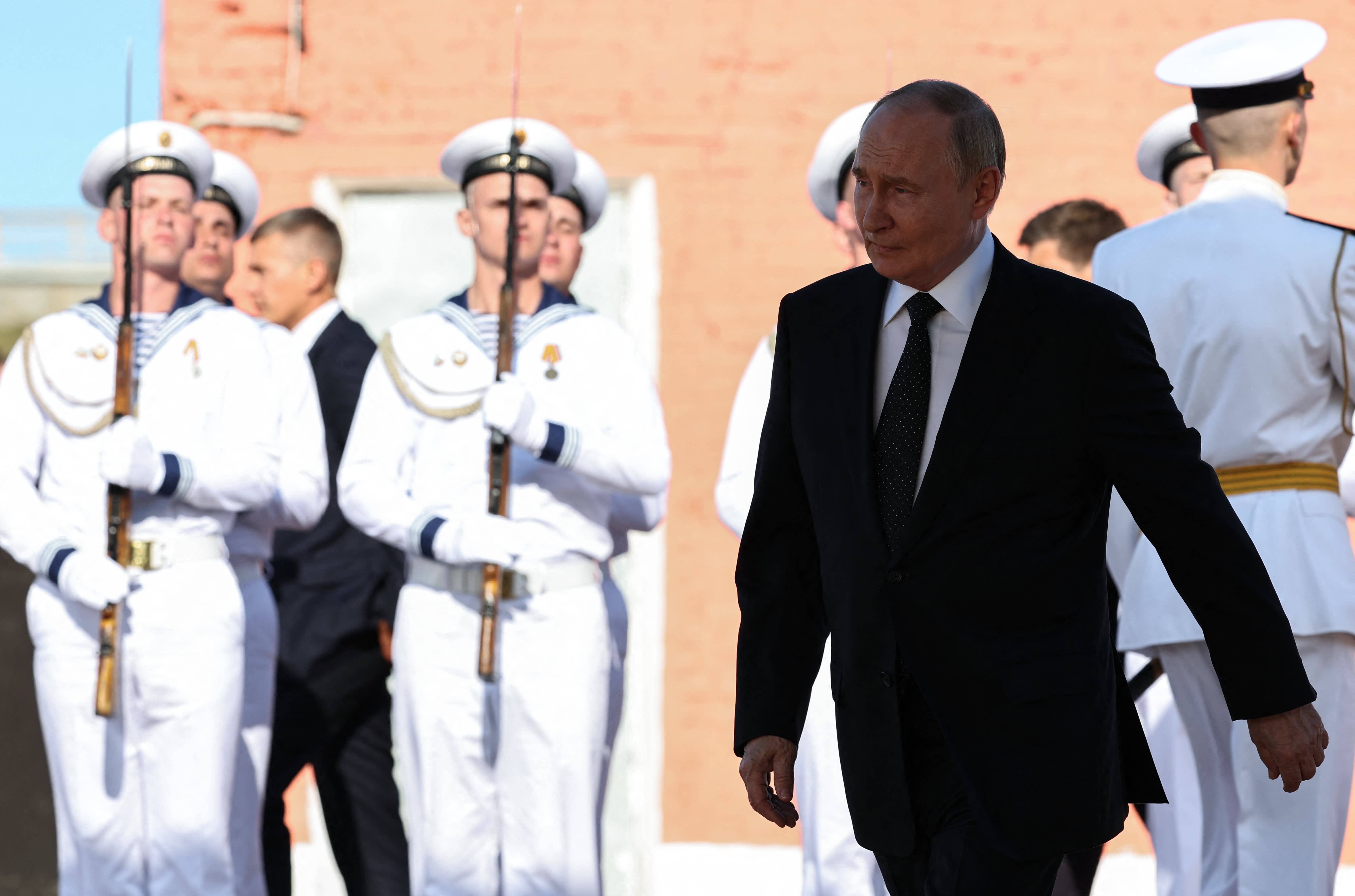
          In this pool photograph distributed by the Russian state agency Sputnik, Russia's President Vladimir Putin attends a flag-raising ceremony for the latest Project 955A (Borey-A) strategic nuclear-powered submarine Knyaz Pozharsky in Severodvinsk on July 24, 2025.

          Europe has to confront the reality of the "hybrid warfare" being waged against it, according to European Commission President Ursula von der Leyen, telling EU lawmakers that a series of incidents was "not random harassment" but part of a concerted campaign to unsettle and weaken the bloc.Recent drone and airspace incursions, cyberattacks and election interference were just a few incidents that von der Leyen cited as instances of hybrid warfare against Europe.

          "In just the past two weeks, MiG fighters have violated Estonia's airspace, and drones have flown over critical sites in Belgium, Poland, Romania, Denmark and Germany. Flights have been grounded, jets scrambled, and countermeasures deployed to ensure the safety of our citizens," von der Leyen said Wednesday during a speech to the European Parliament in Strasbourg, France.

          "Make no mistake. This is part of a worrying pattern of growing threats. Across our Union, undersea cables have been cut, airports and logistics hubs paralysed by cyberattacks, and elections targeted by malign influence campaigns," von der Leyen said, adding emphatically: "This is hybrid warfare, and we have to take it very seriously."While she did not blame all those incidents directly on Moscow, von der Leyen said it was evident that "Russia wants to sow division."Moscow has long been accused of being behind a multitude of "hybrid" attacks against its European neighbors but has repeatedly denied those accusations. CNBC contacted the Kremlin for a response to von der Leyen's latest remarks and is awaiting a response.

          What is hybrid warfare?

          So what is a hybrid war, or warfare? Put simply, it's a way to wage a type of warfare without appearing to be doing so.There is no set definition for hybrid warfare but defense, military and security experts agree that, fundamentally, it blends conventional military methods with more subversive or irregular tactics designed to disrupt, distract and undermine adversaries.

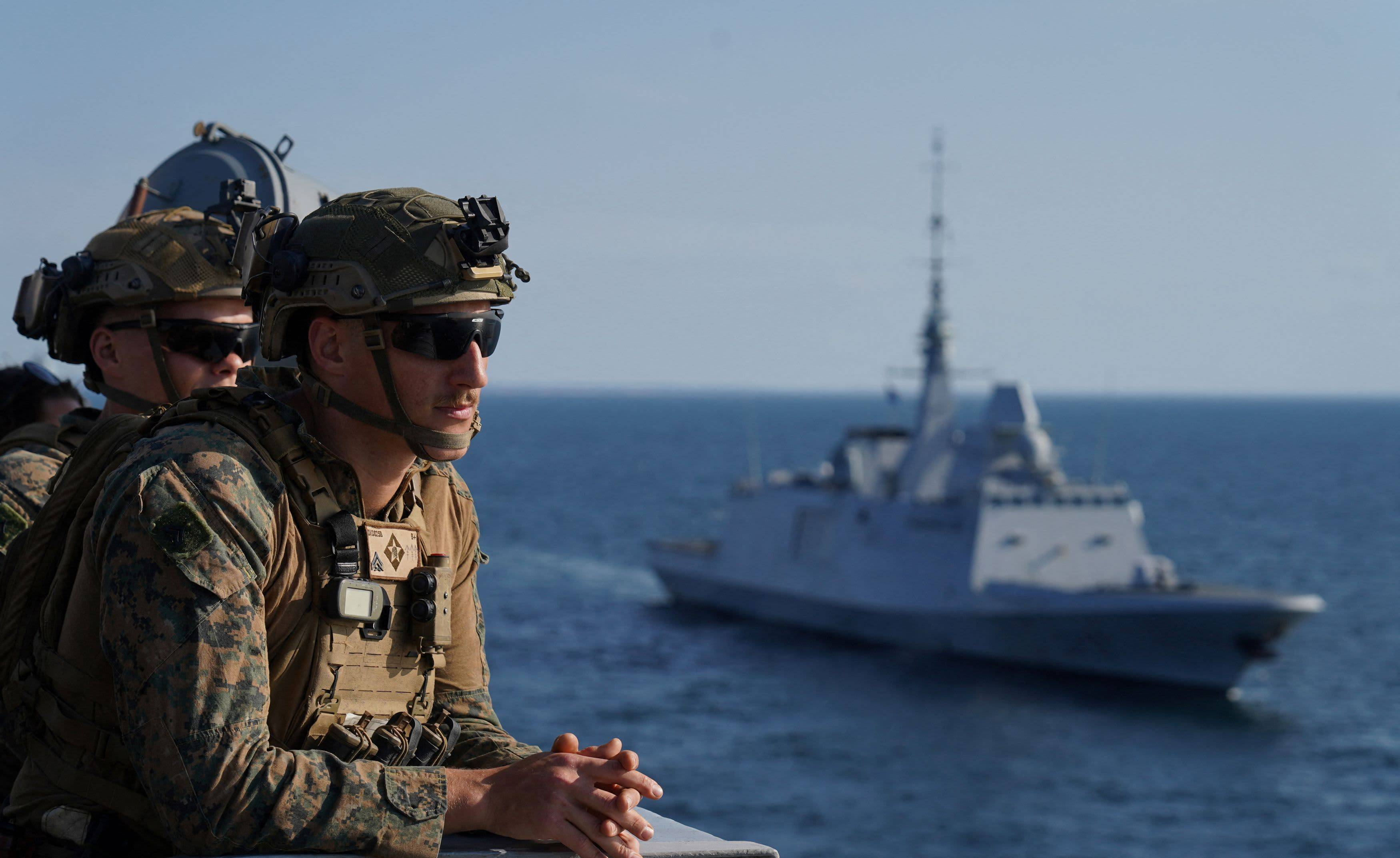
          US marines look on from aboard the USS Mesa Verde ship during the Northern Coasts 2023 exercise in the Baltic Sea, September 18, 2023.

          European countries on the periphery of the EU, or those on the frontier with Russia, like the Baltic states Estonia, Latvia and Lithuania, or those in Eastern Europe such as Romania and Poland, have been increasingly exposed to hybrid warfare attacks.These incidents have ranged from energy and telecommunications infrastructure, such as undersea cables, being sabotaged, to Russian jets or submarines venturing into NATO airspace or waters for short periods of time.

          Russia has denied being behind many of these incidents, although it tends not to comment on its jets entering NATO airspace or drone incidents that led to Danish airports being closed and flights disrupted. A number of European officials accused Russia of being behind the disruption but the authorities said they had not yet found evidence of Russia's involvement.

          That's one of the hallmarks of hybrid warfare, the EU's von der Leyen said, with such incidents "calculated to linger in the twilight of deniability."

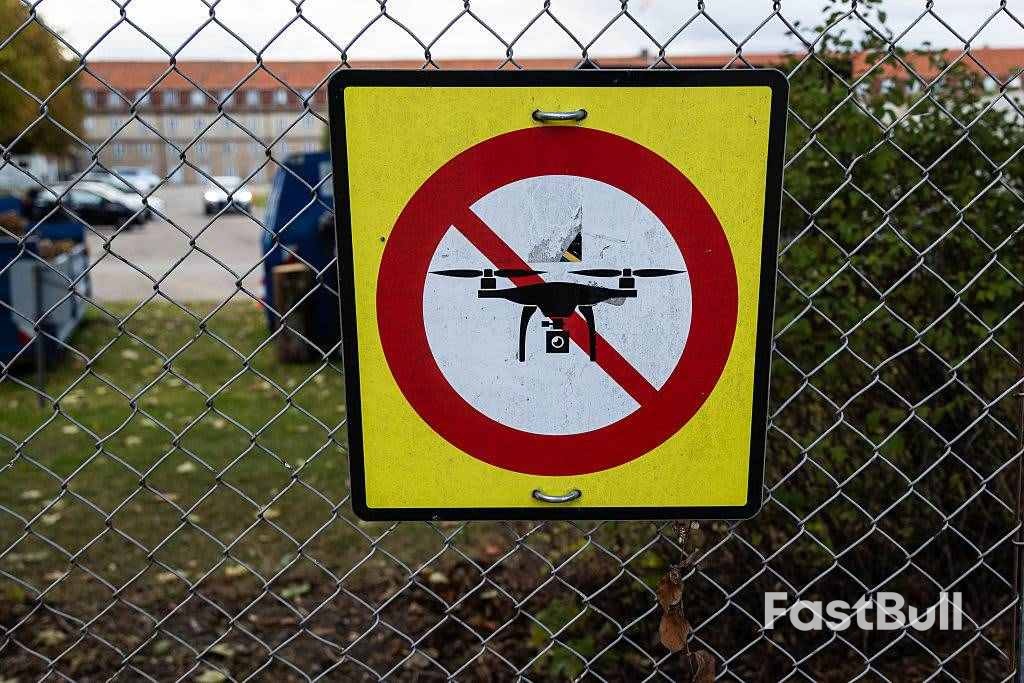
          A sign warns about a no-fly zone in Copenhagen, Denmark, on September 29, 2025. From Monday, September 29, through Friday, October 3, all civilian drone flights are prohibited in Danish airspace in connection with the EU summit.

          Russia's campaign of hybrid activities in Europe has expanded significantly since Moscow's full-scale invasion of Ukraine began over three years ago, according to a report published earlier this year from geopolitical and security intelligence service, Dragonfly.It documented 219 incidents of suspected Russian hybrid warfare in Europe since 2014, including sabotage, assassinations and electromagnetic attacks, such as GPS jamming. Of these incidents, 86% have taken place since early 2022 and almost half (46%) occurred in 2024 alone.The Baltic states, Finland, Germany, Norway, Poland and the U.K. will probably remain the primary targets, the report noted, due to their strong support for Ukraine.

          Europe says it's ready to act

          European officials are under no illusion that the time to act to bolster regional security and defenses against malign activities is now.

          NATO members earlier this year pledged to increase defense spending to 5% of grpss domestic product and Europe has vowed to mobilize its defense sector to meet the "permanent threat to European security" that's posed by Russia, as Luxembourg Prime Minister Luc Frieden told CNBC last week.Member states discussed last week the creation of "flagship" defense projects such as the Eastern Flank Watch initiative, which proposes the creation of a "drone wall" network that would protect against airspace violations by unmanned aerial vehicles (UAVs). There is some ambivalence over the drone wall, however, with Germany's defense minister appearing to pour cold water on the idea.

          Luxembourg's Frieden said the EU did not want a conflict with Russia, but needed to protect itself.

          "Hybrid attacks are obviously something that can happen anywhere — the cables in the Baltic Sea, the attacks on our IT systems, the drones that can fly over some of our countries, that shows that there is a certain kind of provocation that we have to take seriously," Frieden said, adding: "I don't want us to be at war with Russia ... but we need to take threats seriously" he told CNBC's Silvia Amaro."We want to tell Russia, don't try, stop it, go back ... [and that it has] no chance in conquering the Europe."

          Source: CNBC

          To stay updated on all economic events of today, please check out our Economic calendar
          Risk Warnings and Disclaimers
          You understand and acknowledge that there is a high degree of risk involved in trading. Following any strategies or investment methods may lead to potential losses. The content on the site is provided by our contributors and analysts for information purposes only. You are solely responsible for determining whether any trading assets, securities, strategy, or any other product is suitable for investing based on your own investment objectives and financial situation.
          Add to Favorites
          Share

          BlackRock Shifts Focus to Ethereum in Institutional Strategy

          Michelle

          Cryptocurrency

          BlackRock, the world's largest asset manager, has shifted focus to Ethereum, marking a major institutional change as Ethereum's inflows surpass Bitcoin's.

          This shift highlights Ethereum's growing importance in institutional finance, with BlackRock's backing reflecting increased investor interest and potential changes in cryptocurrency market dynamics.

          BlackRock, the world’s largest asset manager, has shifted its strategic focus to Ethereum. The move signifies a major institutional shift, as Ethereum inflows now surpass those of Bitcoin.

          Involved are Larry Fink and Jay Jacobs, BlackRock executives reshaping their crypto strategy. The company is emphasizing Ethereum’s critical role in next-generation finance.

          This development affects the broader crypto market and Ethereum's liquidity. Institutional preference for Ethereum over Bitcoin is notable.

          Financially, BlackRock's actions increase Ethereum's market presence. Ethereum's on-chain liquidity improvements further highlight its growing role.

          "Tokenization, stablecoins, and blockchain-powered markets will redefine how assets are traded and most of that innovation traces back to Ethereum." - Jay Jacobs, Head of U.S. Equity ETFs, BlackRock

          Jay Jacobs at BlackRock stresses Ethereum's impact on changing systematic financial workflows.

          Data reflects a 262% quarterly increase in Ethereum flows, surpassing Bitcoin. Market dynamics may shift as regulatory environments evolve, impacting institutional adoption.

          Source: CryptoSlate

          Risk Warnings and Disclaimers
          You understand and acknowledge that there is a high degree of risk involved in trading. Following any strategies or investment methods may lead to potential losses. The content on the site is provided by our contributors and analysts for information purposes only. You are solely responsible for determining whether any trading assets, securities, strategy, or any other product is suitable for investing based on your own investment objectives and financial situation.
          Add to Favorites
          Share

          Takaichi's Economic Agenda: Will Her "Abenomics" Policy Weaken the Yen and Strain US Relations?

          Gerik

          Economic

          Takaichi has promised to continue "Abenomics" — a combination of aggressive monetary easing, fiscal spending, and structural reforms. However, her stance on monetary policy, particularly her criticism of interest rate hikes, has raised concerns about the potential weakening of the Japanese yen, which could provoke U.S. President Donald Trump’s ire once again.

          The "Takaichi Trade" and Market Reactions

          Takaichi's victory has sparked what is being referred to as the "Takaichi trade," with the Nikkei 225 soaring to record highs, while the yen weakened beyond the psychologically sensitive 150-mark against the U.S. dollar. A weaker yen makes Japanese exports more competitive, benefiting major exporters, but it also comes with significant downsides, including the risk of higher import prices and imported inflation, which are politically sensitive issues in Japan.
          Trump has long accused Japan of manipulating its currency to gain an unfair trade advantage. His criticisms were particularly pointed earlier this year when he remarked that Japan had been "killing their currency." The current weakening of the yen under Takaichi’s economic policies may once again reignite these accusations, complicating Japan's trade relations with the U.S.

          Domestic Constraints: Inflation and Imported Costs

          While the benefits of a weaker yen for exporters are clear, Takaichi faces internal political and economic pressures. A weak yen increases costs for imported goods, exacerbating inflation. Japan has already experienced inflation above 2% for more than three years, with the latest figure for August reaching 2.7%. Prolonged currency weakness could make it harder for Takaichi to maintain her political standing, particularly as rising living costs have been a key issue for her predecessors.
          Analysts suggest that while Takaichi’s push for a weaker yen may be popular with exporters, she will have to carefully navigate the risks of rising inflation. Concerns over inflation may force her to eventually accept interest rate hikes by the Bank of Japan (BOJ), despite her opposition to tightening monetary policy. This could occur as early as December 2025, according to some experts.

          The Currency Tightrope: Balancing Growth and Stability

          Takaichi’s stance on monetary policy will likely be tested by the evolving economic landscape. While she may seek to maintain a weak yen to stimulate economic growth, she will also have to contend with inflationary pressures that could require tightening. Former BOJ board member Taka Hide Kiuchi suggests that the Trump administration may push Japan to correct the yen’s weakness, potentially adding another layer of complexity to Japan-U.S. relations.
          Economists predict that Takaichi’s economic policies will need to be more realistic and responsive to inflationary pressures. If the yen's weakness continues to undermine consumer purchasing power, Takaichi could face significant political fallout, which may force her to adjust her approach.
          As Takaichi assumes leadership, her commitment to Abenomics will likely shape Japan’s economic policies in the coming years. However, the interplay between domestic inflation, the weak yen, and potential tensions with the U.S. over currency manipulation presents a delicate balancing act. Japan's ability to manage these challenges while maintaining stable relations with the U.S. will be crucial to Takaichi's success as prime minister.

          Source: CNBC

          To stay updated on all economic events of today, please check out our Economic calendar
          Risk Warnings and Disclaimers
          You understand and acknowledge that there is a high degree of risk involved in trading. Following any strategies or investment methods may lead to potential losses. The content on the site is provided by our contributors and analysts for information purposes only. You are solely responsible for determining whether any trading assets, securities, strategy, or any other product is suitable for investing based on your own investment objectives and financial situation.
          Add to Favorites
          Share

          Russia's Hybrid Warfare Against Europe: A Growing Threat

          Gerik

          Political

          European Commission President Ursula von der Leyen emphasized the seriousness of these incidents, stating that they are not random but part of a deliberate campaign by Russia to weaken and divide the European Union (EU). The incidents, ranging from cyberattacks to drone incursions and military airspace violations, are seen as part of Russia's broader strategy to destabilize European security.

          What Is Hybrid Warfare?

          Hybrid warfare refers to a strategy that blends conventional military tactics with irregular methods designed to disrupt, distract, and undermine an adversary without directly engaging in open combat. It often involves covert actions such as cyberattacks, disinformation campaigns, sabotage, and military incursions. These actions are typically deniable, complicating efforts to attribute them directly to the state responsible.
          In recent weeks, Europe has witnessed a series of hybrid warfare incidents, including military incursions by Russian jets into NATO airspace, drone attacks on critical sites in various EU countries, and cyberattacks targeting vital infrastructure like undersea cables, airports, and logistics hubs. These actions have caused disruptions in air travel, closed down ports, and raised concerns about the security of vital communications networks.
          Despite widespread suspicion that Russia is behind many of these attacks, Moscow has repeatedly denied responsibility. This pattern of deniability is characteristic of hybrid warfare, where attacks are designed to avoid direct attribution, making it harder for the EU to respond decisively.

          Impact on Europe’s Security and Response

          The frequency and intensity of these hybrid warfare tactics have increased significantly since Russia's full-scale invasion of Ukraine in 2022. A report by geopolitical intelligence firm Dragonfly documented 219 incidents of suspected Russian hybrid warfare since 2014, with 86% of these occurring after the invasion, particularly in countries that have been strong supporters of Ukraine, such as the Baltic states, Poland, and Finland.
          In response to these ongoing threats, Europe is taking steps to strengthen its defenses. NATO members have committed to increasing defense spending, and the EU has begun developing new security initiatives, such as the "Eastern Flank Watch" project, which aims to create a network of drones to protect against airspace violations. However, some initiatives, like the drone wall, face resistance, particularly from Germany’s defense ministry.

          Europe's Strategic Approach

          European leaders are adamant that while they do not want a direct conflict with Russia, they must protect themselves from further destabilization. Luxembourg's Prime Minister Luc Frieden described Russia as a "permanent threat to European security," emphasizing that the EU needs to be prepared for the possibility of continued hybrid attacks.
          While the EU seeks to deter Russia from further provocation, there is a clear recognition that the threat is ongoing and evolving. Europe's response must adapt to these changing tactics, ensuring both defense readiness and the resilience of critical infrastructure against future attacks.
          Russia’s hybrid warfare strategy is a sophisticated, multi-faceted approach that exploits vulnerabilities in European security. By using a combination of military incursions, cyberattacks, and subversive tactics, Russia aims to destabilize European unity and influence the geopolitical landscape in its favor. As hybrid threats continue to evolve, Europe must remain vigilant and responsive, strengthening its defense capabilities and ensuring that it can withstand such destabilizing actions without escalating into full-scale conflict.

          Source: CNBC

          Risk Warnings and Disclaimers
          You understand and acknowledge that there is a high degree of risk involved in trading. Following any strategies or investment methods may lead to potential losses. The content on the site is provided by our contributors and analysts for information purposes only. You are solely responsible for determining whether any trading assets, securities, strategy, or any other product is suitable for investing based on your own investment objectives and financial situation.
          Add to Favorites
          Share
          FastBull
          Copyright © 2025 FastBull Ltd

          728 RM B 7/F GEE LOK IND BLDG NO 34 HUNG TO RD KWUN TONG KLN HONG KONG

          TelegramInstagramTwitterfacebooklinkedin
          App Store Google Play Google Play
          Products
          Charts

          Chats

          Q&A with Experts
          Screeners
          Economic Calendar
          Data
          Tools
          Membership
          Features
          Function
          Markets
          Copy Trading
          Latest Signals
          Contests
          News
          Analysis
          24/7
          Columns
          Education
          Company
          Careers
          About Us
          Contact Us
          Advertising
          Help Center
          Feedback
          User Agreement
          Privacy Policy
          Business

          White Label

          Data API

          Web Plug-ins

          Poster Maker

          Affiliate Program

          Risk Disclosure

          The risk of loss in trading financial instruments such as stocks, FX, commodities, futures, bonds, ETFs and crypto can be substantial. You may sustain a total loss of the funds that you deposit with your broker. Therefore, you should carefully consider whether such trading is suitable for you in light of your circumstances and financial resources.

          No decision to invest should be made without thoroughly conducting due diligence by yourself or consulting with your financial advisors. Our web content might not suit you since we don't know your financial conditions and investment needs. Our financial information might have latency or contain inaccuracy, so you should be fully responsible for any of your trading and investment decisions. The company will not be responsible for your capital loss.

          Without getting permission from the website, you are not allowed to copy the website's graphics, texts, or trademarks. Intellectual property rights in the content or data incorporated into this website belong to its providers and exchange merchants.

          Not Logged In

          Log in to access more features

          FastBull Membership

          Not yet

          Purchase

          Become a signal provider
          Help Center
          Customer Service
          Dark Mode
          Price Up/Down Colors

          Log In

          Sign Up

          Position
          Layout
          Fullscreen
          Default to Chart
          The chart page opens by default when you visit fastbull.com