Markets
News
Analysis
User
24/7
Economic Calendar
Education
Data
- Names
- Latest
- Prev


Signal Accounts for Members
All Signal Accounts
All Contests


France Current Account (Not SA) (Oct)A:--
F: --
P: --
France Trade Balance (SA) (Oct)A:--
F: --
P: --
Italy Retail Sales MoM (SA) (Oct)A:--
F: --
P: --
Euro Zone Employment YoY (SA) (Q3)A:--
F: --
P: --
Euro Zone GDP Final YoY (Q3)A:--
F: --
P: --
Euro Zone GDP Final QoQ (Q3)A:--
F: --
P: --
Euro Zone Employment Final QoQ (SA) (Q3)A:--
F: --
P: --
Euro Zone Employment Final (SA) (Q3)A:--
F: --
Brazil PPI MoM (Oct)A:--
F: --
P: --
Mexico Consumer Confidence Index (Nov)A:--
F: --
P: --
Canada Unemployment Rate (SA) (Nov)A:--
F: --
P: --
Canada Labor Force Participation Rate (SA) (Nov)A:--
F: --
P: --
Canada Employment (SA) (Nov)A:--
F: --
P: --
Canada Part-Time Employment (SA) (Nov)A:--
F: --
P: --
Canada Full-time Employment (SA) (Nov)A:--
F: --
P: --
U.S. Personal Income MoM (Sept)A:--
F: --
P: --
U.S. PCE Price Index YoY (SA) (Sept)A:--
F: --
P: --
U.S. PCE Price Index MoM (Sept)A:--
F: --
P: --
U.S. Personal Outlays MoM (SA) (Sept)A:--
F: --
P: --
U.S. Core PCE Price Index MoM (Sept)A:--
F: --
P: --
U.S. Core PCE Price Index YoY (Sept)A:--
F: --
P: --
U.S. UMich 5-Year-Ahead Inflation Expectations Prelim YoY (Dec)A:--
F: --
P: --
U.S. Real Personal Consumption Expenditures MoM (Sept)A:--
F: --
P: --
U.S. 5-10 Year-Ahead Inflation Expectations (Dec)A:--
F: --
P: --
U.S. UMich Current Economic Conditions Index Prelim (Dec)A:--
F: --
P: --
U.S. UMich Consumer Sentiment Index Prelim (Dec)A:--
F: --
P: --
U.S. UMich 1-Year-Ahead Inflation Expectations Prelim (Dec)A:--
F: --
P: --
U.S. UMich Consumer Expectations Index Prelim (Dec)A:--
F: --
P: --
U.S. Weekly Total Rig CountA:--
F: --
P: --
U.S. Weekly Total Oil Rig CountA:--
F: --
P: --
U.S. Unit Labor Cost Prelim (SA) (Q3)--
F: --
P: --
U.S. Consumer Credit (SA) (Oct)--
F: --
P: --
China, Mainland Foreign Exchange Reserves (Nov)--
F: --
P: --
China, Mainland Exports YoY (USD) (Nov)--
F: --
P: --
China, Mainland Imports YoY (CNH) (Nov)--
F: --
P: --
China, Mainland Imports YoY (USD) (Nov)--
F: --
P: --
China, Mainland Imports (CNH) (Nov)--
F: --
P: --
China, Mainland Trade Balance (CNH) (Nov)--
F: --
P: --
China, Mainland Exports (Nov)--
F: --
P: --
Japan Wages MoM (Oct)--
F: --
P: --
Japan Trade Balance (Oct)--
F: --
P: --
Japan Nominal GDP Revised QoQ (Q3)--
F: --
P: --
Japan Trade Balance (Customs Data) (SA) (Oct)--
F: --
P: --
Japan GDP Annualized QoQ Revised (Q3)--
F: --
China, Mainland Exports YoY (CNH) (Nov)--
F: --
P: --
China, Mainland Trade Balance (USD) (Nov)--
F: --
P: --
Germany Industrial Output MoM (SA) (Oct)--
F: --
P: --
Euro Zone Sentix Investor Confidence Index (Dec)--
F: --
P: --
Canada Leading Index MoM (Nov)--
F: --
P: --
Canada National Economic Confidence Index--
F: --
P: --
U.S. Dallas Fed PCE Price Index YoY (Sept)--
F: --
P: --
U.S. 3-Year Note Auction Yield--
F: --
P: --
U.K. BRC Overall Retail Sales YoY (Nov)--
F: --
P: --
U.K. BRC Like-For-Like Retail Sales YoY (Nov)--
F: --
P: --
Australia Overnight (Borrowing) Key Rate--
F: --
P: --
RBA Rate Statement
RBA Press Conference
Germany Exports MoM (SA) (Oct)--
F: --
P: --
U.S. NFIB Small Business Optimism Index (SA) (Nov)--
F: --
P: --


No matching data
Latest Views
Latest Views
Trending Topics
Top Columnists
Latest Update
White Label
Data API
Web Plug-ins
Affiliate Program
View All

No data
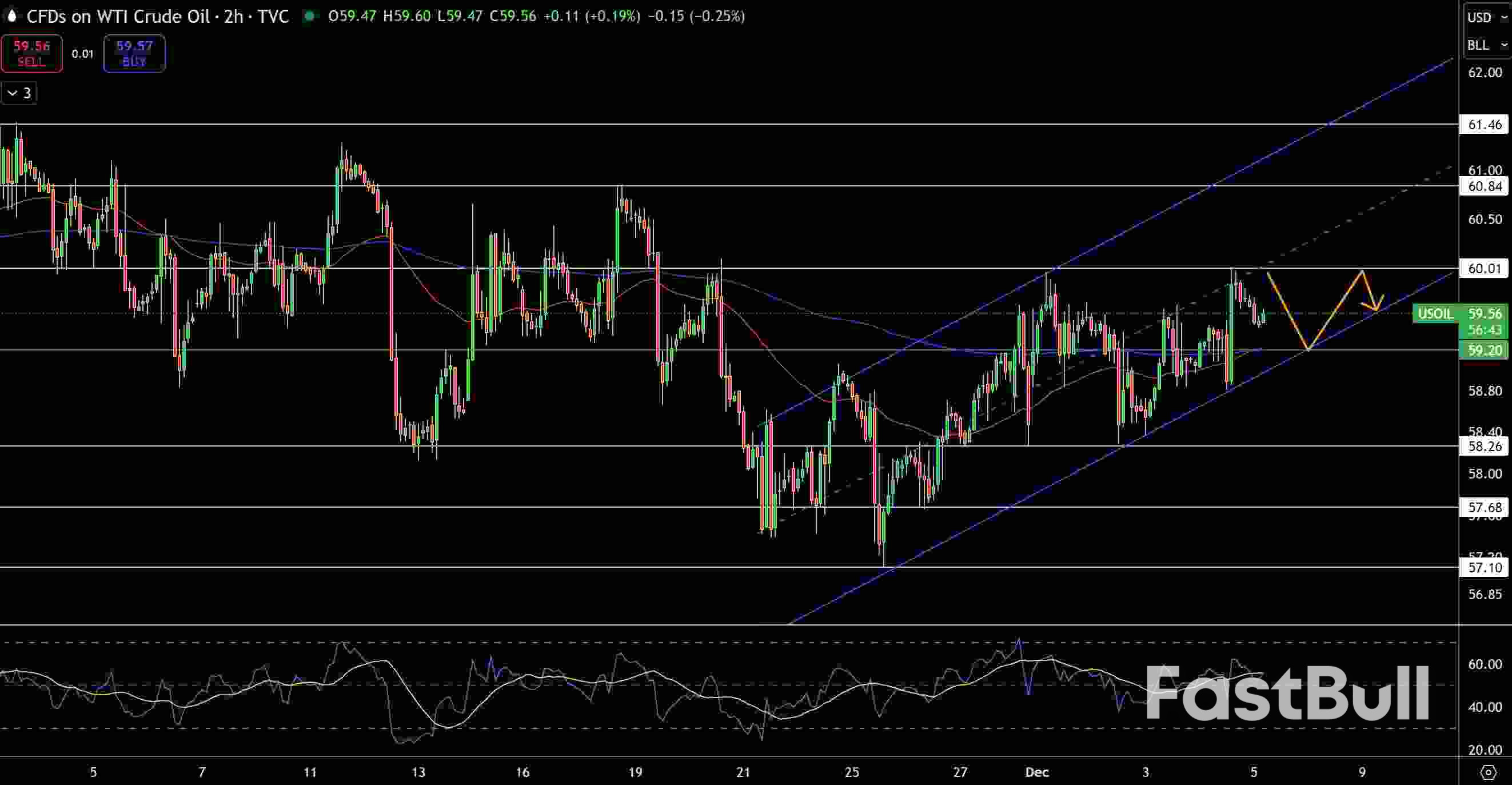
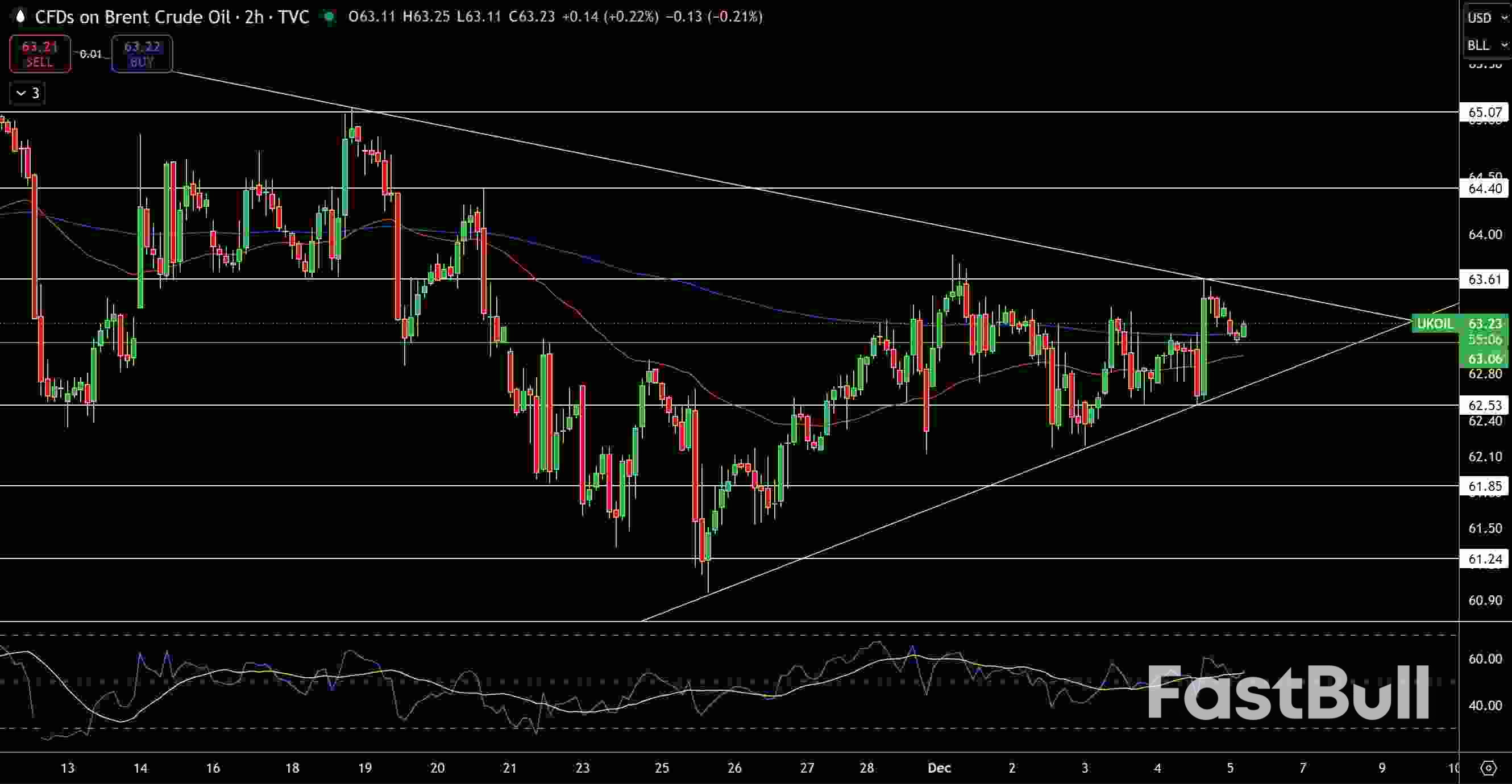
Oil and natural gas prices trend within rising channels as geopolitical tensions tighten supply. Technical setups show key resistance levels ahead, with WTI, Brent, and NG poised for breakouts or pullbacks depending on momentum.
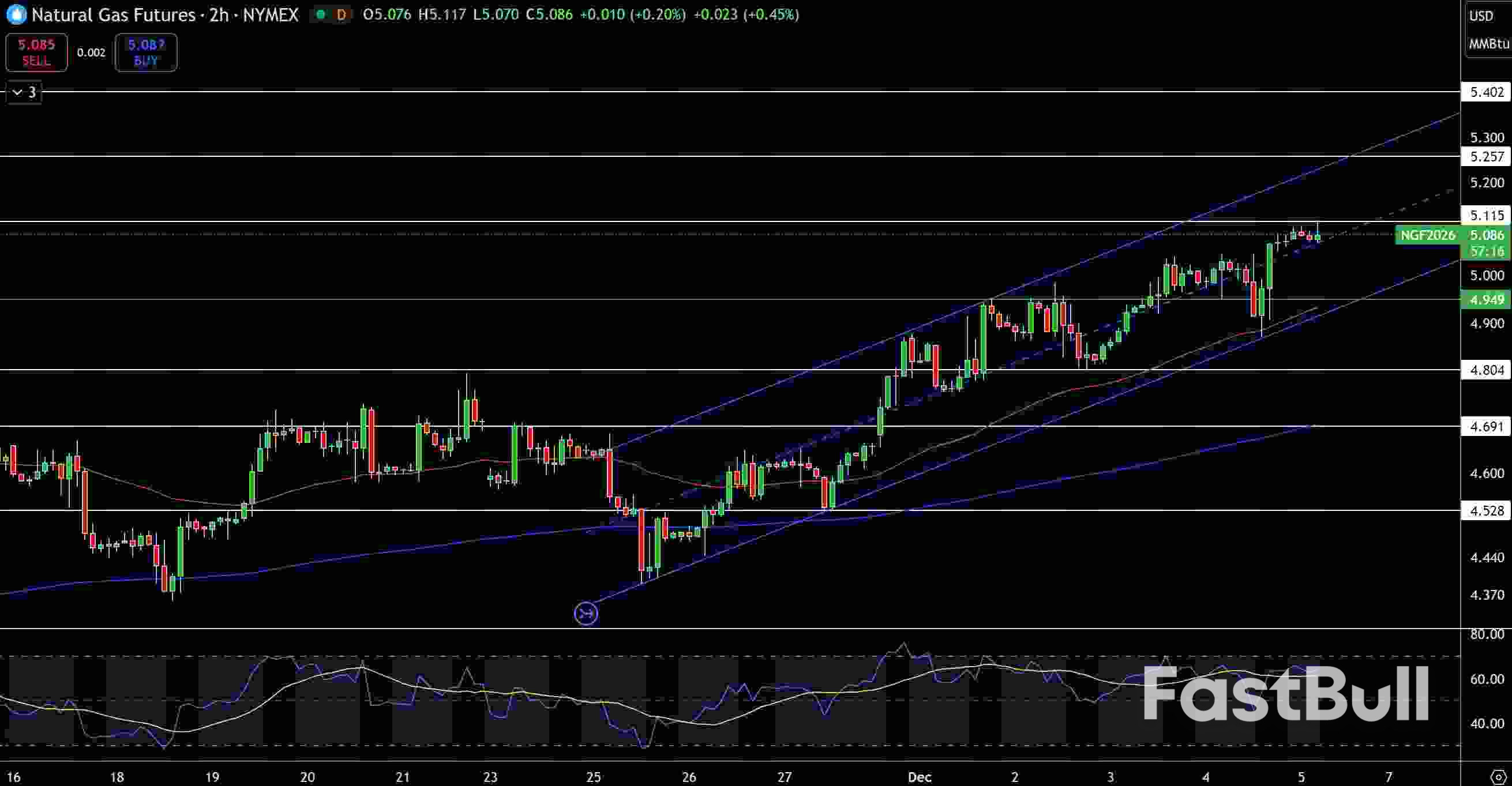
Natural Gas (NG) Price Chart
WTI Price Chart
Brent Price ChartCanada's unemployment rate once again defied expectations and fell to a 16-month low in November as a solid gain in part-time jobs boosted the number of people employed for the third time in a row, data showed on Friday.
The unemployment rate fell 0.4 percentage points in November to 6.5%, the lowest since July 2024, Statistics Canada said, adding it was led by 53,600 net job gains in November mainly among youth.
The job gains were driven by a 63,000 net additions in part-time workforce linked to healthcare and social assistance sector, StatsCan said.
With three months in a row of job gains, the Canadian economy has now added 181,000 new jobs since September, offsetting an almost no change in jobs for the first eight months when U.S. tariffs and trade uncertainty choked hiring.
Analysts polled by Reuters had forecast employment to reduce by 5,000 jobs in November and the jobless rate to tick up to 7%.
The improvement in unemployment rate was also helped by a reduction in total labor force as immigration curbs instituted by the government sent less people into the job market.
Canada's unemployment rate had been steadily climbing since March when President Trump unleashed a raft of tariffs on critical sectors such as steel, aluminum, cars and every other industry that did not comply with a free trade deal.
The impact has been more acute among the youth, or those aged between 15 and 24 years.
But November and October were the outlier. Employment in this category was up by 50,000 in November, and with October, these were the first jumps in youth employment since the start of the year, StatsCan said.
The youth unemployment rate fell 1.3 percentage points to 12.8% in November, following a slight decline in October. In September the youth unemployment rate had peaked at a 15-year high.

Employment among the core-aged group, which account for two-thirds of the total labor force, was little changed in November.
The average hourly wage of permanent employees - a gauge closely tracked by the Bank of Canada to ascertain inflationary trends - stayed at 4% in November, same as the previous month.
Indian households are witnessing a significant easing in price pressures now and expect it to continue over the next 12 months across all major product categories, according to surveys conducted by the country's central bank.
The Reserve Bank of India's household inflation expectations survey, conducted during Nov. 1-10, showed that the median inflation perception for the current period declined by 80 basis points from the previous survey in September. Inflation expectations for the next three months and one year ahead also showed notable moderation.
"Households reported easing of price and inflationary pressures in most of the product groups including food products, non-food products, and cost of services for both the time horizons," the RBI said.
In such surveys, the direction of change, rather than the absolute level, is more important.
A record-low inflation print in October prompted the central bank to cut its key policy rate on Friday. The RBI also signaled that benign inflation conditions are likely to persist next year.
In a separate survey, consumer confidence, especially in urban areas, showed improvement. Confidence for the year ahead remained in optimistic territory, supported by improved sentiments on prices and the general economic situation.
Sentiments regarding urban employment prospects remained "fairly strong," the RBI said.

Korea has recorded a net outflow of talent in the artificial intelligence (AI) sector as the wage premium for AI professionals remains the lowest among major advanced economies, the central bank said Friday.
The country recorded a net outflow of AI talent every year from 2010 through 2024, excluding 2020, and the number of Korean AI professionals working overseas increased steadily to reach about 11,000 last year, according to a report by the Bank of Korea (BOK).
The figure accounted for about 16 percent of the country's total AI workforce, about 6 percentage points higher than the average share of workers overseas in other fields, the report showed.
In terms of the overall number of AI professionals, Korea also lagged far behind major nations.
Koreans with skills in big data, cloud computing, deep learning and related fields stood at around 57,000 in 2024, well below that of the United States, which had around 780,000 AI professionals, as well as Britain with 110,000 and France with 70,000.
The report noted that the wage premium earned by domestic AI professionals ranked near the bottom among major developed nations.
AI professionals in Korea earned an average of just 6 percent more than non-AI workers last year, compared with a 25 percent premium in the U.S., 18 percent in Canada, and 15 percent in Britain, France and Australia.
"Our analysis suggests a link between compensation and overseas job mobility in the AI sector," said Oh Sam-il, head of the BOK's employment research team.
"The low wage premium is due partly to Korea's rigid wage structure and underdeveloped performance-based pay system, and such factors put the country at a disadvantage in the global competition for AI talent."
White Label
Data API
Web Plug-ins
Poster Maker
Affiliate Program
The risk of loss in trading financial instruments such as stocks, FX, commodities, futures, bonds, ETFs and crypto can be substantial. You may sustain a total loss of the funds that you deposit with your broker. Therefore, you should carefully consider whether such trading is suitable for you in light of your circumstances and financial resources.
No decision to invest should be made without thoroughly conducting due diligence by yourself or consulting with your financial advisors. Our web content might not suit you since we don't know your financial conditions and investment needs. Our financial information might have latency or contain inaccuracy, so you should be fully responsible for any of your trading and investment decisions. The company will not be responsible for your capital loss.
Without getting permission from the website, you are not allowed to copy the website's graphics, texts, or trademarks. Intellectual property rights in the content or data incorporated into this website belong to its providers and exchange merchants.
Not Logged In
Log in to access more features

FastBull Membership
Not yet
Purchase
Log In
Sign Up