• Trade
  • Markets
  • Copy
  • Contests
  • News
  • 24/7
  • Calendar
  • Q&A
  • Chats
Trending
Screeners
SYMBOL
LAST
BID
ASK
HIGH
LOW
NET CHG.
%CHG.
SPREAD
SPX
S&P 500 Index
6857.13
6857.13
6857.13
6865.94
6827.13
+7.41
+ 0.11%
--
DJI
Dow Jones Industrial Average
47850.93
47850.93
47850.93
48049.72
47692.96
-31.96
-0.07%
--
IXIC
NASDAQ Composite Index
23505.13
23505.13
23505.13
23528.53
23372.33
+51.04
+ 0.22%
--
USDX
US Dollar Index
98.840
98.920
98.840
98.980
98.740
-0.140
-0.14%
--
EURUSD
Euro / US Dollar
1.16590
1.16597
1.16590
1.16715
1.16408
+0.00145
+ 0.12%
--
GBPUSD
Pound Sterling / US Dollar
1.33576
1.33585
1.33576
1.33622
1.33165
+0.00305
+ 0.23%
--
XAUUSD
Gold / US Dollar
4224.78
4225.21
4224.78
4230.62
4194.54
+17.61
+ 0.42%
--
WTI
Light Sweet Crude Oil
59.401
59.431
59.401
59.469
59.187
+0.018
+ 0.03%
--

Community Accounts

Signal Accounts
--
Profit Accounts
--
Loss Accounts
--
View More

Become a signal provider

Sell trading signals to earn additional income

View More

Guide to Copy Trading

Get started with ease and confidence

View More

Signal Accounts for Members

All Signal Accounts

Best Return
  • Best Return
  • Best P/L
  • Best MDD
Past 1W
  • Past 1W
  • Past 1M
  • Past 1Y

All Contests

  • All
  • Trump Updates
  • Recommend
  • Stocks
  • Cryptocurrencies
  • Central Banks
  • Featured News
Top News Only
Share

Norway To Acquire 2 More Submarines, Long-Range Missiles, Daily Vg Reports

Share

Ucb Sa Shares Open Up 7.3% After 2025 Guidance Upgrade, Top Of Bel 20 Index

Share

Shares In Italy's Mediobanca Down 1.3% After Barclays Cuts To Underweight From Equal-Weight

Share

Stats Office - Austrian November Wholesale Prices +0.9% Year-On-Year

Share

Britain's FTSE 100 Up 0.15%

Share

Europe's STOXX 600 Up 0.1%

Share

Taiwan November PPI -2.8% Year-On-Year

Share

Stats Office - Austrian September Trade -230.8 Million EUR

Share

Swiss National Bank Forex Reserves Revised To Chf 724906 Million At End Of October - SNB

Share

Swiss National Bank Forex Reserves At Chf 727386 Million At End Of November - SNB

Share

Shanghai Warehouse Rubber Stocks Up 8.54% From Week Earlier

Share

Turkey's Main Banking Index Up 2%

Share

French October Trade Balance -3.92 Billion Euros Versus Revised -6.35 Billion Euros In September

Share

Kremlin Aide Says Russia Is Ready To Work Further With Current USA Team

Share

Kremlin Aide Says Russia And USA Are Moving Forward In Ukraine Talks

Share

Shanghai Rubber Warehouse Stocks Up 7336 Tons

Share

Shanghai Tin Warehouse Stocks Up 506 Tons

Share

Reserve Bank Of India Chief Malhotra: Goal Is To Have Inflation Be Around 4%

Share

Ukmto Says Master Has Confirmed That The Small Crafts Have Left The Scene, Vessel Is Proceeding To Its Next Port Of Call

Share

Shanghai Nickel Warehouse Stocks Up 1726 Tons

TIME
ACT
FCST
PREV
France 10-Year OAT Auction Avg. Yield

A:--

F: --

P: --

Euro Zone Retail Sales MoM (Oct)

A:--

F: --

P: --

Euro Zone Retail Sales YoY (Oct)

A:--

F: --

P: --

Brazil GDP YoY (Q3)

A:--

F: --

P: --

U.S. Challenger Job Cuts (Nov)

A:--

F: --

P: --

U.S. Challenger Job Cuts MoM (Nov)

A:--

F: --

P: --

U.S. Challenger Job Cuts YoY (Nov)

A:--

F: --

P: --

U.S. Initial Jobless Claims 4-Week Avg. (SA)

A:--

F: --

P: --

U.S. Weekly Initial Jobless Claims (SA)

A:--

F: --

P: --

U.S. Weekly Continued Jobless Claims (SA)

A:--

F: --

P: --

Canada Ivey PMI (SA) (Nov)

A:--

F: --

P: --

Canada Ivey PMI (Not SA) (Nov)

A:--

F: --

P: --

U.S. Non-Defense Capital Durable Goods Orders Revised MoM (Excl. Aircraft) (SA) (Sept)

A:--

F: --

P: --
U.S. Factory Orders MoM (Excl. Transport) (Sept)

A:--

F: --

P: --

U.S. Factory Orders MoM (Sept)

A:--

F: --

P: --

U.S. Factory Orders MoM (Excl. Defense) (Sept)

A:--

F: --

P: --

U.S. EIA Weekly Natural Gas Stocks Change

A:--

F: --

P: --

Saudi Arabia Crude Oil Production

A:--

F: --

P: --

U.S. Weekly Treasuries Held by Foreign Central Banks

A:--

F: --

P: --

Japan Foreign Exchange Reserves (Nov)

A:--

F: --

P: --

India Repo Rate

A:--

F: --

P: --

India Benchmark Interest Rate

A:--

F: --

P: --

India Reverse Repo Rate

A:--

F: --

P: --

India Cash Reserve Ratio

A:--

F: --

P: --

Japan Leading Indicators Prelim (Oct)

A:--

F: --

P: --

U.K. Halifax House Price Index YoY (SA) (Nov)

A:--

F: --

P: --

U.K. Halifax House Price Index MoM (SA) (Nov)

A:--

F: --

P: --

France Current Account (Not SA) (Oct)

A:--

F: --

P: --

France Trade Balance (SA) (Oct)

A:--

F: --

P: --

France Industrial Output MoM (SA) (Oct)

A:--

F: --

P: --

Italy Retail Sales MoM (SA) (Oct)

--

F: --

P: --

Euro Zone Employment YoY (SA) (Q3)

--

F: --

P: --

Euro Zone GDP Final YoY (Q3)

--

F: --

P: --

Euro Zone GDP Final QoQ (Q3)

--

F: --

P: --

Euro Zone Employment Final QoQ (SA) (Q3)

--

F: --

P: --

Euro Zone Employment Final (SA) (Q3)

--

F: --

P: --
Brazil PPI MoM (Oct)

--

F: --

P: --

Mexico Consumer Confidence Index (Nov)

--

F: --

P: --

Canada Unemployment Rate (SA) (Nov)

--

F: --

P: --

Canada Labor Force Participation Rate (SA) (Nov)

--

F: --

P: --

Canada Employment (SA) (Nov)

--

F: --

P: --

Canada Part-Time Employment (SA) (Nov)

--

F: --

P: --

Canada Full-time Employment (SA) (Nov)

--

F: --

P: --

U.S. Personal Income MoM (Sept)

--

F: --

P: --

U.S. Dallas Fed PCE Price Index YoY (Sept)

--

F: --

P: --

U.S. PCE Price Index YoY (SA) (Sept)

--

F: --

P: --

U.S. PCE Price Index MoM (Sept)

--

F: --

P: --

U.S. Personal Outlays MoM (SA) (Sept)

--

F: --

P: --

U.S. Core PCE Price Index MoM (Sept)

--

F: --

P: --

U.S. UMich 5-Year-Ahead Inflation Expectations Prelim YoY (Dec)

--

F: --

P: --

U.S. Core PCE Price Index YoY (Sept)

--

F: --

P: --

U.S. Real Personal Consumption Expenditures MoM (Sept)

--

F: --

P: --

U.S. 5-10 Year-Ahead Inflation Expectations (Dec)

--

F: --

P: --

U.S. UMich Current Economic Conditions Index Prelim (Dec)

--

F: --

P: --

U.S. UMich Consumer Sentiment Index Prelim (Dec)

--

F: --

P: --

U.S. UMich 1-Year-Ahead Inflation Expectations Prelim (Dec)

--

F: --

P: --

U.S. UMich Consumer Expectations Index Prelim (Dec)

--

F: --

P: --

U.S. Weekly Total Rig Count

--

F: --

P: --

Q&A with Experts
    • All
    • Chatrooms
    • Groups
    • Friends
    Connecting
    .
    .
    .
    Type here...
    Add Symbol or Code

      No matching data

      All
      Trump Updates
      Recommend
      Stocks
      Cryptocurrencies
      Central Banks
      Featured News
      • All
      • Russia-Ukraine Conflict
      • Middle East Flashpoint
      • All
      • Russia-Ukraine Conflict
      • Middle East Flashpoint
      Search
      Products

      Charts Free Forever

      Chats Q&A with Experts
      Screeners Economic Calendar Data Tools
      Membership Features
      Data Warehouse Market Trends Institutional Data Policy Rates Macro

      Market Trends

      Market Sentiment Order Book Forex Correlations

      Top Indicators

      Charts Free Forever
      Markets

      News

      News Analysis 24/7 Columns Education
      From Institutions From Analysts
      Topics Columnists

      Latest Views

      Latest Views

      Trending Topics

      Top Columnists

      Latest Update

      Signals

      Copy Rankings Latest Signals Become a signal provider AI Rating
      Contests
      Brokers

      Overview Brokers Assessment Rankings Regulators News Claims
      Broker listing Forex Brokers Comparison Tool Live Spread Comparison Scam
      Q&A Complaint Scam Alert Videos Tips to Detect Scam
      More

      Business
      Events
      Careers About Us Advertising Help Center

      White Label

      Data API

      Web Plug-ins

      Affiliate Program

      Awards Institution Evaluation IB Seminar Salon Event Exhibition
      Vietnam Thailand Singapore Dubai
      Fans Party Investment Sharing Session
      FastBull Summit BrokersView Expo
      Recent Searches
        Top Searches
          Markets
          News
          Analysis
          User
          24/7
          Economic Calendar
          Education
          Data
          • Names
          • Latest
          • Prev

          View All

          No data

          Scan to Download

          Faster Charts, Chat Faster!

          Download App
          English
          • English
          • Español
          • العربية
          • Bahasa Indonesia
          • Bahasa Melayu
          • Tiếng Việt
          • ภาษาไทย
          • Français
          • Italiano
          • Türkçe
          • Русский язык
          • 简中
          • 繁中
          Open Account
          Search
          Products
          Charts Free Forever
          Markets
          News
          Signals

          Copy Rankings Latest Signals Become a signal provider AI Rating
          Contests
          Brokers

          Overview Brokers Assessment Rankings Regulators News Claims
          Broker listing Forex Brokers Comparison Tool Live Spread Comparison Scam
          Q&A Complaint Scam Alert Videos Tips to Detect Scam
          More

          Business
          Events
          Careers About Us Advertising Help Center

          White Label

          Data API

          Web Plug-ins

          Affiliate Program

          Awards Institution Evaluation IB Seminar Salon Event Exhibition
          Vietnam Thailand Singapore Dubai
          Fans Party Investment Sharing Session
          FastBull Summit BrokersView Expo

          Musk Made Direct Appeals to Trump to Reverse New Tariffs, Washington Post Reports

          Katherine Pierce

          Economic

          Forex

          Summary:

          (Reuters) - Tech-billionaire and Tesla CEO Elon Musk made direct yet unsuccessful appeals to U.S. President Donald Trump to reverse tariffs over the past weekend, Washington Post reported on Monday citing two people familiar with the matter.

          (Reuters) - Tech-billionaire and Tesla CEO Elon Musk made direct yet unsuccessful appeals to U.S. President Donald Trump to reverse tariffs over the past weekend, Washington Post reported on Monday citing two people familiar with the matter.

          This exchange marks the highest profile disagreement between the President and Musk, the report said. It follows Trump's unveiling of a 10% baseline tariff on all imports to the U.S. along with higher duties on dozens of other countries.

          The White House and Musk did not immediately respond to Reuters requests for comment.

          Musk, a Trump adviser who has been working to eliminate wasteful U.S. public spending, called for zero tariffs between the U.S. and Europe during a virtual interaction at a congress in Florence of Italy's right-wing, co-ruling League Party over the weekend.

          Tesla has seen its quarterly sales drop sharply amid a backlash against Musk's work with a new "Department of Government Efficiency." The company's shares are trading at $233.29 as of its last close on Monday, down over 42% since the beginning of the year.

          Musk has previously said that the impact of U.S. President Donald Trump's auto tariffs on Tesla is "significant."

          Economists say the tariffs could reignite inflation, raise the risk of a U.S. recession and boost costs for the average U.S. family by thousands of dollars - a potential liability for a president who campaigned on a promise to bring down the cost of living.

          Source: Yahoo Finance

          To stay updated on all economic events of today, please check out our Economic calendar
          Risk Warnings and Disclaimers
          You understand and acknowledge that there is a high degree of risk involved in trading. Following any strategies or investment methods may lead to potential losses. The content on the site is provided by our contributors and analysts for information purposes only. You are solely responsible for determining whether any trading assets, securities, strategy, or any other product is suitable for investing based on your own investment objectives and financial situation.
          Add to Favorites
          Share

          Tokenization Of Real-World Assets Sparks Exciting Changes In Finance

          Thomas

          Cryptocurrency

          The tokenization of real-world assets has emerged as one of the most talked-about topics in the finance sector. Key figures like Ripple CEO Brad Garlinghouse, Coinbase CEO Brian Armstrong, and XRP legal advisor John Deaton have expressed that this process can lead to fundamental changes in the financial system. The advantages provided by digital asset technologies, such as flexibility and accessibility, have further amplified the discussion surrounding the topic. Comments indicating the inevitability of tokenization signal strong prospects for the future of the industry.

          The Digitalization of Real-World Assets: A New Financial Era

          XRP legal advisor John Deaton emphasized via social media that the tokenization of real-world assets marks an irreversible transformation. He pointed out that influential figures like Ripple’s Brad Garlinghouse, Coinbase’s Brian Armstrong, and BlackRock’s Larry Fink are at the forefront of this change. According to him, these individuals are presenting significant ideas at the intersection of traditional finance and digital assets.

          Coinbase CEO Brian Armstrong argues that all asset classes will eventually transition to blockchain-based systems. He showcases the increase in on-chain credit and borrowing instruments as a practical example of what tokenization offers. Deaton supports this view, labeling Armstrong’s approach as being “on the right track.”

          Brad Garlinghouse’s comments focus on the XRP Ledger (XRPL) infrastructure developed by Ripple. He states that the tokenization of real-world assets is restructuring the financial system. In his view, this transition not only enhances asset accessibility but also elevates transaction efficiency to new heights.

          XRPL and Tokenization: Performance and Potential

          Recent posts from Ripple’s social media have highlighted how the XRP Ledger has become a hub for tokenized treasury, commodities, and stable assets. The updates also included current performance metrics of the network. These insights demonstrate that Ripple is positioned not only as a provider of technological infrastructure but also as a pioneer in the sectoral transformation.

          Galaxy Digital CEO Mike Novogratz provided another significant comment on the tokenization trend. He mentioned that this growing trend on a global scale will accelerate in the coming years. According to him, tokenization will open new doors for both investors and financial institutions.

          John Deaton does not view the process merely as a technical advancement. He believes that the ability to divide tokenized assets into smaller shares can help reduce income inequality. Moreover, he argues that digital assets can establish a more accessible financial structure by diminishing reliance on traditional financial intermediaries.

          The transition of real-world assets into the digital realm has the potential to transform not only the technological landscape but also the social and economic structures of the industry. Each new announcement in this context signals the construction of a future rooted in stronger foundations within the cryptocurrency world.

          The post Tokenization of Real-World Assets Sparks Exciting Changes in Finance appeared first on COINTURK NEWS.

          Source: CryptoSlate

          Risk Warnings and Disclaimers
          You understand and acknowledge that there is a high degree of risk involved in trading. Following any strategies or investment methods may lead to potential losses. The content on the site is provided by our contributors and analysts for information purposes only. You are solely responsible for determining whether any trading assets, securities, strategy, or any other product is suitable for investing based on your own investment objectives and financial situation.
          Add to Favorites
          Share

          Early Thoughts On Historic Hike In US Tariffs

          Damon

          Economic

          Key points:

          1. The latest US tariffs/trade protectionist policies, announced on April 2, have greatly exceeded market expectations.
          2. A 54% effective tariff rate toward China is arguably an act of economic war.
          3. Market implications are grim — near-term growth/inflation trade-offs are likely to worsen dramatically, and we’ll likely see an immediate US recession and a significant short-term spike in US inflation

          Before I unpack the economic and market implications of the sweeping tariffs the Trump administration introduced on April 2 (which have raised the effective tariff rate to the highest level since the 1930s), I want to acknowledge that this is an early response* to a nascent policy. The situation will very likely.

          The tariffs

          As part of this new policy, a universal 10% tariff on all countries will take effect on April 5. Additional, “reciprocal” tariffs will be implemented on April 9. These are a purported response to tariffs imposed by other nations toward the US. The presidential administration asserts these tariffs represent half the rate of the tariffs imposed toward the US by other countries and positions this halving as a kindness on the part of the US.

          There are a few particularly notable aspects of the new policies I’d like to point out. First, the tariff rate for China appears to be “stacking,” meaning that while the new, “reciprocal” tariff is 34%, the effective rate is 54% given 20% was imposed earlier this year. It also ends duty-free de minimis treatment for covered goods. Next, exemptions to future Section 232 tariffs — applied to gold, autos, and energy/critical materials — were mentioned. Investigations into pharma and semiconductors are expected, as well. Finally, on a relative basis, Canada and Mexico will continue to receive no tariffs on USMCA-compliant goods, a 25% tariff on non-USMCA compliant goods, and a 10% tariff on non-USMCA-compliant energy and potash.

          Let’s turn our attention back to timing. In theory, because the “reciprocal” tariffs are meant to be enacted a week after the announcement was made, there is room for negotiation. In my view, the administration is likely calculating that using an aggressive starting point increases the probability that other countries make concessions, which the US could accept before/immediately following implementation. I suspect the administration would view such concessions as both a testament to US strength and a means of retaining some revenue from a fiscal perspective. The latter point is important — a reconciliation process may lead to higher debt levels over the medium term with a current policy baseline and the addition of further tax cuts beyond the extension of the Tax Cuts and Jobs Act (TCJA).

          As part of this conversation, it’s worth noting the April 2 judicial election results revealed that voters are souring on the Trump administration. This type of feedback can be a disciplinarian, but President Trump is steadfast in his conviction in the efficacy of tariffs, which he seems to view as a solution to structural issues around labor share of income and income inequality. It remains to be seen whether they will achieve the desired outcome over time.

          The economic implications

          The magnitude of the tariffs will erode, if not destroy, trust among US allies. A loss of trust may make allies less likely to engage in negotiations than the administration bargains on — a dynamic that is likely to become clearer in the coming days. What’s more, a decline in institutional integrity undermines the status of the US dollar as reserve currency. This risk has now accelerated, and even if the administration walks the tariffs back before implementation, this is unlikely to dissipate. In the short and medium term, these actions:

          • Increase the probability of a more sustained rise in inflation volatility
          • Bode poorly for short- and medium-term growth prospects
          • Heighten the probability of the business/economic cycle engaging with negative signals from policy uncertainty
          • Raise the likelihood of economic nationalism and repatriation

          This all said, I’ll be surprised if all these tariffs go into effect as announced, which makes analysis of the situation difficult. Uncertainty multiplier effects can be large — especially when bilateral negotiations with 60 countries may be looming large and potential shifts in tariff rates by the day/week are likely.
          Source: Wellington Management

          To stay updated on all economic events of today, please check out our Economic calendar
          Risk Warnings and Disclaimers
          You understand and acknowledge that there is a high degree of risk involved in trading. Following any strategies or investment methods may lead to potential losses. The content on the site is provided by our contributors and analysts for information purposes only. You are solely responsible for determining whether any trading assets, securities, strategy, or any other product is suitable for investing based on your own investment objectives and financial situation.
          Add to Favorites
          Share

          Black Monday 2.0? 5 Things to Know in Bitcoin This Week

          Warren Takunda

          Cryptocurrency

          Bitcoin is turning back the clock this week as tariff mayhem drags BTC price action toward 2021.
          Bitcoin is giving up bull market support lines left and right as a new “death cross” completes on the BTC/USD daily chart.
          CPI week is firmly overshadowed by US trade tariffs and their increasingly global impact on stock markets.
          Both crypto and TradFi market participants are drawing comparisons to “Black Monday” 1987 and the COVID-19 cross-market crash.
          Bitcoin’s speculative investor base is firmly out of pocket and likely increasingly tempted to panic sell.
          Sentiment everywhere is nonexistent, with the TradFi Fear & Greed Index recording its lowest score in history.

          BTC price “death cross” brings 2021 highs into play

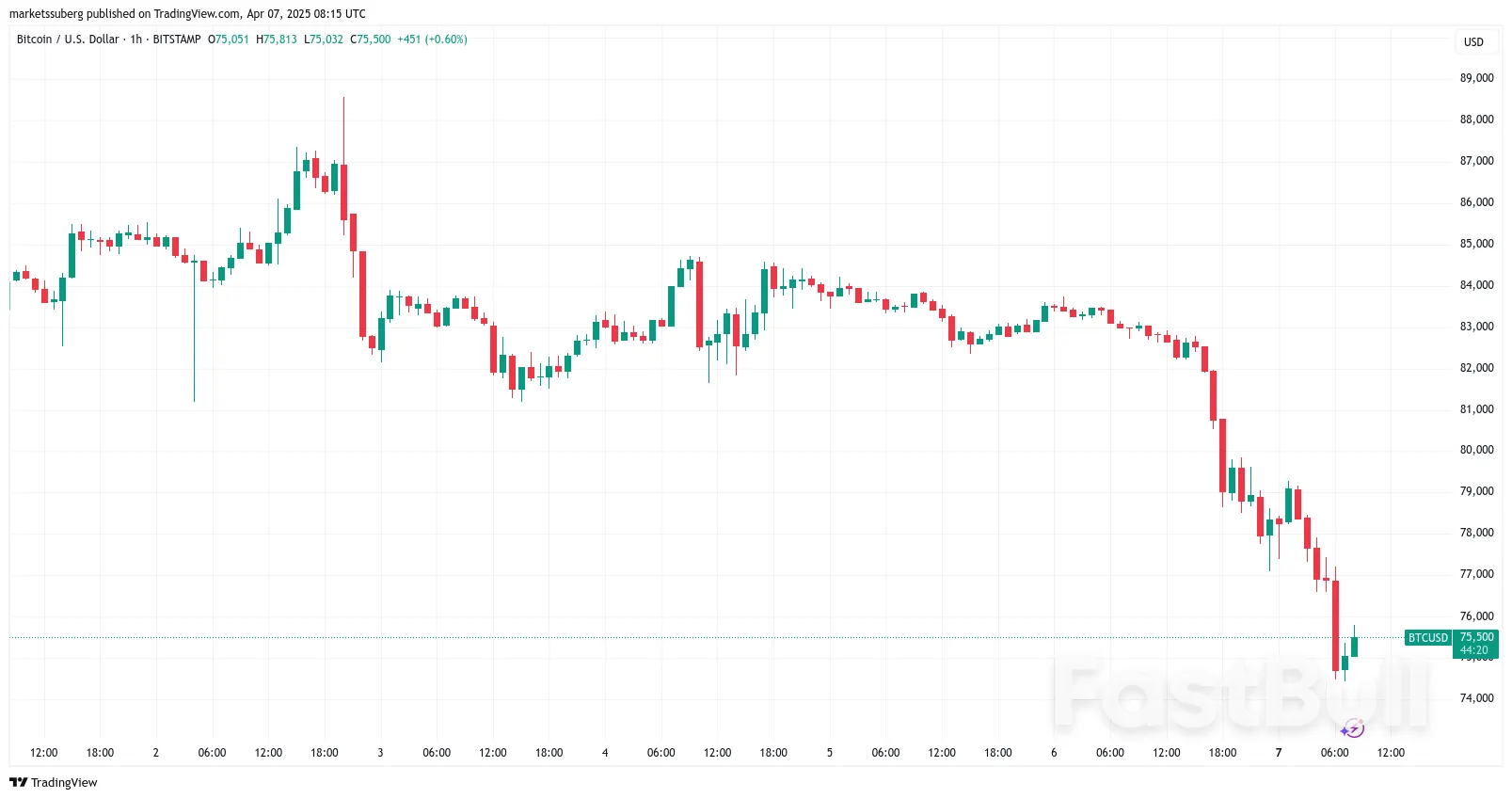
          Bitcoin risks falling below its old all-time highs from March 2024 next, Data from Cointelegraph Markets Pro and TradingView shows.Black Monday 2.0? 5 Things to Know in Bitcoin This Week_1

          BTC/USD 1-hour chart. Source: Cointelegraph/TradingView

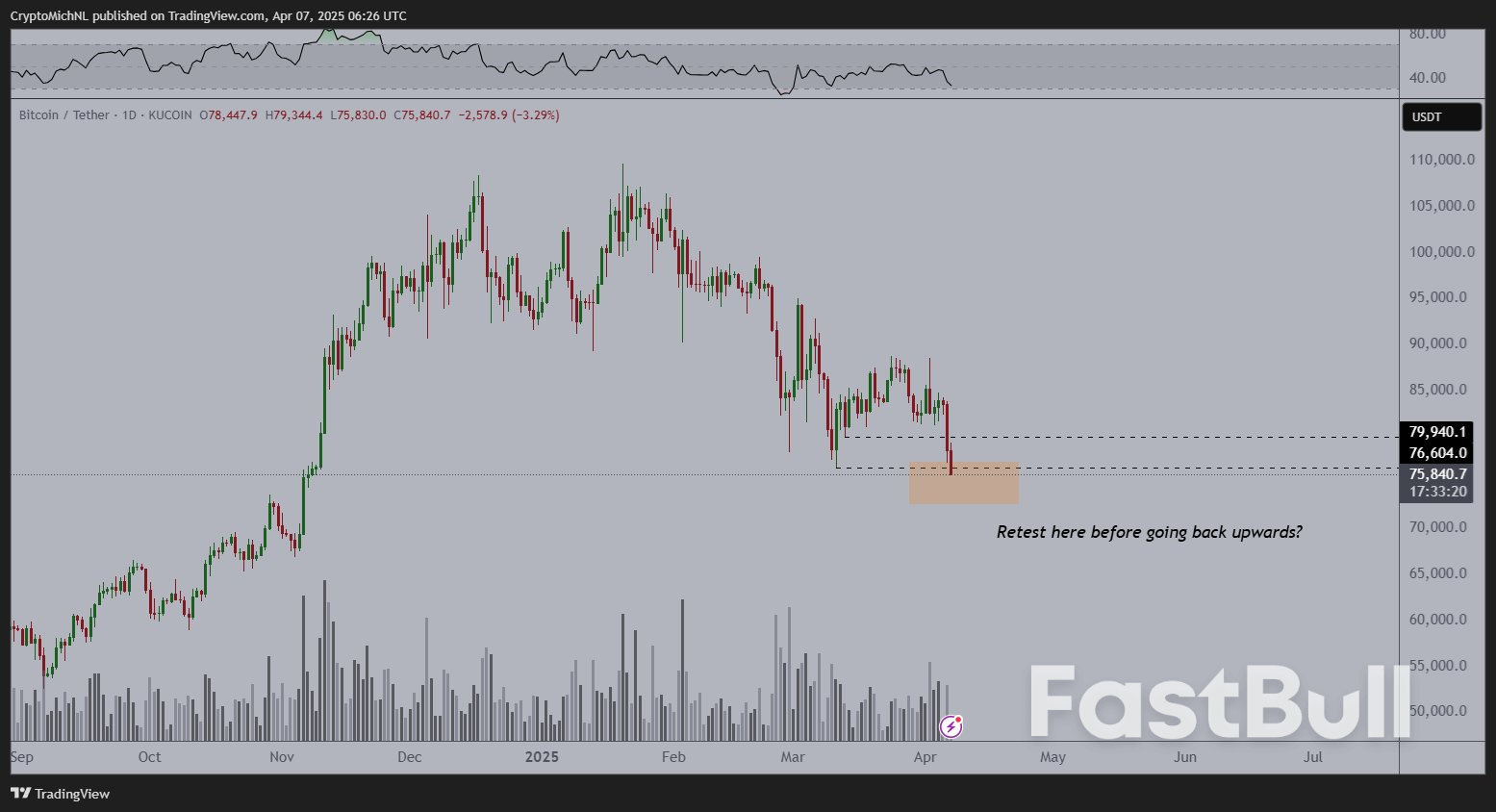
          After slipping below $75,000 for the first time since November, BTC/USD is rapidly reawakening long forgotten bull market support lines. These include $69,000, a level that first appeared in 2021.
          The dive, which came as a copycat move several days after stock markets began to suffer major losses, caught many by surprise.
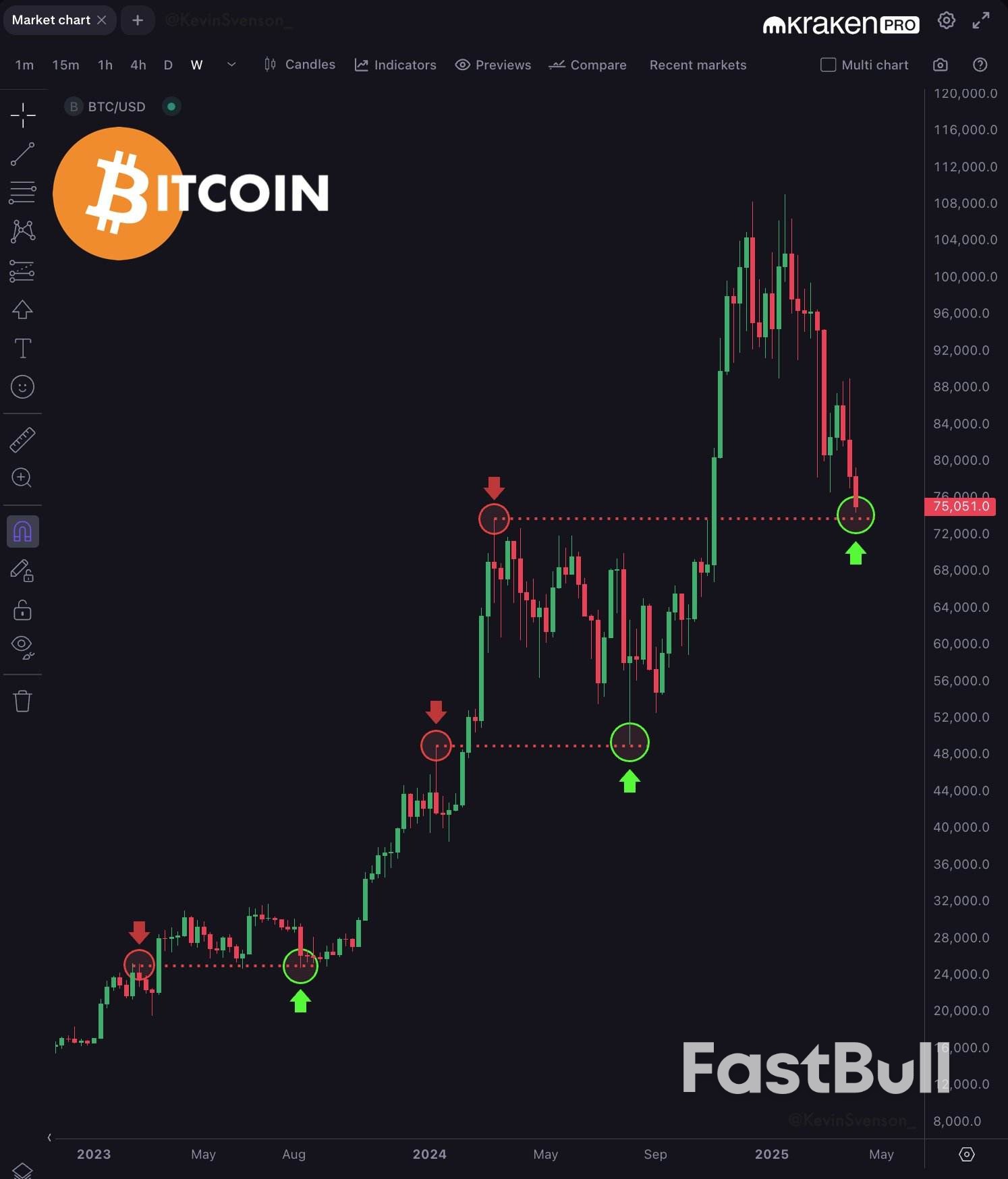
          “This is $BTC's last chance to maintain its macro uptrend structure,” popular analyst Kevin Svenson summarized in a warning on X.Black Monday 2.0? 5 Things to Know in Bitcoin This Week_2

          BTC/USD 1-day chart. Source: Kevin Svenson/X

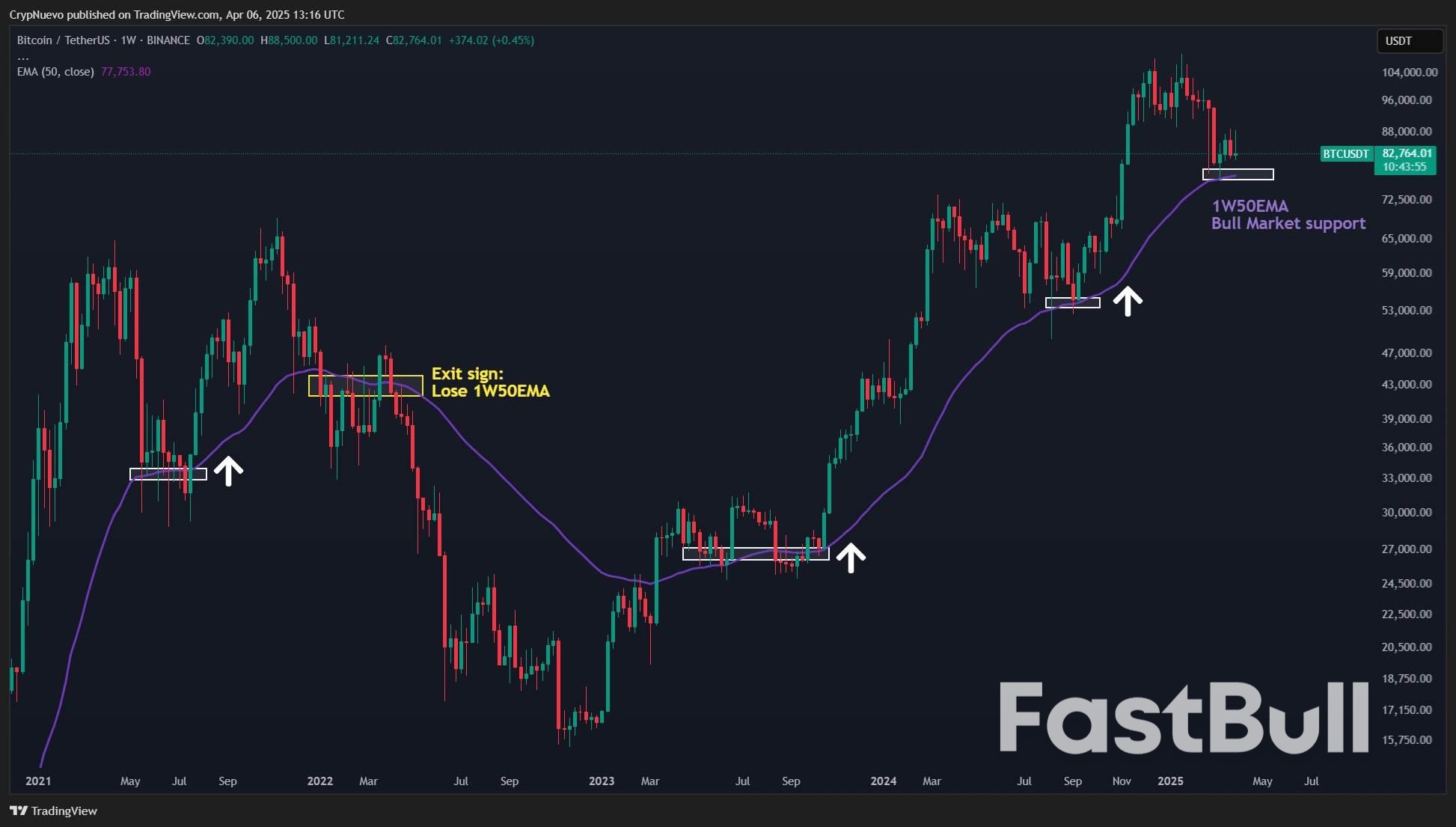
          Among the trend lines now lost as support is the 50-week exponential moving average (EMA) at around $77,000.
          In an X thread on the coming week, popular trader CrypNuevo described price violating that level as the “only short triggerr I'll be paying attention to.”
          “If we drop below support and get back above it, then I'll consider this as a deviation and that will be my long trigger fo a push up back to $87k,” he explained.Black Monday 2.0? 5 Things to Know in Bitcoin This Week_3

          BTC/USDT 1-week chart with 50EMA. Source: CrypNuevo/X

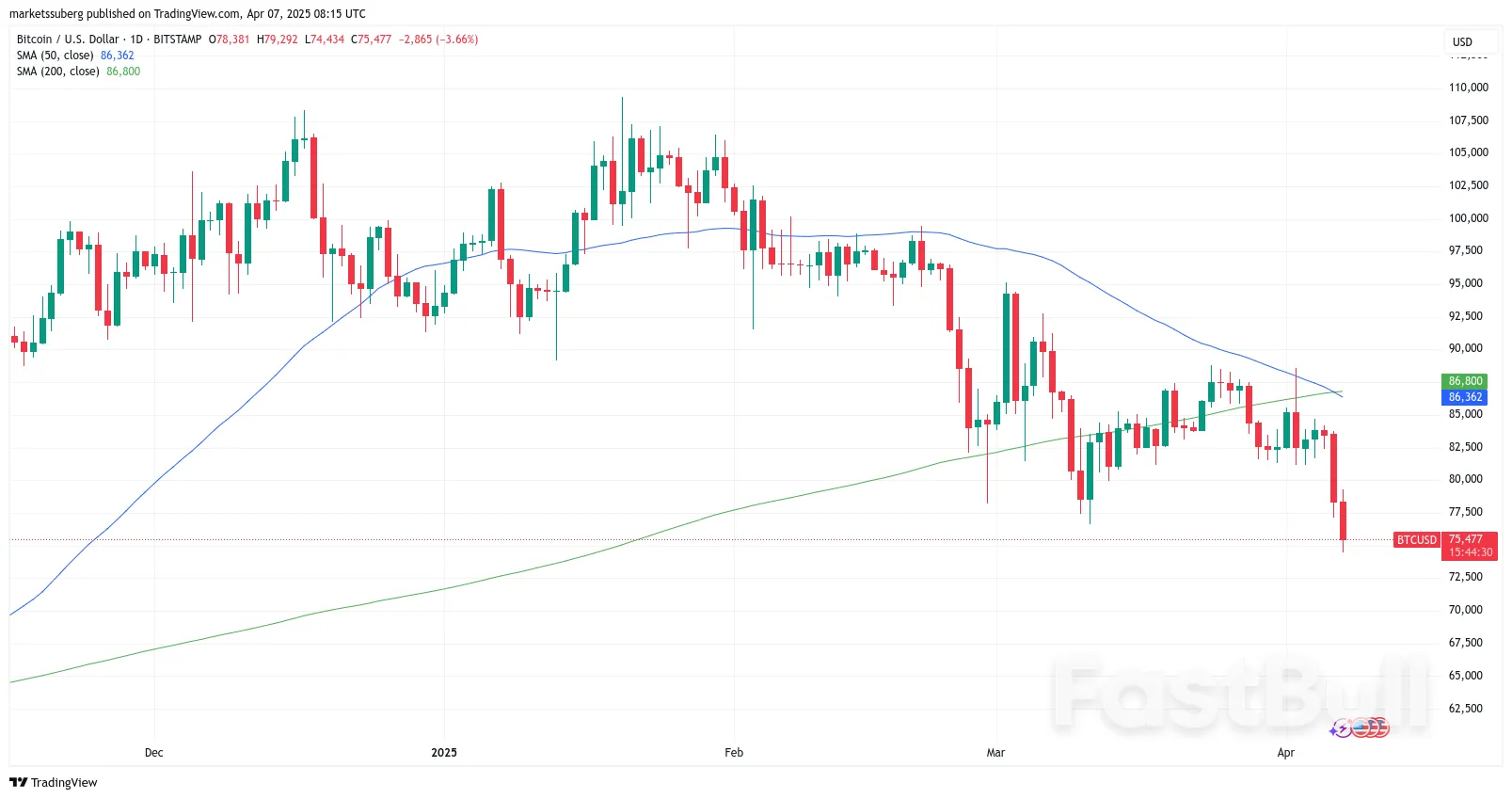
          Trading resource Material Indicators, meanwhile flagged a telltale “death cross” on daily timeframes. This typical bearish signal involves the 50-day simple moving average (SMA) crossing below its 200-day equivalent.
          “The momentum carrying through that Death Cross, puts BTC at a critical macro support test,” it told X followers.
          “Stay tuned…”Black Monday 2.0? 5 Things to Know in Bitcoin This Week_4

          BTC/USD 1-day chart with 50, 200 SMA. Source: Cointelegraph/TradingView

          CPI week meets emergency rate cuts

          Like last week, US trade tariffs are the major talking point across financial markets worldwide.
          The impact of measures announced last week continues to be felt, as downside momentum on risk assets now becomes fueled by the prospect of more tariffs set for release on April 9.
          Speaking to mainstream media over the weekend, Commerce Secretary Howard Lutnick confirmed that the US government would go ahead with the measures without delay.
          “The tariffs are coming,” he told CBS News.
          With sentiment diving and panic setting in among market participants from trading desks to hedge funds, little attention is being paid to the week’s other potential volatility catalysts.
          These will come in the form of US inflation data, itself a key topic as tariffs risk causing unexpected price growth.
          The March prints of the Consumer Price Index (CPI) and Producer Price Index (PPI) are due on April 10 and 11, respectively.
          Previously, Jerome Powell, Chair of the Federal Reserve, said that while tariffs would have a palpable effect on the US inflation battle, it would be difficult to assess this accurately in advance.
          “As the new policies and their likely economic effects become clear, we will have a better sense of the implications for the economy and for monetary policy,” he subsequently said during a speech last week.Black Monday 2.0? 5 Things to Know in Bitcoin This Week_5

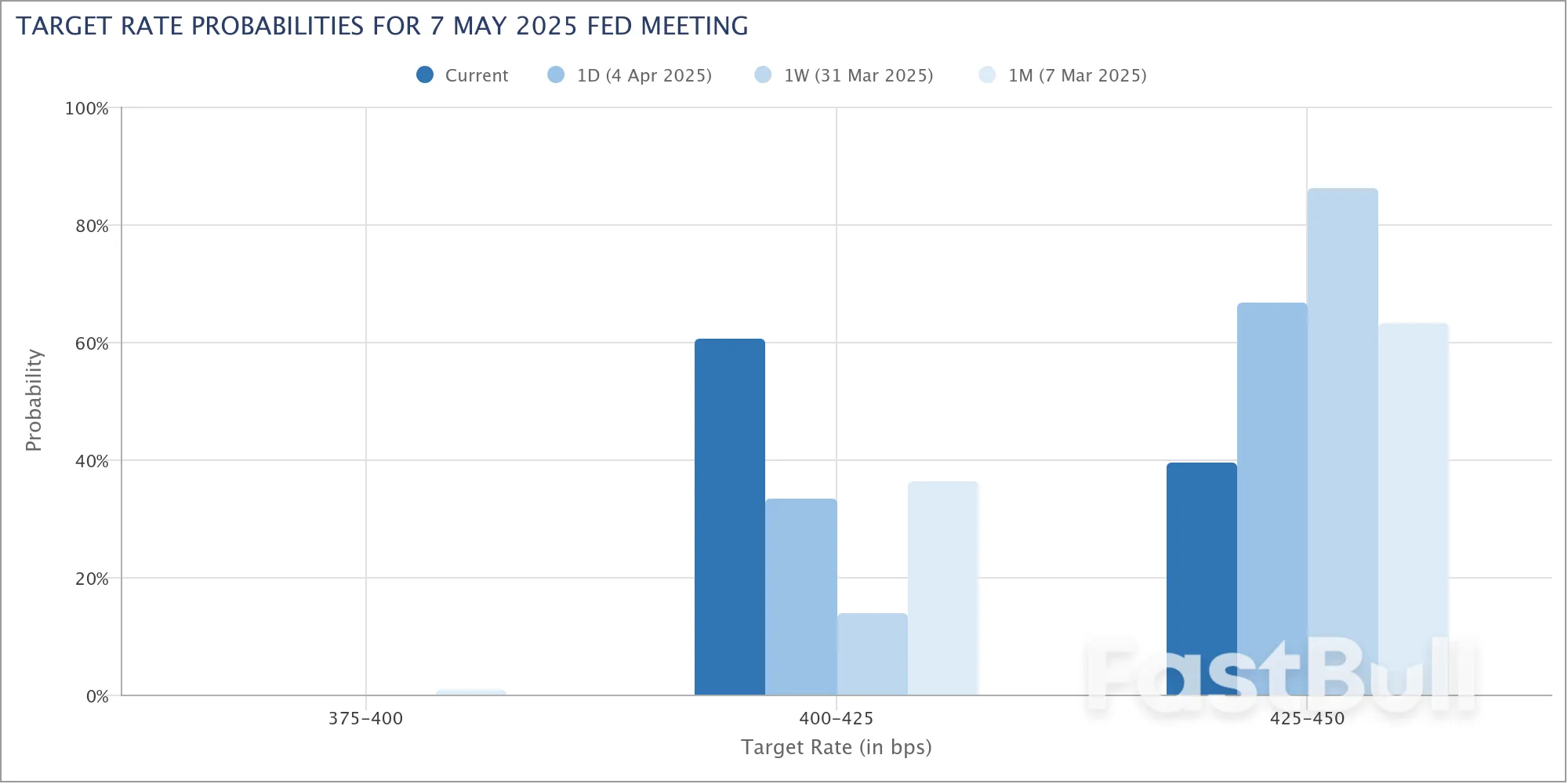
          Fed target rate probability comparison for May FOMC meeting. Source: CME Group

          Market expectations of the Fed easing policy to compensate for the tariffs are clearly reflected in interest rate forecasts.
          The latest data from CME Group’s FedWatch Tool now shows that consensus favors a 0.25% rate cut at the Fed’s May meeting — sooner than the June deadline assumed until this weekend.
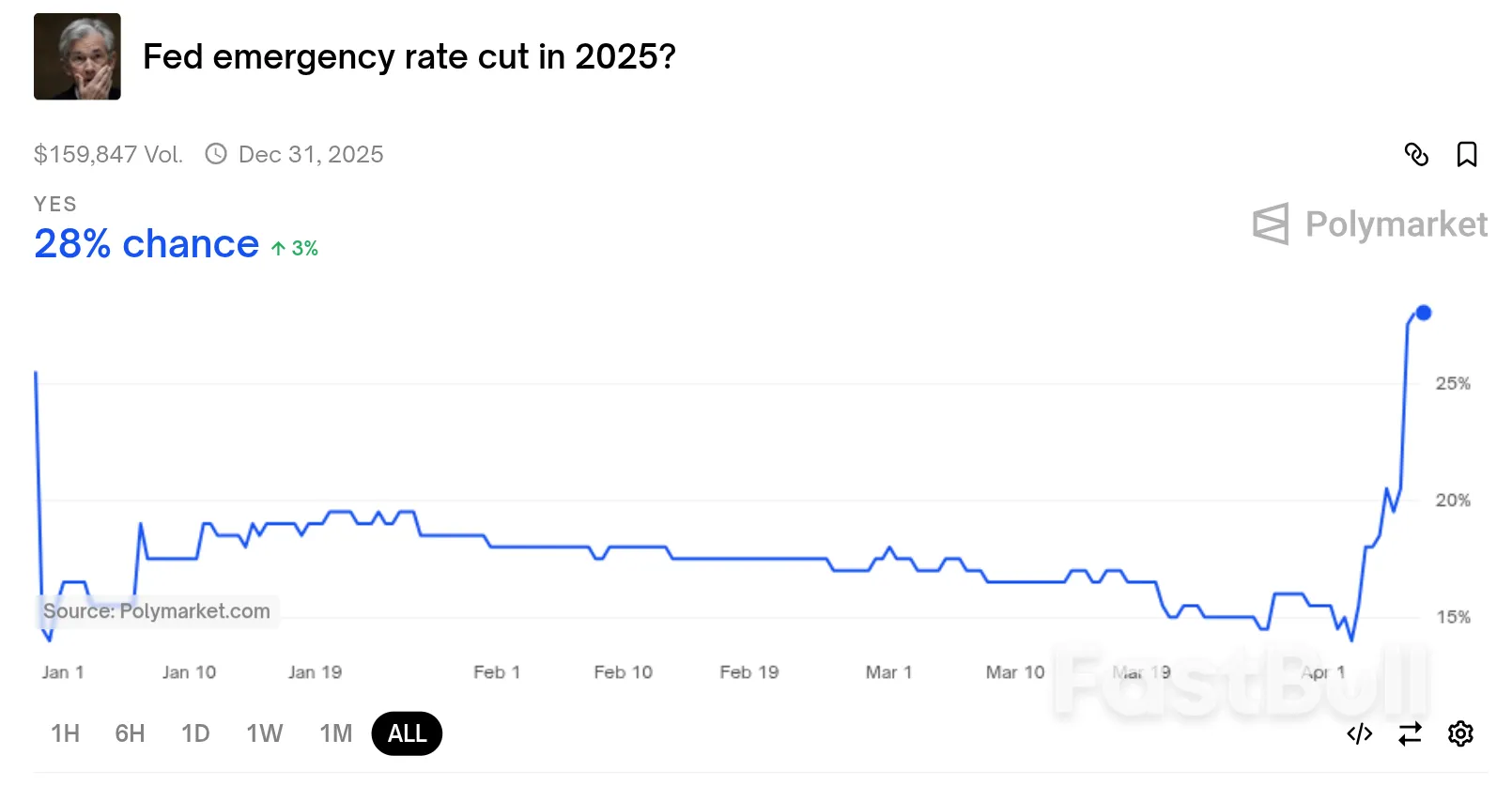
          In informal circles, including social media and prediction platforms such as Polymarket, bets of an “emergency” rate cut coming sooner are rising rapidly.
          “The Federal Reserve may have to make an emergency rate cut soon,” Professional Capital Management founder and CEO Anthony Pompliano predicted at the weekend.
          “Inflation has fallen to the lowest levels since 2020. If this continues, it will be a BIG problem.”Black Monday 2.0? 5 Things to Know in Bitcoin This Week_6

          Odds for 2025 Fed rate cut as of April 7 (screenshot). Source: Polymarket

          “Black Monday” 1987 or COVID-19 repeat?

          In the short term, the “effects” of tariffs are feared to include a marketwide crash similar to “Black Monday” in 1987.
          As Cointelegraph reported, market responses to the first round of reciprocal tariffs laid the foundations for turmoil at the upcoming Wall Street open.
          For trader, analyst and entrepreneur Michaël van de Poppe, crypto’s Black Monday moment is already here.
          “I think we'll see a rollercoaster 1-2 weeks in which we're having a test of the lows for Bitcoin. It can go as deep as $70K from here,” he warned X followers on April 7.
          Van de Poppe saw an emergency Fed rate cut as the only logical escape path for stemming the risk-asset bleed.Black Monday 2.0? 5 Things to Know in Bitcoin This Week_7

          BTC/USDT 1-day chart with RSI data. Source: Michaël van de Poppe/X

          Trading resource The Kobeissi Letter meanwhile pointed to heavy losses on both Chinese and Japanese stocks during the week’s first Asia trading session.
          “We are seeing the market's first circuit breakers since March 2020,” it reported.
          Kobeissi described market sentiment as “polarized,” drawing multiple comparisons to the COVID-19 cross-market crash in March 2020 and beyond.
          “This is by far the most panic we have seen in the market since March 2020. In fact, we may be nearing investor panic levels ABOVE March 2020,” it added.
          “It's currently a widespread rush to the exit for investors.”

          Bitcoin’s new hodler losses multiply

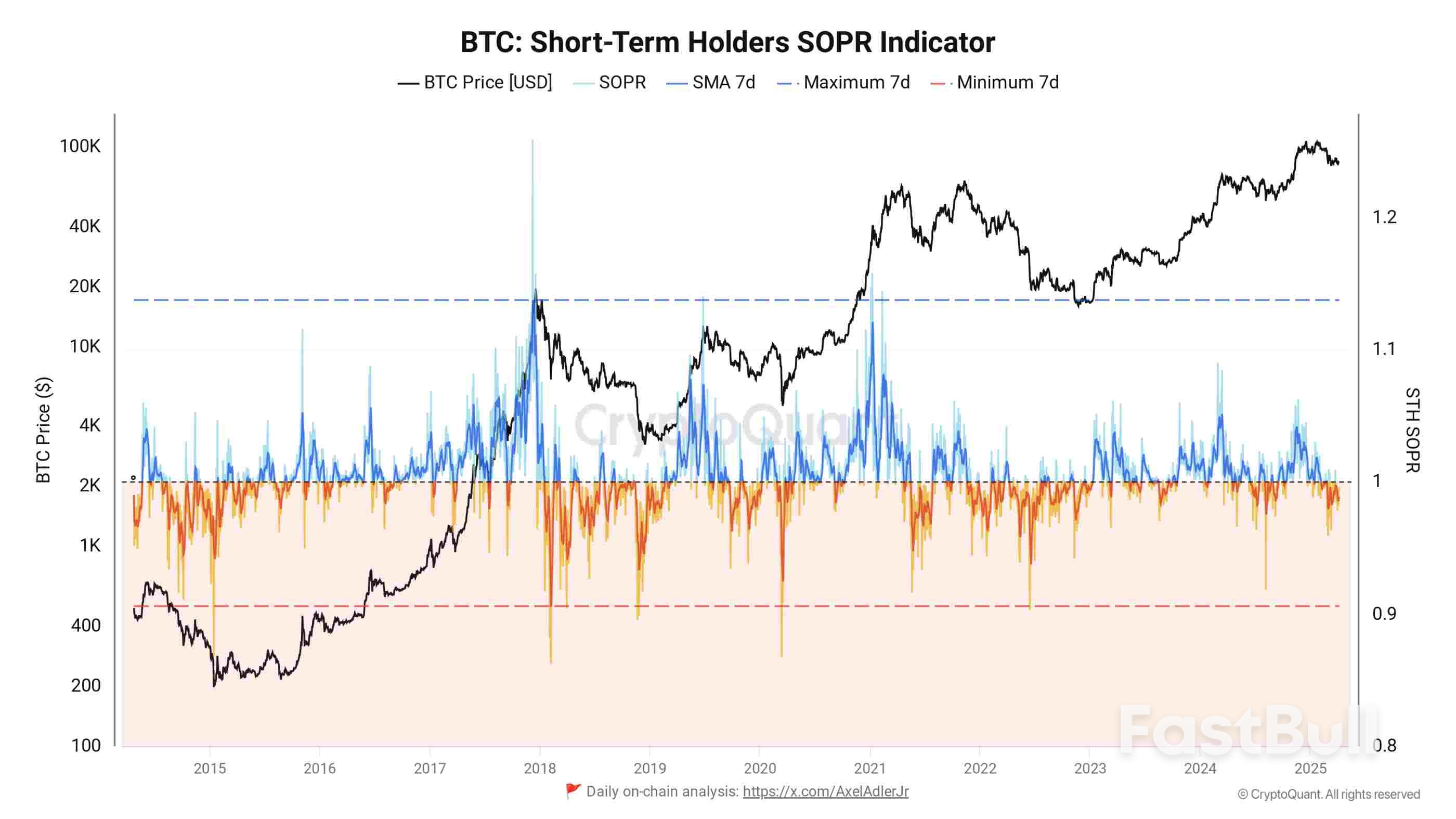
          On Bitcoin, the investor cohort likely first to capitulate are short-term holders (STHs) — the market’s more speculative entities with a buy-in date within the last six months.
          As Cointelegraph reported, these investors are highly sensitive to BTC price volatility, and that their panic selling creates a vicious circle for the market.
          Data from onchain analytics platform CryptoQuant now shows that the STH cohort is falling increasingly into the red.
          The Spent Output Profit Ratio (SOPR) metric, which tracks STH coins moving in profit or loss, is currently below breakeven.
          “When STH-SOPR falls below 1.0, it reflects that short-term investors are realizing losses — a classic signal of capitulation,” CryptoQuant contributor Yonsei Dent noted in one of its “Quicktake” blog posts.
          “Looking back at 2024, major price corrections were accompanied by sharp drops in STH-SOPR, often reaching or falling below the -2 standard deviation band. These moments — notably in May, July, and August — aligned with periods of panic selling among short-term market participants.”Black Monday 2.0? 5 Things to Know in Bitcoin This Week_8

          Bitcoin STH-SOPR chart. Source: CryptoQuant

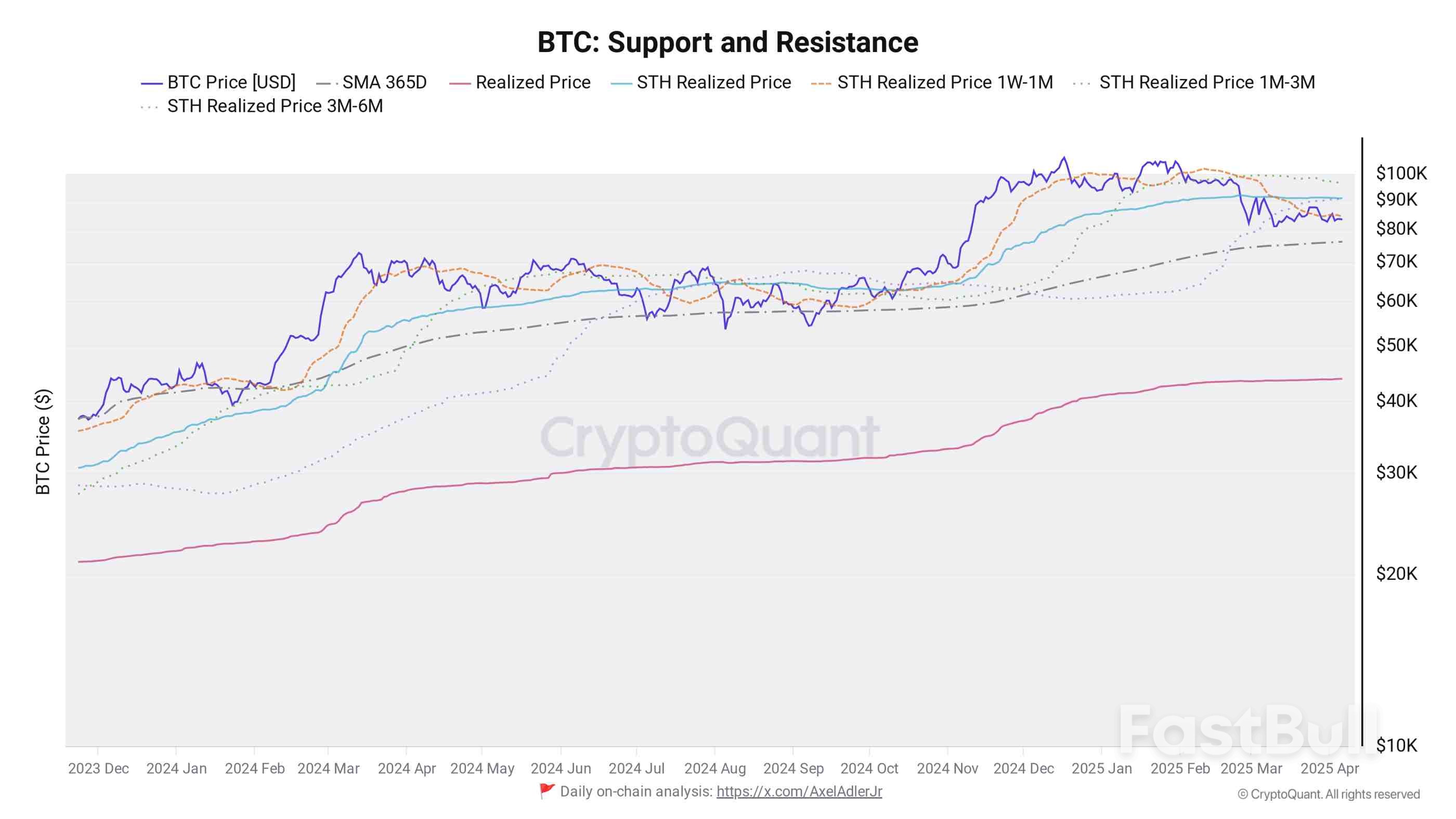
          Below $80,000, BTC/USD is now comfortably under the aggregate cost basis for STH investors, CryptoQuant confirms.
          Bitcoin’s total aggregate cost basis, which includes long-term holders, currently sits at $43,000.Black Monday 2.0? 5 Things to Know in Bitcoin This Week_9

          Bitcoin STH cost bases. Source: CryptoQuant

          Sentiment eclipses bearish records

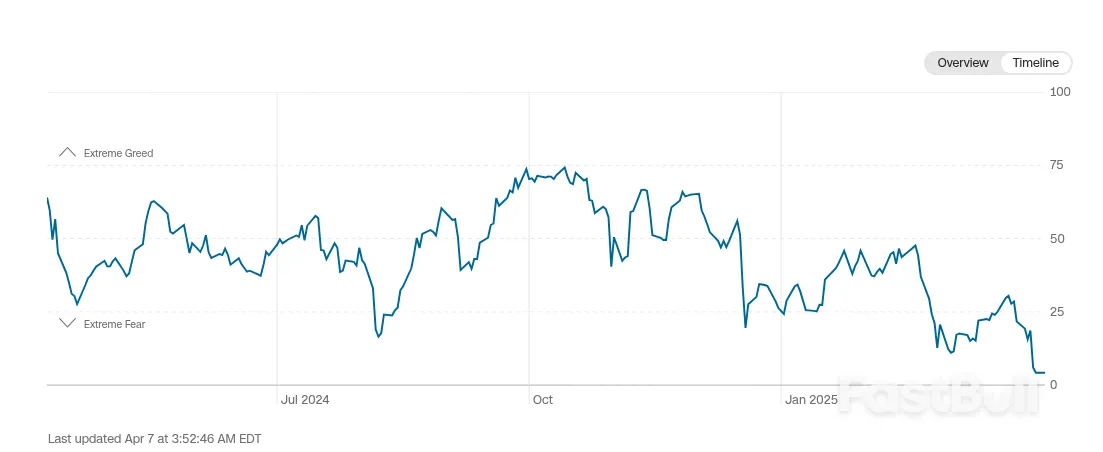
          In a sobering yet arguably bizarre move, the extent of bearish sentiment on traditional markets, as measured by the Fear & Greed Index, has fallen to extremes.
          The latest data from the Index, which uses a basket of factors to compute the market mood, gives a reading of just 4/100.
          “It’s never been this low: not in COVID, not after FTX collapse,” popular crypto commentator Atlas noted.Black Monday 2.0? 5 Things to Know in Bitcoin This Week_10

          Fear & Greed Index (screenshot). Source: CNN

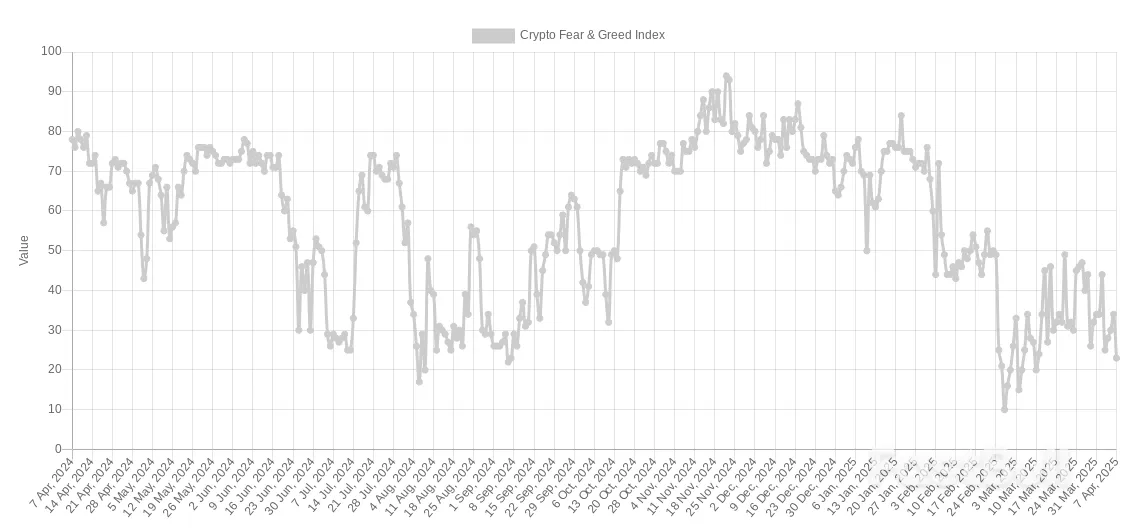
          Crypto continues to weather the storm somewhat better, with the Crypto Fear & Greed Index at 23/100 on April 7.Black Monday 2.0? 5 Things to Know in Bitcoin This Week_11

          Crypto Fear & Greed Index (screenshot). Source: Alternative.me

          Beyond the panic, some voices are cautiously hinting that now is an ideal moment to “buy the dip” — whether on stocks or crypto.
          “This doesn't necessarily mean the absolute bottom is in, but is generally at least a local opportunity,” the founder of quantitative Bitcoin and digital asset fund Capriole Investments, argued in an X thread.
          Edwards tallied up both bullish and bearish arguments, and concluded that much risk remained, especially to Bitcoin’s bull market.
          “To be fair Bitcoin did very well last week, but has played catch up (to the downside) over the weekend. Pending some large unforeseen news, it's going to be hard for Bitcoin to fight a correlation=1 event across risk assets, we saw something similar in early 2020,” he commented.
          “That said, there is historically significant relative strength here to note. We can likely expect Bitcoin to rally the hardest off the bottom, whereever and whenever that is.”

          Source: Cointelegraph

          Risk Warnings and Disclaimers
          You understand and acknowledge that there is a high degree of risk involved in trading. Following any strategies or investment methods may lead to potential losses. The content on the site is provided by our contributors and analysts for information purposes only. You are solely responsible for determining whether any trading assets, securities, strategy, or any other product is suitable for investing based on your own investment objectives and financial situation.
          Add to Favorites
          Share

          Pound to Euro Week Ahead Forecast: Recovering as Tariff Spat Restrains EUR/USD

          Warren Takunda

          Economic

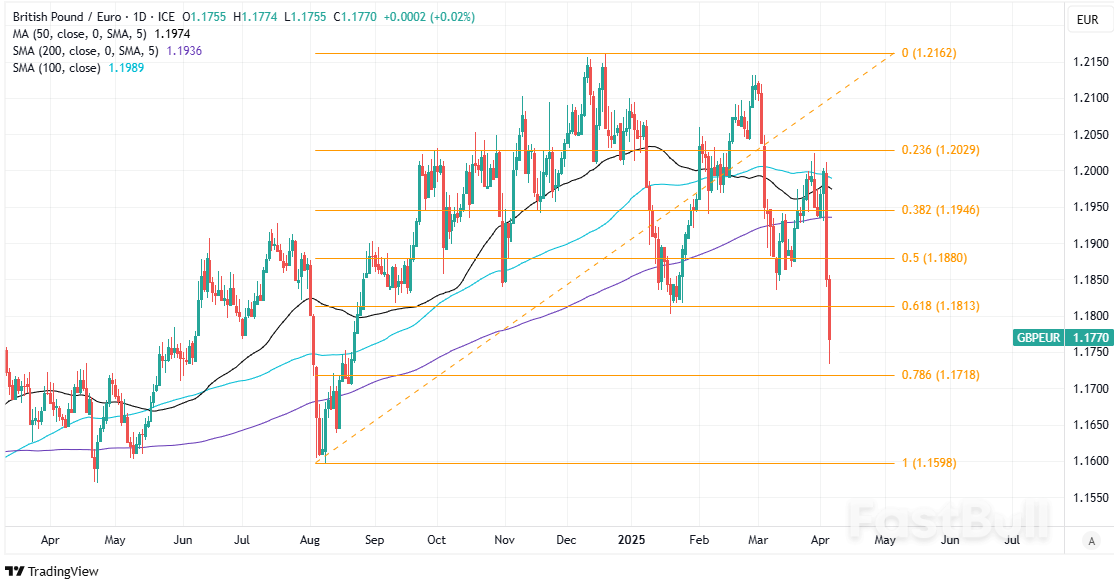
          The Pound to Euro rate fell heavily last week but could now see a partial recovery, with technical support levels at 1.1813 and 1.1880 potentially regained, if the risk of a tit-for-tat tariff spat between Washington and Brussels leads EUR/USD to ebb further from its recent highs in the days ahead.
          GBP/EUR fell to eight-month lows beneath 1.17 on Friday as the Euro showed greater resilience than Sterling in an escalating global market rout that saw the US dollar come rallying back from the prior day’s losses to the detriment of most other currencies, many of which had rallied sharply on Thursday.
          “The sharp spike in the VIX has overshadowed the pound's larger resilience to tariffs - evidenced in the lower UK tariff - resulting in EURGBP trading much cheaper than rate differentials imply,” says Themistoklis Fiotakis, head of FX research at Barclays.
          “We assess this to be a temporary bump and expect the pound to rebound vs. the EUR as equity volatility subsides,” he adds, in a Sunday research briefing.

          Pound to Euro Week Ahead Forecast: Recovering as Tariff Spat Restrains EUR/USD_1Above: Pound to Euro rate shown at daily intervals with Fibonacci retracements of August to December uptrend indicating possible areas of technical support for Sterling. Click for closer inspection.
          Friday saw Sterling fall up to 1% against a euro that climbed much more sharply against some other currencies including the Australian dollar, which fell more than 4% at its lows. However, the single currency’s gains could reverse somewhat this week if Brussels and Washington engage in a tit-for-tat tariff spat.
          The “individualized reciprocal higher tariff,” rate of 20% announced by the White House last week will apply to goods imported from the European Union as of Wednesday and a widely touted retaliation could come as soon as Wednesday, which would risk drawing a counter-response from Washington.
          “The European economy is already weak and the tariffs will be another headwind. If Europe retaliates to US tariffs, the negative impacts for Europe will be larger,” says Kristina Clifton, an economist and strategist at Commonwealth Bank of Australia.
          “The UK is negotiating with the US to reduce the 10% tariff the US has placed on UK goods imports. If the US agrees to lower their tariff, GBP/USD would jump,” she adds, in a Sunday research briefing.
          A counter-response might be likely because President Donald Trump said in last Wednesday’s tariff announcement that retaliation by other countries would merely beget even higher US tariffs, and an escalating tit-for-tat exchange would likely see the effects of the euro’s recent outperformance reverse somewhat.
          However, toward the end of the week, on Friday, the release of the UK’s February GDP report might also be impactful for Sterling and could see any recovery of the Pound to Euro rate tempered if it shows the economy stalling afresh as high interest rates and downbeat sentiment weigh ahead of April’s fiscal policy changes.Pound to Euro Week Ahead Forecast: Recovering as Tariff Spat Restrains EUR/USD_2

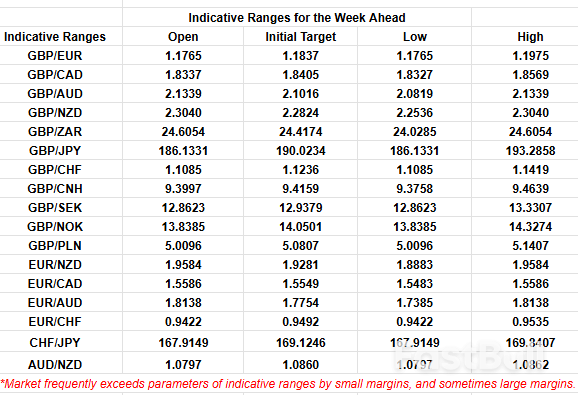
          Above: Quantitative model estimates of possible ranges for the week.

          Source: PoundSterlingLive.

          To stay updated on all economic events of today, please check out our Economic calendar
          Risk Warnings and Disclaimers
          You understand and acknowledge that there is a high degree of risk involved in trading. Following any strategies or investment methods may lead to potential losses. The content on the site is provided by our contributors and analysts for information purposes only. You are solely responsible for determining whether any trading assets, securities, strategy, or any other product is suitable for investing based on your own investment objectives and financial situation.
          Add to Favorites
          Share

          Pound to Canadian Dollar Week Ahead Forecast: Loonie Dampened by Softer USD

          Warren Takunda

          Economic

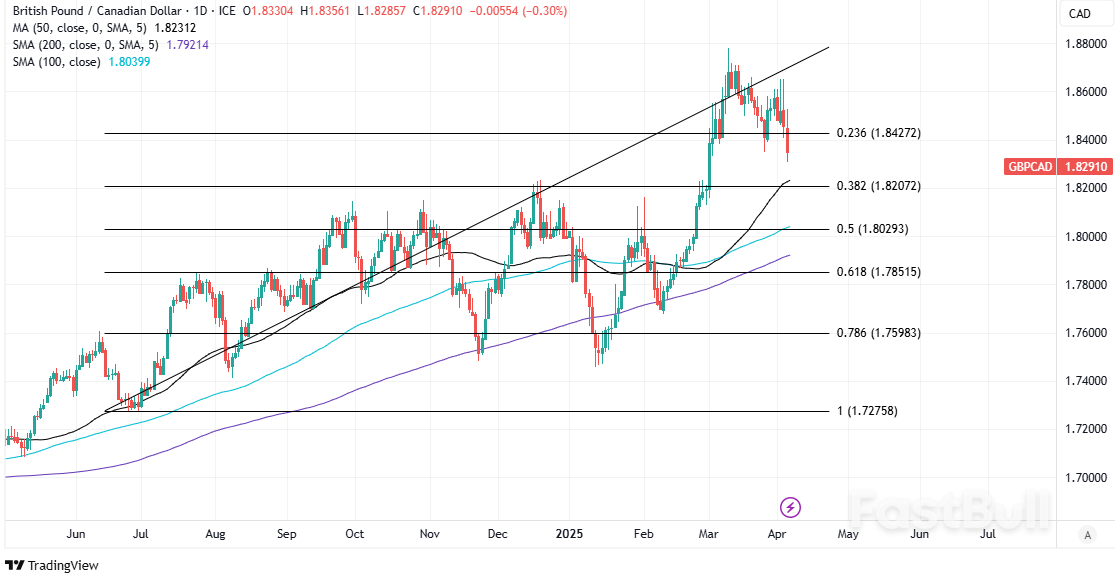
          The Pound to Canadian Dollar exchange rate receded further from the post-Brexit highs of early March last week but it benefits from a double-barreled layer of support just above the nearby 1.82 handle and might even have scope to recover above 1.8427 if the US Dollar weakens afresh up ahead, taking the Loonie with it.
          GBP/CAD fell around 1.8% from the highs near 1.8650 seen early on Thursday to the lows at 1.8305 seen late on Friday when the Canadian Dollar showed greater resilience than Sterling amid an almost-disorderly rout in global markets that saw the US Dollar rally back sharply from the prior day’s losses.
          However, there may be scope for these losses to reverse somewhat this week as Canada retaliates over the latest changes to US trade tariffs, and if widespread pessimism about the US economic outlook and a deterioration of other similarly-important fundamentals weighs on the US Dollar afresh up ahead.
          “Canada is facing some significant headwinds. But narrower spreads and the weaker USD tone should bolster confidence that the 1.48 peak [in USD/CAD] seen at the start of March is unlikely to be revisited any time soon,” says Shaun Osborne, chief FX strategist at Scotiabank.
          Pound to Canadian Dollar Week Ahead Forecast: Loonie Dampened by Softer USD_1

          Above: Pound to Canadian Dollar rate shown at daily intervals with Fibonacci retracements and selected moving averages indicating possible support levels for Sterling. Click for closer inspection.

          “USDCAD price action is neutral—consolidative—Friday but a downtrend in the USD continues to develop and the daily DMI is nudging USD-bearish for the first time since September,” he adds, in a Friday research note.
          The Canadian Dollar’s resilience and the decline in GBP/CAD were encouraged when the White House said that many products imported from Canada would be exempt from the new tariffs announced last Wednesday.
          However, steel, aluminium and some cars are still expected to be subject to a 25% tariff, and the caretaker government has said it intends to retaliate with levies of its own, which would risk a counter-response from Washington and an escalating dispute that might make the Loonie’s gains difficult to sustain.
          “So far, markets appear more concerned about tariff risks to the US economy. Our estimates show Canada will be the most significantly impacted of the economies we cover,” says Kristina Clifton, an economist and strategist at Commonwealth Bank of Australia, while tipping USD/CAD to rise as far as 1.4469 this week.
          Another possible source of support for GBP/CAD this week would be any renewed weakening of the US Dollar, given the Loonie’s positive correlation with the trade-weighted measure of the currency, which has fallen heavily of late due to growing market pessimism about the outlook for the US economy.
          “We are making a major shift in our Dollar view for the year ahead: we now see Dollar weakness of the first quarter persisting and deepening further,” says Kamakshya Trivedi, head of global FX, interest rates and emerging market strategy at Goldman Sachs.
          “We have previously talked about the risk case of a shift in the relative growth outlook reversing the “exceptional” positioning that underpins the Dollar’s strong valuation. In light of recent events, we are now making that our base case,” Trivedi and colleagues add, in a Friday research briefing.
          Trivedi and colleagues raised their forecasts for numerous currencies relative to the Dollar on Friday and lifted their projection for GBP/CAD, which is now seen at 1.8480, 1.8765 and 1.9182 over the next three, six and 12 months, respectively, reflecting upgrades from earlier forecasts of 1.8834, 1.8688 and 1.8104, respectively.
          Pound to Canadian Dollar Week Ahead Forecast: Loonie Dampened by Softer USD_2

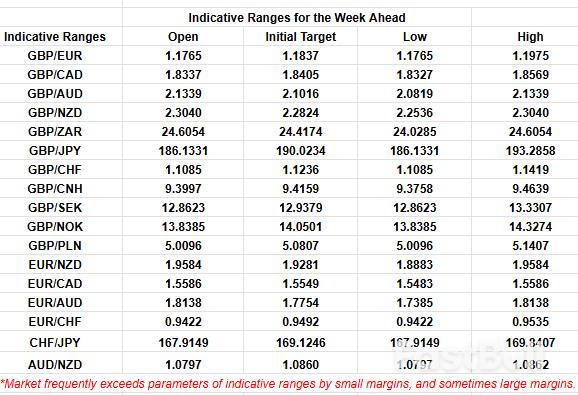
          Above: Quantitative model estimates of possible ranges for the week. Source: Pound Sterling Live.

          Their idea is that White House tariffs will erode the confidence of companies and households, leading expectations of the economy to deteriorate and threatening to undermine the transatlantic growth differential that has sustained an overvalued Dollar and ‘overweight’ US equity markets for a decade or more.
          However, it’s possible, if not likely that the tariffs will be bullish for US business investment, production, employment, wages and GDP, but also toxic for profits, margins and stocks through their effect on the outrageous valuations that have prevailed in US equity markets in recent times.
          “A potential reversal of this overweight is often cited as a vulnerability for the dollar. Europe's fiscal stimulus in particular has raised the question whether a rotation into European equity markets may already be under way,” says Themistoklis, global head of FX research at Barclays.
          “We have already argued that such structural trends in cross​-​dollar flows do not turn on a dime. Instead, they require deep reversals in underlying macro conditions,” he adds in a late March research briefing.

          Source: Poundsterlinglive

          To stay updated on all economic events of today, please check out our Economic calendar
          Risk Warnings and Disclaimers
          You understand and acknowledge that there is a high degree of risk involved in trading. Following any strategies or investment methods may lead to potential losses. The content on the site is provided by our contributors and analysts for information purposes only. You are solely responsible for determining whether any trading assets, securities, strategy, or any other product is suitable for investing based on your own investment objectives and financial situation.
          Add to Favorites
          Share

          Bloodbath for European Markets as Stocks See Worst Fall Since March 2020

          Warren Takunda

          Stocks

          Economic

          The market carnage triggered by Donald Trump's trade tariffs continued at full speed on Monday, following three consecutive days of steep losses, with no sign of the bleeding stopping.
          European equity markets are experiencing their worst session since the outbreak of the COVID-19 pandemic in March 2020, as investors continue to flee from risky assets.
          The Euro STOXX 50 fell 6% by 10:00 CEST, bringing its losses over the past three sessions to 14%. The broader STOXX 600 dropped 5.7%, extending its post-tariff announcement decline to 13%. The German DAX sank 7.2%, marking its most severe session since 12 March 2020, while Italy’s FTSE MIB fell 6.5% and Spain’s IBEX 35 lost 6%.
          The sell-offs followed an equally dramatic rout in Asia. Hong Kong’s Hang Seng Index plummeted 13% overnight — its worst one-day drop since the 1997 handover — while Japan’s Nikkei fell 8.6% and Shanghai’s Composite dropped 7%.
          US equity futures also pointed to a deepening downturn, with S&P 500 contracts down 3.8%, Dow Jones Industrial Average futures off 3.3%, and Nasdaq 100 futures sliding 4.2%.
          “The collapse of US equities after President Donald Trump announced his new tariffs will be remembered in the history books, as it prompted the fourth-largest two-day drop in the S&P 500 since its inception in 1957,” BBVA said in a note to clients on Monday.

          Trump’s tariffs provoke investor panic

          The sell-off was triggered by Trump’s latest protectionist measures, including a 34% tariff on Chinese imports, on top of an earlier 20% hike, and an additional 20% duty on goods from the European Union.
          On his social media platform Truth Social, Trump defended the move, claiming it was a remedy for “massive financial deficits” and describing the tariff revenues as “a beautiful thing to behold”.
          European policymakers reacted swiftly, with discussions underway on a coordinated retaliation.
          “We have the necessary tools to respond,” Spain’s Economy Minister Carlos Cuerpo stated, reflecting a growing consensus for retaliation.
          Compounding market stress, Federal Reserve Chair Jerome Powell warned on Friday that the economic fallout from the tariffs could be “significantly larger than expected”, potentially stoking inflation while slowing growth. He added that the Fed is not in a hurry to cut rates, further denting investor confidence.

          Financials and industrials hardest hit

          European banks bore the brunt of the sell-off, with Banco Sabadell down 10%, Raiffeisen Bank International losing 9.2%, and ING Groep dropping 8.6%. Other sharp declines included Banco BPM (-7.7%), Commerzbank (-7.6%), CaixaBank (-7.1%), BPER Banca (-6.7%), and Intesa Sanpaolo (-6.3%).
          The industrials sector also suffered heavy losses. Germany’s Rheinmetall AG plunged 15.3%, Safran dropped 10%, and MTU Aero Engines AG and Thyssenkrupp each fell 9.5%. HeidelbergCement, Leonardo SpA, Airbus, and Siemens Energy were all down between 8% and 9.2%.
          Luxury and consumer goods firms, often sensitive to global trade disruptions, also declined. Kering fell 9.9%, Richemont 8.2%, and Burberry 7.8%. Salvatore Ferragamo, Hermès, Moncler, Adidas, Puma, and LVMH posted losses ranging from 6% to 12%.

          Safe-haven demand surges

          As equities sank, traditional safe-haven assets attracted inflows. The Swiss franc rose over 1% against the US dollar, and the Japanese yen also strengthened. “Risk aversion dominates the currency market,” said Luca Cigognini, market analyst at Intesa Sanpaolo. The euro gained 0.5% to trade at $1.10, while the British pound struggled to hold ground.
          Bond markets reflected the flight to safety. German Bund yields dropped 7 basis points, reversing the rise seen after Berlin’s recent fiscal stimulus announcement.
          Commodity markets weren’t spared. Gold fell 0.5% to €2,754 per ounce, likely due to profit-taking after recent gains. Oil prices, meanwhile, extended their decline, with global crude benchmarks down 3.6% on Monday, pushing the three-day loss to 17% — the worst such stretch since March 2020.
          With no signs of central bank intervention and geopolitical tensions escalating, markets are bracing for further volatility as economic and trade uncertainties deepen.

          Source: Euronews

          To stay updated on all economic events of today, please check out our Economic calendar
          Risk Warnings and Disclaimers
          You understand and acknowledge that there is a high degree of risk involved in trading. Following any strategies or investment methods may lead to potential losses. The content on the site is provided by our contributors and analysts for information purposes only. You are solely responsible for determining whether any trading assets, securities, strategy, or any other product is suitable for investing based on your own investment objectives and financial situation.
          Add to Favorites
          Share
          FastBull
          Copyright © 2025 FastBull Ltd

          728 RM B 7/F GEE LOK IND BLDG NO 34 HUNG TO RD KWUN TONG KLN HONG KONG

          TelegramInstagramTwitterfacebooklinkedin
          App Store Google Play Google Play
          Products
          Charts

          Chats

          Q&A with Experts
          Screeners
          Economic Calendar
          Data
          Tools
          Membership
          Features
          Function
          Markets
          Copy Trading
          Latest Signals
          Contests
          News
          Analysis
          24/7
          Columns
          Education
          Company
          Careers
          About Us
          Contact Us
          Advertising
          Help Center
          Feedback
          User Agreement
          Privacy Policy
          Business

          White Label

          Data API

          Web Plug-ins

          Poster Maker

          Affiliate Program

          Risk Disclosure

          The risk of loss in trading financial instruments such as stocks, FX, commodities, futures, bonds, ETFs and crypto can be substantial. You may sustain a total loss of the funds that you deposit with your broker. Therefore, you should carefully consider whether such trading is suitable for you in light of your circumstances and financial resources.

          No decision to invest should be made without thoroughly conducting due diligence by yourself or consulting with your financial advisors. Our web content might not suit you since we don't know your financial conditions and investment needs. Our financial information might have latency or contain inaccuracy, so you should be fully responsible for any of your trading and investment decisions. The company will not be responsible for your capital loss.

          Without getting permission from the website, you are not allowed to copy the website's graphics, texts, or trademarks. Intellectual property rights in the content or data incorporated into this website belong to its providers and exchange merchants.

          Not Logged In

          Log in to access more features

          FastBull Membership

          Not yet

          Purchase

          Become a signal provider
          Help Center
          Customer Service
          Dark Mode
          Price Up/Down Colors

          Log In

          Sign Up

          Position
          Layout
          Fullscreen
          Default to Chart
          The chart page opens by default when you visit fastbull.com