• Trade
  • Markets
  • Copy
  • Contests
  • News
  • 24/7
  • Calendar
  • Q&A
  • Chats
Trending
Screeners
SYMBOL
LAST
BID
ASK
HIGH
LOW
NET CHG.
%CHG.
SPREAD
SPX
S&P 500 Index
6827.42
6827.42
6827.42
6899.86
6801.80
-73.58
-1.07%
--
DJI
Dow Jones Industrial Average
48458.04
48458.04
48458.04
48886.86
48334.10
-245.98
-0.51%
--
IXIC
NASDAQ Composite Index
23195.16
23195.16
23195.16
23554.89
23094.51
-398.69
-1.69%
--
USDX
US Dollar Index
98.000
98.080
98.000
98.070
97.920
+0.050
+ 0.05%
--
EURUSD
Euro / US Dollar
1.17338
1.17345
1.17338
1.17447
1.17283
-0.00056
-0.05%
--
GBPUSD
Pound Sterling / US Dollar
1.33563
1.33572
1.33563
1.33740
1.33549
-0.00144
-0.11%
--
XAUUSD
Gold / US Dollar
4327.42
4327.87
4327.42
4329.64
4294.68
+28.03
+ 0.65%
--
WTI
Light Sweet Crude Oil
57.549
57.586
57.549
57.601
57.194
+0.316
+ 0.55%
--

Community Accounts

Signal Accounts
--
Profit Accounts
--
Loss Accounts
--
View More

Become a signal provider

Sell trading signals to earn additional income

View More

Guide to Copy Trading

Get started with ease and confidence

View More

Signal Accounts for Members

All Signal Accounts

Best Return
  • Best Return
  • Best P/L
  • Best MDD
Past 1W
  • Past 1W
  • Past 1M
  • Past 1Y

All Contests

  • All
  • Trump Updates
  • Recommend
  • Stocks
  • Cryptocurrencies
  • Central Banks
  • Featured News
Top News Only
Share

Reuters Poll - Bank Of Thailand To Lower Key Policy Rate To 1.00% In Q1 Of 2026, Said A Majority Of Economists

Share

Reuters Poll - Bank Of Thailand To Cut Its Key Interest Rate To 1.25% On December 17, Said 26 Of 27 Economists

Share

Thai Finance Minister: Earlier Stimulus Measures To Shore Up Economy

Share

Thai Finance Minister: Strong Baht Driven By Capital Inflows

Share

Thai Finance Minister: Has Discussed With Central Bank To Handle Baht

Share

India's Nifty Bank Futures Down 0.1% In Pre-Open Trade

Share

India's Nifty 50 Futures Down 0.3% In Pre-Open Trade

Share

India's Nifty 50 Index Down 0.45% In Pre-Open Trade

Share

Indian Rupee Weakens Past 90.55 Versus USA Dollar To All-Time Low

Share

China's Fossil-Fuelled Power Generation Falls 4.2% Year-On-Year In November

Share

Indian Rupee Opens Down 0.1% At 90.5450 Per USA Dollar, Versus 90.4150 Previous Close

Share

Australia Home Minister: Father Involved In Bondi Gun Attack Came To Australia On Student Visa, Son Is An Australian-Born Citizen

Share

Australian Prime Minister Albanese: Stricter Gun Control Laws Will Include Restrictions On The Number Of Guns An Individual Can Own Or License To Use

Share

Australia's Prime Minister Albanese: We Are Considering A Review Of Gun Licenses For Some Time

Share

Australia's Prime Minister Albanese: Government Considering Tougher Gun Laws

Share

China Stats Bureau Spokesperson: Next Year, Adverse Impact Of Protectionism And Unilateralism May Continue

Share

China's Onshore Yuan Strengthens To A High Of 7.0516 Per Dollar, Strongest Level Since Oct 8, 2024

Share

Indonesia's November Refined Tin Exports At 7458.64 Metric Tons

Share

China's National Bureau Of Statistics: In The Next Stage, We Will Continue To Implement The Special Action To Boost Consumption And Focus On Stabilizing Employment And Promoting Income Growth

Share

China Stats Bureau Spokesperson: Household Consumption Capability And Confidence Needs To Be Further Improved

TIME
ACT
FCST
PREV
U.K. Trade Balance (Oct)

A:--

F: --

P: --

France HICP Final MoM (Nov)

A:--

F: --

P: --

China, Mainland Outstanding Loans Growth YoY (Nov)

A:--

F: --

P: --

China, Mainland M2 Money Supply YoY (Nov)

A:--

F: --

P: --

China, Mainland M0 Money Supply YoY (Nov)

A:--

F: --

P: --

China, Mainland M1 Money Supply YoY (Nov)

A:--

F: --

P: --

India CPI YoY (Nov)

A:--

F: --

P: --

India Deposit Gowth YoY

A:--

F: --

P: --

Brazil Services Growth YoY (Oct)

A:--

F: --

P: --

Mexico Industrial Output YoY (Oct)

A:--

F: --

P: --

Russia Trade Balance (Oct)

A:--

F: --

P: --

Philadelphia Fed President Henry Paulson delivers a speech
Canada Building Permits MoM (SA) (Oct)

A:--

F: --

P: --

Canada Wholesale Sales YoY (Oct)

A:--

F: --

P: --

Canada Wholesale Inventory MoM (Oct)

A:--

F: --

P: --

Canada Wholesale Inventory YoY (Oct)

A:--

F: --

P: --

Canada Wholesale Sales MoM (SA) (Oct)

A:--

F: --

P: --

Germany Current Account (Not SA) (Oct)

A:--

F: --

P: --

U.S. Weekly Total Rig Count

A:--

F: --

P: --

U.S. Weekly Total Oil Rig Count

A:--

F: --

P: --

Japan Tankan Small Manufacturing Outlook Index (Q4)

A:--

F: --

P: --

Japan Tankan Large Non-Manufacturing Diffusion Index (Q4)

A:--

F: --

P: --

Japan Tankan Large Non-Manufacturing Outlook Index (Q4)

A:--

F: --

P: --

Japan Tankan Large Manufacturing Outlook Index (Q4)

A:--

F: --

P: --

Japan Tankan Small Manufacturing Diffusion Index (Q4)

A:--

F: --

P: --

Japan Tankan Large Manufacturing Diffusion Index (Q4)

A:--

F: --

P: --

Japan Tankan Large-Enterprise Capital Expenditure YoY (Q4)

A:--

F: --

P: --

U.K. Rightmove House Price Index YoY (Dec)

A:--

F: --

P: --

China, Mainland Industrial Output YoY (YTD) (Nov)

A:--

F: --

P: --

China, Mainland Urban Area Unemployment Rate (Nov)

A:--

F: --

P: --

Saudi Arabia CPI YoY (Nov)

--

F: --

P: --

Euro Zone Industrial Output YoY (Oct)

--

F: --

P: --

Euro Zone Industrial Output MoM (Oct)

--

F: --

P: --

Canada Existing Home Sales MoM (Nov)

--

F: --

P: --

Euro Zone Total Reserve Assets (Nov)

--

F: --

P: --

U.K. Inflation Rate Expectations

--

F: --

P: --

Canada National Economic Confidence Index

--

F: --

P: --

Canada New Housing Starts (Nov)

--

F: --

P: --

U.S. NY Fed Manufacturing Employment Index (Dec)

--

F: --

P: --

U.S. NY Fed Manufacturing Index (Dec)

--

F: --

P: --

Canada Core CPI YoY (Nov)

--

F: --

P: --

Canada Manufacturing Unfilled Orders MoM (Oct)

--

F: --

P: --

U.S. NY Fed Manufacturing Prices Received Index (Dec)

--

F: --

P: --

U.S. NY Fed Manufacturing New Orders Index (Dec)

--

F: --

P: --

Canada Manufacturing New Orders MoM (Oct)

--

F: --

P: --

Canada Core CPI MoM (Nov)

--

F: --

P: --

Canada Trimmed CPI YoY (SA) (Nov)

--

F: --

P: --

Canada Manufacturing Inventory MoM (Oct)

--

F: --

P: --

Canada CPI YoY (Nov)

--

F: --

P: --

Canada CPI MoM (Nov)

--

F: --

P: --

Canada CPI YoY (SA) (Nov)

--

F: --

P: --

Canada Core CPI MoM (SA) (Nov)

--

F: --

P: --

Canada CPI MoM (SA) (Nov)

--

F: --

P: --

Federal Reserve Board Governor Milan delivered a speech
U.S. NAHB Housing Market Index (Dec)

--

F: --

P: --

Australia Composite PMI Prelim (Dec)

--

F: --

P: --

Australia Services PMI Prelim (Dec)

--

F: --

P: --

Australia Manufacturing PMI Prelim (Dec)

--

F: --

P: --

Japan Manufacturing PMI Prelim (SA) (Dec)

--

F: --

P: --

U.K. Unemployment Rate (Nov)

--

F: --

P: --

U.K. 3-Month ILO Unemployment Rate (Oct)

--

F: --

P: --

Q&A with Experts
    • All
    • Chatrooms
    • Groups
    • Friends
    Connecting
    .
    .
    .
    Type here...
    Add Symbol or Code

      No matching data

      All
      Trump Updates
      Recommend
      Stocks
      Cryptocurrencies
      Central Banks
      Featured News
      • All
      • Russia-Ukraine Conflict
      • Middle East Flashpoint
      • All
      • Russia-Ukraine Conflict
      • Middle East Flashpoint
      Search
      Products

      Charts Free Forever

      Chats Q&A with Experts
      Screeners Economic Calendar Data Tools
      Membership Features
      Data Warehouse Market Trends Institutional Data Policy Rates Macro

      Market Trends

      Market Sentiment Order Book Forex Correlations

      Top Indicators

      Charts Free Forever
      Markets

      News

      News Analysis 24/7 Columns Education
      From Institutions From Analysts
      Topics Columnists

      Latest Views

      Latest Views

      Trending Topics

      Top Columnists

      Latest Update

      Signals

      Copy Rankings Latest Signals Become a signal provider AI Rating
      Contests
      Brokers

      Overview Brokers Assessment Rankings Regulators News Claims
      Broker listing Forex Brokers Comparison Tool Live Spread Comparison Scam
      Q&A Complaint Scam Alert Videos Tips to Detect Scam
      More

      Business
      Events
      Careers About Us Advertising Help Center

      White Label

      Data API

      Web Plug-ins

      Affiliate Program

      Awards Institution Evaluation IB Seminar Salon Event Exhibition
      Vietnam Thailand Singapore Dubai
      Fans Party Investment Sharing Session
      FastBull Summit BrokersView Expo
      Recent Searches
        Top Searches
          Markets
          News
          Analysis
          User
          24/7
          Economic Calendar
          Education
          Data
          • Names
          • Latest
          • Prev

          View All

          No data

          Scan to Download

          Faster Charts, Chat Faster!

          Download App
          English
          • English
          • Español
          • العربية
          • Bahasa Indonesia
          • Bahasa Melayu
          • Tiếng Việt
          • ภาษาไทย
          • Français
          • Italiano
          • Türkçe
          • Русский язык
          • 简中
          • 繁中
          Open Account
          Search
          Products
          Charts Free Forever
          Markets
          News
          Signals

          Copy Rankings Latest Signals Become a signal provider AI Rating
          Contests
          Brokers

          Overview Brokers Assessment Rankings Regulators News Claims
          Broker listing Forex Brokers Comparison Tool Live Spread Comparison Scam
          Q&A Complaint Scam Alert Videos Tips to Detect Scam
          More

          Business
          Events
          Careers About Us Advertising Help Center

          White Label

          Data API

          Web Plug-ins

          Affiliate Program

          Awards Institution Evaluation IB Seminar Salon Event Exhibition
          Vietnam Thailand Singapore Dubai
          Fans Party Investment Sharing Session
          FastBull Summit BrokersView Expo

          Monthly Technical Analysis And Forecast For August 2025

          Winkelmann

          Commodity

          Forex

          Technical Analysis

          Summary:

          In this monthly technical analysis, we examine key chart patterns and levels for the EURUSD, USDJPY, GBPUSD, AUDUSD, USDCAD pairs, gold, and Brent crude oil to forecast potential developments for August 2025.

          Major technical levels to watch in August 2025

          ● EURUSD: Support 1.0890, 1.0600. Resistance 1.1350, 1.1850
          ● USDJPY: Support 145.40, 138.15. Resistance 150.00, 151.00
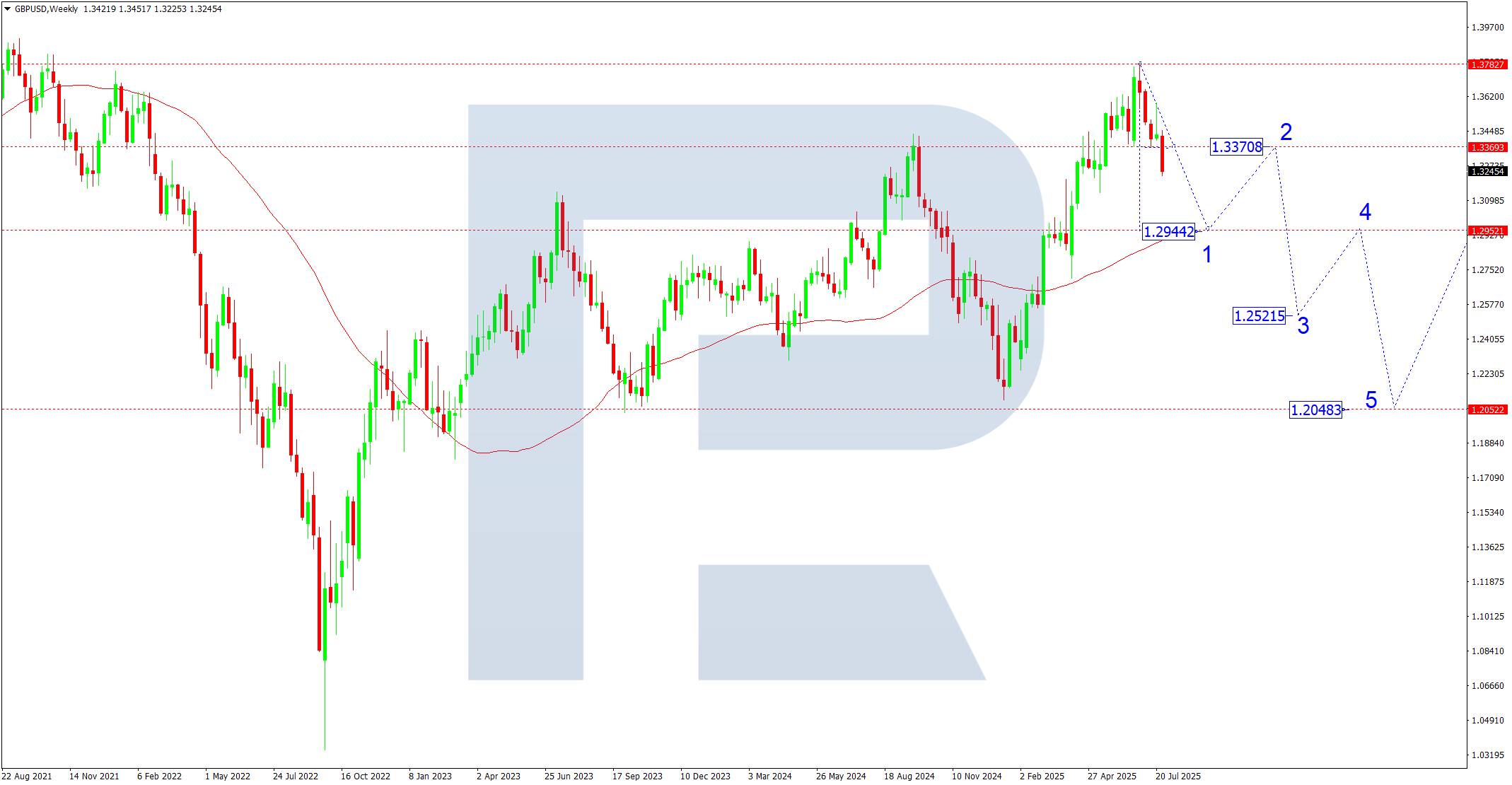
          ● GBPUSD: Support 1.2944, 1.2520. Resistance 1.3370, 1.3600
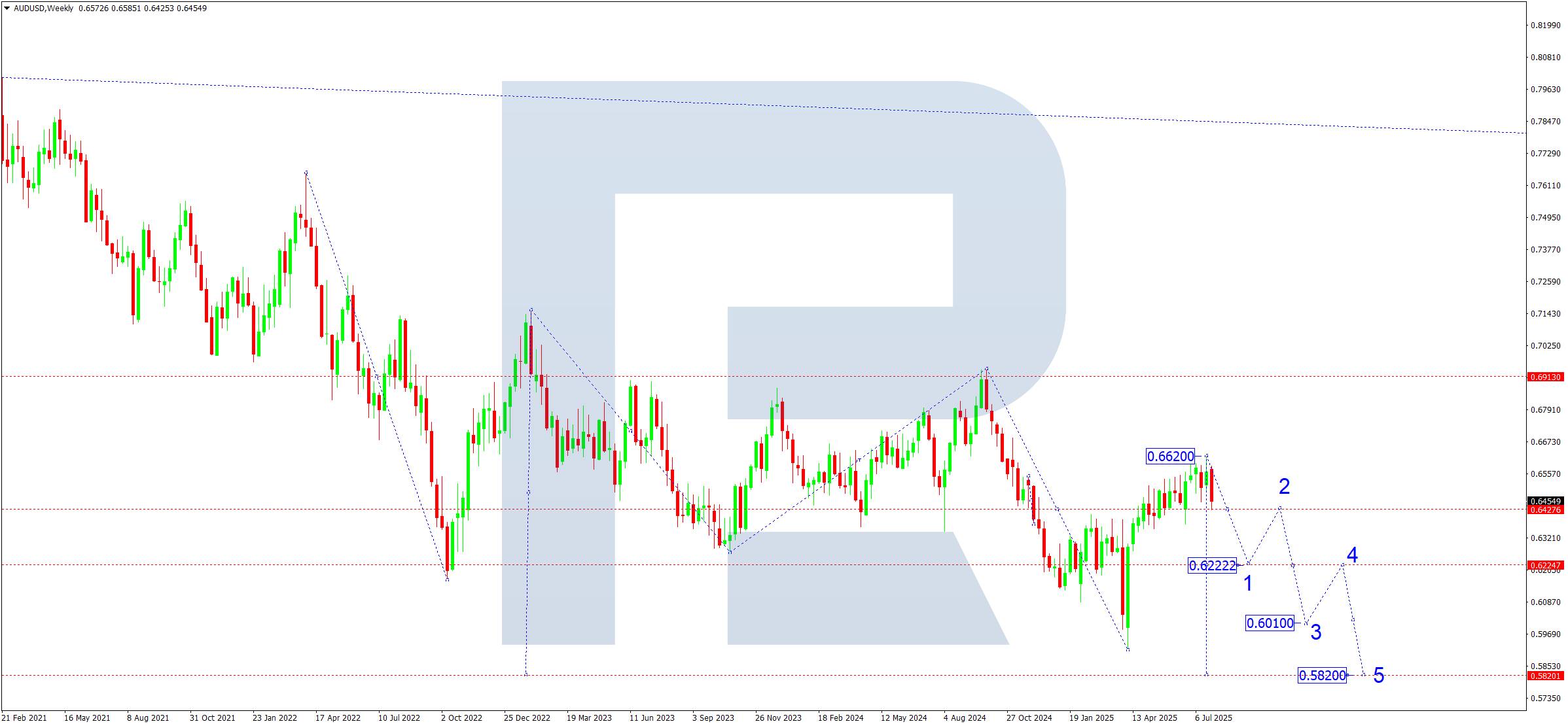
          ● AUDUSD: Support 0.6222, 0.6010. Resistance 0.6620, 0.6700
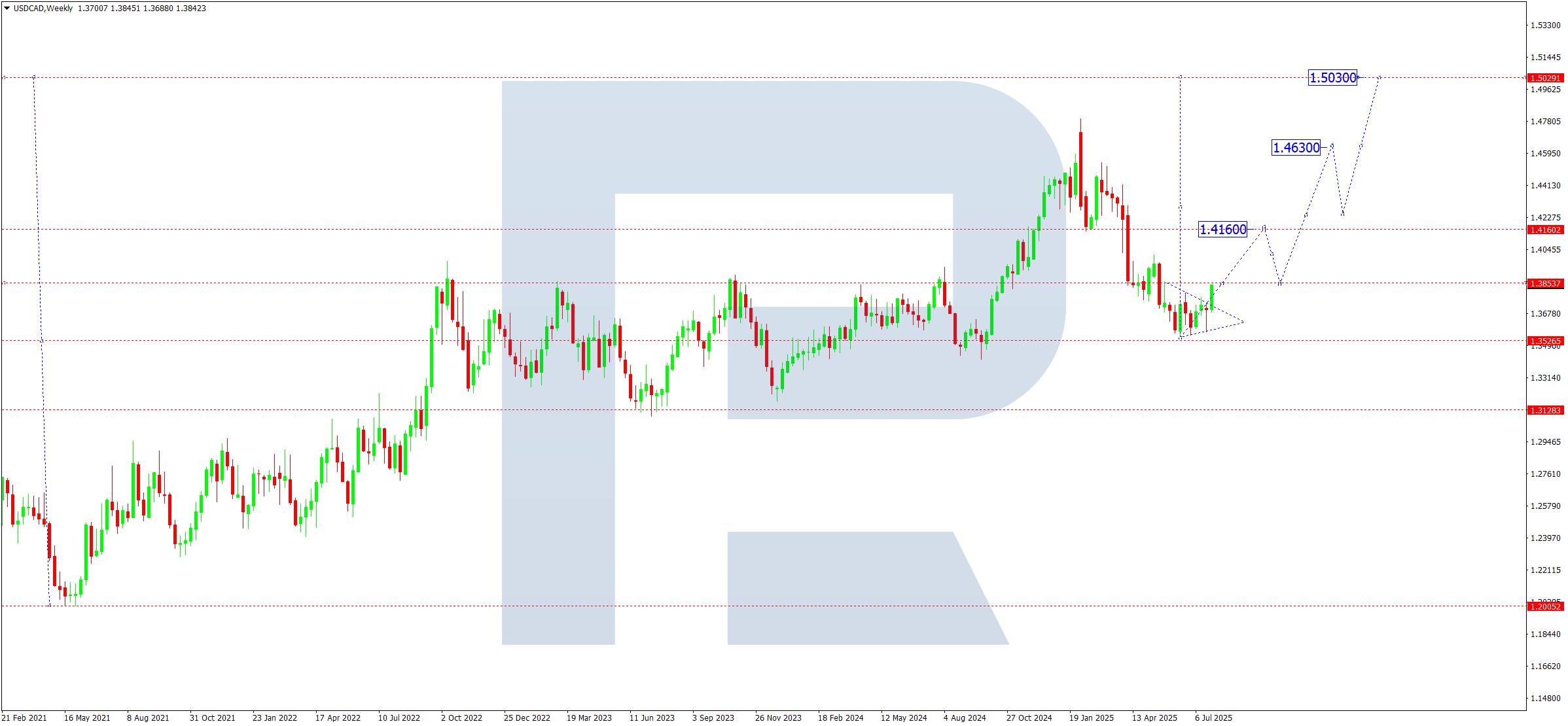
          ● USDCAD: Support 1.3770, 1.3550. Resistance 1.3850, 1.4160
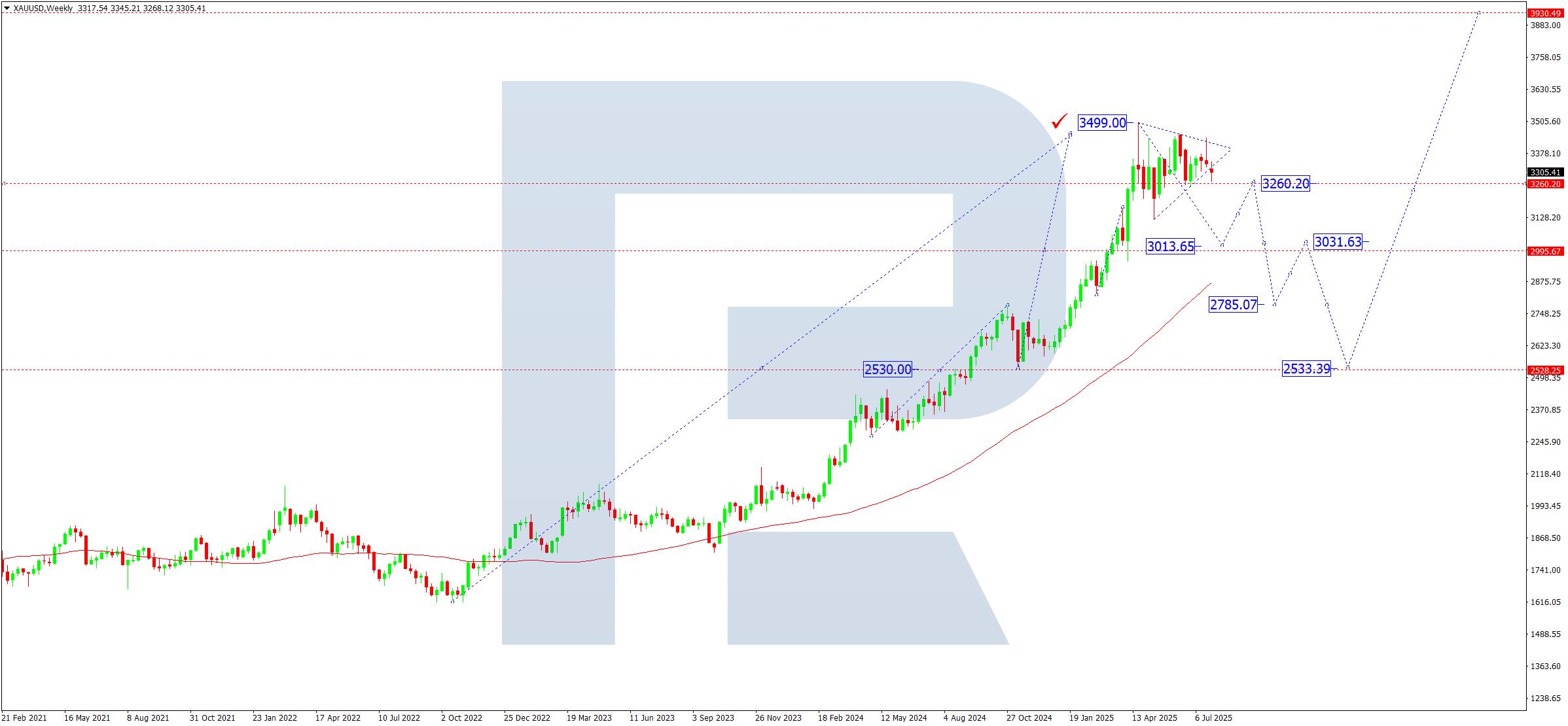
          ● Gold (XAUUSD): Support 3200, 3013. Resistance 3450, 3500
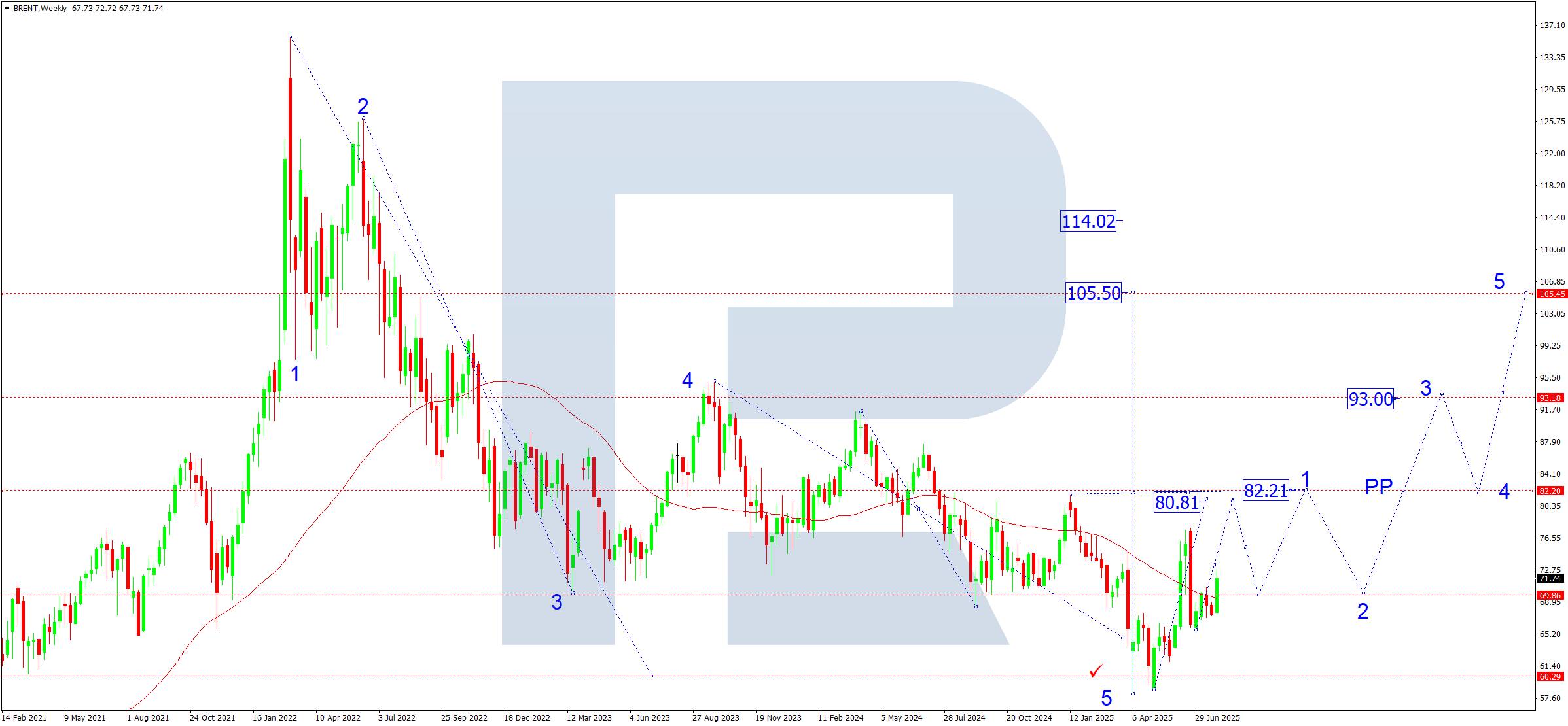
          ● Brent: Support 70.00, 65.55. Resistance 80.00, 82.22

          EURUSD forecast

          August will begin amid rising expectations of a Fed rate cut closer to Q4 – the labour market remains resilient, but inflation indicators show no signs of increasing. The ECB maintains a cautious tone, not signalling imminent easing steps.

          US trade policy puts additional pressure on the euro. New tariffs imposed by the Trump administration on European goods undermine the eurozone’s export potential and increase concerns about slowing economic growth. These measures drive capital outflows into safe-haven assets, particularly the US dollar, thereby strengthening its position against the euro.The overall yield differential and geopolitical tensions continue to create a strong bearish backdrop for the EURUSD pair.

          EURUSD technical analysis

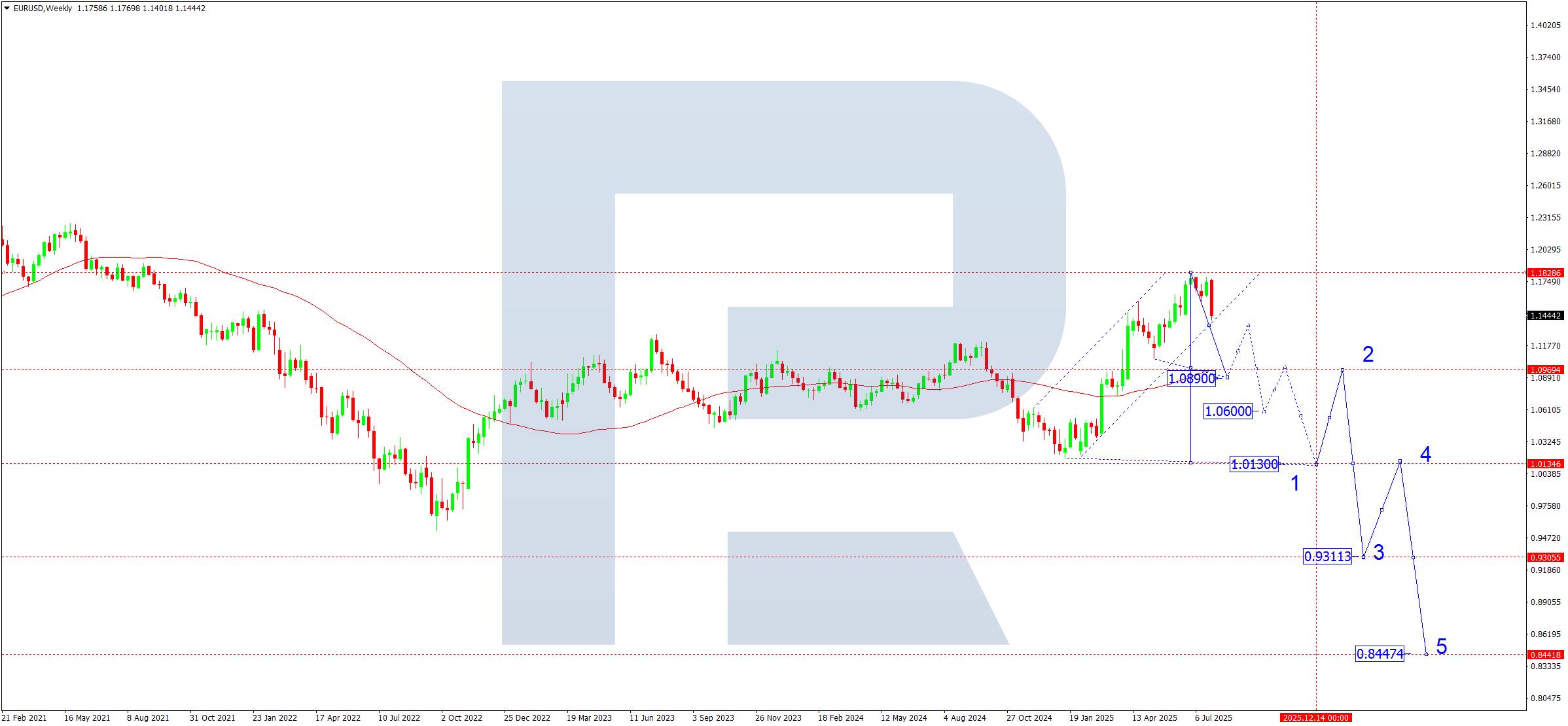
          On the weekly chart, the EURUSD pair continues its steady downtrend that started in late June 2025. Breaking through the 1.1555 level has opened the path to a medium-term target corresponding to the width of the previous consolidation range.The current momentum suggests the development of the first downward wave, targeting the 1.0130 zone. In August, the first leg of this decline is expected to reach 1.0890 – where the SMA50 lies, which could temporarily hold the market and trigger a corrective pullback towards 1.1355.

          EURUSD forecast scenarios for August 2025

          Bullish scenario (alternative):

          A confident breakout and consolidation above 1.1850 will pave the way for growth, with target levels at:

          ● 1.2000 – psychological resistance
          ● 1.1825 – likely correction
          ● 1.2115 – extended target

          Bearish scenario (primary):

          A consolidation below 1.1500 confirms the beginning of the fifth downward wave with a final target in the 0.8444 area.The nearest target is 1.0130 as the completion of the first wave of decline. In August, the development of the first leg of this downward wave towards 1.0890 remains relevant.
          USDJPY forecast

          The Japanese yen remains under pressure due to persistent interest rate differentials. Markets are pricing in a potential further rate hike in the US amid a moderate inflation slowdown.

          Weakness in Japan’s economy and the Bank of Japan’s ongoing loose policy (including yield curve control) limit the yen's appeal as a safe-haven currency. In addition, dollar strength is supported by rising US Treasury yields and high expectations for corporate earnings. An added layer of uncertainty comes from Japan’s stance on intervention – markets anticipate strict countermeasures if yen depreciation intensifies below key levels.

          USDJPY technical analysis

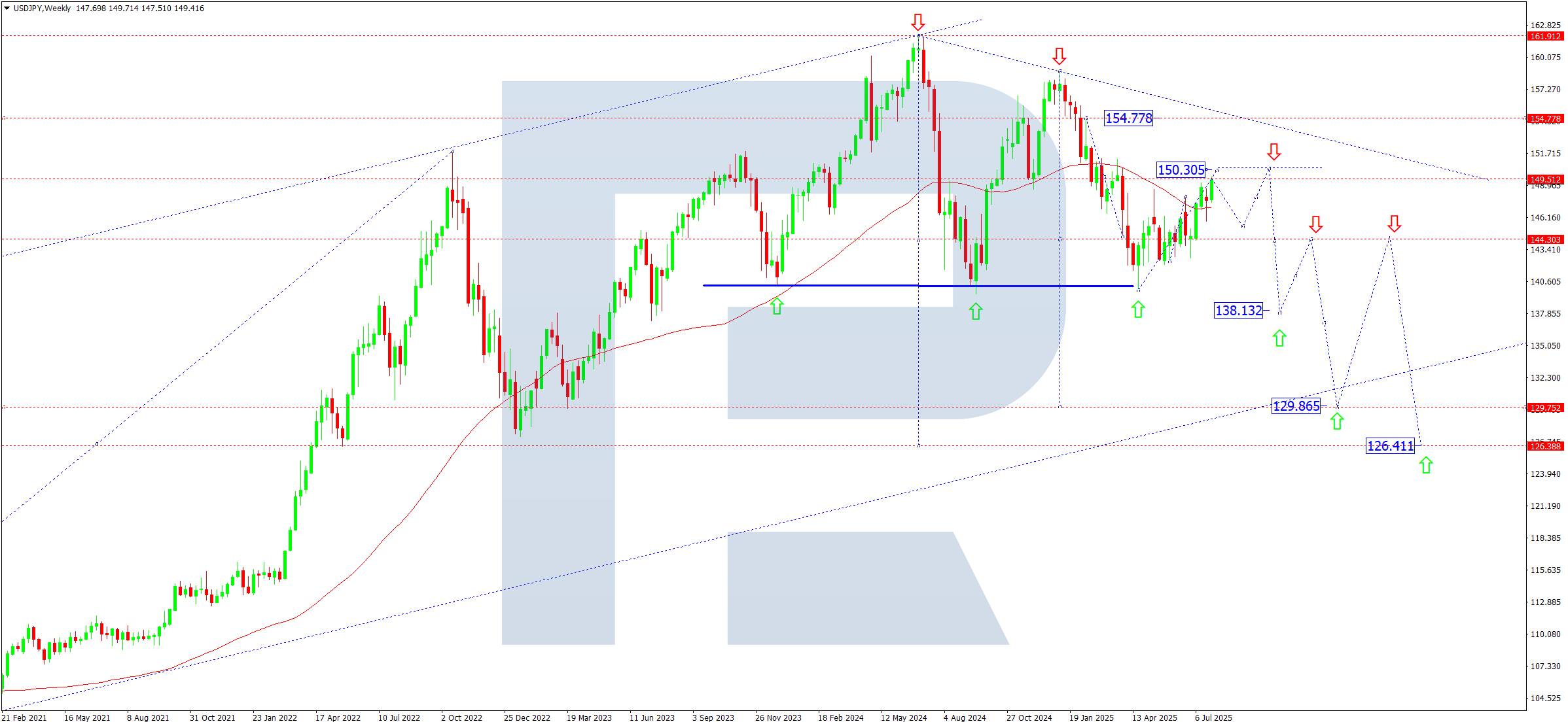
          The USDJPY pair is trading within a Symmetrical Triangle on the weekly chart, which began to form after hitting an all-time high of 161.91. Since January 2025, a downward structure has emerged, with an intermediate target around 129.90 – a level of interest for medium-term sellers.

          Current consolidation near 145.50 reflects a supply-demand balance (pivot point), around which a correction phase is unfolding. The 50-week Moving Average acts as dynamic support in the 145.75 area. If the current structure holds, the price could rise to 150.30-151.00 before a new downward move.

          USDJPY forecast scenarios for August 2025

          Bearish scenario (alternative):

          A breakout below 145.40 followed by consolidation below 145.00 would open the way for a decline towards 138.15, and further to 129.90 if pressure increases.

          Bullish scenario (primary):

          A stable breakout and consolidation above 147.50 would signal a return to the bullish channel. In that case, the price is expected to climb to 151.00, and with strong momentum, to 155.00.
          GBPUSD forecast

          The fundamental picture for the pound remains mixed. On one hand, the market maintains expectations of Bank of England policy easing in the second half of the year amid signs of slowing inflation and weakening economic activity. On the other hand, pressure on the British currency increases due to the strengthening of the US dollar amid the possible continuation of the Fed’s hawkish rhetoric.

          Global risks also play an important role, including changes in US trade policy, particularly the imposition of tariffs by the Trump administration, which could potentially boost demand for the dollar as a safe-haven asset and put pressure on developed economy currencies, including the pound.

          GBPUSD technical analysis

          On the weekly chart, the GBPUSD pair has completed a growth wave that began in January 2025 from the 1.2100 level. A consolidation range has formed around 1.3790, structurally resembling a Diamond reversal pattern. The breakout of the 1.3370 level triggered a downward phase with the first target in the 1.2944 zone, where the 50-week Moving Average passes. Local support and a possible rebound within a correction back to 1.3370 (testing from below) are expected here.

          If the downward impulse develops, the following targets for this wave become relevant:

          ● 1.2520 – intermediate, local target
          ● 1.2050 – main target

          GBPUSD forecast scenarios for August 2025

          Bearish scenario (base):

          ● Consolidation below the 1.3370 level triggers pressure from sellers
          ● If the impulse strengthens, the price could move to 1.2944, then to 1.2520 and 1.2050

          Bullish scenario (alternative):

          ● Sustainable growth and holding above 1.3400, followed by a breakout of 1.3500, may resume the uptrend
          ● Targets: 1.3790 and, with strong momentum, up to 1.4000

          AUDUSD forecast

          The Australian dollar remains dependent on commodity market dynamics and the prospects of economic growth in China, Australia’s key trading partner. Slowing demand for raw materials puts pressure on AUD.At the same time, the Fed’s hawkish rhetoric and reduced risk appetite amid geopolitical factors and global volatility support interest in the US dollar as a safe-haven asset. The balance between Australia’s export vulnerability and the US economy’s resilience continues to shape a bearish sentiment for AUDUSD.

          AUDUSD technical analysis

          On the weekly chart, the AUDUSD pair completed a corrective move near the 0.6620 level and began to form a new downward wave. The current structure indicates the development of a final fifth wave of decline within a medium-term trend.The key support level is 0.6222, which is seen as the first target for August. A short-term correction to 0.6430 is possible from there. The scenario of a third wave down becomes relevant next, targeting 0.6010, followed by trend extension to the 0.5820 zone.

          A consolidation below the SMA50 would confirm dominant bearish sentiment. A breakout below 0.6430 will act as an additional signal of increasing pressure.

          AUDUSD forecast scenarios for August 2025

          Bearish scenario (primary):

          ● A consolidation below 0.6400 opens the way to 0.6222
          ● If momentum develops, a decline to 0.6010 and further to 0.5820
          ● Additional pressure may come from increased volatility in commodity markets

          Bullish scenario (alternative):

          ● #.A breakout of 0.6620 and consolidation above it would trigger growth
          ● #.Targets: 0.6700 and, with further momentum, to 0.6910

          USDCAD forecast

          The USDCAD pair remains under pressure following the end of its upward phase in February 2025, when the rate reached a local peak at 1.4790. Since then, the Canadian dollar has shown steady strengthening, supported by both internal and external factors.

          One of the key drivers behind the pair’s decline was the normalisation of trade relations between the US and Canada. The Canadian government made a significant diplomatic gesture by cancelling the planned digital tax, which markets positively interpreted as a sign of readiness for dialogue and de-escalation of trade disputes.This step reduced the likelihood of retaliatory tariffs from the US and thus relieved some pressure on business activity in Canada. Combined with a moderately weakening US dollar, this has supported demand for the CAD.

          Market participants are focusing on the upcoming speech by FOMC member Raphael Bostic, who may signal the Fed’s future policy direction. Amid easing inflation and weak employment data, markets are pricing in a higher probability of a US rate cut before the end of Q3 2025. This weakens the dollar and boosts interest in commodity-linked currencies, including the Canadian dollar.

          As an oil exporter, Canada receives additional support from stable WTI oil prices. Despite a lack of notable macroeconomic surprises, the Canadian economy shows moderately stable performance: the labour market remains steady, inflation is falling in line with forecasts, and domestic demand remains subdued.The Bank of Canada is expected to keep the rate unchanged in July but may hint at possible easing later in the summer if the Fed takes the first step.

          USDCAD technical analysis

          On the weekly chart, the pair rebounded from the key level of 1.4020 (pivot point) and is forming a clear downward structure typical for a third wave of decline. The main target of the current impulse is 1.3500, where a short-term pause and correction are expected.

          After reaching this target, a pullback to 1.4020 is possible, which may act as resistance. The trend remains under pressure as the price trades steadily below the SMA50 (Moving Average). Any approach to this average will likely be seen by the market as an opportunity to open new short positions.

          If the 1.3500 level is breached, the next targets will be 1.3250 and 1.3100. With increased bearish pressure, a move towards the psychologically significant 1.3000 level is also possible.

          USDCAD forecast scenarios for August 2025

          Bullish scenario: if the USDCAD pair breaks and consolidates above 1.4020, especially with confirmation on the weekly chart and a move above the SMA50, this will signal a change in the short-term trend. In this case, growth towards 1.4200 is possible.

          Bearish scenario: if the 1.4020 level holds, the pair will likely continue its decline towards 1.3250. If this level breaks, the drop may extend to 1.3100 and further to 1.3000. The bearish structure will remain in place as long as the price trades below the SMA50.
          XAUUSD forecast

          The gold market remains sensitive to geopolitical risks, Fed rhetoric, and global macroeconomic uncertainty. The focus is on inflation expectations in the US and Europe, as well as potential interventions by central banks amid a cooling global economy.

          The pause in the Fed's rate hike cycle and expectations of possible monetary easing in the second half of the year support investment interest in gold. However, the strengthening of the US dollar and the rise in US Treasury yields temporarily limit the upward momentum.

          An additional pressure factor is the political instability associated with the potential return of Trump to power and his protectionist agenda. The imposed tariff restrictions could escalate trade conflicts, which, in turn, may trigger a surge in demand for safe-haven assets, including gold. On the demand side, stability persists: central banks of developing countries continue to increase their gold reserves, and retail demand in Asia remains resilient despite seasonal slowing.

          XAUUSD technical analysis

          On the weekly chart, a Triangle pattern has formed near the historical high (3,499), indicating a consolidation phase following an extended growth impulse. The 3,120-3,450 range has become a balance zone between supply and demand.

          The 3,250 level serves as a local pivot point and a short-term reference level. A breakout below 3,250 would open the path to key support at 3,000, coinciding with the lower boundary of the medium-term balance. At this level also lies the potential target of the first corrective wave – 3,013.

          If the price rebounds from the support level, it could form a growth wave towards 3,260 (second target), after which another downward wave towards 2,785 is possible. This scenario aligns with the classic structure of a correction following the completion of the fifth growth wave.

          XAUUSD forecast scenarios for August 2025

          Bearish scenario (base):

          A breakout below 3,200 would strengthen correction pressure.

          A test of the 3,000 zone may follow. A breakout below this level would open the path to 2,800 and, if selling intensifies, to 2,500, where the price is expected to stabilise and form a base for a new uptrend.

          Bullish scenario (alternative):

          Stabilisation above 3,200 and a breakout of 3,450 would confirm further upward momentum. In this case, the price could reach an all-time high of 3,500, with targets at 3,750 and 4,000 – the key psychological benchmark for the medium-term growth structure.
          Brent forecast

          The oil market remains in the focus of global macroeconomic expectations and political decisions of major producers. The main driver continues to be the behaviour of OPEC+ and demand from China and developing economies amid signs of a slowdown in the industrial sector in Europe and the US.The US labour market remains resilient; however, recession risks in the global economy and a decline in energy consumption exert moderate pressure on oil prices. At the same time, the US dollar remains strong, which reduces oil demand from countries with emerging market currencies.

          The political factor has strengthened: the possible return of Donald Trump and his promises to tighten sanctions against Iran and Venezuela increase uncertainty. Such measures could limit supply and support prices in the medium term.In addition, the decline in commercial inventories in the US and signals of production cuts from Saudi Arabia and Russia form a fundamental basis for maintaining the uptrend, especially if key resistance levels are breached.

          Brent technical analysis

          On the weekly chart, Brent crude is forming a stable upward structure. After stabilising in the 70.00 zone, the market is heading towards the first target at 82.20; a breakout of this level would open the path to 93.00 (second target). The upward impulse is expected to continue within the fifth wave of growth, with a target at 105.50.The 70.00 level acts as a key support zone and the balance of the medium-term range, where the SMA50 Moving Average also lies, adding significance to this area. If the price consolidates above it, this will confirm the medium-term growth scenario.

          In case of a pullback, a correction may form towards 70.00, and under negative factors, the price could fall to the 66.00 area. A breakout of this zone may send the price to the psychologically important level of 60.00, which has historically served as a fundamental bottom and area of interest for exporting countries.

          Brent forecast scenarios for August 2025

          Bullish scenario (base):

          If the price holds above 70.00 and breaks above the 82.20 resistance level, this would activate the next growth wave, with targets at 93.00 and 105.50, the upper boundary of the potential fifth wave. An increase in geopolitical risks and new restrictions from OPEC+ may accelerate the uptrend.

          Bearish scenario (alternative):

          In case of weak macroeconomic statistics, especially from China, and a lack of support from OPEC+, oil may return to the 68.00-65.00 range. A breakout below 65.00 would open the way for a move towards 60.00, a level near the profitability threshold for a number of exporters and traditionally serving as a turning point on long-term charts.
          Source: RoboForex

          Risk Warnings and Disclaimers
          You understand and acknowledge that there is a high degree of risk involved in trading. Following any strategies or investment methods may lead to potential losses. The content on the site is provided by our contributors and analysts for information purposes only. You are solely responsible for determining whether any trading assets, securities, strategy, or any other product is suitable for investing based on your own investment objectives and financial situation.
          Add to Favorites
          Share

          German Military Sees 28% Surge In Recruits As Leaders Hype Russia Threat

          Samantha Luan

          Political

          Economic

          Germany's historic reversal on its military posture and stregnth has long been on display since near the start of the Russia-Ukraine war. Berlin has been drastically expanding its military spending and is even recently mulling compulsory service for the nation's armed forces.But even without this more dramatic action, the reality is that interest in joining the German Armed Forces has grown significantly, with military recruitment up 28% so far in 2025 compared to the same period in 2024, according to new Defence Ministry information published Thursday.

          By July 21, approximately 13,750 new recruits had joined the Bundeswehr, the defense miinistry said - which has involved fixed-term service contracts and voluntary military service.This has apparently been an increasingly attractive route for young people after finishing school. Currently, the Bundeswehr has around 183,100 active personnel, which is an increase of about 2,000 compared to last year.

          Voluntary service participation has also climbed by roughly 15%, reaching 11,350 recruits. While these numbers pale in comparison to the much larger militaries of the US, Russia, or even Ukraine - it marks the start of what could be a historic shift after the German military's post-WWII effective decimation.The Defence Ministry credits the increase to focused recruitment efforts on growing concerns about global security, and of course the percieved threat to Europe by Russia as a result of the still raging Ukraine war which is not far away geographically.

          The Kremlin has consistently denied allegations that President Putin has his eyes set on invading Europe or even a NATO 'eastern flank' country.German officials have voiced their view that the rise in enlistment encouraging, particularly given the urgent need to expand the military's ranks. Later this month Chancellor Friedrich Merz’s Cabinet is expected to vote on a draft bill to reform military service.

          All of this also of course makes NATO leadership happy, and is in the context of President Trump's serious push to get European members of the alliance to shoulder more of the common defense burden.If passed, the changes could come into effect in early 2026, prioritizing voluntary enlistment and improved conditions, featuring for example better pay - with the aim of attracting up to 15,000 new conscripts annually, according to German media.

          Source: Zero Hedge

          To stay updated on all economic events of today, please check out our Economic calendar
          Risk Warnings and Disclaimers
          You understand and acknowledge that there is a high degree of risk involved in trading. Following any strategies or investment methods may lead to potential losses. The content on the site is provided by our contributors and analysts for information purposes only. You are solely responsible for determining whether any trading assets, securities, strategy, or any other product is suitable for investing based on your own investment objectives and financial situation.
          Add to Favorites
          Share

          Yen Weakens Amid Fed Rate Expectations And Bank of Japan Signals

          Blue River

          Technical Analysis

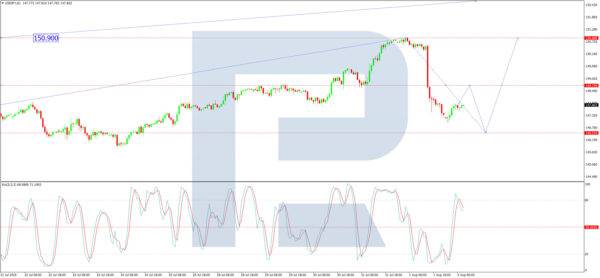
          The USD/JPY pair climbed to 147.67 on Monday as the Japanese yen underwent a correction following Friday’s volatile trading session, with investors closely monitoring macroeconomic developments.

          Market focus remains on shifting US Federal Reserve policy expectations after the release of softer labour market data. Although Friday’s report bolstered predictions of a rate cut, Fed officials have maintained a cautious tone, citing persistent inflation risks. Proposed large-scale tariffs from US President Donald Trump have further amplified these concerns.

          Against this backdrop, the US dollar has partially regained strength, exerting downward pressure on the yen.

          Investors are now awaiting the release of the Bank of Japan (BoJ) meeting minutes, hoping for clues on the timing of a potential rate hike. Last week, the Japanese central bank left interest rates unchanged but raised its inflation forecast and highlighted growing uncertainty due to global trade risks.

          Overall, the outlook for the JPY remains subdued. The BoJ has ample room to delay rate hikes, justifying its stance with ongoing caution.

          Technical Analysis: USD/JPY

          H4 Chart:

          On the H4 chart, USD/JPY completed an upward wave to 150.90 before entering a correction phase. A further decline towards 146.52 is anticipated today. Once this level is reached, the pair may initiate a new growth wave, potentially targeting 151.00, with a longer-term prospect of extending the trend to 153.10. This scenario is supported by the MACD indicator, where the signal line remains above zero but is trending sharply downward.

          H1 Chart:

          On the H1 chart, USD/JPY is forming a corrective structure towards 146.52. A temporary rebound to 148.70 (testing from below) is expected today, followed by a possible resumption of the correction to 146.52. Once this correction concludes, a fresh upward wave towards 151.00 could materialise. The Stochastic oscillator validates this outlook, with its signal line positioned above 50 and pointing upwards.

          Conclusion

          The yen remains under pressure amid shifting Fed expectations and cautious BoJ signals. Technically, USD/JPY is poised for further correction before potentially resuming its uptrend.

          Source: ACTIONFOREX

          Risk Warnings and Disclaimers
          You understand and acknowledge that there is a high degree of risk involved in trading. Following any strategies or investment methods may lead to potential losses. The content on the site is provided by our contributors and analysts for information purposes only. You are solely responsible for determining whether any trading assets, securities, strategy, or any other product is suitable for investing based on your own investment objectives and financial situation.
          Add to Favorites
          Share

          Oil Prices Waver Amid OPEC+ Output Hike and Growing Russian Supply Risks

          Gerik

          Economic

          Commodity

          OPEC+ Hike Pressures Market Balance While Geopolitical Risk Keeps Traders on Edge

          Oil prices moved unpredictably on Monday as traders weighed a new supply increase from OPEC+ against rising geopolitical risks tied to Russia and a weakening US economic outlook. Brent crude hovered near the $70 per barrel mark after initially falling by as much as 1 percent. The volatility reflects broader uncertainty about the balance between supply restoration, potential sanctions, and global demand fragility.
          OPEC+ confirmed it would add 547,000 barrels per day to the global market in September, fulfilling its previously outlined strategy to reverse the voluntary output cuts implemented in 2023 by eight key members, including Saudi Arabia and Russia. This expansion is widely interpreted as an attempt to reclaim global market share after a period of price-supportive restraint.

          Market Repricing Reflects Supply Concerns and Economic Headwinds

          The timing of the OPEC+ decision coincides with a softening global macroeconomic picture. A sharp drop in US nonfarm payroll growth paired with downward revisions to previous months has amplified fears that the world’s largest oil-consuming economy is already slowing. These concerns were reflected in Friday’s oil price slide and continued market caution heading into the week.
          Goldman Sachs analysts noted that while OPEC+ may maintain a flexible policy stance, the September increase is likely to mark the end of the group’s incremental additions. The bank continues to forecast Brent at $64 per barrel in the fourth quarter of 2025, declining to $56 by 2026. This outlook is based on expectations of rising commercial inventories and weakening forward spreads as supply potentially outpaces demand.

          Russian Oil in Focus as Trump Threatens Secondary Sanctions

          Beyond supply and demand fundamentals, geopolitical tension remains a critical variable. President Donald Trump has signaled possible punitive actions against nations that continue to import Russian crude, particularly targeting India. Although Indian refiners have not yet received official directives to halt purchases, traders are bracing for enforcement measures that could reshape the trade landscape.
          Trump’s threat of secondary sanctions, expected to be clarified by August 8, adds a volatile layer to an already unstable market. Reports indicate that Trump’s special envoy, Steve Witkoff, may travel to Russia midweek, possibly advancing a diplomatic strategy alongside economic pressure. This uncertainty over Russian supply, especially to Asian markets, could result in short-term price spikes even as broader fundamentals appear bearish.

          Restored Supply vs. Structural Demand Uncertainty

          The cumulative effect of OPEC+’s supply restoration nearing full reversal of its 2023 cuts has reinforced speculation that the global oil market may shift into oversupply by year-end. If demand fails to keep pace due to macroeconomic weakness or tightening financial conditions, the result could be a build-up in commercial stockpiles and a weakening of timespreads that typically support bullish positioning.
          However, the specter of restricted Russian flows or retaliatory moves from Moscow could quickly reverse sentiment. This asymmetric risk profile is keeping volatility elevated as traders balance structural oversupply risks with episodic geopolitical shocks.
          Crude markets remain in a state of flux as OPEC+ supply normalization collides with recessionary fears in the US and unpredictable developments in the Russia-India oil trade. While headline output increases point to rising supply-side pressure, demand-side softness and political instability continue to shape near-term price action. With critical policy signals due this week, including potential US sanctions and additional diplomatic movements, oil traders are likely to remain reactive and risk-sensitive in the sessions ahead.

          Source: Reuters

          To stay updated on all economic events of today, please check out our Economic calendar
          Risk Warnings and Disclaimers
          You understand and acknowledge that there is a high degree of risk involved in trading. Following any strategies or investment methods may lead to potential losses. The content on the site is provided by our contributors and analysts for information purposes only. You are solely responsible for determining whether any trading assets, securities, strategy, or any other product is suitable for investing based on your own investment objectives and financial situation.
          Add to Favorites
          Share

          USDCAD Drops Below 1.3800 After Nonfarm Payrolls Data

          Winkelmann

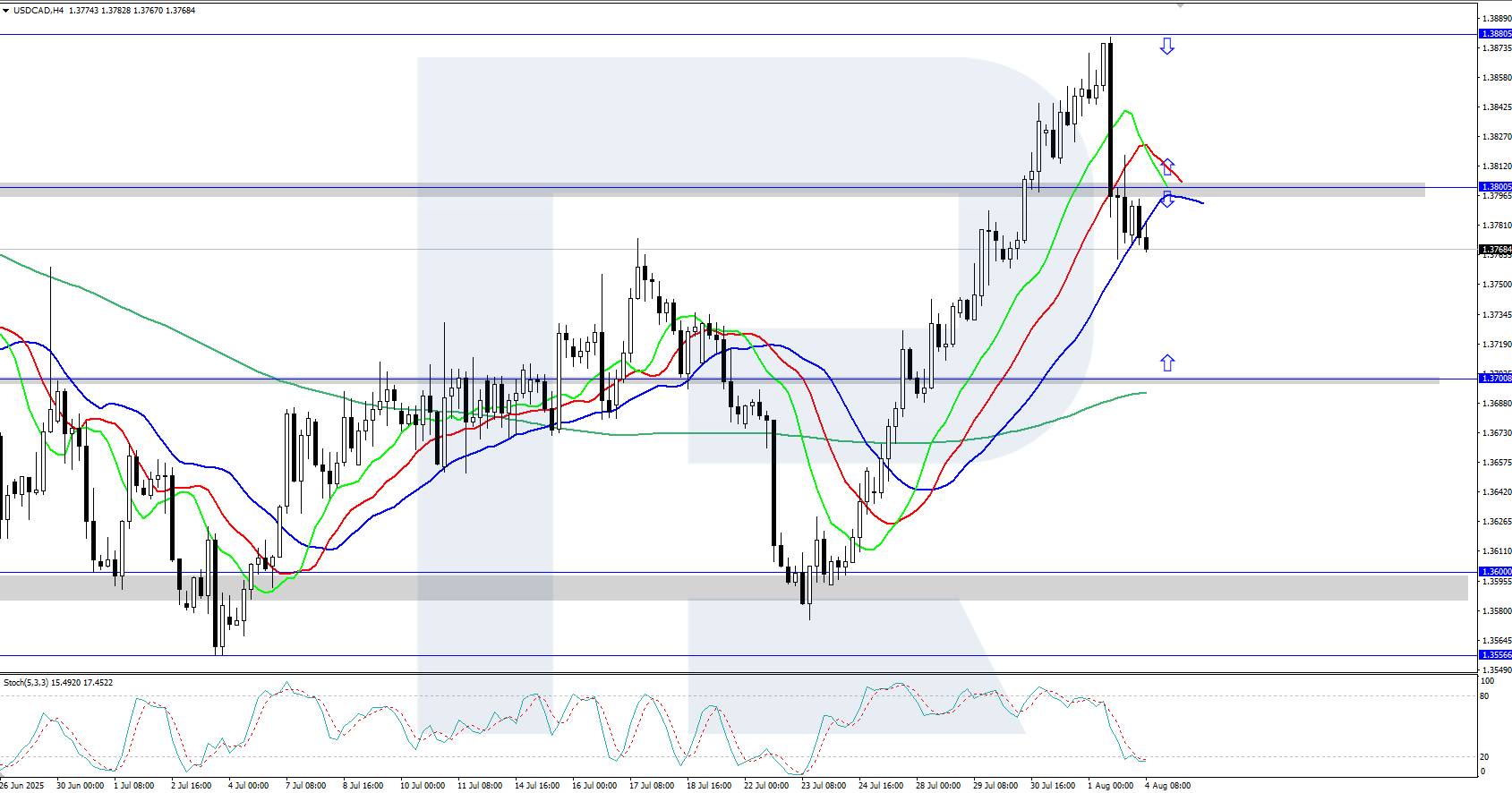
          The USDCAD rate reversed downwards and consolidated below 1.3800 following the release of weak US Nonfarm Payrolls data on Friday.

          USDCAD forecast: key trading points

          ● Market focus: Nonfarm Payrolls rose by only 73 thousand in July, significantly below expectations
          ● Current trend: moving downwards
          ● USDCAD forecast for 4 August 2025: 1.3800 or 1.3700

          Fundamental analysis

          The Canadian dollar strengthened after the release of US employment data. The July Nonfarm Payrolls report disappointed the market as only 73 thousand jobs were created, and previous months’ data were significantly revised downwards, worsening the outlook for US economic growth.At the same time, the Canadian economy showed some resilience: a 0.1% GDP contraction in May was followed by a 0.1% rebound in June, alongside a 0.7% increase in manufacturing output. This supported the Bank of Canada's decision to hold its key interest rate steady at 2.75%, which contrasts with the Federal Reserve's dovish stance.

          USDCAD technical analysis

          On the H4 chart, the USDCAD pair is reversing down from the local daily high of 1.3880. The Alligator indicator is attempting to turn downwards, indicating a high probability of a continued downward movement.The short-term USDCAD forecast suggests a further decline if the bears keep the price below 1.3800. However, if the bulls regain control and push the pair back above 1.3800, growth towards the daily high of 1.3880 may follow.

          Summary

          The USDCAD pair reversed lower and dropped below 1.3800, as the US dollar came under pressure following the release of weak Nonfarm Payrolls data.

          Source: RoboForex

          Risk Warnings and Disclaimers
          You understand and acknowledge that there is a high degree of risk involved in trading. Following any strategies or investment methods may lead to potential losses. The content on the site is provided by our contributors and analysts for information purposes only. You are solely responsible for determining whether any trading assets, securities, strategy, or any other product is suitable for investing based on your own investment objectives and financial situation.
          Add to Favorites
          Share

          Japanese Equities Slide as US Job Data and Yen Rally Stoke Growth Fears

          Gerik

          Economic

          Tokyo Stocks Retreat Amid Rising US Recession Anxiety

          Japanese equity markets closed lower on Monday following a steep sell-off in global risk assets triggered by disappointing US jobs data. Both the Topix Index and the Nikkei 225 fell 1.1 percent and 1.2 percent, respectively, after deeper intraday declines of over 2 percent. Investor sentiment was hit by downward revisions to US nonfarm payrolls and expectations of Federal Reserve rate cuts, which sent the yen sharply higher and reignited concerns over global growth.
          The reversal comes nearly one year after Japan’s 2024 market shock, in which the Topix posted its worst single-day performance since 1987. While the index had regained roughly 30 percent since that low, Monday’s losses underscore persistent fragility in investor confidence, especially when international macroeconomic signals turn negative.

          Sharp Yen Gains and Deteriorating US Outlook Weigh on Exporters and Banks

          The yen traded around 147.70 to the dollar as of late afternoon in Tokyo, holding on to a more than 2 percent gain from Friday. This appreciation in the Japanese currency is placing pressure on large-cap exporters, which typically rely on a weaker yen to boost overseas earnings.
          The impact was especially pronounced for financials, with the Topix subindex for banks dropping 3.2 percent its sharpest daily loss since April. Investors are adjusting to the dual effect of softer US growth and a potentially delayed rate hike cycle from the Bank of Japan. Overnight index swaps now price only a 36 percent probability of a BOJ hike by October, down from 43 percent just days earlier.
          Kazuhiro Sasaki of Phillip Securities Japan noted that the labor data has sparked fears the US may already be in a recession. The possibility of such a downturn has amplified the risk-off sentiment and curtailed expectations of tightening from central banks globally.

          Market Focus Turns to Earnings and Export Sensitivity

          Investors are closely monitoring earnings reports from major Japanese corporations this week. Sony Group and Toyota Motor are both expected to release their financials, and their performance could shape near-term investor sentiment, especially as both firms are sensitive to currency fluctuations and external demand trends.
          While large exporters face headwinds, domestic-oriented small caps may stand to benefit from yen strength, according to Jamie Halse of Senjin Capital. The reallocation toward such firms, however, will depend on the perceived duration of global demand softness.

          Nintendo Bucks the Trend with Strong Switch 2 Momentum

          Amid the broader sell-off, Nintendo Co. shares rose 5.1 percent after reporting stronger-than-expected sales of its new Switch 2 console. Jefferies analysts noted that the company’s hardware momentum, coupled with a robust game pipeline and monetizable IP portfolio, puts it in a favorable position for outperformance even in a volatile macro environment.
          Nintendo’s rally served as a rare bright spot in a market otherwise dominated by caution and selloffs. Its performance highlights the divergence between consumer-facing tech companies with strong product cycles and macro-sensitive industrials or financials under pressure from external shocks.
          The sharp drop in Japanese equities following weak US labor data reinforces how interconnected global markets remain, especially for economies heavily reliant on exports. With the yen rallying and US economic signals deteriorating, Japan’s banks and large manufacturers are facing renewed pressure. While monetary policy in both Tokyo and Washington is now expected to shift toward easing, investors are bracing for heightened volatility and a prolonged period of cautious positioning in the weeks ahead.

          Source: Bloomberg

          To stay updated on all economic events of today, please check out our Economic calendar
          Risk Warnings and Disclaimers
          You understand and acknowledge that there is a high degree of risk involved in trading. Following any strategies or investment methods may lead to potential losses. The content on the site is provided by our contributors and analysts for information purposes only. You are solely responsible for determining whether any trading assets, securities, strategy, or any other product is suitable for investing based on your own investment objectives and financial situation.
          Add to Favorites
          Share

          Swiss Inflation Picks Up Slightly, Easing Immediate Pressure on SNB Rate Cuts

          Gerik

          Economic

          Modest Inflation Acceleration Buys SNB Time as Tariff Risks Loom

          Swiss inflation accelerated unexpectedly in July, offering policymakers at the Swiss National Bank (SNB) a temporary buffer as they weigh the potential return to negative interest rates. Consumer prices rose by 0.2 percent year-on-year, outpacing expectations for another 0.1 percent increase and reversing the prevailing disinflationary trend that has persisted for months.
          While the core inflation measure excluding fresh food, energy, and seasonal items rose by 0.8 percent, underlying pressures remain subdued. According to the Swiss statistics agency, hotel and car rental prices increased, while declines were observed in flights, package holidays, clothing, and footwear. The data reflects weak domestic demand and the continued influence of a strong Swiss franc, which has kept imported goods relatively cheap and external price contributions negative.

          Currency Strength and Deflationary Pressures Still Dominate Outlook

          The inflation surprise does little to alter the broader narrative of Switzerland’s ultra-low inflation environment. The franc’s appreciation has created persistent deflationary pressure through cheaper imports, contributing to the SNB’s decision to cut its policy rate to zero in June.
          However, the recent inflation reading slightly weakens the case for immediate further easing. Market analysts had been bracing for a potential rate cut into negative territory at the SNB's upcoming September policy meeting, but this data, coupled with central bank caution over aggressive currency weakening, may delay that move.

          Trade Shock from US Tariffs Adds Complicating Factor

          More consequential for the SNB may be the looming trade shock from new US tariffs. Beginning August 7, Swiss exports to the US will face a 39 percent tariff a dramatic shift that Bloomberg Economics estimates could subtract approximately 1 percent from Swiss GDP over the medium term. This external risk adds significant downside to the economic outlook and could ultimately tilt the SNB toward further easing later in the year.
          The SNB faces a dual constraint: shielding its export-driven economy from trade disruptions while maintaining enough monetary accommodation to avoid currency-driven deflation. With inflation still far below the eurozone average of 2 percent and a mere 0.1 percent gain under the EU's harmonized index, the policy gap between Switzerland and its neighbors remains wide.

          SNB’s Cautious Stance Persists Amid Uncertain Trajectory

          Despite the July inflation bump, Bloomberg’s baseline forecast still sees the SNB opting for negative rates before year-end likely contingent on how the franc responds to worsening trade dynamics and diverging central bank policies abroad. While the prospect of a September cut has diminished slightly, monetary easing remains on the table as broader pressures mount.
          Economist Jean Dalbard notes that “the SNB is unlikely to take comfort in this reading” and will remain attentive to currency fluctuations. Should the franc strengthen further in response to global risk aversion or Swiss safe-haven flows, the SNB may be compelled to act regardless of short-term inflation gains.
          Switzerland’s inflation surprise offers brief reprieve but does not resolve deeper challenges facing the SNB. With external shocks building and inflation still subdued by historical standards, policymakers remain caught between fiscal uncertainty and monetary constraint. Unless trade disruptions recede or euro area inflation trends shift significantly, a return to negative interest rates remains a likely scenario in the months ahead.

          Source: Reuters

          To stay updated on all economic events of today, please check out our Economic calendar
          Risk Warnings and Disclaimers
          You understand and acknowledge that there is a high degree of risk involved in trading. Following any strategies or investment methods may lead to potential losses. The content on the site is provided by our contributors and analysts for information purposes only. You are solely responsible for determining whether any trading assets, securities, strategy, or any other product is suitable for investing based on your own investment objectives and financial situation.
          Add to Favorites
          Share
          FastBull
          Copyright © 2025 FastBull Ltd

          728 RM B 7/F GEE LOK IND BLDG NO 34 HUNG TO RD KWUN TONG KLN HONG KONG

          TelegramInstagramTwitterfacebooklinkedin
          App Store Google Play Google Play
          Products
          Charts

          Chats

          Q&A with Experts
          Screeners
          Economic Calendar
          Data
          Tools
          Membership
          Features
          Function
          Markets
          Copy Trading
          Latest Signals
          Contests
          News
          Analysis
          24/7
          Columns
          Education
          Company
          Careers
          About Us
          Contact Us
          Advertising
          Help Center
          Feedback
          User Agreement
          Privacy Policy
          Business

          White Label

          Data API

          Web Plug-ins

          Poster Maker

          Affiliate Program

          Risk Disclosure

          The risk of loss in trading financial instruments such as stocks, FX, commodities, futures, bonds, ETFs and crypto can be substantial. You may sustain a total loss of the funds that you deposit with your broker. Therefore, you should carefully consider whether such trading is suitable for you in light of your circumstances and financial resources.

          No decision to invest should be made without thoroughly conducting due diligence by yourself or consulting with your financial advisors. Our web content might not suit you since we don't know your financial conditions and investment needs. Our financial information might have latency or contain inaccuracy, so you should be fully responsible for any of your trading and investment decisions. The company will not be responsible for your capital loss.

          Without getting permission from the website, you are not allowed to copy the website's graphics, texts, or trademarks. Intellectual property rights in the content or data incorporated into this website belong to its providers and exchange merchants.

          Not Logged In

          Log in to access more features

          FastBull Membership

          Not yet

          Purchase

          Become a signal provider
          Help Center
          Customer Service
          Dark Mode
          Price Up/Down Colors

          Log In

          Sign Up

          Position
          Layout
          Fullscreen
          Default to Chart
          The chart page opens by default when you visit fastbull.com