Markets
News
Analysis
User
24/7
Economic Calendar
Education
Data
- Names
- Latest
- Prev


Signal Accounts for Members
All Signal Accounts
All Contests


The US Dollar Index Rose More Than 0.2% In Late New York Trading On Thursday (February 5), With The ICE Dollar Index Rising 0.24% To 97.849, Trading Between 97.607 And 97.915. The Bloomberg Dollar Index Rose 0.20% To 1194.03, Trading Between 1191.07 And 1194.76
Pentagon: State Dept Approves Potential Sale Of Contracted Logistical Services For Vacis Xpl Passenger Vehicle Scanning Systems To Iraq For $90 Million
When Asked If There Is A Temporary Agreement With Russia On New Start Treaty, White House Says 'Not To My Knowledge'
Iran's Press TV Says 'One Of The Country's Most Advanced Long-Range Ballistic Missile Khorramshahr 4' Has Been Deployed At Underground Missile City
Bank Of Canada Governor Macklem: Canadian Businesses Have Not Been Investing As Much And As Quickly In New Technologies As USA Competitors, And That Has Hurt Our Competitive Position
Apple CEO Tim Cook Has Vowed To Lobby On Capitol Hill On The Issue Of Immigration Under President Trump
Bank Of Canada Governor Macklem: Structural Headwinds Are Not Temporary, Our Trade Relationship With The United States Is Fundamentally Fractured
Bank Of Canada Governor Macklem: China Has Done Quite A Good Job Of Diversifying Away From The US To Other Asian Economies, To Some Extent To Europe
Bank Of Canada Governor Macklem: Right Now There Is An Unusually Rapid Amount Of Structural Change

France Industrial Output MoM (SA) (Dec)A:--
F: --
Italy IHS Markit Construction PMI (Jan)A:--
F: --
P: --
Euro Zone IHS Markit Construction PMI (Jan)A:--
F: --
P: --
Germany Construction PMI (SA) (Jan)A:--
F: --
P: --
Italy Retail Sales MoM (SA) (Dec)A:--
F: --
P: --
U.K. Markit/CIPS Construction PMI (Jan)A:--
F: --
P: --
France 10-Year OAT Auction Avg. YieldA:--
F: --
P: --
Euro Zone Retail Sales YoY (Dec)A:--
F: --
Euro Zone Retail Sales MoM (Dec)A:--
F: --
U.K. BOE MPC Vote Cut (Feb)A:--
F: --
P: --
U.K. BOE MPC Vote Hike (Feb)A:--
F: --
P: --
U.K. BOE MPC Vote Unchanged (Feb)A:--
F: --
P: --
U.K. Benchmark Interest RateA:--
F: --
P: --
MPC Rate Statement
U.S. Challenger Job Cuts (Jan)A:--
F: --
P: --
U.S. Challenger Job Cuts MoM (Jan)A:--
F: --
P: --
U.S. Challenger Job Cuts YoY (Jan)A:--
F: --
P: --
Bank of England Governor Bailey held a press conference on monetary policy.
Euro Zone ECB Marginal Lending RateA:--
F: --
P: --
Euro Zone ECB Deposit RateA:--
F: --
P: --
Euro Zone ECB Main Refinancing RateA:--
F: --
P: --
ECB Monetary Policy Statement
U.S. Weekly Initial Jobless Claims (SA)A:--
F: --
P: --
U.S. Initial Jobless Claims 4-Week Avg. (SA)A:--
F: --
P: --
U.S. Weekly Continued Jobless Claims (SA)A:--
F: --
ECB Press Conference
U.S. JOLTS Job Openings (SA) (Dec)A:--
F: --
U.S. EIA Weekly Natural Gas Stocks ChangeA:--
F: --
P: --
BOC Gov Macklem Speaks
Mexico Policy Interest RateA:--
F: --
P: --
U.S. Weekly Treasuries Held by Foreign Central Banks--
F: --
P: --
Reserve Bank of Australia Governor Bullock testified before Parliament.
Japan Foreign Exchange Reserves (Jan)--
F: --
P: --
India Benchmark Interest Rate--
F: --
P: --
India Cash Reserve Ratio--
F: --
P: --
India Repo Rate--
F: --
P: --
India Reverse Repo Rate--
F: --
P: --
Japan Leading Indicators Prelim (Dec)--
F: --
P: --
Germany Industrial Output MoM (SA) (Dec)--
F: --
P: --
Germany Exports MoM (SA) (Dec)--
F: --
P: --
U.K. Halifax House Price Index YoY (SA) (Jan)--
F: --
P: --
U.K. Halifax House Price Index MoM (SA) (Jan)--
F: --
P: --
France Trade Balance (SA) (Dec)--
F: --
P: --
Canada Leading Index MoM (Jan)--
F: --
P: --
India Deposit Gowth YoY--
F: --
P: --
Canada Employment (SA) (Jan)--
F: --
Canada Full-time Employment (SA) (Jan)--
F: --
Canada Part-Time Employment (SA) (Jan)--
F: --
Canada Unemployment Rate (SA) (Jan)--
F: --
P: --
Canada Labor Force Participation Rate (SA) (Jan)--
F: --
P: --
Due to the previous government shutdown, the release date of the US January non-farm payroll report has been changed to February 11.
Canada Ivey PMI (Not SA) (Jan)--
F: --
P: --
Canada Ivey PMI (SA) (Jan)--
F: --
P: --
U.S. 5-10 Year-Ahead Inflation Expectations (Feb)--
F: --
P: --
U.S. UMich Consumer Sentiment Index Prelim (Feb)--
F: --
P: --
U.S. UMich 1-Year-Ahead Inflation Expectations Prelim (Feb)--
F: --
P: --
U.S. UMich 5-Year-Ahead Inflation Expectations Prelim YoY (Feb)--
F: --
P: --
U.S. UMich Current Economic Conditions Index Prelim (Feb)--
F: --
P: --
U.S. UMich Consumer Expectations Index Prelim (Feb)--
F: --
P: --
China, Mainland Foreign Exchange Reserves (Jan)--
F: --
P: --
Russia Retail Sales YoY (Dec)--
F: --
P: --


No matching data
View All

No data
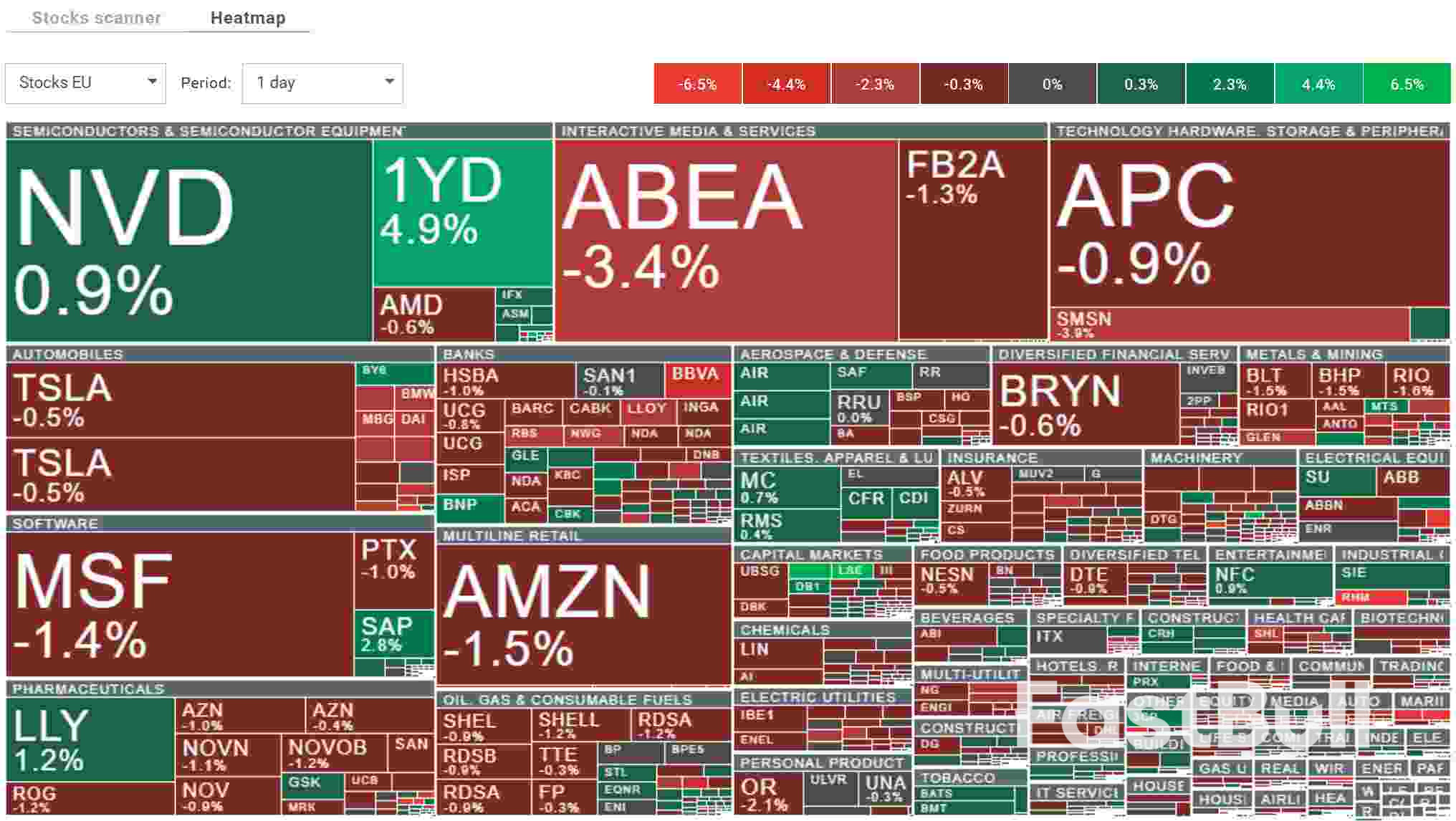
European markets were mixed ahead of BoE and ECB decisions, while the pound weakened, silver and gold resumed sharp declines, equities dipped modestly, and cryptocurrencies slid, with Bitcoin falling below $70,000.

Russian and Ukrainian officials are engaged in a second day of U.S.-brokered negotiations aimed at ending the war, but major disagreements over Ukrainian territory and future security guarantees remain significant obstacles.
The talks, held in Abu Dhabi, have produced one small sign of progress: an agreement for another prisoner-of-war exchange. Steve Witkoff, the White House envoy leading the U.S. mediation effort, announced on February 5 that a total of 314 prisoners would be released. This move offers a rare moment of consensus in a conflict that has reportedly killed or wounded nearly 2 million people since Russia’s invasion on February 24, 2022.
Ahead of the meetings, both sides hinted at the possibility of a breakthrough. Kirill Dmitriev, the Kremlin's lead negotiator, mentioned "progress" and positive movement on February 5. His Ukrainian counterpart, Rustem Umerov, described the first day of discussions as "meaningful and productive, focusing on concrete steps and practical solutions."
Despite these optimistic statements, Russia’s military actions continue unabated. On the eve of the talks, Russia launched one of its largest aerial assaults of the war, targeting Ukraine's energy infrastructure and compounding the suffering of civilians in the middle of a harsh winter.
Kremlin spokesman Dmitry Peskov reinforced Moscow's firm stance, telling reporters that Russia's position remains unchanged and is "absolutely clear and well understood by both Kyiv and the American negotiators."
The gap between Moscow and Kyiv has narrowed slightly, but fundamental disagreements persist. The negotiations are centered on two critical issues that have stalled previous efforts.
The Status of Donbas
The primary point of contention is the territory in Ukraine's Donbas region that Kyiv currently controls but Moscow claims as its own. Ukrainian President Volodymyr Zelenskyy has proposed creating a demilitarized zone, potentially monitored by European peacekeepers, but Russia has unequivocally rejected this proposal.
Future Security Guarantees
Kyiv is also demanding binding security guarantees from the United States and other Western allies. These guarantees would legally obligate other nations to intervene if Russia were to launch another attack in the future.
Ukrainian political analyst Ihor Reiterovych has urged the West to provide strong assurances and avoid repeating the mistakes of the 1994 Budapest Memorandum. That agreement, signed by the U.S., Russia, and Britain, was supposed to guarantee Ukraine's territorial integrity in exchange for the country giving up its nuclear arsenal.
Analysts remain skeptical about the prospects for a comprehensive settlement. Markus Ziener, a fellow with the German Marshall Fund and former Moscow correspondent, acknowledged the prisoner swap as a positive step but expressed doubts about a broader resolution.
"I'm rather skeptical if we get to the nitty-gritty," he told RFE/RL, adding, "So far, there is not really much that gives us hope that a settlement of the war is within reach."
Ziener questioned Russia's sincerity, noting the incongruity of negotiating for peace while simultaneously launching massive aerial attacks. "If I want to negotiate a peace settlement, I would not hammer Ukraine and pound them the way they do," he observed.
For Ukraine, the immense sacrifices made during the war make concessions difficult. "Given all the sacrifices Ukraine has made so far... it's very difficult for Ukraine to say, OK, well, we'll cede to the Russian demands," Ziener explained.
The talks, which include current and former intelligence officials, mark a continuation of direct negotiations that resumed last May after a long pause. President Donald Trump has expressed frustration that the war continues, having made its resolution a top foreign policy priority. The U.S. delegation includes not only Witkoff, who has met with Russian President Vladimir Putin seven times in the past year, but also Trump's son-in-law, Jared Kushner.


German factory orders posted an unexpected and dramatic increase in December, rising at the fastest rate in two years and signaling a potential rebound for the nation's critical manufacturing sector.
Demand surged by 7.8%, a figure that far outpaced all predictions from a Bloomberg survey of economists, whose median estimate was a 2.2% decline. According to the statistics office, this marked the fifth consecutive monthly gain. Even excluding large-scale orders, the metric still would have climbed by 0.9%.

A revival in industrial activity is widely seen as essential for a lasting recovery in Europe's largest economy, which managed to narrowly avoid a triple-dip recession in 2025. Chancellor Friedrich Merz has labeled the country's recent growth as "unsatisfactory" and made its revival a key priority.
The government is forecasting gross domestic product to expand by 1% this year, largely driven by increased spending on infrastructure and defense. Some institutions are more bullish; the Bundesbank anticipates stronger growth, and Deutsche Bank has projected a 1.5% expansion.
Support is also expected from the delayed impact of previous interest-rate cuts by the European Central Bank. ECB officials are set to conclude their first policy meeting of 2026 on Thursday, with no changes to borrowing costs anticipated.
Despite the positive data, Germany's economy still faces significant headwinds. Key risks include potential disruptions from US President Donald Trump's trade policies and intensifying competition from China.
Internally, the country continues to grapple with long-standing structural issues, such as excessive bureaucracy and a shortage of skilled workers. Bundesbank President Joachim Nagel, along with many economists, has urged Chancellor Merz to act on promises to cut red tape and enhance the nation's competitiveness.
The German Economy Ministry confirmed in a statement that the surge in factory orders was primarily driven by domestic demand.
"For several months now, large domestic orders... have been causing fluctuations in monthly orders," the ministry explained, citing public procurement for the modernization of the German armed forces and orders related to the Special Fund for Infrastructure and Climate Neutrality.
In contrast, the ministry noted that "the order intake from abroad has tended to be weaker and subject to greater fluctuations in view of trade and geopolitical uncertainties."
Looking ahead, German industrial production figures are scheduled for release on Friday, with economists expecting a modest decline of 0.3%.
Meanwhile, separate data from neighboring France painted a different picture for December. According to the Insee statistics office, French manufacturing weakened, with both industrial and factory production falling month-over-month due to a slump in aeronautical manufacturing.

The European Central Bank is holding its course, keeping interest rates unchanged in a widely anticipated move on Thursday. The bank signaled it isn't letting recent volatility in the U.S. dollar dictate its policy, stressing that its medium-term inflation outlook remains largely intact.
Since ending a year-long cycle of rate cuts in June, the ECB has maintained a steady policy stance. A combination of surprisingly resilient economic growth and easing price pressures has removed any immediate pressure on policymakers to provide more support.
In a press conference, ECB President Christine Lagarde described the current situation as "broadly balanced" regarding upside and downside risks to the economic outlook. She reaffirmed that monetary policy remains in a "good place."
While acknowledging ongoing uncertainties from global trade and geopolitics, the ECB’s updated assessment confirmed its view that inflation will stabilize at its 2% target over the medium term.
A key focus was the recent swing in the U.S. dollar's value. A stronger euro can lower the cost of imports, particularly energy, which in turn can suppress inflation. However, Lagarde played down the currency's immediate impact on the bank's strategy.
She noted that the rate-setting Governing Council had discussed the matter but pointed out that the dollar's depreciation trend dates back to March 2025.
"In the last few weeks, in fact since the summer, it has fluctuated in a range," Lagarde said, explaining that policymakers concluded that foreign exchange movements since last year were already "incorporated in our baseline."
The recent unwinding of the dollar's dip has left the euro weaker on a trade-weighted basis than it was at the ECB's December meeting. This reinforces market expectations that interest rates will likely remain unchanged through 2026, with potential policy tightening to follow later in 2027.
Despite the central bank's primary focus on inflation, which recently slipped to 1.7% on lower energy costs, longer-term expectations have been firming up. This is supported by solid economic activity data.
The eurozone economy has proven remarkably resilient, particularly in the face of international trade friction. Strong domestic consumption appears to be compensating for weaknesses in exports and industrial production. Economists believe that high domestic savings and a robust labor market will continue to fuel this growth. Further expansion could be supported by the German government's planned fiscal spending on defense and infrastructure.
Looking ahead, Lagarde reiterated the bank's official stance: future policy decisions will be data-dependent, with no pre-determined path for interest rates.
Daily March Natural GasThe risk of loss in trading financial instruments such as stocks, FX, commodities, futures, bonds, ETFs and crypto can be substantial. You may sustain a total loss of the funds that you deposit with your broker. Therefore, you should carefully consider whether such trading is suitable for you in light of your circumstances and financial resources.
No decision to invest should be made without thoroughly conducting due diligence by yourself or consulting with your financial advisors. Our web content might not suit you since we don't know your financial conditions and investment needs. Our financial information might have latency or contain inaccuracy, so you should be fully responsible for any of your trading and investment decisions. The company will not be responsible for your capital loss.
Without getting permission from the website, you are not allowed to copy the website's graphics, texts, or trademarks. Intellectual property rights in the content or data incorporated into this website belong to its providers and exchange merchants.
Not Logged In
Log in to access more features
Log In
Sign Up