Markets
News
Analysis
User
24/7
Economic Calendar
Education
Data
- Names
- Latest
- Prev


Signal Accounts for Members
All Signal Accounts
All Contests


U.S. Challenger Job Cuts MoM (Nov)A:--
F: --
P: --
U.S. Initial Jobless Claims 4-Week Avg. (SA)A:--
F: --
P: --
U.S. Weekly Initial Jobless Claims (SA)A:--
F: --
P: --
U.S. Weekly Continued Jobless Claims (SA)A:--
F: --
P: --
Canada Ivey PMI (SA) (Nov)A:--
F: --
P: --
Canada Ivey PMI (Not SA) (Nov)A:--
F: --
P: --
U.S. Non-Defense Capital Durable Goods Orders Revised MoM (Excl. Aircraft) (SA) (Sept)A:--
F: --
U.S. Factory Orders MoM (Excl. Transport) (Sept)A:--
F: --
P: --
U.S. Factory Orders MoM (Sept)A:--
F: --
P: --
U.S. Factory Orders MoM (Excl. Defense) (Sept)A:--
F: --
P: --
U.S. EIA Weekly Natural Gas Stocks ChangeA:--
F: --
P: --
Saudi Arabia Crude Oil ProductionA:--
F: --
P: --
U.S. Weekly Treasuries Held by Foreign Central BanksA:--
F: --
P: --
Japan Foreign Exchange Reserves (Nov)A:--
F: --
P: --
India Repo RateA:--
F: --
P: --
India Benchmark Interest RateA:--
F: --
P: --
India Reverse Repo RateA:--
F: --
P: --
India Cash Reserve RatioA:--
F: --
P: --
Japan Leading Indicators Prelim (Oct)A:--
F: --
P: --
U.K. Halifax House Price Index YoY (SA) (Nov)A:--
F: --
P: --
U.K. Halifax House Price Index MoM (SA) (Nov)A:--
F: --
P: --
France Current Account (Not SA) (Oct)A:--
F: --
P: --
France Trade Balance (SA) (Oct)A:--
F: --
P: --
France Industrial Output MoM (SA) (Oct)A:--
F: --
P: --
Italy Retail Sales MoM (SA) (Oct)A:--
F: --
P: --
Euro Zone Employment YoY (SA) (Q3)A:--
F: --
P: --
Euro Zone GDP Final YoY (Q3)A:--
F: --
P: --
Euro Zone GDP Final QoQ (Q3)A:--
F: --
P: --
Euro Zone Employment Final QoQ (SA) (Q3)A:--
F: --
P: --
Euro Zone Employment Final (SA) (Q3)A:--
F: --
Brazil PPI MoM (Oct)--
F: --
P: --
Mexico Consumer Confidence Index (Nov)--
F: --
P: --
Canada Unemployment Rate (SA) (Nov)--
F: --
P: --
Canada Labor Force Participation Rate (SA) (Nov)--
F: --
P: --
Canada Employment (SA) (Nov)--
F: --
P: --
Canada Part-Time Employment (SA) (Nov)--
F: --
P: --
Canada Full-time Employment (SA) (Nov)--
F: --
P: --
U.S. Personal Income MoM (Sept)--
F: --
P: --
U.S. Dallas Fed PCE Price Index YoY (Sept)--
F: --
P: --
U.S. PCE Price Index YoY (SA) (Sept)--
F: --
P: --
U.S. PCE Price Index MoM (Sept)--
F: --
P: --
U.S. Personal Outlays MoM (SA) (Sept)--
F: --
P: --
U.S. Core PCE Price Index MoM (Sept)--
F: --
P: --
U.S. UMich 5-Year-Ahead Inflation Expectations Prelim YoY (Dec)--
F: --
P: --
U.S. Core PCE Price Index YoY (Sept)--
F: --
P: --
U.S. Real Personal Consumption Expenditures MoM (Sept)--
F: --
P: --
U.S. 5-10 Year-Ahead Inflation Expectations (Dec)--
F: --
P: --
U.S. UMich Current Economic Conditions Index Prelim (Dec)--
F: --
P: --
U.S. UMich Consumer Sentiment Index Prelim (Dec)--
F: --
P: --
U.S. UMich 1-Year-Ahead Inflation Expectations Prelim (Dec)--
F: --
P: --
U.S. UMich Consumer Expectations Index Prelim (Dec)--
F: --
P: --
U.S. Weekly Total Rig Count--
F: --
P: --
U.S. Weekly Total Oil Rig Count--
F: --
P: --
U.S. Consumer Credit (SA) (Oct)--
F: --
P: --
China, Mainland Foreign Exchange Reserves (Nov)--
F: --
P: --
China, Mainland Exports YoY (USD) (Nov)--
F: --
P: --


No matching data
Latest Views
Latest Views
Trending Topics
Top Columnists
Latest Update
White Label
Data API
Web Plug-ins
Affiliate Program
View All

No data
Japan's manufacturing activity slipped into contraction in July, weighed down by uncertainties over U.S. tariffs, a private-sector survey showed on Thursday.
At the same time, Japan's service sector continued to outshine the struggling manufacturing industry, with activity growing at the fastest pace in five months, helped by robust demand.
"Business activity across Japan's private sector continued to expand at the start of the third quarter, fuelled by stronger growth of the service sector," said Annabel Fiddes, Economics Associate Director at S&P Global Market Intelligence, which compiles the PMI.
The S&P Global Japan manufacturing purchasing managers' index (PMI) dropped to 48.8 in July from June's final reading of 50.1, which was the first time the index exceeded the 50.0 threshold separating expansion from contraction in 13 months.
The key sub-indexes of output and new orders dropped at the fastest pace in four and three months, respectively, as businesses assessed the impact from U.S. tariffs, the survey showed.
"Uncertainty over future trade policy weighed on expectations regarding the year-ahead," Fiddes said.
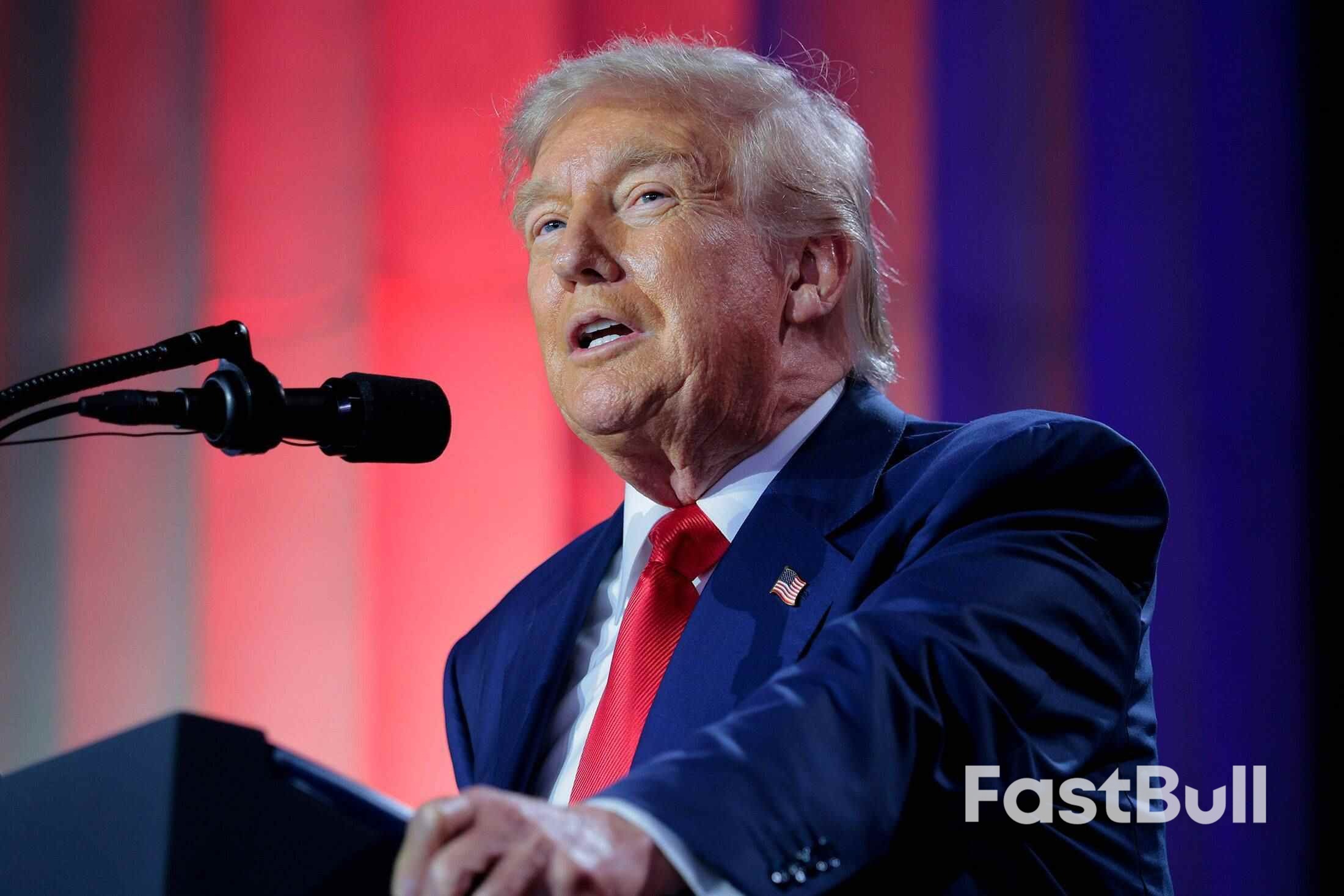
U.S. President Donald Trump on Tuesday announced a trade deal with Tokyo that he said would result in Japan investing $550 billion into the U.S. and a 15% tariff on imports from the Asian country.
Meanwhile, the S&P Global Japan services PMI increased to 53.5 in July from 51.7 in June, thanks to new business growth.
However, new export business saw its first contraction in seven months and employment growth rose at the slowest rate in nearly two years.
Combining both manufacturing and service activity, the S&P Global Japan composite PMI in July remained unchanged from June's 51.5, the data showed.
The Trump administration and the European Union are racing to clinch a trade deal by the White House's self-imposed Aug. 1 deadline, with economists warning that a sharp hike in tariffs could raise costs for consumers and businesses.
As the clock ticks down, a series of pacts with other U.S. trading partners in recent days have raised hopes of avoiding a potentially damaging trade war with Europe, with experts saying a deal with Japan announced on Tuesday could serve as a template for a deal with the EU.
The U.S. has also recently announced the outlines of trade deals with China, Indonesia, the Philippines and U.K., though with many details still remaining to be finalized.
For consumers and businesses on both sides of the Atlantic, much is riding on the outcome of the trade talks. Absent a deal, President Trump has threatened to hit imports from the EU's 27 member countries with a 30% tax. In preparing possible countermeasures, the European Commission has said it would impose tariffs on more than $100 billion worth of U.S. goods starting Aug. 7, AFP reported on Wednesday.
Negotiations are ongoing and a U.S.-EU trade war could yet be avoided. Citing EU diplomats, AFP also said officials with the trading block could be open to a 15% U.S. tariff rate, with potential carveouts for key sectors, according to the wire service.
The White House did not immediately respond to questions about the status of talks with the EU, including whether the Trump administration expects to reach a trade deal by the Aug. 1 deadline.
President Trump on Tuesday struck a trade deal with Tokyo that calls for a 15% tariff on Japanese imports. In return, the deal calls for Japan to invest $550 billion in the U.S. and further open its domestic market to U.S. exports, including cars and certain farm products.
The 15% tariff rate on Japanese goods is five percentage points higher than a baseline tariff the Trump administration imposed on all foreign imports on April 2. But it is lower than the 25% he threatened against Japan earlier this month and the 24% duties his administration proposed in early April.
"The Japan deal solidifies this pattern we've seen thus far, which is some market access relief, a commitment to purchase U.S. goods, and a slightly lower, but above the universal baseline, tariff level," Alex Jacquez, chief of policy and advocacy at Groundwork Collaborative, a public policy research firm, told CBS MoneyWatch.
"The Japan deal certainly provides a framework of what [Mr. Trump] looking for," Jacquez said. "It's about accepting a baseline tariff at or above 10%, and then making purchase commitments."

US President Donald Trump suggested that he would not go below 15% as he sets so-called reciprocal tariff rates ahead of an Aug. 1 deadline, an indication that the floor for the increased levies was rising.
“We’ll have a straight, simple tariff of anywhere between 15% and 50%,” Trump said Wednesday at an AI summit in Washington. “A couple of — we have 50 because we haven’t been getting along with those countries too well.”
Trump’s comment declaring that the tariffs would begin at 15% represented the latest twist in his effort to impose duties on nearly every US trading partner, and the latest indication that Trump was looking to more aggressively impose the levies on exports from countries outside the small group that so far has been able to broker trade frameworks with Washington.
Trump earlier this month said that more than 150 countries would receive a letter including a tariff rate of “probably 10 or 15%, we haven’t decided yet.” Commerce Secretary Howard Lutnick told CBS News on Sunday that small countries including “the Latin American countries, the Caribbean countries, many countries in Africa” would have a baseline tariff of 10%. And at the first announcement of the tariffs in April, Trump unveiled a universal tariff of 10% on nearly every country.
While Trump and his advisers initially expressed hopes of securing multiple deals, the president has been touting the tariff letters themselves as “deals” and suggesting that he is uninterested in back-and-forth negotiations. Still, he has left the door open for countries to make agreements that could lower those rates.
On Tuesday, Trump announced he was reducing a threatened 25% tariff on Japan to 15% in exchange for the country removing restrictions on some US products as well as offering to back a $550 billion investment fund. Other nations, including South Korea, India, and members of the European Union, are still pushing for an agreement before the heightened tariffs go into effect.
On Wednesday, Trump said he would “have a very, very simple tariff for some of the countries” because there were so many nations that “you can’t negotiate deals with everyone.” He said talks with the European Union were “serious.”
White Label
Data API
Web Plug-ins
Poster Maker
Affiliate Program
The risk of loss in trading financial instruments such as stocks, FX, commodities, futures, bonds, ETFs and crypto can be substantial. You may sustain a total loss of the funds that you deposit with your broker. Therefore, you should carefully consider whether such trading is suitable for you in light of your circumstances and financial resources.
No decision to invest should be made without thoroughly conducting due diligence by yourself or consulting with your financial advisors. Our web content might not suit you since we don't know your financial conditions and investment needs. Our financial information might have latency or contain inaccuracy, so you should be fully responsible for any of your trading and investment decisions. The company will not be responsible for your capital loss.
Without getting permission from the website, you are not allowed to copy the website's graphics, texts, or trademarks. Intellectual property rights in the content or data incorporated into this website belong to its providers and exchange merchants.
Not Logged In
Log in to access more features

FastBull Membership
Not yet
Purchase
Log In
Sign Up