

Markets
News
Analysis
User
24/7
Economic Calendar
Education
Data
- Names
- Latest
- Prev



Signal Accounts for Members
All Signal Accounts
All Contests
 Italy Retail Sales MoM (SA) (Oct)
A:--
F: --
P: --
 Euro Zone Employment YoY (SA) (Q3)
A:--
F: --
P: --
Euro Zone GDP Final YoY (Q3)A:--
F: --
P: --
Euro Zone GDP Final QoQ (Q3)A:--
F: --
P: --
Euro Zone Employment Final QoQ (SA) (Q3)A:--
F: --
P: --
Euro Zone Employment Final (SA) (Q3)A:--
F: --
 Brazil PPI MoM (Oct)
A:--
F: --
P: --
 Mexico Consumer Confidence Index (Nov)
A:--
F: --
P: --
 Canada Unemployment Rate (SA) (Nov)
A:--
F: --
P: --
Canada Labor Force Participation Rate (SA) (Nov)A:--
F: --
P: --
Canada Employment (SA) (Nov)A:--
F: --
P: --
Canada Part-Time Employment (SA) (Nov)A:--
F: --
P: --
Canada Full-time Employment (SA) (Nov)A:--
F: --
P: --
 U.S. Personal Income MoM (Sept)
A:--
F: --
P: --
U.S. PCE Price Index YoY (SA) (Sept)A:--
F: --
P: --
U.S. PCE Price Index MoM (Sept)A:--
F: --
P: --
U.S. Personal Outlays MoM (SA) (Sept)A:--
F: --
P: --
U.S. Core PCE Price Index MoM (Sept)A:--
F: --
P: --
U.S. Core PCE Price Index YoY (Sept)A:--
F: --
P: --
U.S. UMich 5-Year-Ahead Inflation Expectations Prelim YoY (Dec)A:--
F: --
P: --
U.S. Real Personal Consumption Expenditures MoM (Sept)A:--
F: --
P: --
U.S. 5-10 Year-Ahead Inflation Expectations (Dec)A:--
F: --
P: --
U.S. UMich Current Economic Conditions Index Prelim (Dec)A:--
F: --
P: --
U.S. UMich Consumer Sentiment Index Prelim (Dec)A:--
F: --
P: --
U.S. UMich 1-Year-Ahead Inflation Expectations Prelim (Dec)A:--
F: --
P: --
U.S. UMich Consumer Expectations Index Prelim (Dec)A:--
F: --
P: --
U.S. Weekly Total Rig CountA:--
F: --
P: --
U.S. Weekly Total Oil Rig CountA:--
F: --
P: --
U.S. Unit Labor Cost Prelim (SA) (Q3)--
F: --
P: --
U.S. Consumer Credit (SA) (Oct)A:--
F: --
P: --
 China, Mainland Foreign Exchange Reserves (Nov)
--
F: --
P: --
China, Mainland Exports YoY (USD) (Nov)--
F: --
P: --
China, Mainland Imports YoY (CNH) (Nov)--
F: --
P: --
China, Mainland Imports YoY (USD) (Nov)--
F: --
P: --
China, Mainland Imports (CNH) (Nov)--
F: --
P: --
China, Mainland Trade Balance (CNH) (Nov)--
F: --
P: --
China, Mainland Exports (Nov)--
F: --
P: --
 Japan Wages MoM (Oct)
--
F: --
P: --
Japan Trade Balance (Oct)--
F: --
P: --
Japan Nominal GDP Revised QoQ (Q3)--
F: --
P: --
Japan Trade Balance (Customs Data) (SA) (Oct)--
F: --
P: --
Japan GDP Annualized QoQ Revised (Q3)--
F: --
China, Mainland Exports YoY (CNH) (Nov)--
F: --
P: --
China, Mainland Trade Balance (USD) (Nov)--
F: --
P: --
 Germany Industrial Output MoM (SA) (Oct)
--
F: --
P: --
Euro Zone Sentix Investor Confidence Index (Dec)--
F: --
P: --
Canada Leading Index MoM (Nov)--
F: --
P: --
Canada National Economic Confidence Index--
F: --
P: --
U.S. Dallas Fed PCE Price Index YoY (Sept)--
F: --
P: --
U.S. 3-Year Note Auction Yield--
F: --
P: --
 U.K. BRC Overall Retail Sales YoY (Nov)
--
F: --
P: --
U.K. BRC Like-For-Like Retail Sales YoY (Nov)--
F: --
P: --
 Australia Overnight (Borrowing) Key Rate
--
F: --
P: --
RBA Rate Statement RBA Press Conference Germany Exports MoM (SA) (Oct)--
F: --
P: --
U.S. NFIB Small Business Optimism Index (SA) (Nov)--
F: --
P: --
Mexico Core CPI YoY (Nov)--
F: --
P: --
Mexico 12-Month Inflation (CPI) (Nov)--
F: --
P: --
Mexico PPI YoY (Nov)--
F: --
P: --


No matching data

Latest Views
Latest Views
Trending Topics
Top Columnists
Latest Update
White Label
Data API
Web Plug-ins
Affiliate Program
View All
No data
Confidence among big Japanese manufacturers improved slightly in the three months to September, a central bank survey showed on Wednesday, a sign the export-reliant economy was weathering the hit from U.S. tariffs, at least for now.
Confidence among big Japanese manufacturers improved slightly in the three months to September, a central bank survey showed on Wednesday, a sign the export-reliant economy was weathering the hit from U.S. tariffs, at least for now.
The outcome keeps alive market expectations the central bank could raise interest rates again as soon as this month.
The headline index measuring big manufacturers' business confidence stood at +14 in September, up from +13 in June and marking the highest level since December 2024, the "tankan" survey showed. It compared with a median market forecast for a reading of +15.
An index gauging big non-manufacturers' sentiment stood at +34 in September, unchanged from the level in June and matching a median market forecast.
But big manufacturers and non-manufacturers expect conditions to worsen three months ahead, the survey showed.
The tankan is among key data the BOJ will scrutinise in deciding whether to raise interest rates to 0.75% from 0.5% at its next meeting on October 29-30.
A hawkish board split at the BOJ's September meeting and calls for a near-term rate hike by a dovish policymaker have led markets to price in roughly a 60% chance of an October hike.
Big companies expect to increase capital expenditure by 12.5% in the current fiscal year ending in March 2026, the tankan showed, up from a 11.5% gain projected in June and above a market forecast for a 11.3% rise.
Japan's economy expanded an annualised 2.2% in the first quarter on robust consumption, underscoring the BOJ's view the country was on course for a moderate recovery.
U.S. President Donald Trump last month signed an executive order formalising the trade agreement with Japan, removing some worries in Tokyo about the implementation of the reduced tariff rate of 15% on key Japanese export items such as cars.
But exports and factory output slumped in August, a sign the pain from higher U.S. levies could intensify in coming months.
The BOJ ended a massive, decade-long stimulus programme last year and raised rates to 0.5% in January, on the view that Japan was on the cusp of durably hitting its inflation target of 2%.
While inflation has exceeded 2% for more than three years, Governor Kazuo Ueda has stressed the need to tread cautiously to scrutinise the extent to which tariffs and slowing U.S. growth could hit firms' profits and wage-hike appetite.
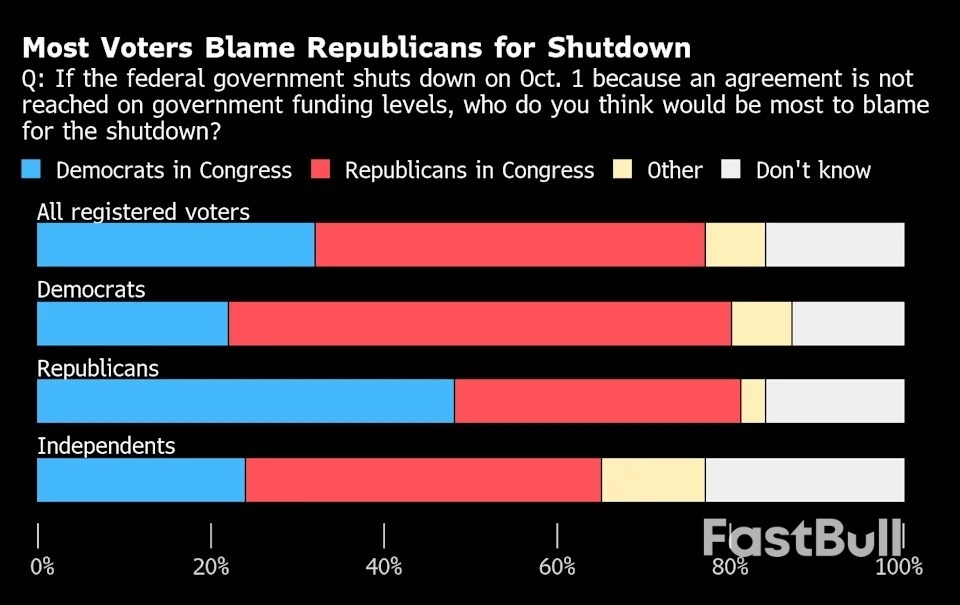
U.S. government services would be disrupted if President Donald Trump and Congress do not agree on a spending bill by midnight on Tuesday.
Hundreds of thousands of federal employees deemed to be not essential to protecting people and property would be sent home.
The impending shutdown would differ from past government closures because Trump has threatened to lay off more federal workers if lawmakers do not pass legislation to avert the closures. His administration has not outlined what cuts to expect.
"We will be looking for opportunities" to reduce the size of the federal government, said White House budget director Russ Vought in a television interview.
As of Tuesday afternoon, at least 21 of the 23 largest federal agencies posted details about which employees they would furlough. Here is a guide to what would stay open and what would close in a government shutdown, according to plans released so far:
Congress writes detailed spending legislation for most U.S. government agencies each year, but rarely finishes before the fiscal year starts on October 1. Lawmakers typically pass stopgap spending bills to avoid disruption for several weeks or months while they finish their work.
The current stopgap bill is due to expire on September 30. Republicans and Democrats appeared unlikely to reach an agreement on some sort of extension that Trump would sign into law before midnight on Tuesday. This would mean wide swaths of the government would lack funds to continue their operations.
The Social Security Administration would keep issuing retirement and disability benefits, but would furlough 12% of its staff and pause marketing campaigns, according to the agency’s shutdown plan.
Payments would likewise continue under the Medicare and Medicaid healthcare programs.
The Supplemental Nutrition Assistance Program, the nation's largest food aid program, and the Special Supplemental Nutrition Program for Women, Infants and Children, known as WIC, would continue operations during a shutdown as funds allow, according to a shutdown planning document published by the U.S. Department of Agriculture.
The U.S. Postal Service would be unaffected because it does not depend on Congress for funding, USPS said in a statement. Post offices will be open.
The IRS will be fully staffed for five days, according to agency shutdown plans published Monday.
The strategy does not say what the IRS, which lost about a quarter of its staff this year and now employs about 75,000 people, would do if the shutdown lasts longer than five business days. An agency spokesperson declined to comment.
More than 13,000 air traffic controllers would continue working, but without pay until the shutdown ends, according to the Federal Aviation Administration.
Most TSA employees would continue working, according to an agency statement.
Last week, the federal judiciary warned that the courts could run out of money to fully sustain operations as soon as Friday if Congress fails to pass a spending bill.
That is a shift. The courts sustained operations for five weeks when the government shut down during Trump's first term.
The 2 million U.S. military personnel would remain at their posts without pay until the shutdown ends, according to a Department of Defense statement.
National Guard forces Trump has deployed to U.S. cities must also continue to work.
Contracts awarded before the shutdown would continue, and the department could place new orders for supplies or services needed to protect national security.
Trump has ordered the department to rename itself the Department of War, a change that will require action by Congress.
Agents at the FBI, the Drug Enforcement Administration, Coast Guard and other federal law enforcement agencies would remain on the job.
Justice Department staff that administer the immigration court system will largely stay on the job because Trump declared illegal immigration a national emergency, according to a department statement.
Employees that communicate with state and local officials about immigrant arrests would also keep working, according to the statement. Border patrol and immigration enforcement agents would stay at their posts, as would most customs officers, according to the Department of Homeland Security’s shutdown strategy.
Tariff collections would continue, according to the strategy.
Publication of major U.S. economic data, including employment and GDP reports of critical importance to policymakers and investors, would be suspended.
The Small Business Administration would furlough 24% of its staff, according to a statement. It would not approve new loans for small businesses to buy equipment and upgrade buildings. Lending to help businesses recover from natural disasters would continue.
The Federal Emergency Management Agency has about $2.3 billion available in its Disaster Relief Fund, according to a September 15 report, meaning the agency should function if a hurricane or other natural disaster strikes. About 4,000 FEMA employees would be furloughed, according to an agency statement.
The U.S. and South Korea are working closely to advance their trade and investment partnership including by processing appropriate visas for qualified South Korean workers, the U.S. State Department said.
U.S. Deputy Secretary of State Christopher Landau stressed the "critical role" of skilled workers of foreign companies investing in the U.S. at the first working group meeting on new visas for South Korean companies, the State Department said in a statement.
The meeting between senior State Department and South Korean foreign ministry officials aimed at improving U.S. visa programmes for South Korean businesses was held in Washington on Tuesday.
Landau said the United States was committed to encouraging investment by companies from South Korea as one of the leading foreign investors in the U.S., the statement said.
The talks were set up in the aftermath of a massive immigration raid at a Hyundai Motor (005380.KS) car battery facility under construction in the U.S. state of Georgia in September where hundreds of South Korean workers were arrested.
The arrests, which stunned the South Korean government and public, highlighted the lack of access to the right class of U.S. visas for specialised South Korean workers needed at investment sites.
728 RM B 7/F GEE LOK IND BLDG NO 34 HUNG TO RD KWUN TONG KLN HONG KONG


White Label
Data API
Web Plug-ins
Poster Maker
Affiliate Program
The risk of loss in trading financial instruments such as stocks, FX, commodities, futures, bonds, ETFs and crypto can be substantial. You may sustain a total loss of the funds that you deposit with your broker. Therefore, you should carefully consider whether such trading is suitable for you in light of your circumstances and financial resources.
No decision to invest should be made without thoroughly conducting due diligence by yourself or consulting with your financial advisors. Our web content might not suit you since we don't know your financial conditions and investment needs. Our financial information might have latency or contain inaccuracy, so you should be fully responsible for any of your trading and investment decisions. The company will not be responsible for your capital loss.
Without getting permission from the website, you are not allowed to copy the website's graphics, texts, or trademarks. Intellectual property rights in the content or data incorporated into this website belong to its providers and exchange merchants.
Not Logged In
Log in to access more features

FastBull Membership
Not yet
Purchase


Log In
Sign Up


