Markets
News
Analysis
User
24/7
Economic Calendar
Education
Data
- Names
- Latest
- Prev


Signal Accounts for Members
All Signal Accounts
All Contests


U.K. Trade Balance (Oct)A:--
F: --
P: --
U.K. Services Index MoMA:--
F: --
P: --
U.K. Construction Output MoM (SA) (Oct)A:--
F: --
P: --
U.K. Industrial Output YoY (Oct)A:--
F: --
P: --
U.K. Trade Balance (SA) (Oct)A:--
F: --
P: --
U.K. Trade Balance EU (SA) (Oct)A:--
F: --
P: --
U.K. Manufacturing Output YoY (Oct)A:--
F: --
P: --
U.K. GDP MoM (Oct)A:--
F: --
P: --
U.K. GDP YoY (SA) (Oct)A:--
F: --
P: --
U.K. Industrial Output MoM (Oct)A:--
F: --
P: --
U.K. Construction Output YoY (Oct)A:--
F: --
P: --
France HICP Final MoM (Nov)A:--
F: --
P: --
China, Mainland Outstanding Loans Growth YoY (Nov)A:--
F: --
P: --
China, Mainland M2 Money Supply YoY (Nov)A:--
F: --
P: --
China, Mainland M0 Money Supply YoY (Nov)A:--
F: --
P: --
China, Mainland M1 Money Supply YoY (Nov)A:--
F: --
P: --
India CPI YoY (Nov)A:--
F: --
P: --
India Deposit Gowth YoYA:--
F: --
P: --
Brazil Services Growth YoY (Oct)A:--
F: --
P: --
Mexico Industrial Output YoY (Oct)A:--
F: --
P: --
Russia Trade Balance (Oct)A:--
F: --
P: --
Philadelphia Fed President Henry Paulson delivers a speech
Canada Building Permits MoM (SA) (Oct)A:--
F: --
P: --
Canada Wholesale Sales YoY (Oct)A:--
F: --
P: --
Canada Wholesale Inventory MoM (Oct)A:--
F: --
P: --
Canada Wholesale Inventory YoY (Oct)A:--
F: --
P: --
Canada Wholesale Sales MoM (SA) (Oct)A:--
F: --
P: --
Germany Current Account (Not SA) (Oct)A:--
F: --
P: --
U.S. Weekly Total Rig CountA:--
F: --
P: --
U.S. Weekly Total Oil Rig CountA:--
F: --
P: --
Japan Tankan Large Non-Manufacturing Diffusion Index (Q4)--
F: --
P: --
Japan Tankan Small Manufacturing Outlook Index (Q4)--
F: --
P: --
Japan Tankan Large Non-Manufacturing Outlook Index (Q4)--
F: --
P: --
Japan Tankan Large Manufacturing Outlook Index (Q4)--
F: --
P: --
Japan Tankan Small Manufacturing Diffusion Index (Q4)--
F: --
P: --
Japan Tankan Large Manufacturing Diffusion Index (Q4)--
F: --
P: --
Japan Tankan Large-Enterprise Capital Expenditure YoY (Q4)--
F: --
P: --
U.K. Rightmove House Price Index YoY (Dec)--
F: --
P: --
China, Mainland Industrial Output YoY (YTD) (Nov)--
F: --
P: --
China, Mainland Urban Area Unemployment Rate (Nov)--
F: --
P: --
Saudi Arabia CPI YoY (Nov)--
F: --
P: --
Euro Zone Industrial Output YoY (Oct)--
F: --
P: --
Euro Zone Industrial Output MoM (Oct)--
F: --
P: --
Canada Existing Home Sales MoM (Nov)--
F: --
P: --
Euro Zone Total Reserve Assets (Nov)--
F: --
P: --
U.K. Inflation Rate Expectations--
F: --
P: --
Canada National Economic Confidence Index--
F: --
P: --
Canada New Housing Starts (Nov)--
F: --
P: --
U.S. NY Fed Manufacturing Employment Index (Dec)--
F: --
P: --
U.S. NY Fed Manufacturing Index (Dec)--
F: --
P: --
Canada Core CPI YoY (Nov)--
F: --
P: --
Canada Manufacturing Unfilled Orders MoM (Oct)--
F: --
P: --
Canada Manufacturing New Orders MoM (Oct)--
F: --
P: --
Canada Core CPI MoM (Nov)--
F: --
P: --
Canada Manufacturing Inventory MoM (Oct)--
F: --
P: --
Canada CPI YoY (Nov)--
F: --
P: --
Canada CPI MoM (Nov)--
F: --
P: --
Canada CPI YoY (SA) (Nov)--
F: --
P: --
Canada Core CPI MoM (SA) (Nov)--
F: --
P: --
Canada CPI MoM (SA) (Nov)--
F: --
P: --


No matching data
Latest Views
Latest Views
Trending Topics
Top Columnists
Latest Update
White Label
Data API
Web Plug-ins
Affiliate Program
View All

No data
Japan’s outgoing prime minister Shigeru Ishiba announced his resignation on 7 September 2025. He will hand over the prime ministership once his Liberal Democratic Party (LDP) chooses a new leader on 4 October.
Japan’s outgoing prime minister Shigeru Ishiba announced his resignation on 7 September 2025. He will hand over the prime ministership once his Liberal Democratic Party (LDP) chooses a new leader on 4 October. While opposition parties, which together command a parliamentary majority, could combine forces to elect a new prime minister, such cooperation is highly unlikely.Ishiba’s resignation followed a meeting of the LDP parliamentary caucus on 2 September. This launched procedures for holding a snap party leadership vote. That would require approval from most LDP members of the Diet and prefectural branches, with the result scheduled to be announced on 8 September. Rather than being pushed into such a vote, Ishiba decided to jump.
Ishiba narrowly won the party leadership in October 2024 on his fifth attempt. Despite a limited core base of party support, many of its lawmakers voted for him in the hope that his reputation as a maverick would help the fortunes of a government mired in funding scandals. Successive electoral setbacks dashed these hopes and sealed his fate.The LDP suffered major losses in both the House of Representatives election in October 2024, called immediately after Ishiba assumed office, and the House of Councillors election in July 2025. Having lost its parliamentary majority, the government has been forced to seek support from one or more opposition parties to pass legislation.
The fallout from funding scandals involving dozens of LDP members of the Diet, tariffs threatened by the Trump administration and rising costs of living eroded support for Ishiba’s government. Yet one of the biggest obstacles came from within his own party.Ishiba garnered recognition and popularity among the electorate for daring to criticise LDP policies under his predecessors, including former prime minister Shinzo Abe. These criticisms earned him the hostility of many colleagues, whose support he found indispensable once he became party leader. This paradox characterised the Ishiba administration and ultimately proved its undoing.
Before coming to power, Ishiba championed his support for allowing married couples to keep separate family names, a stance endorsed by a majority of the Japanese public and most opposition parties. Yet in office, he deferred to social conservatives within the LDP, resulting in a related bill being shelved in June.In his resignation statement, Ishiba lamented that, lacking wide support within the LDP, he has made every effort to seek intra-party accommodation and unity, at the price of losing his own unique individuality.
Ishiba’s approval rating and public support have never sunk to the level that compelled his predecessor, Fumio Kishida, to step down in 2024. In fact, protests calling for Ishiba not to quit in the wake of the LDP’s poor performance in the upper house election took place in July and August.On 30 August, LDP secretary general Moriyama Hiroshi warned about the gap between opinions within the party and among the general public. This warning went unheeded. Immediately after the LDP’s upper house election defeat, former prime minister Taro Aso publicly called for Ishiba’s resignation, a demand echoed by members of his own as well as other factions. These escalating demands forced Ishiba’s hand.
A majority of those in attendance at an 8 August gathering, including members of the former Abe and Motegi factions, demanded a formal caucus meeting on an early leadership election that would effectively cut short Ishiba’s term.For some of Ishiba’s internal critics, factional interests coincide with ideological stances. A group of conservative Diet members issued a statement calling on him to refrain from making a speech commemorating the 80th anniversary of the end of the Second World War and criticised the ‘immorality’ of a prime minister refusing to step down following the LDP’s poor electoral performance.
The LDP’s substantial losses in the House of Councillors election likely made Ishiba’s position untenable following historical precedent. But both the long-term cause and immediate trigger of his resignation have less to do with swings in the electoral pendulum than power struggles within his party.Another round of power struggles has ensued following the announcement of a leadership election. 2024’s runner-up candidates — former internal affairs and communications minister Sanae Takaichi and Minister of Agriculture Shinjiro Koizumi — are favourites. Other candidates include Chief Cabinet Secretary Yoshimasa Hayashi and former ministers Takayuki Kobayashi and Toshimitsu Motegi.
Takaichi, who would become Japan’s first female prime minister if elected, is known for her advocacy of socially conservative views and loose monetary policy, and may appeal to right-leaning voters who supported the LDP under Abe but have recently moved to the populist Sanseito. Koizumi, a fourth-generation politician, has earned accolades for addressing the problem of soaring rice prices in his agriculture portfolio.The incoming prime minister faces the challenges of not only higher costs of living and an uncertain security environment, but also increasing alienation from the established party system. Ishiba cited avoiding polarisation within the LDP as a key reason for his resignation. His successor would do well to focus on avoiding polarisation in Japanese society.
India has implemented significant Goods and Services Tax (GST) reforms aimed at reducing retail prices and stimulating consumer spending.
These changes, effective from September 22, 2025, are expected to lower the cost of everyday items and simplify the tax structure for businesses.
The GST overhaul reduces the number of tax slabs from four to two: 5% and 18%. This simplification is designed to ease compliance for businesses and make goods more affordable for consumers.
Items such as toothpaste, shampoo, and packaged food now fall under the 5% tax bracket, down from 18%. Electronics and small cars have been moved from the 28% slab to 18%, while life and health insurance policies are now exempt from GST.
The Reserve Bank of India (RBI) anticipates that these tax cuts will lead to lower retail prices, thereby boosting consumer demand.
The RBI's September 2025 bulletin notes that improved agricultural sowing is also expected to help control food prices, further supporting household budgets.
While the reforms are expected to stimulate consumption, there are potential challenges. The government projects a revenue loss of ₹480bn ($5.5bn) due to the tax reductions.
Additionally, some sectors may face higher taxes; for example, apparel priced above ₹2,500 is now taxed at 18%, up from 12%, which could impact premium clothing brands.
These GST reforms are part of India's broader efforts to simplify its tax system and encourage domestic consumption, which is a key driver of economic growth.
The full impact of these changes will become clearer in the coming months as businesses and consumers adjust to the new tax landscape.
"India implements tax reforms to boost retail consumption" was originally created and published by Retail Insight Network, a GlobalData owned brand.
The US Senate Finance Committee will hold a hearing on crypto taxation on October 1 at 10:00 AM ET, featuring industry leaders and policymakers at the Capitol.
The hearing aims to clarify tax obligations for digital assets, potentially influencing market dynamics and regulatory compliance within the cryptocurrency industry.
The US Senate Finance Committee is scheduled to hold a hearing on crypto taxation on October 1 at 10:00 AM ET. This meeting will feature insights from leading market players and experts as they explore the taxation of digital assets.
The session, chaired by Senator Mike Crapo, will include executives such as Lawrence Zlatkin from Coinbase, and experts like Annette Nellen from AICPA. They aim to clarify tax rules for assets like BTC and stablecoins, influencing future tax policies. Senator Mike Crapo stated, "The session, titled 'Examining the Taxation of Digital Assets,' will be held on Oct. 1."
The hearing could significantly impact the crypto market with changes in regulation and policy. Stakeholders anticipate potential adjustments in investor behavior and market positions as the US prepares to refine digital asset taxation frameworks.
Financial implications include potential shifts in venture capital, trading volumes, and institutional interest. Regulatory clarity might stabilize taxation environments, assisting in broader market participation and reducing barriers for small transactions.
Historical events indicate potential volatility as stakeholders anticipate regulatory outcomes. Policy adjustments could enhance or restrict digital asset innovations, influencing the market's future trajectory. Observers will closely watch the financial market response post-hearing.
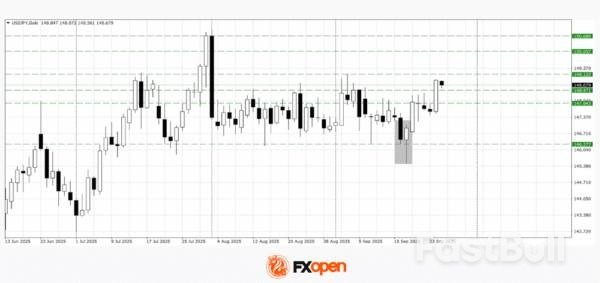
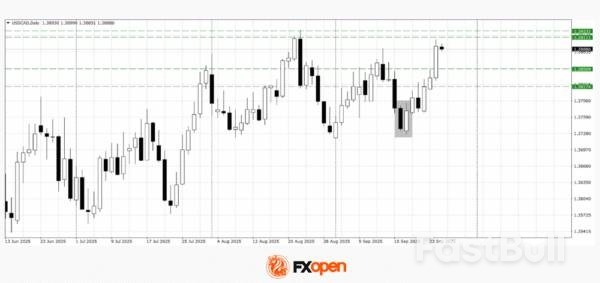
The US dollar firmed after comments from Federal Reserve Chair Jerome Powell, who suggested that further rate cuts are unlikely in the coming months. While markets continue to price in policy easing by the end of the year, the current rhetoric points to a pause in the near term, supporting the dollar in USD/JPY and USD/CAD pairs.
In the upcoming sessions, the key driver for the currency will remain US and Canadian data releases. Today, investors will focus on US Q2 GDP, weekly jobless claims and durable goods orders. Additional interest will centre on the Kansas City Fed manufacturing index and weekly housing reports. Tomorrow, attention will shift to the Core PCE Price Index — the Fed’s preferred measure of inflation — along with Canadian July GDP and US household income and spending data.
After a false break below key support at 146.30 last week, USD/JPY buyers managed to form a bullish “piercing line” candlestick pattern. This setup helped lift the pair towards the upper boundary of the medium-term range at 146.30–149.00. Technical analysis of USD/JPY chart indicates a potential return inside this corridor, unless we see a daily close above 149.00 in the coming sessions.
Events likely to influence USD/JPY:

USD/CAD buyers have brought the pair close to August’s highs for the year. If the 1.3900–1.3920 range establishes itself as support, the price may extend gains towards the psychological resistance at 1.4000. Conversely, as the USD/CAD chart suggests, a rejection from these levels and the formation of reversal patterns could trigger a downward correction, testing key levels in the 1.3820–1.3850 area.
Events likely to influence USD/CAD:

White Label
Data API
Web Plug-ins
Poster Maker
Affiliate Program
The risk of loss in trading financial instruments such as stocks, FX, commodities, futures, bonds, ETFs and crypto can be substantial. You may sustain a total loss of the funds that you deposit with your broker. Therefore, you should carefully consider whether such trading is suitable for you in light of your circumstances and financial resources.
No decision to invest should be made without thoroughly conducting due diligence by yourself or consulting with your financial advisors. Our web content might not suit you since we don't know your financial conditions and investment needs. Our financial information might have latency or contain inaccuracy, so you should be fully responsible for any of your trading and investment decisions. The company will not be responsible for your capital loss.
Without getting permission from the website, you are not allowed to copy the website's graphics, texts, or trademarks. Intellectual property rights in the content or data incorporated into this website belong to its providers and exchange merchants.
Not Logged In
Log in to access more features

FastBull Membership
Not yet
Purchase
Log In
Sign Up