• Trade
  • Markets
  • Copy
  • Contests
  • News
  • 24/7
  • Calendar
  • Q&A
  • Chats
Trending
Screeners
SYMBOL
LAST
BID
ASK
HIGH
LOW
NET CHG.
%CHG.
SPREAD
SPX
S&P 500 Index
6870.39
6870.39
6870.39
6895.79
6858.28
+13.27
+ 0.19%
--
DJI
Dow Jones Industrial Average
47954.98
47954.98
47954.98
48133.54
47871.51
+104.05
+ 0.22%
--
IXIC
NASDAQ Composite Index
23578.12
23578.12
23578.12
23680.03
23506.00
+72.99
+ 0.31%
--
USDX
US Dollar Index
98.850
98.930
98.850
98.960
98.810
-0.100
-0.10%
--
EURUSD
Euro / US Dollar
1.16535
1.16543
1.16535
1.16553
1.16341
+0.00109
+ 0.09%
--
GBPUSD
Pound Sterling / US Dollar
1.33374
1.33384
1.33374
1.33420
1.33151
+0.00062
+ 0.05%
--
XAUUSD
Gold / US Dollar
4210.16
4210.59
4210.16
4213.06
4190.61
+12.25
+ 0.29%
--
WTI
Light Sweet Crude Oil
59.910
59.947
59.910
60.063
59.752
+0.101
+ 0.17%
--

Community Accounts

Signal Accounts
--
Profit Accounts
--
Loss Accounts
--
View More

Become a signal provider

Sell trading signals to earn additional income

View More

Guide to Copy Trading

Get started with ease and confidence

View More

Signal Accounts for Members

All Signal Accounts

Best Return
  • Best Return
  • Best P/L
  • Best MDD
Past 1W
  • Past 1W
  • Past 1M
  • Past 1Y

All Contests

  • All
  • Trump Updates
  • Recommend
  • Stocks
  • Cryptocurrencies
  • Central Banks
  • Featured News
Top News Only
Share

China Politburo: Will Better Coordinate Between China's Economic Work And International Economic And Trade Battle Next Year

Share

China Politburo: Moderately Loose Monetary Policy

Share

China Politburo:Continue To Implement More Active Fiscal Policies

Share

India's SEBI Chair: If Any Entity Wants To Advertise Any Past Return They Can Do Only Via The Platform

Share

Vietnam's Plans To Have Nuclear Power Plant Ready By 2035 Are Too Tight - Ambassador

Share

Japan Still Exploring Options For Future Vietnam Nuclear Projects Involving Small Reactors - Ambassador

Share

Ambassador In Hanoi: Japan Pulls Out Of Plans For Vietnam Nuclear Power Plant Ninh Thuan 2

Share

India's SEBI Chair: Platform Will Allow Investors To Access Verified Returns Of Registered Entities

Share

Governor: Russian Drone Strike On Ukraine's Sumy Injures At Least Seven

Share

Inida's Nifty Psu Bank Index Down 1.3%

Share

India Markets Regulator Official: Have Created A Platform For Real Time Monitoring Of Algo Returns

Share

Cambodia Provincial Official: 3 Cambodian Civilians Seriously Injured In Thai-Cambodia Fighting

Share

Russia's Air Defences Destroy 67 Ukrainian Drones Overnight, RIA Agency Reports

Share

India's Nifty 50 Index Down 0.37%

Share

Hsi Down 287 Pts, Hsti Down 13 Pts, Pop Mart Down Over 8%, Ping An Hit New Highs

Share

China's November Coal Imports Down 20% Year-On-Year

Share

At Least One Thai Soldier Killed And 7 Wounded - Thai Army Spokesman

Share

India's Nifty Bank Futures Up 0.73% In Pre-Open Trade

Share

Cambodia Has Expanded Clashes To Several New Locations - Thai Army Spokesman

Share

Cambodian Military Has Increased Deployment Of Troops And Weapons - Thai Army Spokesman

TIME
ACT
FCST
PREV
U.S. Personal Income MoM (Sept)

A:--

F: --

P: --

U.S. PCE Price Index YoY (SA) (Sept)

A:--

F: --

P: --

U.S. PCE Price Index MoM (Sept)

A:--

F: --

P: --

U.S. Personal Outlays MoM (SA) (Sept)

A:--

F: --

P: --

U.S. Core PCE Price Index MoM (Sept)

A:--

F: --

P: --

U.S. Core PCE Price Index YoY (Sept)

A:--

F: --

P: --

U.S. UMich 5-Year-Ahead Inflation Expectations Prelim YoY (Dec)

A:--

F: --

P: --

U.S. Real Personal Consumption Expenditures MoM (Sept)

A:--

F: --

P: --

U.S. UMich Current Economic Conditions Index Prelim (Dec)

A:--

F: --

P: --

U.S. UMich Consumer Sentiment Index Prelim (Dec)

A:--

F: --

P: --

U.S. UMich 1-Year-Ahead Inflation Expectations Prelim (Dec)

A:--

F: --

P: --

U.S. UMich Consumer Expectations Index Prelim (Dec)

A:--

F: --

P: --

U.S. Weekly Total Rig Count

A:--

F: --

P: --

U.S. Weekly Total Oil Rig Count

A:--

F: --

P: --

U.S. Unit Labor Cost Prelim (SA) (Q3)

--

F: --

P: --

U.S. Consumer Credit (SA) (Oct)

A:--

F: --

P: --

China, Mainland Foreign Exchange Reserves (Nov)

A:--

F: --

P: --

Japan Wages MoM (Oct)

A:--

F: --

P: --

Japan Trade Balance (Oct)

A:--

F: --

P: --

Japan Nominal GDP Revised QoQ (Q3)

A:--

F: --

P: --

Japan Trade Balance (Customs Data) (SA) (Oct)

A:--

F: --

P: --

Japan GDP Annualized QoQ Revised (Q3)

A:--

F: --

P: --
China, Mainland Exports YoY (CNH) (Nov)

A:--

F: --

P: --

China, Mainland Trade Balance (USD) (Nov)

A:--

F: --

P: --

China, Mainland Imports YoY (CNH) (Nov)

A:--

F: --

P: --

China, Mainland Exports (Nov)

A:--

F: --

P: --

China, Mainland Imports (CNH) (Nov)

A:--

F: --

P: --

China, Mainland Trade Balance (CNH) (Nov)

A:--

F: --

P: --

China, Mainland Imports YoY (USD) (Nov)

A:--

F: --

P: --

China, Mainland Exports YoY (USD) (Nov)

A:--

F: --

P: --

Germany Industrial Output MoM (SA) (Oct)

--

F: --

P: --

Euro Zone Sentix Investor Confidence Index (Dec)

--

F: --

P: --

Canada Leading Index MoM (Nov)

--

F: --

P: --

Canada National Economic Confidence Index

--

F: --

P: --

U.S. Dallas Fed PCE Price Index YoY (Sept)

--

F: --

P: --

China, Mainland Trade Balance (USD) (Nov)

--

F: --

P: --

U.S. 3-Year Note Auction Yield

--

F: --

P: --

U.K. BRC Overall Retail Sales YoY (Nov)

--

F: --

P: --

U.K. BRC Like-For-Like Retail Sales YoY (Nov)

--

F: --

P: --

Australia Overnight (Borrowing) Key Rate

--

F: --

P: --

RBA Rate Statement
RBA Press Conference
Germany Exports MoM (SA) (Oct)

--

F: --

P: --

U.S. NFIB Small Business Optimism Index (SA) (Nov)

--

F: --

P: --

Mexico Core CPI YoY (Nov)

--

F: --

P: --

Mexico 12-Month Inflation (CPI) (Nov)

--

F: --

P: --

Mexico PPI YoY (Nov)

--

F: --

P: --

Mexico CPI YoY (Nov)

--

F: --

P: --

U.S. Weekly Redbook Index YoY

--

F: --

P: --

U.S. JOLTS Job Openings (SA) (Oct)

--

F: --

P: --

China, Mainland M2 Money Supply YoY (Nov)

--

F: --

P: --

China, Mainland M0 Money Supply YoY (Nov)

--

F: --

P: --

China, Mainland M1 Money Supply YoY (Nov)

--

F: --

P: --

U.S. EIA Short-Term Crude Production Forecast For The Next Year (Dec)

--

F: --

P: --

U.S. EIA Short-Term Crude Production Forecast For The Year (Dec)

--

F: --

P: --

U.S. EIA Natural Gas Production Forecast For The Next Year (Dec)

--

F: --

P: --

EIA Monthly Short-Term Energy Outlook
U.S. 10-Year Note Auction Avg. Yield

--

F: --

P: --

U.S. API Weekly Cushing Crude Oil Stocks

--

F: --

P: --

U.S. API Weekly Crude Oil Stocks

--

F: --

P: --

U.S. API Weekly Refined Oil Stocks

--

F: --

P: --

Q&A with Experts
    • All
    • Chatrooms
    • Groups
    • Friends
    Connecting
    .
    .
    .
    Type here...
    Add Symbol or Code

      No matching data

      All
      Trump Updates
      Recommend
      Stocks
      Cryptocurrencies
      Central Banks
      Featured News
      • All
      • Russia-Ukraine Conflict
      • Middle East Flashpoint
      • All
      • Russia-Ukraine Conflict
      • Middle East Flashpoint
      Search
      Products

      Charts Free Forever

      Chats Q&A with Experts
      Screeners Economic Calendar Data Tools
      Membership Features
      Data Warehouse Market Trends Institutional Data Policy Rates Macro

      Market Trends

      Market Sentiment Order Book Forex Correlations

      Top Indicators

      Charts Free Forever
      Markets

      News

      News Analysis 24/7 Columns Education
      From Institutions From Analysts
      Topics Columnists

      Latest Views

      Latest Views

      Trending Topics

      Top Columnists

      Latest Update

      Signals

      Copy Rankings Latest Signals Become a signal provider AI Rating
      Contests
      Brokers

      Overview Brokers Assessment Rankings Regulators News Claims
      Broker listing Forex Brokers Comparison Tool Live Spread Comparison Scam
      Q&A Complaint Scam Alert Videos Tips to Detect Scam
      More

      Business
      Events
      Careers About Us Advertising Help Center

      White Label

      Data API

      Web Plug-ins

      Affiliate Program

      Awards Institution Evaluation IB Seminar Salon Event Exhibition
      Vietnam Thailand Singapore Dubai
      Fans Party Investment Sharing Session
      FastBull Summit BrokersView Expo
      Recent Searches
        Top Searches
          Markets
          News
          Analysis
          User
          24/7
          Economic Calendar
          Education
          Data
          • Names
          • Latest
          • Prev

          View All

          No data

          Scan to Download

          Faster Charts, Chat Faster!

          Download App
          English
          • English
          • Español
          • العربية
          • Bahasa Indonesia
          • Bahasa Melayu
          • Tiếng Việt
          • ภาษาไทย
          • Français
          • Italiano
          • Türkçe
          • Русский язык
          • 简中
          • 繁中
          Open Account
          Search
          Products
          Charts Free Forever
          Markets
          News
          Signals

          Copy Rankings Latest Signals Become a signal provider AI Rating
          Contests
          Brokers

          Overview Brokers Assessment Rankings Regulators News Claims
          Broker listing Forex Brokers Comparison Tool Live Spread Comparison Scam
          Q&A Complaint Scam Alert Videos Tips to Detect Scam
          More

          Business
          Events
          Careers About Us Advertising Help Center

          White Label

          Data API

          Web Plug-ins

          Affiliate Program

          Awards Institution Evaluation IB Seminar Salon Event Exhibition
          Vietnam Thailand Singapore Dubai
          Fans Party Investment Sharing Session
          FastBull Summit BrokersView Expo

          How to Read Stock Market Charts and Graphs for Beginners

          Winkelmann

          Stocks

          Summary:

          Learn how to read stock market charts and graphs with this beginner-friendly guide. Understand key chart types, patterns, and indicators to make smarter trading decisions.

          How to Read Stock Market Charts and Graphs: A Simple Guide for New Investors

          Learning how to read stock market charts and graphs helps investors identify trends, analyze price action, and make informed decisions.

          Part 1: Common Types of Stock Market Charts

          Stock charts display how a stock’s price changes over time. Each chart type presents data differently, helping investors spot momentum, volatility, and turning points.

          Line Chart

          Connects closing prices across time, offering a clean view of overall direction. Ideal for beginners learning how to read charts in the stock market.

          Bar Chart (OHLC)

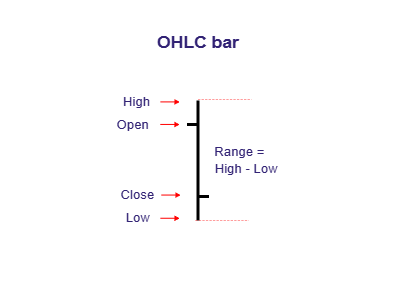
          Shows open, high, low, and close for each period. The vertical bar reflects the full range, while left/right ticks mark open/close. Useful for gauging volatility and intraperiod sentiment.

          Candlestick Chart

          Visualizes the same OHLC data with colored bodies and wicks, revealing market psychology. Great for recognizing momentum, reversals, and continuation signals (how to read candle chart in stock market).

          Point & Figure Chart

          Ignores time and focuses on price movement only, filtering noise and highlighting breakouts and long-term trend structure.

          Key Elements of Stock Charts

          • OHLC: Open, High, Low, Close define each period’s price action.
          • Trendlines: Connect swing highs/lows to reveal direction and strength.
          • Support & Resistance: Price zones where demand or supply often shifts.
          • Volume: Confirms the strength behind price moves.
          • Timeframe: From minutes to months; choose based on strategy.

          Common Chart Patterns

          • Head and Shoulders: Often signals a trend reversal.
          • Double Top / Double Bottom: Reversal after failed break attempts.
          • Triangles (Ascending / Descending / Symmetrical): Consolidation before breakout.
          • Cup and Handle: Bullish continuation pattern after a rounded base.

          Part 2: Key Indicators Used in Stock Chart Analysis

          Understanding key indicators is essential when learning how to read stock market charts and graphs. These indicators help investors evaluate trend strength, momentum, and potential reversals in the market.

          1. Moving Averages (MA)

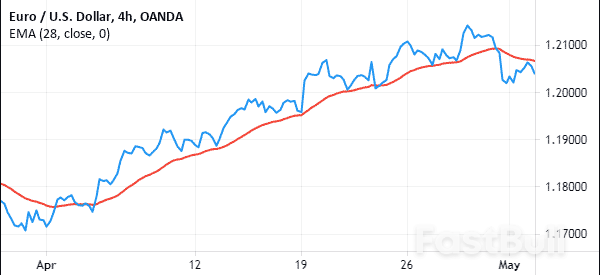
          The moving average smooths price data over a specific period, showing the average value of a stock’s price. It helps identify the overall trend direction — if prices stay above the MA, the market is bullish; below means bearish.

          • Simple Moving Average (SMA): Equal weighting for all data points in the period.
          • Exponential Moving Average (EMA): Gives more importance to recent data for quicker trend signals.
          • Golden Cross / Death Cross: When short-term and long-term MAs cross, signaling trend reversals.

          2. Relative Strength Index (RSI)

          RSI measures price momentum on a scale of 0 to 100, helping identify overbought or oversold conditions. A reading above 70 often means overbought, while below 30 indicates oversold. When analyzing how to read a stock market chart, RSI offers insight into market psychology and timing.

          3. Moving Average Convergence Divergence (MACD)

          The MACD indicator tracks the relationship between two exponential moving averages to show momentum shifts. When the MACD line crosses above the signal line, it’s a bullish signal; when below, it’s bearish.

          4. Volume

          Volume measures how many shares are traded during a given period. When price moves with rising volume, it confirms the strength of that move. This is critical in how to read charts in stock market analysis since it validates breakouts or reversals.

          5. Bollinger Bands

          Bollinger Bands use a moving average with upper and lower bands based on standard deviations. When prices touch the upper band, assets may be overbought; when near the lower band, oversold. It’s a visual way to measure volatility and extremes in how to read candle chart in stock market analysis.

          6. Fibonacci Retracement

          This tool helps identify potential support and resistance levels by dividing a major price move into key ratios (23.6%, 38.2%, 61.8%). Traders use it to predict pullbacks and continuation points.

          7. Trendlines and Channels

          Drawing trendlines helps visualize the market direction. Parallel trendlines form price channels that signal the boundaries of price movement. They’re often combined with indicators for confirmation.

          Part 3: How to Read Stock Market Charts and Graphs

          Learning how to read stock market charts and graphs helps investors interpret price trends, market sentiment, and entry or exit signals. Whether you use a line chart, bar chart, or candlestick chart, understanding each format allows you to visualize the balance between buyers and sellers.

          How to Read a Line Chart

          A line chart is the simplest way to view price movements over time. It connects the closing prices of each trading period with a continuous line, giving a clear picture of the overall trend.
          How to Read Stock Market Charts and Graphs for Beginners_1

          • Upward slope: Indicates a bullish trend (price increasing over time).
          • Downward slope: Signals a bearish trend (declining price).
          • Sideways line: Reflects consolidation or market indecision.

          Line charts are ideal for investors who want to see the “big picture” of a stock’s performance without short-term noise. When learning how to read a stock market chart, this is often the first step toward understanding broader trends.

          How to Read a Bar Chart

          A bar chart (also called an OHLC chart) shows more detail by including the open, high, low, and close prices within each period. Each vertical bar represents the trading range, while small ticks on either side show opening and closing prices.
          How to Read Stock Market Charts and Graphs for Beginners_2

          • Left tick: Opening price.
          • Right tick: Closing price.
          • Top and bottom: Highest and lowest prices for that session.

          When the close is higher than the open, it reflects bullish momentum; when it’s lower, bearish momentum. Bar charts are useful for seeing volatility and range strength — key for those studying how to read charts in stock market for active trading.

          How to Read a Candlestick Chart

          Candlestick charts are the most popular and powerful visualization for traders. Each “candle” represents one trading session and includes four data points: open, high, low, and close — similar to bar charts but more visual.
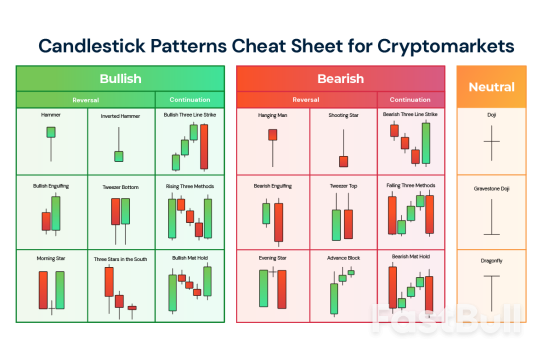
          How to Read Stock Market Charts and Graphs for Beginners_3

          • Green or hollow candle: Closing price is higher than opening (bullish).
          • Red or filled candle: Closing price is lower than opening (bearish).
          • Wicks or shadows: Represent intraday price extremes.

          When learning how to read candle chart in stock market, focus on body size and wick length — long bodies show strong moves, while long wicks signal market indecision or reversals.

          Common patterns include:

          • Doji: Signals indecision, often before reversals.
          • Hammer: Appears after a downtrend, suggesting a possible bottom.
          • Engulfing Pattern: Indicates a strong reversal in sentiment.

          How to Combine Indicators and Patterns

          Reading charts isn’t just about recognizing shapes — it’s about context. Combine technical indicators with visual patterns to confirm trends and improve accuracy.

          • Combine Moving Averages with Candlestick Patterns: For example, a bullish engulfing candle above the 50-day MA can signal strong trend continuation.
          • Use RSI with Support/Resistance: If RSI shows oversold while price touches support, it strengthens the buy signal.
          • Volume Confirmation: Rising volume validates price breakouts or breakdowns.

          Understanding how to integrate these tools is the key to mastering how to read stock market charts and graphs effectively for real-world investing or trading decisions.

          FAQs about How to Read Stock Market Charts and Graphs

          1. How to understand chart patterns in stock market?

          Chart patterns reveal market psychology. Shapes like triangles, double tops, and head-and-shoulders indicate trend continuation or reversal. Understanding them helps predict price behavior.

          2. What's the best chart pattern for beginners?

          Beginners can start with simple patterns such as trendlines, support and resistance zones, or candlestick formations like hammers and dojis—they are easy to spot and reliable.

          3. How often should I check stock charts?

          Long-term investors can review weekly or daily charts, while active traders may monitor hourly charts for faster signals and short-term trends.

          Conclusion

          Mastering how to read stock market charts and graphs helps investors spot opportunities, manage risk, and make smarter, data-driven trading decisions.

          Risk Warnings and Disclaimers
          You understand and acknowledge that there is a high degree of risk involved in trading. Following any strategies or investment methods may lead to potential losses. The content on the site is provided by our contributors and analysts for information purposes only. You are solely responsible for determining whether any trading assets, securities, strategy, or any other product is suitable for investing based on your own investment objectives and financial situation.
          Add to Favorites
          Share

          Dollar Drops Versus Euro, Rises Slightly Against Yen, China's Rare Earths in Focus

          Glendon

          Economic

          Forex

          (Oct 16): The US dollar headed for a third straight daily loss against the euro while edging up versus the yen on Thursday, as concerns over US-China tensions and dovish remarks from Federal Reserve officials continued to weigh on sentiment.

          Analysts say political headwinds have weighed on the yen but expect support to come from looming Fed rate cuts, the end of US quantitative tightening, and a potential rise in market volatility, which usually supports safe-haven assets.

          US Treasury yields hovered near multi-week lows, with the benchmark 10-year just above 4%, pressuring the dollar as investors also weighed a prolonged US government shutdown.

          The Fed’s Beige Book released Thursday offered little support to US rates, pointing to emerging signs of economic weakness, including rising layoffs and reduced spending among middle- and lower-income households. Fed Governor Stephen Miran said on Wednesday cutting rates is now more important.

          The dollar index, which measures the greenback against six other currencies, was down 0.05% at 98.63, and was on track for a weekly decline of around 0.3%.

          Rare earths in focus

          Investors were scrutinising China’s latest expansion of rare earth export controls, a move sharply criticised by senior US officials on Wednesday, who warned that it could disrupt global supply chains.

          "The question for financial markets is whether China's proposed export controls on rare earths are merely part of a bargaining ploy to achieve greater concessions from the US," said Chris Turner, global head of markets at ING.

          Amid the tit-for-tat action, US President Donald Trump still expects to meet Chinese President Xi Jinping in South Korea this month, US Treasury Secretary Scott Bessent said.

          "An extension, rather than a grand bargain that settles all trade issues, is probably the most realistic second-best outcome compared to the alternative of escalation of retaliation," said Joseph Capurso, head of foreign exchange at Commonwealth Bank of Australia.

          The Australian dollar was flat at US$0.6511 after data showed unemployment hit a near four-year high in September, adding to the case for interest rate cuts.

          The Aussie, often considered a proxy for risk appetite, has been volatile this week due to the trade tension as traditional havens gained.

          China's yuan firmed to a two-week high against the US dollar on Thursday after the central bank set its strongest daily midpoint in a year.

          French political drama in the background

          The euro touched a one-week high and was up 0.10% at US$1.1656 as traders braced for yet another episode in the French political drama, with Prime Minister Sebastien Lecornu likely to survive two no-confidence votes in parliament.

          France's political crisis has barely affected euro zone sovereign bond markets as investors see no room for a selloff in French bonds without snap elections.

          However, by shelving pension reform until after 2027, France’s prime minister has managed to defuse a sharp escalation in the crisis, though at the cost of complicating efforts to rein in public finances, analysts said.

          The yen briefly firmed to a one-week high of 150.51 per dollar but was up 0.05% at 151.11. Japan's weakened Liberal Democratic Party is set to begin policy talks with the right-leaning Innovation Party on Thursday that could help Sanae Takaichi clinch a prime ministerial vote expected next week.

          "Regardless of the outcome of the prime ministerial election, it is highly likely that the market will price in some expansionary fiscal policies," said Shinichiro Kadota, head of Japan forex and rates strategy at Barclays Tokyo.

          "We remain long on the US dollar versus the yen given the risk of a further rally but with eyes on an eventual intervention risk or Bank of Japan hike if the move extends."

          Source: Theedgemarkets

          To stay updated on all economic events of today, please check out our Economic calendar
          Risk Warnings and Disclaimers
          You understand and acknowledge that there is a high degree of risk involved in trading. Following any strategies or investment methods may lead to potential losses. The content on the site is provided by our contributors and analysts for information purposes only. You are solely responsible for determining whether any trading assets, securities, strategy, or any other product is suitable for investing based on your own investment objectives and financial situation.
          Add to Favorites
          Share

          Trump Threatens Cooking Oil Ban as U.S.-China Soybean Dispute Intensifies

          Gerik

          Economic

          Commodity

          China–U.S. Trade War

          Soybean Rift Deepens as Trump Accuses China of Economic Hostility

          President Donald Trump escalated his administration’s trade offensive against China on Tuesday by accusing Beijing of “economic hostility” for its continued refusal to purchase U.S. soybeans. In a post on social media, Trump stated that China's deliberate move was "causing difficulty for our Soybean Farmers" and warned of retaliatory actions, including a potential embargo on cooking oil and other Chinese goods.
          The sharp rhetoric follows Trump’s earlier threat to impose a 100% tariff on all Chinese imports, a significant leap from existing levies that were already placing strain on bilateral trade. The President emphasized that the U.S. “can easily produce Cooking Oil ourselves,” signaling a push for domestic substitution and trade decoupling.

          Strategic Value of Soy and Cooking Oil in Trade Policy

          Soybeans, a politically sensitive commodity due to their importance to American agriculture, have become a central flashpoint in U.S.-China relations. Historically, over 40% of U.S. soybean exports went to China, but no orders have been placed this year. This shift has left U.S. farmers with a glut of unsold harvests and falling prices, while China has redirected its purchases to Argentina and Brazil.
          Cooking oil especially used cooking oil (UCO) adds another dimension to the dispute. While the U.S. traditionally imports most edible oils from Canada, China has emerged as a key supplier of UCO for biofuel production, particularly since 2023. The rise in U.S. demand for sustainable fuel inputs, driven by green energy policy, transformed the country from a net exporter of UCO in 2021 to a net importer by 2022, with imports surpassing 1.36 million metric tons last year.
          This shift has given China strategic leverage, as it now plays a vital role in the U.S. renewable fuel supply chain. Trump’s proposed embargo could therefore disrupt domestic biofuel production, while also complicating U.S. efforts to transition toward cleaner energy.

          Rare Earth Controls Trigger Tariff Retaliation

          The cooking oil threat comes amid broader trade friction, particularly over rare earth minerals, which are essential to high-tech and defense industries. Earlier this week, China’s Ministry of Commerce introduced sweeping export controls on rare earths, prompting swift retaliation from Washington.
          U.S. Trade Representative Jamieson Greer criticized the move in an interview, stating that China’s new export regime had “derailed” trade settlement efforts, adding that "they are the ones who have chosen to make this major escalation." According to Greer, the previous agreement hinged on mutual restraint: low U.S. tariffs in exchange for China’s continued supply of rare earths. The new controls, which extend to downstream products, violated that understanding, thereby justifying further U.S. tariff hikes.

          Shifting Trade Patterns and Geopolitical Undercurrents

          The intensifying trade conflict highlights deeper shifts in global commodity flows and industrial policy. Previously, Europe had been the largest buyer of Chinese UCO, but that demand collapsed following a 2023 EU probe into price manipulation. The U.S. then became China’s largest customer, despite having imported negligible volumes just two years prior.
          Trump’s proposal to cut off Chinese UCO imports may be aimed at curbing reliance on a perceived adversary, but such a move would likely disrupt domestic supply chains for biofuels, a sector already strained by delayed government reporting due to the ongoing U.S. federal shutdown.
          For soybean producers, the immediate concern remains: China’s complete absence from the U.S. export order books in 2025, a stark departure from previous years. As Chinese demand consolidates around South American suppliers, U.S. farmers face rising inventories and economic uncertainty.

          A Trade Flashpoint with Strategic Implications

          Trump’s threat to ban cooking oil imports from China, while symbolic, carries tangible consequences. It reflects not only deepening frustration over the soybean impasse but also a broader shift in U.S. policy toward economic decoupling in strategic sectors. Coupled with the rare earth standoff and looming tariff hikes, this latest move signals a reconfiguration of trade relations, where food, fuel, and minerals are wielded as instruments of geopolitical leverage.
          As both economies edge closer to full-scale economic disengagement, the outcome of the upcoming APEC summit where Trump and Xi are scheduled to meet may determine whether diplomacy can defuse tensions or whether the confrontation will intensify into a lasting trade rupture.

          Source: Reuters

          To stay updated on all economic events of today, please check out our Economic calendar
          Risk Warnings and Disclaimers
          You understand and acknowledge that there is a high degree of risk involved in trading. Following any strategies or investment methods may lead to potential losses. The content on the site is provided by our contributors and analysts for information purposes only. You are solely responsible for determining whether any trading assets, securities, strategy, or any other product is suitable for investing based on your own investment objectives and financial situation.
          Add to Favorites
          Share

          USD/CHF Falls To Two-Week Low

          FXOpen

          Economic

          Forex

          This morning, the USD/CHF exchange rate slipped below 0.7944 for the first time since 1 October, as demand for safe-haven assets intensified — a trend also reflected in yesterday’s record gold price above $4,200.The traditionally stable Swiss franc is strengthening amid rising global uncertainty and risk aversion:

          → In Japan, the upcoming prime ministerial election could significantly impact monetary policy, while France faces ongoing political turmoil.

          → In the United States, the government shutdown continues, and traders are closely watching developments around a potential trade deal with China, possibly to be discussed during an expected meeting between the two countries’ leaders.

          Technical Analysis of the USD/CHF Chart

          As noted in our 25 September analysis, the Swiss franc has appreciated through 2025 amid elevated geopolitical and macroeconomic risks, forming a downward channel on the USD/CHF chart (shown in red).

          We also highlighted:

          → the possibility of a trend reversal around the 0.7900 support area;

          → potential breakout targets (shown in blue).

          Since then, the bulls have indeed made progress, driving the price up towards point A and:

          → breaking above the red channel’s upper boundary;

          → overcoming the psychological 0.8000 level.

          However, that progress has not been sustained. Among the bearish signals:

          → the median line of the blue channel acted as resistance;

          → the brief move above local highs around 0.8072 resembles a bearish liquidity grab.

          From the bullish perspective, USD/CHF has now retreated into a zone that could act as support:

          → the upper boundary of the red channel;

          → the lower boundary of the blue channel.

          The arrow highlights signs of a bullish engulfing pattern, suggesting that buyers may be using these support zones to stage a rebound within the blue channel. The 0.8000 psychological mark could serve as the first key test of their resolve.

          Source: FXOpen

          To stay updated on all economic events of today, please check out our Economic calendar
          Risk Warnings and Disclaimers
          You understand and acknowledge that there is a high degree of risk involved in trading. Following any strategies or investment methods may lead to potential losses. The content on the site is provided by our contributors and analysts for information purposes only. You are solely responsible for determining whether any trading assets, securities, strategy, or any other product is suitable for investing based on your own investment objectives and financial situation.
          Add to Favorites
          Share

          China Holds Off On Soybean Purchases Due To High Brazil Premiums, Traders Say

          Samantha Luan

          Commodity

          Forex

          Economic

          Key points:

          ● China seen buying about 9 million tonnes for Dec-Jan shipment
          ● High Brazilian premiums may prompt China to use state reserves
          ● Uncertainty lingers over U.S.-China soybean talks

          China has yet to secure much of its soybean supply for December and January as high premiums for Brazilian cargoes discourage buyers, a development that could prompt Beijing to tap state reserves to meet near-term needs, three trade sources said.China still needs to purchase about 8–9 million metric tons of soybeans for December-January shipment after covering cargoes through November with hefty purchases of Argentine beans in recent weeks, the sources said. Escalating Washington-Beijing trade tensions continue to shut out U.S. supplies.

          "China is not buying U.S. beans because of the trade war and Brazilian beans are too expensive," said one oilseed trader at an international trading company which supplies agricultural products to China."China might end up using its own reserves for the year-end and early next year, before the new South American harvest comes in." he said.

          BRAZILIAN SOYBEAN PREMIUMS

          Brazilian soybean premiums are holding at $2.8-2.9 per bushel over the November Chicago soybean contract (SX25) compared with U.S. premiums at around $1.7 per bushel.Crush margins have been in negative territory (CNSOY-RZO-MRG) for most of the second half of the year.

          China Holds Off On Soybean Purchases Due To High Brazil Premiums, Traders Say_1

          Thomson ReutersChina's record soybean imports weigh on crush margins

          Crushers have little motivation to secure December-January soybean cargoes as supplies from Brazil have squeezed their margins, said a Shanghai-based trader.Chinese buyers are hoping that an early and record soybean harvest in Brazil in early 2026 will help ease prices.Brazilian farmers are expected to harvest a record 177.64 million metric tons of soybeans in the 2025/26 season, around 6 million tons more than the previous year, crop agency Conab said.

          "We think new crop shipments from Brazil can start at end of January," said a second oilseed trader. Sources declined to be named as they were not authorised to speak to media.

          U.S.-CHINA SOYBEAN TALKS

          Chinese buyers have also not yet entirely written off U.S. supplies, with oilseed processors likely to make purchases for December-January if there is a trade agreement between the two governments, traders and analysts said."If a deal goes through, Chinese buyers will likely turn to U.S. beans for the two-month window, with prices more attractive than South American offers," said Johnny Xiang, founder of Beijing-based AgRadar Consulting.Soybeans are expected to feature on the agenda for a potential meeting between U.S. President Donald Trump and Chinese President Xi Jinping in South Korea. Beijing has, however, yet to publicly confirm the talks.

          On Tuesday, Trump accused China of "purposefully" avoiding U.S. soybean purchases, calling it an "economically hostile act" that has "caused difficulties" for American soybean farmers.Since the first Trump administration, China has diversified its soybean imports. In 2024, China bought roughly 20% of its soybeans from the U.S., down from 41% in 2016, customs data shows.

          Source: TradingView

          To stay updated on all economic events of today, please check out our Economic calendar
          Risk Warnings and Disclaimers
          You understand and acknowledge that there is a high degree of risk involved in trading. Following any strategies or investment methods may lead to potential losses. The content on the site is provided by our contributors and analysts for information purposes only. You are solely responsible for determining whether any trading assets, securities, strategy, or any other product is suitable for investing based on your own investment objectives and financial situation.
          Add to Favorites
          Share

          Asian Markets Rise on Wall Street Rebound, Gold Rally, and Earnings Optimism

          Gerik

          Economic

          Asian Stocks Track Wall Street Gains Amid Global Optimism

          Most Asian stock markets closed higher on Thursday following an erratic but ultimately positive session in the U.S., where major indexes recovered from sharp intraday swings. The upbeat mood was fueled by robust earnings reports, a rally in precious metals, and growing speculation that the Federal Reserve will begin easing interest rates.
          Japan’s Nikkei 225 led the regional rally, jumping 1.3% to 48,277.74, driven by early corporate earnings surprises and rate-cut optimism. Although Japan’s core machinery orders in August disappointed, falling 0.9% month-on-month against expectations of a 0.4% rise, the data still showed an improvement from July’s 4.6% slump, softening investor concern about domestic demand.

          South Korea’s Kospi Hits Record on Tech and Trade Deal Hopes

          South Korea’s Kospi surged 2.5% to an all-time high of 3,748.37, lifted by gains in heavyweight tech and auto stocks. Optimism over a potential U.S.-Korea trade deal ahead of the upcoming APEC summit fueled bullish sentiment. Key performers included Samsung Electronics (+2.84%), Hyundai Motor (+8.28%), and Kia Corp (+7.23%), as investors piled into export-driven names.
          The record-setting performance follows a strong upward trend this week, supported by hopes that easing trade friction and growing U.S. demand will support Korean exports.

          China Mixed, Australia Buoyed by Gold Surge

          Chinese markets were more subdued. The Hang Seng Index in Hong Kong dipped 0.4% to 25,812.20, while the Shanghai Composite was largely flat at 3,911.42, reflecting lingering concerns over domestic economic softness and geopolitical tensions. Investors in mainland China appeared cautious amid tightening export regulations and a subdued property market.
          In contrast, Australia’s S&P/ASX 200 climbed 0.9% to close at 9,068.40, breaking the 9,000 mark for the first time. Gains were led by gold miners, as gold surged to $4,237.60 per ounce, up 0.9% in early Thursday trade. The rally in gold, driven by geopolitical uncertainty and expectations of Fed rate cuts, bolstered investor sentiment in resource-heavy markets like Australia.
          However, the rally came alongside weaker domestic labor data, as the unemployment rate rose to 4.5%, the highest in four years. This has increased the likelihood of an interest rate cut by the Reserve Bank of Australia as soon as next month.

          Broader Asia Follows Uptrend; Wall Street Volatility Underpins Global Sentiment

          Elsewhere in the region, India’s Sensex gained 0.5%, and Taiwan’s Taiex added 1.4%, both reflecting spillover confidence from the U.S. tech-led rally. On Wall Street Wednesday, the S&P 500 rose 0.4% to 6,671.06, the Nasdaq Composite climbed 0.7% to 22,670.08, while the Dow Jones was nearly unchanged, shedding less than 0.1%.
          Tech stocks led the way after ASML, a key semiconductor equipment maker, posted stronger-than-expected earnings and forecasted 15% revenue growth for 2025. The Dutch firm’s outlook supported bullish expectations for the global chip sector, helping stabilize investor sentiment after recent market volatility.

          Oil and Currency Markets Show Modest Movement

          In commodities, U.S. benchmark crude rose $0.51 to $58.78 per barrel, and Brent crude increased $0.41 to $62.32, reflecting stable global demand expectations despite geopolitical risk.
          In foreign exchange, the dollar strengthened slightly to 151.20 yen, while the euro edged up to $1.1660, showing limited currency volatility amid subdued macroeconomic updates due to the ongoing U.S. government shutdown.

          Earnings, Gold, and Rate Cut Bets Steer Sentiment

          Thursday’s market momentum reflects a fragile but hopeful investor outlook. While volatility remains elevated especially in U.S. indices the narrative is being shaped by stronger-than-expected corporate earnings, a shift toward monetary easing, and rising safe-haven flows into gold.
          Asian markets are benefiting from this backdrop, with export-oriented economies like South Korea and commodity-driven ones like Australia emerging as standout performers. Investors will now closely watch next week’s earnings reports from major U.S. tech firms and policy statements from central banks to gauge whether this rally has further room to run.

          Source: AP

          To stay updated on all economic events of today, please check out our Economic calendar
          Risk Warnings and Disclaimers
          You understand and acknowledge that there is a high degree of risk involved in trading. Following any strategies or investment methods may lead to potential losses. The content on the site is provided by our contributors and analysts for information purposes only. You are solely responsible for determining whether any trading assets, securities, strategy, or any other product is suitable for investing based on your own investment objectives and financial situation.
          Add to Favorites
          Share

          Gold Soars to All-Time High Amid Trade War Escalation and Fed Rate-Cut Expectations

          Gerik

          Economic

          Commodity

          Gold Rally Accelerates on Policy and Geopolitical Uncertainty

          Gold extended its parabolic rally on Thursday, breaking through $4,242 per ounce and notching a fresh record. This sharp rise, more than 5% higher for the week, reflects a confluence of investor anxieties including the U.S.-China trade war, political instability in Washington, and dovish signals from the Federal Reserve.
          The broader move into precious metals gained further traction as silver surged over 3% midweek, fueled by an ongoing liquidity crunch in the London market. Palladium also advanced, while platinum held steady.
          The recent surge in gold is the continuation of a rally that began in mid-August and is now underpinned by both macroeconomic instability and structural market shifts. The rise in gold has now topped 60% year-to-date, marking one of the most explosive annual performances in modern financial history.

          Rate-Cut Bets and the Debasement Trade Drive Momentum

          Markets are increasingly pricing in at least one large Federal Reserve rate cut before year-end, with Fed Chair Jerome Powell signaling the likelihood of a quarter-point cut at the next meeting. The move towards easier monetary policy reinforces gold’s appeal, particularly because gold does not yield interest and becomes more attractive when real rates decline.
          Investors are also pursuing what has been labeled the “debasement trade” a rotation out of fiat currencies and sovereign debt into hard assets like gold amid concerns over swelling U.S. budget deficits and a prolonged federal government shutdown. The debasement narrative has gained traction as political dysfunction in Washington deepens, and confidence in fiscal discipline erodes.

          Trade War Escalation Sparks Safe-Haven Demand

          Geopolitical factors have added further fuel to gold’s rise. President Donald Trump’s declaration this week that the U.S. is “now in a full-scale trade war with China” has reignited fears of a prolonged global economic downturn. Tensions have mounted ahead of the anticipated APEC summit, where Trump is scheduled to meet Chinese President Xi Jinping.
          Though Treasury Secretary Scott Bessent has hinted at a potential pause in further tariffs, market participants remain cautious, interpreting the rhetoric as a sign of deeper decoupling between the world’s two largest economies.
          These developments have driven investors to reallocate capital toward perceived safe-haven assets. ANZ analysts Soni Kumari and Daniel Hynes revised their gold forecast upward, projecting prices to reach $4,400 by year-end and potentially $4,600 by June 2026, citing persistent macro and geopolitical instability.

          Liquidity Squeeze in Silver Market Adds Fuel

          Silver markets have also responded with notable volatility. A tightening supply in London has sparked a global scramble for physical metal, with spot prices in some instances surpassing futures benchmarks in New York. Silver touched a record above $53 per ounce, and though it traded flat on Thursday, demand fundamentals remain tight.
          This dislocation between physical and futures markets indicates that structural issues not just speculation are driving the rally in silver. Meanwhile, the continued appetite for precious metals suggests that portfolio hedging, rather than short-term positioning, is increasingly in play.

          Gold Reclaims Its Role as Strategic Hedge

          Gold’s meteoric rise is not merely a reaction to temporary headlines. Instead, it signals a broad re-pricing of risk in a world where central bank independence is under pressure, political unpredictability is growing, and geopolitical fragmentation is accelerating. As institutional and retail investors look to hedge against inflation, policy errors, and systemic shocks, gold is being reasserted not only as a haven, but also as a core strategic asset.
          With central banks continuing to accumulate gold and global trade frameworks in flux, the current rally may represent a paradigm shift one where gold once again becomes a dominant store of value in an increasingly unstable global economy.

          Source: Bloomberg

          To stay updated on all economic events of today, please check out our Economic calendar
          Risk Warnings and Disclaimers
          You understand and acknowledge that there is a high degree of risk involved in trading. Following any strategies or investment methods may lead to potential losses. The content on the site is provided by our contributors and analysts for information purposes only. You are solely responsible for determining whether any trading assets, securities, strategy, or any other product is suitable for investing based on your own investment objectives and financial situation.
          Add to Favorites
          Share
          FastBull
          Copyright © 2025 FastBull Ltd

          728 RM B 7/F GEE LOK IND BLDG NO 34 HUNG TO RD KWUN TONG KLN HONG KONG

          TelegramInstagramTwitterfacebooklinkedin
          App Store Google Play Google Play
          Products
          Charts

          Chats

          Q&A with Experts
          Screeners
          Economic Calendar
          Data
          Tools
          Membership
          Features
          Function
          Markets
          Copy Trading
          Latest Signals
          Contests
          News
          Analysis
          24/7
          Columns
          Education
          Company
          Careers
          About Us
          Contact Us
          Advertising
          Help Center
          Feedback
          User Agreement
          Privacy Policy
          Business

          White Label

          Data API

          Web Plug-ins

          Poster Maker

          Affiliate Program

          Risk Disclosure

          The risk of loss in trading financial instruments such as stocks, FX, commodities, futures, bonds, ETFs and crypto can be substantial. You may sustain a total loss of the funds that you deposit with your broker. Therefore, you should carefully consider whether such trading is suitable for you in light of your circumstances and financial resources.

          No decision to invest should be made without thoroughly conducting due diligence by yourself or consulting with your financial advisors. Our web content might not suit you since we don't know your financial conditions and investment needs. Our financial information might have latency or contain inaccuracy, so you should be fully responsible for any of your trading and investment decisions. The company will not be responsible for your capital loss.

          Without getting permission from the website, you are not allowed to copy the website's graphics, texts, or trademarks. Intellectual property rights in the content or data incorporated into this website belong to its providers and exchange merchants.

          Not Logged In

          Log in to access more features

          FastBull Membership

          Not yet

          Purchase

          Become a signal provider
          Help Center
          Customer Service
          Dark Mode
          Price Up/Down Colors

          Log In

          Sign Up

          Position
          Layout
          Fullscreen
          Default to Chart
          The chart page opens by default when you visit fastbull.com