Markets
News
Analysis
User
24/7
Economic Calendar
Education
Data
- Names
- Latest
- Prev




Signal Accounts for Members
All Signal Accounts
All Contests


U.S. Philadelphia Fed Business Activity Index (SA) (Jan)A:--
F: --
P: --
U.S. EIA Weekly Natural Gas Stocks ChangeA:--
F: --
P: --
Richmond Federal Reserve President Barkin delivered a speech.
U.S. Weekly Treasuries Held by Foreign Central BanksA:--
F: --
P: --
Germany CPI Final MoM (Dec)A:--
F: --
P: --
Germany CPI Final YoY (Dec)A:--
F: --
P: --
Germany HICP Final MoM (Dec)A:--
F: --
P: --
Germany HICP Final YoY (Dec)A:--
F: --
P: --
Brazil PPI MoM (Nov)A:--
F: --
P: --
Canada New Housing Starts (Dec)A:--
F: --
U.S. Capacity Utilization MoM (SA) (Dec)A:--
F: --
U.S. Industrial Output YoY (Dec)A:--
F: --
P: --
U.S. Manufacturing Capacity Utilization (Dec)A:--
F: --
P: --
U.S. Manufacturing Output MoM (SA) (Dec)A:--
F: --
U.S. Industrial Output MoM (SA) (Dec)A:--
F: --
U.S. NAHB Housing Market Index (Jan)A:--
F: --
P: --
Russia CPI YoY (Dec)A:--
F: --
P: --
U.S. Weekly Total Rig CountA:--
F: --
P: --
U.S. Weekly Total Oil Rig CountA:--
F: --
P: --
Japan Core Machinery Orders YoY (Nov)A:--
F: --
P: --
Japan Core Machinery Orders MoM (Nov)A:--
F: --
P: --
U.K. Rightmove House Price Index YoY (Jan)A:--
F: --
P: --
China, Mainland Urban Area Unemployment Rate (Dec)A:--
F: --
P: --
China, Mainland GDP YoY (YTD) (Q4)A:--
F: --
P: --
China, Mainland GDP (Q4)A:--
F: --
P: --
China, Mainland GDP QoQ (SA) (Q4)A:--
F: --
P: --
China, Mainland Annual GDPA:--
F: --
P: --
China, Mainland Annual GDP GrowthA:--
F: --
P: --
China, Mainland GDP YoY (Q4)A:--
F: --
P: --
China, Mainland Industrial Output YoY (YTD) (Dec)A:--
F: --
P: --
Japan Industrial Output Final MoM (Nov)--
F: --
P: --
Japan Industrial Output Final YoY (Nov)--
F: --
P: --
Euro Zone Core HICP Final MoM (Dec)--
F: --
P: --
Euro Zone HICP Final MoM (Dec)--
F: --
P: --
Euro Zone HICP Final YoY (Dec)--
F: --
P: --
Euro Zone HICP MoM (Excl. Food & Energy) (Dec)--
F: --
P: --
Euro Zone Core CPI Final YoY (Dec)--
F: --
P: --
Euro Zone Core HICP Final YoY (Dec)--
F: --
P: --
Euro Zone CPI YoY (Excl. Tobacco) (Dec)--
F: --
P: --
Euro Zone Core CPI Final MoM (Dec)--
F: --
P: --
Canada National Economic Confidence Index--
F: --
P: --
Canada CPI MoM (SA) (Dec)--
F: --
P: --
Canada Core CPI MoM (SA) (Dec)--
F: --
P: --
Canada CPI YoY (SA) (Dec)--
F: --
P: --
Canada Trimmed CPI YoY (SA) (Dec)--
F: --
P: --
Canada CPI YoY (Dec)--
F: --
P: --
Canada CPI MoM (Dec)--
F: --
P: --
Canada Core CPI YoY (Dec)--
F: --
P: --
Canada Core CPI MoM (Dec)--
F: --
P: --
South Korea PPI MoM (Dec)--
F: --
P: --
China, Mainland 1-Year Loan Prime Rate (LPR)--
F: --
P: --
China, Mainland 5-Year Loan Prime Rate--
F: --
P: --
U.K. Average Weekly Earnings (3-Month Average, Including Bonuses) YoY (Nov)--
F: --
P: --
U.K. Average Weekly Earnings (3-Month Average, Excluding Bonuses) YoY (Nov)--
F: --
P: --
Germany PPI YoY (Dec)--
F: --
P: --
Germany PPI MoM (Dec)--
F: --
P: --
U.K. Unemployment Rate (Dec)--
F: --
P: --
U.K. 3-Month ILO Unemployment Rate (Nov)--
F: --
P: --
U.K. 3-Month ILO Employment Change (Nov)--
F: --
P: --
U.K. Unemployment Claimant Count (Dec)--
F: --
P: --


No matching data
Latest Views
Latest Views
Trending Topics
Top Columnists
Latest Update
White Label
Data API
Web Plug-ins
Affiliate Program
View All

No data
Guyana's oil boom is shadowed by Venezuela's renewed claim to Essequibo, posing a complex geopolitical risk to its petro-state future, despite US deterrence.
Guyana has rapidly become one of the Americas' most promising new oil producers, with major international companies tapping into vast offshore reserves. But this economic boom faces a significant geopolitical risk: a long-standing territorial claim from neighboring Venezuela, which holds the world's largest oil reserves.
As the United States engages with Venezuela, the unresolved dispute over the resource-rich Essequibo region casts a shadow over Guyana's future as a stable petro-state.
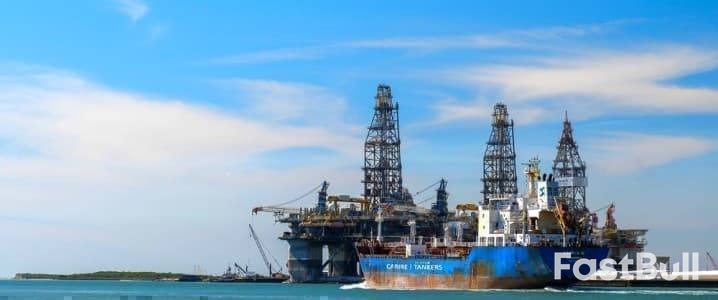
At the heart of the conflict is the Essequibo region, an area constituting roughly two-thirds of Guyana. Venezuela has long claimed this territory as its own. The region is rich in natural resources, including gold, diamonds, and, most importantly, the offshore oil fields that are fueling Guyana's growth.
Major oil companies, including U.S. giants ExxonMobil and Chevron, alongside China's CNOOC, are actively developing operations in Guyana's waters. ExxonMobil's discovery of high-quality crude off the coast in 2015 triggered a wave of international investment, driving rapid economic development. This success also prompted the Venezuelan government to reassert its claim over Essequibo more forcefully.
The territorial fight between the two nations dates back more than a century. The key historical points include:
• 1814: The region was ceded by the Dutch to Great Britain during the Napoleonic Wars.
• 1831: Britain merged Essequibo with other territories to form the colony of British Guiana.
• 1841: A newly independent Venezuela officially claimed the region.
• 1899: An international tribunal formally awarded the territory to Britain, a ruling Venezuela has consistently rejected.
Venezuela's government under Nicolás Maduro has accused Guyana and the U.S. of "legal colonialism" for developing the region. However, the International Court of Justice (ICJ) ruled in 2018 that the 1899 accord was legal and binding.
Despite the ICJ's ruling, the Maduro government escalated tensions. In 2023, it launched a large-scale military buildup along the Guyanese border, establishing bases and runways.
That same year, Maduro held a referendum in which 95.9% of voters reportedly supported annexing Essequibo. Following the vote, he announced measures to create a Venezuelan state of "Guayana Esequiba" and grant operating licenses to the state-owned oil firm PDVSA within the territory. This prompted the ICJ to issue a binding order in May 2025 prohibiting Venezuela from holding elections in Essequibo.
The presence of American companies and strategic interests may be tempering the conflict. Allen Good, director of equity research at Morningstar, noted that any aggression from Venezuela would likely provoke a U.S. response, especially with ExxonMobil as the largest operator in Guyana. "Now, with the U.S.'s intent to control the country, any action by Venezuela becomes even more remote, removing a nuisance for Exxon and Guyana," Good said.
In response, Guyana's President Irfaan Ali has reinforced his nation's commitment to its alliance with the United States. Foreign Secretary Robert Persaud stated on January 6th that the government maintains a "steadfast commitment to working with the United States - the region's strategic and important security ally."
While Venezuela sits on an estimated 300 billion barrels of oil, its energy sector is in crisis. Decades of underinvestment have left its infrastructure crumbling, requiring billions of dollars and over a decade to repair. Furthermore, its extra-heavy crude is expensive and carbon-intensive to extract and refine.
For Caracas, gaining control over Essequibo's developing "low-carbon" oil fields offers a much faster path to generating new revenue and staving off economic collapse.
While U.S. intervention may have quieted Venezuela's claims for now, the dispute is far from resolved. Given the historical context and the immense resources at stake, it is unlikely that any Venezuelan government will abandon the claim to Essequibo.
This unresolved conflict remains a direct threat to the oil-fueled expansion of South America's newest petro-state. The stability of Guyana's economic future will likely depend heavily on the extent of U.S. involvement in Venezuelan politics and its regional security role.
Former President Donald Trump is once again shaking up the global order with an ambitious new goal: the acquisition of Greenland by 2026. His strategy hinges on the threat of new tariffs, a move that challenges longstanding alliances and risks significant economic turmoil.
Even after his presidency, Trump's strategic objectives continue to make waves. His focus on acquiring Greenland follows a previous expression of interest in making Canada a U.S. state. This renewed geopolitical pressure coincides with his history of imposing heavy tariffs on China and challenging the autonomy of the U.S. Federal Reserve, notably through his attempt to dismiss its chair, Jerome Powell.
As a key Supreme Court ruling on tariffs approaches in January, Trump is increasing pressure on nations that oppose his Greenland proposal. The new tariffs are designed to specifically target countries that refuse to cooperate, escalating international tensions.
Trump's tariff-driven diplomacy has triggered the most severe crisis in the Atlantic partnership in decades. On Truth Social, he warned that "World peace is in danger!" and argued that without U.S. control, China and Russia could seize Greenland.
He has also criticized NATO allies' military deployments, insisting that only the U.S. can guarantee their protection and that tariffs will remain until his demands are met. This stance directly threatens the stability and cohesion of the NATO alliance.
European Union leaders find themselves in a difficult position, having recently navigated a separate tariff dispute. They have condemned Trump's approach to acquiring land from Denmark and are signaling they may retaliate. Analysts now warn that Trump's actions could dismantle the post-World War II geopolitical framework established by the United States, with severe economic and political consequences for both the U.S. and the EU.
Europe's Potential Counter-Measures
In response to the U.S. pressure, the European Union is preparing a robust series of economic counter-actions. The potential retaliation includes:
• A massive €93 billion tariff plan targeting the U.S.
• The possible expulsion of American companies from European markets.
• A heightened risk of market volatility, especially for cryptocurrencies, which could mirror the instability seen during previous U.S. tariff conflicts.
Global leaders and economic analysts are closely monitoring the situation as Trump continues to challenge established alliances and economic norms. The unfolding events raise critical questions about the future of international cooperation and the resilience of the global financial system.
India's economy is posting world-beating numbers, with official data pointing to a 7.4% growth rate for the financial year ending in March. But behind the impressive headline figure, a critical decision looms for Prime Minister Narendra Modi that could determine the country's long-term trajectory.
For over a decade, Modi's economic strategy has rested on two key pillars: fiscal restraint and aggressive infrastructure spending. Now, these two goals are in direct conflict, forcing a choice that can no longer be avoided.
On the surface, India's economy appears to be in a "Goldilocks phase," with low inflation, a manageable trade deficit, and healthy private-sector balance sheets. Yet, as commentator T.N. Ninan notes, this stability hasn't translated into a faster growth rate than a decade ago, when the economy faced far more challenges.
Global investors seem to share this cautious sentiment. Ruchir Sharma highlighted in the Financial Times that despite its stellar growth, India is "not getting any love" in the form of expected capital inflows.
The disconnect between the strong data and the uncertain outlook stems from a persistent, underlying weakness: chronically low private investment.
Since taking office in 2014, Prime Minister Modi has overseen a fundamental shift in India's growth model. The burden of investment has moved from private companies to the public sector. As a result, the share of federal government capital spending relative to GDP has doubled.
This surge in public expenditure has come at a steep price. The defining number of the Modi era is not the 7.4% GDP growth but the 81% debt-to-GDP ratio—a sharp increase from the 60s when the current government came to power.
The explosion in public debt has created a self-reinforcing downward spiral for the private sector. As the state consumes a vast portion of available credit, capital becomes scarce, pushing interest rates higher and discouraging entrepreneurs from borrowing and investing.
The government's strategy was based on the hope that massive infrastructure projects, like new ports and highways, would "crowd in" private capital. This bet has not paid off. Instead of stimulating private enterprise, the approach has created a growth model dangerously dependent on government spending—and New Delhi is running out of fiscal runway.
In the upcoming annual budget, the government must confront this reality. It faces a stark choice:
• Continue the capital expenditure push, risking its fiscal consolidation targets.
• Trim the construction pipeline, accepting slower medium-term growth in key sectors like steel and cement that rely heavily on public contracts.
While the economic logic may point toward fiscal prudence, the political calculation is more complex. The marginal benefit of a lower risk premium on Indian debt is less visible than a new expressway. Modi has built his political brand around tangible projects like modern trains and new highways. In contrast, fiscal consolidation offers no ribbon-cutting ceremonies.
Despite the political pressures, the government has pledged to lower the debt-to-GDP ratio to 50% by 2031. Achieving this ambitious goal will be difficult even with sustained high growth and will almost certainly require cuts to capital expenditure.
The evidence suggests that state-led infrastructure spending has failed to ignite private-sector investment or pay for itself through additional growth. To unlock India's economic potential, the government must tighten its belt. By reducing its own borrowing, the state can free up credit, lower borrowing costs, and create the conditions for private investment to finally flow.
To secure India's future, the government must stop borrowing against it.
The brutal civil war in Sudan has become the frontline for a fierce regional rivalry between Saudi Arabia and the United Arab Emirates, with both Gulf powers determined to see their chosen faction win. Now, a potential multi-billion-dollar fighter jet deal involving Saudi Arabia and Pakistan could decisively tip the scales.
This development comes as Saudi Arabia and Pakistan deepen their security ties, with some reports even suggesting a Pakistani nuclear umbrella over the Kingdom. The two nations are also reportedly bringing Turkey into a new security alliance, creating a strategic bloc aimed at deterring both Iran and Israel.
Against this backdrop, Riyadh is considering a plan to convert $2 billion in loans to Pakistan into a major military procurement. The total value of the deal, including aircraft, equipment, and support, is estimated to be around $4 billion.
The centerpiece of this potential agreement is the purchase of Chinese-licensed JF-17 Thunder fourth-generation warplanes from Pakistan.
However, these advanced jets are not intended for the Royal Saudi Air Force. Instead, Saudi Arabia plans to acquire the aircraft from Pakistan and transfer them to the Sudanese military government led by Abdel Fattah al-Burhan. Riyadh would finance the sale as part of its broader mission to support the internationally recognized government in Khartoum.
The Sudanese civil war has evolved into a clear proxy conflict between Saudi Arabia and the UAE. Riyadh backs the official government, while the UAE supports the rival Rapid Support Forces (RSF), a paramilitary group led by the warlord Mohammed Hamdan "Hemedti" Dagalo.
For Saudi Arabia, Sudan is a strategic linchpin essential to its regional interests. The Kingdom is unwilling to let the Sudanese government collapse, which explains its willingness to finance a complex international arms deal to bolster its ally.
This potential arrangement aligns with Pakistan's own strategic goals. Pakistan was already in separate talks with Sudan for a $1.5 billion defense package that could include JF-17s, drones, light attack aircraft, and advanced air defense systems to counter the RSF.
Following a brief conflict with India where its air force performed well using Chinese-made aircraft and missiles, Pakistan has been aggressively marketing its defense products on the global stage. By promoting its Chinese-licensed systems, Pakistan aims to undercut Western arms manufacturers and elevate its own defense industrial base.
As of now, no final contracts have been signed. While negotiations between Saudi, Pakistani, and Sudanese officials are reportedly underway, the number of JF-17s and the exact delivery logistics—whether they would be routed through Saudi Arabia or sent directly from Pakistan to Sudan—remain unconfirmed.
The proposed deal has caused concern in Washington. Saudi Arabia is one of the largest customers for the U.S. defense industry, accounting for roughly 24% of all American arms exports over the last five years. The Saudi military is heavily equipped with U.S.-made systems, which are not interoperable with Chinese platforms like the JF-17.
Initial fears in Washington were that Riyadh was using Pakistan as an intermediary to diversify its own arsenal with cheaper, Chinese-licensed systems, a move that could significantly damage the U.S. arms industry.
For now, that does not appear to be the case. The Saudis seem to be acting as strategic financiers to protect their interests in Sudan, not as direct challengers to U.S. arms suppliers. Riyadh has consistently shown a willingness to pay a premium for cutting-edge American military technology.
While this deal is focused on Sudan, it raises long-term questions about Saudi Arabia's procurement strategy. The high cost of American weapons, combined with Riyadh's growing strategic distance from Washington amid the war in Gaza and instability surrounding Iran, could lead Saudi leaders to reconsider their options.
Pakistan has already demonstrated that cheaper, Chinese-licensed systems can be effective in modern air combat. The question remains: how long before Saudi Arabia decides that diversifying its own fleet is a strategic necessity?
White Label
Data API
Web Plug-ins
Poster Maker
Affiliate Program
The risk of loss in trading financial instruments such as stocks, FX, commodities, futures, bonds, ETFs and crypto can be substantial. You may sustain a total loss of the funds that you deposit with your broker. Therefore, you should carefully consider whether such trading is suitable for you in light of your circumstances and financial resources.
No decision to invest should be made without thoroughly conducting due diligence by yourself or consulting with your financial advisors. Our web content might not suit you since we don't know your financial conditions and investment needs. Our financial information might have latency or contain inaccuracy, so you should be fully responsible for any of your trading and investment decisions. The company will not be responsible for your capital loss.
Without getting permission from the website, you are not allowed to copy the website's graphics, texts, or trademarks. Intellectual property rights in the content or data incorporated into this website belong to its providers and exchange merchants.
Not Logged In
Log in to access more features

FastBull Membership
Not yet
Purchase
Log In
Sign Up