• Trade
  • Markets
  • Copy
  • Contests
  • News
  • 24/7
  • Calendar
  • Q&A
  • Chats
Trending
Screeners
SYMBOL
LAST
BID
ASK
HIGH
LOW
NET CHG.
%CHG.
SPREAD
SPX
S&P 500 Index
6836.20
6836.20
6836.20
6869.34
6833.46
-50.48
-0.73%
--
DJI
Dow Jones Industrial Average
48259.78
48259.78
48259.78
48425.98
48099.46
+202.04
+ 0.42%
--
IXIC
NASDAQ Composite Index
23319.01
23319.01
23319.01
23514.78
23308.95
-335.13
-1.42%
--
USDX
US Dollar Index
98.250
98.330
98.250
98.720
98.160
-0.340
-0.34%
--
EURUSD
Euro / US Dollar
1.17346
1.17353
1.17346
1.17481
1.16821
+0.00398
+ 0.34%
--
GBPUSD
Pound Sterling / US Dollar
1.34133
1.34143
1.34133
1.34263
1.33543
+0.00336
+ 0.25%
--
XAUUSD
Gold / US Dollar
4231.71
4232.05
4231.71
4247.68
4204.22
+3.49
+ 0.08%
--
WTI
Light Sweet Crude Oil
57.157
57.187
57.157
58.772
57.037
-1.520
-2.59%
--

Community Accounts

Signal Accounts
--
Profit Accounts
--
Loss Accounts
--
View More

Become a signal provider

Sell trading signals to earn additional income

View More

Guide to Copy Trading

Get started with ease and confidence

View More

Signal Accounts for Members

All Signal Accounts

Best Return
  • Best Return
  • Best P/L
  • Best MDD
Past 1W
  • Past 1W
  • Past 1M
  • Past 1Y

All Contests

  • All
  • Trump Updates
  • Recommend
  • Stocks
  • Cryptocurrencies
  • Central Banks
  • Featured News
Top News Only
Share

U.S. Wholesale Inventories Rose 0.5% Month-over-month In September, Below The Expected 0.1%

Share

U.S. Wholesale Sales MoM (SA) (Sept)

Share

EU Governments Agree To Launch Written Procedure To Freeze Russian Assets Long Term - Says Danish Presidency Of EU

Share

The EU Has Given Preliminary Approval To A (Russian) Asset Freeze Agreement To Finance Loans To Ukraine

Share

Officials From Ukraine, The United States, And Europe Will Meet In Paris, France, On Saturday To Discuss A Peace Plan

Share

Belgium Deputy Prime Minister: Russian Frozen Assets To Be Used For Ukraine Loan

Share

The Nasdaq Golden Dragon China Index Fell Further To 1%

Share

Euro Hits Roughly 2-1/2-Month High Versus US Dollar, Last Up 0.4% At $1.1742

Share

The European STOXX 600 Index Rose 0.5%, Hitting A New Daily High

Share

[Morgan Stanley's Xing Ziqiang: Next Year's Economic Growth Anchors May Focus On Artificial Intelligence And Green Transition] Morgan Stanley's Chief Economist For China, Xing Ziqiang, Stated That The Central Economic Work Conference Maintained A Prudent Policy Stance And Clarified Its Supportive Approach. Regarding Fiscal Policy, Xing Believes The Initial Budget For 2026 Will Be Roughly The Same As In 2025, But Spending Will Be More Proactive, With Approximately 0.5 Percentage Points Of Additional GDP Growth Potential By Mid-year. In Terms Of Monetary Policy, A Relatively Loose Stance Will Be Maintained, But The Room For Interest Rate Cuts Is Limited, Expected To Be Between 10 And 20 Basis Points. The Policy Mix Remains Primarily Supply-side Oriented, With A Marginal Shift Towards The Demand Side, Reflecting The Approach Of "expanding Domestic Demand + Optimizing Supply."

Share

Belgium Deputy Prime Minister: Many Concerns Remain On The Table For US On Russian Frozen Assets, Such As Liquidity Mechanism And Burden Sharing, Guarantees

Share

Belgium Deputy Prime Minister: Hopefully We Can Reach Conclusion At EU Summit Next Week On Russian Frozen Assets

Share

Belgium Deputy Prime Minister: Will Not Take Any Reckless Compromises Over Question Of Russian Frozen Assets

Share

Belgium Deputy Prime Minister: We Look To Legal And Financial Risks Over This On Russian Assets, And We Want Constructive Solutions

Share

Belgium Deputy Prime Minister: Russia Has To Pay For Its War, Frozen Assets Need To Be Used For That

Share

Who Chief: Our Financial Standing Is Very Good, Confident That $1 Billion Still Needed For Next Budget Will Be Raised

Share

The Nasdaq Golden Dragon China Index Fell 0.8% In Early Trading On The US Stock Market

Share

Pakistan Central Bank's Forex Reserves Rise $12 Million To $ 14586.5 Million In Week Ending December 5

Share

[Sector ETFs Showed Mixed Performance In Early Trading, With The Tech Sector ETF Falling Over 1.4%] The Healthcare ETF Rose 0.54%, The Financial ETF Rose 0.46%, The Banking ETF And Regional Bank ETF Rose At Least 0.34%, While The Internet Stock Index ETF Fell 0.05%, The Energy ETF Fell 0.57%, The Tech Sector ETF Fell 1.46%, And The Global Tech Stock Index ETF Fell 1.54%

Share

Commander: Ukraine Drone Forces Hit Two Russian Chemical Plants

TIME
ACT
FCST
PREV
U.S. Federal Funds Rate Projections-2nd Year (Q4)

A:--

F: --

P: --

U.S. Budget Balance (Nov)

A:--

F: --

P: --

U.S. Target Federal Funds Rate Upper Limit (Excess Reserves Ratio)

A:--

F: --

P: --

FOMC Statement
FOMC Press Conference
Brazil Selic Interest Rate

A:--

F: --

P: --

U.K. 3-Month RICS House Price Balance (Nov)

A:--

F: --

P: --

Australia Employment (Nov)

A:--

F: --

P: --
Australia Full-time Employment (SA) (Nov)

A:--

F: --

P: --

Australia Unemployment Rate (SA) (Nov)

A:--

F: --

P: --

Australia Labor Force Participation Rate (SA) (Nov)

A:--

F: --

P: --

Turkey Retail Sales YoY (Oct)

A:--

F: --

P: --

South Africa Mining Output YoY (Oct)

A:--

F: --

P: --

South Africa Gold Production YoY (Oct)

A:--

F: --

P: --

Italy Quarterly Unemployment Rate (SA) (Q3)

A:--

F: --

P: --

IEA Oil Market Report
Turkey 1-Week Repo Rate

A:--

F: --

P: --

South Africa Refinitiv/Ipsos Primary Consumer Sentiment Index (PCSI) (Dec)

A:--

F: --

P: --

Turkey Overnight Lending Rate (O/N) (Dec)

A:--

F: --

P: --

Turkey Late Liquidity Window Rate (LON) (Dec)

A:--

F: --

P: --

U.K. Refinitiv/Ipsos Primary Consumer Sentiment Index (PCSI) (Dec)

A:--

F: --

P: --

Brazil Retail Sales MoM (Oct)

A:--

F: --

P: --

U.S. Weekly Continued Jobless Claims (SA)

A:--

F: --

P: --
U.S. Exports (Sept)

A:--

F: --

P: --

U.S. Trade Balance (Sept)

A:--

F: --

P: --
U.S. Weekly Initial Jobless Claims (SA)

A:--

F: --

P: --
Canada Imports (SA) (Sept)

A:--

F: --

P: --
U.S. Initial Jobless Claims 4-Week Avg. (SA)

A:--

F: --

P: --

Canada Trade Balance (SA) (Sept)

A:--

F: --

P: --
Canada Exports (SA) (Sept)

A:--

F: --

P: --
U.S. Wholesale Sales MoM (SA) (Sept)

A:--

F: --

P: --

U.S. EIA Weekly Natural Gas Stocks Change

--

F: --

P: --

U.S. 30-Year Bond Auction Avg. Yield

--

F: --

P: --

Argentina CPI MoM (Nov)

--

F: --

P: --

Argentina National CPI YoY (Nov)

--

F: --

P: --

Argentina 12-Month CPI (Nov)

--

F: --

P: --

U.S. Weekly Treasuries Held by Foreign Central Banks

--

F: --

P: --

Japan Industrial Output Final MoM (Oct)

--

F: --

P: --

Japan Industrial Output Final YoY (Oct)

--

F: --

P: --

U.K. Services Index MoM (SA) (Oct)

--

F: --

P: --

U.K. Services Index YoY (Oct)

--

F: --

P: --

Germany HICP Final YoY (Nov)

--

F: --

P: --

Germany HICP Final MoM (Nov)

--

F: --

P: --

U.K. Trade Balance Non-EU (SA) (Oct)

--

F: --

P: --

U.K. Trade Balance (Oct)

--

F: --

P: --

U.K. Services Index MoM

--

F: --

P: --

U.K. Construction Output MoM (SA) (Oct)

--

F: --

P: --

U.K. Industrial Output YoY (Oct)

--

F: --

P: --

U.K. Trade Balance (SA) (Oct)

--

F: --

P: --

U.K. Trade Balance EU (SA) (Oct)

--

F: --

P: --

U.K. Manufacturing Output YoY (Oct)

--

F: --

P: --

U.K. GDP MoM (Oct)

--

F: --

P: --

U.K. GDP YoY (SA) (Oct)

--

F: --

P: --

U.K. Industrial Output MoM (Oct)

--

F: --

P: --

U.K. Manufacturing Output MoM (Oct)

--

F: --

P: --

U.K. Monthly GDP 3M/3M Change (Oct)

--

F: --

P: --

Germany CPI Final MoM (Nov)

--

F: --

P: --

Germany CPI Final YoY (Nov)

--

F: --

P: --

U.K. Construction Output YoY (Oct)

--

F: --

P: --

France HICP Final MoM (Nov)

--

F: --

P: --

China, Mainland Outstanding Loans Growth YoY (Nov)

--

F: --

P: --

Q&A with Experts
    • All
    • Chatrooms
    • Groups
    • Friends
    Connecting
    .
    .
    .
    Type here...
    Add Symbol or Code

      No matching data

      All
      Trump Updates
      Recommend
      Stocks
      Cryptocurrencies
      Central Banks
      Featured News
      • All
      • Russia-Ukraine Conflict
      • Middle East Flashpoint
      • All
      • Russia-Ukraine Conflict
      • Middle East Flashpoint
      Search
      Products

      Charts Free Forever

      Chats Q&A with Experts
      Screeners Economic Calendar Data Tools
      Membership Features
      Data Warehouse Market Trends Institutional Data Policy Rates Macro

      Market Trends

      Market Sentiment Order Book Forex Correlations

      Top Indicators

      Charts Free Forever
      Markets

      News

      News Analysis 24/7 Columns Education
      From Institutions From Analysts
      Topics Columnists

      Latest Views

      Latest Views

      Trending Topics

      Top Columnists

      Latest Update

      Signals

      Copy Rankings Latest Signals Become a signal provider AI Rating
      Contests
      Brokers

      Overview Brokers Assessment Rankings Regulators News Claims
      Broker listing Forex Brokers Comparison Tool Live Spread Comparison Scam
      Q&A Complaint Scam Alert Videos Tips to Detect Scam
      More

      Business
      Events
      Careers About Us Advertising Help Center

      White Label

      Data API

      Web Plug-ins

      Affiliate Program

      Awards Institution Evaluation IB Seminar Salon Event Exhibition
      Vietnam Thailand Singapore Dubai
      Fans Party Investment Sharing Session
      FastBull Summit BrokersView Expo
      Recent Searches
        Top Searches
          Markets
          News
          Analysis
          User
          24/7
          Economic Calendar
          Education
          Data
          • Names
          • Latest
          • Prev

          View All

          No data

          Scan to Download

          Faster Charts, Chat Faster!

          Download App
          English
          • English
          • Español
          • العربية
          • Bahasa Indonesia
          • Bahasa Melayu
          • Tiếng Việt
          • ภาษาไทย
          • Français
          • Italiano
          • Türkçe
          • Русский язык
          • 简中
          • 繁中
          Open Account
          Search
          Products
          Charts Free Forever
          Markets
          News
          Signals

          Copy Rankings Latest Signals Become a signal provider AI Rating
          Contests
          Brokers

          Overview Brokers Assessment Rankings Regulators News Claims
          Broker listing Forex Brokers Comparison Tool Live Spread Comparison Scam
          Q&A Complaint Scam Alert Videos Tips to Detect Scam
          More

          Business
          Events
          Careers About Us Advertising Help Center

          White Label

          Data API

          Web Plug-ins

          Affiliate Program

          Awards Institution Evaluation IB Seminar Salon Event Exhibition
          Vietnam Thailand Singapore Dubai
          Fans Party Investment Sharing Session
          FastBull Summit BrokersView Expo

          Gold vs. Bitcoin: How Silver’s Breakout Signals a Major Market Rotation

          Adam

          Commodity

          Summary:

          Central banks’ heavy gold buying and silver’s breakout signal a major rotation toward hard assets. Precious metals strengthen as Bitcoin loses momentum, with ratios showing capital shifting from speculative crypto toward real-asset hedges.
          Central banks are accelerating their accumulation of gold (XAU) reserves. In October 2025, central banks added 53 tonnes, marking the most significant monthly increase of the year, according to the World Gold Council. By the end of October, total net purchases reached 254 tonnes.
          This makes 2025 the fourth strongest year for central bank gold buying this century. This wave of accumulation underscores how policymakers view gold as a strategic hedge against currency risk. It also highlights its role during periods of political uncertainty and financial instability.
          Poland added 16 tonnes, raising its reserves to a record 531 tonnes. Brazil also purchased 16 tonnes, while Uzbekistan, Indonesia, Turkey, the Czech Republic, and the Kyrgyz Republic increased their holdings. In addition, countries with more volatile economies, such as Ghana and Kazakhstan, continued to accumulate gold.
          A recent survey indicates that 95% of central banks expect their gold reserves to increase again next year. This broad-based demand reinforces gold’s role as a core reserve asset during times of global uncertainty.

          Gold vs. Bitcoin: Diverging Trends in the New Market Cycle

          Gold and Bitcoin (BTC) now sit at a significant crossroads. Gold benefits from central‑bank demand, geopolitical stress, and easing expectations from major central banks. However, Bitcoin benefits from risk appetite, institutional flows, and the search for high‑beta exposure. The two assets often diverge. However, the current environment indicates a clear trend in which precious metals are strengthening. At the same time, the momentum of cryptocurrencies is losing pace.
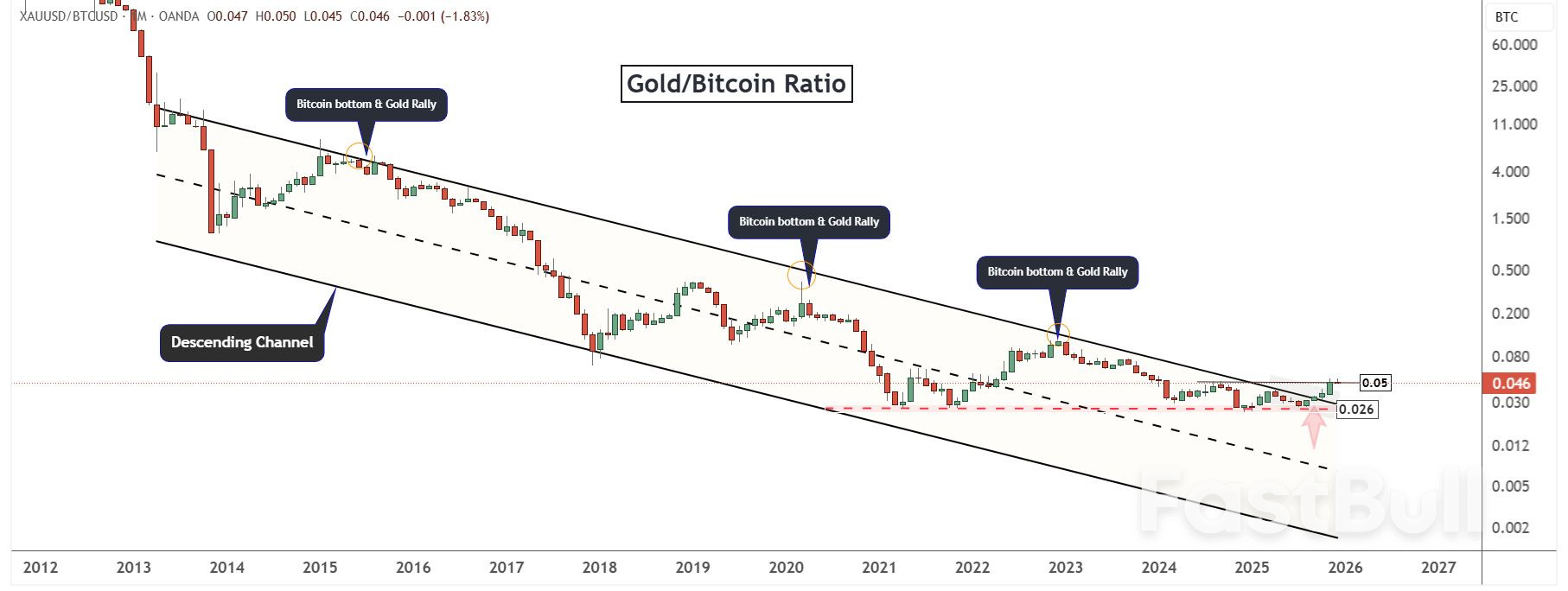
          The gold-to-bitcoin ratio has already broken higher. This ratio tracks how many bitcoins one ounce of gold can buy. The chart below shows a confirmed breakout from the descending channel, signalling a major shift toward hard assets with lower volatility. This shift occurs when markets price in softer economic growth, rising political risks, and unstable liquidity conditions.
          Gold vs. Bitcoin: How Silver’s Breakout Signals a Major Market Rotation_1

          Bitcoin Technical Outlook: Breakdown Threatens Long-Term Trend

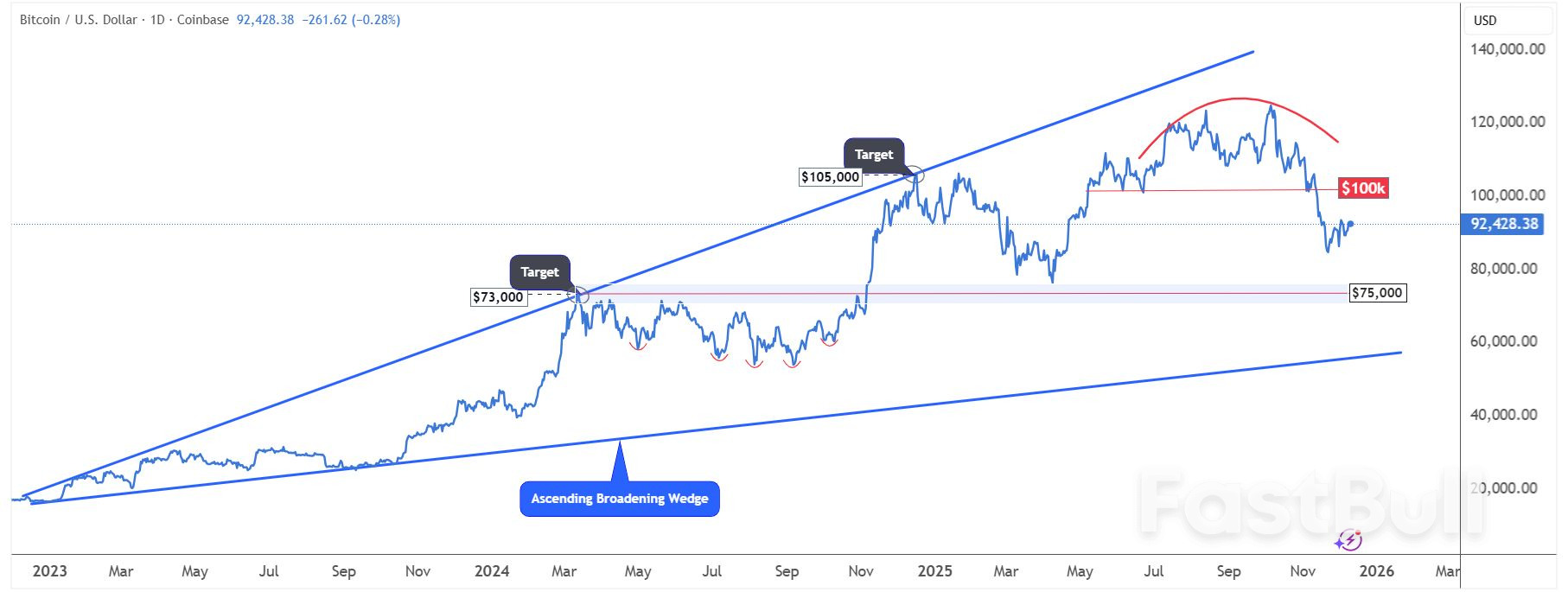
          As shown in the chart below, Bitcoin has formed a rounding top within an ascending broadening wedge pattern near the $120,000 level. Subsequently, the price has broken below the key support at $100,000 and continues to move lower.
          At the same time, strong support remains at the $75,000 level, and a break below this price zone will likely trigger a deeper correction. Conversely, a break back above $100,000 is needed to resume the upward trend in Bitcoin.
          Gold vs. Bitcoin: How Silver’s Breakout Signals a Major Market Rotation_2
          Overall, the weakness in Bitcoin is aligned with macro conditions. Specifically, the uncertainty surrounding the U.S. dollar and the Fed’s cautious messaging puts pressure on high-beta assets. As a result, if liquidity tightens, Bitcoin may face sustained headwinds.

          Gold Technical Setup Remains Bullish as $5,000 Comes Into View

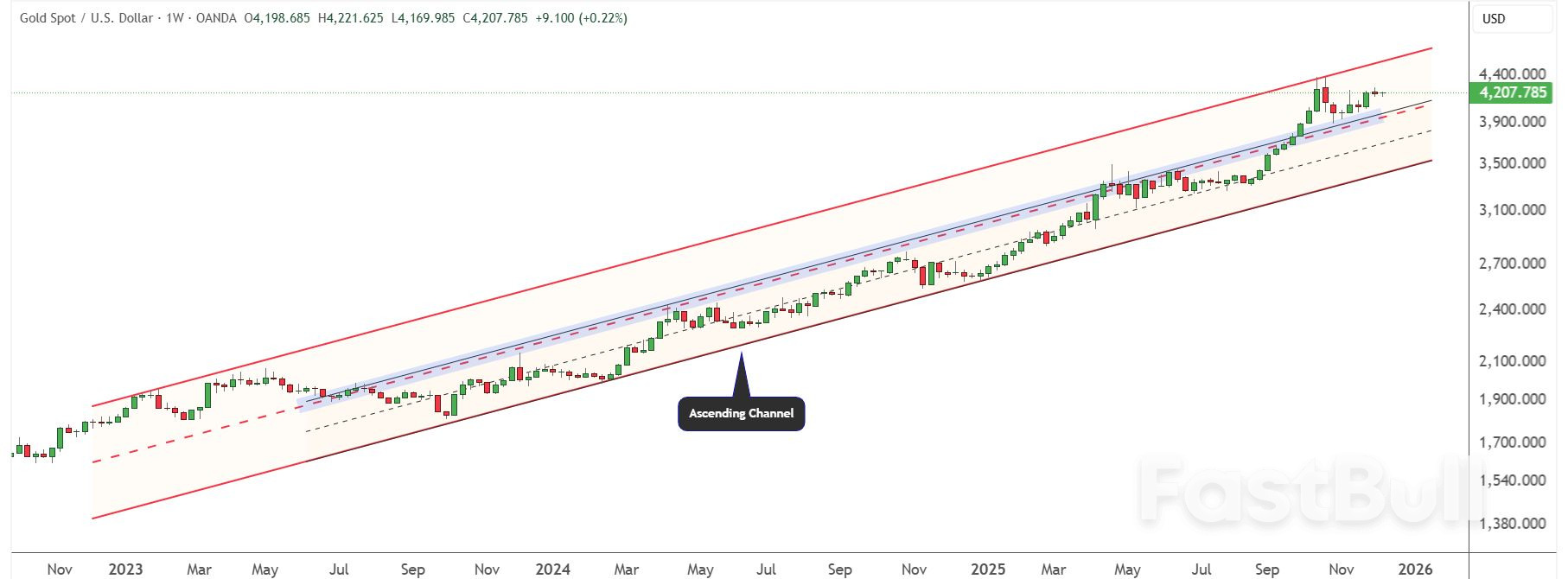
          Gold continues to consolidate within a broad bullish structure. In particular, central bank accumulation and falling real yields support the long-term trend. Moreover, the chart below indicates that the price is trading within a strong uptrend, forming an ascending channel pattern, and appears to continue moving higher.
          Gold vs. Bitcoin: How Silver’s Breakout Signals a Major Market Rotation_3
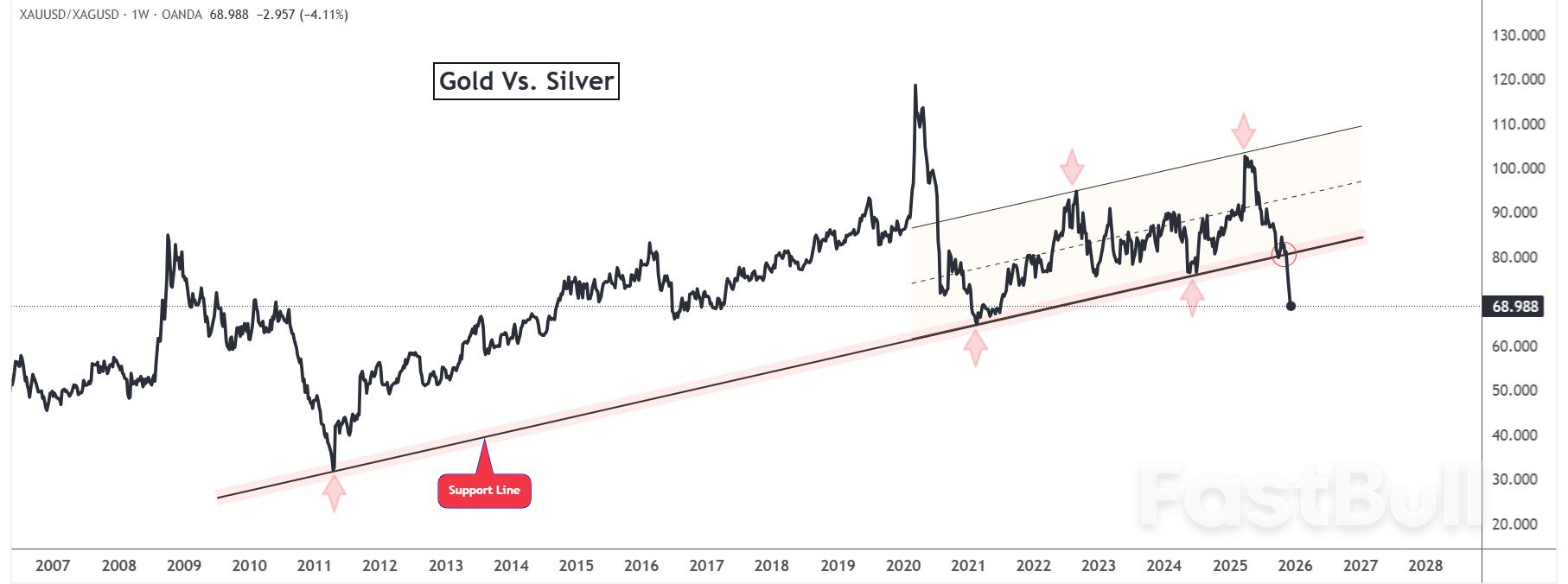
          A decisive move above $4,380 resistance will likely unlock a rally toward the $5,000 zone. Moreover, the gold-to-silver ratio has broken below a key support level, signalling another bullish move for the metal space. When silver leads, gold tends to follow. This ratio has already broken its long-term support, indicating a significant shift toward precious‑metal outperformance.
          Gold vs. Bitcoin: How Silver’s Breakout Signals a Major Market Rotation_4

          Silver Breakout Reshapes the Outlook for Gold and Bitcoin

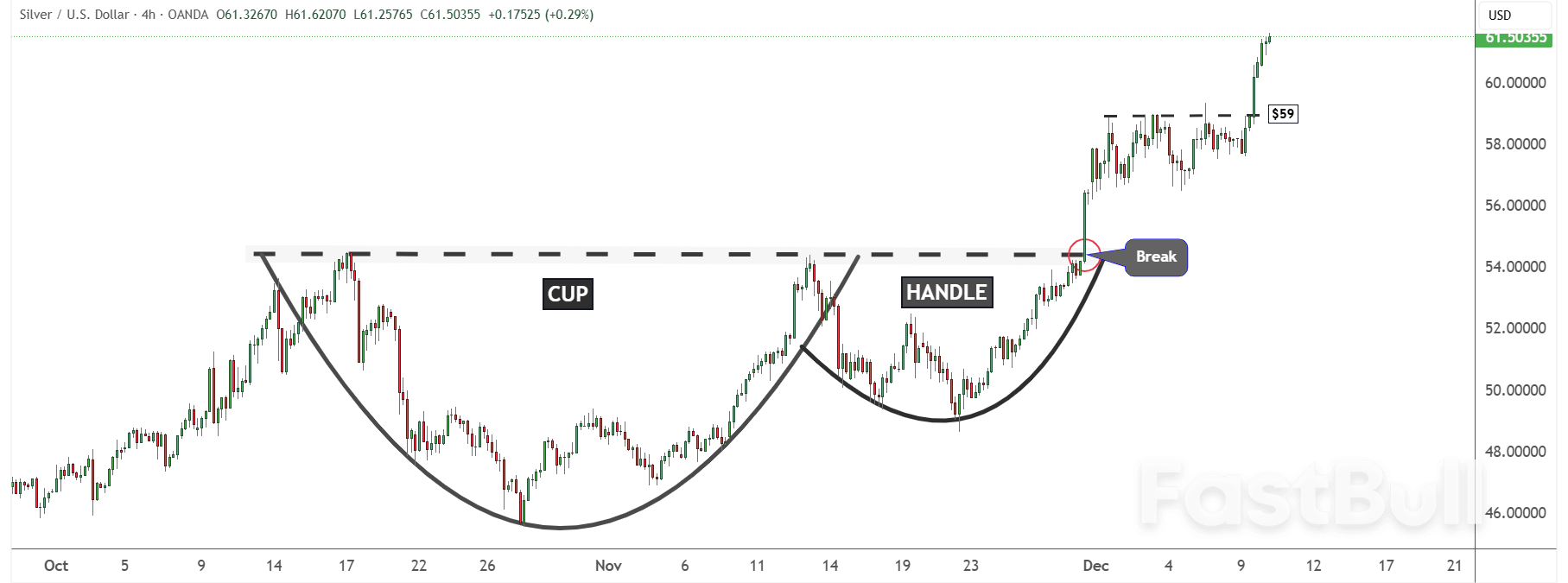
          Silver (XAG) is now the strongest performer among monetary metals. The break above $59, along with the formation of a bullish structure, signals the start of a new long-term trend.
          The confirmed cup‑and‑handle breakout above $54 was the first clue. The new highs confirm that industrial demand and monetary demand are aligning.
          Gold vs. Bitcoin: How Silver’s Breakout Signals a Major Market Rotation_5
          This breakout affects both gold and Bitcoin:
          For gold and silver, leadership historically precedes explosive upside moves. A falling gold-to-silver ratio is a classic early-cycle signal for strong precious‑metal rallies.
          For Bitcoin, silver’s outperformance suggests a rotation away from speculative assets toward real-asset hedges. When silver breaks out, Bitcoin often underperforms due to differences in liquidity and risk premiums.

          Silver-to-Bitcoin Ratio Breakout Signals Capital Rotation

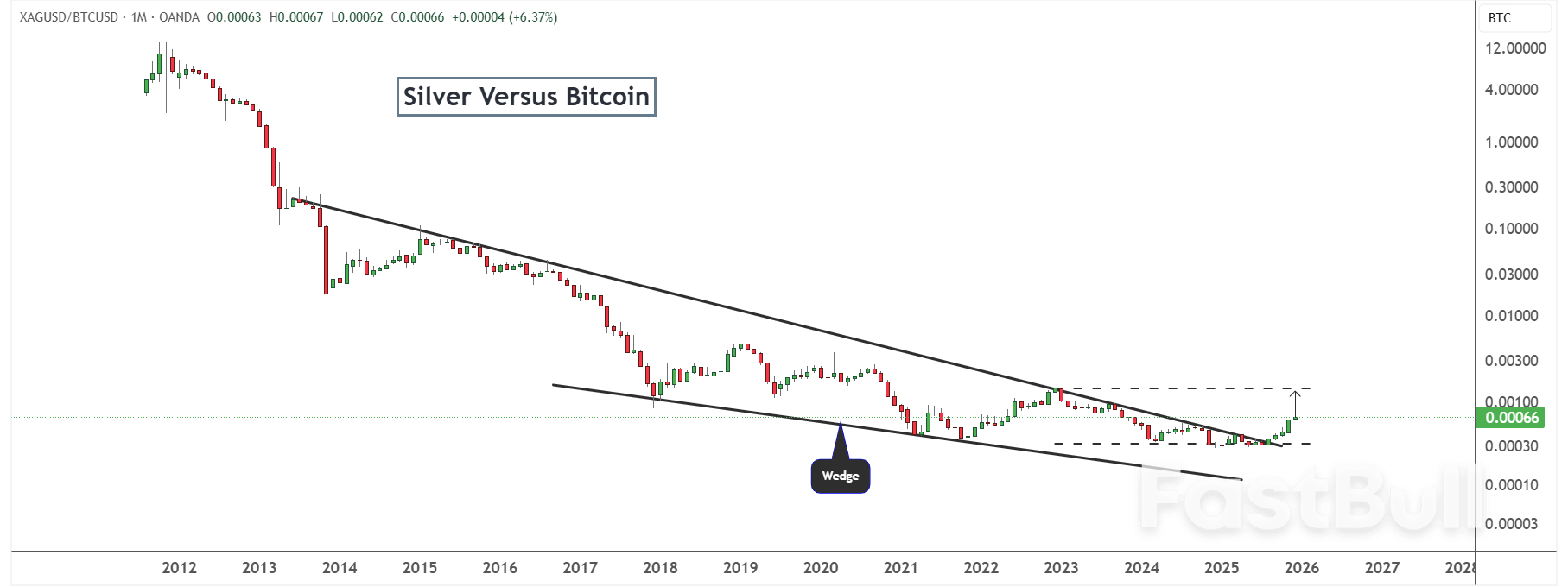
          The chart below shows that the silver-to-bitcoin ratio highlights a strong breakout from the wedge pattern. Notably, this breakout is a rare and powerful signal, indicating that capital is shifting away from crypto into tangible assets tied to real economic demand.
          Gold vs. Bitcoin: How Silver’s Breakout Signals a Major Market Rotation_6
          Silver outperforming Bitcoin reflects major macro re-pricing:
          The increase in geopolitical risk.
          The return of inflation uncertainty.
          The liquidity tightening
          The increase in industrial‑metal demand
          This breakout in the ratio suggests that the next cycle may belong to precious metals, rather than digital assets.

          Why Silver Now Leads Gold—and Gold Leads Bitcoin

          Silver’s breakout is now the key determining factor. The metal is acting as the “alpha” in the hard‑asset group. Gold benefits from central‑bank buying and safe-haven flows.
          Silver benefits from both monetary demand and industrial expansion, especially in solar, EV, and battery supply chains. When silver leads gold and gold leads Bitcoin, the entire market narrative shifts toward real assets.

          Conclusion: Silver Leads, Gold Follows, Bitcoin Lags

          Gold, silver, and Bitcoin each respond to different macro forces. But today’s environment shows a clear hierarchy:

          Silver leads → Gold follows → Bitcoin lags.

          Central‑bank demand, geopolitical uncertainty, and ratio breakouts all point toward a new cycle where precious metals outperform digital assets. Silver’s record highs strengthen that case. Bitcoin may still offer volatility and opportunity, but the structural momentum now favours gold and silver.

          Source: fxempire

          Risk Warnings and Disclaimers
          You understand and acknowledge that there is a high degree of risk involved in trading. Following any strategies or investment methods may lead to potential losses. The content on the site is provided by our contributors and analysts for information purposes only. You are solely responsible for determining whether any trading assets, securities, strategy, or any other product is suitable for investing based on your own investment objectives and financial situation.
          Add to Favorites
          Share

          Just 0.001% Hold Three Times the Wealth of Poorest Half of Humanity, Report Finds

          Warren Takunda

          Economic

          Fewer than 60,000 people – 0.001% of the world’s population – control three times as much wealth as the entire bottom half of humanity, according to a report that argues global inequality has reached such extremes that urgent action has become essential.
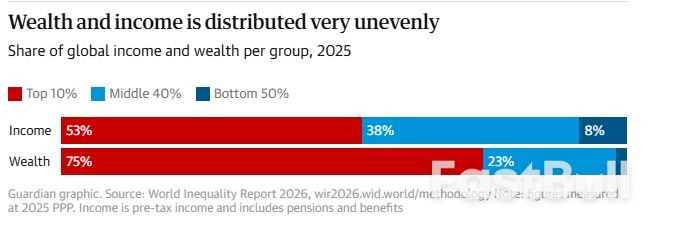
          The authoritative World Inequality Report 2026, based on data compiled by 200 researchers, also found that the top 10% of income-earners earn more than the other 90% combined, while the poorest half captures less than 10% of total global earnings.
          Wealth – the value of people’s assets – was even more concentrated than income, or earnings from work and investments, the report found, with the richest 10% of the world’s population owning 75% of wealth and the bottom half just 2%.
          In almost every region, the top 1% was wealthier than the bottom 90% combined, the report found, with wealth inequality increasing rapidly around the world.
          “The result is a world in which a tiny minority commands unprecedented financial power, while billions remain excluded from even basic economic stability,” the authors, led by Ricardo Gómez-Carrera of the Paris School of Economics, wrote.
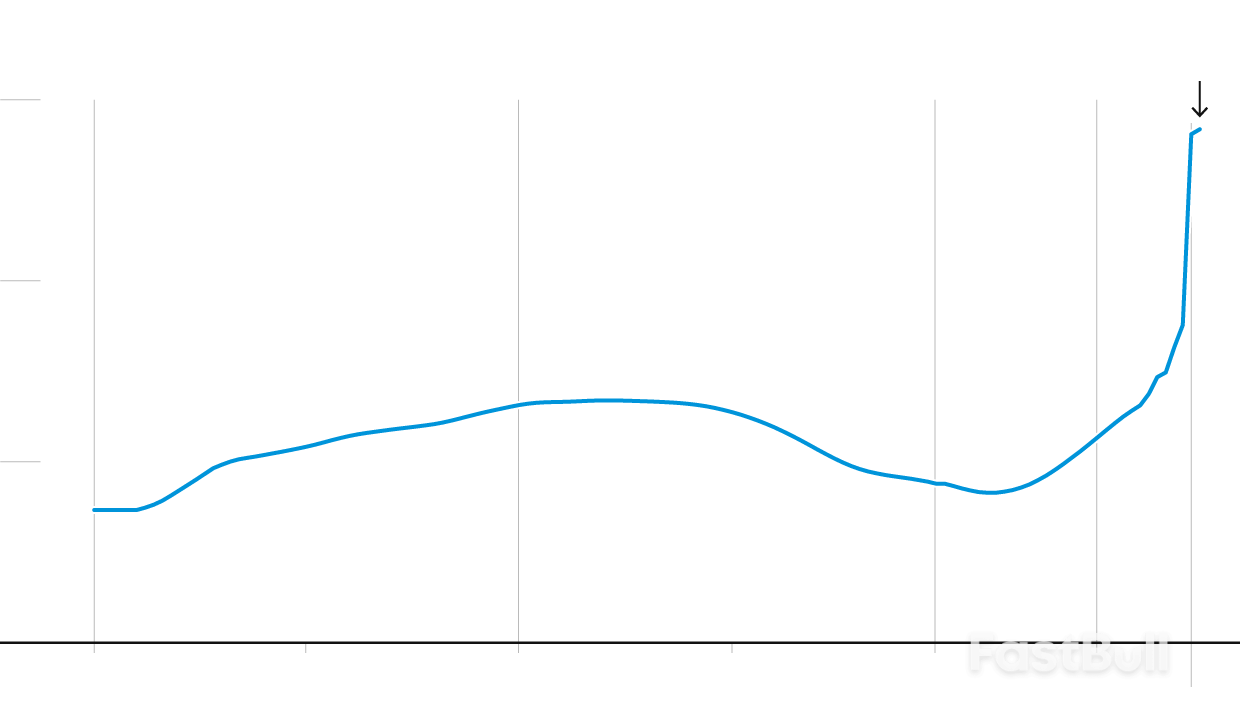
          The share of global wealth held by the top 0.001% has grown from almost 4% in 1995 to more than 6%, the report said, while the wealth of multimillionaires had increased by about 8% annually since the 1990s – nearly twice the rate of the bottom 50%.
          The authors, one of whom is the influential French economist Thomas Piketty, said that while inequality had “long been a defining feature of the global economy”, by 2025 it had “reached levels that demand urgent attention”.Just 0.001% Hold Three Times the Wealth of Poorest Half of Humanity, Report Finds_1
          Reducing inequality was “not only about fairness, but essential for the resilience of economies, the stability of democracies, and the viability of our planet”. They said such extreme divides are no longer sustainable for societies or ecosystems.
          Produced every four years in conjunction with the United Nations Development Programme, the report draws on the biggest open-access database on global economic inequality and is widely considered to shape international public debate on the issue.
          In a preface, the Nobel prize-winning economist Joseph Stiglitz repeated a call for an international panel comparable to the UN’s IPCC on climate change, to “track inequality worldwide and provide objective, evidence-based recommendations”.
          Looking beyond strict economic inequality, it found that inequality of opportunity fuels inequality of outcomes, with education spending per child in Europe and North America, for example, more than 40 times that in sub-Saharan Africa – a gap roughly three times greater than GDP per capita.Just 0.001% Hold Three Times the Wealth of Poorest Half of Humanity, Report Finds_2
          Such disparities “entrench a geography of opportunity”, it said, adding that a 3% global tax on fewer than 100,000 centimillionaires and billionaires would raise $750bn a year – the education budget of low and middle-income countries.
          Inequality was also fuelled by the global financial system, which is rigged in favour of rich countries, the report said, with advanced economies able to borrow cheaply and invest abroad at higher returns, allowing them to act as “financial rentiers”.
          About 1% of global GDP flows from poorer to richer countries each year through net income transfers associated with high yields and low interest payments on rich-country liabilities, it said – almost three times the amount of global development aid.
          On gender inequality, the report said a gender pay gap “persists across all regions”. Excluding unpaid work, women earn on average only 61% of what men earn per working hour. Including unpaid labour, that figure falls to just 32%, it added.
          The report also highlighted the critical role played by capital ownership in the inequality of climate-changing carbon emissions. “Wealthy individuals fuel the climate crisis through their investments even more than their consumption and lifestyles,” it said.
          Global data shows the poorest half of the global population accounts for only 3% of carbon emissions associated with private capital ownership, the report calculated, while the wealthiest 10% account for about 77% of emissions.
          “This disparity is about vulnerability,” it said. “Those who emit the least, largely populations in low-income countries, are also those most exposed to climate shocks. Those who emit the most are more insulated against the impacts of climate change.”
          The evidence shows that inequalities can be reduced, particularly by public investment in education and health and by effective taxation and redistribution programmes. It notes that in many countries, the ultra-rich escape taxation.
          “Effective income tax rates climb steadily for most of the population, but then fall sharply for billionaires and centimillionaires,” the report said. Proportionately, “these elites pay less than most of the households that earn much lower incomes”.
          Reducing inequality is a political choice made more difficult by “fragmented electorates, under-representation of workers, and the outsized influence of wealth”, it concluded. “The tools exist. The challenge is political will.”

          Source: Theguardian

          To stay updated on all economic events of today, please check out our Economic calendar
          Risk Warnings and Disclaimers
          You understand and acknowledge that there is a high degree of risk involved in trading. Following any strategies or investment methods may lead to potential losses. The content on the site is provided by our contributors and analysts for information purposes only. You are solely responsible for determining whether any trading assets, securities, strategy, or any other product is suitable for investing based on your own investment objectives and financial situation.
          Add to Favorites
          Share

          Silver Powers Past $60 as Speculators Ride Upside Momentum

          Adam

          Commodity

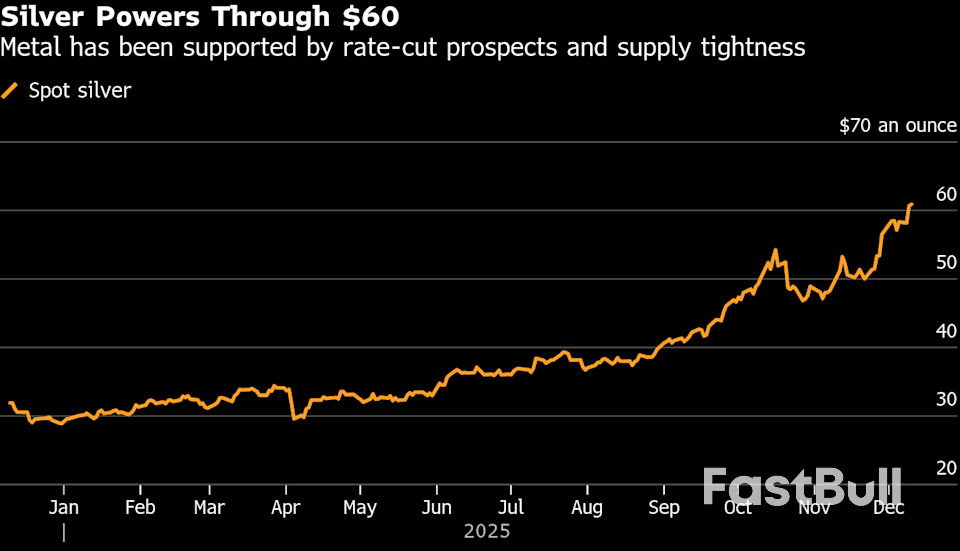
          Silver extended gains after breaking through $60 an ounce for the first time on Tuesday, with momentum coming from supply tightness and bets on further monetary easing by the US Federal Reserve.
          The white metal rose as much as 1.6% to a record of $61.6145 an ounce. Its rapid advance in recent days has been supported by speculative money wagering the US central bank will deliver a quarter-point rate reduction at the end of its Dec. 9-10 meeting. Lower borrowing costs are typically a tailwind for non-yielding precious metals. In bond markets, global yields have risen to highs last seen in 2009.
          “Silver has a big retail and speculative base,” said David Wilson, director of commodities strategy at BNP Paribas SA. “Once you have an upside momentum, it tends to bring in more money.”
          Silver Powers Past $60 as Speculators Ride Upside Momentum_1
          The market is also looking beyond this week’s Fed decision in search of clues on US monetary policy next year. Kevin Hassett, the front-runner in President Donald Trump’s search to replace Jerome Powell as Fed chair, said Tuesday that he sees plenty of room to substantially lower rates.
          Silver has more than doubled in value this year, eclipsing gold’s 60% rise. Its rally has gathered pace since a historic supply squeeze in October. Though this crunch has eased as more metal flows into London vaults, borrowing rates remain elevated — an indication of lingering tightness. Other markets are now seeing supply constraints, with Chinese inventories at decade lows.
          The rally has also been supported by inflows to exchange-traded funds. Last week, more money flowed into silver-backed ETFs than in any single week since July. Call volumes on the biggest such fund spiked on Tuesday to a level similar to that seen during the short squeeze, showing that investors are positioning for more upside.
          The silver market has become “overexcited” and prices are currently about 15% too high, Guy Wolf, global head of market analytics at Marex Group Plc., said in an online briefing, adding that interest from private wealth managers looking for alternative investment is benefiting precious metals to a certain extent.
          Given the rally of roughly 20% over the past three weeks, “logically, we should be seeing a correction,” said Wilson of BNP Paribas. “But given the strong positive sentiments in the markets right now, with some talking about $100 silver, it’s entirely possible that the momentum continues.”
          Investors are also seeking clarity on whether the US will impose tariffs on silver, after the white metal was added to the country’s list of critical minerals last month. That worry has kept some metal onshore, maintaining inventories in Comex warehouses near a historic high despite their retreat from a peak in October.
          Silver was up 0.5% at $60.95 an ounce as of 10:21 a.m. in London. Gold edged lower to $4,194.74. Platinum and palladium fell. The Bloomberg Dollar Spot Index was flat after closing the previous session up 0.1%.

          Source: Bloomberg

          Risk Warnings and Disclaimers
          You understand and acknowledge that there is a high degree of risk involved in trading. Following any strategies or investment methods may lead to potential losses. The content on the site is provided by our contributors and analysts for information purposes only. You are solely responsible for determining whether any trading assets, securities, strategy, or any other product is suitable for investing based on your own investment objectives and financial situation.
          Add to Favorites
          Share

          US Labour Costs Growth Slows in Third Quarter

          Glendon

          Forex

          Economic

          US labour costs increased slightly less than expected in the third quarter as a softening labour market curbed wage growth, which bodes well for services inflation.

          The Employment Cost Index (ECI), the broadest measure of labour costs, rose 0.8% in the last quarter, after gaining 0.9% in the second quarter, the Labor Department's Bureau of Labor Statistics said on Wednesday. Economists polled by Reuters had forecast the ECI advancing 0.9%.

          Labour costs increased 3.5% in the 12 months through September after rising 3.6% in the year through June.

          The report was delayed by the 43-day government shutdown, which ended last month.

          The ECI is viewed by policymakers as one of the better measures of labour market slack and a predictor of core inflation because it adjusts for composition and job-quality changes.

          While the moderation suggested wages posed no threat to inflation, price pressures remain elevated because of tariffs on imports. Cooler wage growth could also hamper consumer spending.

          Federal Reserve officials are expected to cut the US central bank's benchmark overnight interest rate by another 25 basis points to the 3.50%-3.75% range at the end of a two-day meeting later on Wednesday out of concern for the labour market.

          The Fed has lowered borrowing costs twice this year.

          Wages and salaries, which account for the bulk of labour costs, rose 0.8% last quarter after increasing 1.0% in the April-June quarter. They increased 3.5% on an annual basis. When adjusted for inflation, overall wages rose 0.6% in the 12 months through September after advancing 0.9% in the second quarter.

          Source: Theedgemarkets

          To stay updated on all economic events of today, please check out our Economic calendar
          Risk Warnings and Disclaimers
          You understand and acknowledge that there is a high degree of risk involved in trading. Following any strategies or investment methods may lead to potential losses. The content on the site is provided by our contributors and analysts for information purposes only. You are solely responsible for determining whether any trading assets, securities, strategy, or any other product is suitable for investing based on your own investment objectives and financial situation.
          Add to Favorites
          Share

          Fed decision ahead; Oracle, Adobe to report - what’s moving markets

          Adam

          Economic

          Futures linked to the main U.S. stock indices are hovering just above the flatline, with all eyes on a long-awaited Federal Reserve interest rate announcement. Analysts anticipate that the U.S. central bank will deliver a so-called "hawkish cut," slashing rates but putting a cap on possible reductions in the future. Still, rate markets are factoring in more easing in 2026, as President Donald Trump -- a long-time supporter of quick borrowing cost cuts -- reportedly prepares to hold a final round of interviews with candidates to become the new Fed Chair. On the earnings front, cloud-computing giant Oracle’s artificial intelligence plans will be under scrutiny when it reports after the closing bell.

          Futures steady

          U.S. stock futures pointed slightly higher on Wednesday, as investors geared up for the much-anticipated -- and potentially deeply contested -- Fed rate decision.
          By 02:52 ET (07:52 GMT), the Dow futures contract was mostly unchanged, while S&P 500 futures and Nasdaq 100 futures had both ticked up by 0.1%.
          The main averages on Wall Street were mixed in the prior session, with much of the attention swirling around the start of the Fed’s two-day policy meeting.
          Both the blue-chip Dow Jones Industrial Average and benchmark S&P 500 ended lower on Tuesday, while the tech-heavy Nasdaq Composite gained 0.1%.
          Partially weighing on sentiment was a marginal increase in U.S. job openings in October, although hiring remained subdued and resignations were around their lowest level in five years -- all potential signs of widespread economic uncertainty that some economists have suggested is linked to sweeping U.S. tariffs.

          Fed expected to deliver "hawkish cut"

          The report from the Labor Department underscored expectations that the Fed will likely cut interest rates at the conclusion of its gathering on Wednesday, but offer up a more hawkish outlook for the months ahead.
          According to CME FedWatch, the chances of a quarter-point reduction in borrowing costs currently stands at roughly 88%. In theory, slashing rates -- which the Fed has already done in September and October, bringing its target range down to 3.75% to 4% -- can help spur investment and hiring, albeit at the risk of reigniting inflationary pressures.
          While markets are widely confident that a rate cut is impending, media reports have said policymakers could be unusually divided over such a move, citing worries over sticky price gains and a relative dearth of fresh economic data due to a record-long government shutdown. A new summary of Fed members’ economic projections is also slated to be unveiled.
          Looking to appease both sides of the policy argument, Fed Chair Jerome Powell is reportedly set to advocate for a drawdown this month and then use his post-meeting news conference to signal that the bar will be high for any further easing.
          Still, establishing this high bar may be difficult. By January, officials will have had a chance to parse through more up-to-date employment and inflation numbers, and it is not clear what policy trajectory these figures could support.

          Trump planning to start final round of Fed Chair interviews - report

          Meanwhile, President Donald Trump is aiming to begin the final round of interviews for the next Fed Chair in the coming days, according to the Wall Street Journal.
          Citing senior administration officials, the WSJ said Trump and some of his aides are scheduled to interview former Fed Governor Kevin Warsh on Wednesday, and meet with other candidates soon.
          One of those will be Kevin Hassett, the White House economic adviser many reports have described as the frontrunner to replace Powell when his term at the helm of the Fed ends next year.
          Hassett is a close ally of Trump, who has long badgered the Fed and Powell to aggressively and rapidly lower interest rates to help boost the economy. Some economists have predicted that Hassett could advocate for such quick easing, although, because he would have just one vote in the 12-member Federal Open Market Committee, his influence may be limited.
          Yet, as analysts at ING flagged in a note, rates markets have priced in "so much easing" ahead, despite projections for a so-called "hawkish cut" from the Fed today.
          "Presumably, this is the Kevin Hassett effect, where his arrival at the Fed in February can throw a dovish cloak over the FOMC outlook," the ING analysts including Chris Turner and Frantisek Taborsky said.

          Oracle to report

          Oracle is set to headline the earnings calendar on Wednesday, with analysts keen for the cloud computing giant to offer more insight into its artificial intelligence ambitions.
          Fueled by a partnership with ChatGPT-maker OpenAI, Oracle has transformed its image this year from a smaller player in the cloud business to an essential provider of the rented computing power needed to underpin AI models.
          A massive contract backlog of over $400 billion sent Oracle’s share price skyrocketing earlier this year, briefly propelling the company up to a market valuation near a trillion dollars and temporarily making co-founder Larry Ellison one of the world’s richest people.
          However, that enthusiasm has since shown signs of fading, as observers fret over whether Oracle has relied too heavily on OpenAI and borrowed too much to fund a buildout of data centers.

          Adobe earnings ahead

          Adobe is also due to report its latest quarterly earnings after the closing bell on Wall Street.
          Shares of the firm behind creative products like Photoshop and Acrobat have slumped by more than 21% so far this year, well underperforming the tech-heavy Nasdaq Composite.
          In a note to clients, analysts at Stifel said it is "no secret" that a key "overhang" for Adobe’s stock price has been the belief that AI will be a disruptive force to creative departments, "making creators more efficient by orders of magnitude and shrinking the number of addressable seats over time." A "seat" refers to a pass allowing a user to access Adobe’s apps and services.
          The analysts including J. Parker Lane and Jack McShane said that catalysts to "quickly turn sentiment around" on Adobe’s stock price are "foggy," although they said a "critical and successful AI-induced strategy pivot" at the company is in its "early days."
          Adobe, whose tools are widely utilized in the photography and film industries, could be particularly bolstered by positioning itself as a sort of "Switzerland" in the AI race, becoming a central hub of generative AI where users can "test, leverage, and pay for third-party model usage," the analysts said.

          Source: investing

          To stay updated on all economic events of today, please check out our Economic calendar
          Risk Warnings and Disclaimers
          You understand and acknowledge that there is a high degree of risk involved in trading. Following any strategies or investment methods may lead to potential losses. The content on the site is provided by our contributors and analysts for information purposes only. You are solely responsible for determining whether any trading assets, securities, strategy, or any other product is suitable for investing based on your own investment objectives and financial situation.
          Add to Favorites
          Share

          The Great Income Squeeze Begins As Fed Spells End To Easy Yields

          Samantha Luan

          Forex

          Economic

          Political

          For income investors, the days of easy returns are vanishing.

          In recent years, investors were paid handsomely to play it safe. Short-term US Treasuries offered yields above 5% — a rare chance to earn solid returns without locking up capital or chasing risk. For pensions, insurers and endowments, it marked a decisive break from the post-crisis decade of near-zero interest rates. Even if high inflation tempered real returns, institutions that once had to reach for yield suddenly had room to sit still.

          That window is closing anew. The Federal Reserve is expected to cut rates again this week, part of an easing cycle that has already dragged yields well down from their post-pandemic highs. For income-focused portfolios, the easy gains from safe assets are fading. At the same time, conventional alternatives, from corporate bonds to global equities, look richly priced, leaving less cushion and fewer obvious paths forward.

          The pressure has been building for months. A broad cross-asset rally, powered by AI exuberance and resilient US growth, has driven returns lower across public markets. For investors managing long-term liabilities, the trade-offs are sharpening: to keep pace, portfolios must stretch duration, give up liquidity, or take on more risk.

          Public markets offer little relief. Dividend yields on global equities, as tracked by the MSCI All Country World Index, remain near their lowest levels since 2002. Investment-grade credit spreads are just above multi-decade lows, leaving scant margin for error should the economic outlook worsen.

          The Fed's expected cut is a reminder that "today's yields may not always be available," said James Turner, co-head of global fixed income for EMEA at BlackRock in London. Pension and insurer clients are looking toward high yield, emerging-market debt, AAA rated collateralized loan obligations and securitization investments, to "enhance income and diversify," he said.

          Private credit, long pitched as a diversification trade, has already absorbed hundreds of billions of dollars from institutions searching for returns beyond listed debt. While that appetite has cooled this year due to concern about deal quality and saturation, lower Treasury yields will help private-asset advocates make their sales pitch, as allocators reassess their income mix.

          JPMorgan Asset Management anticipates more movement toward the private markets for income. Despite recent concerns, investors will be "rewarded for the extra risk you're taking in private credit," said Kerry Craig, global market strategist at the money manager in Melbourne.

          Other investors agree.

          "As rates have fallen and spreads have compressed, it's more of a challenge to get a reasonable rate of interest," said Nick Ferres, chief investment officer at Vantage Point Asset Management in Singapore. The firm launched an Australian income fund last year and has recently added private credit on a selective basis to help generate yield, he said.

          The broader scramble for return never really stopped. The "hunt for yield" became shorthand in the zero-interest-rate policy — ZIRP — era, but the dynamic has persisted, even as the higher-for-longer interest rate outlook took hold, supporting Treasury yields. Bets on growth assets, AI hype and resurgent risk appetite have kept flows tilted toward higher-volatility exposure. As safe returns decline, the incentive to move out the risk curve is building afresh.

          Capital is also flowing into more esoteric corners of financial markets.

          Catastrophe bonds and insurance-linked securities — instruments that monetize rare-event risk — are drawing renewed institutional demand for their uncorrelated payouts. The Victory Pioneer CAT Bond Fund, launched in early 2023, now has $1.6 billion of assets. The fund continues to attract investors "facing that yield challenge," portfolio manager Chin Liu said.

          Equities are offering less ballast for income-seeking portfolios. Global stock dividend yields have slumped as soaring equity prices, especially in tech, compress yields, while companies increasingly favor buybacks over dividends for flexibility.

          "Finding yield is getting tougher" in global stocks, said Duncan Burns, head of investments for Asia Pacific at Vanguard in Melbourne. "We're seeing a trend of buybacks picking up and it looks like some of that's coming from the dividend side of things."

          Still, yields don't move in a straight line. Even as the Fed prepares another rate cut, longer-maturity Treasury yields have climbed to multi-month highs as traders scale back expectations for 2026 easing. While short-term rates remain tightly linked to policy, longer-dated debt reflects growth, inflation and fiscal risk. For income investors, that means returns depend as much on timing and conviction as on central bank cues.

          A few tactical bright spots remain. Sticky inflation in Australia has fueled expectations of further rate hikes. In the UK, longer-maturity gilt yields have risen on the back of government borrowing. But these are exceptions to the rule: across global markets, the income backdrop is tightening.

          "Lower US rates are shaping a tougher landscape for income investors," said Hebe Chen, an analyst at Vantage Markets in Melbourne. "Falling Treasury yields and near record-tight credit spreads are pushing investors further out on the risk curve for slimmer rewards."

          Source: Bloomberg Europe

          To stay updated on all economic events of today, please check out our Economic calendar
          Risk Warnings and Disclaimers
          You understand and acknowledge that there is a high degree of risk involved in trading. Following any strategies or investment methods may lead to potential losses. The content on the site is provided by our contributors and analysts for information purposes only. You are solely responsible for determining whether any trading assets, securities, strategy, or any other product is suitable for investing based on your own investment objectives and financial situation.
          Add to Favorites
          Share

          Silver’s Record Run Fueled by Possible Fed Shake-Up and Tariff Fears

          Warren Takunda

          Economic

          Silver prices continued to rise on Wednesday, hovering at around $62 per ounce after trading at roughly $50 in late November. That represents a significant jump from the metal's average price of around $30 at the beginning of the year.
          The price jump follows news that the US administration is interviewing final candidates to replace current Federal Reserve chair Jerome Powell. Investors are also expecting the Fed to cut its benchmark rate after its meeting later on Wednesday.
          The top three candidates for the chair job, and in particular the reported frontrunner Kevin Hassett, the director of Donald Trump's National Economic Council, are expected to implement more aggressive rate cuts — while Powell has overseen a slower pace of easing.
          Since January, the Fed under Powell has cut rates in two quarter-point increments, once in September and once in October.
          This steady easing has pushed down returns on interest-bearing assets, increasing the attractiveness of silver as an investor alternative.
          Silver, like gold, pays no interest or dividends, so it tends to fall out of favour when US interest rates are high and investors can earn more attractive returns on cash and bonds.
          The metal's value has roughly doubled this year, even surpassing gold's 60% increase — which brought bullion to record highs.
          At the same time, traders are also seeking clarity on whether the US will impose tariffs on silver.
          In early November, the US government added the metal to its 2025 Critical Minerals List, a designation normally reserved for materials seen as strategically important to the economy and national security.
          That new status also puts silver within the scope of possible Section 232 investigations, the same legal tool previously used to justify tariffs on steel and aluminium.
          Section 232 investigations allow the US government to apply tariffs, import quotas, or other limits on products believed to create an overreliance on sources outside the country, harming national security interests.
          For now, no such probe has been launched and no tariffs have been announced. Even so, the prospect alone is enough to make traders nervous, since any future duties on imported silver could disrupt trade flows and push up costs for manufacturers. Such expectations have prompted an increase in silver stockpiling.
          Increased demand from certain manufacturers is pushing prices up further. Silver is a key material in the production of electric vehicles and solar panels, and industrial demand accounts for more than half of total silver consumption.

          Source: Euronews

          To stay updated on all economic events of today, please check out our Economic calendar
          Risk Warnings and Disclaimers
          You understand and acknowledge that there is a high degree of risk involved in trading. Following any strategies or investment methods may lead to potential losses. The content on the site is provided by our contributors and analysts for information purposes only. You are solely responsible for determining whether any trading assets, securities, strategy, or any other product is suitable for investing based on your own investment objectives and financial situation.
          Add to Favorites
          Share
          FastBull
          Copyright © 2025 FastBull Ltd

          728 RM B 7/F GEE LOK IND BLDG NO 34 HUNG TO RD KWUN TONG KLN HONG KONG

          TelegramInstagramTwitterfacebooklinkedin
          App Store Google Play Google Play
          Products
          Charts

          Chats

          Q&A with Experts
          Screeners
          Economic Calendar
          Data
          Tools
          Membership
          Features
          Function
          Markets
          Copy Trading
          Latest Signals
          Contests
          News
          Analysis
          24/7
          Columns
          Education
          Company
          Careers
          About Us
          Contact Us
          Advertising
          Help Center
          Feedback
          User Agreement
          Privacy Policy
          Business

          White Label

          Data API

          Web Plug-ins

          Poster Maker

          Affiliate Program

          Risk Disclosure

          The risk of loss in trading financial instruments such as stocks, FX, commodities, futures, bonds, ETFs and crypto can be substantial. You may sustain a total loss of the funds that you deposit with your broker. Therefore, you should carefully consider whether such trading is suitable for you in light of your circumstances and financial resources.

          No decision to invest should be made without thoroughly conducting due diligence by yourself or consulting with your financial advisors. Our web content might not suit you since we don't know your financial conditions and investment needs. Our financial information might have latency or contain inaccuracy, so you should be fully responsible for any of your trading and investment decisions. The company will not be responsible for your capital loss.

          Without getting permission from the website, you are not allowed to copy the website's graphics, texts, or trademarks. Intellectual property rights in the content or data incorporated into this website belong to its providers and exchange merchants.

          Not Logged In

          Log in to access more features

          FastBull Membership

          Not yet

          Purchase

          Become a signal provider
          Help Center
          Customer Service
          Dark Mode
          Price Up/Down Colors

          Log In

          Sign Up

          Position
          Layout
          Fullscreen
          Default to Chart
          The chart page opens by default when you visit fastbull.com