• Trade
  • Markets
  • Copy
  • Contests
  • News
  • 24/7
  • Calendar
  • Q&A
  • Chats
Trending
Screeners
SYMBOL
LAST
BID
ASK
HIGH
LOW
NET CHG.
%CHG.
SPREAD
SPX
S&P 500 Index
6847.76
6847.76
6847.76
6861.30
6843.84
+20.35
+ 0.30%
--
DJI
Dow Jones Industrial Average
48619.33
48619.33
48619.33
48679.14
48557.21
+161.29
+ 0.33%
--
IXIC
NASDAQ Composite Index
23245.85
23245.85
23245.85
23345.56
23240.37
+50.69
+ 0.22%
--
USDX
US Dollar Index
97.820
97.900
97.820
98.070
97.810
-0.130
-0.13%
--
EURUSD
Euro / US Dollar
1.17571
1.17578
1.17571
1.17596
1.17262
+0.00177
+ 0.15%
--
GBPUSD
Pound Sterling / US Dollar
1.33955
1.33964
1.33955
1.33970
1.33546
+0.00248
+ 0.19%
--
XAUUSD
Gold / US Dollar
4332.46
4332.80
4332.46
4350.16
4294.68
+33.07
+ 0.77%
--
WTI
Light Sweet Crude Oil
56.880
56.910
56.880
57.601
56.789
-0.353
-0.62%
--

Community Accounts

Signal Accounts
--
Profit Accounts
--
Loss Accounts
--
View More

Become a signal provider

Sell trading signals to earn additional income

View More

Guide to Copy Trading

Get started with ease and confidence

View More

Signal Accounts for Members

All Signal Accounts

Best Return
  • Best Return
  • Best P/L
  • Best MDD
Past 1W
  • Past 1W
  • Past 1M
  • Past 1Y

All Contests

  • All
  • Trump Updates
  • Recommend
  • Stocks
  • Cryptocurrencies
  • Central Banks
  • Featured News
Top News Only
Share

The Nasdaq Golden Dragon China Index Fell 0.9% In Early Trading

Share

The S&P 500 Opened 32.78 Points Higher, Or 0.48%, At 6860.19; The Dow Jones Industrial Average Opened 136.31 Points Higher, Or 0.28%, At 48594.36; And The Nasdaq Composite Opened 134.87 Points Higher, Or 0.58%, At 23330.04

Share

Miran: Goods Inflation Could Be Settling In At A Higher Level Than Was Normal Before The Pandemic, But That Will Be More Than Offset By Housing Disinflation

Share

Miran, Who Dissented In Favor Of A Larger Cut At Last Fed Meeting, Repeats Keeping Policy Too Tight Will Lead To Job Losses

Share

Miran: Does Not Think Higher Goods Inflation Is Mostly From Tariffs, But Acknowledges Does Not Have A Full Explanation For It

Share

Toronto Stock Index .GSPTSE Rises 67.16 Points, Or 0.21 Percent, To 31594.55 At Open

Share

Miran: Excluding Housing And Non-Market Based Items, Core Pce Inflation May Be Below 2.3%, “Within Noise” Of The Fed's 2% Target

Share

Polish State Assets Minister Balczun Says Jsw Needs Over USD 830 Million Financing To Keep Liquidity For A Year

Share

Miran: Prices Are “Once Again Stable” And Monetary Policy Should Reflect That

Share

Fed's Miran: Current Excess Inflation Is Not Reflective Of Underlying Supply And Demand In The Economy

Share

Portugal Treasury Puts 2026 Net Financing Needs At 13 Billion Euros, Up From 10.8 Billion In 2025

Share

Portugal Treasury Expects 2026 Net Financing Needs At 29.4 Billion Euros, Up From 25.8 Billion In 2025

Share

Bank Of America Says With Indonesia's Smelter Now Ramping Up, It Expects Aluminium Supply Growth To Accelerate To 2.6% Year On Year In 2026

Share

Bank Of America Expects A Deficit In Aluminium Next Year And Sees Prices Pushing Above $3000/T

Share

Fed Data - USA Effective Federal Funds Rate At 3.64 Percent On 12 December On $102 Billion In Trades Versus 3.64 Percent On $99 Billion On 11 December

Share

Brazil's Petrobras Says No Impact Seen On Oil, Petroleum Products Output As Workers Start Planned Strike

Share

Statement: US Travel Group Warns New Proposed Trump Administration Requirements For Foreign Tourists To Provide Social Media Histories Could Mean Millions Of People Opting Not To Visit

Share

Blackrock: Kerry White Will Become Head Of Citi Investment Management At Citi Wealth

Share

Blackrock: Rob Jasminski, Head Of Citi Investment Management, Has Joined With Team

Share

Blackrock: Effective Dec 15, Citi Investment Management Employees Will Join Blackrock

TIME
ACT
FCST
PREV
Japan Tankan Small Manufacturing Outlook Index (Q4)

A:--

F: --

P: --

Japan Tankan Large Non-Manufacturing Outlook Index (Q4)

A:--

F: --

P: --

Japan Tankan Large Manufacturing Outlook Index (Q4)

A:--

F: --

P: --

Japan Tankan Small Manufacturing Diffusion Index (Q4)

A:--

F: --

P: --

Japan Tankan Large Manufacturing Diffusion Index (Q4)

A:--

F: --

P: --

Japan Tankan Large-Enterprise Capital Expenditure YoY (Q4)

A:--

F: --

P: --

U.K. Rightmove House Price Index YoY (Dec)

A:--

F: --

P: --

China, Mainland Industrial Output YoY (YTD) (Nov)

A:--

F: --

P: --

China, Mainland Urban Area Unemployment Rate (Nov)

A:--

F: --

P: --

Saudi Arabia CPI YoY (Nov)

A:--

F: --

P: --

Euro Zone Industrial Output YoY (Oct)

A:--

F: --

P: --

Euro Zone Industrial Output MoM (Oct)

A:--

F: --

P: --

Canada Existing Home Sales MoM (Nov)

A:--

F: --

P: --

Canada National Economic Confidence Index

A:--

F: --

P: --

Canada New Housing Starts (Nov)

A:--

F: --

P: --
U.S. NY Fed Manufacturing Employment Index (Dec)

A:--

F: --

P: --

U.S. NY Fed Manufacturing Index (Dec)

A:--

F: --

P: --

Canada Core CPI YoY (Nov)

A:--

F: --

P: --

Canada Manufacturing Unfilled Orders MoM (Oct)

A:--

F: --

P: --

U.S. NY Fed Manufacturing Prices Received Index (Dec)

A:--

F: --

P: --

U.S. NY Fed Manufacturing New Orders Index (Dec)

A:--

F: --

P: --

Canada Manufacturing New Orders MoM (Oct)

A:--

F: --

P: --

Canada Core CPI MoM (Nov)

A:--

F: --

P: --

Canada Trimmed CPI YoY (SA) (Nov)

A:--

F: --

P: --

Canada Manufacturing Inventory MoM (Oct)

A:--

F: --

P: --

Canada CPI YoY (Nov)

A:--

F: --

P: --

Canada CPI MoM (Nov)

A:--

F: --

P: --

Canada CPI YoY (SA) (Nov)

A:--

F: --

P: --

Canada Core CPI MoM (SA) (Nov)

A:--

F: --

P: --

Canada CPI MoM (SA) (Nov)

A:--

F: --

P: --

Federal Reserve Board Governor Milan delivered a speech
U.S. NAHB Housing Market Index (Dec)

--

F: --

P: --

Australia Composite PMI Prelim (Dec)

--

F: --

P: --

Australia Services PMI Prelim (Dec)

--

F: --

P: --

Australia Manufacturing PMI Prelim (Dec)

--

F: --

P: --

Japan Manufacturing PMI Prelim (SA) (Dec)

--

F: --

P: --

U.K. 3-Month ILO Employment Change (Oct)

--

F: --

P: --

U.K. Unemployment Claimant Count (Nov)

--

F: --

P: --

U.K. Unemployment Rate (Nov)

--

F: --

P: --

U.K. 3-Month ILO Unemployment Rate (Oct)

--

F: --

P: --

U.K. Average Weekly Earnings (3-Month Average, Including Bonuses) YoY (Oct)

--

F: --

P: --

U.K. Average Weekly Earnings (3-Month Average, Excluding Bonuses) YoY (Oct)

--

F: --

P: --

France Services PMI Prelim (Dec)

--

F: --

P: --

France Composite PMI Prelim (SA) (Dec)

--

F: --

P: --

France Manufacturing PMI Prelim (Dec)

--

F: --

P: --

Germany Services PMI Prelim (SA) (Dec)

--

F: --

P: --

Germany Manufacturing PMI Prelim (SA) (Dec)

--

F: --

P: --

Germany Composite PMI Prelim (SA) (Dec)

--

F: --

P: --

Euro Zone Composite PMI Prelim (SA) (Dec)

--

F: --

P: --

Euro Zone Services PMI Prelim (SA) (Dec)

--

F: --

P: --

Euro Zone Manufacturing PMI Prelim (SA) (Dec)

--

F: --

P: --

U.K. Services PMI Prelim (Dec)

--

F: --

P: --

U.K. Manufacturing PMI Prelim (Dec)

--

F: --

P: --

U.K. Composite PMI Prelim (Dec)

--

F: --

P: --

Euro Zone ZEW Economic Sentiment Index (Dec)

--

F: --

P: --

Germany ZEW Current Conditions Index (Dec)

--

F: --

P: --

Germany ZEW Economic Sentiment Index (Dec)

--

F: --

P: --

Euro Zone Trade Balance (Not SA) (Oct)

--

F: --

P: --

Euro Zone ZEW Current Conditions Index (Dec)

--

F: --

P: --

Euro Zone Trade Balance (SA) (Oct)

--

F: --

P: --

U.S. Retail Sales MoM (Excl. Automobile) (SA) (Oct)

--

F: --

P: --

Q&A with Experts
    • All
    • Chatrooms
    • Groups
    • Friends
    Connecting
    .
    .
    .
    Type here...
    Add Symbol or Code

      No matching data

      All
      Trump Updates
      Recommend
      Stocks
      Cryptocurrencies
      Central Banks
      Featured News
      • All
      • Russia-Ukraine Conflict
      • Middle East Flashpoint
      • All
      • Russia-Ukraine Conflict
      • Middle East Flashpoint
      Search
      Products

      Charts Free Forever

      Chats Q&A with Experts
      Screeners Economic Calendar Data Tools
      Membership Features
      Data Warehouse Market Trends Institutional Data Policy Rates Macro

      Market Trends

      Market Sentiment Order Book Forex Correlations

      Top Indicators

      Charts Free Forever
      Markets

      News

      News Analysis 24/7 Columns Education
      From Institutions From Analysts
      Topics Columnists

      Latest Views

      Latest Views

      Trending Topics

      Top Columnists

      Latest Update

      Signals

      Copy Rankings Latest Signals Become a signal provider AI Rating
      Contests
      Brokers

      Overview Brokers Assessment Rankings Regulators News Claims
      Broker listing Forex Brokers Comparison Tool Live Spread Comparison Scam
      Q&A Complaint Scam Alert Videos Tips to Detect Scam
      More

      Business
      Events
      Careers About Us Advertising Help Center

      White Label

      Data API

      Web Plug-ins

      Affiliate Program

      Awards Institution Evaluation IB Seminar Salon Event Exhibition
      Vietnam Thailand Singapore Dubai
      Fans Party Investment Sharing Session
      FastBull Summit BrokersView Expo
      Recent Searches
        Top Searches
          Markets
          News
          Analysis
          User
          24/7
          Economic Calendar
          Education
          Data
          • Names
          • Latest
          • Prev

          View All

          No data

          Scan to Download

          Faster Charts, Chat Faster!

          Download App
          English
          • English
          • Español
          • العربية
          • Bahasa Indonesia
          • Bahasa Melayu
          • Tiếng Việt
          • ภาษาไทย
          • Français
          • Italiano
          • Türkçe
          • Русский язык
          • 简中
          • 繁中
          Open Account
          Search
          Products
          Charts Free Forever
          Markets
          News
          Signals

          Copy Rankings Latest Signals Become a signal provider AI Rating
          Contests
          Brokers

          Overview Brokers Assessment Rankings Regulators News Claims
          Broker listing Forex Brokers Comparison Tool Live Spread Comparison Scam
          Q&A Complaint Scam Alert Videos Tips to Detect Scam
          More

          Business
          Events
          Careers About Us Advertising Help Center

          White Label

          Data API

          Web Plug-ins

          Affiliate Program

          Awards Institution Evaluation IB Seminar Salon Event Exhibition
          Vietnam Thailand Singapore Dubai
          Fans Party Investment Sharing Session
          FastBull Summit BrokersView Expo

          Gold: ETF Inflows Climb Amid Growing Investor Interest, US Dollar Weakness

          Adam

          Commodity

          Summary:

          Gold surged above \$3,550 as weak U.S. jobs data fueled Fed cut bets and dollar weakness. ETF inflows, central-bank diversification, deficits, and geopolitical risks keep demand strong despite overbought signals.

          The market this week has been a masterclass in contradiction. Just days ago, the bond pits were awash with bearish bets, traders arming themselves for the “big one” as long-term US yields crept higher, the 30-year JGB lit up warning flares, and whispers of Fed capture and Lisa Cook’s political misfortune swirled around desks.
          Then came the JOLTS miss. One weak labor print was enough to knock the stuffing out of yields across the Treasury curve, flattening spreads and triggering an overnight repricing that now has September cuts virtually in the bag and at least two more penciled in for 2025. It’s the old rhythm of markets: conviction built on one narrative until data kicks the stool out, and everyone scrambles to reset positioning ahead of the bigger test—nonfarm payrolls.
          The dollar, naturally, buckled under the weight of weaker jobs and lower rates, and increased Fed cut bets, handing Asia an early boost. When the US dollar slides, Asian assets instantly look more attractive in currency-adjusted terms, and regional equities should snap to life after a sluggish start to September. But the more explosive story—once again—is gold.
          Gold has stopped being a sideshow and is now the lead act in the macro theater. Spot north of $3,550, ETFs seeing inflows on par with the biggest days of 2023, and RSI levels screaming overbought—but “overbought” is a flimsy shield in the face of structural flows.
          We’ve seen this movie before: options desks drowning in short gamma, dealers forced to chase the tape higher, and every $50 increment on the way up becoming a pressure point that forces another round of option dealer buying/hedging. The script is nearly mechanical: pain trade resumes at $3,600 and $3650, and if the squeeze intensifies, delta-hedgers pour more kerosene onto an already roaring fire.
          And yet this isn’t just about positioning mechanics. The backdrop is fuel enough: central banks are openly diversifying away from the dollar, surveys show nearly half of monetary authorities intend to increase reserves, and retail investors are piling in to supplement institutional demand.
          The US fiscal picture is worsening, Trump’s heavy hand over the Fed is drawing concern about institutional independence, and inflation remains sticky enough that no one can declare victory. Layer on geopolitical risk—the uneasy U.S.–China truce, tariff noise, late-cycle U.S. growth—and you have the full recipe for gold to stay front and center.
          And we are entering precisely that seasonal sweet spot. Structural supply constraints mean even marginal allocation shifts—say, a few basis points of the $57 trillion parked in U.S. assets—could be seismic for price action. If the bond market is the elephant in the room, the 30-year JGB charging through resistance, then gold is the compass traders are clinging to in the fog.
          So yes, gold is stretched, but stretched markets often defy gravity longer than logic suggests. This is not simply a momentum chase—it’s the expression of a deeper fracture in the macro order: weakening labor, politicized central banks, ballooning deficits, and fragile geopolitics. That cocktail keeps the bid under bullion, and it explains why every dip gets bought, every ETF inflow adds weight, and why the “overbought” chatter rings hollow.

          Source: investing

          Risk Warnings and Disclaimers
          You understand and acknowledge that there is a high degree of risk involved in trading. Following any strategies or investment methods may lead to potential losses. The content on the site is provided by our contributors and analysts for information purposes only. You are solely responsible for determining whether any trading assets, securities, strategy, or any other product is suitable for investing based on your own investment objectives and financial situation.
          Add to Favorites
          Share

          Why Trump’s Firing of the US Jobs Chief Has Economists Worried

          Warren Takunda

          Economic

          As it has for over a hundred years, the Bureau of Labor Statistics (BLS) will release its latest monthly jobs report on Friday.
          But the routine monthly update on the health of the US jobs market has been overshadowed by Donald Trump’s firing of the agency’s commissioner, Erika McEntarfer, hours after July’s statistics were released last month.
          The BLS’s data is parsed by Wall Street, Federal Reserve officials and company bosses across the US. It is also widely watched – and admired – internationally as a barometer of the US economy.
          Both liberal and conservative economists have criticized Trump’s nominated replacement at the BLS and have raised concerns over what will happen to the agency after the dramatic shake-up. Here’s what we know about what’s happening to the bureau.

          What does the Bureau of Labor Statistics do?

          The bureau reports key economic statistics through surveys of employers and prices. Every month, it releases data on the labor market, including the current unemployment rate, and the Consumer Price Index (CPI), which measures the cost of a basket of goods and services. This data is an important monthly snapshot of the US economy and how it changes over time.

          Why did Trump fire the bureau’s commissioner?

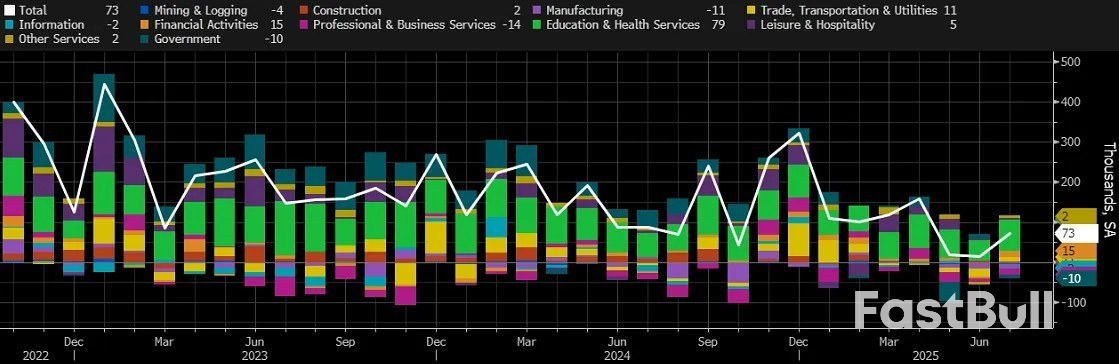
          Last month, the bureau announced the US had added just 73,000 jobs in July – far lower than expected – and made big revisions to previously released stats on the labor market in May and June. The number of jobs added to the economy across those two months was dramatically cut by more than 250,000.
          Trump, who spent months boasting about the strength of the economy amid fears about the impact of his trade wars, was furious. “Today’s Job Numbers were RIGGED in order to make the Republicans, and ME, look bad,” he declared on social media.
          Hours after the numbers were released, Trump announced he was firing McEntarfer and that she would “be replaced with someone much more competent and qualified”.

          Has Trump firing of the bureau’s commissioner changed its operations?

          Economists say that Trump’s firing hasn’t changed the bureau, yet. Although the White House has made other job cuts at the BLS, as it did throughout the federal workforce. Since Trump took office, the bureau has seen a hiring freeze and has lost 15% of its workforce.
          While the bureau said it was downsizing its data collection for CPI, it did not say it was making any significant changes to its survey to employers.
          Economists say that, for now, the bureau’s operations have largely remained the same. William Watrowski, a longtime leader within the bureau, is currently its acting commissioner. But there are still many questions about the future of the bureau, especially after Trump announced his nomination for McEntarfer’s replacement.

          Who does Trump want to appoint as the bureau’s new commissioner?

          Trump has nominated EJ Antoni, chief economist at the conservative Heritage Foundation, as the bureau’s commissioner.
          Antoni was a contributor to Project 2025 – the Heritage Foundation’s rightwing blueprint for reshaping the US government – and was a vocal critic of the bureau last year, claiming that it manipulated numbers to make them more favorable to Joe Biden and Democrats. Last November, Antoni said on Twitter that Elon Musk’s so-called department of government efficiency needed to “take a chainsaw” to the bureau.
          “Month after month, the government bean-counters under former-president Biden published overly optimistic estimates for everything from job growth to the size of the economy, only to have those numbers routinely – and quietly – revised down later,” Antoni wrote in May.
          When announcing his appointment, Trump said Antoni “will ensure that the Numbers released are HONEST AND ACCURATE”.
          Antoni has yet to be confirmed by Congress, and a confirmation date has not been set.

          Why did the bureau revise its job figures for May and June?

          Revisions are standard to the bureau’s reporting of the labor market, which is based on surveys of employers throughout the country.
          Large revisions often happen when employers take more time to complete the bureau’s surveys or revise their own figures due to changing circumstances. Economists have pointed out that uncertainty can lead to larger revisions. The pandemic, for example, saw jobs figures in flux as employers were handling different shutdown laws and the spread of the virus.
          The impact of Trump’s tariffs on data collection could be a major factor in the revisions seen earlier this year. Businesses have been reporting rollercoaster levels of uncertainty over tariff policy, with sentiment among US small businesses dipping down in the spring before going up again in the summer.
          “We’ve gone through periods where there were larger revisions before,” said Michael Madowitz, principal economist at the Roosevelt Institute who served on the bureau’s data users advisory committee before it was dissolved by the Trump administration. “This is like so standard, and the idea that it’s what actually set off this big political kerfuffle – this is a really unprecedented political situation.”

          Has the bureau gone through any political fights before?

          This isn’t the first time the bureau has been accused of manipulating numbers for politics. In the mid-90s, Alan Greenspan, the Federal Reserve chair at the time, criticized the way the bureau was calculating the CPI. Greenspan argued that the bureau was overestimating CPI, making inflation look higher than it actually was.
          Thomas Stapleford, a historian at the University of Notre Dame and author of The Cost of Living in America: A Political History of Economic Statistics, pointed out that Greenspan’s criticism led to a series of hearings where the bureau’s methodology came under question and debate. There were congressional hearings and a committee of economists was formed to investigate the methodology.
          “There’s all this detailed look at digging into the methodology by these outside experts and also testimony from [the bureau],” Stapleford said. “In my mind, if you have questions about the methodology, that’s the way to approach it.”
          But Trump has pushed the bureau into uncharted waters. Stapleford noted McEntarfer’s firing was the first time the president fired a bureau commissioner.
          “What the administration, in the eyes of critics, is doing is pushing the numbers in a particular direction. Not for reasons that it can justify publicly in terms of methodology, but simply because it would like a different outcome,” Stapleford said. “That’s a really big deviation from how the bureau has operated in the past.”

          What does this all mean for the future of the bureau?

          The commissioner isn’t involved in much of the day-to-day operations of the bureau. A new leader could have major sway over how the bureau collects and reports data in the long term, but there are protections in place, and any significant changes would be subject to public scrutiny.
          “The commissioner isn’t directly involved in the data calculation. Most of the BLS staff are long-term civil servants. They’ve been there a long time, they have various protections around them,” Stapleford said. “If the new commissioner started to force major methodological changes, I think that would raise a lot of red flags if those changes were controversial.”
          But even if major changes aren’t made immediately, the fact that Trump has called the bureau’s data into question could risk confusing Americans over whether the data can be trusted.
          “It takes a whole lot longer to build credibility than to lose. I don’t think any of the experts involved at this point are at all worried about the credibility of BLS’s work, but I know a whole lot less about what’s filtering down to the average person right now,” Madowitz said.
          As an example, Madowitz pointed out how the science around climate change has been clear.
          “But having a one-side, other-side public position on what the science says has left the public really confused,” Madowitz said. “It would be really bad if that’s how we decided to understand the economy.”

          What are expecting from this month’s jobs figures?

          Ironically, it looks like August’s jobs report could be a repeat of July’s.
          New data on the labor market released by payroll firm ADP on Thursday showed sluggish growth in August for private payrolls, a sign that Friday’s job report could show some stagnation. Economists are predicting 75,000 new openings in August, on par with the 73,000 openings in July.

          Source: Theguardian

          To stay updated on all economic events of today, please check out our Economic calendar
          Risk Warnings and Disclaimers
          You understand and acknowledge that there is a high degree of risk involved in trading. Following any strategies or investment methods may lead to potential losses. The content on the site is provided by our contributors and analysts for information purposes only. You are solely responsible for determining whether any trading assets, securities, strategy, or any other product is suitable for investing based on your own investment objectives and financial situation.
          Add to Favorites
          Share

          UK feels the heat as investors and critics question its future

          Adam

          Economic

          There’s no doubt it’s been a miserable week for the U.K. government, with Prime Minister Keir Starmer and his ministers coming under increasing pressure as investors question Britain’s fiscal, economic and political future.
          A global bond market mini-meltdown on Tuesday brought the yield on the U.K.’s 30-year gilt up to a level not seen since 1998, also hitting the British pound and adding to the Treasury’s fiscal headache ahead of the Autumn Budget. And Starmer’s deputy — and housing minister — is facing calls to quit this week after she admitted underpaying tax on a second home.
          Deputy PM Angela Rayner defended herself, saying she acted on expert advice when buying her seaside apartment, but that’s cold comfort as the U.K. government struggles to inspire confidence and trust in voters — with the government’s approval ratings in the doldrums — and investors.
          While not alone in experiencing bond market volatility this week — with global yields rising among major economies as investors worry about the inflation trajectory, yawning budget deficits and growing debt piles — confidence in the U.K. has been dented by concerns over the country’s particulars.
          Doubts have mounted over Finance Minister Rachel Reeves’ ability to balance the budget and bring down the national deficit, which hit 4.8% in 2024, as well as the country’s debt pile of around 96% of the GDP, at the last reading in July.
          Reeves is set to unveil the next Autumn Budget on Nov.26, against a wider economic backdrop of sticky inflation and lackluster growth that pose a conundrum for the Bank of England.
          Global bond yields stabilized on Thursday, with the yield on the U.K.’s 30-year gilt at 5.582%, as of 9 a.m. London time. Economists commented that it’s not time to panic, just yet, but noted that the U.K. faces some nuanced challenges.
          “It’s been a record issuance of gilts this week, with a syndication that was up from £8 billion to £14 billion, so there’s been a lot of supply. It’s important not to look at Tuesday price action and panic, but it’s definitely on investors’ radar,” Fredrik Repton, senior portfolio manager in the Global Fixed Income Team at Neuberger Berman, told CNBC Thursday.
          “People are worried about deficits. People are worried about the political situation we see now. The U.K. budget was expected in October, [but] it’s been pushed back to November. That also makes the Bank of England’s job quite difficult, because the budget is going to come after the meeting [on Nov.6], and this is the full forecast meeting,” he told CNBC’s “Squawk Box Europe.”
          Fabio Balboni, senior European economist at HSBC, agreed that sticky inflation, which rose to a hotter-than-expected 3.8% in July, poses a dilemma for the Bank of England.
          “There are significant concerns in the market, and I think it comes from the combination of two factors,” Balboni said.
          “Fundamentally, one is that some inflation resilience obviously makes it harder for central banks to cut further, and it’s harder in some jurisdictions, like in the U.K., for instance. [BOE Governor] Andrew Bailey reminded us yesterday that there might not be more cuts forthcoming, at least in the near term, because, of course, inflation is close to 4%,” he told CNBC’s “Early Europe Edition” on Thursday.
          “Then, on the other hand, you have fiscal concerns, still very large fiscal deficits, starting in the U.K., for instance, with very difficult decision looming ahead for the government at the Autumn Budget,” Balboni added.
          Keep calm and carry on
          The U.K. Treasury on Wednesday revealed that Reeves will deliver the government’s budget plans for 2026 on Nov. 26., facing heightened pressure to resolve a fiscal conundrum over spending, taxation and borrowing.
          Reeves has already announced big-ticket spending plans on the National Health Service, defense and education, but she has pledged to borrow only for investment purposes, with day-to-day spending set to be funded by tax receipts.
          These fiscal rules, which she has repeatedly said she will not break, leave tax rises — or unpopular welfare spending cuts — as the few options left to her if she is to target a balanced budget by 2029/2030, as previously promised.
          Reeves has already conducted a tax raid on British businesses, meaning that workers, the wealthy and banks could be on the hook, as the government looks to raise revenues.
          Some analysts caution against panic over U.K. borrowing costs and the forthcoming budget, saying the gilts market cannot be judged in isolation.
          Bill Blain, a market strategist and founder of London-based Wind Shift Capital, cautioned in his “Morning Porridge” newsletter on Thursday that “you can’t analyse U.K. gilt risks without factoring the global picture.”
          “What rising yields in the global bonds markets are warning about is a rising inflation threat. The fact that is accompanied by high debt loads (creating refinancing risk), geopolitical uncertainty, and rising political instability (ie the difficulty in predicting the policy flip-flops of populist politicians, and weighting their political competency), is what colours the current vulnerability of market sentiment,” he said.

          Source : cnbc

          To stay updated on all economic events of today, please check out our Economic calendar
          Risk Warnings and Disclaimers
          You understand and acknowledge that there is a high degree of risk involved in trading. Following any strategies or investment methods may lead to potential losses. The content on the site is provided by our contributors and analysts for information purposes only. You are solely responsible for determining whether any trading assets, securities, strategy, or any other product is suitable for investing based on your own investment objectives and financial situation.
          Add to Favorites
          Share

          Treasury Yields Lowest In Months As Jobs Data Back Rate Cuts

          Damon

          Economic

          Several benchmark Treasury yields declined to the lowest levels in several months as additional evidence of labor-market cooling bolstered expectations for Federal Reserve interest-rate cuts beginning this month.

          Yields across maturities declined only slightly, however the five-year note’s reached the lowest level since the early-April rally unleashed by the US administration’s tariff plans, and the 10-year note’s fell below 4.17% to a level last seen in early May.

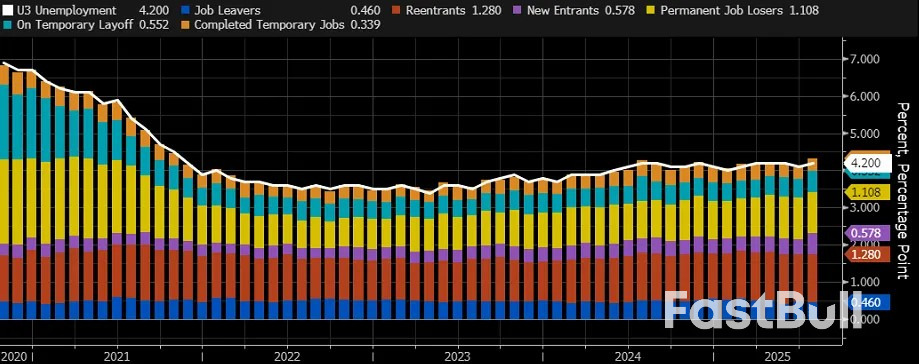
          Thursday’s US economic data included a gauge of private-sector hiring that fell short of estimates, while the Labor Department’s weekly tally of new jobless claims rose more than economists anticipated. The department’s comprehensive employment report for August to be released Friday is expected to confirm the hiring slowdown that became apparent in the July data and to show an increase in the unemployment rate to 4.3%, last exceeded in 2021.

          “The Fed without doubt cuts rates in September,” with additional cuts likely by year-end and next year, said Tom di Galoma, managing director at Mischler Financial Group.

          Contracts for predicting Fed moves continued to price in about 90% of a quarter-point rate cut this month and at least two cuts by year-end.

          For the August employment report to be released Friday, options pricing shows that traders expect a large market reaction. A 10-basis-point move in either direction is the breakeven for contracts expiring at Friday’s close, compared with seven basis points ahead of last month’s report. The July data released Aug. 1 unleashed the Treasury market’s biggest rally this year as it showed weak job creation and downward revisions to the previous two months.

          Pricing on short-term Treasury options that expire at Friday’s close indicate a break-even daily range on the 10-year yields of approximately 10 basis points, which compares to around 7 basis points break-even seen for the August jobs report.

          The rally poses a challenge to investors who had recently turned bearish after losing confidence in the outlook for Fed rate cuts.

          Fed officials remain divided on the need for rate cuts. Wednesday, Fed Governor Christopher Waller reiterated he favors “multiple cuts” in the coming months, while Atlanta Fed President Raphael Bostic said he thinks one will suffice this year.

          And while most Wall Street bank economists predict a September rate cut and at least one more this year, Bank of America Corp.’s say rate cuts are premature based on inflation, which could worsen as a result.

          “Some of these cuts that are priced into the market are more preemptive than something that is warranted,” Subadra Rajappa, head of US rates strategy at Societe Generale, said on Bloomberg TV.
          Source: Bloomberg Europe

          To stay updated on all economic events of today, please check out our Economic calendar
          Risk Warnings and Disclaimers
          You understand and acknowledge that there is a high degree of risk involved in trading. Following any strategies or investment methods may lead to potential losses. The content on the site is provided by our contributors and analysts for information purposes only. You are solely responsible for determining whether any trading assets, securities, strategy, or any other product is suitable for investing based on your own investment objectives and financial situation.
          Add to Favorites
          Share

          Markets Already Looking to NFP

          Adam

          Economic

          The August employment report is likely to confirm a cooling in labour demand and reinforce a dovish signal for the Federal Reserve. We expect nonfarm payrolls to rise by about 74k, with the unemployment rate increasing from 4.2% to 4.3%.
          Markets Already Looking to NFP_1

          US unemployment rate

          Lessons from July: data, revisions, and political pressure

          Last month unsettled markets not only because payroll growth in July was weak at 73k, but also because May and June were revised down by a combined 258k. In response, President Donald Trump accused the Bureau of Labor Statistics of manipulation and dismissed its head the same day. He has nominated the chief economist of a conservative think tank as successor, but the appointment still requires Senate confirmation. This raises concerns about politicisation of the statistical process and the credibility of subsequent releases.
          Markets Already Looking to NFP_2

          US employment change

          Supply or demand: what is slowing hiring

          Tighter immigration policy may have constrained labour supply at the margin, but it could be a secondary factor. Evidence points more clearly to softer demand for workers. Household surveys indicate that finding a job has become more difficult. According to the Atlanta Fed, job switchers no longer enjoy higher wage gains than job stayers. The NFIB survey shows small firms are finding it easier to fill vacancies. These signals align with a deceleration in hiring.
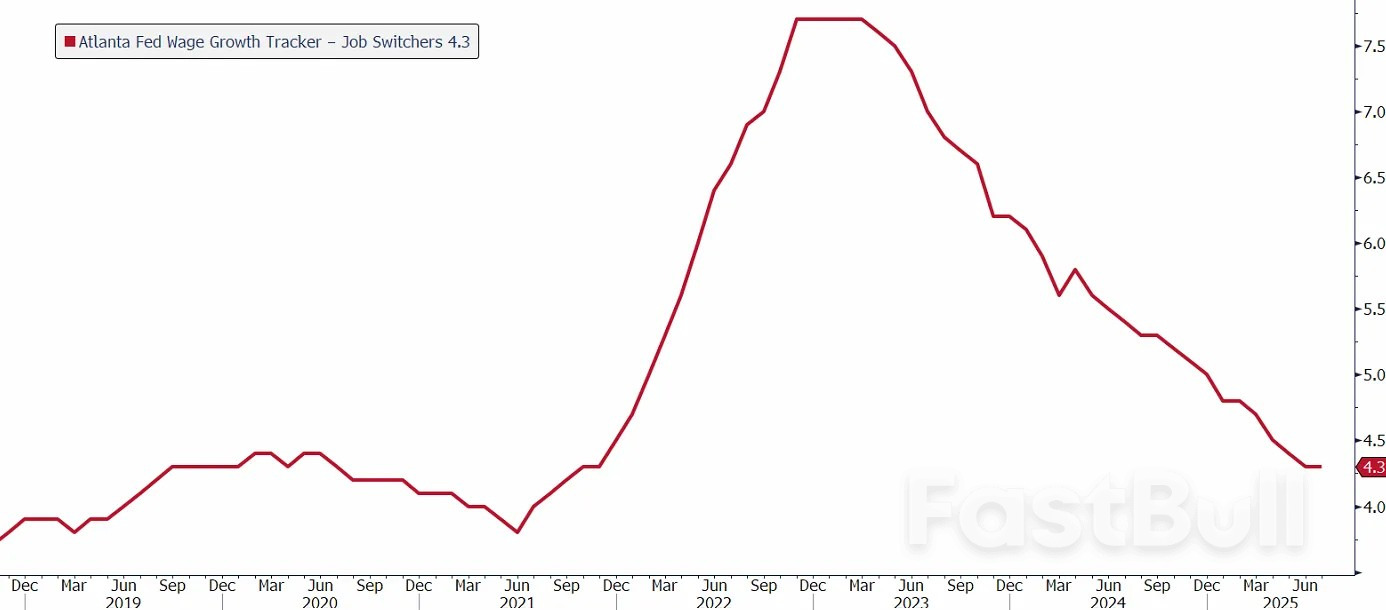
          On the chart of the Atlanta Fed Wage Growth Tracker – Job Switchers (i.e., the median wage growth of people who changed jobs over the past year), wage dynamics are steadily slowing to 4.3% year on year in July 2025. This points to a fading job-switching premium and weakening demand for workers, which typically eases wage pressure in services and supports disinflation. The current level is close to conditions seen before the post-pandemic boom, thus arguing for a more accommodative Fed policy.
          Markets Already Looking to NFP_3

          Chart of the Atlanta Fed Wage Growth Tracker – Job Switchers

          August forecast: 74k jobs and a higher unemployment rate

          Given the scale of recent revisions, the initial print should be read with caution. Market baseline is a 74k increase in payrolls, close to July’s 73k. Economists surveyed by Bloomberg expect the US unemployment rate to rise from 4.2% to 4.3%., reflecting weaker demand for labour.

          Implications for Fed policy

          Such an outcome would strengthen the case for a rate cut at the 17 September meeting. Moderating payrolls and a higher jobless rate would support a gradual shift toward easier policy, especially after the sizeable downward revisions weakened the recent labour market narrative. At the same time, uncertainty around the integrity of the statistical process argues for care in interpreting first releases.

          Market implications

          Softer labour data would typically pull down front-end yields and reinforce a gentler rate path, which often weighs on the US dollar against risk-sensitive currencies and supports assets that benefit from a lower rate. However, questions about data quality could keep near-term volatility elevated across rates, FX, and equities.

          Risks and watchpoints

          Upside surprises in payrolls, particularly if accompanied by firm wage growth, could temper dovish pricing. Another round of negative revisions would deepen the perception of cooling. The interaction between job growth, unemployment, and pay dynamics will determine both the strength and the speed of any policy easing.

          Source: marketpulse

          To stay updated on all economic events of today, please check out our Economic calendar
          Risk Warnings and Disclaimers
          You understand and acknowledge that there is a high degree of risk involved in trading. Following any strategies or investment methods may lead to potential losses. The content on the site is provided by our contributors and analysts for information purposes only. You are solely responsible for determining whether any trading assets, securities, strategy, or any other product is suitable for investing based on your own investment objectives and financial situation.
          Add to Favorites
          Share

          Trump Says US May Have To 'unwind' Trade Deals And Will 'suffer Greatly' If It Loses Tariff Case

          Winkelmann

          China–U.S. Trade War

          Economic

          Forex

          Political

          Key points:

          ● Trump comments seen aimed at pressuring Supreme Court
          ● Fate of trade deals uncertain
          ● Senate Democrat says Trump's comments caused confusion

          President Donald Trump said on Wednesday the U.S. might have to "unwind" trade deals it reached with the European Union, Japan and South Korea, among others, if it loses a Supreme Court tariffs case, and warned that a loss would cause the U.S. "to suffer so greatly."Trump, speaking to reporters at the White House, said his administration will ask the Supreme Court to reverse a U.S. appeals court ruling last week that found many of his tariffs were illegal. Trump, however, said he thought his administration would prevail in the case.

          "We made a deal with the European Union where they're paying us almost a trillion dollars. And you know what? They're happy. It's done. These deals are all done," he said. "I guess we'd have to unwind them."The comments were Trump's first specifically suggesting the trade deals reached with major trading partners - which were negotiated separately, outside of the tariffs - could be invalidated if the Supreme Court lets Friday's ruling stand.Trump said rescinding the tariffs would be costly, although trade experts note that the duties are paid by importers in the United States, not companies in the countries of origin. Economists have warned that tariffs are likely to fuel inflation in the United States.

          "Our country has a chance to be unbelievably rich again. It could also be unbelievably poor again. If we don't win that case, our country is going to suffer so greatly, so greatly," Trump said.The appeals court ruling addressed the legality of what Trump calls "reciprocal" tariffs first imposed as part of a trade war in April, as well as a separate set of tariffs imposed in February against China, Canada and Mexico. The decision does not impact tariffs issued under other legal authority, such as those on steel and aluminum imports.

          Trade experts said his comments on the cost of rescinding the tariffs were intended to convince the Supreme Court that removing the tariffs would unleash major economic chaos.Ryan Majerus, a former senior U.S. trade official who is now a partner with law firm King & Spalding, said it had been clear from the start that the trade deals with the EU and other trading partners were framework agreements that were subject to change, not fully fledged trade agreements."The president’s announcement today that the deals could be unwound reflects an effort to maximize leverage on the U.S. side," he said.

          Legal and trade experts say the Supreme Court's 6-3 majority of Republican-appointed justices may slightly improve Trump's odds of keeping in place at least some of the tariffs after the appeals court ruled 7-4 last week that they are illegal.But they say it is difficult to predict exactly what the court will do, given rulings in past cases and the unprecedented nature of the challenge.Senator Ron Wyden, the top Democrat on the Senate Finance Committee, said Trump's comments sowed more confusion.“The Trump administration can’t get its story straight about whether its trade deals will hold any water if the tariffs are struck down," he said.

          Source: TradingView

          To stay updated on all economic events of today, please check out our Economic calendar
          Risk Warnings and Disclaimers
          You understand and acknowledge that there is a high degree of risk involved in trading. Following any strategies or investment methods may lead to potential losses. The content on the site is provided by our contributors and analysts for information purposes only. You are solely responsible for determining whether any trading assets, securities, strategy, or any other product is suitable for investing based on your own investment objectives and financial situation.
          Add to Favorites
          Share

          Futures edge up; Trump takes tariff case to Supreme Court - what’s moving markets

          Adam

          Economic

          U.S. stock futures were slightly higher, with investors eyeing steadying bond markets and looking ahead to the release of key U.S. economic data later in the week. The Trump administration files an appeal with the Supreme Court to hear its case to keep in place emergency powers which allow the president to impose a raft of import tariffs. Elsewhere, a Federal Reserve report shows little change in the economy in recent weeks, although firms remained worried over sticky inflation. Figma also delivers its first earnings report since its blockbuster initial public offering earlier this year.

          Futures inch up

          U.S. stock futures hovered just above the flatline on Thursday, as global bond markets stabilized after a bout of selling earlier in the week.
          By 03:55 ET (07:55 GMT), the S&P 500 futures contract had added 8 points, or 0.1%, Nasdaq 100 futures had risen by 36 points, or 0.2%, and Dow futures were broadly unchanged.
          Bond markets were calmed by comments from several Federal Reserve officials, including Governor Christopher Waller, which further bolstered wagers that the central bank will resume slashing interest rates at its next meeting later this month.
          Meanwhile, an auction of longer-dated Japanese government debt saw tepid demand, but takeup was still enough to prevent fresh anxiety from gripping bond markets. The country’s 30-year bond yield had earlier spiked to an all-time peak. Yields tend to move inversely to prices.
          On Wednesday, the benchmark S&P 500 and Nasdaq Composite both ended higher, boosted by a jump in shares in Alphabet following a court ruling which spared the Google owner from having to break up its sweeping operations.
          A judge on Tuesday allowed Google to keep control of its popular Chrome browser and Android operating system, but barred it from securing some exclusive contracts. The decision also spared a lucrative payments deal between Google and Apple, spurring on a rally in the iPhone-maker’s shares.

          Trump asks for Supreme Court review of tariffs

          The Trump administration has asked the Supreme Court to hear its case for preserving the president’s trade tariffs, as the White House hopes to overturn a lower court ruling that most of the levies were illegal.
          Imposing elevated duties on a range of nations has become a central pillar of President Donald Trump’s economic policy agenda since his return to power in January. He has said the moves are justified under a 1977 law meant for emergency powers, adding that they will help reshore American manufacturing jobs and correct trade imbalances he perceives to be damaging.
          However, a federal appeals court ruled late last month that Trump had surpassed the boundaries of his authority by invoking the law, which is known as the International Emergency Economic Powers Act, or IEEPA.
          In a written filing, Solicitor General D. John Sauer said the "stakes in this case could not be higher" and urged the high court to take up the matter by September 10 and hold arguments in November. The court’s new term is due to begin in October.
          Trump, meanwhile, said he was confident that the Supreme Court would side with the administration, warning that not doing so could cause the U.S. economy to "suffer so greatly." He added that framework trade agreements recently notched with a range of trading partners might have to be unwound if the White House loses the case.

          Fed’s Beige Book

          The economy was mostly little changed over the past several weeks through late August, even as firms braced for further inflationary pressures, according to the Federal Reserve’s "Beige Book" report released on Wednesday.
          "Most of the twelve Federal Reserve Districts reported little or no change in economic activity since the prior Beige Book period," the Fed said in its Beige Book, which is based on anecdotal information collected by the Fed’s 12 regional banks through August 25.
          Across the districts, signs that consumers are becoming wary of spending increased because, for "many households, wages were failing to keep up with rising prices," the report noted, flagging "economic uncertainty and tariffs as negative factors."
          In the labor market, eleven districts described little or no net change in overall employment levels. But there were potential indications of soft patches in the jobs picture, with the report suggesting that employers are becoming more hesitant to hire new workers.
          "The Beige Book [...] described an economy facing ongoing stagflationary forces, with cooling growth and softening labor momentum alongside continued inflation pressure," analysts at Vital Knowledge said in a note.

          Figma shares slump after results

          Shares in Figma (NYSE:FIG) slumped by more than 15% in extended hours trading after the design software group’s first quarterly earnings report since its blowout market debut underwhelmed expectations among tech and artificial intelligence investors.
          Figma’s stock price spiked after its initial public offering on July 31, giving the firm a value of roughly $50 billion and possibly paving the way for other high-profile tech flotations. But shares have since retreated, spurred in part by several Wall Street analysts opening their coverage of Figma in August with "neutral" ratings, citing worries around the company’s lofty valuation and intense competition.
          Serving customers like online travel giant Airbnb and streaming video titan Netflix, Figma offers collaborative design software that enterprises can use to help build out websites, apps or other digital products.
          Second-quarter revenue rose by 41% to $249.6 million, compared to etimates of $248.8 million, according to LSEG data cited by Reuters. Adjusted earnings per share came in at $0.09, versus forecasts of $0.08. Full-year revenue is also tipped to be between $1.02 billion and $1.03 billion. Analysts had seen it at $1.01 billion.
          Yet analysts quoted by Reuters said that, despite the slight beat, Figma’s valuation means that even solid numbers may disappoint certain investors.

          Gold slips from record high

          Gold prices fell, facing some profit-taking after the yellow metal touched record highs, as the dollar steadied ahead of more cues on the U.S. labor market and interest rate cuts.
          Bullion hit a series of all-time peaks this week, amid growing conviction that the Fed will cut interest rates at its Sept. 16-17 gathering.
          Safe haven demand for gold was also supported by fears over stretched government debt levels in the developed world.
          Spot gold fell 0.5% to $3,540.12/oz, while gold futures for December fell 1.0% to $3,598.20/oz by 03:49 ET.

          Source:investing

          To stay updated on all economic events of today, please check out our Economic calendar
          Risk Warnings and Disclaimers
          You understand and acknowledge that there is a high degree of risk involved in trading. Following any strategies or investment methods may lead to potential losses. The content on the site is provided by our contributors and analysts for information purposes only. You are solely responsible for determining whether any trading assets, securities, strategy, or any other product is suitable for investing based on your own investment objectives and financial situation.
          Add to Favorites
          Share
          FastBull
          Copyright © 2025 FastBull Ltd

          728 RM B 7/F GEE LOK IND BLDG NO 34 HUNG TO RD KWUN TONG KLN HONG KONG

          TelegramInstagramTwitterfacebooklinkedin
          App Store Google Play Google Play
          Products
          Charts

          Chats

          Q&A with Experts
          Screeners
          Economic Calendar
          Data
          Tools
          Membership
          Features
          Function
          Markets
          Copy Trading
          Latest Signals
          Contests
          News
          Analysis
          24/7
          Columns
          Education
          Company
          Careers
          About Us
          Contact Us
          Advertising
          Help Center
          Feedback
          User Agreement
          Privacy Policy
          Business

          White Label

          Data API

          Web Plug-ins

          Poster Maker

          Affiliate Program

          Risk Disclosure

          The risk of loss in trading financial instruments such as stocks, FX, commodities, futures, bonds, ETFs and crypto can be substantial. You may sustain a total loss of the funds that you deposit with your broker. Therefore, you should carefully consider whether such trading is suitable for you in light of your circumstances and financial resources.

          No decision to invest should be made without thoroughly conducting due diligence by yourself or consulting with your financial advisors. Our web content might not suit you since we don't know your financial conditions and investment needs. Our financial information might have latency or contain inaccuracy, so you should be fully responsible for any of your trading and investment decisions. The company will not be responsible for your capital loss.

          Without getting permission from the website, you are not allowed to copy the website's graphics, texts, or trademarks. Intellectual property rights in the content or data incorporated into this website belong to its providers and exchange merchants.

          Not Logged In

          Log in to access more features

          FastBull Membership

          Not yet

          Purchase

          Become a signal provider
          Help Center
          Customer Service
          Dark Mode
          Price Up/Down Colors

          Log In

          Sign Up

          Position
          Layout
          Fullscreen
          Default to Chart
          The chart page opens by default when you visit fastbull.com