• Trade
  • Markets
  • Copy
  • Contests
  • News
  • 24/7
  • Calendar
  • Q&A
  • Chats
Trending
Screeners
SYMBOL
LAST
BID
ASK
HIGH
LOW
NET CHG.
%CHG.
SPREAD
SPX
S&P 500 Index
6827.42
6827.42
6827.42
6899.86
6801.80
-73.58
-1.07%
--
DJI
Dow Jones Industrial Average
48458.04
48458.04
48458.04
48886.86
48334.10
-245.98
-0.51%
--
IXIC
NASDAQ Composite Index
23195.16
23195.16
23195.16
23554.89
23094.51
-398.69
-1.69%
--
USDX
US Dollar Index
97.950
98.030
97.950
98.500
97.950
-0.370
-0.38%
--
EURUSD
Euro / US Dollar
1.17394
1.17409
1.17394
1.17496
1.17192
+0.00011
+ 0.01%
--
GBPUSD
Pound Sterling / US Dollar
1.33707
1.33732
1.33707
1.33997
1.33419
-0.00148
-0.11%
--
XAUUSD
Gold / US Dollar
4299.39
4299.39
4299.39
4353.41
4257.10
+20.10
+ 0.47%
--
WTI
Light Sweet Crude Oil
57.233
57.485
57.233
58.011
56.969
-0.408
-0.71%
--

Community Accounts

Signal Accounts
--
Profit Accounts
--
Loss Accounts
--
View More

Become a signal provider

Sell trading signals to earn additional income

View More

Guide to Copy Trading

Get started with ease and confidence

View More

Signal Accounts for Members

All Signal Accounts

Best Return
  • Best Return
  • Best P/L
  • Best MDD
Past 1W
  • Past 1W
  • Past 1M
  • Past 1Y

All Contests

  • All
  • Trump Updates
  • Recommend
  • Stocks
  • Cryptocurrencies
  • Central Banks
  • Featured News
Top News Only
Share

USA Embassy In Lithuania: Maria Kalesnikava Is Not Going To Vilnius

Share

USA Embassy In Lithuania: Other Prisoners Are Being Sent From Belarus To Ukraine

Share

Ukraine President Zelenskiy: Five Ukrainians Released By Belarus In US-Brokered Deal

Share

USA Vilnius Embassy: USA Stands Ready For "Additional Engagement With Belarus That Advances USA Interests"

Share

USA Vilnius Embassy: Belarus, USA, Other Citizens Among The Prisoners Released Into Lithuania

Share

USA Vilnius Embassy: USA Will Continue Diplomatic Efforts To Free The Remaining Political Prisoners In Belarus

Share

USA Vilnius Embassy: Belarus Releases 123 Prisoners Following Meeting Of President Trump's Envoy Coale And Belarus President Lukashenko

Share

USA Vilnius Embassy: Masatoshi Nakanishi, Aliaksandr Syrytsa Are Among The Prisoners Released By Belarus

Share

USA Vilnius Embassy: Maria Kalesnikava And Viktor Babaryka Are Among The Prisoners Released By Belarus

Share

USA Vilnius Embassy: Nobel Peace Prize Laureate Ales Bialiatski Is Among The Prisoners Released By Belarus

Share

Belarusian Presidential Administration Telegram Channel: Lukashenko Has Pardoned 123 Prisoners As Part Of Deal With US

Share

Two Local Syrian Officials: Joint US-Syrian Military Patrol In Central Syria Came Under Fire From Unknown Assailants

Share

Israeli Military Says It Targeted 'Key Hamas Terrorist' In Gaza City

Share

Rwanda's Actions In Eastern Drc Are A Clear Violation Of Washington Accords Signed By President Trump - Secretary Of State Rubio

Share

Israeli Military Issues Evacuation Warning In Southern Lebanon Village Ahead Of Strike - Spokesperson On X

Share

Belarusian State Media Cites US Envoy Coale As Saying He Discussed Ukraine And Venezuela With Lukashenko

Share

Belarusian State Media Cites US Envoy Coale As Saying That US Removes Sanctions On Belarusian Potassium

Share

Thai Prime Minister: No Ceasefire Agreement With Cambodia

Share

US, Ukraine To Discuss Ceasefire In Berlin Ahead Of European Summit

Share

Incoming Czech Prime Minister Babis: Czech Republic Will Not Take On Guarantees For Ukraine Financing, European Commission Must Find Alternatives

TIME
ACT
FCST
PREV
U.K. Trade Balance Non-EU (SA) (Oct)

A:--

F: --

P: --

U.K. Trade Balance (Oct)

A:--

F: --

P: --

U.K. Services Index MoM

A:--

F: --

P: --

U.K. Construction Output MoM (SA) (Oct)

A:--

F: --

P: --

U.K. Industrial Output YoY (Oct)

A:--

F: --

P: --

U.K. Trade Balance (SA) (Oct)

A:--

F: --

P: --

U.K. Trade Balance EU (SA) (Oct)

A:--

F: --

P: --

U.K. Manufacturing Output YoY (Oct)

A:--

F: --

P: --

U.K. GDP MoM (Oct)

A:--

F: --

P: --

U.K. GDP YoY (SA) (Oct)

A:--

F: --

P: --

U.K. Industrial Output MoM (Oct)

A:--

F: --

P: --

U.K. Construction Output YoY (Oct)

A:--

F: --

P: --

France HICP Final MoM (Nov)

A:--

F: --

P: --

China, Mainland Outstanding Loans Growth YoY (Nov)

A:--

F: --

P: --

China, Mainland M2 Money Supply YoY (Nov)

A:--

F: --

P: --

China, Mainland M0 Money Supply YoY (Nov)

A:--

F: --

P: --

China, Mainland M1 Money Supply YoY (Nov)

A:--

F: --

P: --

India CPI YoY (Nov)

A:--

F: --

P: --

India Deposit Gowth YoY

A:--

F: --

P: --

Brazil Services Growth YoY (Oct)

A:--

F: --

P: --

Mexico Industrial Output YoY (Oct)

A:--

F: --

P: --

Russia Trade Balance (Oct)

A:--

F: --

P: --

Philadelphia Fed President Henry Paulson delivers a speech
Canada Building Permits MoM (SA) (Oct)

A:--

F: --

P: --

Canada Wholesale Sales YoY (Oct)

A:--

F: --

P: --

Canada Wholesale Inventory MoM (Oct)

A:--

F: --

P: --

Canada Wholesale Inventory YoY (Oct)

A:--

F: --

P: --

Canada Wholesale Sales MoM (SA) (Oct)

A:--

F: --

P: --

Germany Current Account (Not SA) (Oct)

A:--

F: --

P: --

U.S. Weekly Total Rig Count

A:--

F: --

P: --

U.S. Weekly Total Oil Rig Count

A:--

F: --

P: --

Japan Tankan Large Non-Manufacturing Diffusion Index (Q4)

--

F: --

P: --

Japan Tankan Small Manufacturing Outlook Index (Q4)

--

F: --

P: --

Japan Tankan Large Non-Manufacturing Outlook Index (Q4)

--

F: --

P: --

Japan Tankan Large Manufacturing Outlook Index (Q4)

--

F: --

P: --

Japan Tankan Small Manufacturing Diffusion Index (Q4)

--

F: --

P: --

Japan Tankan Large Manufacturing Diffusion Index (Q4)

--

F: --

P: --

Japan Tankan Large-Enterprise Capital Expenditure YoY (Q4)

--

F: --

P: --

U.K. Rightmove House Price Index YoY (Dec)

--

F: --

P: --

China, Mainland Industrial Output YoY (YTD) (Nov)

--

F: --

P: --

China, Mainland Urban Area Unemployment Rate (Nov)

--

F: --

P: --

Saudi Arabia CPI YoY (Nov)

--

F: --

P: --

Euro Zone Industrial Output YoY (Oct)

--

F: --

P: --

Euro Zone Industrial Output MoM (Oct)

--

F: --

P: --

Canada Existing Home Sales MoM (Nov)

--

F: --

P: --

Euro Zone Total Reserve Assets (Nov)

--

F: --

P: --

U.K. Inflation Rate Expectations

--

F: --

P: --

Canada National Economic Confidence Index

--

F: --

P: --

Canada New Housing Starts (Nov)

--

F: --

P: --

U.S. NY Fed Manufacturing Employment Index (Dec)

--

F: --

P: --

U.S. NY Fed Manufacturing Index (Dec)

--

F: --

P: --

Canada Core CPI YoY (Nov)

--

F: --

P: --

Canada Manufacturing Unfilled Orders MoM (Oct)

--

F: --

P: --

Canada Manufacturing New Orders MoM (Oct)

--

F: --

P: --

Canada Core CPI MoM (Nov)

--

F: --

P: --

Canada Manufacturing Inventory MoM (Oct)

--

F: --

P: --

Canada CPI YoY (Nov)

--

F: --

P: --

Canada CPI MoM (Nov)

--

F: --

P: --

Canada CPI YoY (SA) (Nov)

--

F: --

P: --

Canada Core CPI MoM (SA) (Nov)

--

F: --

P: --

Q&A with Experts
    • All
    • Chatrooms
    • Groups
    • Friends
    Connecting
    .
    .
    .
    Type here...
    Add Symbol or Code

      No matching data

      All
      Trump Updates
      Recommend
      Stocks
      Cryptocurrencies
      Central Banks
      Featured News
      • All
      • Russia-Ukraine Conflict
      • Middle East Flashpoint
      • All
      • Russia-Ukraine Conflict
      • Middle East Flashpoint
      Search
      Products

      Charts Free Forever

      Chats Q&A with Experts
      Screeners Economic Calendar Data Tools
      Membership Features
      Data Warehouse Market Trends Institutional Data Policy Rates Macro

      Market Trends

      Market Sentiment Order Book Forex Correlations

      Top Indicators

      Charts Free Forever
      Markets

      News

      News Analysis 24/7 Columns Education
      From Institutions From Analysts
      Topics Columnists

      Latest Views

      Latest Views

      Trending Topics

      Top Columnists

      Latest Update

      Signals

      Copy Rankings Latest Signals Become a signal provider AI Rating
      Contests
      Brokers

      Overview Brokers Assessment Rankings Regulators News Claims
      Broker listing Forex Brokers Comparison Tool Live Spread Comparison Scam
      Q&A Complaint Scam Alert Videos Tips to Detect Scam
      More

      Business
      Events
      Careers About Us Advertising Help Center

      White Label

      Data API

      Web Plug-ins

      Affiliate Program

      Awards Institution Evaluation IB Seminar Salon Event Exhibition
      Vietnam Thailand Singapore Dubai
      Fans Party Investment Sharing Session
      FastBull Summit BrokersView Expo
      Recent Searches
        Top Searches
          Markets
          News
          Analysis
          User
          24/7
          Economic Calendar
          Education
          Data
          • Names
          • Latest
          • Prev

          View All

          No data

          Scan to Download

          Faster Charts, Chat Faster!

          Download App
          English
          • English
          • Español
          • العربية
          • Bahasa Indonesia
          • Bahasa Melayu
          • Tiếng Việt
          • ภาษาไทย
          • Français
          • Italiano
          • Türkçe
          • Русский язык
          • 简中
          • 繁中
          Open Account
          Search
          Products
          Charts Free Forever
          Markets
          News
          Signals

          Copy Rankings Latest Signals Become a signal provider AI Rating
          Contests
          Brokers

          Overview Brokers Assessment Rankings Regulators News Claims
          Broker listing Forex Brokers Comparison Tool Live Spread Comparison Scam
          Q&A Complaint Scam Alert Videos Tips to Detect Scam
          More

          Business
          Events
          Careers About Us Advertising Help Center

          White Label

          Data API

          Web Plug-ins

          Affiliate Program

          Awards Institution Evaluation IB Seminar Salon Event Exhibition
          Vietnam Thailand Singapore Dubai
          Fans Party Investment Sharing Session
          FastBull Summit BrokersView Expo

          Futures climb amid trade deal hopes; Fed decision ahead - what’s moving markets

          Adam

          Economic

          China–U.S. Trade War

          Central Bank

          Summary:

          U.S. futures rose on trade deal hopes and upcoming Fed decision. AMD beat forecasts despite chip export curbs. Gold slipped, oil rebounded, and markets watched China-U.S. talks and Fed signals.

          U.S. stock futures tick up, bolstered by news of an impending meeting between U.S. and Chinese representatives that could mark the first step in cooling ongoing trade tensions between the world’s two largest economies. The focus is also on an upcoming Federal Reserve interest rate decision and any clues the central bank may give about its future policy plans. AMD’s current-quarter revenue guidance tops estimates, but the semiconductor group flags a steep hit from new U.S. chip export rules.

          Futures rise

          U.S. stock futures pointed higher on Wednesday, as investors assessed an upcoming meeting on trade between U.S. and Chinese officials.
          Markets were also looking ahead to the latest monetary policy decision from the Fed, with the central bank’s potential signals for its interest rate path in focus.
          By 03:38 ET (07:38 GMT), the Dow futures contract had gained 218 points, or 0.5%, S&P 500 futures had increased by 32 points, or 0.6%, and Nasdaq 100 futures had advanced by 132 points, or 0.7%.
          On Tuesday, the main averages on Wall Street fell, dragged down in part by U.S. President Donald Trump’s comments on recent trade negotiations. Speaking during a meeting with Canadian Prime Minister Mark Carney, Trump suggested that the U.S. doesn’t have to sign deals, other countries "have to sign deals with us".
          Early last month, Trump rolled out punishing new tariffs on a host of countries, but later delayed most of these levies for 90 days in the wake of deep ructions in stock and bond markets. White House officials have since been tasked with securing a bevy of individual trade deals before the elevated tariffs take effect in July.

          Trump officials to meet with Chinese counterparts

          U.S. Treasury Secretary Scott Bessent is reportedly due to meet with Chinese Vice Premier He Lifeng -- considered to be Beijing’s main representative for economic and trade matters -- this week for talks.
          In a statement, Bessent said he looked forward to "productive talks as we work towards rebalancing the international economic system towards better serving the interest of the United States".
          Citing a Chinese statement, Reuters reported that China has agreed to meet with Bessent and chief U.S. trade negotiator Jamieson Greer in Switzerland this weekend. While Beijing said it plans to "re-engage" with the U.S., it warned that it will "never agree" to a deal if Trump officials attempt "to use talks as a cover to continue coercion and blackmail".
          The world’s second-largest economy was left out of Trump’s tariff postponement and currently faces sweeping U.S. levies of at least 145%.
          China, who has imposed its own retaliatory tariffs of 125% on U.S. imports, has become a central target of Trump’s tariff agenda, with the president arguing that the country is a "candidate for the ’chief-ripper-offer’ on trade". China has responded with its own heated rhetoric, ratcheting up tensions with Washington.

          Fed decision ahead

          The Federal Reserve is broadly expected to leave interest rates unchanged after its latest two-day gathering on Wednesday, placing the spotlight on any indications it may give about policy decisions later this year.
          Despite ongoing pressure from Trump to lower interest rates, the central bank has previously signaled that it will take a "wait-and-see" approach to any future changes to borrowing costs. Officials have been wary about uncertainty around the impact of Trump’s tariffs on the economy, especially on inflation and employment.
          Policymakers will be grappling with relatively muddled economic data. While figures showed that U.S. gross domestic product contracted in the first quarter, consumer spending remains solid and the labor market has proved to be resilient.
          But with the next batch of rate forecasts from officials not due out until June, the attention will likely be squarely on Fed Chair Jerome Powell’s post-decision press conference for any clues.
          Extra focus may also be placed on potential commentary from Powell around the independence of the Fed. Trump has indicated his displeasure with Powell for not pushing harder to bring down interest rates, although he has said he has no plans to oust the Fed leader.

          AMD’s second-quarter sales guidance beat

          Shares in Advanced Micro Devices (NASDAQ:AMD) edged higher in extended hours trading on Wednesday after the chipmaker unveiled a second-quarter revenue guidance that beat Wall Street estimates.
          Analysts suggested that the upbeat current-quarter outlook was likely driven by many clients racing to lock in purchases prior to the implementation of U.S. tariffs.
          AMD has been wrestling with new U.S. restrictions on the export of high-end artificial intelligence-processors to China, threatening a crucial region for the company.
          The firm said it expects to incur a hit of $1.5 billion to sales this year because of the export curbs, with CEO Lisa Su flagging that the impact will be most felt in the second and third quarters. Still, Su sees annual AI chip revenue from its data center unit climbing in the "double digits".
          Elsewhere on Wednesday, several groups are anticipated to report their latest results, including ride-hailing firm Uber Technologies (NYSE:UBER), entertainment behemoth Walt Disney (NYSE:DIS), and chip designer Arm Holdings (NASDAQ:ARM).

          Gold slips

          Gold prices fell as the announcement of trade talks between officials from U.S. and China boosted risk appetite and sapped haven flows, while the dollar also firmed before the Fed decision.
          The yellow metal had gained some ground this week, coming back in sight of record highs as a lack of clarity on U.S.-China trade tension drove up haven demand. But this trend appeared to have reversed somewhat on Wednesday.
          Spot gold slid 1.3% to $3,386.97 an ounce, while gold futures for June fell 0.8% to $3,395.86/oz by 03:35 ET.
          Meanwhile, oil prices rose, pushing away from four-year lows on trade hopes and signs of healthy demand in the world’s largest consuming nation.
          U.S. crude stocks fell by 4.5 million barrels in the week ended May 2, according to data from the American Petroleum Institute on Tuesday, indicating demand remains strong. Official U.S. government data from the Energy Information Administration are due later in the session.
          At 03:37 ET, Brent futures climbed 1.5% to $63.05 a barrel, and U.S. West Texas Intermediate crude futures rose 1.8% to $60.14 per barrel.

          source : investing

          To stay updated on all economic events of today, please check out our Economic calendar
          Risk Warnings and Disclaimers
          You understand and acknowledge that there is a high degree of risk involved in trading. Following any strategies or investment methods may lead to potential losses. The content on the site is provided by our contributors and analysts for information purposes only. You are solely responsible for determining whether any trading assets, securities, strategy, or any other product is suitable for investing based on your own investment objectives and financial situation.
          Add to Favorites
          Share

          The Day Ahead: China Talks, Fed Call, and Powell Set the Tone for Markets Today

          Adam

          Economic

          China–U.S. Trade War

          Market Overview

          U.S. equity futures are higher premarket Wednesday, buoyed by optimism around newly announced U.S.-China trade talks. Dow futures are up 196 points (+0.48%), while S&P 500 and Nasdaq 100 futures each gain approximately 0.5%. This follows Tuesday’s declines, where the Dow shed 390 points (-1%) and the S&P 500 and Nasdaq Composite fell 0.8% and 0.9%, respectively.
          The driver for today’s trade is twofold: renewed geopolitical engagement and the highly anticipated FOMC rate decision. Treasury Secretary Scott Bessent and Trade Rep. Jamieson Greer will meet with Chinese officials in Switzerland this week — the first formal U.S.-China trade talks since President Trump’s new tariff regime. Markets view this as a potential de-escalation step.

          Key Economic Releases

          The Federal Open Market Committee (FOMC) concludes its two-day meeting today, with a rate decision due at 18:00 GMT. The Fed is widely expected to hold the target range at 4.25%-4.50%. At 18:30 GMT, Fed Chair Jerome Powell will address the media, with traders scrutinizing his tone amid pressure from President Trump and elevated macro uncertainty.
          Fed funds futures now show only a 36.6% probability of a June rate cut, down from 55% post-April jobs data. Barclays’ Marc Giannoni expects no imminent move, citing stable labor conditions.

          Earnings Recap – After Tuesday’s Close

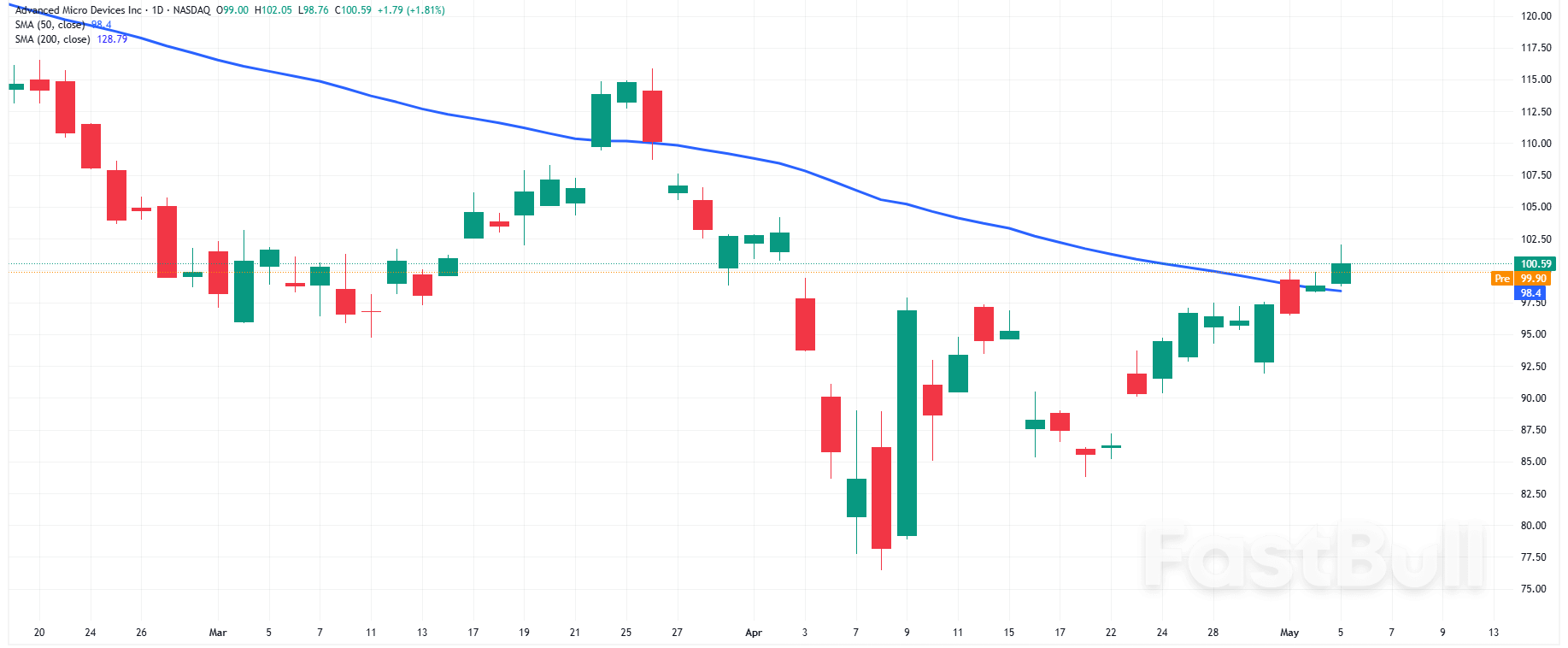
          The Day Ahead: China Talks, Fed Call, and Powell Set the Tone for Markets Today_1Daily Advanced Micro Devices (AMD)

          Advanced Micro Devices (AMD) rallied nearly 4% after topping Q1 expectations with EPS of $0.96 on $7.44B revenue vs. $0.94/$7.13B est.
          Electronic Arts (EA) jumped 5% on stronger-than-expected bookings of $1.80B vs. $1.56B est., along with upbeat FY26 guidance.
          Super Micro Computer (SMCI) dropped ~5% after missing Q3 estimates and issuing a weak outlook: $0.31 EPS vs. $0.50 est., and $4.60B revenue vs. $5.42B.
          Sarepta Therapeutics (SRPT) plunged 23% after cutting FY revenue guidance despite beating Q1 expectations.
          Upstart (UPST) sank 17% on weak forward guidance, even as Q1 results topped consensus.

          Notable Earnings – Wednesday, May 7

          Walt Disney (DIS) reports before the open (~11:30 GMT). UBS expects “resilient results” with strength in Parks and sports advertising, though macro pressure has led to a price target cut to $105 from $130. EPS guidance is expected to remain intact.
          Other names reporting premarket include Barrick Gold (GOLD), Emerson (EMR), Johnson Controls (JCI), and MarketAxess (MKTX). Key after-the-close reports (post-20:00 GMT) include Uber (UBER) and Carvana (CVNA).

          Technical Outlook

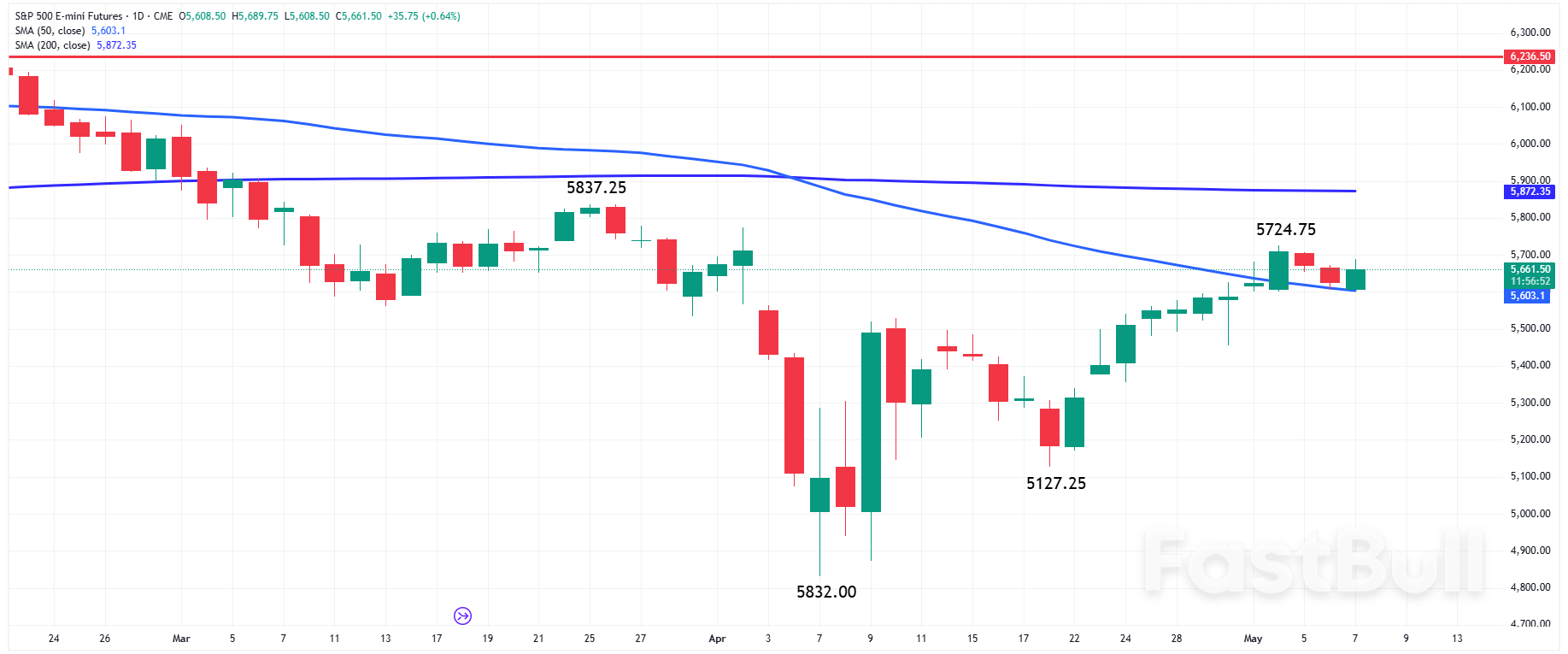
          The Day Ahead: China Talks, Fed Call, and Powell Set the Tone for Markets Today_2Daily E-mini S&P 500 Index

          The S&P 500 E-mini Futures (ES) are trading around 5,656.25 after reclaiming the 50-day SMA (5,603). Momentum is improving, but price remains below the 200-day SMA (5,872).
          The May 2 high at 5724.75 is short-term resistance, with a breakout needed to test the 5837.25 swing high. Tuesday’s low at 5,608.50 now acts as initial support. A failure to hold the 50-day could see a drop toward the 5,500–5,525 zone.

          Outlook

          With geopolitical sentiment improving and the Fed expected to hold rates, market focus will be on Powell’s 18:30 GMT press conference for any clues on timing of future cuts. Expect rate-sensitive volatility post-FOMC, while earnings will continue driving individual names, particularly in tech and consumer sectors.

          Source: fxempire

          To stay updated on all economic events of today, please check out our Economic calendar
          Risk Warnings and Disclaimers
          You understand and acknowledge that there is a high degree of risk involved in trading. Following any strategies or investment methods may lead to potential losses. The content on the site is provided by our contributors and analysts for information purposes only. You are solely responsible for determining whether any trading assets, securities, strategy, or any other product is suitable for investing based on your own investment objectives and financial situation.
          Add to Favorites
          Share

          Ethereum Faces Resistance At $1,850, Market Shows Exhaustion

          Michelle

          Cryptocurrency

          Ethereum Market Analysis - May 7, 2025

          Ethereum is consolidating below the $1,850 resistance level, indicating market exhaustion as of May 7, 2025.

          The ongoing consolidation under $1,850 is pivotal for market direction, as Ethereum's potential break could shift investor sentiment.

          Ethereum recently faced rejection at the $1,850 resistance level. Decreasing trading volume hints at market uncertainty, creating a narrow trading range between $1,775 and $1,850 as of early May. A potential breakout remains dependent on a daily close above $1,850.

          Despite struggles at this level, Ethereum's broader outlook remains cautiously optimistic, with analysts projecting a target between $2,000 and $2,150. This anticipated breakthrough would mark a significant market shift if realized. Current price action patterns reflect underlying accumulation phases suggesting possible upward moves.

          The dwindling trading volume signals investors are awaiting a clear direction before major moves. The consolidation under $1,850 impacts market psychology, potentially influencing short-term Ethereum trading strategies. As noted by Crypto News, "Ethereum is currently consolidating below a major resistance area after being rejected at the $1,850 zone." A potential breakout could reinvigorate the market, propelling Ethereum towards the psychological $2,000 mark.

          Analysts highlight the importance of technical indicators such as the Ichimoku Cloud, suggesting potential upward trends. As volume increases historically after price squeezes, Ethereum could see a renewed buying interest driving further gains, though risks of a price decline remain.

          Looking forward, market players will watch if bullish sentiment continues into June, potentially pushing Ethereum into a trading range between $2,700 and $2,900. Further analysis points to potential financial, technological, and investor shifts following current consolidation patterns affecting market forecasts. For ongoing crypto news updates and insights, visit Crypto news updates and insights.

          Source: CryptoSlate

          Risk Warnings and Disclaimers
          You understand and acknowledge that there is a high degree of risk involved in trading. Following any strategies or investment methods may lead to potential losses. The content on the site is provided by our contributors and analysts for information purposes only. You are solely responsible for determining whether any trading assets, securities, strategy, or any other product is suitable for investing based on your own investment objectives and financial situation.
          Add to Favorites
          Share

          World Shares Are Mixed Ahead of Fed’s Rate Decision

          Glendon

          Economic

          Stocks

          World shares were mixed on Wednesday as the U.S. Federal Reserve prepared to wrap up its policy meeting with virtually everyone expecting it to keep interest rates unchanged despite U.S. President Donald Trump’s calls for it to cut borrowing costs.

          Germany’s DAX was nearly unchanged at 23,250.56, while the CAC 40 in Paris slipped 0.5% to 7,661.64. Britain’s FTSE 100 shed 0.3% to 8,573.67.

          The futures for the S&P 500 and the Dow Jones Industrial Average were up about 0.6%.

          In Asia, shares advanced after the U.S. and China said they plan to hold trade talks in Switzerland later this week.

          Hong Kong’s benchmark briefly jumped more than 2% after officials in Beijing rolled out interest rate cuts and other moves to help support the Chinese economy and markets as higher tariffs ordered by Trump hit the country’s exports.

          But the markets’ reaction to both developments was relatively restrained.

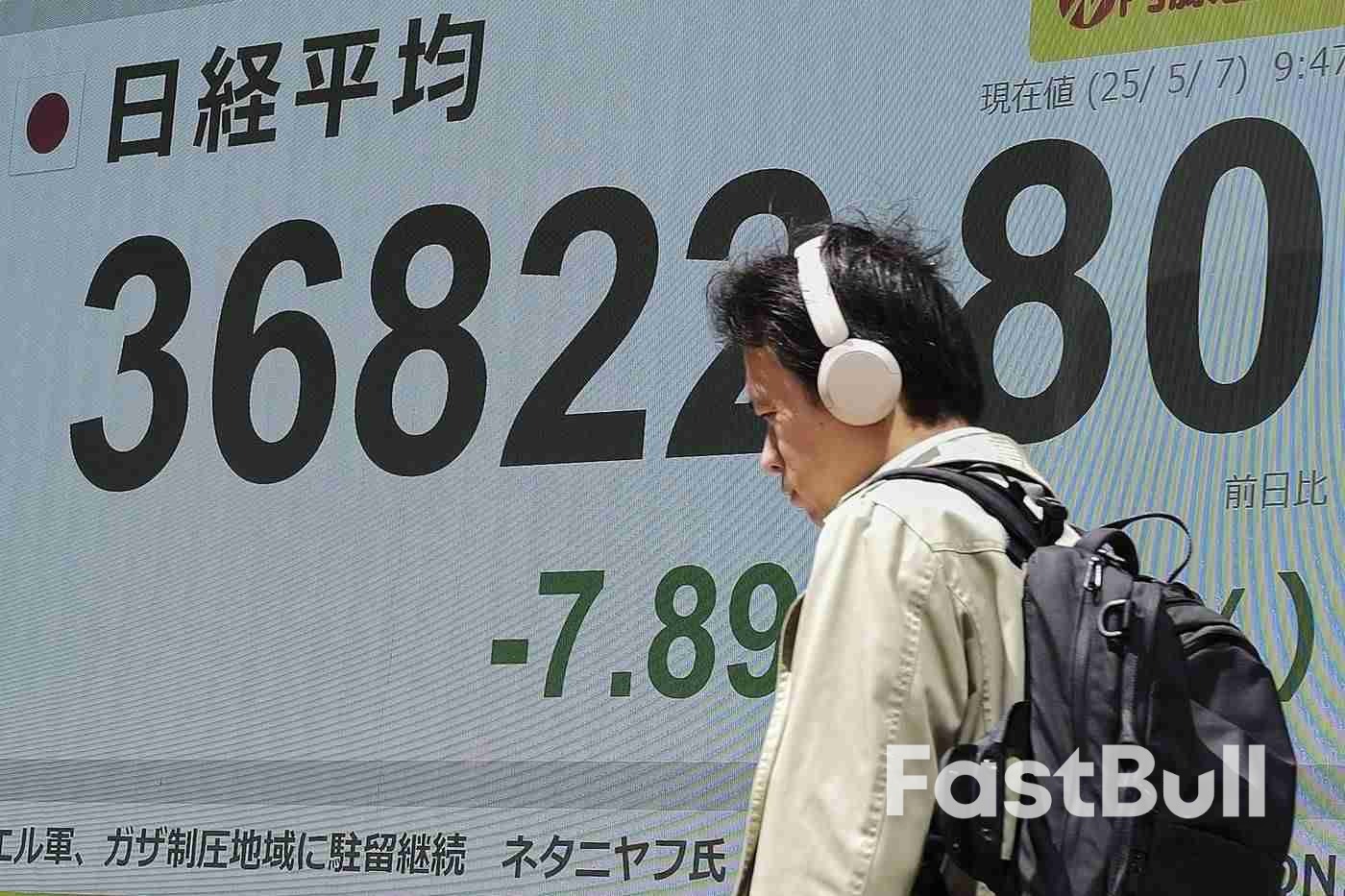
          Tokyo’s Nikkei 225 edged 0.1% lower to 36,779.66.

          The Hang Seng in Hong Kong gained only 0.1% by the end of trading, closing at 22,691.88. The Shanghai Composite index rose 0.8% to 3,342.67.

          The trade talks may account for the decision to announce the economic rescue package, Lynne Song of ING Economics said in a report.

          “This way, the easing won’t be seen as a knee-jerk reaction to tariffs. Policymakers are likely now privy to some of the early data on how the economy is being impacted by the tariff shock,” Song said.

          But analysts said the muted response to the policies announced Wednesday also may reflect disappointment over the lack of major government spending increases that many economists say may be needed to wrest the Chinese economy out of its doldrums.

          “These will help to shore up growth at the margin. But any boost to credit demand will be modest and today’s moves are no substitute for an expansion in fiscal support,” Julian Evans-Pritchard of Capital Economics said in a report.

          Australia’s S&P/ASX 200 picked up 0.3% to 8,178.30, while the Kospi in South Korea gained 0.6% to 2,573,80.

          On Tuesday, U.S. stocks closed lower as quarterly results showed more companies refraining from forecasting their future profits because of uncertainty created by Trump’s tariffs.

          The S&P 500 fell 0.8% in its second drop after breaking a nine-day winning streak, its longest such run in more than 20 years. The Dow dropped 0.9%, and the Nasdaq composite finished 0.9% lower.

          Palantir Technologies, which offers an AI platform for its customers, was one of the heaviest weights on the market as it sank 12%.

          AI-related companies have been finding it more difficult recently to convince investors to support their stocks after they’ve already shot so high. Palantir’s stock’s price remains near $110, when it was sitting at only $20 less than a year ago.

          Uncertainty around tariffs has made U.S. households more pessimistic about the economy and could affect their long-term plans for purchases. That uncertainty has helped fuel a surge in imports ahead of potentially more severe tariffs ahead.

          The U.S. trade deficit soared to a record $140.5 billion in March as consumers and businesses alike tried to get ahead of tariffs that went into effect in April and others that have been postponed until July. Last week, the government reported the U.S. economy shrank at a 0.3% annual pace during the first quarter of the year because of a surge in imports.

          Some companies say they’re already seeing impacts to their business from the uncertainty created by tariffs.

          DoorDash fell 7.4% after reporting weaker revenue than analysts expected for the latest quarter.

          Also early Wednesday, the yield on the 10-year Treasury rose to 4.32% from 4.31% late Tuesday.

          U.S. benchmark crude oil gained 54 cents to $59.63 per barrel. Brent crude, the international standard, gained 44 cents to $62.57 per barrel.

          The U.S. dollar rose to 143.39 Japanese yen from 142.41 yen. The euro fell to $1.1348 from $1.1369.

          Source: BNN BIoomberg

          To stay updated on all economic events of today, please check out our Economic calendar
          Risk Warnings and Disclaimers
          You understand and acknowledge that there is a high degree of risk involved in trading. Following any strategies or investment methods may lead to potential losses. The content on the site is provided by our contributors and analysts for information purposes only. You are solely responsible for determining whether any trading assets, securities, strategy, or any other product is suitable for investing based on your own investment objectives and financial situation.
          Add to Favorites
          Share

          GBPUSD on The Brink: Weak PMI And US Rate Expectations Could Shake The Market

          Glendon

          Economic

          Forex

          GBPUSD forecast: key trading points

          • UK construction PMI: previously at 46.4, projected at 46.0
          • Fed interest rate decision: previously at 4.5%, projected at 4.5%
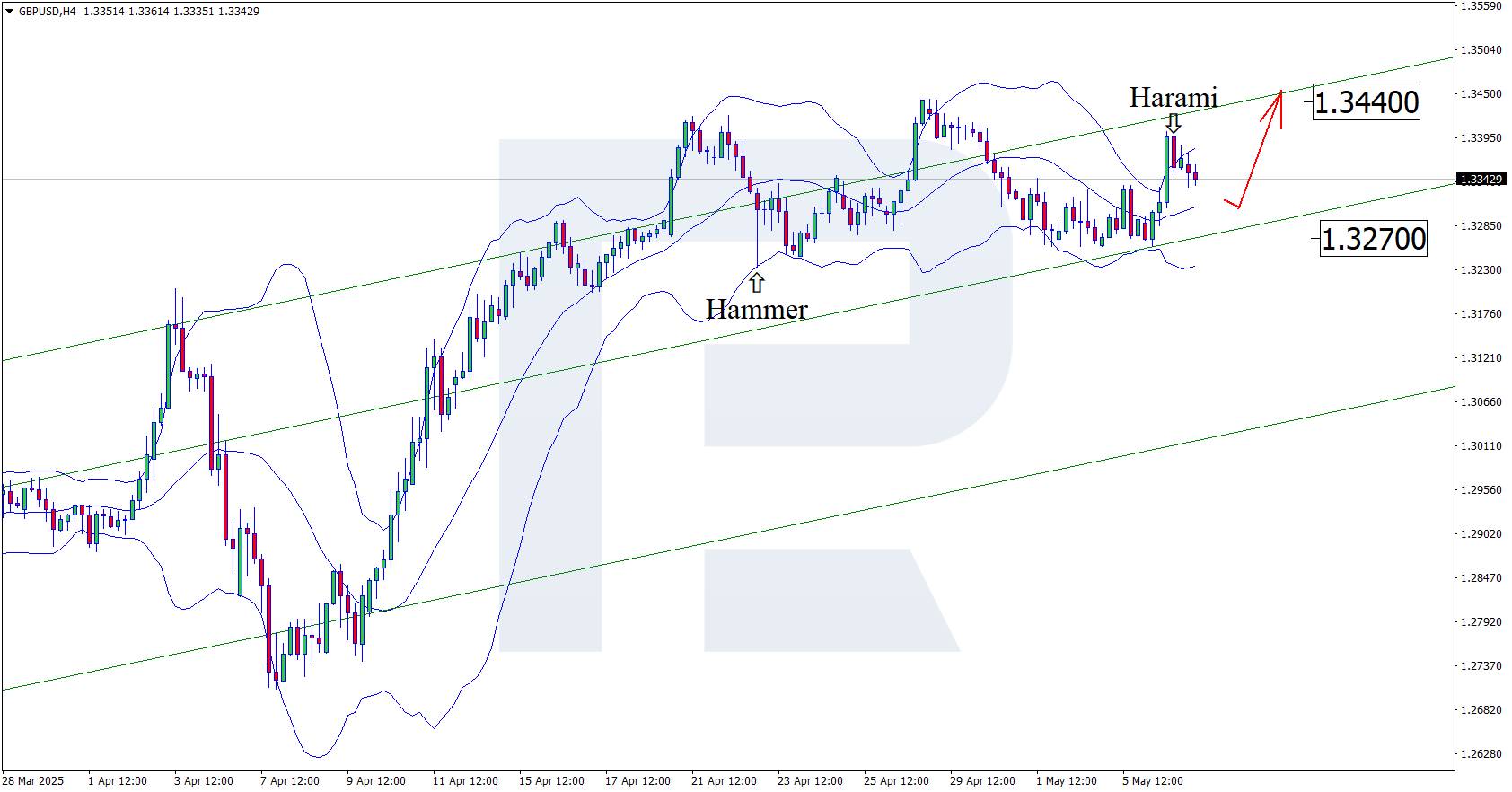
          • GBPUSD forecast for 7 May 2025: 1.3440 and 1.3270

          Fundamental analysis

          The UK construction PMI is a monthly gauge that reflects the performance of the country's construction sector. Compiled from purchasing manager surveys, it assesses new orders, employment, and business confidence in construction companies.

          A reading above 50.0 indicates growth, while a lower figure signals contraction.

          The forecast for 7 May 2025 suggests a further decline in the UK construction PMI to 46.0. Although not dramatic, the reading remains below the 50.0 threshold, which could be a negative factor for the pound and support the ongoing corrective wave.

          The GBPUSD forecast also hinges on the Federal Reserve’s interest rate announcement. Markets remain divided, intensifying uncertainty. While the consensus expects the rate to remain unchanged at 4.5%, the possibility of a shift cannot be ruled out. The announcement poses a serious challenge for investors and could significantly impact the GBPUSD rate.

          GBPUSD technical analysis

          Having tested the upper Bollinger Band, the GBPUSD price has formed a Harami reversal pattern on the H4 chart. It is now developing a corrective wave following the received signal. Since the pair remains within an ascending channel, and given today’s fundamental data from both the US and UK, the bullish wave will likely develop following a correction.

          The target for the pullback is 1.3270. A rebound from the support level could open the door for a more substantial upward movement.

          The GBPUSD forecast for today also takes into account an alternative scenario, where the price climbs to 1.3440 without testing the support level.

          Summary

          Alongside the GBPUSD technical analysis, a weaker UK construction PMI and the upcoming Federal Reserve rate decision suggest growth to 1.3440 after a correction.

          Source: RoboForex

          To stay updated on all economic events of today, please check out our Economic calendar
          Risk Warnings and Disclaimers
          You understand and acknowledge that there is a high degree of risk involved in trading. Following any strategies or investment methods may lead to potential losses. The content on the site is provided by our contributors and analysts for information purposes only. You are solely responsible for determining whether any trading assets, securities, strategy, or any other product is suitable for investing based on your own investment objectives and financial situation.
          Add to Favorites
          Share

          China Keeps on Adding Gold to Reserves As Challenges Stack Up

          Glendon

          Commodity

          Economic

          China expanded its gold reserves for a sixth straight month in April, underlining its push to boost holdings of the precious metal as prices trade near a record and the trade war rumbles on.

          Bullion held by the People’s Bank of China rose by about 70,000 troy ounces last month, according to data on Wednesday. In the latest six-month span, volumes have climbed by close to 1 million ounces or about 30 tonnes.

          Gold has rallied to successive records this year, supported by concerted central-bank buying as authorities seek to diversify holdings away from the US dollar. Bullion’s upswing — with prices up nearly 30% this year — has also been aided by rising investment demand as the US-led trade war unsettles financial markets, raises concern about US assets and drives haven demand.

          In China, there have been signs investors are piling into gold, with volumes on the Shanghai Futures Exchange surging to a record in recent weeks. The voracious onshore appetite has also seen the PBOC issuing fresh quotas for commercial banks to import bullion.

          At the same time, the authorities have moved to shore up support for the economy and set the stage for trade talks with senior US officials later this week. On Wednesday, Beijing reduced its policy rate and lowered the amount of cash lenders must keep in reserve, highlighting efforts to buttress growth.

          Central banks have increased their gold purchases roughly fivefold since 2022, after a freeze on Russian reserves, according to Goldman Sachs Group Inc, which has been among the most vocal bullion bulls in recent months. The trend is likely “a structural shift in reserve-management behaviour and we do not expect a near-term reversal”, analysts said in a March note.

          At that time, the bank estimated that the PBOC held around 8% of its reserves in gold, below the global average of about 20% and also far lower than the elevated share seen in some developed economies. If Beijing were targeting an allocation of 20% and maintained an average pace of about 40 tonnes a month, it would take about three years to reach that level, the analysts said.

          Spot’s gold latest peak came in April, when prices topped US$3,500 (RM14,836.49) an ounce. They’ve posted gains every month so far this year and were last at about US$3,387.

          Source: Theedgemarkets

          To stay updated on all economic events of today, please check out our Economic calendar
          Risk Warnings and Disclaimers
          You understand and acknowledge that there is a high degree of risk involved in trading. Following any strategies or investment methods may lead to potential losses. The content on the site is provided by our contributors and analysts for information purposes only. You are solely responsible for determining whether any trading assets, securities, strategy, or any other product is suitable for investing based on your own investment objectives and financial situation.
          Add to Favorites
          Share

          China RRR Cut: Significant PBOC Move to Boost Economy

          Michelle

          Forex

          Economic

          Big news from Beijing today! The People’s Bank of China (PBOC), the nation’s central bank, has just announced a significant move that could inject billions into the financial system and potentially send ripples across the global economy, including the ever-watchful crypto markets. We’re talking about a 0.5% cut to the reserve requirement ratio (RRR) for financial institutions.

          This announcement, made by PBOC Governor Pan Gongsheng on May 7th, according to state-owned People’s Financial News, is a key piece of China RRR cut policy aimed at stimulating lending and bolstering economic activity. But what exactly does this mean, and why should anyone outside of China care?

          What Exactly is the RRR Cut and Why Does it Matter?

          Let’s break down this central banking jargon. The reserve requirement ratio (RRR) is the percentage of deposits that commercial banks and other financial institutions must hold as reserves, either in their vaults or on deposit at the central bank (the PBOC in this case). Think of it like a safety buffer or a mandated savings account for banks.

          When the PBOC cuts the RRR, it effectively lowers the amount of money banks are required to hold in reserve. This frees up more capital that banks can then lend out to businesses and consumers. It’s a classic tool of monetary easing – making it easier and potentially cheaper for money to flow through the economy.

          Why does it matter? In simple terms, a lower RRR means:

          • More Money Available for Lending: Banks have more funds at their disposal.
          • Potential for Lower Interest Rates: Increased supply of loanable funds can put downward pressure on borrowing costs.
          • Stimulus for the Economy: Cheaper and more accessible credit can encourage investment, spending, and business expansion.

          For a massive economy like China’s, even a 0.5% cut can release a substantial amount of liquidity into the system. Estimates often place the amount of freed-up capital in the hundreds of billions of yuan.

          Why is the PBOC Implementing This Monetary Easing Now?

          Central banks don’t cut the RRR just because. Such a move is typically a response to economic conditions and a forward-looking attempt to steer the economy in a desired direction. While the official reasons provided by the PBOC might be framed around maintaining ample liquidity and supporting credit growth, the underlying context is often related to the health and pace of the China economy.

          Recent economic data from China has shown signs of uneven recovery post-pandemic. While some sectors perform well, others, particularly property and domestic consumption, have faced headwinds. Export growth has also seen fluctuations.

          By implementing this monetary easing, the PBOC is signaling its commitment to providing support to the economy. It’s a proactive step designed to counter potential slowdowns, boost confidence, and ensure that businesses have access to the funding they need to invest and hire, and that consumers feel confident enough to spend.

          Consider these potential drivers for the decision:

          • Supporting Economic Growth Targets: China sets annual GDP growth targets, and the PBOC’s policies are crucial in helping achieve them.
          • Addressing Deflationary Pressures: Sometimes, RRR cuts are used to combat falling prices by stimulating demand.
          • Stabilizing Key Sectors: Providing liquidity can help distressed sectors, though the impact on specific areas like property might be limited without targeted measures.

          This move is part of a broader toolkit the PBOC uses, alongside adjusting interest rates and other liquidity operations.

          How Could This PBOC Move Ripple Through the Global Economy?

          China isn’t just a large economy; it’s a global economic powerhouse. Its policies have significant international implications. A China RRR cut doesn’t happen in a vacuum; its effects can be felt far beyond its borders.

          Here are a few ways this monetary easing could influence the rest of the world:

          1. Impact on Commodity Markets: As a major consumer of raw materials, increased economic activity in China (driven by more lending and investment) can lead to higher demand for commodities like oil, metals, and agricultural products. This can influence global prices.

          2. Currency Movements: Monetary easing in China can potentially lead to a weaker yuan relative to other currencies as liquidity increases. This can affect trade dynamics and capital flows.

          3. Capital Flows and Investment: Increased global liquidity originating from China could seek opportunities abroad, potentially flowing into emerging markets or even developed economies, depending on investor sentiment and relative returns.

          4. Demand for Goods and Services: A healthier China economy means stronger demand for imported goods and services from other countries, benefiting trading partners.

          Essentially, when the world’s second-largest economy makes a move to boost its internal engines, the vibrations are felt globally through trade, finance, and market sentiment.

          What Does China’s Monetary Easing Mean for Crypto?

          Now, let’s get to the question many in our audience are likely asking: How does a central bank policy in China, seemingly unrelated to digital assets, potentially impact the crypto market?

          The connection is often indirect but significant, primarily through the lens of global liquidity and risk appetite.

          Here’s the thinking:

          • Increased Global Liquidity: When a major central bank like the PBOC injects liquidity into its system, it adds to the overall pool of money circulating globally. While much of this stays within China, some can find its way into international markets and various asset classes, including potentially riskier ones like cryptocurrencies.
          • Search for Yield/Returns: In an environment where traditional assets might offer lower returns due to easing policies (both in China and potentially elsewhere), investors might look towards alternative assets like crypto for higher potential gains.
          • Market Sentiment: A proactive easing measure from China can be interpreted in different ways. It could be seen positively as a sign that authorities are serious about supporting growth, boosting overall market confidence. Conversely, it could be seen negatively if it suggests the underlying economic problems are more severe than previously thought, leading to risk-off sentiment.
          • Comparison to Other Central Banks: As other major central banks (like the US Federal Reserve or the European Central Bank) contemplate their own monetary policies, China’s actions provide a point of comparison and can influence the global macroeconomic narrative that often impacts crypto valuations.

          It’s crucial to understand that this isn’t a direct pipeline from the PBOC to Bitcoin’s price. The impact is nuanced, filtered through global financial markets, investor psychology, and the specific dynamics of the crypto ecosystem. However, changes in the tide of global liquidity are always relevant for assets like crypto that operate on a global scale and are sensitive to macroeconomic shifts.

          Challenges and Potential Downsides

          While the intention behind the China RRR cut is positive – to stimulate the economy – such measures aren’t without potential drawbacks:

          • Inflationary Risks: Injecting too much liquidity can, in some scenarios, lead to inflationary pressures if not managed carefully.
          • Asset Bubbles: Easier credit could potentially fuel excessive speculation in certain asset classes, like real estate or stocks, leading to bubbles.
          • Effectiveness: The impact of an RRR cut depends on various factors, including banks’ willingness to lend, businesses’ appetite to borrow and invest, and consumer confidence. If underlying demand is weak, the effect might be muted.
          • Debt Levels: China already faces significant debt levels, particularly in the corporate and local government sectors. More lending, while intended to boost growth, could exacerbate debt risks if not channeled productively.

          These challenges mean that while the RRR cut is a notable event, its ultimate success depends on a confluence of factors and complementary policies.

          Actionable Insights (Not Financial Advice!)

          For those tracking markets, including crypto:

          • Monitor China’s Economic Data: Keep an eye on future releases regarding lending, investment, consumption, and GDP growth to gauge the effectiveness of this easing measure.
          • Watch Global Market Reactions: Observe how global equity, bond, and commodity markets respond to this news and subsequent data points from China.
          • Assess Global Liquidity Trends: Consider the PBOC’s action in the broader context of monetary policies being pursued (or considered) by other major central banks. Changes in overall global liquidity can influence risk asset performance.
          • Understand Nuance: Avoid drawing simplistic, direct lines between the RRR cut and specific asset price movements. The relationship is complex and influenced by many variables.

          Conclusion: A Significant Step in China’s Monetary Policy

          The 0.5% China RRR cut announced by the PBOC is a significant step in its ongoing efforts to support the China economy through monetary easing. By freeing up capital for lending, the central bank aims to stimulate investment, consumption, and overall growth.

          While primarily focused on domestic objectives, this action contributes to the pool of global liquidity and can have ripple effects on international markets, including potential indirect influences on the crypto landscape. As with any major policy intervention, its ultimate success and full impact will unfold over time, requiring careful observation of economic data and market responses.

          This move underscores the interconnectedness of the global financial system and highlights how actions by major central banks, even those seemingly distant from the world of digital assets, can be relevant for understanding broader market dynamics.

          Source: CryptoSlate

          To stay updated on all economic events of today, please check out our Economic calendar
          Risk Warnings and Disclaimers
          You understand and acknowledge that there is a high degree of risk involved in trading. Following any strategies or investment methods may lead to potential losses. The content on the site is provided by our contributors and analysts for information purposes only. You are solely responsible for determining whether any trading assets, securities, strategy, or any other product is suitable for investing based on your own investment objectives and financial situation.
          Add to Favorites
          Share
          FastBull
          Copyright © 2025 FastBull Ltd

          728 RM B 7/F GEE LOK IND BLDG NO 34 HUNG TO RD KWUN TONG KLN HONG KONG

          TelegramInstagramTwitterfacebooklinkedin
          App Store Google Play Google Play
          Products
          Charts

          Chats

          Q&A with Experts
          Screeners
          Economic Calendar
          Data
          Tools
          Membership
          Features
          Function
          Markets
          Copy Trading
          Latest Signals
          Contests
          News
          Analysis
          24/7
          Columns
          Education
          Company
          Careers
          About Us
          Contact Us
          Advertising
          Help Center
          Feedback
          User Agreement
          Privacy Policy
          Business

          White Label

          Data API

          Web Plug-ins

          Poster Maker

          Affiliate Program

          Risk Disclosure

          The risk of loss in trading financial instruments such as stocks, FX, commodities, futures, bonds, ETFs and crypto can be substantial. You may sustain a total loss of the funds that you deposit with your broker. Therefore, you should carefully consider whether such trading is suitable for you in light of your circumstances and financial resources.

          No decision to invest should be made without thoroughly conducting due diligence by yourself or consulting with your financial advisors. Our web content might not suit you since we don't know your financial conditions and investment needs. Our financial information might have latency or contain inaccuracy, so you should be fully responsible for any of your trading and investment decisions. The company will not be responsible for your capital loss.

          Without getting permission from the website, you are not allowed to copy the website's graphics, texts, or trademarks. Intellectual property rights in the content or data incorporated into this website belong to its providers and exchange merchants.

          Not Logged In

          Log in to access more features

          FastBull Membership

          Not yet

          Purchase

          Become a signal provider
          Help Center
          Customer Service
          Dark Mode
          Price Up/Down Colors

          Log In

          Sign Up

          Position
          Layout
          Fullscreen
          Default to Chart
          The chart page opens by default when you visit fastbull.com