• Trade
  • Markets
  • Copy
  • Contests
  • News
  • 24/7
  • Calendar
  • Q&A
  • Chats
Trending
Screeners
SYMBOL
LAST
BID
ASK
HIGH
LOW
NET CHG.
%CHG.
SPREAD
SPX
S&P 500 Index
6827.42
6827.42
6827.42
6899.86
6801.80
-73.58
-1.07%
--
DJI
Dow Jones Industrial Average
48458.04
48458.04
48458.04
48886.86
48334.10
-245.98
-0.51%
--
IXIC
NASDAQ Composite Index
23195.16
23195.16
23195.16
23554.89
23094.51
-398.69
-1.69%
--
USDX
US Dollar Index
97.910
97.990
97.910
98.070
97.890
-0.040
-0.04%
--
EURUSD
Euro / US Dollar
1.17398
1.17405
1.17398
1.17447
1.17262
+0.00004
0.00%
--
GBPUSD
Pound Sterling / US Dollar
1.33804
1.33813
1.33804
1.33856
1.33546
+0.00097
+ 0.07%
--
XAUUSD
Gold / US Dollar
4345.45
4345.79
4345.45
4350.16
4294.68
+46.06
+ 1.07%
--
WTI
Light Sweet Crude Oil
57.381
57.411
57.381
57.601
57.194
+0.148
+ 0.26%
--

Community Accounts

Signal Accounts
--
Profit Accounts
--
Loss Accounts
--
View More

Become a signal provider

Sell trading signals to earn additional income

View More

Guide to Copy Trading

Get started with ease and confidence

View More

Signal Accounts for Members

All Signal Accounts

Best Return
  • Best Return
  • Best P/L
  • Best MDD
Past 1W
  • Past 1W
  • Past 1M
  • Past 1Y

All Contests

  • All
  • Trump Updates
  • Recommend
  • Stocks
  • Cryptocurrencies
  • Central Banks
  • Featured News
Top News Only
Share

London Metal Exchange: Intends To Publish A Consultation On The Proposed Changes To Our Rules In Response To The Regime Early In2026

Share

London Metal Exchange: Announces Publication Of Update Describing How The London Metal Exchange Plans To Implement The Fca Policy Statement 25/1 On Commodity Reform

Share

USA - Listed Shares Of Gold Miners Rise Premarket After Gold Rises About 1%

Share

The Council Of The European Union: In Light Of The Situation In Venezuela, The Council Decided Today To Extend The Existing Restrictions For Another Year, Until 10 January 2027

Share

Ivory Coast 2025/26 Cocoa Arrivals Reached 894000 T By December 14 Versus 895000 T Year Ago - Exporters' Estimate

Share

Ishares MSCI Chile ETF Up 3.9% Premarket After Jose Antonio Kast Wins Chile's Presidential Election On Sunday

Share

Spain's Debt-To-GDP Ratio Falls To 103.2% In Third Quarter 2025

Share

China's Central Bank: Authorises DBS Bank As Yuan Clearing Bank In Singapore

Share

Bank Of Korea - South Korea Central Bank, Nps Agree To Extend Currency Swap Agreement For Another Year

Share

Poland's CPI At 0.1% Month-On-Month In November Versus 0.1% Released Earlier

Share

London Metal Exchange (LME): Copper Inventories Decreased By 25 Tons, Aluminum Inventories Decreased By 50 Tons, Nickel Inventories Increased By 360 Tons, Zinc Inventories Increased By 2,550 Tons, Lead Inventories Increased By 17,725 Tons, And Tin Inventories Increased By 125 Tons

Share

Polish Inflation At 2.5% Year-On-Year In November

Share

Poland's January-October Import Up 5.4% To 309.3 Billion Euros

Share

Poland's January-October Trade Balance At -5.1 Billion Euros

Share

Poland's January-October Export Up 2.8% To 304.3 Billion Euros

Share

Ceasefire Negotiations Between Ukraine And US Representatives In Berlin To Continue Monday Morning - German Source Familiar With The Schedule

Share

Spain's IBEX Hits Fresh Record High, Up Over 1%

Share

Spot Silver Rises Nearly 3% To $63.82/Oz

Share

France's Foreign Minister Says He Suggesd To EU's Kallas That US Representatives Brief EU Foreign Ministers On Gaza Peace Plan During Their Meeting

Share

India Trade Secretary: Prime Facie Don't See A Case Of Rice Dumping To USA And There Is No Active Investigation On That

TIME
ACT
FCST
PREV
France HICP Final MoM (Nov)

A:--

F: --

P: --

China, Mainland Outstanding Loans Growth YoY (Nov)

A:--

F: --

P: --

China, Mainland M2 Money Supply YoY (Nov)

A:--

F: --

P: --

China, Mainland M0 Money Supply YoY (Nov)

A:--

F: --

P: --

China, Mainland M1 Money Supply YoY (Nov)

A:--

F: --

P: --

India CPI YoY (Nov)

A:--

F: --

P: --

India Deposit Gowth YoY

A:--

F: --

P: --

Brazil Services Growth YoY (Oct)

A:--

F: --

P: --

Mexico Industrial Output YoY (Oct)

A:--

F: --

P: --

Russia Trade Balance (Oct)

A:--

F: --

P: --

Philadelphia Fed President Henry Paulson delivers a speech
Canada Building Permits MoM (SA) (Oct)

A:--

F: --

P: --

Canada Wholesale Sales YoY (Oct)

A:--

F: --

P: --

Canada Wholesale Inventory MoM (Oct)

A:--

F: --

P: --

Canada Wholesale Inventory YoY (Oct)

A:--

F: --

P: --

Canada Wholesale Sales MoM (SA) (Oct)

A:--

F: --

P: --

Germany Current Account (Not SA) (Oct)

A:--

F: --

P: --

U.S. Weekly Total Rig Count

A:--

F: --

P: --

U.S. Weekly Total Oil Rig Count

A:--

F: --

P: --

Japan Tankan Small Manufacturing Outlook Index (Q4)

A:--

F: --

P: --

Japan Tankan Large Non-Manufacturing Diffusion Index (Q4)

A:--

F: --

P: --

Japan Tankan Large Non-Manufacturing Outlook Index (Q4)

A:--

F: --

P: --

Japan Tankan Large Manufacturing Outlook Index (Q4)

A:--

F: --

P: --

Japan Tankan Small Manufacturing Diffusion Index (Q4)

A:--

F: --

P: --

Japan Tankan Large Manufacturing Diffusion Index (Q4)

A:--

F: --

P: --

Japan Tankan Large-Enterprise Capital Expenditure YoY (Q4)

A:--

F: --

P: --

U.K. Rightmove House Price Index YoY (Dec)

A:--

F: --

P: --

China, Mainland Industrial Output YoY (YTD) (Nov)

A:--

F: --

P: --

China, Mainland Urban Area Unemployment Rate (Nov)

A:--

F: --

P: --

Saudi Arabia CPI YoY (Nov)

A:--

F: --

P: --

Euro Zone Industrial Output YoY (Oct)

--

F: --

P: --

Euro Zone Industrial Output MoM (Oct)

--

F: --

P: --

Canada Existing Home Sales MoM (Nov)

--

F: --

P: --

Euro Zone Total Reserve Assets (Nov)

--

F: --

P: --

U.K. Inflation Rate Expectations

--

F: --

P: --

Canada National Economic Confidence Index

--

F: --

P: --

Canada New Housing Starts (Nov)

--

F: --

P: --

U.S. NY Fed Manufacturing Employment Index (Dec)

--

F: --

P: --

U.S. NY Fed Manufacturing Index (Dec)

--

F: --

P: --

Canada Core CPI YoY (Nov)

--

F: --

P: --

Canada Manufacturing Unfilled Orders MoM (Oct)

--

F: --

P: --

U.S. NY Fed Manufacturing Prices Received Index (Dec)

--

F: --

P: --

U.S. NY Fed Manufacturing New Orders Index (Dec)

--

F: --

P: --

Canada Manufacturing New Orders MoM (Oct)

--

F: --

P: --

Canada Core CPI MoM (Nov)

--

F: --

P: --

Canada Trimmed CPI YoY (SA) (Nov)

--

F: --

P: --

Canada Manufacturing Inventory MoM (Oct)

--

F: --

P: --

Canada CPI YoY (Nov)

--

F: --

P: --

Canada CPI MoM (Nov)

--

F: --

P: --

Canada CPI YoY (SA) (Nov)

--

F: --

P: --

Canada Core CPI MoM (SA) (Nov)

--

F: --

P: --

Canada CPI MoM (SA) (Nov)

--

F: --

P: --

Federal Reserve Board Governor Milan delivered a speech
U.S. NAHB Housing Market Index (Dec)

--

F: --

P: --

Australia Composite PMI Prelim (Dec)

--

F: --

P: --

Australia Services PMI Prelim (Dec)

--

F: --

P: --

Australia Manufacturing PMI Prelim (Dec)

--

F: --

P: --

Japan Manufacturing PMI Prelim (SA) (Dec)

--

F: --

P: --

U.K. Unemployment Claimant Count (Nov)

--

F: --

P: --

U.K. Unemployment Rate (Nov)

--

F: --

P: --

U.K. 3-Month ILO Unemployment Rate (Oct)

--

F: --

P: --

Q&A with Experts
    • All
    • Chatrooms
    • Groups
    • Friends
    Connecting
    .
    .
    .
    Type here...
    Add Symbol or Code

      No matching data

      All
      Trump Updates
      Recommend
      Stocks
      Cryptocurrencies
      Central Banks
      Featured News
      • All
      • Russia-Ukraine Conflict
      • Middle East Flashpoint
      • All
      • Russia-Ukraine Conflict
      • Middle East Flashpoint
      Search
      Products

      Charts Free Forever

      Chats Q&A with Experts
      Screeners Economic Calendar Data Tools
      Membership Features
      Data Warehouse Market Trends Institutional Data Policy Rates Macro

      Market Trends

      Market Sentiment Order Book Forex Correlations

      Top Indicators

      Charts Free Forever
      Markets

      News

      News Analysis 24/7 Columns Education
      From Institutions From Analysts
      Topics Columnists

      Latest Views

      Latest Views

      Trending Topics

      Top Columnists

      Latest Update

      Signals

      Copy Rankings Latest Signals Become a signal provider AI Rating
      Contests
      Brokers

      Overview Brokers Assessment Rankings Regulators News Claims
      Broker listing Forex Brokers Comparison Tool Live Spread Comparison Scam
      Q&A Complaint Scam Alert Videos Tips to Detect Scam
      More

      Business
      Events
      Careers About Us Advertising Help Center

      White Label

      Data API

      Web Plug-ins

      Affiliate Program

      Awards Institution Evaluation IB Seminar Salon Event Exhibition
      Vietnam Thailand Singapore Dubai
      Fans Party Investment Sharing Session
      FastBull Summit BrokersView Expo
      Recent Searches
        Top Searches
          Markets
          News
          Analysis
          User
          24/7
          Economic Calendar
          Education
          Data
          • Names
          • Latest
          • Prev

          View All

          No data

          Scan to Download

          Faster Charts, Chat Faster!

          Download App
          English
          • English
          • Español
          • العربية
          • Bahasa Indonesia
          • Bahasa Melayu
          • Tiếng Việt
          • ภาษาไทย
          • Français
          • Italiano
          • Türkçe
          • Русский язык
          • 简中
          • 繁中
          Open Account
          Search
          Products
          Charts Free Forever
          Markets
          News
          Signals

          Copy Rankings Latest Signals Become a signal provider AI Rating
          Contests
          Brokers

          Overview Brokers Assessment Rankings Regulators News Claims
          Broker listing Forex Brokers Comparison Tool Live Spread Comparison Scam
          Q&A Complaint Scam Alert Videos Tips to Detect Scam
          More

          Business
          Events
          Careers About Us Advertising Help Center

          White Label

          Data API

          Web Plug-ins

          Affiliate Program

          Awards Institution Evaluation IB Seminar Salon Event Exhibition
          Vietnam Thailand Singapore Dubai
          Fans Party Investment Sharing Session
          FastBull Summit BrokersView Expo

          Foreign Exchange Rate Forecasts For 2022-2023 From Investment Bank JP Morgan

          Damon
          Summary:

          2022-2023 exchange rate forecasts from investment bank JP Morgan - update April 2022. apid Fed rate hikes and global stagflation will boost the dollar with USD/JPY above 130.
          US Dollar (USD) Rates Remain in Global Pole Position

          JP Morgan expects the Federal Reserve to sanction a string of interest rate hikes which will support the US dollar, especially in relative terms.
          "We expect the US to hike 225bps this year, matched only in magnitude by the BoC. At the least, this should buoy US yield levels as the Fed approaches neutral, particularly as other central banking peers are starting to show somewhat greater concern around their future growth outlooks."
          The bank also expects that the dollar will benefit from global stagflation fears as the global economy faces important challenges.
          It adds; "USD continues to benefit from all three phases of our stagflationary framework; this is unlikely to abate soon."
          Firstly, JP Morgan expects that interest rate hikes which damage growth will not provide currency support.
          It also expects that net change in terms of trade will underpin the dollar while traditional defensive currencies such as the yen will struggle to gain sustained support if there are adverse yield spreads.
          Overall; "The net effect is to raise our broad-dollar forecasts by an average of 1.5% across the forecast horizon."

          Ukraine War will Hurt the Euro (EUR) Rates

          JP Morgan has raised its interest rates forecast, but does not consider that this is Euro positive.
          "Our new call is for an ECB hike in the July meeting, but since this is motivated by higher inflation and despite softer growth we don't view this as a supportive factor for EUR/USD."
          In this environment, it expects that the Euro will remain vulnerable to downward pressure.
          "We formalise the belief inherent in our high-conviction short EUR/USD trade recommendation that EUR will test the covid lows close to 1.06 before the crisis has run its course."
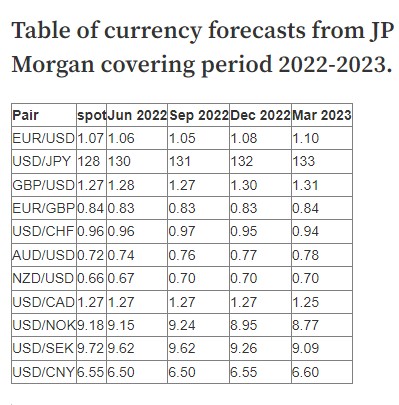
          It has a Euro to Dollar (EUR/USD) exchange rate forecasts of 1.05 on a 3-month view.
          The bank does, however, expect that a low point will potentially be seen during the third quarter; "We look for the trough by the early autumn before a combination of peak Fed pricing and a more assertive ECB services to provide EUR with some belated support."
          It expects that Yield Spreads will maintain Yen vulnerability and adds; "In our view, the cleanest expression of higher US yields remains long USD/JPY."
          The bank has increased its year-end dollar to Yen (USD/JPY) forecast to 133.
          In contrast, JP Morgan expects that the Swiss franc will maintain a strong tone.
          It expects global inflation differentials will underpin the Swiss currency; "The inflation unleashed by the Ukraine invasion and before that post-covid re-opening is fundamentally bullish for CHF."
          Following recent intervention, it does not expect the National Bank will abandon efforts to control the currency, limiting potential gains. "This renewed bout of intervention suggests to us that the SNB is not yet ready to accept a completely clean float."

          Economic Vulnerability Hampers Pound Sterling (GBP)

          JP Morgan remains broadly negative on the UK currency on fundamentals grounds with downward pressure on growth and upward pressure on inflation.
          It adds; "Stagflationary pressures are more acute in the UK than pretty much anywhere else."
          It expects the BoE will raise rates to 2.50% at the end of 2023 compared with market expectations of 2.75%.
          JP Morgan also does not expect that Bank of England rate hikes will support the UK currency.
          "We see little reason to suppose that further front-loaded tightening will prove any more positive for GBP."
          It also notes that real yields will remain negative for the currency which will tend to sap support.
          Nevertheless, it expects the Pound will edge higher from current spot levels with a substantial amount of bad news priced in.

          Net Positives for Commodity Complex

          Commodity currencies are forecast to make limited net gains during the forecast period.
          JP Morgan considers that a hawkish Bank of Canada stance will support the Canadian dollar, although this is likely to be seen against other pairs rather than the US dollar; "CAD's prospects overall remain solid, though we maintain that strength should manifest more on the crosses."
          The Canadian currency is also likely to be hampered by vulnerabilities in the global economy as financial conditions tighten; "CAD is geared to global growth momentum, which continues to be negatively-affected by higher commodity prices."
          The bank expects that the Australian dollar will be boosted by the strength of commodity prices and boost to the terms of trade.
          In contrast, JP Morgan expects that the New Zealand dollar will tend to under-perform due to some domestic vulnerability.
          Although inflation pressures are strong, it notes weakness in house prices and expectations of the peak New Zealand rates are liable to decline which will limit currency support.

          Foreign Exchange Rate Forecasts For 2022-2023 From Investment Bank JP Morgan_1Source: ExchangeRates

          Risk Warnings and Disclaimers
          You understand and acknowledge that there is a high degree of risk involved in trading. Following any strategies or investment methods may lead to potential losses. The content on the site is provided by our contributors and analysts for information purposes only. You are solely responsible for determining whether any trading assets, securities, strategy, or any other product is suitable for investing based on your own investment objectives and financial situation.
          Comments
          Add to Favorites
          Share

          U.S. Economy Still Has Inflationary Pressures, and the Fed's Rate Hike Process Is Hardly Aggressive

          Samantha Luan

          Central Bank

          On May 3-4, the Fed will hold its third monetary policy meeting in 2022. The market expects the Fed to accelerate the pace of interest rate hikes, raising rates by 50 basis points at the May monetary policy meeting.
          At the March meeting, the Fed raised rates by 25 basis points to a target range of 0.25%-0.5%. Minutes released three weeks later showed that some Fed officials were inclined to raise rates by 50 basis points at that meeting but only supported a 25 basis point hike, given the uncertainty over the Russia-Ukraine conflict.
          The Fed's third, New York Fed Governor Williams, said in an interview on April 15 that a 50 basis point rate hike at the May meeting was a reasonable choice for the Fed because the Fed's policy rate is too low and "we need to push monetary policy back to a more neutral level."
          Currently, the market's accepted neutral rate is 2.4%, but even if the Fed raises rates to that level, it is still substantially lower than current U.S. inflation.
          The U.S. Labor Department released two key inflation indicators on April 12-13, with the U.S. Consumer Price Index (CPI) and Producer Price Index (PPI) rising 8.5% and 11.2% year-over-year in March, wherein the former stands at a 40-year high, and the latter stands at its highest level since records began in November 2010. The Fed's preferred inflation indicator, the U.S. Personal Consumption Expenditures Price Index (PCE), also rose by 6.4% year-over-year in February.

          1. Core Inflationary Pressures Remain

          After the release of two inflation data in March, the market will be interpreted as an "inflation peak" in the U.S., as used-car prices began to decline, contributing to curbing core inflation. Excluding energy and food prices, the U.S. core CPI rose 0.3% in March, down from 0.5% in February.
          Brainard, awaiting confirmation by the U.S. Senate of her nomination for Fed vice chairman, said the slowdown in core inflation in March was "very welcome." While the monthly data does not give many signals, the trend will be watched carefully.
          However, U.S. inflation is a different story considering the role of food and energy prices on inflation. In our view, as the Russia-Ukraine conflict continues, it is impossible to predict whether food and energy prices will fall, driving down overall inflation. In addition, some problems are unresolved, such as the auto chip shortage and the sharp rise in U.S. rents.
          Therefore, the country's core inflationary pressure remains.
          U.S. Economy Still Has Inflationary Pressures, and the Fed's Rate Hike Process Is Hardly Aggressive_1

          2. It Is Difficult to Raise Interest Rates Aggressively

          St. Louis Fed Governor Bullard, the most hawkish member of the Fed, stated after the release of March inflation data that the Fed should raise interest rates to 3.5% by the end of 2022. If his suggestion is followed, the Fed will raise rates by at least 50 basis points at each of the remaining six meetings in 2022.
          This view is too one-sided, and if rates are raised too quickly, it could cause another question about whether the Fed can engineer the U.S. economy to a soft landing. Fed Chairman Jerome Powell confessed after the March monetary policy meeting that achieving a soft landing for the U.S. economy under current circumstances is not an easy task and that "monetary policy is a blunt instrument that cannot be done with surgical precision."
          Based on forecasts given at the Fed's March monetary policy meeting, we believe that this round of rate hikes will end in 2023 when the federal funds rate rises to 2.8%, U.S. GDP growth will fall to 2.2%, inflation will fall to 2.7%, and the unemployment rate will be nearly unchanged. Keep in mind that in the history of the Fed, there are only a handful of successful experiences that can significantly reduce inflation and not significantly push up the unemployment rate at the same time.
          Risk Warnings and Disclaimers
          You understand and acknowledge that there is a high degree of risk involved in trading. Following any strategies or investment methods may lead to potential losses. The content on the site is provided by our contributors and analysts for information purposes only. You are solely responsible for determining whether any trading assets, securities, strategy, or any other product is suitable for investing based on your own investment objectives and financial situation.
          Comments
          Add to Favorites
          Share

          Euro Parity Anybody?

          Devin
          Trying to manage a coherent approach to monetary policy has faced its challenges over the last 12 years, and was something previous President of the ECB, Mario Draghi managed to navigate with skill and some aplomb, although being Italian he also had a lot of skin in the game, when it came to navigating the contradictions inherent in monetary union. Draghi was also lucky that inflationary concerns weren't a problem for the entirety of his 8-year tenure.
          Sadly, for his successor, Christine Lagarde she faces a whole host of different problems, including a war on Europe's doorstep, as Russia looks at running over Ukraine, and potentially looking to interfere in Moldova as well, and an inflation rate that varies from 4.5% in France to 15.2% in Estonia.
          With energy prices set to remain high for quite some time and these costs set to filter through into core prices in the coming months, the ECB facing the prospect of having to raise rates into the teeth of an economic slowdown, or stagflationary environment, while the US Federal Reserve has signalled it not only wants to hike rates from 0.5% to over 3% in the next 12 months.
          That's even without pricing in the prospect that the US central bank could start looking at winding down its balance sheet, with talk circulating that this could start as soon as next week to the tune of $95bn a month.
          Even if the ECB were to start hiking rates as soon as July that still leaves a lot of open water when it comes to rate differentials, and that's even before you start to price in the fact that Europe is a lot more sensitive to energy price rises to their reliance on Russian energy.
          EU CPI is already at a record high of 7.6%,and could go higher this week for May, and the weakness in the euro is only likely to exacerbate this trend of higher prices with commodity prices at multi year highs across the board.
          The ECB has said it isn't seeing any signs of stagflation, yet it seems to be in denial, and with little sign of a de-escalation by Russia as it weaponizes energy supplies, its highly likely that the ECB's room to raise rates could well be very limited.
          This in turn could increase downward pressure on EURUSD having seen the exchange rate fall below 1.0600 and below the levels we saw in March 2020.
          Euro Parity Anybody?_1Since the single currency peaked at a record high of 1.6020 back in 2008 the single currency has been on a slow downward track, with the most recent low back in January 2017 at 1.0340.
          Over the last five years the euro has traded in a triangular like consolidation with a peak in March 2018 at 1.2555, and a reaction low at 1.0636, which we saw in March 2020, as the first lockdowns were announced.
          This week's break below the March 2020 lows is not a promising sign from a technical standpoint and could signal further weakness towards 1.0340 in the short term. More worryingly the break of those lows also points to the prospect that we could see a move towards parity, as well as a measured move towards 0.9660.
          These types of price breakouts on a triangle basis, if confirmed on a monthly close, tend to take some time to play out, so we're not talking an imminent move lower, but unless we get a strong recovery off current levels, and above 1.0850, the ECB may well be faced with a bigger problem of whether to raise rates. It could be facing a sharp move lower towards parity, and a move back towards levels last seen over 20 years ago.

          Source: CMC

          Risk Warnings and Disclaimers
          You understand and acknowledge that there is a high degree of risk involved in trading. Following any strategies or investment methods may lead to potential losses. The content on the site is provided by our contributors and analysts for information purposes only. You are solely responsible for determining whether any trading assets, securities, strategy, or any other product is suitable for investing based on your own investment objectives and financial situation.
          Comments
          Add to Favorites
          Share

          China Demand Concerns Weigh on Oil

          Damon
          ICE Brent settled more than 1.5% lower on the day and this weakness has continued in early morning trading in Asia today. China continues to be a key concern for the oil market. The Covid situation in China appears to be moving in the wrong direction with Beijing seeing a spike in cases over the weekend. China’s zero-covid policy means that oil demand will be taking a hit as authorities try to bring the outbreak under control. Refiners have already cut operating rates significantly due to lower demand. There are reports that state refiner, Sinopec, cut rates at two refiners in Shanghai by around 18% over the first 20 days of April. Weaker demand and growing refined product stocks could offer some relief to the tightness in global refined product markets, particularly when it comes to middle distillates. Though in order to see a meaningful increase in export supply, we would likely need to see the government issue further export quotas to refiners.
          Middle distillate inventories remain tight in all regions. In NW Europe, gasoil stocks held in ARA stand at 1.44mt, down 24kt over the week, which is the lowest level seen at this stage of the year since 2008. While in Singapore, middle distillate stocks stand at 9MMbbls and have increased by a sizeable 1.41MMbbls over the last week. However, inventories still remain below the 5-year average. The tightness in middle distillates is reflected in the strength of gasoil cracks, which are sending a very clear signal to refiners to maximise their middle distillate yields.
          Libya is set to restart oil production over the next few days at fields which were previously shut due to protests. Libyan oil output had fallen by about 500Mbbls/d, with both the Sharara and El Feel fields shut.
          Metals
          Growing headwinds saw industrial metals sold off on Friday along with other risk assets. The USDCNH also saw its largest rally since March 2020 on Friday which reinforced the bearish outlook for China’s demand with a weaker yuan hurting purchasing power.
          While most base metals fell on Friday, zinc managed to close almost flat as the metal is still on high alert and risks facing a squeeze. On-warrant stocks for zinc fell by 11.3kt on Friday (a third straight day of declines) to 34kt (lowest since November 2019). The majority of the drawdown came from warehouses in Singapore and Malaysia. Total exchange inventories for zinc have fallen for 21 consecutive days now with overall stocks standing at 103.3kt - the lowest level since June 2020.
          On the Covid front, little progress has been made in Shanghai in terms of lockdowns of residents although there are reports of reduced restrictions in logistics in the surrounding provinces. However, cases are still rising elsewhere, such as in the capital city, Beijing, which saw rising infections over the weekend. Authorities are on high alert and residents have rushed to stockpile food and daily necessities. The Covid containment measures in China have started to show their impact in the latest survey data. According to Shanghai Metals Market (SMM), operating rates of major aluminium semi fabricators fell by 3.3% to 64.5% (lowest in almost two months) last week. The decline came from reduced orders due to Covid-related lockdowns in eastern China, whilst raw materials supply also remained disrupted.
          Lastly, the latest CFTC data shows that speculators cut their net long position in COMEX copper, selling 3,293 lots over the last reporting week, and leaving them with a net long of 25,393 lots as of last Tuesday. As for precious metals, speculators trimmed their net longs in COMEX gold by 19,697, to leave them with a net long of 124,967 lots.

          Source: ING

          Risk Warnings and Disclaimers
          You understand and acknowledge that there is a high degree of risk involved in trading. Following any strategies or investment methods may lead to potential losses. The content on the site is provided by our contributors and analysts for information purposes only. You are solely responsible for determining whether any trading assets, securities, strategy, or any other product is suitable for investing based on your own investment objectives and financial situation.
          Comments
          Add to Favorites
          Share

          Asian Currencies Weaken as Global Risk Aversion Weighs

          Owen Li
          Most Asian currencies weakened against a stronger US dollar on Wednesday as expectations that the US Federal Reserve will hike interest rates aggressively next week and fears of a sharp slowdown in China prompted investors towards safer bets.
          The US dollar index, which measures the greenback against a basket of currencies, stood at its highest level since the early days of the pandemic in March 2020, with the yield on benchmark 10-year Treasury notes sliding 5.5 basis points.
          "With risk assets continuing to show instability and markets having now made a conviction call on the Fed's aggressive tightening cycle, the dollar has likely found a new floor," ING analysts wrote.
          While investors prepare themselves for a potential half-point interest rate hike in the world's largest economy when the US Fed meets on May 3-4, "for Asia rates, the backdrop remains challenging", DBS analyst Eugene Leow said.
          "Underperformance of Asia rates is likely in the near term."
          Most currencies in Southeast Asia were in the red. The Thai baht slipped to its weakest level since May 2017, while the Taiwan dollar weakened 0.3%.
          Thailand's central bank said on Tuesday it was closely monitoring the baht and was ready to take action if the unit turns unusually volatile, adding that the factors influencing local currency moves were mainly external.
          The South Korean won dropped more than 1% to its lowest level since March 2020 as North Korean leader Kim Jong Un pledged to speed up development of his country's nuclear arsenal.
          North Korea's state media showed him overseeing a huge military parade that displayed intercontinental ballistic missiles on Monday night.
          South Korea's foreign exchange authorities were suspected of selling US dollars to curb the won's fall on Wednesday, two dealers told Reuters.
          Bucking the trend, the Philippine peso firmed 0.1% against the US dollar. The country's central bank is expected to consider a rate hike at its policy meeting in June to keep inflation under control, its governor said in a television interview on Tuesday.
          The country's benchmark index fell to over a month low following the news. Philippines has kept its key rates unchanged at record lows since November 2020.
          Stock markets across the region were trading in red, coming off the back of a weak Wall Street session overnight, where the Nasdaq closed at its lowest level since December 2020.
          "Equities went through another rough session as the theme of global monetary tightening and slowing growth continued to resonate loudly across markets," analysts at ING said.

          Highlights

          Thailand's 10-year government bond yields are down 32.39 basis points at 2.79%
          In Philippines, top index losers are JG Summit Holdings Inc down 3.9%; Aboitiz Equity Ventures Inc down 2.9%

          Source: Reuters

          Risk Warnings and Disclaimers
          You understand and acknowledge that there is a high degree of risk involved in trading. Following any strategies or investment methods may lead to potential losses. The content on the site is provided by our contributors and analysts for information purposes only. You are solely responsible for determining whether any trading assets, securities, strategy, or any other product is suitable for investing based on your own investment objectives and financial situation.
          Comments
          Add to Favorites
          Share

          Will the BoJ tackle JPY weakness on Thursday?

          Devin

          Central Bank

          Weakness in the JPY is a mixed blessing to Japan. On one hand, the weak JPY boosts Japanese exports, but on the other hand, the rising input costs for importers increase expenses. In short, Japan is growing increasingly uncomfortable with a very weak JPY. The JPY has been the weakest of the G8 currencies this year losing nearly 10%.
          Japan’s finance minister Suzuki has recently stated that he discussed the possibility of currency intervention with Janet Yellen to halt some of the falls in the JPY. See here. So, this puts the BoJ meeting this week in intense focus for investors.

          BoJ in focus

          The surge higher in US 10-year yields on bullish Fed expectations for their May FOMC meeting has been making things harder for the JPY as the USD keeps gaining. The question now is whether the BoJ will act to halt the Yen weakness on Thursday. Here are the main options:
          1.The BoJ could widen the bond yield target from 0.25 bps on the upside to 0.50 bps. This would get reduce of some of the yield differentials between the US and Japanese bonds and allow the Yen to retrace.
          2.The BoJ could increase rates. The unlikely option, but still they could.
          3.The BoJ could simply express growing concern over JPY weakness and give an indication of future intent. This could alleviate some near-term JOY weakness.
          4.The BoJ could do nothing and leave it for government intervention.
          This is not a calendar event to front run and there is a genuine risk that the BoJ postpone action at this meeting and leave it to Japanese Government officials to try and tackle. However, any traders who are short the JPY would be wise to take profit ahead of Thursday’s meeting as Governor Kuroda has surprised markets in the past and could do so again in Thursday. If the BoJ hike rates or extend the end yield target on the 10’s then expect the JPY to strengthen into the weekend and that would be best expressed through USDJPY shorts. Always manage risk.Will the BoJ tackle JPY weakness on Thursday?_1

          Source: HYCM

          Risk Warnings and Disclaimers
          You understand and acknowledge that there is a high degree of risk involved in trading. Following any strategies or investment methods may lead to potential losses. The content on the site is provided by our contributors and analysts for information purposes only. You are solely responsible for determining whether any trading assets, securities, strategy, or any other product is suitable for investing based on your own investment objectives and financial situation.
          Comments
          Add to Favorites
          Share

          King Dollar Strength Accelerates Amid Multiple Risks

          Owen Li
          The Dow Jones slipped by more than 400 points while the tech-heavy Nasdaq 100 index fell by 330 points. Investors have been worried about the ongoing lockdowns in China and the thinning margins by most industrial companies. On Tuesday, General Electric said that it expects that its adjusted free cash flow will be negative in the second quarter. Its stock crashed by more than 12% after the news. On the other hand, technology giants like Microsoft and Alphabet reported strong quarterly results. Tesla shares fell by more than 10% after Elon Musk's decision to acquire Twitter.
          The US dollar rose as global risks and the fear and greed index slipped to the fear level. Data published by Conference Board showed that consumer confidence declined from 107.6 to 107.3. This decline was worse than the median estimate of 108. Further data revealed that new home sales declined from 835k in February to 763k in March. Again, this drop was worse than the expected 765k. Meanwhile, the house price index rose from 1.6% to 2.1%. Durable goods orders rose by 0.8%. Still, these numbers will not change the Fed's decision to be more hawkish.
          The price of crude oil rose after Germany unveiled its plan to end its dependence on Russian oil. In a statement, the country's economy minister said that it could end this dependence within days, after saying that it would take till the end of the year. In the statement, he said that the country now imports about 12% of oil from Russia, down from 35% since February. There was also optimism in China as government officials started ending the lockdown that has been going on in Shanghai. The EIA will publish the latest inventories data. After falling by over 8 million in the previous week, analysts expect that inventories rose to over 2.16 million barrels.

          XBR/USD

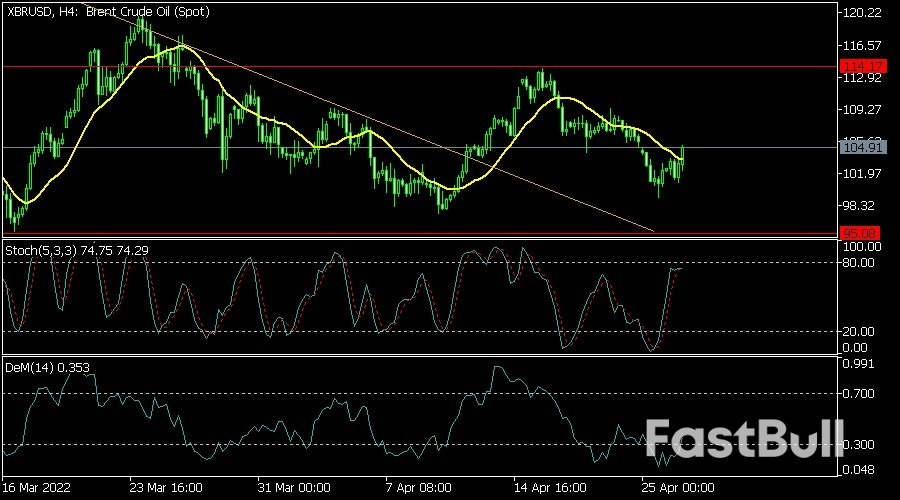
          King Dollar Strength Accelerates Amid Multiple Risks_1The XBRUSD pair rose to a high of 104.97 in the overnight session. It rose above the 25-day moving average while the Stochastic oscillator is approaching the overbought level. The DeMarker indicator has moved above the oversold level. It is also between the important support and resistance levels at 95.03 and 114.17. Therefore, there is a possibility that the pair will resume the downward trend ahead of the latest EIA data.

          EUR/JPY

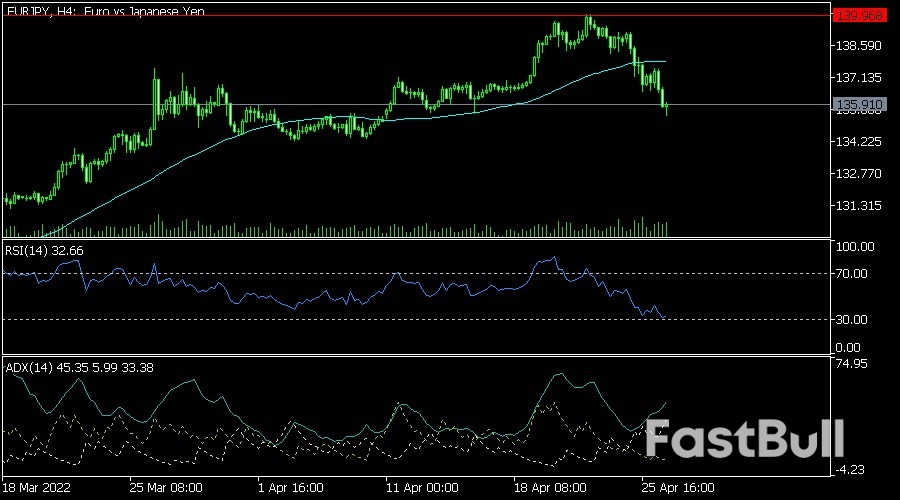
          King Dollar Strength Accelerates Amid Multiple Risks_2The EURJPY pair declined sharply as investors predicted that the Bank of Japan will start tightening. It is trading at 135.86, which is below this month's high of 140. On the four-hour chart, it has moved below the 25-day and 50-day moving averages while the Relative Strength Index (RSI) has continued its downward trend. The Average Directional Movement index has moved above 47. Therefore, the pair will likely keep falling.

          EUR/USD

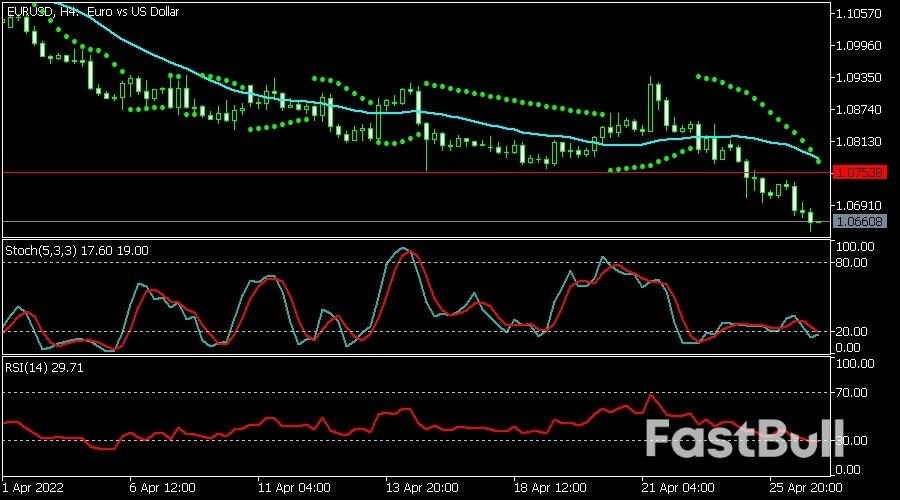
          King Dollar Strength Accelerates Amid Multiple Risks_3The EURUSD pair dropped sharply as the US dollar index continued rising. The pair is trading at 1.0660, which is below the important resistance level at 1.0753. It has moved below the dots of the Parabolic SAR indicator. Also, the pair is below the 25-day moving average while oscillators have kept falling. Therefore, the pair will likely keep falling.

          Source: OctaFX

          Risk Warnings and Disclaimers
          You understand and acknowledge that there is a high degree of risk involved in trading. Following any strategies or investment methods may lead to potential losses. The content on the site is provided by our contributors and analysts for information purposes only. You are solely responsible for determining whether any trading assets, securities, strategy, or any other product is suitable for investing based on your own investment objectives and financial situation.
          Comments
          Add to Favorites
          Share
          FastBull
          Copyright © 2025 FastBull Ltd

          728 RM B 7/F GEE LOK IND BLDG NO 34 HUNG TO RD KWUN TONG KLN HONG KONG

          TelegramInstagramTwitterfacebooklinkedin
          App Store Google Play Google Play
          Products
          Charts

          Chats

          Q&A with Experts
          Screeners
          Economic Calendar
          Data
          Tools
          Membership
          Features
          Function
          Markets
          Copy Trading
          Latest Signals
          Contests
          News
          Analysis
          24/7
          Columns
          Education
          Company
          Careers
          About Us
          Contact Us
          Advertising
          Help Center
          Feedback
          User Agreement
          Privacy Policy
          Business

          White Label

          Data API

          Web Plug-ins

          Poster Maker

          Affiliate Program

          Risk Disclosure

          The risk of loss in trading financial instruments such as stocks, FX, commodities, futures, bonds, ETFs and crypto can be substantial. You may sustain a total loss of the funds that you deposit with your broker. Therefore, you should carefully consider whether such trading is suitable for you in light of your circumstances and financial resources.

          No decision to invest should be made without thoroughly conducting due diligence by yourself or consulting with your financial advisors. Our web content might not suit you since we don't know your financial conditions and investment needs. Our financial information might have latency or contain inaccuracy, so you should be fully responsible for any of your trading and investment decisions. The company will not be responsible for your capital loss.

          Without getting permission from the website, you are not allowed to copy the website's graphics, texts, or trademarks. Intellectual property rights in the content or data incorporated into this website belong to its providers and exchange merchants.

          Not Logged In

          Log in to access more features

          FastBull Membership

          Not yet

          Purchase

          Become a signal provider
          Help Center
          Customer Service
          Dark Mode
          Price Up/Down Colors

          Log In

          Sign Up

          Position
          Layout
          Fullscreen
          Default to Chart
          The chart page opens by default when you visit fastbull.com