• Trade
  • Markets
  • Copy
  • Contests
  • News
  • 24/7
  • Calendar
  • Q&A
  • Chats
Trending
Screeners
SYMBOL
LAST
BID
ASK
HIGH
LOW
NET CHG.
%CHG.
SPREAD
SPX
S&P 500 Index
6827.42
6827.42
6827.42
6899.86
6801.80
-73.58
-1.07%
--
DJI
Dow Jones Industrial Average
48458.04
48458.04
48458.04
48886.86
48334.10
-245.98
-0.51%
--
IXIC
NASDAQ Composite Index
23195.16
23195.16
23195.16
23554.89
23094.51
-398.69
-1.69%
--
USDX
US Dollar Index
98.000
98.080
98.000
98.070
97.920
+0.050
+ 0.05%
--
EURUSD
Euro / US Dollar
1.17320
1.17328
1.17320
1.17447
1.17283
-0.00074
-0.06%
--
GBPUSD
Pound Sterling / US Dollar
1.33553
1.33564
1.33553
1.33740
1.33546
-0.00154
-0.12%
--
XAUUSD
Gold / US Dollar
4328.69
4329.14
4328.69
4329.64
4294.68
+29.30
+ 0.68%
--
WTI
Light Sweet Crude Oil
57.535
57.572
57.535
57.601
57.194
+0.302
+ 0.53%
--

Community Accounts

Signal Accounts
--
Profit Accounts
--
Loss Accounts
--
View More

Become a signal provider

Sell trading signals to earn additional income

View More

Guide to Copy Trading

Get started with ease and confidence

View More

Signal Accounts for Members

All Signal Accounts

Best Return
  • Best Return
  • Best P/L
  • Best MDD
Past 1W
  • Past 1W
  • Past 1M
  • Past 1Y

All Contests

  • All
  • Trump Updates
  • Recommend
  • Stocks
  • Cryptocurrencies
  • Central Banks
  • Featured News
Top News Only
Share

Hsi Closes Midday At 25736, Down 240 Pts, Hsti Closes Midday At 5537, Down 100 Pts, Hansoh Pharma Down Over 7%, Ping An, Youran Dairy, Logan Group Hit New Highs

Share

India Foreign Ministry: Foreign Minister To Visit United Arab Emirates And Israel

Share

Reuters Poll - Bank Of Thailand To Lower Key Policy Rate To 1.00% In Q1 Of 2026, Said A Majority Of Economists

Share

Reuters Poll - Bank Of Thailand To Cut Its Key Interest Rate To 1.25% On December 17, Said 26 Of 27 Economists

Share

Thai Finance Minister: Earlier Stimulus Measures To Shore Up Economy

Share

Thai Finance Minister: Strong Baht Driven By Capital Inflows

Share

Thai Finance Minister: Has Discussed With Central Bank To Handle Baht

Share

India's Nifty Bank Futures Down 0.1% In Pre-Open Trade

Share

India's Nifty 50 Futures Down 0.3% In Pre-Open Trade

Share

India's Nifty 50 Index Down 0.45% In Pre-Open Trade

Share

Indian Rupee Weakens Past 90.55 Versus USA Dollar To All-Time Low

Share

China's Fossil-Fuelled Power Generation Falls 4.2% Year-On-Year In November

Share

Indian Rupee Opens Down 0.1% At 90.5450 Per USA Dollar, Versus 90.4150 Previous Close

Share

Australia Home Minister: Father Involved In Bondi Gun Attack Came To Australia On Student Visa, Son Is An Australian-Born Citizen

Share

Australian Prime Minister Albanese: Stricter Gun Control Laws Will Include Restrictions On The Number Of Guns An Individual Can Own Or License To Use

Share

Australia's Prime Minister Albanese: We Are Considering A Review Of Gun Licenses For Some Time

Share

Australia's Prime Minister Albanese: Government Considering Tougher Gun Laws

Share

China Stats Bureau Spokesperson: Next Year, Adverse Impact Of Protectionism And Unilateralism May Continue

Share

China's Onshore Yuan Strengthens To A High Of 7.0516 Per Dollar, Strongest Level Since Oct 8, 2024

Share

Indonesia's November Refined Tin Exports At 7458.64 Metric Tons

TIME
ACT
FCST
PREV
U.K. Trade Balance (Oct)

A:--

F: --

P: --

France HICP Final MoM (Nov)

A:--

F: --

P: --

China, Mainland Outstanding Loans Growth YoY (Nov)

A:--

F: --

P: --

China, Mainland M2 Money Supply YoY (Nov)

A:--

F: --

P: --

China, Mainland M0 Money Supply YoY (Nov)

A:--

F: --

P: --

China, Mainland M1 Money Supply YoY (Nov)

A:--

F: --

P: --

India CPI YoY (Nov)

A:--

F: --

P: --

India Deposit Gowth YoY

A:--

F: --

P: --

Brazil Services Growth YoY (Oct)

A:--

F: --

P: --

Mexico Industrial Output YoY (Oct)

A:--

F: --

P: --

Russia Trade Balance (Oct)

A:--

F: --

P: --

Philadelphia Fed President Henry Paulson delivers a speech
Canada Building Permits MoM (SA) (Oct)

A:--

F: --

P: --

Canada Wholesale Sales YoY (Oct)

A:--

F: --

P: --

Canada Wholesale Inventory MoM (Oct)

A:--

F: --

P: --

Canada Wholesale Inventory YoY (Oct)

A:--

F: --

P: --

Canada Wholesale Sales MoM (SA) (Oct)

A:--

F: --

P: --

Germany Current Account (Not SA) (Oct)

A:--

F: --

P: --

U.S. Weekly Total Rig Count

A:--

F: --

P: --

U.S. Weekly Total Oil Rig Count

A:--

F: --

P: --

Japan Tankan Small Manufacturing Outlook Index (Q4)

A:--

F: --

P: --

Japan Tankan Large Non-Manufacturing Diffusion Index (Q4)

A:--

F: --

P: --

Japan Tankan Large Non-Manufacturing Outlook Index (Q4)

A:--

F: --

P: --

Japan Tankan Large Manufacturing Outlook Index (Q4)

A:--

F: --

P: --

Japan Tankan Small Manufacturing Diffusion Index (Q4)

A:--

F: --

P: --

Japan Tankan Large Manufacturing Diffusion Index (Q4)

A:--

F: --

P: --

Japan Tankan Large-Enterprise Capital Expenditure YoY (Q4)

A:--

F: --

P: --

U.K. Rightmove House Price Index YoY (Dec)

A:--

F: --

P: --

China, Mainland Industrial Output YoY (YTD) (Nov)

A:--

F: --

P: --

China, Mainland Urban Area Unemployment Rate (Nov)

A:--

F: --

P: --

Saudi Arabia CPI YoY (Nov)

--

F: --

P: --

Euro Zone Industrial Output YoY (Oct)

--

F: --

P: --

Euro Zone Industrial Output MoM (Oct)

--

F: --

P: --

Canada Existing Home Sales MoM (Nov)

--

F: --

P: --

Euro Zone Total Reserve Assets (Nov)

--

F: --

P: --

U.K. Inflation Rate Expectations

--

F: --

P: --

Canada National Economic Confidence Index

--

F: --

P: --

Canada New Housing Starts (Nov)

--

F: --

P: --

U.S. NY Fed Manufacturing Employment Index (Dec)

--

F: --

P: --

U.S. NY Fed Manufacturing Index (Dec)

--

F: --

P: --

Canada Core CPI YoY (Nov)

--

F: --

P: --

Canada Manufacturing Unfilled Orders MoM (Oct)

--

F: --

P: --

U.S. NY Fed Manufacturing Prices Received Index (Dec)

--

F: --

P: --

U.S. NY Fed Manufacturing New Orders Index (Dec)

--

F: --

P: --

Canada Manufacturing New Orders MoM (Oct)

--

F: --

P: --

Canada Core CPI MoM (Nov)

--

F: --

P: --

Canada Trimmed CPI YoY (SA) (Nov)

--

F: --

P: --

Canada Manufacturing Inventory MoM (Oct)

--

F: --

P: --

Canada CPI YoY (Nov)

--

F: --

P: --

Canada CPI MoM (Nov)

--

F: --

P: --

Canada CPI YoY (SA) (Nov)

--

F: --

P: --

Canada Core CPI MoM (SA) (Nov)

--

F: --

P: --

Canada CPI MoM (SA) (Nov)

--

F: --

P: --

Federal Reserve Board Governor Milan delivered a speech
U.S. NAHB Housing Market Index (Dec)

--

F: --

P: --

Australia Composite PMI Prelim (Dec)

--

F: --

P: --

Australia Services PMI Prelim (Dec)

--

F: --

P: --

Australia Manufacturing PMI Prelim (Dec)

--

F: --

P: --

Japan Manufacturing PMI Prelim (SA) (Dec)

--

F: --

P: --

U.K. Unemployment Rate (Nov)

--

F: --

P: --

U.K. 3-Month ILO Unemployment Rate (Oct)

--

F: --

P: --

Q&A with Experts
    • All
    • Chatrooms
    • Groups
    • Friends
    Connecting
    .
    .
    .
    Type here...
    Add Symbol or Code

      No matching data

      All
      Trump Updates
      Recommend
      Stocks
      Cryptocurrencies
      Central Banks
      Featured News
      • All
      • Russia-Ukraine Conflict
      • Middle East Flashpoint
      • All
      • Russia-Ukraine Conflict
      • Middle East Flashpoint
      Search
      Products

      Charts Free Forever

      Chats Q&A with Experts
      Screeners Economic Calendar Data Tools
      Membership Features
      Data Warehouse Market Trends Institutional Data Policy Rates Macro

      Market Trends

      Market Sentiment Order Book Forex Correlations

      Top Indicators

      Charts Free Forever
      Markets

      News

      News Analysis 24/7 Columns Education
      From Institutions From Analysts
      Topics Columnists

      Latest Views

      Latest Views

      Trending Topics

      Top Columnists

      Latest Update

      Signals

      Copy Rankings Latest Signals Become a signal provider AI Rating
      Contests
      Brokers

      Overview Brokers Assessment Rankings Regulators News Claims
      Broker listing Forex Brokers Comparison Tool Live Spread Comparison Scam
      Q&A Complaint Scam Alert Videos Tips to Detect Scam
      More

      Business
      Events
      Careers About Us Advertising Help Center

      White Label

      Data API

      Web Plug-ins

      Affiliate Program

      Awards Institution Evaluation IB Seminar Salon Event Exhibition
      Vietnam Thailand Singapore Dubai
      Fans Party Investment Sharing Session
      FastBull Summit BrokersView Expo
      Recent Searches
        Top Searches
          Markets
          News
          Analysis
          User
          24/7
          Economic Calendar
          Education
          Data
          • Names
          • Latest
          • Prev

          View All

          No data

          Scan to Download

          Faster Charts, Chat Faster!

          Download App
          English
          • English
          • Español
          • العربية
          • Bahasa Indonesia
          • Bahasa Melayu
          • Tiếng Việt
          • ภาษาไทย
          • Français
          • Italiano
          • Türkçe
          • Русский язык
          • 简中
          • 繁中
          Open Account
          Search
          Products
          Charts Free Forever
          Markets
          News
          Signals

          Copy Rankings Latest Signals Become a signal provider AI Rating
          Contests
          Brokers

          Overview Brokers Assessment Rankings Regulators News Claims
          Broker listing Forex Brokers Comparison Tool Live Spread Comparison Scam
          Q&A Complaint Scam Alert Videos Tips to Detect Scam
          More

          Business
          Events
          Careers About Us Advertising Help Center

          White Label

          Data API

          Web Plug-ins

          Affiliate Program

          Awards Institution Evaluation IB Seminar Salon Event Exhibition
          Vietnam Thailand Singapore Dubai
          Fans Party Investment Sharing Session
          FastBull Summit BrokersView Expo

          EURUSD: Still Needs to Repeatedly Test the Bottom to Gain Significant Uptrend Space

          Samantha Luan
          Summary:

          As widely expected, the Fed raised the federal funds rate by 25 basis points at last week's (March) meeting and strongly hinted at further rate hikes given the tight labor market and soaring inflation. The Fed also released a new economic forecast brief, showing a sharp upward revision to the inflation outlook and significantly earlier expectations for more rate hikes in 2022 and 2023.

          EURUSD: Still Needs to Repeatedly Test the Bottom to Gain Significant Uptrend Space_1

          Fundamentals

          Since the outbreak of the Russia-Ukraine conflict, the Fed policymakers face challenges when weighing an uncertain growth outlook and another spike in inflation, making the policy balance more difficult. However, the Fed has indicated that it believes the risks to inflation greatly outweigh the downside risks to economic growth. As a result, we expect the Fed to continue its way toward higher interest rates and a more miniature balance sheet.
          The Fed may need to see a significant slowdown in the economy and dysfunctional markets before changing its rate hike path. Higher and broader price inflation further increases the risk of a runaway inflation expectation. While rising inflation risks justify a tighter monetary policy stance, a faster pace of rate hikes could put pressure on economic growth over time as the economic environment tightens at an accelerated pace.
          In addition to the expected policy rate hike, the Fed conveyed a generally hawkish tone by making several critical changes in its March FOMC statement and economic forecast, as well as in Powell's press conference.
          First, the Fed added forward guidance to its statement, noting that the federal funds rate is likely to "continue to rise further" as well as to reduce its balance sheet. Second, the Fed made significant adjustments to its economic forecast in March relative to its forecast prior to December 2021. Inflation in the U.S. notably exceeded widespread market expectations, particularly in January, combined with additional inflationary momentum from the Russia-Ukraine conflict, prompting Fed officials to raise their inflation forecast for 2022 (by more than 1 percentage point). Officials at the meeting continue to see a more moderate decline in inflation in 2023 and 2024, leaving inflation significantly above the Fed's 2% target over the forecast period.
          With inflation no longer expected to fall back to the target within the forecast range and Fed officials believing that inflationary pressures have a broad base that has led officials to raise their interest rate forecasts significantly, most officials in attendance expect policy rates to be above neutral by the end of next year. The median estimates now put the federal funds rate at 1.875% at the end of 2022 (from 0.875% in the December forecast) and 2.750% at the end of 2023 (from 1.625% previously). Notably, the dot plot shows that most officials' forecast rate is slightly above the neutral expectation of 2.4%, suggesting that Fed officials believe policy needs at least some contraction to bring inflation back to target levels.
          At the press conference, Powell provided context for these hawkish forecasts while he also sought to retain the option of altering the policy path in the coming weeks and months as needed. This is similar to his comments earlier this year, where Powell did not rule out the possibility of a significant rate hike.
          After the Fed ended its asset purchase program earlier this month, Powell's statement confirms our expectation that an announcement will be made sooner in the next two meetings to start the balance sheet tapering process faster relative to the past (tapering cycle). A smaller balance sheet cycle will also help tighten monetary policy this year. Many officials see the rapid balance sheet contraction is equivalent to another rate hike.
          Following the March meeting, we expect rising inflation and concerns about inflation expectations to continue to put more pressure on Fed officials in the coming months than downside risks to economic growth. As a result, our forecast remains for the Fed to raise rates in successive policy meetings and engage in further meaningful tightening throughout the year. This faster pace of taper increases the risk of a future hard landing and suggests a higher risk of recession over the next two years.
          Even though we now expect the Fed to raise rates more in the future, the Fed expects inflation to remain at 4.3% this year, falling to 2.7% in 2023 and 2.3% in 2024. Unemployment is expected to fall to 3.5% this year and remain at that level throughout the year. However, it is expected to rise slightly to 3.6 percent by 2024.EURUSD: Still Needs to Repeatedly Test the Bottom to Gain Significant Uptrend Space_2

          Technicals

          The US Dollar Index is attempting to rebound from recent levels below 98.00 after the Fed started its tapering cycle at the FOMC meeting on March 16. Market risks and concerns related to the geopolitical scenario continue to support demand for the dollar. From a broader perspective, external geopolitical risk aversion has also been somewhat of a driver for safe-haven asset inflows and has supported the dollar amidst the current positive outlook for rising inflation and Fed rate hikes.
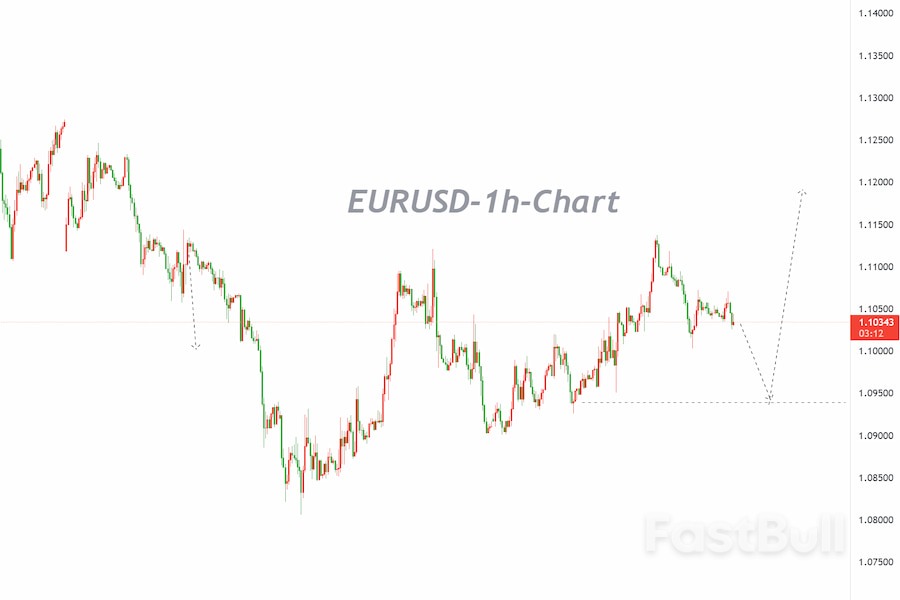
          From a technical point of view, the risk of a sharper decline in the euro against the dollar has receded. Still, it is not completely eliminated in the short term. The MACD remains above the bullish signal and in negative territory, while the RSI, although below the 50 neutral mark, is still in a position to maintain a positive trend. On the other hand, the market structure so far in March has formed a rising wedge at the bottom of a descending trend, which in this case is usually consumed on the downside. However, if prices manage to stand above the 20-day SMA in the next few sessions, this could be an encouraging sign that the market's willingness to buy will start to grow.
          However, if the price falls below the 1.1000 mark again, where the 78.6% Fibonacci retracement intersects the short-term support trendline, the 1.0900 level could be retested. If not, the shorts may try to break the 1.0850-1.0780 bottom and potentially test the 1.0636 low seen since the pandemic.
          Overall, while the medium-term outlook for EURUSD below 1.1492 remains ambiguous, some rallies cannot be ruled out in the near term. However, traders may need to wait for a break above the 1.1120-1.1180 range to regain more bullish confidence.
          Upward Resistance: 1.1180, 1.1120
          Downward Support: 1.1011, 1.0095
          Risk Warnings and Disclaimers
          You understand and acknowledge that there is a high degree of risk involved in trading. Following any strategies or investment methods may lead to potential losses. The content on the site is provided by our contributors and analysts for information purposes only. You are solely responsible for determining whether any trading assets, securities, strategy, or any other product is suitable for investing based on your own investment objectives and financial situation.
          Comments
          Add to Favorites
          Share

          Australia-India Deal to Improve Relations

          Owen Li
          Australia is expected to commit to a landmark investment package in India following a virtual summit between the nations' leaders on Monday.
          Prime Minister Scott Morrison and his Indian counterpart Narendra Modi discussed closer trade ties and cooperation in sectors including critical minerals and education.
          The package - worth an expected $280 million - has been described as the largest-ever investment by an Australian government in India.
          It will include sharing of renewable energy technology, defence and space cooperation and a new Centre for Australia-India Relations.
          In his opening remarks at the summit Mr Morrison said the initiatives in the deal will build on India and Australia's foundation in the post-pandemic world.
          He said cooperation on science, technology, energy, and critical minerals and rare earths will unlock new opportunities for the economies of both nations.
          "We've made great progress in defence, maritime cooperation, science, technology, clean energy as well which is something I know Australia can work together closely with India on," he said.
          Prime Minister Modi said Australia and India must have better cooperation when it came to cyber space and emerging technologies.
          "As countries that share similar values, it is our responsibility to adopt appropriate global standards," he said in his opening remarks.
          The return of 29 significant Indian artefacts from the National Gallery of Australia drew thanks from Mr Modi.
          "You have given back these artefacts to us and now we can return them to the places where they belong," he said.
          Scholarships and partnerships will be offered to boost cultural, business and institutional ties.
          Work will also begin on a new mobility agreement to free up travel access.
          A taskforce will start work on a plan for joint recognition of educational, trade and professional qualifications.
          Russia's invasion of Ukraine was also discussed at the summit.
          India - which rounds off the Quad security partnership alongside Australia, the United States and Japan - is the only Quad nation not yet condemning President Putin's actions.
          Mr Morrison says it is important to discuss the implications of the situation in Ukraine on the Indo-Pacific region which Australia and India are part of.
          "Cooperation between like-minded liberal democracies is key to an open, inclusive, resilient and prosperous Indo-Pacific," he said.
          New Delhi is walking a fine line as Russia provides it with a large amount of arms.
          But the timidity has raised eyebrows among Western allies including the United States and United Kingdom who want a more resolute stance.
          Reuters has reported India may be willing to buy Russian crude oil and other commodities at a discounted price as sanctions continue to tighten around Moscow.
          India relies heavily on the Kremlin for weaponry and armaments and about 70 per cent of its arsenal is Russian-made.
          Trade Minister Dan Tehan will on Tuesday unveil an update to the Australia-India Economic Strategy to take into account changes in the global environment and Indian economic reform, which will set out a five-year action plan.
          The strategy update involved consultations with more than 600 businesses across the two nations.
          Resources Minister Keith Pitt announced a $1.5 million program to help create new export opportunities for Australian mining equipment and services companies to India ahead of the virtual summit.
          It was initially anticipated a free trade agreement would be inked following the virtual summit on Monday, but negotiations remain ongoing.
          Officials are hoping to have the deal completed by the end of the month before the federal government enters caretaker mode once an election is called.
          The latest an election can be called and a caretaker period begins is mid-April, with polling day needing to be held by May 21.
          The virtual summit comes two years after a similar meeting in which Australia and India elevated their relationship to become comprehensive strategic partners.

          Source: Reuters

          Risk Warnings and Disclaimers
          You understand and acknowledge that there is a high degree of risk involved in trading. Following any strategies or investment methods may lead to potential losses. The content on the site is provided by our contributors and analysts for information purposes only. You are solely responsible for determining whether any trading assets, securities, strategy, or any other product is suitable for investing based on your own investment objectives and financial situation.
          Comments
          Add to Favorites
          Share

          When Will the Russia-Ukraine Conflict End?

          Winkelmann

          Russia-Ukraine Conflict

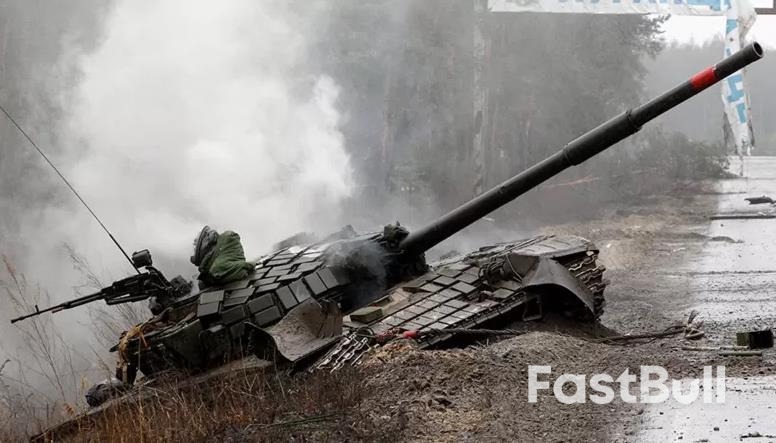
          The war between Russia and Ukraine has been going on for nearly a month now, and the situation is becoming more and more confusing. The war seems to be in a "stalemate." With the full mobilization of the Ukrainian side and military assistance from the Western Group, the attacks by Russia have met with extremely tough resistance, and the results of the initial "blitzkrieg" seem to be greatly reduced; despite several rounds of negotiations between Russia and Ukraine, the progress is not smooth, and coupled with the harsh sanctions continuously imposed by the West on Russia, the political relations between Russia and the West have deteriorated to an unbearable level.

          Russia-Ukraine War Remains Scorching

          On March 20th, local time, Russian and Ukrainian forces fought for control of the port city of Mariupol; local officials said Mariupol had suffered the heaviest bombardment since Russia invaded Ukraine on February 24th, and many of its 400,000 residents are still trapped in the area, with little food and water and electricity supply. Notably, Andrei Paliy, deputy commander of Russia's Black Sea Fleet, was killed in the fighting in Mariupol.
          When Will the Russia-Ukraine Conflict End?_1
          The Russian side announced its intention to open a humanitarian corridor in Mariupol on the 21st, calling on the Ukrainian army to lay down its arms, while Deputy Prime Minister Irina Veresiuk said that the Ukrainian side would not surrender; without accepting the "ultimatum."
          In addition, a number of explosions occurred in the Podol district of Ukraine's capital Kyiv and set fire to a shopping center. The Russian Defense Ministry released the latest battle report on March 20th, saying that Russian forces have defeated the Donbas Battalion of Ukrainian nationalist militants, using the rare hypersonic missile "Dagger" again, after striking a large underground ammunition depot in southwestern Ukraine on March 18th, hitting the workshop of the Ukrainian Army's military equipment repair plant in Ukraine's Chernihiv region. This was the first time a hypersonic missile, which can carry nuclear weapons, has been used in human warfare.
          Ukraine, for its part, is also receiving a steady stream of military aid from the West, and Eastern European country Poland proposed a peacekeeping mission in Ukraine at last week's NATO summit. This plan could mean Polish troops taking control of western Ukraine. Although the proposal did not receive broad support from NATO members, it is clear that the conflict between Russia and Europe has become difficult to reconcile.
          Sources familiar with the matter said recently that U.S. and European officials have been discussing new measures that could be finalized at the NATO summit, including a new round of sanctions against Russian oligarchs, further restrictions on imports of Russian energy products, and other measures. U.S. and European officials have also discussed steps through which additional support could be provided to Ukraine, including the provision of new military aid or financial assistance. Apparently, with the support and encouragement of the U.S. and Europe, Ukraine has more strength to resist the Russian threat, which has also cast a cloud over the prospects of negotiations between Russia and Ukraine.

          Russia-Ukraine Negotiations Turn into a Protracted War

          Russia-Ukraine talks have been going on for several rounds, and from the standpoint of the parties' statements, there is still a long, long way to go before a definitive solution and ceasefire.
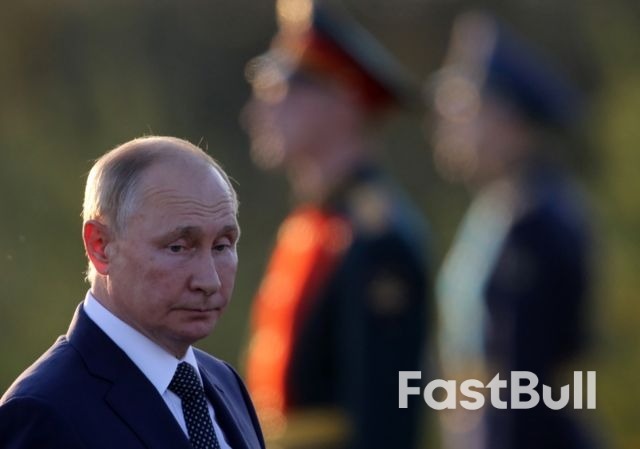
          On the Russian side, Vladimir Putin has raised the issues that need to be resolved before direct negotiations with Ukrainian President Zelensky. The first is the neutrality of Ukraine - a permanent renunciation of NATO membership, followed by disarmament and mutual security guarantees under the Austrian model, the "de-Nazification" of Ukraine, and the removal of obstacles to the widespread use of the Russian language in Ukraine. In addition, the recognition of the Russian territory of Crimea and the independent status of the two "republics" in the Donbas region.
          When Will the Russia-Ukraine Conflict End?_2
          And Ukrainian President Zelensky said on March 20th local time that he is ready to talk with Putin and is convinced that the war cannot be ended without negotiations. Zelensky believes that it is necessary to use any form and any opportunity to negotiate with Putin. If these attempts fail, it will mean the beginning of World War III. Zelensky also stressed that there are unacceptable compromises for the Ukrainian side, such as the recognition of Donetsk, Luhansk independence, and Russia's acceptance of Crimea.
          It is clear that the dispute between the parties over territorial sovereignty is the fundamental contradiction and the most difficult, if not insoluble, issue, and it is still too early to say that the parties have negotiated a full agreement or are about to sign one. In an interview, Ukrainian negotiator Mykhailo Podolyak also said that the critical issues in the negotiations with Russia include security guarantees for Ukraine, implementation of the ceasefire, withdrawal of Russian troops, and political settlement of disputed territories are challenging to negotiate, and discussions may take weeks or more.
          Meanwhile, Western sanctions against Russia have never stopped. On March 20th local time, French Economy and Finance Minister Le Maire said that France has frozen 22 billion euros of assets of the Russian Central Bank and also about 150 billion euros of funds in the accounts of relevant Russian individuals in French institutions. Some 30 other Russians have also had their real estate worth 500 million euros in France frozen, and the Australian government has banned exports of alumina and aluminum ore to Russia, which would limit Russia's ability to produce aluminum. British Prime Minister Boris Johnson called on the international community not to roll back its isolation of Russian President Vladimir Putin.
          The war and sanctions have weakened the economies of Russia and Ukraine, some economic activities have either stopped or declined, the conflict has deepened, and it seems that even if there is a ceasefire between the two sides, the sanctions against Russia will be difficult to lift in the short term. The result of the resulting recession seems to have been predetermined. In the case of Russia and Ukraine not finding a step-down or compromise concessions, Russia-Ukraine negotiations are at best a long and unnecessary consumption, not helping the overall situation.
          Risk Warnings and Disclaimers
          You understand and acknowledge that there is a high degree of risk involved in trading. Following any strategies or investment methods may lead to potential losses. The content on the site is provided by our contributors and analysts for information purposes only. You are solely responsible for determining whether any trading assets, securities, strategy, or any other product is suitable for investing based on your own investment objectives and financial situation.
          Comments
          Add to Favorites
          Share

          India and Japan Define Next Steps of Their Regional Partnership During Modi-Kishida Dialogue

          Owen Li
          India and Japan have accommodated pressing concerns of each other during their 14th annual summit as Japanese Prime Minister Fumio Kishida visits India on his first bilateral visit with Prime Minister Narendra Modi.
          A joint statement issued by the two countries underscores efforts towards bringing peace, stability and prosperity to a world battling the Covid-19 health and economic crisis as well as the Russia-Ukraine conflict.

          Dialogue and diplomacy for Ukraine

          One of the most significant commitments from the two countries came regarding the ongoing war in Ukraine. Modi and Kishida expressed their concern over the conflict and the humanitarian crisis and assessed its broader implications for the Indo-Pacific region. They called for an immediate cessation of violence and stressed upon "dialogue and diplomacy for resolution of the conflict".
          The leaders plan to take appropriate steps to address the humanitarian crisis in Ukraine and expressed their worry over the safety and security of nuclear facilities in Ukraine.

          Reforms at the UN Security Council

          The two Prime Ministers resolved to work for UNSC reforms "to reflect the contemporary realities of the 21st century". Both have reaffirmed once again that the two nations are "legitimate/deserving candidates for permanent membership in an expanded UNSC". India has also supported the non-permanent membership of Japan for the UNSC.

          Commitment to Quad for a Free and Open Indo-Pacific

          A pressing issue for both has been the militarisation in the Indo-Pacific region. The two Prime Ministers affirmed the importance of strengthening partnerships among the Quad countries - Australia, India, Japan, and the United States.
          Kishida and Modi have resolved to "delivering tangible outcomes on the Quad's positive and constructive agenda, especially on COVID vaccines, critical and emerging technologies, climate action, infrastructure coordination, cybersecurity, space and education. They looked forward to advancing Quad cooperation through the next Quad Leaders' Summit in Japan in the coming months".
          Keeping the tensions with Taiwan in mind and also in the South China Sea (SCS), India and Japan have pushed for prioritising the role of international law like the United Nations Convention on the Law of the Sea (UNCLOS), and emphasized upon the importance of non-militarisation and self-restraint.

          Action against global terror

          Japan has taken note of Indian concerns over terrorism emanating from its neighbourhood. The joint statement said: "The Prime Ministers expressed deep concern at the growing threat of terrorism and called upon all countries to work together for rooting out terrorist safe havens and infrastructure, disrupting terrorist networks and their financing channels, and halting cross-border movement of terrorists".
          The two nations have called upon Pakistan to take resolute and irreversible action against terrorist networks that inflicted the 26/11 Mumbai and Pathankot attacks upon India. They also want Pakistan to take resolute and irreversible action against terrorist networks operating out of its territory and implement Financial Action Task Force (FATF) rulings.
          Regarding the situation in Afghanistan, the Prime Ministers stressed on addressing the humanitarian crisis, promoting human rights and ensuring an inclusive political system in Afghanistan. They also underlined that the Afghan territory will not be used for sheltering, training, planning or financing terrorist acts.

          North Korean missile tests

          India has taken into account Japanese fears about North Korea's numerous and consistent ballistic missile launches in violation of United Nations Security Council (UNSC) resolutions. The two countries have committed to the complete denuclearization of North Korea and urged it to fully comply with its international obligations under the relevant UNSC resolutions.
          Separately, the two nations reiterated their commitment to the total elimination of nuclear weapons and strengthen international cooperation to tackle nuclear proliferation and nuclear terrorism.

          Battling the Covid-19 pandemic

          The two Prime Ministers said that India and Japan would continue to contribute to global efforts to combat Covid-19 and welcomed the Quad Vaccine Partnership "to enhance equitable access to safe and effective vaccines in the Indo-Pacific and beyond."
          They also confirmed to "work together towards reliable, resilient, efficient supply chains in the region and welcomed the progress in this regard in areas such as sharing of best practices. They emphasized the importance of collaboration to address illicit technology transfers, build resilient supply chains and strengthen the protection of critical infrastructure, including through the Quad".

          Cementing defence relations

          India and Japan plan to hold their second 2+2 meeting of the Foreign and Defence Ministers in Tokyo. This follows the first that took place in November 2019 in New Delhi.
          The two partners have seen increased progress in security and defence cooperation with the operationalization of the Agreement Concerning Reciprocal Provision of Supplies and Services between the Japan Self-Defense Forces (JSDF) and the Indian armed forces.
          The two forces have been participating in the bilateral Dharma Guardian exercises as well as the multilateral exercises Malabar with Australia and the US. India has now invited Japan to join the MILAN naval exercise which it holds with Indian Ocean littoral nations as well as to hold the inaugural fighter exercise between the Japan air force and the Indian Air Force.
          The two countries are also collaborating in the area of Unmanned Ground Vehicle (UGV) and Robotics from where they plan to identify more areas in defence equipment and technology.

          Strengthening trade

          The Prime Ministers noted that economic cooperation between the two was enhanced after the elevation of their relations to 'Special Strategic and Global Partnership'. On its part India has improved the business environment for Japanese investors while Japan has met its investment target of JPY 3.5 trillion announced in 2014 for India.
          The two nations also plan to enhance cooperation in digital technologies through promotion of joint projects for digital transformation, support to provide opportunities for Indian IT professionals to work in Japan and Japanese companies, and collaboration made in the area of Internet of Technologies and Artificial Intelligence and other emerging technologies.
          The 14th annual India Japan summit takes place as the two nations also celebrate the 70th anniversary of establishment of diplomatic relations. With commonalities of interests in a fast-changing world order, the two nations plan to enhance trade, defence and strategic ties based on the India-Japan Vision Statement of 2018.

          Source: IANS.

          Risk Warnings and Disclaimers
          You understand and acknowledge that there is a high degree of risk involved in trading. Following any strategies or investment methods may lead to potential losses. The content on the site is provided by our contributors and analysts for information purposes only. You are solely responsible for determining whether any trading assets, securities, strategy, or any other product is suitable for investing based on your own investment objectives and financial situation.
          Comments
          Add to Favorites
          Share

          Australian Export Ban Pushes Up Auminum Prices, May Boost Inflation

          Damon
          Australian Export Ban Pushes Up Auminum Prices, May Boost Inflation_1
          Aluminum jumped and Rusal shares tumbled as Rio Tinto Group, operator of the Queensland Alumina Ltd. joint venture with the Russian company, said it would comply with all of Canberra's directions. Rio reiterated that it was in the process of terminating its commercial relationships with Russian businesses following the country's invasion of Ukraine. Rusal holds a 20% stake in the Queensland JV.
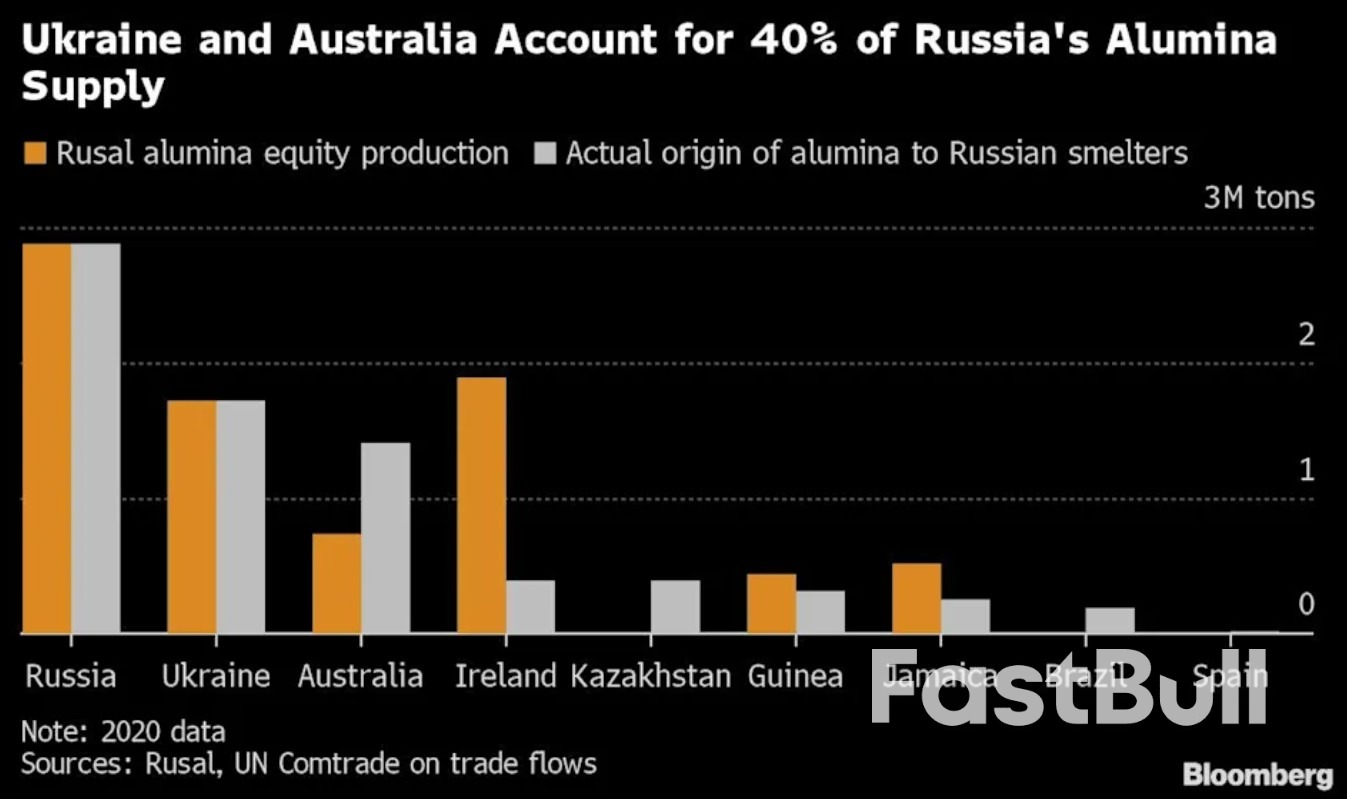
          Australian Prime Minister Scott Morrison said that a ship due to dock this week to collect a load of alumina -- the key ingredient used in making aluminum -- bound for Russia would not deliver its cargo as he announced the ban on Sunday. Australia supplies nearly 20% of Russia's alumina and its exports of aluminum ores, including bauxite, to Russia have also been prohibited.
          Aluminum jumped as much as 5.1% on the London Metal Exchange on Monday. Supplies of the metal -- used in everything from cans to airplane parts and window frames -- were running low even before war in Europe threw global commodity markets into turmoil. This latest development threatens to add even more inflationary pressure to the global economy.
          Russia is a key supplier of aluminum to markets including Turkey, China and Japan. The metal rose to $3,554 a ton on the LME as of 1:48 p.m. in Singapore and is up around 27% this year.
          Rusal said in a statement that it was evaluating the impact of the ban. Rio plans to stop supplying bauxite to, and buying alumina from, Rusal's Aughinish plant in Ireland, people familiar with the matter said earlier this month. The company's shares dropped as much as 8.9% in Hong Kong on Monday following Australia's announcement.
          While aluminum hasn't been targeted by global sanctions, Rusal -- which needs bauxite and alumina to feed its plants -- is facing disruption to its supply chains as companies pull back from doing business with Russia. The company has also slashed output from its Nikolaev alumina refinery in Ukraine due to logistical and transport challenges arising from the war.
          Whether Rusal will cut aluminum output will depend on the volumes of its alumina inventories, Guotai Junan Futures Co. said in a note. Covid-19 outbreaks in China are also disrupting supplies of the metal, adding to upward pressure on global prices, it said.
          Australia said the ban would apply to “all relevant shipments” to Russia. It's common practice for alumina producers to swap cargoes with other suppliers in different locations to save on freight costs. However, it's unclear if Rusal will be able to get around the prohibition by doing this with shipments from its Queensland plant.
          “The spirit of the sanctions announced would probably suggest that Rusal won't be allowed to profit financially from alumina sales at all, but this is unclear in the current wording,” Gavin Wendt, senior resources analyst at consultancy Mine Life Pty, said by email.
          Rusal was founded by Russian tycoon Oleg Deripaska, who retains an interest via his shareholding in Rusal's majority owner En+ Group International PJSC. The Australian government last week announced a new round of sanctions against oligarchs close to President Vladimir Putin, including Deripaska.
          EN+ Group said earlier this month it was considering a potential carve out of Rusal's international business, creating a new company to house its alumina, bauxite and aluminum assets across the globe which would no longer have any Russian ownership.
          In other base metals, copper fell 1.2% to $10,204 a ton after adding 1.5% last week. Tin and zinc rose, while nickel doesn't start trading until 4 p.m. in Singapore.

          Source: Bloomberg

          Risk Warnings and Disclaimers
          You understand and acknowledge that there is a high degree of risk involved in trading. Following any strategies or investment methods may lead to potential losses. The content on the site is provided by our contributors and analysts for information purposes only. You are solely responsible for determining whether any trading assets, securities, strategy, or any other product is suitable for investing based on your own investment objectives and financial situation.
          Comments
          Add to Favorites
          Share

          Alibaba and JD Stock Reversal at Bottom, Chinese E-Commerce Stock Expectations Still Pessimistic

          Samantha Luan
          In the fourth quarter of last year, Alibaba's revenue increased by only 10% year-on-year, the lowest growth rate since its listing.
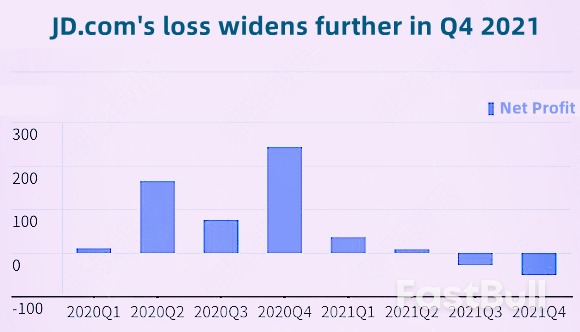
          JD.com's (JD) revenue performance was better than Alibaba's, exceeding market expectations. But its losses have widened further.
          Chinese e-commerce stocks finally rebounded on March 16 after the stock price plummeted, but the performance growth has entered the slow lane. On the whole, Chinese e-commerce companies are still not optimistic, and lowering the stock prices of Alibaba and JD.com has become a common view in the market.

          Performance Growth Is under Pressure

          1.1 Alibaba

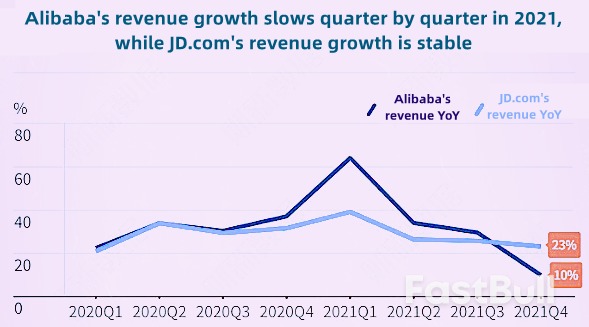
          Affected by overall macro consumption and market competition, Alibaba's revenue growth slowed quarter by quarter last year. The growth rates in the four quarters of last year were 63.94%, 34%, 29.43%, and 10%, respectively. Among them, Chinese commercial business revenue, which accounted for more than 70% of the total revenue, only increased by 7% year-on-year to 172.226 billion yuan in the fourth quarter of last year. The gross merchandise volume (GMV) of online goods of Taobao and Tmall recorded only single-digit growth year-on-year, while the growth rates of clothing and accessories and consumer electronics products were lower than the average.
          However, the company's new businesses, such as Taote (Taobao special edition) and Taocaicai (for community group buying), are still developing rapidly. Among them, Taote's payment order volume in the fourth quarter of last year increased by more than 100% year-on-year, and Taocaicai achieved quarter-on-quarter solid growth of 30% in GMV. However, the high-cost input of these new businesses is one of the main reasons for the decline in the company's profits.
          From the perspective of external factors, on the one hand, the regulation of the Internet industry has tightened, and Alibaba is the first to bear the brunt. As an e-commerce giant, it was punished by an anti-monopoly investigation, and the "interconnection" of the platforms also had a certain impact on it. On the other hand, the e-commerce of content platforms such as TikTok, Kuaishou, and RED has impacted and diverted users from the traditional e-commerce.Alibaba and JD Stock Reversal at Bottom, Chinese E-Commerce Stock Expectations Still Pessimistic_1
          We believe that Alibaba's business and organizational adaptability will not be able to break through in the short term as the intensification of competition, the regulation of anti-monopoly and interconnected market order, the formation of multiple online and offline formats, and the changes in consumption habits, resulting in a slowdown in revenue and decline in profits.

          1.2 JD.com

          Compared with Alibaba, JD's revenue growth rate is not volatile and has remained above 20% for a long time. In the fourth quarter of last year, its revenue was 275.9 billion yuan, a year-on-year increase of 23%. Last year's revenue was 951.6 billion yuan, a year-on-year increase of 27.6%.
          The management of the company analyzed on the conference call after the financial report that the pressure on the consumption environment has the smallest impact on JD because of the planning of JD consumers and the strong and purposeful consumption of households. "In the fourth quarter, the per capita consumption spending of new customers increased by 11% year-on-year. The frequency of old customers increased by 3%, and the per capita consumption increased by 4.5%." In terms of business development, JD Retail achieved revenue of 249.9 billion yuan in the fourth quarter of last year, a year-on-year increase of 21%. JD Logistics achieved revenue of 30.5 billion yuan, a year-on-year increase of 28%. New businesses, including Jingxi, overseas business, and JD Property, achieved revenue of 8.2 billion yuan, a year-on-year increase of 45%.
          The electronics and home appliances in JD.com's retail business still achieved year-on-year growth of 22% despite the global shortage of chips, mainly due to the company's self-operated model to control the supply chain. However, it is expected that it will still be affected in the first quarter of this year because the previous stockpiles have been used up. Due to weak consumer demand and a high base effect, the growth rate of the company's daily necessities revenue slowed to 23% year-on-year.
          Alibaba and JD Stock Reversal at Bottom, Chinese E-Commerce Stock Expectations Still Pessimistic_2
          At the same time, contrary to Alibaba, benefiting from the ban on anti-monopoly "choose one," the number of new merchants on JD's platform in the fourth quarter of last year exceeded the sum of the number of new merchants in the previous three quarters, which drove the company's platform and advertising Revenue grew 27% year over year despite a high base.
          It is worth noting that although JD's new business has the fastest growth rate, the operating loss of this business in the fourth quarter of last year reached 3.22 billion yuan, and the annual loss reached 10.6 billion yuan. This is also the main reason for the expansion of the company's losses. The company's net loss in the fourth quarter of 2021 reached 5.1 billion yuan, and the annual net loss reached 3.6 billion yuan, while the company achieved a profit of 49.4 billion yuan in 2020. JD is not as good as Ali in terms of profitability.
          Due to the increased investment in new business costs, the company's gross profit margin in the fourth quarter of last year also decreased by 0.4 percentage points year-on-year to 13.5%. Market analysis believes that JD.com's new business is still in the investment period and will insist on long-term investment for 5-10 years. This also means that the loss-making period of the new business will be extended, and it will take time to harvest.

          Market Outlook Is Still Not Optimistic

          China concept stocks have recently ushered in a crit. The promulgation of the "Foreign Company Accountability Act" in the U.S. has already opened a long-term shock mode for China concept stocks.
          On March 8, according to the "Foreign Company Accountability Act," the U.S. Securities and Exchange Commission (SEC) included five Chinese ADRs on the "temporary delisting list," which once again intensified international investors' concerns about the investability of China concept stocks. As a result, China concept stocks plummeted in recent days and did not rebound sharply until March 16.
          On March 16, the Financial Stability and Development Committee of the State Council of China held a special meeting on the same day, proposing to maintain the capital market's stable operation and delist the U.S. China concept stocks that triggered the market plunge recently. The meeting stated that China and the U.S. regulatory agencies are currently in good communication and have made positive progress. They are working on forming a specific cooperation plan. The Chinese government will also continue to support various companies to list overseas.
          However, it is worth noting that although the stock price of China concept stocks has rebounded sharply, on the one hand, it remains to be seen whether the rebound trend can continue.
          Alibaba's Hong Kong stock price continued to fluctuate and adjust after reaching an all-time high of HK$307.4 on October 28, 2020 (the day's closing price). As of the close on March 16, its share price closed at HK$90.7, a drop of more than 70% from its high point. Alibaba's U.S. stock market fell 75% from its historical high of $310.84. The latest closing prices of JD's Hong Kong and U.S. stocks also fell nearly 50% from their all-time highs.
          Due to the huge decline in Hong Kong stocks, there was a strong "short covering" on the 16th, especially in the Internet sector. But many long-term funds are still waiting for more rebound certainty.
          From the perspective of the macrocycle, China is shifting its focus to steady growth, and the momentum of regulatory risks in the technology industry should have exceeded its peak.
          Structurally, China's tech index includes key consumer sectors such as e-commerce, mobile internet, mobile payments, and electric vehicles, and the long-term prospects for these sectors in the Chinese economy are far from exhausted.
          There may be a rebound in the internet industry, but a sharp reversal remains to be seen. The industry's performance in the next two or three years is not the same as the previous years. Without performance cooperation, it will be difficult for the sector to reverse completely, and it will be more of a technical rebound.  
          The market is still not optimistic about Alibaba and JD. After the release of the financial report, the profit expectations of Alibaba and JD. were lowered by a number of institutions. Li Qian, an analyst at First Shanghai Securities, believes that the fundamentals of Alibaba's core e-commerce business have not yet ushered in an inflection point in the short term. At the same time, the company continues to increase strategic investment to explore long-term growth space, so the short-term profit side will continue to be under pressure. The company's profit for the next three years is lowered to 767.65/102.491/139.249 billion yuan respectively.
          Due to the slowdown in the macroeconomy and intensified competition in the industry, Alibaba has lowered its revenue forecast for fiscal years 2022 and 2023 by 7% and 12%, respectively. At the same time, considering the correction of sector valuation, we lowered the target price of Hong Kong stocks to HK$146 and the target price of U.S. stocks to US$150. Considering the weak demand in the industry as a whole, JD's forecast revenue for fiscal years 2022 and 2023 is lowered by 1% and 3%, and the forecast non-GAAP net profit for the same period is lowered by 2%/4%, respectively. At the same time, the company's U.S. stock target price was lowered from $100 to $78.
          Risk Warnings and Disclaimers
          You understand and acknowledge that there is a high degree of risk involved in trading. Following any strategies or investment methods may lead to potential losses. The content on the site is provided by our contributors and analysts for information purposes only. You are solely responsible for determining whether any trading assets, securities, strategy, or any other product is suitable for investing based on your own investment objectives and financial situation.
          Comments
          Add to Favorites
          Share

          Cambodia, Japan Leaders Urge Myanmar Junta to Honor ASEAN Peace Plan

          Owen Li
          The prime ministers of Cambodia and Japan have urged the Myanmar junta to comply with the Association of Southeast Asian Nations (ASEAN) five-point consensus and pave the way for ASEAN members and development partners to distribute much-needed humanitarian aid to the Myanmar people.
          The call for the junta to abide by the five-point consensus was made on Sunday during a state visit to Cambodia by Japan's Prime Minister Fumio Kishida. Japan's premier was in Cambodia to strengthen bilateral ties and to discuss economic and security cooperation, with the crises in Myanmar and Ukraine high on the agenda.
          Myanmar has been in social and political turmoil since the military's coup in February last year. Last April, coup leader Senior General Min Aung Hlaing agreed a five-point consensus with ASEAN leaders to end the crisis, including the immediate cessation of violence in the country. So far, the regime has failed to honor the plan.
          Cambodia's prime minister Hun Sen, who is the current chair of ASEAN, said during a joint press conference that he and Japan's prime minister had seriously discussed the Myanmar crisis and expressed their deep concern about the situation in the conflict-torn country. They called on all relevant stakeholders to immediately end violence and to start negotiations with the relevant parties in order to find a peaceful solution to the crisis. They also called on the military regime to release all detained politicians.
          "We both agreed that the Naypyitaw authorities need to comply with ASEAN's five-point consensus as soon as possible and to facilitate the distribution of humanitarian aid to the Myanmar people who are in need. At the same time, we both reiterated the importance of solving the crisis through negotiations with the relevant stakeholders," said Hun Sen.
          Sophal Ear, Associate Dean and Associate Professor at Arizona State University's Thunderbird School of Global Management in the United States, said that Cambodia is trusted by the junta bosses because Cambodia has also just jailed its opposition leaders so, in that sense, they are both traveling on the same journey.
          "Myanmar, I am sure, would love to be treated like Cambodia, where it can do what it wants but not be punished. The other ASEAN members who reject Myanmar can maybe get Cambodia to do things that they would not be willing to do themselves. They can use Cambodia to send messages to Myanmar," said Sophal Ear, who is Cambodian-American.
          "Cambodia can be a messenger. It should not, however, send a message that is not ASEAN's, pretending that it came from ASEAN. Cambodia should not masquerade as though it represents ASEAN. The views of Cambodia are its views alone and do not represent the views of ASEAN," he added.
          On Monday, ASEAN's special envoy to Myanmar Prak Sokhonn, who is also Cambodia's Deputy Prime Minister and Foreign Minister, departed for Naypyitaw on his first official visit to Myanmar as ASEAN envoy.
          Also in the delegation are a number of senior officials from Cambodia's government, likely including Cham Prasidh, Minister of Industry, Science, Technology, and Innovation, as well as staff from AHA, ASEAN's Coordinating Centre for Humanitarian Assistance on disaster management.
          Prak Sokhonn will spend three days in Myanmar at the invitation of the junta boss, Snr-Gen. Min Aung Hlaing.

          Source: THE IRRAWADDY

          Risk Warnings and Disclaimers
          You understand and acknowledge that there is a high degree of risk involved in trading. Following any strategies or investment methods may lead to potential losses. The content on the site is provided by our contributors and analysts for information purposes only. You are solely responsible for determining whether any trading assets, securities, strategy, or any other product is suitable for investing based on your own investment objectives and financial situation.
          Comments
          Add to Favorites
          Share
          FastBull
          Copyright © 2025 FastBull Ltd

          728 RM B 7/F GEE LOK IND BLDG NO 34 HUNG TO RD KWUN TONG KLN HONG KONG

          TelegramInstagramTwitterfacebooklinkedin
          App Store Google Play Google Play
          Products
          Charts

          Chats

          Q&A with Experts
          Screeners
          Economic Calendar
          Data
          Tools
          Membership
          Features
          Function
          Markets
          Copy Trading
          Latest Signals
          Contests
          News
          Analysis
          24/7
          Columns
          Education
          Company
          Careers
          About Us
          Contact Us
          Advertising
          Help Center
          Feedback
          User Agreement
          Privacy Policy
          Business

          White Label

          Data API

          Web Plug-ins

          Poster Maker

          Affiliate Program

          Risk Disclosure

          The risk of loss in trading financial instruments such as stocks, FX, commodities, futures, bonds, ETFs and crypto can be substantial. You may sustain a total loss of the funds that you deposit with your broker. Therefore, you should carefully consider whether such trading is suitable for you in light of your circumstances and financial resources.

          No decision to invest should be made without thoroughly conducting due diligence by yourself or consulting with your financial advisors. Our web content might not suit you since we don't know your financial conditions and investment needs. Our financial information might have latency or contain inaccuracy, so you should be fully responsible for any of your trading and investment decisions. The company will not be responsible for your capital loss.

          Without getting permission from the website, you are not allowed to copy the website's graphics, texts, or trademarks. Intellectual property rights in the content or data incorporated into this website belong to its providers and exchange merchants.

          Not Logged In

          Log in to access more features

          FastBull Membership

          Not yet

          Purchase

          Become a signal provider
          Help Center
          Customer Service
          Dark Mode
          Price Up/Down Colors

          Log In

          Sign Up

          Position
          Layout
          Fullscreen
          Default to Chart
          The chart page opens by default when you visit fastbull.com