• Trade
  • Markets
  • Copy
  • Contests
  • News
  • 24/7
  • Calendar
  • Q&A
  • Chats
Trending
Screeners
SYMBOL
LAST
BID
ASK
HIGH
LOW
NET CHG.
%CHG.
SPREAD
SPX
S&P 500 Index
6827.42
6827.42
6827.42
6899.86
6801.80
-73.58
-1.07%
--
DJI
Dow Jones Industrial Average
48458.04
48458.04
48458.04
48886.86
48334.10
-245.98
-0.51%
--
IXIC
NASDAQ Composite Index
23195.16
23195.16
23195.16
23554.89
23094.51
-398.69
-1.69%
--
USDX
US Dollar Index
97.950
98.030
97.950
98.500
97.950
-0.370
-0.38%
--
EURUSD
Euro / US Dollar
1.17394
1.17409
1.17394
1.17496
1.17192
+0.00011
+ 0.01%
--
GBPUSD
Pound Sterling / US Dollar
1.33707
1.33732
1.33707
1.33997
1.33419
-0.00148
-0.11%
--
XAUUSD
Gold / US Dollar
4299.39
4299.39
4299.39
4353.41
4257.10
+20.10
+ 0.47%
--
WTI
Light Sweet Crude Oil
57.233
57.485
57.233
58.011
56.969
-0.408
-0.71%
--

Community Accounts

Signal Accounts
--
Profit Accounts
--
Loss Accounts
--
View More

Become a signal provider

Sell trading signals to earn additional income

View More

Guide to Copy Trading

Get started with ease and confidence

View More

Signal Accounts for Members

All Signal Accounts

Best Return
  • Best Return
  • Best P/L
  • Best MDD
Past 1W
  • Past 1W
  • Past 1M
  • Past 1Y

All Contests

  • All
  • Trump Updates
  • Recommend
  • Stocks
  • Cryptocurrencies
  • Central Banks
  • Featured News
Top News Only
Share

Ukraine President Zelenskiy: Security Guarantees Should Be Legally Binding

Share

Ukraine President Zelenskiy: US, European Security Guarantees Instead Of NATO Membership Is Compromise From Ukraine's Side

Share

Ukraine President Zelenskiy: There Won't Be A Peace Plan That Everyone Will Like, There Will Be Compromises

Share

Ukraine President Zelenskiy: He Has Had No US Reaction Yet To Revised Peace Proposals

Share

Kremlin Says NATO's Rutte Is Irresponsible To Talk Of War With Russia

Share

Israel Foreign Minister Saar: The Australian Government, Which Has Received Countless Warning Signs, Must Come To Its Senses

Share

Israel Foreign Minister Saar: Calls For 'Globalize The Intifada' Were Realized Today

Share

Zelenskiy Demands 'Dignified' Peace As US And Ukraine Officials Meet In Berlin

Share

Australia Opposition Leader: The Loss Of Life In Bondi Beach Shooting Is Significant

Share

Russian Defence Ministry Says Russian Forces Capture Varvarivka In Ukraine's Zaporizhzhia Region

Share

Israel President Herzog: Our Sisters And Brothers In Sydney Have Been Attacked By Vile Terrorists In A Very Cruel Attack On Jews Who Went To Light The First Candle Of Hanukkahon Bondi Beach

Share

Australia Prime Minister: I Just Have Spoken To The AFP Commissioner And The Nsw Premier. We Are Working With Nsw Police And Will Provide Further Updates As More Information Is Confirmed

Share

Australia Prime Minister: The Scenes In Bondi Are Shocking And Distressing. Police And Emergency Responders Are On The Ground Working To Save Lives. My Thoughts Are With Every Person Affected

Share

Petroleum Ministry: Egypt Proposes A Unified Arab Emergency Oil And Gas Purchases Mechanism

Share

Ukraine President Zelenskiy: Services Have Been Working To Restore Electricity, Heating, Water Supply To Regions Following Russian Strikes On Energy Infrastructure

Share

Hamas Gaza Chief Confirms Killing Of The Group's Senior Commander In Israeli Strike

Share

Foreign Ministry - Iran's Foreign Minister Araqchi To Visit Russia And Belarus In Coming Week

Share

Defence Ministry: Russia Downs 235 Ukrainian Drones Overnight

Share

Trump Isn't Certain His Economic Policies Will Translate To Midterm Wins

Share

The United States And Mexico Have Reached An Agreement On How To Resolve The Water Dispute In The Rio Grande Basin (which Borders Texas). Starting December 15, Mexico Will Supply The U.S. With An Additional 20.2 Acre-feet (a Unit Of Volume For Irrigation). The Agreement Seeks To “strengthen Water Management In The Rio Grande Basin” Within The Framework Of The 1944 Water Treaty

TIME
ACT
FCST
PREV
U.K. Trade Balance (Oct)

A:--

F: --

P: --

U.K. Services Index MoM

A:--

F: --

P: --

U.K. Construction Output MoM (SA) (Oct)

A:--

F: --

P: --

U.K. Industrial Output YoY (Oct)

A:--

F: --

P: --

U.K. Trade Balance (SA) (Oct)

A:--

F: --

P: --

U.K. Trade Balance EU (SA) (Oct)

A:--

F: --

P: --

U.K. Manufacturing Output YoY (Oct)

A:--

F: --

P: --

U.K. GDP MoM (Oct)

A:--

F: --

P: --

U.K. GDP YoY (SA) (Oct)

A:--

F: --

P: --

U.K. Industrial Output MoM (Oct)

A:--

F: --

P: --

U.K. Construction Output YoY (Oct)

A:--

F: --

P: --

France HICP Final MoM (Nov)

A:--

F: --

P: --

China, Mainland Outstanding Loans Growth YoY (Nov)

A:--

F: --

P: --

China, Mainland M2 Money Supply YoY (Nov)

A:--

F: --

P: --

China, Mainland M0 Money Supply YoY (Nov)

A:--

F: --

P: --

China, Mainland M1 Money Supply YoY (Nov)

A:--

F: --

P: --

India CPI YoY (Nov)

A:--

F: --

P: --

India Deposit Gowth YoY

A:--

F: --

P: --

Brazil Services Growth YoY (Oct)

A:--

F: --

P: --

Mexico Industrial Output YoY (Oct)

A:--

F: --

P: --

Russia Trade Balance (Oct)

A:--

F: --

P: --

Philadelphia Fed President Henry Paulson delivers a speech
Canada Building Permits MoM (SA) (Oct)

A:--

F: --

P: --

Canada Wholesale Sales YoY (Oct)

A:--

F: --

P: --

Canada Wholesale Inventory MoM (Oct)

A:--

F: --

P: --

Canada Wholesale Inventory YoY (Oct)

A:--

F: --

P: --

Canada Wholesale Sales MoM (SA) (Oct)

A:--

F: --

P: --

Germany Current Account (Not SA) (Oct)

A:--

F: --

P: --

U.S. Weekly Total Rig Count

A:--

F: --

P: --

U.S. Weekly Total Oil Rig Count

A:--

F: --

P: --

Japan Tankan Large Non-Manufacturing Diffusion Index (Q4)

--

F: --

P: --

Japan Tankan Small Manufacturing Outlook Index (Q4)

--

F: --

P: --

Japan Tankan Large Non-Manufacturing Outlook Index (Q4)

--

F: --

P: --

Japan Tankan Large Manufacturing Outlook Index (Q4)

--

F: --

P: --

Japan Tankan Small Manufacturing Diffusion Index (Q4)

--

F: --

P: --

Japan Tankan Large Manufacturing Diffusion Index (Q4)

--

F: --

P: --

Japan Tankan Large-Enterprise Capital Expenditure YoY (Q4)

--

F: --

P: --

U.K. Rightmove House Price Index YoY (Dec)

--

F: --

P: --

China, Mainland Industrial Output YoY (YTD) (Nov)

--

F: --

P: --

China, Mainland Urban Area Unemployment Rate (Nov)

--

F: --

P: --

Saudi Arabia CPI YoY (Nov)

--

F: --

P: --

Euro Zone Industrial Output YoY (Oct)

--

F: --

P: --

Euro Zone Industrial Output MoM (Oct)

--

F: --

P: --

Canada Existing Home Sales MoM (Nov)

--

F: --

P: --

Euro Zone Total Reserve Assets (Nov)

--

F: --

P: --

U.K. Inflation Rate Expectations

--

F: --

P: --

Canada National Economic Confidence Index

--

F: --

P: --

Canada New Housing Starts (Nov)

--

F: --

P: --

U.S. NY Fed Manufacturing Employment Index (Dec)

--

F: --

P: --

U.S. NY Fed Manufacturing Index (Dec)

--

F: --

P: --

Canada Core CPI YoY (Nov)

--

F: --

P: --

Canada Manufacturing Unfilled Orders MoM (Oct)

--

F: --

P: --

Canada Manufacturing New Orders MoM (Oct)

--

F: --

P: --

Canada Core CPI MoM (Nov)

--

F: --

P: --

Canada Manufacturing Inventory MoM (Oct)

--

F: --

P: --

Canada CPI YoY (Nov)

--

F: --

P: --

Canada CPI MoM (Nov)

--

F: --

P: --

Canada CPI YoY (SA) (Nov)

--

F: --

P: --

Canada Core CPI MoM (SA) (Nov)

--

F: --

P: --

Canada CPI MoM (SA) (Nov)

--

F: --

P: --

Q&A with Experts
    • All
    • Chatrooms
    • Groups
    • Friends
    Connecting
    .
    .
    .
    Type here...
    Add Symbol or Code

      No matching data

      All
      Trump Updates
      Recommend
      Stocks
      Cryptocurrencies
      Central Banks
      Featured News
      • All
      • Russia-Ukraine Conflict
      • Middle East Flashpoint
      • All
      • Russia-Ukraine Conflict
      • Middle East Flashpoint
      Search
      Products

      Charts Free Forever

      Chats Q&A with Experts
      Screeners Economic Calendar Data Tools
      Membership Features
      Data Warehouse Market Trends Institutional Data Policy Rates Macro

      Market Trends

      Market Sentiment Order Book Forex Correlations

      Top Indicators

      Charts Free Forever
      Markets

      News

      News Analysis 24/7 Columns Education
      From Institutions From Analysts
      Topics Columnists

      Latest Views

      Latest Views

      Trending Topics

      Top Columnists

      Latest Update

      Signals

      Copy Rankings Latest Signals Become a signal provider AI Rating
      Contests
      Brokers

      Overview Brokers Assessment Rankings Regulators News Claims
      Broker listing Forex Brokers Comparison Tool Live Spread Comparison Scam
      Q&A Complaint Scam Alert Videos Tips to Detect Scam
      More

      Business
      Events
      Careers About Us Advertising Help Center

      White Label

      Data API

      Web Plug-ins

      Affiliate Program

      Awards Institution Evaluation IB Seminar Salon Event Exhibition
      Vietnam Thailand Singapore Dubai
      Fans Party Investment Sharing Session
      FastBull Summit BrokersView Expo
      Recent Searches
        Top Searches
          Markets
          News
          Analysis
          User
          24/7
          Economic Calendar
          Education
          Data
          • Names
          • Latest
          • Prev

          View All

          No data

          Scan to Download

          Faster Charts, Chat Faster!

          Download App
          English
          • English
          • Español
          • العربية
          • Bahasa Indonesia
          • Bahasa Melayu
          • Tiếng Việt
          • ภาษาไทย
          • Français
          • Italiano
          • Türkçe
          • Русский язык
          • 简中
          • 繁中
          Open Account
          Search
          Products
          Charts Free Forever
          Markets
          News
          Signals

          Copy Rankings Latest Signals Become a signal provider AI Rating
          Contests
          Brokers

          Overview Brokers Assessment Rankings Regulators News Claims
          Broker listing Forex Brokers Comparison Tool Live Spread Comparison Scam
          Q&A Complaint Scam Alert Videos Tips to Detect Scam
          More

          Business
          Events
          Careers About Us Advertising Help Center

          White Label

          Data API

          Web Plug-ins

          Affiliate Program

          Awards Institution Evaluation IB Seminar Salon Event Exhibition
          Vietnam Thailand Singapore Dubai
          Fans Party Investment Sharing Session
          FastBull Summit BrokersView Expo

          Earnings Are Coming in Strong. Why Are Some Investors Antsy About It?

          Adam

          Economic

          Summary:

          Despite strong Q1 earnings growth nearing 13% for S&P 500 firms, investor caution grows due to muted rewards for beats, harsh reactions to misses, and widespread uncertainty over tariff impacts.

          Earnings have been strong. Not everyone’s happy about it.
          Nearly three-quarters of S&P 500 companies had turned in first-quarter results through Friday, according to FactSet, which in a note last week said that earnings for the index as a whole are on track—based on a “blended” number that reflects numbers already reported and Wall Street’s expectations for those that remain—to rise nearly 13% year-over-year.1
          Still, some investors are wary. Investors have so far bid up shares of companies that have reported guidance better than the Street expected, according to Bank of America research, but companies have been rewarded less than is typical for stronger-than-expected results, and misses have been more harshly punished than in recent years.2
          The percentage of companies beating earnings estimates, meanwhile, is higher than the historical average, but that of sales beats is lower, Bank of America said.
          Many companies are withdrawing forecasts entirely. One of the latest examples came today: engine maker Cummins (CMI), which cited uncertainty about the direction of Trump administration trade policy. (Other companies have taken another tack, offering up outlooks that take into account a range of economic scenarios.)
          “Companies are getting nervous about the future—so much so that they’re pulling earnings forecasts in droves,” wrote Callie Cox, chief market strategist at Ritholtz Wealth Management, in a Monday email.
          Even those that aren’t withdrawing forecasts are being cautious, Goldman Sachs analysts wrote last week, while observing that an above-average share of companies that have offered full-year guidance have kept previously issued numbers in place.3
          “We view this dynamic partly as a reflection of [companies’] hesitancy to shift guidance due to uncertainty around tariff policy,” they wrote. “For example, some companies noted in their earnings calls that their most recent guidance does not incorporate the impact of tariffs.”
          That could spell trouble in the months ahead, especially if companies are spending now to get ahead of the effects of tariffs later.
          “In our reading, a combination of pre-buying and inventory rundowns should give companies a buffer of about 1 to 2 months before the tariff impacts start to bite,” Deutsche Bank analysts wrote last week.4 "If sustained, we see the potential impact of the announced tariffs as large and likely to fall disproportionately on US companies.”

          Source: investopedia

          To stay updated on all economic events of today, please check out our Economic calendar
          Risk Warnings and Disclaimers
          You understand and acknowledge that there is a high degree of risk involved in trading. Following any strategies or investment methods may lead to potential losses. The content on the site is provided by our contributors and analysts for information purposes only. You are solely responsible for determining whether any trading assets, securities, strategy, or any other product is suitable for investing based on your own investment objectives and financial situation.
          Add to Favorites
          Share

          Trump's Tariffs, Tax Cuts, Deregulation Will Drive US Growth, Investment, Bessent Says

          Owen Li

          Economic

          Bessent, in prepared remarks to the Milken Institute Global Conference in Los Angeles, delivered a full-throated defense of Trump's tariffs but emphasized the Republican tax bill working its way through Congress, saying it would make many parts of the president's first-term tax cuts permanent, including a deduction for small businesses.

          "The primary components of the Trump economic agenda - trade, tax cuts, and deregulation - are not standalone policies. They are interlocking parts of an engine designed to drive long-term investment in the American economy," Bessent said.

          Bessent said that Trump's tariff blitz since taking office for a second time on January 20 was engineered to encourage companies like those attending the conference to invest in the U.S., build factories and make products in the U.S.

          This effort would be rewarded with tax and deregulation benefits, Bessent said. Trump's tax legislation would provide tax credits and deductions for research and innovation into high-tech operations, restore 100% expensing for equipment while expanding this benefit to new factory construction to accelerate investment, he added.

          "The result of the president's economic plan will be more. More jobs, more homes, more growth, more factories, more critical manufacturing plants, more semiconductors, more energy, more opportunity, more defense, more economic security, more innovation," Bessent said.

          In a subsequent interview with CNBC television, Bessent said that he believed these policies could push U.S. growth close to 3% by this time next year, which would help to bring down U.S. budget deficits to their long-term average share of economic output.

          The U.S. economy contracted for the first time in three years in the first quarter amid a flood of imports to beat Trump's tariffs, and the International Monetary Fund has forecast that U.S. GDP will grow only 1.8% in 2025.

          GRADUALLY SHRINKING DEFICITS

          He said the "smart way" to cut deficits was to reduce them by about $300 billion per year, noting that is equivalent to about 1 percentage point of the nearly $30 trillion U.S. economy.

          "We're talking about bringing the deficit down by about 100 basis points every year for four years, (to) get us back to the long-term average of 3.5%," he said, referring to percentages of GDP. "And then a big cure for the deficit is upward growth shock."

          He told the Milken conference that if deficit reduction can remove credit risk from U.S. Treasury debt, then interest rates "will naturally come down."

          The Treasury chief said U.S. financial markets were well equipped to weather any short-term turbulence, citing their rebound from challenges over the past century, including the Great Depression, two World Wars, the September 11, 2001, attacks, the 2008-2009 global financial crisis, the COVID-19 pandemic and the subsequent surge in inflation.

          "Each time the American economy gets knocked down, it gets back up again. And it gets back up even stronger than it was before," Bessent said. "U.S. markets are anti-fragile. Indeed, the entirety of our economic history can be distilled in just five words: 'Up and to the right.'"

          Source: Reuters

          To stay updated on all economic events of today, please check out our Economic calendar
          Risk Warnings and Disclaimers
          You understand and acknowledge that there is a high degree of risk involved in trading. Following any strategies or investment methods may lead to potential losses. The content on the site is provided by our contributors and analysts for information purposes only. You are solely responsible for determining whether any trading assets, securities, strategy, or any other product is suitable for investing based on your own investment objectives and financial situation.
          Add to Favorites
          Share

          Bond Investors Stick to Neutral Stance Ahead of Fed Meeting

          Manuel

          Bond

          Forex

          Bond investors have taken a neutral stance in the run-up to the Federal Reserve's two-day monetary policy meeting this week, reflecting continued caution over U.S. trade policy that threatens to plunge the world's largest economy into recession.
          Fixed-income investors said they are either staying neutral relative to their benchmarks, reducing their long-duration exposure, or preferring to remain on the shorter end of the yield curve.
          "We are sort of in this uneasy equilibrium between growing economic concerns as we see soft data sour a bit, but also the potential for policy shocks that could impact inflation outlooks and the deficit," said Chip Hughey, managing director of fixed income at Truist Advisory Services in Richmond, Virginia.
          To be neutral means sticking to a portfolio's duration benchmark. For instance, if the benchmark duration is five years, a neutral position would suggest staying in fixed-income assets with five-year maturities or around that vicinity.
          Duration, which is expressed in number of years, provides an indication on how far the bond's value will fall or rise when interest rates move. In general, when rates fall, higher-duration bonds experience a greater increase in value compared to those with lower duration.
          Investors extended duration for most of 2024, believing at the time that the Fed would embark on a deep rate-cutting cycle. Long-duration bets typically involve buying longer-dated assets on expectations of a decline in yields.
          On Wednesday, the U.S. central bank's policy-setting Federal Open Market Committee is widely anticipated to keep its benchmark overnight interest rate in the 4.25%-4.50% range. Stronger-than-expected U.S. nonfarm payrolls data for April last Friday also gave the Fed some leeway to keep rates unchanged.
          Since the Fed's last meeting in March, President Donald Trump's administration has introduced a massive trade shock that saw effective tariff rates surge, particularly on Chinese goods.
          That fueled a U.S. Treasuries sell-off that, at one point, pushed benchmark 10-year yields more than 70 basis points (bps) higher to nearly 4.6% over the April 3-11 period. The U.S. 10-year yield is currently at 4.357%.
          In his post-meeting press conference on Wednesday, Fed Chair Jerome Powell is likely to indicate that Trump's tariff shock could lead to higher inflation and an increase in unemployment, with recession not a far-fetched scenario.

          NO PRE-EMPTIVE MOVE

          "The Fed is unlikely to act pre-emptively given its expectation that inflation will be firming and the size of the tariff shock could produce persistent inflation effects," Morgan Stanley analysts led by chief U.S. economist Michael Gapen wrote in a research note.
          Trump has walked back some of the U.S. tariffs since his self-declared "Liberation Day" on April 2, partly stabilizing bond and stock markets. But overall market anxiety over what will happen next has not dissipated, investors said.
          "We're telling investors to continue to be cautious and de- risk," said Gregory Peters, co-chief investment officer at PGIM Fixed Income, which has assets under management of $837 billion.
          "The way I see the tail is that there's only one side of the distribution: I don't see the upside tail. I think there's more of a centering around, from a yield-curve perspective, on the front end because at least that's driven by Fed policy," he said referring to his expectation that the economy will struggle with the Trump administration's tariff policy.
          He added that the back end, specifically 30-year bonds, are "driven by factors that are well beyond my control and understanding."
          The market, however, does not expect the Fed to leave rates unchanged much longer. The benchmark federal funds futures market has priced in a nearly 80% chance that the U.S. central bank will resume its rate cuts at its July 29-30 policy meeting, according to LSEG calculations.
          All told, the market expects about 77 basis points of easing this year.
          J.P. Morgan's latest Treasury client survey showed that 64% of the U.S. bank's clients are neutral, and 24% are net long overall. That net long position on Treasuries was down from a peak of 32% in the week of April 7, according to Jay Barry, head of global rates strategy at J.P. Morgan.
          "We're currently neutral, leaning more on the front end of the curve where we have a little bit of comfort that it will be anchored toward Fed cuts going forward," said Anders Persson, chief investment officer and head of global fixed income at Nuveen in Charlotte, North Carolina.
          "That's recognizing that given all the policy uncertainty, the backdrop of not a whole lot of clarity, that we're not all that comfortable making big bets."

          Source: Reuter

          Risk Warnings and Disclaimers
          You understand and acknowledge that there is a high degree of risk involved in trading. Following any strategies or investment methods may lead to potential losses. The content on the site is provided by our contributors and analysts for information purposes only. You are solely responsible for determining whether any trading assets, securities, strategy, or any other product is suitable for investing based on your own investment objectives and financial situation.
          Add to Favorites
          Share

          Netflix, Warner Bros. stocks slide as Trump threatens 100% tariff on foreign-made films

          Adam

          Stocks

          Netflix (NFLX), Warner Bros. (WBD), and other media stocks fell Monday following President Trump's call for a 100% tariff on all foreign-produced films.
          Stocks recouped steeper losses by mid-morning, although Netflix continued to lead the declines, down about 2%. Warner Bros. Discovery and Paramount Global (PARA) slipped around 1% after also recovering from earlier session lows. Disney (DIS) traded flat.
          The companies did not immediately respond to Yahoo Finance's request for comment.
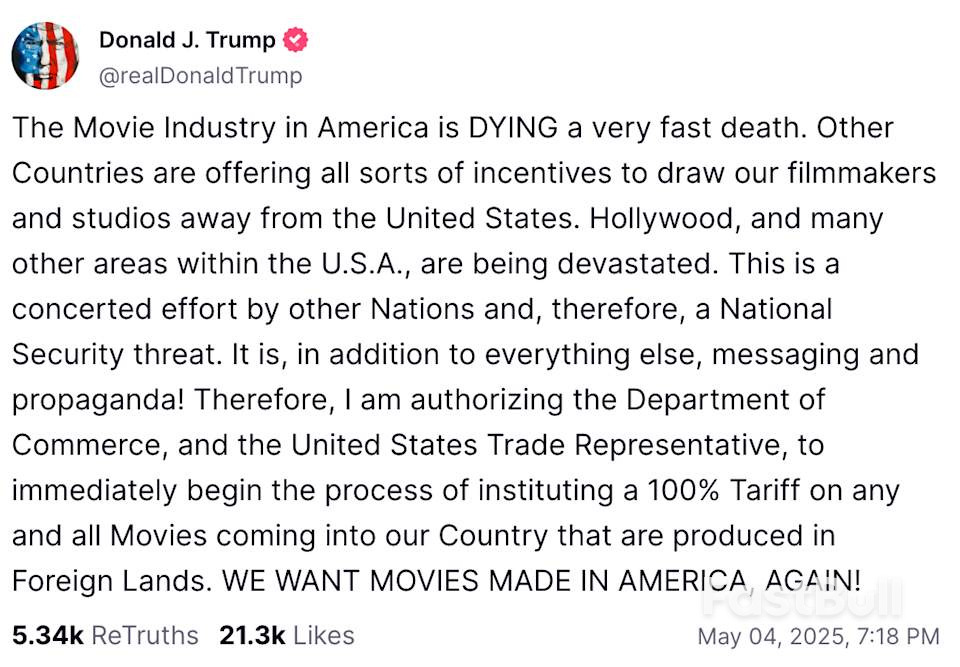
          The market reaction comes after Trump directed his administration late Sunday to impose "a 100% tariff on any and all movies coming into our country that are produced in foreign lands," sending shockwaves through an industry still reeling from the pandemic shutdown and the recent writers' and actors' strikes.
          "The Movie Industry in America is DYING a very fast death," Trump wrote in a post on Truth Social. "Other Countries are offering all sorts of incentives to draw our filmmakers and studios away from the United States. Hollywood, and many other areas within the U.S.A., are being devastated. This is a concerted effort by other Nations and, therefore, a National Security threat."
          Earlier this year, Trump appointed a trio of actors — Jon Voight, Sylvester Stallone, and Mel Gibson — as his "special ambassadors" to Hollywood. He introduced the initiative in January, describing Hollywood as “a great but very troubled place.”
          Netflix, Warner Bros. stocks slide as Trump threatens 100% tariff on foreign-made films_1

          'Insane and devastating'

          Trump's announcement follows China's move to "moderately reduce" imports of Hollywood movies in retaliation for escalating US tariffs on Chinese goods.
          The proposed tariffs could affect several blockbusters filmed abroad, including Disney's "Avengers: Doomsday" and "Spider-Man: Brand New Day" (London), 20th Century's "Avatar: Fire and Ash" (New Zealand), Paramount's "Mission: Impossible — The Final Reckoning" (global locations), Lionsgate's Ballerina (Czech Republic), and Lucasfilm's "Star Wars: Starfighter" (UK).
          "Until there is more clarity, this new development — which should’ve been predicted by all Hollywood C-suites — will likely slow down the business, or, in a worst case, shut it down in exactly the same way that the strikes affected Hollywood," Chris Fenton, longtime Hollywood executive, told Yahoo Finance.
          Veteran film producer Kathryn Arnold called the proposed tariffs "insane and devastating," warning they could wipe out lower to mid-budget films by driving up costs and disrupting a globally interconnected system.
          "If films are forced to be made here, the pricing of labor and goods and services is higher. Budgets will go up," she said, noting US tax incentives aren’t nearly enough to offset domestic production costs.
          The ripple effects, she added, would hit everyone from crew to catering.
          International markets are vital for major releases, often contributing up to 70% of box office revenue. Prior to the pandemic, China alone accounted for up to 40%, though US studios typically only see about 25% of those grosses due to strict local revenue-sharing rules.
          According to the Motion Picture Association, the US film and TV business is a net export business and is running a trade surplus, based on data collected through 2023.

          Hollywood tariff unknowns

          Despite the initial stock declines, many unknowns remain about how such a tariff rollout would be structured and what the implementation might look like. Some key questions include whether the tariffs would apply to all forms of distribution, including streaming platforms, or just theatrical releases.
          It's also unclear how existing international co-productions would be treated. Industry insiders warn the policy could create logistical and legal complications for studios with global production pipelines.
          "With only a single social media post to go on, [it's] virtually impossible to size the impact to the industry or specific companies today," Morgan Stanley analyst Ben Swinburne wrote in reaction to the news on Monday.
          He warned 100% tariffs could result in fewer, more expensive films and lower industry earnings, particularly for Netflix, which produces more films than any other studio and derives up to 30% of its viewership from film content.
          Swinburne also flagged potential retaliatory moves from foreign governments, which could target US streaming platforms or restrict film releases abroad.

          Source: finance.yahoo

          Risk Warnings and Disclaimers
          You understand and acknowledge that there is a high degree of risk involved in trading. Following any strategies or investment methods may lead to potential losses. The content on the site is provided by our contributors and analysts for information purposes only. You are solely responsible for determining whether any trading assets, securities, strategy, or any other product is suitable for investing based on your own investment objectives and financial situation.
          Add to Favorites
          Share

          The Trump Trade: Tariffs Distort US Growth and Fuel EUR/USD Rally

          Adam

          Forex

          President Trump’s tariff policy has distorted key US economic data and market trends. Tariff-driven activity inflated GDP and spending figures in early 2025, masking underlying weakness. Businesses and consumers rushed to purchase before new tariffs, creating artificial short-term growth. However, slowing labor indicators, rising inflation expectations, and fragile financial markets suggest deeper structural problems. This article examines how Trump’s tariffs disrupted economic stability, pressured the US dollar, and fueled a strong rally in EUR/USD.

          How Trump’s Tariffs Distort US Economic Data and Mask Real Growth

          President Trump’s tariff policy has disrupted the US economy. Because of temporary factors, the US GDP numbers do not accurately reflect the true health or direction of the economy. Businesses and consumers rushed to import goods before tariffs took effect in April, which inflated GDP, investment, and spending numbers.
          Companies accelerated inventory accumulation to avoid anticipated price increases from tariffs. Additionally, consumers brought forward purchases, particularly in the automotive sector. These front-loaded activities temporarily boosted GDP but are expected to weigh on future growth.
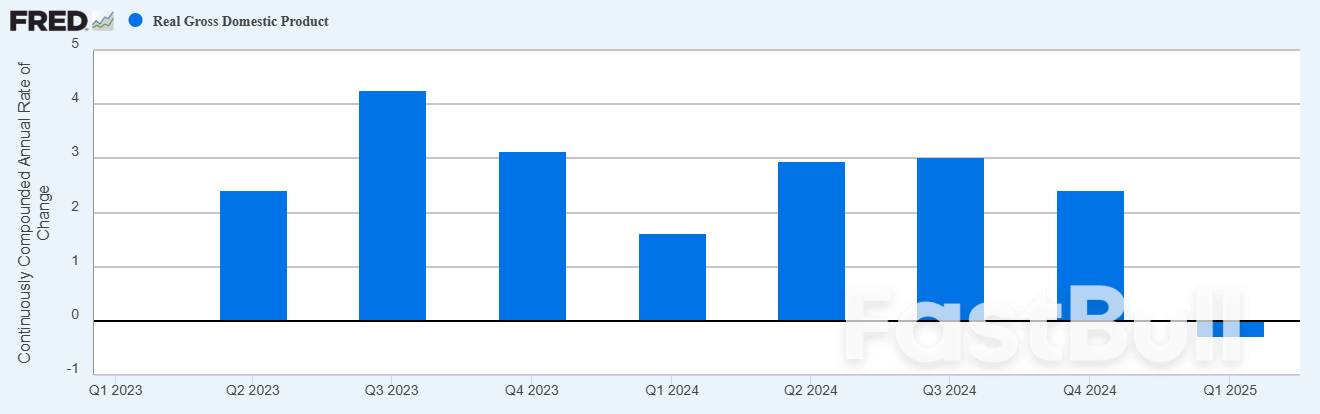
          Meanwhile, a decline in aggregate weekly hours worked during Q1 provides a more accurate signal of a slowing economy. The chart below shows that the US GDP contracted in Q1 2025, raising concerns about a potential recession.
          The Trump Trade: Tariffs Distort US Growth and Fuel EUR/USD Rally_1
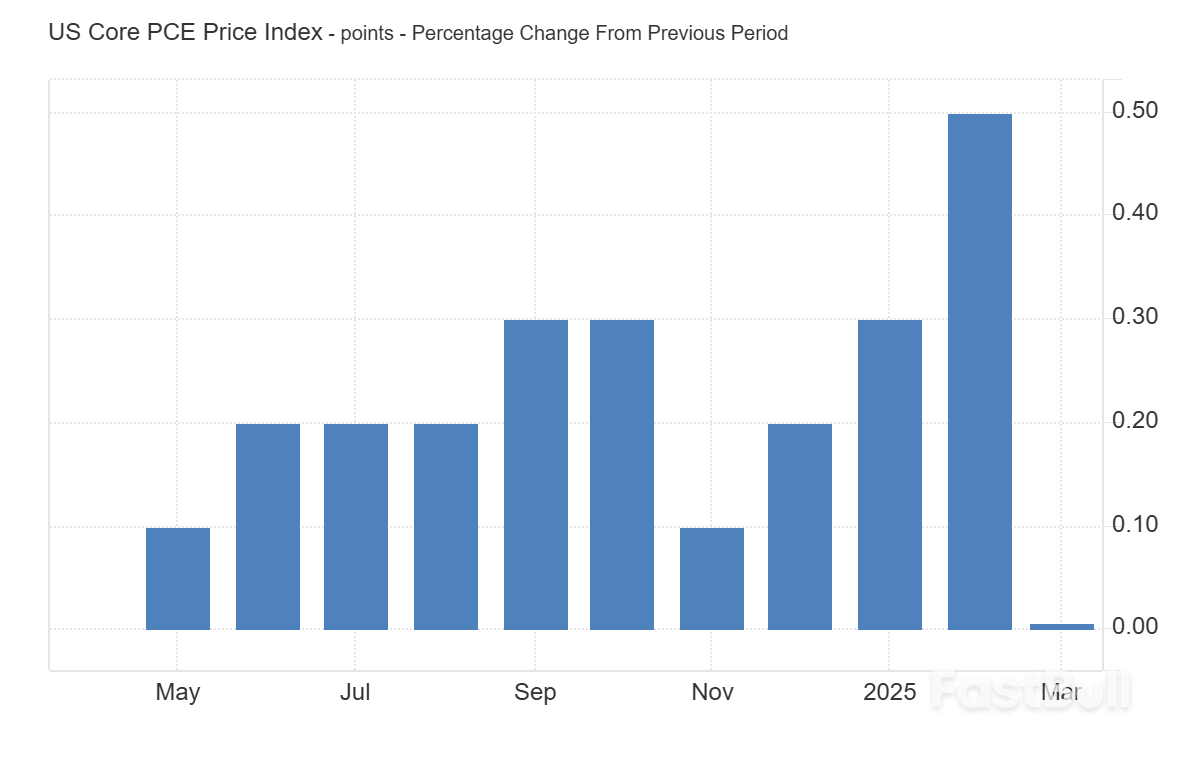
          On the other hand, inflation trends also reflect tariff-driven shocks. Core PCE rose sharply by 0.5% in February, then dropped to just 0.03% in March, as shown in the chart below. Despite this decline, the Fed will unlikely proceed with further rate cuts.
          The Trump Trade: Tariffs Distort US Growth and Fuel EUR/USD Rally_2
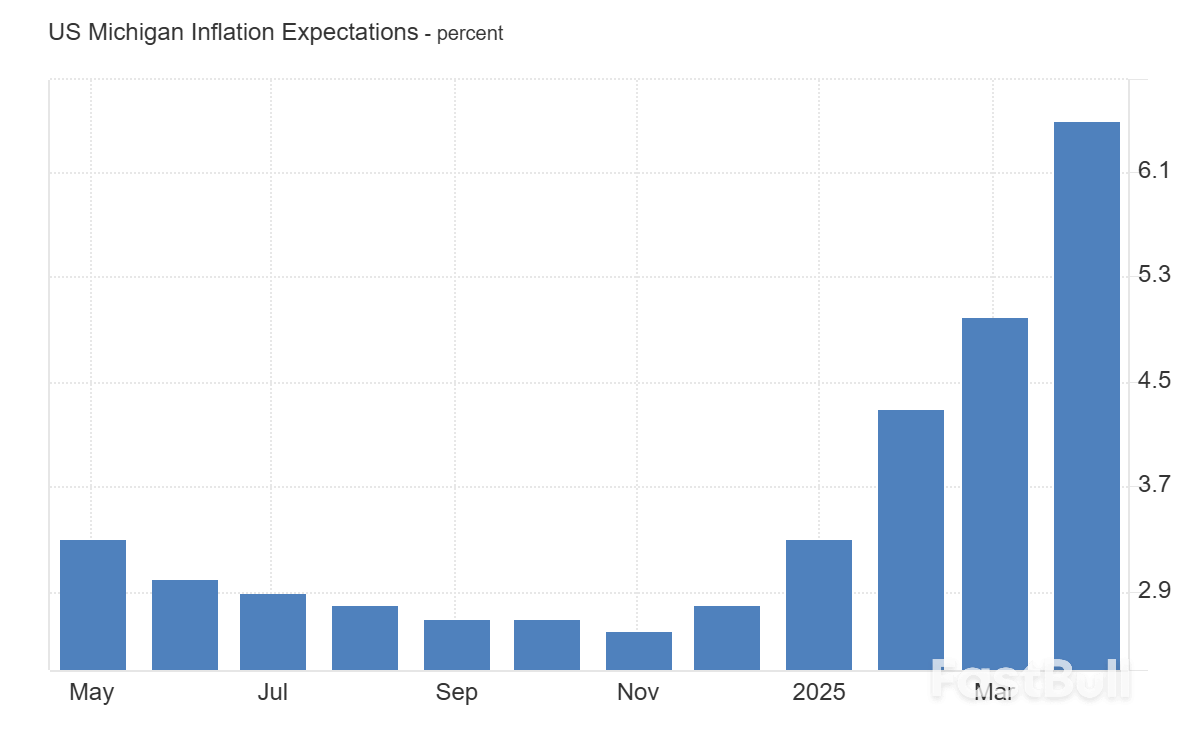
          Meanwhile, consumers expect prices to rise further amid uncertainty in the financial system. The University of Michigan’s April survey indicates that Trump’s tariff plans fuel inflation fears. Inflation expectations for April 2025 have climbed above 6%, as shown in the chart below.
          The Trump Trade: Tariffs Distort US Growth and Fuel EUR/USD Rally_3

          Market Volatility Rises as Tariff Uncertainty Weighs on Investor Sentiment

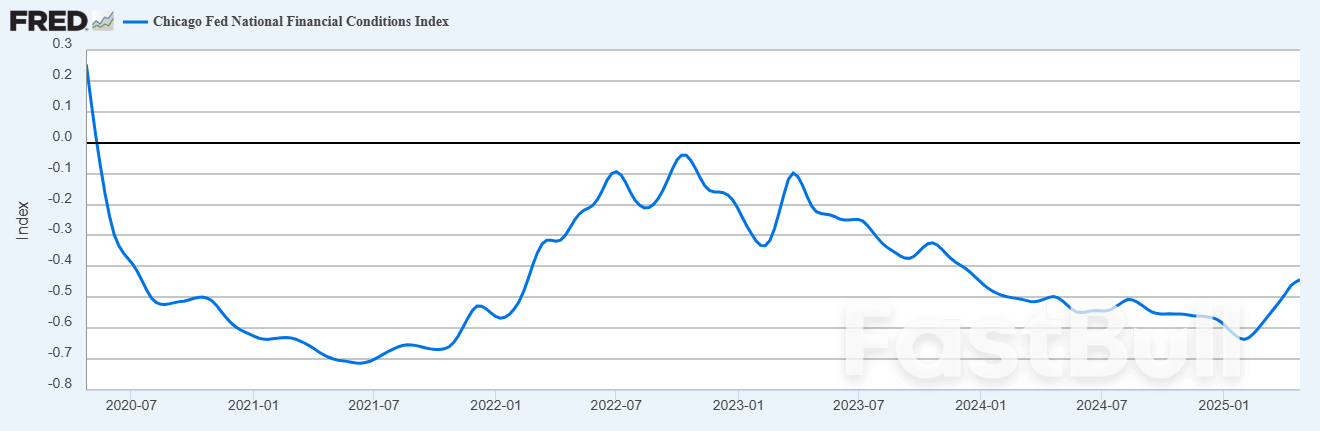
          Financial markets remain fragile under the weight of tariff uncertainty. The S&P 500 edged higher but lacked strong momentum. Investors stay cautious as tariff negotiations continue to stall. The chart below shows that the financial liquidity eased slightly to -0.45% on April 18, but long-term trends indicate tightening conditions ahead.
          The Trump Trade: Tariffs Distort US Growth and Fuel EUR/USD Rally_4
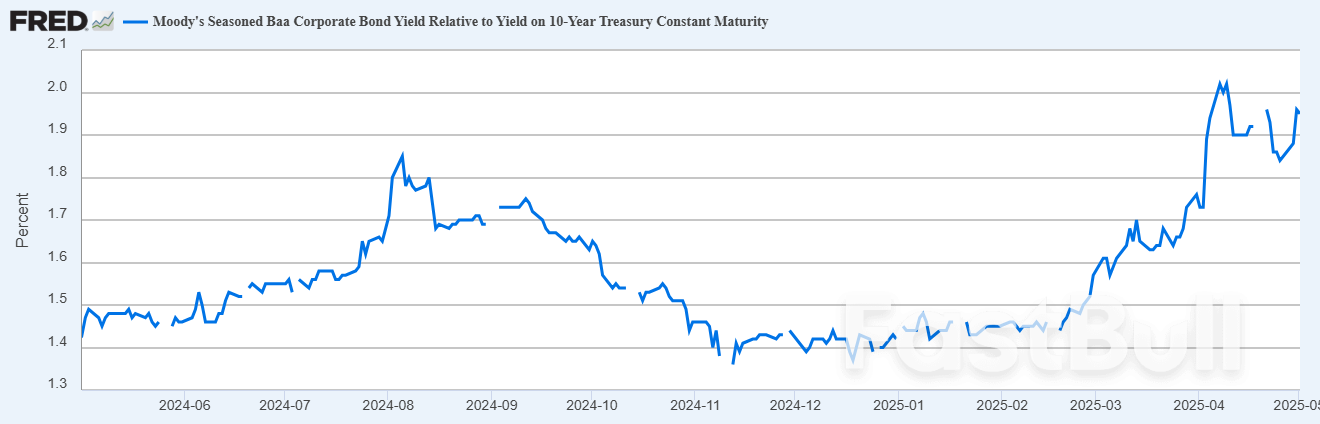
          The chart below shows that Moody’s Baa bond spreads peaked at 2.02% and remain elevated.
          The Trump Trade: Tariffs Distort US Growth and Fuel EUR/USD Rally_5

          Trump’s Tariffs Undermine US Dollar Strength and Confidence

          Trump’s tariffs have weakened the US dollar. Rising inflation and fiscal deficits are damaging investor confidence. Tariffs are pushing up prices while growth slows, creating a stagflation-like environment that is making the dollar less attractive to global investors.

          US Dollar Faces Technical Breakdown and Bearish Outlook

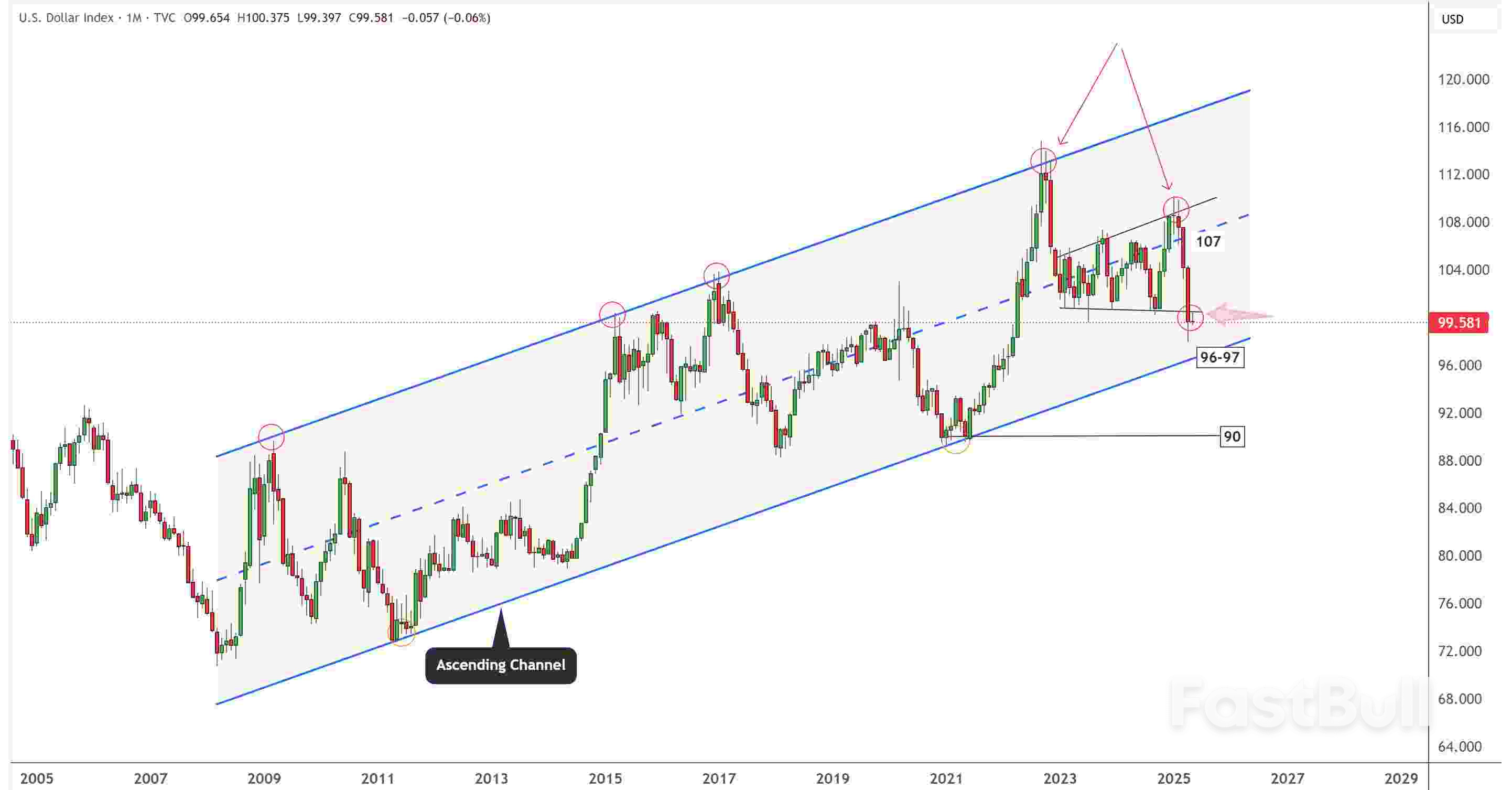
          The monthly chart of the US Dollar Index shows that it has been trading within an ascending channel since 2009. Consolidation within this channel has stabilized over time. However, the index has repeatedly failed to break above the key resistance level at 115, keeping the door open for a potential decline.
          The Trump Trade: Tariffs Distort US Growth and Fuel EUR/USD Rally_6
          The peaks near 115 and 110, highlighted by red circles, mark the points where each downward leg began. The index has also broken a triangle pattern within the ascending channel and is now moving toward the 96–97 area. A decisive break below this level could trigger a sharp decline toward the 90 zone. The index must recover above 110 to resume the long-term upward trend.

          EUR/USD Breakout Gains Momentum as Dollar Retreats

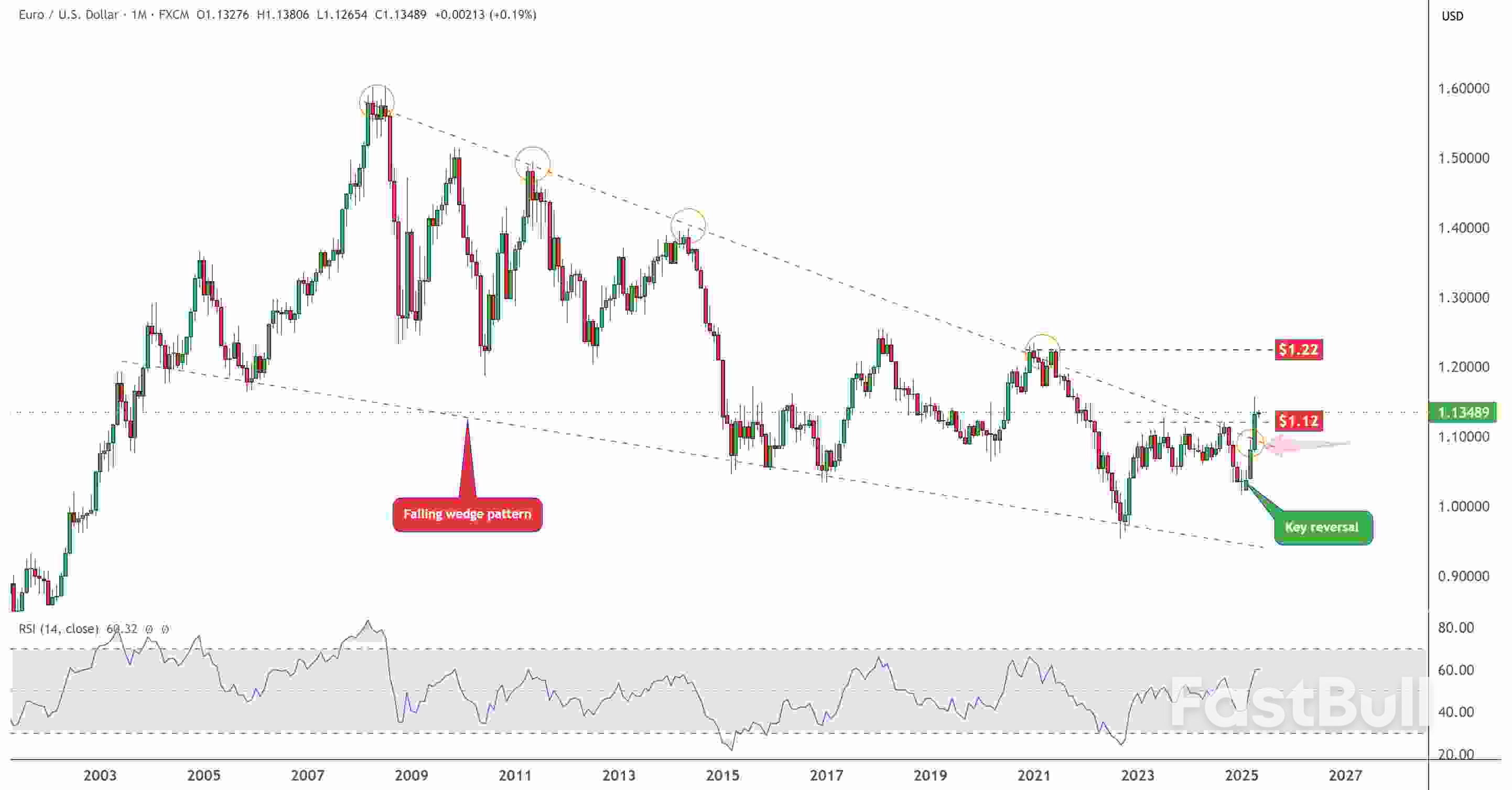
          The weakness in the US dollar benefits the euro. EUR/USD has room to rise as traders move away from dollar-denominated assets. The monthly chart for EUR/USD shows a breakout from the falling wedge pattern, with the April 2025 close above $1.12. This breakout opens the door for a potential move toward the $1.22 area. Moreover, the RSI has moved above the midpoint, strengthening the bullish trend. The decline in the US dollar has triggered this strong rally in EUR/USD.
          The Trump Trade: Tariffs Distort US Growth and Fuel EUR/USD Rally_7
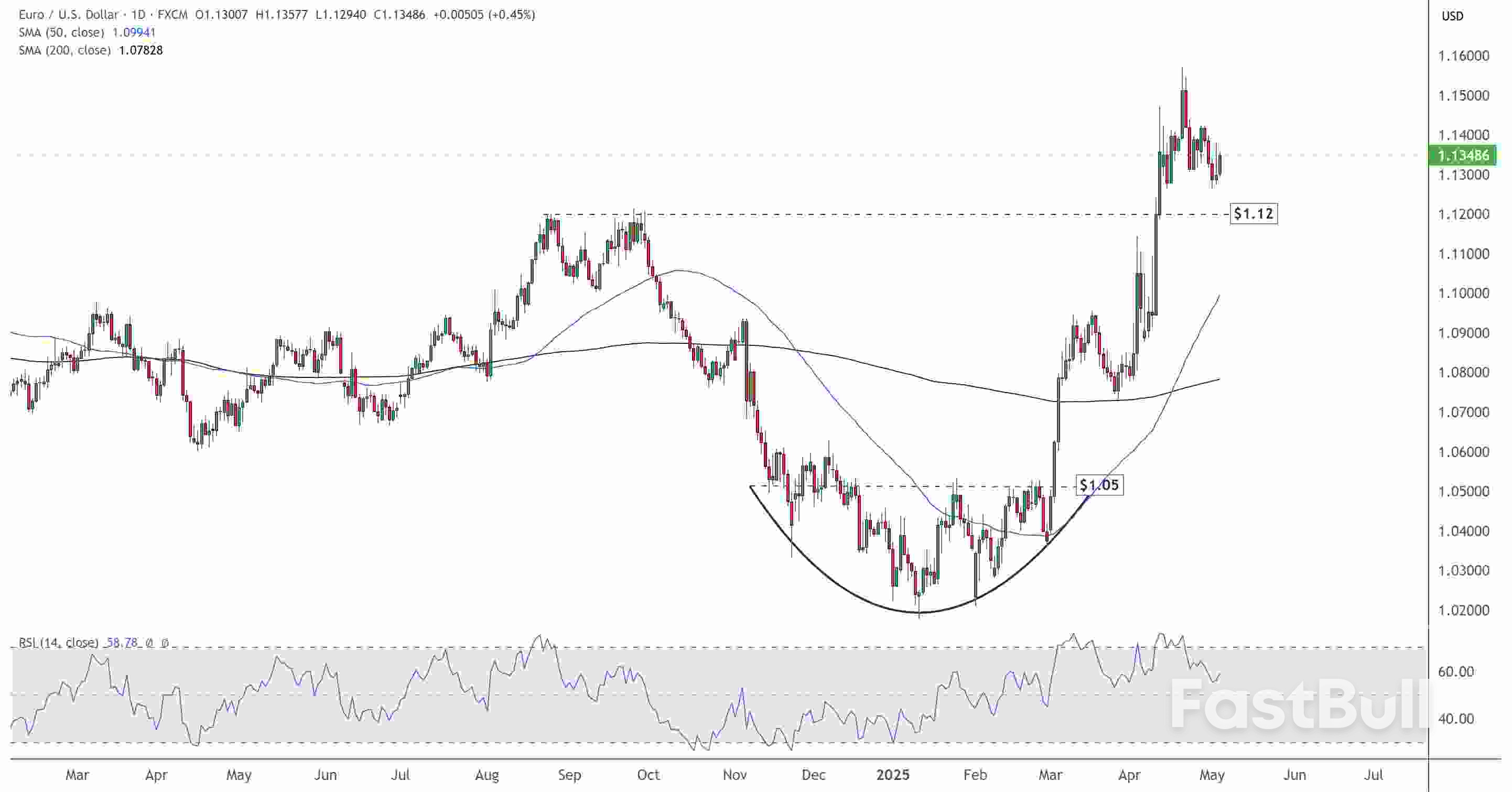
          The daily chart for EUR/USD shows a strong reversal from the $1.02 area, driven by the formation of a cup pattern. The breakout above $1.05 confirmed this pattern and opened the door for a strong rally in EUR/USD. The crossover of the 50-day SMA above the 200-day SMA further highlights the positive trend. Investors and traders may consider buying on pullbacks, targeting a move toward the $1.22 area.
          The Trump Trade: Tariffs Distort US Growth and Fuel EUR/USD Rally_8

          Source: fxempire

          Risk Warnings and Disclaimers
          You understand and acknowledge that there is a high degree of risk involved in trading. Following any strategies or investment methods may lead to potential losses. The content on the site is provided by our contributors and analysts for information purposes only. You are solely responsible for determining whether any trading assets, securities, strategy, or any other product is suitable for investing based on your own investment objectives and financial situation.
          Add to Favorites
          Share

          Fed and Powell face 'tug-of-war' with Trump and his tariffs looming

          Damon

          Economic

          The biggest question facing the Federal Reserve as it gathers again this week is how to grapple with a tariff-related "tug-of-war" between sticky inflation and a slowing economy — as well as a president who wants looser monetary policy.
          How that dilemma gets resolved could mean two very different courses for interest rates in the coming months.
          President Trump has made his views known in recent weeks: He wants rates lowered ahead of any slowing of the economy possibly triggered by his trade policies.
          And he is not happy with the caution of Fed Chair Jerome Powell, who has said the central bank will "wait for greater clarity" while weighing both sides of its mandate for stable prices and full employment.
          There is a "strong likelihood," Powell said last month, that the economy will be moving away from both of the Fed's goals for the "balance of the year, or at least not making much progress."
          New reports on the economy, jobs, and inflation released last week reinforced the Fed's conundrum as it looks for patterns in the data.
          A GDP report showed the US economy contracted for the first time in three years to begin 2025 due largely to a rush by importers to beat the start of President Trump's tariffs.
          But an April jobs report released Friday also showed the labor market remained resilient even in the weeks after Trump's "Liberation Day" announcements shook markets.
          An inflation gauge favored by the Fed showed that price growth slowed in March to an annualized 2.6%, but it was still a hotter-than-expected 3.5% for the quarter. And both marks are above the Fed's target of 2%.
          Some economists expect inflation to kick higher and the economy to fall further in the months ahead.

          The 'tug-of-war'

          The challenge for the Fed, Wilmington Trust bond portfolio manager Wilmer Stith said, is that it has to ferret out "the tug-of-war between how much inflation is over the 2% target versus a deteriorating job market."
          Luke Tilley, chief economist for Wilmington Trust, isn't expecting much change in the Fed's stance at this week's meeting. He does expect Powell to reiterate the tension between lower growth and higher inflation.
          "They will hold where they are at this meeting, citing all of the uncertainty and that, if you look through the GDP data that still looks pretty strong and domestic demand was strong," he said.
          Tilley said underlying demand was actually inflated during the first quarter by businesses stocking up on inventory ahead of the president's tariffs.
          He expects the economy to slip into a mild, short recession in the second quarter, which he expects will lead the Fed to cut rates.
          "I expect that by the end of the year they will be cutting rates and more so than they think right now — and more so that they'd ever be willing to say right now," Tilley said.
          Tilley sees a rate cut at every meeting for the rest of the year starting in June, amounting to 125 basis points of reductions by year-end.
          But he doesn't think the Fed will cut until there is an actual drop in economic growth.
          That could lead to even more tension with the occupant of the White House. Trump in recent weeks has repeatedly made clear that he wants the Fed to cut rates and has accused it and Powell of being late.

          Source: yahoo

          To stay updated on all economic events of today, please check out our Economic calendar
          Risk Warnings and Disclaimers
          You understand and acknowledge that there is a high degree of risk involved in trading. Following any strategies or investment methods may lead to potential losses. The content on the site is provided by our contributors and analysts for information purposes only. You are solely responsible for determining whether any trading assets, securities, strategy, or any other product is suitable for investing based on your own investment objectives and financial situation.
          Add to Favorites
          Share

          JPMorgan Says AI Helped Boost Sales, Add Clients In Market Turmoil

          Damon

          Economic

          The largest U.S. lender, along with its peers has been ramping up its use of AI. Goldman Sachs is rolling out a generative AI assistant to its bankers, traders and asset managers, while Morgan Stanley developed a chatbot for its financial advisers with OpenAI.

          JPMorgan's AI tools have supercharged the speed at which its bankers could provide research and investment advice to wealthy clients last month at a time when the U.S. tariff announcements erased trillions of dollars from the stock market.

          "In the last few weeks, there have been several fluctuations in the market which are not in normal bite sizes, making it very complicated to think about all your clients and all the things required to do," Mary Erdoes said. The "powerful" AI tools helped advisors to quickly handle client requests by pulling data on their trading patterns and anticipating queries, she said.

          In the days surrounding U.S. President Donald Trump's tariff announcement last month, U.S. stock markets set a new record for single-day trading volume, and posted some of the sharpest intraday swings of the past 50 years.

          The volatility prompted individual investors to call their bankers seeking advice, Erdoes told Reuters.

          "When you have a tool that pre-populates all the data and the movement in real time, while also remembering clients' old investment preferences and helps in tailoring a plan for them quickly, it also allows advisors to do much more," she added.

          JPMorgan's so-called Coach AI tool used by private client advisers is quicker at locating content and research to drive conversations with clients.

          "Our advisors are finding the right information up to 95% faster--which means they spend less time searching and more time engaging in meaningful conversations with clients," said Mike Urciuoli, chief information officer at JPMorgan asset and wealth management.

          "It's a great example of how of AI isn't replacing human touch, it's enhancing it," Urciuoli added.

          The app will help advisers expand their client rosters by 50% in the next three-to-five years by enabling them to take on more clients, with AI handling some of the other research-related work.

          JPMorgan Asset & Wealth Management also saw a 20% year-over-year increase in gross sales between 2023-2024, with Gen AI-driven tools which has helped teams focus more effectively on high-impact client work, it said.

          Source: Yahoo Finance

          To stay updated on all economic events of today, please check out our Economic calendar
          Risk Warnings and Disclaimers
          You understand and acknowledge that there is a high degree of risk involved in trading. Following any strategies or investment methods may lead to potential losses. The content on the site is provided by our contributors and analysts for information purposes only. You are solely responsible for determining whether any trading assets, securities, strategy, or any other product is suitable for investing based on your own investment objectives and financial situation.
          Add to Favorites
          Share
          FastBull
          Copyright © 2025 FastBull Ltd

          728 RM B 7/F GEE LOK IND BLDG NO 34 HUNG TO RD KWUN TONG KLN HONG KONG

          TelegramInstagramTwitterfacebooklinkedin
          App Store Google Play Google Play
          Products
          Charts

          Chats

          Q&A with Experts
          Screeners
          Economic Calendar
          Data
          Tools
          Membership
          Features
          Function
          Markets
          Copy Trading
          Latest Signals
          Contests
          News
          Analysis
          24/7
          Columns
          Education
          Company
          Careers
          About Us
          Contact Us
          Advertising
          Help Center
          Feedback
          User Agreement
          Privacy Policy
          Business

          White Label

          Data API

          Web Plug-ins

          Poster Maker

          Affiliate Program

          Risk Disclosure

          The risk of loss in trading financial instruments such as stocks, FX, commodities, futures, bonds, ETFs and crypto can be substantial. You may sustain a total loss of the funds that you deposit with your broker. Therefore, you should carefully consider whether such trading is suitable for you in light of your circumstances and financial resources.

          No decision to invest should be made without thoroughly conducting due diligence by yourself or consulting with your financial advisors. Our web content might not suit you since we don't know your financial conditions and investment needs. Our financial information might have latency or contain inaccuracy, so you should be fully responsible for any of your trading and investment decisions. The company will not be responsible for your capital loss.

          Without getting permission from the website, you are not allowed to copy the website's graphics, texts, or trademarks. Intellectual property rights in the content or data incorporated into this website belong to its providers and exchange merchants.

          Not Logged In

          Log in to access more features

          FastBull Membership

          Not yet

          Purchase

          Become a signal provider
          Help Center
          Customer Service
          Dark Mode
          Price Up/Down Colors

          Log In

          Sign Up
          Position
          Layout
          Fullscreen
          Default to Chart
          The chart page opens by default when you visit fastbull.com