

Markets
News
Analysis
User
24/7
Economic Calendar
Education
Data
- Names
- Latest
- Prev



Signal Accounts for Members
All Signal Accounts
All Contests
 China, Mainland Imports (CNH) (Dec)
A:--
F: --
P: --
China, Mainland Imports YoY (USD) (Dec)A:--
F: --
P: --
China, Mainland Exports YoY (USD) (Dec)A:--
F: --
P: --
 U.K. 10-Year Note Auction Yield
A:--
F: --
P: --
 Canada Leading Index MoM (Dec)
A:--
F: --
 U.S. MBA Mortgage Application Activity Index WoW
A:--
F: --
P: --
U.S. PPI YoY (Excl. Food, Energy & Trade) (Oct)A:--
F: --
U.S. PPI MoM Final (Excl. Food, Energy and Trade) (SA) (Oct)A:--
F: --
U.S. Core PPI YoY (Nov)A:--
F: --
U.S. PPI MoM (SA) (Nov)A:--
F: --
U.S. PPI YoY (Nov)A:--
F: --
U.S. Current Account (Q3)A:--
F: --
U.S. Retail Sales YoY (Nov)A:--
F: --
P: --
U.S. Retail Sales (Nov)A:--
F: --
P: --
U.S. Core Retail Sales MoM (Nov)A:--
F: --
U.S. Retail Sales MoM (Excl. Automobile) (SA) (Nov)A:--
F: --
U.S. Core Retail Sales (Nov)A:--
F: --
P: --
U.S. Retail Sales MoM (Excl. Gas Stations & Vehicle Dealers) (SA) (Nov)A:--
F: --
U.S. Retail Sales MoM (Nov)A:--
F: --
U.S. Core PPI MoM (SA) (Nov)A:--
F: --
Philadelphia Fed President Henry Paulson delivers a speech U.S. Commercial Inventory MoM (Oct)A:--
F: --
U.S. Existing Home Sales Annualized Total (Dec)A:--
F: --
U.S. Existing Home Sales Annualized MoM (Dec)A:--
F: --
U.S. EIA Weekly Cushing, Oklahoma Crude Oil Stocks ChangeA:--
F: --
P: --
U.S. EIA Weekly Crude Stocks ChangeA:--
F: --
P: --
U.S. EIA Weekly Gasoline Stocks ChangeA:--
F: --
P: --
U.S. EIA Weekly Crude Demand Projected by ProductionA:--
F: --
P: --
U.S. EIA Weekly Crude Oil Imports ChangesA:--
F: --
P: --
U.S. EIA Weekly Heating Oil Stock ChangesA:--
F: --
P: --
U.S. Refinitiv/Ipsos Primary Consumer Sentiment Index (PCSI) (Jan)--
F: --
P: --
 Japan Domestic Enterprise Commodity Price Index YoY (Dec)
--
F: --
P: --
Japan Domestic Enterprise Commodity Price Index MoM (Dec)--
F: --
P: --
Japan PPI MoM (Dec)--
F: --
P: --
 Australia Consumer Inflation Expectations (Jan)
--
F: --
P: --
U.K. 3-Month RICS House Price Balance (Dec)--
F: --
P: --
 South Korea Benchmark Interest Rate
--
F: --
P: --
 Saudi Arabia CPI YoY (Dec)
--
F: --
P: --
U.K. Services Index MoM (SA) (Nov)--
F: --
P: --
U.K. Services Index YoY (Nov)--
F: --
P: --
U.K. Manufacturing Output MoM (Nov)--
F: --
P: --
U.K. Trade Balance (Nov)--
F: --
P: --
U.K. Monthly GDP 3M/3M Change (Nov)--
F: --
P: --
U.K. GDP MoM (Nov)--
F: --
P: --
U.K. Industrial Output MoM (Nov)--
F: --
P: --
U.K. Trade Balance Non-EU (SA) (Nov)--
F: --
P: --
U.K. Trade Balance (SA) (Nov)--
F: --
P: --
U.K. Manufacturing Output YoY (Nov)--
F: --
P: --
U.K. Construction Output MoM (SA) (Nov)--
F: --
P: --
U.K. Industrial Output YoY (Nov)--
F: --
P: --
U.K. Services Index MoM--
F: --
P: --
U.K. Construction Output YoY (Nov)--
F: --
P: --
U.K. GDP YoY (SA) (Nov)--
F: --
P: --
U.K. Trade Balance EU (SA) (Nov)--
F: --
P: --
 Indonesia Loan Growth YoY (Dec)
--
F: --
P: --
 France HICP Final MoM (Dec)
--
F: --
P: --
 Germany Annual GDP Growth
--
F: --
 Italy Industrial Output YoY (SA) (Nov)
--
F: --
P: --
Canada Existing Home Sales MoM (Dec)--
F: --
P: --
 Euro Zone Trade Balance (SA) (Nov)
--
F: --
P: --











No matching data

Latest Views
Latest Views
Trending Topics
Top Columnists
Latest Update
White Label
Data API
Web Plug-ins
Affiliate Program
View All
No data
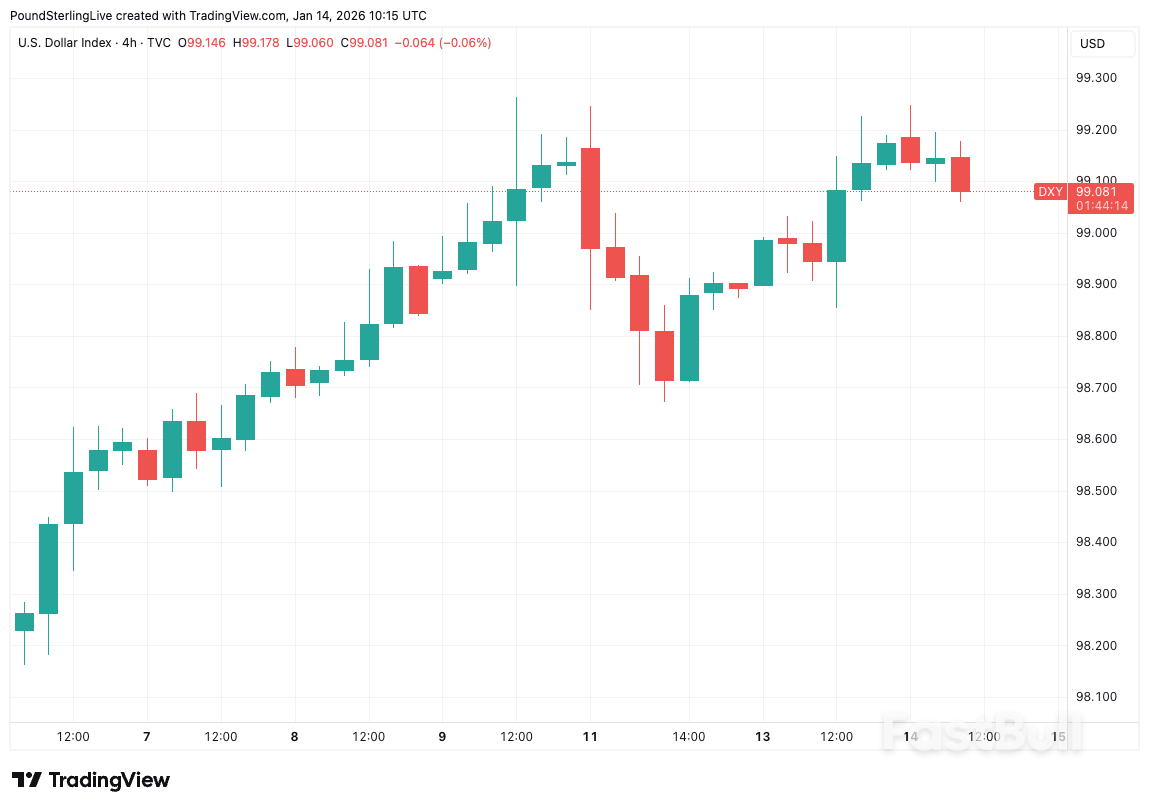
Dollar set to rebound as Powell avoids indictment.
A powerful parable once captured the world's anxiety about a rising China. Today, that same story explains the disruptive behavior of the United States. The metaphor, from strategist Edward N. Luttwak, describes a crowded elevator where the passengers are nations.
Luttwak wrote, "Riders in a crowded elevator cabin into which an extremely fat Mr. China has just stepped in must react self-protectively if he is becoming fatter at a rapid rate, squeezing them against the walls—even if he is entirely unthreatening, and indeed affable."
He noted that the elevator already contained "an even fatter, louder, and frequently violent Mr. America," but his presence was familiar. Everyone had accommodated his bulk over the decades.
Published over ten years ago, this imagery perfectly captured a period of intense nervousness about China's rapid economic transformation. Western countries, led by the US, watched uneasily as China gained on them.
While Luttwak suggested China could be "affable," its actions felt far from unthreatening to its neighbors. The sense of being squeezed was acute for countries like Japan and the maritime nations of Southeast Asia. They felt bullied as China built a blue-water navy to enforce extralegal claims over regional seas.
The advice I offered in my 2017 book, Everything Under the Heavens, was for the United States to remain calm. The country's best path was to keep its own house in order by staying open to the world and investing in its strengths in science and education. Washington was advised not to overreact with aggression but to strengthen its alliances and reinforce international law.
This strategy would have leveraged America's soft power, democracy, and rule of law, compelling China to compete on terms highly favorable to the US. While China has invested heavily in its own strengths like education, it has largely kept its head down diplomatically.
Two things have fundamentally changed since Luttwak wrote his parable. First, the world has grown accustomed to China's economic weight; its growth is now seen as a matter of fact, not a mind-blowing shock. Second is the astonishing behavior of the United States under President Donald Trump.
Over his terms, Trump has pursued policies that are the opposite of the calm, alliance-focused approach once recommended. In recent weeks, his administration's hyperaggressive actions have brought the elevator parable powerfully back to mind, but with the roles reversed.
With actions in Nigeria, Syria, and Venezuela—where Trump declared himself "acting president" after ordering the abduction of Nicolás Maduro—and threats against Iran, it is now the United States squeezing other countries against the elevator walls.
While China’s expansion was primarily economic, the US under Trump has pursued a different path reminiscent of the imperial age: territorial aggrandizement. The result is almost unimaginable. Today, it is often China, not the United States, that appears to be the global status quo power.
The most glaring example is Trump's escalation of claims to Greenland, with rhetoric vowing to get it "one way or another." This language echoes gangster films more than diplomacy and threatens to break Washington's relationship with Europe, turning a wary alliance into something far more distant.
When one passenger in the elevator becomes aggressive, disregarding conventions, the others eventually have no choice but to push back. This is the reality the world is facing after Trump declared he has no use for international law, limited only by his own "morality."
This pushback doesn't necessarily mean mirroring the aggression. Instead, countries seek strength in numbers, forming coalitions to protect their interests. In international relations, this strategy is called hedging. It’s what nations do when long-standing partnerships are cast into doubt. We can expect to see much more of it.
Two key examples are already visible:
• Europe's trade deal with South America: A long-belated agreement finalized as a clear hedge against deteriorating transatlantic relations.
• Saudi Arabia's strategic pivot: Despite being heavily courted by Trump, Saudi Arabia has held talks to acquire Chinese fighter jets and has struck a mutual defense pact with nuclear-armed Pakistan. Even with access to America's most advanced weapons, Trump's erratic behavior has made the Saudis nervous.
The urge to hedge is an ominous sign for the United States. The current administration is pursuing a foolhardy geopolitical shift, weakening commitments to allies in Europe and Asia for the fantasy that dominating the Western Hemisphere will make America better off.
This strategy is sheer folly. Latin America cannot compare to traditional allies like NATO, Japan, and South Korea in wealth, innovation, technology, or manufacturing. While reinvesting in Latin America is a worthy goal, abandoning established, powerful partnerships for a new hemispheric focus is a strategic error.
Furthermore, by throwing its weight around in Venezuela, and threatening to do so in Colombia, Mexico, and Cuba, the United States is ensuring that this balancing behavior will eventually come to its own backyard. It is only a matter of time.
Switzerland’s Federal Council announced on Wednesday it has adopted a final mandate to launch formal negotiations for a legally binding trade agreement with the United States.
The decision from the country's highest executive body paves the way for direct talks, following extensive consultations with parliamentary foreign affairs committees and Switzerland’s cantons.
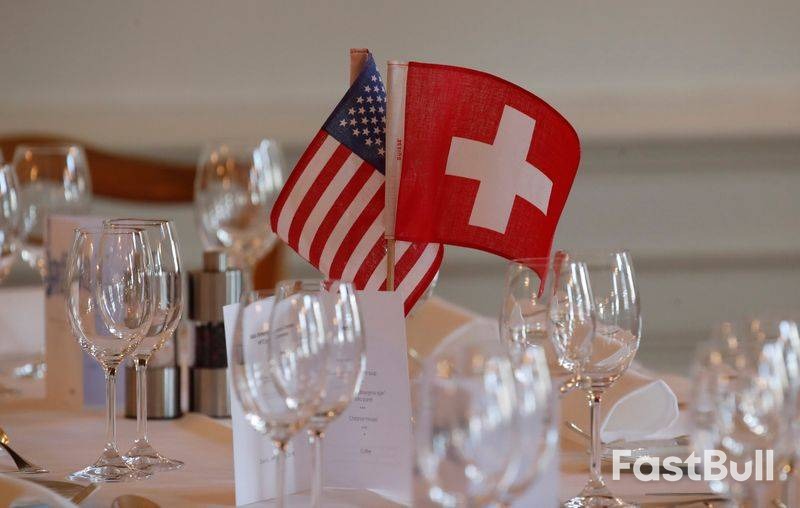
This move builds on a non-binding "framework" agreement established on November 14 between Switzerland, the U.S., and Liechtenstein. That preliminary understanding was aimed at reducing U.S. tariffs on Swiss imports as a precursor to a comprehensive agreement.
Under the terms of that framework:
• Washington set a 15% ceiling on country-specific tariffs for Swiss imports, down from a previous high of 39%. The reduction was applied retroactively from November 14.
• In return, Switzerland agreed to lower its duties on a selection of U.S. products, including fish, seafood, and agricultural goods considered non-sensitive.
The Federal Council had previously adopted a draft mandate on December 5, identifying its main goal as solidifying tariff relief for Swiss goods and stabilizing bilateral trade relations.
According to the Wednesday update, the final mandate has been slightly clarified based on feedback. A key adjustment strengthens the internal consultation process. The Swiss government has now committed to actively consult—rather than merely inform—parliamentary committees and the cantons if new topics emerge during the negotiations.
The Trump administration is set for critical talks with Danish and Greenlandic officials on Wednesday as President Donald Trump intensifies his campaign to bring Greenland under U.S. control.
Greenland's Foreign Minister, Vivian Motzfeldt, and her Danish counterpart, Lars Lokke Rasmussen, are scheduled to meet with U.S. Vice President JD Vance and Secretary of State Marco Rubio at the White House. The meeting follows President Trump’s recent declaration that anything less than U.S. sovereignty over the Arctic island would be "unacceptable."
In a social media post on Wednesday, President Trump laid out his reasoning, tying the acquisition of Greenland directly to U.S. strategic interests.
"The United States needs Greenland for the purpose of National Security. It is vital for the Golden Dome that we are building," Trump stated on Truth Social. He argued that NATO's effectiveness would be significantly enhanced with the territory in American hands. "NATO should be leading the way for us to get it... Anything less than that is unacceptable."
Trump’s renewed focus on the mineral-rich island follows a U.S. military operation in Venezuela on January 3. His long-standing interest in acquiring Greenland has now escalated into a major diplomatic issue, alarming allies in Denmark, which is responsible for Greenland's defense. Danish Prime Minister Mette Frederiksen has warned that a U.S. attack would signal the end of the NATO alliance.
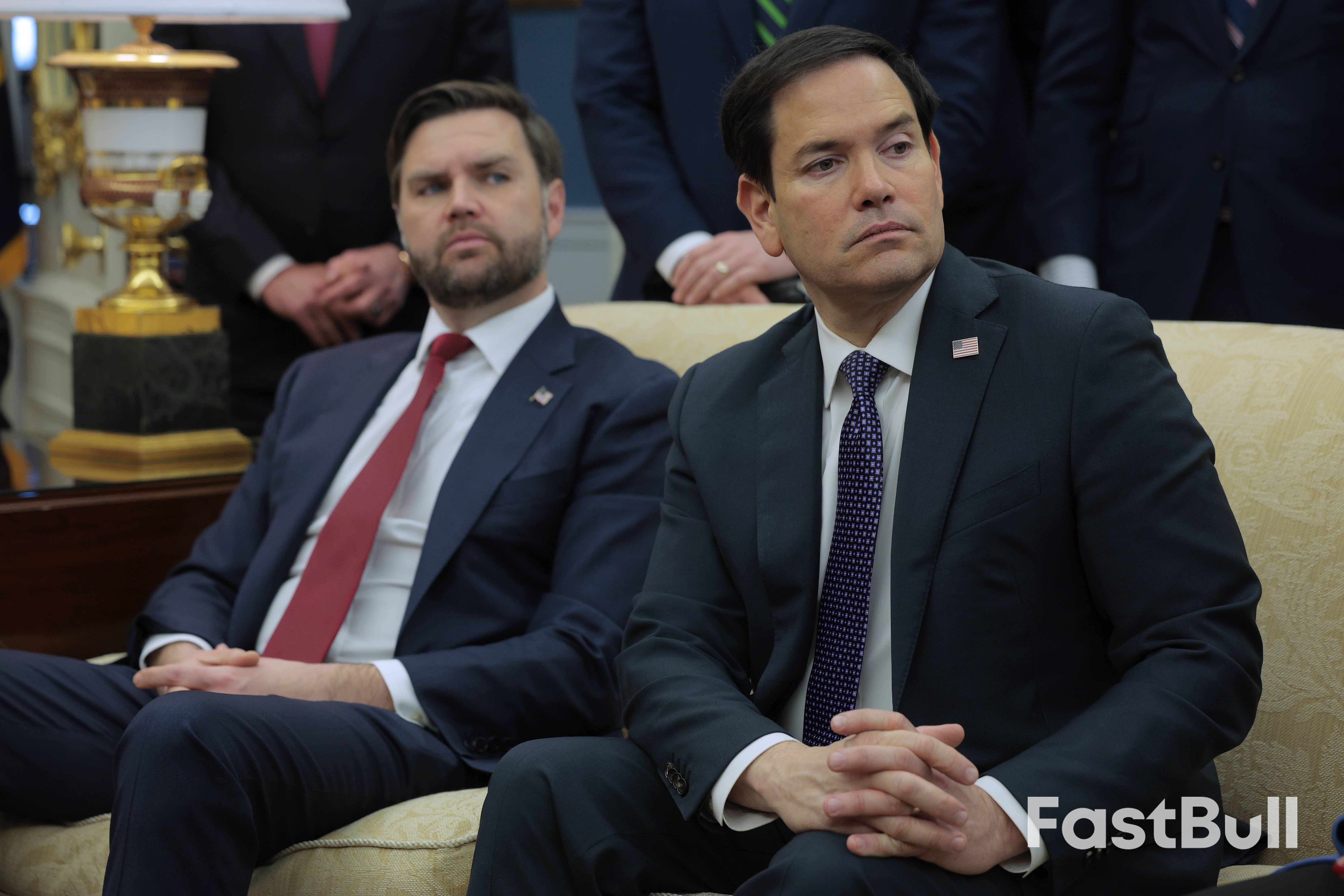
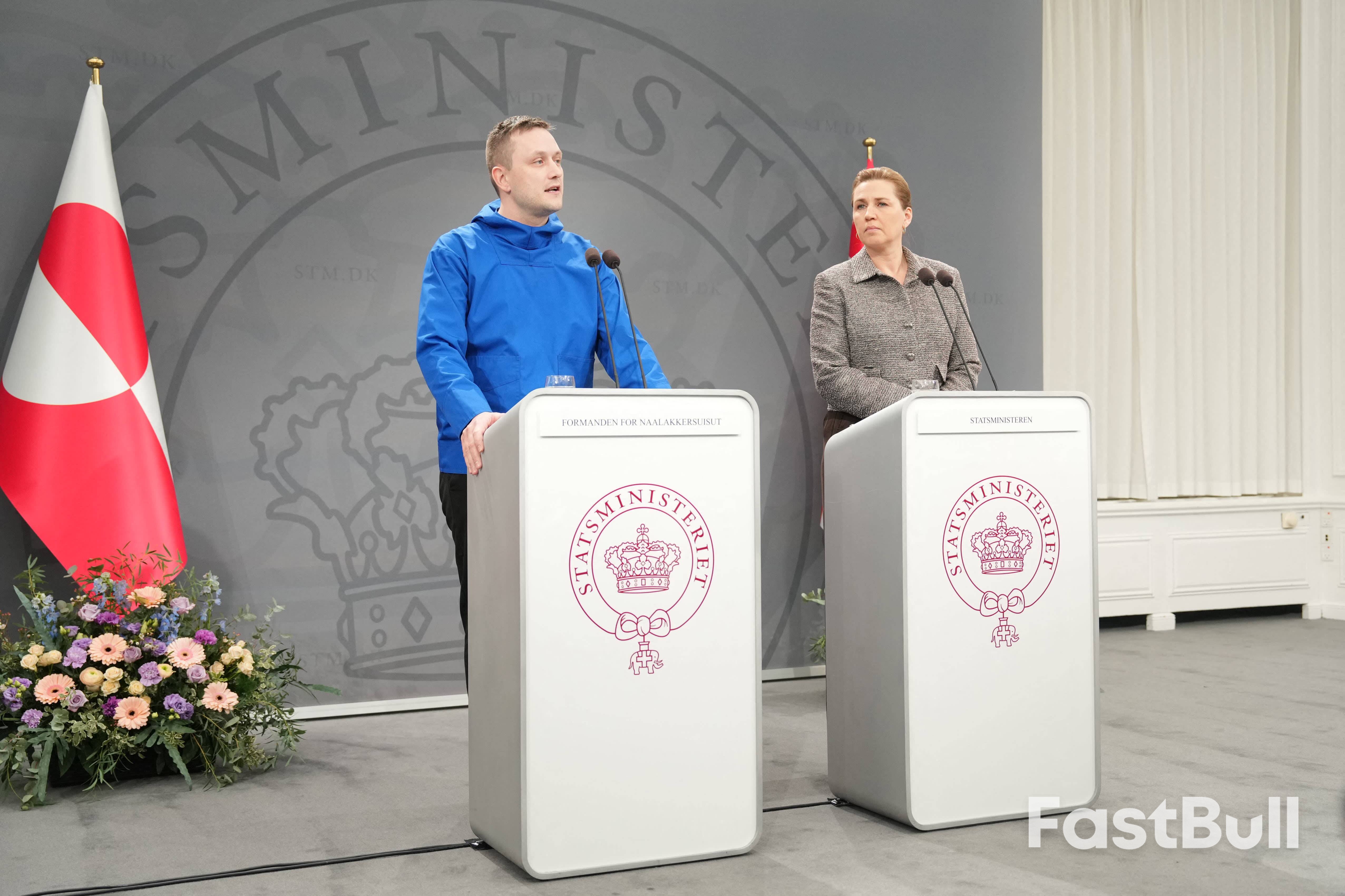
The high-stakes meeting comes just after Greenland's Prime Minister Jens-Frederik Nielsen and Danish Prime Minister Mette Frederiksen publicly stood together against Trump’s threats.
At a joint press conference in Copenhagen on Tuesday, Nielsen was unequivocal. He stated that if the self-governing Danish territory were forced to choose between the U.S. and Denmark, "we choose Denmark."
Frederiksen acknowledged the difficulty of resisting what she called "completely unacceptable pressure" from their closest ally. "But there is much to suggest that the hardest part is still ahead of us," she added.
Analysts warn that the diplomatic crisis could have severe consequences for the trans-Atlantic alliance.
Ian Lesser, a distinguished fellow at the think tank GMF, described the stakes for the talks as "very high," cautioning that a failure to find a resolution "does not just threaten NATO cohesion, it threatens the future existence of the Alliance as we know it."
According to Lesser, the meeting could either establish a path for a negotiated settlement—potentially involving new European defense commitments for Greenland and preferential U.S. access to its resources—or it "could end in acrimony." The prospect of a public fallout recalls a contentious meeting in February last year where Trump and Vance engaged in a shouting match with Ukrainian President Volodymyr Zelenskyy on live television.
A 'Profound Crisis' with No Easy Fix
Carl Bildt, former prime minister of Sweden, expressed skepticism about a diplomatic breakthrough on Wednesday, calling the situation "a profound crisis." He pointed to a significant development: Vice President JD Vance taking the lead in the talks from Secretary of State Marco Rubio.
"It was scheduled to be with Secretary of State Marco Rubio, who has indicated a slightly milder approach, but JD Vance has, of course, been directly insulting towards Denmark and demanding very strange things," Bildt told CNBC. "I expect a fairly hard meeting. I don't expect any resolution."
Bildt, who co-chairs the European Council on Foreign Relations, referenced Vance's "rather extraordinary" analysis of Europe at the Munich Security Conference in February of the previous year, which he said aligned with the region's "extreme right." He concluded, "This is not the trans-Atlantic alliance we used to have."
What a 'Good Outcome' Could Look Like
Otto Svendsen, an associate fellow at the Center for Strategic and International Studies (CSIS), noted that U.S. threats have pushed Greenland and Denmark to set aside their own tensions. He said the White House meeting will reveal the administration's level of commitment to acquiring Greenland.
"A good outcome for the Danes and Greenlanders would be a statement that affirms Greenland's sovereignty and position within the Kingdom," Svendsen explained. "Anything short of that leaves the door open to continued threats and coercion."
In return for such an affirmation, Svendsen suggested the Danish and Greenlandic delegation might offer to revisit economic and security arrangements, including more favorable access for U.S. companies to Greenland's mining sector and increased Danish investment in Arctic security.
Last week, several European leaders, including the heads of France, Germany, and the United Kingdom, rallied in support of Greenland, asserting that Arctic security must be a collective effort. "Greenland belongs to its people," they wrote in a joint letter. "It is for Denmark and Greenland, and them only, to decide on matters concerning Denmark and Greenland."
A senior Bank of England policymaker has called for further cuts to UK interest rates this year, citing a predicted sharp slowdown in inflation.
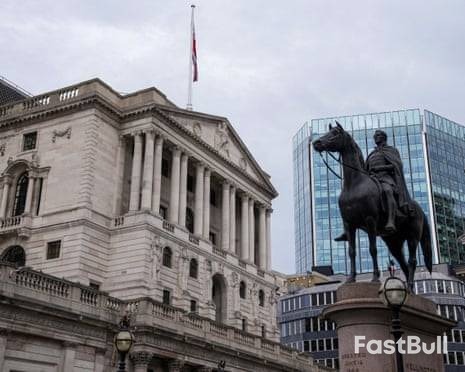
Alan Taylor, an external member of the Bank's Monetary Policy Committee (MPC), believes that cooling energy prices and cost-of-living measures from Rachel Reeves's autumn budget will help steer inflation back to its 2% target by the middle of 2026.
Based on this outlook, Taylor argues that borrowing costs should be lowered. "Interest rates should continue on a downward path, that is if my outlook continues to match up with the data, as it has done over the past year," he stated.
In a speech delivered in Singapore, Taylor outlined several factors that he expects will drive UK inflation down from its current rate of 3.2% to near the 2% target by mid-2026.
He noted that the impact of tax and administered price hikes will diminish in April. Furthermore, he highlighted key disinflationary pressures:
• Budget Measures: New policies from the budget are estimated to lower inflation by 0.5 percent.
• Food and Energy: Food inflation has already fallen significantly, and energy prices have stabilized at lower levels.
Taylor, a consistent advocate for rate cuts on the MPC, sees these developments as sufficient justification for reducing the Bank Rate from its current 3.75%.
Despite risks from Donald Trump's tariff policies and rising geopolitical tensions, Taylor presented an optimistic assessment of global trade's long-term trajectory. He argued that history shows a tendency for trade barriers to eventually fall.
Looking ahead, he suggested that AI technologies and the growth of developing nations could accelerate global trade. This trend, he said, should help keep long-term inflation low, including in Britain.
Taylor pointed out that the UK has already benefited from an influx of cheaper goods due to trade diversions caused by international tariff policies, which has helped ease domestic inflationary pressures. This phenomenon has been observed recently with a surge in Chinese imports to the UK.
Taylor believes the cooling inflation trend is sustainable, especially with wage growth also slowing. "I now therefore expect monetary policy to normalise at neutral sooner rather than later," he said.
City investors appear to share this view, with financial markets currently pricing in at least one additional quarter-point interest rate cut this year.
728 RM B 7/F GEE LOK IND BLDG NO 34 HUNG TO RD KWUN TONG KLN HONG KONG


White Label
Data API
Web Plug-ins
Poster Maker
Affiliate Program
The risk of loss in trading financial instruments such as stocks, FX, commodities, futures, bonds, ETFs and crypto can be substantial. You may sustain a total loss of the funds that you deposit with your broker. Therefore, you should carefully consider whether such trading is suitable for you in light of your circumstances and financial resources.
No decision to invest should be made without thoroughly conducting due diligence by yourself or consulting with your financial advisors. Our web content might not suit you since we don't know your financial conditions and investment needs. Our financial information might have latency or contain inaccuracy, so you should be fully responsible for any of your trading and investment decisions. The company will not be responsible for your capital loss.
Without getting permission from the website, you are not allowed to copy the website's graphics, texts, or trademarks. Intellectual property rights in the content or data incorporated into this website belong to its providers and exchange merchants.
Not Logged In
Log in to access more features

FastBull Membership
Not yet
Purchase


Log In
Sign Up


