• Trade
  • Markets
  • Copy
  • Contests
  • News
  • 24/7
  • Calendar
  • Q&A
  • Chats
Trending
Screeners
SYMBOL
LAST
BID
ASK
HIGH
LOW
NET CHG.
%CHG.
SPREAD
SPX
S&P 500 Index
6857.13
6857.13
6857.13
6865.94
6827.13
+7.41
+ 0.11%
--
DJI
Dow Jones Industrial Average
47850.93
47850.93
47850.93
48049.72
47692.96
-31.96
-0.07%
--
IXIC
NASDAQ Composite Index
23505.13
23505.13
23505.13
23528.53
23372.33
+51.04
+ 0.22%
--
USDX
US Dollar Index
98.840
98.920
98.840
98.980
98.740
-0.140
-0.14%
--
EURUSD
Euro / US Dollar
1.16585
1.16593
1.16585
1.16715
1.16408
+0.00140
+ 0.12%
--
GBPUSD
Pound Sterling / US Dollar
1.33555
1.33563
1.33555
1.33622
1.33165
+0.00284
+ 0.21%
--
XAUUSD
Gold / US Dollar
4223.67
4224.01
4223.67
4230.62
4194.54
+16.50
+ 0.39%
--
WTI
Light Sweet Crude Oil
59.307
59.337
59.307
59.469
59.187
-0.076
-0.13%
--

Community Accounts

Signal Accounts
--
Profit Accounts
--
Loss Accounts
--
View More

Become a signal provider

Sell trading signals to earn additional income

View More

Guide to Copy Trading

Get started with ease and confidence

View More

Signal Accounts for Members

All Signal Accounts

Best Return
  • Best Return
  • Best P/L
  • Best MDD
Past 1W
  • Past 1W
  • Past 1M
  • Past 1Y

All Contests

  • All
  • Trump Updates
  • Recommend
  • Stocks
  • Cryptocurrencies
  • Central Banks
  • Featured News
Top News Only
Share

Norway To Acquire 2 More Submarines, Long-Range Missiles, Daily Vg Reports

Share

Ucb Sa Shares Open Up 7.3% After 2025 Guidance Upgrade, Top Of Bel 20 Index

Share

Shares In Italy's Mediobanca Down 1.3% After Barclays Cuts To Underweight From Equal-Weight

Share

Stats Office - Austrian November Wholesale Prices +0.9% Year-On-Year

Share

Britain's FTSE 100 Up 0.15%

Share

Europe's STOXX 600 Up 0.1%

Share

Taiwan November PPI -2.8% Year-On-Year

Share

Stats Office - Austrian September Trade -230.8 Million EUR

Share

Swiss National Bank Forex Reserves Revised To Chf 724906 Million At End Of October - SNB

Share

Swiss National Bank Forex Reserves At Chf 727386 Million At End Of November - SNB

Share

Shanghai Warehouse Rubber Stocks Up 8.54% From Week Earlier

Share

Turkey's Main Banking Index Up 2%

Share

French October Trade Balance -3.92 Billion Euros Versus Revised -6.35 Billion Euros In September

Share

Kremlin Aide Says Russia Is Ready To Work Further With Current USA Team

Share

Kremlin Aide Says Russia And USA Are Moving Forward In Ukraine Talks

Share

Shanghai Rubber Warehouse Stocks Up 7336 Tons

Share

Shanghai Tin Warehouse Stocks Up 506 Tons

Share

Reserve Bank Of India Chief Malhotra: Goal Is To Have Inflation Be Around 4%

Share

Ukmto Says Master Has Confirmed That The Small Crafts Have Left The Scene, Vessel Is Proceeding To Its Next Port Of Call

Share

Shanghai Nickel Warehouse Stocks Up 1726 Tons

TIME
ACT
FCST
PREV
France 10-Year OAT Auction Avg. Yield

A:--

F: --

P: --

Euro Zone Retail Sales MoM (Oct)

A:--

F: --

P: --

Euro Zone Retail Sales YoY (Oct)

A:--

F: --

P: --

Brazil GDP YoY (Q3)

A:--

F: --

P: --

U.S. Challenger Job Cuts (Nov)

A:--

F: --

P: --

U.S. Challenger Job Cuts MoM (Nov)

A:--

F: --

P: --

U.S. Challenger Job Cuts YoY (Nov)

A:--

F: --

P: --

U.S. Initial Jobless Claims 4-Week Avg. (SA)

A:--

F: --

P: --

U.S. Weekly Initial Jobless Claims (SA)

A:--

F: --

P: --

U.S. Weekly Continued Jobless Claims (SA)

A:--

F: --

P: --

Canada Ivey PMI (SA) (Nov)

A:--

F: --

P: --

Canada Ivey PMI (Not SA) (Nov)

A:--

F: --

P: --

U.S. Non-Defense Capital Durable Goods Orders Revised MoM (Excl. Aircraft) (SA) (Sept)

A:--

F: --

P: --
U.S. Factory Orders MoM (Excl. Transport) (Sept)

A:--

F: --

P: --

U.S. Factory Orders MoM (Sept)

A:--

F: --

P: --

U.S. Factory Orders MoM (Excl. Defense) (Sept)

A:--

F: --

P: --

U.S. EIA Weekly Natural Gas Stocks Change

A:--

F: --

P: --

Saudi Arabia Crude Oil Production

A:--

F: --

P: --

U.S. Weekly Treasuries Held by Foreign Central Banks

A:--

F: --

P: --

Japan Foreign Exchange Reserves (Nov)

A:--

F: --

P: --

India Repo Rate

A:--

F: --

P: --

India Benchmark Interest Rate

A:--

F: --

P: --

India Reverse Repo Rate

A:--

F: --

P: --

India Cash Reserve Ratio

A:--

F: --

P: --

Japan Leading Indicators Prelim (Oct)

A:--

F: --

P: --

U.K. Halifax House Price Index YoY (SA) (Nov)

A:--

F: --

P: --

U.K. Halifax House Price Index MoM (SA) (Nov)

A:--

F: --

P: --

France Current Account (Not SA) (Oct)

A:--

F: --

P: --

France Trade Balance (SA) (Oct)

A:--

F: --

P: --

France Industrial Output MoM (SA) (Oct)

A:--

F: --

P: --

Italy Retail Sales MoM (SA) (Oct)

--

F: --

P: --

Euro Zone Employment YoY (SA) (Q3)

--

F: --

P: --

Euro Zone GDP Final YoY (Q3)

--

F: --

P: --

Euro Zone GDP Final QoQ (Q3)

--

F: --

P: --

Euro Zone Employment Final QoQ (SA) (Q3)

--

F: --

P: --

Euro Zone Employment Final (SA) (Q3)

--

F: --

P: --
Brazil PPI MoM (Oct)

--

F: --

P: --

Mexico Consumer Confidence Index (Nov)

--

F: --

P: --

Canada Unemployment Rate (SA) (Nov)

--

F: --

P: --

Canada Labor Force Participation Rate (SA) (Nov)

--

F: --

P: --

Canada Employment (SA) (Nov)

--

F: --

P: --

Canada Part-Time Employment (SA) (Nov)

--

F: --

P: --

Canada Full-time Employment (SA) (Nov)

--

F: --

P: --

U.S. Personal Income MoM (Sept)

--

F: --

P: --

U.S. Dallas Fed PCE Price Index YoY (Sept)

--

F: --

P: --

U.S. PCE Price Index YoY (SA) (Sept)

--

F: --

P: --

U.S. PCE Price Index MoM (Sept)

--

F: --

P: --

U.S. Personal Outlays MoM (SA) (Sept)

--

F: --

P: --

U.S. Core PCE Price Index MoM (Sept)

--

F: --

P: --

U.S. UMich 5-Year-Ahead Inflation Expectations Prelim YoY (Dec)

--

F: --

P: --

U.S. Core PCE Price Index YoY (Sept)

--

F: --

P: --

U.S. Real Personal Consumption Expenditures MoM (Sept)

--

F: --

P: --

U.S. 5-10 Year-Ahead Inflation Expectations (Dec)

--

F: --

P: --

U.S. UMich Current Economic Conditions Index Prelim (Dec)

--

F: --

P: --

U.S. UMich Consumer Sentiment Index Prelim (Dec)

--

F: --

P: --

U.S. UMich 1-Year-Ahead Inflation Expectations Prelim (Dec)

--

F: --

P: --

U.S. UMich Consumer Expectations Index Prelim (Dec)

--

F: --

P: --

U.S. Weekly Total Rig Count

--

F: --

P: --

U.S. Weekly Total Oil Rig Count

--

F: --

P: --

U.S. Consumer Credit (SA) (Oct)

--

F: --

P: --

Q&A with Experts
    • All
    • Chatrooms
    • Groups
    • Friends
    Connecting
    .
    .
    .
    Type here...
    Add Symbol or Code

      No matching data

      All
      Trump Updates
      Recommend
      Stocks
      Cryptocurrencies
      Central Banks
      Featured News
      • All
      • Russia-Ukraine Conflict
      • Middle East Flashpoint
      • All
      • Russia-Ukraine Conflict
      • Middle East Flashpoint
      Search
      Products

      Charts Free Forever

      Chats Q&A with Experts
      Screeners Economic Calendar Data Tools
      Membership Features
      Data Warehouse Market Trends Institutional Data Policy Rates Macro

      Market Trends

      Market Sentiment Order Book Forex Correlations

      Top Indicators

      Charts Free Forever
      Markets

      News

      News Analysis 24/7 Columns Education
      From Institutions From Analysts
      Topics Columnists

      Latest Views

      Latest Views

      Trending Topics

      Top Columnists

      Latest Update

      Signals

      Copy Rankings Latest Signals Become a signal provider AI Rating
      Contests
      Brokers

      Overview Brokers Assessment Rankings Regulators News Claims
      Broker listing Forex Brokers Comparison Tool Live Spread Comparison Scam
      Q&A Complaint Scam Alert Videos Tips to Detect Scam
      More

      Business
      Events
      Careers About Us Advertising Help Center

      White Label

      Data API

      Web Plug-ins

      Affiliate Program

      Awards Institution Evaluation IB Seminar Salon Event Exhibition
      Vietnam Thailand Singapore Dubai
      Fans Party Investment Sharing Session
      FastBull Summit BrokersView Expo
      Recent Searches
        Top Searches
          Markets
          News
          Analysis
          User
          24/7
          Economic Calendar
          Education
          Data
          • Names
          • Latest
          • Prev

          View All

          No data

          Scan to Download

          Faster Charts, Chat Faster!

          Download App
          English
          • English
          • Español
          • العربية
          • Bahasa Indonesia
          • Bahasa Melayu
          • Tiếng Việt
          • ภาษาไทย
          • Français
          • Italiano
          • Türkçe
          • Русский язык
          • 简中
          • 繁中
          Open Account
          Search
          Products
          Charts Free Forever
          Markets
          News
          Signals

          Copy Rankings Latest Signals Become a signal provider AI Rating
          Contests
          Brokers

          Overview Brokers Assessment Rankings Regulators News Claims
          Broker listing Forex Brokers Comparison Tool Live Spread Comparison Scam
          Q&A Complaint Scam Alert Videos Tips to Detect Scam
          More

          Business
          Events
          Careers About Us Advertising Help Center

          White Label

          Data API

          Web Plug-ins

          Affiliate Program

          Awards Institution Evaluation IB Seminar Salon Event Exhibition
          Vietnam Thailand Singapore Dubai
          Fans Party Investment Sharing Session
          FastBull Summit BrokersView Expo

          Dollar Rebounds As Fears Of Renewed US-China Trade Feud Abate

          Julia Daniels
          Summary:

          The dollar held steady on Tuesday as U.S. President Donald Trump's watered down rhetoric against tariffs on China and a potential meeting with his Chinese counterpart raised hopes of de-escalation in tensions between the two economic heavyweights.

          The dollar held steady on Tuesday as U.S. President Donald Trump's watered down rhetoric against tariffs on China and a potential meeting with his Chinese counterpart raised hopes of de-escalation in tensions between the two economic heavyweights.

          Currency markets were calmer in early Asian trade after a chaotic Friday session when Trump abruptly announced additional levies of 100% on China's U.S.-bound exports, only to later sound more conciliatory over the weekend.

          U.S. Treasury Secretary Scott Bessent also said on Monday that Trump remains on track to meet Chinese leader Xi Jinping in South Korea in late October.

          All that breathed new life into the dollar, which in turn kept the euro below the $1.16 level to trade at $1.1566.

          Sterling eased 0.06% to $1.3328, while the New Zealand dollar fell anew to hit a six-month low of $0.57145.

          "There is a mutual desire, or some sort of an off-ramp, and also a deal to prevent the bilateral relations from really spiralling out of (control), particularly because I think both the U.S. and China understand very clearly they cannot simply wish away the other's leverage," said Homin Lee, senior macro strategist at Lombard Odier.

          "We think, at the end of the day... a re-escalation path without any kind of an endgame in mind, may be too punitive for both sides. So we suspect that there will be an attempt to achieve an off-ramp."

          Against a basket of currencies, the dollar ticked 0.04% higher to 99.34.

          The Aussie was little changed at $0.6516, while the yen fell roughly 0.2% to 152.57 per dollar.

          Markets in Japan returned from a long weekend on Tuesday to lingering political uncertainty at home, after Sanae Takaichi's bid to become the nation's first female prime minister was thrown into doubt on Friday when her ruling party's junior coalition partner quit.

          While the move halted the yen's steep slide as investors assessed the chances of huge fiscal largesse under the new premiership, it continues to languish near eight-month lows.

          "If you ask me, given the current interest rate differential between the U.S. and Japan, which should be the primary driver of the exchange rate as well, dollar/yen should not be at 152, so I do expect this trend to reverse pretty soon," said Nigel Foo, head of Asian fixed income at First Sentier Investors, who expects the yen to strengthen eventually.

          In cryptocurrencies, bitcoin was down 0.36% at $115,380.19, after having tumbled more than 6% last week as risk sentiment took a hit.

          Ether fell 0.77% to $4,256.42, having similarly lost nearly 8% of its value last week.

          Market participants said the crypto sector on Friday saw more than $19 billion in liquidations across leveraged positions as panic selling and low liquidity triggered sharp swings.

          (Reporting by Rae WeeEditing by Shri Navaratnam)

          Source: Yahoo Finance

          Risk Warnings and Disclaimers
          You understand and acknowledge that there is a high degree of risk involved in trading. Following any strategies or investment methods may lead to potential losses. The content on the site is provided by our contributors and analysts for information purposes only. You are solely responsible for determining whether any trading assets, securities, strategy, or any other product is suitable for investing based on your own investment objectives and financial situation.
          Add to Favorites
          Share

          Australia Central Bank To Be Cautious, Data Dependent On Future Policy

          James Riley

          Australia’s central bank saw no need for an immediate cut in interest rates at its September policy meeting given some stickiness in services inflation and steady employment, while future easing would be data dependent.

          Minutes of the meeting released on Tuesday, showed the Reserve Bank of Australia board would be focused on readings for inflation and consumption in the third quarter when it next meets on November 4.

          The board decided to hold the cash rate at 3.60%, following three quarter-point cuts so far this year, and judged there were still risks to the upside and downside for the economy.

          "There was no need for an immediate reduction in the cash rate target," they concluded. "Looking ahead, members noted that it was appropriate for the Board’s decisions to remain cautious and data dependent."

          Markets imply around a 50-50 chance the RBA will ease at its next meeting, with a 70% probability of a move in December. Just one more cut is fully priced in, and only a modest chance of reaching 3.10%.

          The board judged policy was still a little restrictive, though a pick-up in house prices and home loans suggested past rate cuts were have some impact.

          Consumer demand had also picked up faster than previously expected and looked like continuing, th minutes showed, though some more recent data has cast some doubt on the strength of spending.

          The board noted monthly readings on consumer prices for July and August pointed to upside risk for third-quarter inflation, particularly on services and home building costs.

          Markets suspect a high reading for core inflation, due later this month, would argue against an near-term rate cut.

          Analysts generally assume a rise of 0.7% or less for the quarter would green light an easing, while 0.9% or more would likely prevent a move. An increase of 0.8% is a grey area, making a cut a line ball call for the RBA board.

          On the labour market, board members judged it was still a little tight overall, though the extent was hard to determine. While employment growth had slowed, the jobless rate remained steady at 4.2% in August.

          Some members also noted indicators suggested a risk wage growth in the private sector could slow more than expected in coming months.

          The global outlook remained highly uncertain, with the impact of U.S. tariffs still feeding through and the Chinese economy looking weaker than previously expected.

          Source: Investing

          Risk Warnings and Disclaimers
          You understand and acknowledge that there is a high degree of risk involved in trading. Following any strategies or investment methods may lead to potential losses. The content on the site is provided by our contributors and analysts for information purposes only. You are solely responsible for determining whether any trading assets, securities, strategy, or any other product is suitable for investing based on your own investment objectives and financial situation.
          Add to Favorites
          Share

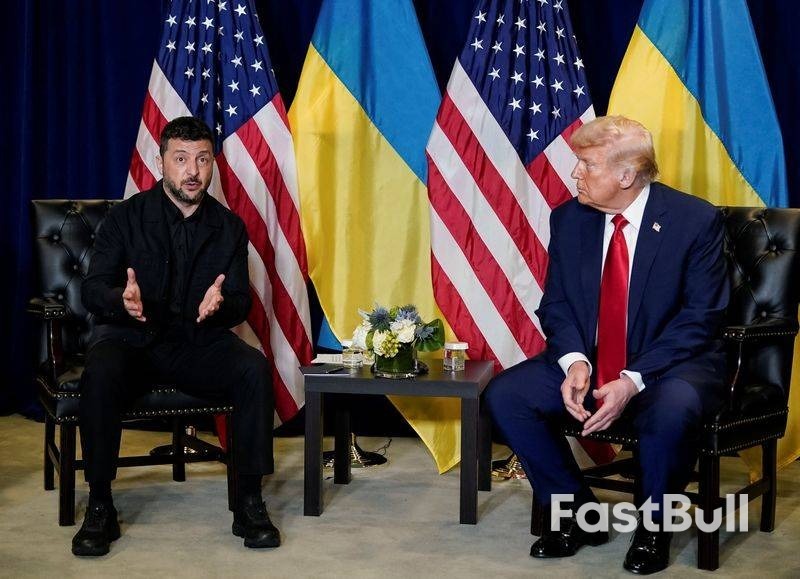
          Zelenskiy To Meet Trump On Friday To Talk Air Defence, New Weapons

          Olivia Brooks

          Political

          Ukrainian President Volodymyr Zelenskiy said on Monday that he would meet U.S. President Donald Trump in Washington on Friday, where the two would discuss Ukraine’s air defence and long-range strike capabilities.

          The two leaders spoke on both Saturday and Sunday amid intensifying discussions about the potential provision of long-range Tomahawk missiles to Kyiv, and a Ukrainian delegation led by Prime Minister Yulia Svyrydenko is slated to visit Washington before the Friday meeting.

          Kyiv has been lobbying Washington to supply the U.S.-produced missiles, which have the capacity to hit Moscow, but which Ukrainians say would be used only on military targets. Moscow has said such a move would represent a serious escalation.

          Zelenskiy said he had given Trump, who has increasingly signalled frustration with Russia in recent weeks, an idea of how many of the coveted Tomahawks Ukraine needs.

          "Frankly, I’ve already shared our vision with Trump... but some of these things are not for a phone conversation, so we’ll meet," he told reporters in Kyiv.

          Trump has said he is considering sending the missiles to Ukraine, though he has also said he might talk to Russian President Vladimir Putin about it.

          Ukraine and the U.S. are also closing in on a landmark drone deal in which Ukraine would share drone technology with the United States. European diplomats see such a deal as an important tool for keeping the mercurial U.S. president engaged and supportive of Ukraine.

          Diplomatic efforts to end the war, now in its fourth year, have stalled as Russia steps up strikes on Ukrainian energy facilities and presses forward with grinding gains on the battlefield.

          Zelenskiy said he will also meet with representatives of U.S. energy companies to discuss Ukraine’s current needs amid what he described as shifting Russian tactics in strikes on Ukrainian energy infrastructure.

          Russian forces have recently targeted Ukrainian gas production and the country’s power grid, with Zelenskiy adding that Kyiv could soon be forced to begin importing electricity.

          Ukraine has also carried out strikes on Russian oil refineries, causing gasoline shortages.

          Source: Investing

          Risk Warnings and Disclaimers
          You understand and acknowledge that there is a high degree of risk involved in trading. Following any strategies or investment methods may lead to potential losses. The content on the site is provided by our contributors and analysts for information purposes only. You are solely responsible for determining whether any trading assets, securities, strategy, or any other product is suitable for investing based on your own investment objectives and financial situation.
          Add to Favorites
          Share

          Fed’s Paulson Favors Two More 2025 Cuts, Looking Through Tariffs

          Olivia Brooks

          Economic

          Central Bank

          Federal Reserve Bank of Philadelphia President Anna Paulson signaled she favors two more quarter-point interest-rate cuts this year, as monetary policy should look through the impact of tariffs in consumer price increases.

          “For me, the bottom line is that I simply don’t see the type of conditions, especially in the labor market, which seem likely to turn tariff-induced price increases into sustained inflation,” Paulson said Monday in prepared remarks at the National Association for Business Economics’ annual conference in Philadelphia.

          Policymakers’ decision to cut interest rates by a quarter-percentage point last month “made sense,” Paulson said. With monetary policy modestly restrictive, she argued in favor of easing “along the lines” of the Fed’s last Summary of Economic Projections.

          The median of those projections supported two additional quarter-point rate cuts by year’s end. Fed officials will meet twice more in 2025, including a gathering slated for Oct. 28-29 in Washington.

          Paulson’s speech marked her first public comments on the economy since becoming president of the Philadelphia Fed in July.

          “If the economy evolves as I expect, the monetary policy adjustments we make this year and next will be sufficient to keep labor market conditions close to full employment,” she added.

          Though a narrow majority of policymakers favor at least two more cuts this year to support the labor market, others have argued for a cautious approach as inflation remains above their 2% goal.

          In her speech, Paulson said some increase in goods prices is to be expected “over the next few quarters,” though she pointed to the stability of longer-term inflation expectations and the lack of signs of “problematic spillovers.”

          A recent increase in unemployment, however, “suggests that momentum in the labor market is to the downside.”

          The Philly Fed chief said she expects the economy to continue growing above trend in the third quarter after exceeding expectations in the second.

          Still, she said the base supporting growth was narrow, with consumption becoming more reliant on the spending of high-income households. And that spending, she added, was reliant in part by a stock market boom driven by a handful of firms tied to artificial intelligence.

          “Some business contacts are wondering where future demand will come from,” she said. “This is something to watch closely.”

          Source: Bloomberg Europe

          To stay updated on all economic events of today, please check out our Economic calendar
          Risk Warnings and Disclaimers
          You understand and acknowledge that there is a high degree of risk involved in trading. Following any strategies or investment methods may lead to potential losses. The content on the site is provided by our contributors and analysts for information purposes only. You are solely responsible for determining whether any trading assets, securities, strategy, or any other product is suitable for investing based on your own investment objectives and financial situation.
          Add to Favorites
          Share

          A Renewed US–China Trade War Will Reshape Global Supply Chains

          Adam

          Economic

          China–U.S. Trade War

          For thousands of Chinese manufacturers, the sense of déjà vu is growing stronger. Only months after Washington and Beijing struck a fragile truce that briefly eased tariff burdens, President Trump’s latest threat of a 100 percent tariff on all Chinese goods, effective November 1, has reignited fears of a full-blown trade war that could ripple across global markets.
          The announcement unsettled exporters already struggling with weak domestic demand and a cooling property sector, raising doubts about the durability of China’s manufacturing base and the potential inflation shock for the world economy.

          The 2025 Trade Rift and a Weaker Global Economy

          This year’s tariff escalation carries echoes of the 2018–2019 trade war, yet the stakes in 2025 are far greater. Back then, global growth was stronger, inflation was subdued, and central banks had enough room to cushion shocks with aggressive rate cuts. Today the backdrop is far less forgiving. Inflation remains above target in major economies, borrowing costs are at multi-decade highs, and geopolitical tensions continue to intensify from Taiwan to the South China Sea.
          The timing could hardly be worse for Beijing. Chinese exports to the United States have already fallen nearly 17 percent this year, while overall shipments grew by about 6 percent, mostly supported by demand from emerging markets. Even that momentum is fading. August’s export growth slowed to 4.4 percent before a modest rebound in September.
          If the new tariffs take effect, they could cut off what remains of U.S. demand and risk pulling China’s GDP growth below its 5 percent target. That outcome would reverberate through commodity markets and regional currencies alike.

          Beijing’s Countermoves and the Rare Earth Card

          China has responded with a mix of caution and firmness. In recent days, Beijing tightened export restrictions on rare-earth materials, which are vital inputs for U.S. defense and technology industries, and opened an antitrust probe into American chipmaker Qualcomm. Officials insisted these measures were not an export ban but rather a licensing adjustment. Yet the message is clear: Beijing still holds strategic leverage in key supply chains, especially in advanced manufacturing and renewable technologies.
          That approach carries risk. Eswar Prasad of Cornell University notes that Beijing’s confidence in its export resilience may be misplaced, given weak domestic consumption and mounting global unease about Chinese overcapacity. If major economies view China as flooding markets with underpriced goods, new protectionist barriers could emerge in Europe and Asia, further isolating the Chinese industry.

          Manufacturing Under Pressure and on the Move

          For factory owners like Alan Chau, who runs a toy manufacturing business in southern China, the renewed uncertainty is threatening survival. His revenues have already fallen by half this year, and clients are suspending orders to avoid exposure to the November tariff deadline. Similar pressures are being felt across sectors. Fireworks exporters are delaying shipments, while apparel producers are exploring relocation to Vietnam or Malaysia to remain competitive.
          This migration of manufacturing capacity has been underway for years, but the 2025 escalation could accelerate it. Southeast Asian countries such as Vietnam, Indonesia, and Thailand stand to capture new investments as global companies expand their “China plus one” strategy. Over time, this shift could reshape regional trade balances, pressure the yuan, and alter global logistics networks in ways that permanently weaken China’s dominance in low-cost manufacturing.

          Market and Macro Implications

          For investors, the 2025 tariff shock arrives at a critical moment. U.S. equities have been buoyed by hopes of a soft landing and expectations of Federal Reserve rate cuts, but a new round of tariffs could reignite inflation concerns and complicate monetary policy. If higher import costs filter through to consumers, the Fed may have to postpone easing, flattening yield curves, and dampening risk appetite.
          Commodity markets face a divided outlook. Rare-earth restrictions may lift prices for niche metals vital to clean energy and semiconductors, while weaker manufacturing activity in China could weigh on demand for copper, aluminum, and other industrial materials. A softer yuan could add pressure to regional currencies, prompting Asian central banks to defend exchange rates and potentially tightening financial conditions further.

          The Politics Behind the Policy

          Despite the rhetoric, many analysts doubt that the full 100 percent tariff will be enforced. Dan Wang of Eurasia Group describes the move as a negotiating tactic, consistent with Trump’s history of using tariff threats to secure concessions. With Trump and Xi Jinping set to meet later this month in South Korea, the White House may prefer a symbolic compromise that allows both leaders to claim political credit while avoiding supply chain disruption that could hurt U.S. corporations and consumers.
          Still, even temporary flare-ups leave long-term consequences. Each new round of tariffs erodes trust in global trade and encourages companies to restructure sourcing permanently. As firms internalize geopolitical risk in their pricing and investment decisions, supply chains are being redrawn around political considerations rather than efficiency, a transformation that could shape global trade and inflation dynamics well beyond this year.

          Outlook: The Structural Cost of Economic Nationalism

          The renewed U.S.–China confrontation underscores a defining reality of the post-globalization era: economic nationalism has become structural rather than cyclical. The dollar may strengthen in the near term as investors seek safety, while Asian equities and export-dependent sectors are likely to remain under pressure. Over the longer horizon, persistent instability in supply chains could keep inflation volatility elevated and limit the flexibility of monetary policy in major economies.
          Whether or not the 100 percent tariff becomes law, the damage to confidence has already been done. The notion that trade can be separated from politics no longer holds. For investors, the challenge now is to navigate a world where geopolitical calculation increasingly drives the flow of goods, the direction of capital, and the rhythm of global growth.

          Source: investing

          To stay updated on all economic events of today, please check out our Economic calendar
          Risk Warnings and Disclaimers
          You understand and acknowledge that there is a high degree of risk involved in trading. Following any strategies or investment methods may lead to potential losses. The content on the site is provided by our contributors and analysts for information purposes only. You are solely responsible for determining whether any trading assets, securities, strategy, or any other product is suitable for investing based on your own investment objectives and financial situation.
          Add to Favorites
          Share

          What are rare earth minerals, and why are they central to Trump’s threats against China?

          Adam

          Commodity

          The US trade war with China has a major sticking point: rare earth minerals.
          China increased its restrictions on its rare earth exports Thursday, leading US President Donald Trump to threaten economic retaliation and imply he would cancel a meeting with Chinese President Xi Jinping during an upcoming visit to Asia.
          The tussle over rare earths precedes the current administration; China for years has built up near-total control of the minerals as part of its wider industrial policy.
          China’s restrictions are also seen as a response to Trump’s “reciprocal tariffs” on Chinese goods announced in April. After agreeing on a trade truce in Geneva, US officials had expected China to ease export restrictions on those minerals.
          Here’s what you need to know about rare earths.
          What are rare earths, and are they actually ‘rare?’
          Rare earths include 17 metallic elements in the periodic table made up of scandium, yttrium and the lanthanides.
          The name “rare earths” is a bit of a misnomer, as the materials are found throughout the Earth’s crust. They are more abundant than gold, but they are difficult and costly to extract and process and are also environmentally damaging.
          What are rare earths used for?
          Rare earths are ubiquitous in everyday technologies, from smartphones to wind turbines to LED lights and flat-screen TVs. They’re crucial for batteries in electric vehicles, as well as MRI scanners and cancer treatments.
          Rare earths are also essential for the US military. They’re used in F-35 fighter jets, submarines, lasers, satellites, Tomahawk missiles and more, according to a 2025 research note from CSIS.
          Where do rare earths come from?
          Sixty-one percent of mined rare earth production comes from China, according to the International Energy Agency, and the country controls 92% of the global output in the processing stage.
          There are two types of rare earths, categorized by their atomic weights: heavy and light. Heavy rare earths are more scarce, and the United States doesn’t have the capability to separate rare earths after extraction.
          “Until the start of the year, whatever heavy rare earths we did mine in California, we still sent to China for separation,” Gracelin Baskaran, director of the Critical Minerals Security Program at the Center for Strategic and International Studies, told CNN.
          However, the Trump administration’s announcement of sky-high tariffs on China in April derailed this process. “China has shown a willingness to weaponize” America’s reliance on China for rare earth separation, she said.
          The US has one operational rare earth mine in California, according to Baskaran.
          Why do rare earths matter in the trade war?
          Beijing is using rare earths as major leverage in the trade war, and its latest restrictions come as Xi and Trump are scheduled to meet at the APEC summit in South Korea later this month.
          In its most recent move, China added five rare-earth elements – holmium, erbium, thulium, europium, ytterbium, and related magnets and materials – to its existing control list, requiring export licenses. That makes the total amount of restricted rare earths to 12. China will also require licenses to export rare earth manufacturing technologies out of the country.
          It’s not the first time this year that Chinese restrictions on rare earths have angered Trump. In June, Trump said on Truth Social that China violated a trade truce as Beijing kept its export controls on seven rare earth minerals and associated products.
          The export controls could have a major impact, since the US is heavily reliant on China for rare earths. Between 2020 and 2023, 70% of US imports of rare earth compounds and metals came from the country, according to a US Geological Survey report.
          But it’s China’s latest restrictions that are seen as a dramatic escalation in Trump’s trade war between the world’s two biggest economic powers.
          “Dependent on what China says about the hostile ‘order’ that they have just put out, I will be forced, as President of the United States of America, to financially counter their move,” Trump wrote on Truth Social Friday.
          “For every Element that they have been able to monopolize, we have two,” he added.

          Source : cnn

          Risk Warnings and Disclaimers
          You understand and acknowledge that there is a high degree of risk involved in trading. Following any strategies or investment methods may lead to potential losses. The content on the site is provided by our contributors and analysts for information purposes only. You are solely responsible for determining whether any trading assets, securities, strategy, or any other product is suitable for investing based on your own investment objectives and financial situation.
          Add to Favorites
          Share

          Pictet says that if the US loses its technological lead, everything will collapse

          Adam

          Economic

          "If the United States loses its technological lead, everything will collapse," Maria Vassalou, director of the Pictet Research Institute, announced on Monday, October 6. According to the former researcher and professor of finance at Columbia University, US power is now lying on an increasingly precarious balance.
          "Led by Donald Trump, the United States is fighting to maintain its technological lead, but at the same time, it has to manage a huge debt that could create uncertainty amongst investors," the expert points out.

          Washington must finance its reindustrialization

          The US public deficit is approaching 7% and the projections are not reassuring. "Trump understands this, which is why he regularly attacks the Fed to get it to cut interest rates," she notes.
          In this context, Washington's ability to finance its reindustrialization remains limited, especially since mandatory spending already absorbs a large share of the budget. As a result, "the capital will have to come from the private sector," Maria Vassalou says.
          She points out that historically, the global economy has relied on "American exceptionalism": foreign surpluses recycled into dollars and US bonds, and higher returns on US stocks, thanks to innovation. However, now this model is faltering.
          "The United States' technological leadership is now being challenged by China. And for Washington, the stakes are vital: without technological superiority, the entire edifice of American power threatens to collapse."

          BRICS: an underestimated coalition

          This is also without taking into account the rise of the BRICS+ coalition, which brings together Brazil, Russia, India, China, South Africa, Egypt, the United Arab Emirates, Iran, and Ethiopia. Despite their differences, these countries have common interests and considerable assets: energy resources, control of critical raw materials, strategic trade routes (such as the Straits of Hormuz and Malacca) and dynamic demographics.
          The BRICS+ countries are also asserting themselves militarily, with larger forces and ground troops than the G7/EU coalition, as well as a growing network of military bases abroad.
          However, their Achilles' heel remains financial: "the lack of a credible currency and the inability to create 'safe-haven assets' comparable to US Treasury bonds," the economist points out. These are all obstacles to their global monetary influence and the stability of their financial system.

          Europe: aging population and technological backwardness

          In this fragmented world, Europe seems to be lagging behind. Its strategic position is weakening as American attention shifts more towards China and Russia.
          However, it is above all the internal fragilities of the Old Continent that worry Maria Vassalou: low productivity ("almost zero in France, negative in Italy"), accelerated aging, and lagging investment in infrastructure and artificial intelligence.
          Yet the potential is there, the expert assures, highlighting the potential gains from automation and emphasizing the "educated workforce and industrial expertise" of European countries. However, this is conditional on rapid investment in technology, modernization of infrastructure, and resolution of energy issues.
          According to Vassalou, the aging population and the rise of automation should favor certain areas: "Smart housing, health, well-being, and longevity are among the potential winners, while the automotive and clothing sectors are likely to be more disadvantaged in the long term," she concludes.

          Source: marketscreener

          To stay updated on all economic events of today, please check out our Economic calendar
          Risk Warnings and Disclaimers
          You understand and acknowledge that there is a high degree of risk involved in trading. Following any strategies or investment methods may lead to potential losses. The content on the site is provided by our contributors and analysts for information purposes only. You are solely responsible for determining whether any trading assets, securities, strategy, or any other product is suitable for investing based on your own investment objectives and financial situation.
          Add to Favorites
          Share
          FastBull
          Copyright © 2025 FastBull Ltd

          728 RM B 7/F GEE LOK IND BLDG NO 34 HUNG TO RD KWUN TONG KLN HONG KONG

          TelegramInstagramTwitterfacebooklinkedin
          App Store Google Play Google Play
          Products
          Charts

          Chats

          Q&A with Experts
          Screeners
          Economic Calendar
          Data
          Tools
          Membership
          Features
          Function
          Markets
          Copy Trading
          Latest Signals
          Contests
          News
          Analysis
          24/7
          Columns
          Education
          Company
          Careers
          About Us
          Contact Us
          Advertising
          Help Center
          Feedback
          User Agreement
          Privacy Policy
          Business

          White Label

          Data API

          Web Plug-ins

          Poster Maker

          Affiliate Program

          Risk Disclosure

          The risk of loss in trading financial instruments such as stocks, FX, commodities, futures, bonds, ETFs and crypto can be substantial. You may sustain a total loss of the funds that you deposit with your broker. Therefore, you should carefully consider whether such trading is suitable for you in light of your circumstances and financial resources.

          No decision to invest should be made without thoroughly conducting due diligence by yourself or consulting with your financial advisors. Our web content might not suit you since we don't know your financial conditions and investment needs. Our financial information might have latency or contain inaccuracy, so you should be fully responsible for any of your trading and investment decisions. The company will not be responsible for your capital loss.

          Without getting permission from the website, you are not allowed to copy the website's graphics, texts, or trademarks. Intellectual property rights in the content or data incorporated into this website belong to its providers and exchange merchants.

          Not Logged In

          Log in to access more features

          FastBull Membership

          Not yet

          Purchase

          Become a signal provider
          Help Center
          Customer Service
          Dark Mode
          Price Up/Down Colors

          Log In

          Sign Up

          Position
          Layout
          Fullscreen
          Default to Chart
          The chart page opens by default when you visit fastbull.com