Markets
News
Analysis
User
24/7
Economic Calendar
Education
Data
- Names
- Latest
- Prev


Signal Accounts for Members
All Signal Accounts
All Contests


France Trade Balance (SA) (Oct)A:--
F: --
Euro Zone Employment YoY (SA) (Q3)A:--
F: --
Canada Part-Time Employment (SA) (Nov)A:--
F: --
P: --
Canada Unemployment Rate (SA) (Nov)A:--
F: --
P: --
Canada Full-time Employment (SA) (Nov)A:--
F: --
P: --
Canada Labor Force Participation Rate (SA) (Nov)A:--
F: --
P: --
Canada Employment (SA) (Nov)A:--
F: --
P: --
U.S. PCE Price Index MoM (Sept)A:--
F: --
P: --
U.S. Personal Income MoM (Sept)A:--
F: --
P: --
U.S. Core PCE Price Index MoM (Sept)A:--
F: --
P: --
U.S. PCE Price Index YoY (SA) (Sept)A:--
F: --
P: --
U.S. Core PCE Price Index YoY (Sept)A:--
F: --
P: --
U.S. Personal Outlays MoM (SA) (Sept)A:--
F: --
U.S. 5-10 Year-Ahead Inflation Expectations (Dec)A:--
F: --
P: --
U.S. Real Personal Consumption Expenditures MoM (Sept)A:--
F: --
U.S. Weekly Total Rig CountA:--
F: --
P: --
U.S. Weekly Total Oil Rig CountA:--
F: --
P: --
U.S. Consumer Credit (SA) (Oct)A:--
F: --
China, Mainland Foreign Exchange Reserves (Nov)A:--
F: --
P: --
Japan Trade Balance (Oct)A:--
F: --
P: --
Japan Nominal GDP Revised QoQ (Q3)A:--
F: --
P: --
China, Mainland Imports YoY (CNH) (Nov)A:--
F: --
P: --
China, Mainland Exports (Nov)A:--
F: --
P: --
China, Mainland Imports (CNH) (Nov)A:--
F: --
P: --
China, Mainland Trade Balance (CNH) (Nov)A:--
F: --
P: --
China, Mainland Exports YoY (USD) (Nov)A:--
F: --
P: --
China, Mainland Imports YoY (USD) (Nov)A:--
F: --
P: --
Germany Industrial Output MoM (SA) (Oct)A:--
F: --
Euro Zone Sentix Investor Confidence Index (Dec)A:--
F: --
P: --
Canada National Economic Confidence IndexA:--
F: --
P: --
U.K. BRC Like-For-Like Retail Sales YoY (Nov)--
F: --
P: --
U.K. BRC Overall Retail Sales YoY (Nov)--
F: --
P: --
Australia Overnight (Borrowing) Key Rate--
F: --
P: --
RBA Rate Statement
RBA Press Conference
Germany Exports MoM (SA) (Oct)--
F: --
P: --
U.S. NFIB Small Business Optimism Index (SA) (Nov)--
F: --
P: --
Mexico 12-Month Inflation (CPI) (Nov)--
F: --
P: --
Mexico Core CPI YoY (Nov)--
F: --
P: --
Mexico PPI YoY (Nov)--
F: --
P: --
U.S. Weekly Redbook Index YoY--
F: --
P: --
U.S. JOLTS Job Openings (SA) (Oct)--
F: --
P: --
China, Mainland M1 Money Supply YoY (Nov)--
F: --
P: --
China, Mainland M0 Money Supply YoY (Nov)--
F: --
P: --
China, Mainland M2 Money Supply YoY (Nov)--
F: --
P: --
U.S. EIA Short-Term Crude Production Forecast For The Year (Dec)--
F: --
P: --
U.S. EIA Natural Gas Production Forecast For The Next Year (Dec)--
F: --
P: --
U.S. EIA Short-Term Crude Production Forecast For The Next Year (Dec)--
F: --
P: --
EIA Monthly Short-Term Energy Outlook
U.S. API Weekly Gasoline Stocks--
F: --
P: --
U.S. API Weekly Cushing Crude Oil Stocks--
F: --
P: --
U.S. API Weekly Crude Oil Stocks--
F: --
P: --
U.S. API Weekly Refined Oil Stocks--
F: --
P: --
South Korea Unemployment Rate (SA) (Nov)--
F: --
P: --
Japan Reuters Tankan Non-Manufacturers Index (Dec)--
F: --
P: --
Japan Reuters Tankan Manufacturers Index (Dec)--
F: --
P: --
Japan Domestic Enterprise Commodity Price Index MoM (Nov)--
F: --
P: --
Japan Domestic Enterprise Commodity Price Index YoY (Nov)--
F: --
P: --
China, Mainland PPI YoY (Nov)--
F: --
P: --
China, Mainland CPI MoM (Nov)--
F: --
P: --
Italy Industrial Output YoY (SA) (Oct)--
F: --
P: --


No matching data
Latest Views
Latest Views
Trending Topics
Top Columnists
Latest Update
White Label
Data API
Web Plug-ins
Affiliate Program
View All

No data
Main event, leadership changes, market impact, financial shifts, or expert insights. Trader Tardigrade's signal of bullish setup. DOGE reclaims $0.17 amid bullish activity.
Trader Tardigrade, on July 1, 2025, highlighted Dogecoin's breakout above its 50-day descending trendline, suggesting a bullish reversal.
Analyst statements indicate potential for sustained DOGE momentum, impacting short-term market dynamics.
DOGE's recent breakout above a prominent 50-day descending trendline, highlighted by Trader Tardigrade on social media, has sparked significant interest among market participants. Analysts suggest this technical pattern may lead to further price increases if bullish sentiment persists.
On July 1, 2025, Trader Tardigrade emphasized Dogecoin's critical trendline breakout, gaining traction in trading circles. No statements from co-founder Billy Markus or Dogecoin developers accompany this event. Jonathan Carter has also pointed to potential price targets, though with caution.
Following the breakout, DOGE's price has risen, attempting to maintain a position above $0.17. Market activity is reported as elevated, while analysts consider this a potential catalyst for further gain. No change has been seen in other cryptocurrencies directly related to DOGE's movement.
The crypto community is actively observing the DOGE trendline breakout. Given past historical trends, Dogecoin has demonstrated steep short-term increases during similar technical events. Speculation abounds on whether this breakout heralds a repeat of such dynamics. Analysts advocate caution, yet suggest readiness for substantial fluctuation.
This trendline breakout has triggered much anticipation among investors regarding potential increases. While the breakout generates excitement, market dynamics remain uncertain. Historical patterns indicate a possibility of short-lived yet remarkable advances. Market forecasts and price predictions seek to balance optimism with reality, attentive to regulatory and technological shifts.
The link between heat and key economic indicators such as inflation and gross domestic product is too important to ignore, according to European Central Bank Executive Board member Frank Elderson.
“We have progressed in understanding that accounting for the climate and nature crises is relevant,” Elderson said in an interview. “If you think about the exceptionally hot summer of 2022, food-price inflation was up between 0.4 and 0.9 percentage points” and “there was quite a measurable hit on German GDP.”
“So these things are relevant,” he said.
The comments coincide with another European heat wave in which much of the region has experienced unusually high temperatures fueled by climate change. Scientists have found that a hotter planet has the potential to threaten price stability, in part as crops become more difficult to tend and food prices rise.
Against that backdrop, the ECB is now intensifying its efforts to deal with climate-related economic risks. That includes adjustments unveiled this week showing that it will fully take into account not just the implications of climate change, but also “nature degradation” when setting monetary policy.
The decision represents an “important addition” to the wording used by the central bank, Elderson said on the sidelines of the ECB’s annual conference in Sintra, Portugal.
The new focus on nature-related risks will eventually feed into various aspects of the ECB’s efforts to ensure price stability and to supervise Europe’s systemically important banks.
The approach is in stark contrast to that of the Federal Reserve. While Chair Jerome Powell has in the past acknowledged the threats that climate change poses to the US economy and financial system, he’s also repeatedly stressed that the Fed doesn’t have a mandate to foster a low-carbon transition.
“You heard me say over and over again that we will not be climate policymakers,” Powell said during a press conference in May. “Our role on climate is a very, very narrow one.”
The Fed’s efforts to downplay the relevance of climate change in safeguarding financial stability have also encompassed interventions to water down global standards, including those set by the Basel Committee on Banking Supervision, Bloomberg has previously reported.
Elderson said that “whilst there’s a backlash out there,” the ECB Governing Council “sticks to its guns and actually adds to that to say we now understand on the basis of the work that has been done that we need to think beyond just what climate means for price stability.”
The ECB is still studying events such as the summer of 2022 and its impact on inflation and GDP to get a sense of what’s ahead, Elderson said.
Nature risk, meanwhile, “is complicated because there is not one single metric like CO2,” Elderson said. Instead, “you have to look at fish stocks, you have to look at timber, you have to look at the soils, you have to look at water scarcity and water quality.”
In the short term, there will be “more research, more outreach,” he said. “Then we need to ask: what does this mean for our understanding of the economy, for our understanding of inflation? What does it mean for debt sustainability?”
Ultimately, the response may be similar to the ECB’s efforts to tackle climate risk, he added.
“Whenever we design an instrument or whenever we think about collateral or when we think about tilting of asset purchases at some point in the future, we take this into account,” he said. “If you were to close your eyes to that, you would also miss an important part of credit risk for at least some of the banks that we supervise.”
U.S. President Donald Trump said early on Friday he came away disappointed from a telephone call with Russian President Vladimir Putin because it does not appear the latter is looking to stop Russia's war against Ukraine.
U.S. attempts to end Russia's war in Ukraine through diplomacy have largely stalled, and Trump has faced growing calls - including from some Republicans - to increase pressure on Putin to negotiate in earnest.
After speaking to Putin on Thursday, Trump plans to speak to Ukraine President Volodymyr Zelenskiy on Friday, he said in remarks to reporters on his return to Washington from a trip to Iowa.
"I'm very disappointed with the conversation I had today with President Putin, because I don't think he's there, and I'm very disappointed," Trump said.
"I'm just saying I don't think he's looking to stop, and that's too bad."
The two leaders did not discuss a recent pause in some U.S. weapons shipments to Kyiv during the nearly hour-long conversation, a summary provided by Putin aide Yuri Ushakov showed.
Within hours of their concluding the call, an apparent Russian drone attack sparked a fire in an apartment building in a northern suburb of Kyiv, Ukrainian officials said, indicating little change in the trajectory of the conflict.
In Kyiv itself, Reuters witnesses reported explosions and sustained heavy machine-gun fire as air defense units battled drones over the capital, while Russian shelling killed five people in the east.
"I didn't make any progress with him at all," Trump told reporters on Thursday.
Zelenskiy told reporters in Denmark earlier in the day that he hopes to speak to Trump as soon as Friday about the pause in some weapons shipments first disclosed this week.
Speaking to reporters as he left Washington for Iowa, Trump said "we haven't" completely paused the flow of weapons but blamed his predecessor, Joe Biden, for sending so many weapons that it risked weakening U.S. defenses.
"We're giving weapons, but we've given so many weapons. But we are giving weapons," he said.
"And we're working with them and trying to help them, but we haven't (completely stopped). You know, Biden emptied out our whole country giving them weapons, and we have to make sure that we have enough for ourselves."
The diplomatic back-and-forth comes as low stockpiles have prompted the U.S. to paused shipments of certain critical weapons to Ukraine, sources told Reuters earlier, just as it faces a Russian summer offensive and growing attacks on civilian targets.
Putin, for his part, has continued to assert he will stop his invasion only if the conflict's "root causes" have been tackled, making use of Russian shorthand for the issue of NATO enlargement and Western support for Ukraine, including the rejection of any notion of Ukraine joining the NATO alliance.
Russian leaders are also angling to establish greater control over political decisions made in Kyiv and other Eastern European capitals, NATO leaders have said.
The pause in U.S. weapons shipments caught Ukraine off-guard and has generated widespread confusion about Trump's current views on the conflict, after saying just last week he would try to free up a Patriot missile defense system for use by Kyiv.
Ukrainian leaders called in the acting U.S. envoy to Kyiv on Wednesday to underline the importance of military aid from Washington, and caution that the pause in its weapons shipments would weaken Ukraine's ability to defend itself against Russia.
The Pentagon's move has meant a cut in deliveries of the Patriot defense missiles that Ukraine relies on to destroy fast-moving ballistic missiles, Reuters reported on Wednesday.
Ushakov, the Kremlin aide, said that while Russia was open to continuing to speak with the U.S., any peace negotiations needed to happen between Moscow and Kyiv.
That comment comes amid some signs that Moscow is trying to avoid a three-way format for possible peace talks. The Russians asked American diplomats to leave the room during such a meeting in Istanbul in early June, Ukrainian officials have said.
Trump and Putin did not talk about a face-to-face meeting, Ushakov said.
Wall Street rallied on Thursday to record closing highs, as chipmaker Nvidia rose closer to a US$4 trillion (RM16.9 trillion) valuation and a surprisingly strong US jobs report cheered investors, who shrugged off dimming chances for an interest rate cut this month.
The S&P 500 and Nasdaq closed at record highs, notching a third week of gains. The Dow closed up 0.77%, only 0.41% away from its own record.
Chipmaker Nvidia rose 1.3%, putting its market capitalisation at US$3.89 trillion. The company is close to overtaking Apple's all-time record and becoming the world's most valuable company in history.
Trading volume was light in a shorter session on the eve of Friday's US Independence Day holiday.
"We are seeing a real bout of irrational exuberance; the stock market is very biased towards optimism," said Kristina Hooper, the chief market strategist of Man Group in New York.
"But there's some basis for it. I think there is some level of relief because the jobs report was not as weak as it could have been."
The rally has been fueled by retail investors, who are largely ignoring the inflationary pressure on the horizon, uncertainty around tariffs and "are focused on the tangible, which is today's jobs report", she said.
The S&P 500 gained 51.94 points, or 0.83%, to 6,279.36, and the Nasdaq Composite gained 207.97 points, or 1.02%, to 20,601.10. The Dow Jones Industrial Average rose 344.11 points, or 0.77%, to 44,828.53.
Data showed non-farm payrolls increased by 147,000 jobs last month, 33% more than the 110,000 jobs forecasted by economists polled by Reuters. Unemployment fell to 4.1% last month, a better result than the 4.3% expected.
Traders quickly priced out chances of an interest-rate cut in July, with the odds of a 25-basis-point reduction in September at 68%, according to CME Group's Fedwatch tool, down from 74% a week ago.
After markets closed, Republicans in the US House of Representatives approved US President Donald Trump's massive tax-cut and spending bill, an expected outcome.
The legislation will add US$3.4 trillion to the nation's US$36.2 trillion debt, according to the non-partisan Congressional Budget Office, and will also push millions of Americans off health insurance.
Large tax cuts and increased government spending can boost demand in the economy. This can add inflationary pressure, especially when the economy shows signs of strength, such as the latest jobs report.
"Some data points, like the jobs report, are positive and charming. But if we just take a step back, the picture is not that great," said Alex Morris, the chief executive officer of F/m Investments, which manages US$18 billion in Washington, DC.
For the week, the S&P 500 gained 1.72%, the Nasdaq rose 1.62%, and the Dow climbed 2.3%. The Russell 2000 Small Cap index rose 3.41%.
"It's kind of perplexing," Morris said. "This feels like that last bull rush before all of the data really comes together."
Tripadvisor climbed 16.7% after The Wall Street Journal reported activist investor Starboard Value had built a stake of more than 9% in the online travel company.
Datadog jumped 14.9% after the cloud security firm was set to replace Juniper Networks on the S&P 500.
Markets closed at 1pm ET. Trading volume on US exchanges was 10.85 billion shares, much lighter than the 17.82 billion average for the full session over the last 20 trading days.
Oil prices fell slightly in Asian trade on Friday with focus squarely on an upcoming OPEC+ meeting for more cues on production, while further losses in crude were stemmed by more U.S. sanctions on Iran.
Brent oil futures for September fell 0.2% to $68.66 a barrel, while West Texas Intermediate crude futures fell 0.2% to $65.51 a barrel by 21:51 ET (01:51 GMT).
Both contracts were up between 1% to 2% this week, but were nursing double-digit losses from the prior week.
Oil was pressured by some overnight strength in the dollar, following stronger-than-expected nonfarm payrolls data that spurred bets that interest rates will not fall in the near-term.
But markets remained on edge over the U.S. economy after a controversial tax and spending bill was approved by the House of Representatives. U.S. trade tariffs are also in focus before a July 9 deadline for Washington to impose steep duties on major U.S. trading partners.
The Organization of Petroleum Exporting Countries and allies (OPEC+) is set to meet over the weekend. Recent reports showed the cartel is gearing up to once again hike production by 411,000 barrels a day in August, following similar hikes in the past three months.
The production hikes come as the OPEC+ scales back two years of sharp production cuts, in part to offset the economic impact of persistently low oil prices.
The OPEC+, led by top exporter Saudi Arabia, is also seeking to punish overproduction within its ranks.
The OPEC+ hikes show the cartel falling in line with demands from U.S. President Donald Trump to increase production and stem any rises in oil prices. While oil had risen close to 2025 highs in June, amid the Israel-Iran war, a deescalation in military action saw crude crash back below $70 a barrel.
The U.S. on Thursday imposed sanctions targeting a network of companies and ships that smuggles Iranian oil disguised as Iraqi oil.
The new sanctions targeted a network of companies run by Iraqi-British national Salim Ahmed Said, the U.S. Treasury Department said, and are aimed at limiting Iran’s oil revenues and pressure the country into accepting more limits on its nuclear activities.
Iran had earlier this week ceased cooperation with the United Nations nuclear watchdog, after the U.S. attacked three of the country’s main uranium enrichment facilities in late-June.
Still, Tehran and Washington are set to hold more nuclear talks in Oslo next week, Axios reported.

Most Asian equity markets struggled on Friday, despite record highs for Wall Street overnight, as U.S. President Donald Trump's deadline for trade deals loomed next week.
The dollar retraced some of Thursday's gains with U.S. markets already shut for the week, as traders considered the impact of the sweeping spending bill Trump is about to sign into law.
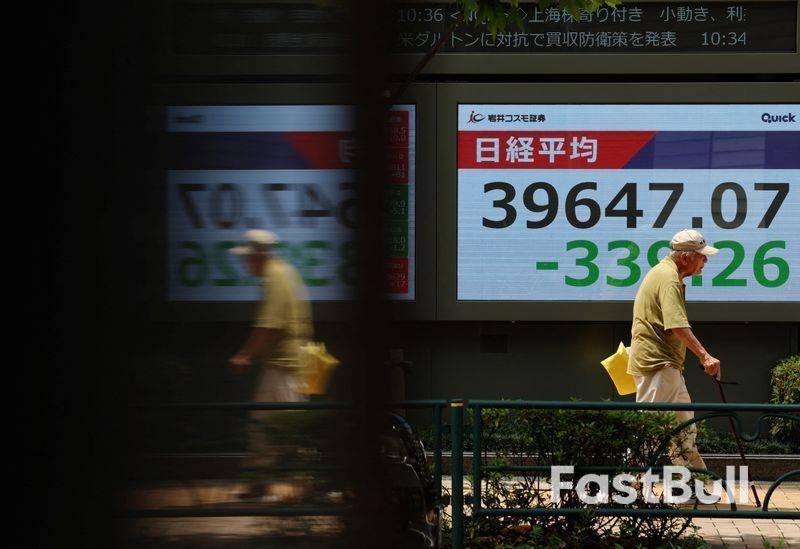
Japan's Nikkei rose 0.3% as of 0152 GMT after flipping between gains and losses in early trading.
Hong Kong's Hang Seng slumped 1.3%, while mainland Chinese blue chips edged slightly lower.
Taiwan's equity benchmark shed early gains to decline 0.2%. South Korea's KOSPI sank more than 1%.
U.S. S&P 500 futures edged down 0.2%, following a 0.8% overnight advance for the cash index to a fresh all-time closing peak. Wall Street is closed Friday for Independence Day.
Investors cheered a surprisingly robust jobs report on Thursday in sending all three of the main U.S. equity indexes climbing in a shortened session.
Following the close, the House narrowly approved Trump's signature, 869-page bill, which would add $3.4 trillion to the nation's $36.2 trillion debt, according to the nonpartisan Congressional Budget Office.
Trump also said he would start sending out letters to trade partners with their tariff rates, as deals remained elusive ahead of the July 9 deadline.
The U.S. President said he expected "a couple" more agreements after announcing a deal with Vietnam on Wednesday to add to framework agreements with China and Britain as the only successes so far.
U.S. Treasury Secretary Scott Bessent said earlier this week that a deal with India is close. However agreements with Japan and South Korea, once touted by the White House as likely to be among the earliest to be announced, appear to have broken down.
"It is now just waiting for July 9," said Tony Sycamore, an analyst at IG, with the market's lack of optimism for deals responsible for some of the equity weakness around the region, particularly Japan and South Korea.
At the same time, Thursday's jobs data shows "the U.S. economy is holding together better than most people expected, which suggests to me that markets can easily continue to do better" from here, Sycamore said.
The jobs data saw traders take any expectations for a Federal Reserve interest rate cut this month off the table.
The U.S. dollar rallied, taking it up as much as 0.7% versus a basket of major peers on Thursday before it pared its advance to end the session with a 0.4% rise.
US President Donald Trump said Washington will start sending letters to countries on Friday, specifying what tariff rates they will face on imports to the United States, a clear shift from earlier pledges to strike scores of individual deals.
Acknowledging the complexity of negotiating with over 170 nations, Trump told reporters before departing for Iowa on Thursday that the letters will be sent to 10 countries at a time, laying out tariff rates such as 20% to 30%.
"We have more than 170 countries, and how many deals can you make?" Trump said. "They're very much more complicated."
The Republican president said he expected "a couple" more detailed agreements with other countries, after Wednesday's announcement of a trade deal with Vietnam.
However, he said he preferred to notify most other countries of a specific tariff rate, skipping detailed negotiations.
Trump's comments underscored the challenges of completing trade agreements on everything from tariffs to non-tariff barriers, such as bans on agricultural imports.
Top Trump aides said in April that they would work on 90 deals in 90 days, an ambitious goal that was met with skepticism from trade experts familiar with arduous and time-consuming trade deals of the past.
US Treasury Secretary Scott Bessent told Bloomberg Television that about 100 countries are likely to see a reciprocal tariff rate of 10%, and predicted a "flurry" of trade deals announced before a July 9 deadline when tariffs could rise sharply.
If 10% tariffs were given to 100 countries, that would be fewer than originally envisioned by the Trump administration.
Its original reciprocal tariff list showed 123 jurisdictions that would be given a 10% tariff rate — mostly small countries, along with some territories such as Australia's uninhabited Heard and McDonald Islands.
Trump sent markets into a tailspin on April 2 with sweeping reciprocal tariff rates ranging from 10% to 50%, although he temporarily reduced the tariff rate for most countries to 10% to allow time for negotiations through July 9.
Many countries with an initial 10% duty rate have not had any negotiations with the Trump administration, with the exception of Britain, which reached a deal in May to keep a 10% rate and won preferential treatment for some sectors, including autos and aircraft engines.
Major trading partners now involved in negotiations were hit with much higher tariff rates, including 20% for the European Union, 26% for India, and 24% for Japan. Other countries that have not engaged in trade talks with the Trump administration face even higher reciprocal tariffs, including 50% for the tiny mountain kingdom of Lesotho, 47% for Madagascar, and 36% for Thailand.
Trump on Wednesday announced an agreement with Vietnam that he said cuts US tariffs on many Vietnamese goods to 20%, from his previously threatened 46%. Many US products would be allowed to enter Vietnam duty free.
White Label
Data API
Web Plug-ins
Poster Maker
Affiliate Program
The risk of loss in trading financial instruments such as stocks, FX, commodities, futures, bonds, ETFs and crypto can be substantial. You may sustain a total loss of the funds that you deposit with your broker. Therefore, you should carefully consider whether such trading is suitable for you in light of your circumstances and financial resources.
No decision to invest should be made without thoroughly conducting due diligence by yourself or consulting with your financial advisors. Our web content might not suit you since we don't know your financial conditions and investment needs. Our financial information might have latency or contain inaccuracy, so you should be fully responsible for any of your trading and investment decisions. The company will not be responsible for your capital loss.
Without getting permission from the website, you are not allowed to copy the website's graphics, texts, or trademarks. Intellectual property rights in the content or data incorporated into this website belong to its providers and exchange merchants.
Not Logged In
Log in to access more features

FastBull Membership
Not yet
Purchase
Log In
Sign Up