• Trade
  • Markets
  • Copy
  • Contests
  • News
  • 24/7
  • Calendar
  • Q&A
  • Chats
Trending
Screeners
SYMBOL
LAST
BID
ASK
HIGH
LOW
NET CHG.
%CHG.
SPREAD
SPX
S&P 500 Index
6827.42
6827.42
6827.42
6899.86
6801.80
-73.58
-1.07%
--
DJI
Dow Jones Industrial Average
48458.04
48458.04
48458.04
48886.86
48334.10
-245.98
-0.51%
--
IXIC
NASDAQ Composite Index
23195.16
23195.16
23195.16
23554.89
23094.51
-398.69
-1.69%
--
USDX
US Dollar Index
97.950
98.030
97.950
98.500
97.950
-0.370
-0.38%
--
EURUSD
Euro / US Dollar
1.17394
1.17409
1.17394
1.17496
1.17192
+0.00011
+ 0.01%
--
GBPUSD
Pound Sterling / US Dollar
1.33707
1.33732
1.33707
1.33997
1.33419
-0.00148
-0.11%
--
XAUUSD
Gold / US Dollar
4299.39
4299.39
4299.39
4353.41
4257.10
+20.10
+ 0.47%
--
WTI
Light Sweet Crude Oil
57.233
57.485
57.233
58.011
56.969
-0.408
-0.71%
--

Community Accounts

Signal Accounts
--
Profit Accounts
--
Loss Accounts
--
View More

Become a signal provider

Sell trading signals to earn additional income

View More

Guide to Copy Trading

Get started with ease and confidence

View More

Signal Accounts for Members

All Signal Accounts

Best Return
  • Best Return
  • Best P/L
  • Best MDD
Past 1W
  • Past 1W
  • Past 1M
  • Past 1Y

All Contests

  • All
  • Trump Updates
  • Recommend
  • Stocks
  • Cryptocurrencies
  • Central Banks
  • Featured News
Top News Only
Share

Iranian Media Says 18 Crew Members Of Foreign Tanker Seized In Gulf Of Oman Over Carrying 'Smuggled Fuel' Detained

Share

Regional Governor: Two Killed In Ukrainian Drone Strike On Russia's Saratov

Share

Chinese Foreign Ministry - China Foreign Minister Met With United Arab Emirates Counterpart On Dec 12

Share

China's Central Financial And Economic Affairs Commission Deputy Director: Will Expand Export And Increase Import In 2026

Share

Thai Leader Anutin: Landmine Blast That Killed Thai Soldiers 'Not A Roadside Accident'

Share

Thai Leader Anutin: Thailand To Continue Military Action Until 'We Feel No More Harm'

Share

Cambodian Prime Minister Hun Manet Says He Had Phone Calls With Trump And Malaysian Leader Anwar About Ceasefire

Share

Cambodia's Hun Manet Says USA, Malaysia Should Verify 'Which Side Fired First' In Latest Conflict

Share

Cambodia's Hun Manet: Cambodia Maintains Its Stance In Seeking Peaceful Resolution Of Disputes

Share

Nasdaq Companies: Allergan, Ferrovia, Insmed, Monolithic Power Systems, Seagate Technology, And Western Digital Will Be Added To The NASDAQ 100 Index. Biogen, CdW, GlobalFoundries, Lululemon, ON Semiconductor, And Tradedesk Will Be Removed From The NASDAQ 100 Index

Share

Witkoff Headed To Berlin This Weekend To Meet With Zelenskiy, European Leaders -Wsj Reporter On X

Share

Russia Attacks Two Ukrainian Ports, Damaging Three Turkish-Owned Vessels

Share

[Historic Flooding Occurs In At Least Four Rivers In Washington State Due To Days Of Torrential Rains] Multiple Areas In Washington State Have Been Hit By Severe Flooding Due To Days Of Torrential Rains, With At Least Four Rivers Experiencing Historic Flooding. Reporters Learned On The 12th That The Floods Caused By The Torrential Rains In Washington State Have Destroyed Homes And Closed Several Highways. Experts Warn That Even More Severe Flooding May Occur In The Future. A State Of Emergency Has Been Declared In Washington State

Share

Trump Says Proposed Free Economic Zone In Donbas Would Work

Share

Trump: I Think My Voice Should Be Heard

Share

Trump Says Will Be Choosing New Fed Chair In Near Future

Share

Trump Says Proposed Free Economic Zone In Donbas Complex But Would Work

Share

Trump Says Land Strikes In Venezuela Will Start Happening

Share

US President Trump: Thailand And Cambodia Are In A Good Situation

Share

State Media: North Korean Leader Kim Hails Troops Returning From Russia Mission

TIME
ACT
FCST
PREV
U.K. Trade Balance Non-EU (SA) (Oct)

A:--

F: --

P: --

U.K. Trade Balance (Oct)

A:--

F: --

P: --

U.K. Services Index MoM

A:--

F: --

P: --

U.K. Construction Output MoM (SA) (Oct)

A:--

F: --

P: --

U.K. Industrial Output YoY (Oct)

A:--

F: --

P: --

U.K. Trade Balance (SA) (Oct)

A:--

F: --

P: --

U.K. Trade Balance EU (SA) (Oct)

A:--

F: --

P: --

U.K. Manufacturing Output YoY (Oct)

A:--

F: --

P: --

U.K. GDP MoM (Oct)

A:--

F: --

P: --

U.K. GDP YoY (SA) (Oct)

A:--

F: --

P: --

U.K. Industrial Output MoM (Oct)

A:--

F: --

P: --

U.K. Construction Output YoY (Oct)

A:--

F: --

P: --

France HICP Final MoM (Nov)

A:--

F: --

P: --

China, Mainland Outstanding Loans Growth YoY (Nov)

A:--

F: --

P: --

China, Mainland M2 Money Supply YoY (Nov)

A:--

F: --

P: --

China, Mainland M0 Money Supply YoY (Nov)

A:--

F: --

P: --

China, Mainland M1 Money Supply YoY (Nov)

A:--

F: --

P: --

India CPI YoY (Nov)

A:--

F: --

P: --

India Deposit Gowth YoY

A:--

F: --

P: --

Brazil Services Growth YoY (Oct)

A:--

F: --

P: --

Mexico Industrial Output YoY (Oct)

A:--

F: --

P: --

Russia Trade Balance (Oct)

A:--

F: --

P: --

Philadelphia Fed President Henry Paulson delivers a speech
Canada Building Permits MoM (SA) (Oct)

A:--

F: --

P: --

Canada Wholesale Sales YoY (Oct)

A:--

F: --

P: --

Canada Wholesale Inventory MoM (Oct)

A:--

F: --

P: --

Canada Wholesale Inventory YoY (Oct)

A:--

F: --

P: --

Canada Wholesale Sales MoM (SA) (Oct)

A:--

F: --

P: --

Germany Current Account (Not SA) (Oct)

A:--

F: --

P: --

U.S. Weekly Total Rig Count

A:--

F: --

P: --

U.S. Weekly Total Oil Rig Count

A:--

F: --

P: --

Japan Tankan Large Non-Manufacturing Diffusion Index (Q4)

--

F: --

P: --

Japan Tankan Small Manufacturing Outlook Index (Q4)

--

F: --

P: --

Japan Tankan Large Non-Manufacturing Outlook Index (Q4)

--

F: --

P: --

Japan Tankan Large Manufacturing Outlook Index (Q4)

--

F: --

P: --

Japan Tankan Small Manufacturing Diffusion Index (Q4)

--

F: --

P: --

Japan Tankan Large Manufacturing Diffusion Index (Q4)

--

F: --

P: --

Japan Tankan Large-Enterprise Capital Expenditure YoY (Q4)

--

F: --

P: --

U.K. Rightmove House Price Index YoY (Dec)

--

F: --

P: --

China, Mainland Industrial Output YoY (YTD) (Nov)

--

F: --

P: --

China, Mainland Urban Area Unemployment Rate (Nov)

--

F: --

P: --

Saudi Arabia CPI YoY (Nov)

--

F: --

P: --

Euro Zone Industrial Output YoY (Oct)

--

F: --

P: --

Euro Zone Industrial Output MoM (Oct)

--

F: --

P: --

Canada Existing Home Sales MoM (Nov)

--

F: --

P: --

Euro Zone Total Reserve Assets (Nov)

--

F: --

P: --

U.K. Inflation Rate Expectations

--

F: --

P: --

Canada National Economic Confidence Index

--

F: --

P: --

Canada New Housing Starts (Nov)

--

F: --

P: --

U.S. NY Fed Manufacturing Employment Index (Dec)

--

F: --

P: --

U.S. NY Fed Manufacturing Index (Dec)

--

F: --

P: --

Canada Core CPI YoY (Nov)

--

F: --

P: --

Canada Manufacturing Unfilled Orders MoM (Oct)

--

F: --

P: --

Canada Manufacturing New Orders MoM (Oct)

--

F: --

P: --

Canada Core CPI MoM (Nov)

--

F: --

P: --

Canada Manufacturing Inventory MoM (Oct)

--

F: --

P: --

Canada CPI YoY (Nov)

--

F: --

P: --

Canada CPI MoM (Nov)

--

F: --

P: --

Canada CPI YoY (SA) (Nov)

--

F: --

P: --

Canada Core CPI MoM (SA) (Nov)

--

F: --

P: --

Q&A with Experts
    • All
    • Chatrooms
    • Groups
    • Friends
    Connecting
    .
    .
    .
    Type here...
    Add Symbol or Code

      No matching data

      All
      Trump Updates
      Recommend
      Stocks
      Cryptocurrencies
      Central Banks
      Featured News
      • All
      • Russia-Ukraine Conflict
      • Middle East Flashpoint
      • All
      • Russia-Ukraine Conflict
      • Middle East Flashpoint
      Search
      Products

      Charts Free Forever

      Chats Q&A with Experts
      Screeners Economic Calendar Data Tools
      Membership Features
      Data Warehouse Market Trends Institutional Data Policy Rates Macro

      Market Trends

      Market Sentiment Order Book Forex Correlations

      Top Indicators

      Charts Free Forever
      Markets

      News

      News Analysis 24/7 Columns Education
      From Institutions From Analysts
      Topics Columnists

      Latest Views

      Latest Views

      Trending Topics

      Top Columnists

      Latest Update

      Signals

      Copy Rankings Latest Signals Become a signal provider AI Rating
      Contests
      Brokers

      Overview Brokers Assessment Rankings Regulators News Claims
      Broker listing Forex Brokers Comparison Tool Live Spread Comparison Scam
      Q&A Complaint Scam Alert Videos Tips to Detect Scam
      More

      Business
      Events
      Careers About Us Advertising Help Center

      White Label

      Data API

      Web Plug-ins

      Affiliate Program

      Awards Institution Evaluation IB Seminar Salon Event Exhibition
      Vietnam Thailand Singapore Dubai
      Fans Party Investment Sharing Session
      FastBull Summit BrokersView Expo
      Recent Searches
        Top Searches
          Markets
          News
          Analysis
          User
          24/7
          Economic Calendar
          Education
          Data
          • Names
          • Latest
          • Prev

          View All

          No data

          Scan to Download

          Faster Charts, Chat Faster!

          Download App
          English
          • English
          • Español
          • العربية
          • Bahasa Indonesia
          • Bahasa Melayu
          • Tiếng Việt
          • ภาษาไทย
          • Français
          • Italiano
          • Türkçe
          • Русский язык
          • 简中
          • 繁中
          Open Account
          Search
          Products
          Charts Free Forever
          Markets
          News
          Signals

          Copy Rankings Latest Signals Become a signal provider AI Rating
          Contests
          Brokers

          Overview Brokers Assessment Rankings Regulators News Claims
          Broker listing Forex Brokers Comparison Tool Live Spread Comparison Scam
          Q&A Complaint Scam Alert Videos Tips to Detect Scam
          More

          Business
          Events
          Careers About Us Advertising Help Center

          White Label

          Data API

          Web Plug-ins

          Affiliate Program

          Awards Institution Evaluation IB Seminar Salon Event Exhibition
          Vietnam Thailand Singapore Dubai
          Fans Party Investment Sharing Session
          FastBull Summit BrokersView Expo

          Chinese Yuan Nears Milestone as It Challenges the Pound in Global Currency Trading

          Gerik

          Economic

          Forex

          Summary:

          The Chinese yuan has risen to 8.5% of global daily currency transactions, edging closer to overtaking the British pound as the fourth most-traded currency...

          Accelerating Trading Volumes Signal Shift in Market Dynamics

          The Chinese yuan (CNY) has reached a new high in its international trading presence, with average daily turnover surging to $817 billion, according to the Bank for International Settlements’ (BIS) latest triennial survey. This marks a significant increase from 7.0% in 2022 to 8.5% of total global currency transactions in 2025, solidifying the yuan’s position as the fifth most-traded currency. The British pound (GBP), long a dominant force in forex markets, has seen its market share shrink from 12.9% to 10.2%, narrowing the gap between the two currencies and hinting at a possible reordering in global financial hierarchies.
          This trend reflects a causal relationship between China’s deliberate policy agenda and the currency’s rising prominence. The People’s Bank of China and broader government reforms have systematically promoted cross-border settlement in yuan, eased capital restrictions selectively, and encouraged the use of yuan-denominated instruments in global trade and investment.

          Policy Reforms and Global Strategy Behind the Surge

          China’s push to internationalize the yuan has been a long-term policy objective. Authorities have gradually loosened capital controls, introduced more offshore yuan hubs, and promoted usage of the currency in energy and commodity transactions, especially with strategic partners such as Russia, Brazil, and countries participating in the Belt and Road Initiative.
          This strategy appears to be yielding results in certain segments of the financial system. FX strategist Moh Siong Sim of the Bank of Singapore noted that the yuan's growth in daily trading volume “shows progress” in Beijing’s internationalization drive. However, he also acknowledged that deeper structural restrictions such as China’s partial control over capital flows and limited full currency convertibility still constrain its ability to dethrone the U.S. dollar from its dominant position.

          Conflicting Indicators Underscore Fragility of Momentum

          Despite the BIS data showing strong momentum in trading volumes, other indicators of international yuan usage paint a more mixed picture. According to SWIFT data, the yuan's share in global payments stood at just 2.9% in August 2025, down from 4.7% a year earlier. This suggests that while speculative and trading activity in the currency is growing, its broader adoption in actual cross-border commerce remains inconsistent and potentially volatile.
          The divergence between trading volume and settlement data illustrates a correlation rather than causation in international adoption. Increased trading volumes may reflect higher volatility, hedging, and speculative interest in the yuan rather than deep integration into global payment systems.

          Market Dynamics Reveal Other Emerging Trends

          Alongside the yuan, the Swiss franc made notable gains, rising to sixth place with $612 billion in daily trading surpassing both the Australian and Canadian dollars. The Hong Kong dollar also experienced a jump in its global trading share, from 2.6% to 3.8%. These shifts suggest a broader rebalancing in global forex markets, influenced by geopolitical realignments, monetary policy divergence, and shifts in trade relationships.
          This evolving hierarchy indicates that traditional “commodity currencies” may be losing ground to those backed by financial safe-haven status or strategic financial positioning, such as the Swiss franc and yuan. The relative stagnation of sterling and other traditional leaders suggests potential vulnerabilities in post-Brexit Britain’s global financial influence.
          The yuan's leap to 8.5% of global currency trades represents a key milestone in China's ongoing campaign to globalize its currency and reduce reliance on Western financial systems. However, while volume metrics indicate growing market participation, inconsistent performance in global payment systems highlights the limits of its adoption. The balance between policy liberalization and financial control remains a critical determinant of whether the yuan can fully displace more entrenched currencies like the pound in the coming years. The trend is significant, but the outcome is far from guaranteed.

          Source: Bloomberg

          To stay updated on all economic events of today, please check out our Economic calendar
          Risk Warnings and Disclaimers
          You understand and acknowledge that there is a high degree of risk involved in trading. Following any strategies or investment methods may lead to potential losses. The content on the site is provided by our contributors and analysts for information purposes only. You are solely responsible for determining whether any trading assets, securities, strategy, or any other product is suitable for investing based on your own investment objectives and financial situation.
          Add to Favorites
          Share

          U.S. Secures Equity in Lithium Americas and Thacker Pass to Bolster Domestic EV Supply Chain

          Gerik

          Economic

          Government Intervention Reinforces Energy Security Strategy

          In a major development aimed at securing critical mineral resources, the U.S. Department of Energy has obtained 5% equity stakes in Canadian firm Lithium Americas and its joint venture with General Motors. These no-cost equity warrants were established through the restructuring of a $2.26 billion loan previously awarded under the Biden administration, now carried forward and strategically deployed by President Trump’s cabinet. The stakes are intended to act as supplementary collateral, improving the federal government’s risk exposure and repayment assurance on taxpayer-funded investments.
          This move is emblematic of a growing trend in U.S. industrial policy: direct financial involvement in companies vital to the clean energy transition. Lithium, essential for electric vehicle (EV) batteries and a wide range of consumer electronics, has become a geopolitical priority as the U.S. attempts to reduce its reliance on foreign sources. Despite possessing significant reserves, the U.S. currently produces less than 1% of the global lithium supply a structural gap the administration is now aggressively addressing.

          Equity Stakes Reflect Broader Resource Nationalism and Risk Management

          The use of equity warrants as collateral in federal loans represents a pivot in how the U.S. government mitigates fiscal risk in green energy financing. Rather than relying solely on conventional debt structures, this approach aligns government incentives with project success while ensuring a more tangible claim on asset value. The underlying rationale suggests a causally linked policy shift: the more vital a resource is to national interests like lithium the more likely the government will move from passive funding to active financial participation.
          Lithium Americas' Thacker Pass mine in Nevada lies at the heart of this strategy. Once operational, it is expected to produce enough lithium annually to support the manufacturing of 800,000 EVs during its first phase. With full development, the site could support 1.6 million EVs over 20 years. The Trump administration, which originally approved the Thacker Pass permit in 2021, is doubling down on this asset as a linchpin in revitalizing domestic production.

          GM’s Role and Market Reaction Highlight Private-Public Interdependence

          The partnership between GM and Lithium Americas underscores a strong correlation between private capital commitments and federal backing. GM had already acquired a 38% stake in the firm for $625 million, securing priority rights to the mine’s output for two decades. This foresight now benefits from the added credibility and stability of U.S. government involvement, likely reducing long-term risk premiums and encouraging further investment in North American battery supply chains.
          Markets reacted swiftly to the news, with Lithium Americas' shares surging 34% in after-hours trading. This reaction reflects investor confidence not only in the resource potential of Thacker Pass but also in the political capital backing the project. The move also signals to other clean energy firms that aligning with federal priorities could unlock favorable capital structures and boost share valuation.

          Broader Policy Context and Future Implications

          This initiative is part of a broader policy trend under the Trump administration, which has increasingly sought equity stakes in strategic industries. Recent plans to take 10% stakes in Intel and MP Materials, a domestic rare earth mining operator, illustrate a consistent strategy of assertive industrial involvement. These decisions reflect a correlated shift toward national resource stewardship, reminiscent of industrial policies seen in other major economies such as China.
          In contrast to prior decades of laissez-faire energy policy, the U.S. is now moving to establish stronger control over supply chains deemed vital for economic competitiveness and national security. The equity stake in Lithium Americas positions the U.S. not just as a regulator or financier, but as a stakeholder with a direct seat at the table.
          By securing equity in Lithium Americas and its joint venture with GM, the U.S. government has taken a significant step toward safeguarding its future lithium supply. This policy move strengthens domestic EV production capability, limits reliance on geopolitical adversaries, and illustrates a causal shift in energy policy toward direct asset ownership. With Thacker Pass set to deliver long-term production, the partnership reflects a growing convergence between public investment and private industry in shaping the next generation of American energy infrastructure.

          Source: TechCrunch

          To stay updated on all economic events of today, please check out our Economic calendar
          Risk Warnings and Disclaimers
          You understand and acknowledge that there is a high degree of risk involved in trading. Following any strategies or investment methods may lead to potential losses. The content on the site is provided by our contributors and analysts for information purposes only. You are solely responsible for determining whether any trading assets, securities, strategy, or any other product is suitable for investing based on your own investment objectives and financial situation.
          Add to Favorites
          Share

          Why Japan Is Getting Its Second Prime Minister In Just A Year

          Samantha Luan

          Economic

          Forex

          Political

          Japan will get its second prime minister in just over a year when the ruling Liberal Democratic Party holds a leadership election on Oct. 4. If one of the two candidates leading the opinion polls wins, the country could have either its first female prime minister or its youngest leader since World War II.The new leader will replace outgoing Prime Minister Shigeru Ishiba, who was forced to resign after a historic upper house election loss in July. But whoever takes over will inherit the same challenges Ishiba faced: trying to pass legislation in a parliament where the LDP lacks a majority as a ruling party in both chambers for the first time since it was founded in 1955.

          It’s a difficult moment for Japan, which is contending with new US tariffs, inflation that’s squeezing household budgets and sluggish global trade. Also looming in the background: a shrinking, aging population and the question of how to keep funding ballooning social security costs.The LDP is holding a leadership contest on Oct. 4 in which all of its members can vote. Each of the party’s 295 parliamentary lawmakers receives one ballot, while another 295 votes are distributed among its broader membership base of around 916,000 people. If the first round of voting doesn’t produce a candidate with a majority, a runoff round is held immediately between the top two contenders.

          Once the party has chosen a leader, it goes to a vote in parliament — usually within a few days but sometimes within a few weeks. The candidate must win a majority of parliamentary votes to become prime minister. In theory, opposition parties could band together to nominate and elect a non-LDP prime minister, but that’s unlikely given their fragmentation.The new LDP leader’s term is three years. However, depending on how they handle policies and how their party performs in future elections, they could lose their position earlier — as was the case for Ishiba.

          Sanae Takaichi, a former economic security minister, is one of the two leading candidates to succeed Ishiba as the LDP leader according to recent opinion polls. If elected, she would likely become Japan’s first female prime minister. Her election may trigger concerns in the market over her more fiscally aggressive stance. Takaichi narrowly lost to Ishiba in a runoff in the LDP’s leadership race last year. This time she appears to have tempered her messaging on fiscal and monetary policy while also showing openness to cooperating with opposition parties to secure support for legislation.

          Agriculture Minister Shinjiro Koizumi is the other frontrunner. At 44, Koizumi would represent a generational change at the helm of the party — a shift that could resonate with swing voters who see the older guard as out of touch. The son of one of Japan’s most famous reformist premiers, Koizumi has become the face of the LDP’s efforts to bring down the price of rice — a high-profile initiative with major cultural and political ramifications. He’s seen some success with the initiative. Koizumi placed third in the first round of voting in the LDP leadership election in 2024, behind Takaichi and Ishiba.

          Also in the race is the government’s chief spokesperson, Yoshimasa Hayashi, who has styled himself as a safe pair of hands capable of handling crises. Hayashi, one of Ishiba’s closest aides, represents a continuity candidate for the LDP.The other candidates are former Foreign Minister Toshimitsu Motegi and former Economic Security Minister Takayuki Kobayashi. Neither is likely to win the contest, according to the polls, but how their votes swing in the expected runoff between the top two candidates could ultimately determine the outcome of the leadership race.

          Ishiba became prime minister last year at a time when voters were already deeply dissatisfied with the LDP’s handling of a slush-fund scandal that implicated senior party members in the illicit funneling of money from fundraising events. As a result, public distrust in the party — compounded by frustration over what was perceived as inadequate support for households facing high living costs — eroded the LDP’s standing in the recent elections.The LDP and its coalition partner Komeito lost their majority in the upper house of parliament in a July 20 vote. They had already suffered a similar setback in a lower house election last October. The two election defeats, both under Ishiba’s leadership, triggered calls within the LDP for him to take responsibility and step down.

          Ishiba remained in office despite growing calls for his resignation, saying he needed to address important challenges for Japan — including easing cost-of-living pressures and negotiating and implementing new tariff rates with the US.Nevertheless, criticism persisted, and on Sept. 7 Ishiba announced his decision to step down. He also cited confirmation from the US that it would lower tariffs on imports of Japanese cars as a factor in the timing of his resignation.Whoever becomes the next leader will face mounting pressure to help households deal with inflation, which has been at or above the central bank’s 2% target for more than three years. While the economy has grown for five consecutive quarters, voters remain worried about the high cost of living.

          The new LDP leader will have to get creative to win back public support after Ishiba’s attempt to ease the pain of inflation with cash handouts failed to resonate, while opposition parties gained traction by calling for a tax cut.For financial markets, Japan’s political instability adds to uncertainty. Investors will be watching closely for the new leader’s stance on macroeconomic policy. Japan has already begun moving away from years of aggressive monetary easing; the Bank of Japan has been gradually increasing interest rates. This has pushed up government borrowing costs, complicating efforts to fund stimulus measures.

          A leader who maintains the current path of economic stimulus would likely support stability in the markets. Any signs of more aggressive fiscal spending — or resistance to central bank rate hikes, positions Takaichi has held in the past — could spark volatility, especially in the bond market, where super-long yields are rising, reflecting concerns among investors about the nation’s fiscal discipline.

          Source: Bloomberg Europe

          To stay updated on all economic events of today, please check out our Economic calendar
          Risk Warnings and Disclaimers
          You understand and acknowledge that there is a high degree of risk involved in trading. Following any strategies or investment methods may lead to potential losses. The content on the site is provided by our contributors and analysts for information purposes only. You are solely responsible for determining whether any trading assets, securities, strategy, or any other product is suitable for investing based on your own investment objectives and financial situation.
          Add to Favorites
          Share

          Taiwan Pushes Back on US Proposal for Equal Chip Production Split

          Gerik

          Economic

          Backdrop of Trade Negotiations and Semiconductor Dominance
          Amid high-stakes trade discussions with the United States, Taiwan has firmly dismissed the notion of equally dividing semiconductor production between the two nations. This response comes after U.S. Secretary of Commerce Howard Lutnick publicly suggested that Washington was proposing a 50-50 chip production split during a recent interview with News Nation. However, Taiwan's Vice Premier and lead negotiator Cheng Li-chiun clarified upon her return that this idea was neither presented nor accepted during the formal negotiation sessions.
          The Taiwanese government's position reflects a strategic commitment to maintaining its global leadership in advanced chip manufacturing. Taiwan is home to the world's largest contract chipmaker, TSMC, which currently accounts for the majority of global semiconductor output. Despite significant investments in the US namely TSMC's $165 billion expansion in Arizona Taiwan intends to keep the bulk of its manufacturing operations within its borders.

          Tariff Discussions Reflect Deeper Economic Interests

          Beyond semiconductor production, Taiwan’s government is actively pursuing lower trade barriers with the United States. Taiwan currently faces a 20% tariff on its exports to the U.S., contributing to a substantial trade surplus in Taiwan's favor. While no concrete agreement has yet been reached, Vice Premier Cheng noted that the discussions were “detailed” and had achieved “certain progress.” Her statement aligns with Premier Cho Jung-tai’s remarks to parliament, emphasizing that the most critical tariff consultations are still underway.
          These developments suggest a causal relationship between Taiwan’s strategic economic positioning and its resistance to production relocation. By retaining chip fabrication domestically, Taiwan not only preserves its technological edge but also strengthens its leverage in negotiations over tariff relief and trade policy.

          Expanding Agricultural Trade as Diplomatic Leverage

          In a related effort to deepen economic ties, Taiwan’s President Lai Ching-te met with Luke J. Lindberg, the U.S. Under Secretary for Trade and Foreign Agricultural Affairs. During the meeting, President Lai announced that a Taiwanese agricultural delegation had agreed to purchase $10 billion worth of U.S. agricultural products over the next four years, including soybeans, wheat, corn, and beef.
          While this move may appear tangential, it reveals a strategic balancing act. Taiwan is using agricultural imports to build goodwill and signal economic cooperation with Washington, potentially reinforcing its stance on maintaining chip production autonomy. This correlation between increased U.S. agricultural imports and ongoing tariff talks highlights a multi-pronged diplomatic approach that aims to secure Taiwan’s core industrial interests while offering reciprocal trade opportunities.
          Taiwan’s outright rejection of a 50-50 chip production arrangement underscores its intention to safeguard its global semiconductor leadership. While negotiations on tariff reductions and other trade matters continue to evolve, Taiwan appears committed to leveraging both its dominant tech position and expanded agricultural trade with the U.S. to pursue mutually beneficial outcomes without compromising control over its most strategic industry.

          Source: Reuters

          To stay updated on all economic events of today, please check out our Economic calendar
          Risk Warnings and Disclaimers
          You understand and acknowledge that there is a high degree of risk involved in trading. Following any strategies or investment methods may lead to potential losses. The content on the site is provided by our contributors and analysts for information purposes only. You are solely responsible for determining whether any trading assets, securities, strategy, or any other product is suitable for investing based on your own investment objectives and financial situation.
          Add to Favorites
          Share

          The Commodities Feed: Oil Falls Amid Signs OPEC+ May Bring Supply Back Quicker Than Expected

          ING

          Economic

          Commodity

          Forex

          Energy – OPEC+ noise continues to grow

          Oil prices extended losses yesterday after reports that OPEC+ may be bringing supply back onto the market at a quicker-than-expected pace. The group is currently unwinding its voluntary supply cuts of 1.66m b/d, which were planned to be brought back gradually at 137k b/d per month. There are now reports that it may go with three monthly supply hikes of around 500k b/d each. If true, this will increase the scale of the surplus through the fourth quarter of this year and next year. The market should get more clarity on 5 October, when the group decides on output levels for November.

          Numbers overnight from the American Petroleum Institute were somewhat supportive for crude oil and bearish for refined products. US crude oil inventories are reported to have fallen by 3.7m barrels over the last week, while Cushing crude oil stocks fell by 693k barrels. Gasoline and distillate inventories increased by 1.3m barrels and 3m barrels, respectively. The more widely followed inventory report from the Energy Information Administration will be released later today.

          Middle distillate cracks remain well-supported amid concerns over market tightness. However, gasoil stocks in the Amsterdam-Rotterdam-Antwerp (ARA) region continue to recover, hitting their highest level since May. Russia’s diesel export ban for resellers should have a limited impact on flows. Yet the move doesn’t help sentiment in a market already concerned about tightness. It could also open the door for further restrictions on middle distillate exports at a later stage.

          Metals – China iron ore restrictions

          Iron ore prices had a choppy session yesterday after Bloomberg reported that China’s state-run iron ore buyer told steel mills to temporarily stop purchasing all new iron ore cargoes from miner BHP amid a pricing dispute. This is an escalation from earlier in September, when the state-run trader told mills to stop buying BHP’s Jimblebar blend.

          The latest data from the National Statistics Institute of Chile shows that domestic copper output dropped by 10% year-on-year (-4.9% month-on-month) to 423.6kt in August, following an accident that halted mining and smelting activities at Codelco’s El Teniente mine towards the end of July. This was the largest annual drop reported over a two-year period. It is estimated that Codelco reported losses of ~33kt of copper due to the incident, while also trimming its 2025 output guidance. However, cumulative copper output over the first eight months of the year is still up 1% YoY to total 3.5mt.

          Agriculture– Cocoa prices slump on fresh supply prospects

          Cocoa prices came under additional pressure yesterday, with London cocoa falling almost 2.5% and reaching its lowest levels since February 2024. Attention in the cocoa market is shifting to the 2025/26 season. Expectations are that the market will experience another surplus in the new marketing year, alleviating concerns about tightness that have plagued the cocoa market in recent years.

          The latest estimates from the Buenos Aires Grain Exchange show that the Argentina soybean crop could fall by 3.6% YoY to 48.5mt for the 2025/26 season. The downward revision in production estimates is largely attributed to lower area. In contrast, corn production could rise by 18.4% YoY to 58mt, on higher acreage estimates of 7.8m hectares (+9.9% YoY). Similarly, wheat production is expected to be around 22mt, up 18.3% YoY.

          Source: ING

          To stay updated on all economic events of today, please check out our Economic calendar
          Risk Warnings and Disclaimers
          You understand and acknowledge that there is a high degree of risk involved in trading. Following any strategies or investment methods may lead to potential losses. The content on the site is provided by our contributors and analysts for information purposes only. You are solely responsible for determining whether any trading assets, securities, strategy, or any other product is suitable for investing based on your own investment objectives and financial situation.
          Add to Favorites
          Share

          Japanese Yen Could Be One Of The Best Performers For The End Of The Year

          Samantha Luan

          Economic

          Forex

          Technical Analysis

          The Japanese yen is stepping into the FX spotlight, battling the Australian dollar for top weekly performer — with the AUD lifted by the RBA’s hawkish pause and firm domestic data.A rare sight in 2025, the yen is beginning to dominate broader currency performance, as fundamentals start to assemble in its favor.Political momentum is shifting, with LDP contenders Takaichi and Koizumi pulling ahead in Friday’s LDP party leadership race and hinting at a possible renegotiation of Japan’s trade deal with the US.

          Both stances, seen as less supportive of Abenomics and Ishibanomics’ era of ultra-low rates, fuel growing speculation that BoJ hikes may be closer than expected.Economic data has been mixed for Japan — stronger GDP, firm retail sales and low unemployment point, even as some sectors still show weakness — inflation momentum building also gives some reasons for the BoJ to move.Recent remarks from Noguchi and other officials underline that policy has entered a phase demanding “careful assessment,” as hawks and doves grow more divided.

          With US rate differentials projected to narrow on the back of FOMC cuts, and the BoJ inching toward normalization, the yen’s case for strength into year-end looks interesting.Let’s explore USDJPY multi-timeframe charts (and a few other yen crosses) to see where the it stands.

          USDJPY multi-timeframe analysis

          Daily Chart

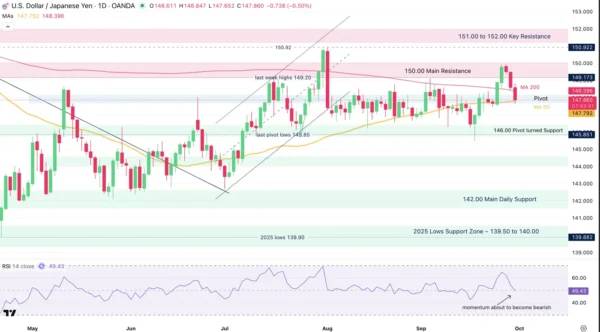
          USDJPY Daily Chart, September 30, 2025 – Source: TradingView

          Combined with a sudden u-turn in the USD, the yen started to price a more hawkish BoJ policy going forward forming the most consistent selloff in the pair since May 2025.The three daily candles took prices from a failed test of the 150.00 handle (149.960 Monday highs) to two handles lower as we speak.The 50-Day Moving average is coming at the mid-range pivot and will be one of the last level for USDJPY bulls to show up.

          Daily momentum is turning negative, and when looking at these candles closing at their lows, it seems that this is the beginning of a move.Of course, the 146.00 to 150.00 range holds until it breaks, but fundamentals could be pointing to a breakout

          USDJPY 2H Chart and levels

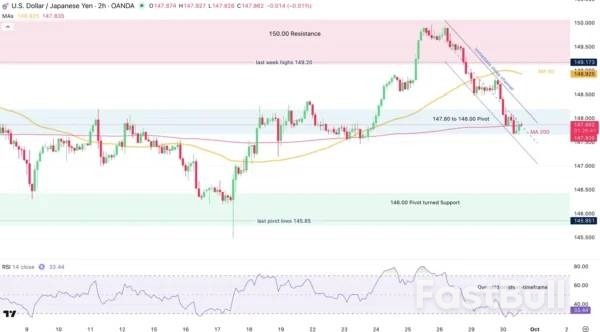
          USDJPY 2H Chart, September 30, 2025 – Source: TradingView

          The pair is evolving in an intraday steep downward channel, with prices now becoming oversold.With the tight price action, it would be surprising to see a sudden reversal higher (if it does, look for a breakout of the channel) – The overall bearish flows and daily outlook are strong so keep that in mind.Month-end flows could also be coming into play – Watch the reactions at a potential break of the 50-Day MA (147.75).

          Levels of interest for USDJPY trading:

          Resistance Levels

          ● Top of channel and 4H MA 50 – 148.350
          ● May range extremes and past week highs from 148.70 to 149.50
          ● 150.00 psychological resistance
          ● 150.90 July highs

          Support Levels

          Immediate pivot, mid-range and 50-day MA 147.80 to 148.00 (testing)

          ● 146.50 range support
          ● 145.00 psychological support
          ● 142.35 low of the May range, main support

          Other yen crosses showing at key levels

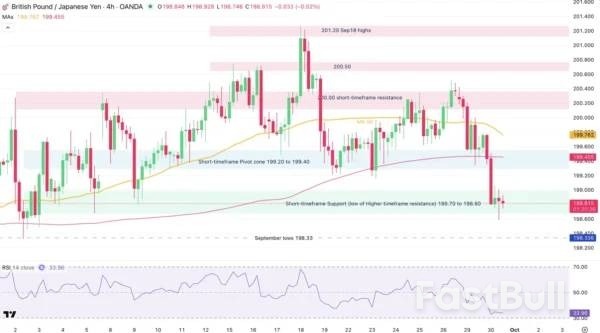
          GBPJPY now way below 200.00

          GBPJPY 4H Chart, September 30, 2025 – Source: TradingView

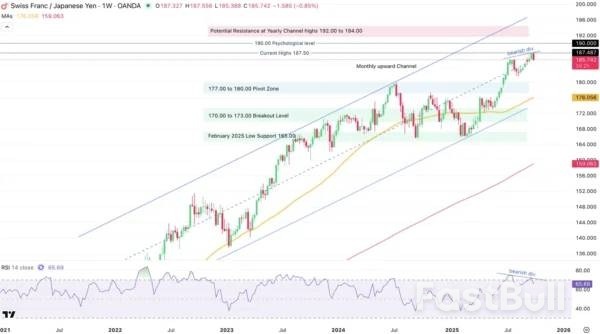
          A gigantic weekly bearish divergence in CHFJPY

          CHFJPY Weekly Chart, September 30, 2025 – Source: TradingView

          Source: ACTIONFOREX

          To stay updated on all economic events of today, please check out our Economic calendar
          Risk Warnings and Disclaimers
          You understand and acknowledge that there is a high degree of risk involved in trading. Following any strategies or investment methods may lead to potential losses. The content on the site is provided by our contributors and analysts for information purposes only. You are solely responsible for determining whether any trading assets, securities, strategy, or any other product is suitable for investing based on your own investment objectives and financial situation.
          Add to Favorites
          Share

          Ugly JOLTS Shows Most Unemployed Vs Job Openings; Plunge In Hiring And Quits

          Fiona Harper

          One month ago, before that catastrophic August jobs print (and first negative monthly print in years) and before the devastating 911K negative payrolls revision, we looked at the just published very ugly JOLTS report and correctly predicted the September rate cut (and also subsequent easing). Of note, the report showed not only that job openings plunged and came below the lowest estimate, but that for the first time since April 2021, there were more unemployed workers than job openings.

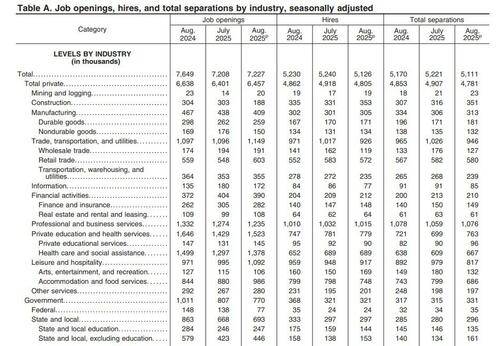
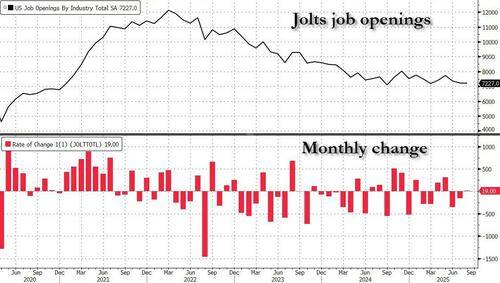
          Fast forward to today when the already ugly labor market picture got even uglier, when moments ago the BLS reported the latest, August, JOLTs report (which may very well be the last Federal labor market report for a long time once the government shuts down at midnight tonight) and which showed that job openings remained depressed, if rising modestly from the upward revised July print of 7.208MM (up from 7.181MM), to 7.227MM, and beating muted estimates of 7.2MM.

          The number of job openings decreased in construction (-115,000) and in federal government (-61,000).

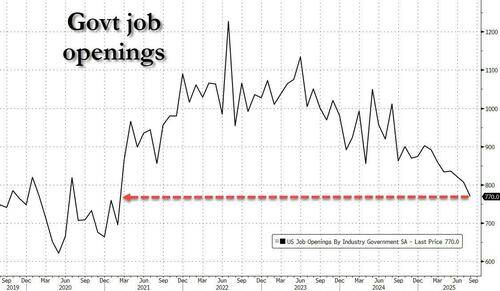
          Indeed, as shown in the chart below, the best news about today's report is that ahead of the government shutdown which will lead to mass government worker layoffs, the number of government job openings was already the lowest since Feb 2021.

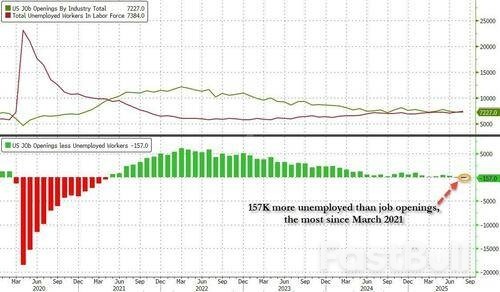
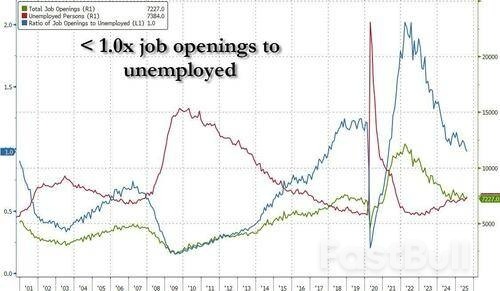
          In the context of the broader jobs report - which may or may not print this Friday - the most important data was what we predicted ahead of today's JOLTS report, namely that the number of unemployed workers is now greater than job openings.

          And sure enough, after four years of the US labor market dodging the bullet, its luck has finally run out because whereas in June the labor market was still supply-constrained, when there were 342K more openings than jobs in the US, in July we are finally back to demand constrained, with 28k fewer job openings than unemployed workers, the first negative print this series since April 2021. One month later, it's gotten much worse, with 157K more unemployed than job openings, the highest differential since March 2021.

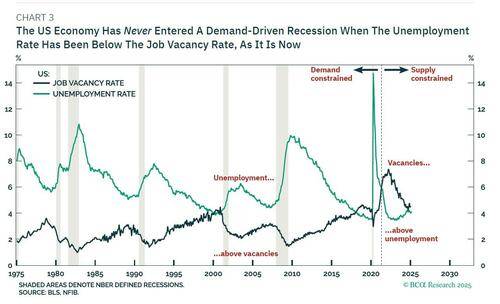
          As we discussed previously, The US never entered a recession in a period when there were more job openings than unemployed workers (i.e. the job market was supply constrained). As of this moment, we know it is no longer supply constrained and is instead demand constrained.

          Said otherwise, in August the number of job openings to unemployed dropped further below 1.0x, after spending the past 4 years above it.

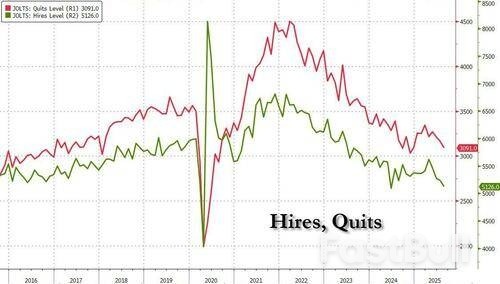
          While the job openings data was ugly and potentially the first harbinger of the coming recession - things were even uglier below the surface, starting with hiring where the number of new hires tumbled by 114K to 5.126MM the lowest since June 2024, while at the same time the number of people quitting their jobs - also known as the take this job and shove it indicator - also slumped by 75K to 3.091MM, the lowest of 2025.

          How to make sense of this ongoing deterioration in the labor market?

          Well, as we said last month, it likely has to do with the DOL - which recently lost its previous commissioner after Trump fired her two months ago - starting to factor in the collapse in the shadow labor market, the one dominated by illegal aliens, and the replacement of illegals with legal, domestic workers which in turn is pushing the labor market into a demand-constrained imbalance. Last month we said "the question is how long until this appears in much weaker than expected payrolls prints" and we got the answer just two days later when we got a truly catastrophic jobs report, which was then cemented by the full year revisions on Sept 9 which we correctly predicted would show "another 600K-900K in jobs that were never there and were simply imagined by the Biden DOL, in the process greenlighting not only a 25bps rate cut, but potentially a jumbo 50bps... just like exactly one year ago."

          It ended up being 911K, but what is more important for today is that today's JOLTS report was not terrible but it certainly was ugly enough to ensure that the Fed cuts in three weeks time if the government shuts down tonight and is closed indefinitely, preventing the Sept jobs report from being published this Friday.

          Source: Zero Hedge

          Risk Warnings and Disclaimers
          You understand and acknowledge that there is a high degree of risk involved in trading. Following any strategies or investment methods may lead to potential losses. The content on the site is provided by our contributors and analysts for information purposes only. You are solely responsible for determining whether any trading assets, securities, strategy, or any other product is suitable for investing based on your own investment objectives and financial situation.
          Add to Favorites
          Share
          FastBull
          Copyright © 2025 FastBull Ltd

          728 RM B 7/F GEE LOK IND BLDG NO 34 HUNG TO RD KWUN TONG KLN HONG KONG

          TelegramInstagramTwitterfacebooklinkedin
          App Store Google Play Google Play
          Products
          Charts

          Chats

          Q&A with Experts
          Screeners
          Economic Calendar
          Data
          Tools
          Membership
          Features
          Function
          Markets
          Copy Trading
          Latest Signals
          Contests
          News
          Analysis
          24/7
          Columns
          Education
          Company
          Careers
          About Us
          Contact Us
          Advertising
          Help Center
          Feedback
          User Agreement
          Privacy Policy
          Business

          White Label

          Data API

          Web Plug-ins

          Poster Maker

          Affiliate Program

          Risk Disclosure

          The risk of loss in trading financial instruments such as stocks, FX, commodities, futures, bonds, ETFs and crypto can be substantial. You may sustain a total loss of the funds that you deposit with your broker. Therefore, you should carefully consider whether such trading is suitable for you in light of your circumstances and financial resources.

          No decision to invest should be made without thoroughly conducting due diligence by yourself or consulting with your financial advisors. Our web content might not suit you since we don't know your financial conditions and investment needs. Our financial information might have latency or contain inaccuracy, so you should be fully responsible for any of your trading and investment decisions. The company will not be responsible for your capital loss.

          Without getting permission from the website, you are not allowed to copy the website's graphics, texts, or trademarks. Intellectual property rights in the content or data incorporated into this website belong to its providers and exchange merchants.

          Not Logged In

          Log in to access more features

          FastBull Membership

          Not yet

          Purchase

          Become a signal provider
          Help Center
          Customer Service
          Dark Mode
          Price Up/Down Colors

          Log In

          Sign Up
          Position
          Layout
          Fullscreen
          Default to Chart
          The chart page opens by default when you visit fastbull.com