• Trade
  • Markets
  • Copy
  • Contests
  • News
  • 24/7
  • Calendar
  • Q&A
  • Chats
Trending
Screeners
SYMBOL
LAST
BID
ASK
HIGH
LOW
NET CHG.
%CHG.
SPREAD
SPX
S&P 500 Index
6827.42
6827.42
6827.42
6899.86
6801.80
-73.58
-1.07%
--
DJI
Dow Jones Industrial Average
48458.04
48458.04
48458.04
48886.86
48334.10
-245.98
-0.51%
--
IXIC
NASDAQ Composite Index
23195.16
23195.16
23195.16
23554.89
23094.51
-398.69
-1.69%
--
USDX
US Dollar Index
98.000
98.080
98.000
98.070
97.920
+0.050
+ 0.05%
--
EURUSD
Euro / US Dollar
1.17320
1.17327
1.17320
1.17447
1.17283
-0.00074
-0.06%
--
GBPUSD
Pound Sterling / US Dollar
1.33552
1.33563
1.33552
1.33740
1.33546
-0.00155
-0.12%
--
XAUUSD
Gold / US Dollar
4328.31
4328.76
4328.31
4329.64
4294.68
+28.92
+ 0.67%
--
WTI
Light Sweet Crude Oil
57.534
57.571
57.534
57.601
57.194
+0.301
+ 0.53%
--

Community Accounts

Signal Accounts
--
Profit Accounts
--
Loss Accounts
--
View More

Become a signal provider

Sell trading signals to earn additional income

View More

Guide to Copy Trading

Get started with ease and confidence

View More

Signal Accounts for Members

All Signal Accounts

Best Return
  • Best Return
  • Best P/L
  • Best MDD
Past 1W
  • Past 1W
  • Past 1M
  • Past 1Y

All Contests

  • All
  • Trump Updates
  • Recommend
  • Stocks
  • Cryptocurrencies
  • Central Banks
  • Featured News
Top News Only
Share

Hsi Closes Midday At 25736, Down 240 Pts, Hsti Closes Midday At 5537, Down 100 Pts, Hansoh Pharma Down Over 7%, Ping An, Youran Dairy, Logan Group Hit New Highs

Share

India Foreign Ministry: Foreign Minister To Visit United Arab Emirates And Israel

Share

Reuters Poll - Bank Of Thailand To Lower Key Policy Rate To 1.00% In Q1 Of 2026, Said A Majority Of Economists

Share

Reuters Poll - Bank Of Thailand To Cut Its Key Interest Rate To 1.25% On December 17, Said 26 Of 27 Economists

Share

Thai Finance Minister: Earlier Stimulus Measures To Shore Up Economy

Share

Thai Finance Minister: Strong Baht Driven By Capital Inflows

Share

Thai Finance Minister: Has Discussed With Central Bank To Handle Baht

Share

India's Nifty Bank Futures Down 0.1% In Pre-Open Trade

Share

India's Nifty 50 Futures Down 0.3% In Pre-Open Trade

Share

India's Nifty 50 Index Down 0.45% In Pre-Open Trade

Share

Indian Rupee Weakens Past 90.55 Versus USA Dollar To All-Time Low

Share

China's Fossil-Fuelled Power Generation Falls 4.2% Year-On-Year In November

Share

Indian Rupee Opens Down 0.1% At 90.5450 Per USA Dollar, Versus 90.4150 Previous Close

Share

Australia Home Minister: Father Involved In Bondi Gun Attack Came To Australia On Student Visa, Son Is An Australian-Born Citizen

Share

Australian Prime Minister Albanese: Stricter Gun Control Laws Will Include Restrictions On The Number Of Guns An Individual Can Own Or License To Use

Share

Australia's Prime Minister Albanese: We Are Considering A Review Of Gun Licenses For Some Time

Share

Australia's Prime Minister Albanese: Government Considering Tougher Gun Laws

Share

China Stats Bureau Spokesperson: Next Year, Adverse Impact Of Protectionism And Unilateralism May Continue

Share

China's Onshore Yuan Strengthens To A High Of 7.0516 Per Dollar, Strongest Level Since Oct 8, 2024

Share

Indonesia's November Refined Tin Exports At 7458.64 Metric Tons

TIME
ACT
FCST
PREV
U.K. Trade Balance (Oct)

A:--

F: --

P: --

France HICP Final MoM (Nov)

A:--

F: --

P: --

China, Mainland Outstanding Loans Growth YoY (Nov)

A:--

F: --

P: --

China, Mainland M2 Money Supply YoY (Nov)

A:--

F: --

P: --

China, Mainland M0 Money Supply YoY (Nov)

A:--

F: --

P: --

China, Mainland M1 Money Supply YoY (Nov)

A:--

F: --

P: --

India CPI YoY (Nov)

A:--

F: --

P: --

India Deposit Gowth YoY

A:--

F: --

P: --

Brazil Services Growth YoY (Oct)

A:--

F: --

P: --

Mexico Industrial Output YoY (Oct)

A:--

F: --

P: --

Russia Trade Balance (Oct)

A:--

F: --

P: --

Philadelphia Fed President Henry Paulson delivers a speech
Canada Building Permits MoM (SA) (Oct)

A:--

F: --

P: --

Canada Wholesale Sales YoY (Oct)

A:--

F: --

P: --

Canada Wholesale Inventory MoM (Oct)

A:--

F: --

P: --

Canada Wholesale Inventory YoY (Oct)

A:--

F: --

P: --

Canada Wholesale Sales MoM (SA) (Oct)

A:--

F: --

P: --

Germany Current Account (Not SA) (Oct)

A:--

F: --

P: --

U.S. Weekly Total Rig Count

A:--

F: --

P: --

U.S. Weekly Total Oil Rig Count

A:--

F: --

P: --

Japan Tankan Small Manufacturing Outlook Index (Q4)

A:--

F: --

P: --

Japan Tankan Large Non-Manufacturing Diffusion Index (Q4)

A:--

F: --

P: --

Japan Tankan Large Non-Manufacturing Outlook Index (Q4)

A:--

F: --

P: --

Japan Tankan Large Manufacturing Outlook Index (Q4)

A:--

F: --

P: --

Japan Tankan Small Manufacturing Diffusion Index (Q4)

A:--

F: --

P: --

Japan Tankan Large Manufacturing Diffusion Index (Q4)

A:--

F: --

P: --

Japan Tankan Large-Enterprise Capital Expenditure YoY (Q4)

A:--

F: --

P: --

U.K. Rightmove House Price Index YoY (Dec)

A:--

F: --

P: --

China, Mainland Industrial Output YoY (YTD) (Nov)

A:--

F: --

P: --

China, Mainland Urban Area Unemployment Rate (Nov)

A:--

F: --

P: --

Saudi Arabia CPI YoY (Nov)

--

F: --

P: --

Euro Zone Industrial Output YoY (Oct)

--

F: --

P: --

Euro Zone Industrial Output MoM (Oct)

--

F: --

P: --

Canada Existing Home Sales MoM (Nov)

--

F: --

P: --

Euro Zone Total Reserve Assets (Nov)

--

F: --

P: --

U.K. Inflation Rate Expectations

--

F: --

P: --

Canada National Economic Confidence Index

--

F: --

P: --

Canada New Housing Starts (Nov)

--

F: --

P: --

U.S. NY Fed Manufacturing Employment Index (Dec)

--

F: --

P: --

U.S. NY Fed Manufacturing Index (Dec)

--

F: --

P: --

Canada Core CPI YoY (Nov)

--

F: --

P: --

Canada Manufacturing Unfilled Orders MoM (Oct)

--

F: --

P: --

U.S. NY Fed Manufacturing Prices Received Index (Dec)

--

F: --

P: --

U.S. NY Fed Manufacturing New Orders Index (Dec)

--

F: --

P: --

Canada Manufacturing New Orders MoM (Oct)

--

F: --

P: --

Canada Core CPI MoM (Nov)

--

F: --

P: --

Canada Trimmed CPI YoY (SA) (Nov)

--

F: --

P: --

Canada Manufacturing Inventory MoM (Oct)

--

F: --

P: --

Canada CPI YoY (Nov)

--

F: --

P: --

Canada CPI MoM (Nov)

--

F: --

P: --

Canada CPI YoY (SA) (Nov)

--

F: --

P: --

Canada Core CPI MoM (SA) (Nov)

--

F: --

P: --

Canada CPI MoM (SA) (Nov)

--

F: --

P: --

Federal Reserve Board Governor Milan delivered a speech
U.S. NAHB Housing Market Index (Dec)

--

F: --

P: --

Australia Composite PMI Prelim (Dec)

--

F: --

P: --

Australia Services PMI Prelim (Dec)

--

F: --

P: --

Australia Manufacturing PMI Prelim (Dec)

--

F: --

P: --

Japan Manufacturing PMI Prelim (SA) (Dec)

--

F: --

P: --

U.K. Unemployment Rate (Nov)

--

F: --

P: --

U.K. 3-Month ILO Unemployment Rate (Oct)

--

F: --

P: --

Q&A with Experts
    • All
    • Chatrooms
    • Groups
    • Friends
    Connecting
    .
    .
    .
    Type here...
    Add Symbol or Code

      No matching data

      All
      Trump Updates
      Recommend
      Stocks
      Cryptocurrencies
      Central Banks
      Featured News
      • All
      • Russia-Ukraine Conflict
      • Middle East Flashpoint
      • All
      • Russia-Ukraine Conflict
      • Middle East Flashpoint
      Search
      Products

      Charts Free Forever

      Chats Q&A with Experts
      Screeners Economic Calendar Data Tools
      Membership Features
      Data Warehouse Market Trends Institutional Data Policy Rates Macro

      Market Trends

      Market Sentiment Order Book Forex Correlations

      Top Indicators

      Charts Free Forever
      Markets

      News

      News Analysis 24/7 Columns Education
      From Institutions From Analysts
      Topics Columnists

      Latest Views

      Latest Views

      Trending Topics

      Top Columnists

      Latest Update

      Signals

      Copy Rankings Latest Signals Become a signal provider AI Rating
      Contests
      Brokers

      Overview Brokers Assessment Rankings Regulators News Claims
      Broker listing Forex Brokers Comparison Tool Live Spread Comparison Scam
      Q&A Complaint Scam Alert Videos Tips to Detect Scam
      More

      Business
      Events
      Careers About Us Advertising Help Center

      White Label

      Data API

      Web Plug-ins

      Affiliate Program

      Awards Institution Evaluation IB Seminar Salon Event Exhibition
      Vietnam Thailand Singapore Dubai
      Fans Party Investment Sharing Session
      FastBull Summit BrokersView Expo
      Recent Searches
        Top Searches
          Markets
          News
          Analysis
          User
          24/7
          Economic Calendar
          Education
          Data
          • Names
          • Latest
          • Prev

          View All

          No data

          Scan to Download

          Faster Charts, Chat Faster!

          Download App
          English
          • English
          • Español
          • العربية
          • Bahasa Indonesia
          • Bahasa Melayu
          • Tiếng Việt
          • ภาษาไทย
          • Français
          • Italiano
          • Türkçe
          • Русский язык
          • 简中
          • 繁中
          Open Account
          Search
          Products
          Charts Free Forever
          Markets
          News
          Signals

          Copy Rankings Latest Signals Become a signal provider AI Rating
          Contests
          Brokers

          Overview Brokers Assessment Rankings Regulators News Claims
          Broker listing Forex Brokers Comparison Tool Live Spread Comparison Scam
          Q&A Complaint Scam Alert Videos Tips to Detect Scam
          More

          Business
          Events
          Careers About Us Advertising Help Center

          White Label

          Data API

          Web Plug-ins

          Affiliate Program

          Awards Institution Evaluation IB Seminar Salon Event Exhibition
          Vietnam Thailand Singapore Dubai
          Fans Party Investment Sharing Session
          FastBull Summit BrokersView Expo

          Bond Duration – Understanding Interest Rate Risk

          Jason
          Summary:

          Bond duration is used as a key indicator to measure interest rate risk, and it should be understood in bond investment or foreign exchange investment.

          Bond duration is used as a key measure of interest rate risk. With the US Fed, Bank of England and other global central banks raising interest rates, understanding the concept of duration is critical for bond investors and advisors. Duration is a key metric used by professional investors to help manage risk and it forms the building block for any bond investor. In this piece, we cover all essential concepts regarding duration with examples.

          What is Duration and How do you Define It?

          We know that bond prices are inversely related to interest rates. If interest rates rise, bond prices fall and if interest rates fall, bond prices rise. That said, bond duration is a metric that quantifies:
          · How much a bond's price is expected to change by, if interest rates change by 100bp – known as Modified Duration (more on this below)
          · The time it takes for the bond to repay all of its coupons and principal factoring in the time value of money – known as Macaulay's Duration (more on this below)

          A Detailed Understanding of Duration

          Duration (as in Macaulay's Duration) gives us an estimate of how much time it takes to recoup the cost/price of the bond before maturity. Since each cash flow from the bond is given a time-weighted importance, the first cashflow helps recoup a portion of the cost of the bond in lesser time than subsequent cashflows. The same applies to the second and later cashflows, that help recoup a portion of the bond's cost in lesser time than the cashflows that follow them.
          The concept of bond duration can be understood via the example of a fulcrum as shown below:
          Bond Duration – Understanding Interest Rate Risk_1

          Rules of Duration

          Now that we have an intuitive understanding of duration, below are the inferences can be made:
          · For an interest paying bond, the duration will always be lesser than the maturity
          · For a zero-coupon bond/non interest paying bond, the duration will equal the bond's maturity
          · Duration decreases as coupons increase; duration increases as coupons decrease
          · Duration decreases as yields increase; duration increases as yields decrease
          · Perpetual bonds have a finite duration

          Types of Duration

          Duration is a mathematically calculated measure. Whilst we now have an understanding of the concept, let us look at the different types of duration measures.

          Macaulay's Duration

          Macaulay's Duration measures the time it takes to recoup the cost of the bond giving a weight to each cash flow. Akin to a bond's maturity, this is also measured in years. Thus, a bond trading at par with a 5 year maturity and Macaulay's Duration of 4.55 years tells us that the investor who invests $100 in a bond will recoup his/her investment in 4.55 years. See the appendix below for an example with the calculations on MS Excel.
          In the colloquial sense, the word duration is thought of in terms of time and people are susceptible to mistake this measure as the bond's maturity. A bond's maturity is simply the time taken until a bond's interest payments cease and its principal is paid back. However, a bond's maturity does not factor in the time value of money where $1 today is worth more than $1 tomorrow and thereafter!

          Modified Duration

          Modified Duration tells us how much a bond's price will change with respect to a change in yield. Thus, a bond trading at par with a modified duration of 4.33 years tells us that the bond's price will rise by 4.33% if interest rates fall by 100bp (1%). It also indicates that the bond's price will fall by 4.33% if interest rates rise by 100bp. The calculation of Modified Duration is an offshoot of Macaulay's Duration. Here, we divide Macaulay's Duration by (1 + yield to maturity) due to differentiation formulas in calculus. The appendix below shows the calculation of Modified Duration on MS Excel.

          Effective Duration

          A limitation of both Macaulay's Duration and Modified Duration is that they do not incorporate the impact of options. For example, bond with a call option can be called back before its maturity date. Effective Duration accounts for the optionality in a bond. Effective Duration thus takes the price of the bond if yields increase or decrease by a certain quantum. See the appendix below for the formula to calculate effective duration.

          How Can Investors Use and Interpret Duration?

          Now that we have a good understanding of duration (modified duration), we can agree that it is a measure of price risk. As we established earlier, it is the price sensitivity of the bond with respect to a change in the underlying interest rate. One of the simplest way to use duration while investing in a bond is to multiply the duration with the change in yield. Let's look at examples below from the BondEvalue App.
          We first consider Vedanta's 9.25% dollar bond maturing in April 2026. The bond's price is about $84 for a par value of $100, a yield to maturity (YTM) of 14.92% and a duration of 3.09 as of May 9, 2022. Let's assume that an investor buys the bond at $84 and expects the yield to rise by 100bp to 15.92%. In this case, the bond's price would fall by 3.09% to $81.4. Similarly, if the yield is expected to fall by 100bp to 13.92%, then the price would rise by 3.09% to $86.6. This is the simplest interpretation.
          However, another crucial way an investor can use duration is to calculate how much would the yield/interest rates need to rise to lose all of the bond's yield/return. Dividing the yield by the duration, you would get the change in yields that would wipe out your bond's 14.92% yield/returns. Thus, a 483bp or 4.83% (14.92% ÷ 3.09) change in the yield/interest rates would essentially wipe out the investor's return from the bond.

          Limitation of Duration as a Metric

          Duration, despite its simple conceptual understanding is not a perfect metric. If you look with a keen eye on duration, you will notice that there is a flaw. Duration assumes that a bond's price rises/falls by the same amount for a given change in yields. In other words, it is a linear metric. A bond duration of 5 years would imply that the bond's price changes by 5% if yields go up or down by 100bp. In practice, bond prices do not move linearly but are convex by nature. Bond prices gain more than they fall for the same change in yields i.e., the price gain for a 100bp fall in yields is more than the price loss for a 100p rise in yields. This incremental benefit on the upside for bond prices is known as 'bond convexity'.

          Source: Bond Duration

          Risk Warnings and Disclaimers
          You understand and acknowledge that there is a high degree of risk involved in trading. Following any strategies or investment methods may lead to potential losses. The content on the site is provided by our contributors and analysts for information purposes only. You are solely responsible for determining whether any trading assets, securities, strategy, or any other product is suitable for investing based on your own investment objectives and financial situation.
          Comments
          Add to Favorites
          Share

          Retail Investors Lose Faith in Cryptocurrencies After Deep Slump

          Kevin Du
          Nofe Isah, a 25-year-old based in Nigeria, has been investing in cryptocurrency since January. Last week, she lost all her $5,000 in savings as cryptocurrency Luna went into free fall.
          Ms Isah, a recently unemployed administrative officer, said she would never invest in cryptocurrency again.
          "I can't believe I fell for crypto," she said. "I'm just trying not to get myself depressed. Crypto has taken my money, fine. It shouldn't take my head."
          The cryptocurrency market, known for its wild price swings, slumped last week as investors yanked money from riskier assets on worries over soaring inflation and rising interest rates.
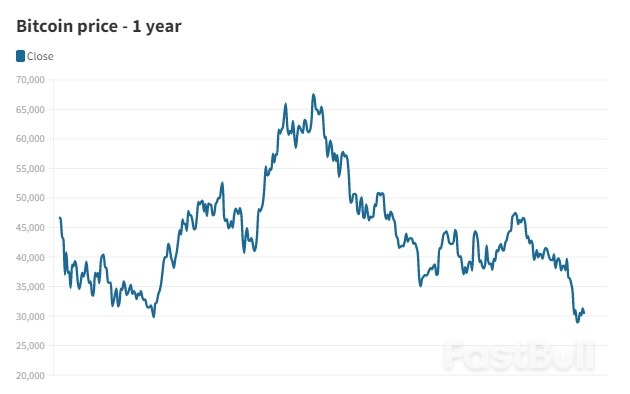
          Bitcoin, the world's largest cryptocurrency, fell as low as $25,401 last week, its lowest since December 2020. It hit a record high of $69,000 in November.
          Small tokens were also hit, with Ether, the second-largest token, dropping more than 15 per cent to its lowest since June.
          Luna, a digital coin widely promoted on social media and backed by institutional cryptocurrency investors, lost nearly all of its value.
          Small traders such as Ms Isah have flocked to cryptocurrencies in the hope of quick returns, despite warnings from regulators that the emerging assets can be high risk.
          Platforms such as Robinhood, which has 23 million customers across a variety of assets, helped to spur retail investing, including in cryptocurrency.
          Around a quarter of Robinhood's transaction-based revenue came from cryptocurrencies in the first quarter of this year, the company said in its latest earnings statement.
          Overall user numbers at cryptocurrency platforms have ballooned. Binance, the world's biggest cryptocurrency exchange, had some 118 million clients last month, up from 43.4 million in the first quarter of last year.
          But after last week's turmoil, online forums were awash with tales of woe as retail investors spoke about their losses.
          "I'm 49, with a big mortgage and three kids. My retirement party is on ice for the foreseeable future," a user with the handle Boring-Fun-3646 said on Reddit.
          Another user with the handle AdventurousAdagio830 posted on Reddit: "It doesn't seem real that I lost $180,000."
          Emblematic of cryptocurrency risks was the collapse last week of TerraUSD, a stablecoin designed to keep a constant value by a complex algorithm that involved Luna.
          When the coins came under heavy selling pressure, the system broke down. TerraUSD — designed to keep a value of $1 — traded around 9 cents on Tuesday, while Luna plunged to near-zero, based on CoinGecko data.Retail Investors Lose Faith in Cryptocurrencies After Deep Slump_1
          Tejan Shrivastava, a 31-year old graphic designer from Mumbai, who has been investing in cryptocurrencies for the past year, had his $250 investment wiped out by Luna's collapse.
          "It was stuck in a death spiral. All the money was gone in 15 minutes," he said.
          "I don't even know if I'll invest in crypto in the future. I have a crypto portfolio, but I am planning to liquidate it once it reaches break-even."
          Luna's fall wiped out most of its market value, which had been at more than $40 billion as recently as early April, CoinGecko data shows.
          Retail investors' online frustration even spilt over into the real world.
          Seoul police last week said they were seeking a suspect after an unidentified individual rang the doorbell of the apartment of Do Kwon, the founder of TerraUSD, and ran away.
          Police would investigate whether the suspect had invested in cryptocurrencies, a Seoul police officer said.
          Throughout its 13-year life, the cryptocurrency sector has been peppered by vertiginous climbs and sudden freefalls. In November, for instance, Bitcoin slumped by a fifth in about two weeks after touching a record $69,000. Six months earlier, it had tumbled by about 40 per cent in just nine days.
          Yet cryptocurrency's latest crash, which pushed the sector's combined value to $1.2 trillion, less than half of where it was last November, led to the crushing of Luna, which on May 1 was the eighth-largest cryptocurrency by market capitalisation.
          Cryptocurrencies are subject to patchy regulation across the world, with traders of Bitcoin and the panoply of smaller tokens typically unprotected against price slumps.
          But it is difficult to gauge the scale of retail investors' pain from the cryptocurrency plunge and the repercussions on appetite given the opaque nature of the market.
          In Britain, more than 4 per cent of adults — some 2.3 million people — own cryptocurrencies, data published last year by the UK financial watchdog showed.
          The regulator said understanding of cryptocurrency was falling compared with a year earlier, "suggesting that some crypto users may not fully understand what they are buying".
          Still, some small investors are keeping the faith.
          Eloisa Marchesoni, based near Tulum in Mexico and investing with a cryptocurrency syndicate, said she would not give up.
          "I am looking to buy the dip — we are all waiting for Bitcoin to go down to $22,000, which is not something too probable but not something that's 'not probable at all'."
          Ms Marchesoni is also hedging her cryptocurrency bets with physical assets — "cars because you can lease them, watches, real estate".
          Bitcoin was hovering around $29,765 on Tuesday, having lost more than 20 per cent so far this month.
          Regulators remain on alert. The British government said last month it will regulate stablecoins.
          The US Securities and Exchange Commission is toughening its stance. Gary Gensler, SEC chair, said this week investors in cryptocurrencies needed more protections.

          Source: The Business News

          Risk Warnings and Disclaimers
          You understand and acknowledge that there is a high degree of risk involved in trading. Following any strategies or investment methods may lead to potential losses. The content on the site is provided by our contributors and analysts for information purposes only. You are solely responsible for determining whether any trading assets, securities, strategy, or any other product is suitable for investing based on your own investment objectives and financial situation.
          Comments
          Add to Favorites
          Share

          G20 Emerging Economies Face 'Scarring' from Pandemic Due to Weak Labour Market Recovery

          Jason
          G20 members face long-term "scarring" from the Covid-19 pandemic due to a weak recovery in labour markets in emerging economies and severe school disruptions in the group's developing and advanced economies, according to the International Monetary Fund.
          In G20 emerging markets, employment rates remain below pre-pandemic projections due to weaker economic recoveries, the Washington-based lender said in a report released on Tuesday.
          Informal work — which is widespread in many of these economies — is rebounding strongly from a sharp drop at the peak of the crisis when contact-intensive sectors were hit hard by social distancing measures.
          The share of informal work relative to total employment is now exceeding pre-pandemic levels for some G20 emerging economies. It could rise further with the recovery of contact-intensive sectors, which means that these informal workers face lower wages and less access to social safety nets, the report said.
          "Policymakers must act promptly to repair the damage from the crisis and prevent decades of diminished economic output from lost human capital," the IMF said in a blog post on Tuesday.
          The fund has lowered its growth forecast for the global economy this year, with Russia's war in Ukraine severely denting economic prospects and inflation stoked by soaring commodities prices threatening to derail momentum.
          The IMF now projects global growth at 3.6 per cent in 2022 and 2023, revising it down 0.8 and 0.2 percentage points from its January forecast, respectively.
          The unprecedented school closures during the pandemic have hurt students' learning across many G20 economies, but particularly students in emerging market economies, the IMF said. Within countries, that impact was more severe for children from poorer families.
          "If these learning losses aren't addressed, affected students could experience a lifetime of depressed earnings," the IMF warned.
          Students currently at school today will account for close to 40 per cent of the combined working-age populations across G20 economies for decades, it added.
          "Such long-lasting impacts on the labour force will significantly affect economies," the multilateral lender said.
          Once all these students are in the labour market, gross domestic product for advanced G20 economies could be as much as 3 per cent lower in the long run relative to the baseline scenario, according to the IMF.
          "With poorer households suffering the worst learning losses, their prospects could be particularly diminished, further widening income inequality," the fund said.
          There are also other challenges besides the labour market and schooling disruptions.
          The increase in corporate debt and vulnerabilities in the industries hit hardest by the pandemic could also contribute to "scarring" by weighing on investment and productivity for years to come, IMF research showed.
          Economic scarring — defined as diminished longer-term output relative to pre-pandemic projections — may occur due to pandemic-induced damage to capital, labour and productivity.
          However, the extent of scarring is likely to vary across and within countries. Advanced economies likely face a lower degree of scarring than emerging market economies, while vulnerable groups, such as low-skilled workers and current students may face reduced opportunities compared to pre-pandemic expectations, the IMF said.
          "Policy action can help heal scars and prevent further wounds. Immediate action is needed to limit and repair learning losses."
          Targeted fiscal measures and implementing structural reforms can help raise productivity-enhancing investments and create jobs, the fund said in its recommendations.
          Appropriately adjusting macroeconomic and financial policies can also contain risks of further scarring, it said.
          Countries must quickly assess setbacks to learning and implement the appropriate measures to help students, the fund said in its blog post. This could include, for example, additional tutoring or a longer school year.
          Support measures for companies and workers that helped limit pandemic scarring, such as credit guarantees and job retention policies, will also need to be scaled back as the recovery becomes stronger.
          Instead, policies should shift to helping people adjust to changing labour markets, such as through well-targeted job-search programmes and additional support for training to build new skills, the IMF said.
          To limit elevated pockets of corporate distress turning into significant business failures or investment slumps, it's also crucial to ensure well-functioning mechanisms for corporate insolvency and out-of-court restructuring, the fund added.

          Source: The National News

          Risk Warnings and Disclaimers
          You understand and acknowledge that there is a high degree of risk involved in trading. Following any strategies or investment methods may lead to potential losses. The content on the site is provided by our contributors and analysts for information purposes only. You are solely responsible for determining whether any trading assets, securities, strategy, or any other product is suitable for investing based on your own investment objectives and financial situation.
          Comments
          Add to Favorites
          Share

          Crypto Adoption Spreads in Argentina Even as Central Bank Tightens Rules

          Kevin Du
          On a crowded pedestrian street in central Buenos Aires, black market money changers have new competition. Brightly coloured posters advertising online cryptocurrency exchanges stand alongside the traditional cuevas, or "caves", dingy unmarked bureaux de change that convert pesos and dollars at up to twice the official rate.
          Argentina is ripe for cryptocurrency disruption. Decades of distrust in the banking system, high inflation, and strict limits on how many pesos can be converted into more stable currencies like the dollar have increasingly pushed savers towards cryptocurrencies.
          Younger generations in particular see it as a way to shore up their savings, as annual inflation soars past 55 per cent and levels of government intervention in the economy climb. Last year Argentina recorded the 10th highest rate of cryptocurrency adoption anywhere in the world and one of the highest in the Americas, according to the Chainanalysis index.
          But even as more people sign up, the country's central bank is tapping the brakes out of concerns linked to a $44bn IMF debt restructuring deal signed in March.
          Starting this month financial institutions in Argentina can no longer offer cryptocurrency related services, like buying and selling crypto through their digital wallets and mobile banking apps or setting up a crypto exchange. The decision came just days after Argentina's largest private bank, Banco Galicia, and online bank Brubank announced plans to open up to digital assets by allowing users to buy different digital coins through their investment app.
          Central bank officials said the move was intended to mitigate the risks crypto poses to users and "to the financial system as a whole," citing concerns about volatility and money laundering.
          Sources close to the decision told the FT that rather than a broader crackdown on digital assets, the move is meant to appease the IMF ahead of a quarterly review of its $44bn debt programme that began this week.
          Under the terms of the IMF deal, Washington and Buenos Aires agreed that Argentina would "discourage the use of cryptocurrencies with a view to preventing money laundering, informality and disintermediation".
          Additional IMF funds issued to Argentina to boost the central bank's reserves and meet upcoming debt payments are subject to quarterly reviews by the fund. With targets to bring down inflation and narrow the deficit appearing exceptionally hard to meet against the backdrop of the war in Ukraine, the crypto clause, say sources, could be one way to show the organisation Argentina is doing what it can to comply with other conditions.
          Despite the central bank's caution, there are signs crypto is taking hold. Mauro Liberman, 39, runs a crypto café in the capital's business district. CrypStation in Puerto Madero offers free advice on how digital currencies work as well as accepting payments in 30 different virtual coins.
          "It's being used day to day as a form of exchange," Liberman said, the café's Athena Bitcoin ATM positioned behind him. "Before it [crypto] was seen almost exclusively as a way to invest."
          Countries in Latin America have been some of the most enthusiastic adopters of crypto. El Salvador became the first nation in the world to make bitcoin legal tender in September though it had a rocky start when the government wallet developed technical problems. Public adoption has been limited.
          El Salvador has since spent tens of millions of public dollars buying the cryptocurrency — and losing money, raising concerns about how the huge volatility of these digital coins might affect a country's finances. Bitcoin, the world's biggest digital asset, sank to its lowest level last week since late 2020 and Tether, a popular stablecoin, failed at times to maintain its link with the US dollar.
          In Argentina at least seven different crypto exchanges where people can buy bitcoin are listed in the country. One of the most popular, Lemon, surpassed 1mn users in April after the company launched a Visa debit card that allows payments in pesos or crypto. Some businesses have started paying a proportion of salaries in stablecoins, the value of which is pegged to another currency or commodity like gold.
          Santiago Siri, founder of digital coin UBI and one of Argentina's earliest crypto enthusiasts, said that the adverse economic conditions have led to a "massive" rate of adoption like never before.
          "Walking around Buenos Aires it's as if we've accidentally travelled to 2034, even the builders and taxi drivers are saving in crypto," said Siri, whose business is backed by Marcos Galperin founder of ​​MercadoLibre, Latin America's answer to Amazon.
          At the same time, technologies being developed by Argentines who are used to past bouts of hyperinflation, sovereign debt defaults and currency devaluations are making it more accessible, he said.
          Exchanges like Lemon are exempt from the new central bank rules. They work as payment processors and are subject to different regulations so the ability to pay and trade in cryptocurrency is not affected. In Latin America, central and south Asia and Africa, more than 80 per cent of cryptocurrencies by value sent to these regions move through exchanges.
          The recent central bank crackdown will ultimately do little to slow the circulation of crypto on exchanges, said Andrés Engler, a crypto specialist at CoinDesk based in Buenos Aires. "This was a signal to the banks . . . but exchanges don't fall under the new guidelines, so the whole cryptocurrency ecosystem continues."

          Source: FT

          Risk Warnings and Disclaimers
          You understand and acknowledge that there is a high degree of risk involved in trading. Following any strategies or investment methods may lead to potential losses. The content on the site is provided by our contributors and analysts for information purposes only. You are solely responsible for determining whether any trading assets, securities, strategy, or any other product is suitable for investing based on your own investment objectives and financial situation.
          Comments
          Add to Favorites
          Share

          Bear Market: Your Guide to Surviving the Bloodbath

          Yi Xuan

          Traders' Opinions

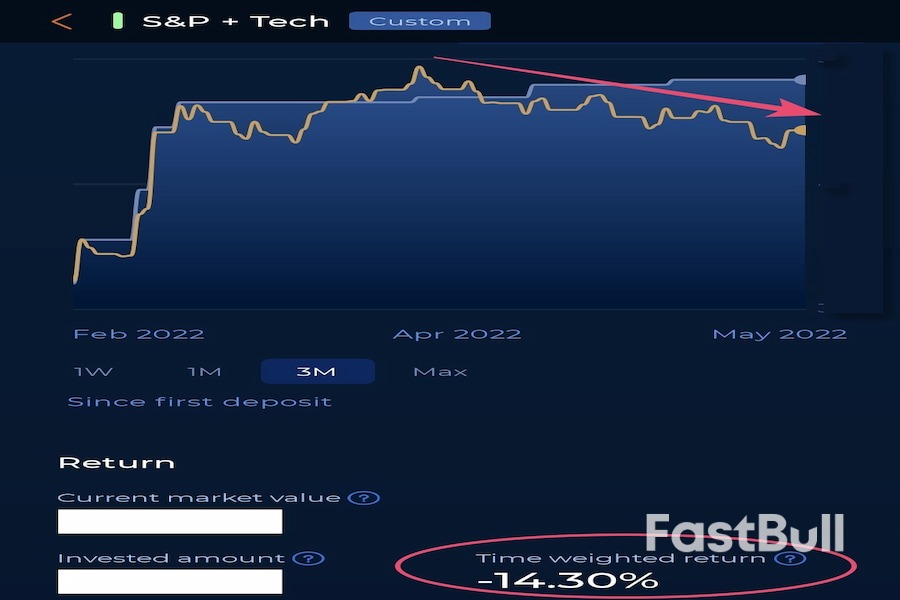
          Personally, my growth-focused Exchange-Traded Fund (ETF) portfolio dropped over 14% in the past 3 months.
          Bear Market: Your Guide to Surviving the Bloodbath_1
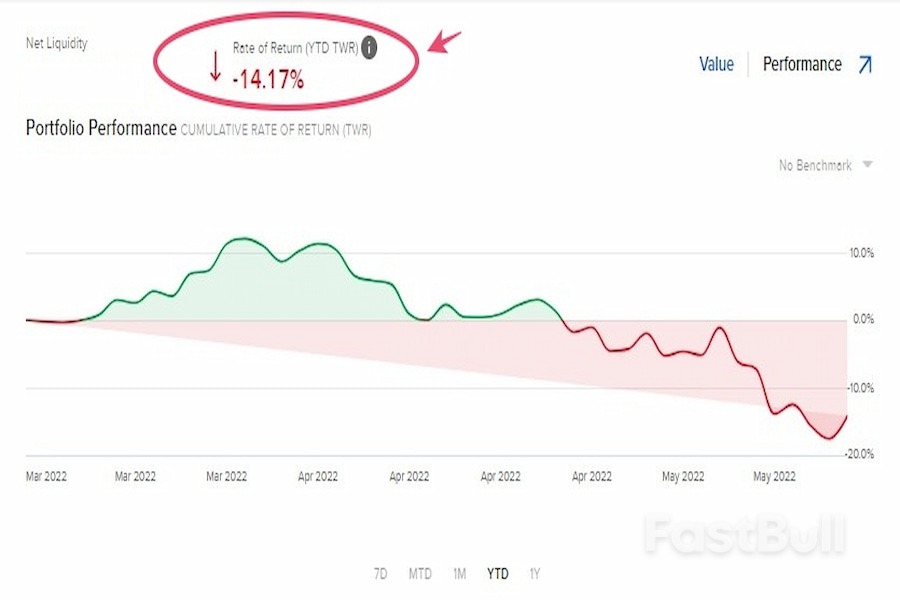
          In addition, a portion of my dividend-focused ETFs in the Freedom Fund has shed about 14% in value so far:
          Bear Market: Your Guide to Surviving the Bloodbath_2
          Seeing my investments down to this extent is not pleasant, but it is not the end of the world either.
          In this post, I want to share with you several important insights on the stock market – and hopefully, this will boost your confidence to stay the course in this long game!
          If you like this post, consider subscribing to my FREE weekly newsletter where I’ll share all things I learn about personal finance & investment with you!

          Table of Contents

          #1 A bear market is not forever
          #2 Win by staying invested for the long term
          #3 Why does the market go up in the long run?
          My Bear Market Survival Guide
          #1 Stick to a long-term investment routine
          #2 Never invest the money you need in order to gain something you want
          #3 I will not let my investment performance affect how I look at myself
          Useful Resources & Guide
          Disclaimers

          #1 A bear market is not forever

          Technically, a bear market is described as a market dropping over 20% from the all-time high.
          While we are not there yet for the S&P500 index, I think we are close enough for me to call a bear market right now.
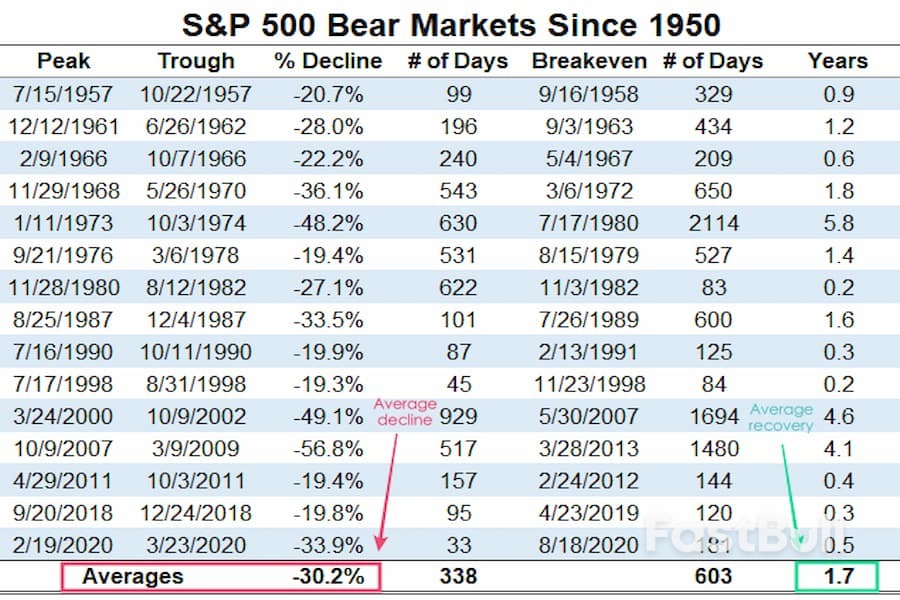
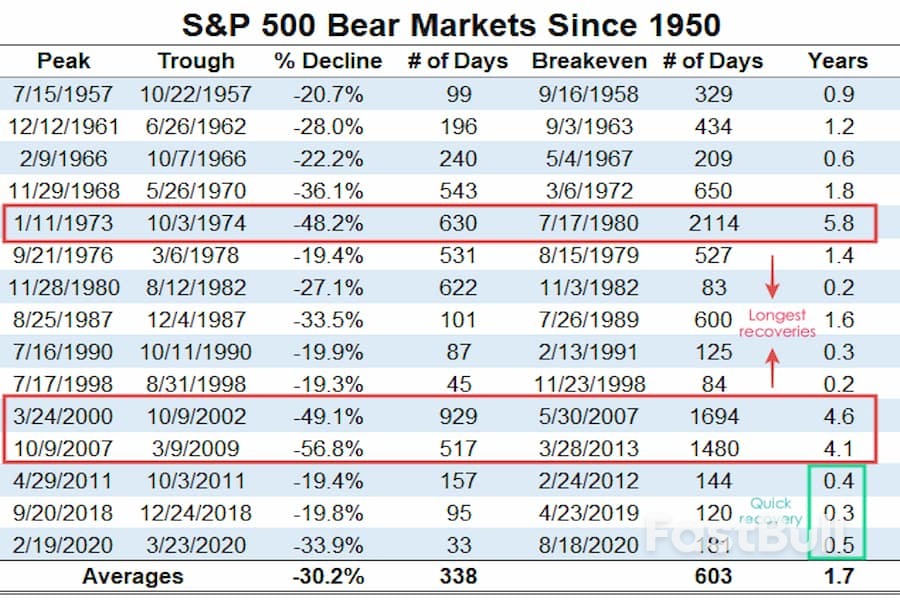
          I can’t tell for sure how long a bear market will last – but they do come to an end eventually. Let’s take a look at the history:
          Bear Market: Your Guide to Surviving the Bloodbath_3
          Over the 15 bear markets in the past, the average decline was about 30%, where the market generally took under a year to reach the bottom.
          The recovery from the bottom? On average, a little more than 1 ½ year.
          Bear Market: Your Guide to Surviving the Bloodbath_4
          That said, the last 3 bears recovered relatively quickly.
          8 out of the 15 bears recovered within a year.
          The worst bears were in 1973-1974, 2000-2002, and 2007-2009 which all took more than 4 years to recover.
          I’m not certain how this one will play out – but as you can see, the market always recovers.

          #2 Win by staying invested for the long term

          For the last 95 years (1926 – Feb 2022), the US stock market (S&P500 index) has produced an average of 10 – 11% annually.
          In fact, there has never been a 20-year period in the market where it is down on a nominal basis:

          #3 Why does the market go up in the long run?

          Why does the stock market go up in the long run?
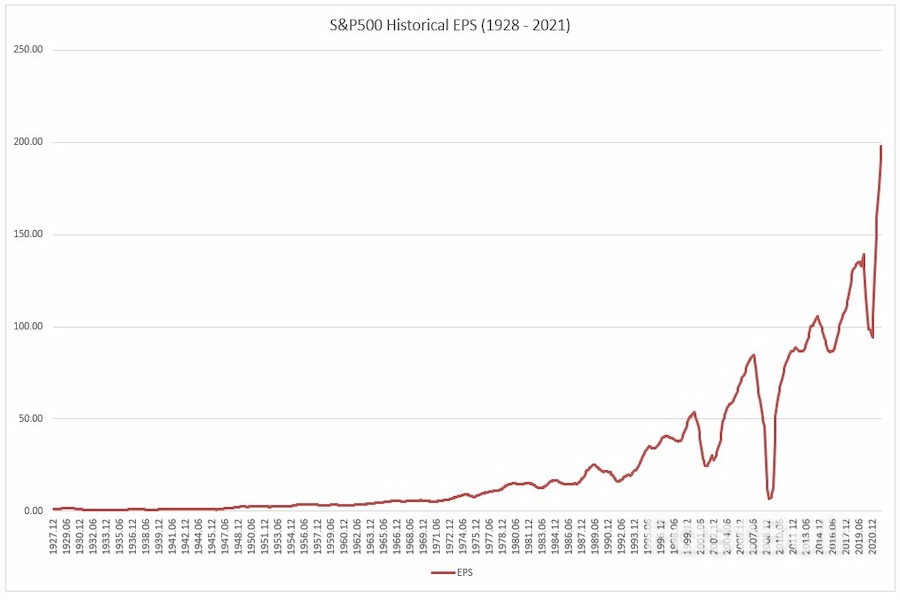
          One of the biggest reasons is because the economy grows and companies earn more money.
          In the 1920s, the earnings per share (EPS) for the S&P 500 was $1.11 while companies paid out $0.78 per share in dividends.
          By the end of 2021, those numbers were $197.87 and $60.40 respectively.
          Bear Market: Your Guide to Surviving the Bloodbath_5
          Simply put, over the past 90+ years, earnings on the US stock market have grown by 6% annually, while dividends have grown 5% per year.
          When you invest in the stock market, you are investing your money in assets that produce income on your behalf. This means you get to participate in the growth and innovations that come with it.
          My Bear Market Survival Guide
          If you are feeling miserable from this bear market, hopefully what you’ve read so far can give you a big picture perspective on your investing journey.

          Below are 3 things that I’m personally practicing in this bear market:

          #1 Stick to a long-term investment routine

          Having an investment routine helps especially in times of chaos.
          Since I cannot predict when a bear market will end, I will continue sticking to my investment routine (ie. Dollar Cost Average X amount monthly) knowing that I will be buying income-producing assets at a discount.
          Remember, the market favors those who stay on course in the long run.

          #2 Never invest the money you need in order to gain something you want

          This is so important:
          Avoid investing in such a way that your ability to put food on the table depends on the returns of your investments in the coming month:
          We cannot tell when a bear market will end.
          A new low can go lower!
          A bear market may lead to a recession – don’t use the money you saved up for rainy days to invest!

          #3 I will not let my investment performance affect how I look at myself

          Your life is not defined by your investments. Neither is net worth because it is a poor definition of success in life.
          Reflect and find meaning in your life outside of your portfolio. Eating and living healthier is a good place to start.
          Useful Resources & Guide
          How to invest in the S&P500 index as a non-US resident.
          ETF investing guide – getting started!
          Learn dividend investing

          Disclaimers

          This post is produced purely for sharing purposes and should not be taken as a buy/sell recommendation. Past return is not indicative of future performance. Please seek advice from a licensed financial planner before making any financial decisions.
          Risk Warnings and Disclaimers
          You understand and acknowledge that there is a high degree of risk involved in trading. Following any strategies or investment methods may lead to potential losses. The content on the site is provided by our contributors and analysts for information purposes only. You are solely responsible for determining whether any trading assets, securities, strategy, or any other product is suitable for investing based on your own investment objectives and financial situation.
          Comments
          Add to Favorites
          Share

          Lebanon's Election Replaces One Stalemate with Another

          Devin
          With the parliamentary election over in Lebanon, the country will have to focus on three broad objectives. First, forming a government. Second, preparing for the presidential election in September or October. And third, moving forward on essential economic reforms to alleviate the suffering of the population. However, the election results may well indefinitely hinder the achievement of these objectives.
          The first priority will be to form a new government. Under normal circumstances, this should not pose a major challenge, since the government should be in power only until the presidential election. However, if there is no consensus around the next head of state and Lebanon enters a presidential vacuum, the government will take on presidential powers and may last far longer than expected. That is why negotiations over its formation are bound to be highly divisive.
          The question of who will succeed President Michel Aoun is also contentious. Until the parliamentary election, the two front-runners were Gebran Bassil, Mr. Aoun's son-in-law, and Suleiman Franjieh, a politician from northern Lebanon, whose grandfather was president from 1970 until 1976. However, the largest Christian bloc post-elections will be controlled by the Lebanese Forces, whose leader Samir Geagea also has presidential ambitions and who will strongly contest Mr. Bassil and Mr. Franjieh.
          Mr. Bassil, who heads the Free Patriotic Movement, lost ground in the legislative election, while the list backed by Mr. Franjieh did relatively poorly. Neither man, therefore, will be able to credibly make the case that he is the most legitimate Maronite Christian candidate for the presidency. The fact that Hezbollah strenuously opposes Mr. Geagea suggests there will be no easy agreement on a successor to Mr. Aoun, and the outcome may be a long political void, unless a compromise can be reached.
          The election results suggest that two broad blocs will emerge in Parliament – one led by the Lebanese Forces, with its allies, particularly from the Sunni community; and a Hezbollah-led coalition, formed with the Aounists. This may make for a period of stalemate ahead, because of Lebanon's widening polarisation.
          All this will have a fundamental, and very negative, bearing on economic reforms, which have not progressed since the economy collapsed in 2019. Yet, with economic indicators continuing to deteriorate and the World Bank predicting zero growth in 2022, Lebanon cannot afford to waste more time.
          A report this month by the UN special envoy on poverty, Olivier de Schutter, accused the government and the central bank of human rights violations in impoverishing the population. The report said that Lebanese officials had "a sense of impunity", and appeared to be living "in a fantasy land".
          Recently, the Lebanese government and the International Monetary Fund agreed to what is known as a staff agreement, in which the IMF said it would provide $3-4 billion to Lebanon if the country implemented required economic reforms and an audit of the banking sector. Yet, continued factionalism has hindered progress.
          If political divisions are exacerbated in the coming months, a final agreement over an IMF-led reform programme will be highly improbable this year. What this would mean is that in the best-case scenario, Lebanon could begin focusing on economic priorities only after a new president comes to office, whenever that occurs.
          What is unfortunate in this regard is that the government has reportedly advanced in its economic plan to take Lebanon out of its crisis. Recently, Deputy Prime Minister Saadeh Al-Shami, who is playing a key role in negotiations with the IMF, stated that the technical aspects of banking sector reform were completed. While this is good news, several more months of continuing deadlock could have a disastrous impact on the well-being of the Lebanese, and on banks in particular.
          Finally, a major factor that will help define the period ahead is regional calculations. A number of Arab states have shown a renewed momentum in trying to contain Hezbollah's power in Lebanon, which has made the party uneasy. This mood will not have been helped by the gains made by the Lebanese Forces in the election. The mainly Christian party has close ties with Saudi Arabia, which Hezbollah sees as a threat.
          As the Arab states, especially the Gulf states, reinforce their stakes in Lebanon, this could lead to one of two possible outcomes: a struggle for influence with Iran in the country that is unlikely to come out with a clear winner. This can potentially bring about an eventual agreement to share influence. Alternatively, Hezbollah and Iran might try in some way to reimpose their hegemony. But this would be risky, as the strength of the party's cross-sectarian alliances have been eroded.
          The most likely outcome is that Lebanon will remain at a standstill in the coming months, and perhaps even beyond that, as the two broad alignments neutralise each other in Parliament. Neither side will be able to overcome the other, and both sides will want to avoid a civil war. Meanwhile, the Lebanese will continue to suffer as their political parties pursue clashing agendas, with little concern for the population.

          Source: The National News

          Risk Warnings and Disclaimers
          You understand and acknowledge that there is a high degree of risk involved in trading. Following any strategies or investment methods may lead to potential losses. The content on the site is provided by our contributors and analysts for information purposes only. You are solely responsible for determining whether any trading assets, securities, strategy, or any other product is suitable for investing based on your own investment objectives and financial situation.
          Comments
          Add to Favorites
          Share

          China Loan Growth Misses Estimates

          Owen Li
          Lockdowns have created problems for banks in China as they have become more risk-averse. China's central bank has promised to help but it lacks a solution. We believe that asset management companies play a role in boosting overall credit. But there is no perfect solution when the uncertainty of long lockdowns is high.

          Very weak loan growth

          New yuan loans grew only CNY645.4bn in April after a CNY3130bn increase in March. The market consensus was CNY2200bn. April is typically a month of lower loan growth than March, but this April's loan growth is just too weak. This matches the very soft growth in aggregate finance, which grew only CNY910.2bn in April compared to CNY4650bn in March.

          Banks can blame lockdowns

          The main reason for such small credit growth is because of Covid lockdowns that have created difficulties for getting new loans. During lockdowns, there are many individuals and companies who suffer from loss of wages and loss of business, so therefore there should be an increase in demand for loans. If the supply of loans was steady, we should have seen a jump in new loans in April.
          But that was not the case because banks in mainland China are more credit sensitive nowadays. During lockdowns, banks tend to be more risk-averse. They have been told to keep past due loans on their books. Under these circumstances, banks have become unwilling to create new loans, as that would mean taking on more risk by getting new loans and then waiting for them to become past due if lockdowns continue.
          This is bad for the government as it would like to see banks giving a helping hand to the economy. But from a risk management perspective, banks are protecting their capital ratios, which isn't a bad idea for the whole financial system in China.

          PBoC is undecided: To cut or not to cut

          The People's Bank of China (PBoC) is struggling to decide on whether to lower interest rates by cutting the policy rate (Medium Lending Facility) and/or the required reserve ratio (RRR). There are mixed messages from the government and the central bank. It is difficult to decide because cutting interest rates is not a direct way to help an economy that has been damaged by lockdowns. Fiscal measures would be more effective, and there are quite a few of them for small and medium-sized enterprises and individuals.
          There may be new tools from the PBoC, as it has promised, which will hopefully arrive soon.
          We believe a way out is for banks to divest some loans to asset management companies, allowing banks more room to increase lending. But the asset management companies have to take the weak credit from banks. Then there is the issue of how much weak credit the asset management companies can hold without raising too much capital. There is no easy solution for easing monetary policy when the uncertainties of long lockdowns remain high.

          Source: ING

          Risk Warnings and Disclaimers
          You understand and acknowledge that there is a high degree of risk involved in trading. Following any strategies or investment methods may lead to potential losses. The content on the site is provided by our contributors and analysts for information purposes only. You are solely responsible for determining whether any trading assets, securities, strategy, or any other product is suitable for investing based on your own investment objectives and financial situation.
          Comments
          Add to Favorites
          Share
          FastBull
          Copyright © 2025 FastBull Ltd

          728 RM B 7/F GEE LOK IND BLDG NO 34 HUNG TO RD KWUN TONG KLN HONG KONG

          TelegramInstagramTwitterfacebooklinkedin
          App Store Google Play Google Play
          Products
          Charts

          Chats

          Q&A with Experts
          Screeners
          Economic Calendar
          Data
          Tools
          Membership
          Features
          Function
          Markets
          Copy Trading
          Latest Signals
          Contests
          News
          Analysis
          24/7
          Columns
          Education
          Company
          Careers
          About Us
          Contact Us
          Advertising
          Help Center
          Feedback
          User Agreement
          Privacy Policy
          Business

          White Label

          Data API

          Web Plug-ins

          Poster Maker

          Affiliate Program

          Risk Disclosure

          The risk of loss in trading financial instruments such as stocks, FX, commodities, futures, bonds, ETFs and crypto can be substantial. You may sustain a total loss of the funds that you deposit with your broker. Therefore, you should carefully consider whether such trading is suitable for you in light of your circumstances and financial resources.

          No decision to invest should be made without thoroughly conducting due diligence by yourself or consulting with your financial advisors. Our web content might not suit you since we don't know your financial conditions and investment needs. Our financial information might have latency or contain inaccuracy, so you should be fully responsible for any of your trading and investment decisions. The company will not be responsible for your capital loss.

          Without getting permission from the website, you are not allowed to copy the website's graphics, texts, or trademarks. Intellectual property rights in the content or data incorporated into this website belong to its providers and exchange merchants.

          Not Logged In

          Log in to access more features

          FastBull Membership

          Not yet

          Purchase

          Become a signal provider
          Help Center
          Customer Service
          Dark Mode
          Price Up/Down Colors

          Log In

          Sign Up

          Position
          Layout
          Fullscreen
          Default to Chart
          The chart page opens by default when you visit fastbull.com