Markets
News
Analysis
User
24/7
Economic Calendar
Education
Data
- Names
- Latest
- Prev


Signal Accounts for Members
All Signal Accounts
All Contests


U.K. Retail Sales MoM (SA) (Dec)A:--
F: --
P: --
France Manufacturing PMI Prelim (Jan)A:--
F: --
P: --
France Services PMI Prelim (Jan)A:--
F: --
P: --
France Composite PMI Prelim (SA) (Jan)A:--
F: --
P: --
Germany Manufacturing PMI Prelim (SA) (Jan)A:--
F: --
P: --
Germany Services PMI Prelim (SA) (Jan)A:--
F: --
P: --
Germany Composite PMI Prelim (SA) (Jan)A:--
F: --
P: --
Euro Zone Composite PMI Prelim (SA) (Jan)A:--
F: --
P: --
Euro Zone Manufacturing PMI Prelim (SA) (Jan)A:--
F: --
P: --
Euro Zone Services PMI Prelim (SA) (Jan)A:--
F: --
P: --
U.K. Composite PMI Prelim (Jan)A:--
F: --
P: --
U.K. Manufacturing PMI Prelim (Jan)A:--
F: --
P: --
U.K. Services PMI Prelim (Jan)A:--
F: --
P: --
Mexico Economic Activity Index YoY (Nov)A:--
F: --
P: --
Russia Trade Balance (Nov)A:--
F: --
P: --
Canada Core Retail Sales MoM (SA) (Nov)A:--
F: --
P: --
Canada Retail Sales MoM (SA) (Nov)A:--
F: --
U.S. IHS Markit Manufacturing PMI Prelim (SA) (Jan)A:--
F: --
P: --
U.S. IHS Markit Services PMI Prelim (SA) (Jan)A:--
F: --
P: --
U.S. IHS Markit Composite PMI Prelim (SA) (Jan)A:--
F: --
P: --
U.S. UMich Consumer Sentiment Index Final (Jan)A:--
F: --
P: --
U.S. UMich Current Economic Conditions Index Final (Jan)A:--
F: --
P: --
U.S. UMich Consumer Expectations Index Final (Jan)A:--
F: --
P: --
U.S. Conference Board Leading Economic Index MoM (Nov)A:--
F: --
P: --
U.S. Conference Board Coincident Economic Index MoM (Nov)A:--
F: --
P: --
U.S. Conference Board Lagging Economic Index MoM (Nov)A:--
F: --
P: --
U.S. UMich 1-Year-Ahead Inflation Expectations Final (Jan)A:--
F: --
P: --
U.S. Conference Board Leading Economic Index (Nov)A:--
F: --
P: --
U.S. Weekly Total Rig CountA:--
F: --
P: --
U.S. Weekly Total Oil Rig CountA:--
F: --
P: --
Germany Ifo Business Expectations Index (SA) (Jan)--
F: --
P: --
Germany IFO Business Climate Index (SA) (Jan)--
F: --
P: --
Germany Ifo Current Business Situation Index (SA) (Jan)--
F: --
P: --
U.S. Dallas Fed PCE Price Index YoY (Nov)--
F: --
P: --
Brazil Current Account (Dec)--
F: --
P: --
Mexico Unemployment Rate (Not SA) (Dec)A:--
F: --
P: --
Canada National Economic Confidence Index--
F: --
P: --
U.S. Non-Defense Capital Durable Goods Orders MoM (Excl. Aircraft) (Nov)--
F: --
P: --
U.S. Durable Goods Orders MoM (Excl. Defense) (SA) (Nov)--
F: --
P: --
U.S. Durable Goods Orders MoM (Excl.Transport) (Nov)--
F: --
P: --
U.S. Durable Goods Orders MoM (Nov)--
F: --
P: --
U.S. Chicago Fed National Activity Index (Nov)--
F: --
P: --
U.S. Dallas Fed New Orders Index (Jan)--
F: --
P: --
U.S. Dallas Fed General Business Activity Index (Jan)--
F: --
P: --
U.K. BRC Shop Price Index YoY (Jan)--
F: --
P: --
China, Mainland Industrial Profit YoY (YTD) (Dec)--
F: --
P: --
Mexico Trade Balance (Dec)--
F: --
P: --
U.S. S&P/CS 20-City Home Price Index YoY (Not SA) (Nov)--
F: --
P: --
U.S. S&P/CS 20-City Home Price Index MoM (SA) (Nov)--
F: --
P: --
U.S. FHFA House Price Index MoM (Nov)--
F: --
P: --
U.S. FHFA House Price Index (Nov)--
F: --
P: --
U.S. Richmond Fed Manufacturing Composite Index (Jan)--
F: --
P: --
U.S. Conference Board Present Situation Index (Jan)--
F: --
P: --
U.S. Conference Board Consumer Expectations Index (Jan)--
F: --
P: --
U.S. Richmond Fed Manufacturing Shipments Index (Jan)--
F: --
P: --
U.S. Richmond Fed Services Revenue Index (Jan)--
F: --
P: --
U.S. Conference Board Consumer Confidence Index (Jan)--
F: --
P: --
Australia RBA Trimmed Mean CPI YoY (Q4)--
F: --
P: --
Australia CPI YoY (Q4)--
F: --
P: --
Australia CPI QoQ (Q4)--
F: --
P: --


No matching data
Latest Views
Latest Views
Trending Topics
Top Columnists
Latest Update
White Label
Data API
Web Plug-ins
Affiliate Program
View All

No data
Bitcoin saw wild swings over $1B in liquidations amid Trump's tariff delay and crypto support, but macro risks linger.
Bitcoin’s price experienced a volatile session on Wednesday, swinging by thousands of dollars as traders digested fresh geopolitical headlines and comments from U.S. President Donald Trump.
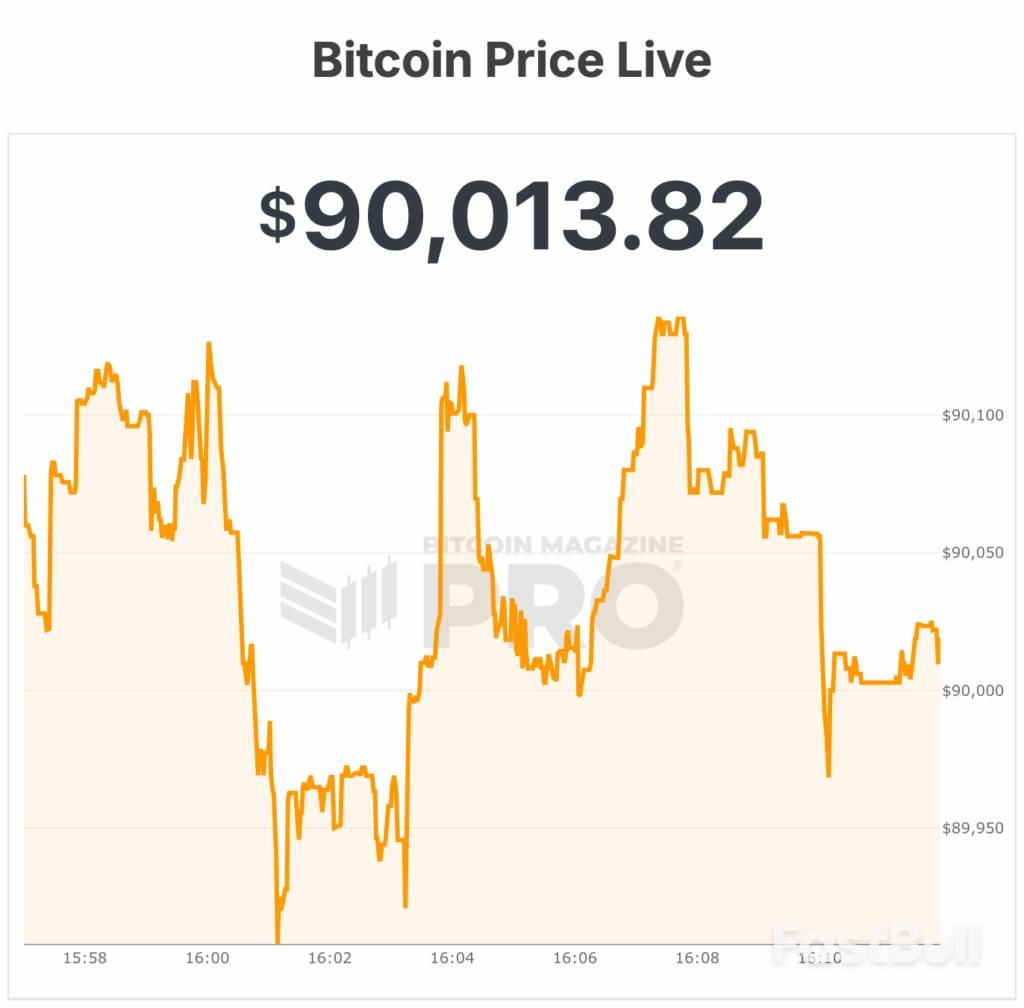
The leading cryptocurrency began the day near $88,000 before surging past $90,000. The rally was brief, with the price retreating to the upper $87,000s after the market open. However, a second surge brought Bitcoin back toward the $90,000 level after Trump announced a delay in planned trade tariffs. At the time of writing, Bitcoin was trading around $90,000, reclaiming the key psychological level for the second time in the session.
The market's sharp movements followed remarks from President Trump at the World Economic Forum in Davos, Switzerland, and a subsequent post on his Truth Social platform.
Trump stated he would postpone tariffs scheduled for February 1, citing a "very productive meeting" with NATO Secretary General Mark Rutte. In his social media post, Trump detailed a preliminary framework for a wider agreement concerning Greenland and the Arctic, calling it "a great one for the United States of America, and all NATO nations." He confirmed that the planned tariffs would not proceed based on these discussions.
The news sparked a positive reaction across financial markets. U.S. equities saw a sharp uptick, with the S&P 500, Nasdaq, and Dow Jones Industrial Average each climbing by approximately 1.5%. This risk-on sentiment lifted other assets, including Bitcoin and major cryptocurrencies, pushing them back toward recent highs.
During his Davos address, Trump also reaffirmed his support for digital assets, stating his intention to sign comprehensive crypto market structure legislation "very soon."
"Now, Congress is working very hard on crypto market structure legislation — Bitcoin, all of them — which I hope to sign very soon, unlocking new pathways for Americans to reach financial freedom," Trump said.
Despite the tariff-related relief, macroeconomic concerns continue to loom. Analysts are watching renewed stress in Japan's bond market as a potential obstacle for global risk assets. The yield on Japan's 10-year government bond has risen to about 2.29%, a level not seen since 1999. QCP Capital noted that Japan's government debt is over 240% of its GDP, with debt servicing costs expected to account for a quarter of fiscal spending by 2026.
From a technical perspective, Bitcoin maintained a mildly bullish bias after holding its structure above $90,000 last week, rallying to $98,000 before closing around $93,600.
Key levels traders are monitoring this week include:
• Upside Targets: A reclaim of $94,000 could open the door to a retest of $98,000. A sustained break above this could target $103,500 and the major resistance zone between $106,000 and $109,000.
• Key Support: The immediate support level is at $91,400. A failure to hold this level could trigger a deeper correction toward $87,000 or even $84,000.
While momentum has shifted favorably, the $103,500–$109,000 area is expected to present strong resistance. A rejection from this zone could determine whether the rally continues or reverses toward sub-$80,000 levels.
Wednesday's wild price action proved costly for leveraged traders. Data from CoinGlass shows that over $1 billion in crypto positions were liquidated in the past 24 hours as prices whipsawed.
Long positions took the heaviest losses, accounting for around $672 million of the total liquidations. Short positions accounted for approximately $335 million. Bitcoin traders faced the largest share of the damage, with $426 million in liquidations, followed by Ethereum with $366 million.
Currently, Bitcoin's price is $90,019 with a 24-hour trading volume of $67 billion. Its market capitalization stands at $1.798 trillion. The price remains below its 7-day high of $90,296 and above its 7-day low of $87,304.
The U.S. Department of Energy is preparing to offer states a landmark deal: build new nuclear reactors in exchange for hosting the nation’s radioactive waste. According to a source familiar with the plan, the department could begin approaching states with this proposal as early this week.
This new strategy represents a major policy shift aimed at clearing a decades-old roadblock that has stalled the growth of the U.S. nuclear industry. Successfully resolving the waste storage issue is seen as essential for achieving the Trump administration's ambitious goal of quadrupling the country's nuclear power capacity to 400 gigawatts by 2050.
The push for more nuclear energy comes as U.S. electricity demand is surging for the first time in years, driven by power-hungry data centers for artificial intelligence and cryptocurrency mining.
Speaking at the World Economic Forum in Davos, President Donald Trump recently endorsed nuclear power, stating it can be developed safely and at "good prices," a change from his previous reservations. The Department of Energy has not yet officially commented on the details of the new waste storage plan.
For decades, the U.S. government pursued a single, centralized location for all nuclear waste: a repository deep beneath Yucca Mountain in Nevada. The project, which began in 1987 and cost at least $15 billion, was ultimately halted by the Obama administration due to intense opposition from state lawmakers.
With the Yucca Mountain plan shelved, the U.S. has been left without a permanent solution. Spent nuclear fuel is currently stored on-site at power plants, first in cooling pools and later in large concrete and steel casks.
The new proposal marks a clear departure from the single-site strategy. Instead of mandating a location, the government would pursue a "consent-based" approach, inviting states to voluntarily host a repository in return for significant incentives.
The offer to states is designed to be a non-binding framework for discussion. According to the source, the package of incentives would be flexible, allowing states to engage without committing to every component.
Beyond incentives for new reactor construction, the deal could also include support for:
• Nuclear waste reprocessing: A method of recycling spent nuclear fuel.
• Uranium enrichment: The process of creating fuel for nuclear reactors.
This approach aims to overcome the local opposition that has historically hampered nuclear development by turning the burden of waste storage into an opportunity for economic and energy development.
While reprocessing nuclear waste has been technically possible for years—President Ronald Reagan lifted a moratorium on the practice—it has never been commercially adopted in the United States, largely due to high costs.
The technique also faces strong opposition from non-proliferation advocates. They argue that the reprocessing supply chain could create vulnerabilities, potentially allowing militant groups to seize materials that could be used to build a crude nuclear bomb. Politico was the first to report on the administration's new plan.
The European Union has officially suspended trade deal negotiations with the United States, a significant move that signals a serious downturn in transatlantic economic relations. The decision freezes a comprehensive effort to lower tariffs, align regulations, and boost cooperation between two of the world's largest economic blocs.
This halt comes amid rising political and economic tensions, with both sides failing to find common ground on critical policy issues. The ambitious trade agreement is now on indefinite hold.
According to EU officials, the suspension was driven by a lack of meaningful progress in the talks. There was growing frustration over diverging priorities, particularly concerning digital trade, agriculture, and green energy subsidies.
A senior EU trade representative noted that the U.S. had demonstrated "insufficient flexibility" during negotiations, making it impossible for discussions to advance. In response, U.S. officials expressed disappointment but reiterated their commitment to securing fair and balanced terms.
The breakdown occurs as both economies navigate inflationary pressures, supply chain realignment, and broader global trade instability. Approaching elections in both regions may have also contributed to the stalemate.
The suspension of talks casts a shadow over the future of EU-U.S. trade relations, creating uncertainty for businesses and investors. Key industries could face significant disruption if the impasse continues.
Potential Economic Fallout
• Renewed Tariffs: Sectors like automotive, technology, and agriculture could face new tariffs and regulatory hurdles.
• Reduced Investment: The unstable trade environment may decrease investment flows between the two economic partners.
Analysts are also watching the geopolitical implications. The failure of these two historic allies to reach an agreement could create an opening for other nations, such as China, to strengthen their trade influence with both the EU and the U.S. separately. This development may have long-term consequences for the global trade landscape.
A key U.S. House committee has advanced bipartisan legislation designed to give Congress oversight of advanced artificial intelligence chip exports, escalating a conflict with the Trump administration over sales to China. The bill specifically challenges a recent decision to permit Nvidia Corp. to sell its powerful H200 processors to Chinese customers.
On Wednesday, the House Foreign Affairs Committee approved the bill with a strong 42-2 vote. The legislation would not only establish a congressional review process similar to arms sales for AI chip exports but also impose an outright two-year ban on selling Nvidia's next-generation Blackwell chips to China. This move effectively writes existing, stricter export controls into law.
The bill is a direct response to President Donald Trump’s decision last month to relax export controls on China. While the administration's goal was to promote the adoption of American AI technology in global markets, the move triggered immediate backlash from national security advocates in Congress. The Commerce Department formalized the approval for Nvidia's H200 sales to China with a new rule issued last week.
The legislation aims to create a new framework for managing the export of critical AI technology to geopolitical rivals. If passed, the bill would introduce several key changes:
• Congressional Review: The administration would be required to notify Congress before approving advanced AI chip sales to countries like China, Russia, and Iran. This gives lawmakers the power to review and potentially block export licenses through a joint resolution.
• Transparency: Members of the House Foreign Affairs and Senate Banking committees would gain access to details about proposed sales, including the number of chips and the specific end-users purchasing them.
• Trusted Partners: A provision would create a pathway for "trusted" AI companies to get license exemptions for chip sales to U.S. allies and neutral nations, a feature praised by Microsoft Corp. executive Fred Humphries.
• National Strategy: The bill mandates that the administration submit a formal policy strategy for maintaining America's leadership in the global AI race.
"I have been so worried that the president wouldn't stop at just H200s," said Representative Gregory Meeks, the committee's top Democrat. He framed the legislation as a way to "send a clear message that our national security, our foreign policy, and our technological crown jewels are not for sale."
The bill highlights a fundamental disagreement between the White House and a bipartisan coalition in Congress. White House AI Czar David Sacks has publicly criticized the legislation, which is the latest congressional effort to curb the administration’s push to allow Nvidia and Advanced Micro Devices Inc. back into the lucrative Chinese market.
Administration officials argue that selling advanced chips to China forces foreign companies to become dependent on American technology. They believe this strategy solidifies U.S. leadership and offers a competitive alternative to systems developed by Chinese tech giant Huawei Technologies Co. Following this logic, Nvidia has also been lobbying for permission to sell a modified version of its more advanced Blackwell chip to China.
However, many on Capitol Hill remain unconvinced. Lawmakers from both parties have united around the need to protect U.S. innovation from strategic adversaries. They warn that exporting high-end American chips could inadvertently strengthen China's military and economy, ultimately undermining U.S. national security.
Representative Brian Mast, a Florida Republican and the committee's chairman, directly challenged the bill's opponents. "We all agree that we are in an AI arms race," he stated during the committee meeting. "So why wouldn't we want to know what the AI arms dealers want to sell to our adversaries?"
With the bill now heading to the House floor for a full vote, the debate over how to balance economic interests with national security in the age of AI is set to intensify. The Senate has yet to introduce a companion bill, though a separate measure to block H200 sales has already been proposed.
The Trump administration is escalating pressure on Mexico to permit direct U.S. military action against drug cartels on its soil. The demands reportedly go beyond airstrikes on labs and cartel leaders, potentially including American soldiers conducting ground raids alongside Mexican forces.
This proposal crosses a fundamental red line for Mexico. For decades, the presence of U.S. troops has been viewed as an unacceptable violation of national sovereignty, a sentiment rooted in the U.S. annexation of half of Mexico's territory in 1848. President Claudia Sheinbaum has firmly rejected the idea, and her administration has recently amplified its own anti-cartel operations to fend off U.S. intervention.
Sheinbaum's approach marks a sharp contrast to her predecessor, Andrés Manuel López Obrador, who largely dismantled security cooperation with the U.S. and allowed cartels to operate with greater freedom. Now, with U.S. pressure mounting, Mexico faces a critical choice with profound political and diplomatic consequences.
President Sheinbaum is caught between protecting Mexico’s economy and defending its sovereignty. Caving to U.S. demands might be seen as the only way to preserve the U.S.-Mexico-Canada Agreement (USMCA), the trade deal propping up the Mexican economy and her administration's social agenda. A collapse of the USMCA would likely trigger an economic crisis, hurting Mexican businesses and citizens for years.
However, allowing U.S. troops into Mexico would carry immense political costs. Public opinion is overwhelmingly against it, with some polls showing 80% of Mexicans rejecting the idea. Such a move would spark nationalist outrage against both the U.S. and the Sheinbaum government.
The domestic fallout could be severe:
• Party Fracture: Sheinbaum could lose control of her own ruling Morena coalition as its nationalist wings revolt.
• Opposition Revival: The move could breathe new life into Mexico's weakened opposition parties, like the Institutional Revolutionary Party and the National Action Party, whose fringe elements have shown some alignment with President Trump's brand of conservatism.
Any agreement for U.S. military action would also strain Sheinbaum's relationship with the Mexican military—a powerful, insular, and opaque institution that resists civilian oversight. López Obrador expanded the military's power significantly, granting it control over major infrastructure projects and public policy areas far beyond security. This has given the armed forces a steady stream of independent funding, reducing congressional control.
For the Mexican military, joint operations with the U.S. are deeply problematic. While some units, particularly in the Navy, have a history of cooperating on high-value raids, the institution's core doctrine has long been built around defending against a hypothetical U.S. invasion. It was only in the 1990s that Mexico's military established formal relations with the U.S., long after its Latin American peers.
Furthermore, widespread infiltration by criminal groups and corruption within the military and its National Guard branch make the prospect of close collaboration with American forces an uncomfortable one for its leadership.
If President Sheinbaum refuses to concede and the U.S. acts unilaterally, the strikes would be considered hostile. While a single, surprise raid on a top cartel leader might not provoke a military response, a sustained U.S. ground presence would be an intolerable humiliation.
Even without a direct military confrontation, the Mexican government has powerful tools for retaliation.
• Expelling U.S. Agents: Mexico could expel all U.S. law enforcement and intelligence agents. The López Obrador government threatened this in 2020 after the U.S. arrested former defense secretary Gen. Salvador Cienfuegos on drug charges. The threat was so credible that the Trump administration returned Cienfuegos to Mexico. A subsequent law passed by Mexico already placed severe limits on the number and activities of U.S. agents.
• Engaging U.S. Rivals: Mexico could expand the presence of Russian and Chinese intelligence operatives. The previous administration tolerated a large increase in Russian agents and explored buying Chinese border monitoring technology, raising U.S. fears of espionage.
• Economic Disruption: While Mexico's economy depends heavily on the U.S., it holds some leverage. U.S. companies rely on extensive supply chains in Mexico for critical goods like medical equipment and auto parts. A temporary halt on Mexican agricultural exports could also drive up food prices and fuel inflation in the United States.
A full-blown bilateral crisis can be avoided. Instead of insisting on troops on the ground, Washington could propose an expanded role for U.S. law enforcement agents. This could involve embedding them with Mexican units to map criminal networks, develop intelligence, and support actions against labs and cartel operators.
Reviving joint intelligence centers and U.S.-assisted vetting for Mexican anti-crime units could also rebuild trust. The threat of U.S. military action might even provide President Sheinbaum with the political cover needed to target corrupt officials within Mexico, a key U.S. demand.
The focus should be on dismantling the operational middle-management of cartels and their political protectors. A sustained effort to support meaningful police reform in Mexico, helping develop new federal units and overhaul state forces, offers a more constructive path than military intervention.

Global markets are on edge, and it’s not just because of U.S. President Donald Trump’s headline-grabbing statements in Davos about Greenland. A far more critical battle is unfolding at the U.S. Supreme Court, with profound implications for the dollar, the economy, and the Federal Reserve itself.
This legal drama intensified an already nervous Wall Street, sending tremors through stock and bond markets earlier this week as traders reacted to unpredictable policymaking.
The Supreme Court is currently hearing arguments in a case centered on President Trump's attempt to remove Federal Reserve governor Lisa Cook. The administration cites alleged irregularities with a mortgage Cook secured before her appointment to the central bank.
This move is particularly significant because it follows another recent attempt by Trump to remove Federal Reserve Chairman Jerome Powell.
The Federal Reserve is America's central bank, responsible for setting the interest rates that influence global finance. Cook, like most of her colleagues on the board, has consistently resisted political pressure to lower lending rates to stimulate the economy, citing persistent inflation concerns. Her potential ouster raises fundamental questions about the central bank's independence and the legal grounds under which a president can fire a Fed governor.
During hours of oral arguments, the administration’s lawyers contended that Cook should be removed for cause based on the mortgage allegations, not her monetary policy stance. Cook’s legal team dismissed the claims as a pretext.
Based on their questions, the justices appeared skeptical of the government's case. This skepticism aligns with long-standing legal precedents that defer to the Federal Reserve's operational independence. While the final ruling is not yet known, the oral arguments did not seem to favor the administration's position.
The markets are reacting not just to the assault on the Fed but to a broader pattern of erratic policymaking. While Congress has not restrained the president, financial markets have pushed back in the past, notably after the "liberation day" tariffs were announced last April.
The recent turmoil includes:
• A rough Tuesday on Wall Street as Trump’s threats toward Denmark over Greenland spooked investors.
• Rising yields on 10-year and 30-year U.S. Treasury bonds, signaling weakened confidence in the U.S. dollar and its management.
Adding to the tension, U.S. Treasury Secretary Scott Bessent dismissed Denmark and its money as "irrelevant" after the country’s main investment fund announced plans to sell its U.S. assets. This comment stood in contrast to his previous description of Argentina as a "systemic" U.S. interest worthy of at least a $20 billion intervention.
The Cook case is not the only high-stakes legal challenge pending. The Supreme Court is also set to rule on an even bigger case concerning Trump’s use of a national emergency declaration to impose tariffs on countries around the world. Oral arguments in that case also suggested a difficult path for the government.
With global economic activity valued at roughly $120 trillion, a significant portion of investment capital is now in a holding pattern. Investors are waiting for clarity on major policy questions involving Greenland, Venezuela, and international trade deals.
A decision in the Lisa Cook case could arrive relatively soon, but the court has until the summer to issue its final ruling, along with its verdict on the tariff case. Until then, the markets will be watching closely.
White Label
Data API
Web Plug-ins
Poster Maker
Affiliate Program
The risk of loss in trading financial instruments such as stocks, FX, commodities, futures, bonds, ETFs and crypto can be substantial. You may sustain a total loss of the funds that you deposit with your broker. Therefore, you should carefully consider whether such trading is suitable for you in light of your circumstances and financial resources.
No decision to invest should be made without thoroughly conducting due diligence by yourself or consulting with your financial advisors. Our web content might not suit you since we don't know your financial conditions and investment needs. Our financial information might have latency or contain inaccuracy, so you should be fully responsible for any of your trading and investment decisions. The company will not be responsible for your capital loss.
Without getting permission from the website, you are not allowed to copy the website's graphics, texts, or trademarks. Intellectual property rights in the content or data incorporated into this website belong to its providers and exchange merchants.
Not Logged In
Log in to access more features
Log In
Sign Up