• Trade
  • Markets
  • Copy
  • Contests
  • News
  • 24/7
  • Calendar
  • Q&A
  • Chats
Trending
Screeners
SYMBOL
LAST
BID
ASK
HIGH
LOW
NET CHG.
%CHG.
SPREAD
SPX
S&P 500 Index
6827.42
6827.42
6827.42
6899.86
6801.80
-73.58
-1.07%
--
DJI
Dow Jones Industrial Average
48458.04
48458.04
48458.04
48886.86
48334.10
-245.98
-0.51%
--
IXIC
NASDAQ Composite Index
23195.16
23195.16
23195.16
23554.89
23094.51
-398.69
-1.69%
--
USDX
US Dollar Index
97.980
98.060
97.980
98.070
97.920
+0.030
+ 0.03%
--
EURUSD
Euro / US Dollar
1.17345
1.17352
1.17345
1.17447
1.17283
-0.00049
-0.04%
--
GBPUSD
Pound Sterling / US Dollar
1.33568
1.33578
1.33568
1.33740
1.33546
-0.00139
-0.10%
--
XAUUSD
Gold / US Dollar
4327.37
4327.75
4327.37
4330.00
4294.68
+27.98
+ 0.65%
--
WTI
Light Sweet Crude Oil
57.542
57.579
57.542
57.601
57.194
+0.309
+ 0.54%
--

Community Accounts

Signal Accounts
--
Profit Accounts
--
Loss Accounts
--
View More

Become a signal provider

Sell trading signals to earn additional income

View More

Guide to Copy Trading

Get started with ease and confidence

View More

Signal Accounts for Members

All Signal Accounts

Best Return
  • Best Return
  • Best P/L
  • Best MDD
Past 1W
  • Past 1W
  • Past 1M
  • Past 1Y

All Contests

  • All
  • Trump Updates
  • Recommend
  • Stocks
  • Cryptocurrencies
  • Central Banks
  • Featured News
Top News Only
Share

India's Nifty Auto Index Down 1.2%

Share

Hsi Closes Midday At 25736, Down 240 Pts, Hsti Closes Midday At 5537, Down 100 Pts, Hansoh Pharma Down Over 7%, Ping An, Youran Dairy, Logan Group Hit New Highs

Share

India Foreign Ministry: Foreign Minister To Visit United Arab Emirates And Israel

Share

Reuters Poll - Bank Of Thailand To Lower Key Policy Rate To 1.00% In Q1 Of 2026, Said A Majority Of Economists

Share

Reuters Poll - Bank Of Thailand To Cut Its Key Interest Rate To 1.25% On December 17, Said 26 Of 27 Economists

Share

Thai Finance Minister: Earlier Stimulus Measures To Shore Up Economy

Share

Thai Finance Minister: Strong Baht Driven By Capital Inflows

Share

Thai Finance Minister: Has Discussed With Central Bank To Handle Baht

Share

India's Nifty Bank Futures Down 0.1% In Pre-Open Trade

Share

India's Nifty 50 Futures Down 0.3% In Pre-Open Trade

Share

India's Nifty 50 Index Down 0.45% In Pre-Open Trade

Share

Indian Rupee Weakens Past 90.55 Versus USA Dollar To All-Time Low

Share

China's Fossil-Fuelled Power Generation Falls 4.2% Year-On-Year In November

Share

Indian Rupee Opens Down 0.1% At 90.5450 Per USA Dollar, Versus 90.4150 Previous Close

Share

Australia Home Minister: Father Involved In Bondi Gun Attack Came To Australia On Student Visa, Son Is An Australian-Born Citizen

Share

Australian Prime Minister Albanese: Stricter Gun Control Laws Will Include Restrictions On The Number Of Guns An Individual Can Own Or License To Use

Share

Australia's Prime Minister Albanese: We Are Considering A Review Of Gun Licenses For Some Time

Share

Australia's Prime Minister Albanese: Government Considering Tougher Gun Laws

Share

China Stats Bureau Spokesperson: Next Year, Adverse Impact Of Protectionism And Unilateralism May Continue

Share

China's Onshore Yuan Strengthens To A High Of 7.0516 Per Dollar, Strongest Level Since Oct 8, 2024

TIME
ACT
FCST
PREV
U.K. Trade Balance (Oct)

A:--

F: --

P: --

France HICP Final MoM (Nov)

A:--

F: --

P: --

China, Mainland Outstanding Loans Growth YoY (Nov)

A:--

F: --

P: --

China, Mainland M2 Money Supply YoY (Nov)

A:--

F: --

P: --

China, Mainland M0 Money Supply YoY (Nov)

A:--

F: --

P: --

China, Mainland M1 Money Supply YoY (Nov)

A:--

F: --

P: --

India CPI YoY (Nov)

A:--

F: --

P: --

India Deposit Gowth YoY

A:--

F: --

P: --

Brazil Services Growth YoY (Oct)

A:--

F: --

P: --

Mexico Industrial Output YoY (Oct)

A:--

F: --

P: --

Russia Trade Balance (Oct)

A:--

F: --

P: --

Philadelphia Fed President Henry Paulson delivers a speech
Canada Building Permits MoM (SA) (Oct)

A:--

F: --

P: --

Canada Wholesale Sales YoY (Oct)

A:--

F: --

P: --

Canada Wholesale Inventory MoM (Oct)

A:--

F: --

P: --

Canada Wholesale Inventory YoY (Oct)

A:--

F: --

P: --

Canada Wholesale Sales MoM (SA) (Oct)

A:--

F: --

P: --

Germany Current Account (Not SA) (Oct)

A:--

F: --

P: --

U.S. Weekly Total Rig Count

A:--

F: --

P: --

U.S. Weekly Total Oil Rig Count

A:--

F: --

P: --

Japan Tankan Small Manufacturing Outlook Index (Q4)

A:--

F: --

P: --

Japan Tankan Large Non-Manufacturing Diffusion Index (Q4)

A:--

F: --

P: --

Japan Tankan Large Non-Manufacturing Outlook Index (Q4)

A:--

F: --

P: --

Japan Tankan Large Manufacturing Outlook Index (Q4)

A:--

F: --

P: --

Japan Tankan Small Manufacturing Diffusion Index (Q4)

A:--

F: --

P: --

Japan Tankan Large Manufacturing Diffusion Index (Q4)

A:--

F: --

P: --

Japan Tankan Large-Enterprise Capital Expenditure YoY (Q4)

A:--

F: --

P: --

U.K. Rightmove House Price Index YoY (Dec)

A:--

F: --

P: --

China, Mainland Industrial Output YoY (YTD) (Nov)

A:--

F: --

P: --

China, Mainland Urban Area Unemployment Rate (Nov)

A:--

F: --

P: --

Saudi Arabia CPI YoY (Nov)

--

F: --

P: --

Euro Zone Industrial Output YoY (Oct)

--

F: --

P: --

Euro Zone Industrial Output MoM (Oct)

--

F: --

P: --

Canada Existing Home Sales MoM (Nov)

--

F: --

P: --

Euro Zone Total Reserve Assets (Nov)

--

F: --

P: --

U.K. Inflation Rate Expectations

--

F: --

P: --

Canada National Economic Confidence Index

--

F: --

P: --

Canada New Housing Starts (Nov)

--

F: --

P: --

U.S. NY Fed Manufacturing Employment Index (Dec)

--

F: --

P: --

U.S. NY Fed Manufacturing Index (Dec)

--

F: --

P: --

Canada Core CPI YoY (Nov)

--

F: --

P: --

Canada Manufacturing Unfilled Orders MoM (Oct)

--

F: --

P: --

U.S. NY Fed Manufacturing Prices Received Index (Dec)

--

F: --

P: --

U.S. NY Fed Manufacturing New Orders Index (Dec)

--

F: --

P: --

Canada Manufacturing New Orders MoM (Oct)

--

F: --

P: --

Canada Core CPI MoM (Nov)

--

F: --

P: --

Canada Trimmed CPI YoY (SA) (Nov)

--

F: --

P: --

Canada Manufacturing Inventory MoM (Oct)

--

F: --

P: --

Canada CPI YoY (Nov)

--

F: --

P: --

Canada CPI MoM (Nov)

--

F: --

P: --

Canada CPI YoY (SA) (Nov)

--

F: --

P: --

Canada Core CPI MoM (SA) (Nov)

--

F: --

P: --

Canada CPI MoM (SA) (Nov)

--

F: --

P: --

Federal Reserve Board Governor Milan delivered a speech
U.S. NAHB Housing Market Index (Dec)

--

F: --

P: --

Australia Composite PMI Prelim (Dec)

--

F: --

P: --

Australia Services PMI Prelim (Dec)

--

F: --

P: --

Australia Manufacturing PMI Prelim (Dec)

--

F: --

P: --

Japan Manufacturing PMI Prelim (SA) (Dec)

--

F: --

P: --

U.K. Unemployment Rate (Nov)

--

F: --

P: --

U.K. 3-Month ILO Unemployment Rate (Oct)

--

F: --

P: --

Q&A with Experts
    • All
    • Chatrooms
    • Groups
    • Friends
    Connecting
    .
    .
    .
    Type here...
    Add Symbol or Code

      No matching data

      All
      Trump Updates
      Recommend
      Stocks
      Cryptocurrencies
      Central Banks
      Featured News
      • All
      • Russia-Ukraine Conflict
      • Middle East Flashpoint
      • All
      • Russia-Ukraine Conflict
      • Middle East Flashpoint
      Search
      Products

      Charts Free Forever

      Chats Q&A with Experts
      Screeners Economic Calendar Data Tools
      Membership Features
      Data Warehouse Market Trends Institutional Data Policy Rates Macro

      Market Trends

      Market Sentiment Order Book Forex Correlations

      Top Indicators

      Charts Free Forever
      Markets

      News

      News Analysis 24/7 Columns Education
      From Institutions From Analysts
      Topics Columnists

      Latest Views

      Latest Views

      Trending Topics

      Top Columnists

      Latest Update

      Signals

      Copy Rankings Latest Signals Become a signal provider AI Rating
      Contests
      Brokers

      Overview Brokers Assessment Rankings Regulators News Claims
      Broker listing Forex Brokers Comparison Tool Live Spread Comparison Scam
      Q&A Complaint Scam Alert Videos Tips to Detect Scam
      More

      Business
      Events
      Careers About Us Advertising Help Center

      White Label

      Data API

      Web Plug-ins

      Affiliate Program

      Awards Institution Evaluation IB Seminar Salon Event Exhibition
      Vietnam Thailand Singapore Dubai
      Fans Party Investment Sharing Session
      FastBull Summit BrokersView Expo
      Recent Searches
        Top Searches
          Markets
          News
          Analysis
          User
          24/7
          Economic Calendar
          Education
          Data
          • Names
          • Latest
          • Prev

          View All

          No data

          Scan to Download

          Faster Charts, Chat Faster!

          Download App
          English
          • English
          • Español
          • العربية
          • Bahasa Indonesia
          • Bahasa Melayu
          • Tiếng Việt
          • ภาษาไทย
          • Français
          • Italiano
          • Türkçe
          • Русский язык
          • 简中
          • 繁中
          Open Account
          Search
          Products
          Charts Free Forever
          Markets
          News
          Signals

          Copy Rankings Latest Signals Become a signal provider AI Rating
          Contests
          Brokers

          Overview Brokers Assessment Rankings Regulators News Claims
          Broker listing Forex Brokers Comparison Tool Live Spread Comparison Scam
          Q&A Complaint Scam Alert Videos Tips to Detect Scam
          More

          Business
          Events
          Careers About Us Advertising Help Center

          White Label

          Data API

          Web Plug-ins

          Affiliate Program

          Awards Institution Evaluation IB Seminar Salon Event Exhibition
          Vietnam Thailand Singapore Dubai
          Fans Party Investment Sharing Session
          FastBull Summit BrokersView Expo

          Bitcoin $100K Prediction Sparks Polymarket Speculation

          Olivia Brooks

          Cryptocurrency

          Summary:

          Key Points: Polymarket suggests Bitcoin may drop below $100K by 2026. Current market odds show a 38% chance of decline. Bitcoin trades near $114,000 amid market stability hopes.

          Key Points:

          ●Polymarket suggests Bitcoin may drop below $100K by 2026.
          ●Current market odds show a 38% chance of decline.
          ●Bitcoin trades near $114,000 amid market stability hopes.

          Polymarket's Bitcoin Prediction: Market Insights and Reactions

          Polymarket analysts are attributing a 53% probability to Bitcoin falling below $100,000 by 2026, reflecting market sentiment towards Bitcoin's future trajectory.

          This scenario highlights Bitcoin's price volatility and potential impact on cryptocurrency trading strategies and investor confidence.

          The cryptocurrency prediction platform Polymarket has generated interest with a projection that Bitcoin might dip below $100,000 by 2026. Traders currently estimate a 38% chance for Bitcoin falling beneath $105,000 by the end of August 2025.

          The prediction has not been addressed in recent communications by Polymarket or its CEO, Shayne Coplan. Market participants primarily anticipate Bitcoin to consolidate around $120,000 in the coming months, as indicated by on-chain analysis data.

          The potential decline affects sentiments towards Bitcoin and other cryptocurrencies like Ethereum and Solana. Market analysts note that current trading patterns show reduced volatility, reflecting expectations of continued sideways movement for Bitcoin.

          Despite speculative predictions, no substantial capital reallocation or institutional activity explicitly responds to these odds. Bitcoin's trading prices remain stable, hovering near $114,000 as of August 2025, suggesting limited market upheaval from the Polymarket forecast.

          Community reactions express cautious optimism, with developers continuing updates on Bitcoin's protocol. Discussions on social platforms reflect market fatigue but align largely with expectations of short-term stability for Bitcoin, as suggested by Polymarket. An anonymous Polymarket analyst shared insights: "Market odds indicate a 38% chance of Bitcoin dropping below $105,000 by the end of August 2025." source

          Insights suggest that should Bitcoin's price materially decrease, it might trigger shifts in financial strategies, especially for traders reliant on leveraged positions. Comparative historical trends show that Polymarket odds typically mirror trader sentiment but rarely dictate major price changes.

          Source: CryptoSlate

          Risk Warnings and Disclaimers
          You understand and acknowledge that there is a high degree of risk involved in trading. Following any strategies or investment methods may lead to potential losses. The content on the site is provided by our contributors and analysts for information purposes only. You are solely responsible for determining whether any trading assets, securities, strategy, or any other product is suitable for investing based on your own investment objectives and financial situation.
          Add to Favorites
          Share

          Dollar Slips as Fed Rate Cut Bets Surge and Tariff Turbulence Clouds Outlook

          Gerik

          Economic

          Forex

          Dollar Slides on Dovish Fed Expectations and Policy Shocks

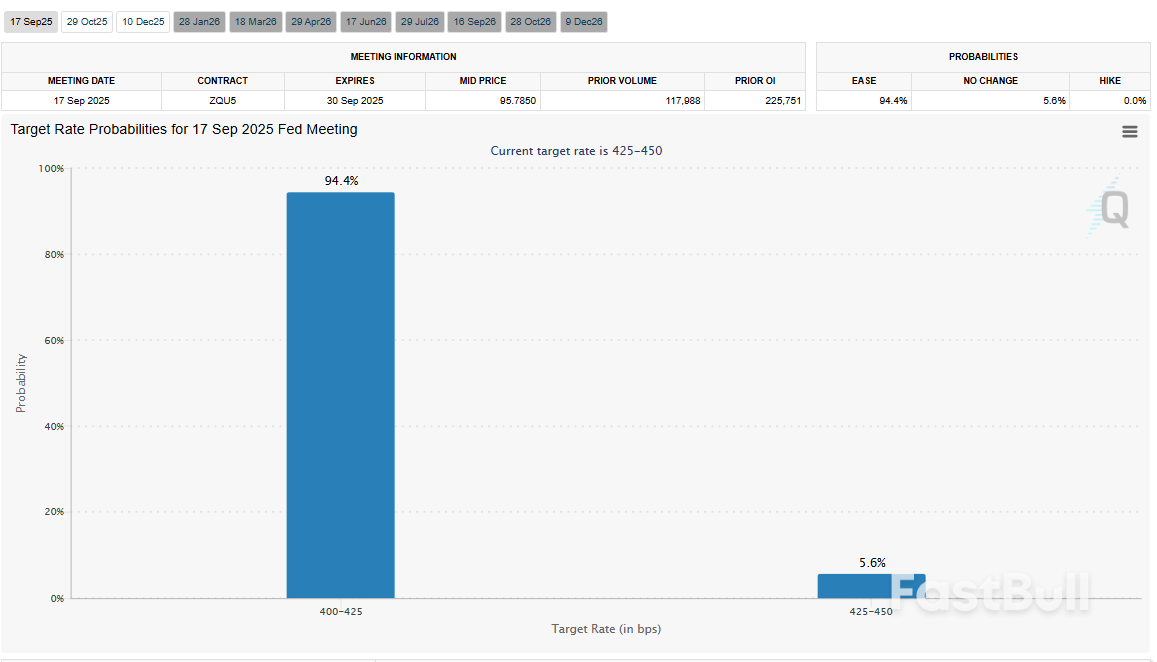
          The U.S. dollar came under renewed pressure in early Tuesday trading, driven by a sharp recalibration of interest rate expectations following last week’s weak jobs report and mounting political interference at the Federal Reserve. According to CME FedWatch, markets are now pricing in a 94.4% probability of a Fed rate cut in September, up significantly from 63% a week ago.
          Friday’s surprise job market weakness, compounded by President Trump’s dismissal of a top statistics official and the resignation of Fed Governor Adriana Kugler, has deepened investor concern about the credibility of U.S. economic data and the central bank's independence.

          Policy Signals Point to Aggressive Easing

          Goldman Sachs has forecasted three consecutive 25 basis point cuts, starting in September, with a potential 50 basis point cut if labor data worsens. Echoing this sentiment, San Francisco Fed President Mary Daly noted that while she was inclined to wait, deteriorating job metrics and subdued inflation gave the Fed scope to move soon.
          Meanwhile, Fed credibility is under strain as Trump prepares to appoint a new Fed governor, potentially reshaping the board toward his trade and monetary policy priorities.

          Tariff Fallout Adds to Market Anxiety

          The dollar's drop also reflects broader unease over the tariff blitz unleashed by Trump last week, targeting dozens of countries, including India, Switzerland, and Germany. Markets remain unsure of how these tariffs will affect supply chains, corporate earnings, and consumer prices over the next 6–12 months.
          Analysts at NAB liken the situation to the pandemic’s early phase, with Rodrigo Catril warning, “It’ll probably take six months to a year to see exactly where we land and who’s going to be winners and losers.”

          Global Currency Reactions Reflect Risk Sentiment

          The euro strengthened to $1.1579 while sterling held at $1.3298, reflecting some resilience in European assets. The yen firmed slightly to 146.95 per dollar, following Bank of Japan minutes suggesting potential rate hikes if trade tensions ease. The Swiss franc, after a steep decline, stabilized as Switzerland sought to renegotiate its trade terms to avert a 39% U.S. import tariff.
          Commodity-linked currencies also saw modest gains: the Australian dollar rose 0.11% to $0.6474, and the New Zealand dollar edged up 0.11% to $0.5914, supported by broader dollar softness despite fragile global growth prospects.

          Structural Headwinds for the Dollar

          Despite short-term volatility, strategists anticipate continued downside pressure on the dollar. NAB’s Catril points to structural weaknesses, such as fiscal uncertainty, central bank credibility concerns, and rising trade isolation, that could keep the dollar on a weakening path.
          As tariff dynamics and central bank politics increasingly dominate the macroeconomic landscape, currency markets are likely to remain volatile, with emerging market and pro-growth currencies particularly sensitive to shifting risk sentiment and supply chain disruptions.

          Source: Reuters

          To stay updated on all economic events of today, please check out our Economic calendar
          Risk Warnings and Disclaimers
          You understand and acknowledge that there is a high degree of risk involved in trading. Following any strategies or investment methods may lead to potential losses. The content on the site is provided by our contributors and analysts for information purposes only. You are solely responsible for determining whether any trading assets, securities, strategy, or any other product is suitable for investing based on your own investment objectives and financial situation.
          Add to Favorites
          Share

          Japan Pushes U.S. for Swift Execution of Tariff Cut on Autos Amid Trade Uncertainty

          Gerik

          Economic

          Japan Seeks Immediate Action on Auto Tariff Deal

          In an assertive diplomatic move, Japan’s Economic Revitalization Minister Ryosei Akazawa announced plans to visit Washington on Tuesday to ensure the U.S. government swiftly implements a recently agreed trade deal that would significantly reduce tariffs on Japanese automobile exports. The agreement, struck in July, would lower the U.S. tariff on Japanese cars and automotive components from 27.5% to 15%, offering much-needed relief to one of Japan’s most critical export sectors.
          Akazawa emphasized to Japan’s parliament that securing a signed executive order from President Donald Trump is the key next step in putting the tariff cut into legal effect. Without it, Japanese automakers remain exposed to both existing and potentially overlapping tariffs under Trump's broader trade policies.

          Trade Concerns Over Stacking and Uncertainty

          A major point of contention is the “stacking” issue, where the same goods might be subject to multiple layers of tariffs. Akazawa noted that Japan seeks assurance that goods already taxed above the agreed 15% rate will be exempt from any additional levies, preserving the spirit and practical value of the deal.
          This diplomatic pressure comes amid an increasingly volatile global trade environment shaped by Trump’s expanded tariff strategy, which includes reciprocal tariffs on dozens of trading partners and a growing list of product-specific tariffs targeting key industries like pharmaceuticals, semiconductors, and critical minerals.

          Japanese Autos and the U.S. Market

          The U.S. is a vital destination for Japanese automobiles, and a rollback in tariffs is strategically significant for manufacturers like Toyota, Honda, Nissan, and Subaru, whose U.S.-bound shipments have faced rising costs under Trump’s protectionist policies.
          A 12.5 percentage point cut could preserve competitiveness for Japanese firms amid a climate where countries like Switzerland and India are already scrambling to renegotiate terms ahead of new tariff deadlines.

          Key Test for Japan-U.S. Trade Relations

          Akazawa’s visit signals Japan’s urgency in converting promises into enforceable outcomes, especially with global trade now deeply shaped by geopolitical alignments and domestic political narratives. While the tariff deal reflects progress in bilateral talks, its fate hinges on Trump’s willingness to codify the agreement amid rising pressure from other nations and ongoing tensions surrounding Russian oil purchases and secondary sanctions.
          If successful, the move could strengthen Japan-U.S. trade ties, stabilize costs for Japanese exporters, and potentially influence broader global trade patterns as allies look to navigate an increasingly fragmented economic order.

          Source: Reuters

          To stay updated on all economic events of today, please check out our Economic calendar
          Risk Warnings and Disclaimers
          You understand and acknowledge that there is a high degree of risk involved in trading. Following any strategies or investment methods may lead to potential losses. The content on the site is provided by our contributors and analysts for information purposes only. You are solely responsible for determining whether any trading assets, securities, strategy, or any other product is suitable for investing based on your own investment objectives and financial situation.
          Add to Favorites
          Share

          IC Markets Asia Fundamental Forecast | 5 August 2025

          IC Markets

          Economic

          Forex

          Commodity

          What happened in the U.S session?

          The U.S. overnight session was shaped by Friday’s trio of shocks: surprisingly poor jobs data, heightened trade war/tariff anxiety, and high-profile departures from key economic institutions. Most-impacted assets included U.S. stocks (initially down, then rebounding), the U.S. dollar and Treasury yields (both volatile, tilted on rate cut bets), and gold (steady as risk gauge). Markets remain highly risk-sensitive as political events and macro data unpredictably shift the outlook for policy, the dollar, and global risk sentiment.

          What does it mean for the Asia sessions?

          As European and U.S. sessions begin, expect heightened volatility, cautious positioning, and headline-driven moves. All eyes are on macroeconomic data (ISM, PMI, retail sales), central bank signals, and the fallout from trade policy. Traders should stay nimble, with safe-haven assets favored and knee-jerk rallies possible amid risk-off flows. Volatility: Technicals and sentiment remain fragile following the global selloff, with any sign of easing (such as Fed talk or data) likely to trigger relief rallies, but true stabilization depends on fresh macroeconomic guidance.

          ECB and Fed communication is crucial; any signal on rates or emergency intervention could rapidly change sentiment. The Bank of England rate decision looms (Aug 7). More China trade, PMI, and inflation data this week will determine if the world’s second-largest economy can stabilize or if more commodity/FX downside is coming. U.S. ISM and S&P services readings, plus JOLTS data, are the day’s pivotal macro releases, closely tied to rate cut bets and the global growth story.

          What can we expect from DXY today?

          The U.S. dollar is under persistent pressure today, as weak jobs data, increased Fed rate cut expectations, and ongoing political and trade uncertainties drive short-term bearish sentiment. Most major and EM currencies are stronger against the dollar, while only safe-haven flows offer some localized support. Volatility and downside risk are likely to persist in the coming sessions. The U.S. session was marked by significant volatility, with markets reacting to a trio of shocks: weak jobs data, heightened trade/tariff anxiety, and political turmoil affecting key economic institutions.The most impacted assets were U.S. stocks, which saw a sharp sell-off followed by a strong rebound; the U.S. dollar and Treasury yields, which fluctuated on changing rate cut expectations; and gold, which remained a key gauge of risk sentiment. The market remains highly sensitive to political events and macroeconomic data, which are unpredictably shifting the outlook for U.S. policy, the dollar, and global risk sentiment.Central Bank Notes:

          ● The Board of Governors of the Federal Reserve System voted unanimously to maintain the Federal Funds Rate in a target range of 4.25% to 4.50% at its meeting on July 29–30, 2025, keeping policy unchanged for the fifth consecutive meeting.
          ● The Committee reiterated its objective of achieving maximum employment and inflation at the rate of 2% over the longer run. While uncertainty around the economic outlook has diminished since earlier in the year, the Committee notes that challenges remain and continued vigilance is warranted.
          ● Policymakers remain highly attentive to risks on both sides of their dual mandate. The unemployment rate remains low, near 4.2%–4.5%, and labor market conditions are described as solid. However, inflation is still somewhat elevated, with the PCE price index at 2.6% and core inflation forecast at 3.1% for year-end 2025, up from earlier projections; tariff-related pressures are cited as a contributing factor.
          ● The Committee acknowledged that recent economic activity has expanded at a solid pace, with second-quarter annualized growth estimates near 2.4%. However, GDP growth for 2025 has been revised downward to 1.4% (from 1.7% projected in March), reflecting expectations of a slowdown in the coming quarters.
          ● In the revised Summary of Economic Projections, the unemployment rate is expected to average 4.5% in 2025, and headline PCE inflation is forecast at 3.0% for the year, with core PCE at 3.1%. Policymakers continue to anticipate that inflation will moderate gradually, with ongoing risks from tariffs and global conditions.
          ● The Committee reaffirmed its data-dependent and risk-aware approach to future policy decisions. Officials stated they are prepared to adjust the stance of monetary policy as appropriate if risks emerge that could impede progress toward the Fed’s goals.
          ● As previously outlined, the Committee continues the measured run-off of its securities holdings. The pace of balance sheet reduction, which slowed since April (monthly redemption cap on Treasury securities reduced from $25B to $5B, while holding agency MBS cap steady at $35B), was left unchanged this month to support orderly market functioning and financial conditions.
          ● The next meeting is scheduled for 16 to 17 September 2025.

          Next 24 Hours Bias

          Weak Bearish

          What can we expect from Gold today?

          Gold is well-supported by a confluence of weak U.S. economic data, expectations of monetary easing by the Federal Reserve, and persistent geopolitical and trade-related uncertainties. While the market may experience some consolidation after recent gains, the overall outlook for gold remains constructive as long as these supportive factors are in play.Gold spot prices are trading near $3,373 per ounce as of August 4, representing a 0.31% daily gain and a 1.09% monthly increase. The precious metal reached intraday highs near $3,377, marking continued strength following Friday’s explosive rally. Gold surged to $3,350 on Friday after weak U.S. jobs data and new tariff announcements triggered massive safe-haven flows, delivering the metal’s biggest one-day gain in two months.

          Next 24 Hours Bias

          Medium Bullish

          What can we expect from AUD today?

          The Australian Dollar faces a challenging environment as domestic monetary easing expectations coincide with global uncertainty and U.S. dollar strength, keeping the currency under pressure despite Australia’s relatively favorable position in the current trade dispute landscape. Near-term bearish bias prevails as RBA rate cut expectations weigh on the currency, while global trade tensions and U.S. dollar strength provide additional headwinds.The RBA policy decision on August 12 will be crucial, along with upcoming Australian PMI data and any developments in U.S.-China trade relations. Further escalation in global trade tensions or unexpected hawkishness from the RBA could shift the current trajectory.

          Central Bank Notes:

          ● The RBA held its cash rate steady at 3.85% at the July meeting on 8 July 2025, following a 25bps reduction in May and in line with widespread market expectations after recent data showed inflation tracking within the target band.
          ● Inflation continues to ease from its peak, with higher interest rates helping to rebalance demand and supply across the Australian economy. Data for the June quarter signaled ongoing progress, though underlying pressures persist in certain sectors.
          ● Trimmed mean inflation for the June quarter likely remained near 2.9% and headline CPI around 2.4%, both within the RBA’s 2–3% target range. The Board noted further evidence of inflation convergence, but flagged that not all price categories are moving in tandem.
          ● Financial markets have shown increased volatility in the wake of global tariff and trade policy developments—especially as a result of recent U.S. and EU announcements. This has pushed asset prices higher but contributed to an uncertain outlook for domestic growth and employment.
          ● Private domestic demand showed a tentative recovery. Real household incomes improved and signs of easing household financial stress emerged, but some business sectors continued to face subdued demand, limiting their ability to pass on cost increases.
          ● Labour market conditions remained tight overall. Employment continued to expand, with low rates of underutilization. Business surveys suggest labour availability remains a constraint, though there are signs of a gradual easing compared to earlier in 2025.
          ● Underlying wage growth softened modestly, though unit labour cost growth remains elevated due to below-trend productivity gains. The Board remains attentive to developments in wage and productivity dynamics as cost pressures continue to evolve.
          ● Uncertainties persist for both domestic activity and inflation. Consumption growth has risen, but more slowly than anticipated three months ago, with global and domestic factors both contributing to the cautious outlook.
          ● There remains a risk that household spending picks up more slowly than forecast, which could result in ongoing subdued aggregate demand and a sharper deterioration in employment conditions.
          ● Given that inflation is expected to remain around the target band, the Board judged that it was appropriate to keep policy settings unchanged in July, maintaining a position that is still mildly restrictive.
          ● The Board continues to monitor all incoming data and assesses risks carefully, with a focus on global trends, domestic demand indicators, inflation outcomes, and the labour market outlook.
          ● The RBA remains committed to its mandate of price stability and full employment and stands ready to adjust policy as needed to achieve these objectives.
          ● The next meeting is on 11 to 12 August 2025.
          Next 24 Hours Bias

          Weak Bearish

          What can we expect from NZD today?

          The New Zealand Dollar remains under significant pressure on August 5, 2025, trading near multi-month lows as markets await crucial employment data that could show unemployment at an eight-year high. While the RBNZ has paused its rate-cutting cycle, the central bank’s easing bias and weak domestic economic signals continue to weigh on the currency.The combination of higher U.S. tariffs, expected labor market deterioration, and the prospect of further RBNZ rate cuts suggests continued downward pressure on the NZD in the near term. The New Zealand Dollar continued to trade near multi-month lows, with the NZD/USD pair falling to approximately 0.5907 on August 4, down 0.05% from the previous session. Over the past month, the NZD has weakened 1.68% against the U.S. dollar and is down 0.72% over the last 12 months.

          Central Bank Notes:

          ● The Monetary Policy Committee (MPC) agreed to hold the Official Cash Rate (OCR) at 3.25% on 9 July, marking the first pause following six consecutive rate cuts.
          ● The MPC cited heightened uncertainty and near-term inflation risks as reasons to wait until August for further action.
          ● Although the annual consumer price index inflation increased to 2.5% in the first quarter of 2025, it remained within the MPC’s target range of 1 to 3%, noting that the outlook for medium-term inflation pressures has evolved broadly in line with the May MPS projections.
          ● While it is expected to be near the upper end of the band in the second and third quarters of this year, easing core inflation and spare capacity in the economy should help return it toward the 2% midpoint over time.
          ● The MPC noted that, despite global factors, domestic financial conditions are evolving broadly as expected, as mortgage and deposit interest rates have continued to decline, reflecting a lower OCR, strong bank liquidity, and soft credit growth.
          ● In aggregate, GDP growth over the December and March quarters was stronger than expected, reflecting a pickup in household consumption and business investment. However, higher-frequency indicators suggest weaker-than-expected growth in April and May.
          ● Large economic policy shifts overseas and concerns about sovereign risk could result in additional financial market volatility and increased bond yields, while prolonged economic uncertainty might induce further precautionary behaviour by households and firms, slowing the domestic economic recovery.
          ● Subject to medium-term inflation pressures continuing to ease in line with the Committee’s central projections, the Committee expects to lower the OCR further, broadly consistent with the projection outlined in May.
          ● The next meeting is on 20 August 2025.

          Next 24 Hours Bias

          Weak Bearish

          What can we expect from JPY today?

          The Japanese yen faces a complex mix of supportive and bearish factors. While weak U.S. data and safe-haven demand provide near-term support, the BoJ’s cautious policy stance and domestic political uncertainty limit the currency’s upside potential. Tuesday’s BoJ meeting minutes will be crucial for determining whether the central bank is moving closer to policy tightening or maintaining its accommodative approach.The BoJ held its policy rate steady at 0.5% at the July 31 meeting but raised its core inflation forecast for fiscal 2025 to 2.7% (up from 2.2% previously) . Governor Ueda emphasized a cautious, data-dependent approach, stating the bank will continue raising rates if economic conditions align with projections. BoJ Meeting Minutes from the June meeting are scheduled for release on Tuesday, providing additional insights into the board’s rate path thinking.

          Central Bank Notes:

          ● The Policy Board of the Bank of Japan decided on 31 July, by a unanimous vote, to set the following guidelines for money market operations for the inter-meeting period:
          ● The Bank will encourage the uncollateralized overnight call rate to remain at around 0.5%.
          ● The BOJ will maintain its gradual reduction of monthly outright purchases of Japanese Government Bonds (JGBs). The scheduled amount of long-term government bond purchases will, in principle, continue to decrease by about ¥400 billion each quarter from January to March 2026, and by about ¥200 billion each quarter from April to June 2026 onward, targeting a purchase level near ¥2 trillion in January to March 2027.
          ● Japan’s economy is experiencing a moderate recovery overall, though some sectors remain sluggish. Overseas economies are generally growing moderately, but recent trade policies in major economies have introduced pockets of weakness. Exports and industrial production in Japan are essentially flat, with any uptick largely driven by front-loaded demand ahead of U.S. tariff increases.
          ● On the price front, the year-on-year rate of change in consumer prices (excluding fresh food) remains in the mid-3% range. This reflects continued wage pass-through, previous import cost surges, and further increases in food prices, particularly rice. Expectations for future inflation have begun to rise moderately.
          ● The effects of the earlier import price and food cost increases are expected to fade during the outlook period. There may be a temporary stagnation in core inflation as overall growth momentum softens.
          ● Looking forward, the economy is likely to see a slower growth pace in the near term as overseas economies feel the pinch of ongoing global trade policies, putting downward pressure on Japanese corporate profits. Accommodative financial conditions are expected to buffer these headwinds somewhat. In the medium term, as global growth recovers, Japan’s growth rate is also expected to improve.
          ● With renewed economic expansion, intensifying labor shortages, and a steady rise in medium- to long-term expected inflation rates, core inflation is projected to gradually pick up. By the latter half of the BOJ’s projection period, inflation is forecast to move in line with the 2% price stability target.
          ● There are multiple risks to the outlook, with especially elevated uncertainty regarding the future path of global trade policies and overseas price trends. The BOJ will continue to closely monitor their impact on financial and foreign exchange markets, as well as on Japan’s economy and inflation.
          ● The next meeting is scheduled for 17 to 18 September 2025.

          Next 24 Hours BiasStrong Bullish

          What can we expect from Oil today?

          Oil prices are facing significant downward pressure as OPEC+ proceeds with planned output increases while economic growth concerns mount. The market is balancing potential supply disruptions from geopolitical tensions against weak demand signals from recent economic data, with the near-term outlook remaining cautious as prices test key technical support levels.Markets are concerned that global oil supply may outpace demand later this year, potentially boosting inventoriesOPEC+ cited “steady global economic outlook and current healthy market fundamentals” with low oil inventories as justification for the increaseGoldman Sachs maintained its forecast with Brent averaging $64/barrel in Q4 2025 and $56 in 2026, flagging downside risks to demand.Next 24 Hours Bias

          Weak Bearish

          Source: IC Markets

          To stay updated on all economic events of today, please check out our Economic calendar
          Risk Warnings and Disclaimers
          You understand and acknowledge that there is a high degree of risk involved in trading. Following any strategies or investment methods may lead to potential losses. The content on the site is provided by our contributors and analysts for information purposes only. You are solely responsible for determining whether any trading assets, securities, strategy, or any other product is suitable for investing based on your own investment objectives and financial situation.
          Add to Favorites
          Share

          Ethereum Open Interest Surges To Record $58 Billion

          Samantha Luan

          Cryptocurrency

          Forex

          Economic

          Key Points:

          ● Ethereum open interest hits $58 billion, shifting from Bitcoin.
          ● Institutional and whale-driven surge in interest.
          ● Potential for significant price volatility if liquidations occur.

          Ethereum Open Interest Surges to Record $58 Billion

          Ethereum's open interest surged to $58 billion in July 2025, marking a significant capital shift from Bitcoin as institutional traders and whales led this speculative trend.The surge indicates increased institutional interest, potentially driving Ethereum's value up, while also raising concerns about market volatility if liquidations transpire.

          Ethereum's Open Interest Reaches Unprecedented Levels

          Ethereum's open interest has reached an all-time high of $58 billion by late July 2025. This marks a significant increase of 100% since June, reflecting a profound shift from Bitcoin to Ethereum in the cryptocurrency market. Leading this movement, institutional traders, whales, and major asset allocators are increasingly focusing on ETH. Glassnode has highlighted that Ethereum's open interest dominance stands at nearly 40%, the highest in over two years.Ethereum open interest dominance has climbed to nearly 40%, its highest level since April 2023. Only 5% of days have seen a higher reading. This marks a clear shift in speculative focus, with capital rotating from $BTC to $ETH at the margin.

          Market Impact and Institutional Movement

          The surge in Ethereum open interest has led to considerable impacts across the industry. Market metrics like network activity, active addresses, and stablecoin supply have all surged alongside institutional interest. Financial implications include an unprecedented rise in ETH derivatives with open interest on the CME reaching $7.85 billion. Major players are reallocating capital from Bitcoin to Ethereum, further intensifying this market transformation.

          Historical Context and Future Implications

          Historically, such open interest surges have often ended in dramatic market shifts. As leverage builds, a vertical price movement might follow, echoing past volatility cycles during prior bull runs. "Open Interest just hit a new all-time high. The price is climbing. Leverage is stacking. This isn't a normal breakout—it's a catalyst for a vertical move.The implications of this trend are wide-ranging. Future price volatility, regulatory interest, and technological developments may ensue, bolstered by historical data, expert analysis, and on-chain trends. This underscores Ethereum's growing role in the crypto landscape.
          Source: CryptoSlate

          To stay updated on all economic events of today, please check out our Economic calendar
          Risk Warnings and Disclaimers
          You understand and acknowledge that there is a high degree of risk involved in trading. Following any strategies or investment methods may lead to potential losses. The content on the site is provided by our contributors and analysts for information purposes only. You are solely responsible for determining whether any trading assets, securities, strategy, or any other product is suitable for investing based on your own investment objectives and financial situation.
          Add to Favorites
          Share

          China’s Services Sector Growth Hits 14-Month High in July, Driven by Export Orders and Rising Confidence

          Gerik

          Economic

          Services Sector Outpaces Expectations with Strongest Expansion Since May 2024

          China's services economy accelerated sharply in July, with the S&P Global China General Services Purchasing Managers’ Index (PMI) climbing to 52.6, up from 50.6 in June. This is the fastest growth rate in 14 months, indicating expanding momentum in smaller, export-oriented firms, especially along the eastern coastal regions.
          This upbeat reading starkly contrasts with the official government PMI, which stagnated at 50.0, underscoring the divergence between large, state-owned enterprises and private SMEs. While the official data signals stagnation, the S&P survey paints a more optimistic picture of private-sector dynamism, especially in consumer-facing services and external demand.

          Surge in Export Orders and New Business Bolsters Recovery

          Key to the services expansion was a noticeable rise in new export orders the first in three months driven by recovering tourism and a stable trade environment following the extension of the 90-day U.S.-China tariff truce. This truce, renewed after constructive talks in Stockholm, helped stabilize sentiment and allowed exporters to resume business planning with more confidence.
          Domestically, new business growth also reached its highest level in a year, providing further signs of recovery in consumer activity and demand for services. However, this rebound remains fragile, as broader concerns about weak consumer confidence and the ongoing property market downturn still cloud the economic outlook.

          Labor Market and Prices Reflect Renewed Optimism

          In response to rising workloads, employment in the services sector rose at the fastest pace since July 2024, reversing June's job cuts. This uptick in hiring eased the accumulation of unfinished work, a positive indicator for operational efficiency.
          Input costs remained elevated due to higher raw materials, fuel, and salary expenses, leading service providers to raise their output prices for the first time in six months. Although inflationary pressures are moderate, this pricing behavior signals a gradual pass-through of cost increases, reflecting firmer market demand.

          Manufacturing Still a Drag

          Despite the strength in services, the S&P China General Composite PMI, which includes both manufacturing and services, eased to 50.8 from 51.3 in June. This decline reflects continued softness in factory activity, aligning with concerns about waning exports and deflationary trends across the broader economy.
          While recent Q2 GDP data beat expectations due to front-loaded factory shipments and policy support, structural headwinds including weak global demand, deflation, and real estate pressures are expected to weigh on second-half performance.

          Recovery Gains Traction but Risks Persist

          The rebound in China’s service sector highlights areas of resilience and momentum, particularly in travel, logistics, and private enterprise services. The increase in business confidence, employment, and pricing power suggests that easing policies and trade stability are beginning to take effect.
          However, the fragile property sector, muted consumer confidence, and weakness in manufacturing will likely limit broader economic recovery unless further stimulus and structural reforms are enacted in the coming months. The sustainability of July’s momentum depends on whether domestic consumption and global demand can be sustained through the rest of 2025.

          Source: Reuters

          To stay updated on all economic events of today, please check out our Economic calendar
          Risk Warnings and Disclaimers
          You understand and acknowledge that there is a high degree of risk involved in trading. Following any strategies or investment methods may lead to potential losses. The content on the site is provided by our contributors and analysts for information purposes only. You are solely responsible for determining whether any trading assets, securities, strategy, or any other product is suitable for investing based on your own investment objectives and financial situation.
          Add to Favorites
          Share

          Markets Are Repricing Fast And The Dollar’s Losing Its Grip

          ACY

          Forex

          Political

          Economic

          Markets Are Repricing Fast And The Dollar’s Losing Its Grip_1

          Source: CME

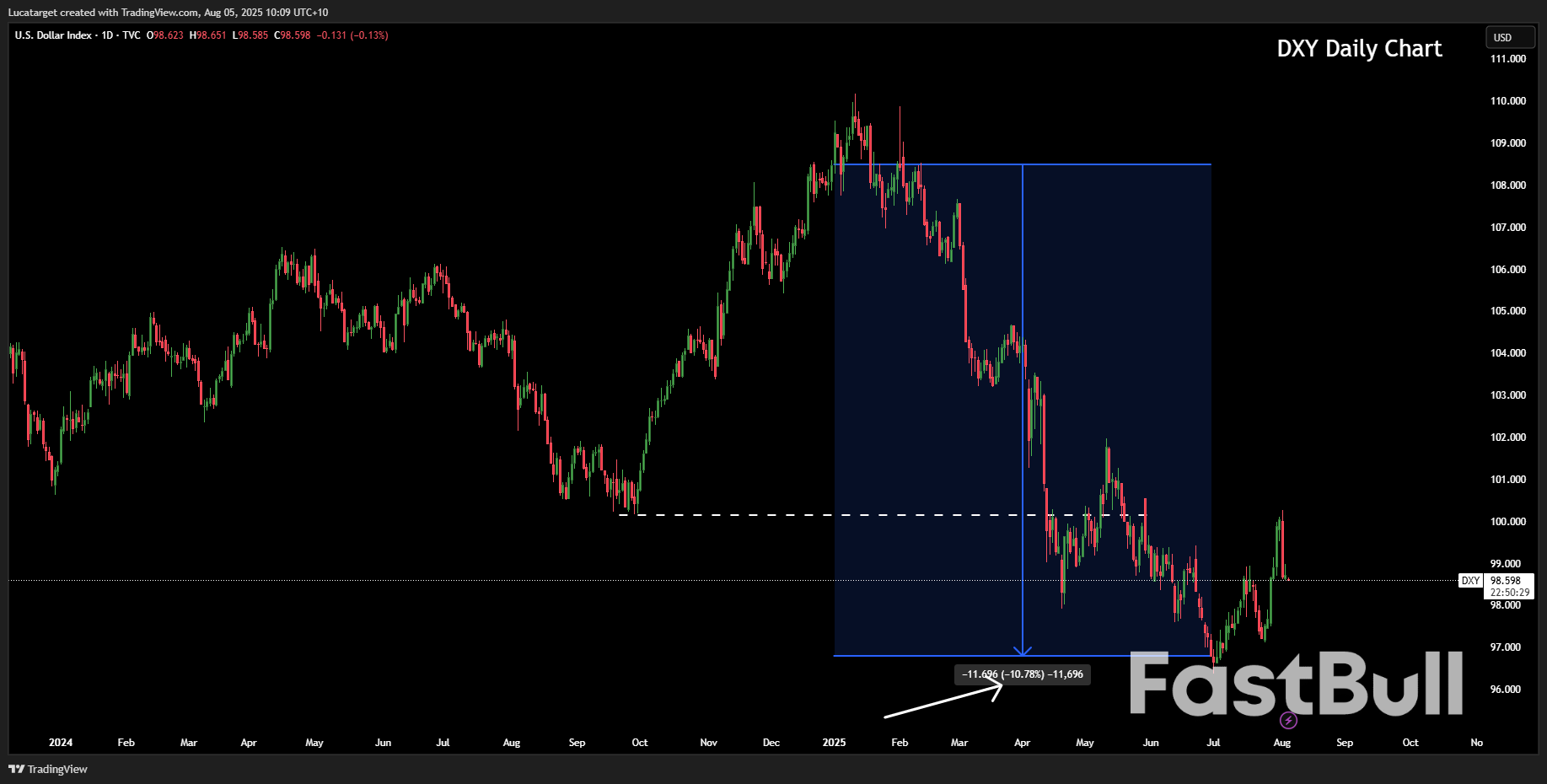
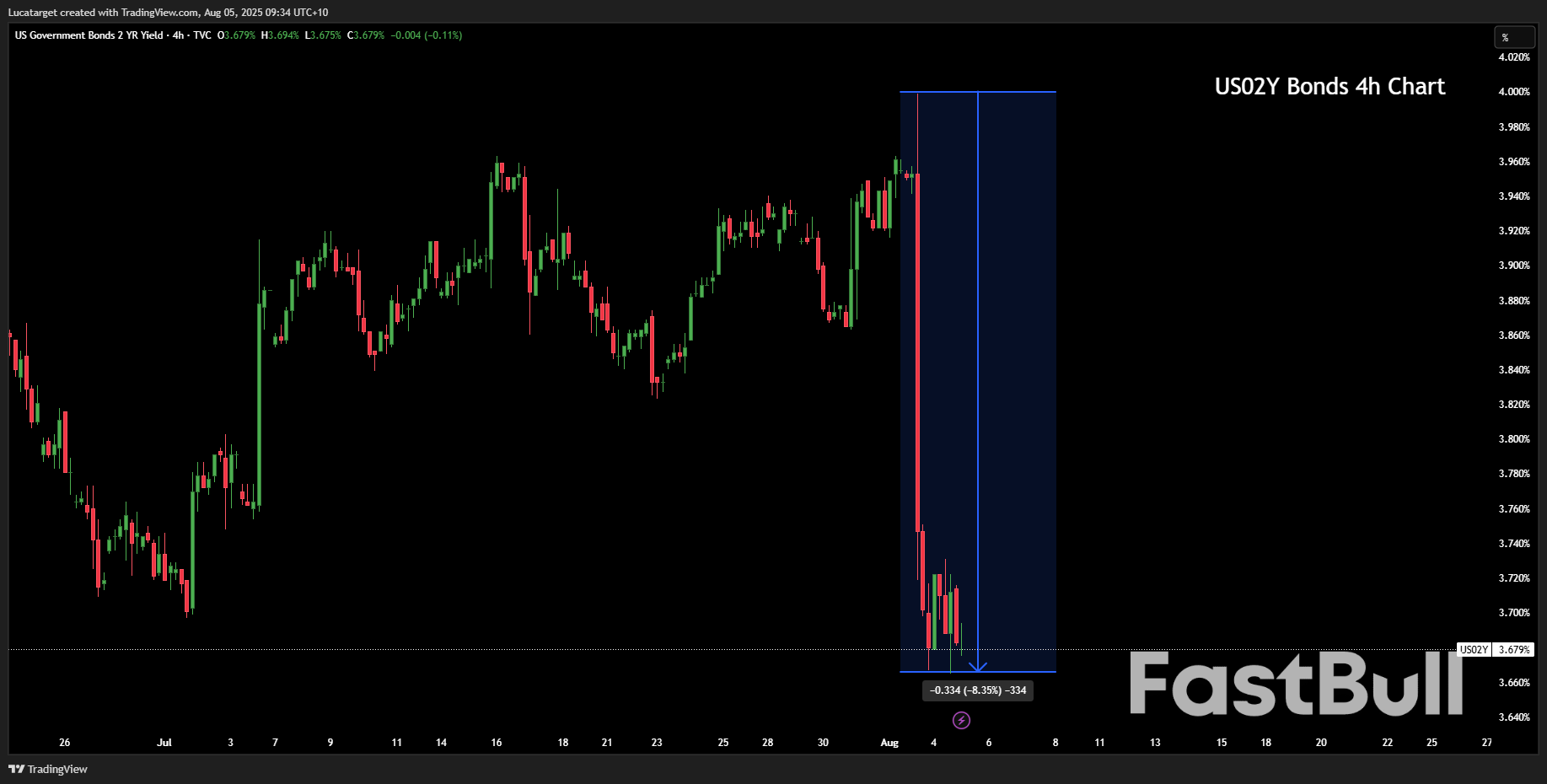
          The US02-year yield collapsed by almost 30 basis points, and the dollar reacted exactly as you’d expect in this kind of repricing: it tanked.But there’s more to the story than just rates.
          Markets Are Repricing Fast And The Dollar’s Losing Its Grip_2

          Source: TradingView

          The Jobs Data Wasn’t Just Weak, It Was Alarming!!

          We’re not just talking about a soft report here. The revisions to previous data were brutal. Over the last three months, non-cyclical sectors (excluding health and education) lost 49,000 jobs. This isn’t your typical post-COVID adjustment, that kind of decline is historically associated with full-blown crises.Add to that a significant drop in the ISM manufacturing employment index, which plunged to levels we haven’t seen since the GFC, and it becomes clear: this wasn’t a blip. It’s systemic.We’ve now gone from “data-dependent Fed” to “what will stop them from cutting?” The market is no longer waiting for a green light the assumption is that the easing cycle is now the base case, not the tail risk.

          Why This Time Feels Different

          What makes this moment stand out is that the USD is already weak, it’s fallen over 10% in the first half of the year. And while that may suggest limited room for further downside, the underlying drivers here are far more concerning than usual.Markets Are Repricing Fast And The Dollar’s Losing Its Grip_3

          Source: TradingView

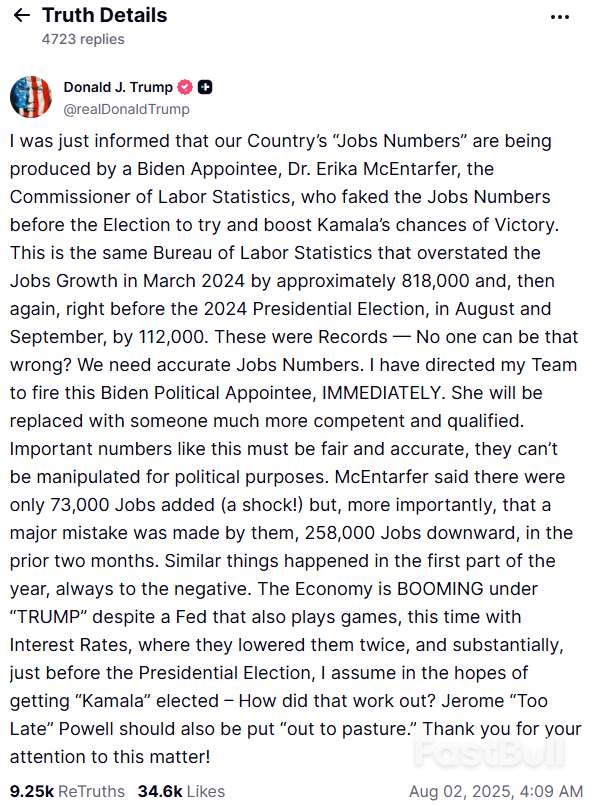
          There’s also a growing sense that politics is spilling over into monetary policy. Trump’s comments about Powell and the firing of the BLS head after weak jobs data raise valid concerns around institutional independence something markets are hypersensitive to. If that confidence erodes further, we could see another leg down in the dollar.
          Markets Are Repricing Fast And The Dollar’s Losing Its Grip_4

          Source: Trump Truth Social Profile

          What I’m Watching Next

          Right now, the market is digesting all of this and starting to rethink the entire U.S. macro narrative. The Fed's messaging remains cautious, but if inflation doesn’t surprise to the upside, a cut in September looks almost baked in.
          Some key things on my radar this week:
          Durable goods and factory orders today (both expected to slow sharply)
          The next CPI print, which could either fuel or halt this dovish pivot
          The Fed’s Loan Officer Survey, giving us insight into credit conditions, which are likely tightening further

          Trade Ideas I’m Exploring

          With yields plummeting and risk appetite slowly returning (at least for now), here are two setups I find compelling:

          1. Long EUR/USD

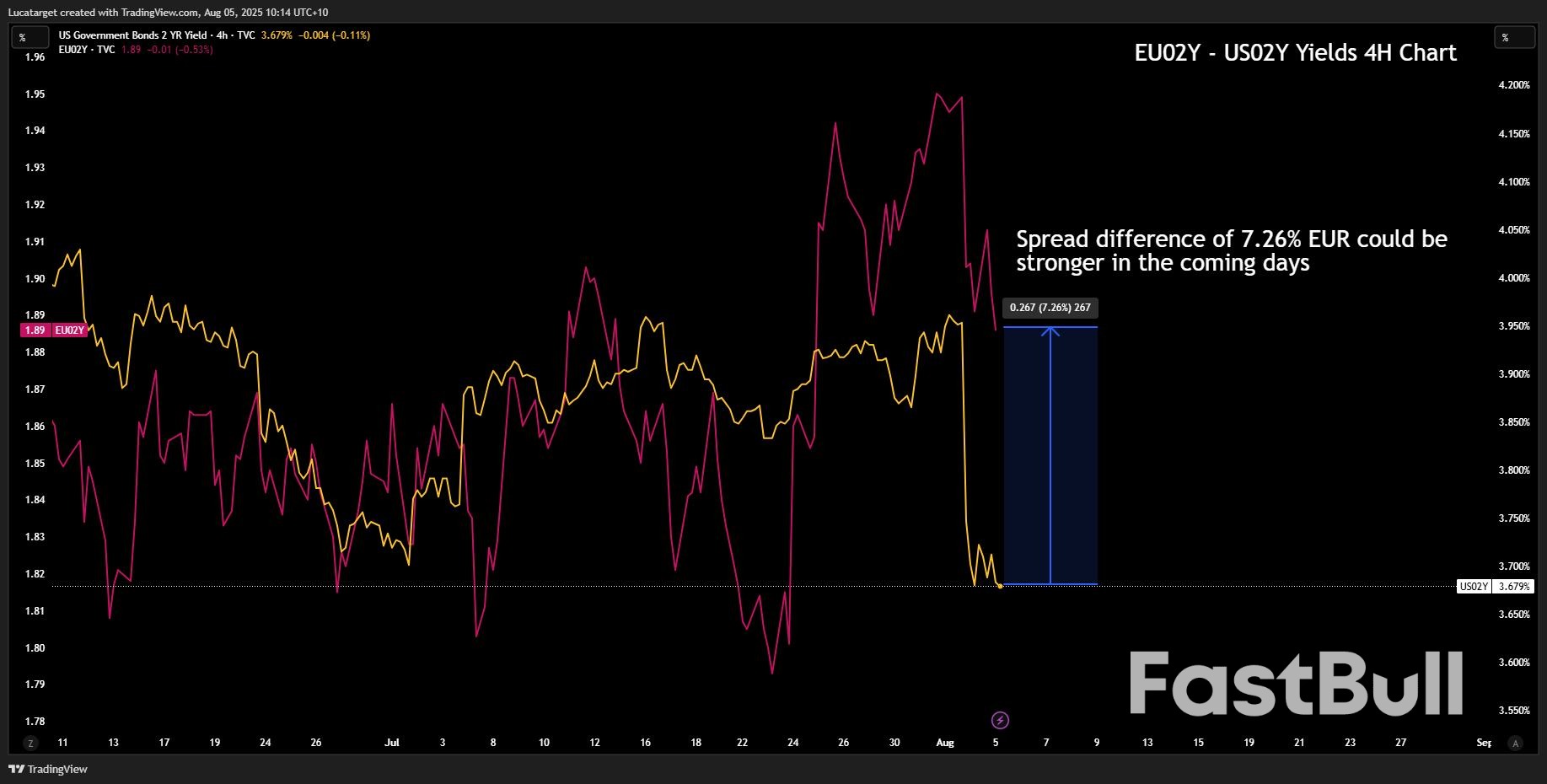
          With the Fed pivoting dovish and the ECB in “hold” mode, the yield spread is starting to favor the euro again. (Yellow US Pink EU)
          Markets Are Repricing Fast And The Dollar’s Losing Its Grip_5

          Source: TradingView

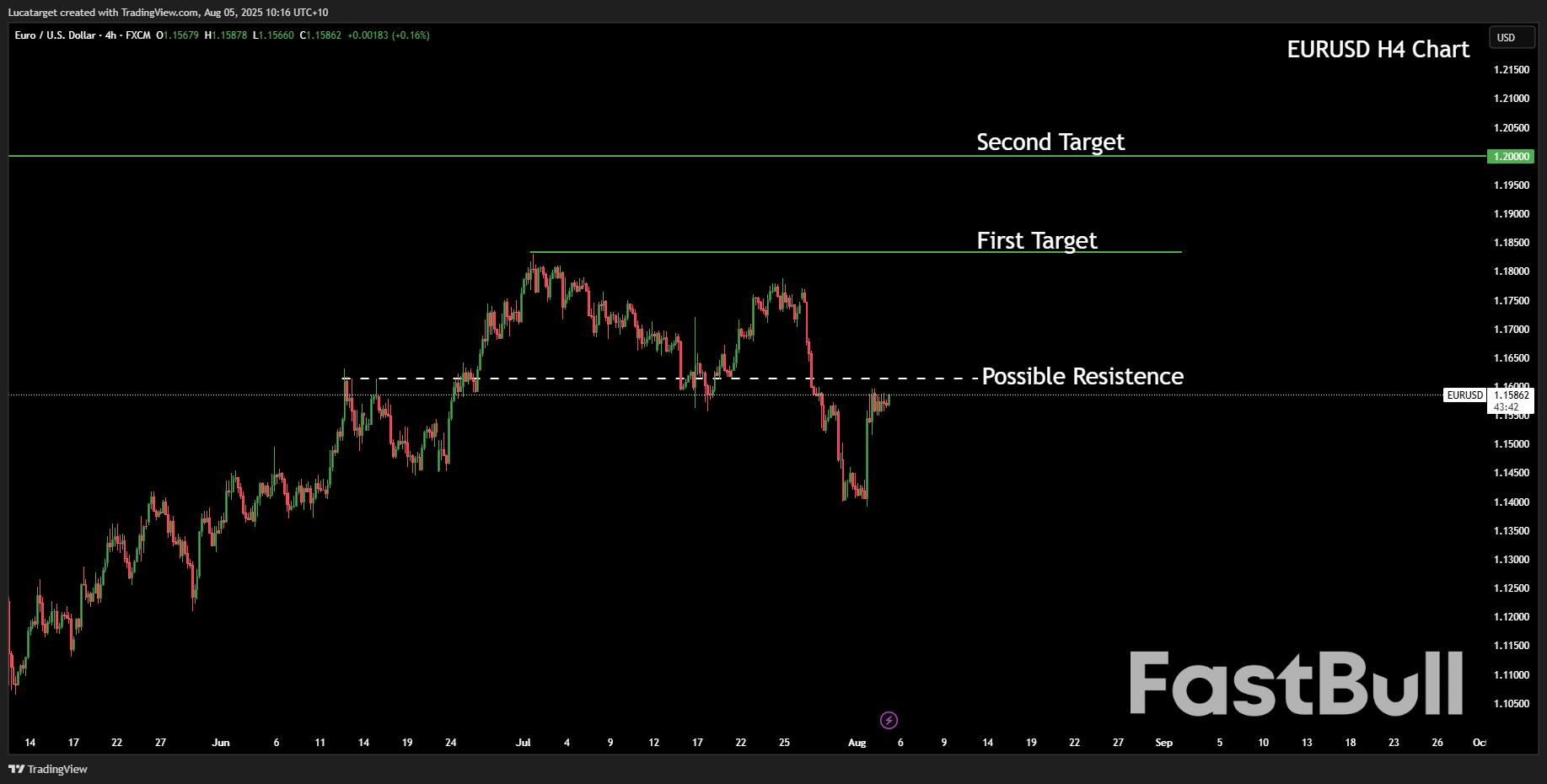
          We’ve cleared key resistance levels and are now looking at 1.1600 as the next area of interest and possible reisstnce. I'm looking to targets near 1.1800 and 1.20 as last target, 1.1550 could be attractive for long entries.

          Markets Are Repricing Fast And The Dollar’s Losing Its Grip_6

          Source: TradingView

          Catalyst: Further confirmation of weak U.S. data or even neutral Eurozone numbers could be enough to drive this higher.

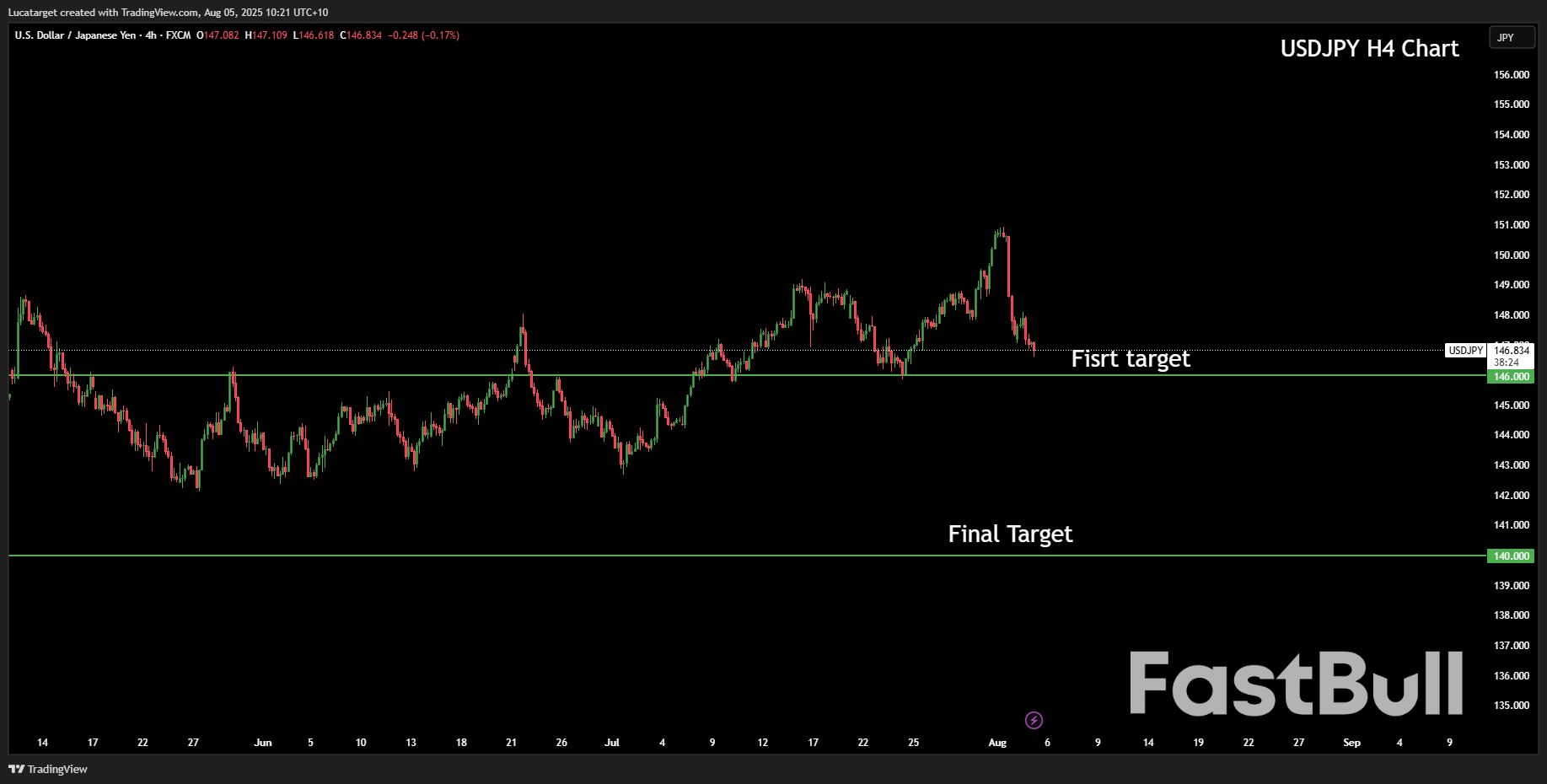
          2. Short USD/JPY

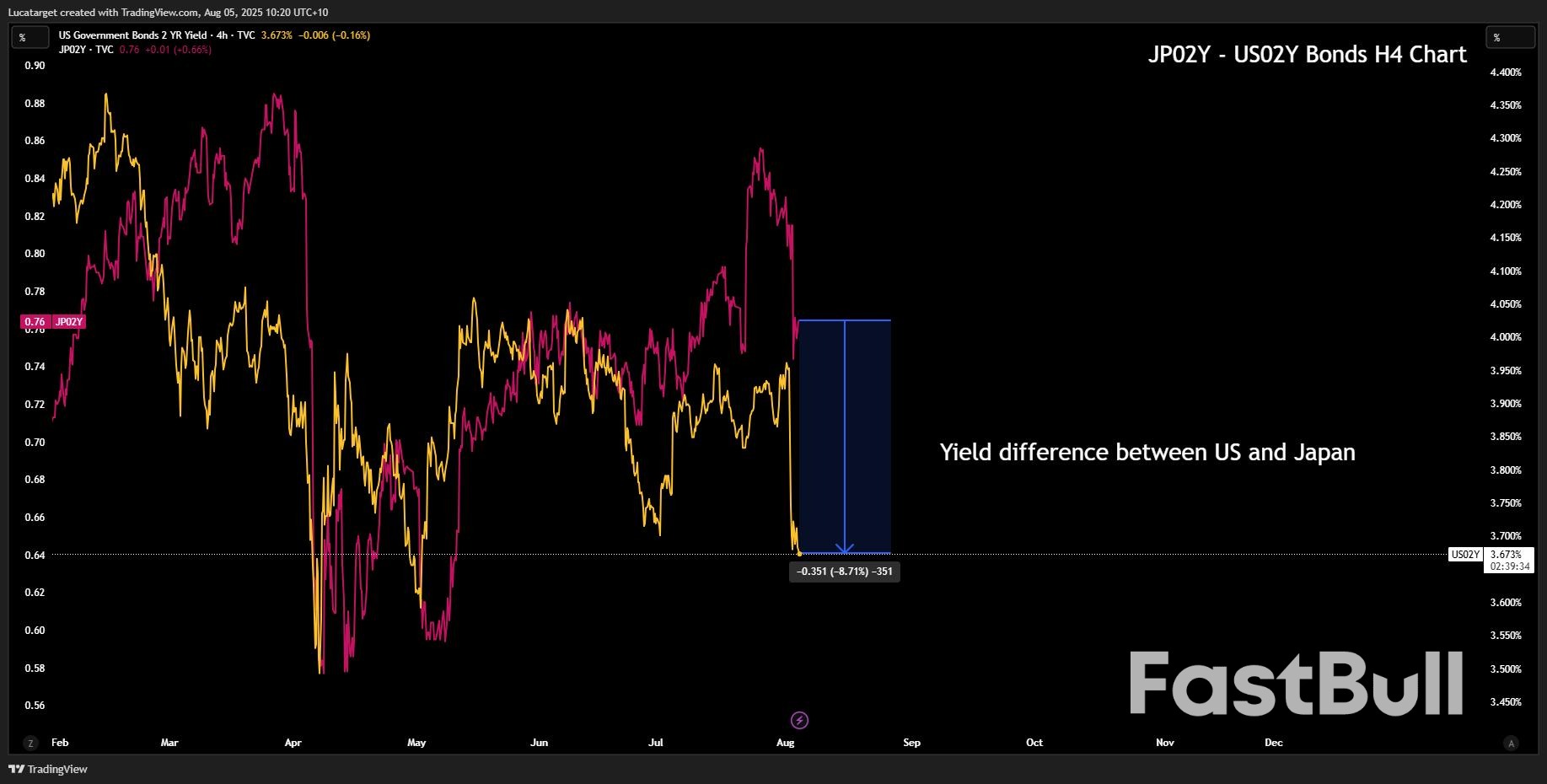
          While Japanese yields remain subdued, the sharp drop in U.S. yields has made the rate differential far less compelling.
          Markets Are Repricing Fast And The Dollar’s Losing Its Grip_7

          Source: TradingView

          Add to that growing concerns around Fed credibility, and there’s a case to be made for downside.Targeting a return to 144.00, with stops above 148.00. Not a swing-for-the-fences type of trade, but the risk/reward is starting to stack up, specially looking for the final target at 140.000
          Markets Are Repricing Fast And The Dollar’s Losing Its Grip_8

          Source: TradingView

          I’ll be keeping a close eye on incoming data, especially with Trump signaling another Fed appointment is imminent. If the next pick is perceived as politically motivated, we could see more pressure on the dollar.Markets are clearly in a transition phase, from inflation fears to growth fears, and when that happens, the FX market becomes reactive, not predictive. That’s where opportunity lives.Let’s see what the rest of the week brings. Stay sharp, stay flexible and as always, trade what’s in front of you, not what you hope for.
          1. Why did the U.S. dollar drop after the latest NFP release?The dollar fell sharply because the non-farm payrolls data showed significant weakness, especially after major downward revisions. This has increased the market’s expectation of a Fed rate cut in September, reducing demand for USD-denominated assets.
          2. What’s the probability of a Fed rate cut in September 2025?Market pricing currently reflects an 90% chance of a rate cut at the September FOMC meeting, driven by weaker jobs data, deteriorating economic indicators, and political pressure on the Fed.
          3. How do weaker U.S. job numbers impact forex trading?Weaker employment data usually signals slower economic growth, prompting expectations of monetary easing. This tends to lower bond yields and push the U.S. dollar down, especially against currencies where rate expectations remain stable or hawkish.
          4. What are the best forex pairs to trade during a dovish Fed pivot?When the Fed signals a pivot, EUR/USD and USD/JPY often present opportunities. EUR/USD tends to rise as the yield spread narrows in favor of the euro, while USD/JPY can fall due to shrinking rate differentials with Japan.
          5. Could political interference in the Fed impact forex markets?Yes. Any perceived erosion of the Fed's independence, such as politically motivated personnel changes, can trigger a loss of investor confidence, adding downward pressure on the U.S. dollar and increasing volatility across major pairs.

          Source:ACY

          To stay updated on all economic events of today, please check out our Economic calendar
          Risk Warnings and Disclaimers
          You understand and acknowledge that there is a high degree of risk involved in trading. Following any strategies or investment methods may lead to potential losses. The content on the site is provided by our contributors and analysts for information purposes only. You are solely responsible for determining whether any trading assets, securities, strategy, or any other product is suitable for investing based on your own investment objectives and financial situation.
          Add to Favorites
          Share
          FastBull
          Copyright © 2025 FastBull Ltd

          728 RM B 7/F GEE LOK IND BLDG NO 34 HUNG TO RD KWUN TONG KLN HONG KONG

          TelegramInstagramTwitterfacebooklinkedin
          App Store Google Play Google Play
          Products
          Charts

          Chats

          Q&A with Experts
          Screeners
          Economic Calendar
          Data
          Tools
          Membership
          Features
          Function
          Markets
          Copy Trading
          Latest Signals
          Contests
          News
          Analysis
          24/7
          Columns
          Education
          Company
          Careers
          About Us
          Contact Us
          Advertising
          Help Center
          Feedback
          User Agreement
          Privacy Policy
          Business

          White Label

          Data API

          Web Plug-ins

          Poster Maker

          Affiliate Program

          Risk Disclosure

          The risk of loss in trading financial instruments such as stocks, FX, commodities, futures, bonds, ETFs and crypto can be substantial. You may sustain a total loss of the funds that you deposit with your broker. Therefore, you should carefully consider whether such trading is suitable for you in light of your circumstances and financial resources.

          No decision to invest should be made without thoroughly conducting due diligence by yourself or consulting with your financial advisors. Our web content might not suit you since we don't know your financial conditions and investment needs. Our financial information might have latency or contain inaccuracy, so you should be fully responsible for any of your trading and investment decisions. The company will not be responsible for your capital loss.

          Without getting permission from the website, you are not allowed to copy the website's graphics, texts, or trademarks. Intellectual property rights in the content or data incorporated into this website belong to its providers and exchange merchants.

          Not Logged In

          Log in to access more features

          FastBull Membership

          Not yet

          Purchase

          Become a signal provider
          Help Center
          Customer Service
          Dark Mode
          Price Up/Down Colors

          Log In

          Sign Up

          Position
          Layout
          Fullscreen
          Default to Chart
          The chart page opens by default when you visit fastbull.com