- USDCAD
- XAUUSD
- XAGUSD
- WTI
- USDX


Markets
Analysis
User
24/7
Economic Calendar
Education
Data
- Names
- Latest
- Prev










Seeking stability in 2026? We examine the current bharat bond interest rate, navigating evolving yields and tax shifts to secure your fixed-income strategy.
Investors seeking stability and predictable returns in 2026 continue to monitor the current bharat bond interest rate. This guide breaks down current ETF yields, compares actual returns across different maturity series, and analyzes taxation changes. Whether you are holding existing units or buying new ones, here is what you need to know about these government-backed debt funds.
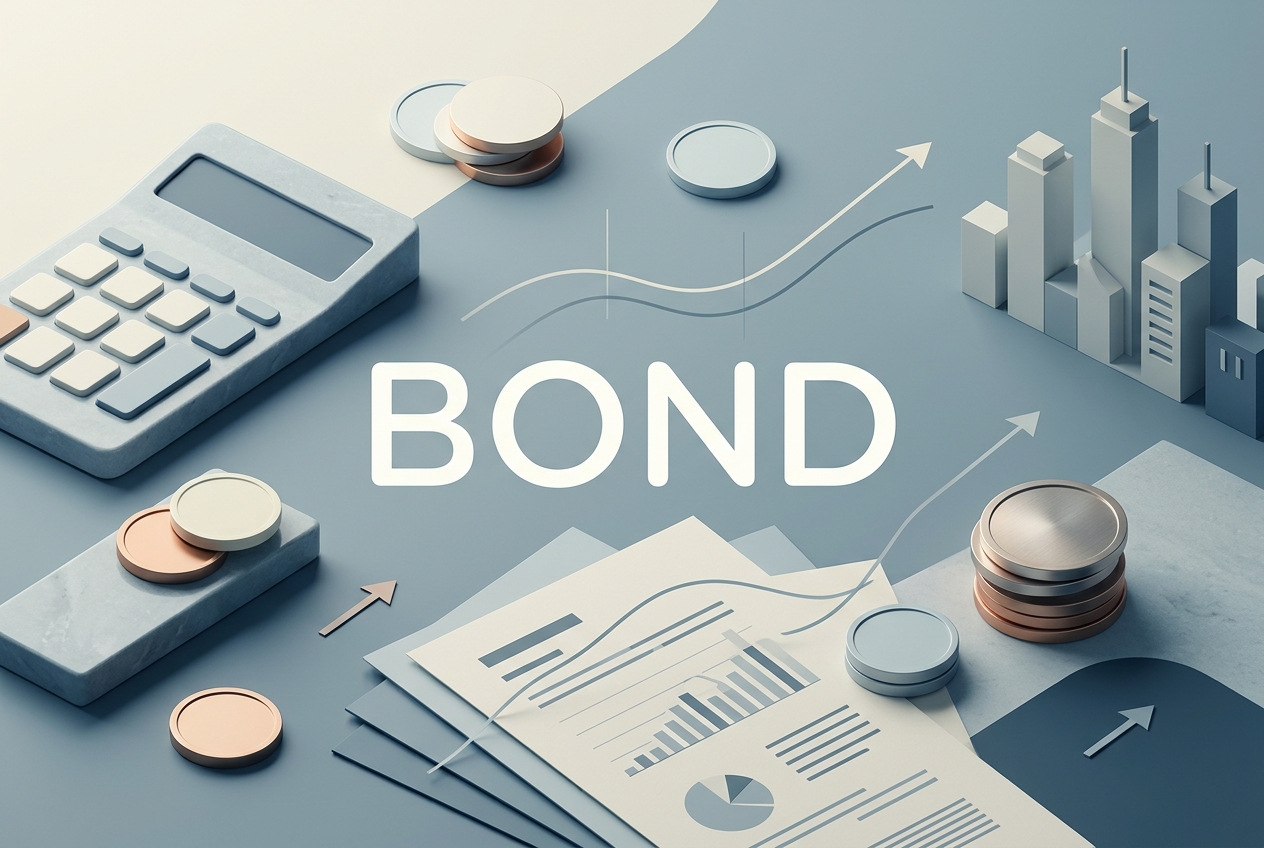
Target maturity funds do not offer a fixed interest rate in the traditional sense. Instead, they operate on a Yield-to-Maturity (YTM) basis, which calculates the total anticipated return if you hold the fund until it matures. The YTM fluctuates daily based on bond market prices.
According to recent 2026 data from Edelweiss Mutual Fund and Morningstar, the YTM for various Bharat Bond series ranges between 7.10% and 7.45%. When you purchase units, the current YTM minus the fund's expense ratio essentially becomes your locked-in annualized return, provided you hold the investment until the target date.
When assessing the true bharat bond etf interest rate, investors must distinguish between the coupon rate of the underlying bonds and the actual return they will receive. The ETF holds AAA-rated public sector bonds that pay fixed annual coupons, but these bonds trade at premiums or discounts in the open market.
Your actual return is dictated by the purchase price of the ETF on the exchange. Because Bharat Bond ETFs have an extremely low expense ratio of just 0.0005%, the drag on your gross yield is minimal. This transparency ensures that what you see in the YTM closely mirrors what you actually get.
Choosing the right series depends entirely on when you need your capital back. To illustrate the current landscape in 2026, here is a comparative look at the approximate yields across the available maturities.
| Bharat Bond Series | Target Maturity Date | Approximate YTM (2026) | Risk Profile |
|---|---|---|---|
| April 2030 | April 15, 2030 | ~7.41% | Low to Moderate |
| April 2031 | April 15, 2031 | ~7.25% | Moderate |
| April 2032 | April 15, 2032 | ~7.10% | Moderate |
| April 2033 | April 15, 2033 | ~7.24% | Moderate |
The bharat bond etf 2030 interest rate is highly competitive right now, appealing to medium-term investors looking to secure yields before potential central bank rate cuts. In contrast, tracking the bharat bond etf 2032 interest rate is ideal for those managing longer-term financial goals, even if the current yield is marginally lower due to current yield curve dynamics.
The bond market's yield curve dictates how interest rates change across different time horizons. Usually, longer maturity dates demand higher yields to compensate for time risk. However, during certain economic cycles, medium-term bonds can yield just as much, or more, than longer-term bonds.
By matching the ETF's maturity date to your specific financial goal, you eliminate interest rate risk. If you hold the April 2033 series until 2033, interim market volatility will not affect your final compounded payout.
Bharat Bond ETFs are traded on the National Stock Exchange (NSE), meaning you buy them at the prevailing market price, not the exact Net Asset Value (NAV). Market demand can cause the ETF to trade at a slight premium or discount to its NAV on any given day.
Buying at a premium slightly reduces your effective yield, while buying at a discount increases it. To ensure you get the advertised returns, it is a best practice to place limit orders close to the real-time indicative NAV published during trading hours.
Bond yields are highly sensitive to the monetary policy established by the Reserve Bank of India (RBI). When the RBI raises benchmark interest rates to combat inflation, newly issued bonds offer higher payouts, causing the prices of older bonds in the ETF to fall and pushing their yields up.
Conversely, when the RBI signals rate cuts, existing high-yielding bonds become more valuable. Their prices rise, and the current yields available to new buyers naturally decline.
The portfolio of these ETFs consists exclusively of AAA-rated bonds issued by Central Public Sector Enterprises (CPSEs) like NABARD, IRFC, and Power Finance Corporation. Because these entities are backed by the government, the credit default risk is practically negligible.
As a result, these bonds set a reliable benchmark for high-quality corporate debt in India. They typically offer a modest spread—or additional yield—over standard Indian Government Securities (G-Secs) to compensate for slightly lower secondary market liquidity.
Historically, debt mutual funds offered a major tax advantage over fixed deposits through long-term indexation. However, as noted by major tax authorities, any debt mutual fund purchased on or after April 1, 2023, is treated entirely as short-term capital gains.
This means that in 2026, gains from new Bharat Bond investments are taxed at your marginal income tax slab rate, exactly like bank FD interest. Despite this leveled playing field, Bharat Bond ETFs often feature slightly higher pre-tax yields and carry no penalty for early withdrawal if sold on the exchange.
Gilt funds (G-Sec funds) invest strictly in government securities, carrying absolutely zero default risk. However, because they are purely sovereign debt, their yields are generally lower than those of CPSE bonds.
Bharat Bond ETFs sit comfortably in the middle. They offer quasi-sovereign safety due to their public sector backing while delivering a slightly higher yield than a standard G-Sec fund.
You can buy Bharat Bond ETFs directly through a stock exchange using a demat account and a stockbroker. Alternatively, you can invest via a Bharat Bond Fund of Fund (FoF) managed by Edelweiss Mutual Fund, which requires no demat account.
The expected annualized return corresponds to the fund's Yield to Maturity (YTM), which ranges between 7.10% and 7.45% in 2026 depending on the specific maturity series. Holding the fund until its target date ensures your actual returns closely track this locked-in rate.
Bharat Bond ETFs generally offer marginally higher pre-tax yields than standard 5-year fixed deposits from major commercial banks. However, since both are now taxed at your applicable income tax slab rate, the post-tax returns are quite similar.
For all investments made on or after April 1, 2023, capital gains are taxed at your standard income tax slab rate regardless of your holding period. The long-term indexation benefits that previously applied to debt funds have been completely removed.
Locking in the right bharat bond interest rate depends entirely on your investment horizon and liquidity needs. While the removal of indexation benefits has leveled the playing field with bank deposits, these ETFs remain a highly transparent, low-cost way to secure stable, government-backed returns in 2026.

728 RM B 7/F GEE LOK IND BLDG NO 34 HUNG TO RD KWUN TONG KLN HONG KONG


The risk of loss in trading financial instruments such as stocks, FX, commodities, futures, bonds, ETFs and crypto can be substantial. You may sustain a total loss of the funds that you deposit with your broker. Therefore, you should carefully consider whether such trading is suitable for you in light of your circumstances and financial resources.
No decision to invest should be made without thoroughly conducting due diligence by yourself or consulting with your financial advisors. Our web content might not suit you since we don't know your financial conditions and investment needs. Our financial information might have latency or contain inaccuracy, so you should be fully responsible for any of your trading and investment decisions. The company will not be responsible for your capital loss.
Without getting permission from the website, you are not allowed to copy the website's graphics, texts, or trademarks. Intellectual property rights in the content or data incorporated into this website belong to its providers and exchange merchants.
Not Logged In
Log in to access more features


Log In
Sign Up