• Trade
  • Markets
  • Copy
  • Contests
  • News
  • 24/7
  • Calendar
  • Q&A
  • Chats
Trending
Screeners
SYMBOL
LAST
BID
ASK
HIGH
LOW
NET CHG.
%CHG.
SPREAD
SPX
S&P 500 Index
6819.45
6819.45
6819.45
6861.30
6801.50
-7.96
-0.12%
--
DJI
Dow Jones Industrial Average
48383.18
48383.18
48383.18
48679.14
48285.67
-74.86
-0.15%
--
IXIC
NASDAQ Composite Index
23112.23
23112.23
23112.23
23345.56
23012.00
-82.93
-0.36%
--
USDX
US Dollar Index
97.960
98.040
97.960
98.070
97.740
+0.010
+ 0.01%
--
EURUSD
Euro / US Dollar
1.17442
1.17451
1.17442
1.17686
1.17262
+0.00048
+ 0.04%
--
GBPUSD
Pound Sterling / US Dollar
1.33693
1.33703
1.33693
1.34014
1.33546
-0.00014
-0.01%
--
XAUUSD
Gold / US Dollar
4302.73
4303.14
4302.73
4350.16
4285.08
+3.34
+ 0.08%
--
WTI
Light Sweet Crude Oil
56.371
56.401
56.371
57.601
56.233
-0.862
-1.51%
--

Community Accounts

Signal Accounts
--
Profit Accounts
--
Loss Accounts
--
View More

Become a signal provider

Sell trading signals to earn additional income

View More

Guide to Copy Trading

Get started with ease and confidence

View More

Signal Accounts for Members

All Signal Accounts

Best Return
  • Best Return
  • Best P/L
  • Best MDD
Past 1W
  • Past 1W
  • Past 1M
  • Past 1Y

All Contests

  • All
  • Trump Updates
  • Recommend
  • Stocks
  • Cryptocurrencies
  • Central Banks
  • Featured News
Top News Only
Share

Turkey: Shoots Down A Drone In The Black Sea Using F-16 Fighter Jets

Share

Goldman Sachs Says They Believe That The Copper Price Is Vulnerable To An Ai-Linked Price Correction

Share

Goldman Sachs Upgrades 2026 Copper Price Forecast To $11400 From $10,650

Share

Attempts By Ukrainian Troops To Advance From The South-West To Outskirts Of Kupiansk Are Being Thwarted

Share

Russian Troops Control All Of Kupiansk - IFX Cites Russian Military

Share

On Monday (December 15), The South Korean Won Ultimately Rose 0.60% Against The US Dollar, Closing At 1468.91 Won. The Won Was On An Upward Trend Throughout The Day, Rising Significantly At 17:00 Beijing Time And Reaching A Daily High Of 1463.04 Won At 17:36

Share

Health Ministry: Israeli Forces Kill Palestinian Teen In West Bank

Share

New York Federal Reserve President Williams: Over Time, The Size Of Reserves Could Grow From $2.9 Trillion

Share

New York Fed President Williams: AI Valuations Are High, But There Is A Real Driving Factor

Share

New York Federal Reserve President Williams: The Job Market Is In Very Good Shape

Share

New York Fed President Williams: 'Very Supportive' Of USA Central Bank's Decision To Cut Interest Rates Last Week

Share

New York Fed President Williams: 'Too Early To Say' What Central Bank Should Do At January Meeting

Share

New York Fed President Williams: Strong Markets Part Of Reason Why Economy Will Grow Robustly In 2026

Share

New York Fed President Williams: What Constitutes Ample Reserves Will Change Over Time

Share

New York Fed President Williams: Market Valuations 'Elevated,' But There Are Reasons For Pricing

Share

New York Fed President Williams: Ample Reserves System Working Very Well

Share

New York Fed President Williams: Some Signs That Parts Of Underlying Economy Not As Strong As GDP Data Suggests

Share

New York Fed President Williams: Expects Coming Job Data Will Show Gradual Cooling

Share

Ukraine President Zelenskiy: Monitoring Of Ceasefire Should Be Part Of Security Guarantees

Share

Ukraine President Zelenskiy: Ukraine Needs Clear Understanding On Security Guarantees Before Taking Any Decisions Regarding Frontlines

TIME
ACT
FCST
PREV
Japan Tankan Small Manufacturing Outlook Index (Q4)

A:--

F: --

P: --

Japan Tankan Large Non-Manufacturing Outlook Index (Q4)

A:--

F: --

P: --

Japan Tankan Large Manufacturing Outlook Index (Q4)

A:--

F: --

P: --

Japan Tankan Small Manufacturing Diffusion Index (Q4)

A:--

F: --

P: --

Japan Tankan Large-Enterprise Capital Expenditure YoY (Q4)

A:--

F: --

P: --

U.K. Rightmove House Price Index YoY (Dec)

A:--

F: --

P: --

China, Mainland Industrial Output YoY (YTD) (Nov)

A:--

F: --

P: --

China, Mainland Urban Area Unemployment Rate (Nov)

A:--

F: --

P: --

Saudi Arabia CPI YoY (Nov)

A:--

F: --

P: --

Euro Zone Industrial Output YoY (Oct)

A:--

F: --

P: --

Euro Zone Industrial Output MoM (Oct)

A:--

F: --

P: --

Canada Existing Home Sales MoM (Nov)

A:--

F: --

P: --

Canada National Economic Confidence Index

A:--

F: --

P: --

Canada New Housing Starts (Nov)

A:--

F: --

P: --
U.S. NY Fed Manufacturing Employment Index (Dec)

A:--

F: --

P: --

U.S. NY Fed Manufacturing Index (Dec)

A:--

F: --

P: --

Canada Core CPI YoY (Nov)

A:--

F: --

P: --

Canada Manufacturing Unfilled Orders MoM (Oct)

A:--

F: --

P: --

U.S. NY Fed Manufacturing Prices Received Index (Dec)

A:--

F: --

P: --

U.S. NY Fed Manufacturing New Orders Index (Dec)

A:--

F: --

P: --

Canada Manufacturing New Orders MoM (Oct)

A:--

F: --

P: --

Canada Core CPI MoM (Nov)

A:--

F: --

P: --

Canada Trimmed CPI YoY (SA) (Nov)

A:--

F: --

P: --

Canada Manufacturing Inventory MoM (Oct)

A:--

F: --

P: --

Canada CPI YoY (Nov)

A:--

F: --

P: --

Canada CPI MoM (Nov)

A:--

F: --

P: --

Canada CPI YoY (SA) (Nov)

A:--

F: --

P: --

Canada Core CPI MoM (SA) (Nov)

A:--

F: --

P: --

Canada CPI MoM (SA) (Nov)

A:--

F: --

P: --

Federal Reserve Board Governor Milan delivered a speech
U.S. NAHB Housing Market Index (Dec)

A:--

F: --

P: --

Australia Composite PMI Prelim (Dec)

--

F: --

P: --

Australia Services PMI Prelim (Dec)

--

F: --

P: --

Australia Manufacturing PMI Prelim (Dec)

--

F: --

P: --

Japan Manufacturing PMI Prelim (SA) (Dec)

--

F: --

P: --

U.K. 3-Month ILO Employment Change (Oct)

--

F: --

P: --

U.K. Unemployment Claimant Count (Nov)

--

F: --

P: --

U.K. Unemployment Rate (Nov)

--

F: --

P: --

U.K. 3-Month ILO Unemployment Rate (Oct)

--

F: --

P: --

U.K. Average Weekly Earnings (3-Month Average, Including Bonuses) YoY (Oct)

--

F: --

P: --

U.K. Average Weekly Earnings (3-Month Average, Excluding Bonuses) YoY (Oct)

--

F: --

P: --

France Services PMI Prelim (Dec)

--

F: --

P: --

France Composite PMI Prelim (SA) (Dec)

--

F: --

P: --

France Manufacturing PMI Prelim (Dec)

--

F: --

P: --

Germany Services PMI Prelim (SA) (Dec)

--

F: --

P: --

Germany Manufacturing PMI Prelim (SA) (Dec)

--

F: --

P: --

Germany Composite PMI Prelim (SA) (Dec)

--

F: --

P: --

Euro Zone Composite PMI Prelim (SA) (Dec)

--

F: --

P: --

Euro Zone Services PMI Prelim (SA) (Dec)

--

F: --

P: --

Euro Zone Manufacturing PMI Prelim (SA) (Dec)

--

F: --

P: --

U.K. Services PMI Prelim (Dec)

--

F: --

P: --

U.K. Manufacturing PMI Prelim (Dec)

--

F: --

P: --

U.K. Composite PMI Prelim (Dec)

--

F: --

P: --

Euro Zone ZEW Economic Sentiment Index (Dec)

--

F: --

P: --

Germany ZEW Current Conditions Index (Dec)

--

F: --

P: --

Germany ZEW Economic Sentiment Index (Dec)

--

F: --

P: --

Euro Zone Trade Balance (Not SA) (Oct)

--

F: --

P: --

Euro Zone ZEW Current Conditions Index (Dec)

--

F: --

P: --

Euro Zone Trade Balance (SA) (Oct)

--

F: --

P: --

Euro Zone Total Reserve Assets (Nov)

--

F: --

P: --

U.K. Inflation Rate Expectations

--

F: --

P: --

Q&A with Experts
    • All
    • Chatrooms
    • Groups
    • Friends
    Connecting
    .
    .
    .
    Type here...
    Add Symbol or Code

      No matching data

      All
      Trump Updates
      Recommend
      Stocks
      Cryptocurrencies
      Central Banks
      Featured News
      • All
      • Russia-Ukraine Conflict
      • Middle East Flashpoint
      • All
      • Russia-Ukraine Conflict
      • Middle East Flashpoint
      Search
      Products

      Charts Free Forever

      Chats Q&A with Experts
      Screeners Economic Calendar Data Tools
      Membership Features
      Data Warehouse Market Trends Institutional Data Policy Rates Macro

      Market Trends

      Market Sentiment Order Book Forex Correlations

      Top Indicators

      Charts Free Forever
      Markets

      News

      News Analysis 24/7 Columns Education
      From Institutions From Analysts
      Topics Columnists

      Latest Views

      Latest Views

      Trending Topics

      Top Columnists

      Latest Update

      Signals

      Copy Rankings Latest Signals Become a signal provider AI Rating
      Contests
      Brokers

      Overview Brokers Assessment Rankings Regulators News Claims
      Broker listing Forex Brokers Comparison Tool Live Spread Comparison Scam
      Q&A Complaint Scam Alert Videos Tips to Detect Scam
      More

      Business
      Events
      Careers About Us Advertising Help Center

      White Label

      Data API

      Web Plug-ins

      Affiliate Program

      Awards Institution Evaluation IB Seminar Salon Event Exhibition
      Vietnam Thailand Singapore Dubai
      Fans Party Investment Sharing Session
      FastBull Summit BrokersView Expo
      Recent Searches
        Top Searches
          Markets
          News
          Analysis
          User
          24/7
          Economic Calendar
          Education
          Data
          • Names
          • Latest
          • Prev

          View All

          No data

          Scan to Download

          Faster Charts, Chat Faster!

          Download App
          English
          • English
          • Español
          • العربية
          • Bahasa Indonesia
          • Bahasa Melayu
          • Tiếng Việt
          • ภาษาไทย
          • Français
          • Italiano
          • Türkçe
          • Русский язык
          • 简中
          • 繁中
          Open Account
          Search
          Products
          Charts Free Forever
          Markets
          News
          Signals

          Copy Rankings Latest Signals Become a signal provider AI Rating
          Contests
          Brokers

          Overview Brokers Assessment Rankings Regulators News Claims
          Broker listing Forex Brokers Comparison Tool Live Spread Comparison Scam
          Q&A Complaint Scam Alert Videos Tips to Detect Scam
          More

          Business
          Events
          Careers About Us Advertising Help Center

          White Label

          Data API

          Web Plug-ins

          Affiliate Program

          Awards Institution Evaluation IB Seminar Salon Event Exhibition
          Vietnam Thailand Singapore Dubai
          Fans Party Investment Sharing Session
          FastBull Summit BrokersView Expo

          After Renewables Frenzy, Vietnam's Solar Energy Goes to Waste

          Owen Li
          Summary:

          Solar and wind farms forced to limit operations due to infrastructure limitations following the renewables boom.

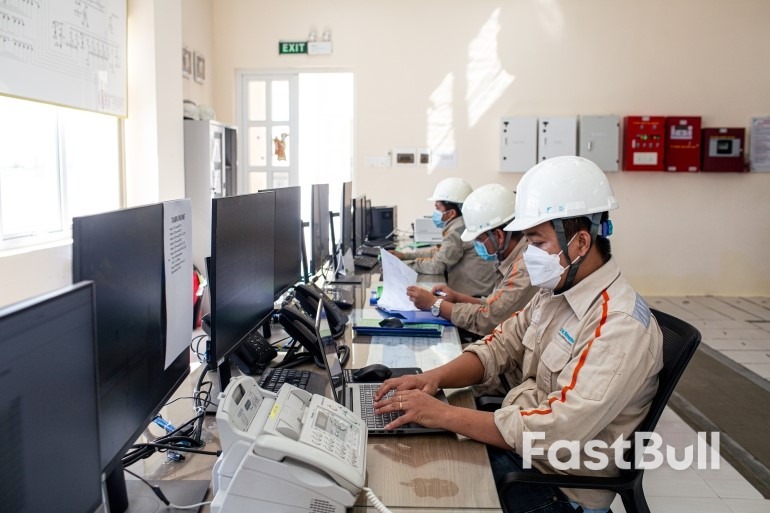
          For up to 12 days every month, Tran Nhu Anh Kiet, a supermarket owner in Vietnam's Ninh Thuan province, is forced to turn off his solar panels during the most lucrative peak sunshine hours.
          "I'm losing on average 40 percent of output," Kiet told Al Jazeera, referring to the solar panels he installed on the roof of his store so he could sell power to the national grid.
          "Before the curtailments, our revenue was 100 million Vietnamese Dong [$4,136], now it is just 60 million Vietnamese Dong [$2,589]."
          If Kiet did not shut them off of his own accord, the state power company would "come and disconnect them instead".
          Across southern Vietnam and the Central Highlands, authorities are asking small-scale energy producers like Kiet and industrial solar farms alike to limit their operations due to infrastructure limitations.
          After an unprecedented boom in renewable energy investment in recent years, the transmission lines that connect solar and wind projects to the national grid lack the capacity to deal with spikes in supply.
          Policymakers have not been able to keep up either, leaving regulatory gaps that prevent some investors from monetising the power they harness.
          "A [transmission] line takes three years to build, and a wind farm one year to build," Minh Ha Duong, a clean energy expert, told Al Jazeera. "So lines need to be planned years in advance. This was not possible since in 2018 nobody knew for certain where they would be needed."
          After Renewables Frenzy, Vietnam's Solar Energy Goes to Waste_1
          Between 2017 and late 2021, Vietnam offered 20-year contracts to buy electricity from new solar and wind power projects at fixed rates, a common policy used around the world to encourage investment in renewable energy known as feed-in tariff (FIT). At more than $70 per megawatt-hour (MWh), the rates far exceeded what other Southeast Asian countries were offering at the time. The rooftop FIT in Thailand in 2019, for example, was only about $57 per MWh.
          "The reason for this policy was to avoid the risk of electricity shortages," Duong said. "Because the coal and gas power plants we planned to build were not [concluded] on time."
          The policy worked. Attractive tariffs coupled with a short eligibility window sparked a construction frenzy, especially in solar.
          BIM Energy is among the major Vietnamese investors that jumped on the bandwagon, citing attractive FIT rates and Vietnam's prior commitment to increase renewable energy's share in the energy mix from 6 percent in 2016 to 10 percent in 2030.
          "The government has issued breakthrough mechanisms for wind and solar power," Nguyen Hai Vinh, deputy director of BIM Energy, told Al Jazeera. "In parallel, local governments worked hand in hand with us throughout the project development phase."
          The coordinated effort enabled the Hanoi-headquartered company to finish 500MW worth of solar and wind farms in time to enjoy favourable FIT rates.
          Major government support schemes have included income tax and land lease exemptions. The public's increasing concern over air pollution caused by coal has also meant that support for clean energy has been on the rise.

          Renewables boom

          In 2019, Vietnam overtook Thailand as the country with the largest installed capacity for solar and wind power in Southeast Asia. By the following year, the country's total solar power capacity reached 16,500MW, far surpassing the government's target of 850MW.
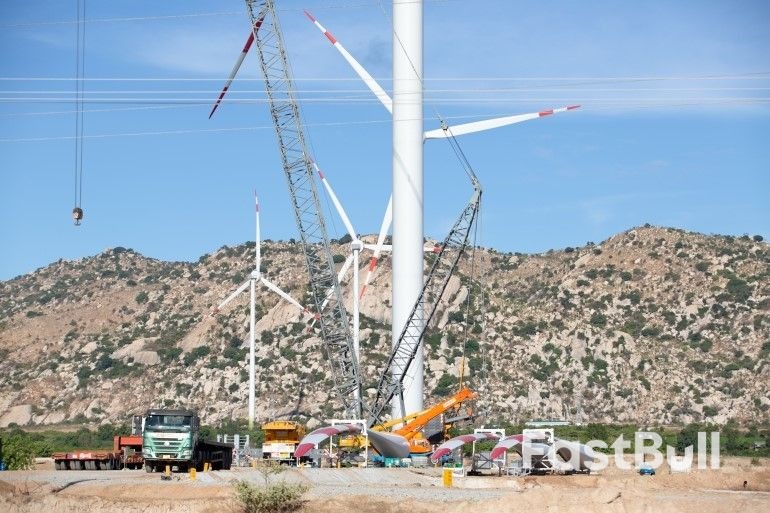
          Today in Ninh Thuan, numerous solar panels and wind turbines stand tall among the rice fields and salt farms.
          Kiet, who hails from the coastal province, experienced the boom firsthand.
          Sensing the opportunities offered by falling solar panel prices and government incentives, Kiet in 2019 co-founded Viet Sun, one of about 100 companies that sprung up in Ninh Thuan at the time to install rooftop solar panels. With just 14 staff members, Viet Sun has had more than 300 clients to date, ranging from farmers to his former high school teacher.
          As with every boom, the bust soon followed.
          During the rollout of its latest FIT which ended in 2020, the government capped solar power eligible for the rate in Ninh Thuan at 2,000MW.
          Despite state power employees going door to door towards the end of 2020 telling villagers not to invest any more, installations continued.
          In March, government inspections uncovered that multiple state power companies in southern Vietnam, including Ninh Thuan, had connected new rooftop solar panels after the FIT deadline had expired.
          With no follow-up pricing mechanism, some solar investors have not been able to sell all the power they generate.
          After Renewables Frenzy, Vietnam's Solar Energy Goes to Waste_2
          Trung Nam Group's solar farm Thuan Nam, the largest such facility in Southeast Asia, is among them.
          Even though it became operational in October 2020, in time to be eligible for the FIT rate at $.0935 per kilowatt-hour, the farm has not been able to sell 40 percent of its 450MW capacity because Ninh Thuan's total solar power generation has well exceeded the government's 2,000MW cap. On top of that, like other investments in southern Vietnam, the project has been facing curtailments due to the limited capacity of transmission lines.
          "This is extremely wasteful for the company, and a waste of national resources," Trung Nam Group told Al Jazeera in a statement. "Our revenue sources have hence experienced difficulties, seriously affecting our ability to balance the books and arrange capital as well as Trung Nam's reputation in the eyes of our financial partners."
          Last year was particularly difficult for Vietnam's renewable energy investors. Business closures during COVID-19 lockdowns reduced demand for power, forcing widespread curtailments. In September, about 40 solar investors in Gia Lai province, Central Highlands threatened the government with a lawsuit after they were forced to repeatedly cut supply, putting them in financial difficulty.
          "They cut [power supply] every weekend, they cut 50 percent of capacity," Huynh Thi Ha of Hung Khanh Solar Co Ltd, one of the investors, told Al Jazeera.
          "It has affected my ability to pay back debts."
          Uncertainties over curtailments and post-FIT pricing have been plaguing wind power investors, too. Many experienced significant delays in construction, unable to fly in experts and ship wind turbines on time due to global supply chain bottlenecks and travel restrictions in place throughout 2021. As a result, 62 wind power projects missed the October deadline for the wind power FIT.
          To date, the government has yet to issue a replacement pricing policy, leaving wind and solar power projects that finished construction after the expiration of their respective FITs unable to sell electricity.
          After Renewables Frenzy, Vietnam's Solar Energy Goes to Waste_3
          "The wind power companies that have missed the FIT deadline are anxiously awaiting a new mechanism, because they'd already invested money into the project," Bui Vinh Thang, country manager for the Global Wind Energy Council, told Al Jazeera. "We need a new policy with a clear roadmap."
          But despite the risks, Vietnam's market for renewables, especially wind, remains attractive and profitable in the eyes of many investors, according to Thang.
          Vietnam is expected to approve its eighth power development plan for 2030 this May, after two years of revisions and delays. The latest draft was revised to reflect the government's commitment to becoming carbon neutral by 2050. Under the plan, the share of coal power would drop from about 30 percent in 2025 to 13 percent in 2045, with renewables, excluding hydropower, rising from about 23 percent in 2025 to up to 52 percent in 2045.
          In the meantime, eyes are also on the potential for a green post-pandemic recovery that would keep Vietnam's boom in renewable energy going.
          In January, the World Bank urged Vietnam to launch competitive bidding programmes for renewable energy in lieu of the expired FITs while also modernising the national grid and introducing energy storage systems.
          Investors are already taking action. Trung Nam Group is the first private entity to have built a transmission line, which traditionally has been an exclusive domain of the state. Meanwhile, smaller players like Kiet are looking into the option of offering affordable batteries for rooftop solar panels.
          "We have a paradox that now there's an excess supply of electricity from renewable sources, yet we have to import power from China," Kiet said. "It's such a waste of solar investment thus far."

          Source: Al Jazeera

          Risk Warnings and Disclaimers
          You understand and acknowledge that there is a high degree of risk involved in trading. Following any strategies or investment methods may lead to potential losses. The content on the site is provided by our contributors and analysts for information purposes only. You are solely responsible for determining whether any trading assets, securities, strategy, or any other product is suitable for investing based on your own investment objectives and financial situation.
          Comments
          Add to Favorites
          Share

          Egypt Looks to Gulf to Revive Tourism Sector Affected by Russian-Ukrainian War

          Devin
          Egypt is seeking to increase Arab tourism from the Gulf at a time when the vital tourism sector has struggled to overcome the setback it suffered with the Russian invasion of Ukraine.
          The war that broke out between Russia and Ukraine in February has hindered the normal influx of tourists from the two countries, while they constituted about a third of the total number of tourists who flocked to Egypt annually.
          Tourism, along with the revenues of the Suez Canal and the remittances of workers abroad, constitutes one of the main sources of foreign currency in the country, which has been weighed down by the pressure of the war in Ukraine on its economy, as it struggles with an unprecedented wave of inflation.
          Egypt adopted harsh measures in an attempt to overcome the repercussions of the war, including the devaluation of the local currency by 15% in March. It also resorted to the International Monetary Fund to seek an emergency aid program to address the current economic crisis.
          In late April, the Egyptian Ministry of Tourism launched a promotional campaign on social media — titled "Your vacation in Egypt" — to attract foreign visitors who are planning a summer vacation abroad.
          The campaign mainly targets Arab markets exporting tourism to Egypt, including Saudi Arabia, the United Arab Emirates (UAE), Kuwait and Jordan.
          Amr el-Kady, CEO of the General Authority for Tourism Activation affiliated with the Ministry of Tourism, said in a statement that the campaign also aims to revitalize domestic tourism.
          Egypt had launched a similar campaign in March called "Follow the Sun," to attract tourists from the United Kingdom, Germany, Italy, France and the United States.
          Tourism officials in Egypt expect the war in Ukraine to hinder growth in the sector's revenues. Deputy Tourism Minister Ghada Shalaby said in an April 18 interview with Bloomberg that "expectations for Egyptian tourism in 2022 are not higher than last year," without mentioning any estimates.
          Shalaby noted that the government is looking to attract tourists from India, Pakistan, Morocco, Algeria and Gulf countries including Bahrain, Qatar and Kuwait.
          Data published by the Ministry of Tourism in July 2021 indicate that about 20% of the tourists who used to visit Egypt before the coronavirus pandemic came from Arab countries. Saudi Arabia comes first, followed by Kuwait and the UAE.
          In 2021, Egypt achieved tourism revenues that exceeded $13 billion, bringing back pre-pandemic levels, according to the ministry data.
          Meanwhile, Minister of Tourism and Antiquities Khaled al-Anani had revealed in January 2021 that 3.5 million tourists brought in $4 billion of tourism revenues in 2020, marking a 70% decline from 2019, when tourism revenues reached $13.03 billion, with more than 13 million tourists visiting the country that year.
          Magdy Salim, former official in the Ministry of Tourism, expects inbound tourism to Egypt to drop by 50% compared to 2021.
          He told Al-Monitor over the phone that this percentage might still increase as the long-term effects of the coronavirus pandemic are still being felt.
          Egypt was hoping that its tourism sector would be active this year, coinciding with the easing of COVID-19 restrictions in most countries. However, the Russian war on Ukraine has increased the burdens on tourism, which is one of the most important sources of national income for Egypt.
          In 2019, Ukraine had the second-largest number of tourists visiting Egypt, accounting for 1.6 million visitors and recording an increase of 32% from 2018.
          More than 727,000 Ukrainian tourists entered Egypt in 2020, according to the Ukrainian Embassy in Cairo, constituting 21% of the total number of foreign tourists who visited Egypt in that year.
          According to the Ukrainian State Agency for Tourism, 1.46 million Ukrainians traveled to Egypt in 2021, making Egypt their second-most popular tourist destination after Turkey.
          Salim noted that the tourism sector has been greatly affected by the suspension of incoming Ukrainian tourism, which has been growing significantly in recent years, ruling out the return of Ukrainian tourism in the foreseeable future to pre-war levels.
          Meanwhile, Russia has always been at the forefront of the exporting markets for tourists to Egypt. Nearly 3 million Russian tourists visited Egypt in 2014, before Moscow imposed a ban on direct flights to Egyptian tourist destinations following the crash of a Russian charter plane upon takeoff from Sharm el-Sheikh in 2015, which killed all 224 people on board.
          In July 2021, Russia lifted the ban on charter flights to and from Egypt. Since then, 700,000 Russians visited Egypt until the end of 2021, with 125,000 Russian tourists entering the country in the first two weeks of 2022, according to Russian Ambassador to Cairo Georgy Borisenko.
          To revive inbound tourism, the Egyptian government started early April to implement a facilitation package for tourist visas allowing entry to the country. The package included, for the first time, granting foreigners coming to the country an emergency entry visa at the various arrival terminals, provided that they hold entry visas for Japan, Canada, Australia, New Zealand, the United States, the United Kingdom and the Schengen countries.
          On March 22, the government also agreed to extend the charter flight stimulus program until the end of October. The program, which aims to support tourism, allows airlines to obtain cash incentives ranging from $1,500 to $3,500 per flight. It was supposed to end late April, but the program will now continue to operate until the end of October.
          A source in the Ministry of Tourism told Al-Monitor on condition of anonymity that the tourism sector will not fully recover before 2025.
          The source said that the ministry has a long-term plan to target new tourist markets, especially from Latin America and East Asia, with the increase in the volume of inbound tourism from the Gulf countries in an attempt to bridge the gap created by the Russian war and, before it, the coronavirus pandemic.
          Egypt was one of the first countries to open its doors to tourists in July 2020 amid the implementation of strict precautionary measures in a desperate attempt to save the tourism sector, whose revenues dropped by about 70% during the same year due to the pandemic and the subsequent closure of tourist facilities and hotels, travel restrictions and lockdowns that affected the entire world.
          The pandemic led to a decrease in the hotel occupancy rate in Egypt by about 60% in 2020, which caused losses of about $14 billion, according to Egyptian Finance Minister Mohamed Maait.
          However, tourism workers hope that performance will gradually improve and that some losses will be compensated with the resumption of flights between Moscow and Cairo, after a short halt due to the war, in addition to limited flights between Russia and the Red Sea resorts.
          Shalaby said the announcement of new international flights to Sharm el-Sheikh in the Red Sea could boost tourism revenues as well.
          Egypt welcomed April 17 the first direct flight between Sharm el-Sheikh and Tel Aviv, as part of an agreement reached between Egyptian President Abdel Fattah al-Sisi and Israeli Prime Minister Naftali Bennett in March.
          In early April, 300 Russian tourists arrived in Hurghada, the first arrival since the start of the Russian war on Ukraine.
          Russian companies are also expected to increase the number of flights to Egypt, coinciding with the decision of authorities in Moscow to lift COVID-19 restrictions on regular and charter flights to 52 "friendly" countries, including Egypt.
          In addition to the resorts in Sinai overlooking the Red Sea, which is famous for its coral reefs, Egypt is preparing to open the Grand Egyptian Museum in the last quarter of 2022. Egypt is relying on this 20 billion Egyptian pound (about $1 billion) project to revive the tourism sector, with more than 100,000 antiquities, including 5,000 pieces within the Tutankhamun collection, displayed at the museum.
          "It is necessary to knock on all doors to revive tourism, which directly affects the 2 million people working in the sector," Salim concluded.

          Source: Al Monitor

          Risk Warnings and Disclaimers
          You understand and acknowledge that there is a high degree of risk involved in trading. Following any strategies or investment methods may lead to potential losses. The content on the site is provided by our contributors and analysts for information purposes only. You are solely responsible for determining whether any trading assets, securities, strategy, or any other product is suitable for investing based on your own investment objectives and financial situation.
          Comments
          Add to Favorites
          Share

          EU Threatens to Retaliate If UK Overhauls Northern Ireland Protocol

          Devin
          The EU has threatened to retaliate with "all measures at its disposal" if the UK proceeds with controversial plans to rip up parts of the Northern Ireland Protocol.
          The Foreign Secretary has set out her intention to bring forward legislation within weeks, overwriting parts of the post-Brexit deal, freeing goods destined to stay within the UK from EU-level checks.
          Liz Truss told the Commons the move was needed to reduce "unnecessary bureaucracy" and to protect the Good Friday Agreement, arguing that the EU's proposals "would go backward from the situation we have today".
          She said the Bill would take measures to protect the EU single market by implementing "robust penalties" for those who "seek to abuse the new system".
          But European Commission vice-president Maros Sefcovic criticised her plan and warned that Brussels could retaliate.
          Should the UK proceed with the Bill, the EU will respond with "all measures at its disposal", he said.
          This is likely to aggravate fears the move could spark a trade war with the bloc.
          The legislation will propose separate "green" and "red" lanes for goods travelling between Great Britain and Northern Ireland, drawing a line between those destined to stay within the UK and those heading to the Republic of Ireland and beyond.
          There will be no crossover between the channels, it is understood, with goods filtering through one or the other, depending on their intended destination.
          This will override the current arrangements, whereby Northern Ireland is effectively kept in the EU's single market for goods, with a hard border down the Irish Sea.
          The row over the treaty has created an impasse in efforts to form a devolved government administration in Belfast, with the Democratic Unionist Party (DUP) refusing to join an executive unless its concerns over the situation are addressed.
          DUP leader Sir Jeffrey Donaldson said Tuesday's move was "welcome if overdue", and a "significant" step towards getting power-sharing in Northern Ireland back up and running.
          He told the Commons his party will take a "graduated and cautious approach" as the legislation progresses.
          But Ireland's foreign affairs minister, Simon Coveney, said the unilateral action from the UK was "damaging to trust".
          "At a time when people in Northern Ireland have chosen their elected representatives and want to get the executive back up and running, the path chosen by the British Government is of great concern," he said.
          Prime Minister Boris Johnson insisted problems with the protocol must be addressed.
          On a visit to Paddington station, west London, he said: "What that actually involves is getting rid of some relatively minor barriers to trade.
          "I think there are good, common sense, pragmatic solutions. We need to work with our EU friends to achieve that."
          The protocol was negotiated by Mr Johnson as part of the Brexit Withdrawal Agreement.
          Asked how he could justify breaking a treaty he signed, the Prime Minister said "the higher duty of the UK Government in international law is to the Good Friday Agreement and the peace process".
          He added: "That is the thing we have to really look to."
          Northern Ireland's 1998 Good Friday peace agreement contains provisions to protect and develop relations, both on a north-south basis on the island of Ireland and on an east-west basis between the island and Great Britain.
          The UK claims the protocol has upset this "delicate balance" of unionist and nationalist aspirations by undermining the east-west dynamic.
          The controversial legislation announced on Tuesday is due in the "coming weeks", before the summer recess.
          Ms Truss told the Commons the Bill will "ensure that goods moving and staying within the UK are freed of unnecessary bureaucracy".
          "This respects Northern Ireland's place in the UK, in its customs territory, and protects the UK internal market," she said.
          "At the same time it ensures that goods destined for the EU undergo the full checks and controls applied under EU law."
          Labour accused the Government of "trying to convince people its flagship achievement was not a negotiating triumph but a deal so flawed that they cannot abide by it".
          Shadow Foreign Office minister Stephen Doughty said: "Either they did not understand their own agreement, they were not upfront about the reality of it or they intended to break it all along.
          "The Prime Minister negotiated this deal, signed it, ran an election campaign on it. He must take responsibility for it and make it work."
          Philip Rycroft, who was the most senior civil servant at the Department for Exiting the European Union (DExEU) between 2017 and 2019, told BBC Newsnight the plans are "astonishing".
          "That the UK Government, in a country which has always prided itself on the rule of law, should be contemplating unilaterally revoking elements of an international treaty which it signed up to only a couple of years ago is frankly extraordinary and worrying," he said.
          Ms Truss said the new system will be underpinned by "data-sharing arrangements".
          The UK has proposed a "trusted trader" scheme, whereby the EU would be provided with real time-commercial data, giving it confidence that goods intended for Northern Ireland are not entering the EU single market.
          As well as customs paperwork, the Bill will remove regulatory barriers to goods made to UK standards being sold in Northern Ireland, she said.
          She told MPs: "Businesses will be able to choose between meeting UK or EU standards in a new dual regulatory regime."
          The Foreign Secretary said the legislation will also provide the Government with the ability to decide on tax and spend policies across the whole of the UK, and address issued related to governance.
          She insisted the proposals to reform the deal were "consistent with our obligations in international law", and said the move was "not about scrapping the protocol", but delivering on its objectives.
          Responding to the Foreign Secretary's plan, Mr Sefcovic said: "Should the UK decide to move ahead with a Bill disapplying constitutive elements of the protocol as announced today by the UK Government, the EU will need to respond with all measures at its disposal.
          "Our overarching objective is to find joint solutions within the framework of the protocol.
          "That is the way to ensure legal certainty and predictability for people and businesses in Northern Ireland.
          "With political will and commitment, practical issues arising from the implementation of the protocol in Northern Ireland can be resolved.
          "The European Commission stands ready to continue playing its part, as it has from the outset."
          It is understood that the UK would pull the Bill in the event of all of its aims and objectives being met by the EU.
          The option of invoking Article 16 will remain on the table.
          More details are expected to be set out in the coming weeks.
          Downing Street said it understood the EU's opposition to plans to bring forward the controversial legislation, but insisted action was needed.
          The Prime Minister's official spokesman said: "We've been discussing this for around 18 months now, that's why the Foreign Secretary and the Prime Minister have taken the decision to move ahead with this twin-track process."
          Ms Truss has invited Mr Sefcovic to a meeting of the withdrawal agreement joint committee in London to discuss the prospect of a "negotiated solution" as soon as possible.
          Asked if a date had been set, the PM's spokesman said he was "not aware" one had been agreed.

          Source: Cool FM

          Risk Warnings and Disclaimers
          You understand and acknowledge that there is a high degree of risk involved in trading. Following any strategies or investment methods may lead to potential losses. The content on the site is provided by our contributors and analysts for information purposes only. You are solely responsible for determining whether any trading assets, securities, strategy, or any other product is suitable for investing based on your own investment objectives and financial situation.
          Comments
          Add to Favorites
          Share

          Biden To Launch Indo-Pacific Economic Plan in Next Days in Japan

          Owen Li
          US President Joe Biden will launch a long-awaited economic initiative for increasing US involvement in Asia in the coming days during his trip to the region, according to one of the cabinet officials leading the initiative.
          The US and its partners will kick off the Indo-Pacific Economic Framework (IPEF) when Biden visits Japan on a May 20-24 trip that also will take him to South Korea, Commerce Secretary Gina Raimondo said.
          President Yoon Suk Yeol has shown support for the grouping and is expected to announce his government's intention to join the framework when he speaks with Biden in Seoul on Saturday, the Chosun Ilbo newspaper reported.
          The Commerce Department is leading negotiation of pillars of the framework focused on supply-chain resilience; clean energy, decarbonisation and infrastructure; and taxation and anti-corruption. The US Trade Representative's office is leading the work on fair and resilient trade. The administration also has been working to include digital issues like data localisation and cross-border data flows.
          The IPEF is part of the Biden administration's efforts to counter China's clout in Asia, following the US's withdrawal from talks on the Trans-Pacific Partnership regional trade agreement under former President Donald Trump.
          "We do we have a great deal of enthusiasm about this," Raimondo told reporters on a virtual call on Tuesday. "I have spent a lot of time talking to our counterparts in the Indo-Pacific, and there's a large demand by them for the United States to be more present and to have an affirmative economic strategy."
          Raimondo announced work on the plan in November after talks with Australia, New Zealand, Singapore, Malaysia and Japan.
          Some details of the IPEF are hazy and the Biden administration has stressed it won't include lower tariffs or better access to US markets. Some in Congress have criticised the plan as lacking substance, with senators from both parties blasting Biden's trade agenda at a March hearing and grilling US Trade Representative Katherine Tai over a shortage of ambition to negotiate new agreements.
          Robert Ward, Japan chair and director of geo-economics and strategy at the International Institute for Strategic Studies, said IPEF would not serve as an effective replacement for the Comprehensive and Progressive Agreement for Trans-Pacific Partnership, which eventually replaced TPP. China is now seeking to join that framework.
          "What is this IPEF really? It's a sort of place-filler," Ward told reporters at the Foreign Correspondents' Club of Japan last week. "In terms of economic statecraft in the Indo-Pacific, the Biden administration is lacking and China's making a lot of the running."

          Source: Bangkok Post

          Risk Warnings and Disclaimers
          You understand and acknowledge that there is a high degree of risk involved in trading. Following any strategies or investment methods may lead to potential losses. The content on the site is provided by our contributors and analysts for information purposes only. You are solely responsible for determining whether any trading assets, securities, strategy, or any other product is suitable for investing based on your own investment objectives and financial situation.
          Comments
          Add to Favorites
          Share

          Global Inflation: Disaster of "De-globalization"

          Winkelmann

          Russia-Ukraine Conflict

          Affected by the sharp surge in the prices of energy and food, the inflation rate in the eurozone rose to 7.5% in April, setting a record high in 25 years for six consecutive months. In the U.S, the inflation rate reached 8.2% in April, a new high since 1982, while the inflation in the U.K. is at a 30-year high.
          In fact, inflation has been spreading globally since last year, becoming an enduring topic in media and private discussions.
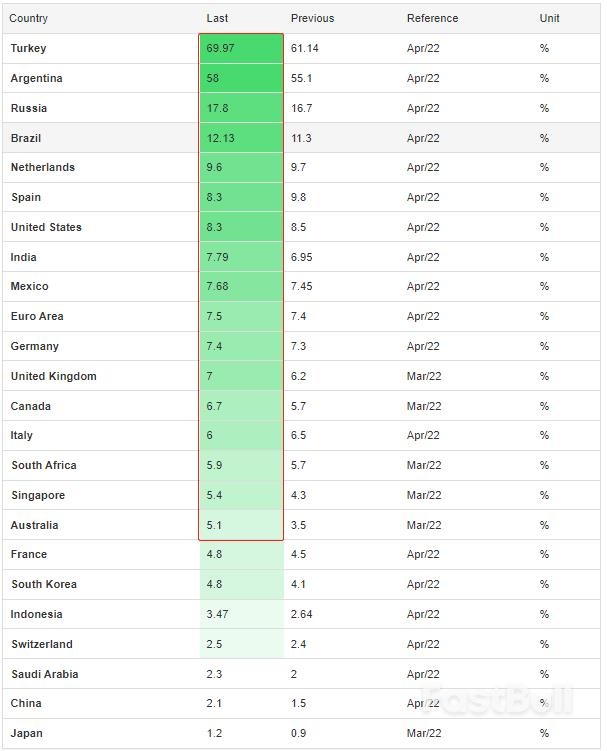
          Except for a few Asian countries represented by China, Japan, and Saudi Arabia, almost all G20 countries have been caught in the quagmire of inflation. In the worst cases, in Argentina and Turkey, inflation approached 60% and 70%, which is incredible.
          Global Inflation: Disaster of "De-globalization"_1
          In recent years, the political and economic structure of the world are impacted by the pandemic, frequent geopolitical events, and a series of unstable factors. "De-globalization" has followed, and the world has been worse divided and fragmented, becoming the direct cause of global inflation.

          Pandemic Leads to De-globalization

          The sudden COVID-19 outbreak has passively divided the world into physical isolation parts from a state of free-flowing integration. More shutdowns and production suspension are seen around the world. Strained or even disrupted supply chains are rapidly spreading around the world.
          For example, the price of "used cars" has soared one after another due to the risk of chip supply interruption. Goods supplies have been reduced by factory shutdowns and production suspension due to the repeated pandemic outbreak in India and Southeast Asian countries. In addition, the vulnerability of global logistics networks appeared as caused by soaring shipping rates and poor transportation. The international movement of people and workers is reduced due to pandemic prevention and control measures. The resulting "labor shortages" have raised the risk of a wage-price spiral.
          Global Inflation: Disaster of "De-globalization"_2
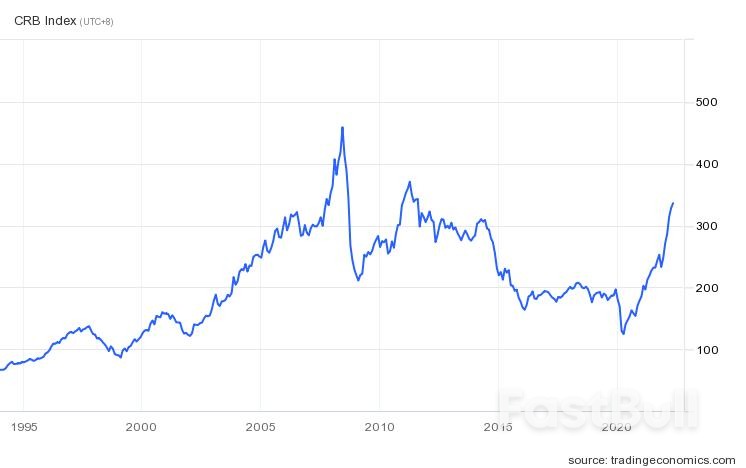
          Since the pandemic outbreak in 2020, the Reuters CRB Commodity Index representing commodity prices has soared, up 84% to date, and is an important driver of the current global inflation.
          In addition to the supply side, the pandemic has led more to a shift in demand from services to commodities, with the service sector shrinking significantly during the pandemic period.

          Frequent Geopolitical Events Threaten Globalization

          In addition to the pandemic, the frequent geopolitical events also constantly threaten globalization. The Russia-Ukraine conflict this year is the best example. The U.S.-led Western bloc has continuously imposed sanctions on Russia, and the economic trade between Russia and Ukraine encountered serious challenges, causing a huge impact on global energy, food, and some non-ferrous metal prices.
          It is reported that after the EU failed to impose an embargo on Russian oil, a U.S. Treasury Department official demonstrated a few days ago that he would discuss with G7 leaders a pricing cap and tariffs on Russian oil as an alternative to the embargo. Tariffs on Russian oil will keep the market supply, limit price surges, and reduce Russian revenue.
          In fact, for political and security reasons, international trade disputes, tariff barriers, investment restrictions, and the reset of global industrial and supply chains are increasing. New world order is being established, such as the trade frictions between the U.S. and China and the shift or return of U.S. and Japanese manufacturing chains, all of which have a significant impact on the higher global inflation.

          Impact of the De-globalization

          The impact of the higher inflation caused by de-globalization on countries is not the same. For example, Saudi Arabia and the United Arab Emirates, the major oil-producing countries in the Middle East, have benefited from the rise in oil prices. Some countries with extremely poor resources, such as Japan and Egypt, are spending high prices on imports of resource commodities and food. Developed countries such as European countries, America, and Japan can often use the global currency status to export inflation, while other emerging market countries such as Turkey and Argentina are in a deep debt crisis due to the depreciation of their currencies and soaring interest rates. And Sri Lanka has become the first extraterritorial country to fall after the Russia-Ukraine conflict.
          We see that in order to fight inflation, the Federal Reserve is pushing for a new round of rate hikes and balance sheet reduction, while seemingly signaling that they believe inflation is peaking. But the U.S. economy unexpectedly contracted 1.4% in the first quarter, well below the expected growth of 1.1%. If the economy falls into recession after the second quarter, the Fed will be under tremendous pressure to keep raising rates. Economic problems could prompt the Fed to "not overtighten", which could mean inflation will make a comeback at some point after being suppressed briefly.
          The reversal of globalization is due to both natural factors such as pandemics and political factors represented by geopolitical conflicts .but in any case, it means that global resources and free trade are no longer allocated according to economic laws or following the principles of efficiency and relative advantage. This round of inflation may take longer than expected.
          Risk Warnings and Disclaimers
          You understand and acknowledge that there is a high degree of risk involved in trading. Following any strategies or investment methods may lead to potential losses. The content on the site is provided by our contributors and analysts for information purposes only. You are solely responsible for determining whether any trading assets, securities, strategy, or any other product is suitable for investing based on your own investment objectives and financial situation.
          Comments
          Add to Favorites
          Share

          A Wobbly Rebound

          Damon
          The US equity markets rallied yesterday after taking over a positive session from the Europeans. However, the US retail sales data didn't necessarily hint at slowing spending, and Jerome Powell didn't say things that investors would normally like to hear.

          Resilient spending is no good news for the Fed's inflation battle

          US retail sales grew more than 8% on yearly basis in April, more than around 7.30% printed a month earlier, meaning that Americans continue spending despite tighter economic conditions.
          Unfortunately, the resilience of spending means that the Federal Reserve's (Fed) actions don't result in desired cooling effect on inflation.
          Inflation mostly comes from the supply side, especially from the soaring energy and food prices as a result of pandemic-hit supply chains and the war in Ukraine. Whereas, the monetary tools are intended to control the demand side - and bring inflation by cooling down demand. If demand doesn't ease fast enough, the Fed must tighten faster.
          So, it's no surprise Jerome Powell said that the Fed is resolved to curb inflation even if it means pushing the rates into restrictive territory. If that 'involves moving past broadly understood levels of neutral we won't hesitate to do that', he said.
          Powell's words didn't hit the investor appetite immediately. Nasdaq rallied more than 2.50% yesterday, as the S&P500 rebounded 2%. But mixed activity in US futures hint that appetite may not remain as strong in the coming sessions.

          In the FX

          The US dollar eased from two-decade highs. Prospects of higher US rates, and the positive divergence between the Fed and other central banks should prevent the dollar from falling significantly, as other central banks are also tightening their purses' strings, but they sound timider when it comes to the timing and the intended sizes of the eventual moves.
          The EURUSD rebounded past the 1.05 level yesterday on the back of a broad-based softening in the US dollar. But the US 10-year yield remains steady around the 3% mark, and poised to move higher, parallel to the expectations of solid rate hikes in the US in the coming months.
          Eurozone's final inflation data is due today, and should confirm a rise to 7.5% in April, an eye-watering number which should keep the European Central Bank (ECB) hawks and the euro bulls alert, and help the single currency consolidate its latest gains against the US dollar.
          Gold trades around the $1800 mark. In one hand, the positive pressure on the US yields weighs on appetite for the non-interest-bearing gold. On the other hand, the high volatility and the looming uncertainties support safe haven inflows toward the safe haven metal. Yet, the long-term risks remain tilted to the downside. The yellow metal is below its 200-DMA - which now acts as resistance to any positive attempt, and is preparing to test the long-term triangle base - if broken should confirm a further negative outlook.
          Crude oil spiked above the $115 per barrel, but bumped into top sellers above this level. Solid support approaching the $120 mark will likely be hard to clear, as the rising energy prices have a curbing effect on demand at the actual levels, and automatically cool down the rally.

          Source: Swissquote Bank Ltd

          Risk Warnings and Disclaimers
          You understand and acknowledge that there is a high degree of risk involved in trading. Following any strategies or investment methods may lead to potential losses. The content on the site is provided by our contributors and analysts for information purposes only. You are solely responsible for determining whether any trading assets, securities, strategy, or any other product is suitable for investing based on your own investment objectives and financial situation.
          Comments
          Add to Favorites
          Share

          UK CPI Set to Hit Record High Above 9%

          Devin
          There was a much more positive mood around European markets yesterday, with some decent gains across the board. US markets followed suit, helped by a decent April retail sales report, which showed that despite rising prices, US consumers remained resilient.
          This positive US finish looks set to translate into a flat European open, with the pound and euro riding higher on expectations that both the Bank of England and ECB might have to raise rates more aggressively in the coming months than originally the markets had been pricing, as we look ahead to a day which is expected to see a record high for UK CPI.
          Over the last six years it's generally been one of life's truisms that when you hear people starting to predict that the pound is on course for a move towards parity against the US dollar, its usually time to start buying it.
          While there is always a risk of a move lower, while we're above key support at 1.2000 it would be unwise in the extreme in thinking in terms of such move, and yet we still get the same absurd parity calls whenever the 1.2000 level comes into view.
          Furthermore, with hedge funds and short positioning rising to their highest level since 2019 at £5bn such a move starts to become a crowded trade, and as such vulnerable to the type of short squeeze we saw yesterday, as the pound saw its biggest one day rise since October 2020 after the latest UK unemployment data showed that there are fewer unemployed people than there are job vacancies.
          UK unemployment fell to its lowest levels since 1974 in March to 3.7%, while average weekly earnings rose to 4.2%, and when bonuses were included rose to 7%, a sharp rise from the 5.4% we saw in February.
          This set to go higher in April if you factor in that UK retailers announced inflation busting pay increases, for their staff of over 5%, earlier this year and which are due to kick in this month. This suggests that next month's April wages numbers, could well see wage growth rise close to 6%.
          Even allowing for Bank of England governor Andrew Bailey's rather ham-fisted attempts to caution against sharp rises in wages, markets are now pricing in that the Bank of England will have to raise rates much faster, than it would like as it wrestles with the dilemma of either allowing inflation to slow the economy or raise rates much more quickly to help bring it under control more quickly.
          This pressure is likely to increase further with the release of today's headline CPI number, which is expected to be ugly in the extreme, as the energy price rise of 54% expected to help push the headline number up above 9% to a record high of 9.2%.
          Not only are consumers having to contend with higher gas and electricity prices, but also higher food and petrol prices, along with higher council tax, streaming subscriptions, gym memberships and other discretionary costs, as well as a pound that is 9% lower against the dollar from a year ago when it was at $1.3900.
          While headline CPI is expected to rise from 7% to over 9%, core prices are expected to from 5.7% to 6.2%, while RPI is expected to rise from 9% to 11%, and a 40 year high.
          Imported goods are likely to make up a decent proportion of this latest inflation surge, and with PPI input and output prices surging in March to 19.2% and 11.9% respectively, further rises in headline inflation are coming even without the April tax rises, and the rise in the energy price cap.
          PPI has always tended to be a leading indicator when it comes to headline inflation, with businesses having to make the tough decisions of whether to absorb the costs of producing the goods and services they sell or pass those costs on. PPI output prices are expected to rise to 12.5% in April and input prices to come in at 20%.
          The euro also had a solid day yesterday, rallying on comments from Netherlands Governing Council member Klaas Knot who said that the prospect of a 50bps rate hike was a possibility at the July meeting of the European Central Bank, although it wasn't a base case.
          EUR/USD – having held above the 2017 lows at 1.0340 last week, we've seen a short squeeze back through 1.0500, with the potential for a move back towards 1.0650. The bias remains for a move lower towards parity, while below 1.0650.
          GBP/USD – yesterday's strong rebound through 1.2300, needs to take out the 1.2630 area to signal a short-term base is on. The move through 1.2400 is encouraging and needs to hold for a test of 1.2630 or risk a return to the recent lows.
          EUR/GBP – slid briefly below the 0.8420 area before rebounding. The previous support at the 0.8470/80 area now becomes resistance, with a bias for a move below 0.8400 towards 0.8370/80.
          USD/JPY – last week's failure at the 131.35 area has the potential to see a move towards 126.80. If that holds then the 135.00 area target remains intact. A move below 126.80 targets the 123.00 area.

          Source: CMC

          Risk Warnings and Disclaimers
          You understand and acknowledge that there is a high degree of risk involved in trading. Following any strategies or investment methods may lead to potential losses. The content on the site is provided by our contributors and analysts for information purposes only. You are solely responsible for determining whether any trading assets, securities, strategy, or any other product is suitable for investing based on your own investment objectives and financial situation.
          Comments
          Add to Favorites
          Share
          FastBull
          Copyright © 2025 FastBull Ltd

          728 RM B 7/F GEE LOK IND BLDG NO 34 HUNG TO RD KWUN TONG KLN HONG KONG

          TelegramInstagramTwitterfacebooklinkedin
          App Store Google Play Google Play
          Products
          Charts

          Chats

          Q&A with Experts
          Screeners
          Economic Calendar
          Data
          Tools
          Membership
          Features
          Function
          Markets
          Copy Trading
          Latest Signals
          Contests
          News
          Analysis
          24/7
          Columns
          Education
          Company
          Careers
          About Us
          Contact Us
          Advertising
          Help Center
          Feedback
          User Agreement
          Privacy Policy
          Business

          White Label

          Data API

          Web Plug-ins

          Poster Maker

          Affiliate Program

          Risk Disclosure

          The risk of loss in trading financial instruments such as stocks, FX, commodities, futures, bonds, ETFs and crypto can be substantial. You may sustain a total loss of the funds that you deposit with your broker. Therefore, you should carefully consider whether such trading is suitable for you in light of your circumstances and financial resources.

          No decision to invest should be made without thoroughly conducting due diligence by yourself or consulting with your financial advisors. Our web content might not suit you since we don't know your financial conditions and investment needs. Our financial information might have latency or contain inaccuracy, so you should be fully responsible for any of your trading and investment decisions. The company will not be responsible for your capital loss.

          Without getting permission from the website, you are not allowed to copy the website's graphics, texts, or trademarks. Intellectual property rights in the content or data incorporated into this website belong to its providers and exchange merchants.

          Not Logged In

          Log in to access more features

          FastBull Membership

          Not yet

          Purchase

          Become a signal provider
          Help Center
          Customer Service
          Dark Mode
          Price Up/Down Colors

          Log In

          Sign Up

          Position
          Layout
          Fullscreen
          Default to Chart
          The chart page opens by default when you visit fastbull.com