• Trade
  • Markets
  • Copy
  • Contests
  • News
  • 24/7
  • Calendar
  • Q&A
  • Chats
Trending
Screeners
SYMBOL
LAST
BID
ASK
HIGH
LOW
NET CHG.
%CHG.
SPREAD
SPX
S&P 500 Index
6870.39
6870.39
6870.39
6895.79
6858.28
+13.27
+ 0.19%
--
DJI
Dow Jones Industrial Average
47954.98
47954.98
47954.98
48133.54
47871.51
+104.05
+ 0.22%
--
IXIC
NASDAQ Composite Index
23578.12
23578.12
23578.12
23680.03
23506.00
+72.99
+ 0.31%
--
USDX
US Dollar Index
98.880
98.960
98.880
98.960
98.730
-0.070
-0.07%
--
EURUSD
Euro / US Dollar
1.16538
1.16545
1.16538
1.16717
1.16341
+0.00112
+ 0.10%
--
GBPUSD
Pound Sterling / US Dollar
1.33274
1.33284
1.33274
1.33462
1.33136
-0.00038
-0.03%
--
XAUUSD
Gold / US Dollar
4204.60
4205.01
4204.60
4218.85
4190.61
+6.69
+ 0.16%
--
WTI
Light Sweet Crude Oil
59.165
59.195
59.165
60.084
58.980
-0.644
-1.08%
--

Community Accounts

Signal Accounts
--
Profit Accounts
--
Loss Accounts
--
View More

Become a signal provider

Sell trading signals to earn additional income

View More

Guide to Copy Trading

Get started with ease and confidence

View More

Signal Accounts for Members

All Signal Accounts

Best Return
  • Best Return
  • Best P/L
  • Best MDD
Past 1W
  • Past 1W
  • Past 1M
  • Past 1Y

All Contests

  • All
  • Trump Updates
  • Recommend
  • Stocks
  • Cryptocurrencies
  • Central Banks
  • Featured News
Top News Only
Share

White House Economic Adviser Hassett On Trump's Ai 'One Rule': Order Should Help Ai Companies Understand What The Rules Are

Share

German Chancellor Merz: Sceptical About Some Of The Details In Documents Coming From The United States

Share

White House Economic Adviser Hassett On Aca Subsidies: There Is Room For Negotiation

Share

French President Macron: Russia Economy Is Starting To Suffer After Latest Sanctions

Share

Ukraine President Zelenskiy: Unity Between Europe, Ukraine And Unites States Is Important

Share

UK Labour Party Leader Starmer: Matters For Ukraine Are For Ukraine

Share

China's Commerce Minister: China Has Already Implemented Export License Exemptions For Nexperia Chips

Share

China's Commerce Minister: China Is Gradually Applying A General Licensing System In Areas Such As Rare Earths

Share

China's Commerce Minister: China Attaches Importance To Germany's Concerns Regarding Export Controls And Nexperia

Share

Trump: I Will Be Doing A One Rule Executive Order This Week On Ai

Share

China's Commerce Minister: Hopese German Government To Create Fair, Open Environment For Chinese Firms

Share

White House National Economic Council Director Hassett: Powell May Also Believe That A Rate Cut Is Prudent. Regarding The Magnitude Of The Rate Cut, He Said That We Must Pay Attention To The Data. It Is Irresponsible To Commit To The Interest Rate Path For The Next Six Months In Advance

Share

White House Economic Adviser Hassett: Bond Market Is Fluctuating In Part Perhaps Over Fed Uncertainty

Share

China's Commerce Minister: Meets German Foreign Minister

Share

White House Economic Adviser Hassett On Fed: Trump Has Lots Of Good Choices

Share

White House Economic Adviser Hassett On Fed: We Should Continue To Get The Rate Down Some

Share

Argus: Ukraine Wheat Crop Could Rise To 23.9 Million T Next Year

Share

Argus Media Forecasts Ukraine's 2026/27 Wheat Production At 23.9 Million T, Up From 23.0 Million T In 2025/26

Share

Standard Chartered Expects US Fed To Cut Interest Rates By 25 Bps In December Versus Prior Forecast Of No Rate Cut

Share

Morgan Stanley Sees Upside Risks To Copper Price Forecast (2026 Base Case $10650/T, Bull Case $12780/T)

TIME
ACT
FCST
PREV
France Trade Balance (SA) (Oct)

A:--

F: --

P: --
Euro Zone Employment YoY (SA) (Q3)

A:--

F: --

P: --
Canada Part-Time Employment (SA) (Nov)

A:--

F: --

P: --

Canada Unemployment Rate (SA) (Nov)

A:--

F: --

P: --

Canada Full-time Employment (SA) (Nov)

A:--

F: --

P: --

Canada Labor Force Participation Rate (SA) (Nov)

A:--

F: --

P: --

Canada Employment (SA) (Nov)

A:--

F: --

P: --

U.S. PCE Price Index MoM (Sept)

A:--

F: --

P: --

U.S. Personal Income MoM (Sept)

A:--

F: --

P: --

U.S. Core PCE Price Index MoM (Sept)

A:--

F: --

P: --

U.S. PCE Price Index YoY (SA) (Sept)

A:--

F: --

P: --

U.S. Core PCE Price Index YoY (Sept)

A:--

F: --

P: --

U.S. Personal Outlays MoM (SA) (Sept)

A:--

F: --

P: --
U.S. 5-10 Year-Ahead Inflation Expectations (Dec)

A:--

F: --

P: --

U.S. Real Personal Consumption Expenditures MoM (Sept)

A:--

F: --

P: --
U.S. Weekly Total Rig Count

A:--

F: --

P: --

U.S. Weekly Total Oil Rig Count

A:--

F: --

P: --

U.S. Consumer Credit (SA) (Oct)

A:--

F: --

P: --
China, Mainland Foreign Exchange Reserves (Nov)

A:--

F: --

P: --

Japan Trade Balance (Oct)

A:--

F: --

P: --

Japan Nominal GDP Revised QoQ (Q3)

A:--

F: --

P: --

China, Mainland Imports YoY (CNH) (Nov)

A:--

F: --

P: --

China, Mainland Exports (Nov)

A:--

F: --

P: --

China, Mainland Imports (CNH) (Nov)

A:--

F: --

P: --

China, Mainland Trade Balance (CNH) (Nov)

A:--

F: --

P: --

China, Mainland Exports YoY (USD) (Nov)

A:--

F: --

P: --

China, Mainland Imports YoY (USD) (Nov)

A:--

F: --

P: --

Germany Industrial Output MoM (SA) (Oct)

A:--

F: --

P: --
Euro Zone Sentix Investor Confidence Index (Dec)

A:--

F: --

P: --

Canada National Economic Confidence Index

A:--

F: --

P: --

U.K. BRC Like-For-Like Retail Sales YoY (Nov)

--

F: --

P: --

U.K. BRC Overall Retail Sales YoY (Nov)

--

F: --

P: --

Australia Overnight (Borrowing) Key Rate

--

F: --

P: --

RBA Rate Statement
RBA Press Conference
Germany Exports MoM (SA) (Oct)

--

F: --

P: --

U.S. NFIB Small Business Optimism Index (SA) (Nov)

--

F: --

P: --

Mexico 12-Month Inflation (CPI) (Nov)

--

F: --

P: --

Mexico Core CPI YoY (Nov)

--

F: --

P: --

Mexico PPI YoY (Nov)

--

F: --

P: --

U.S. Weekly Redbook Index YoY

--

F: --

P: --

U.S. JOLTS Job Openings (SA) (Oct)

--

F: --

P: --

China, Mainland M1 Money Supply YoY (Nov)

--

F: --

P: --

China, Mainland M0 Money Supply YoY (Nov)

--

F: --

P: --

China, Mainland M2 Money Supply YoY (Nov)

--

F: --

P: --

U.S. EIA Short-Term Crude Production Forecast For The Year (Dec)

--

F: --

P: --

U.S. EIA Natural Gas Production Forecast For The Next Year (Dec)

--

F: --

P: --

U.S. EIA Short-Term Crude Production Forecast For The Next Year (Dec)

--

F: --

P: --

EIA Monthly Short-Term Energy Outlook
U.S. API Weekly Gasoline Stocks

--

F: --

P: --

U.S. API Weekly Cushing Crude Oil Stocks

--

F: --

P: --

U.S. API Weekly Crude Oil Stocks

--

F: --

P: --

U.S. API Weekly Refined Oil Stocks

--

F: --

P: --

South Korea Unemployment Rate (SA) (Nov)

--

F: --

P: --

Japan Reuters Tankan Non-Manufacturers Index (Dec)

--

F: --

P: --

Japan Reuters Tankan Manufacturers Index (Dec)

--

F: --

P: --

Japan Domestic Enterprise Commodity Price Index MoM (Nov)

--

F: --

P: --

Japan Domestic Enterprise Commodity Price Index YoY (Nov)

--

F: --

P: --

China, Mainland PPI YoY (Nov)

--

F: --

P: --

China, Mainland CPI MoM (Nov)

--

F: --

P: --

Q&A with Experts
    • All
    • Chatrooms
    • Groups
    • Friends
    Connecting
    .
    .
    .
    Type here...
    Add Symbol or Code

      No matching data

      All
      Trump Updates
      Recommend
      Stocks
      Cryptocurrencies
      Central Banks
      Featured News
      • All
      • Russia-Ukraine Conflict
      • Middle East Flashpoint
      • All
      • Russia-Ukraine Conflict
      • Middle East Flashpoint
      Search
      Products

      Charts Free Forever

      Chats Q&A with Experts
      Screeners Economic Calendar Data Tools
      Membership Features
      Data Warehouse Market Trends Institutional Data Policy Rates Macro

      Market Trends

      Market Sentiment Order Book Forex Correlations

      Top Indicators

      Charts Free Forever
      Markets

      News

      News Analysis 24/7 Columns Education
      From Institutions From Analysts
      Topics Columnists

      Latest Views

      Latest Views

      Trending Topics

      Top Columnists

      Latest Update

      Signals

      Copy Rankings Latest Signals Become a signal provider AI Rating
      Contests
      Brokers

      Overview Brokers Assessment Rankings Regulators News Claims
      Broker listing Forex Brokers Comparison Tool Live Spread Comparison Scam
      Q&A Complaint Scam Alert Videos Tips to Detect Scam
      More

      Business
      Events
      Careers About Us Advertising Help Center

      White Label

      Data API

      Web Plug-ins

      Affiliate Program

      Awards Institution Evaluation IB Seminar Salon Event Exhibition
      Vietnam Thailand Singapore Dubai
      Fans Party Investment Sharing Session
      FastBull Summit BrokersView Expo
      Recent Searches
        Top Searches
          Markets
          News
          Analysis
          User
          24/7
          Economic Calendar
          Education
          Data
          • Names
          • Latest
          • Prev

          View All

          No data

          Scan to Download

          Faster Charts, Chat Faster!

          Download App
          English
          • English
          • Español
          • العربية
          • Bahasa Indonesia
          • Bahasa Melayu
          • Tiếng Việt
          • ภาษาไทย
          • Français
          • Italiano
          • Türkçe
          • Русский язык
          • 简中
          • 繁中
          Open Account
          Search
          Products
          Charts Free Forever
          Markets
          News
          Signals

          Copy Rankings Latest Signals Become a signal provider AI Rating
          Contests
          Brokers

          Overview Brokers Assessment Rankings Regulators News Claims
          Broker listing Forex Brokers Comparison Tool Live Spread Comparison Scam
          Q&A Complaint Scam Alert Videos Tips to Detect Scam
          More

          Business
          Events
          Careers About Us Advertising Help Center

          White Label

          Data API

          Web Plug-ins

          Affiliate Program

          Awards Institution Evaluation IB Seminar Salon Event Exhibition
          Vietnam Thailand Singapore Dubai
          Fans Party Investment Sharing Session
          FastBull Summit BrokersView Expo

          Adam Kinzinger Net Worth 2025: Why Leaving Congress Made Him $4M Richer

          James Riley

          Political

          Summary:

          Adam Kinzinger net worth in 2025 is estimated at around $4 million. This figure reflects his transition from 12 years in Congress, Air National Guard service and new media roles at CNN.
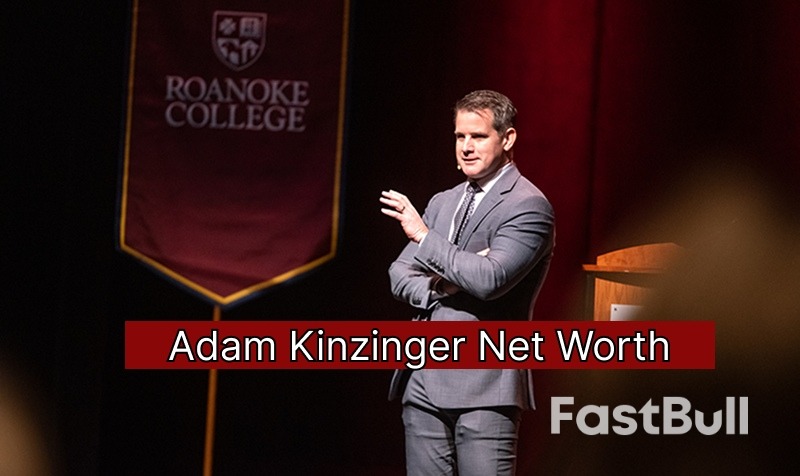
          Adam Kinzinger Net Worth 2025: Congress to CNN — Where the Real $4M Came From

          Adam Kinzinger Net Worth 2025: Why Leaving Congress Made Him $4M Richer_1

          Adam Kinzinger’s journey from Air Force pilot to U.S. Congressman and now CNN political analyst shows how a public career can transform into personal prosperity. As of 2025, adam kinzinger net worth is estimated near $4 million—reflecting not just government service, but strategic post-Congress income growth through media, speaking, and investments.

          Adam Kinzinger Net Worth: Quick Overview

          Current Net Worth in 2025

          As of 2025, estimates place Adam Kinzinger’s total assets at roughly $4 million. This valuation represents the combined results of his twelve years in Congress, ongoing Air National Guard service, and his transition to television commentary. Analysts tracking adam kinzinger net worth 2025 note that the majority of his recent growth came after leaving public office, when he diversified his income sources.

          Career Income Trajectory

          Congressman Adam Kinzinger’s career earnings began modestly with a U.S. Air Force pilot salary in the early 2000s before entering the House of Representatives in 2011. His government salary remained capped at $174,000 per year. However, his exposure in national politics opened doors to consulting, book contracts, and media roles that accelerated his income trajectory. Observers examining what is adam kinzinger net worth often cite his ability to pivot from public service to private opportunities as the key factor behind his financial growth.

          Primary Wealth Sources Breakdown

          • Congressional salary and federal pension contributions
          • Air National Guard lieutenant colonel pension benefits
          • CNN political analyst contract and speaking engagements
          • Book deals, royalties, and podcast sponsorships
          • Long-term investments and savings accumulated during his tenure

          The combination of stable government pay and post-retirement consulting income defines adam kinzinger net worth today. His financial disclosure filings show relatively low debt levels, suggesting consistent asset growth since leaving the House.

          The $4M Question: Why Leaving Congress Paid Off

          Congressional Salary Ceiling ($174K/Year)

          While serving in Congress, Kinzinger earned a fixed annual salary of about $174,000—comparable to other federal legislators. This cap limited potential net worth expansion during his tenure, as outside income and investments are strictly regulated for sitting members. His government benefits and military pension contributed to long-term stability but not immediate wealth accumulation.

          Post-Congress Income Explosion

          After stepping down in early 2023, Kinzinger’s earnings rose significantly. Joining CNN as a senior political commentator reportedly increased his annual income well beyond his congressional salary. Public estimates of the adam kinzinger cnn salary range from $400,000 to $600,000 per year, excluding appearance bonuses and event speaking fees. Combined with book royalties and PAC consulting, his post-congressional period became the most financially rewarding of his career.

          The Financial Math of His Exit

          Income SourceBefore Leaving CongressAfter Leaving Congress
          Annual Salary$174,000$400K–$600K (CNN & Speaking)
          Military PensionDeferred~$70K–$90K annually
          Book Deals & RoyaltiesMinimal$150K+
          Total Estimated Annual Income≈$174K$600K–$800K+

          These figures highlight how the transition from elected official to media figure redefined congressman adam kinzinger net worth. His financial disclosures after 2023 reflect a newfound liquidity and independence uncommon among former lawmakers, making him one of the few who grew wealthier after leaving Washington.

          Adam Kinzinger's Congress Years Income (2011–2023)

          12-Year Congressional Earnings

          During his twelve-year tenure in the U.S. House of Representatives, Adam Kinzinger earned an annual base salary of $174,000. Including allowances and benefits, his total congressional earnings over this period are estimated to exceed $2 million. Despite this steady income, congressional salary alone rarely leads to major wealth accumulation. Analysts evaluating what is adam kinzinger net worth note that his true financial growth began only after leaving Congress.

          Military Pension During Congressional Service

          While serving in Congress, Kinzinger maintained his Air National Guard commission, eventually reaching the rank of Lieutenant Colonel. This dual career path allowed him to accrue military pension benefits even while holding elected office. His pension contributions, paired with federal savings plans, helped build a foundation for long-term financial stability that continues to enhance adam kinzinger net worth 2025 projections.

          Assets Disclosed in Final Financial Report

          • Cash and savings accounts totaling approximately $300,000–$500,000
          • Retirement and investment funds valued near $1 million
          • Residential property in Illinois and minimal outstanding debt
          • Additional holdings in mutual funds and index portfolios

          The final 2023 disclosure showed moderate but solid wealth growth compared to previous filings. Congressman Adam Kinzinger net worth was characterized by liquidity and retirement-focused investments rather than luxury assets or high-risk ventures.

          What Congressional Salary Couldn't Buy

          A congressional salary limits external business opportunities due to federal ethics rules. While it provided security, it could not match the earning potential available to private-sector commentators or authors. Leaving office opened pathways to lucrative contracts such as the adam kinzinger cnn salary and consulting engagements, proving that post-political life could be more profitable than public service.

          How Anti-Trump Stance Reshaped His Wealth

          What He Lost: GOP Donor Base

          Kinzinger’s break from Donald Trump and the GOP establishment in 2021 effectively cut ties with major conservative donors. This decision temporarily slowed financial support for his campaigns and reduced access to traditional fundraising channels. However, it also allowed him to redefine his image as an independent voice in national media.

          What He Gained: Media Market Appeal

          His outspoken criticism of Trump increased media visibility, leading to a surge in interviews, book offers, and television appearances. Within months of leaving office, he secured a contract with CNN as a senior political analyst. Estimates of the adam kinzinger cnn salary suggest he now earns several times more annually than he did as a congressman. This shift elevated adam kinzinger net worth beyond the limitations of his prior public service pay.

          January 6th Committee's Financial Impact

          Serving on the January 6th Committee positioned Kinzinger as a national figure, boosting his credibility among centrist audiences and media networks. His televised appearances increased public demand for his commentary, turning controversy into income potential. The exposure also enhanced his long-term book and speaking value, providing recurring revenue that continues to sustain adam kinzinger net worth 2025 estimates.

          The Bipartisan Brand Value

          Unlike most former legislators tied to partisan identities, Kinzinger successfully built a bipartisan brand appealing to moderate Americans. His balanced media persona has attracted corporate event invitations and paid speaking opportunities across industries. Such engagements diversified congressman adam kinzinger net worth sources while reinforcing his image as a credible independent analyst.

          Military and Long-Term Wealth Stability

          1. Air Force Career Earnings and Rank Progression

          Adam Kinzinger’s Air Force career began in the early 2000s as a pilot, where he earned an average salary of $60,000–$80,000 annually. His service in Iraq and Afghanistan provided additional hazard pay and benefits. The discipline and leadership experience he gained during this period laid the groundwork for financial consistency, a major component of adam kinzinger net worth.

          2. Lieutenant Colonel Retirement Pension

          Upon achieving the rank of Lieutenant Colonel, Kinzinger became eligible for a lifetime military pension. Estimates place this pension at around $70,000–$90,000 annually depending on years of service and duty points. This steady post-retirement income ensures a secure financial baseline regardless of fluctuations in his media or consulting revenue.

          3. Dual Income Strategy: Guard + Congress

          Throughout his political career, Kinzinger maintained both military and congressional roles—a rare dual-income arrangement among lawmakers. This combination provided stable cash flow, health benefits, and future pension rights, forming a reliable safety net. Analysts evaluating what is adam kinzinger net worth often highlight this dual strategy as key to his long-term wealth preservation.

          FAQs About Adam Kinzinger Net Worth

          1. What does Adam Kinzinger do for a living now?

          After retiring from Congress, Adam Kinzinger became a CNN political commentator and public speaker. He also runs the Country First PAC, focusing on bipartisan leadership initiatives. These new ventures, combined with his military pension, form the main sources supporting adam kinzinger net worth today.

          2. What is the total net worth of all US citizens?

          According to the Federal Reserve, total U.S. household net worth surpassed $150 trillion in 2025. While this figure reflects the nation’s overall prosperity, individual earnings like those contributing to adam kinzinger net worth represent a much smaller share tied to personal career paths and investment decisions.

          3. Is Adam Kinzinger a Republican or a Democrat?

          Adam Kinzinger is officially a Republican, though his moderate and anti-Trump stance often puts him at odds with his party’s leadership. Since leaving Congress, he has adopted a more centrist political tone, which broadened his media appeal and helped expand his financial standing.

          Conclusion

          In summary, adam kinzinger net worth reflects a remarkable transition from public service to private opportunity. His estimated $4 million fortune in 2025 showcases how a disciplined military background, principled politics, and strategic post-congress ventures like media and consulting can redefine long-term financial success.

          Risk Warnings and Disclaimers
          You understand and acknowledge that there is a high degree of risk involved in trading. Following any strategies or investment methods may lead to potential losses. The content on the site is provided by our contributors and analysts for information purposes only. You are solely responsible for determining whether any trading assets, securities, strategy, or any other product is suitable for investing based on your own investment objectives and financial situation.
          Add to Favorites
          Share

          US Ports Facing ‘goods Recession’ Amid Holiday Lull, Tariff Woes

          Glendon

          Forex

          Economic

          US import volumes are projected to slow through the year-end holidays and into 2026, as tariff uncertainty weighs on cargo owners and the outlook for consumer spending remains clouded, new data show.

          According to Descartes Systems Group's latest Global Shipping Report, the volume of US container imports slipped 0.1% last month compared with September, marking only the second October in the past decade to show a month-over-month decline and "a clear sign of importer caution."

          The October total of 2.31 million 20-foot equivalent container units, or TEUs, was 7.5% lower the year-earlier level and left the year-to-date tally just 0.9% higher than the total during the first 10 months of 2024. Separate figures from the National Retail Federation and Hackett Associates predict year-on-year declines in inbound container volumes of 14.4% for November and 17.9% in December.

          US importers are facing "persistent geopolitical friction and regulatory volatility, which drive higher levels of supply chain uncertainty and complexity as policies shift and evolve quickly," Jackson Wood, director of industry strategy at Descartes, said in the report released Monday.

          President Donald Trump's return to the White House in January kicked off a rollercoaster year for manufacturers, retailers and other US industries dependent on goods from abroad. They're mostly absorbing his higher import taxes, while small businesses in particular are struggling to manage supply networks without a clear picture of their landed costs.

          The future of Trump's tariff reach was thrown into fresh doubt last week as the Supreme Court sounded skeptical about the constitutionality of his broad use of import taxes.

          Starting Monday, the US' 20% fentanyl tariff on imports from China is reduced to 10%, and a significant increase in "reciprocal" duties on Chinese goods set to take effect is paused for a third time, this time for a year. The 10% duty Trump imposed using emergency powers remains in place while it's under the high court's review.

          Tariff mitigation efforts by retailers earlier in the year may have spared Americans major disruptions like shortages and price spikes during the holiday shopping season, according to the National Retail Federation.

          'Well-stocked' shelves

          "Store shelves are well-stocked and the effect on prices has been minimized, largely thanks to retailers taking steps like front-loading imports during times of low or delayed tariff increases or absorbing the costs themselves," NRF vice-president for supply chain and customs policy Jonathan Gold said in a statement Friday.

          The NRF and Hackett Associates' port-tracking data project a soft finish to the year. If realised, the nearly 18% plunge forecast for December would be the slowest month since March 2023.

          The NRF and Hackett Associates' Global Port Tracker forecasts 2025 to close at container volumes totaling 24.9 million TEUs, down 2.3% from last year's total. The first quarter of 2026 is likely to see weak year-on-year comparisons, too, partly because shipments were pulled forward to avoid tariffs.

          "These conditions make market forecasting highly uncertain," Hackett Associates founder Ben Hackett said. "Our trade outlook is for a small decline in imports this year compared with 2024 and a further, larger decline in the first quarter of 2026."

          According to an analysis published last week by Vizion, a tech company that provides supply-chain visibility, the "new normal" in freight brings subdued demand.

          "For the first time since March 2023, monthly import volumes are falling below the two million TEU threshold, signalling what freight industry experts now characterise as a 'goods recession,'" Vizion said in a blog post. "This contraction represents a structural shift rather than temporary volatility."

          Monthly trade data last week confirmed that the US market is in decline for Chinese manufacturers.

          China's total shipments abroad fell for the first time in eight months, dropping 1.1% from a year earlier, according to official data released Friday. Shipments to all nations except the US rose 3.1%, not enough to compensate for the more than 25% decline to America.

          AP Moller-Maersk A/S CEO Vincent Clerc said it's hard for the world's number two container carrier to decipher whether the recent soft demand in North America was an inventory correction after the pulling-forward of orders earlier this year, or whether it's reflecting fundamentally weak demand.

          Still, he said there are signs of resilience in an outlook otherwise dimmed by trade policy unknowns.

          "As far as the next six months are concerned, we expect still quite a resilient demand into North America with goods starting now to pick up pace compared to what we have seen in the last couple of quarters," Clerc told Bloomberg Television on Thursday.

          "One of the core risks that we see is the uncertainty that there is," he said, noting that a recent US-China truce offers reprieves on tariffs and ship fees that are only temporary. "The long-term playing field is still unclear."

          Long Beach's view

          At the Port of Long Beach in Southern California, CEO Mario Cordero said he expects to close 2025 near the facility's record volume set last year of 9.6 million 20-foot equivalent container units, or TEUs, even with a slowdown over the next two months.

          "We're looking forward to a moderate increase in cargo in 2026," Cordero told reporters Friday, though he said much depends on the economy, including how much and when tariffs filter through to consumer prices, and on the status of the US-China trade war.

          For example, soybean exports leaving the Port of Long Beach dropped 93% in the first nine months of 2025 compared with the year before, according to the port, the nation's second-busiest. That's because China refused to purchase the commodity from US farmers in retaliation for Trump's trade war. China has since agreed to restart soybean purchases.

          Cordero said goods categories like winter clothing, toys and furniture, are on the decline, while the boom in artificial intelligence is spurring an increase in electronics and other products related to data centers.

          Source: Theedgemarkets

          To stay updated on all economic events of today, please check out our Economic calendar
          Risk Warnings and Disclaimers
          You understand and acknowledge that there is a high degree of risk involved in trading. Following any strategies or investment methods may lead to potential losses. The content on the site is provided by our contributors and analysts for information purposes only. You are solely responsible for determining whether any trading assets, securities, strategy, or any other product is suitable for investing based on your own investment objectives and financial situation.
          Add to Favorites
          Share

          Hong Kong Surpasses Korea In Structured Note Boom, JPMorgan Says

          Justin

          Forex

          Economic

          Stocks

          A surging Hong Kong market has led to a boom in structured products linked to the city's equities, so much so that it's overtaken issuance from Japan and Korea, according to JPMorgan Chase & Co.

          Structured products tied to the biggest single stocks listed in Hong Kong, including Alibaba Group Holding Ltd. and Tencent Holdings Ltd., have emerged as the "new anchor" of regional volatility supply, "significantly" outpacing index-linked issuance this year, strategists including Tony Lee wrote in a note dated Friday.

          In 2025, the instruments supplied around $11 million of vega — sensitivity to changes in the price of the underlying asset — per month, almost triple the level from 2024.

          China's policy pivot last year revived investors' interest, with elevated volatility at the single-stock level and the artificial intelligence frenzy together leading to more demand for accumulation and equity-linked yield products, according to the note. Meanwhile, regulatory tightening and stricter investor protection standards in Japan and Korea helped curtail issuance in those markets.

          "Volatility supply in Asia has shifted toward Hong Kong," the strategists wrote, noting that Alibaba, Tencent, Meituan, Xiaomi Corp. and BYD Co. are the core underlying names for structured products issuance. "Dealers' vega positioning across these stocks currently sits near peak exposure levels, suggesting large rallies or declines in spot prices could influence volatility flows."

          JPMorgan also noted that the growth in single-stock issuance has affected regional volatility dynamics, primarily boosting dispersion trades, where investors are long single-stock volatility and short index volatility.

          The strategists expect the momentum to continue in 2026, with the top stocks offering liquidity depth, investor familiarity and exposure to key investment themes. Newer listings and recent index additions such as Contemporary Amperex Technology Co. and Pop Mart International Group Ltd. may "modestly broaden the base," the strategists said.

          Source: Bloomberg Europe

          To stay updated on all economic events of today, please check out our Economic calendar
          Risk Warnings and Disclaimers
          You understand and acknowledge that there is a high degree of risk involved in trading. Following any strategies or investment methods may lead to potential losses. The content on the site is provided by our contributors and analysts for information purposes only. You are solely responsible for determining whether any trading assets, securities, strategy, or any other product is suitable for investing based on your own investment objectives and financial situation.
          Add to Favorites
          Share

          Nasdaq 100 Rebounds As Traders Anticipate End of The US Shutdown

          FxPro

          Stocks

          Political

          As the chart shows, the Nasdaq 100 index (US Tech 100 mini on FXOpen) has started the week on a positive note amid growing expectations that the longest government shutdown in US history may soon come to an end.

          According to Reuters, a bill has been introduced in the Senate proposing amendments to extend government funding until 30 January. The news acted as a bullish catalyst for equity markets. Still, the question remains – is the risk truly behind us?

          Technical Analysis of the Nasdaq 100

          Analysing the hourly chart of the Nasdaq 100 (US Tech 100 mini on FXOpen) on 4 November, we:

          → Drew an ascending channel;

          → Noted signs of momentum exhaustion, as mentioned in our previous headline.

          Since then, price action has evolved as follows:

          → The lower boundary of the channel provided support (1), prompting a brief rebound;

          → The 25,770 level acted as resistance (2) on two occasions, strengthening the bears' confidence to push for a downside breakout — which ultimately succeeded.

          The index's subsequent movements have now more clearly outlined the formation of a descending channel (shown in red).

          From the demand-side perspective:

          → After a false bearish breakout below 24,680 (showing characteristics of a Liquidity Grab pattern), the market staged an aggressive rally from point B;

          → Today's session opened with a bullish gap, and the price has moved above the red median line.

          From the supply-side perspective:

          → The 25,500 level, where sellers gained control during the previous channel breakout, may now act as resistance;

          → If the A→B move is viewed as an impulse, today's rally appears to be a corrective rebound consistent with Fibonacci proportions — suggesting that downward momentum could resume within the red channel.

          Source: FXOpen

          Risk Warnings and Disclaimers
          You understand and acknowledge that there is a high degree of risk involved in trading. Following any strategies or investment methods may lead to potential losses. The content on the site is provided by our contributors and analysts for information purposes only. You are solely responsible for determining whether any trading assets, securities, strategy, or any other product is suitable for investing based on your own investment objectives and financial situation.
          Add to Favorites
          Share

          China’s Fintech Giants Tiptoe Back Into Lending as Regulatory Winds Shift and Demand Surges

          Gerik

          Economic

          Lending Revival Signals Policy Softening, Not Deregulation

          China’s major internet firms including Ant Group, WeBank, ByteDance, and Meituan are cautiously resuming consumer lending operations after years of regulatory repression. This shift reflects what industry insiders interpret as a more accommodative stance from regulators, driven in part by the government’s urgency to stimulate consumption during an economic slowdown and a tense trade climate with the United States.
          The recent rollout of consumer-loan interest subsidies, which included both traditional and internet-backed lenders, has been viewed as a signal that Beijing is prepared to tolerate if not actively support a measured return of fintech-driven credit. According to UBS, online platform lending is projected to grow 7.6% in 2025 to 5.4 trillion yuan (approximately $758 billion), with an annual growth rate of 7.4% expected through 2029.
          This renewed expansion marks a structural pivot from what was once a restrictive environment following the dramatic 2020 crackdown, which began with the suspension of Ant Group’s IPO and continued with sweeping reforms across the fintech landscape.

          From Crackdown to Coordination: A Shift in Strategy

          The fintech sector’s former growth model characterized by minimal oversight and rapid scaling was dismantled as Beijing sought to curb systemic risk. Platforms were ordered to restructure into financial holding entities, subject to higher capital requirements and stricter consumer data use policies.
          By 2023, regulators confirmed that restructuring efforts were complete for 14 major platforms. But despite regulatory compliance, firms remained hesitant until a series of high-profile engagements between Chinese leadership and private-sector executives, including Alibaba’s Jack Ma, signaled a new chapter in state-business coordination.
          Industry analysts now describe the environment as one of “normalized regulatory oversight,” a middle ground between unrestrained expansion and regulatory suffocation. The government's implicit support through consumer subsidies and inclusion of platforms in lending programs suggests fintech is once again being positioned as a vital tool to drive domestic demand.
          However, this is a correlated policy alignment rather than a causal green light for unrestricted lending. The authorities remain highly alert to financial instability, and any significant rise in defaults may provoke another tightening cycle.

          Demand Surges, But Defaults Erode Stability

          On the consumer side, the appetite for online loans is clearly resurging. Platforms are once again aggressively marketing their services, often highlighting ease of approval and flexible repayment terms. For middle-income consumers like Shanghai resident Yang Dongdong, who took her first online loan to furnish a new home, the appeal lies in convenience and speed.
          Yet not all borrowers are using credit prudently. Some, like Max Luo and Liao Kui, have fallen into speculative traps or debt spirals. Their stories highlight a fundamental risk: easy lending terms may encourage financial overreach, particularly in an environment where wages are stagnant and job security is weak.
          Data from the Banking Credit Asset Registration and Transfer Center show that 74.3 billion yuan of non-performing loans were put up for sale in Q1 2025 a 190% year-on-year increase with consumer loans accounting for 70% of this total. Gavekal Dragonomics estimates that 5–7% of Chinese adults may have already defaulted or missed repayments on loans of any kind.
          These figures expose a potential causal relationship between fintech-led lending resurgence and consumer financial fragility, particularly when credit is used for speculation or refinancing, rather than direct consumption.

          Firms Weigh Risk and Opportunity

          While ByteDance has aggressively ramped up lending this year, Tencent remains restrained, reportedly discussing ambitious goals internally but refraining from aggressive implementation. This variation in strategy reflects divergent risk tolerances: firms are weighing short-term profitability against long-term exposure to policy reversal and reputational damage.
          Despite government signals of leniency, market participants remain vigilant. One executive from a top three internet finance firm remarked that regulators are unlikely to tolerate another wave of destabilizing defaults. This echoes a sentiment that expansion is permitted but conditional.
          The sector is currently balancing between policy alignment and market risk. Subsidies and broader oversight have created an enabling environment, but firms are not blind to the fact that a sudden shift in official sentiment could reintroduce the rigid restrictions of the past few years.

          Strategic Growth Amid Fragile Fundamentals

          The cautious resurgence of consumer lending by China’s internet giants reflects a recalibrated relationship between state and platform capital. Beijing’s current economic strategy appears to welcome fintech participation in supporting domestic demand, provided that systemic risk is controlled.
          However, early warning signs rising default rates, loan misuse, and over-indebtedness underscore the fragility of this recovery. The correlation between policy easing and credit expansion is clear, but whether it can sustain growth without triggering another wave of financial instability remains uncertain.
          In essence, China’s fintech firms are no longer constrained by regulatory walls, but by the need to self-regulate against the possibility of renewed intervention. Their next chapter will be defined not just by how fast they grow, but by how responsibly they lend.

          Source: Reuters

          To stay updated on all economic events of today, please check out our Economic calendar
          Risk Warnings and Disclaimers
          You understand and acknowledge that there is a high degree of risk involved in trading. Following any strategies or investment methods may lead to potential losses. The content on the site is provided by our contributors and analysts for information purposes only. You are solely responsible for determining whether any trading assets, securities, strategy, or any other product is suitable for investing based on your own investment objectives and financial situation.
          Add to Favorites
          Share

          Gold Climbs to Two-Week High

          Golden Gleam

          Commodity

          Technical Analysis

          On Monday, gold advanced by more than 1% to 4,050 USD per ounce, reaching a fresh two-week high. The rally was fuelled by mounting concerns over the health of the US economy.

          A softening US dollar provided further support for the precious metal, enhancing the affordability of dollar-denominated assets for international buyers.

          Data released on Friday revealed that the University of Michigan's consumer sentiment index had fallen to its lowest level in nearly three and a half years. This decline is largely attributed to the ongoing US government shutdown, which has now become the longest in the nation's history. Investors are closely monitoring the situation as the US Senate moves closer to approving a Democratic-backed proposal to reopen the government.

          Amid the economic uncertainty, market expectations for the Federal Reserve's next move remain divided. The probability of a 25 basis point rate cut in December is currently priced at approximately 67%, unchanged from the end of last week.

          Technical Analysis: XAU/USD

          H4 Chart:

          On the H4 chart, XAU/USD is forming a consolidation range around 3,988 USD. A breakout to the upside is expected to initiate a growth wave towards 4,075 USD, which may then be followed by a decline to 4,020 USD (testing the level from below). A subsequent breakdown from this range could extend the correction towards 3,660 USD, where the downward move is anticipated to conclude. This would potentially set the stage for a new upward wave targeting 4,400 USD. The MACD indicator supports this outlook, with its signal line above zero and pointing upward, suggesting continued near-term bullish momentum.

          H1 Chart:

          On the H1 chart, the market is also consolidating around 3,988 USD. An upward breakout is likely to propel prices towards 4,075 USD, after which a decline to at least 4,020 USD is expected. The Stochastic oscillator aligns with this view, as its signal line is positioned above 80 and appears poised to reverse downward towards 20, indicating potential for a near-term pullback.

          Conclusion

          Gold is trading at a two-week high, supported by economic concerns and a weaker US dollar. While the near-term technical structure suggests potential for further gains towards 4,075 USD, a subsequent correction towards 4,020 USD is anticipated. The broader outlook remains constructive, with a deeper corrective move towards 3,660 USD expected to present a buying opportunity ahead of a potential resumption of the broader uptrend.

          Source: ACTIONFOREX

          Risk Warnings and Disclaimers
          You understand and acknowledge that there is a high degree of risk involved in trading. Following any strategies or investment methods may lead to potential losses. The content on the site is provided by our contributors and analysts for information purposes only. You are solely responsible for determining whether any trading assets, securities, strategy, or any other product is suitable for investing based on your own investment objectives and financial situation.
          Add to Favorites
          Share

          Gold Rallies Above $4,070 as U.S. Economic Weakness Fuels Rate Cut Expectations

          Gerik

          Economic

          Commodity

          Gold Strengthens on Economic Weakness and Dovish Fed Expectations

          Gold climbed for a second consecutive session on Monday, with spot prices rising to $4,071.55 an ounce in Asia. This rebound follows last week’s muted performance and reflects renewed investor positioning as economic indicators suggest the U.S. economy may be losing momentum. The rally is largely driven by weak consumer sentiment and private labor data that paint a sluggish picture of household and employment strength.
          Gold’s rise of nearly 2% marks a notable recovery from its recent retreat. Prices had dropped roughly 7% since peaking at an all-time high above $4,380 in mid-October. Still, the year-to-date gains remain substantial, with gold up more than 50%, sustained by macroeconomic uncertainty, robust central bank buying, and persistent geopolitical risk.
          The upward price movement demonstrates a classic correlation between deteriorating economic data and increased safe-haven demand. More importantly, this suggests a cause-effect dynamic in which the prospect of monetary easing made likelier by weak data directly boosts gold's appeal as a non-yielding asset.

          Dovish Signals Amplified by Shutdown-Induced Data Vacuum

          Recent labor and sentiment data have added fuel to expectations that the Federal Reserve may cut interest rates at its next meeting in December. The University of Michigan’s consumer sentiment index has fallen to near-record lows, echoing growing concern among households about inflation and economic direction. A separate private-sector employment report also hinted at a weakening labor market.
          However, the government shutdown has significantly delayed the release of key economic data, leaving the Fed with an incomplete view of the economy. This constraint has forced policymakers to rely more heavily on secondary indicators and qualitative data. With moderate Senate Democrats reportedly backing a plan to reopen the government, investor attention is pivoting to what a data restart might reveal and whether it would justify immediate monetary easing.
          According to Riya Singh of Emkay Global, while the potential resolution of the shutdown could slightly reduce gold’s momentum, the underlying economic fragility remains the primary force behind the current rally.

          Continued Central Bank Buying Bolsters Market Confidence

          One of the most structurally supportive factors for gold remains the aggressive accumulation by central banks led by the People’s Bank of China, which has now added gold to its reserves for 12 consecutive months. This consistent buying trend suggests a deliberate shift by major sovereigns toward asset diversification and longer-term inflation hedging.
          Additionally, recent inflows into gold-backed exchange-traded funds (ETFs) underscore rising retail and institutional demand for the metal, particularly amid mounting recession risks. This multi-channel demand pattern reinforces gold’s role not only as a defensive asset but also as a liquidity vehicle in volatile conditions.

          Shutdown Resolution Shifts Focus to Fed Policy

          According to Vasu Menon of OCBC, if the U.S. government reopens and delayed economic data is released, the market may quickly pivot to pricing in a rate-cut timeline more precisely. That, in turn, would sharpen expectations for the Fed’s next move, especially if indicators point to a broader economic slowdown.
          This relationship is nuanced. While resolution of the shutdown removes one source of uncertainty, it may paradoxically support gold if the incoming data confirms a slowdown, thereby making a rate cut not just likely, but urgent.
          Meanwhile, the Bloomberg Dollar Spot Index remained steady, suggesting the dollar's strength was not a significant counterweight to gold's rise on the day. Silver also surged 2.4%, while platinum and palladium registered additional gains, indicating broader momentum in precious metals.

          Weak Data and Policy Uncertainty Keep Gold in Rally Mode

          Gold’s latest rally underscores the asset’s sensitivity to real-time shifts in U.S. macroeconomic sentiment and monetary policy expectations. Although optimism about ending the shutdown exists, the key drivers for gold remain elevated: soft labor data, low consumer confidence, and delayed economic visibility. Together, these increase the likelihood of a dovish Fed response a development that continues to support gold's upward trajectory.
          As central banks continue to buy and investors hedge against policy missteps and inflation persistence, gold remains well-positioned in the short to medium term, particularly if hard data confirms that the U.S. economy is indeed approaching a slowdown.

          Source: Bloomberg

          To stay updated on all economic events of today, please check out our Economic calendar
          Risk Warnings and Disclaimers
          You understand and acknowledge that there is a high degree of risk involved in trading. Following any strategies or investment methods may lead to potential losses. The content on the site is provided by our contributors and analysts for information purposes only. You are solely responsible for determining whether any trading assets, securities, strategy, or any other product is suitable for investing based on your own investment objectives and financial situation.
          Add to Favorites
          Share
          FastBull
          Copyright © 2025 FastBull Ltd

          728 RM B 7/F GEE LOK IND BLDG NO 34 HUNG TO RD KWUN TONG KLN HONG KONG

          TelegramInstagramTwitterfacebooklinkedin
          App Store Google Play Google Play
          Products
          Charts

          Chats

          Q&A with Experts
          Screeners
          Economic Calendar
          Data
          Tools
          Membership
          Features
          Function
          Markets
          Copy Trading
          Latest Signals
          Contests
          News
          Analysis
          24/7
          Columns
          Education
          Company
          Careers
          About Us
          Contact Us
          Advertising
          Help Center
          Feedback
          User Agreement
          Privacy Policy
          Business

          White Label

          Data API

          Web Plug-ins

          Poster Maker

          Affiliate Program

          Risk Disclosure

          The risk of loss in trading financial instruments such as stocks, FX, commodities, futures, bonds, ETFs and crypto can be substantial. You may sustain a total loss of the funds that you deposit with your broker. Therefore, you should carefully consider whether such trading is suitable for you in light of your circumstances and financial resources.

          No decision to invest should be made without thoroughly conducting due diligence by yourself or consulting with your financial advisors. Our web content might not suit you since we don't know your financial conditions and investment needs. Our financial information might have latency or contain inaccuracy, so you should be fully responsible for any of your trading and investment decisions. The company will not be responsible for your capital loss.

          Without getting permission from the website, you are not allowed to copy the website's graphics, texts, or trademarks. Intellectual property rights in the content or data incorporated into this website belong to its providers and exchange merchants.

          Not Logged In

          Log in to access more features

          FastBull Membership

          Not yet

          Purchase

          Become a signal provider
          Help Center
          Customer Service
          Dark Mode
          Price Up/Down Colors

          Log In

          Sign Up

          Position
          Layout
          Fullscreen
          Default to Chart
          The chart page opens by default when you visit fastbull.com