• Trade
  • Markets
  • Copy
  • Contests
  • News
  • 24/7
  • Calendar
  • Q&A
  • Chats
Trending
Screeners
SYMBOL
LAST
BID
ASK
HIGH
LOW
NET CHG.
%CHG.
SPREAD
SPX
S&P 500 Index
6855.43
6855.43
6855.43
6878.28
6850.27
-14.97
-0.22%
--
DJI
Dow Jones Industrial Average
47837.62
47837.62
47837.62
47971.51
47771.72
-117.36
-0.24%
--
IXIC
NASDAQ Composite Index
23558.49
23558.49
23558.49
23698.93
23531.62
-19.63
-0.08%
--
USDX
US Dollar Index
99.090
99.170
99.090
99.110
98.730
+0.140
+ 0.14%
--
EURUSD
Euro / US Dollar
1.16270
1.16277
1.16270
1.16717
1.16245
-0.00156
-0.13%
--
GBPUSD
Pound Sterling / US Dollar
1.33169
1.33178
1.33169
1.33462
1.33087
-0.00143
-0.11%
--
XAUUSD
Gold / US Dollar
4189.72
4190.15
4189.72
4218.85
4175.92
-8.19
-0.20%
--
WTI
Light Sweet Crude Oil
59.020
59.050
59.020
60.084
58.892
-0.789
-1.32%
--

Community Accounts

Signal Accounts
--
Profit Accounts
--
Loss Accounts
--
View More

Become a signal provider

Sell trading signals to earn additional income

View More

Guide to Copy Trading

Get started with ease and confidence

View More

Signal Accounts for Members

All Signal Accounts

Best Return
  • Best Return
  • Best P/L
  • Best MDD
Past 1W
  • Past 1W
  • Past 1M
  • Past 1Y

All Contests

  • All
  • Trump Updates
  • Recommend
  • Stocks
  • Cryptocurrencies
  • Central Banks
  • Featured News
Top News Only
Share

All Three Major U.S. Stock Indexes Fell, With The S&P 500 Dropping 0.3% To A New Daily Low

Share

German Spy Chief: No Need To 'Break' With US Over Security Policy

Share

United Arab Emirates Official To Reuters: The United Arab Emirates Asserts That The Governance And Territorial Integrity Of Yemen Must Be Determined By Yemenis

Share

United Arab Emirates Official To Reuters: The United Arab Emirates's Position On The Yemen Crisis Is In Line With Saudi Arabia In Supporting A Political Process Based On An Initiative Backed By Gulf States

Share

French Presidential Residence Elysee: Work Will Be Intensified To Provide Ukraine With Robust Security Guarantees And To Plan Measures For The Reconstruction Of Ukraine

Share

French Presidential Residence Elysee: Meeting Of Leaders In The E3 Format And President Zelensky Allowed For The Continuation Of Joint Work On The US Plan

Share

US Dollar Extends Gains Versus Yen After Japan Earthquake, Last Up 0.2% At 155.64 Yen

Share

US Natural Gas Futures Drop 6% On Less Cold Forecasts, Near-Record Output

Share

Russian Central Bank: Sets Official Rouble Rate For December 9 At 77.2733 Roubles Per USA Dollar (Previous Rate - 76.0937)

Share

Russian Deputy Prime Minister Novak: Russia Will Restrict Gold Exports Starting In 2026

Share

US Dollar Touches Session High Versus Yen On Earthquake News, Last Up 0.5% At 155.81%

Share

NHK: A 40-centimeter-high Tsunami Has Reached Mutsuki Port In Aomori, Japan

Share

ICE Cotton Stocks Totalled To 13971 - December 08, 2025

Share

Japan Prime Minister Takaichi: Trying To Gather Information After Quake

Share

UK Trade Minister To Visit US This Week For Talks On Tariffs

Share

Head Of Yemen's Anti-Houthi Presidential Council Says Actions Of Southern Transitional Council Across South Yemen Undermines Legitimacy Of Internationally-Recognised Government

Share

Carvana Rose 9.1% And Crh Rose 6.8% As Both Companies Were Added To The S&P 500 Index

Share

Japanese Regulators Say No Problems Have Been Found At The Onagawa Nuclear Power Plant

Share

KYODO News: Some Tohoku Shinkansen Services Have Been Suspended Following The Earthquake In Japan

Share

The Japan Meteorological Agency Has Issued Tsunami Warnings For The Central Pacific Coast Of Hokkaido, The Pacific Coast Of Aomori Prefecture, And Iwate Prefecture

TIME
ACT
FCST
PREV
France Trade Balance (SA) (Oct)

A:--

F: --

P: --
Euro Zone Employment YoY (SA) (Q3)

A:--

F: --

P: --
Canada Part-Time Employment (SA) (Nov)

A:--

F: --

P: --

Canada Unemployment Rate (SA) (Nov)

A:--

F: --

P: --

Canada Full-time Employment (SA) (Nov)

A:--

F: --

P: --

Canada Labor Force Participation Rate (SA) (Nov)

A:--

F: --

P: --

Canada Employment (SA) (Nov)

A:--

F: --

P: --

U.S. PCE Price Index MoM (Sept)

A:--

F: --

P: --

U.S. Personal Income MoM (Sept)

A:--

F: --

P: --

U.S. Core PCE Price Index MoM (Sept)

A:--

F: --

P: --

U.S. PCE Price Index YoY (SA) (Sept)

A:--

F: --

P: --

U.S. Core PCE Price Index YoY (Sept)

A:--

F: --

P: --

U.S. Personal Outlays MoM (SA) (Sept)

A:--

F: --

P: --
U.S. 5-10 Year-Ahead Inflation Expectations (Dec)

A:--

F: --

P: --

U.S. Real Personal Consumption Expenditures MoM (Sept)

A:--

F: --

P: --
U.S. Weekly Total Rig Count

A:--

F: --

P: --

U.S. Weekly Total Oil Rig Count

A:--

F: --

P: --

U.S. Consumer Credit (SA) (Oct)

A:--

F: --

P: --
China, Mainland Foreign Exchange Reserves (Nov)

A:--

F: --

P: --

Japan Trade Balance (Oct)

A:--

F: --

P: --

Japan Nominal GDP Revised QoQ (Q3)

A:--

F: --

P: --

China, Mainland Imports YoY (CNH) (Nov)

A:--

F: --

P: --

China, Mainland Exports (Nov)

A:--

F: --

P: --

China, Mainland Imports (CNH) (Nov)

A:--

F: --

P: --

China, Mainland Trade Balance (CNH) (Nov)

A:--

F: --

P: --

China, Mainland Exports YoY (USD) (Nov)

A:--

F: --

P: --

China, Mainland Imports YoY (USD) (Nov)

A:--

F: --

P: --

Germany Industrial Output MoM (SA) (Oct)

A:--

F: --

P: --
Euro Zone Sentix Investor Confidence Index (Dec)

A:--

F: --

P: --

Canada National Economic Confidence Index

A:--

F: --

P: --

U.K. BRC Like-For-Like Retail Sales YoY (Nov)

--

F: --

P: --

U.K. BRC Overall Retail Sales YoY (Nov)

--

F: --

P: --

Australia Overnight (Borrowing) Key Rate

--

F: --

P: --

RBA Rate Statement
RBA Press Conference
Germany Exports MoM (SA) (Oct)

--

F: --

P: --

U.S. NFIB Small Business Optimism Index (SA) (Nov)

--

F: --

P: --

Mexico 12-Month Inflation (CPI) (Nov)

--

F: --

P: --

Mexico Core CPI YoY (Nov)

--

F: --

P: --

Mexico PPI YoY (Nov)

--

F: --

P: --

U.S. Weekly Redbook Index YoY

--

F: --

P: --

U.S. JOLTS Job Openings (SA) (Oct)

--

F: --

P: --

China, Mainland M1 Money Supply YoY (Nov)

--

F: --

P: --

China, Mainland M0 Money Supply YoY (Nov)

--

F: --

P: --

China, Mainland M2 Money Supply YoY (Nov)

--

F: --

P: --

U.S. EIA Short-Term Crude Production Forecast For The Year (Dec)

--

F: --

P: --

U.S. EIA Natural Gas Production Forecast For The Next Year (Dec)

--

F: --

P: --

U.S. EIA Short-Term Crude Production Forecast For The Next Year (Dec)

--

F: --

P: --

EIA Monthly Short-Term Energy Outlook
U.S. API Weekly Gasoline Stocks

--

F: --

P: --

U.S. API Weekly Cushing Crude Oil Stocks

--

F: --

P: --

U.S. API Weekly Crude Oil Stocks

--

F: --

P: --

U.S. API Weekly Refined Oil Stocks

--

F: --

P: --

South Korea Unemployment Rate (SA) (Nov)

--

F: --

P: --

Japan Reuters Tankan Non-Manufacturers Index (Dec)

--

F: --

P: --

Japan Reuters Tankan Manufacturers Index (Dec)

--

F: --

P: --

Japan Domestic Enterprise Commodity Price Index MoM (Nov)

--

F: --

P: --

Japan Domestic Enterprise Commodity Price Index YoY (Nov)

--

F: --

P: --

China, Mainland PPI YoY (Nov)

--

F: --

P: --

China, Mainland CPI MoM (Nov)

--

F: --

P: --

Q&A with Experts
    • All
    • Chatrooms
    • Groups
    • Friends
    Connecting
    .
    .
    .
    Type here...
    Add Symbol or Code

      No matching data

      All
      Trump Updates
      Recommend
      Stocks
      Cryptocurrencies
      Central Banks
      Featured News
      • All
      • Russia-Ukraine Conflict
      • Middle East Flashpoint
      • All
      • Russia-Ukraine Conflict
      • Middle East Flashpoint
      Search
      Products

      Charts Free Forever

      Chats Q&A with Experts
      Screeners Economic Calendar Data Tools
      Membership Features
      Data Warehouse Market Trends Institutional Data Policy Rates Macro

      Market Trends

      Market Sentiment Order Book Forex Correlations

      Top Indicators

      Charts Free Forever
      Markets

      News

      News Analysis 24/7 Columns Education
      From Institutions From Analysts
      Topics Columnists

      Latest Views

      Latest Views

      Trending Topics

      Top Columnists

      Latest Update

      Signals

      Copy Rankings Latest Signals Become a signal provider AI Rating
      Contests
      Brokers

      Overview Brokers Assessment Rankings Regulators News Claims
      Broker listing Forex Brokers Comparison Tool Live Spread Comparison Scam
      Q&A Complaint Scam Alert Videos Tips to Detect Scam
      More

      Business
      Events
      Careers About Us Advertising Help Center

      White Label

      Data API

      Web Plug-ins

      Affiliate Program

      Awards Institution Evaluation IB Seminar Salon Event Exhibition
      Vietnam Thailand Singapore Dubai
      Fans Party Investment Sharing Session
      FastBull Summit BrokersView Expo
      Recent Searches
        Top Searches
          Markets
          News
          Analysis
          User
          24/7
          Economic Calendar
          Education
          Data
          • Names
          • Latest
          • Prev

          View All

          No data

          Scan to Download

          Faster Charts, Chat Faster!

          Download App
          English
          • English
          • Español
          • العربية
          • Bahasa Indonesia
          • Bahasa Melayu
          • Tiếng Việt
          • ภาษาไทย
          • Français
          • Italiano
          • Türkçe
          • Русский язык
          • 简中
          • 繁中
          Open Account
          Search
          Products
          Charts Free Forever
          Markets
          News
          Signals

          Copy Rankings Latest Signals Become a signal provider AI Rating
          Contests
          Brokers

          Overview Brokers Assessment Rankings Regulators News Claims
          Broker listing Forex Brokers Comparison Tool Live Spread Comparison Scam
          Q&A Complaint Scam Alert Videos Tips to Detect Scam
          More

          Business
          Events
          Careers About Us Advertising Help Center

          White Label

          Data API

          Web Plug-ins

          Affiliate Program

          Awards Institution Evaluation IB Seminar Salon Event Exhibition
          Vietnam Thailand Singapore Dubai
          Fans Party Investment Sharing Session
          FastBull Summit BrokersView Expo

          3 Altcoins That Stand to Gain If Capital Rotates Away From Bitcoin

          Adam

          Cryptocurrency

          Summary:

          Altcoins such as Ethereum, Solana, and Bitcoin Cash could benefit if capital shifts away from Bitcoin, driven by ETF developments and institutional interest, despite short-term technical pressures and risks.
          Although the cryptocurrency market has seen a slight decline in recent days, Bitcoin continues to dominate. This has resulted in altcoins recording their weakest performance against BTC in years.
          The total market capitalization excluding Bitcoin recovered by nearly 10% last week. Sitting at a critical support level of $1 trillion, the new week has started calmly for altcoins. If this support zone holds across the altcoin market, it could indicate that the capital flowing into crypto—currently dominated by Bitcoin—may begin to shift towards altcoins. In particular, expectations around ETFs, the possibility of early Fed rate cuts, and the launch of new altcoin-based products could support this transition.
          Several developments within the internal dynamics of the crypto market may also gradually shift investor sentiment in favor of altcoins. The ongoing ETF progress for Ethereum, the launch of a staking-integrated ETF for Solana, and rising institutional interest in Bitcoin Cash are just some examples of this growing momentum toward altcoins.
          While ETF Uncertainty Persists in Ethereum, Medium-to-Long-Term Potential Remains
          Ethereum, which leads the altcoin market, continues to face pressure—most recently from the SEC’s decision to delay the Ethereum staking ETF proposed by Bitwise.
          The SEC’s approval of the spot Ethereum ETF last year was a major milestone. Now, the potential inclusion of staking could mark another turning point for ETH. The possible returns from introducing staking into ETFs, along with broader spot ETF approvals, remain powerful catalysts for Ethereum over the medium to long term.
          At the same time, increased activity on the Ethereum network and recent upgrades are contributing to its stability. The expansion of institutional Ethereum products in the second half of the year could also bring ETH back into focus. In the short term, however, ETH remains under technical pressure.
          3 Altcoins That Stand to Gain If Capital Rotates Away From Bitcoin_1
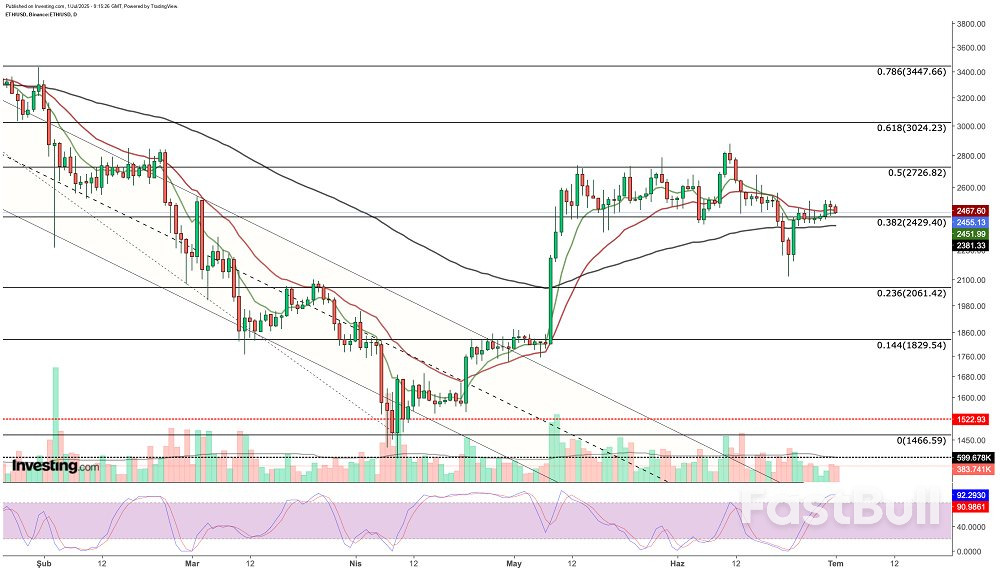
          Ethereum recently rebounded alongside the broader market following a ceasefire between Israel and Iran. As a result, ETH recovered the support level we’ve been monitoring at $2,430, driven by renewed buying interest.
          Currently, ETH is trading sideways above the $2,430 support, but ongoing pressure is making it difficult to break into the $2,500 region. If ETH manages to secure daily closes above $2,500, this could open the door for a move towards $2,700. The resistance at $2,730 has remained unbroken since May. A high-volume breakout above this level could trigger a rally towards the $3,000–3,400 range.
          However, if ETH—already under pressure—falls below the $2,430 support without any shock developments, we could see an increase in selling pressure. If that happens, and ETH dips below the 3-month EMA at $2,380, the likelihood of a move towards $2,000 increases significantly.
          ETF Movement in Solana Creates Excitement
          Solana’s REX-Osprey SOL+Staking ETF is the first spot ETF to integrate staking rewards. Launching on July 2, 2025, this product offers investors exposure to both SOL price action and passive staking income. This first-of-its-kind ETF has been met with short-term positive sentiment.
          However, this ETF development coincides with a weakening of Solana’s network fundamentals. Stablecoin value on the network has declined since the start of the year, and revenues have also fallen. This suggests waning interest in Solana, which is also making it technically difficult for SOL to break out of its short-term downtrend. At this stage, sustained interest in the ETF could boost demand for SOL again. For stronger price action, we’ll need to see a recovery in network usage and an increase in institutional fund flows.
          3 Altcoins That Stand to Gain If Capital Rotates Away From Bitcoin_2
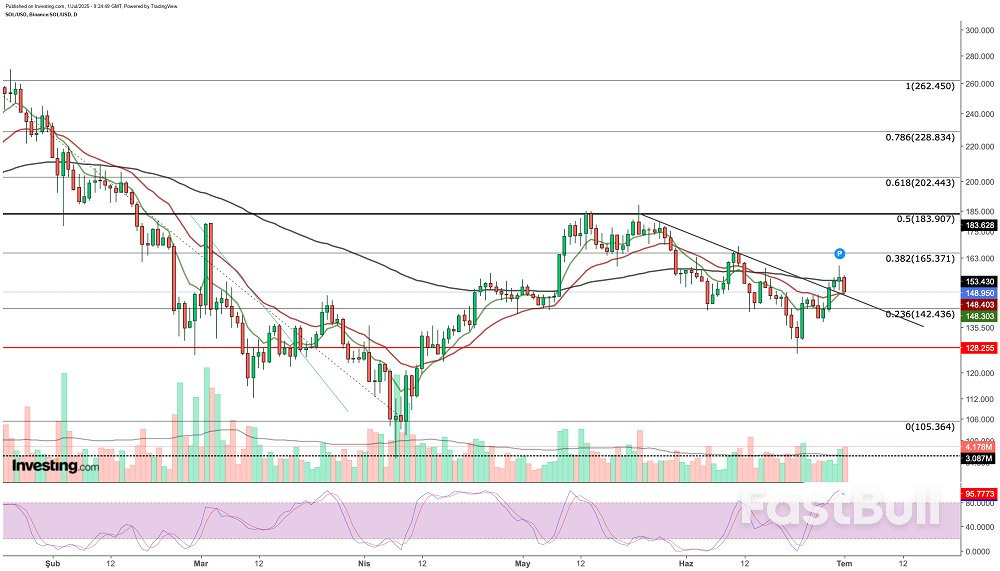
          Recent buying activity in Solana helped break the short-term downtrend. However, following the ETF news, the typical “sell the news” reaction in crypto kicked in, and the SOL price now appears to be retesting the trendline.
          Accordingly, $148 is a key support level for SOL. If buyers can defend this level, it would confirm the continuation of the uptrend. In this case, we could see Solana advancing toward price targets of $165, $183, and $202, respectively.
          Conversely, if daily closes fall below the $148 support, a pullback toward the $130 level becomes likely.
          Bitcoin Cash Maintains Strong Outlook With the Support of Institutional Buying
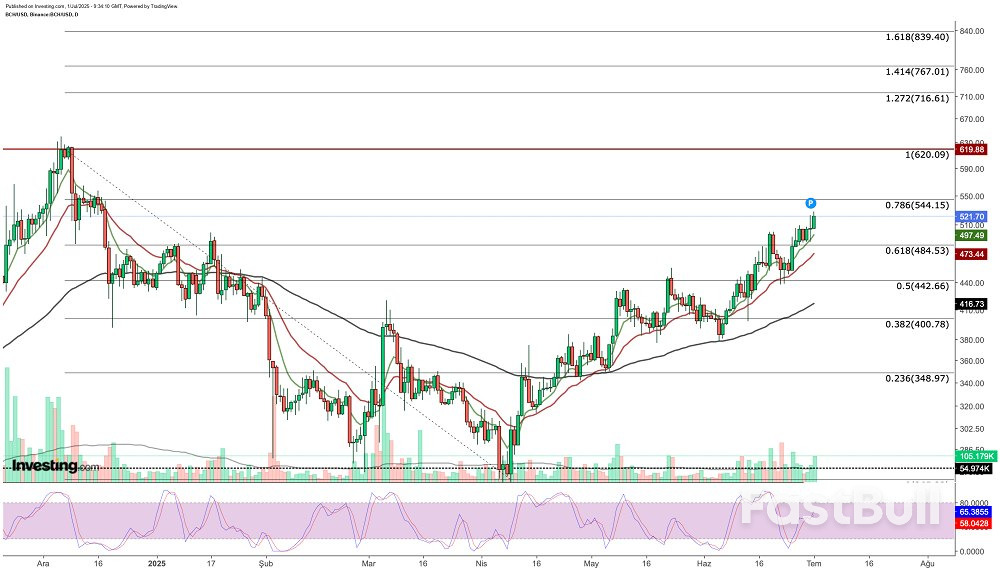
          Bitcoin Cash has recently emerged as one of the market’s standout assets. BCH, currently trading at $523, is revisiting levels not seen since December 2024.
          After beginning its uptrend in April, BCH was only marginally affected by the May correction and managed to maintain its positive momentum through June. The recent divergence in BCH—both technically and in terms of investor interest—positions it as a notable option for short-term speculative trading. That said, the sustainability of this uptrend will depend on broader market conditions and macroeconomic developments.
          3 Altcoins That Stand to Gain If Capital Rotates Away From Bitcoin_3
          Technically, the Stochastic RSI on the daily chart indicates that BCH may continue its upward move. Based on the last bearish wave (from December 2024 to April 2025), the nearest resistance lies at $544 (Fib 0.786). If BCH can close above this level on a weekly basis, it could continue its momentum toward the $620 resistance, followed by a medium-term target range of $720–840.
          If BCH fails to break above $544, profit-taking may accelerate. In that case, a retreat to the $485 support (Fib 0.618) would be the likely first stop.

          Source: investing

          Risk Warnings and Disclaimers
          You understand and acknowledge that there is a high degree of risk involved in trading. Following any strategies or investment methods may lead to potential losses. The content on the site is provided by our contributors and analysts for information purposes only. You are solely responsible for determining whether any trading assets, securities, strategy, or any other product is suitable for investing based on your own investment objectives and financial situation.
          Add to Favorites
          Share

          Taxes, energy, and healthcare: 3 ways Senate's Trump megabill impacts the business world

          Adam

          Economic

          Senate leaders advanced President Trump's "One Big Beautiful Bill" on Tuesday in a vote that moved the megabill one step closer to becoming law despite three Republican defections, leading to a 50-50 tally that required Vice President JD Vance to break the tie in Trump's favor.
          The process proved exceptionally contentious in recent days, largely over healthcare provisions and trims to the Medicaid program that are set to extract hundreds of billions in government savings but cause millions to lose coverage.
          This portion of the bill fueled two of the Republican no votes — Thom Tillis of North Carolina and Susan Collins of Maine — and led to last-minute concessions to Lisa Murkowski of Alaska as a way of securing her yes vote.
          The third Republican no vote was Rand Paul of Kentucky, who objected to the inclusion of a $5 trillion debt ceiling increase in the package.
          Medicaid and that debt ceiling increase were just two pieces of a complex, nearly 900-page bill that is set to reshape whole swathes of the US economy, especially in the areas of tax rates, energy, and healthcare.
          Clean energy companies — especially electric-vehicle maker Tesla (TSLA) — were perhaps paying the closest attention in recent days.
          Tesla CEO Elon Musk emerged during final negotiations as the top business-world critic of the bill, attacking the price and how it treats clean energy. He said earlier Tuesday that the $3.3 increase in debt expected from the bill makes a "mockery" of his work at the Department of Government Efficiency (DOGE).
          Musk and others are also set to see impacts on their bottom line, with government support in the form of tax credits set to go away. But a last-minute change appeared to remove what could have been a new headwind in the form of an excise tax, which had raised particular ire.
          Economists have likewise noted that the final price tag, which could top $4 trillion, and critiqued an accounting gimmick Republicans employed to hide much of that red ink.
          Silicon Valley has growing questions after a last-minute change stripped a closely watched artificial intelligence provision from the bill.
          But a range of GOP priorities that are included — from increased funding for border enforcement to the military to money for America's 250th anniversary celebration next year — pushed the bill over the line, with many in corporate America in favor and focused on the tax-cuts piece.
          The Business Roundtable, which represents CEOs in Washington, D.C., urged passage in recent days and called it "critical legislation [to] protect and enhance the transformative economic benefits that President Trump's historic 2017 tax reform delivered for American businesses, workers and families."
          President Trump on Tuesday morning expressed confidence it would reach his desk soon, calling it the "greatest bill ever passed," focusing on the border provisions and dismissing concerns that Americans would love their healthcare coverage.
          The legislation now moves back to the US House of Representatives, which, after passing a previous version in May, is set to move quickly ahead, perhaps within hours, but with passage far from assured as criticisms from fiscal conservatives pile up in recent days (and Musk focused on flipping votes there).
          For now, here is a closer look at three ways the current version of the bill, as blessed by the Senate, would impact the business world.
          Changes for both the individual and corporate tax structure
          A centerpiece of the bill — and far and away the most expensive provisions — surrounds taxes.
          The bill's main impetus has long been to permanently extend tax cuts for individuals contained in the 2017 Tax Cuts and Jobs Act, which Trump signed into law on a temporary basis during his first term as president.
          The bill would represent a continuation of the status quo for taxpayers. As one example, if the bill is enacted, America's highest earners will see a continued top rate of 37%.
          The bill also provides new tax credits for individuals by fulfilling signature Trump campaign promises — albeit slightly less fulsomely than in the House version — to eliminate taxes on tips, overtime, and car loan interest. It also offers an expanded standard deduction for seniors after Trump promised to eliminate taxes on Social Security benefits.
          Employees would be able to deduct up to $25,000 annually for tips and overtime in the Senate version, in contrast to the House's approach of 100% deductibility under certain income limits.
          Business owners, meanwhile, are keenly focused on a series of tax deductions that will reinstate credits for corporations for things like property depreciation, capital investments, new factory construction, interest expenses, and research and development costs.
          Many of these provisions were present in the House version, but only temporarily. Permanency was a key Senate priority and is now included in the bill, even as it increased the price tag.
          The bill also makes permanent the pass-through deduction at a rate of 20%. That deduction — formally known as the 199A deduction — is focused on often smaller businesses organized as S corporations or partnerships.
          The Senate version also includes an array of other tax changes, including a $40,000 annual deduction for state and local taxes (SALT) for some taxpayers in the coming years, enhanced credits for "opportunity zones," and so-called MAGA accounts.

          A focus on energy and healthcare

          The effect on the energy sector could be profound, especially after a last-minute series of changes turned the bill even further against the clean energy industry while offering new support for fossil fuels.
          The bill has long been expected to phase out Biden-era clean energy tax credits, but the final Senate bill now aims to shut them down faster than expected.
          A late addition to the bill also raised particular pique in the form of a new tax on wind and solar projects completed after 2027 if a certain amount of supplies came from China. But those objections appear to have led to a moderation, with CNN first noticing Tuesday morning that a final draft quietly removed that excise tax.
          It gave clean energy advocates some solace, with Democratic Sen. Ed Markey of Massachusetts posting only that "We just forced them to take it out."
          At the same time, new last-minute inducements were unveiled for fossil fuels, including one classifying coal as a critical mineral for a government manufacturing credit.
          "We're doing coal," Trump said in an interview released over the weekend on Fox News' "Sunday Morning Futures," where he also called solar energy projects "ugly as hell."
          It was a mix that led Musk and others to predict that it would cut off clean energy, hurt the overall energy grid, and perhaps lead to higher utility bills. A statement from the American Clean Power Association said the effect would be to "undermine growth in domestic manufacturing and land hardest on rural communities who would have been the greatest beneficiaries of clean energy investment."
          The bill is also set to implement major changes to the healthcare system, which Democrats say will hurt the social safety net and the healthcare sector.
          Healthcare negotiations went until nearly the literal last minute, but the overall package is set to trim the government's Medicaid spending by around $900 billion in the years ahead.
          Corners of the sector, like rural hospitals, are set to be most directly impacted. A $25 billion fund was included to cushion the blow for these providers from 2028 to 2032.
          But the bottom line for patients — according to an accounting from the Congressional Budget Office that came in over the weekend — is that 11.8 million additional residents would become uninsured by 2034 because of the healthcare provisions.
          Some would be illegal immigrants, as Republicans often point out, but millions are expected to be US citizens put off by a raft of additional requirements to qualify for coverage.
          Capitol Hill has yet to offer its final verdict on the package, with House deliberations still in the offing, but the healthcare provisions in particular appear to have led Americans to grow increasingly skeptical.
          A series of polls has shown a decline in support for the bill as the focus has turned to healthcare. Even a recent Fox News national poll found a 21-point gap between those who say they are opposed (59%) and those who say they are in favor (38%).

          source :finance.yahoo

          To stay updated on all economic events of today, please check out our Economic calendar
          Risk Warnings and Disclaimers
          You understand and acknowledge that there is a high degree of risk involved in trading. Following any strategies or investment methods may lead to potential losses. The content on the site is provided by our contributors and analysts for information purposes only. You are solely responsible for determining whether any trading assets, securities, strategy, or any other product is suitable for investing based on your own investment objectives and financial situation.
          Add to Favorites
          Share

          The Big Beautiful Bill's Math — And Market Reaction — Doesn't Quite Add Up

          Adam

          Economic

          GOP senators signaled they're close to bringing President Donald Trump's One Big Beautiful Bill Act to a vote in the Senate today, with sights set on it clearing the House as soon as Wednesday. President Trump has demanded that Congress deliver the federal budget and tax bill to his desk for a signature by July Fourth. But there's still a chance that a rewrite could be necessary.
          Some House GOP moderates dislike the sharper Medicaid spending curbs imposed by the Senate, while fiscal conservatives disapprove of the 940-page bill's bottom line. The Senate also took a tougher line on renewable energy tax credits, which prompted Tesla (TSLA) CEO Elon Musk to weigh in against the bill.

          Big Beautiful Bill's Budget Math

          Yet, apart from Tesla sliding as the Trump-Musk fight reignites, markets continue sailing along. Hospital stocks shrugged off deeper Medicaid cuts, as investors may believe moderates will limit the damage. Even renewable stocks bounced on news that Sen. Lisa Murkowski, R-AK, , a key undecided vote, had an amendment to preserve production tax credits.
          But if relief is in store for Medicaid spending cuts and Inflation Reduction Act tax credits, fiscal conservatives could bolt. And if they don't, that suggests bigger federal deficits, putting upward pressure on borrowing costs. Yet, the 10-year Treasury yield, trading in a tight range, is holding at 4.27%, suggesting little concern among bond investors.
          A bit more clarity could come soon. Politico is reporting that Senate leaders will offer a broad amendment to seal up the remaining vote or two they need to assure passage. The amendment may tweak both Medicaid cuts and renewable tax credits.

          Medicaid Cuts

          The reality of the Big Beautiful Bill's tough trade-offs burst into the open on Sunday night, as Sen. Thom Tillis (R-N.C.) denounced Medicaid provisions that he said would cost his state $26 billion in support and kick 663,000 North Carolinians off their health plans. The speech also effectively ended his national political career, with Tillis opting to call off his 2026 reelection campaign, rather than do battle against both Trump and the Democrats.
          Hospital operators including Tenet Healthcare (THC) slipped early Monday but then rallied, despite the revised Senate bill targeting $930 billion in cuts to Medicaid spending and about $230 billion in cuts to spending on tax credits to buy insurance on the Affordable Care Act health insurance exchanges.
          By comparison, the House sought $793 billion in Medicaid cuts. And the Senate may not be done yet, with a vote still expected on an amendment that would gradually shift the 90%-10%, federal-state split of ACA Medicaid expansion costs closer to 50%-50%.
          The Congressional Budget Office found that the House version of the OBBBA would increase the ranks of the uninsured by 10.9 million. That rises to 16 million due to the GOP's apparent decision to let enhanced premium tax credits for the ACA exchanges expire at the end of the year. The CBO hasn't yet evaluated the impact of the latest Senate version.
          On June 24, 16 House Republicans wrote to Senate Majority Leader John Thune, taking issue with the Senate version of the bill that fails to "give hospitals time to adjust to new budgetary constraints."

          Federal Budget Reverses Inflation Reduction Act

          The Senate GOP's OBBBA changes to Inflation Reduction Act clean-energy tax credits also one-upped the House version. Both would reel in more than $400 billion in savings, however the Senate version goes a step further. Politico and other outlets reported on an analysis by Rhodium Group that indicates new wind and solar projects would face a tax starting in 2028, raising their cost by 10% to 20%, if they source components from China.
          Musk said the Senate bill will "destroy millions of jobs," in a Sunday post. "While it subsidizes outdated industries, it deals a severe blow to future industries." On Monday, Musk went further, threatening to create a third party to target lawmakers who back the Big Beautiful Bill.
          The bill, as expected, ends the $7,500 electric vehicle tax credit.

          OBBBA Budget Math

          The Senate cut a few hundred billion less than the House in food aid and student loans. That at least partly explains why the bill doesn't come close to clearing the fiscal bar set by the House, which required that tax cuts exceed spending cuts by no more than $2.5 trillion over 10 years.
          Based on the current law baseline, which assumes expiration of most 2017 tax cuts at the end of this year, CBO said the Senate version has $4.47 trillion in tax cuts and $1.21 trillion in spending cuts, raising deficits by $3.26 trillion. Based on current policy, CBO says the Senate bill cuts spending by $1.34 trillion and lowers taxes by $829 billion, lowering the deficit by $508 billion.

          S&P 500

          The S&P 500 dipped 0.1% in early Tuesday stock market action. On Monday, the S&P 500 rose 0.5% to a record high, leaving the benchmark index up 5.5% for the year and 7.3% since Election Day.
          Be sure to read IBD's The Big Picture column after each trading day to get the latest on the prevailing stock market trend and what it means for your trading decisions.

          Source: investors

          To stay updated on all economic events of today, please check out our Economic calendar
          Risk Warnings and Disclaimers
          You understand and acknowledge that there is a high degree of risk involved in trading. Following any strategies or investment methods may lead to potential losses. The content on the site is provided by our contributors and analysts for information purposes only. You are solely responsible for determining whether any trading assets, securities, strategy, or any other product is suitable for investing based on your own investment objectives and financial situation.
          Add to Favorites
          Share

          Fed's Powell Says Dollar Swap Lines Remain Important Tool

          Manuel

          Central Bank

          Forex

          Federal Reserve Chair Jerome Powell said Tuesday the U.S. central bank has no plans to change how it offers dollar liquidity to other official entities.
          Speaking on the matter of the Fed's dollar swap lines system, Powell told a gathering held by the European Central Bank that "we still have the same authorities, and we're still prepared to use them in situations where it's within our legal authorities and where we think it makes sense."
          He added the dollar swap lines have made "a big contribution" to global financial stability.
          Fed dollar swap lines offer collateralized loans to eligible central banks to ensure dollar liquidity is not an issue for the global financial system.
          The current system, initiated during the global financial crisis, has been heavily used in times of crisis.
          Fed swap lines now in place can lend dollar and foreign currencies, although it is the dollar-related facility that has been where the action has been. The swap line usage level can often be viewed as a proxy for international financial stress.
          There has been some concern that the Fed's currency swap lines could be shuttered amid the Trump administration's retreat from multilateral international coordination and its broader skepticism over Fed actions, although so far, no action by elected officials has happened.
          The system may also face longer run challenges as the trade policy pursued by the president may threaten the status of the dollar as a global reserve currency, which could make American money less needed by other nations, in turn reducing the need to borrow dollars in times of stress.
          Speaking at the same central bank event, Bank of Korea Governor Rhee Chang-yong noted that while the dollar swap lines had helped in times of trouble there were times when there could be local dollar liquidity issues the U.S. central bank could not address.
          "Our understanding is that Fed cannot extend the swap lines in that case, and we have to self defense ourselves. That is why I think they're having an adequate, sufficient level of reserves is very important."

          Source: Reuters

          Risk Warnings and Disclaimers
          You understand and acknowledge that there is a high degree of risk involved in trading. Following any strategies or investment methods may lead to potential losses. The content on the site is provided by our contributors and analysts for information purposes only. You are solely responsible for determining whether any trading assets, securities, strategy, or any other product is suitable for investing based on your own investment objectives and financial situation.
          Add to Favorites
          Share

          3 Stocks That Could Soar in a Soft-Dollar Environment

          Adam

          Stocks

          The US Dollar Index is down 10% in the first half of 2025. That’s the weakest year-to-date performance since 1972, when the United States moved away from the gold standard.
          Several interrelated factors are dragging the dollar down. A major one is a chaotic trade and tariff policy that is still a work in progress. At the same time, there are growing concerns about the country’s public debt—concerns that will only get stronger if Congress passes the Trump administration’s “big, beautiful bill,” which will, at least on paper, increase the national debt by trillions of dollars over the next decade.
          Commodity prices are also on the rise, and rising commodity prices tend to strengthen the currencies of major exporters like Canada and Australia. This in turn puts additional pressure on the US dollar. Plus, Europe and Asia are rebounding quickly from last year’s slowdown, causing a flight to safety to flow to foreign equities and bonds.
          Despite all the negativity surrounding the US dollar, the S&P 500 hit an all-time high at the end of June. Many market analysts believe that many issues serving as headwinds today (tariffs, inflation, uncertainty on tax policy) will turn into tailwinds for gross domestic product (GDP) in the second half of the year.
          Keeping all this in mind, here are three stocks that are likely to perform well while the dollar is weak and are also poised for a recovery right here in the United States.

          Caterpillar: Global Demand and Onshoring Drive Growth

          Caterpillar (NYSE:CAT) stands out as a prime beneficiary of a weaker US dollar. With more than half of its revenue generated from international markets, the company gains when foreign earnings convert into stronger dollar terms. The company also benefits directly from rising commodity prices because its heavy machinery is heavily used in mining operations.
          But there are also domestic catalysts at play with Caterpillar. Many companies have responded to the Trump administration’s calls to onshore their manufacturing, translating into increased demand for industrial equipment. These commitments, along with capital already committed to build data centers, will be bullish for Caterpillar.
          That said, CAT stock is up over 11% in the last month and is now trading above the consensus price target of the analysts tracked by MarketBeat. The stock also has a forward price-to-earnings (P/E) ratio of over 19x, which makes it expensive compared to its historical levels as well as other industrial stocks.
          While investors may want to wait for a little pullback, they may not want to wait too long. On June 24, Citigroup raised its price target for CAT stock from $370 to $420.

          Procter & Gamble: A Weak Dollar Lifts International Sales

          The Procter & Gamble Company (NYSE:PG) is similar to Caterpillar in that about 50% of the company’s revenue comes from overseas. That explains why its earnings per share (EPS) remain slightly higher year-over-year (YOY) even as its revenue is under pressure.
          Consumer staples stocks in the United States have struggled lately. That’s because the pricing power that many companies enjoyed in 2020 and 2021 has turned into a liability as higher-for-longer interest rates and sticky inflation has caused consumers to be more discerning about how they spend their dollars.
          PG stock is down about 5.4% through the first half of 2025. However, even at a forward P/E ratio of around 24x, the stock is still trading at a discount to itself. Analysts project EPS growth of around 6% over the next year, and even that forecast may underestimate potential gains if US economic conditions improve in the second half of the year.

          IBM: AI and Quantum Bets Pay Off Abroad

          At the midpoint of 2025, International Business Machines (NYSE:IBM) may be ready to win the title of comeback stock of the year—or maybe of the decade. IBM stock is up 33% in 2025, and Wedbush recently raised its price target from $300 to $325. That would be a gain of over 10% for investors.
          The company’s resurgence is largely driven by its ability to make artificial intelligence (AI) practical for large enterprises, particularly agentic AI. Like the other stocks on this list, IBM also generates significant revenue from international customers.
          Another key driver is IBM’s long-standing investment in the quantum computing space. This has been a targeted bet for IBM over several years that is paying off as quantum computing becomes a reality.
          The outperformance of IBM stock in 2025 makes it expensive based on many metrics. For example, its earnings yield of 2.07% is lower than its dividend yield, which suggests that IBM is paying out more in dividends than it earns in profit relative to its stock price. But IBM’s dividend is backed by the company’s free cash flow (FCF) ratio, which is higher than its historical averages.

          Source: investing

          Risk Warnings and Disclaimers
          You understand and acknowledge that there is a high degree of risk involved in trading. Following any strategies or investment methods may lead to potential losses. The content on the site is provided by our contributors and analysts for information purposes only. You are solely responsible for determining whether any trading assets, securities, strategy, or any other product is suitable for investing based on your own investment objectives and financial situation.
          Add to Favorites
          Share

          Challenge To Dollar Supremacy A Long Way Off, Central Bankers Say

          Owen Li

          Central Bank

          There is no prospect of a major challenge to the dollar's status as the world's reserve currency of choice any time soon, central bankers gathered for an annual conference in the Portuguese resort of Sintra said on Tuesday.

          U.S. President Donald Trump's unpredictable economic, trade and security policies have spurred questions over whether the U.S. currency, which accounts for 58% of the world's reserves, can remain at the centre of the global monetary system.

          European Central Bank President Christine Lagarde, who has argued the euro could over time become an alternative to the dollar if Europe's currency zone enacted necessary reforms, said 2025 could in future be viewed as "pivotal" in this respect.

          "(But) for a major change to occur it will take a lot of time and a lot of effort," she told a panel with her U.S., British, Japanese and Korean counterparts.

          She noted that "investors are looking at options" in a climate characterised by uncertainty and unpredictability and that there was evidence that the euro was benefiting from that.

          "It's not going to happen just like that overnight. It never did historically," she said. "But there is clearly something that has been broken. Whether it is fixable, or whether it is going to continue to be broken - I think the jury's out."

          Bank of Japan Governor Kazuo Ueda also noted that any significant change would depend on structural reforms.

          "It's to a certain extent up to what areas like Europe or China will do in terms of improving the efficiency or convenience of their currencies," he said, citing as an example the efforts at capital market integration in the euro zone.

          Bank of England Governor Andrew Bailey said any change to the dollar's status was a long way off.

          "I don't see ... a sort of a major shift at the moment," he said, arguing that any reserve currency had to offer a supply of safe assets into the market that can be used for purposes of collateral and security.

          Bank of Korea Governor Rhee Chang-yong said the prospect of a long-term shift of the dollar sentiment was a subject of discussion for some even as they retained their dollar holdings.

          "It looks like people are talking about it. But at this moment they keep the dollar share while increasing their hedging ratio," he told the panel.

          Lagarde told a recent audience in Berlin that there was an opening for a "global euro moment", if it earned it.

          Source: Yahoo Finance

          Risk Warnings and Disclaimers
          You understand and acknowledge that there is a high degree of risk involved in trading. Following any strategies or investment methods may lead to potential losses. The content on the site is provided by our contributors and analysts for information purposes only. You are solely responsible for determining whether any trading assets, securities, strategy, or any other product is suitable for investing based on your own investment objectives and financial situation.
          Add to Favorites
          Share

          Powell confirms that the Fed would have cut by now were it not for tariffs

          Adam

          Economic

          Federal Reserve Chair Jerome Powell said Tuesday that the U.S. central bank would have eased monetary policy by now if not for President Donald Trump’s tariff plan.
          When asked during a panel if the Fed would have lowered rates again this year had Trump not announced his controversial plan to impose higher levies on imported goods earlier this year, Powell said, “I think that’s right.”
          “In effect, we went on hold when we saw the size of the tariffs and essentially all inflation forecasts for the United States went up materially as a consequence of the tariffs,” Powell said at European Central Bank forum in Sintra, Portugal.
          Powell’s admission comes as the Fed has entered a holding pattern on interest rates despite mounting pressure from the White House.
          The Fed last month held the key borrowing rate steady once again, keeping fed funds at the same range between 4.25% and 4.5% where it’s been since December.
          The central bank’s policy-setting Federal Open Market Committee indicated via its so-called dot plot of members’ projections that there could be two cuts by the end of 2025. However, Powell also said at a press conference last month that the Fed was “well positioned” to remain in a wait-and-see mode.
          On Tuesday, Powell was asked if July would be too soon for markets to expect a rate cut. He answered that that he “really can’t say” and that “it’s going to depend on the data.” Fed funds futures traders are pricing in a more than 76% likelihood that the central bank once again holds rates steady at the July policy gathering, according to the CME FedWatch tool.
          “We are going meeting by meeting,” Powell said during Tuesday’s panel. “I wouldn’t take any meeting off the table or put it directly on the table. It’s going to depend on how the data evolve.”

          Powell’s future at the Fed

          The Fed’s unrelenting position to keep rates where they are for now has caught the ire of Trump and his administration, who have publicly admonished Powell for the central bank’s failure to lower borrowing costs. Trump last week called Powell “terrible” and said he was a “very average mentally person.”
          When asked on Tuesday if he would stay on as Fed governor after his term as chair ends next year, Powell responded, “I have nothing for you on that today.” Powell’s term as a Fed chair ends in 2026, while his position as governor is set to run into 2028.
          Global trade policy and Trump’s attacks on Powell took center stage at Tuesday’s event, where the U.S. Fed chief was flanked on the panel by other leaders of central banks from around the globe. International central bank leaders fielded questions ranging from whether they’d act as Powell if they were in his shoes, to whether nations are breaking away from the U.S.
          Trump’s on again, off again tariff policy has put global markets and monetary policy makers on edge. The president first unveiled a plan for steep levies on imported goods in early April, before delaying many of the steepest tariffs shortly after when U.S. markets tumbled.
          The U.S. stock market has more than regained losses recorded in the wake of Trump’s initial announcement, with the S&P 500 hitting all-time highs in recent days for the first time since February. But investors and monetary policymakers still report feeling uncertain about the future of global trade and its impact on global economic growth, profits and stock markets.
          “All I want — and all anybody at the Fed wants — is to deliver an economy that has price stability, maximum employment, financial stability,” Powell said. “What keeps me awake at night is: How do we get that done? I want to hand over to my successor an economy in good shape.”

          Source: cnbc

          To stay updated on all economic events of today, please check out our Economic calendar
          Risk Warnings and Disclaimers
          You understand and acknowledge that there is a high degree of risk involved in trading. Following any strategies or investment methods may lead to potential losses. The content on the site is provided by our contributors and analysts for information purposes only. You are solely responsible for determining whether any trading assets, securities, strategy, or any other product is suitable for investing based on your own investment objectives and financial situation.
          Add to Favorites
          Share
          FastBull
          Copyright © 2025 FastBull Ltd

          728 RM B 7/F GEE LOK IND BLDG NO 34 HUNG TO RD KWUN TONG KLN HONG KONG

          TelegramInstagramTwitterfacebooklinkedin
          App Store Google Play Google Play
          Products
          Charts

          Chats

          Q&A with Experts
          Screeners
          Economic Calendar
          Data
          Tools
          Membership
          Features
          Function
          Markets
          Copy Trading
          Latest Signals
          Contests
          News
          Analysis
          24/7
          Columns
          Education
          Company
          Careers
          About Us
          Contact Us
          Advertising
          Help Center
          Feedback
          User Agreement
          Privacy Policy
          Business

          White Label

          Data API

          Web Plug-ins

          Poster Maker

          Affiliate Program

          Risk Disclosure

          The risk of loss in trading financial instruments such as stocks, FX, commodities, futures, bonds, ETFs and crypto can be substantial. You may sustain a total loss of the funds that you deposit with your broker. Therefore, you should carefully consider whether such trading is suitable for you in light of your circumstances and financial resources.

          No decision to invest should be made without thoroughly conducting due diligence by yourself or consulting with your financial advisors. Our web content might not suit you since we don't know your financial conditions and investment needs. Our financial information might have latency or contain inaccuracy, so you should be fully responsible for any of your trading and investment decisions. The company will not be responsible for your capital loss.

          Without getting permission from the website, you are not allowed to copy the website's graphics, texts, or trademarks. Intellectual property rights in the content or data incorporated into this website belong to its providers and exchange merchants.

          Not Logged In

          Log in to access more features

          FastBull Membership

          Not yet

          Purchase

          Become a signal provider
          Help Center
          Customer Service
          Dark Mode
          Price Up/Down Colors

          Log In

          Sign Up

          Position
          Layout
          Fullscreen
          Default to Chart
          The chart page opens by default when you visit fastbull.com