• Trade
  • Markets
  • Copy
  • Contests
  • News
  • 24/7
  • Calendar
  • Q&A
  • Chats
Trending
Screeners
SYMBOL
LAST
BID
ASK
HIGH
LOW
NET CHG.
%CHG.
SPREAD
SPX
S&P 500 Index
6870.39
6870.39
6870.39
6895.79
6858.28
+13.27
+ 0.19%
--
DJI
Dow Jones Industrial Average
47954.98
47954.98
47954.98
48133.54
47871.51
+104.05
+ 0.22%
--
IXIC
NASDAQ Composite Index
23578.12
23578.12
23578.12
23680.03
23506.00
+72.99
+ 0.31%
--
USDX
US Dollar Index
98.910
98.990
98.910
98.960
98.730
-0.040
-0.04%
--
EURUSD
Euro / US Dollar
1.16511
1.16519
1.16511
1.16717
1.16341
+0.00085
+ 0.07%
--
GBPUSD
Pound Sterling / US Dollar
1.33168
1.33175
1.33168
1.33462
1.33136
-0.00144
-0.11%
--
XAUUSD
Gold / US Dollar
4210.85
4211.26
4210.85
4218.85
4190.61
+12.94
+ 0.31%
--
WTI
Light Sweet Crude Oil
59.205
59.235
59.205
60.084
59.181
-0.604
-1.01%
--

Community Accounts

Signal Accounts
--
Profit Accounts
--
Loss Accounts
--
View More

Become a signal provider

Sell trading signals to earn additional income

View More

Guide to Copy Trading

Get started with ease and confidence

View More

Signal Accounts for Members

All Signal Accounts

Best Return
  • Best Return
  • Best P/L
  • Best MDD
Past 1W
  • Past 1W
  • Past 1M
  • Past 1Y

All Contests

  • All
  • Trump Updates
  • Recommend
  • Stocks
  • Cryptocurrencies
  • Central Banks
  • Featured News
Top News Only
Share

Temasek CEO Dilhan Pillay: We Are Taking A Conservative Stance On Allocating Capital

Share

Brazil Economists See Brazilian Real At 5.40 Per Dollar By Year-End 2025 Versus 5.40 In Previous Estimate - Central Bank Poll

Share

Brazil Economists See Year-End 2026 Interest Rate Selic At 12.25% Versus 12.00% In Previous Estimate - Central Bank Poll

Share

Brazil Economists See Year-End 2025 Interest Rate Selic At 15.00% Versus 15.00% In Previous Estimate - Central Bank Poll

Share

EU Commission Says Meta Has Committed To Give EU Users Choice On Personalised Ads

Share

Sources Revealed That The Bank Of England Has Invited Employees To Voluntarily Apply For Layoffs

Share

The Bank Of England Plans To Cut Staff Due To Budget Pressures

Share

Traders Believe There Is Less Than A 10% Chance That The European Central Bank Will Cut Interest Rates By 25 Basis Points In 2026

Share

Egypt, European Bank For Reconstruction And Development Sign $100 Million Financing Agreement

Share

Israel Budget Deficit 4.5% Of GDP In November Over Past 12 Months Versus 4.9% Deficit In October

Share

JPMorgan - Council Chaired By Jamie Dimon Includes Jeff Bezos

Share

UK Government: UK Health Security Agency Identified New Recombinant Mpox Virus In England In Individual Who Had Recently Travelled To Asia

Share

European Central Bank Governing Council Member Kazimir: I See No Reason To Change Rates In The Coming Months, Definitely No In December

Share

European Central Bank Governing Council Member Kazimir: Overengineering Policy Around Small Inflation Deviations Would Introduce Unnecessary Policy Uncertainty

Share

European Central Bank Governing Council Member Kazimir: European Central Bank Must Be Vigilant About Some Upside Risks To Inflation

Share

European Central Bank Governing Council Member Kazimir: Forex Pass Through To Prices May Not Be As Strong As Expected

Share

Document: EU Looking At Options For Boosting Lebanon's Internal Security Forces

Share

Thai Foreign Ministry: Military Action Will Continue Until Thai Sovereignty, Territorial Integrity Secure

Share

Ukraine President Zelenskiy: No Accord So Far On Eastern Ukraine In US Talks

Share

NATO: Ukrainian President Zelenskiy Will Meet NATO's Rutte And EU Commission Chief Von Der Leyen And Costa In Brussels On Monday

TIME
ACT
FCST
PREV
France Industrial Output MoM (SA) (Oct)

A:--

F: --

P: --
France Trade Balance (SA) (Oct)

A:--

F: --

P: --
Euro Zone Employment YoY (SA) (Q3)

A:--

F: --

P: --
Canada Part-Time Employment (SA) (Nov)

A:--

F: --

P: --

Canada Unemployment Rate (SA) (Nov)

A:--

F: --

P: --

Canada Full-time Employment (SA) (Nov)

A:--

F: --

P: --

Canada Labor Force Participation Rate (SA) (Nov)

A:--

F: --

P: --

Canada Employment (SA) (Nov)

A:--

F: --

P: --

U.S. PCE Price Index MoM (Sept)

A:--

F: --

P: --

U.S. Personal Income MoM (Sept)

A:--

F: --

P: --

U.S. Core PCE Price Index MoM (Sept)

A:--

F: --

P: --

U.S. PCE Price Index YoY (SA) (Sept)

A:--

F: --

P: --

U.S. Core PCE Price Index YoY (Sept)

A:--

F: --

P: --

U.S. Personal Outlays MoM (SA) (Sept)

A:--

F: --

P: --
U.S. 5-10 Year-Ahead Inflation Expectations (Dec)

A:--

F: --

P: --

U.S. Real Personal Consumption Expenditures MoM (Sept)

A:--

F: --

P: --
U.S. Weekly Total Rig Count

A:--

F: --

P: --

U.S. Weekly Total Oil Rig Count

A:--

F: --

P: --

U.S. Consumer Credit (SA) (Oct)

A:--

F: --

P: --
China, Mainland Foreign Exchange Reserves (Nov)

A:--

F: --

P: --

Japan Trade Balance (Oct)

A:--

F: --

P: --

Japan Nominal GDP Revised QoQ (Q3)

A:--

F: --

P: --

China, Mainland Imports YoY (CNH) (Nov)

A:--

F: --

P: --

China, Mainland Exports (Nov)

A:--

F: --

P: --

China, Mainland Imports (CNH) (Nov)

A:--

F: --

P: --

China, Mainland Trade Balance (CNH) (Nov)

A:--

F: --

P: --

China, Mainland Exports YoY (USD) (Nov)

A:--

F: --

P: --

China, Mainland Imports YoY (USD) (Nov)

A:--

F: --

P: --

Germany Industrial Output MoM (SA) (Oct)

A:--

F: --

P: --
Euro Zone Sentix Investor Confidence Index (Dec)

A:--

F: --

P: --

Canada National Economic Confidence Index

--

F: --

P: --

U.K. BRC Like-For-Like Retail Sales YoY (Nov)

--

F: --

P: --

U.K. BRC Overall Retail Sales YoY (Nov)

--

F: --

P: --

Australia Overnight (Borrowing) Key Rate

--

F: --

P: --

RBA Rate Statement
RBA Press Conference
Germany Exports MoM (SA) (Oct)

--

F: --

P: --

U.S. NFIB Small Business Optimism Index (SA) (Nov)

--

F: --

P: --

Mexico 12-Month Inflation (CPI) (Nov)

--

F: --

P: --

Mexico Core CPI YoY (Nov)

--

F: --

P: --

Mexico PPI YoY (Nov)

--

F: --

P: --

U.S. Weekly Redbook Index YoY

--

F: --

P: --

U.S. JOLTS Job Openings (SA) (Oct)

--

F: --

P: --

China, Mainland M1 Money Supply YoY (Nov)

--

F: --

P: --

China, Mainland M0 Money Supply YoY (Nov)

--

F: --

P: --

China, Mainland M2 Money Supply YoY (Nov)

--

F: --

P: --

U.S. EIA Short-Term Crude Production Forecast For The Year (Dec)

--

F: --

P: --

U.S. EIA Natural Gas Production Forecast For The Next Year (Dec)

--

F: --

P: --

U.S. EIA Short-Term Crude Production Forecast For The Next Year (Dec)

--

F: --

P: --

EIA Monthly Short-Term Energy Outlook
U.S. API Weekly Gasoline Stocks

--

F: --

P: --

U.S. API Weekly Cushing Crude Oil Stocks

--

F: --

P: --

U.S. API Weekly Crude Oil Stocks

--

F: --

P: --

U.S. API Weekly Refined Oil Stocks

--

F: --

P: --

South Korea Unemployment Rate (SA) (Nov)

--

F: --

P: --

Japan Reuters Tankan Non-Manufacturers Index (Dec)

--

F: --

P: --

Japan Reuters Tankan Manufacturers Index (Dec)

--

F: --

P: --

Japan Domestic Enterprise Commodity Price Index MoM (Nov)

--

F: --

P: --

Japan Domestic Enterprise Commodity Price Index YoY (Nov)

--

F: --

P: --

China, Mainland PPI YoY (Nov)

--

F: --

P: --

China, Mainland CPI MoM (Nov)

--

F: --

P: --

Q&A with Experts
    • All
    • Chatrooms
    • Groups
    • Friends
    Connecting
    .
    .
    .
    Type here...
    Add Symbol or Code

      No matching data

      All
      Trump Updates
      Recommend
      Stocks
      Cryptocurrencies
      Central Banks
      Featured News
      • All
      • Russia-Ukraine Conflict
      • Middle East Flashpoint
      • All
      • Russia-Ukraine Conflict
      • Middle East Flashpoint

      Search
      Products

      Charts Free Forever

      Chats Q&A with Experts
      Screeners Economic Calendar Data Tools
      Membership Features
      Data Warehouse Market Trends Institutional Data Policy Rates Macro

      Market Trends

      Market Sentiment Order Book Forex Correlations

      Top Indicators

      Charts Free Forever
      Markets

      News

      News Analysis 24/7 Columns Education
      From Institutions From Analysts
      Topics Columnists

      Latest Views

      Latest Views

      Trending Topics

      Top Columnists

      Latest Update

      Signals

      Copy Rankings Latest Signals Become a signal provider AI Rating
      Contests
      Brokers

      Overview Brokers Assessment Rankings Regulators News Claims
      Broker listing Forex Brokers Comparison Tool Live Spread Comparison Scam
      Q&A Complaint Scam Alert Videos Tips to Detect Scam
      More

      Business
      Events
      Careers About Us Advertising Help Center

      White Label

      Data API

      Web Plug-ins

      Affiliate Program

      Awards Institution Evaluation IB Seminar Salon Event Exhibition
      Vietnam Thailand Singapore Dubai
      Fans Party Investment Sharing Session
      FastBull Summit BrokersView Expo
      Recent Searches
        Top Searches
          Markets
          News
          Analysis
          User
          24/7
          Economic Calendar
          Education
          Data
          • Names
          • Latest
          • Prev

          View All

          No data

          Scan to Download

          Faster Charts, Chat Faster!

          Download App
          English
          • English
          • Español
          • العربية
          • Bahasa Indonesia
          • Bahasa Melayu
          • Tiếng Việt
          • ภาษาไทย
          • Français
          • Italiano
          • Türkçe
          • Русский язык
          • 简中
          • 繁中
          Open Account
          Search
          Products
          Charts Free Forever
          Markets
          News
          Signals

          Copy Rankings Latest Signals Become a signal provider AI Rating
          Contests
          Brokers

          Overview Brokers Assessment Rankings Regulators News Claims
          Broker listing Forex Brokers Comparison Tool Live Spread Comparison Scam
          Q&A Complaint Scam Alert Videos Tips to Detect Scam
          More

          Business
          Events
          Careers About Us Advertising Help Center

          White Label

          Data API

          Web Plug-ins

          Affiliate Program

          Awards Institution Evaluation IB Seminar Salon Event Exhibition
          Vietnam Thailand Singapore Dubai
          Fans Party Investment Sharing Session
          FastBull Summit BrokersView Expo

          USDCHF – Is It The End Of The Run For The Swiss Franc?

          MarketPulse by OANDA Group

          Economic

          Forex

          Summary:

          The Swiss Franc has been on a formidable run in 2025, continuing a trend that began when it reached parity with the US Dollar in November 2022.

          The Swiss Franc has been on a formidable run in 2025, continuing a trend that began when it reached parity with the US Dollar in November 2022.With the American Exceptionalism theme, widening deficits, and growing trade distrust, markets have sought the CHF as a stable hedge against the Greenback.

          Switzerland’s neutrality in economic and geopolitical affairs—and its low, stable inflation—make it an attractive safe haven, especially in a world facing fresh conflicts.The Franc’s rally to 2011 highs has also been fueled by regional currency trends. Since early 2025, the Euro’s strength has lifted its neighbors, adding tailwinds to the CHF.

          This trend is actually one to watch in Forex where currencies tend to move in tandem with their neighbours – It’s an historic trend but got exacerbated with the ongoing geopolitics.Still, the Swissie hit a local top in July against most majors, including the Yen against which it attained weekly record highs.While the CHF’s appreciation has not been as explosive as the Euro’s, the trend had remained consistent and persistent – but is it now over?Next, we’ll look at USDCHF technicals to see if momentum can hold—or if a reversal is on the horizon.
          Which safe-haven currency to choose – A small parenthesis on CHF/JPY

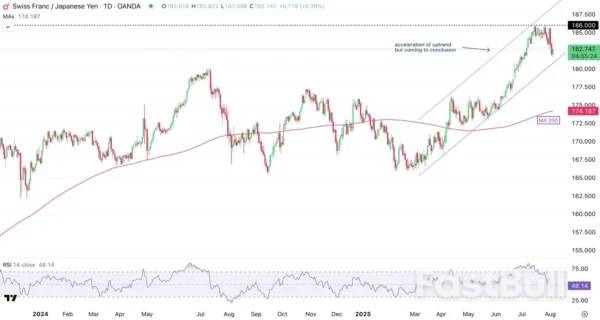
          CHF/JPY Daily Chart, August 5, 2025 – Source: TradingView

          CHF/JPY has been up-trending since May 2020 (which coincides with lows on Global Yields post-COVID peak fears), and this same trend found some steep acceleration, particularly since Liberation Day.The pair went from 109.00 lows to the current 186.00 highs.One aspect to consider when looking at this pair is the Safe-Haven nature of both currencies—the current overperformance of the Franc has marked it as the preferred option for flight-to-safety exposure.We are now seeing this trend conclude.The rest is to see if the recent highs mark an intermediate top or more one for the longer-run.

          USD/CHF Technical Analysis

          USD/CHF Daily Chart

          USD/CHF Daily Chart, August 5, 2025 – Source: TradingView

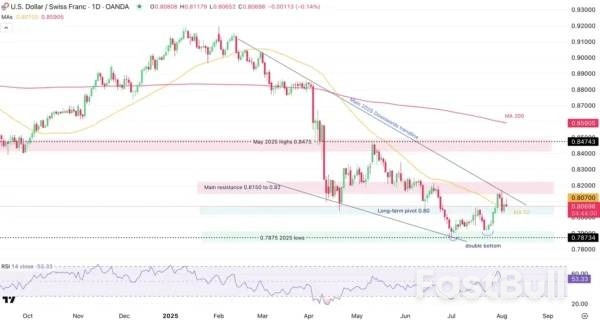
          The major pair, which had been in a steep downtrend since the beginning of 2025, has marked a double-bottom on its Daily charts during the month of July after attaining levels unseen since 2011.Since, the rebound has been consequent but with buyers failing to breach above the 0.8150 to 0.82 Main Resistance, the action is seeing more balance.Watch the 50-Day MA acting as immediate support to spot if buyers manage to respond to the 2025 Main Descending Trendline, which just acted as a supply zone for USD/CHF Sellers.The RSI Momentum was rising but is still closer to the neutral level than decisively bullish momentum.

          USDCHF 4H Chart
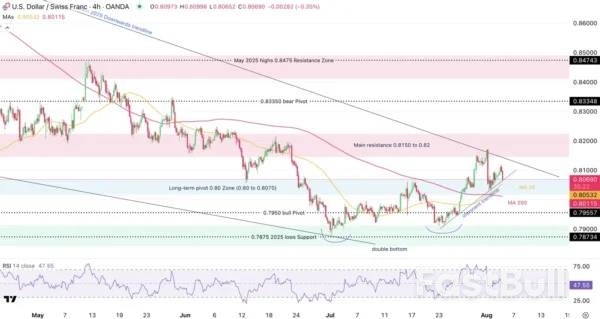
          USD/CHF 4H Chart, August 5, 2025 – Source: TradingView

          Looking closer, sellers are bringing back the pair into its 0.80 Main Pivot Zone (0.80 to 0.8070), where reactions will be important to monitor.There are some conflicting signs between the uptrending intermediate trendline formed after the double bottom and the main descending 2025 trend.Looking at the conflicting price action, there is a high probability of a range forming around the Pivot Zone but it is still far from being confirmed, therefore the pair will have to be watched closely and may move fast depending on risk appetite.The current price action is currently seller-dominated after this morning’s miss in the US Services PMIs.

          Levels to watch for the pair:

          Daily Resistance Levels

          ● Main resistance 0.8150 to 0.82 (last highs 0.8165)
          ● 0.83350 bear Pivot
          ● May 2025 highs 0.8475 Resistance Zone

          Daily Support Levels

          ● Long-term pivot 0.80 Zone (0.80 to 0.8070) Confluence with Daily and 4H MA 50
          ● 0.7950 bull Pivot
          ● 0.7875 2025 lows

          Source: OANDA

          To stay updated on all economic events of today, please check out our Economic calendar
          Risk Warnings and Disclaimers
          You understand and acknowledge that there is a high degree of risk involved in trading. Following any strategies or investment methods may lead to potential losses. The content on the site is provided by our contributors and analysts for information purposes only. You are solely responsible for determining whether any trading assets, securities, strategy, or any other product is suitable for investing based on your own investment objectives and financial situation.
          Add to Favorites
          Share

          Expectations for New Zealand Rate Cuts Rise, U.S. ISM Data Fuels Stagflation Concerns

          FastBull Featured

          Daily News

          [Quick Facts]

          1. New Zealand's slight rise in unemployment strengthens rate cut expectations.
          2. Japan's real wages fall for sixth straight month in June, raising recovery concerns.
          3. Zelenskyy supports U.S. ceasefire initiative, calls for sanctions on Russia.
          4. Trump says tariffs on pharma, chips to be announced in 'next week or so'.
          5. Russia reportedly considers an air ceasefire, but is unlikely to agree to a full truce.
          6. U.S. ISM data fuels stagflation concerns.

          [News Details]

          New Zealand's slight rise in unemployment strengthens rate cut expectations
          New Zealand’s unemployment rate edged up from 5.1% to 5.2% in the second quarter, while employment fell by 0.1% on a seasonally adjusted basis, signaling continued weakness in the labor market and further reinforcing expectations that the central bank will cut interest rates by 25 basis points in August. The labor force participation rate dropped to 70.5%, its lowest level since the first quarter of 2021. Following the data release, the New Zealand dollar held steady near 0.5904 against the U.S. dollar, with markets pricing in an 88% chance of a rate cut on August 20.
          ASB Bank economist Mark Smith noted that New Zealand's economic growth slowed and inflation returned to the target range, suggesting that further monetary easing could support the labor market. Meanwhile, ANZ Bank analyst Miles Workman argued that excess economic capacity may continue to suppress inflation, increasing the likelihood that the central bank will shift its focus to deflationary risks.
          Japan's real wages fall for sixth straight month in June, raising recovery concerns
          Driven by persistent inflation outpacing wage growth, Japan's real wages, adjusted for inflation, fell 1.3% year-on-year in June, marking the sixth consecutive monthly decline. May's figure was revised down to a 2.6% drop. Although June's decline was the smallest since January, it highlights broader pressures on consumer spending.
          Additionally, the consumer inflation rate used by Japan's Ministry of Finance to calculate real wages rose 3.8% year-on-year in June, the smallest increase in seven months. A Ministry of Health, Labour and Welfare official stated that although special payments in June, influenced by summer bonuses, rose 3% from a year earlier, they still failed to keep pace with inflation.
          Nominal total cash earnings in June grew 2.5% year-on-year to JP¥511,210 (US$3,476), accelerating from the 1.4% rise in May (revised) and marking the largest increase in four months. Basic wages rose 2.1%, and overtime pay increased by 0.9%.
          The data raised concerns about Japan's prospects for a consumption-driven recovery. With core inflation already exceeding the Bank of Japan's target, there may be room for the central bank to raise interest rates. However, factors such as geopolitical tensions and tariffs are exacerbating economic risks.
          Zelenskyy supports U.S. ceasefire initiative, calls for sanctions on Russia
          On August 5th, Ukrainian President Volodymyr Zelenskyy said in his regular evening video address that he had spoken with U.S. President Donald Trump that day, with the most important topic being how to end the Russia-Ukraine conflict as soon as possible. Zelenskyy said, "We in Ukraine fully support the U.S. proposal for an immediate ceasefire." To achieve this, Ukraine has explored various options and forms of dialogue, including proposing an air ceasefire initiative to Russia, a complete halt to missile and drone strikes as well as attacks on civilian infrastructure, particularly energy systems. However, Russia has repeatedly and blatantly violated these agreements.
          Trump says tariffs on pharma, chips to be announced in 'next week or so'
          U.S. President Donald Trump said he expects to announce taxes on the imports of pharmaceuticals, semiconductors and chips "within the next week or so". Currently, the administration is preparing to target key sectors of the economy as part of its efforts to reshape global trade. The tariffs on medicine would initially begin at a "small" rate but then rise to 150% within 18 months and eventually increase again to a rate of 250%. Trump also added: "We want pharmaceuticals made in our country," announcing new tariffs on semiconductors and chips.
          Russia reportedly considers an air ceasefire, but is unlikely to agree to a full truce
          Although Russia remains firmly committed to advancing its military operations, the Kremlin is considering making concessions to U.S. President Donald Trump, which may include agreeing to an air ceasefire with Ukraine in an attempt to avoid secondary sanctions. Sources familiar with the matter said that although expectations for a successful agreement remain low, this week's visit by U.S. Special Envoy for the Middle East Steve Witkoff to Russia is seen by Moscow as one of the last opportunities to reach a deal with Trump. One of the sources noted that a potential de-escalation proposal could involve a pause in airstrikes, including those involving drones and missiles, but only if Ukraine also agrees to sign on. However, Russian President Vladimir Putin is unlikely to agree to a full ceasefire in Ukraine, as Russian forces continue to make steady advances on the battlefield and Moscow's strategic objectives remain unchanged.
          U.S. ISM data fuels stagflation concerns
          Data released by the Institute for Supply Management (ISM) showed that the U.S. ISM Services PMI for July came in at just 50.1, down from 50.8 in June and below the expected 51.5. The figure indicates that the services sector is nearly stagnant, with seasonal and weather-related factors negatively impacting business activity, alongside the effects of higher tariffs and a more cautious consumer sentiment. The report aligns with the warning signals currently emerging from the U.S. economy.
          The employment index dropped to 46.4, falling below the 50.0 threshold for the fourth time in the past five months and hitting one of its lowest levels since the pandemic. The prices paid index, which measures the cost of materials and services, surged to 69.9, its highest level since October 2022.
          Although the business activity index for the services sector remained in expansion territory, its value was lower than in June. The new orders index fell to 50.3, nearing stagnation. While still in expansion territory, the new orders index and a slight improvement in the backlog of orders underscored some resilience in the services sector. However, there is no doubt that tariffs are driving up input costs, which could become a future driver of inflation.
          In July, 11 service industries reported growth, including transportation, wholesale trade, and finance. Seven industries contracted, primarily in the accommodation and food services sectors. The services sector is the largest component of the U.S. economy and has been driving growth this year, while manufacturing has contracted for five consecutive months.
          Overall, although the headline PMI index still indicates expansion, the momentum of growth has clearly slowed. Some surveyed businesses cited negative impacts from seasonal factors and weather changes on operations, while transportation congestion has exacerbated supply chain pressures, which is one of the reasons behind the rise in the supplier deliveries index. The most frequently mentioned issue remained tariffs, with respondents noting that more goods have seen price increases recently, further adding to business cost burdens.

          [Today's Focus]

          UTC+8 17:00 Eurozone June Retail Sales MoM
          UTC+8 22:30 U.S. EIA Crude Oil Inventories for the Week Ending August 1st
          UTC+8 03:10 Speech by San Francisco Fed President Mary Daly
          Risk Warnings and Disclaimers
          You understand and acknowledge that there is a high degree of risk involved in trading. Following any strategies or investment methods may lead to potential losses. The content on the site is provided by our contributors and analysts for information purposes only. You are solely responsible for determining whether any trading assets, securities, strategy, or any other product is suitable for investing based on your own investment objectives and financial situation.
          Add to Favorites
          Share

          Gold’s Whipsaw Price Action A Sign That Bulls Are Back At The Table. $3400/oz Up Next?

          MarketPulse by OANDA Group

          Commodity

          Forex

          Gold prices have seen whipsaw price action today with a $30 drop being wiped away after the US open. Part of this could be down to another poor US data point which will only add to rate cut bets moving forward.The US ISM Services PMI dropped to 50.1 in July 2025 from 50.8 in June, falling short of the expected 51.5. This shows the services sector barely grew, with seasonal and weather issues affecting business. There was a slowdown in business activity (52.6 vs 54.2), new orders (50.3 vs 51.3), and inventories (51.8 vs 52.7).

          Meanwhile, price pressures increased to their highest level since October 2022 (69.9 vs 67.5), with many survey participants highlighting the impact of tariffs, especially on commodities.Gold prices had already been on a recovery from a daily low around $3349 before the data further boosted the recovery.

          Gold Prices Moving Forward – Federal Reserve Policy & Rate Cut Expectations

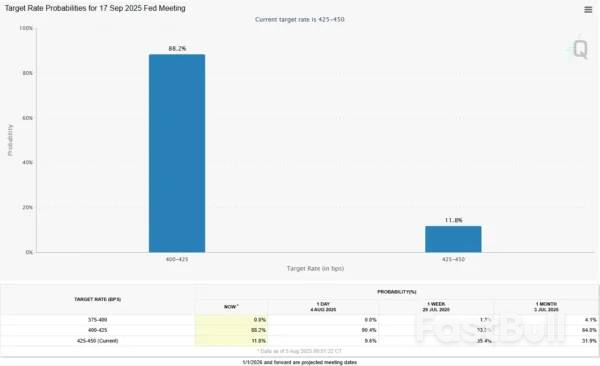
          Golds looked on course for a potential correction last week before the US jobs data. The picture since then has changed dramatically however, and this underscores the age old adage, ‘trade what you see, not what you think’.The most significant change has come in the form of rate cut expectations from the US Federal Reserve. Ahead of the jobs data on Friday last week, markets were still split around the 50-50 mark on a potential rate cut in September following the Fed meeting on Wednesday.However, as of this morning the CME FedWatch Tool reflected a high 88% probability of such a cut at the upcoming monetary policy meeting in September.

          Source: CME FedWatch Tool

          The jobs data has raised hopes in the market for two or even three interest rate cuts by the end of the year, with the first expected in September and the second in October.Even cautious comments from Federal Reserve officials were seen as signs that rate cuts might be coming. San Francisco Fed President Mary Daly urged caution about expecting aggressive rate cuts, saying the job market wasn’t “too weak” and suggesting the Fed could wait a bit longer. However, she also mentioned that the Fed “can’t wait forever” and downplayed the idea that tariffs were causing long-term inflation. Markets took her comments as a sign that the Fed might still cut rates in September.

          This strong belief in upcoming rate cuts is helping support gold prices. Lower interest rates make gold more attractive because it doesn’t pay interest, so the cost of holding it becomes less of a concern.Looking ahead, the next big catalyst which could shape both Fed rate cut expectations and have a material impact on Gold is likely to be the US CPI data. A strong CPI print would likely trigger a significant re-evaluation of its bullish trajectory, whereas other data points might only cause minor fluctuations.

          Technical Analysis – Gold (XAU/USD)

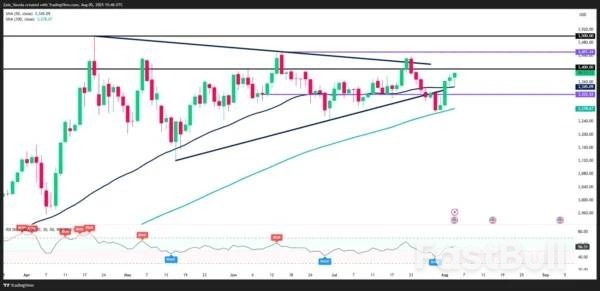
          From a technical standpoint, Gold monthly candle close for July closed as a massive shooting star which hints at further downside ahead.This also marked the first bearish monthly close since December 2024 and could be a sing of the shift in momentum between buyers and sellers.However, price action since Friday has left a potential deeper pullback at risk. On a monthly chart, a candle close above the 3439 handle will be needed to invalidate the setup and for this we will have to wait the rest of the month.

          Looking at a more near-term perspective, let us look at the daily timeframe. Here we can see the recent bullish move which is approaching the most recent swing high around 3431.A daily candle close above this level will invalidate the bearish setup on the daily timeframe and put bulls firmly in control.Given that tariffs are now largely set and implementation is largely what remains, the chance that we enter a period of consolidation is shrinking.This hints that a daily candle close above the 3431 may lead to more bullish momentum.

          Gold (XAU/USD) Daily Chart, August 5, 2025

          Source: TradingView

          Source: OANDA

          Risk Warnings and Disclaimers
          You understand and acknowledge that there is a high degree of risk involved in trading. Following any strategies or investment methods may lead to potential losses. The content on the site is provided by our contributors and analysts for information purposes only. You are solely responsible for determining whether any trading assets, securities, strategy, or any other product is suitable for investing based on your own investment objectives and financial situation.
          Add to Favorites
          Share

          Yen Surge, Tariffs & Fragile Bonds: Why This Week Could Reshape Currency Flows

          ACY

          Forex

          Economic

          Markets are shifting again, not in dramatic headlines, but in the underlying rhythm of currencies, yields, and central banks grappling with conflicting signals. After weeks of rangebound price action, the yen and franc have given traders something to think about. And it’s not just about rate differentials anymore, this is about structural risk, policy hesitations, and the political fuse that’s quietly burning in the background.Let’s break down what’s happening and why it matters right now.

          Yen: Stronger for Now, But Is the BoJ Really in Control?

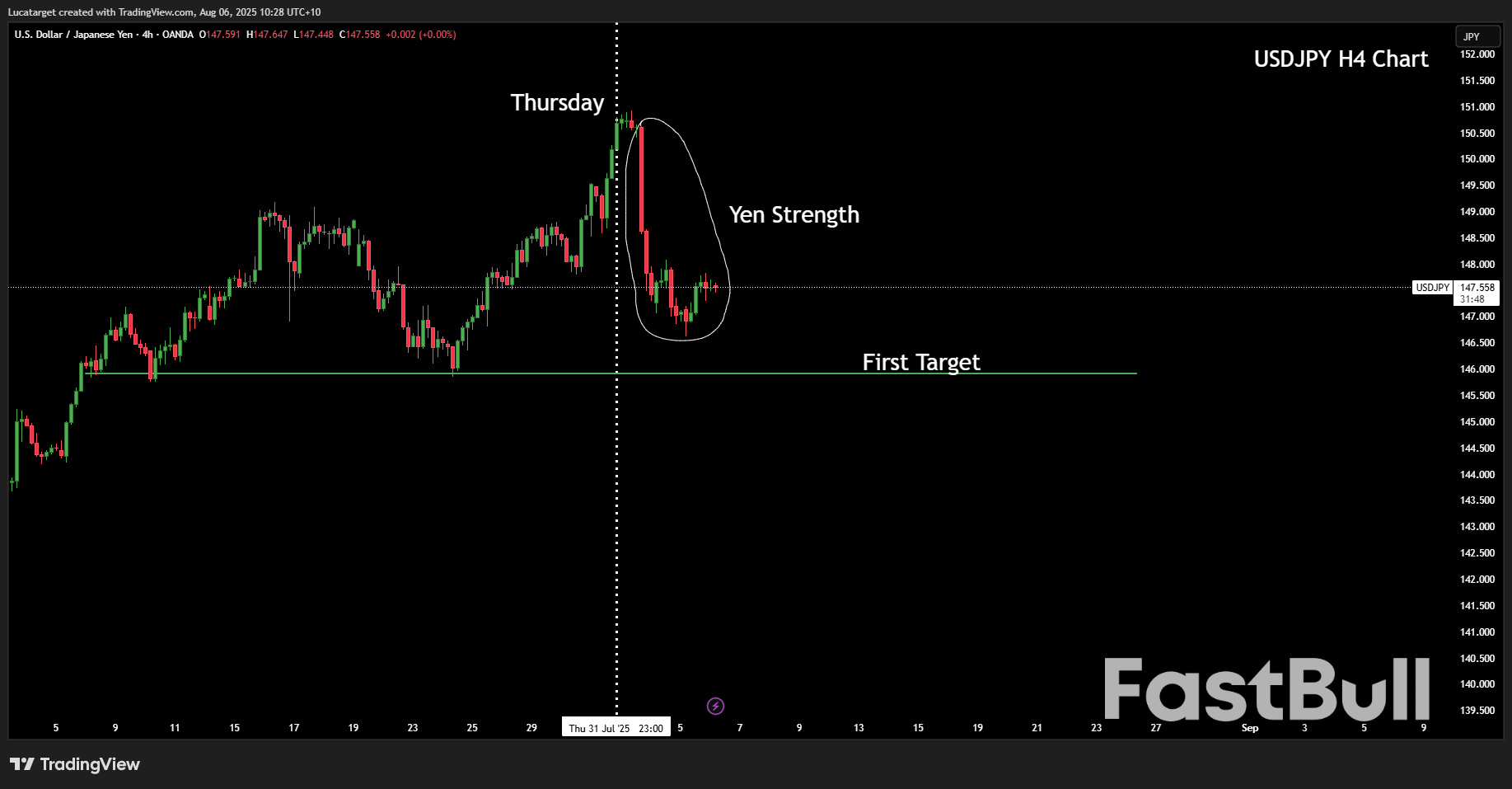
          The Japanese yen has staged a sharp reversal, bouncing back as the best-performing G10 currency since last Thursday.
          Yen Surge, Tariffs & Fragile Bonds: Why This Week Could Reshape Currency Flows_1

          Source: TradingView

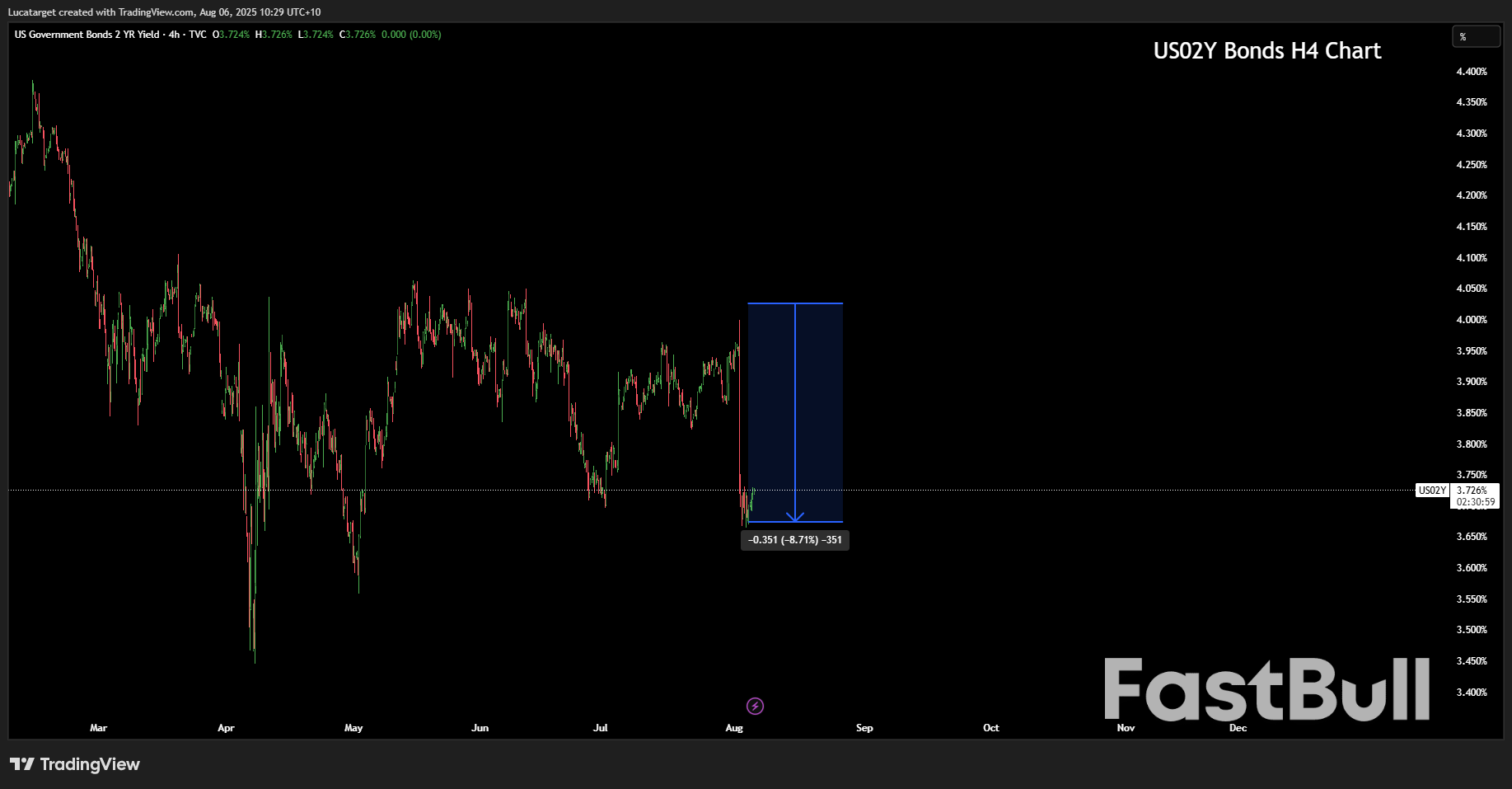
          What sparked the move? A surprisingly soft U.S. jobs report that triggered a 28bp drop in 2-year Treasury yields, forcing markets to unwind short yen positions.
          Yen Surge, Tariffs & Fragile Bonds: Why This Week Could Reshape Currency Flows_2

          Source: TradingView

          This type of reaction tells us how fragile positioning had become, but also how quickly sentiment can shift.Still, let’s not confuse this rally with BoJ confidence. The Bank of Japan held rates steady last week and gave no clear signal about future tightening. In fact, Governor Ueda’s press conference leaned dovish, which initially sent the yen lower. But with U.S. data showing cracks, traders shifted their focus back to Japan’s inflation outlook and bond market dynamics.
          The bigger story here is that pressure on the BoJ is building from more than one angle. Inflation remains sticky, and the minutes from the June meeting show that rate hikes were at least discussed as a future option. But what’s grabbing attention now is the weak demand seen in this week’s 10-year Japanese Government Bond (JGB) auction.A declining bid-to-cover ratio and a wider tail indicate investor caution. That’s worrying, because if bond market stability deteriorates, the BoJ may be forced to respond not because it wants to control inflation, but because it has to manage market functioning. In other words, the BoJ might be cornered into normalisation, even if it's reluctant.

          Political Risk & Fiscal Stimulus Are Back on the Table

          To complicate matters further, political pressure is increasing at home. Prime Minister Ishiba has hinted at potential tax cuts and new fiscal stimulus to support households. That’s in line with the opposition's platform and could become a reality post-election.The issue? Fiscal spending requires funding, and that could lead to more bond issuance. Even if the BoJ continues to absorb some of the pressure through JGB purchases, fresh issuance risks destabilising yields especially if market participants start to price in a lack of coordination between monetary and fiscal policy.
          This matters for the yen. A sudden expansion in fiscal spending, coupled with a central bank that’s already buying bonds aggressively, could lead to renewed JPY weakness even if inflation remains high. That’s the tension we’re watching closely.

          Switzerland: Tariff Shock Exposes Structural Vulnerability

          Meanwhile, the Swiss franc is facing a very different kind of risk, geopolitical, not monetary. The U.S. has imposed an eye-watering 39% tariff on imports from Switzerland, far higher than what’s been applied to other European economies.Let’s be clear: Switzerland is deeply exposed. Exports account for around 40% of GDP, and roughly 16.5% of those exports go to the United States. This means about 6.5% of Swiss GDP is tied directly to U.S. demand, one of the highest exposure levels in the G10.
          The impact is already visible. Swiss inflation remains subdued, but the economy is flashing red lights. The Services PMI collapsed from 48.5 in June to just 41.8 in July, the steepest drop since 2020. Core inflation ticked up slightly, but if this trade shock persists, growth could slow sharply, putting further pressure on the SNB.Even though the Swiss National Bank (SNB) recently cut rates to zero, the market is now pricing in a return to negative rates by early 2026. That’s a dramatic shift, considering the SNB had previously signaled hesitation about going negative again. Without a trade deal or tariff relief, the franc is likely to stay under pressure, but don’t expect a full collapse.The real effective exchange rate remains elevated, and the franc could find support if global risks flare up.

          My Current Trade Ideas

          Based on the above, here’s where I see tactical opportunities:
          Short CHFJPY on ralliesWith JPY gaining strength on bond market risks and CHF vulnerable to trade shocks, this cross has room to fall if momentum continues. Watch for entries near resistance.
          USDJPY neutral-to-bearish near 147.50–148After a strong drop, I’m cautious about chasing the yen higher. But if we get another dovish surprise out of the Fed or more signs of JGB stress, we could revisit 146 and then 140 quickly.
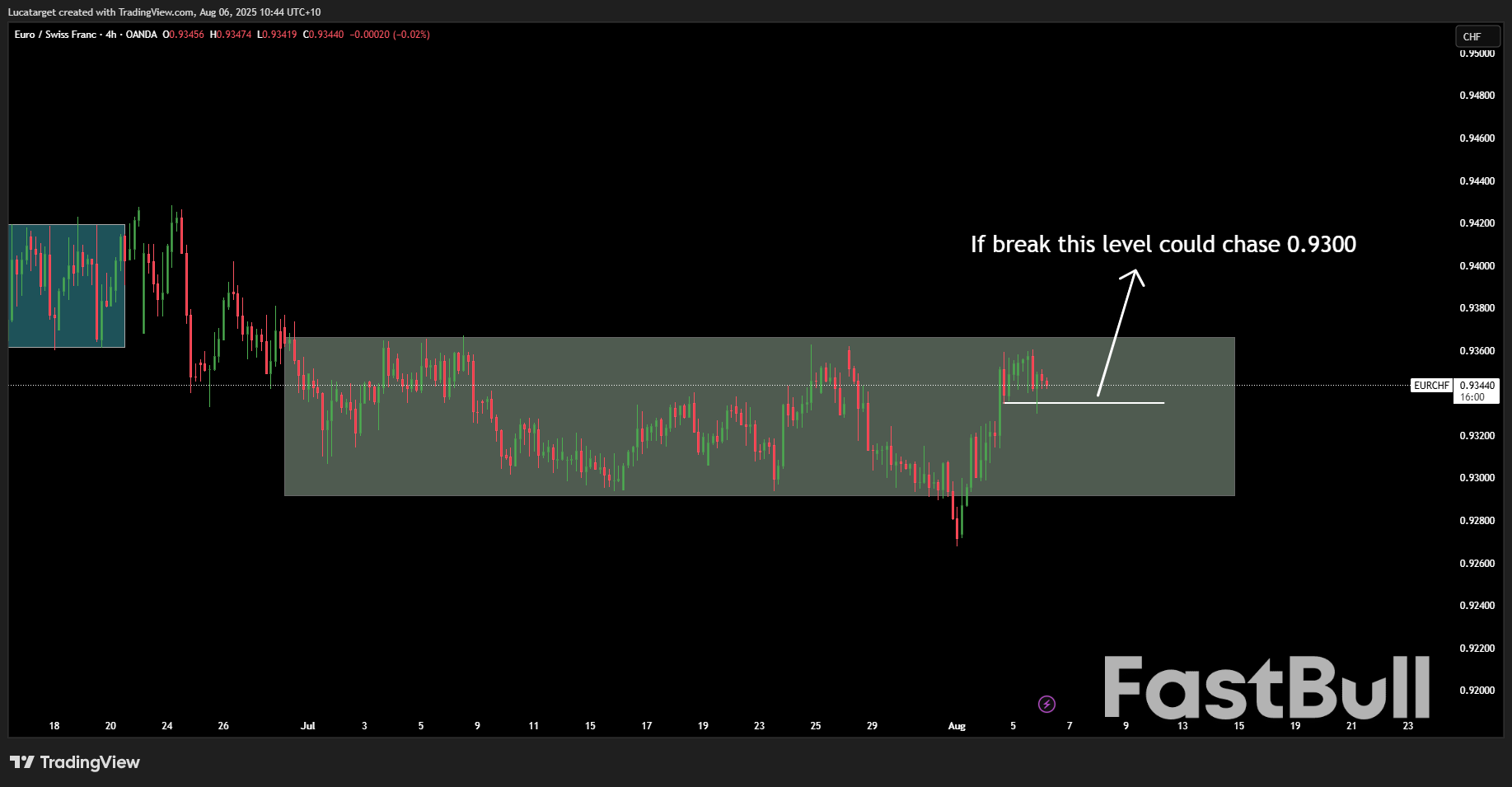
          EURCHF: leaning short, but not aggressivePolitical risks in Switzerland are serious, but the SNB is unlikely to let EURCHF spiral. If we break below 0.934, the SNB could step in, so tight risk management is key.
          Yen Surge, Tariffs & Fragile Bonds: Why This Week Could Reshape Currency Flows_3

          Source: TradingView

          This week isn’t about dramatic news. It’s about slow shifts that accumulate and then suddenly matter. Japan is inching toward a policy shift not because it wants to, but because the bond market might force its hand. Switzerland, usually a bystander, is now in the middle of a geopolitical trade crossfire. The U.S. economy is slowing but just how much, and how fast, is still up for debate.For traders, this is the time to zoom in. Watch the data. Watch the auctions. Watch the politics. There are moves brewing under the surface, and when the breakout comes, it will reward those who were already positioned.
          1. Why did the Japanese yen strengthen despite the Bank of Japan holding rates?The yen surged due to weaker-than-expected U.S. jobs data, which triggered a sharp drop in U.S. Treasury yields and led to a broad unwinding of short-yen positions. This reaction occurred even though the BoJ maintained a dovish stance, showing how sensitive markets are to global rate expectations.
          2. What risks are emerging in the Japanese bond (JGB) market?A weak 10-year JGB auction revealed declining demand, raising concerns about market stability. If fiscal stimulus requires more bond issuance, the BoJ may face pressure to adjust its policies, not to curb inflation, but to restore confidence in the bond market.
          3. How does the 39% U.S. tariff impact Switzerland’s economy?The unusually high tariff significantly threatens Swiss exports, particularly pharmaceuticals, watches, and medical equipment, which make up a large share of GDP. This could lead to slower growth, a return to negative interest rates, and further franc weakness if no resolution is reached.
          4. What’s the outlook for the Swiss franc (CHF) in the short term?Despite economic headwinds, the CHF remains supported by its high real effective exchange rate. However, if trade tensions persist and growth falters, the SNB may be forced to ease policy further, putting renewed downside pressure on the franc.
          5. What are the key economic events to watch this week?Traders should monitor PMI data from Europe and the UK, U.S. ISM Non-Manufacturing Index, and trade balance figures. These releases will guide rate expectations and currency positioning, especially in a market sensitive to marginal surprises.

          Source:ACY

          To stay updated on all economic events of today, please check out our Economic calendar
          Risk Warnings and Disclaimers
          You understand and acknowledge that there is a high degree of risk involved in trading. Following any strategies or investment methods may lead to potential losses. The content on the site is provided by our contributors and analysts for information purposes only. You are solely responsible for determining whether any trading assets, securities, strategy, or any other product is suitable for investing based on your own investment objectives and financial situation.
          Add to Favorites
          Share

          Trump Ramps Up Tariff Blitz With India, Pharma, Chips In Sights

          Christopher Hayes

          President Donald Trump said he’d impose increased tariffs on countries buying energy from Russia while clarifying that levies on semiconductor and pharmaceutical imports would be announced “within the next week or so.”

          In a divergent approach toward Asia’s giants, Trump said he’d raise tariffs on India “very substantially over the next 24 hours,” accusing its Russian oil purchases of “fueling the war machine.” By contrast, he said he was “very close to a deal” with China to extend a trade truce that saw the two countries agree to reduce tit-for-tat tariff hikes and ease export restrictions on rare earth magnets and certain technologies.

          India, which hoped to lure manufacturers amid Trump’s tariff blitz, will face a double squeeze as Trump said levies on pharmaceutical imports would be announced in the next week or so, along with tariffs on semiconductors. Unlike Beijing, which used its dominance of rare earths in trade dealings with Washington, Delhi has no such leverage.

          Coming just days after Trump re-set his tariff plan with rates on imports from trade partners ranging from 10% to 41%, his latest blast of trade threats and deadlines shows his quest to remake global trade in America’s favor is far from done. That’s even as the latest economic data suggests the US economy is grappling with the fallout.

          Asian stocks struggled for direction in early trade Wednesday. The S&P 500 was on the brink of all-time highs on Tuesday, before losing steam.

          Trump is threatening secondary tariffs on buyers of Russian oil as he ratchets up pressure on Russian President Vladimir Putin to halt the war in Ukraine. The Kremlin is weighing options for a concession that could include an air truce with Ukraine to try to head off the threat of such sanctions.

          When asked if he’d follow through on a previous threat to impose tariffs on additional countries, including China, Trump said “we’ll be doing quite a bit of that.”

          In an interview with CNBC earlier Tuesday, Trump indicated he would push forward with escalated tariffs on India in particular.

          “We settled on 25% but I think I’m going to raise that very substantially over the next 24 hours, because they’re buying Russian oil,” Trump said. “They’re fueling the war machine. And if they’re going to do that, then I’m not going to be happy.”

          He also detailed timing and discussed potential levels of US tariffs on semiconductor and pharmaceutical imports.

          “We’ll be putting a initially small tariff on pharmaceuticals, but in one year — one and a half years, maximum — it’s going to go to 150% and then it’s going to go to 250% because we want pharmaceuticals made in our country,” Trump said Tuesday in the interview on CNBC.

          Trump said the US was “getting along with China very well.”

          “It’s not imperative, but I think we’re going to make a good deal,” Trump said.

          Still, Trump downplayed the notion that he was eager for a meeting with Chinese President Xi Jinping, saying he would only want to see his Chinese counterpart as part of an effort to conclude trade negotiations.

          “I’ll end up having a meeting before the end of the year, most likely, if we make a deal,” Trump said. “If we don’t make a deal, I’m not going to have a meeting.”

          “It’s a 19-hour flight — it’s a long flight, but at some point in the not too distant future, I will,” Trump added.

          A preliminary deal between the US and China is set to expire on Aug. 12. That initial truce eased worries of a tariff war that threatened to choke off bilateral trade between the world’s two largest economies and also gave the countries more time to discuss other unresolved issues such as duties tied to fentanyl trafficking.

          Last week, US Treasury Secretary Scott Bessent and Chinese Vice Premier He Lifeng met in Stockholm — the third round of trade talks between the US and Beijing in less than three months.

          While Chinese officials and the Communist Party’s official newspaper had signaled satisfaction with the Stockholm talks, the pact remained fragile. Bessent had said that any agreement to extend the arrangement would be up to Trump.

          Source: Bloomberg Europe

          Risk Warnings and Disclaimers
          You understand and acknowledge that there is a high degree of risk involved in trading. Following any strategies or investment methods may lead to potential losses. The content on the site is provided by our contributors and analysts for information purposes only. You are solely responsible for determining whether any trading assets, securities, strategy, or any other product is suitable for investing based on your own investment objectives and financial situation.
          Add to Favorites
          Share

          Japan’s Nominal Pay Rises Faster In June, Backing Case For BOJ Rate Hike

          Michelle Reid

          Japanese workers saw their nominal wages rise at the fastest pace in four months, reflecting gains won in annual negotiations with employers and fueling market speculation that the Bank of Japan may hike its benchmark rate in coming months.

          Nominal wages increased 2.5% in June from a year earlier, accelerating from a revised 1.4% gain the previous month, the labor ministry reported Wednesday. While the figure fell short of economists’ forecast of a 3.1% rise, it still marked the steepest increase since February.

          Base salaries rose 2.1%, and a more stable measure, which avoids sampling issues and excludes bonuses and overtime, climbed 2.3% for regular workers. Real cash earnings fell 1.3%, a deeper decline than the 0.7% retreat expected by economists.

          Wednesday’s data provide the latest evidence of robust wage growth momentum, likely keeping the BOJ on course to consider another interest rate hike this year. Following the decision last week to keep the policy rate steady at 0.5%, Governor Kazuo Ueda reaffirmed the central bank’s commitment to raise borrowing costs if economic conditions improve, emphasizing the importance of confirming a “positive mechanism” between wages and prices.

          After a US-Japan trade deal was announced late last month, BOJ watchers brought forward their predictions on when the bank might next hike, with more than 40% forecasting the BOJ will move at its October policy meeting. No economists expect a move when authorities next set policy on Sept. 19, but over half of respondents expect another increase before the end of the year.

          The strong wage data reflect the outcomes of this year’s annual pay negotiations, in which workers represented by the largest umbrella group for unions secured their steepest pay increases in over three decades. Roughly 70% of those gains were likely reflected in workers’ paychecks by mid-June, based on last year’s results referenced in the Cabinet Office’s monthly economic report.

          Despite robust nominal wage growth, real wages continued to decline, as rising prices outpaced salary increases. The nation’s key inflation gauge reached 3.3% in June, led by surging food prices. The number of price increases by Japan’s major food and beverage companies will exceed 1,000 in August, a 53% increase compared with the same month in 2024, according to Teikoku Databank.

          With persistent inflation weighing on private consumption, gross domestic product figures for the three months through June due Aug. 15 are expected to show signs of anemic growth.

          The continued retreat by real wages is likely to intensify pressure on Prime Minister Shigeru Ishiba to take stronger action to help households contend with soaring costs of living. Ishiba may be forced to propose broader price relief steps beyond his party’s pledge to make one-off cash handouts.

          The ruling coalition’s historic setback in last month’s upper house election left it without a majority in either house of parliament, forcing it to collaborate with opposition parties to pass legislation. Those groups are currently working to finalize a unified proposal to press for a temporary cut to the consumption tax.

          Looking ahead, policymakers including those at the BOJ expect upward pressure on wages to persist, driven largely by the nation’s chronic labor shortage, which forces businesses to raise pay in order to attract and retain workers. The nation’s unemployment rate stood at 2.5% in June, remaining below 3% for more than four years.

          In the first half of 2025, a record 202 companies went bankrupt due to labor shortages, partly driven by the difficulty of raising labor costs and hiring workers.

          The government has been pushing for higher wages, setting a target for a record minimum wage hike in the current fiscal year.

          US trade policy poses a risk to wage growth in Japan. Washington will impose a 15% tariff on most imports from Japan. That rate is significantly higher than US import levies a year ago, potentially crimping companies’ ability to boost salaries by eroding their profit margins.

          Source: Bloomberg Europe

          Risk Warnings and Disclaimers
          You understand and acknowledge that there is a high degree of risk involved in trading. Following any strategies or investment methods may lead to potential losses. The content on the site is provided by our contributors and analysts for information purposes only. You are solely responsible for determining whether any trading assets, securities, strategy, or any other product is suitable for investing based on your own investment objectives and financial situation.
          Add to Favorites
          Share

          Brazil's Lula Defiant: 'I Will Not Call Trump, Am Not Afraid'

          Winkelmann

          Economic

          Political

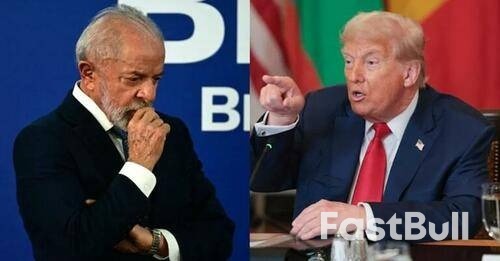
          President Trump has sent a message to President Luiz Inacio Lula da Silva saying the Brazilian leader could "call him anytime" to discuss the trade dispute centered on the country's treatment of ex-leader Jair Bolsonaro.Lula has defiantly responded Tuesday with the statement, "I will not call Trump because he does not want to talk." He further asserted that nobody gives him lessons in negotiations.Speaking during an event held in Brasilia, he made clear: "I don’t want people to think I am afraid of Donald Trump" and that "the US president had no right to announced the tariffs on Brazil the way he did" - especially as they make no sense.

          Additional vehement complaints about the US position, at a moment a record-setting 50% tariff has taken effect for many Brazilian goods entering the US, are as follows via Bloomberg:

          ● US attacks on instant payment system Pix are unjustified, we cannot be penalized for developing a free and efficient system, said Lula
          ● The allegations about the Pix payment system, regulation of digital platforms and deforestation are unreasonable “Pix is a national heritage and an international reference for public and digital infrastructure. I would like President Trump to try out Pix in the US.”
          ● Brazil never left the negotiation table Political and electoral interests cannot contaminate commercial relations
          ● Critical minerals belong to Brazil and will not be explored by other nations

          The Trump administration is demanding that charges against Bolsonaro, stemming from his rejection of the election results which brought Lula back to power, be dropped.However, the government has emphasized the independence of the judiciary. A week ago the US slapped sanctions on Brazilian Supreme Court Justice Alexandre de Moraes.But regional analyst Bruna Santos of the Inter-American Dialogue in Washington DC, has explained that dropping the charges against Bolsonaro is simply not going to happen.

          "The ask for Lula was undoable," he was quoted in the Associated Press as saying. "In the long run, you are leaving a scar on the relationship between the two largest democracies in the hemisphere."As of Monday Bolsonaro has been ordered under house arrest, with the federal top court citing violations related to stoking resentment via social media and public messaging. For now at least, it looks like the government is backing down, despite the damage to trade relations and future economic pain.

          Source: Zero Hedge

          To stay updated on all economic events of today, please check out our Economic calendar
          Risk Warnings and Disclaimers
          You understand and acknowledge that there is a high degree of risk involved in trading. Following any strategies or investment methods may lead to potential losses. The content on the site is provided by our contributors and analysts for information purposes only. You are solely responsible for determining whether any trading assets, securities, strategy, or any other product is suitable for investing based on your own investment objectives and financial situation.
          Add to Favorites
          Share
          FastBull
          Copyright © 2025 FastBull Ltd

          728 RM B 7/F GEE LOK IND BLDG NO 34 HUNG TO RD KWUN TONG KLN HONG KONG

          TelegramInstagramTwitterfacebooklinkedin
          App Store Google Play Google Play
          Products
          Charts

          Chats

          Q&A with Experts
          Screeners
          Economic Calendar
          Data
          Tools
          Membership
          Features
          Function
          Markets
          Copy Trading
          Latest Signals
          Contests
          News
          Analysis
          24/7
          Columns
          Education
          Company
          Careers
          About Us
          Contact Us
          Advertising
          Help Center
          Feedback
          User Agreement
          Privacy Policy
          Business

          White Label

          Data API

          Web Plug-ins

          Poster Maker

          Affiliate Program

          Risk Disclosure

          The risk of loss in trading financial instruments such as stocks, FX, commodities, futures, bonds, ETFs and crypto can be substantial. You may sustain a total loss of the funds that you deposit with your broker. Therefore, you should carefully consider whether such trading is suitable for you in light of your circumstances and financial resources.

          No decision to invest should be made without thoroughly conducting due diligence by yourself or consulting with your financial advisors. Our web content might not suit you since we don't know your financial conditions and investment needs. Our financial information might have latency or contain inaccuracy, so you should be fully responsible for any of your trading and investment decisions. The company will not be responsible for your capital loss.

          Without getting permission from the website, you are not allowed to copy the website's graphics, texts, or trademarks. Intellectual property rights in the content or data incorporated into this website belong to its providers and exchange merchants.

          Not Logged In

          Log in to access more features

          FastBull Membership

          Not yet

          Purchase

          Become a signal provider
          Help Center
          Customer Service
          Dark Mode
          Price Up/Down Colors

          Log In

          Sign Up

          Position
          Layout
          Fullscreen
          Default to Chart
          The chart page opens by default when you visit fastbull.com