Markets
News
Analysis
User
24/7
Economic Calendar
Education
Data
- Names
- Latest
- Prev


Signal Accounts for Members
All Signal Accounts
All Contests


Euro Zone IHS Markit Construction PMI (Nov)A:--
F: --
P: --
Italy IHS Markit Construction PMI (Nov)A:--
F: --
P: --
U.K. Markit/CIPS Construction PMI (Nov)A:--
F: --
P: --
France 10-Year OAT Auction Avg. YieldA:--
F: --
P: --
Euro Zone Retail Sales MoM (Oct)A:--
F: --
P: --
Euro Zone Retail Sales YoY (Oct)A:--
F: --
P: --
Brazil GDP YoY (Q3)A:--
F: --
P: --
U.S. Challenger Job Cuts (Nov)A:--
F: --
P: --
U.S. Challenger Job Cuts MoM (Nov)A:--
F: --
P: --
U.S. Challenger Job Cuts YoY (Nov)A:--
F: --
P: --
U.S. Initial Jobless Claims 4-Week Avg. (SA)A:--
F: --
P: --
U.S. Weekly Initial Jobless Claims (SA)A:--
F: --
P: --
U.S. Weekly Continued Jobless Claims (SA)A:--
F: --
P: --
Canada Ivey PMI (SA) (Nov)A:--
F: --
P: --
Canada Ivey PMI (Not SA) (Nov)A:--
F: --
P: --
U.S. Non-Defense Capital Durable Goods Orders Revised MoM (Excl. Aircraft) (SA) (Sept)A:--
F: --
U.S. Factory Orders MoM (Excl. Transport) (Sept)A:--
F: --
P: --
U.S. Factory Orders MoM (Sept)A:--
F: --
P: --
U.S. Factory Orders MoM (Excl. Defense) (Sept)A:--
F: --
P: --
U.S. EIA Weekly Natural Gas Stocks ChangeA:--
F: --
P: --
Saudi Arabia Crude Oil ProductionA:--
F: --
P: --
U.S. Weekly Treasuries Held by Foreign Central BanksA:--
F: --
P: --
Japan Foreign Exchange Reserves (Nov)A:--
F: --
P: --
India Repo RateA:--
F: --
P: --
India Benchmark Interest RateA:--
F: --
P: --
India Reverse Repo RateA:--
F: --
P: --
India Cash Reserve RatioA:--
F: --
P: --
Japan Leading Indicators Prelim (Oct)A:--
F: --
P: --
U.K. Halifax House Price Index YoY (SA) (Nov)A:--
F: --
P: --
U.K. Halifax House Price Index MoM (SA) (Nov)A:--
F: --
P: --
France Current Account (Not SA) (Oct)--
F: --
P: --
France Trade Balance (SA) (Oct)--
F: --
P: --
France Industrial Output MoM (SA) (Oct)--
F: --
P: --
Italy Retail Sales MoM (SA) (Oct)--
F: --
P: --
Euro Zone Employment YoY (SA) (Q3)--
F: --
P: --
Euro Zone GDP Final YoY (Q3)--
F: --
P: --
Euro Zone GDP Final QoQ (Q3)--
F: --
P: --
Euro Zone Employment Final QoQ (SA) (Q3)--
F: --
P: --
Euro Zone Employment Final (SA) (Q3)--
F: --
Brazil PPI MoM (Oct)--
F: --
P: --
Mexico Consumer Confidence Index (Nov)--
F: --
P: --
Canada Unemployment Rate (SA) (Nov)--
F: --
P: --
Canada Labor Force Participation Rate (SA) (Nov)--
F: --
P: --
Canada Employment (SA) (Nov)--
F: --
P: --
Canada Part-Time Employment (SA) (Nov)--
F: --
P: --
Canada Full-time Employment (SA) (Nov)--
F: --
P: --
U.S. Personal Income MoM (Sept)--
F: --
P: --
U.S. Dallas Fed PCE Price Index YoY (Sept)--
F: --
P: --
U.S. PCE Price Index YoY (SA) (Sept)--
F: --
P: --
U.S. PCE Price Index MoM (Sept)--
F: --
P: --
U.S. Personal Outlays MoM (SA) (Sept)--
F: --
P: --
U.S. Core PCE Price Index MoM (Sept)--
F: --
P: --
U.S. UMich 5-Year-Ahead Inflation Expectations Prelim YoY (Dec)--
F: --
P: --
U.S. Core PCE Price Index YoY (Sept)--
F: --
P: --
U.S. Real Personal Consumption Expenditures MoM (Sept)--
F: --
P: --
U.S. 5-10 Year-Ahead Inflation Expectations (Dec)--
F: --
P: --
U.S. UMich Current Economic Conditions Index Prelim (Dec)--
F: --
P: --
U.S. UMich Consumer Sentiment Index Prelim (Dec)--
F: --
P: --
U.S. UMich 1-Year-Ahead Inflation Expectations Prelim (Dec)--
F: --
P: --
U.S. UMich Consumer Expectations Index Prelim (Dec)--
F: --
P: --


No matching data
Latest Views
Latest Views
Trending Topics
Top Columnists
Latest Update
White Label
Data API
Web Plug-ins
Affiliate Program
View All

No data
Rolling lets you adapt an options trade without starting over - by changing the strike, expiry, or both. This first article in a four-part guide introduces the concept using covered calls and cash-secured puts, with clear examples of both offensive and defensive rolls.
Rolling options, part 1: understanding the basics and why rolling matters
This article is part of a four-part mini-series on rolling options—created for investors and active traders alike. Whether you’re just starting out or already trading more advanced strategies, understanding how and when to roll will help you manage risk, stay flexible, and adapt with confidence.
If you’ve ever found yourself wondering what to do with an options position that’s moving faster—or slower—than expected, you’re not alone. It’s a common moment for both new and experienced investors: the trade is still in play, but the timing, price, or outlook has shifted. This is where rolling comes in.
Rolling simply means closing your current option and replacing it with another one on the same stock, but with a different expiration date or strike price. It’s like rescheduling a meeting that still matters—you’re not cancelling, just adjusting it to fit the new context.In this first part of our series, we’ll look at rolling through the eyes of a beginner. We’ll explore how it works, why you might use it, and walk through two real-world examples: a covered call and a cash-secured put. Along the way, we’ll keep the tone practical, approachable, and grounded in real decisions investors face.
Think of it like booking a holiday months in advance. You had good reasons for choosing the dates and destination at the time, but now that the trip is approaching, something’s changed—maybe the weather, your schedule, or the travel deals. Instead of cancelling the trip altogether, you reschedule it: same idea, different timing, and a better fit for your needs now. That’s the basic idea behind rolling in options. You’re still in the same game, just giving yourself a different position and more time to work with.
Let’s say you’ve sold a put option on Company ABC—a bullish position where you’re happy to buy the stock if it dips, but ideally you'd prefer to collect the premium without being assigned. The stock pulls back a bit—not dramatically, but just enough that your short put is feeling a bit too close for comfort. You’re not quite ready to take the shares, and you want to keep some flexibility. So, you roll: you buy back the current put and sell a new one, with a slightly lower strike and more time to expiry. Same strategy, new setup.
This is all rolling means:
Our platforms make this easy by letting you do it in one step with a "roll" ticket. But beneath the surface, it’s simply two trades.
Rolling lets you tweak the key ingredients of an option:
These changes help you adapt the trade to match a new outlook or to better manage risk.Important note: The strategies and examples described are purely for educational purposes. They assist in shaping your thought process and should not be replicated or implemented without careful consideration. Every investor must conduct their own due diligence, considering their financial situation, risk tolerance, and investment objectives before making decisions. Remember, investing in the stock market carries risks, so make informed decisions.
Imagine you bought 100 shares of Company ABC at $100. To generate income, you sell a call option with a $105 strike that expires in three weeks. You collect $1.50 in premium.Now Company ABC climbs to $104. Your call is nearly in the money. You still like the stock and want to leave room for more upside. So you roll the short call up and out—maybe to the $110 strike, one month further out. You collect an additional $0.80.This is what’s called an offensive roll. Things are going well, and you're adjusting the trade to give yourself more opportunity. You’re still in the trade, but you’ve given it more time and space.
A helpful comparison: think of this like a freelance job that’s going well. You renegotiate the contract—longer term, slightly better terms, and a bit more pay. You’re still doing the same work, just with a setup that makes more sense now.Now flip the situation. Company ABC falls to $95. Your call is far out-of-the-money, and there’s little premium left. You might choose to roll it down and out—say, to the $102 strike next month. That brings in $0.60 in new premium and slightly improves your breakeven.This is a defensive roll. The trade hasn’t worked out as planned, but you’re staying calm and making a measured adjustment to improve the setup.
Rolling covered calls gives you a way to stay engaged with your positions without being boxed in by the original plan.
Now consider the other side of the coin: a cash-secured put. You sell a $95 put on Company ABC, 21 days to expiration, collecting $2.00. If assigned, you'd be happy to own the stock at $93.But Company ABC rallies to $104. The put is now worth very little. Rather than close it for pennies, you decide to roll up and out—you close the $95 and sell a $100 put for next month, collecting another $0.70. Your potential entry point moves higher, and you’ve collected more income.This, again, is an offensive roll. You’re using strength in the stock to reposition, just like arriving early at a train station and waiting for a more direct train with better seating.
If Company ABC drops to $92, you may feel the pressure building. Instead of letting the option run straight into assignment, you roll down and out to the $90 strike, one month out, and take in $0.60. Now your breakeven is lower, and you’ve given the position more time to stabilise.Cash-secured puts work well when markets are stable, but rolling gives you a way to navigate the more turbulent stretches with control and intent.
The mechanics of rolling are the same whether the trade is going well or not. The key difference is your intent:
Rolling shouldn’t be automatic. It’s not a button you press when uncertain. It’s a choice that should come from understanding the trade’s new shape, and what you want from it now.
Rolling gives you options—literally and figuratively. It’s a practical way to stay active in your positions without starting from scratch. You can shift your risk, extend your timeline, or give yourself another chance to earn income. And all of it can be done within the comfort of strategies you already know.In part 2, we’ll build on this foundation and explore how rolling works in more complex strategies like vertical spreads and iron condors—showing how adjustments change risk and reward.
The U.S. Energy Information Administration (EIA) revealed its latest Brent spot price forecast for 2025 and 2026 in its September short term energy outlook (STEO), which was released on September 9.
According to its latest STEO, the EIA expects the Brent spot price to average $67.80 per barrel in 2025 and $51.43 per barrel in 2026. In its previous STEO, which was released in August, the EIA projected that the Brent spot price would average $67.22 per barrel this year and $51.43 per barrel next year.
A quarterly breakdown included in the EIA’s September STEO showed that the EIA sees the Brent spot price coming in at $68.35 per barrel in the third quarter of 2025, $59.41 per barrel in the fourth quarter, $49.97 per barrel in the first quarter of 2026, $49.67 per barrel in the second quarter, $52 per barrel in the third quarter, and $54 per barrel in the fourth quarter.
In its previous STEO, the EIA forecast that the Brent spot price would average $67.40 per barrel in the third quarter of this year, $58.05 per barrel in the fourth quarter, $49.97 per barrel in the first quarter of next year, $49.67 per barrel in the second quarter, $52 per barrel in the third quarter, and $54 per barrel in the fourth quarter.
“We expect the Brent crude oil price will decline significantly in the coming months, falling from $68 per barrel in August to $59 per barrel on average in the fourth quarter of 2025 and around $50 per barrel in early 2026,” the EIA said in its latest STEO.
“The price forecast is driven by large oil inventory builds as OPEC+ members increase production. We expect global oil inventory builds will average more than two million barrels per day from 3Q25 through 1Q26,” it added.
“We expect low oil prices in early 2026 will lead to a reduction in supply by both OPEC+ and some non-OPEC producers, moderating inventory builds later in 2026. We forecast the Brent crude oil price will average $51 per barrel next year,” it continued.
The EIA noted in its September STEO that it finalized its latest outlook before OPEC+ announced on September 7 that it plans to raise production by 137,000 barrels per day in October.
In a report sent to Rigzone by the Standard Chartered team on Wednesday, Standard Chartered projected that the ICE Brent nearby future crude oil price will average $61 per barrel in 2025 and $78 per barrel in 2026. In that report, Standard Chartered forecast that the commodity will come in at $65 per barrel in the fourth quarter of this year, $71 per barrel in the first quarter of 2026, $76 per barrel in the second quarter, $81 per barrel in the third quarter, and $83 per barrel in the fourth quarter.
Standard Chartered Bank analysts, including the company’s Head of Energy Research, Emily Ashford, highlighted in this Standard Chartered report that their machine learning model SCORPIO “sees the potential for price weakness this week, with a forecast of $65.31 per barrel for 15 September settlement”.
“U.S. rates, dollar strength and global equity markets are weighing on its forecast, as we now expect a larger 50bps Fed cut in September,” the analysts added.
“The model sees a pivot in money manager positioning as a positive driver; our combined crude oil index rose 14.4 week on week to -38.5. The index for WTI has risen from its -100 minimum to -98.9, and the Brent index is up 20.3 week on week to +30.7,” they added.
A BMI report sent to Rigzone by the Fitch Group on September 2 showed that BMI expects the Brent crude price to average $68 per barrel this year and $67 per barrel next year.
A Bloomberg consensus included in that report projected that the Brent price will average $68 per barrel in 2025 and $65 per barrel in 2026. BMI is a contributor to the Bloomberg consensus, BMI highlighted in that report.


Historical data suggests that bitcoin BTC$115,080.71 has likely put in its September 2025 low, around $107,000 on the first of the month.
Looking back to July 2024, a consistent pattern emerges where bitcoin tends to form a bottom for the month within the first 10 days of each month.
The notable exceptions were February, June and August 2025, when the lows came later in the month, but even then, the market experienced a correction within those first 10 days before resuming its broader trend.
Speculatively, the reason bitcoin often puts in its low within the first 10 days of the month could be tied to institutional portfolio rebalancing or the timing of key macroeconomic events that tend to cluster early in the month.
"It’s worth noting that several futures and options markets expire on the final day of the month or the first day of the next, this can lead to short term volatility and a subsequent lull in trading activity as traders either rollover trades or reposition entirely,” said Oliver Knight, deputy managing editor, data and tokens, at CoinDesk.
Of course, past performance is not a guarantee of future results, but as Q4 approaches it is worth noting that this quarter has historically been bitcoin’s strongest, delivering an average return of 85%. October in particular has been especially favorable, with only two losing months since 2013.

Yesterday’s US CPI report showed slightly hotter than expected headline inflation (0.4% MoM), while the more closely monitored core rate rose by 0.3% MoM in line with consensus. What matters the most is the limited tariff impact. Price increases were driven by airline fares, used cars, shelter, food, and energy, while recreation and medical care saw declines. Notably, core goods excluding autos rose just 0.1%, suggesting that companies are currently absorbing tariff costs in their profit margins, in line with what PPI trade services data showed earlier this week. It’s far from guaranteed that this profit-squeezing is sustainable, but for now, markets are receiving validation of Fed dovish bets.
And even more validation is coming from job market news. Initial jobless claims unexpectedly spiked from 236k to 263k in the week to 6 September, the highest since October 2021. This could be a signal of increasing layoffs amid an already soft hiring environment.Here is our preview of next Wednesday’s FOMC meeting. We are aligned with the markets and consensus in expecting a 25bp cut, to be followed by similar reductions in October and December. The data-led dovish repricing has now made three cuts firmly the markets’ base case too (72bp priced in by December).
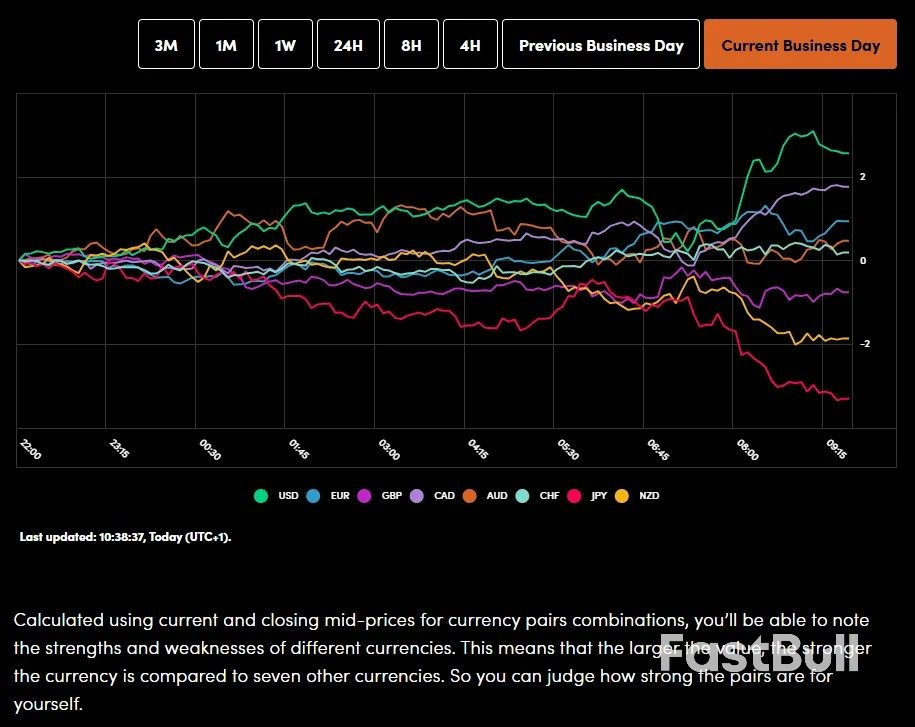
The dollar’s drop yesterday looked substantial on paper, but our model shows that the greenback is expensive relative to the latest short-term rate swings against most of the G10. We expect dollar weakening as the Fed starts cutting, even if now priced in, as cheaper funding costs can further encourage USD selling for hedging purposes.Today, we’ll see the University of Michigan surveys, keeping a close eye on inflation expectations, which currently stand at 4.8% for the year-ahead and 3.5% for 5-10 years. The balance of risks for the dollar remains tilted to the downside.
Yesterday’s ECB meeting proved more eventful than we had anticipated. After an initial dovish reaction to the statement – likely due to a slight downward revision in 2027 inflation forecasts – the euro spiked on the back of President Lagarde’s hawkish remarks. The balance of risks for growth is now seen as “more balanced”, and there was strong wording on the fact that the disinflationary process in the euro area is now over. At the same time, Lagarde steered clear of any headline-catching comments on French bonds, which we thought was a major dovish risk.
All in all, the implicit message to markets was that there are no reasons to keep pricing in additional rate cuts as things stand. Indeed, the implied probability of further easing dropped below 50% after Lagarde’s presser, offering strong rate-driven backing to the euro rally.While we wouldn’t fully rule out a resurgence of dovish sentiment – especially as tariffs, a strong euro, and geopolitical or sovereign debt risks may prompt future action – our baseline view remains aligned with market expectations: the ECB is done cutting rates.
The combined effect of hawkish ECB and US jobless claims spike sent the EUR:USD 2-year swap spread to -110bp, very close to the late September 2024 levels, when the Fed had just cut 50bp. While the spread is still some 35bp wider compared to the last time EUR/USD was trading at these levels four years ago, the medium-term rate-implied risk premium on the dollar has shrunk substantially, making further EUR/USD gains more feasible. A break above 1.180 in the near term now seems rather likely.
The pound has held up well against ECB-led euro strength. And if it’s central bank divergence we are looking at, EUR/GBP is hardly cheap.Some UK data for July were out this morning. Monthly GDP was in line with consensus (0% MoM, 0.2% 3M/3M), while industrial and manufacturing production dropped unexpectedly.Nothing in those figures carries significant implications for the Bank of England, though. Next week will be busy with jobs and inflation numbers: our BoE call (November cut) remains more dovish than markets’ and we see upside risks for EUR/GBP. But until those figures are released EUR/GBP may prefer the lower end of the 0.86-0.87 range rather than a break higher.
We talked yesterday about the krone’s good performance, partly due to some domestic hawkish repricing. The Regional Network Survey didn’t make our call for next week’s Norges Bank meeting any easier, as it showed resilient output and hiring expectations.However, as per our meeting preview, part of those expectations is based on anticipated rate cuts. Plus, the real interest rate in Norway is elevated and the recent good NOK performance is another incentive to cut now. Markets are pricing in 15bp, and while we admit it’s a close call, we slightly favour a cut next week.
This should pave the way for a short-term EUR/NOK rebound (we target 11.70 near term), although strong NOK fundamentals still argue for a structurally lower EUR/NOK in the coming quarters.
White Label
Data API
Web Plug-ins
Poster Maker
Affiliate Program
The risk of loss in trading financial instruments such as stocks, FX, commodities, futures, bonds, ETFs and crypto can be substantial. You may sustain a total loss of the funds that you deposit with your broker. Therefore, you should carefully consider whether such trading is suitable for you in light of your circumstances and financial resources.
No decision to invest should be made without thoroughly conducting due diligence by yourself or consulting with your financial advisors. Our web content might not suit you since we don't know your financial conditions and investment needs. Our financial information might have latency or contain inaccuracy, so you should be fully responsible for any of your trading and investment decisions. The company will not be responsible for your capital loss.
Without getting permission from the website, you are not allowed to copy the website's graphics, texts, or trademarks. Intellectual property rights in the content or data incorporated into this website belong to its providers and exchange merchants.
Not Logged In
Log in to access more features

FastBull Membership
Not yet
Purchase
Log In
Sign Up