• Trade
  • Markets
  • Copy
  • Contests
  • News
  • 24/7
  • Calendar
  • Q&A
  • Chats
Trending
Screeners
SYMBOL
LAST
BID
ASK
HIGH
LOW
NET CHG.
%CHG.
SPREAD
SPX
S&P 500 Index
6857.13
6857.13
6857.13
6865.94
6827.13
+7.41
+ 0.11%
--
DJI
Dow Jones Industrial Average
47850.93
47850.93
47850.93
48049.72
47692.96
-31.96
-0.07%
--
IXIC
NASDAQ Composite Index
23505.13
23505.13
23505.13
23528.53
23372.33
+51.04
+ 0.22%
--
USDX
US Dollar Index
98.760
98.840
98.760
98.980
98.750
-0.220
-0.22%
--
EURUSD
Euro / US Dollar
1.16686
1.16694
1.16686
1.16692
1.16408
+0.00241
+ 0.21%
--
GBPUSD
Pound Sterling / US Dollar
1.33607
1.33616
1.33607
1.33612
1.33165
+0.00336
+ 0.25%
--
XAUUSD
Gold / US Dollar
4226.98
4227.32
4226.98
4230.62
4194.54
+19.81
+ 0.47%
--
WTI
Light Sweet Crude Oil
59.398
59.435
59.398
59.469
59.187
+0.015
+ 0.03%
--

Community Accounts

Signal Accounts
--
Profit Accounts
--
Loss Accounts
--
View More

Become a signal provider

Sell trading signals to earn additional income

View More

Guide to Copy Trading

Get started with ease and confidence

View More

Signal Accounts for Members

All Signal Accounts

Best Return
  • Best Return
  • Best P/L
  • Best MDD
Past 1W
  • Past 1W
  • Past 1M
  • Past 1Y

All Contests

  • All
  • Trump Updates
  • Recommend
  • Stocks
  • Cryptocurrencies
  • Central Banks
  • Featured News
Top News Only
Share

Shanghai Rubber Warehouse Stocks Up 7336 Tons

Share

Shanghai Tin Warehouse Stocks Up 506 Tons

Share

Reserve Bank Of India Chief Malhotra: Goal Is To Have Inflation Be Around 4%

Share

Ukmto Says Master Has Confirmed That The Small Crafts Have Left The Scene, Vessel Is Proceeding To Its Next Port Of Call

Share

Shanghai Nickel Warehouse Stocks Up 1726 Tons

Share

Shanghai Lead Warehouse Stocks Down 3064 Tons

Share

Shanghai Zinc Warehouse Stocks Down 4000 Tons

Share

Shanghai Aluminium Warehouse Stocks Up 8353 Tons

Share

Shanghai Copper Warehouse Stocks Down 9025 Tons

Share

Equinor: Preliminary Estimates Indicate Reservoirs May Contain Between 5 -18 Million Standard Cubic Meters Of Recoverable Oil Equivalents

Share

Japan Chief Cabinet Secretary Kihara: Government To Take Appropriate Steps On Excessive And Disorderly Moves In Foreign Exchange Market, If Necessary

Share

[Report: Amazon Pays €180 Million To Italy To End Tax And Labor Investigations] Amazon Has Paid A Settlement And Dismantled Its Monitoring System For Delivery Drivers In Italy, Ending An Investigation Into Alleged Tax Fraud And Illegal Labor Practices. In July 2024, The Group's Logistics Services Division Was Accused Of Circumventing Labor And Tax Laws By Relying On Cooperatives Or Limited Liability Companies To Supply Workers, Evading VAT, And Reducing Social Security Payments. Sources Say The Group Has Now Paid Approximately €180 Million To Italian Tax Authorities As Part Of A €1 Billion Settlement Involving 33 Companies

Share

Airbus - Booked 797 Gross Aircraft Orders In January-November

Share

[Market Update] Spot Gold Broke Through $4,230 Per Ounce, Up 0.51% On The Day

Share

Reserve Bank Of India Chief Malhotra: There Will Be Ample Liquidity As Long As We Are In An Easing Cycle

Share

Reserve Bank Of India Chief Malhotra: Quantum Of System Liquidity Will Be Managed To Ensure Monetary Transmission Is Happening

Share

China's Foreign Ministry: World Bank, IMF, WTO Top Officials To Join

Share

China's Foreign Ministry: China To Hold 1+1 Dialogue With International Economic Orgs On Dec 9

Share

Reserve Bank Of India Chief Malhotra: 5% Of Inr Depreciation Leads To 35 Bps Of Inflation

Share

Eurostoxx 50 Futures Up 0.14%, DAX Futures Up 0.12%, CAC 40 Futures Up 0.26%, FTSE Futures Up 0.03%

TIME
ACT
FCST
PREV
Euro Zone IHS Markit Construction PMI (Nov)

A:--

F: --

P: --

Italy IHS Markit Construction PMI (Nov)

A:--

F: --

P: --

U.K. Markit/CIPS Construction PMI (Nov)

A:--

F: --

P: --

France 10-Year OAT Auction Avg. Yield

A:--

F: --

P: --

Euro Zone Retail Sales MoM (Oct)

A:--

F: --

P: --

Euro Zone Retail Sales YoY (Oct)

A:--

F: --

P: --

Brazil GDP YoY (Q3)

A:--

F: --

P: --

U.S. Challenger Job Cuts (Nov)

A:--

F: --

P: --

U.S. Challenger Job Cuts MoM (Nov)

A:--

F: --

P: --

U.S. Challenger Job Cuts YoY (Nov)

A:--

F: --

P: --

U.S. Initial Jobless Claims 4-Week Avg. (SA)

A:--

F: --

P: --

U.S. Weekly Initial Jobless Claims (SA)

A:--

F: --

P: --

U.S. Weekly Continued Jobless Claims (SA)

A:--

F: --

P: --

Canada Ivey PMI (SA) (Nov)

A:--

F: --

P: --

Canada Ivey PMI (Not SA) (Nov)

A:--

F: --

P: --

U.S. Non-Defense Capital Durable Goods Orders Revised MoM (Excl. Aircraft) (SA) (Sept)

A:--

F: --

P: --
U.S. Factory Orders MoM (Excl. Transport) (Sept)

A:--

F: --

P: --

U.S. Factory Orders MoM (Sept)

A:--

F: --

P: --

U.S. Factory Orders MoM (Excl. Defense) (Sept)

A:--

F: --

P: --

U.S. EIA Weekly Natural Gas Stocks Change

A:--

F: --

P: --

Saudi Arabia Crude Oil Production

A:--

F: --

P: --

U.S. Weekly Treasuries Held by Foreign Central Banks

A:--

F: --

P: --

Japan Foreign Exchange Reserves (Nov)

A:--

F: --

P: --

India Repo Rate

A:--

F: --

P: --

India Benchmark Interest Rate

A:--

F: --

P: --

India Reverse Repo Rate

A:--

F: --

P: --

India Cash Reserve Ratio

A:--

F: --

P: --

Japan Leading Indicators Prelim (Oct)

A:--

F: --

P: --

U.K. Halifax House Price Index YoY (SA) (Nov)

A:--

F: --

P: --

U.K. Halifax House Price Index MoM (SA) (Nov)

A:--

F: --

P: --

France Current Account (Not SA) (Oct)

--

F: --

P: --

France Trade Balance (SA) (Oct)

--

F: --

P: --

France Industrial Output MoM (SA) (Oct)

--

F: --

P: --

Italy Retail Sales MoM (SA) (Oct)

--

F: --

P: --

Euro Zone Employment YoY (SA) (Q3)

--

F: --

P: --

Euro Zone GDP Final YoY (Q3)

--

F: --

P: --

Euro Zone GDP Final QoQ (Q3)

--

F: --

P: --

Euro Zone Employment Final QoQ (SA) (Q3)

--

F: --

P: --

Euro Zone Employment Final (SA) (Q3)

--

F: --

P: --
Brazil PPI MoM (Oct)

--

F: --

P: --

Mexico Consumer Confidence Index (Nov)

--

F: --

P: --

Canada Unemployment Rate (SA) (Nov)

--

F: --

P: --

Canada Labor Force Participation Rate (SA) (Nov)

--

F: --

P: --

Canada Employment (SA) (Nov)

--

F: --

P: --

Canada Part-Time Employment (SA) (Nov)

--

F: --

P: --

Canada Full-time Employment (SA) (Nov)

--

F: --

P: --

U.S. Personal Income MoM (Sept)

--

F: --

P: --

U.S. Dallas Fed PCE Price Index YoY (Sept)

--

F: --

P: --

U.S. PCE Price Index YoY (SA) (Sept)

--

F: --

P: --

U.S. PCE Price Index MoM (Sept)

--

F: --

P: --

U.S. Personal Outlays MoM (SA) (Sept)

--

F: --

P: --

U.S. Core PCE Price Index MoM (Sept)

--

F: --

P: --

U.S. UMich 5-Year-Ahead Inflation Expectations Prelim YoY (Dec)

--

F: --

P: --

U.S. Core PCE Price Index YoY (Sept)

--

F: --

P: --

U.S. Real Personal Consumption Expenditures MoM (Sept)

--

F: --

P: --

U.S. 5-10 Year-Ahead Inflation Expectations (Dec)

--

F: --

P: --

U.S. UMich Current Economic Conditions Index Prelim (Dec)

--

F: --

P: --

U.S. UMich Consumer Sentiment Index Prelim (Dec)

--

F: --

P: --

U.S. UMich 1-Year-Ahead Inflation Expectations Prelim (Dec)

--

F: --

P: --

U.S. UMich Consumer Expectations Index Prelim (Dec)

--

F: --

P: --

Q&A with Experts
    • All
    • Chatrooms
    • Groups
    • Friends
    Connecting
    .
    .
    .
    Type here...
    Add Symbol or Code

      No matching data

      All
      Trump Updates
      Recommend
      Stocks
      Cryptocurrencies
      Central Banks
      Featured News
      • All
      • Russia-Ukraine Conflict
      • Middle East Flashpoint
      • All
      • Russia-Ukraine Conflict
      • Middle East Flashpoint

      Search
      Products

      Charts Free Forever

      Chats Q&A with Experts
      Screeners Economic Calendar Data Tools
      Membership Features
      Data Warehouse Market Trends Institutional Data Policy Rates Macro

      Market Trends

      Market Sentiment Order Book Forex Correlations

      Top Indicators

      Charts Free Forever
      Markets

      News

      News Analysis 24/7 Columns Education
      From Institutions From Analysts
      Topics Columnists

      Latest Views

      Latest Views

      Trending Topics

      Top Columnists

      Latest Update

      Signals

      Copy Rankings Latest Signals Become a signal provider AI Rating
      Contests
      Brokers

      Overview Brokers Assessment Rankings Regulators News Claims
      Broker listing Forex Brokers Comparison Tool Live Spread Comparison Scam
      Q&A Complaint Scam Alert Videos Tips to Detect Scam
      More

      Business
      Events
      Careers About Us Advertising Help Center

      White Label

      Data API

      Web Plug-ins

      Affiliate Program

      Awards Institution Evaluation IB Seminar Salon Event Exhibition
      Vietnam Thailand Singapore Dubai
      Fans Party Investment Sharing Session
      FastBull Summit BrokersView Expo
      Recent Searches
        Top Searches
          Markets
          News
          Analysis
          User
          24/7
          Economic Calendar
          Education
          Data
          • Names
          • Latest
          • Prev

          View All

          No data

          Scan to Download

          Faster Charts, Chat Faster!

          Download App
          English
          • English
          • Español
          • العربية
          • Bahasa Indonesia
          • Bahasa Melayu
          • Tiếng Việt
          • ภาษาไทย
          • Français
          • Italiano
          • Türkçe
          • Русский язык
          • 简中
          • 繁中
          Open Account
          Search
          Products
          Charts Free Forever
          Markets
          News
          Signals

          Copy Rankings Latest Signals Become a signal provider AI Rating
          Contests
          Brokers

          Overview Brokers Assessment Rankings Regulators News Claims
          Broker listing Forex Brokers Comparison Tool Live Spread Comparison Scam
          Q&A Complaint Scam Alert Videos Tips to Detect Scam
          More

          Business
          Events
          Careers About Us Advertising Help Center

          White Label

          Data API

          Web Plug-ins

          Affiliate Program

          Awards Institution Evaluation IB Seminar Salon Event Exhibition
          Vietnam Thailand Singapore Dubai
          Fans Party Investment Sharing Session
          FastBull Summit BrokersView Expo

          Markets Are Repricing Fast And The Dollar’s Losing Its Grip

          ACY

          Forex

          Political

          Economic

          Summary:

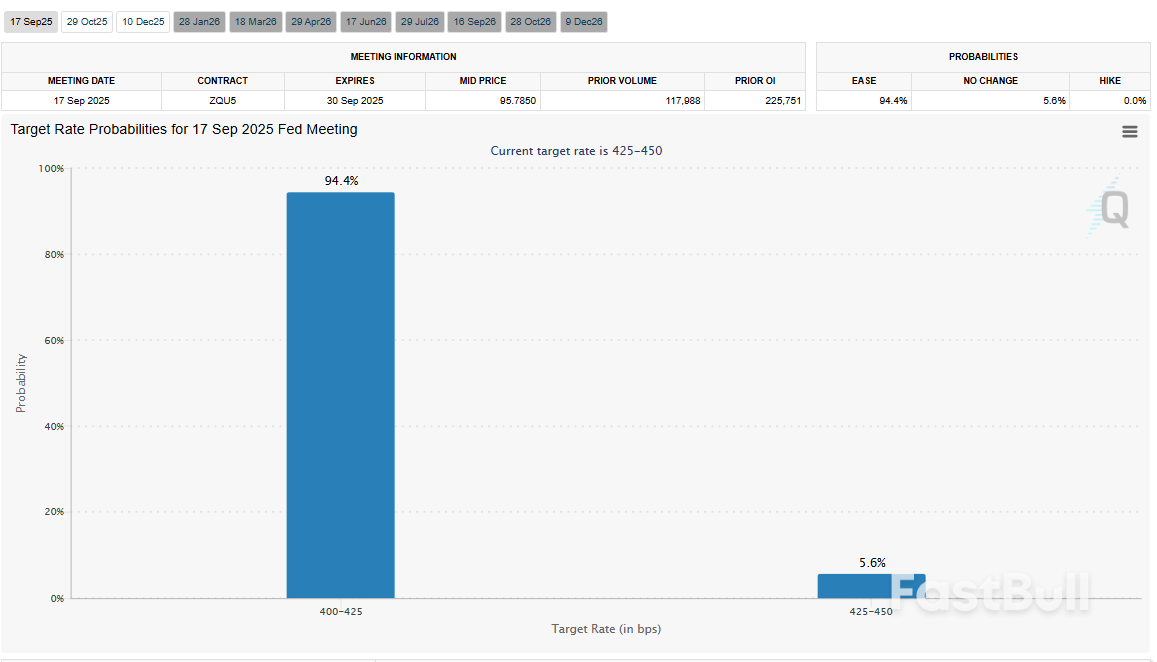
          It’s not often that one report can shake the whooe market narrative, but that’s exactly what happened after Friday’s U.S. non-farm payrolls data. I’ve been watching these developments closely, and the shift in sentiment is something traders shouldn’t underestimate.Just days ago, the market was still debating whether the Fed might hold rates into year-end. Fast-forward to now, and we’re staring down the barrel of an 90% probability of a rate cut in September. 
          Markets Are Repricing Fast And The Dollar’s Losing Its Grip_1

          Source: CME

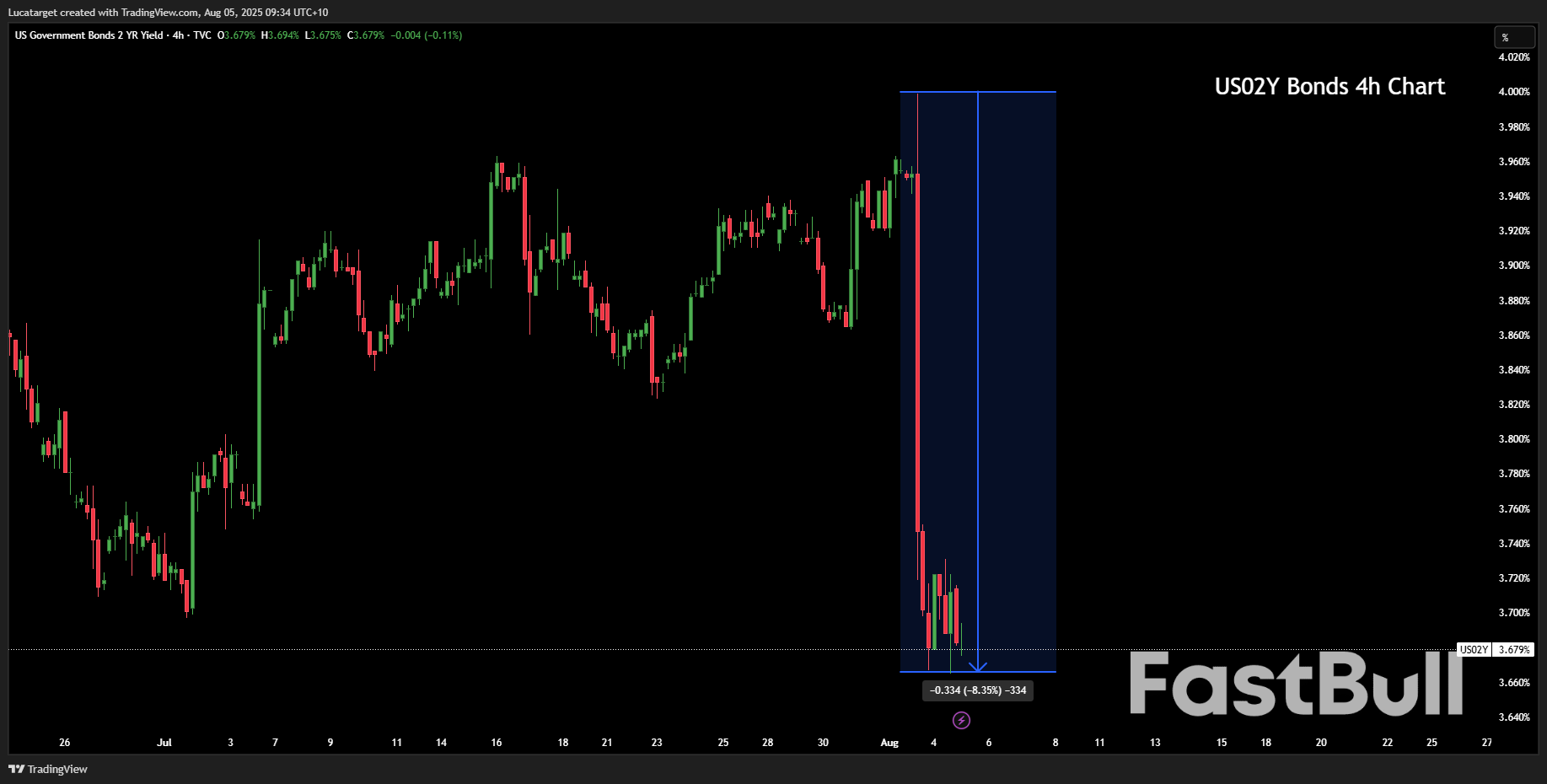
          The US02-year yield collapsed by almost 30 basis points, and the dollar reacted exactly as you’d expect in this kind of repricing: it tanked.But there’s more to the story than just rates.
          Markets Are Repricing Fast And The Dollar’s Losing Its Grip_2

          Source: TradingView

          The Jobs Data Wasn’t Just Weak, It Was Alarming!!

          We’re not just talking about a soft report here. The revisions to previous data were brutal. Over the last three months, non-cyclical sectors (excluding health and education) lost 49,000 jobs. This isn’t your typical post-COVID adjustment, that kind of decline is historically associated with full-blown crises.Add to that a significant drop in the ISM manufacturing employment index, which plunged to levels we haven’t seen since the GFC, and it becomes clear: this wasn’t a blip. It’s systemic.We’ve now gone from “data-dependent Fed” to “what will stop them from cutting?” The market is no longer waiting for a green light the assumption is that the easing cycle is now the base case, not the tail risk.

          Why This Time Feels Different

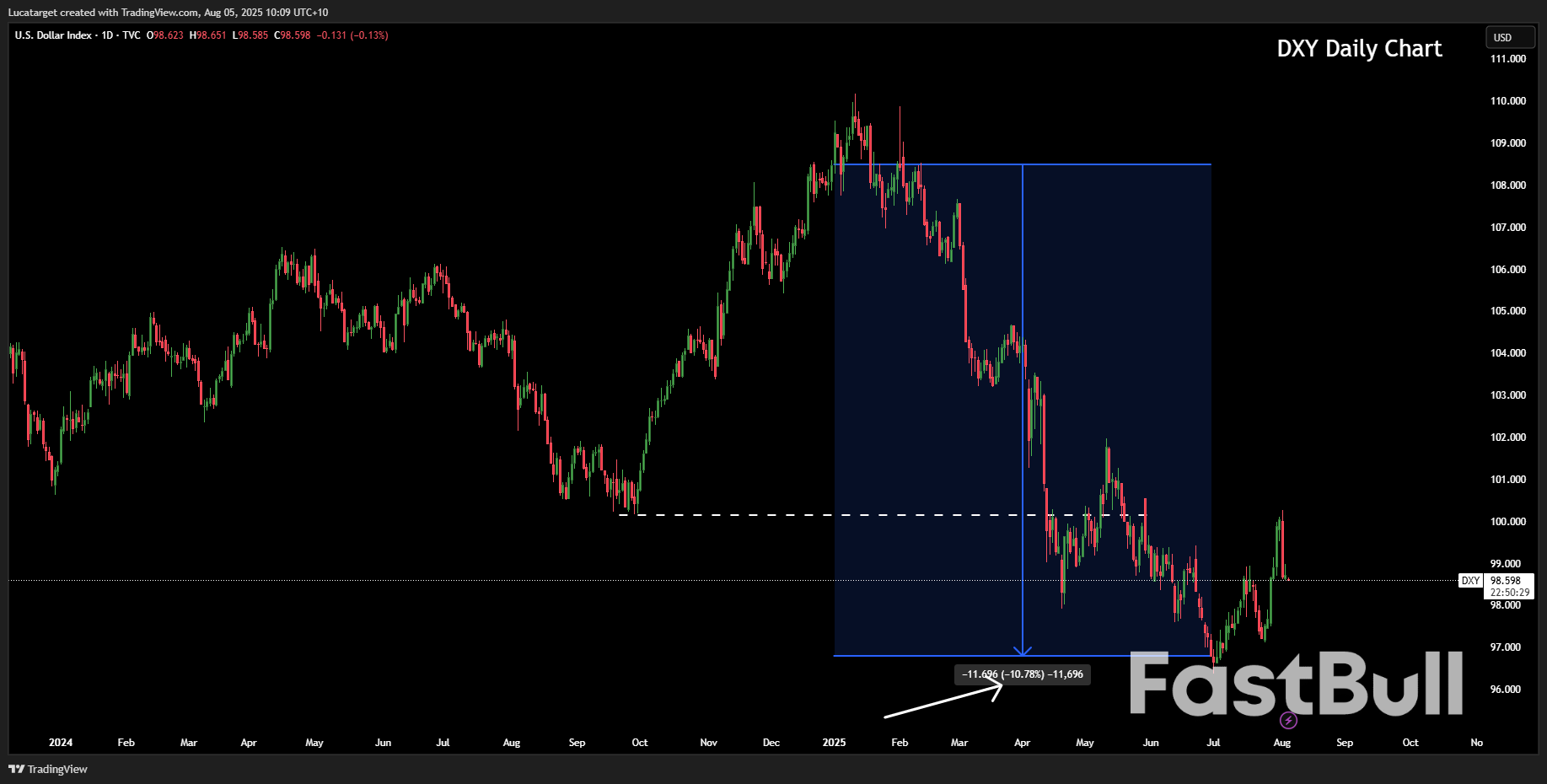
          What makes this moment stand out is that the USD is already weak, it’s fallen over 10% in the first half of the year. And while that may suggest limited room for further downside, the underlying drivers here are far more concerning than usual.Markets Are Repricing Fast And The Dollar’s Losing Its Grip_3

          Source: TradingView

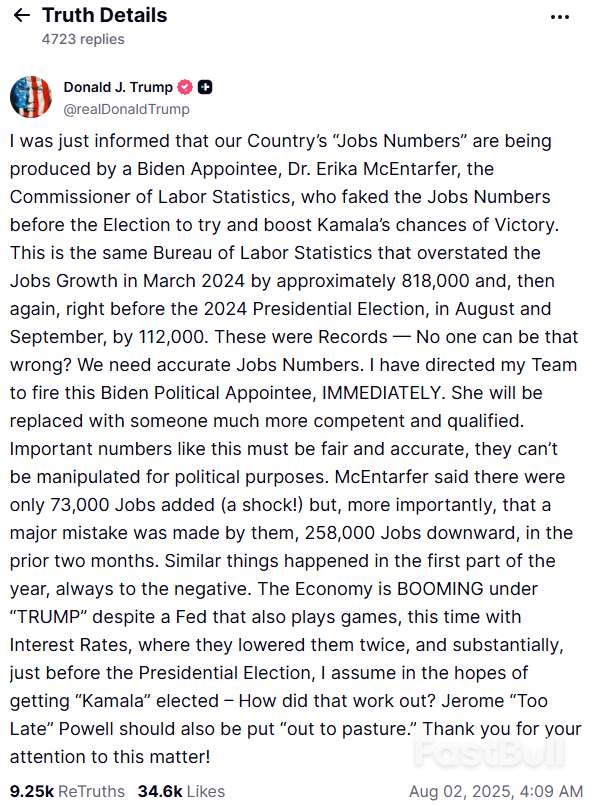
          There’s also a growing sense that politics is spilling over into monetary policy. Trump’s comments about Powell and the firing of the BLS head after weak jobs data raise valid concerns around institutional independence something markets are hypersensitive to. If that confidence erodes further, we could see another leg down in the dollar.
          Markets Are Repricing Fast And The Dollar’s Losing Its Grip_4

          Source: Trump Truth Social Profile

          What I’m Watching Next

          Right now, the market is digesting all of this and starting to rethink the entire U.S. macro narrative. The Fed's messaging remains cautious, but if inflation doesn’t surprise to the upside, a cut in September looks almost baked in.
          Some key things on my radar this week:
          Durable goods and factory orders today (both expected to slow sharply)
          The next CPI print, which could either fuel or halt this dovish pivot
          The Fed’s Loan Officer Survey, giving us insight into credit conditions, which are likely tightening further

          Trade Ideas I’m Exploring

          With yields plummeting and risk appetite slowly returning (at least for now), here are two setups I find compelling:

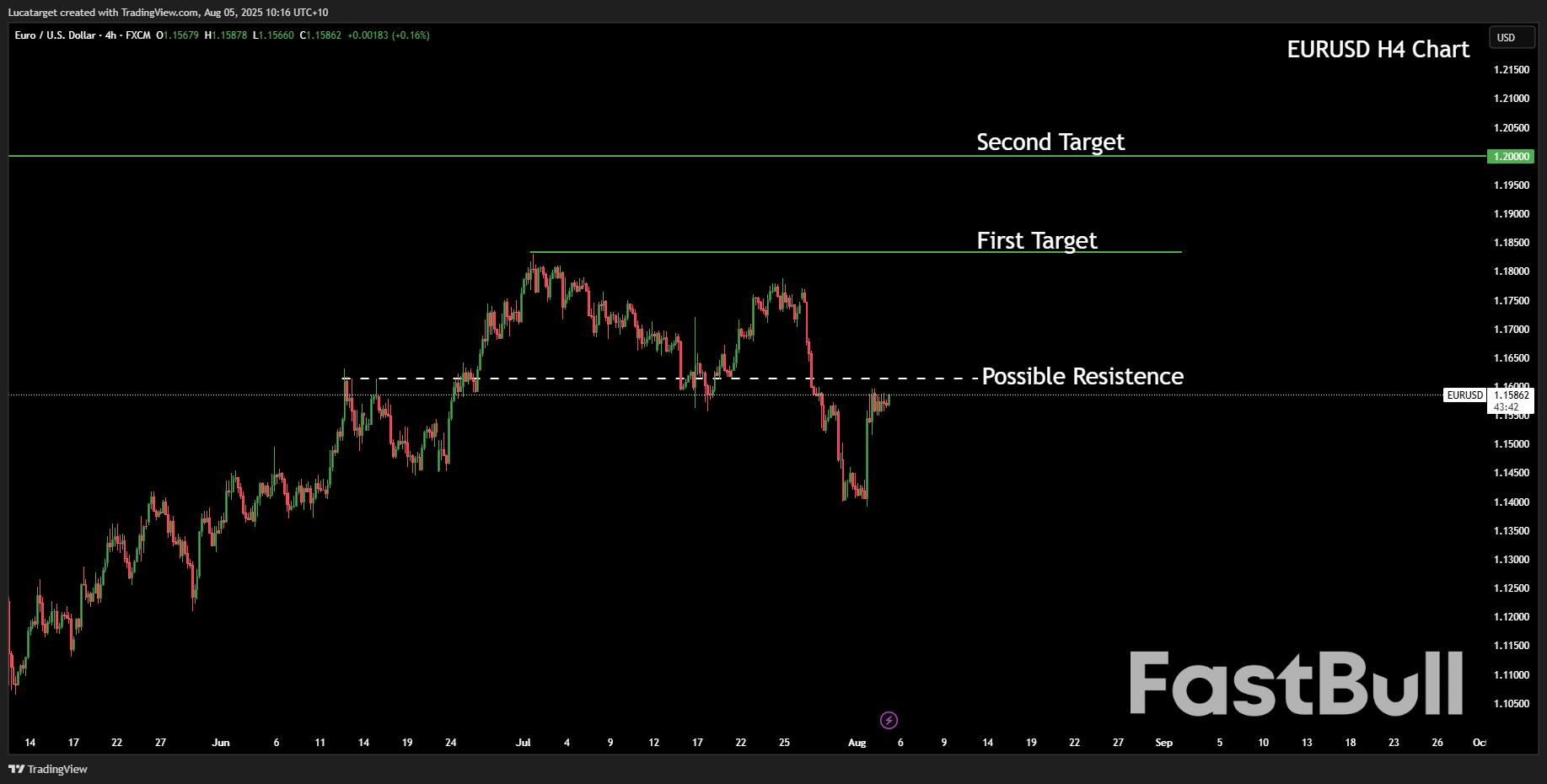
          1. Long EUR/USD

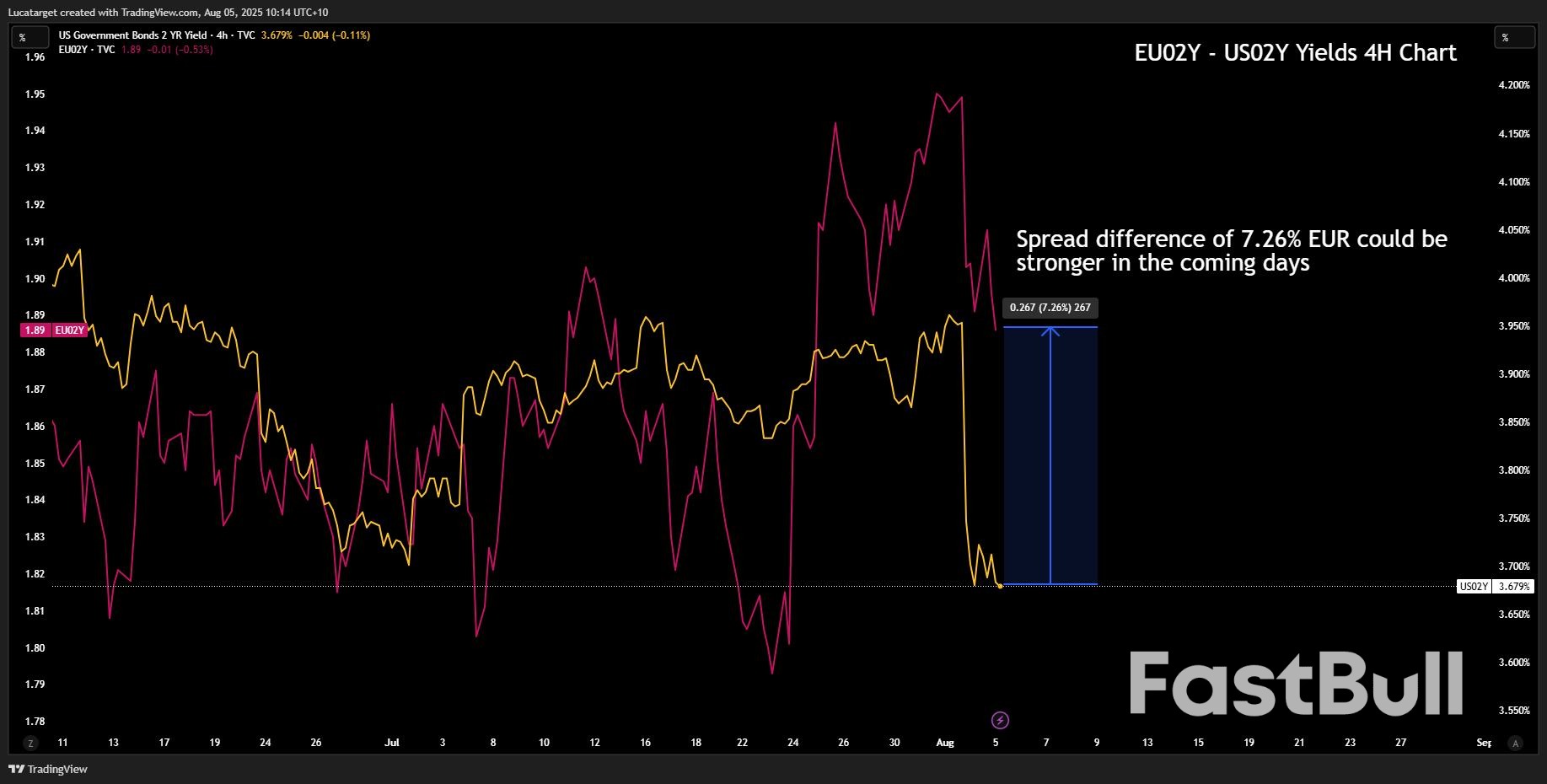
          With the Fed pivoting dovish and the ECB in “hold” mode, the yield spread is starting to favor the euro again. (Yellow US Pink EU)
          Markets Are Repricing Fast And The Dollar’s Losing Its Grip_5

          Source: TradingView

          We’ve cleared key resistance levels and are now looking at 1.1600 as the next area of interest and possible reisstnce. I'm looking to targets near 1.1800 and 1.20 as last target, 1.1550 could be attractive for long entries.

          Markets Are Repricing Fast And The Dollar’s Losing Its Grip_6

          Source: TradingView

          Catalyst: Further confirmation of weak U.S. data or even neutral Eurozone numbers could be enough to drive this higher.

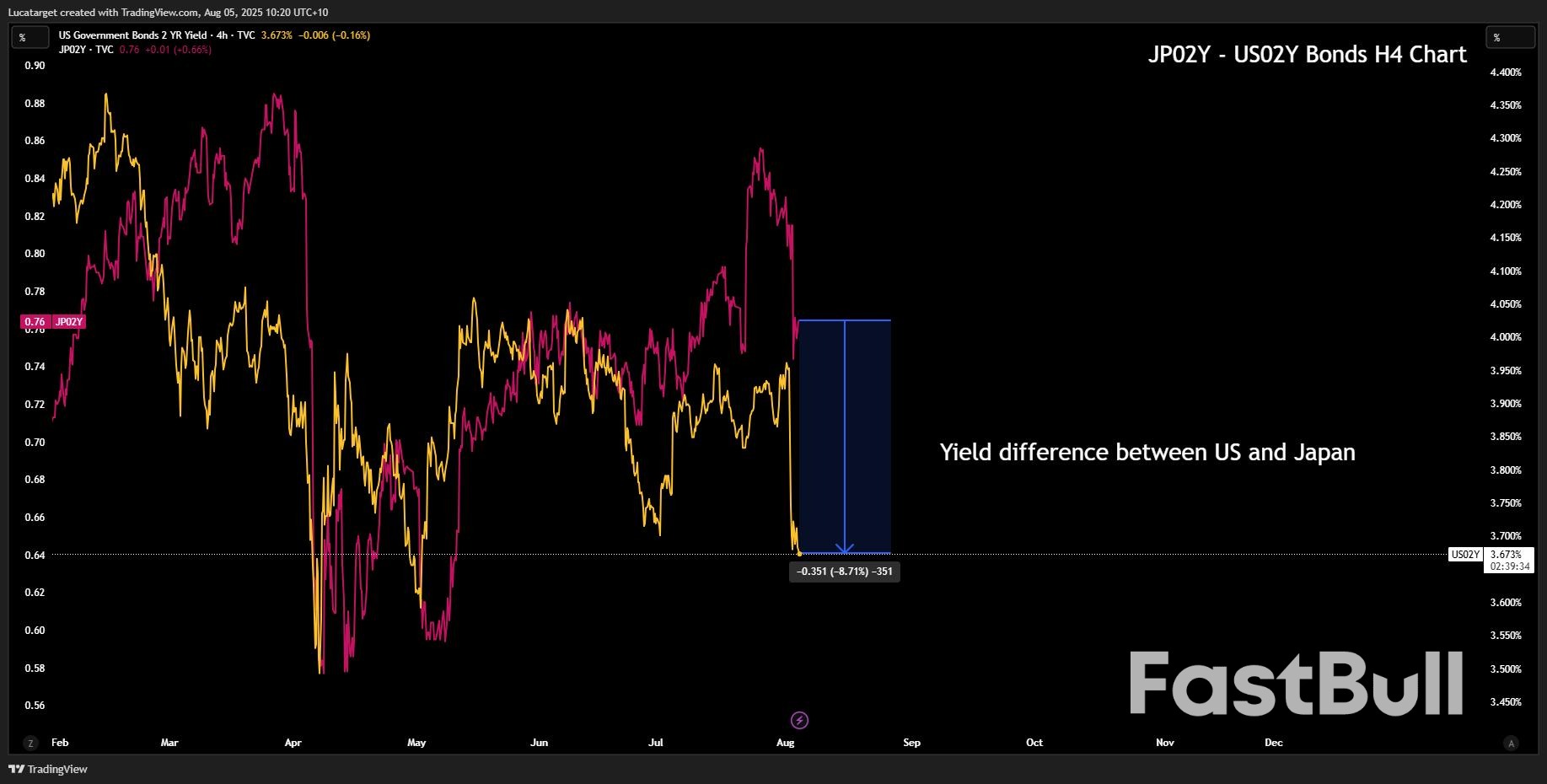
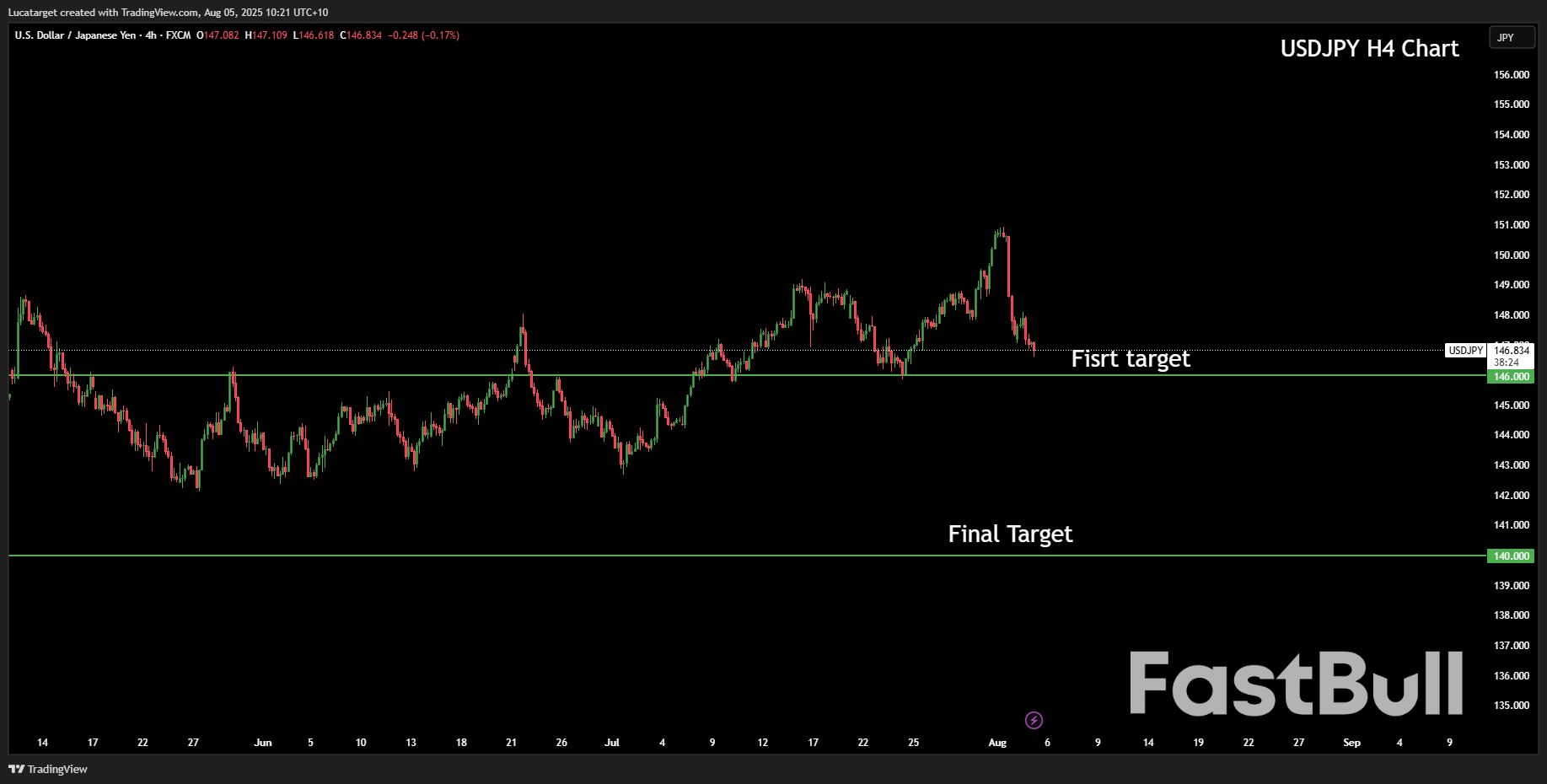
          2. Short USD/JPY

          While Japanese yields remain subdued, the sharp drop in U.S. yields has made the rate differential far less compelling.
          Markets Are Repricing Fast And The Dollar’s Losing Its Grip_7

          Source: TradingView

          Add to that growing concerns around Fed credibility, and there’s a case to be made for downside.Targeting a return to 144.00, with stops above 148.00. Not a swing-for-the-fences type of trade, but the risk/reward is starting to stack up, specially looking for the final target at 140.000
          Markets Are Repricing Fast And The Dollar’s Losing Its Grip_8

          Source: TradingView

          I’ll be keeping a close eye on incoming data, especially with Trump signaling another Fed appointment is imminent. If the next pick is perceived as politically motivated, we could see more pressure on the dollar.Markets are clearly in a transition phase, from inflation fears to growth fears, and when that happens, the FX market becomes reactive, not predictive. That’s where opportunity lives.Let’s see what the rest of the week brings. Stay sharp, stay flexible and as always, trade what’s in front of you, not what you hope for.
          1. Why did the U.S. dollar drop after the latest NFP release?The dollar fell sharply because the non-farm payrolls data showed significant weakness, especially after major downward revisions. This has increased the market’s expectation of a Fed rate cut in September, reducing demand for USD-denominated assets.
          2. What’s the probability of a Fed rate cut in September 2025?Market pricing currently reflects an 90% chance of a rate cut at the September FOMC meeting, driven by weaker jobs data, deteriorating economic indicators, and political pressure on the Fed.
          3. How do weaker U.S. job numbers impact forex trading?Weaker employment data usually signals slower economic growth, prompting expectations of monetary easing. This tends to lower bond yields and push the U.S. dollar down, especially against currencies where rate expectations remain stable or hawkish.
          4. What are the best forex pairs to trade during a dovish Fed pivot?When the Fed signals a pivot, EUR/USD and USD/JPY often present opportunities. EUR/USD tends to rise as the yield spread narrows in favor of the euro, while USD/JPY can fall due to shrinking rate differentials with Japan.
          5. Could political interference in the Fed impact forex markets?Yes. Any perceived erosion of the Fed's independence, such as politically motivated personnel changes, can trigger a loss of investor confidence, adding downward pressure on the U.S. dollar and increasing volatility across major pairs.

          Source:ACY

          To stay updated on all economic events of today, please check out our Economic calendar
          Risk Warnings and Disclaimers
          You understand and acknowledge that there is a high degree of risk involved in trading. Following any strategies or investment methods may lead to potential losses. The content on the site is provided by our contributors and analysts for information purposes only. You are solely responsible for determining whether any trading assets, securities, strategy, or any other product is suitable for investing based on your own investment objectives and financial situation.
          Add to Favorites
          Share

          Asian Markets Rally on Fed Rate Cut Bets as Dollar Softens Against Yen

          Gerik

          Economic

          Markets Rebound on Easing Bets and Positive Earnings

          Asian shares extended their rebound on Tuesday as global investors increased wagers that the Federal Reserve will initiate rate cuts as early as September to support a slowing U.S. economy. The optimism followed a sharp decline in U.S. job growth figures released Friday, which boosted the probability of at least two rate cuts this year.
          The MSCI Asia-Pacific Index (excluding Japan) rose by 0.6%, while Japan's Nikkei added 0.5%, recovering from its worst session in two months. Positive U.S. earnings from major tech firms also contributed to the rally, with companies like Nvidia, Alphabet, and Meta driving Wall Street gains the previous night.

          Fed Policy Under Spotlight Amid Political Turmoil

          The probability of a September rate cut now sits at 94%, sharply up from 63% at the end of July, according to the CME FedWatch Tool. This shift follows Friday’s weaker-than-expected nonfarm payrolls report, which not only revealed hiring weakness but also triggered political drama. President Donald Trump abruptly fired the head of labor statistics, raising concerns about the independence of economic data and further politicization of the Federal Reserve.
          Additional uncertainty was injected after Trump confirmed he would soon appoint a new Fed governor, with speculation that the replacement could take over the Fed chairmanship in 2026. Investors now factor in potential changes to the Fed’s leadership that may favor more accommodative monetary policy.

          Currencies and Commodities: Dollar Weakens, Oil Stabilizes

          Currency markets reacted accordingly. The dollar edged down 0.1% to 146.96 yen, while the euro remained flat at $1.1572. The U.S. Dollar Index crept higher by 0.1% after a two-day fall but remained well off recent highs.
          Oil prices steadied after a sharp three-day sell-off. Brent crude held at $68.76, while WTI crude inched down to $66.28, with concerns over oversupply from OPEC+ somewhat offset by geopolitical risks namely, Trump's threats to penalize India for purchasing Russian crude.
          Spot gold firmed slightly to $3,381.4 per ounce, reflecting safe-haven demand amid rising market and political uncertainty.

          Global Corporate Earnings Continue to Guide Sentiment

          With the U.S. earnings season winding down, investors now await key reports from Disney, Caterpillar, and others. Notably, Palantir Technologies upgraded its revenue forecast again on stronger-than-expected demand for AI services, further supporting tech-sector momentum.
          Japanese economic data also added to the positive tone. The S&P Global Services PMI rose to 53.6 in July, marking its strongest pace of growth since February. This signals resilience in Japan’s domestic demand, particularly in services.

          Growth Concerns Persist Despite Equity Optimism

          While the equity rally is encouraging, the underlying catalysts soft U.S. jobs data, heightened tariff tensions, and potential Fed leadership changes point to fragile macroeconomic undercurrents.
          Investors remain on edge regarding trade policy unpredictability, especially after Trump renewed threats to hike tariffs on Indian exports, citing India's continued purchase of Russian oil. Broader markets are expected to remain sensitive to developments in monetary policy, geopolitics, and corporate earnings over the next several weeks.

          Source: Reuters

          To stay updated on all economic events of today, please check out our Economic calendar
          Risk Warnings and Disclaimers
          You understand and acknowledge that there is a high degree of risk involved in trading. Following any strategies or investment methods may lead to potential losses. The content on the site is provided by our contributors and analysts for information purposes only. You are solely responsible for determining whether any trading assets, securities, strategy, or any other product is suitable for investing based on your own investment objectives and financial situation.
          Add to Favorites
          Share

          Modest Uptick in Australian Household Spending Masks Broader Weakness in Services Sector

          Gerik

          Economic

          A Tepid Recovery: Spending Rises, but Services Lag

          Australian household spending rose by 0.5% in June, according to the Australian Bureau of Statistics (ABS), signaling continued but cautious consumer behavior. The increase was modest compared to May’s 1.0% rise and fell short of analyst expectations for a 0.8% gain.
          The growth was primarily driven by stronger demand for goods, which increased by 1.3%, thanks to increased purchases of food, new vehicles, and electronics. However, this was partially offset by a 0.5% drop in services spending, led by declines in air travel and healthcare outlays.
          This divergence underlines a core issue: while lower borrowing costs and rising real incomes are beginning to filter through, they have yet to meaningfully revive Australia’s broader consumption landscape.

          Annual Growth Highest in Over a Year

          Despite the monthly softness, the annual growth rate in household spending rose to 4.8%, the fastest since early 2024 and well above the 1.5% trough recorded late last year. This indicates a gradual normalization in consumption trends, albeit led more by durable goods than experience-based services.
          In volume terms, household consumption rose 0.7% in Q2, totaling A$217.8 billion. This represents only a 0.2 percentage point contribution to GDP, a modest figure given that household spending comprises about 52% of Australia's GDP. The data highlights how consumption has provided minimal lift to economic growth over the past year.

          Monetary Easing Slowly Taking Effect

          The Reserve Bank of Australia (RBA) had cut interest rates twice in 2025 first in February and again in May to stimulate the economy. There had been expectations that lower borrowing costs, along with easing cost-of-living pressures and stronger real wages, would spur household expenditure more significantly by mid-year.
          June’s numbers suggest that the transmission of monetary policy remains sluggish, especially in service sectors that typically respond more to consumer confidence and discretionary income.

          Consumer Sentiment Rebounds on Rate Cut Bets

          There is, however, a shift in sentiment. An ANZ consumer confidence survey showed a notable 3.9% jump in July, lifting the index to 90.6 its first reading above 90.0 since May 2022. This reflects growing optimism, likely tied to falling inflation and expectations of another RBA rate cut on August 12, now fully priced in by markets.
          This mood shift may serve as a leading indicator of stronger spending momentum in the coming quarters if policy support continues and inflation remains subdued.
          The June household spending figures reflect an economy in gradual recovery, with durable goods consumption recovering faster than services. While rate cuts and lower inflation have improved sentiment, the services sector remains a weak link, keeping overall spending growth tepid.
          The RBA will likely take this into account as it assesses whether to proceed with another rate cut, with the upcoming GDP and labor market data playing a decisive role in shaping the central bank’s path forward.

          Source: Reuters

          To stay updated on all economic events of today, please check out our Economic calendar
          Risk Warnings and Disclaimers
          You understand and acknowledge that there is a high degree of risk involved in trading. Following any strategies or investment methods may lead to potential losses. The content on the site is provided by our contributors and analysts for information purposes only. You are solely responsible for determining whether any trading assets, securities, strategy, or any other product is suitable for investing based on your own investment objectives and financial situation.
          Add to Favorites
          Share

          Oil Prices Stabilize Amid Tariff Threats Over India’s Russian Crude Imports

          Gerik

          Economic

          Commodity

          Crude Oil Holds Ground After Selloff

          Oil prices steadied on Tuesday following a significant slide over the past three sessions, which saw Brent fall over 6%. As of the latest update, Brent hovered just below $69 per barrel, while WTI stood near $66. This pause in losses came amid heightened geopolitical risk, with U.S. President Donald Trump threatening new tariffs on Indian exports in retaliation for the country’s continued imports of Russian crude.
          Trump stated he would “substantially raise” tariffs on Indian goods unless New Delhi ceases purchases of Russian oil. This move is part of a broader strategy to pressure Moscow into agreeing to a ceasefire in Ukraine before an August 8 deadline. India has become the largest buyer of Russian seaborne crude since the 2022 invasion of Ukraine, now sourcing approximately one-third of its oil imports from Moscow at discounted prices.
          New Delhi has called Trump’s threat “unjustified”, with potential trade tensions escalating just days before a diplomatic visit to Moscow by U.S. Special Envoy Steve Witkoff.

          Bearish Fundamentals with Geopolitical Risk

          From a market fundamentals perspective, analysts remain bearish. According to ING’s Warren Patterson, OPEC+ plans to increase output by 547,000 barrels per day starting in September, which could push the market into a surplus in Q4 2025. The recent weakness in oil has been attributed to:
          Signs of slowing U.S. economic growth, partly due to broader Trump-era tariffs.
          Easing supply curbs by OPEC+, signaling an uptick in global output.
          Reduced energy demand expectations amid global economic uncertainty.
          However, Patterson also notes that secondary sanctions on Russian oil buyers, such as India or even China, could sharply disrupt supply chains and force markets to quickly rebalance. “The more buyers who face these tariffs, the more difficult it becomes for the market to deal with the potential disruption,” he said.

          Alternatives and Strategic Rebalancing

          Should India be forced to curtail its Russian imports, Middle Eastern OPEC+ producers are well-positioned to fill the gap. According to Rystad Energy, nations like Saudi Arabia and the UAE could re-route additional supply toward India, though pricing and logistics could shift global flows.
          Meanwhile, concerns about tariff-driven inflation and potential retaliatory trade barriers continue to loom over energy markets, especially as the Trump administration readies further levies on semiconductors, critical minerals, and pharmaceuticals in the coming weeks.
          While the oil market remains structurally bearish due to oversupply and weaker demand, Trump's aggressive tariff strategy particularly targeting major crude importers of Russian oil has introduced a volatile geopolitical overlay. Investors are now balancing near-term diplomatic tension with longer-term supply trends as they assess the future direction of oil prices.

          Source: Bloomberg

          To stay updated on all economic events of today, please check out our Economic calendar
          Risk Warnings and Disclaimers
          You understand and acknowledge that there is a high degree of risk involved in trading. Following any strategies or investment methods may lead to potential losses. The content on the site is provided by our contributors and analysts for information purposes only. You are solely responsible for determining whether any trading assets, securities, strategy, or any other product is suitable for investing based on your own investment objectives and financial situation.
          Add to Favorites
          Share

          Trump’s New Tariff Rules Kick In Thursday as Trade Tensions Deepen

          Gerik

          Economic

          Customs Guidance Sets Clear Tariff Start Time

          The Trump administration has officially issued implementation details for its sweeping new reciprocal tariffs. According to U.S. Customs and Border Protection, the expanded tariffs will apply only to goods loaded onto vessels bound for the U.S. after 12:01 a.m. ET on Thursday, offering a narrow exemption for goods already in transit. This timing aims to prevent supply chain disruptions and limit retroactive costs for importers who shipped goods under the old tariff regime.
          Several exemptions were included in the notice. Products covered under the U.S.-Mexico-Canada Agreement (USMCA) are spared, honoring the free trade pact negotiated during Trump’s first term. Additionally, humanitarian relief items, such as food, medicine, and clothing, are exempt when intended for aid distribution.
          However, the rules also include a sharp 40% tariff on transshipped goods—products routed through third countries to avoid higher duties. This penalty is intended to close common loopholes exploited by exporters in past trade disputes.

          Tariff Levels Reach Historic Highs

          If fully enacted as outlined, the average U.S. tariff rate would rise to 15.2%, up from 13.3% previously and dramatically higher than the 2.3% rate in 2024 before Trump returned to office. This increase marks a new high in modern U.S. trade history and signals a more protectionist approach targeting strategic manufacturing reshoring.
          The administration has positioned these tariffs as central to its economic platform: reducing the trade deficit, reversing offshoring trends, and boosting domestic industrial employment. Trump originally delayed the implementation of these “reciprocal” tariffs, announced in April, to allow room for bilateral negotiations. That window is now closing.

          Uncertainty Lingers Over Strategic Goods and India

          More tariffs are coming. The administration is preparing a separate list targeting pharmaceuticals, semiconductors, critical minerals, and other sensitive technologies, aiming to protect industries deemed vital to national security and economic independence.
          Tensions with India are also escalating. Trump has threatened to impose steeper tariffs on Indian exports in response to New Delhi’s continued purchases of Russian oil, adding another layer of geopolitical complexity to the trade agenda. Other countries such as Switzerland and India are racing to strike last-minute deals before the Thursday deadline.

          Economic Impact Still Unclear

          While these tariffs are expected to bring in billions in revenue for the federal government, analysts remain divided on their long-term consequences. Critics warn of higher consumer prices, increased input costs for U.S. manufacturers, and renewed inflationary pressure at a time when the Federal Reserve is already under scrutiny for its cautious rate policy.
          The new guidance confirms the Trump administration’s aggressive tariff strategy is now in motion, with immediate effects on global shipping schedules and looming uncertainty for importers in sensitive sectors. As the tariff map evolves week by week, markets and manufacturers will need to remain nimble in navigating rising trade barriers and shifting political fault lines.

          Source: Bloomberg

          To stay updated on all economic events of today, please check out our Economic calendar
          Risk Warnings and Disclaimers
          You understand and acknowledge that there is a high degree of risk involved in trading. Following any strategies or investment methods may lead to potential losses. The content on the site is provided by our contributors and analysts for information purposes only. You are solely responsible for determining whether any trading assets, securities, strategy, or any other product is suitable for investing based on your own investment objectives and financial situation.
          Add to Favorites
          Share

          Daly: Time Is Nearing for Rate Cuts, May Need More Than Two This Year

          FastBull Featured

          Daily News

          [Quick Facts]

          1. Japan's July services sector growth strengthens as robust domestic demand offsets weakness in export orders and tourist numbers.
          2. Daly: Time is nearing for rate cuts, may need more than two.
          3. Israeli media: Israeli PM leans toward full conquest of Gaza.
          4. India responds to Trump's threats.
          5. Survey shows OPEC output stable as Saudi cuts offset UAE increases.
          6. U.S. factory orders plunge in June as aircraft orders decline.

          [News Details]

          Japan's July services sector growth strengthens as robust domestic demand offsets weakness in export orders and tourist numbers
          Japan's services sector expansion accelerated in July, with strong domestic demand offsetting weakness in export orders and tourist arrivals. The S&P Global Japan Services PMI for July, released on Tuesday, rose to 53.6 from 51.7 in June, the strongest expansion since February. The survey showed that new service business orders grew at the fastest pace in three months, supported by an increase in client numbers. However, the survey also revealed that new export orders declined for the first time since December last year, and at the steepest rate in over three years, due to fewer tourist arrivals.
          Some respondents attributed the weaker tourist numbers to panic over predictions of a major earthquake in July. Employment in the services sector remained unchanged from the previous month, ending a 21-month streak of growth. Some respondents cited labor shortages and tight budgets as challenges in hiring. Price pressures continued to ease in July. The rate of input cost inflation was the slowest in 17 months, while the rate of output cost inflation was the slowest in nine months.
          The composite PMI edged up to 51.6 in July from 51.5 in June, marking the strongest pace of overall business activity since February.
          Annabel Fiddes, deputy chief economist at S&P Global Market Intelligence, said the figures nonetheless reflect a sharp increase in the activity of service providers, as factory output slipped back into contraction. Fiddes added that forward-looking indicators for July are slightly less encouraging. She also noted that the U.S.-Japan trade agreement announced last month could boost business confidence and consumption in Japan, thereby providing a "much-needed boost to the manufacturing economy".
          Daly: Time is nearing for rate cuts, may need more than two
          San Francisco Fed President Mary Daly said in a speech on Monday that, given growing evidence of a weakening labor market and no signs of persistent tariff-driven inflation, the time for interest rate cuts is approaching, though that doesn't mean a cut in September is certain.
          She explained that two 25-basis-point cuts this year still look like an appropriate recalibration, adding that the key issue is whether cuts happen in both September and December, not whether cuts will occur at all.
          "We of course could do fewer than two (rate cuts) if inflation picks up and spills over or if the labor market springs back," Daly said. But "I think the more likely thing is that we might have to do more than two…we also should be prepared in my judgment to do more if the labor market looks to be entering that period of weakness and we still haven’t seen spillovers to inflation."
          Israeli media: Israeli PM leans toward full conquest of Gaza
          According to a report by Israel's Channel 12 on the evening of August 4th, citing officials from the Israeli Prime Minister's Office, Israeli Prime Minister Benjamin Netanyahu is "leaning towards expanded military operations" to support the full "conquest of the Strip." The report said the Israeli Cabinet will hold a decision-making meeting on the matter on Tuesday (August 5th). Earlier, Netanyahu confirmed that a security cabinet meeting will be held this week to discuss the next steps in the Gaza military operation and how to direct the military to achieve war objectives, defeating the enemy, rescuing all hostages, and ensuring that Gaza no longer poses a threat to Israel.
          India responds to Trump's threats
          In response to U.S. President Donald Trump’s threat to significantly raise tariffs on India, as well as accusations from the U.S. and Europe that India has been importing and even reselling Russian oil following the outbreak of the Russia-Ukraine conflict, Indian Foreign Ministry spokesperson Randhir Jaiswal issued a statement late on the evening of August 4 local time. He said "the targeting of India is unjustified and unreasonable," and "Like any major economy, India will take all necessary measures to safeguard its national interests and economic security."
          The statement noted that India's shift to purchasing Russian oil was a passive choice: after the Russia-Ukraine conflict broke out, traditional supply sources were redirected to Europe, and at the time, the United States explicitly supported India's move in order to stabilize the global energy market. The statement emphasized that India's imports aim to ensure its citizens have access to affordable energy and are a necessary measure amid global market volatility.
          Interestingly, the countries criticizing India have even larger trade volumes with Russia, and much of their imports are not essential. Data shows that in 2024, the EU’s trade in goods with Russia reached €67.5 billion, and its services trade amounted to €17.2 billion in 2023, both far exceeding India's total trade with Russia during the same period. In 2024, EU imports of liquefied natural gas (LNG) from Russia hit a record high of 16.5 million tons. EU-Russia trade spans multiple sectors, including fertilizers, minerals, chemicals, steel, and transportation equipment. The United States, meanwhile, continues to import from Russia products such as uranium hexafluoride for the nuclear industry, palladium for the electric vehicle sector, and chemical fertilizers.
          Survey shows OPEC output stable as Saudi cuts offset UAE increases
          According to a survey, crude oil production by the Organization of the Petroleum Exporting Countries (OPEC) remained stable last month, as production cuts by Saudi Arabia partially offset further increases by the United Arab Emirates (UAE). The survey showed that OPEC's average daily output in July was 28.31 million barrels, roughly unchanged from the previous month. Saudi Arabia reduced its output by 220,000 barrels per day to 9.53 million barrels per day, partially offsetting the increase implemented in June to divert supply away from the Israel-Iran conflict region. The UAE's increase was about half the size of Saudi Arabia's reduction.
          U.S. factory orders plunge in June as aircraft orders decline
          U.S. manufacturing orders fell in June due to a sharp drop in commercial aircraft orders, reversing the surge seen the previous month. Data released Monday by the U.S. Census Bureau showed that factory orders in June fell 4.8% month-on-month, following an upwardly revised 8.3% increase in May. Economists had forecast a 4.8% decline in factory orders, while previously reported data had shown an 8.2% rise in May. On a year-over-year basis, June orders were up 3.8%. The manufacturing sector, which accounts for 10.2% of the U.S. economy, continues to be constrained by the high tariffs on imports imposed by President Donald Trump. A survey released Friday by the Institute for Supply Management (ISM) showed that manufacturing activity in July fell to a nine-month low.。

          [Today's Focus]

          UTC+8 17:00 Eurozone June PPI MoM
          UTC+8 22:00 U.S. July ISM Non-Manufacturing PMI
          Risk Warnings and Disclaimers
          You understand and acknowledge that there is a high degree of risk involved in trading. Following any strategies or investment methods may lead to potential losses. The content on the site is provided by our contributors and analysts for information purposes only. You are solely responsible for determining whether any trading assets, securities, strategy, or any other product is suitable for investing based on your own investment objectives and financial situation.
          Add to Favorites
          Share

          Bank Of Korea Ready To Cut Rates As Inflation Slows

          Winkelmann

          Economic

          Political

          Data released Tuesday showed consumer prices rose 2.1% from a year earlier, down from 2.2% in June and line with economists’ expectations. According to Statistics Korea, core inflation—which strips out volatile food and energy prices—remained 2% for a second month.“While inflation is still slightly above the BOK’s 2% target, the economy is underperforming and both current and expected inflation remain contained,” said Bumki Son, economist at Barclays. “That leaves room to consider a rate cut.”Trade pressures and a cooling housing market shape monetary policy decisions

          The cooling inflation comes on the heels of a U.S. agreement to impose 15% tariffs on most Korean imports—up from 10%—averting a worst-case 25% levy once threatened by President Donald Trump. Exports account for over 40% of South Korea’s GDP, making the economy highly sensitive to external shocks.The BOK paused its rate-cut cycle in June and July, but economists see a potential 25-basis-point reduction at its next policy meeting on August 28. The board is walking a tightrope between shielding the economy from trade pressures and containing a still-hot housing market in Seoul.Governor Rhee Chang-yong has warned against excessive monetary easing, citing risks of reigniting real estate speculation and worsening household debt. Still, Son noted that an October rate cut could be appropriate if inflation expectations stay anchored and signs of recovery persist.

          Housing prices in Seoul are starting to cool. Data from the Korea Real Estate Board showed apartment prices rose by 0.12% on July 28, down from 0.43% in June.Bloomberg Economics’ Hyosung Kwon said the Bank of Korea is focused on weak growth and may cut rates as early as August if the property market keeps slowing.This year, the Korean won’s strong performance—ranking among the top gainers versus the U.S. dollar—has also given policymakers more room to loosen monetary policy.

          By category, food and non-alcoholic beverage prices rose 3.5% year-over-year in July, while transportation costs slipped 0.2%. Education prices increased 2.6%, housing-related costs climbed 1.8%, and food and lodging rose 3.2%.Bank of England faces divided views amid rising inflation and rate-cut expectationsOn other developments, the Bank of England is expected to lower its main interest rate from 4.25% to 4% on Thursday, with another cut possible before the year ends, even though inflation in June was nearly twice the bank’s 2% target.

          However, officials disagree on how much inflation pressure is easing and whether weak growth and a slowing job market might push inflation below target unless rates are cut further.British inflation surged more sharply than in the eurozone or the United States following Russia’s full-scale invasion of Ukraine in 2022, reaching a peak of 11.1%. This was partly due to the UK’s heavy reliance on natural gas for heating and electricity.Inflation dropped significantly in 2023, bottoming out at 1.7% in September 2024. Since then, however, it has picked up more than in the US or eurozone, with the Bank of England forecasting in May that inflation would not return to target until early 2027.

          In June, inflation rose to 3.6%, its highest level since January 2024, and some economists expect it to reach 4% soon.Most Bank of England officials consider surveys of businesses and households’ inflation expectations crucial for predicting future price rises, wage demands, and even the central bank’s credibility. These measures have risen over the past year, with the Citi/YouGov long-term expectations index near its highest since late 2022—when headline inflation was in double digits—and the BoE’s own survey at its highest since 2019.However, some officials give less weight to these surveys, interpreting the responses as reactions to recent inflation rather than reliable forecasts of future behavior.

          Source: CryptoSlate

          To stay updated on all economic events of today, please check out our Economic calendar
          Risk Warnings and Disclaimers
          You understand and acknowledge that there is a high degree of risk involved in trading. Following any strategies or investment methods may lead to potential losses. The content on the site is provided by our contributors and analysts for information purposes only. You are solely responsible for determining whether any trading assets, securities, strategy, or any other product is suitable for investing based on your own investment objectives and financial situation.
          Add to Favorites
          Share
          FastBull
          Copyright © 2025 FastBull Ltd

          728 RM B 7/F GEE LOK IND BLDG NO 34 HUNG TO RD KWUN TONG KLN HONG KONG

          TelegramInstagramTwitterfacebooklinkedin
          App Store Google Play Google Play
          Products
          Charts

          Chats

          Q&A with Experts
          Screeners
          Economic Calendar
          Data
          Tools
          Membership
          Features
          Function
          Markets
          Copy Trading
          Latest Signals
          Contests
          News
          Analysis
          24/7
          Columns
          Education
          Company
          Careers
          About Us
          Contact Us
          Advertising
          Help Center
          Feedback
          User Agreement
          Privacy Policy
          Business

          White Label

          Data API

          Web Plug-ins

          Poster Maker

          Affiliate Program

          Risk Disclosure

          The risk of loss in trading financial instruments such as stocks, FX, commodities, futures, bonds, ETFs and crypto can be substantial. You may sustain a total loss of the funds that you deposit with your broker. Therefore, you should carefully consider whether such trading is suitable for you in light of your circumstances and financial resources.

          No decision to invest should be made without thoroughly conducting due diligence by yourself or consulting with your financial advisors. Our web content might not suit you since we don't know your financial conditions and investment needs. Our financial information might have latency or contain inaccuracy, so you should be fully responsible for any of your trading and investment decisions. The company will not be responsible for your capital loss.

          Without getting permission from the website, you are not allowed to copy the website's graphics, texts, or trademarks. Intellectual property rights in the content or data incorporated into this website belong to its providers and exchange merchants.

          Not Logged In

          Log in to access more features

          FastBull Membership

          Not yet

          Purchase

          Become a signal provider
          Help Center
          Customer Service
          Dark Mode
          Price Up/Down Colors

          Log In

          Sign Up

          Position
          Layout
          Fullscreen
          Default to Chart
          The chart page opens by default when you visit fastbull.com