• Trade
  • Markets
  • Copy
  • Contests
  • News
  • 24/7
  • Calendar
  • Q&A
  • Chats
Trending
Screeners
SYMBOL
LAST
BID
ASK
HIGH
LOW
NET CHG.
%CHG.
SPREAD
SPX
S&P 500 Index
6827.42
6827.42
6827.42
6899.86
6801.80
-73.58
-1.07%
--
DJI
Dow Jones Industrial Average
48458.04
48458.04
48458.04
48886.86
48334.10
-245.98
-0.51%
--
IXIC
NASDAQ Composite Index
23195.16
23195.16
23195.16
23554.89
23094.51
-398.69
-1.69%
--
USDX
US Dollar Index
97.850
97.930
97.850
98.070
97.810
-0.100
-0.10%
--
EURUSD
Euro / US Dollar
1.17557
1.17564
1.17557
1.17596
1.17262
+0.00163
+ 0.14%
--
GBPUSD
Pound Sterling / US Dollar
1.33925
1.33934
1.33925
1.33961
1.33546
+0.00218
+ 0.16%
--
XAUUSD
Gold / US Dollar
4342.31
4342.72
4342.31
4350.16
4294.68
+42.92
+ 1.00%
--
WTI
Light Sweet Crude Oil
56.899
56.929
56.899
57.601
56.878
-0.334
-0.58%
--

Community Accounts

Signal Accounts
--
Profit Accounts
--
Loss Accounts
--
View More

Become a signal provider

Sell trading signals to earn additional income

View More

Guide to Copy Trading

Get started with ease and confidence

View More

Signal Accounts for Members

All Signal Accounts

Best Return
  • Best Return
  • Best P/L
  • Best MDD
Past 1W
  • Past 1W
  • Past 1M
  • Past 1Y

All Contests

  • All
  • Trump Updates
  • Recommend
  • Stocks
  • Cryptocurrencies
  • Central Banks
  • Featured News
Top News Only
Share

Peru Energy And Mines Ministry: Copper Production Up 4.8% Year-On-Year In October To 248192 Metric Tons

Share

Security Source: Ukrainian Drones Hits Russian Oil Infrastructure In Caspian Sea For Third Time

Share

Spot Palladium Extends Gains, Last Up 5% To $1562.7/Oz

Share

Mexico's Economy Ministry Announces Start Of Anti-Dumping Investigation And Anti-Subsidy Investigations Into USA Pork Imports

Share

Canada Nov CPI Common +2.8%, CPI Median +2.8%, CPI Trim +2.8% On Year

Share

NY Fed's Empire State Prices Paid Index +37.6 In December Versus+49.0 In November

Share

Canada Nov Consumer Prices +0.1% On Month, +2.2% On Year

Share

Canada Nov CPI Core -0.1% On Month, +2.9% On Year

Share

Canada Nov Core CPI, Seasonally Adjusted +0.2% On Month, Oct +0.3% (Unrevised)

Share

UK Health Minister Streeting On Doctors' Strike: Vote To Go Ahead Reveals The Bma's Shocking Disregard For Patient Safety

Share

Venezuelan State Oil Company Pdvsa Says Was Subject To Cyber Attack But Operations Unaffected

Share

Russia Central Bank Says January-October Current Account Surplus At $37.1 Billion

Share

Polish Current Account Balance At +1924 Million Euros In October Versus+130 Million Euros Seen In Reuters Poll

Share

Statement: Germany, Ukraine Propose 10-Point Plan To Strengthen Armament Cooperation

Share

London Metal Exchange Three Month Copper Falls More Than 3% To $11541.50 A Metric Ton

Share

[Market Update] Spot Silver Surged $2.00 During The Day, Returning To $64/ounce, A Gain Of 3.23%

Share

European Central Bank: Italy's Recurrent Ad Hoc Tax Provisions Cause Uncertainty, Damage Investor Confidence, And May Affect Banks' Funding Costs

Share

Stats Office: Nigeria Consumer Inflation At 14.45% Year-On-Year In November

Share

European Central Bank: Italy's Budget Measures Weighing On Domestic Banks Could Have "Negative Implications" On Their Credit Liquidity

Share

Azerbaijan's January-November Oil Exports Via Btc Pipeline Down 7.1% Year-On-Year Data Shows

TIME
ACT
FCST
PREV
Japan Tankan Small Manufacturing Outlook Index (Q4)

A:--

F: --

P: --

Japan Tankan Large Non-Manufacturing Outlook Index (Q4)

A:--

F: --

P: --

Japan Tankan Large Manufacturing Outlook Index (Q4)

A:--

F: --

P: --

Japan Tankan Small Manufacturing Diffusion Index (Q4)

A:--

F: --

P: --

Japan Tankan Large Manufacturing Diffusion Index (Q4)

A:--

F: --

P: --

Japan Tankan Large-Enterprise Capital Expenditure YoY (Q4)

A:--

F: --

P: --

U.K. Rightmove House Price Index YoY (Dec)

A:--

F: --

P: --

China, Mainland Industrial Output YoY (YTD) (Nov)

A:--

F: --

P: --

China, Mainland Urban Area Unemployment Rate (Nov)

A:--

F: --

P: --

Saudi Arabia CPI YoY (Nov)

A:--

F: --

P: --

Euro Zone Industrial Output YoY (Oct)

A:--

F: --

P: --

Euro Zone Industrial Output MoM (Oct)

A:--

F: --

P: --

Canada Existing Home Sales MoM (Nov)

A:--

F: --

P: --

Canada National Economic Confidence Index

A:--

F: --

P: --

Canada New Housing Starts (Nov)

A:--

F: --

P: --
U.S. NY Fed Manufacturing Employment Index (Dec)

A:--

F: --

P: --

U.S. NY Fed Manufacturing Index (Dec)

A:--

F: --

P: --

Canada Core CPI YoY (Nov)

A:--

F: --

P: --

Canada Manufacturing Unfilled Orders MoM (Oct)

A:--

F: --

P: --

U.S. NY Fed Manufacturing Prices Received Index (Dec)

A:--

F: --

P: --

U.S. NY Fed Manufacturing New Orders Index (Dec)

A:--

F: --

P: --

Canada Manufacturing New Orders MoM (Oct)

A:--

F: --

P: --

Canada Core CPI MoM (Nov)

A:--

F: --

P: --

Canada Trimmed CPI YoY (SA) (Nov)

A:--

F: --

P: --

Canada Manufacturing Inventory MoM (Oct)

A:--

F: --

P: --

Canada CPI YoY (Nov)

A:--

F: --

P: --

Canada CPI MoM (Nov)

A:--

F: --

P: --

Canada CPI YoY (SA) (Nov)

A:--

F: --

P: --

Canada Core CPI MoM (SA) (Nov)

A:--

F: --

P: --

Canada CPI MoM (SA) (Nov)

A:--

F: --

P: --

Federal Reserve Board Governor Milan delivered a speech
U.S. NAHB Housing Market Index (Dec)

--

F: --

P: --

Australia Composite PMI Prelim (Dec)

--

F: --

P: --

Australia Services PMI Prelim (Dec)

--

F: --

P: --

Australia Manufacturing PMI Prelim (Dec)

--

F: --

P: --

Japan Manufacturing PMI Prelim (SA) (Dec)

--

F: --

P: --

U.K. 3-Month ILO Employment Change (Oct)

--

F: --

P: --

U.K. Unemployment Claimant Count (Nov)

--

F: --

P: --

U.K. Unemployment Rate (Nov)

--

F: --

P: --

U.K. 3-Month ILO Unemployment Rate (Oct)

--

F: --

P: --

U.K. Average Weekly Earnings (3-Month Average, Including Bonuses) YoY (Oct)

--

F: --

P: --

U.K. Average Weekly Earnings (3-Month Average, Excluding Bonuses) YoY (Oct)

--

F: --

P: --

France Services PMI Prelim (Dec)

--

F: --

P: --

France Composite PMI Prelim (SA) (Dec)

--

F: --

P: --

France Manufacturing PMI Prelim (Dec)

--

F: --

P: --

Germany Services PMI Prelim (SA) (Dec)

--

F: --

P: --

Q&A with Experts
    • All
    • Chatrooms
    • Groups
    • Friends
    Connecting
    .
    .
    .
    Type here...
    Add Symbol or Code

      No matching data

      All
      Trump Updates
      Recommend
      Stocks
      Cryptocurrencies
      Central Banks
      Featured News
      • All
      • Russia-Ukraine Conflict
      • Middle East Flashpoint
      • All
      • Russia-Ukraine Conflict
      • Middle East Flashpoint

      Search
      Products

      Charts Free Forever

      Chats Q&A with Experts
      Screeners Economic Calendar Data Tools
      Membership Features
      Data Warehouse Market Trends Institutional Data Policy Rates Macro

      Market Trends

      Market Sentiment Order Book Forex Correlations

      Top Indicators

      Charts Free Forever
      Markets

      News

      News Analysis 24/7 Columns Education
      From Institutions From Analysts
      Topics Columnists

      Latest Views

      Latest Views

      Trending Topics

      Top Columnists

      Latest Update

      Signals

      Copy Rankings Latest Signals Become a signal provider AI Rating
      Contests
      Brokers

      Overview Brokers Assessment Rankings Regulators News Claims
      Broker listing Forex Brokers Comparison Tool Live Spread Comparison Scam
      Q&A Complaint Scam Alert Videos Tips to Detect Scam
      More

      Business
      Events
      Careers About Us Advertising Help Center

      White Label

      Data API

      Web Plug-ins

      Affiliate Program

      Awards Institution Evaluation IB Seminar Salon Event Exhibition
      Vietnam Thailand Singapore Dubai
      Fans Party Investment Sharing Session
      FastBull Summit BrokersView Expo
      Recent Searches
        Top Searches
          Markets
          News
          Analysis
          User
          24/7
          Economic Calendar
          Education
          Data
          • Names
          • Latest
          • Prev

          View All

          No data

          Scan to Download

          Faster Charts, Chat Faster!

          Download App
          English
          • English
          • Español
          • العربية
          • Bahasa Indonesia
          • Bahasa Melayu
          • Tiếng Việt
          • ภาษาไทย
          • Français
          • Italiano
          • Türkçe
          • Русский язык
          • 简中
          • 繁中
          Open Account
          Search
          Products
          Charts Free Forever
          Markets
          News
          Signals

          Copy Rankings Latest Signals Become a signal provider AI Rating
          Contests
          Brokers

          Overview Brokers Assessment Rankings Regulators News Claims
          Broker listing Forex Brokers Comparison Tool Live Spread Comparison Scam
          Q&A Complaint Scam Alert Videos Tips to Detect Scam
          More

          Business
          Events
          Careers About Us Advertising Help Center

          White Label

          Data API

          Web Plug-ins

          Affiliate Program

          Awards Institution Evaluation IB Seminar Salon Event Exhibition
          Vietnam Thailand Singapore Dubai
          Fans Party Investment Sharing Session
          FastBull Summit BrokersView Expo

          The Week Ahead – Week Commencing 4th August 2025

          IC Markets

          Economic

          Political

          Forex

          Summary:

          It was a massive week for financial markets last week, with major central bank rate calls, big US data, and trade updates all contributing to some big moves across products.

          It was a massive week for financial markets last week, with major central bank rate calls, big US data, and trade updates all contributing to some big moves across products.The week ahead certainly does not have as much scheduled on the macroeconomic calendar, but there are still some big data updates to come, and the Bank of England will be making a big interest rate call.As well as those scheduled events, traders are anticipating more on the geopolitical front, and there are more big earnings reports to come, so volatility is expected to remain high in the coming days.

          Here is our usual day-by-day breakdown of the major risk events this week:

          There are bank holidays in both Australia and Canada on Monday, which could see some liquidity removed from the market for the first day of the week, and very little on the calendar apart from the key Swiss CPI data early in the London session.

          Tuesday is also relatively quiet on the event calendar. The Bank of Japan Monetary Policy Meeting Minutes are out in the Asian session, and we have US ISM Services PMI data out in the New York day, but traders are expecting to see relatively smooth trading conditions across the sessions.

          The main data update for Wednesday comes out very early in the day, with New Zealand employment numbers due out early in the Asian session. There is very little else scheduled across the rest of the trading day; however, we are due to hear from Fed members Daly, Collins, and Cook, and given recent updates on the FOMC, traders will be expecting some moves in US markets around the updates. The weekly US Crude Oil Inventory data drop is also scheduled during the New York session.

          The busiest day of the week in terms of scheduled calendar events. Once again, Kiwi markets will be in focus during the Asian session with the latest quarterly Inflation Expectations data due out. The big event of the day – and indeed the week – comes midway through the London session, with the Bank of England expected to deliver a rate cut. The New York session sees the usual weekly Unemployment Claims data released, as well as the Canadian Ivey PMI numbers.

          It is a quiet calendar day to close out the week, with nothing of note scheduled for release during the first two trading sessions of the day. Canadian markets will be in focus during the final session of the week, with employment data set for release, and traders will also note that key Chinese CPI and PPI numbers will be released on Saturday. Any big deviations from expectations can lead to some gapping on the Monday open.

          Source: IC Markets

          To stay updated on all economic events of today, please check out our Economic calendar
          Risk Warnings and Disclaimers
          You understand and acknowledge that there is a high degree of risk involved in trading. Following any strategies or investment methods may lead to potential losses. The content on the site is provided by our contributors and analysts for information purposes only. You are solely responsible for determining whether any trading assets, securities, strategy, or any other product is suitable for investing based on your own investment objectives and financial situation.
          Add to Favorites
          Share

          China Initiates $54.5 Billion Blockchain Project

          Samantha Luan

          Cryptocurrency

          Forex

          Economic

          Key Points:

          ● The initiative focuses on building national blockchain networks.
          ● State enterprises lead the project.
          ● Market impact remains minimal as the plan is in early stages.

          China's $54.5 Billion Blockchain Initiative

          China plans to build a national public blockchain by 2029, investing $54.5 billion. Central state-owned enterprises lead this initiative, guided by the National Development and Reform Commission and National Data Administration, focusing on infrastructure rather than global cryptocurrencies.China has embarked on a $54.5 billion blockchain initiative, spearheaded by central state-owned enterprises, to establish a national public blockchain infrastructure by 2029.This project reflects China's strategic ambition to create influential blockchain networks, driven by substantial government investment and managed by state agencies, with significant long-term global implications.

          National Development and Reform Commission and National Data Administration

          China is launching a comprehensive plan under the National Development and Reform Commission (NDRC) and National Data Administration (NDA) to enhance its blockchain infrastructure. The $54.5 billion investment aims to establish a national blockchain network by 2029.

          Involvement of Central State-Owned Enterprises

          Central state-owned enterprises, including large telecom and infrastructure entities, are taking the lead. They are expected to pilot and scale blockchain infrastructure, underlining the project's national importance.

          Global and Domestic Impact

          The effects on global cryptocurrencies like ETH and BTC are negligible at present, as emphasis lies on data governance. Infrastructure development focuses on domestic and regulated environments rather than global public cryptocurrencies.

          Potential Implications

          The roadmap's implications span various sectors. Political and economic facets underscore the Chinese government's dedication to technological autonomy and national control, potentially reshaping global blockchain dynamics.Zhulin Shen, Deputy Director, National Data Administration, stated, "The project is expected to attract approximately 400 billion yuan ($54.5 billion) in annual investments over the next five years."Historically, China's strategies like "Made in China 2025" have mirrored this blueprint, prioritizing indigenous innovation. Future outcomes may involve enhanced regulatory frameworks, technological advances, and economic growth within the domestic market.

          Source: CryptoSlate

          To stay updated on all economic events of today, please check out our Economic calendar
          Risk Warnings and Disclaimers
          You understand and acknowledge that there is a high degree of risk involved in trading. Following any strategies or investment methods may lead to potential losses. The content on the site is provided by our contributors and analysts for information purposes only. You are solely responsible for determining whether any trading assets, securities, strategy, or any other product is suitable for investing based on your own investment objectives and financial situation.
          Add to Favorites
          Share

          OPEC+ Countries To Boost Oil Production By 547,000 Barrels Per Day

          Daniel Carter

          Commodity

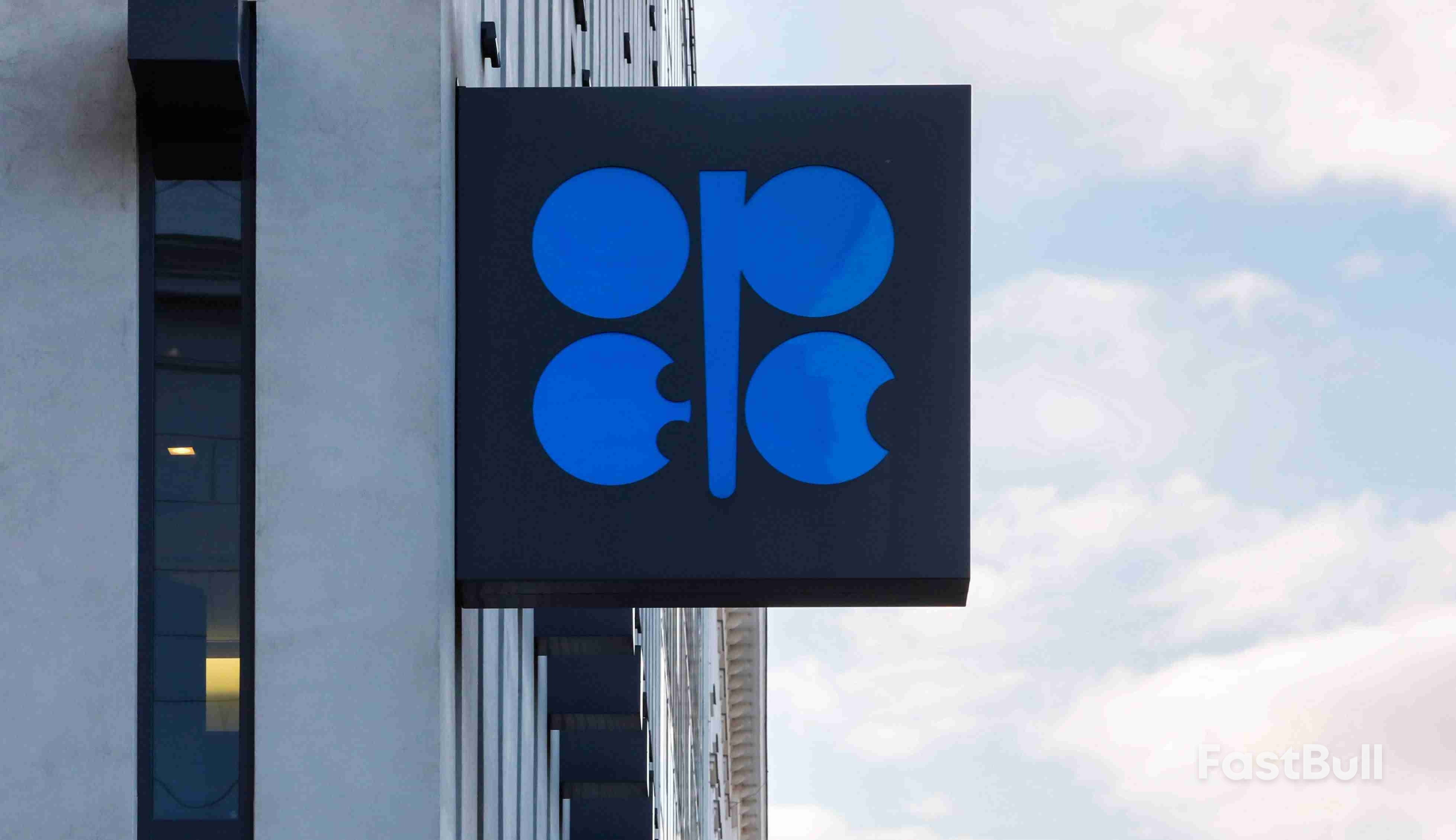
          The logo of the Organization of the Petroleum Exporting Countries (OPEC) is seen outside of OPEC's headquarters in Vienna, Austria, March 3, 2022.

          A group of countries that are part of the OPEC+ alliance of oil-exporting countries has agreed to boost oil production, a move some believe could lower oil and gasoline prices, citing a steady global economic outlook and low oil inventories.
          The group met virtually on Sunday and announced that eight of its member countries would increase oil production by 547,000 barrels per day in September.
          The countries boosting output, including Saudi Arabia, Russia, Iraq, United Arab Emirates, Kuwait, Kazakhstan, Algeria and Oman, had been participating in voluntary production cuts, initially made in November 2023, which were scheduled to be phased out by September 2026. The announcement means the voluntary production cuts will end ahead of schedule.
          The move follows an OPEC+ decision in July to boost production by 548,000 barrels per day in August. OPEC said the production adjustments may be paused or reversed as market conditions evolve.
          When production increases, oil and gasoline prices may fall. But Brent crude oil, which is considered a global benchmark, has been trading near $70 per barrel, which could be due to a potential loss of Russian oil on the market and a large rise in crude inventories in China, according to research firm Clearview Energy Partners.
          "President Trump has not obviously relented from his threat to sanction Russian energy if the Kremlin does not reach a peace deal with Ukraine as of August 7, potentially via 'secondary tariffs' on buyers," Clearview Energy Partners said in an analyst note Sunday.
          The eight countries will meet again on Sept. 7, OPEC said in a news release.

          Source: Yahoo Finance

          Risk Warnings and Disclaimers
          You understand and acknowledge that there is a high degree of risk involved in trading. Following any strategies or investment methods may lead to potential losses. The content on the site is provided by our contributors and analysts for information purposes only. You are solely responsible for determining whether any trading assets, securities, strategy, or any other product is suitable for investing based on your own investment objectives and financial situation.
          Add to Favorites
          Share

          Germany on the Brink of Recovery: Crisis or Transformation?

          Gerik

          Economic

          The Foundations Are Shifting, But Not Crumbling

          Germany’s economic model, built on a strong backbone of small and medium-sized enterprises (SMEs), has long thrived under globalization and just-in-time production systems. These SMEs over 99% of German companies are known for innovation, high wages, and global market leadership in niche sectors. However, this model now faces pressure from rising energy costs, disrupted global supply chains, and changing geopolitical dynamics.
          As economist Martin Lück points out, the shifting role of global superpowers is complicating trade-dependent economies like Germany. Firms are now forced to adapt to fragmented markets, protectionist policies, and technological disruption.

          Economic Forecasts Paint a Bleak Picture But Not for All

          The OECD projects that Germany will experience the slowest growth among major industrialized nations in 2025. Yet Bundesbank President Joachim Nagel remains cautiously optimistic, suggesting the worst may be over: “The dry spell is gradually ending,” he noted, though challenges remain.
          This aligns with historical cycles according to economic historian Werner Plumpe, crises are recurring but necessary. From the global financial crisis of 2008 to the eurozone turmoil and the COVID-19 pandemic, Germany has repeatedly emerged from turbulence with a redefined economic outlook.

          Painful Adjustments and the Need for Bold Reform

          German businesses are now revisiting outdated business models, restructuring departments, and in some cases closing or selling subsidiaries. For employees, especially long-serving ones, this shift is jarring. Yet from a strategic standpoint, these adjustments are often essential for survival in a changing market.
          Economists argue that throwing money at problems isn’t enough Germany must become bolder in embracing innovation. Chris-Oliver Schickentanz of Capitell AG stresses the importance of technological openness, especially toward AI. Holger Schmieding of Berenberg Bank calls for less regulatory rigidity and more targeted investment in infrastructure and research.

          Learning from the Agile: Digital Lessons from the Baltics

          One consistent critique is Germany’s regulatory conservatism. In contrast, countries like Estonia and Lithuania have rapidly become leaders in digital governance. Germany, with its strong educational institutions and research centers, has the intellectual capacity to catch up provided it can overcome bureaucratic inertia.
          The recent federal fiscal stimulus and planned reform of the constitutional debt brake could reignite private sector investment. If implemented effectively, these moves may position Germany as a more attractive alternative to the U.S. for foreign capital, especially amid rising trade tensions.
          Germany’s path forward is far from guaranteed, but it is not doomed to decline. Its inherent economic strengths diverse industrial capabilities, a skilled workforce, and institutional stability can be leveraged for a strategic comeback. As economist Martin Lück suggests, if global conditions push investors away from the U.S., “Europe must step up especially Germany.” With cautious optimism and decisive reforms, the country may transform today’s stagnation into tomorrow’s resurgence.
          To stay updated on all economic events of today, please check out our Economic calendar
          Risk Warnings and Disclaimers
          You understand and acknowledge that there is a high degree of risk involved in trading. Following any strategies or investment methods may lead to potential losses. The content on the site is provided by our contributors and analysts for information purposes only. You are solely responsible for determining whether any trading assets, securities, strategy, or any other product is suitable for investing based on your own investment objectives and financial situation.
          Add to Favorites
          Share

          Trump’s Tariff Tactic: Strategic Retreat or Risky Gamble?

          Gerik

          Economic

          A Tactical Delay Amid Global Tariff Escalation

          On the eve of August 1, President Donald Trump unexpectedly delayed the implementation of new tariffs targeting imports from 68 countries and the European Union. Though marketed as a decisive pivot in global trade policy, the last-minute postponement introduces uncertainty, especially for businesses and consumers bracing for the economic fallout. Trump justified the move as a necessary adjustment to tariff schedules, but the shift has amplified skepticism about the administration’s long-term trade strategy.
          Despite the delay, Trump emphasized that the new tariffs affecting nearly $3 trillion in goods are key to restoring American prosperity, boosting manufacturing employment, and pressuring foreign nations to “respect” the U.S.

          Allies Question Intentions as Legal Storm Brews

          Observers note that some allies view the policy as coercive, potentially eroding America’s diplomatic standing. At home, the legality of Trump's move is under scrutiny. The Court of Appeals recently questioned whether the President had overstepped his authority by invoking a 1977 emergency law to bypass Congressional approval. Federal Judge Todd Hughes warned that the administration appeared to be demanding “limitless power” to impose global tariffs.
          Meanwhile, Europe awaits formal confirmation of a 15% tariff cap, and countries like Switzerland and Norway remain unclear on their specific tax rates. Canada and India have seen their tariffs adjusted or increased, while nations such as Liechtenstein received cuts. Critics argue that this patchwork of last-minute deals and uncertainty undermines long-term global trust.

          Mixed Results: Budget Gains, But No Manufacturing Boom

          Since January, U.S. customs revenue from tariffs has reached $127 billion up $70 billion year-over-year providing a short-term boost to budget revenues. However, contrary to administration claims, job growth in manufacturing has not followed. The sector now has 14,000 fewer jobs than it did in April, calling into question the efficacy of protectionist measures.
          The inflationary impact is becoming more pronounced. The PCE inflation index, the Federal Reserve’s preferred metric, rose 2.6% in the 12 months ending June, and businesses from Ford to French cosmetics brand Yon-Ka have flagged reduced earnings, hiring freezes, and price hikes. Analysts worry that the tariff wave will intensify inflationary pressures at a time when the Fed is trying to maintain rate stability. Trump, frustrated by the Fed’s reluctance to cut rates, has publicly rebuked Chair Jerome Powell for being too cautious.

          Strategic Brilliance or Economic Brinksmanship?

          Trump has framed the tariff policy as a calculated gambit pausing implementation to secure last-minute deals while maintaining pressure on rivals. Recent talks with Japan, South Korea, the EU, and Southeast Asian countries have led to declarations of “victory,” though the lack of detail clouds the true scope of these agreements.
          Still, economists like Scott Lincicome of the Cato Institute argue that the policy appears “hastily constructed,” with vague rules that threaten to further complicate global supply chains. Without clear structure or reliable timelines, both importers and exporters face unprecedented volatility.
          In sum, Trump’s tariff maneuver resembles a high-stakes chess game one in which the opening move signals strength, but the long-term endgame remains uncertain. The coming weeks will reveal whether this is a temporary bluff or a deeper realignment of global trade dynamics with America at the center or at odds with the rest of the world.
          To stay updated on all economic events of today, please check out our Economic calendar
          Risk Warnings and Disclaimers
          You understand and acknowledge that there is a high degree of risk involved in trading. Following any strategies or investment methods may lead to potential losses. The content on the site is provided by our contributors and analysts for information purposes only. You are solely responsible for determining whether any trading assets, securities, strategy, or any other product is suitable for investing based on your own investment objectives and financial situation.
          Add to Favorites
          Share

          U.S. Tariffs Disrupt Brazil Coffee Trade, Redirecting Supply to China and the EU

          Gerik

          Economic

          Commodity

          Tariff Shock Targets Brazil’s Strategic Coffee Exports

          On August 2nd, the Trump administration announced a sweeping 50% import tariff on selected Brazilian goods, notably including coffee. Effective from August 6th, the policy directly threatens Brazil’s dominant position in the U.S. coffee market. As the world’s largest coffee producer, Brazil annually ships around 8 million bags to the U.S., accounting for one-third of total American coffee imports, valued at $4.4 billion over the past year.
          The immediate concern is the future of these coffee volumes. Traders and roasters alike are scrambling to either fast-track shipments ahead of the deadline or explore alternate sourcing and routing strategies.

          China Emerges as a Beneficiary Amid Rising Coffee Demand

          China’s surging appetite for coffee, especially among younger consumers seeking alternatives to tea, offers Brazil a potential release valve. Already a major BRICS partner and buyer, China imported 538,000 bags of Brazilian coffee in the first half of 2025 alone, a figure poised to rise.
          Consumption in China has grown approximately 20% annually for the past decade, with per capita coffee consumption doubling in the last five years. With existing trade ties and no tariffs in place, experts like Marc Schonland suggest that redirected Brazilian shipments could strengthen China’s role as a rising force in global coffee demand.

          Logistical Workarounds: The Rise of Indirect Routes

          Facing punitive tariffs, coffee exporters are weighing rerouting options via countries like Mexico and Panama to re-export Brazilian beans into the U.S. Though this adds logistical complexity and marginal costs, experts such as Debajyoti Bhattacharyya argue that it could reduce the effective tariff burden by 10%–15%, making the workaround economically viable.
          This mirrors tactics seen in other commodity sectors, particularly oil, where supply-chain opacity and transshipment hubs have long been used to circumvent trade restrictions.

          The EU and Africa as Strategic Alternatives

          European markets, which are not subject to U.S.-style tariffs on Brazilian coffee, also represent a viable destination for surplus stock. At the same time, U.S. buyers like Downeast Coffee Roasters are pivoting toward Central America and Africa to diversify supply chains and mitigate future shocks.
          Yet this pivot may prove costly. As William Kapos, CEO of Downeast, notes, “everyone will do the same,” tightening competition and likely driving prices upward for U.S. importers, especially as peak seasonal demand approaches.
          The Trump administration’s tariff on Brazilian coffee introduces substantial uncertainty into a highly globalized market. While Brazil may find willing buyers in China and Europe, and creative export routes may soften tariff impacts, the broader effect could be higher prices and instability for U.S. coffee importers. As with other trade conflicts, the ultimate cost may fall on the consumer this time, in their morning cup.
          To stay updated on all economic events of today, please check out our Economic calendar
          Risk Warnings and Disclaimers
          You understand and acknowledge that there is a high degree of risk involved in trading. Following any strategies or investment methods may lead to potential losses. The content on the site is provided by our contributors and analysts for information purposes only. You are solely responsible for determining whether any trading assets, securities, strategy, or any other product is suitable for investing based on your own investment objectives and financial situation.
          Add to Favorites
          Share

          Iran Follows Russia’s Lead with Shadow Fleet as China Becomes Main Buyer of Sanctioned Oil

          Gerik

          Commodity

          Political

          China-Iran Oil Trade Defies U.S. Pressure

          According to a CBS News investigation, Iran is using a clandestine shipping network to sell oil to China in defiance of U.S. sanctions. These operations largely occur in international waters near Indonesia’s Riau Islands, where Iranian oil is transferred ship-to-ship to obscure its origin. On a single day of monitoring, CBS observed 12 such transfers a figure that underscores the scale and regularity of these activities.
          The ships involved routinely deactivate tracking systems and hide identifying information, enabling them to evade maritime monitoring systems and sanctions enforcement. This has allowed Iran to maintain oil exports at a substantial scale despite international restrictions.

          China’s Teapots Fuel the Demand

          Small independent Chinese refineries often referred to as "teapots" are the primary buyers of Iranian crude. Lured by steep discounts, these refiners continue sourcing oil from Iran despite geopolitical risks and the tightening grip of U.S. sanctions. Currently, China is estimated to consume up to 90% of Iran’s total oil exports, effectively serving as Tehran’s economic lifeline.
          The financial incentives are clear: discounted oil enables these refineries to maintain profit margins in a competitive market, even as global energy prices fluctuate and larger state-owned refineries adhere to more regulated sources.

          U.S. Sanctions and Global Response

          On the heels of CBS’s report, the U.S. Treasury launched its most extensive round of sanctions against Iran’s maritime industry since 2018, targeting more than 50 individuals, entities, and vessels involved in sanction evasion schemes. Yet, despite these aggressive actions, enforcement remains complicated by the clandestine nature of the shadow fleet and the persistent demand for cheap oil.
          Charlie Brown, a former U.S. Navy officer now working with United Against Nuclear Iran, identified the Riau region as a major offshore hub for shadow fleet operations. He emphasized that as long as cheap oil remains in circulation, demand will continue alongside a willingness to assume legal and political risk.

          Implications and Future Risks

          European powers are also reportedly weighing a reactivation of UN sanctions under the 2015 nuclear deal framework, which could further isolate Iran economically. However, the effectiveness of multilateral measures remains uncertain, especially as China and other nations prioritize energy security over geopolitical alignment.
          Iran’s strategy bears resemblance to Russia’s use of hundreds of shadow tankers to maintain oil exports amid Western embargoes following the Ukraine war. The convergence of these tactics from two sanctioned oil giants signals a shift toward a more decentralized and opaque global oil market, where enforcement becomes increasingly difficult.
          Iran’s successful deployment of a shadow fleet, coupled with China’s voracious demand for discounted oil, illustrates the growing limits of traditional sanctions as tools of economic coercion. As both Iran and Russia deepen their reliance on covert logistics to sustain revenue, the integrity of global enforcement frameworks is under strain. Without more coordinated global action and real-time maritime surveillance, such shadow economies may continue to thrive reshaping global energy trade in ways that weaken the geopolitical leverage of the West.

          Source: CBS

          Risk Warnings and Disclaimers
          You understand and acknowledge that there is a high degree of risk involved in trading. Following any strategies or investment methods may lead to potential losses. The content on the site is provided by our contributors and analysts for information purposes only. You are solely responsible for determining whether any trading assets, securities, strategy, or any other product is suitable for investing based on your own investment objectives and financial situation.
          Add to Favorites
          Share
          FastBull
          Copyright © 2025 FastBull Ltd

          728 RM B 7/F GEE LOK IND BLDG NO 34 HUNG TO RD KWUN TONG KLN HONG KONG

          TelegramInstagramTwitterfacebooklinkedin
          App Store Google Play Google Play
          Products
          Charts

          Chats

          Q&A with Experts
          Screeners
          Economic Calendar
          Data
          Tools
          Membership
          Features
          Function
          Markets
          Copy Trading
          Latest Signals
          Contests
          News
          Analysis
          24/7
          Columns
          Education
          Company
          Careers
          About Us
          Contact Us
          Advertising
          Help Center
          Feedback
          User Agreement
          Privacy Policy
          Business

          White Label

          Data API

          Web Plug-ins

          Poster Maker

          Affiliate Program

          Risk Disclosure

          The risk of loss in trading financial instruments such as stocks, FX, commodities, futures, bonds, ETFs and crypto can be substantial. You may sustain a total loss of the funds that you deposit with your broker. Therefore, you should carefully consider whether such trading is suitable for you in light of your circumstances and financial resources.

          No decision to invest should be made without thoroughly conducting due diligence by yourself or consulting with your financial advisors. Our web content might not suit you since we don't know your financial conditions and investment needs. Our financial information might have latency or contain inaccuracy, so you should be fully responsible for any of your trading and investment decisions. The company will not be responsible for your capital loss.

          Without getting permission from the website, you are not allowed to copy the website's graphics, texts, or trademarks. Intellectual property rights in the content or data incorporated into this website belong to its providers and exchange merchants.

          Not Logged In

          Log in to access more features

          FastBull Membership

          Not yet

          Purchase

          Become a signal provider
          Help Center
          Customer Service
          Dark Mode
          Price Up/Down Colors

          Log In

          Sign Up

          Position
          Layout
          Fullscreen
          Default to Chart
          The chart page opens by default when you visit fastbull.com